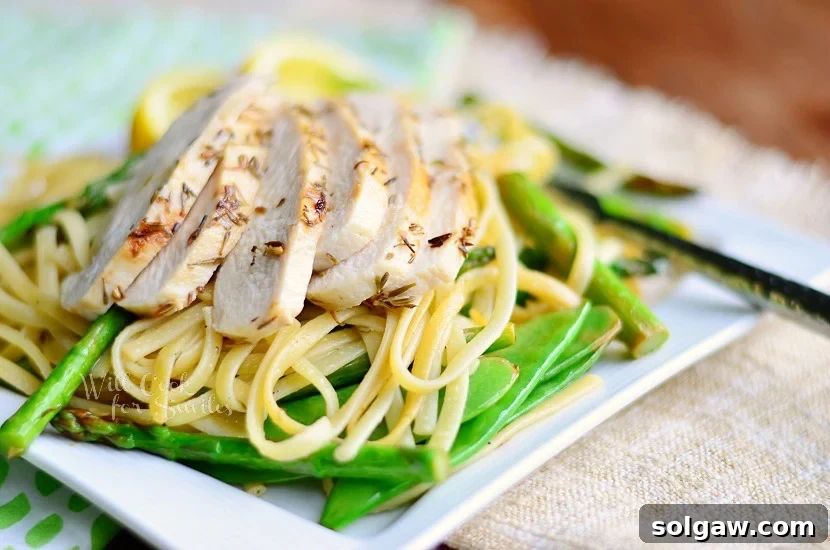
Lemon Herb Linguine with Chicken, Asparagus, and Snow Peas: A Fresh Summer Delight
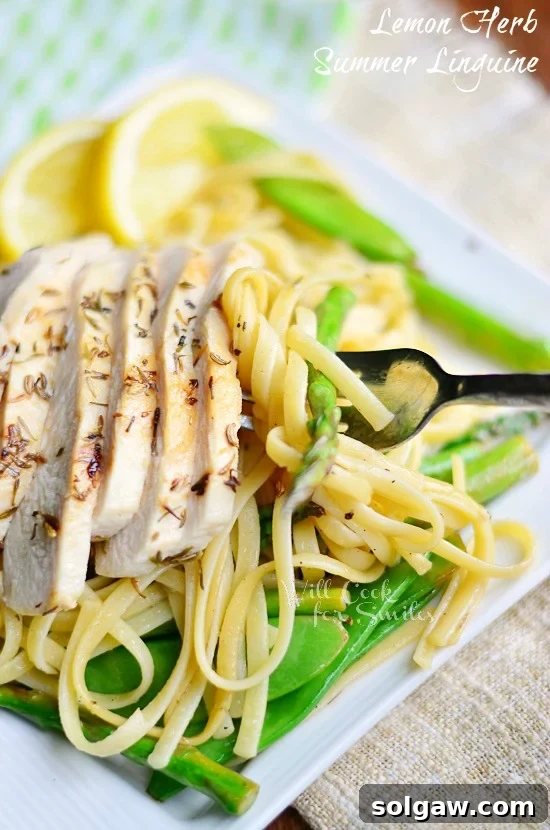
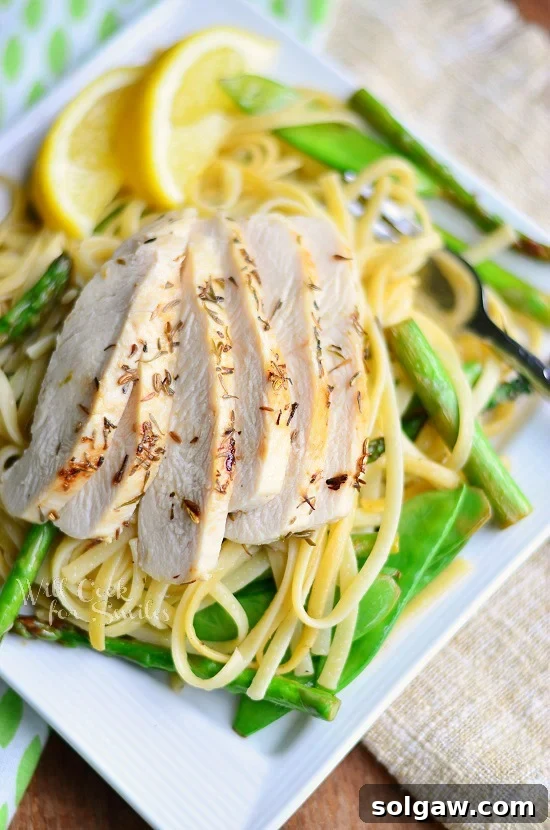
Discover the ultimate summer dish that perfectly blends fresh flavors with effortless preparation. This exquisite Linguine recipe features tender snow peas and crisp asparagus, all tossed in a light, aromatic lemon herb wine sauce, and crowned with succulent herb pan-grilled chicken. It’s a culinary masterpiece that promises to be both delicious and incredibly quick to make, ideal for those busy weeknights or a relaxed weekend meal.
Why You’ll Fall in Love with This Lemon Herb Linguine
I am genuinely captivated by this dish and the incredible depth of flavor it achieves despite its straightforward nature. It’s a testament to how simple ingredients, when treated with a little culinary finesse, can create something truly extraordinary. This lemon herb linguine is more than just a meal; it’s an experience that brightens your palate and offers a comforting yet sophisticated dining option. Perfect for warm weather, it embodies the essence of fresh, seasonal eating.
The beauty of this linguine dish lies in its vibrant, zesty character, balanced by the savory notes of perfectly cooked chicken and crisp vegetables. It’s a complete meal in one pan, designed for maximum taste with minimal fuss. Whether you’re a seasoned chef or a novice in the kitchen, you’ll appreciate how approachable and rewarding this recipe is. It consistently delivers on flavor, making it a reliable favorite for any occasion.
Unlocking the Flavor Secrets of This Dish
While this recipe appears simple, a few clever techniques elevate it from good to absolutely unforgettable. These culinary “secrets” ensure every bite is bursting with robust, well-integrated flavors, making it a standout pasta dish.
The Art of Seasoning Pasta Water
One of the foundational steps to creating truly flavorful pasta is to properly season the cooking water. Beyond just a pinch of salt, I always recommend infusing the water with herbs. For this particular recipe, I make sure to generously salt the water and add a tablespoon of Herbes de Provence seasoning while it comes to a boil. This simple addition works wonders by subtly infusing the linguine with a delicate, aromatic herb flavor as it cooks.
Think of pasta as a sponge: it absorbs the flavors of its cooking liquid. If you cook it in plain water, it will taste bland. By seasoning the water with salt, you enhance the pasta’s natural taste, and with Herbes de Provence, you lay a fragrant base layer that complements the lemon herb sauce beautifully. This technique ensures that the pasta itself is a flavorful component of the dish, not just a vehicle for the sauce. It’s a small step that yields significant flavor dividends, and I highly encourage you to adopt this habit for all your pasta preparations, adjusting the herbs to suit your recipe.
Maximizing Flavor with Pan Deglazing
The second secret to this dish’s profound flavor comes from a technique known as deglazing. Instead of using multiple pans, I utilize the same pan to cook the chicken, then the vegetables, and finally to sauté the linguine with the sauce. After the chicken breasts are beautifully browned and fully cooked, they leave behind a treasure trove of delicious, caramelized bits (known as “fond”) stuck to the bottom of the pan.
This fond is pure flavor gold! By deglazing the pan with white wine immediately after removing the chicken, you dissolve these browned bits, incorporating all that wonderful chicken flavor directly into your sauce. As the wine simmers and reduces, it becomes rich and savory. Cooking the vegetables in this flavorful liquid ensures they absorb every ounce of deliciousness, which then transfers to the linguine when everything is combined. This seamless transition from chicken to sauce to vegetables to pasta builds an incredible depth that simply cannot be achieved by cooking each component separately.
The Zesty Punch of Lemon and Herbs
Of course, the star flavor combination that truly ties this dish together is the classic pairing of lemon and herbs. Lemon provides a bright, refreshing acidity that cuts through the richness of the chicken and elevates the fresh taste of the vegetables. Its vibrant zest and juice add a crucial layer of flavor that awakens the palate and makes the dish feel light and summery.
Combined with the complex, earthy notes of Herbes de Provence (a blend typically including thyme, rosemary, oregano, and lavender), the lemon creates an aromatic symphony. The herbs provide depth and warmth, while the lemon offers a crisp, clean finish. This harmonious combination ensures that the sauce is neither too heavy nor too tart, striking a perfect balance that complements every ingredient in the bowl.
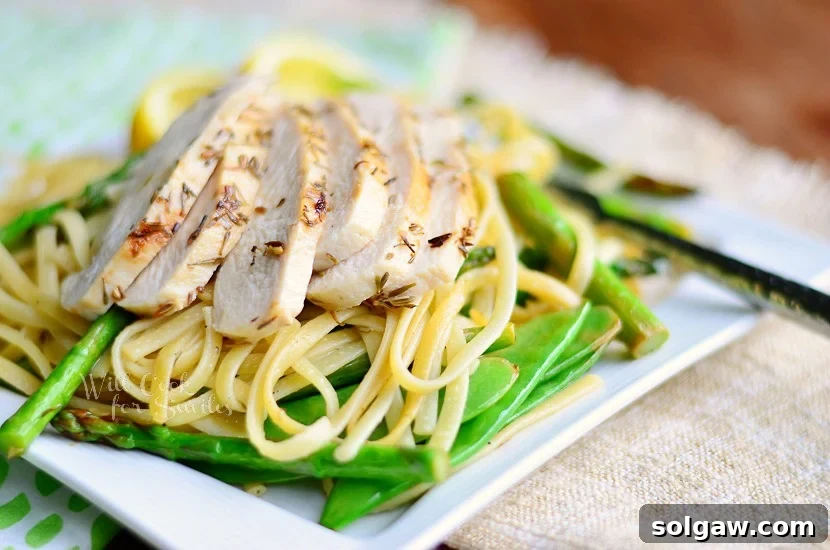
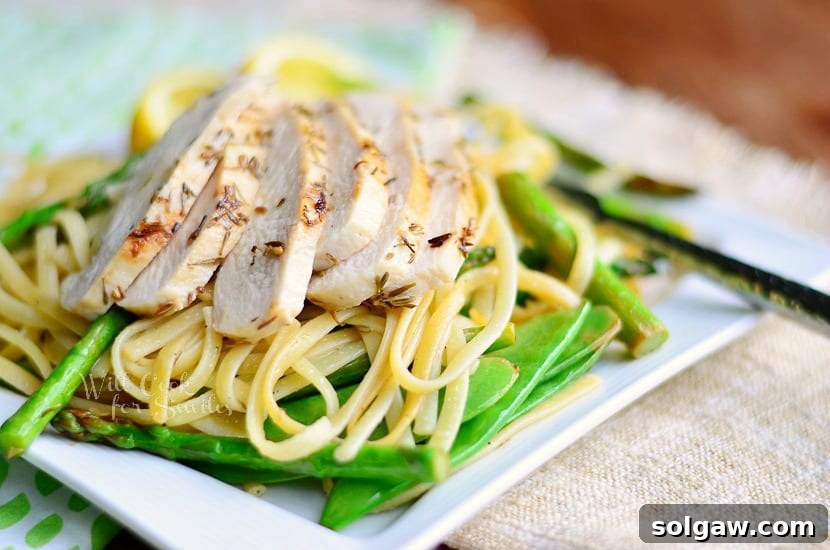
Lemon Herb Linguine with Chicken, Asparagus and Snow Peas
A delightful summer pasta featuring linguine sautéed with vibrant snow peas and asparagus, bathed in a light lemon herb wine sauce, and topped with succulent herb pan-grilled chicken.
Course: Dinner | Cuisine: American
Prep Time: 5 minutes | Cook Time: 25 minutes | Total Time: 30 minutes
Servings: 2
Author: Lyuba Brooke
Ingredients
For the Linguine:
- 1/2 lb uncooked linguine
- Salt for cooking pasta
- Herbes De Provence for cooking pasta (approx. 1 Tbsp)
For the Chicken:
- 2 chicken breasts
- Salt to taste
- 2 tsp Herbes De Provence
- 1/2 lemon – juice only
- 2 Tbsp olive oil for cooking chicken
For the Sauce & Veggies:
- 1/2 cup dry white wine
- 2 Tbsp fresh squeezed lemon juice
- 1 Tbsp olive oil
- 6 asparagus stalks, trimmed and cut into 1-inch pieces
- 1 cup snow peas, trimmed
- Salt to taste
Instructions
- Cook the Pasta: Bring a large pot of generously salted water to a rolling boil. Add about 1 tablespoon of Herbes De Provence to the water. Cook the linguine according to package directions until al dente. Drain the pasta and set aside.
- Prepare the Chicken: While the pasta cooks, preheat 2 tablespoons of olive oil in a large skillet or cooking pan over medium-high heat. Season the chicken breasts generously with salt and 2 teaspoons of Herbes De Provence. Cook the chicken for 5-7 minutes per side, or until golden brown and cooked through (internal temperature reaches 165°F / 74°C). Remove the chicken from the pan and set aside on a cutting board to rest. Do not clean the pan.
- Deglaze the Pan: With the pan still hot from cooking the chicken, immediately pour in the white wine. Use a wooden spoon to scrape up all the delicious browned bits (fond) from the bottom of the pan. Let the wine simmer for 1-2 minutes to reduce slightly and concentrate the flavors. Stir in the 2 tablespoons of fresh lemon juice, 1 tablespoon of olive oil, and a pinch of salt.
- Sauté the Vegetables: Add the cut asparagus and snow peas to the pan with the sauce. Sauté for 3-5 minutes, or until the vegetables are bright green and cooked to your preferred tenderness. They should still have a slight crunch.
- Combine Ingredients: Add the cooked linguine to the pan with the vegetables and sauce. Toss everything together vigorously until the pasta is well coated and the vegetables and sauce are thoroughly incorporated.
- Slice and Serve Chicken: Slice the rested chicken breasts into strips or bite-sized pieces. You can either add the sliced chicken directly to the pan and mix it with the pasta, or simply arrange it on top of each serving.
- Garnish: Serve immediately with an extra slice or wedge of fresh lemon for squeezing over the top, if desired.
Nutrition (per serving)
Calories: 951 kcal | Carbohydrates: 94g | Protein: 65g | Fat: 29g | Saturated Fat: 5g | Polyunsaturated Fat: 4g | Monounsaturated Fat: 17g | Trans Fat: 0.03g | Cholesterol: 145mg | Sodium: 276mg | Potassium: 1358mg | Fiber: 6g | Sugar: 7g | Vitamin A: 1003 IU | Vitamin C: 44mg | Calcium: 94mg | Iron: 6mg
Tips for Success and Perfecting Your Dish
Achieving the perfect Lemon Herb Linguine with Chicken, Asparagus, and Snow Peas is straightforward with a few key considerations. Firstly, **don’t overcook your pasta.** Al dente pasta is essential for the best texture, ensuring it holds up well in the sauce and isn’t mushy. Follow package directions closely, and remember to taste test!
Secondly, when cooking the chicken, **ensure a good sear.** This creates the foundational “fond” that is crucial for a flavorful sauce. Don’t rush this step. Once the chicken is removed, **deglaze immediately** while the pan is hot. This rapid action prevents the fond from burning and ensures it dissolves into the wine, capturing maximum flavor.
For the vegetables, aim for **bright and tender-crisp.** Overcooked asparagus and snow peas can become limp and lose their vibrant color and fresh taste. A quick sauté maintains their texture and nutritional value. Finally, when combining the linguine, make sure to **toss everything thoroughly.** This ensures every strand of pasta is coated with the delicious lemon herb wine sauce, creating a cohesive and satisfying dish.
Customizing Your Lemon Herb Linguine: Variations and Dietary Adjustments
This recipe is wonderfully versatile, allowing for numerous substitutions and variations to suit different tastes or dietary needs. Feel free to get creative in the kitchen!
Protein Swaps:
If chicken isn’t your preference, consider other lean proteins. **Shrimp** makes an excellent alternative, cooking quickly and absorbing the lemon-herb flavors beautifully. Simply sauté shrimp in the pan after deglazing, then remove before adding vegetables, and stir back in at the end. For a vegetarian option, **pan-seared tofu** or **chickpeas** can be a great addition. You can also omit the meat entirely for a light and refreshing pasta primavera.
Vegetable Variations:
While asparagus and snow peas are fantastic, don’t hesitate to experiment with other seasonal vegetables. **Broccoli florets, zucchini ribbons, bell peppers, cherry tomatoes, or even spinach** would integrate seamlessly into this dish. Adjust cooking times based on the hardness of the vegetables; harder vegetables like broccoli might need a minute or two more to become tender-crisp.
Herb & Spice Tweaks:
If Herbes de Provence isn’t on hand, a mix of **dried oregano, thyme, and rosemary** can be used. Fresh herbs like **parsley, basil, or dill** added at the very end can also provide a burst of fresh flavor and aroma. A pinch of red pepper flakes can introduce a subtle heat for those who enjoy a little spice.
Dietary Considerations:
- Gluten-Free: Easily make this recipe gluten-free by substituting traditional linguine with your favorite gluten-free pasta.
- Dairy-Free: This recipe is naturally dairy-free, making it a great option for those with lactose sensitivities.
- Vegetarian/Vegan: For a vegetarian version, simply omit the chicken and perhaps add extra vegetables or plant-based protein like white beans or pan-fried mushrooms. For a vegan option, ensure your white wine is vegan-friendly (some are processed with animal products) and replace chicken with a plant-based alternative.
Serving Suggestions and Perfect Pairings
This Lemon Herb Linguine is a wonderfully complete meal on its own, but it also pairs beautifully with a few simple accompaniments. For a classic Italian-inspired touch, serve it alongside a crisp **green salad** with a light vinaigrette dressing. The freshness of the salad will complement the zesty pasta perfectly. A side of warm **crusty bread or garlic bread** is also an excellent choice, ideal for soaking up any remaining delicious sauce.
For beverages, a glass of the same dry white wine used in the recipe would be a delightful pairing. Alternatively, a sparkling water with lemon or a light iced tea would also refresh the palate. This dish is versatile enough for a casual family dinner or elegant enough for entertaining guests.
Storing and Reheating Leftovers
Leftovers of this Lemon Herb Linguine are just as delicious the next day! Allow the dish to cool completely before transferring it to an airtight container. It can be stored in the refrigerator for up to 3-4 days. To reheat, gently warm the pasta in a skillet over medium-low heat, adding a splash of chicken broth or white wine to rehydrate the sauce and prevent the pasta from drying out. You can also microwave individual portions, stirring occasionally until heated through. Be careful not to overcook the chicken or vegetables during reheating to maintain their tender texture.
Frequently Asked Questions (FAQs)
Q: Can I use different types of pasta?
A: Absolutely! While linguine is recommended for its ability to hold the light sauce well, you can easily substitute it with other long pastas like fettuccine or spaghetti, or even shorter shapes like penne or fusilli for a different texture.
Q: What kind of white wine should I use?
A: A dry white wine is best for this recipe. Options like Pinot Grigio, Sauvignon Blanc, or an unoaked Chardonnay work wonderfully. Avoid sweet wines, as they will alter the flavor profile of the sauce. If you prefer not to use wine, chicken or vegetable broth can be used as a substitute.
Q: Can I add cheese to this dish?
A: While the recipe is designed to be light and fresh without cheese, a sprinkle of freshly grated Parmesan or Pecorino Romano cheese at the end can add a salty, umami kick if desired. However, I encourage you to try it without first to truly appreciate the bright lemon-herb flavors.
Q: How do I ensure my chicken is tender and not dry?
A: The key is to not overcook the chicken. Cook until it’s just golden brown on the outside and reaches an internal temperature of 165°F (74°C). Pounding the chicken breasts to an even thickness before cooking can also help ensure they cook more uniformly and remain juicy.
_________________________________________________________
Stay Connected for More Delicious Recipes!
Don’t miss out on more easy, flavorful recipes like this Lemon Herb Linguine! Be sure to follow us through your favorite blog reader (Bloglovin or other), subscribe to our e-mail newsletter, or connect with us on social media to keep up with all the latest culinary inspirations and tips. Your next favorite dish is just a click away!
_______________________________________________________

More Irresistible Chicken Recipes!
If you enjoyed this flavorful chicken linguine, you’ll love exploring more of our delicious chicken creations. Here are a few other highly recommended recipes to tantalize your taste buds:
- Bacon Wrapped Chicken Strips: Crispy bacon encasing juicy chicken, a perfect appetizer or main course.
- Parmesan Herb Stuffed Chicken: Chicken breasts generously filled with a savory blend of Parmesan cheese and fresh herbs, baked to perfection.
- Stuffed Chicken Marsala: A gourmet twist on a classic, featuring chicken stuffed with a flavorful filling and drenched in a rich Marsala wine sauce.