
Homemade Italian dressing elevates any meal, transforming simple salads, roasted vegetables, and grilled meats into culinary masterpieces. Forget those store-bought bottles filled with unknown additives; crafting your own Italian dressing from scratch guarantees a burst of fresh, vibrant flavors tailored precisely to your palate. By selecting the finest ingredients, you unlock a depth of taste and aroma that pre-made versions can only dream of. This guide will walk you through creating the ultimate Italian dressing, ensuring every dish it touches is infused with authentic, delicious goodness.

Table of Contents
In the vibrant culinary landscape of salad dressings, homemade creations stand in a league of their own. While the convenience of a store-bought bottle is undeniable, the unparalleled taste, superior quality, and peace of mind that come with making your own dressing are simply unmatched. When you opt for commercial dressings, you’re often unknowingly inviting a host of chemical preservatives, artificial flavors, and unnecessary additives into your diet. These ingredients not only detract from the natural zest of a good dressing but can also be detrimental to your health.
This is precisely why I advocate for crafting dressings from scratch. It’s an empowering choice that puts you in complete control of what goes into your food. You get to handpick the freshest, highest-quality ingredients, ensuring an authentic flavor profile that resonates with your personal preferences. The process is surprisingly simple, yet the reward is a dressing that tastes infinitely better and offers a healthier alternative to its store-bought counterparts. Plus, the ability to customize the sweetness, tanginess, and spice levels means your dressing will always be perfectly suited to your taste and any specific dietary needs, such as gluten-free or keto.
Our Italian dressing recipe focuses on a light, olive oil-based vinaigrette, entirely free from heavy creams. For an extra layer of savory richness, I love incorporating freshly grated Parmesan cheese. A touch of crushed red pepper flakes adds a delightful warmth and gentle kick, making each bite more exciting. This recipe is naturally gluten-free; however, always remember to check the labels on your vinegar and cheese to confirm. For those following a keto diet, simply omit the sugar or substitute it with your preferred sugar alternative to keep it low-carb. It’s a testament to how simple adjustments can make a significant difference, allowing everyone to enjoy this classic dressing.

Difference Between Italian Dressing and Vinaigrette
The distinction between Italian dressing and a classic vinaigrette often leads to confusion, but the truth is wonderfully simple: Italian dressing is essentially a flavorful variation of a vinaigrette. A traditional vinaigrette forms the foundation of many dressings, characterized by its basic emulsion of oil and an acidic component, typically vinegar, often enhanced with herbs, spices, and seasonings. The magic of a vinaigrette lies in this simple yet effective combination, creating a balanced and versatile liquid condiment.
Our homemade Italian dressing recipe perfectly embodies this principle. It starts with the same core ingredients – quality olive oil and tangy red wine vinegar – which are then beautifully complemented by a carefully selected blend of aromatic herbs and savory spices. This fusion of Mediterranean flavors is what gives Italian dressing its signature character, setting it apart from a plain vinaigrette while still adhering to its fundamental structure. Think of it as a specialized vinaigrette, perfected with an Italian twist.
Furthermore, the technique for preparing Italian dressing mirrors that of any basic vinaigrette: the art of emulsification. This involves vigorously shaking or whisking the oil and vinegar together until they form a stable, creamy mixture. This process ensures that the dressing has a smooth texture and that all the flavors are evenly distributed, clinging perfectly to whatever it graces. So, while “Italian dressing” suggests a specific flavor profile, it fundamentally remains a classic, well-crafted vinaigrette at heart, offering a delightful and familiar experience.
Essential Ingredients for Your Italian Dressing
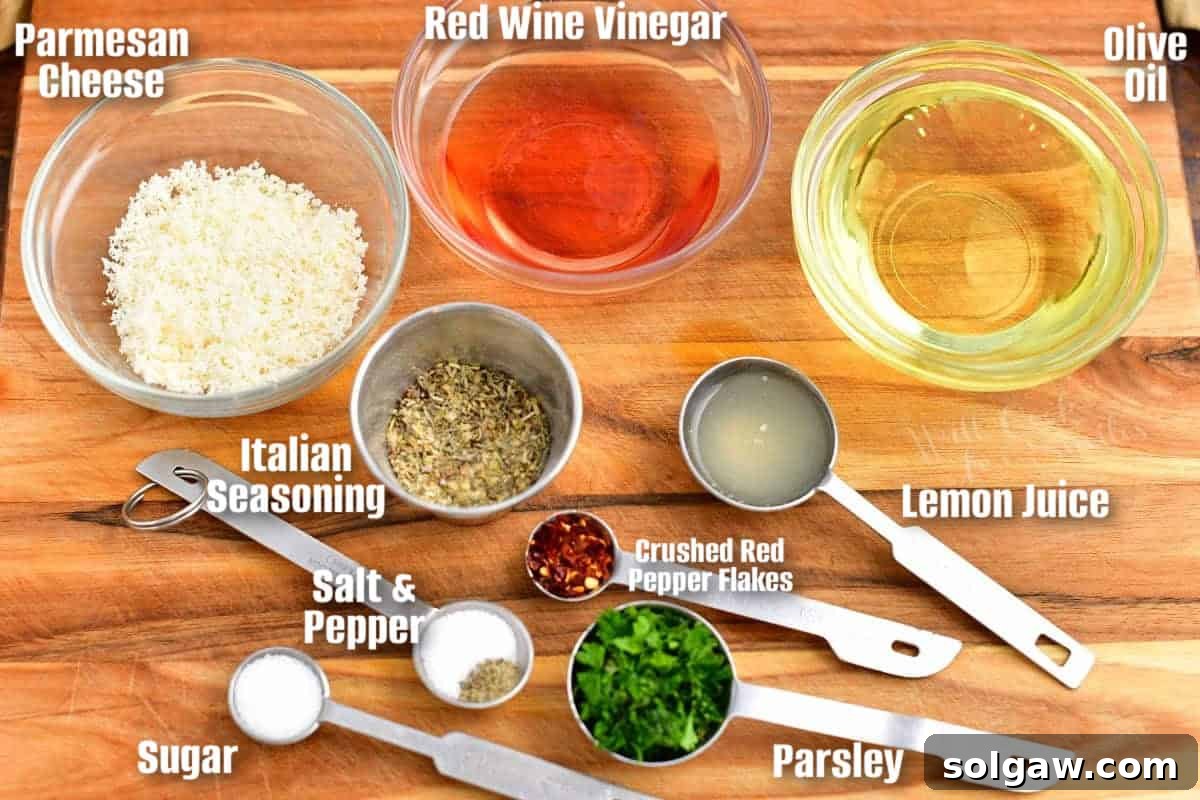
Crafting an exceptional Italian dressing begins with selecting high-quality ingredients. Each component plays a crucial role in developing the rich, balanced, and zesty flavor profile that defines this classic condiment.
Olive Oil: The foundation of any good vinaigrette, a good quality olive oil is paramount. Opt for extra virgin olive oil if possible, but ensure it has a smooth, fruity flavor rather than a bitter or pungent one. Always taste your olive oil before mixing; a bitter oil will unfortunately transfer that undesirable taste to the entire dressing. The better the olive oil, the more depth and richness your dressing will have.
Red Wine Vinegar: This is the traditional acidic component that provides the characteristic tanginess of Italian dressing. While you can experiment with other vinegars like white wine vinegar or apple cider vinegar, red wine vinegar truly delivers that classic, robust flavor profile you expect. Its slight sweetness and sharp acidity perfectly balance the richness of the olive oil.
Lemon Juice: For an added layer of bright, fresh acidity, freshly squeezed lemon juice is a must. Avoid concentrates, as they often lack the vibrant flavor and aroma of fresh lemons. The zest of fresh lemon juice brightens all the other flavors and adds a lively kick that’s hard to replicate.
Italian Seasoning Blend: This convenient blend is your shortcut to authentic Italian flavors. It typically comprises a harmonious mix of dried herbs such as basil, parsley, oregano, rosemary, and thyme, often with the addition of garlic powder and/or sage. It’s essential to check if your specific blend includes salt, as this will help you determine how much additional salt to add to prevent over-seasoning.
Fresh Parsley: While dried herbs provide a robust base, a touch of fresh minced parsley adds a wonderful brightness and a pop of green to the dressing. Its fresh, slightly peppery notes enhance the overall herbaceousness. If fresh parsley isn’t available, you can substitute with dried parsley, but remember to cut the amount in half as dried herbs are more concentrated.
Sugar: A small amount of white granulated sugar is vital for balancing the sharp acidity from the vinegar and lemon juice. It doesn’t make the dressing sweet, but rather harmonizes the flavors, making them more rounded and palatable. If you are following a specific diet, such as keto, feel free to substitute with your preferred sugar alternative or omit it entirely for a sugar-free version.
Other Seasonings: To further enhance the complexity of the dressing, I include additional individual seasonings. A little extra garlic powder (especially if your Italian seasoning mix is light on it) boosts the savory notes. Salt and cracked black pepper are fundamental for seasoning to taste. For those who appreciate a bit of heat, crushed red pepper flakes introduce a subtle warmth and excitement that complements the other bold flavors.
Parmesan Cheese: Using freshly grated Parmesan cheese is highly recommended. It infuses the dressing with a wonderful umami richness and a slightly salty, nutty flavor that makes it incredibly addictive. This addition is particularly fantastic if you plan to use the dressing beyond salads, perhaps as a marinade or a dipping sauce, as it adds a satisfying depth.
How To Make Authentic Italian Dressing

Creating this flavorful Italian dressing is incredibly straightforward, requiring minimal effort for maximum taste. Follow these simple steps for a perfect batch every time:
- Prepare and Measure Your Ingredients: Before you begin, take a few moments to gather and accurately measure all the necessary ingredients. This “mise en place” approach ensures a smooth and efficient preparation process, preventing any last-minute scrambling. Precision in measuring is key to achieving a consistently delicious dressing, so take your time with this initial step.
PRO TIP: Don’t let leftover lemon juice go to waste! Pour any excess into a silicone ice cube tray and freeze. Once solid, transfer the frozen lemon juice cubes into a freezer storage bag. This is an ingenious and convenient method to preserve fresh lemon juice, making it readily available in small portions whenever your recipes call for it, ensuring you always have that bright, fresh flavor on hand without needing a whole new lemon.
- Combine All Ingredients: Once all your ingredients are prepped, carefully pour them into a clean mason jar with a tight-fitting lid or a dedicated dressing shaker bottle. The enclosed nature of these containers is ideal for the next crucial step. Ensure all liquids, herbs, spices, and the Parmesan cheese are inside.
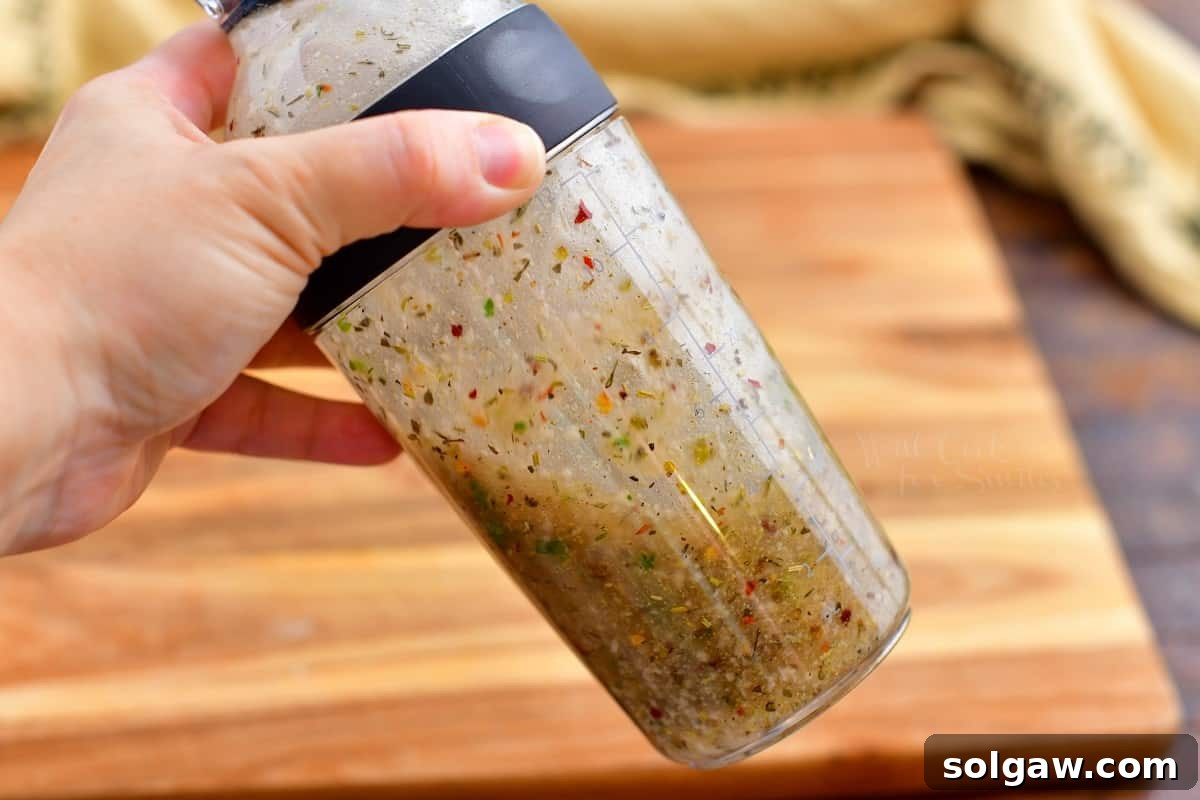
- Shake to Emulsify: Secure the lid tightly on your jar or shaker bottle. Now, shake vigorously for 30-45 seconds. This intense shaking action is vital for creating an emulsion, where the oil and vinegar, which naturally separate, are forced to combine into a smooth, cohesive mixture. An emulsion ensures that the dressing is well-integrated, preventing it from separating quickly and allowing all the flavors to meld together perfectly. This step is what gives your Italian dressing its characteristic smooth texture and uniform taste. You can use the dressing immediately after shaking, or for an even richer flavor, store it in the refrigerator for a few hours to allow the ingredients to truly marry.

Frequently Asked Questions About Italian Dressing
While homemade Italian dressing can tolerate being left on the counter for a day or two, for optimal freshness and longevity, it’s definitively best to store it in the refrigerator. The cool temperatures help preserve the integrity of the ingredients, especially the fresh herbs and lemon juice. Ensure you store it in an air-tight container with a lid to prevent oxidation and absorption of other refrigerator odors. I highly recommend using a glass jar, such as a mason jar, as glass is non-reactive and won’t absorb flavors or stains, keeping your dressing pure. When stored properly in the refrigerator, your homemade Italian dressing should last beautifully for up to 2 weeks. Remember that olive oil can solidify in the cold; this is perfectly normal. Simply remove it from the fridge about 30 minutes before serving. Before each use, always give the container a good shake to re-emulsify any separated ingredients and ensure a perfectly blended flavor. Pouring, rather than scooping with a spoon, helps maintain hygiene and extends shelf life.
Yes, this specific recipe for homemade Italian dressing is naturally gluten-free! The primary ingredients – olive oil, red wine vinegar, lemon juice, and common herbs and spices – do not contain gluten. However, it is always crucial to perform a quick check of the nutritional labels on all your ingredients at home, particularly for seasoning blends and any specialty vinegars. Some mass-produced seasoning mixes can occasionally contain anti-caking agents or other additives that might include hidden gluten. Similarly, ensure your Parmesan cheese is pure and not mixed with any questionable fillers. By diligently checking labels, you can confidently enjoy a delicious and worry-free gluten-free Italian dressing.
Absolutely! Homemade Italian dressing is an ideal condiment to prepare in advance. In fact, making it ahead often allows the flavors to deepen and meld beautifully, resulting in an even more complex and satisfying taste. I consistently keep a batch of Italian dressing, Balsamic Vinaigrette, or Greek Dressing in my refrigerator for convenient meal prep. All three of these vinaigrette-style dressings are perfect for making ahead and can be stored in the fridge for a couple of weeks, making busy weeknights much easier. The key to successful make-ahead storage is using an air-tight container, with glass being the preferred material for maintaining freshness and preventing flavor absorption. Just remember to give it a good shake before serving!
Expert Tips for the Perfect Italian Dressing
- Addressing Refrigeration Thickening: It’s quite common for dressings, especially those made with olive oil, to thicken or partially solidify when refrigerated. This is a natural occurrence due to the olive oil’s properties and is absolutely nothing to worry about. To restore your dressing to its perfectly pourable consistency, simply pull it out of the refrigerator about 30 minutes before you plan to use it. Allowing it to sit at room temperature for a short while will soften the olive oil and bring the dressing back to its ideal texture.
- Choosing the Right Olive Oil: The quality of your olive oil significantly impacts the overall flavor of your Italian dressing. I personally prefer lighter-tasting olive oils, as some extra virgin varieties can sometimes have a surprisingly bitter note. Before mixing your dressing, always taste a small amount of your chosen olive oil. If it has any bitter undertones, it will unfortunately carry through and potentially ruin the delicate balance of your entire dressing. A smooth, mellow olive oil is key for a truly delightful result.
- Adjusting the Heat Level: One of the beautiful aspects of homemade dressing is the ability to customize it to your personal preference. If you enjoy a bit of a kick, you can easily adjust the heat level by adding more crushed red pepper flakes. For a milder dressing, simply reduce the amount or omit them entirely. If you’re feeling adventurous and want more intense heat, a tiny pinch of cayenne pepper can also be incorporated.
- Making it Keto-Friendly: For those adhering to a ketogenic diet, this Italian dressing recipe can be effortlessly adapted. The small amount of granulated sugar used primarily for flavor balance can be entirely omitted without compromising too much on taste. Alternatively, you can substitute it with your preferred sugar alternative, such as erythritol or stevia, to maintain that subtle hint of sweetness that rounds out the acidity, ensuring your dressing remains both delicious and keto-compliant.
Versatile Uses for Italian Dressing
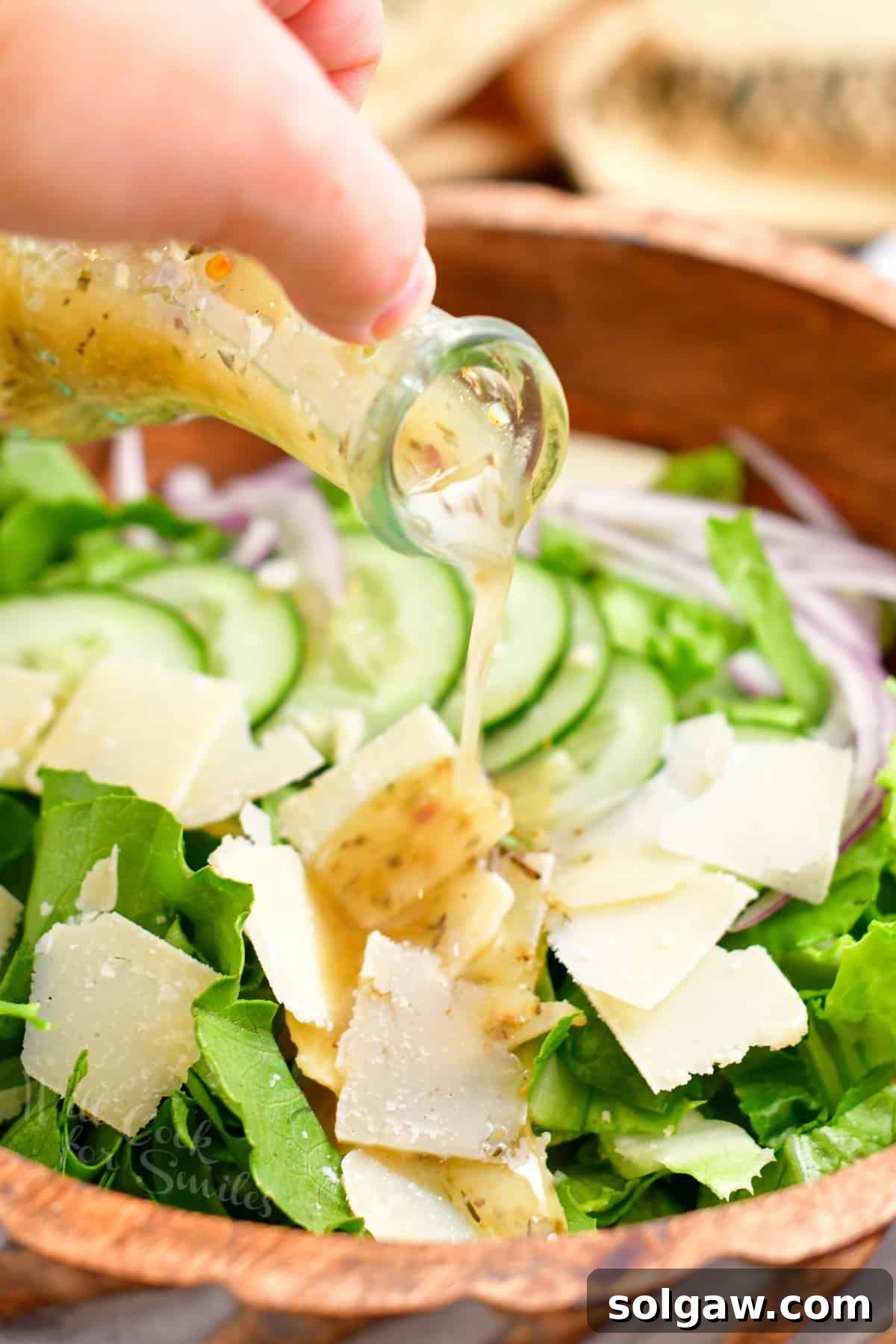
While Italian dressing is a beloved staple for salads, its versatility extends far beyond the greens. Its zesty, herbaceous profile makes it an incredibly useful ingredient for enhancing a wide array of dishes. Here are some fantastic ways to incorporate your homemade Italian dressing:
- As a Marinade: Unleash the power of Italian dressing as a flavorful marinade for various proteins. It’s particularly fantastic for chicken, turkey, beef, and pork. The combination of lemon juice and vinegar acts as a natural tenderizer, breaking down tough fibers in the meat, while the herbs and spices infuse it with incredible flavor. Marinate your proteins for at least 30 minutes, or even overnight for a deeper taste, before grilling, baking, or pan-frying.
- Elevate Pasta Salads: Italian dressing is the perfect complement to a variety of pasta salads. Drizzle it generously over classic antipasto pasta salads, vibrant tortellini salads, creamy macaroni salads, or even hearty potato salads. Its bright acidity and herbal notes cut through the richness of the pasta and other ingredients, adding a refreshing zing.
- Flavor Boost for Grilled Vegetables: Transform ordinary grilled or roasted vegetables into something extraordinary. Toss freshly chopped zucchini, bell peppers, onions, asparagus, or mushrooms with some Italian dressing before cooking. The dressing caramelizes beautifully on the grill or in the oven, imparting a savory depth and aromatic char to your favorite grilled vegetables.
- A Delectable Dipping Sauce: Serve your homemade Italian dressing as a sophisticated dipping sauce. It’s superb with crusty breadsticks, warm focaccia, or any artisanal bread. The vibrant flavors make for an excellent appetizer, inviting guests to savor every dip.
- Enhance Sandwiches and Subs: Forget bland condiments! A generous drizzle of Italian dressing can completely revolutionize your sandwiches and subs. It adds a zippy, tangy, and herbaceous layer that cuts through rich meats and cheeses, making every bite more exciting. It’s an absolute game-changer for our favorite Italian Subs, adding moisture and an incredible flavor punch.
- Dress Up Caprese Salad: While balsamic glaze is traditional, a light drizzle of Italian dressing offers a refreshing twist on a classic Caprese salad. The bright notes of lemon and herbs perfectly complement the fresh mozzarella, ripe tomatoes, and fragrant basil, creating a harmonious blend of flavors.
Other Delicious Dressing Recipes To Explore
- Balsamic Vinaigrette
- Raspberry Vinaigrette
- Creamy Avocado Dressing
- Greek Salad Dressing
- Green Goddess Dressing
PIN THIS RECIPE
DID YOU MAKE THIS RECIPE? PLEASE leave a 🌟 star rating! Let me know how you liked it by leaving the 📝 comment below or share and tag me on social media @willcookforsmiles. DON’T FORGET to subscribe to my newsletter!

Homemade Italian Dressing Recipe
Print
Pin
Rate
Ingredients
- 3/4 cup good quality olive oil
- 1/4 cup red wine vinegar
- 2 tsp freshly squeezed lemon juice
- 1 1/2 tbsp Italian seasoning blend
- 1 tsp garlic powder (optional, if your blend is light)
- 1/2 tsp crushed red pepper flakes (adjust to taste)
- 1/2 tsp salt to taste
- 1/8 tsp freshly cracked black pepper
- 1/2 tsp white granulated sugar (omit or substitute for keto)
- 1 tbsp fresh minced parsley
- 2 tbsp freshly grated Parmesan cheese
Instructions
-
Combine all the measured ingredients carefully into a dressing shaker bottle or a mason jar equipped with a secure lid.
-
Ensure the lid is closed tightly to prevent any spills, then shake the container vigorously for approximately 30-45 seconds. This intense shaking helps to create a smooth emulsion, blending the oil and vinegar into a cohesive dressing.
-
For the most robust and well-developed flavors, allow the dressing to rest in the refrigerator for at least a few hours before serving. This resting period gives the herbs and spices time to infuse fully into the oil and vinegar. However, if time is of the essence, the dressing can certainly be used immediately after preparation.
Storing;
-
Always store your homemade Italian dressing in the glass jar with a tight-fitting lid, kept refrigerated.
-
With proper storage, this vibrant Italian Dressing will maintain its quality and flavor for up to 2 weeks.
-
Before each use, it is essential to shake the dressing thoroughly to re-emulsify the ingredients, ensuring a consistent and flavorful pour every time.
Notes
Before each use, remember to give the dressing a good shake to re-emulsify the ingredients, as natural separation can occur. It’s also advisable to pour some out instead of scooping with a spoon, which helps maintain hygiene and prolongs its freshness.
Tips:
- Due to the olive oil content, the dressing may thicken or partially solidify when refrigerated. This is a natural occurrence and not a cause for concern! Simply remove the dressing from the refrigerator approximately 30 minutes before you plan to use it to allow it to warm up slightly and return to a pourable consistency.
- The flavor of your olive oil is key. I recommend using lighter tasting ones. Some extra virgin olive oils can have a distinct bitter flavor, so it’s always a good idea to taste your olive oil before incorporating it. A bitter oil will unfortunately compromise the entire dressing flavor.
- You have full control over the spice level. You can easily adjust the heat level of your Italian dressing by adding more or less crushed red pepper flakes according to your preference.
- This recipe is highly adaptable for dietary needs. You can easily make this recipe keto-friendly by using a sugar alternative or choosing to omit the sugar altogether without significantly impacting the delicious balance of flavors.