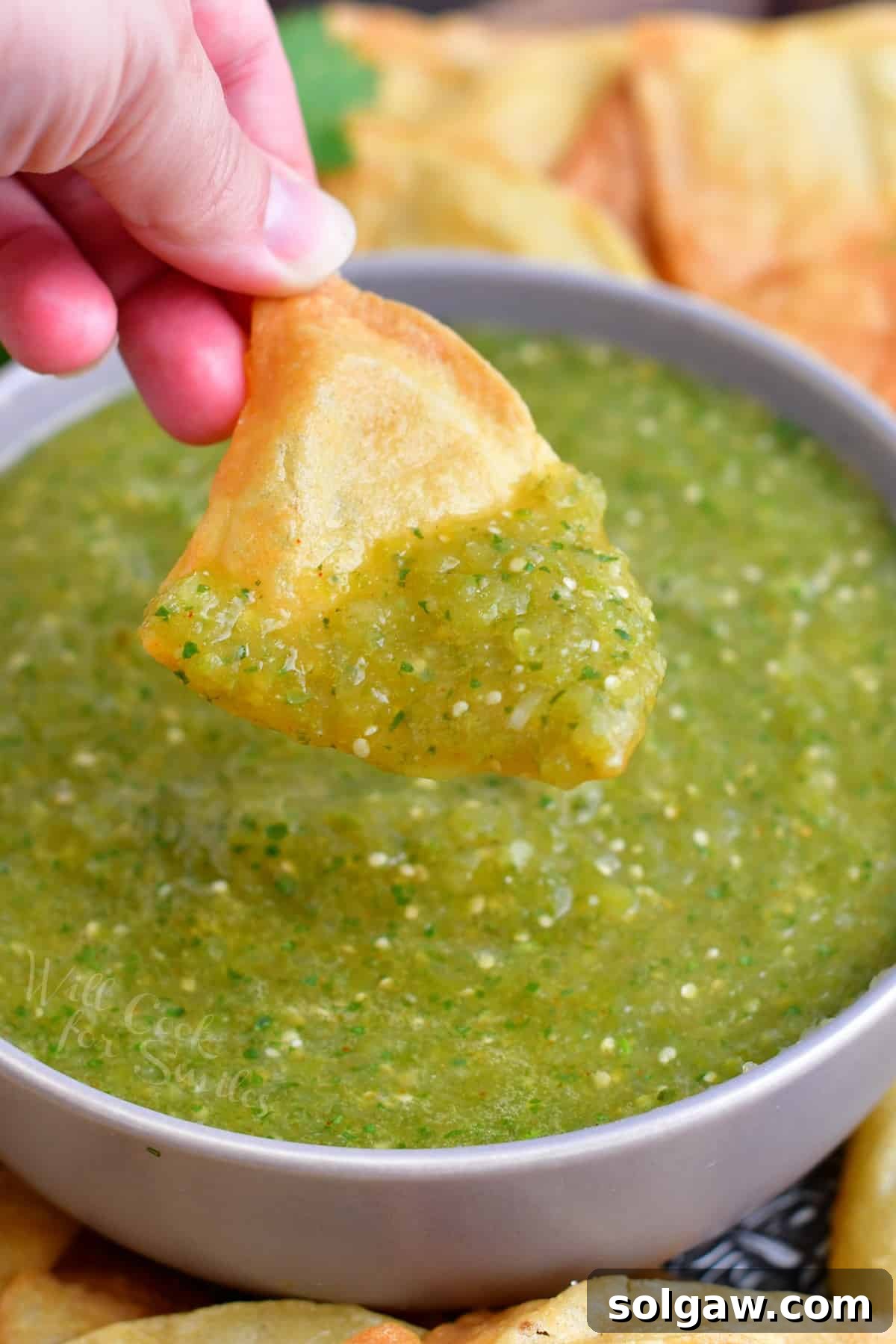
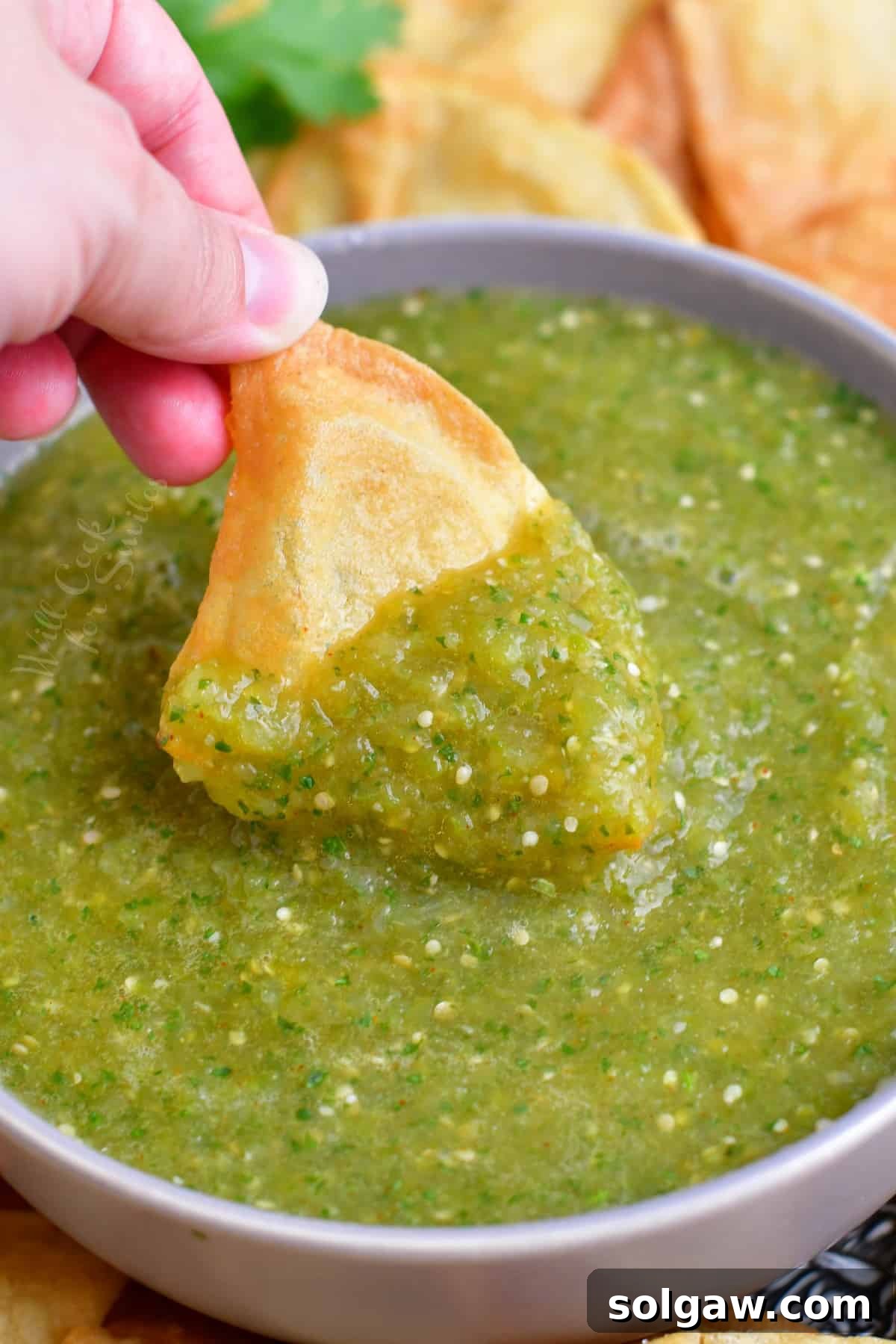
Authentic Homemade Salsa Verde: A Vibrant Tomatillo Dip Recipe
Delve into the vibrant world of Salsa Verde, a quintessential Mexican condiment renowned for its bright, tangy flavor and unmistakable green hue. Far from being just a dip, this versatile sauce is a cornerstone of Mexican cuisine, elevating everything from humble tortilla chips to robust enchiladas and tacos. Originating in Mexico, salsa verde has gracefully transcended borders, becoming a cherished staple in kitchens and restaurants worldwide, celebrated for its refreshing zest and ability to awaken the palate.
If your culinary journey hasn’t yet introduced you to the delights of authentic salsa verde, prepare for an extraordinary treat. This particular recipe stands out as a personal favorite, consistently stealing the spotlight at any gathering. Guests invariably praise it, either declaring it superior to any other salsa verde they’ve tasted or confessing a newfound obsession after their very first bite. It’s more than just a dip; it’s a guaranteed conversation starter, inviting everyone to discover the magic of its fresh, bold flavors.
The true secret behind an exceptional salsa verde lies in the quality and freshness of its ingredients. While the convenience of a store-bought jar is undeniable, the transformative experience of crafting your own salsa from scratch is unparalleled. The use of all-natural, farm-fresh components makes a dramatically noticeable difference, infusing the salsa with layers of flavor and a vibrant character that simply cannot be replicated by mass-produced alternatives. Embracing the homemade approach allows you to control every aspect, from the heat level to the subtle balance of tart and savory notes, ensuring a truly unforgettable condiment.
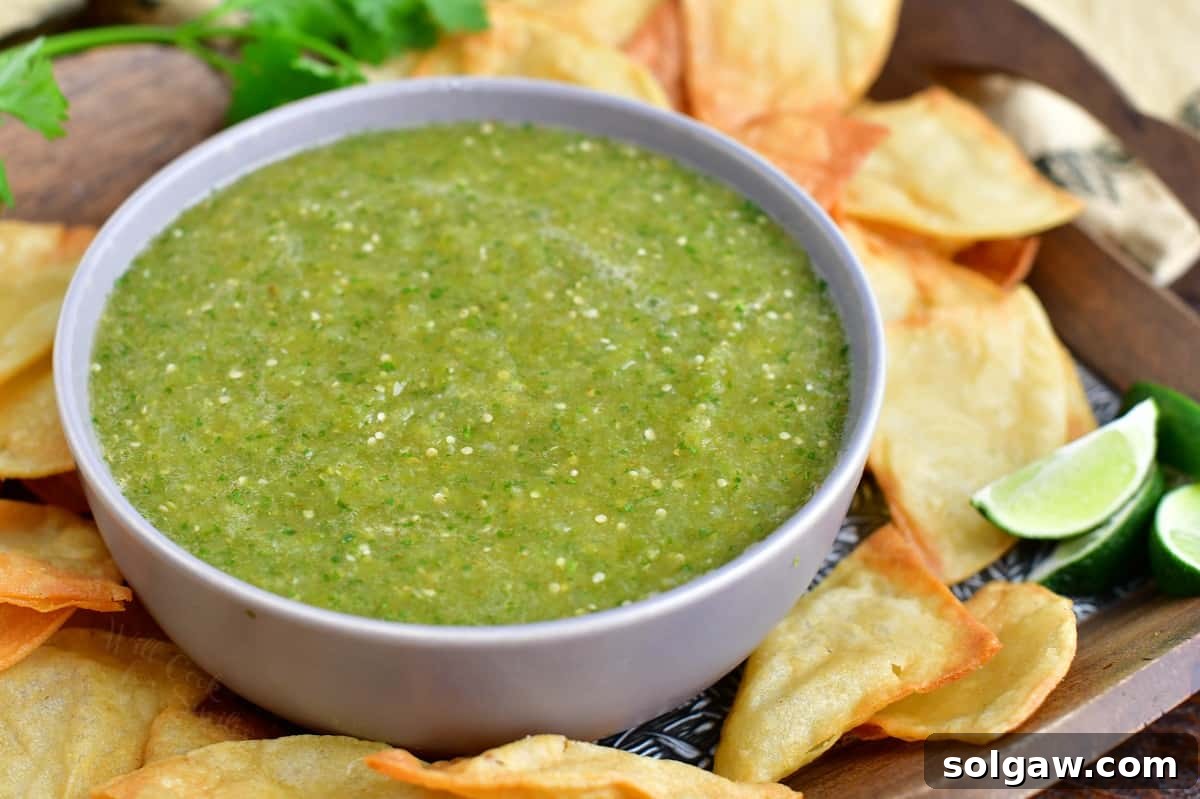
Understanding Key Ingredients for Your Salsa Verde
Crafting the perfect salsa verde begins with a deep understanding of its core components and how they contribute to its unique flavor profile. While the recipe is straightforward, selecting the right ingredients and knowing how to adjust them can elevate your salsa from good to extraordinary.
- Tomatillos: The Heart of Salsa Verde
It’s crucial to distinguish tomatillos from green tomatoes. Though similar in appearance, tomatillos are a distinct fruit from a different plant, more closely related to gooseberries, evident by their papery husk. Always choose tomatillos with firm, bright green husks that fully enclose the fruit. The greener the tomatillo, the more tart and vibrant your salsa will be. Ensure you remove the husks and thoroughly wash the sticky residue off the tomatillos before use. This sticky coating is natural but needs to be removed for optimal flavor and texture. - Jalapeños: Mastering the Heat
Jalapeños are your primary source of heat in salsa verde, and their spice level can be easily managed. For a mild salsa, opt for young jalapeños with smooth, dark green skin and be sure to remove all seeds and membranes, as these contain most of the capsaicin (the compound responsible for the heat). To increase the spice level, select older jalapeños, which often display fine brownish lines or “stretch marks” on their skin – these indicate a spicier pepper. Crucially, leave some or all of the seeds and membranes intact to truly dial up the heat. - Beyond Jalapeños: Exploring Chili Alternatives
If you crave a spicier kick, consider incorporating other chili peppers. Serrano peppers offer a sharper, more intense heat than jalapeños. For an even more fiery experience, a small amount of habanero can transform your salsa, but use with caution! Alternatively, you can enhance the existing spice with a pinch of cayenne pepper or a dash of chili powder after blending, allowing you to taste and adjust incrementally. - Onion and Garlic: The Aromatic Foundation
White onion provides a crisp, pungent base, while fresh garlic cloves add depth and a savory warmth. Roasting these aromatics alongside the tomatillos mellows their harshness and brings out their inherent sweetness, creating a more complex and harmonious flavor. - Fresh Cilantro and Lime: Brightness and Zest
These two ingredients are non-negotiable for authentic salsa verde. Fresh cilantro contributes a distinctive, herbaceous aroma that is characteristic of Mexican cuisine. Freshly squeezed lime juice brightens the entire salsa, cutting through the richness and enhancing the tanginess of the tomatillos. Always use fresh lime juice for the best results; bottled juice simply doesn’t compare.
Essential Tips for Crafting Perfect Homemade Salsa Verde
Making homemade salsa verde is a rewarding experience, and a few key techniques can ensure a perfect batch every time. From preparing your produce to achieving the ideal texture, these tips are designed to guide you to salsa verde perfection.
- Prepare Your Tomatillos Properly: Before anything else, thoroughly remove the papery husks from your tomatillos. This step is non-negotiable. Once husked, you’ll notice a slightly sticky residue on their surface. Do not skip washing them under cool running water to remove this natural protective coating. A clean tomatillo is essential for the best flavor.
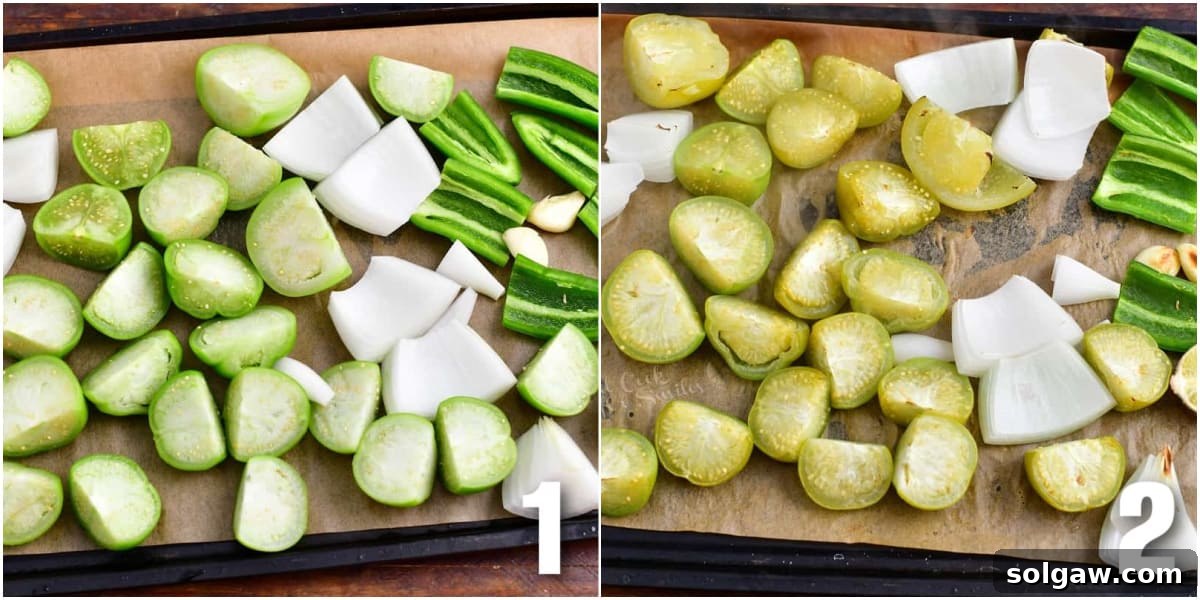
- Embrace the Roasting Step: While some recipes call for raw tomatillos, roasting is highly recommended for an unparalleled depth of flavor. This simple step caramelizes the natural sugars in the tomatillos, onion, and garlic, mellowing their sharp acidity and enhancing their sweetness and smokiness. Roasting also softens the tomatillo skins, contributing to a smoother, more refined salsa texture. It transforms raw, sometimes harsh notes into a rich, complex symphony of flavors.
- Optimal Roasting Method: Broiling for Flavor: For best results, utilize your oven’s broiler. Position the oven rack to the center, roughly 6-8 inches away from the broiler element. Preheat your broiler to high for a few minutes before placing your baking sheet. This intense, direct heat quickly chars the vegetables, imparting that crucial smoky flavor and tenderizing them efficiently. Keep a close eye on them to prevent burning.
- Achieving the Perfect Texture: After roasting, transfer all your ingredients to a blender. Pulse the blender rather than simply blending continuously. Pulsing allows you to control the consistency, ensuring the salsa is smooth while still retaining a slight texture from the vegetables, which adds character. Blend until there are no large chunky pieces remaining, but avoid over-blending into a watery puree.
- Balance the Flavors: Always taste your salsa before making final adjustments. Add salt and cumin gradually, tasting as you go. Remember that it’s easier to add more than to correct an overly seasoned salsa. If it tastes too acidic, a tiny pinch of sugar can help balance it, or more roasted garlic can add depth.
- Cool Before Serving (Optional, but Recommended): While delicious served warm, salsa verde often develops a more harmonious flavor profile once it has cooled slightly and the flavors have had a chance to meld. This also makes it more refreshing as a dip.
Storing and Freezing Your Homemade Salsa Verde
Once you’ve mastered making fresh salsa verde, knowing how to properly store it ensures you can enjoy its vibrant flavors for days or even months to come. Proper storage not only preserves its taste but also maintains food safety.
- Refrigeration:
- For short-term storage, transfer your cooled salsa verde into a clean, airtight glass jar with a lid or another appropriate food storage container.
- Always keep it refrigerated. In an airtight container in the refrigerator, homemade salsa verde will maintain its freshness and quality for up to one week.
- A Pro Tip for Longevity: When serving, it’s best to pour a portion of the salsa into a separate serving bowl rather than repeatedly dipping a spoon or chip directly into the main storage jar. This practice minimizes the introduction of bacteria, which can accelerate spoilage.
- Freezing for Extended Enjoyment:
- Salsa verde freezes exceptionally well, allowing you to prepare larger batches and enjoy them at your convenience for up to 3 months.
- Ensure the salsa is completely cooled before freezing.
- You can freeze salsa verde in individual portions or as a larger batch, depending on your needs. For portioning, consider using freezer-safe zip-top bags or small airtight containers. Ice cube trays are also excellent for freezing small, single-serving portions that can be easily thawed for a quick dip or to add to recipes.
- If using freezer bags, fill them with the desired amount, gently press out as much air as possible, seal them tightly, and label them with the date. Lay the bags flat on a baking sheet or cutting board until frozen solid. Once frozen, they can be stacked efficiently in your freezer.
- Thawing Frozen Salsa: For best results, thaw frozen salsa verde slowly in the refrigerator overnight. Avoid thawing at room temperature, as this can encourage bacterial growth. Once thawed, stir it well before serving. While the texture might be slightly softer after freezing and thawing, the flavor will remain delicious.
PIN THIS RECIPE FOR LATER
Did you make this recipe? We’d love to hear from you! Please leave a 🌟 star rating and share your thoughts in the 📝 comment section below. Don’t forget to subscribe to our newsletter for more delicious recipes and cooking tips!
Homemade Salsa Verde Recipe
Our homemade salsa verde recipe features perfectly roasted green tomatillos, sweet onion, zesty jalapeño peppers, aromatic garlic, and a bright squeeze of lime, all expertly blended with fresh cilantro and a harmonious blend of seasonings. This recipe is designed to be easily adjustable to your preferred spice level, ensuring a perfect batch every time!
Pin Recipe
Course: Appetizer
Cuisine: Mexican
Diet: Gluten Free, Low Lactose, Vegan
Prep Time: 10 minutes
Cook Time: 7 minutes
Total Time: 17 minutes
Servings: 6 (makes about 4 cups)
Calories: 49 kcal per serving
Author: Lyuba Brooke
Ingredients
- 1.5 lbs tomatillos, husks removed
- 2 jalapeños, seeds removed (leave seeds in if you prefer more spice)
- 1/2 white onion
- 3 cloves of garlic
- 1 lime, juice only
- 1/3 cup fresh cilantro
- 1 tsp salt (more or less to taste)
- 1 tsp cumin
- 1/2 tsp chili powder (more or less to taste)
Instructions
- Set the oven rack to the middle position, approximately 6 inches away from the broiler. Turn the broiler on to high and allow it to preheat for a few minutes.
- Ensure husks are removed from tomatillos and wash them thoroughly. Clean seeds and membranes from jalapeños if you desire a milder salsa; for spicier salsa, leave some or all seeds in.
- Cut tomatillos, onion, jalapeños, garlic, and lime into halves or quarters and spread them evenly on a baking sheet. (For easier cleanup, you may cover the baking sheet with foil or parchment paper.)
- Place the baking sheet into the preheated oven and broil the vegetables for 5-8 minutes, or until slightly charred and softened. Watch carefully to prevent burning.
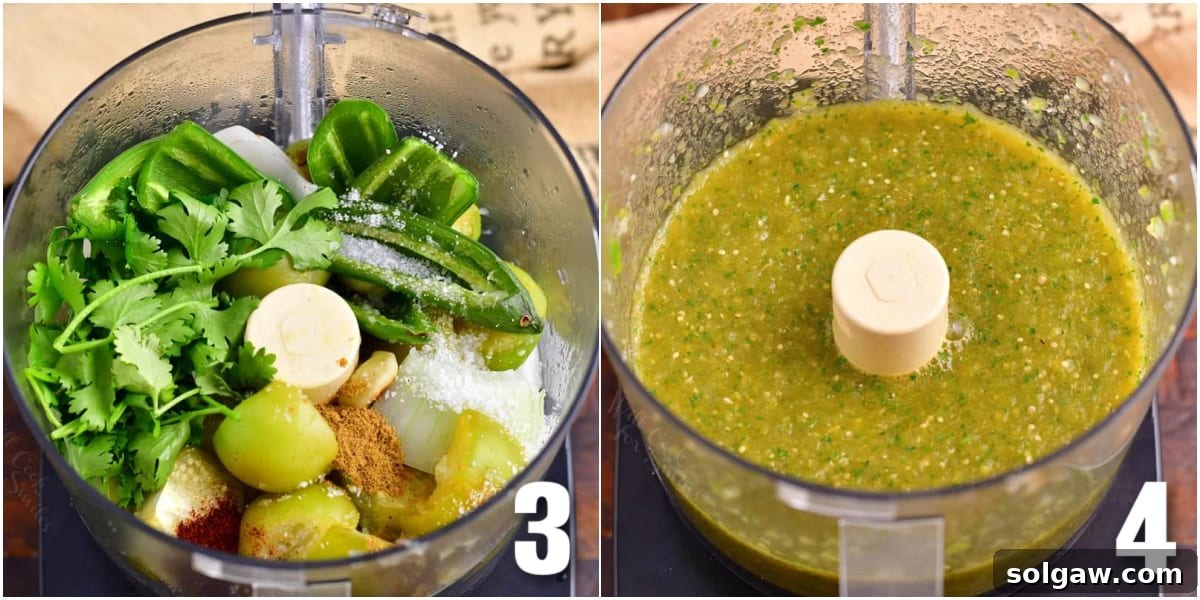
- Once roasted, transfer the vegetables into a blender. Squeeze the juice from the roasted limes directly into the blender. Add fresh cilantro, salt, cumin, and chili powder. Pulse the blender until the salsa is smooth with no large chunks remaining.
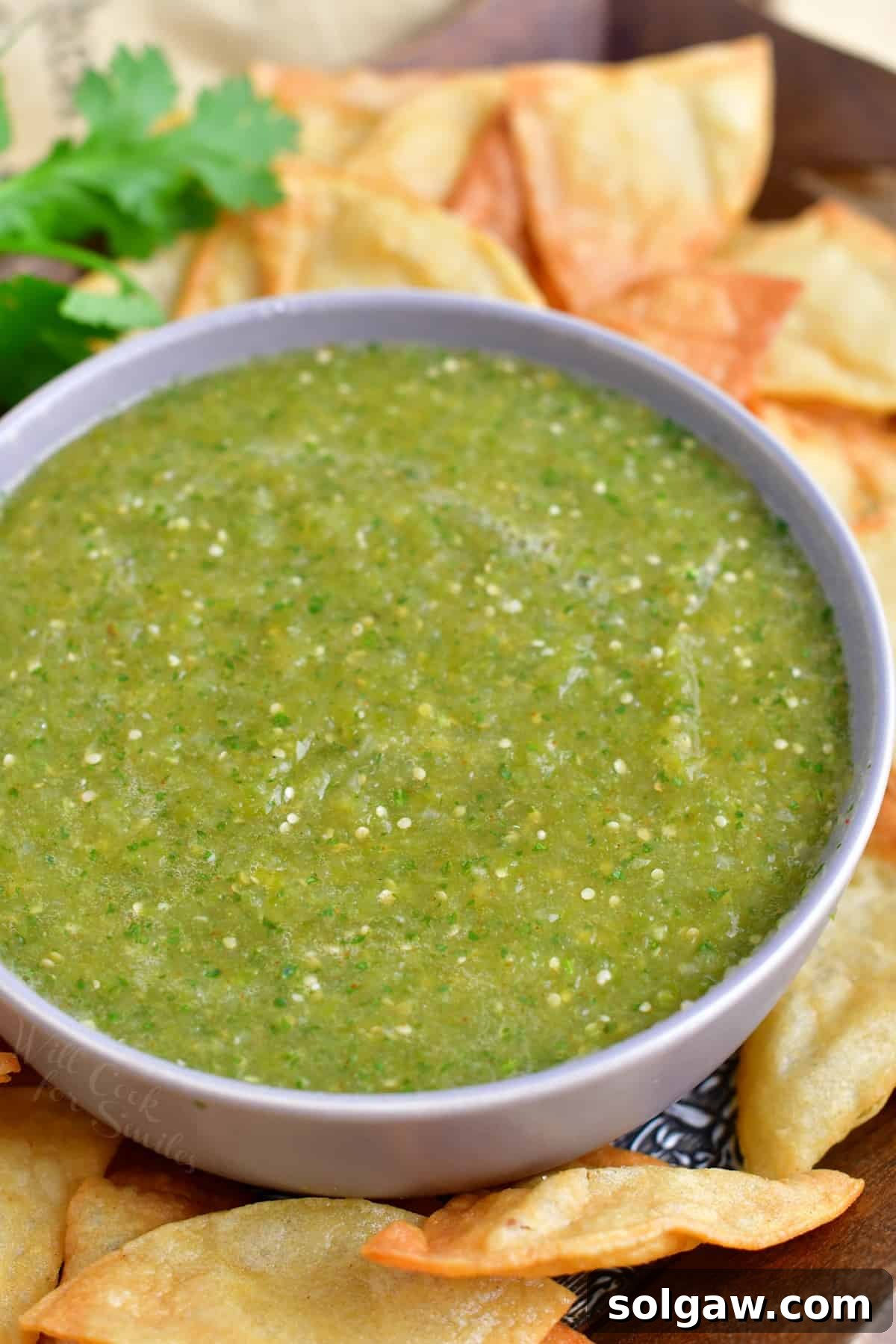
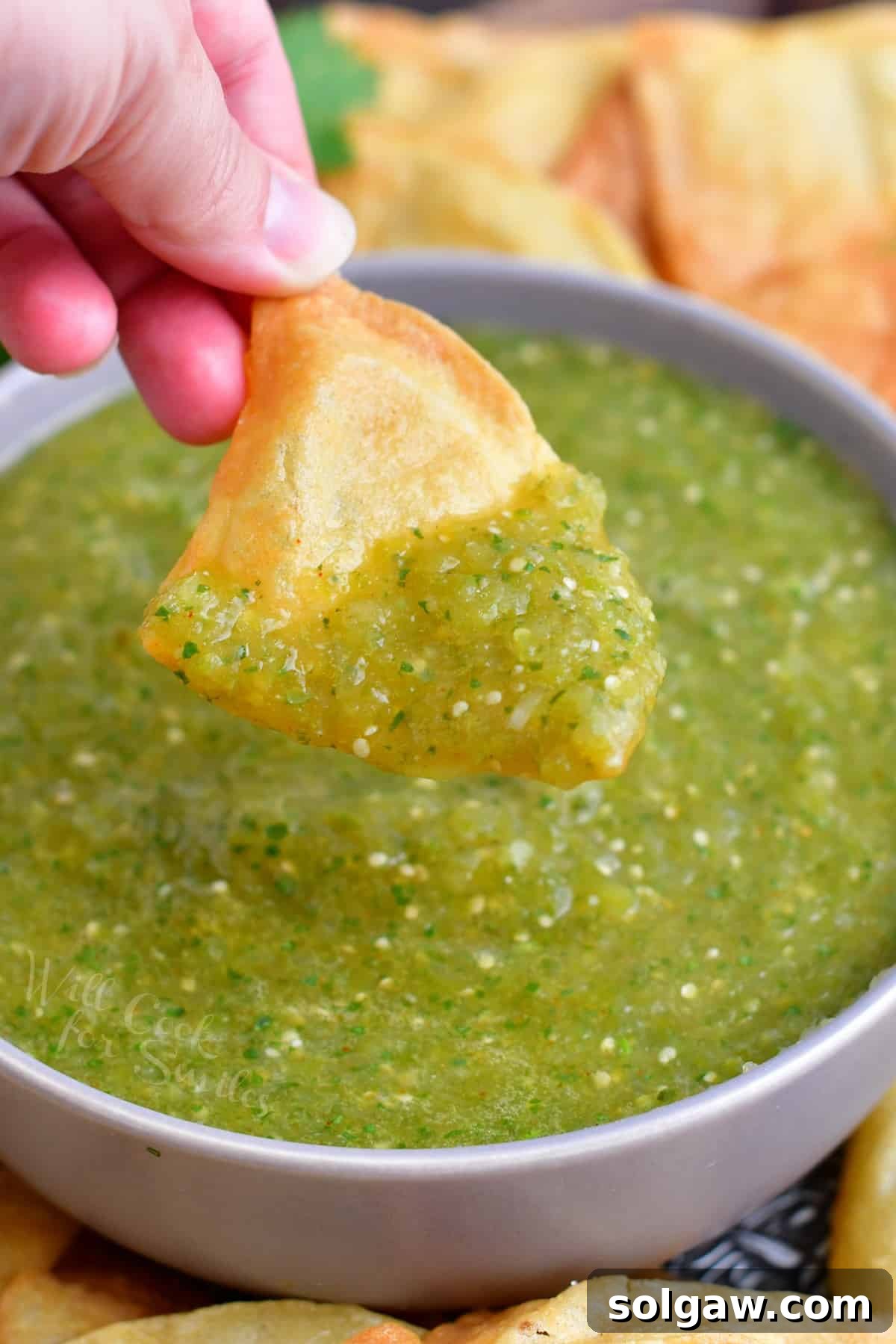
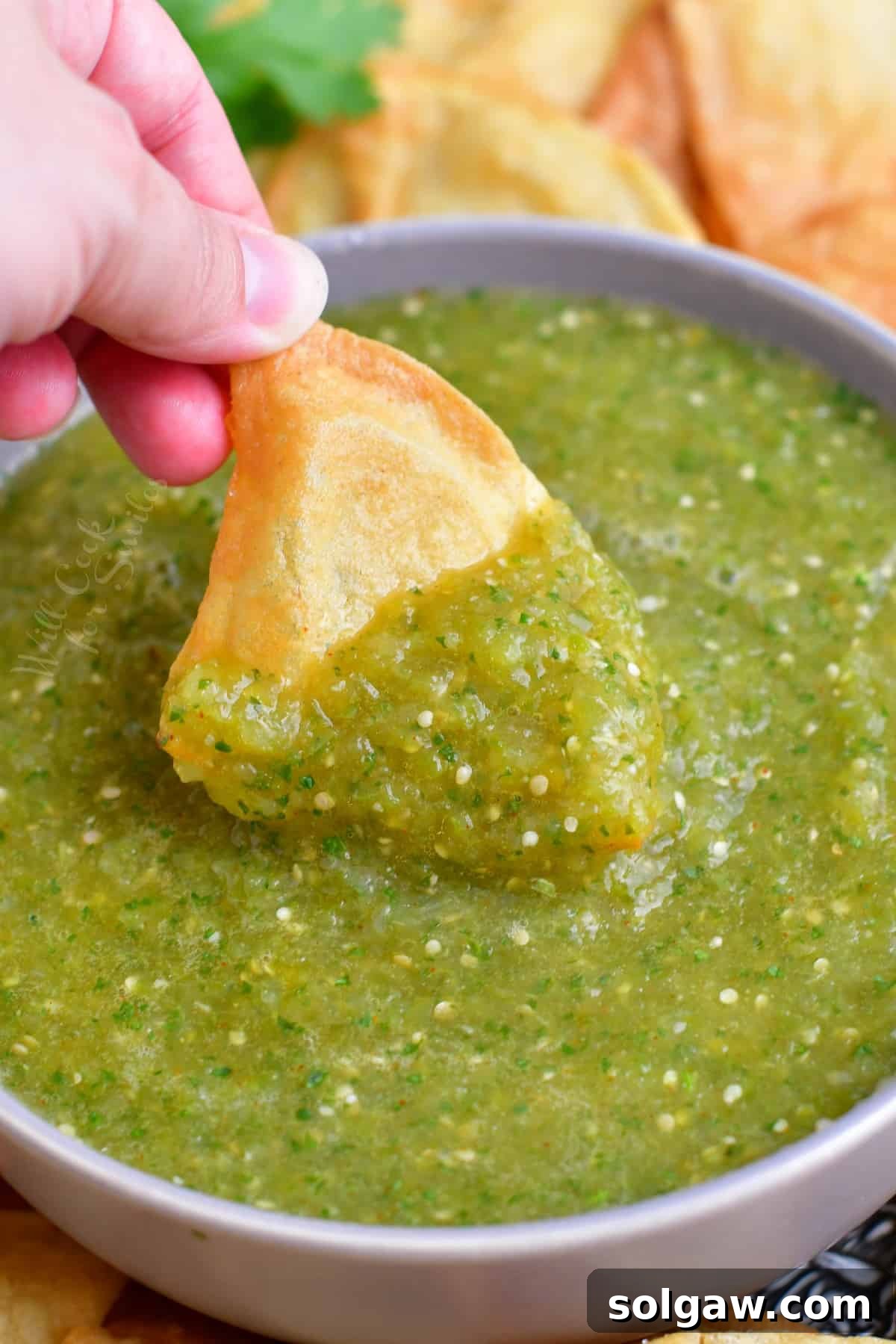
- Your homemade salsa verde is now ready to serve! Enjoy it warm with tortilla chips, or transfer it to an airtight glass container, let it cool completely, and store it in the refrigerator for later.
Notes
- Storing: Store salsa verde in an airtight glass container in the refrigerator. Properly stored, it will last for up to 1 week. To extend freshness, always pour out a serving rather than dipping directly into the main container.
- Freezing: Cooled salsa verde can be frozen in portions or all together. Use freezer-safe zip-top bags, removing excess air before sealing and labeling. Lay bags flat to freeze, then stack them. Freeze for up to 3 months.
- Thawing: Always thaw frozen salsa slowly in the refrigerator for best texture and food safety.
- Adjusting Spice Level: Jalapeño peppers vary in heat; older jalapeños with brownish “veins” on the skin are typically spicier. For more heat, leave some jalapeño seeds in, as they contain much of the capsaicin. For an even spicier salsa, consider using spicier chili peppers like serrano or habanero, or add a pinch of cayenne pepper or extra chili powder to taste.
Nutrition
Calories: 49 kcal | Carbohydrates: 10g | Protein: 2g | Fat: 1g | Saturated Fat: 1g | Sodium: 393mg | Potassium: 360mg | Fiber: 3g | Sugar: 5g | Vitamin A: 299IU | Vitamin C: 23mg | Calcium: 21mg | Iron: 1mg
Delightful Recipes Featuring Tomatillos
Salsa verde is just the beginning of what you can create with the unique tang of tomatillos. Explore these other fantastic recipes where tomatillos play a starring role, bringing their signature bright and tangy flavor to your table:
- Classic Chicken Enchiladas Verdes
- Creamy Chicken Enchilada Verde Dip
- Hearty Beef Enchiladas Verdes
- Cheesy Vegetable Enchiladas In Creamy Verde Sauce
- Comforting White Turkey Chili with Tomatillos
Originally published on Will Cook For Smiles on September 18, 2016.