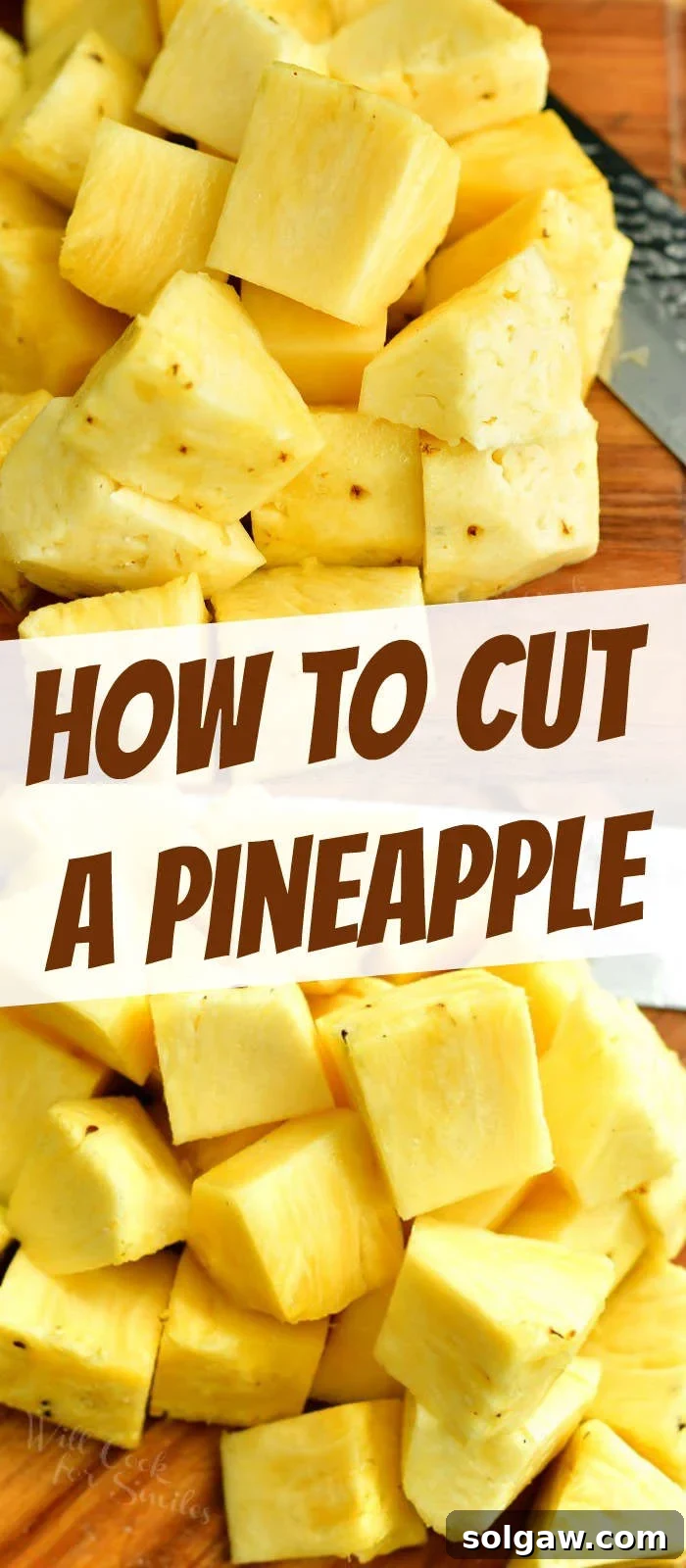
How to Cut a Pineapple: Your Easy Step-by-Step Guide
Unlock the sweet, tangy flavor of fresh pineapple with ease! This comprehensive step-by-step guide on how to cut a pineapple will transform your approach to this delicious tropical fruit. Whether you’re a novice in the kitchen or just looking for a more efficient method, our detailed instructions, complete with visuals, will have you confidently preparing perfect pineapple chunks, rings, or dice in no time. Fresh pineapple is incredibly versatile, ideal for vibrant salads, grilling, delectable desserts, or simply as a refreshing snack on its own.
For many, tropical fruits like succulent pineapples, creamy coconuts, and fragrant mangoes were once exotic luxuries, often enjoyed only when perfectly in season. The anticipation of mom bringing home a ripe pineapple was a special event, promising days of sweet, juicy indulgence. This vibrant fruit, with its unique blend of sweetness and tang, is a culinary delight that enhances both sweet and savory dishes, making it a staple in kitchens worldwide.
Don’t let the pineapple’s spiky skin and formidable crown intimidate you! While its exterior might seem daunting, cutting a pineapple is surprisingly straightforward and safe with the right technique. In just a few minutes, you can transform a whole pineapple into beautiful, edible pieces, ready to be enjoyed. From zesty pineapple salsa, refreshing tropical fruit salads, and savory fish tacos to marinated teriyaki chicken or succulent grilled pineapple kebabs, the possibilities for incorporating this incredible fruit into your meals are truly boundless.
How to Choose a Ripe Pineapple
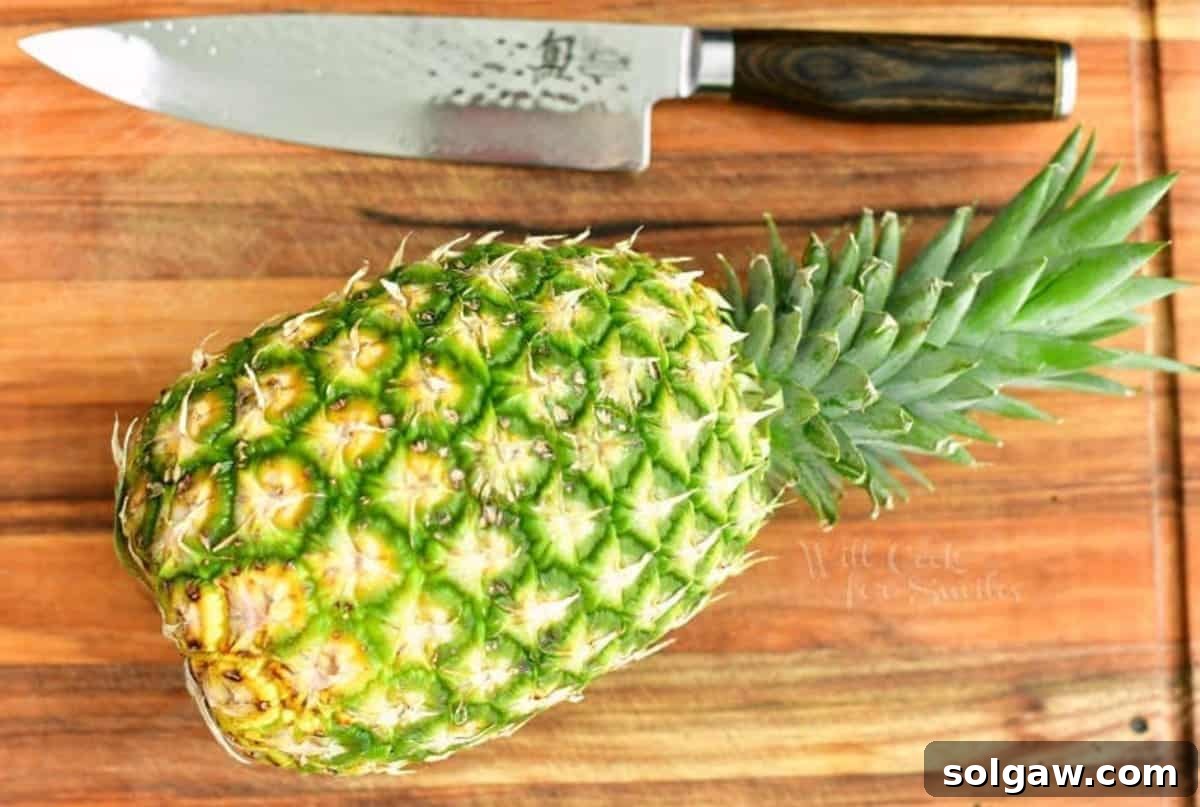
Selecting the perfect pineapple is the first step to enjoying its optimal flavor. Unlike many fruits, pineapples do not continue to ripen significantly after being harvested. Therefore, it’s crucial to choose a pineapple that is ripe and ready to eat at the store. Focus on three key indicators: color, feel, and smell. Trust these sensory cues to guide you to the sweetest, juiciest fruit.
1. The Visual Test: Color
When assessing ripeness by color, look for a pineapple that displays a **beautiful golden-yellow hue extending evenly from the base upwards**, sometimes with hints of green closer to the crown. A pineapple that is entirely green is typically underripe and will be tart. Conversely, one that has too much dark orange or brown coloration, especially with shriveled skin, may be overripe. The leaves on the crown should appear vibrant green and healthy, not dry, brittle, or wilting. A rich, uniform golden color usually signals peak ripeness and sweetness.
2. The Touch Test: Feel and Texture
Gently squeeze the pineapple from top to bottom. A perfectly ripe pineapple should have a slight give, feeling firm yet somewhat yielding when pressed, much like a ripe peach or avocado. Avoid pineapples that are rock-hard and show no give at all; these are unripe and will lack flavor and sweetness. Similarly, steer clear of any that have noticeably soft, mushy, or bruised spots, as these indicate spoilage or overripeness, which can lead to a fermented taste.
3. The Aroma Test: Smell
The most reliable and definitive indicator of a pineapple’s ripeness is its fragrance. Hold the pineapple and deeply smell the base (the stem end). A perfectly ripe pineapple will emit a **sweet, distinctly tropical, and intensely fruity aroma**. This sweet scent is a direct sign of its sugar content and readiness. If there’s no scent at all, it’s likely underripe and won’t develop more flavor. If, however, it smells fermented, vinegary, or has any sour or unpleasant notes, it’s definitively overripe and past its prime. Let your nose be your ultimate guide to selecting a delicious pineapple.
Essential Tools for Cutting Pineapple
Having the right tools makes the process of cutting a pineapple safe and efficient. Here’s what you’ll need:
- Large, Sharp Chef’s Knife: This is your most important tool. An 8- to 10-inch chef’s knife with a keen edge is ideal. A sharp knife is crucial for safety, as it glides through the tough skin with less effort, reducing the chance of slips. A dull knife, on the other hand, requires more force and is far more prone to causing accidents.
- Sturdy Cutting Board: A large, stable cutting board made of wood or plastic is essential. Ensure it has a non-slip surface, or place a damp paper towel underneath it to prevent movement. Avoid glass or ceramic cutting boards, as they can quickly dull your knife and are dangerously slippery, especially with juicy fruits. A board with a juice groove is a practical feature, as it helps contain the abundant pineapple juices.
- Optional: Small Paring Knife: Useful for precise tasks like removing any stubborn “eyes” that remain after the initial peeling, or for shaping smaller pieces.
- Optional: Pineapple Corer: If you frequently prepare pineapples and prefer perfectly uniform rings, a specialized pineapple corer can be a convenient investment. However, for occasional use, you can achieve similar results by hand with a small cookie cutter or a paring knife to remove the core from individual rings.
- Airtight Food Storage Container: Absolutely necessary for storing any leftover cut pineapple to maintain its freshness and prevent it from drying out or absorbing other odors in the refrigerator.
Step-by-Step Pineapple Cutting Instructions
Mastering the art of cutting a pineapple is simple with these clear, step-by-step instructions. Remember to prioritize safety by always using a sharp knife and maintaining a firm grip on both the knife and the fruit.
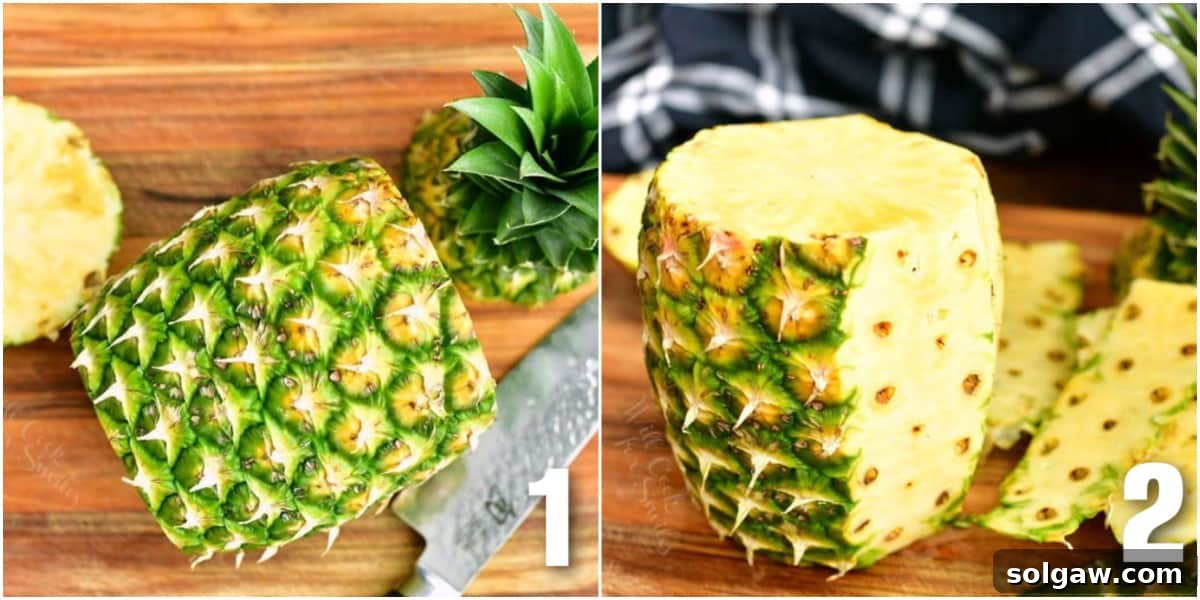
-
Step 1: Trim the Top and Bottom for Stability
Lay the pineapple horizontally on your sturdy cutting board. Using your large, sharp chef’s knife, carefully slice off the leafy crown (top) and the hard, woody base (bottom) of the pineapple. Aim for clean, even cuts about 1/2 to 3/4 inch from each end. These cuts create two flat, stable surfaces, which are essential for safe and efficient peeling in the next step.
-
Step 2: Peel the Outer Skin
Stand the pineapple upright on one of its newly flattened ends. Position your knife at the top and carefully slice downwards, following the natural curve of the pineapple, to remove the tough, spiky outer skin. Work your way around the entire fruit, trying to cut just deep enough to remove the skin and the brown “eyes” embedded within, while preserving as much of the sweet, golden flesh as possible. Don’t worry if some “eyes” remain; you can remove any stubborn, deep-set ones individually with a small paring knife or by making shallow V-shaped cuts along their diagonal pattern. Lighter, small “eyes” are often fine to leave.
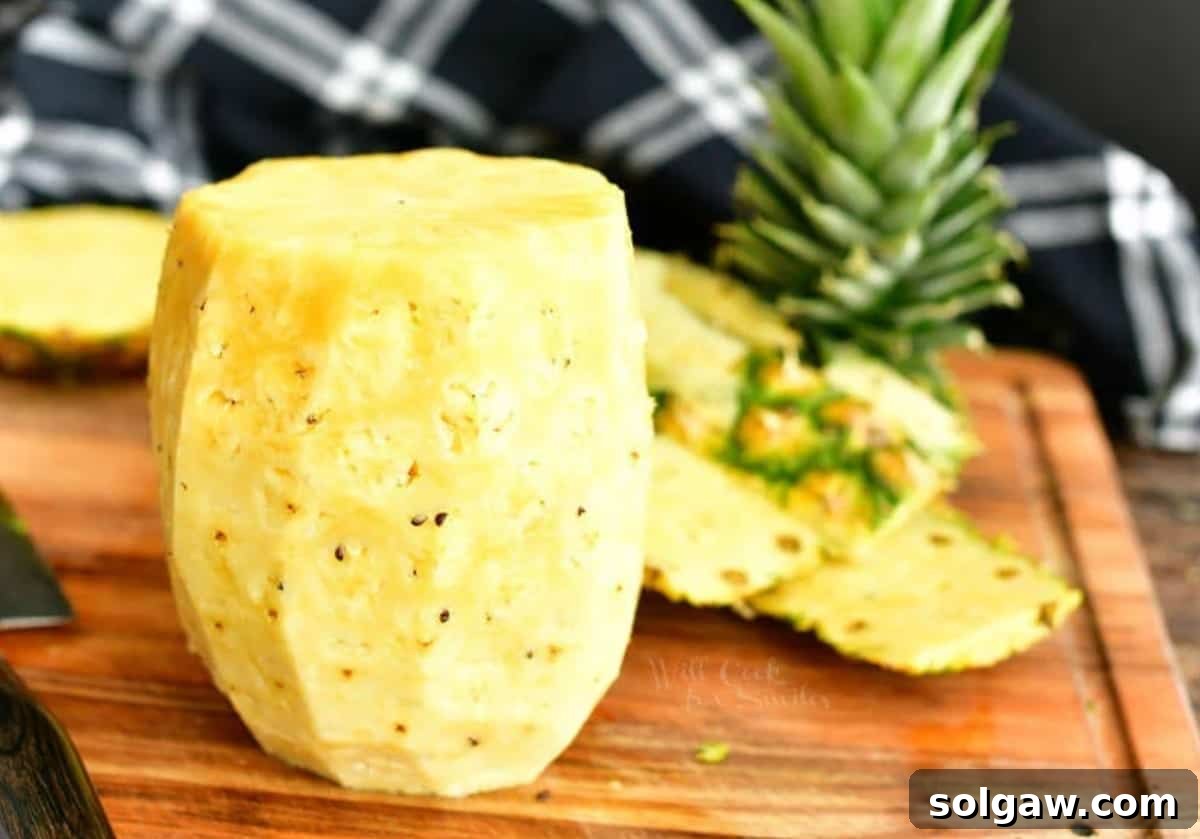
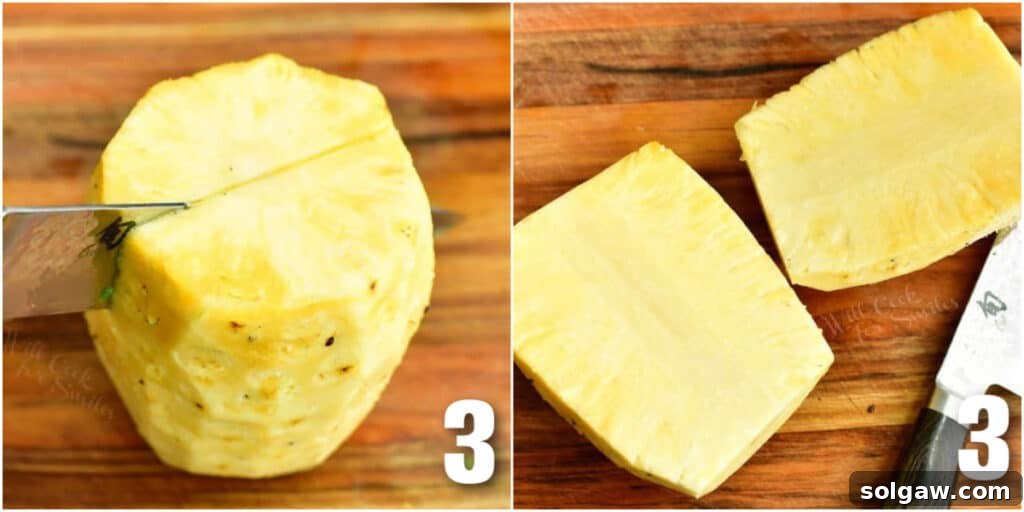
-
Step 3: Halve and Quarter the Pineapple
With the peeled pineapple still standing upright on your cutting board, slice it lengthwise directly down the middle, dividing it into two equal halves. Then, lay each half flat on the cutting board (cut-side down for maximum stability) and slice it lengthwise again to create four uniform quarters. This quartering method significantly simplifies access to the fibrous core, making it easier to remove cleanly.
-
Step 4: Remove the Fibrous Core
Locate the tough, pale yellow, and highly fibrous core that runs through the inner corner of each pineapple quarter. Using your chef’s knife, carefully slice it off at an angle. The core is distinctly harder than the surrounding flesh and, while edible, is generally too stringy and unpleasant to eat raw. Removing it leaves you with pure, sweet, and tender pineapple flesh, ready for consumption.
-
Step 5: Chop into Chunks or Desired Shape
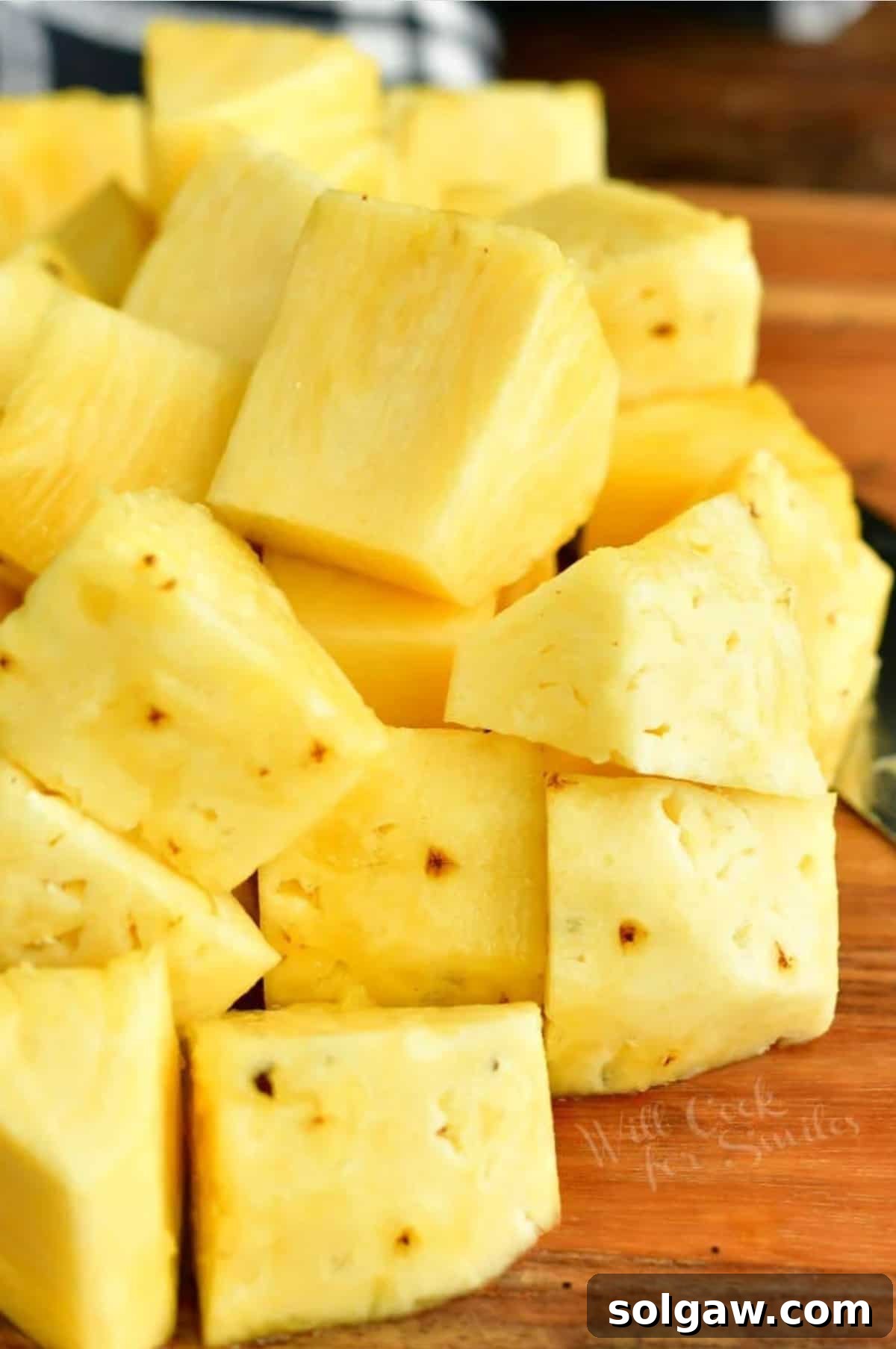
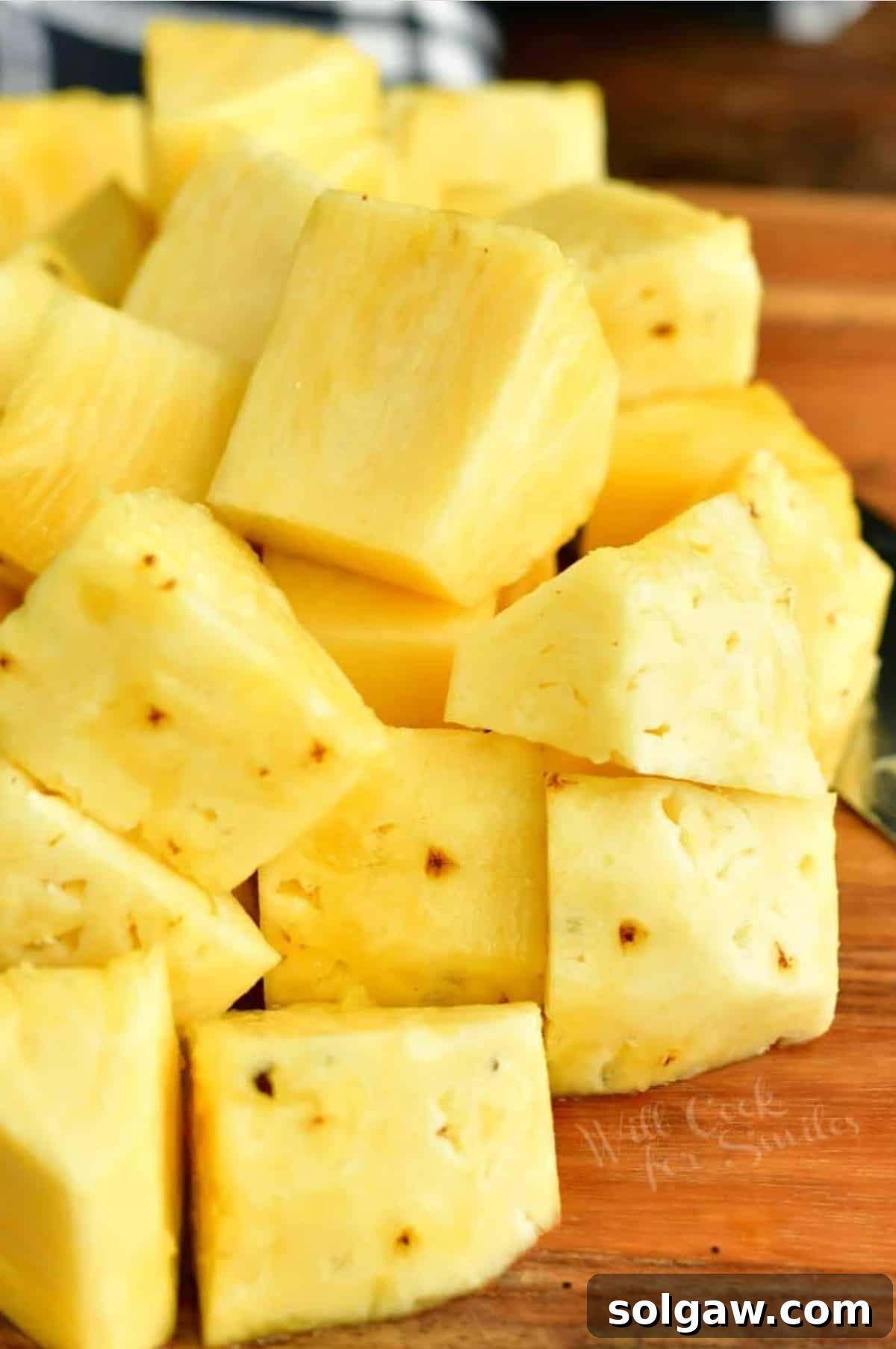
Now that the core has been removed, you can easily chop your cored pineapple quarters into your preferred size and shape. For versatile snacking or general culinary use, 1-inch chunks are ideal. If you’re preparing ingredients for salsa, a fine fruit salad, or other dishes requiring a smaller texture, you might opt to dice the pineapple into smaller pieces. Refer to the “Different Cuts of Pineapple” section below for specific techniques to create rings or spears.
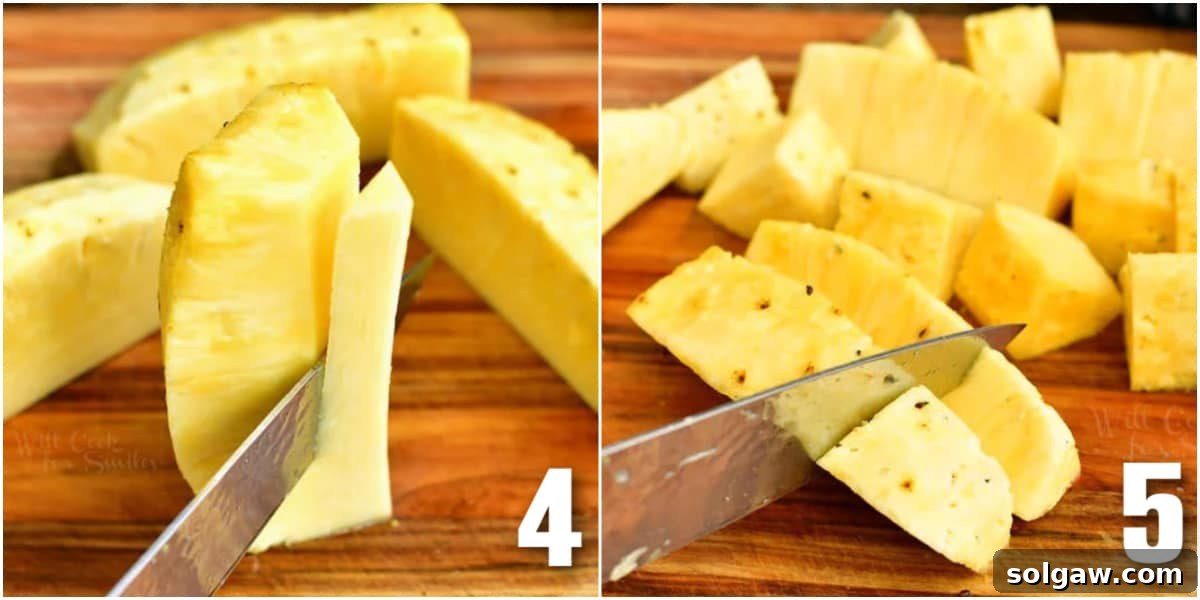
Exploring Different Pineapple Cuts
While chunks are the most common way to enjoy pineapple, this versatile fruit can be prepared in various forms, each suited for different culinary applications and presentations.
Pineapple Rings
Pineapple rings are iconic, perfect for grilling, garnishing tropical cocktails, making a classic pineapple upside-down cake, or serving as a vibrant base for savory dishes. To create beautiful, uniform rings:
- Follow Step 1 (trim the top and bottom) and Step 2 (peel the outer skin) from the general cutting instructions.
- Instead of halving the pineapple, lay the peeled fruit on its side. Slice it width-wise into uniform circles, aiming for a thickness of about 1/2 inch. This will give you sturdy rings.
- To remove the fibrous core from the center of each ring, you can use a 1 to 1.5-inch diameter cookie cutter. Alternatively, a small paring knife can be used to carefully cut out the core. You can then leave them as full rings or cut them in half to create elegant half-moon shapes.
Diced Pineapple
Finely diced pineapple is ideal for vibrant pineapple salsa, adding a sweet and tangy burst to stir-fries, topping tacos, or incorporating into fruit salads where a finer, more integrated texture is desired. To dice pineapple efficiently:
- Follow Steps 1 through 4 (trim ends, peel skin, halve, quarter, and remove the core) as described in the main instructions.
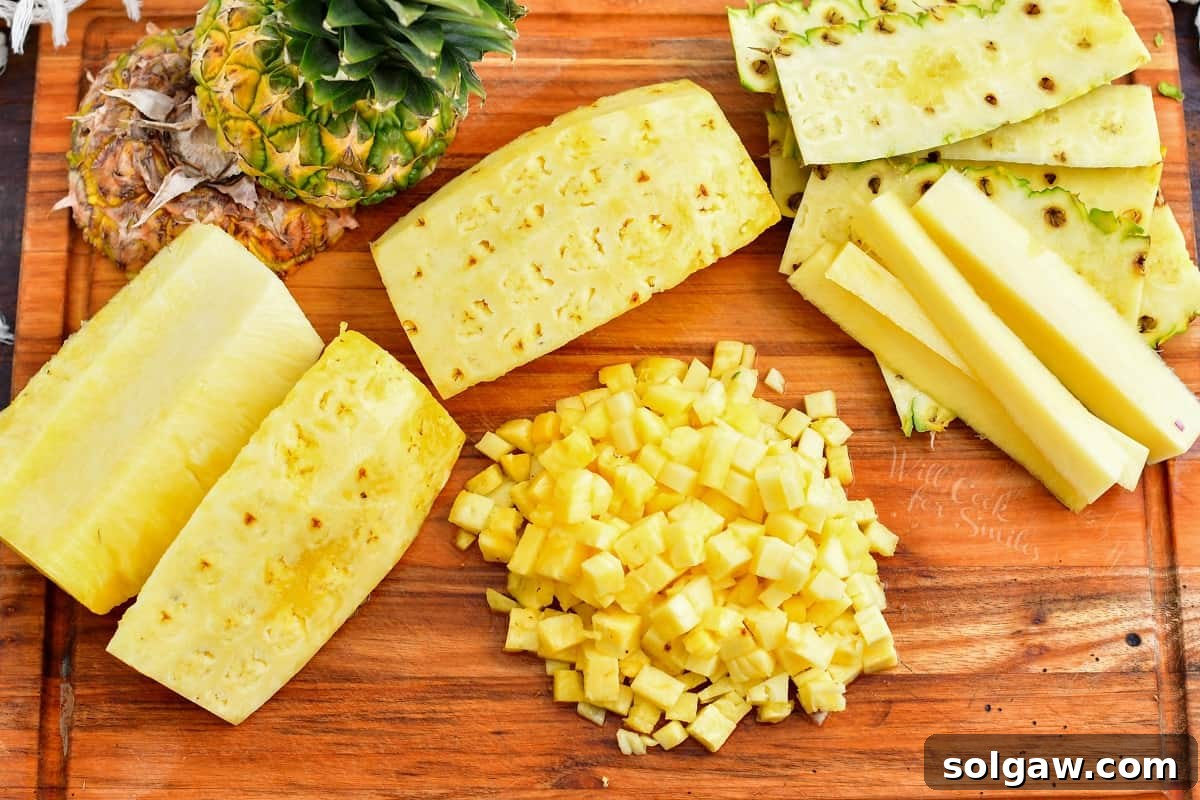
- Take each cored pineapple quarter and lay it flat on your cutting board. Slice it lengthwise into long, consistent strips, about 1/4 to 1/2 inch thick.
- Then, gather these strips together and slice them crosswise into small, uniform dice, typically 1/4 to 1/2 inch in size. This method ensures neat, even pieces.
Pineapple Spears or Wedges
Pineapple spears or wedges are fantastic for fruit platters, dipping sauces, or simply as a more substantial and easy-to-handle snack. They’re also great for grilling alongside other meats or vegetables. To create elegant spears:
- Follow Steps 1 through 4 (trim ends, peel skin, halve, quarter, and remove the core) from the primary cutting guide.
- Once you have your cored pineapple quarters, lay each quarter flat. Slice it lengthwise into 2 or 3 spears, depending on the desired thickness and the size of your pineapple. Aim for consistent sizes for uniform presentation.
Storing Fresh Pineapple for Maximum Freshness
Proper storage is key to extending the life of your pineapple, whether whole or cut, ensuring you can enjoy its sweet flavor for longer.
Storing a Whole Pineapple
If you’ve bought a perfectly ripe, uncut pineapple and plan to use it within a day or two, you can safely leave it at room temperature on your kitchen counter. This can sometimes intensify its aroma slightly. However, to significantly extend its freshness, store the whole, uncut pineapple in the refrigerator. Placed in the crisper drawer, a whole pineapple can last for up to 3 to 5 days. Remember that pineapples do not ripen much further after being picked, so refrigeration primarily preserves its current state rather than enhancing sweetness.
Storing Cut Pineapple
Once a pineapple is cut, its delicate flesh is exposed to air, which can lead to drying, discoloration, and bacterial growth. Therefore, it is crucial to store cut pineapple in the refrigerator immediately. Transfer your fresh pineapple slices, chunks, or dice into an airtight food storage container. This minimizes air exposure, maintaining moisture and preventing the absorption of other food odors. Properly stored, cut pineapple will remain fresh and tasty for 3 to 5 days in the refrigerator. If you notice any slime, mold, or an off-smell, it’s best to discard it.
Freezing Pineapple for Long-Term Storage
Freezing is an excellent method to preserve pineapple for several months, making it perfect for smoothies, baked goods, sauces, or tropical drinks when fresh pineapple isn’t readily available. Here’s the best way to freeze fresh cut pineapple:
- First, prepare your pineapple into your desired chunks or pieces following the cutting instructions.
- To prevent the pineapple pieces from sticking together and freezing into one large block, you’ll flash freeze them. Spread the pineapple pieces in a single, even layer on a large rimmed baking sheet that has been lined with parchment paper or silicone mat. Ensure there’s a little space between each piece.
- Place the baking sheet into the freezer for 2 to 3 hours, or until the pineapple chunks are individually frozen solid. Setting a timer is helpful so you don’t forget them in the freezer for too long.
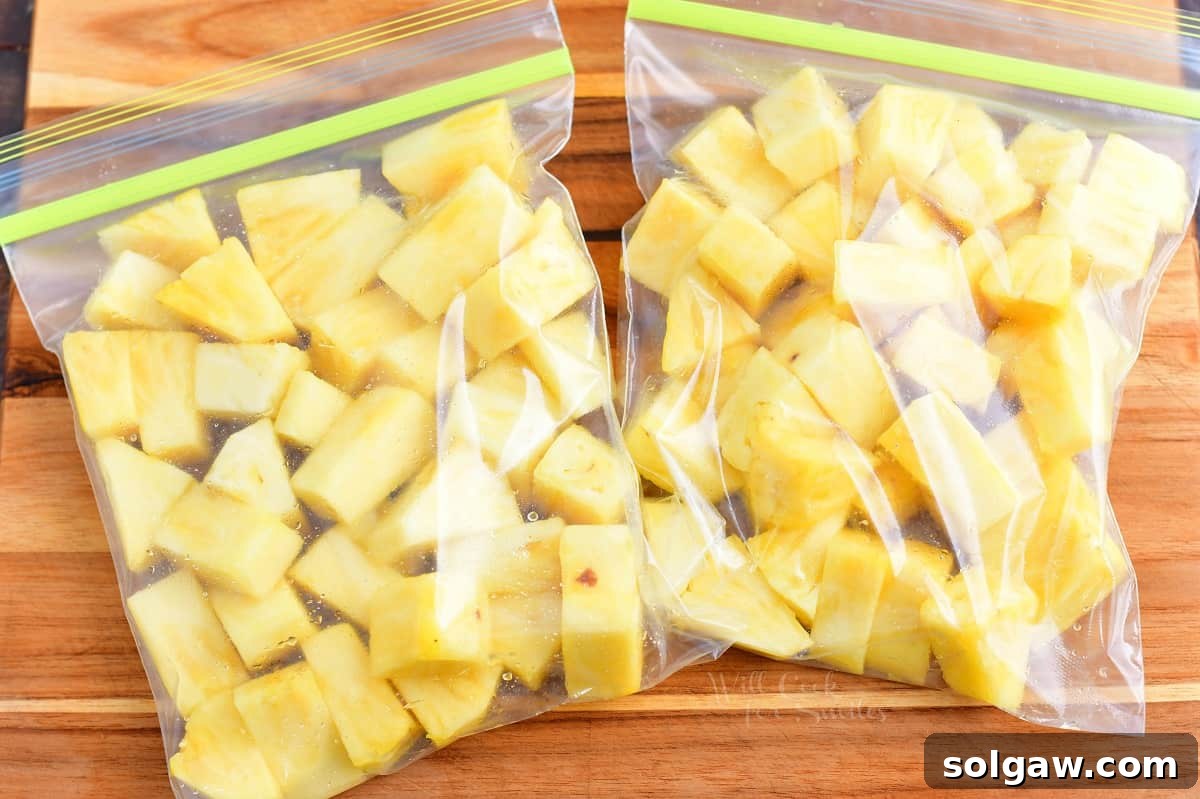
- Once thoroughly frozen, quickly transfer the individual pineapple chunks from the baking sheet into freezer-safe zip-top bags or a large airtight freezer container.
- Make sure to label the bags or container with the date. Press out as much air as possible before sealing to prevent freezer burn, then place them back into the freezer. Frozen pineapple can maintain its quality and flavor for up to 6 months.
The Amazing Health Benefits of Pineapple
Beyond its delightful taste and refreshing qualities, pineapple is a nutritional powerhouse packed with an array of vitamins, minerals, and beneficial enzymes. Incorporating this vibrant tropical fruit into your diet can offer several significant health advantages:
- Rich in Vitamin C: Pineapple is an outstanding source of Vitamin C, a powerful antioxidant that plays a crucial role in boosting the immune system, protecting cells from damage, promoting healthy skin by aiding collagen production, and supporting wound healing.
- Contains Bromelain: This unique and potent enzyme, found exclusively in pineapple (especially in the core), is a natural anti-inflammatory agent. Bromelain aids in digestion by breaking down proteins, potentially easing digestive discomfort. Its anti-inflammatory properties may also help reduce swelling, pain, and bruising, making it beneficial for recovery after intense exercise or minor injuries.
- High in Manganese: This essential trace mineral is abundant in pineapple and is vital for bone health, contributing to bone density and strength. Manganese also plays a key role in various metabolic processes, carbohydrate and fat metabolism, and acts as an antioxidant to protect the body against free radical damage.
- Supports Digestion: In addition to bromelain, pineapple’s significant fiber content promotes a healthy digestive system. Dietary fiber adds bulk to stool, aiding in regular bowel movements and helping to prevent constipation, while also supporting a healthy gut microbiome.
- Hydrating Properties: With its high water content (approximately 87%), pineapple is an excellent fruit for hydration. It’s particularly refreshing and beneficial for replenishing fluids and electrolytes, especially during hot weather or after physical activity.
- Loaded with Antioxidants: Beyond Vitamin C, pineapple contains various other antioxidants, including flavonoids and phenolic acids. These compounds work synergistically to combat oxidative stress in the body, which can contribute to chronic diseases like heart disease and certain cancers, thereby promoting overall cellular health.
Frequently Asked Questions About Pineapples
How can I use fresh pineapple in savory recipes?
Fresh pineapple adds a fantastic sweet and tangy counterpoint to many savory dishes, balancing richness and adding a juicy burst of flavor. Try dicing it and adding it to homemade teriyaki sauce to create an incredibly flavorful chicken teriyaki. It’s superb skewered and grilled in Pineapple Grilled Chicken Kebabs, offering a caramelized sweetness. Incorporate it into Thai Pineapple Fried Rice for an authentic, aromatic dish. It also pairs wonderfully in various fish tacos or chicken tacos, and is excellent with pork, ham, or in spicy curries and stir-fries.
What are some sweet uses for fresh pineapple?
The natural sweetness and acidity of pineapple make it a star in countless sweet recipes and desserts. Create a vibrant tropical fruit salad, either as the sole fruit or mixed with other classic favorites like mangoes, berries, and kiwi. A refreshing fruit salsa, perhaps with a hint of mint or lime, is delicious as a topping for yogurt, ice cream, or even as a sweet dip with cinnamon pita chips. Use finely diced or crushed pineapple in muffins, bread, or cakes, or as a fresh, bright topping for cupcakes, cheesecake, or simple vanilla ice cream. Don’t forget cocktails like a refreshing Pineapple Martini or a classic Pina Colada, where pineapple juice or a fresh wedge often takes center stage.
What is the best knife and cutting board to use for pineapple?
For safely and efficiently cutting a pineapple, a large, sharp chef’s knife (ideally 8-10 inches) is highly recommended. Its size allows for long, clean cuts through the tough skin and flesh, and its sharpness minimizes the effort required, reducing the risk of slipping. When it comes to cutting boards, always opt for a sturdy wooden or plastic board. These materials are more forgiving on your knife’s edge and provide a safer, less slippery surface. Absolutely avoid glass or ceramic cutting boards, as they can quickly dull your knife and are significantly more prone to causing the knife to slip, leading to potential injury. A non-slip mat underneath your board is an extra safety measure.
Can I eat the pineapple core?
While technically edible, the pineapple core is very fibrous, tough, and lacks the tender sweetness of the outer flesh, making it less pleasant to eat raw in large pieces. However, it’s packed with beneficial enzymes like bromelain and a good amount of nutrients! Many people discard it, but you can repurpose it in several ways: blend it into smoothies for a nutritional boost, simmer it in water to make pineapple-infused water or a light syrup, or finely grate it and add it to baked goods or stir-fries where its texture will be less noticeable.
How do I know if a pineapple is overripe?
An overripe pineapple will typically show several clear signs. Visually, its skin might appear darker orange with prominent brown spots or large soft patches. The texture will be very soft and mushy, especially around the base. The most distinguishing characteristic is its smell: an overripe pineapple will emit a strong, slightly alcoholic, fermented, or vinegary odor, indicating that its sugars have begun to break down excessively. It may also feel noticeably lighter than a ripe pineapple due to moisture loss. Such a pineapple will often have a sour or unpleasant taste.
Delicious Recipes with Fresh Pineapple
Now that you’re a seasoned pro at cutting pineapple, unleash its potential in these amazing recipes from Will Cook For Smiles, transforming this tropical fruit into unforgettable meals and treats:
- Thai Pineapple Fried Rice: A delightful blend of sweet and savory, often served dramatically in a hollowed-out pineapple bowl.
- Fresh Pineapple Salsa: A vibrant, zesty condiment perfect with grilled fish, chicken, pork, or as a refreshing dip with tortilla chips.
- Grilled Pineapple Chicken Kebabs: Juicy, marinated chicken and sweet pineapple pieces threaded onto skewers and grilled to smoky perfection.
- Pina Colada Tres Leches Cake: A tropical twist on a classic dessert, infused with coconut and pineapple flavors.
- Pineapple Lemon Martini: A refreshing and zesty cocktail, perfect for a summer evening or a festive occasion.
More Kitchen Skills to Master
Continue your culinary journey by enhancing your kitchen skills with these other helpful “how-to” guides:
- How to Peel and Devein Shrimp
- How to Break Down a Whole Chicken
- Breaking Down a Whole Beef Tenderloin
- How To Clean a Squid
- How To Freeze Meatballs
PIN THIS GUIDE FOR LATER
DID YOU FIND THIS GUIDE HELPFUL? Please share your thoughts by leaving a 📝 comment below or share and tag us on social media @willcookforsmiles. DON’T FORGET to subscribe to our newsletter for more culinary tips and delicious recipes!
How To Cut A Pineapple Instructions: Quick Reference
A concise overview for quickly preparing fresh pineapple for various uses.
Summary: Learn how to easily cut a pineapple in just a few steps. Fresh pineapple is great to use in cooking, grilling, desserts, or just have it as a snack.
Overall Rating: 5 out of 5 stars (based on 3 votes)
Print Instructions |
Pin for Later |
Watch Video |
Rate This Guide
Recipe Details
- Course: Dessert, Main Course, Snack
- Cuisine: American, Tropical
- Diet: Gluten Free
- Prep Time: 15 minutes
- Total Time: 15 minutes
- Servings: 10-12 (approx.)
- Calories: 45 kcal per serving
- Author: Lyuba Brooke
Equipment Needed
- Large cutting board (wood or plastic)
- Large, sharp chef’s knife
- Food storage container with an air-tight lid
- Optional: Small paring knife or cookie cutter for core removal
Ingredients
- 1 whole ripe pineapple
Step-by-Step Instructions
- Cut Off Top and Bottom: Lay the pineapple on its side and use a large, sharp knife to cut off the top and the bottom (about 1/2 to 3/4 inch from each end).
- Cut Off The Skin: Stand it up on the bottom cut side and slice the outer skin layer off, following the shape of the pineapple. Remove deep brown “eyes.”
- Cut Pineapple In Half and Quarters: Keep the pineapple standing and slice it lengthwise down the middle to create two halves. Cut each half lengthwise down the middle to create quarters.
- Cut Off The Core: Locate the thick core at the inner corner of each quarter and slice it off.
- Chop: Chop the pineapple quarters into 1-inch chunks, or dice into small pieces for salsa or fruit salad.
- For Rings: After peeling (Step 2), slice the whole pineapple width-wise into 1/2-inch thick circles. Use a 1-1.5 inch cookie cutter or paring knife to remove the core from each slice.
Video Guide
For a visual demonstration of how to cut a pineapple, watch the video below:
(Please note: Replace “YOUR_PINEAPPLE_CUTTING_VIDEO_ID” with the actual YouTube video ID for the pineapple cutting tutorial. This is a placeholder for HTML structure.)
Notes on Storing & Freezing
- Storing Cut Pineapple: Place slices or chunks in an airtight food storage container and refrigerate for 3 to 5 days.
- Freezing Pineapple: Spread chunks in a single layer on a parchment-lined baking sheet and freeze for 2-3 hours until solid. Transfer to freezer-safe zip-top bags, remove air, label, and freeze for up to 6 months.
Nutritional Information (per serving)
Calories: 45kcal | Carbohydrates: 12g | Protein: 0.5g | Fat: 0.1g | Saturated Fat: 0.01g | Polyunsaturated Fat: 0.04g | Monounsaturated Fat: 0.01g | Sodium: 1mg | Potassium: 99mg | Fiber: 1g | Sugar: 9g | Vitamin A: 52IU | Vitamin C: 43mg | Calcium: 12mg | Iron: 0.3mg
❤️
Tried this recipe? Mention @willcookforsmiles or tag #willcookforsmiles!