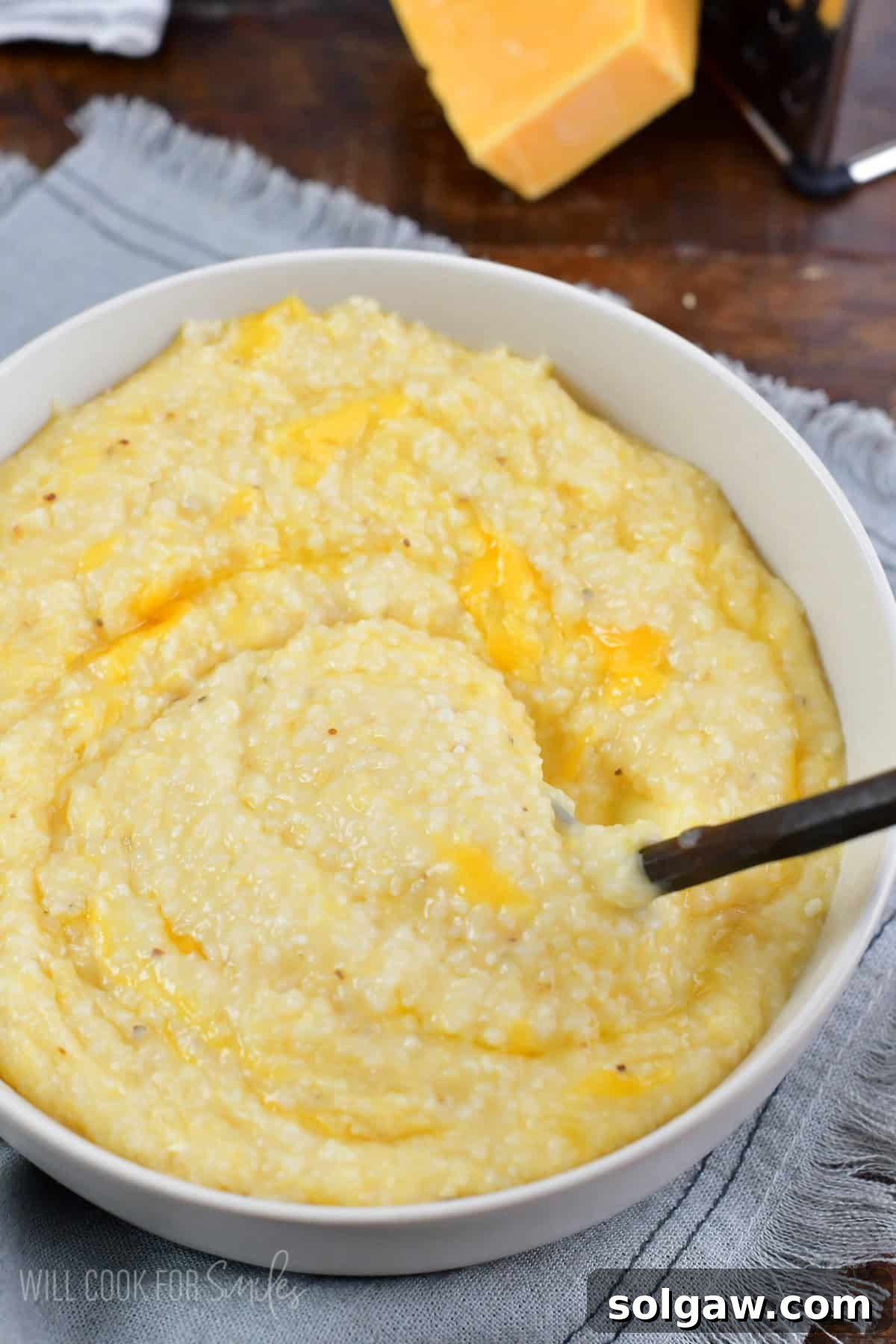
There’s nothing quite like a warm bowl of creamy, cheesy grits to bring comfort to the soul. This beloved Southern staple, often enjoyed from breakfast to dinner, gets an irresistible upgrade in our recipe for ultimate cheese grits. Imagine stone-ground grits cooked to tender perfection, infused with rich butter and generously stirred with sharp cheddar cheese until it’s a smooth, luscious dream. It’s a simple dish that speaks volumes, embodying the heart of Southern hospitality and flavor.
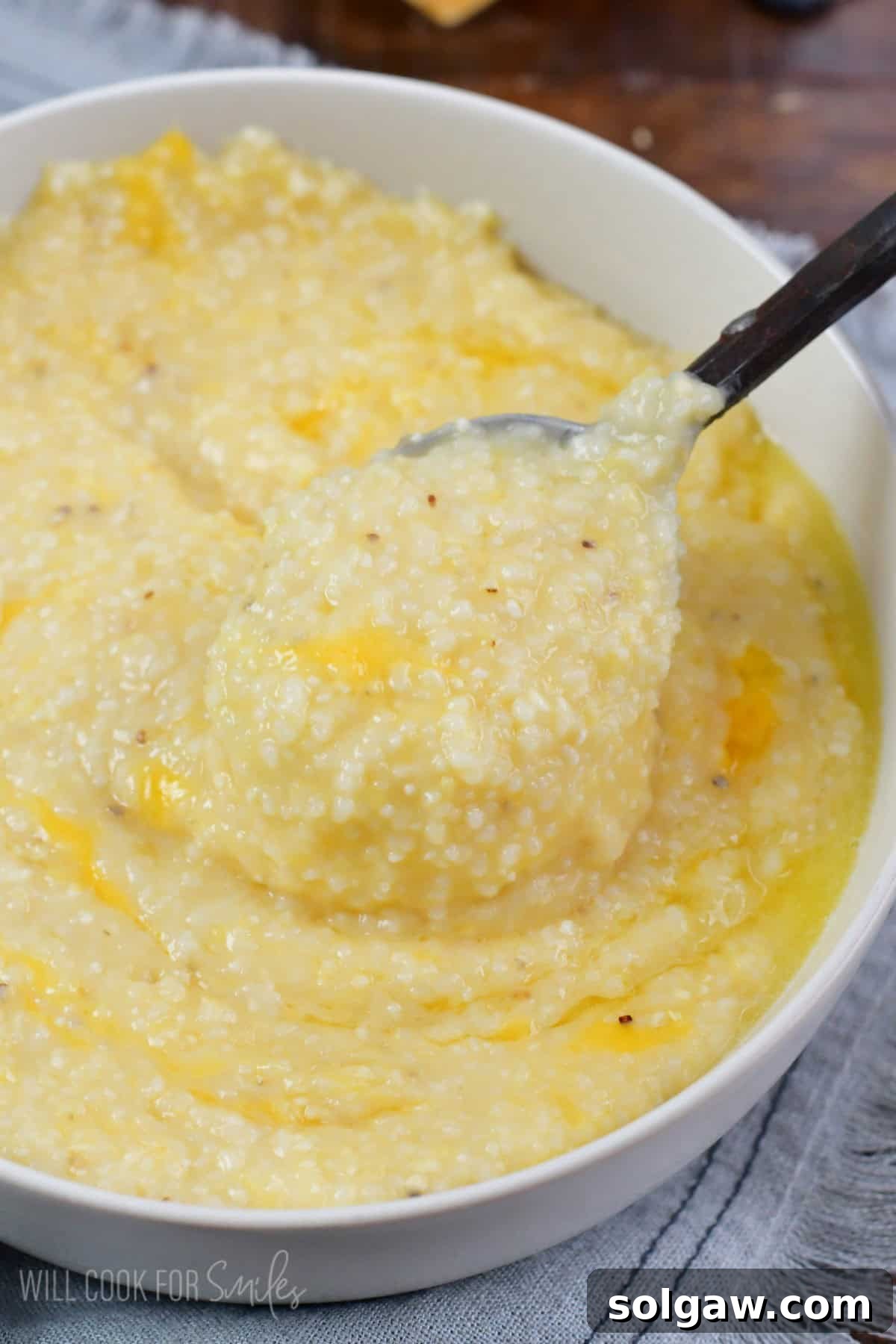
Grits are more than just a side dish; they’re a foundational element of Southern cuisine, offering a versatile canvas for countless flavors and meals. Made from dried, ground corn – either yellow or white – grits come in various grinds, from quick-cooking to instant, and the highly prized stone-ground variety. Our recipe champions the latter, ensuring a depth of flavor and texture that elevates this classic dish from good to extraordinary. This cheesy grits recipe isn’t just easy to make; it’s a truly wonderful addition to any table because:
- Unmatched Versatility: While incredibly satisfying on its own, creamy cheese grits pair beautifully with an astounding array of main courses. From seafood to poultry, and everything in between, it complements virtually any dish.
- Southern Culinary Tradition: In the Southern United States, grits are a culinary cornerstone, served with equal enthusiasm at breakfast, lunch, and dinner. This recipe brings that authentic, comforting experience right to your home.
- Superior Flavor and Texture: By opting for stone-ground grits, you unlock the richest, most complex corn flavor and a wonderfully satisfying texture. Less processed and retaining the corn’s germ, these grits cook down into a truly luxurious and hearty base.
- Pure Comfort in Every Bite: Rich, buttery, and incredibly comforting, these cheese grits are surprisingly simple to prepare, making them an ideal choice for a weeknight meal or a special weekend brunch.
- The Perfect Companion: Beyond being a classic accompaniment for Shrimp and Grits, this recipe shines alongside perfectly cooked steaks, juicy chicken, or any of your favorite breakfast dishes, adding a creamy, savory dimension.
How to Make The Best Creamy Cheese Grits
Crafting perfect cheese grits is a straightforward process, but a few key steps ensure that creamy, lump-free consistency and rich flavor everyone craves. Follow these simple instructions to achieve a truly memorable Southern side dish.
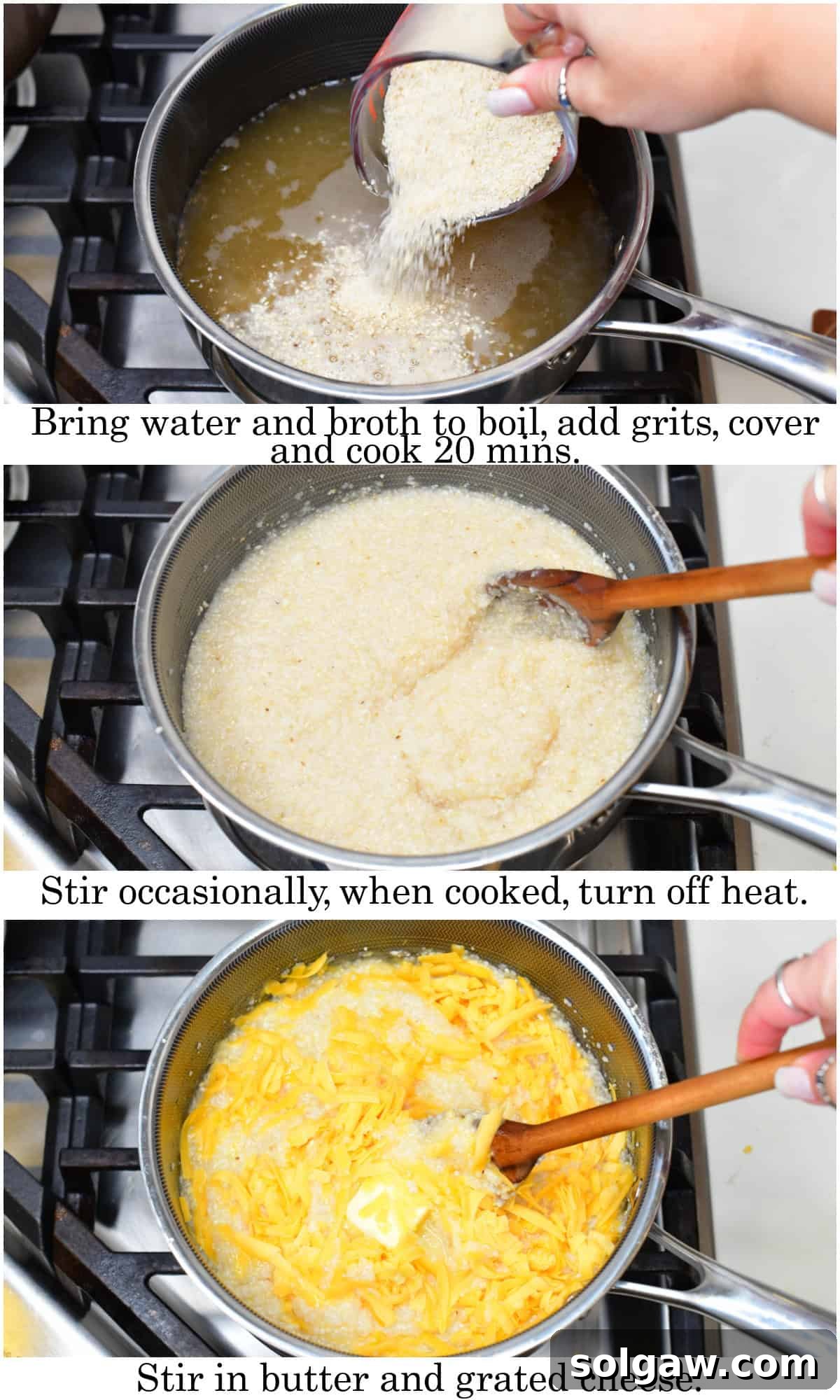
- Prepare the Liquid Base: In a sturdy pot, combine water, vegetable or chicken broth, and a pinch of salt. Bring this mixture to a gentle simmer over medium-high heat. The broth adds a fantastic depth of flavor that water alone cannot provide, making your grits even more savory and delicious.
- Introduce the Grits: Once simmering, slowly stir in the stone-ground grits. It’s crucial to add them gradually while stirring continuously to prevent any lumps from forming. Immediately reduce the heat to medium-low or low, just enough to maintain a very gentle simmer.
- Slow Cook to Perfection: Cover the pot and allow the grits to simmer for approximately 20-25 minutes. During this time, stir occasionally – every 5 minutes or so – making sure to scrape the bottom and sides of the pot. This not only prevents sticking and burning but also helps to release starch, contributing to that desirable creamy texture. Stone-ground grits require this slower cooking process to soften properly and absorb the liquids, resulting in a superior texture compared to quicker varieties.
- Finish with Richness: Once the grits have absorbed most of the liquid and reached a tender, creamy consistency, remove the pot from the heat. Stir in the unsalted butter and the sharp cheddar cheese until both are completely melted and smoothly incorporated. The residual heat from the grits will melt the cheese beautifully, creating a luscious, velvety finish. Taste and adjust salt if needed.
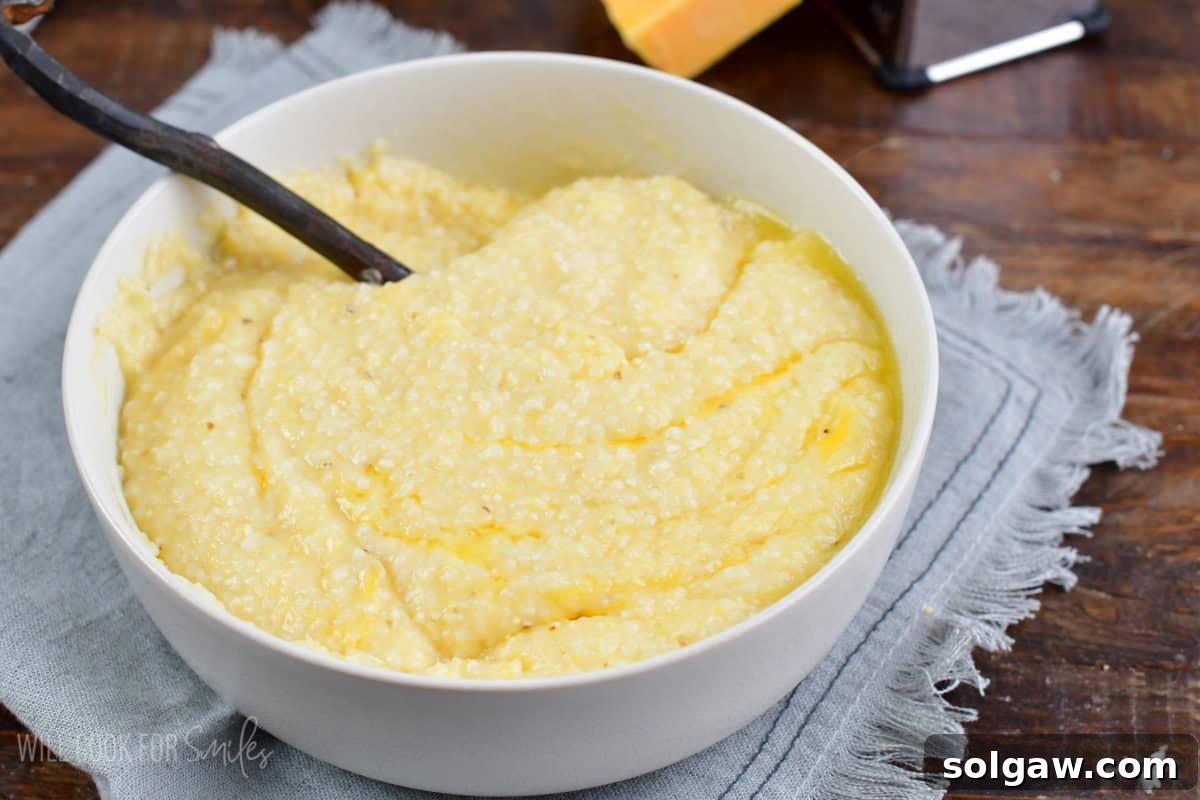
Storing and Reheating Cheese Grits
Leftover cheese grits are a treasure, but they tend to thicken considerably once cooled. Knowing how to store and reheat them properly ensures you can enjoy their creamy goodness days later.
- Storing Leftovers: Allow any leftover grits to cool completely before transferring them to an airtight food storage container. Place the container in the refrigerator, where the grits will maintain their quality for 3-4 days. It’s important to cool them quickly to prevent bacterial growth.
- Reheating for Creaminess: Grits will firm up significantly in the refrigerator. To restore their creamy texture, reheating in the microwave is a convenient option for individual portions. Add a tablespoon or two of extra broth or milk to the cold grits. Reheat in 30-45 second increments, stirring thoroughly after each interval, until warmed through and creamy. For larger batches, you can reheat gently on the stovetop over low heat, adding liquid gradually and stirring frequently until smooth and hot. The added liquid helps to rehydrate the starch and loosen the thickened consistency.
Is Grits Different from Polenta and Cornmeal? Understanding the Corn Family
While all three culinary staples – cornmeal, grits, and polenta – are derived from dried corn, they are distinct in their preparation, texture, and traditional uses. Understanding these differences is key to appreciating each one’s unique contribution to various cuisines.
- Cornmeal: This is the most finely ground of the three, with a texture that is slightly granulated but still relatively coarse compared to flour. Cornmeal can be made from yellow or white corn and is incredibly versatile. It’s primarily used for dusting baking surfaces to prevent sticking, making classic cornbread, corn muffins, pancakes (like traditional Johnny cakes), fritters, and a variety of other baked goods and savory dishes where a delicate corn flavor and texture are desired.
- Grits: Grits are more coarsely ground than cornmeal and are traditionally made from either white or yellow corn, or sometimes a blend. A key characteristic of grits is their higher starch content compared to polenta, which contributes to their famously creamy texture when cooked. Grits are a hallmark of Southern U.S. cuisine and are typically served as a savory side dish, often with butter, cheese, or paired with meats like shrimp, bacon, or sausage. Stone-ground grits, specifically, are less processed, retaining more of the corn’s natural oils and germ, resulting in a more robust corn flavor and a slightly coarser, chewier texture.
- Polenta: Polenta typically has a coarser grind than grits, often made exclusively from yellow corn. It is notably less starchy than grits, which gives it a firmer, slightly grainier texture when cooked. Originating from Northern Italian cuisine, polenta is commonly served as a creamy side dish, similar to grits, but can also be chilled, sliced, and then fried, baked, or grilled to create solid cakes or crusts. Its applications range from a soft, porridge-like accompaniment to sturdy bases for toppings.
In essence, while they share a common origin, the grind size, corn type, starch content, and regional culinary traditions give cornmeal, grits, and polenta their unique identities and roles in the kitchen.
Substitutions and Add-Ins for Your Cheese Grits
One of the beauties of a foundational recipe like cheese grits is its adaptability. You can easily customize it to suit your taste, dietary preferences, or to complement the main dish you’re serving. Here are some fantastic ways to get creative:
- For Extra Creaminess: If you desire an even richer, more luxurious texture, simply substitute the 2 cups of water with 2 cups of whole milk or a blend of milk and cream. This will yield an incredibly decadent bowl of grits, perfect for a special occasion or when you’re craving ultimate comfort.
- Elevate with Spices and Herbs: Enhance the flavor profile of your grits to match any meal. Consider adding a pinch of paprika for a subtle smoky note, a dash of cayenne pepper for a gentle kick, or a generous amount of Cajun seasoning for a vibrant, zesty punch. Fresh herbs like finely chopped parsley, thyme, dill weed, or sliced green onions stirred in at the end can add brightness and an aromatic finish.
- Savory Mix-ins: Transform your grits into a more substantial dish or a gourmet side with a variety of mix-ins. Crispy bacon bits, crumbled sausage, or diced ham can add a wonderful smoky, salty depth. For a burst of freshness and mild onion flavor, stir in sliced green onions.
- Cheese Exploration: Don’t limit yourself to sharp cheddar! Experiment with other cheeses to discover new flavor dimensions. Parmesan offers a salty, nutty bite; pepper-jack brings a spicy warmth; Asiago provides a robust, tangy character; Gruyere melts into a wonderfully nutty and complex creaminess; and Gouda contributes a sweet, buttery richness. Combining different cheeses can create a truly unique and delicious blend.
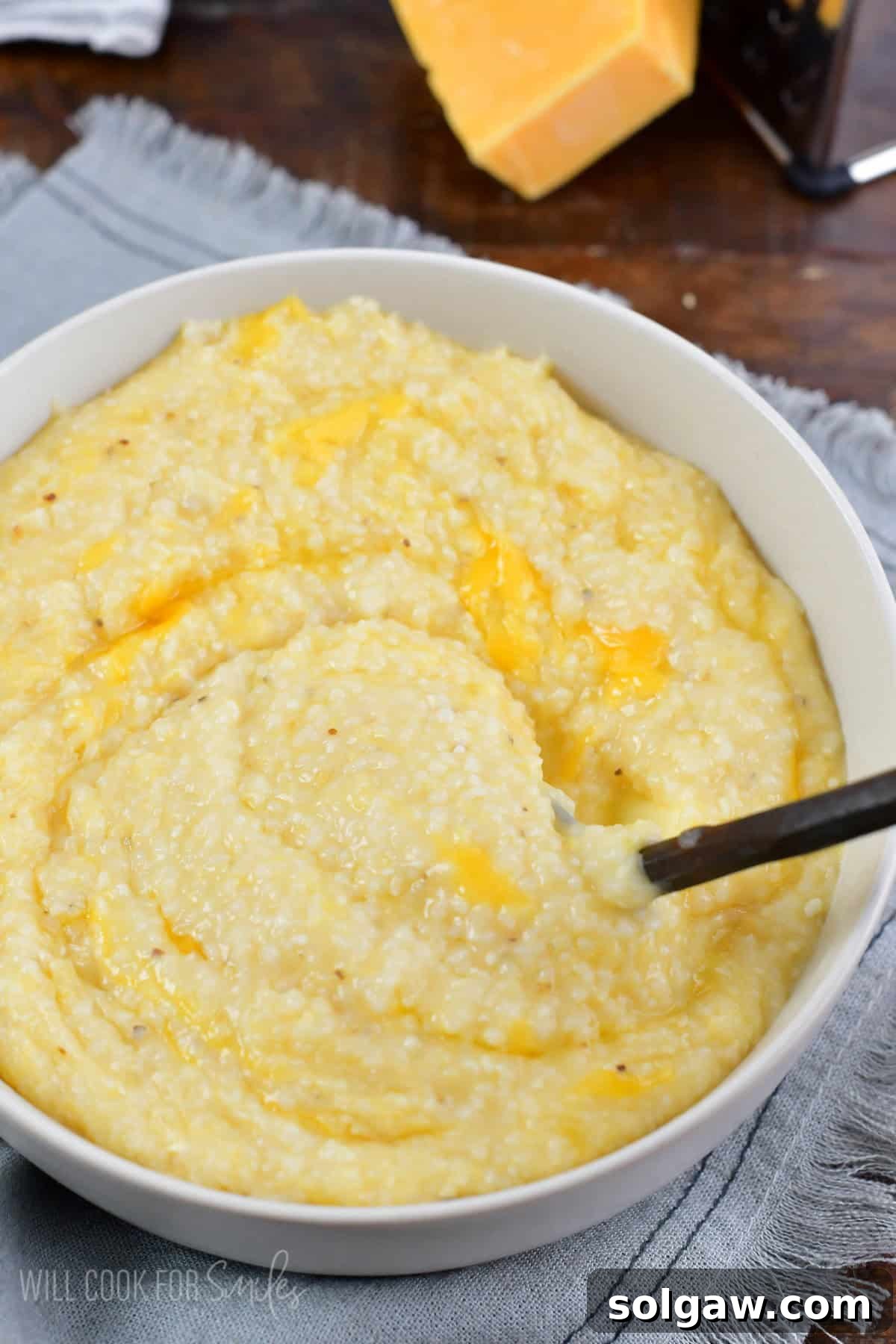
The Ultimate Cheese Grits Recipe
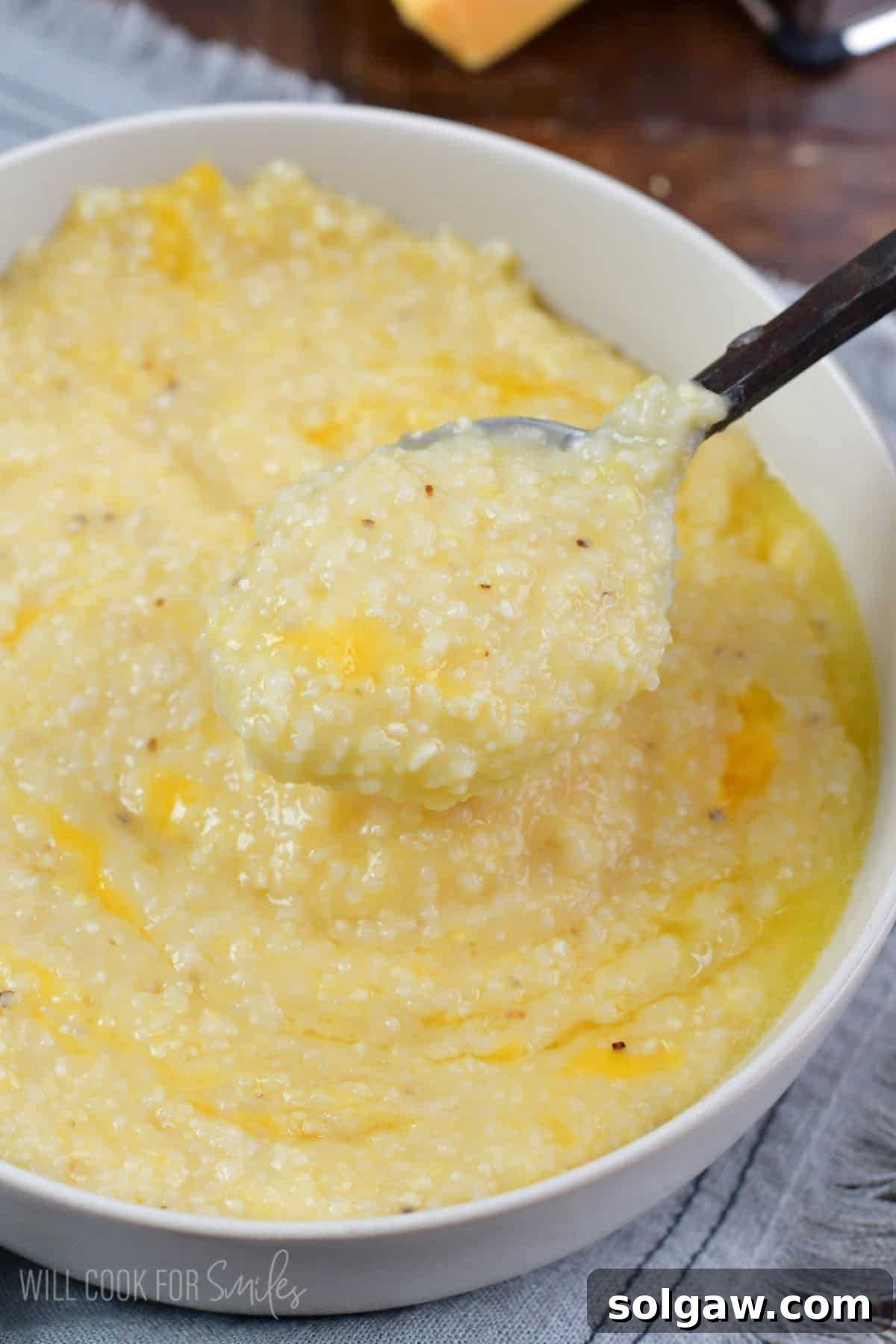
Creamy Southern Cheese Grits
This recipe delivers a simple, buttery, and comforting twist on a classic Southern side dish, guaranteed to be a crowd-pleaser.
Side Dish
American
Gluten Free
10 minutes
20 minutes
30 minutes
4
345kcal
Lyuba Brooke
Ingredients
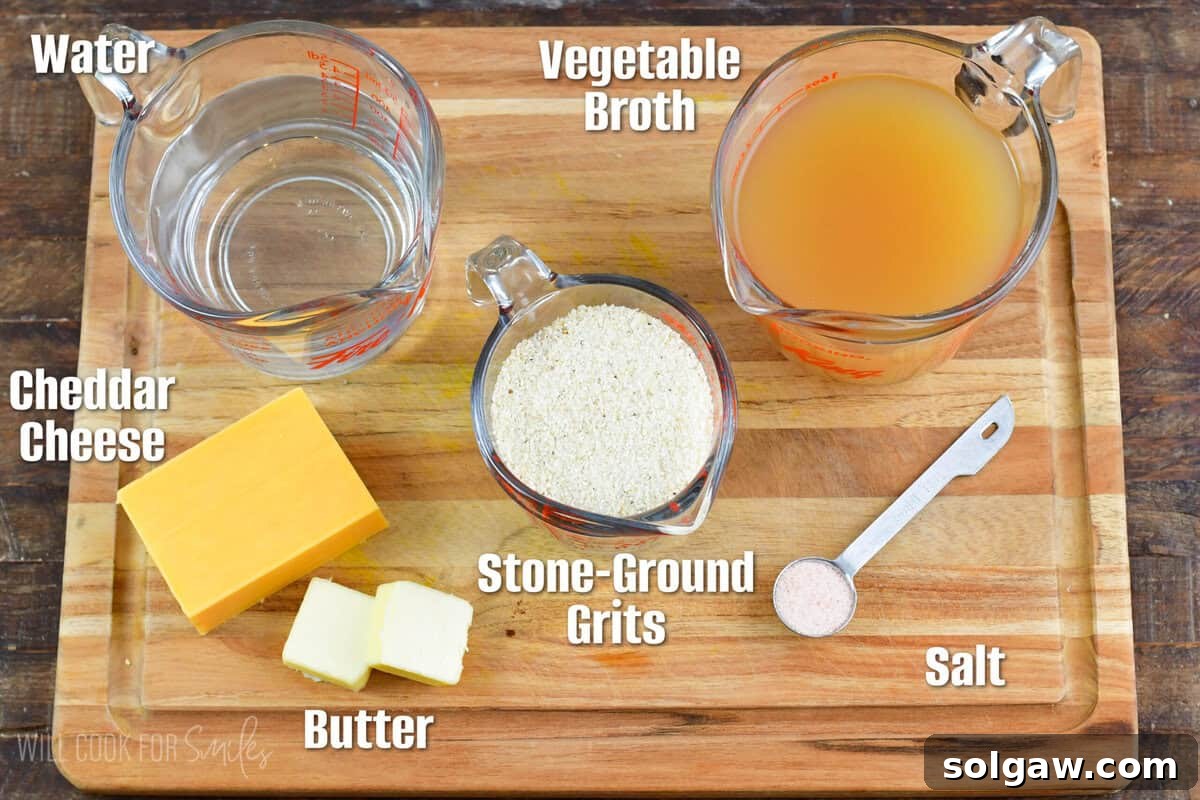
- 1 cup stone-ground grits
- 2 cups water
- 2 cups vegetable broth (or chicken broth)
- 1 tsp coarse salt (adjust to taste)
- 2 tbsp unsalted butter
- 5 oz sharp cheddar cheese, block, freshly grated
Instructions
- Bring water and chicken or vegetable broth to a boil in a medium pot and season with salt.
- Slowly stir in the grits and immediately lower the heat to a very low simmer.
- Cover the pot and cook for about 20-25 minutes. Stir every 5 minutes or so, making sure to scrape the bottom and edges of the pot to prevent lumps from forming and sticking.
- Once the grits are cooked and tender, remove the pot from the heat. Stir in the unsalted butter and the freshly grated sharp cheddar cheese until both are completely melted and the grits are smooth and creamy. Serve immediately.
Notes
- Grits Type: This recipe is specifically designed for stone-ground grits. Using quick-cooking or instant grits will require different liquid ratios and cooking times. Stone-ground grits (also known as “old-fashioned” grits) offer the best flavor and texture due to their minimal processing.
- Storing: Store any leftover grits in an airtight container in the refrigerator for 3-4 days.
- Reheating: To reheat individual portions, add a tablespoon or two of broth or milk and microwave in 30-45 second intervals, stirring well between each to restore creaminess.
Nutrition
Carbohydrates: 33g |
Protein: 12g |
Fat: 18g |
Saturated Fat: 10g |
Polyunsaturated Fat: 1g |
Monounsaturated Fat: 4g |
Trans Fat: 0.2g |
Cholesterol: 50mg |
Sodium: 1290mg |
Potassium: 83mg |
Fiber: 1g |
Sugar: 1g |
Vitamin A: 864IU |
Calcium: 257mg |
Iron: 0.5mg
Frequently Asked Questions About Cheese Grits
What kind of grits should I use?
For the absolute best flavor and texture, we highly recommend using stone-ground grits. They are less processed and retain more of the corn’s natural essence, resulting in a rich, hearty, and authentic Southern taste. Quick-cooking or instant grits can be used in a pinch, but they will yield a different texture and may require adjustments to liquid ratios and cooking times.
How do I prevent lumps in my grits?
Lumps are a common problem, but easily avoidable! The key is to add the grits slowly to the simmering liquid while continuously whisking or stirring. This ensures each grain is hydrated individually, preventing them from clumping together. Also, stir occasionally throughout the cooking process, making sure to scrape the bottom and sides of the pot.
Can I make cheese grits ahead of time?
You can definitely make grits ahead of time, especially for meal prep or entertaining. Keep in mind that they will thicken considerably as they cool. Store them in an airtight container in the refrigerator for up to 3-4 days. When ready to serve, reheat gently with additional liquid (broth or milk) to restore their creamy consistency.
What are some good pairings for cheese grits?
Cheese grits are incredibly versatile. They are a classic pairing for shrimp and grits, but also excellent with fried chicken, grilled fish, barbecued pork, or any roasted meat. For breakfast or brunch, serve them alongside crispy bacon, scrambled eggs, or a hearty sausage gravy. Their creamy richness makes them a fantastic complement to almost any savory dish.
What if my grits are too thick or too thin?
If your grits are too thick after cooking, simply stir in a tablespoon or two of hot water, broth, or milk until you reach your desired consistency. If they are too thin, continue to simmer them uncovered for a few more minutes, stirring frequently, to allow more liquid to evaporate and the grits to thicken. Remember that grits will continue to thicken slightly as they cool.
More Recipes To Try From The Southern Kitchen
If you’ve fallen in love with these creamy cheese grits, here are more delightful Southern-inspired recipes to explore:
- Classic Shrimp and Grits
- Homestyle Southern Potato Salad
- Easy Instant Pot Black Eyed Peas
- Spicy Jalapeno Cornbread
- Hearty Stuffed Peppers Soup Recipe
Enjoy crafting this simple yet profoundly satisfying dish. It’s a taste of the South that brings warmth and comfort to any meal!