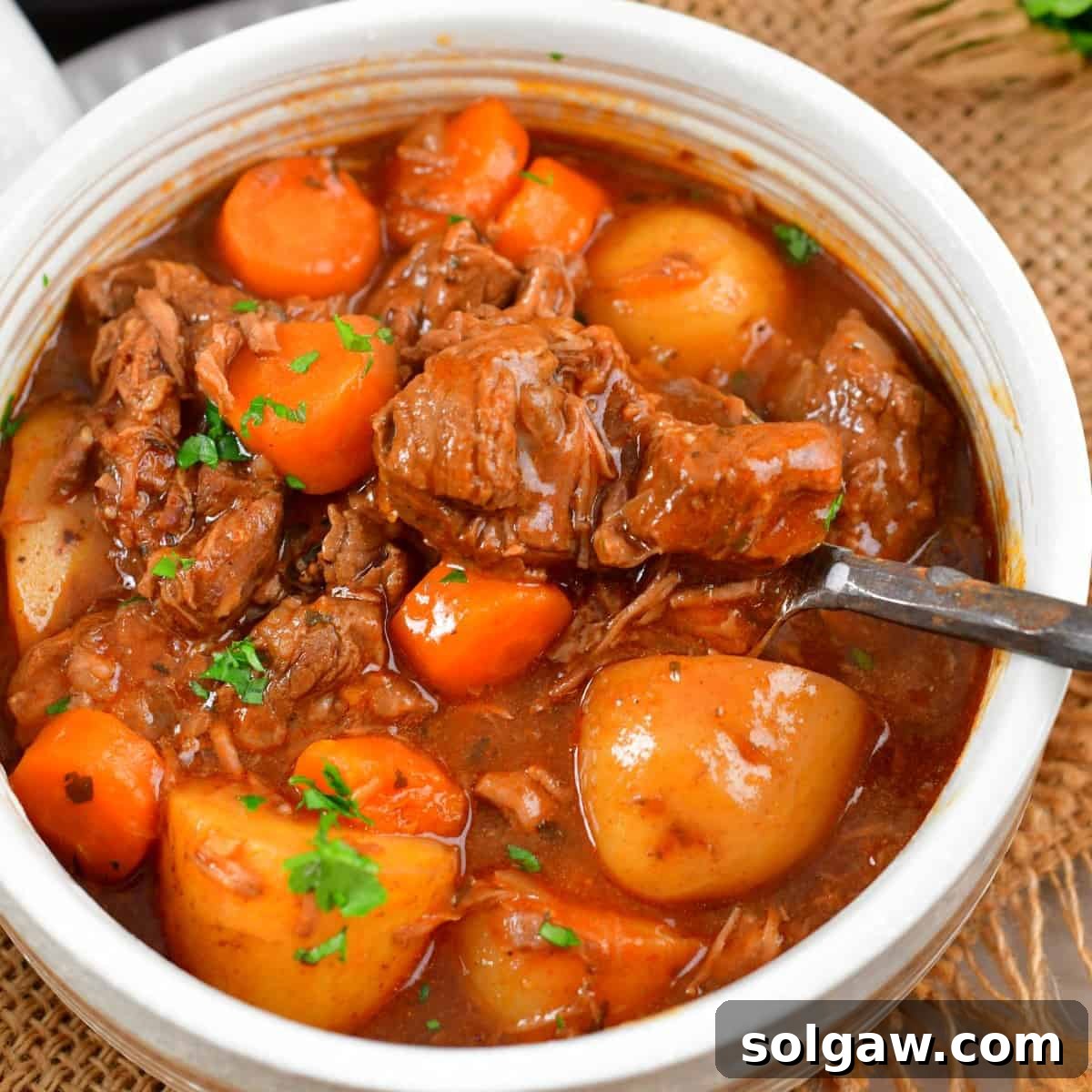
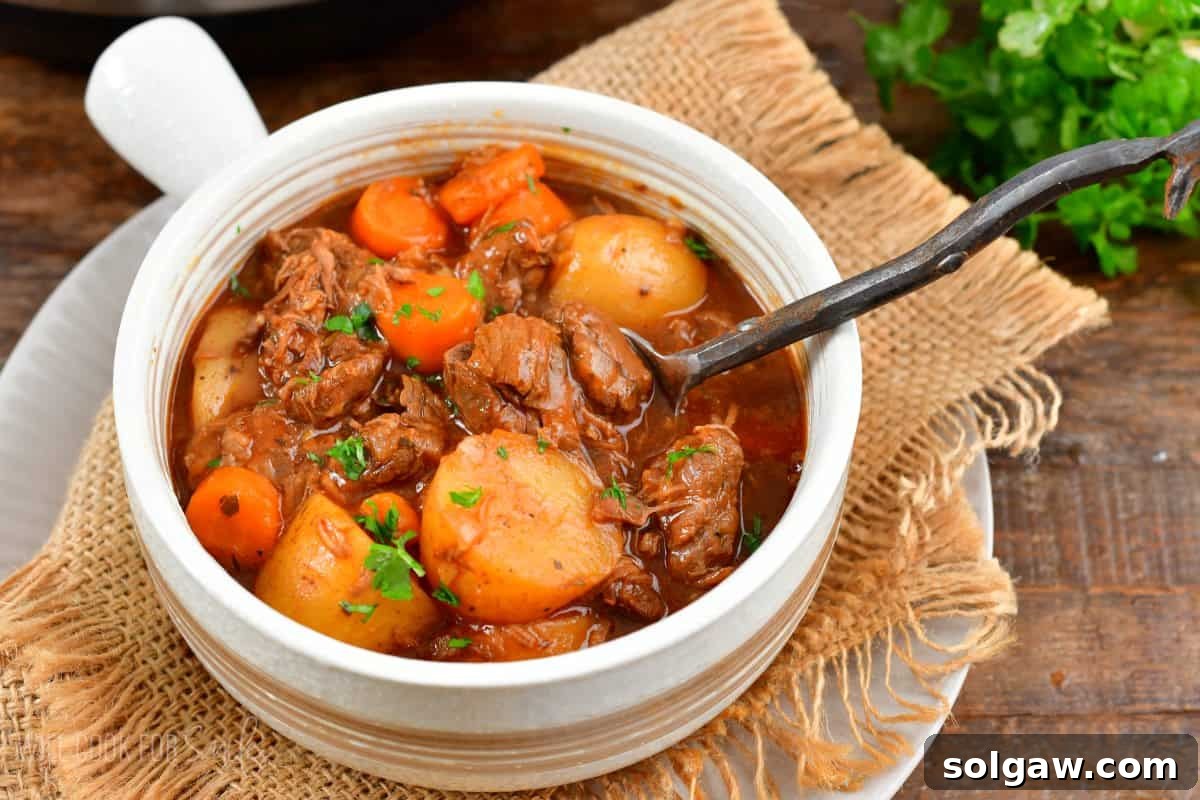
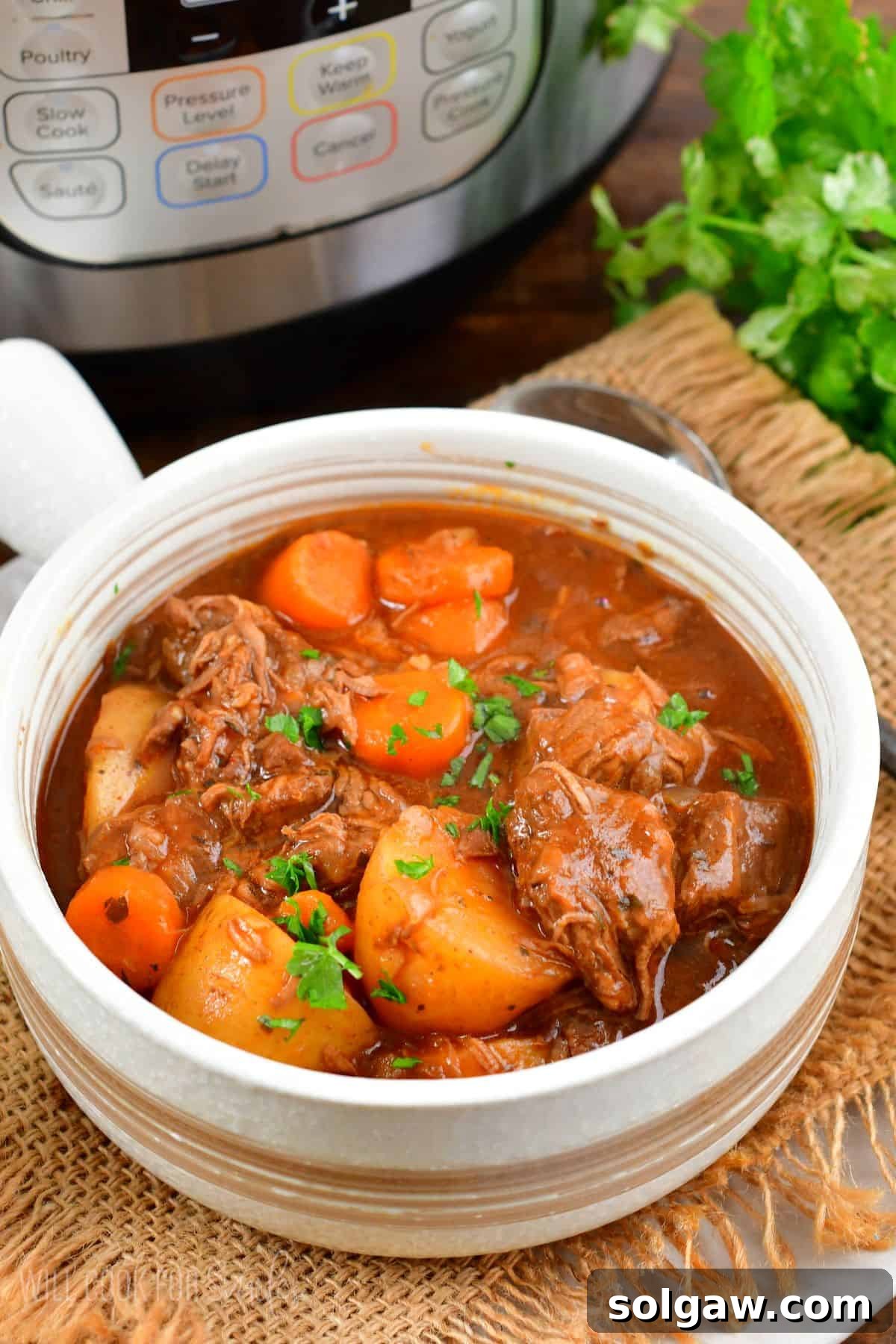
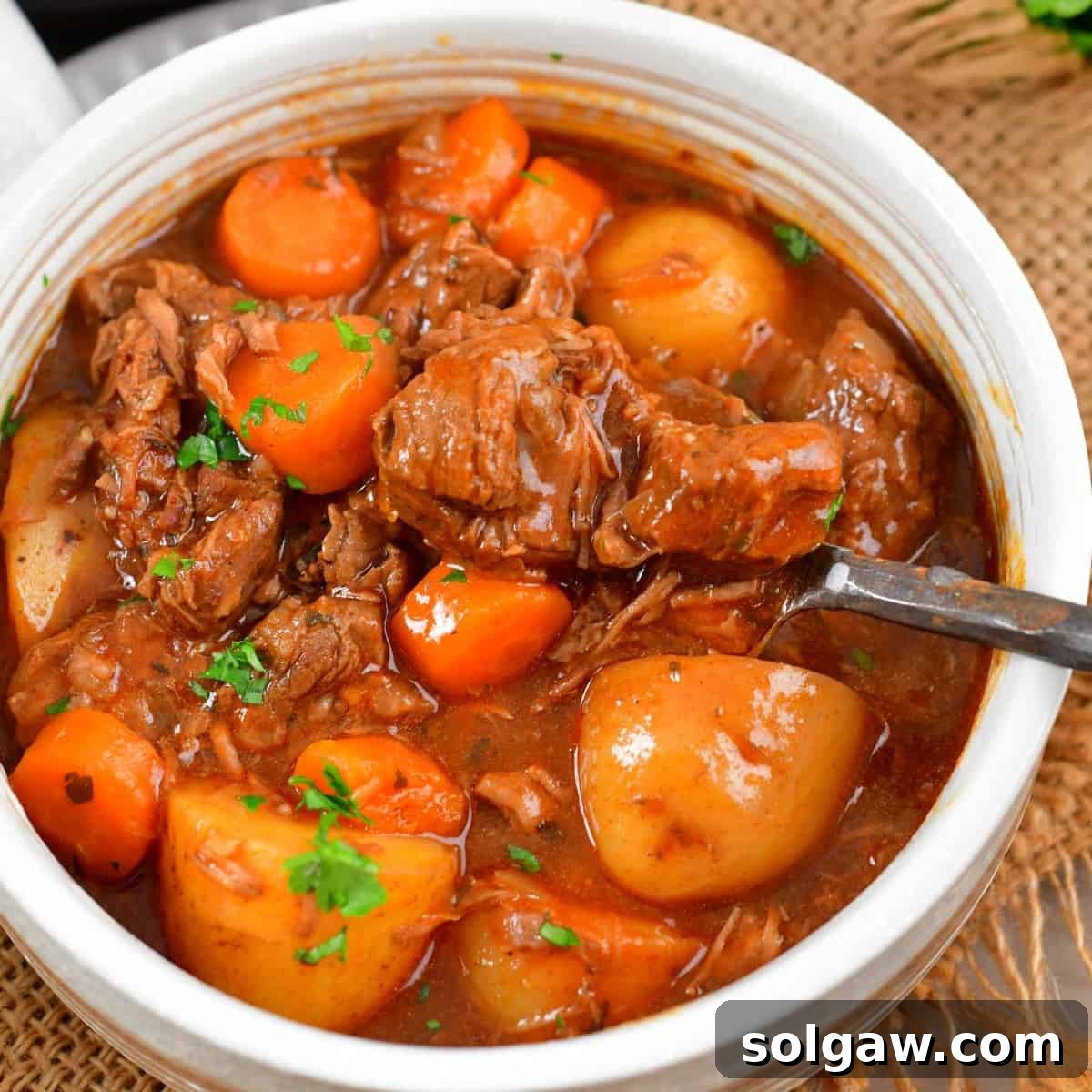
Instant Pot Beef Stew is the ultimate hearty, comforting meal, reimagined for modern kitchens. This beloved classic delivers incredible flavor and melt-in-your-mouth tenderness in a fraction of the time, all thanks to the magic of your pressure cooker. Brimming with succulent beef, wholesome potatoes, sweet carrots, and savory onions, all bathed in a rich, deeply flavored beef and tomato sauce, it’s the perfect soul-warming dish for chilly evenings.
If you adore the comforting embrace of a classic stew, be sure to explore more beloved recipes like our traditional Beef Stew (the classic stove-top method for those slow-cooking days) and the wonderfully rich Irish Stew. Each offers a unique take on this timeless comfort food.
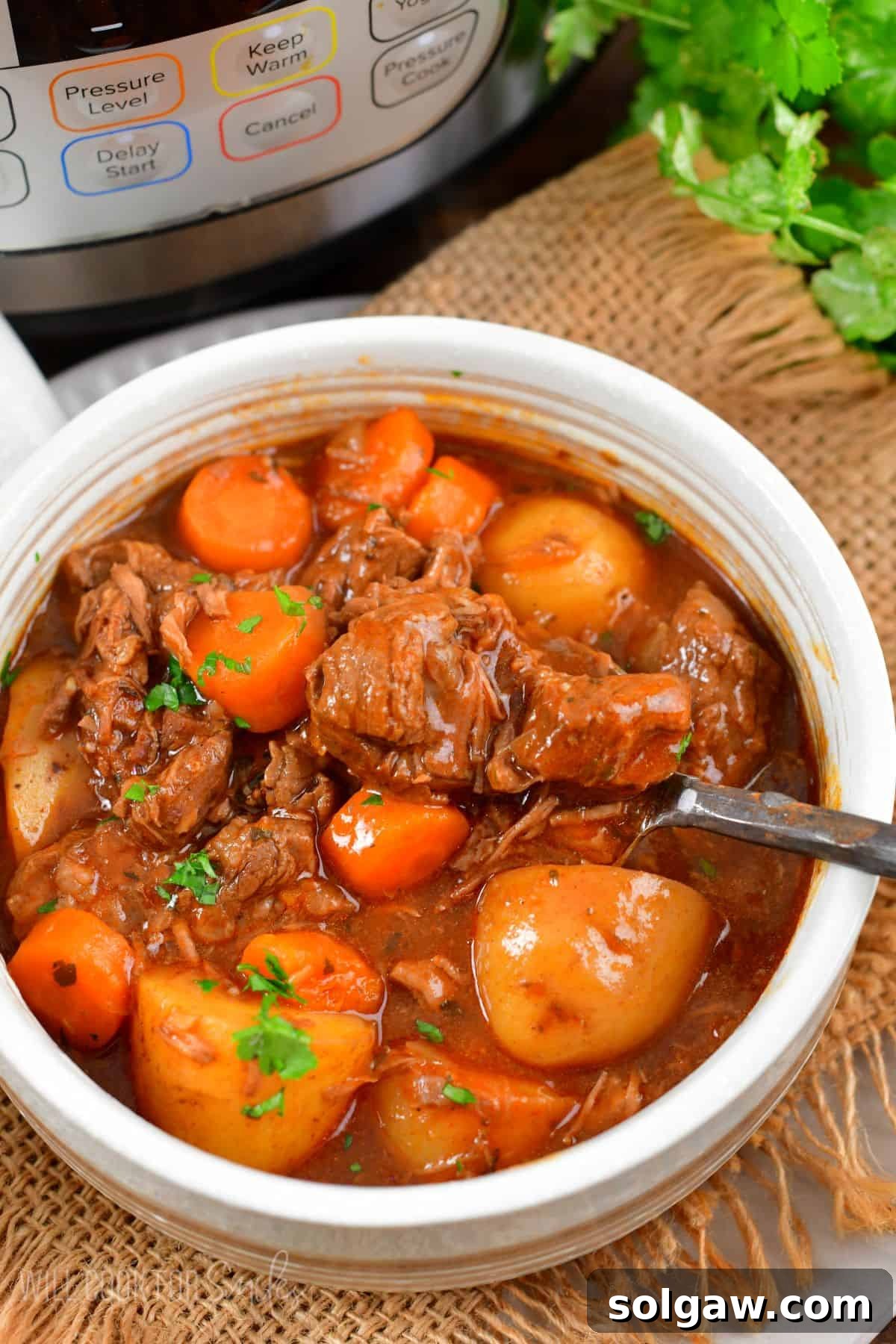
Table of Contents
The Charm of Instant Pot Beef Stew
For many, beef stew is more than just a meal; it’s a nostalgic journey back to childhood, to family dinners and cozy evenings. I vividly recall my mom preparing this hearty dish at least once a month. It was her go-to because it’s incredibly easy to make, remarkably filling, undeniably delicious, and stores beautifully in the refrigerator. This meant we always had a satisfying, ready-made meal that could last for several days, making busy workweeks much more manageable. The ability to prepare a large batch and enjoy it throughout the week is a testament to its enduring appeal as a quintessential meal prep option.
My philosophy for the perfect beef stew revolves around honoring the classic ingredients. At its heart, you’ll find tender beef, hearty potatoes, aromatic onions, and sweet carrots – a timeless combination designed to bring warmth and happiness with every spoonful. The magic truly happens as the beef and vegetables gently simmer, transforming into an incredibly tender and flavorful medley. This deep flavor profile is meticulously built upon a rich, tomato and beef-based broth, generously seasoned to perfection. Each bite of this stew is a testament to its status as the ultimate comfort dish, satisfying both body and soul.
Why the Instant Pot is a Game-Changer for Stews
The invention of the Instant Pot, or any pressure cooker, has revolutionized how we approach classic, time-intensive recipes like beef stew. What once demanded hours of slow simmering on the stovetop or in a slow cooker can now be achieved in what feels like no time at all. This modern appliance has truly changed the culinary landscape, allowing me to enjoy those wonderfully rich and complex dishes that previously required an entire afternoon of cooking, all within about an hour.
The Instant Pot excels at creating incredibly tender meat and infusing deep flavors because it cooks under high pressure. This accelerated cooking environment forces moisture and flavors into the ingredients, breaking down tough cuts of meat much faster than traditional methods. The result is a beef stew that tastes like it has simmered all day, but is ready to enjoy in a fraction of the time, making it ideal for busy weeknights or when you need a comforting meal without the wait.
Ingredient Essentials for Perfect Beef Stew
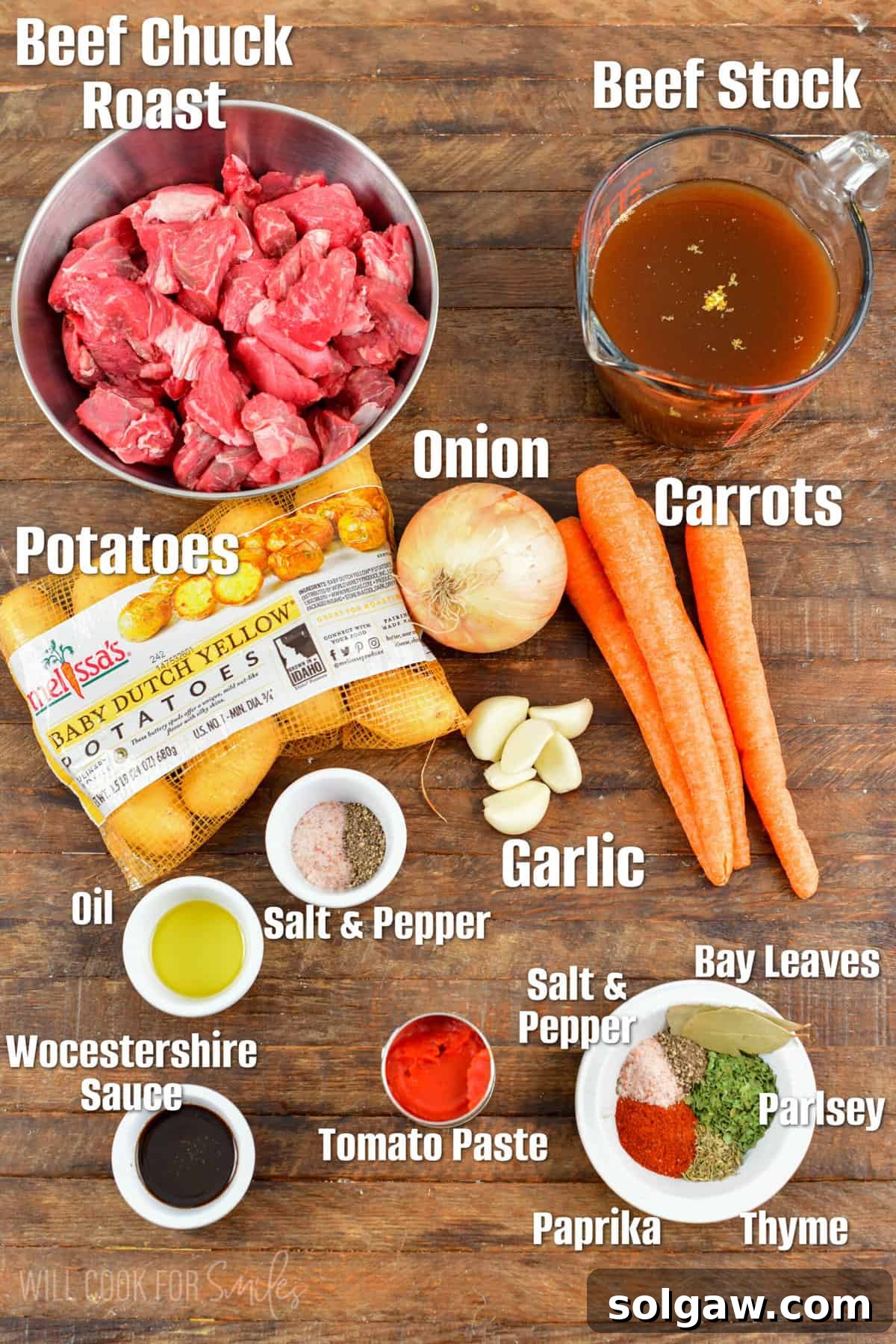
Crafting an unforgettable beef stew begins with selecting the right ingredients. Each component plays a crucial role in achieving the desired depth of flavor and texture.
Beef – The unequivocal best meat for beef stew is chuck roast. This cut is not only relatively inexpensive but also boasts a tough, muscular structure with ample marbling and connective tissue. While not ideal for quick searing, it’s absolutely perfect for methods involving longer, moist heat, such as slow cooking or, in our case, pressure cooking. The connective tissue breaks down under pressure, transforming into gelatin, which contributes to an incredibly rich mouthfeel and deeply flavorful broth. Chuck roast also has an amazing ability to soak up and hold all the wonderful flavors it cooks in.
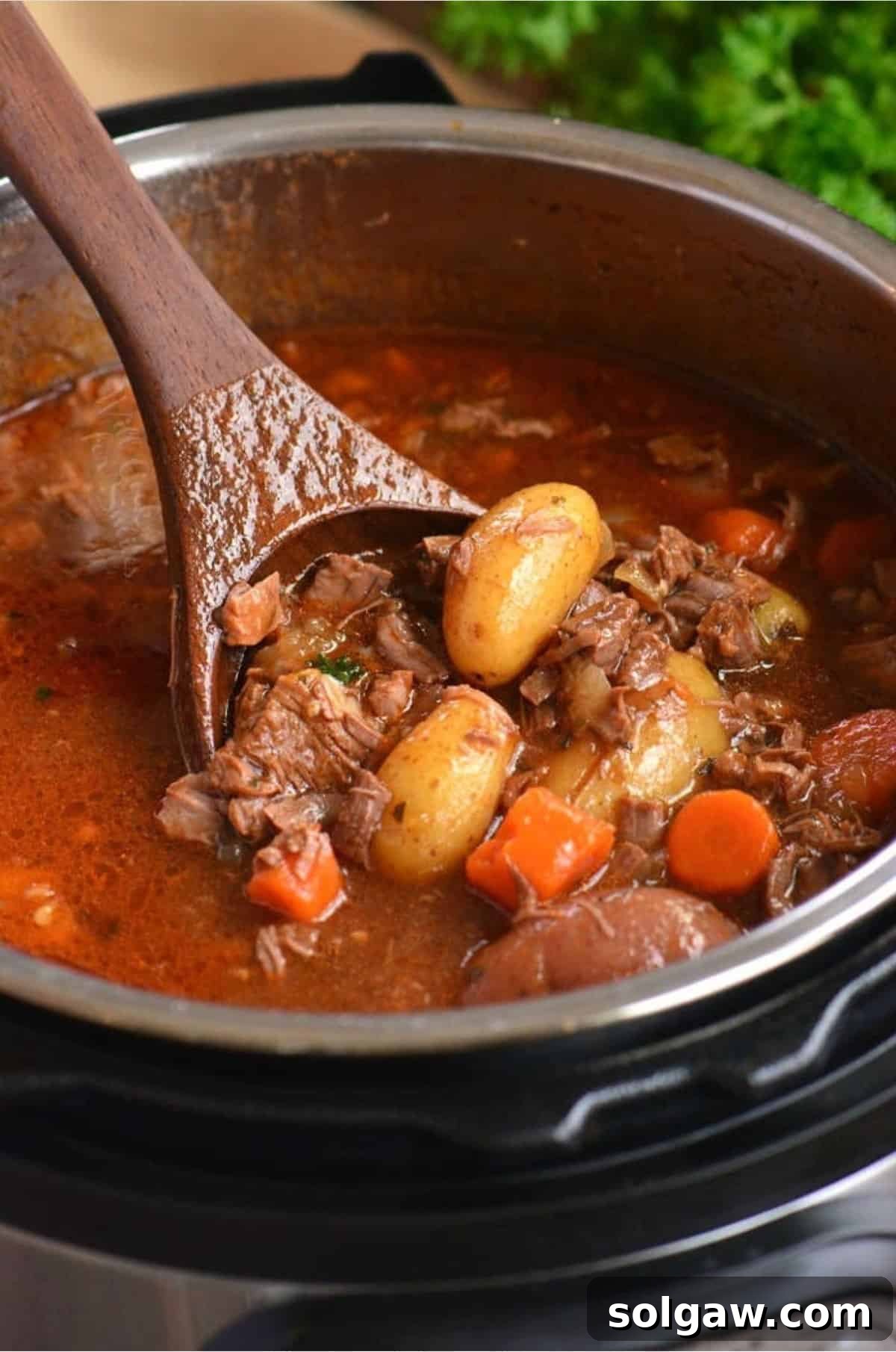
Potatoes – For a stew that maintains its integrity without turning mushy, I highly recommend using fingerling potatoes or other small, waxy varieties. These potatoes are known for how well they hold their shape and stand up to the intense pressure cooking environment. Starchy potatoes, like Russets, tend to become excessively soft and can disintegrate after pressure cooking. Keeping small potatoes whole, with their skins on (for added nutrients and texture), is key. If you have a few larger fingerling potatoes, a quick cut in half will suffice.
Beef Stock – The foundation of a flavorful stew lies in its liquid base. I always prefer to use my favorite Homemade Beef Stock when available, as it offers unparalleled depth. However, high-quality store-bought beef stock is perfectly acceptable. When choosing a commercial option, I strongly advise opting for “low-sodium” or “no salt added” versions. This allows you to control the overall saltiness of your stew, preventing it from becoming overly seasoned before you have a chance to adjust.
Seasonings – The right blend of spices can elevate a stew from good to extraordinary. I rely on a simple yet incredibly flavorful combination: plenty of salt and fresh cracked black pepper to highlight the beef’s natural taste, vibrant paprika for color and a subtle peppery note, and a medley of classic dried herbs like parsley and thyme, complemented by fragrant bay leaves. These seasonings create a robust and aromatic profile that is quintessential to beef stew.
Refer to the comprehensive recipe card below for the complete list of ingredients and detailed cooking instructions.
Elevate Your Stew with Additional Vegetables
While our classic beef stew recipe features the foundational trio of potatoes, carrots, and onions, it’s incredibly versatile and welcomes a variety of other vegetables. Adding different produce can introduce new textures, flavors, and nutritional boosts.
Peas are an exceptionally popular addition, offering a burst of sweetness and vibrant green color. If you’re a fan, simply stir in a small bag of frozen peas during the last few minutes of cooking or reheating. Their delicate texture makes them unsuitable for prolonged pressure cooking.
Consider incorporating fresh green beans for a tender-crisp texture, or swap out some of the onions for finely chopped leeks, which provide a milder, sweeter allium flavor. A handful of frozen sweet corn can also add a delightful pop and natural sweetness to the broth.
For a heartier, more seasonal twist, especially in the fall, I love adding robust vegetables like various types of squash or even pumpkin to my stew. These autumnal additions bring a subtle sweetness and creamy texture as they break down slightly into the rich broth. For inspiration, you can explore another fantastic recipe for Winter Beef Stew here, which demonstrates how beautifully these ingredients marry with beef. Remember to cut harder vegetables like squash into roughly 1-inch pieces so they cook evenly with the beef and potatoes.
Mastering Instant Pot Beef Stew: Step-by-Step
Cooking beef stew in the Instant Pot is a streamlined process that maximizes flavor and tenderness. Follow these detailed steps for a perfect result:
1. Prepare Your Ingredients: Before you even turn on your Instant Pot, take a few minutes for mise en place. This means chopping all your vegetables to the desired size – remember to keep fingerling potatoes whole or halved. In a separate bowl, whisk together your beef stock, tomato paste, Worcestershire sauce, and all your chosen seasonings (salt, pepper, paprika, dried herbs). If you have a whole chuck roast, cut it into approximately 1-inch chunks. This size ensures even cooking and perfect bite-sized pieces. I personally trim off any large pieces of visible fat, as I prefer less grease in my stew, but this is entirely optional. Finally, generously season the beef chunks all over with salt and freshly cracked black pepper; this initial seasoning is crucial for building flavor.
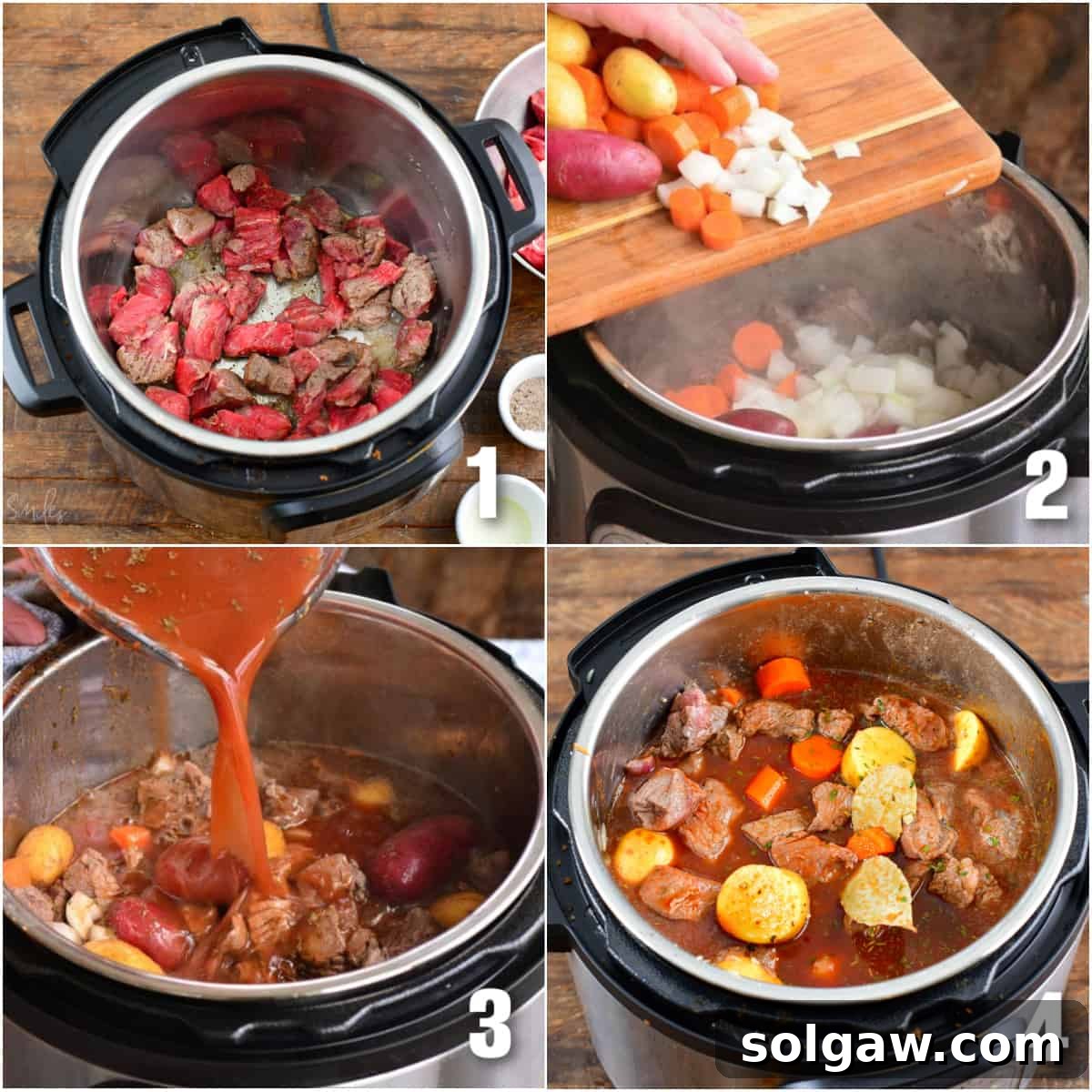
2. Sear the Meat for Flavor: This step is non-negotiable for a truly flavorful stew. Set your Instant Pot to the “Sear” or “Sauté” setting on high, and allow it to fully heat up until the display indicates “Hot.” Add a touch of canola oil (or your preferred high-heat cooking oil) to the pot. Once shimmering, carefully add your seasoned beef chunks in a single layer, working in batches if necessary to avoid overcrowding. Overcrowding will steam the meat instead of searing it. Let the meat sear for several minutes on each side until a deep brown crust forms. This browning, known as the Maillard reaction, develops incredible savory flavors that will form the backbone of your stew. (1)
3. Build the Stew Layers: Once the beef is beautifully seared and has developed that rich brown crust, add your chopped vegetables (onions, carrots, garlic) to the pot. Sauté for a few minutes, stirring occasionally, allowing the vegetables to soften slightly and absorb some of the beef drippings. Then, pour in the prepared beef stock mixture, using a wooden spoon to scrape up any browned bits from the bottom of the pot – this is called deglazing and adds even more flavor while also preventing a “burn” error on your Instant Pot. Finally, tuck in the bay leaves. (2, 3)
4. Pressure Cook to Perfection: Securely close the Instant Pot lid, ensuring it’s latched all the way. Rotate the steam release valve to the “Sealing” position. Select the “Stew” setting (if your model has it) and set the cooking time to 40 minutes. If your Instant Pot doesn’t have a specific “Stew” function, simply select “Pressure Cook” or “Manual” on high pressure and set the timer for 40 minutes. The Instant Pot will take approximately 15 minutes to build internal pressure before the actual cooking countdown begins. This pre-cooking phase is normal and expected.
5. Release the Pressure Safely: Once the cooking cycle is complete, the Instant Pot will typically switch to a “Keep Warm” setting. Allow it to perform a natural pressure release for about 10 minutes. This gradual release helps the meat remain incredibly tender and prevents it from toughening up. After 10 minutes, carefully switch the steam release valve to the “Venting” position for a quick release of any remaining pressure. Be cautious of the hot steam. Once the float valve drops, you can safely open the lid. Remove and discard the bay leaves before proceeding.
PRO TIP: Always consult your specific Instant Pot model’s manual for precise operating instructions and safety guidelines, especially regarding pressure settings and release methods. Pressure cookers can vary slightly.
Achieving the Perfect Stew Consistency
One common characteristic of pressure-cooked stews is that they can sometimes be thinner than stove-top versions due to minimal liquid evaporation. To achieve that luscious, thick consistency characteristic of a hearty beef stew, a simple cornstarch slurry is your best friend.
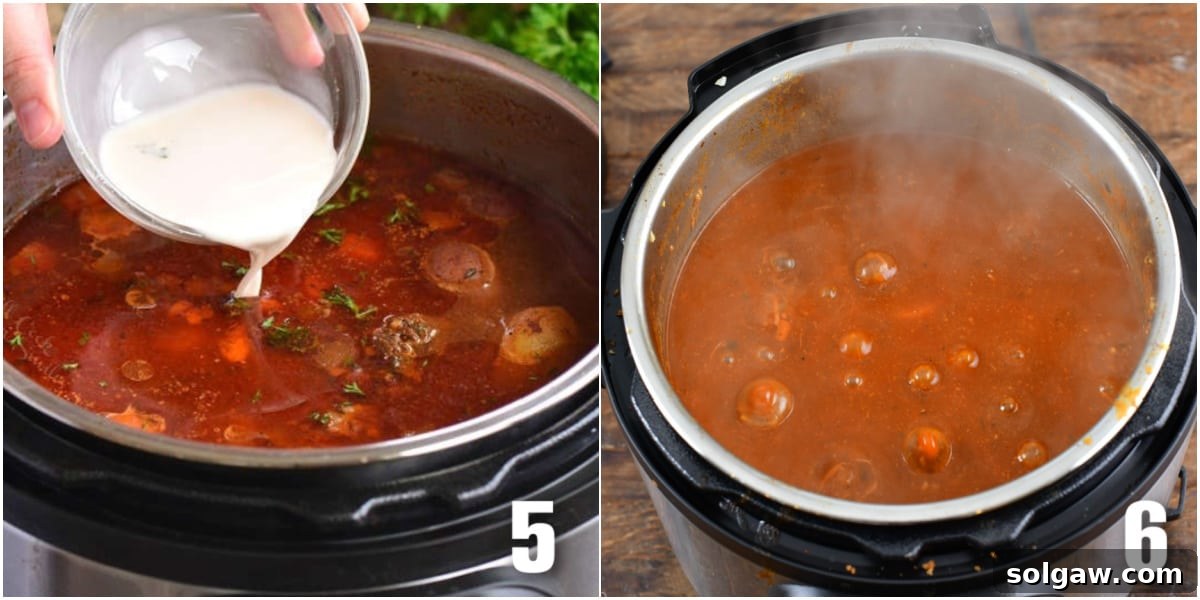
As soon as your beef stew has finished cooking in the Instant Pot and you’ve safely removed the lid, it’s time to thicken. In a small, separate bowl, whisk together cold broth (or water) and cornstarch until a smooth, lump-free mixture is formed. The key here is to use *cold* liquid, as hot liquid will cause the cornstarch to clump.
With the Instant Pot still on, select the “Sear” or “Sauté” setting again. Gradually pour the cornstarch slurry into the simmering stew (5), stirring continuously. Keep stirring gently but consistently as the stew heats up. You’ll notice it begin to thicken quite rapidly, usually within just a couple of minutes. Once it reaches your desired consistency – a rich, coating thickness that clings to the back of a spoon – turn off the pressure cooker (6). Avoid over-boiling after adding the cornstarch, as this can sometimes thin out the stew again. This method ensures a velvety, robust gravy that perfectly complements the tender beef and vegetables.
Frequently Asked Questions About Beef Stew
Achieving supremely tender meat is paramount for a truly satisfying beef stew. Fortunately, the Instant Pot is absolutely perfect for cooking tough cuts of meat. Its high-pressure environment works wonders, significantly tenderizing the meat in a much shorter amount of time compared to conventional methods. Cuts like those typically used in Pot Roast and beef stew, which are rich in connective tissue, traditionally require long cooking periods to break down and become soft and yielding. Both slow cookers and Instant Pots are excellent tools for this, but I personally find that the Instant Pot delivers a superior texture and overall deeper flavor, all while drastically cutting down on cooking time. It’s an unbeatable combination of speed and quality.
For beef stew, the ideal cuts are those that benefit from moist, extended cooking, allowing their tough fibers and connective tissues to break down into succulent tenderness. Beef chuck and shoulder cuts are consistently the top recommendations. These cuts are known for being lean yet containing a high concentration of collagen and some desirable fat marbling, which contributes to a rich, gelatinous mouthfeel and robust flavor. Other excellent choices that will yield a lot of flavor, though they may require slightly longer cooking and are not as suitable for “quick” Instant Pot methods if you’re aiming for fall-apart tenderness in under an hour, include brisket, shank, and beef neck. Always opt for cuts with good marbling for the best flavor and texture.
Beef stew is a self-contained, hearty, and comforting dish that can certainly stand alone. However, pairing it with complementary sides can elevate the meal and ensure not a single drop of that delicious, rich sauce goes to waste! Consider serving it alongside our creamy Perfect Mashed Potatoes, which are ideal for soaking up every last bit of gravy. Many people also enjoy beef stew served over a bed of pasta, such as macaroni or egg noodles, turning it into a complete and satisfying pasta dish. If you’re looking for a lighter accompaniment, Mashed Cauliflower offers a wonderful, low-carb alternative. And of course, warm, crusty bread or soft Potato Rolls are always a fantastic choice, perfect for dipping into the savory broth.
Storage and Meal Prep Tips for Beef Stew
Beef stew is an excellent candidate for meal prepping due to its robust nature and tendency to taste even better the next day. Proper storage is key to enjoying your leftovers safely and deliciously.
Always ensure the stew has cooled completely to room temperature before transferring it to storage containers. This prevents condensation and the growth of bacteria. Store your cooled beef stew in a high-quality food storage container equipped with an airtight lid. Place it promptly in the refrigerator. When stored correctly, your delicious beef stew should remain fresh and safe to eat for 4-5 days. To maintain freshness and prevent contamination, always make sure the lid is closed tightly, and use a clean, dry ladle each time you serve a portion from the container. Reheating individual portions gently on the stovetop or in the microwave will preserve the texture and flavor.
Freezing Beef Stew: A Detailed Guide
Freezing beef stew is a convenient way to have a comforting meal ready for future busy days. However, there’s a common point of discussion regarding freezing cooked beef stew, specifically concerning potatoes. Cooked potatoes, particularly the starchy varieties, have a tendency to become watery, grainy, and mushy after being frozen and then defrosted. This is due to the breakdown of their cell structure.
If you’ve made a large batch and wish to freeze some for later, you have a couple of smart options to preserve quality:
- Freeze the stew without the potatoes: This is often the preferred method. Prepare and cook the stew as usual, but omit the potatoes. Once thawed, you can easily cook fresh potatoes (cut into pieces) directly in the reheated stew or serve it over freshly mashed potatoes, ensuring a perfect texture.
- Use waxy potatoes: If you prefer to freeze the stew with potatoes included, opt for waxy varieties like red potatoes or fingerling potatoes. These types contain less starch and more moisture, allowing them to better withstand the freezing and thawing process without turning quite as mushy as their starchy counterparts. While the texture might still be slightly different, it will be much more palatable.
Important: Avoid freezing potatoes that are high in starch, such as Idaho or Russet potatoes, if you plan to include them in the frozen stew.
Regardless of your potato choice, always ensure your stew has cooled completely to room temperature before freezing. Portion the stew into freezer-friendly, heavy-duty zip-top bags (pressing out as much air as possible to prevent freezer burn) or into airtight freezer storage containers. Label each container with the date, and freeze for up to 2 months for best quality. To thaw, transfer the frozen stew to the refrigerator overnight, then reheat gently on the stovetop until simmering, adding a splash of broth or water if needed.
More Irresistible Instant Pot Recipes
If you’ve fallen in love with the convenience and delicious results of Instant Pot cooking, you’re in for a treat! This versatile appliance can whip up an array of mouth-watering dishes with minimal effort. Here are some of our other top Instant Pot recipes that are sure to become family favorites:
- Instant Pot Garlic Mashed Potatoes
- Instant Pot Vegetable Beef Soup
- Irish Stew (Can also be adapted for Instant Pot!)
- Instant Pot Spaghetti
- Instant Pot Chili
PIN THIS RECIPE FOR LATER
DID YOU MAKE THIS RECIPE? PLEASE leave a 🌟 star rating! Let me know how you liked it by leaving the 📝 comment below or share and tag me on social media @willcookforsmiles. DON’T FORGET to subscribe to my newsletter!
Instant Pot Beef Stew Recipe
Print
Pin
Video
Rate
dinner, Main Course
American
Gluten Free
15 minutes
50 minutes
30 minutes
1 hour
35 minutes
8
476
kcal
Lyuba Brooke
Equipment
-
6 quart pressure cooker (Instant Pot)
Ingredients
- 3 lb beef chuck roast
- 2 tbsp canola oil
- Salt
- Fresh cracked black pepper
- 24 oz fingerling potatoes (or small waxy potatoes)
- 1 large yellow onion, chopped
- 12 oz carrots, peeled and chopped
- 6 garlic cloves, minced
- 3 cups beef stock (low sodium)
- 6 oz tomato paste
- 3 tbsp Worcestershire sauce
- 1 1/2 tsp dried thyme
- 1 tbsp dried parsley
- 2 tsp paprika
- 3 bay leaves
- Salt, to taste
- Fresh cracked black pepper, to taste
To Thicken:
- 2 1/2 tbsp cornstarch
- 2 tbsp cold beef stock (or water)
Instructions
Before Cooking:
-
1. Prepare your vegetables by chopping onions, carrots, and mincing garlic. If using fingerling potatoes, leave them whole or halve larger ones. Set aside.
-
2. In a medium bowl, whisk together beef stock, tomato paste, Worcestershire sauce, dried thyme, dried parsley, paprika, and a initial pinch of salt and pepper. Set this flavorful mixture aside.
-
3. Cut the beef chuck roast into roughly 1-inch chunks. Trim off large pieces of fat if desired. Season the beef generously on all sides with salt and fresh cracked black pepper.
Cooking Beef Stew in the Instant Pot:
-
1. Set your Instant Pot to the “Sear” or “Sauté” setting on high and let it heat thoroughly. Once hot, add the canola oil. Add the seasoned beef chunks in a single layer, working in batches if necessary, and sear for a few minutes until well browned on all sides. This builds crucial flavor.
-
2. Once the beef has a good sear, add the chopped onions, carrots, and minced garlic to the pot. Sauté for 2-3 minutes, stirring to combine with the beef and scrape up any browned bits from the bottom.
-
3. Pour in the prepared beef stock mixture. Add the potatoes and bay leaves, ensuring the ingredients are submerged as much as possible without exceeding the max fill line.
-
4. Close the Instant Pot lid, making sure it’s securely latched. Turn the steam release valve to the “Sealing” position. Select the “Stew” setting and adjust the cook time to 40 minutes. If your model lacks a “Stew” setting, use “Pressure Cook” or “Manual” on high pressure for 40 minutes.
-
5. NOTE: The Instant Pot will take approximately 15 minutes to build pressure before the 40-minute cooking cycle begins.
-
6. Once the cooking time is complete, allow the Instant Pot to perform a natural pressure release for about 10 minutes. After 10 minutes, carefully move the steam release valve to the “Venting” position for a quick release of any remaining pressure. Open the lid once the float valve has dropped.
-
7. Remove and discard the bay leaves from the stew.
Thickening Beef Stew:
-
1. In a small bowl, combine the cornstarch and cold beef stock (or water) and whisk thoroughly until completely smooth and lump-free.
-
2. With the lid open, select the “Sear” or “Sauté” setting on the Instant Pot. Slowly pour the cornstarch mixture into the hot stew, stirring constantly.
-
3. Continue to stir gently until the stew begins to thicken to your desired consistency. This typically takes only a couple of minutes. Once thickened, turn off the pressure cooker. Serve hot and enjoy!
Video
Notes
- Storing: Always allow the stew to cool completely to room temperature before storing. Transfer it to an airtight food storage container and place it in the refrigerator. When properly stored, the stew will last for 4-5 days. Ensure the lid is sealed tightly, and use a clean, dry ladle each time you retrieve a portion to maintain freshness.
- Other Veggies: To add variety, consider incorporating other vegetables. Peas are a very popular choice; simply stir a small bag of frozen peas into the hot stew right before serving. You can also try adding fresh green beans, using sliced leek instead of some onions for a milder flavor, or stirring in frozen sweet corn. In the autumn, hearty additions like various types of squash or even pumpkin (cut into 1-inch cubes) can create a wonderful seasonal stew.
- Freezing: If you plan to freeze portions of the stew, it’s often best to freeze it without potatoes, as starchy potatoes tend to become mushy upon thawing. If freezing with potatoes, opt for waxy varieties like fingerling or red potatoes, which hold their texture better. Cool completely, transfer to freezer-safe bags or containers (removing excess air), label, and freeze for up to 2 months.
Nutrition
Calories:
476
kcal
|
Carbohydrates:
30
g
|
Protein:
38
g
|
Fat:
24
g
|
Saturated Fat:
9
g
|
Cholesterol:
117
mg
|
Sodium:
591
mg
|
Potassium:
1546
mg
|
Fiber:
5
g
|
Sugar:
7
g
|
Vitamin A:
7704
IU
|
Vitamin C:
27
mg
|
Calcium:
88
mg
|
Iron:
6
mg
Tried this recipe?
Mention @willcookforsmiles or tag #willcookforsmiles!
Originally published on Will Cook For Smiles in January, 2020.