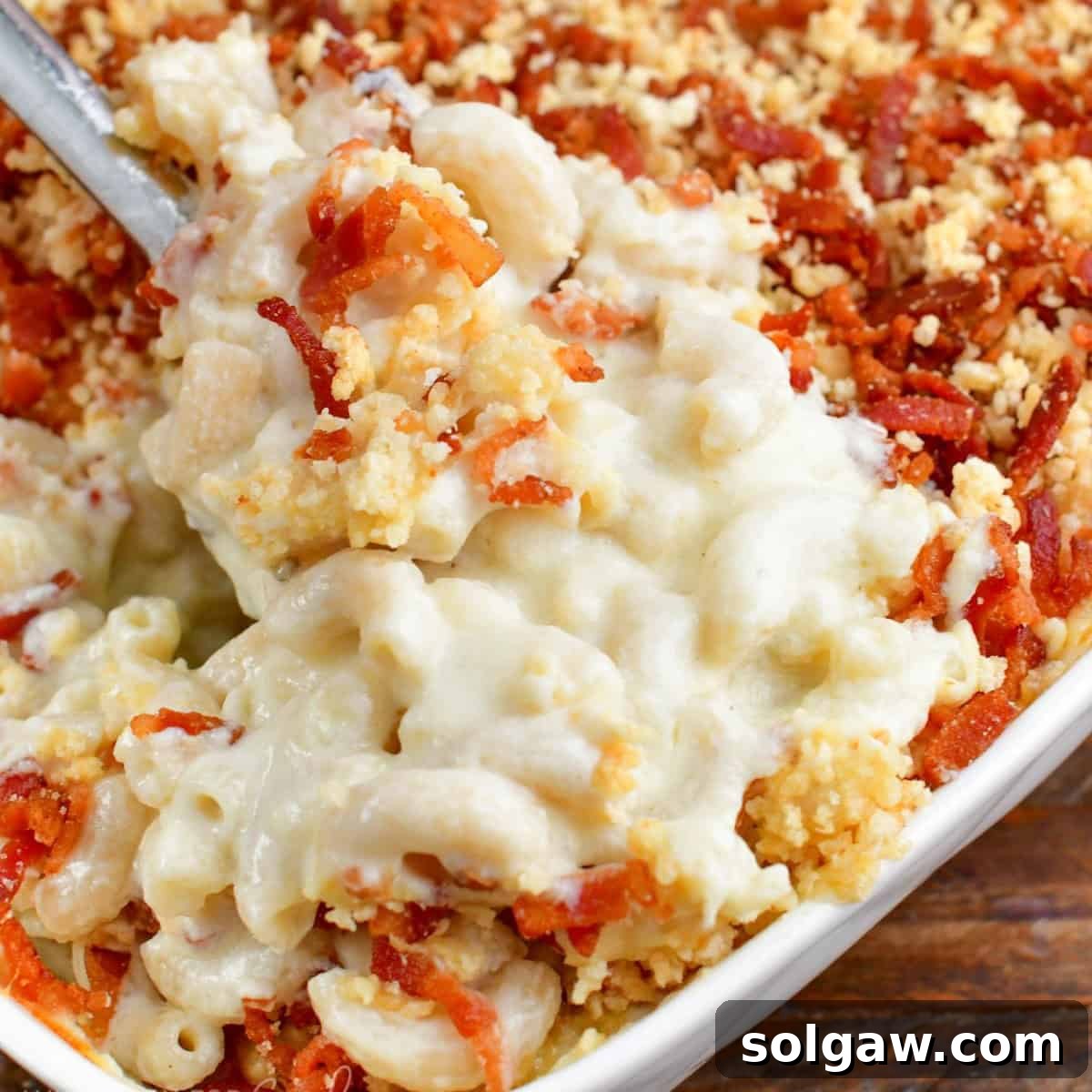
Welcome to the ultimate guide for crafting the most heavenly Baked Mac and Cheese you’ll ever taste! For years, I’ve honed this recipe, treating it as the foundational masterpiece for countless mac and cheese variations. It’s been tested, re-tested, and perfected to deliver a dish that’s not just food, but an experience. This particular baked rendition has become a beloved staple, gracing our holiday tables and gathering plates with its undeniable comfort and rich flavor. It’s the kind of dish that brings smiles, ignites nostalgia, and leaves everyone asking for seconds. Get ready to dive into a world of creamy, cheesy goodness, topped with a golden, crispy crunch that elevates classic comfort food to an art form.
Featured Comment
“
I found this recipe on Pinterest and make it using rigatoni noodles and it was absolutely to die for! Tastes like it came straight from a restaurant. So impressed! ~Jasmine”
The Art of Crafting the Perfect Baked Mac and Cheese
Creating an extraordinary baked mac and cheese is a journey that begins with understanding the core components: the cheese, the pasta, and the irresistible topping. Each element plays a crucial role in achieving that sought-after balance of creamy texture, rich flavor, and satisfying crunch that makes this dish truly unforgettable.
Selecting the Quintessential Cheeses for Unrivaled Flavor and Texture
The heart and soul of any mac and cheese lies in its cheese sauce. To achieve that dreamy, smooth, and incredibly flavorful sauce, a strategic blend of cheeses is paramount. It’s not just about throwing in your favorite cheese; it’s about understanding their individual characteristics and how they contribute to the overall experience.
- Lyuba’s Expert Tip: Always grate your own block cheese! This seemingly small step makes a monumental difference. Pre-shredded cheeses are often coated with cellulose, cornstarch, or other anti-caking agents to prevent clumping in the bag. While convenient, these agents hinder the cheese from melting smoothly, resulting in a grainy or clumpy sauce. Grating cheese fresh ensures a pure, unadulterated melt that yields the silkiest, creamiest sauce imaginable.
- The Golden Rule: Combine for Synergy. For the best results, aim for a blend that includes at least one cheese renowned for its bold flavor and another prized for its superior melting capabilities. This combination guarantees both depth of taste and a wonderfully gooey, stretchable texture.
- For Robust Flavor: Extra sharp cheddar cheese is a classic for a reason, offering a tangy, complex bite that forms the backbone of the sauce. Beyond cheddar, consider other robust options like nutty Gruyere, sharp Asiago, or the rich, salty notes of freshly grated Parmigiano Reggiano. These cheeses provide an incredible depth that elevates the entire dish.
- For Supreme Melt and Gooeyness: To ensure your mac and cheese is gloriously smooth and stretchy, incorporate cheeses that melt beautifully. Mozzarella and Monterrey Jack are stellar choices, known for their exceptional melt quality, providing that desirable stringy, gooey texture without becoming oily or separating. Other fantastic melting cheeses include Fontina, Gouda, or Havarti, each contributing a slightly different nuance to the creaminess.
- Pro Tip: Don’t be afraid to experiment with your cheese blend! A mix of 2-3 types often yields the most complex and satisfying flavor profile.
Choosing the Ideal Pasta Shape for Maximum Creaminess
The pasta is more than just a vessel; it’s an integral part of the mac and cheese experience. The right shape will effectively capture and hold onto that luxurious cheese sauce, ensuring every bite is packed with flavor.
- Shape Matters: Opt for short, tubular pasta shapes or those with nooks and crannies that are designed to “catch” sauce. Classic choices like elbow macaroni, spiral cavatappi, or medium shells are perfect as their curves and hollows act as tiny reservoirs for the creamy sauce. Other excellent options include ridged penne, ziti, or rigatoni, which provide additional surface area for sauce adherence.
- Cook to Perfection (Al Dente!): The secret to baked mac and cheese that isn’t mushy lies in cooking your pasta “just shy of al dente.” This means boiling it in well-salted water for about 1-2 minutes less than the package instructions. Since the pasta will continue to cook and absorb sauce in the oven, starting it slightly firm prevents it from becoming overcooked and soft, ensuring a pleasant bite in the final dish. A good rule of thumb is to taste a piece – it should still have a slight firmness in the center.
The Irresistible Crispy Topping: A Bacon-Panko Masterpiece
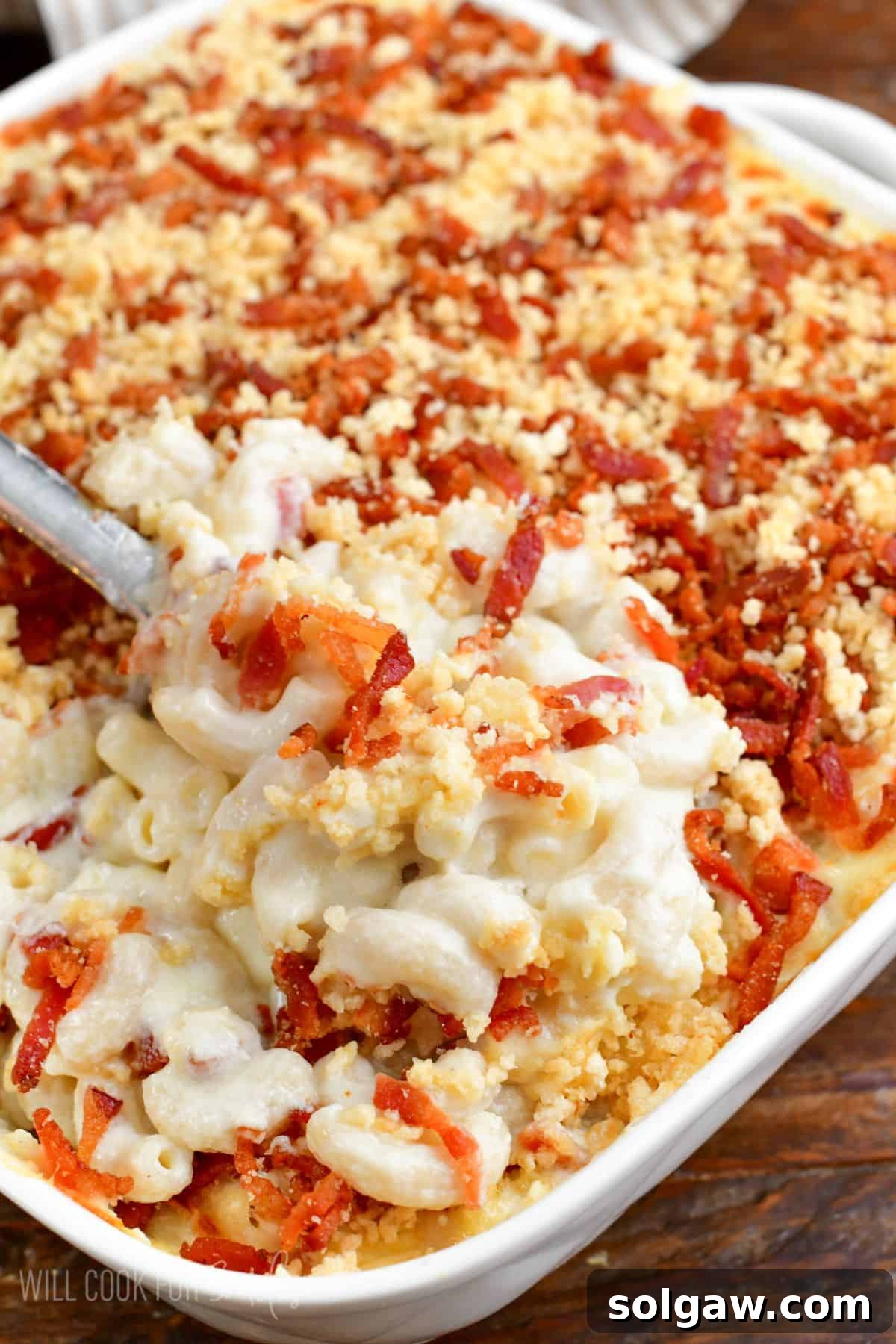
While the creamy pasta is the main event, a crisp, golden topping provides a delightful textural contrast that completes the dish. This recipe features a savory bacon and Panko crumb topping that is simply divine.
- Panko Power: For the ultimate light and crispy crunch, Panko breadcrumbs are non-negotiable. Unlike standard breadcrumbs, Panko are made from crustless white bread and have a larger, flakier texture, resulting in a much crispier finish when baked. They absorb less oil, staying lighter and crunchier.
- Bacon Bliss: Adding crispy bacon bits to the topping infuses a smoky, savory depth that perfectly complements the rich cheese. The rendered bacon grease is then used to coat the Panko, ensuring maximum flavor and an even crispier texture.
- Beyond Bacon: If bacon isn’t your preference, you can still achieve a fantastic topping. Simply toast the Panko in a tablespoon of melted butter until golden brown, then sprinkle with a pinch of garlic powder or dried herbs like parsley or thyme for added flavor.
Mastering the Technique: Tips for a Silky Smooth Mac and Cheese Sauce
Achieving that perfectly smooth, lump-free cheese sauce is the hallmark of a truly great mac and cheese. With a few key techniques and careful attention, you can master this crucial step and ensure every bite is pure creamy perfection.
Essential Preparation for Success (Mise en Place)
Organization is key to smooth cooking. Before you even turn on the stove, get all your ingredients prepped and ready. This “mise en place” approach will make the cooking process much more enjoyable and prevent any last-minute scrambling.
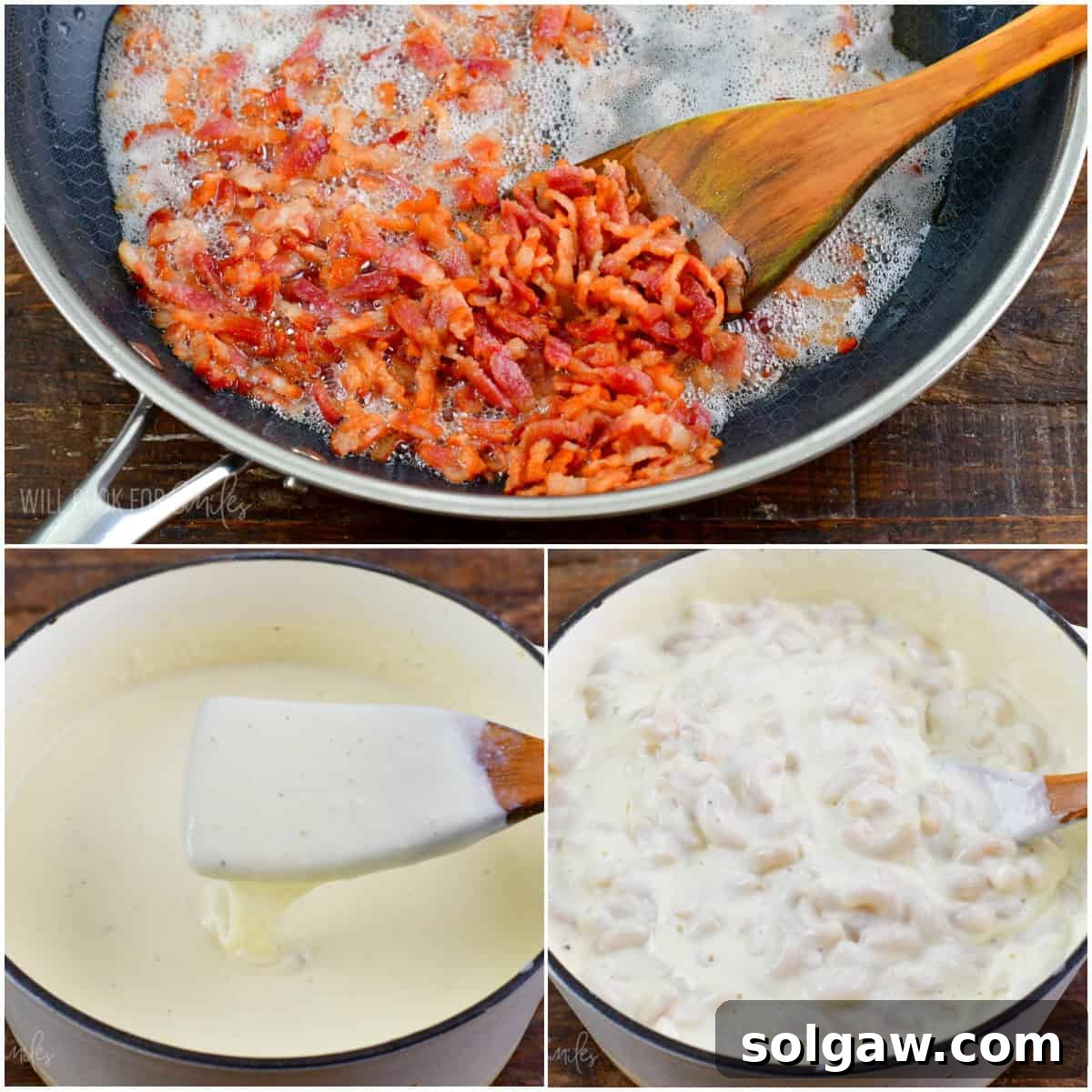
- Bacon First: Begin by preparing your bacon bits. Cutting cold bacon strips widthwise into small pieces makes them much easier to handle. Cook them on the stovetop until crispy, then strain and set aside for the topping, reserving a tablespoon of the delicious bacon grease for later.
- Grate All Your Cheese: As mentioned, grating cheese from blocks is crucial. Do this before you start on the sauce. Having all your cheese ready to go will allow you to add it to the sauce smoothly and efficiently, preventing any lumps.
- Measure Everything Else: Ensure all other ingredients, such as flour, milk, and seasonings, are measured out and within easy reach. This streamlines the cooking process, especially when timing is critical for a smooth sauce.
Crafting a Luminous, Lump-Free Cheese Sauce
The foundation of a great cheese sauce is a well-made roux (a mixture of fat and flour) and careful temperature control. Follow these steps for a sauce that’s velvety smooth every time.
- Start with a Roux: Melt butter in a large pot over medium heat. Once melted, lower the heat to medium-low and whisk in the flour until it forms a smooth paste. Cook this roux for 1-2 minutes, stirring constantly, to cook out the raw flour taste. It should be light blonde in color.
- Gradual Milk Addition is Key: As soon as your roux is smooth and fragrant, begin slowly pouring in the milk (and half and half, if using) while constantly whisking. The key here is gradual addition and continuous whisking to prevent lumps. Start with a small amount of milk to form a thick paste, then slowly add the rest, ensuring each addition is fully incorporated before adding more.
- Gentle Thickening: Continue to stir slowly until the milk mixture heats through and begins to thicken. It will coat the back of a spoon. Crucially, do not let it boil! Boiling a milk-based sauce can cause it to break or scorch. Maintain a gentle simmer.
- Add Cheese Gradually: Once the sauce has thickened, remove it from the direct heat or reduce the heat to very low. Add your grated cheeses one handful at a time, stirring slowly until each batch is completely melted and incorporated before adding the next. This prevents the cheese from seizing or clumping.
- Season Thoughtfully: Season with garlic powder, salt, and fresh cracked black pepper to taste. Continue stirring gently until the sauce is completely smooth and luscious.
- Never Boil the Sauce: This cannot be stressed enough. High heat and boiling will cause the fats in the cheese to separate, resulting in an oily, grainy, or broken sauce. Always cook your cheese sauce over medium to medium-low heat and remove it from the heat as soon as the cheese is fully melted and smooth.
- Don’t Overcook: As soon as the cheese sauce is perfectly melted and smooth, take it off the heat. Immediately add your cooked, al dente pasta and fold gently to combine.
Tailoring Your Mac and Cheese: Allergy and Dietary Adaptations
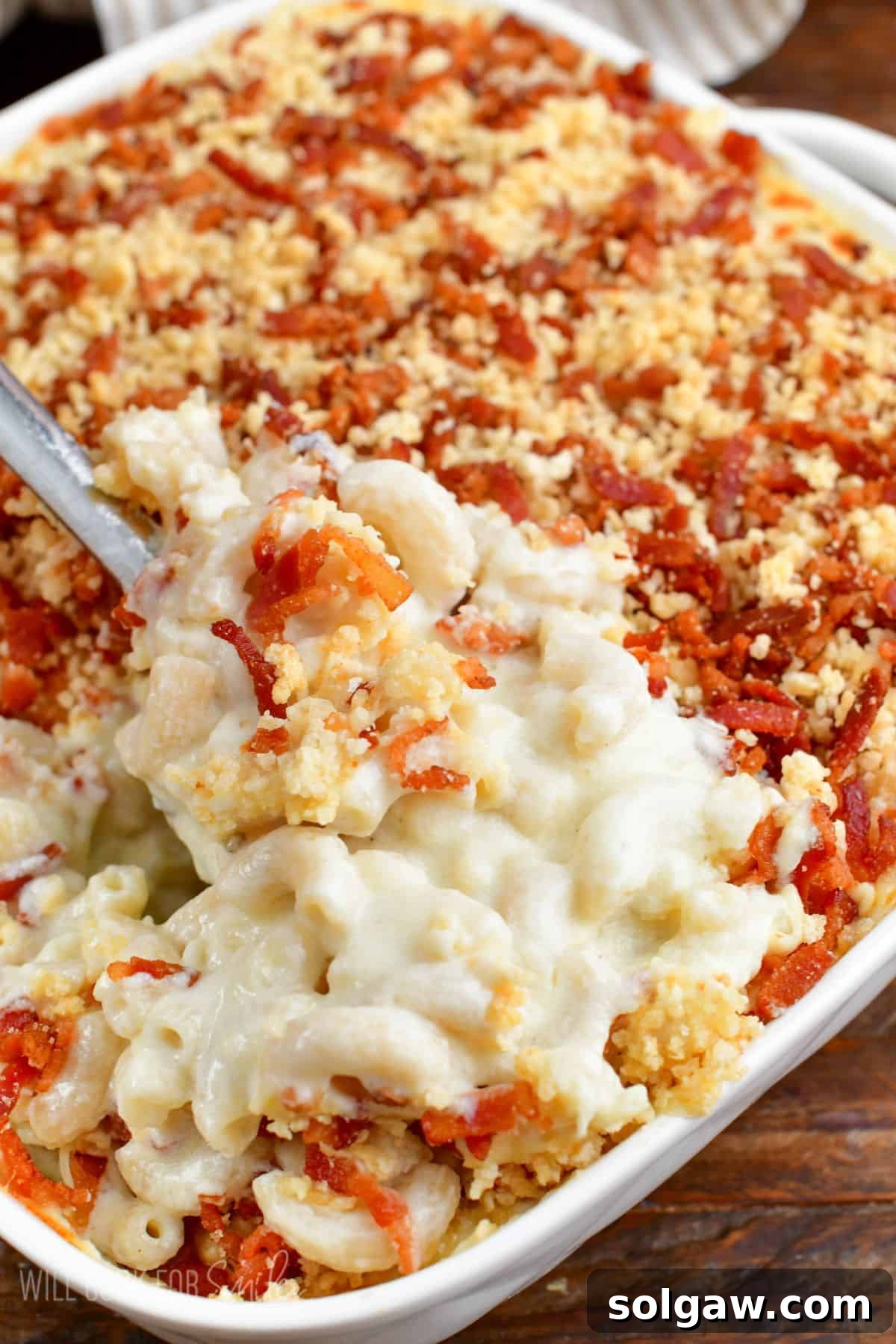
This classic recipe is incredibly versatile and can be adapted to suit various dietary needs and preferences without compromising on flavor or texture. Here’s how you can customize your baked mac and cheese:
Embracing Gluten-Free Deliciousness
For those avoiding gluten, this recipe can be easily modified to be just as delicious as its traditional counterpart.
- Gluten-Free Pasta: Simply swap regular elbows or cavatappi for their gluten-free equivalents. Many excellent brands are available; look for ones made from corn, rice, or a blend of gluten-free grains. Cook them al dente as instructed.
- Gluten-Free Roux: For the cheese sauce, use a 1:1 gluten-free all-purpose flour blend in place of regular all-purpose flour. Ensure the blend contains xanthan gum for optimal thickening, though many 1:1 blends already do.
- Gluten-Free Topping: Choose gluten-free bread crumbs that mimic the light, crispy texture of Panko. Brands like 4C offer great gluten-free Panko options.
Lactose-Friendly Indulgence without Compromise
Enjoy rich, creamy mac and cheese even if you’re lactose intolerant, by making a few smart substitutions.
- Lactose-Free Dairy: Use lactose-free whole milk, which provides the same richness and creaminess as regular milk without the discomfort.
- Aged Cheese Selection: Lean on aged cheeses, as the aging process naturally reduces or eliminates lactose. Opt for aged cheddar, Monterey Jack, aged mozzarella (not fresh, which has higher lactose), Gruyere, or Havarti. Generally, cheeses aged over 6 months are naturally very low in lactose or completely lactose-free.
- Plant-Based Butter: Substitute traditional butter with a high-quality plant-based butter for the roux, ensuring it melts well and has a neutral flavor.
Lighter Options for a Guilt-Free Treat
If you’re looking to reduce the richness a bit, there are easy ways to lighten up this dish without sacrificing too much flavor.
- Cheese Swap: Replace part of the sharp cheddar with Monterey Jack, which is milder in flavor but still melts beautifully, allowing for a slightly lighter taste profile.
- Reduced-Fat Cheese: Use reduced-fat versions of your chosen block cheeses. While full-fat cheese offers the best melt, good quality reduced-fat options can still perform well.
- Lower-Fat Milk: Substitute whole milk with 2% milk or even skim milk for a noticeable reduction in fat content. You might find the sauce is slightly less rich, but it will still be delicious.
Savory Vegetarian Variations (and Beyond)
This recipe is naturally vegetarian with one simple omission, but you can also enhance it with other flavors.
- Omit Bacon: For a vegetarian version, simply omit the bacon from the topping. You can substitute the bacon grease with a tablespoon of melted butter to coat the Panko crumbs for that golden crisp.
- Add Vegetables: Enhance your mac and cheese with cooked vegetables. Stir in roasted broccoli florets, sautéed mushrooms, caramelized onions, or even a purée of butternut squash or pumpkin for added nutrition and flavor complexity.
- Spice It Up: For a kick, add a pinch of cayenne pepper to the cheese sauce or a dash of hot sauce. You could also incorporate diced jalapeños for a spicy twist.
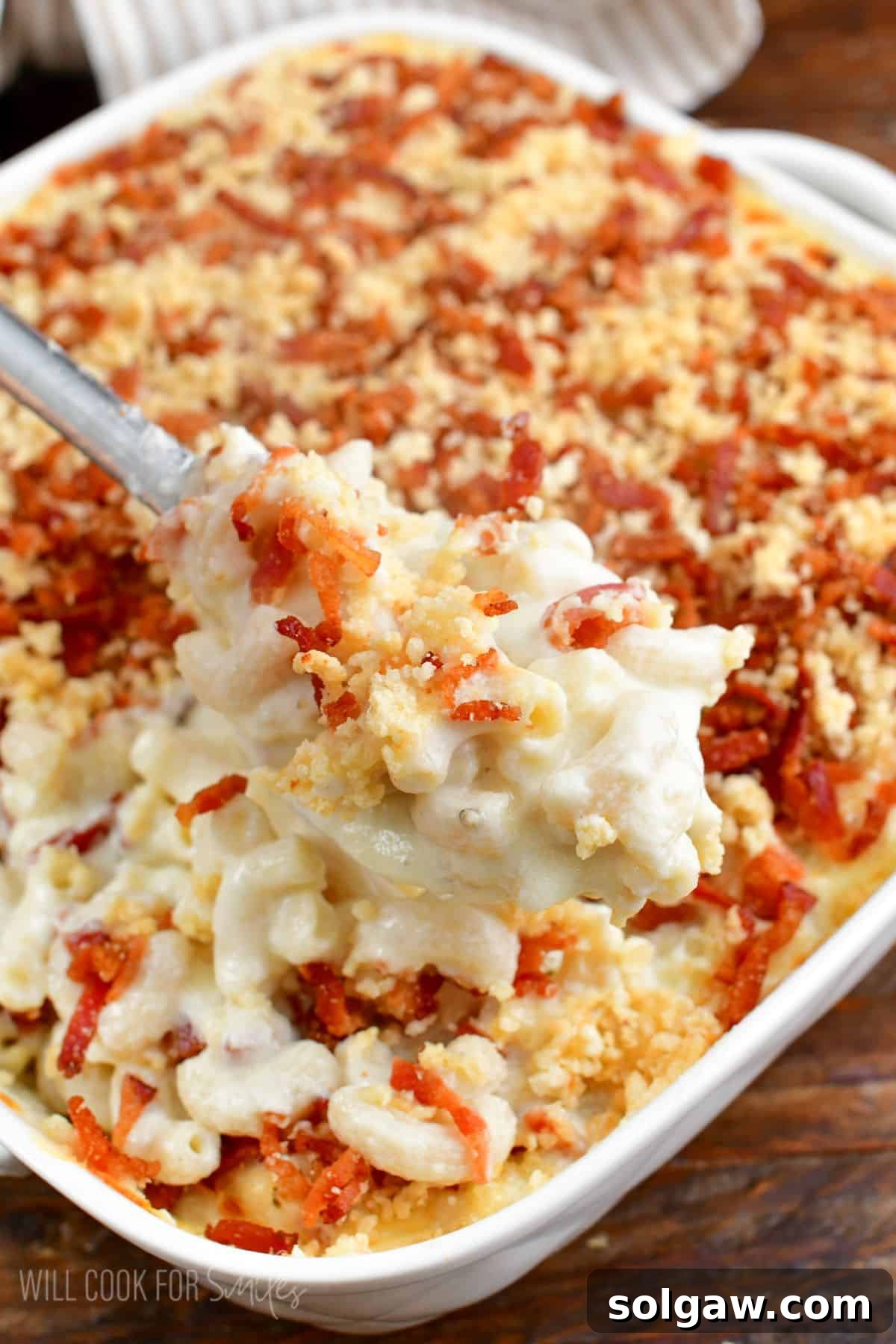
Prepare Ahead, Store, and Reheat: Your Mac and Cheese Game Plan
One of the best things about mac and cheese is its versatility when it comes to preparation, storage, and reheating. Whether you’re planning a meal ahead of time or enjoying delicious leftovers, these tips will ensure your mac and cheese remains a delight.
Making Mac and Cheese in Advance
Baked mac and cheese is a fantastic make-ahead dish, perfect for parties or busy weeknights.
- Assemble and Refrigerate: Follow all the steps for making the pasta and cheese sauce, combining them in your baking dish. Instead of baking immediately, allow the dish to cool completely to room temperature. Once cool, cover the baking dish tightly with plastic wrap and refrigerate for up to 24 hours.
- Baking Ahead-of-Time Mac: When ready to bake, remove the covered dish from the refrigerator and let it sit on the counter for about 30 minutes to an hour to come closer to room temperature. This prevents thermal shock to your baking dish and ensures more even heating. Remove the plastic wrap and bake at 350°F for 20-25 minutes, or until bubbling around the edges and heated through. You may need to add an extra 5-10 minutes if baking directly from cold.
- Maintain Creaminess: When pasta dishes are made ahead, the pasta tends to absorb moisture from the sauce, sometimes leading to a slightly drier consistency. To combat this, you can prepare and store the topping separately. When you’re ready to bake, add a splash (1-2 tablespoons) of milk over the mac and cheese before adding the topping. This extra moisture will help restore some of that lost creaminess during baking.
Smart Storage for Extended Enjoyment
Proper storage is essential to keep your leftovers fresh and delicious.
- Refrigeration: Once your baked mac and cheese has cooled completely, transfer it to an airtight container or cover the baking dish tightly with plastic wrap or foil. It will keep beautifully in the refrigerator for 3-4 days.
Reheating for Perfect Leftovers
Different reheating methods offer varying results, depending on your priority for speed or texture.
- Reheating in Microwave (Best for Single Servings): For a quick reheat, transfer a single serving to a microwave-safe bowl. Add 1-2 tablespoons of milk per cup of mac and cheese to help rehydrate the sauce. Reheat in 30-45 second intervals, stirring well between rounds, until heated through.
- Reheating in Oven (Best Overall Texture & Topping): For larger portions or to best preserve the crispy topping, oven reheating is ideal. Use the same baking dish if stored in it, or transfer to an oven-safe dish. Sprinkle a few teaspoons of milk evenly over the top of the mac and cheese, then cover with foil. Reheat at 325°F until hot and bubbling at the edges (typically 15-20 minutes). For an extra crispy topping, remove the foil for the last 2-3 minutes, or broil for 1-2 minutes, watching carefully to prevent burning.
Freezing for Future Comfort
Mac and cheese freezes surprisingly well, making it an excellent meal-prep option.
- Preparation for Freezing: If you plan to freeze, assembling the mac and cheese in an aluminum foil pan can make it easier to manage. Cook the macaroni, prepare the cheese sauce, and make the topping as per the recipe. Mix the pasta and cheese sauce, then spread it evenly in the aluminum pan. Allow it to cool completely before adding the bacon-Panko topping.
- Air-Tight Wrapping: The key to successful freezing is preventing freezer burn. Wrap the pan tightly with plastic wrap first, ensuring a good seal, then wrap it again with heavy-duty aluminum foil. Label the pan with the date and contents. It can be frozen for up to 2 months.
- Baking from Frozen: To bake frozen mac and cheese, remove it from the freezer. Take off the plastic wrap, but leave the foil wrap on. Bake it covered with foil at 350°F for 30 minutes. Then, remove the foil and continue baking for another 25-30 minutes, or until it’s hot and bubbling throughout. If the topping starts to brown too quickly, you can loosely tent a sheet of aluminum foil over the top.
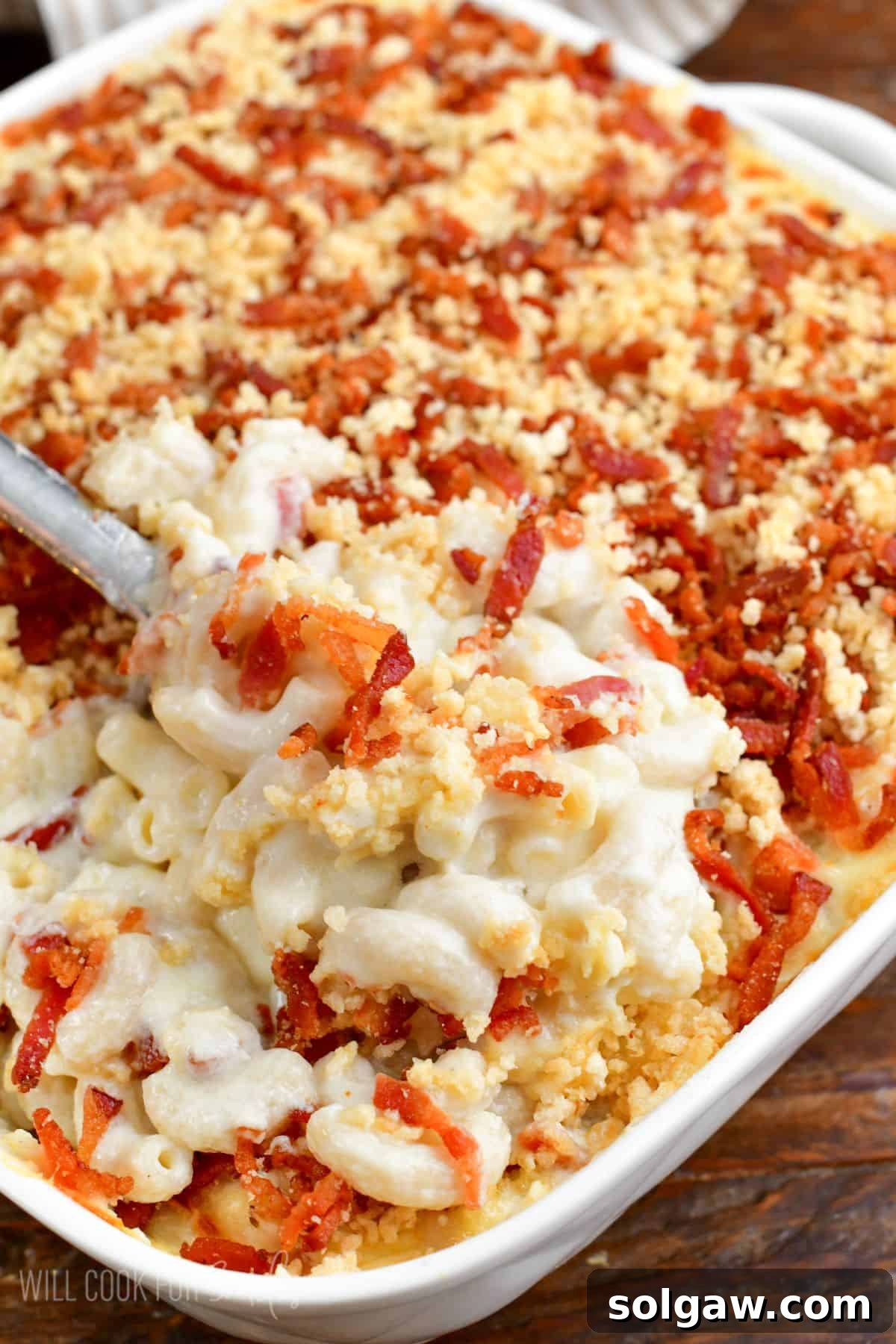
Baked Mac and Cheese Recipe
Print
Pin
Video
Rate
Ingredients
- 1 lb macaroni pasta*
- water to cook pasta
- salt to season water
Cheese sauce:
- 4 tbsp unsalted butter
- 1/3 cup all purpose flour*
- 4 cups whole milk (or reduced fat)
- 3/4 cup half and half
- 8 oz sharp cheddar cheese block
- 8 oz Monterrey jack cheese block
- 4 oz Mozzarella cheese block
- 1/2 tsp garlic powder
- salt
- fresh cracked black pepper
Topping:
- 1 lb bacon
- 1 cup Panko crumbs*
- 1 tbsp bacon grease from cooking bacon
Instructions
Cooking Bacon Bits:
-
Preheat a cooking pan over medium heat and add a little bit of cooking oil.
-
Slice cold bacon strips widthwise into small pieces and add it to the preheated pan.
-
Spread it well all over the pan and let the bacon cook until the fat is rendered and bacon bits are all cooked and crispy. Make sure to stir from time to time and note that the last couple of minutes bacon cooks fast, so don’t overcook it.
-
Strain the bacon bits from the bacon grease and save them for the topping. (You can save the remaining bacon grease for other recipes; store it in an air-tight container in the refrigerator.)
Mac and Cheese Sauce:
-
Cook pasta in well-salted water until al dente (still has a little bite to it). Strain it and set aside. You can cook the pasta while making the cheese sauce to save time.
-
Grate all cheese blocks on a large grater. Set aside.
-
Melt butter in a large pot over medium heat, then lower the heat to medium-low.
-
Whisk in flour until smoothly combined with the butter, forming a paste (roux). As soon as it’s combined, start slowly pouring in the milk (and half & half) while constantly whisking to prevent lumps. Continue whisking and pouring until all the liquid is incorporated.
-
Slowly stir the milk mixture until it heats through and begins to thicken. Do not let it boil!
-
Remove from heat (or keep on very low) and add the grated cheeses a handful at a time while slowly stirring until each addition is melted and smooth.
-
Season with garlic powder, salt, and fresh cracked black pepper to taste. Continue slowly stirring until all cheese is melted and the sauce is perfectly smooth.
-
Once all cheese is melted and the sauce is smooth, take off heat immediately.
Baked Mac and Cheese:
-
Add the strained al dente pasta to the cheese sauce and fold gently to mix thoroughly, ensuring every noodle is coated.
-
Preheat your oven to 350℉ (175°C) and grease a deep 9×9 inch or 9×13 inch baking dish.
-
Spread the mac and cheese mixture evenly into the prepared baking dish.
-
In a small bowl, mix the Panko breadcrumbs with the cooked bacon bits. Add the reserved bacon grease (or a tablespoon of melted butter if no bacon grease) and mix until the crumbs are evenly coated.
-
Generously spread this savory topping all over the mac and cheese in the baking pan.
-
Bake for about 20 minutes, or until the mac and cheese is bubbling around the edges and the topping is golden brown and crispy.
Video
For a visual guide, watch the recipe video!
Notes
- Gluten Free Notes: Use gluten-free pasta. For thickening the cheese sauce, substitute regular flour for a 1:1 gluten-free all-purpose flour blend. For a gluten-free bacon topping, use gluten-free Panko crumbs instead of regular Panko.
- Nutrition notes: Nutrition information provided is an estimate and can vary based on specific brands, ingredient substitutions, and portion sizes.
- Make-ahead: Assemble all the way in the baking dish, cover tightly, and refrigerate for up to 24 hours. Bake as instructed, but may need to add 5-10 minutes to the baking time if baking directly from cold. For best results, allow to sit at room temperature for 30-60 minutes before baking.
- Reheat quick tip: To restore creaminess, add a splash of milk, cover, and warm at 325°F in the oven until hot, or in 30-45 second intervals in the microwave, stirring between.
Nutrition
Explore More Mac and Cheese Creations from Will Cook For Smiles
If you’ve fallen in love with this baked mac and cheese, you’ll be thrilled to discover other delectable variations from Will Cook For Smiles. Each recipe is designed to bring joy and comfort to your kitchen, offering unique twists on this beloved classic.
- Pumpkin Mac and Cheese
- Smokehouse Mac and Cheese
- Crab Mac and Cheese
- Lobster Mac and Cheese
- Easy Homemade Mac and Cheese
- Parmesan Baked Mac and Cheese
Originally published on Will Cook For Smiles in March 2019, this timeless recipe continues to be a favorite, evolving and adapting to become the best baked mac and cheese your family will ever crave.