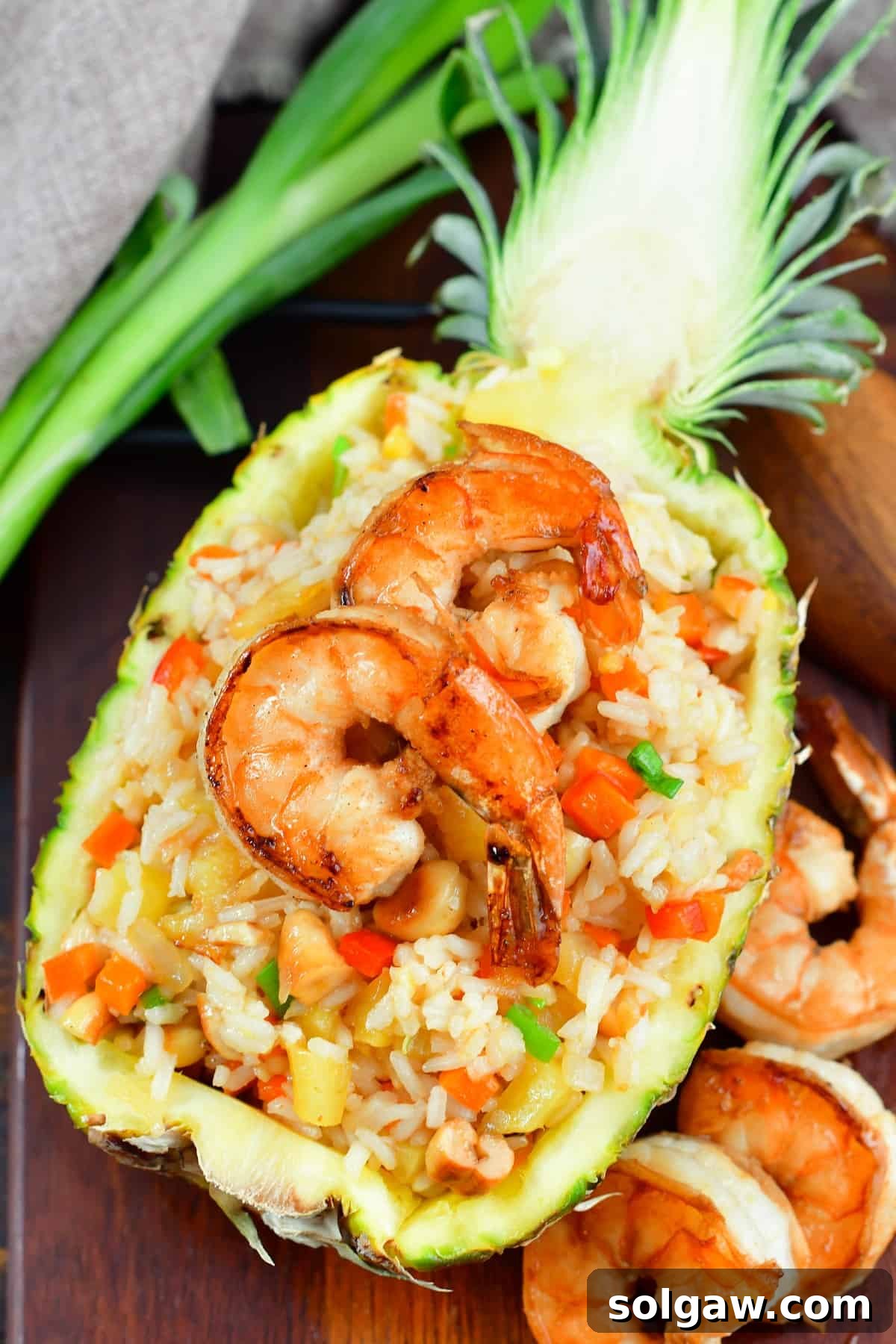
Thai Pineapple Fried Rice: A Tropical Symphony of Flavors
Embark on a culinary journey to Thailand with this exquisite Thai Pineapple Fried Rice recipe. Far from your ordinary fried rice, this dish is a vibrant celebration of sweet, savory, and umami notes, creating an unforgettable dining experience. Whether you’re a connoisseur of Asian cuisine or simply looking for a fresh twist on a classic, this recipe promises to deliver a burst of tropical flavors and satisfying textures in every spoonful. It’s an incredibly versatile dish that shines equally as a standalone main course or a dynamic side, perfect for any occasion from a quick weeknight dinner to an impressive feast for guests.
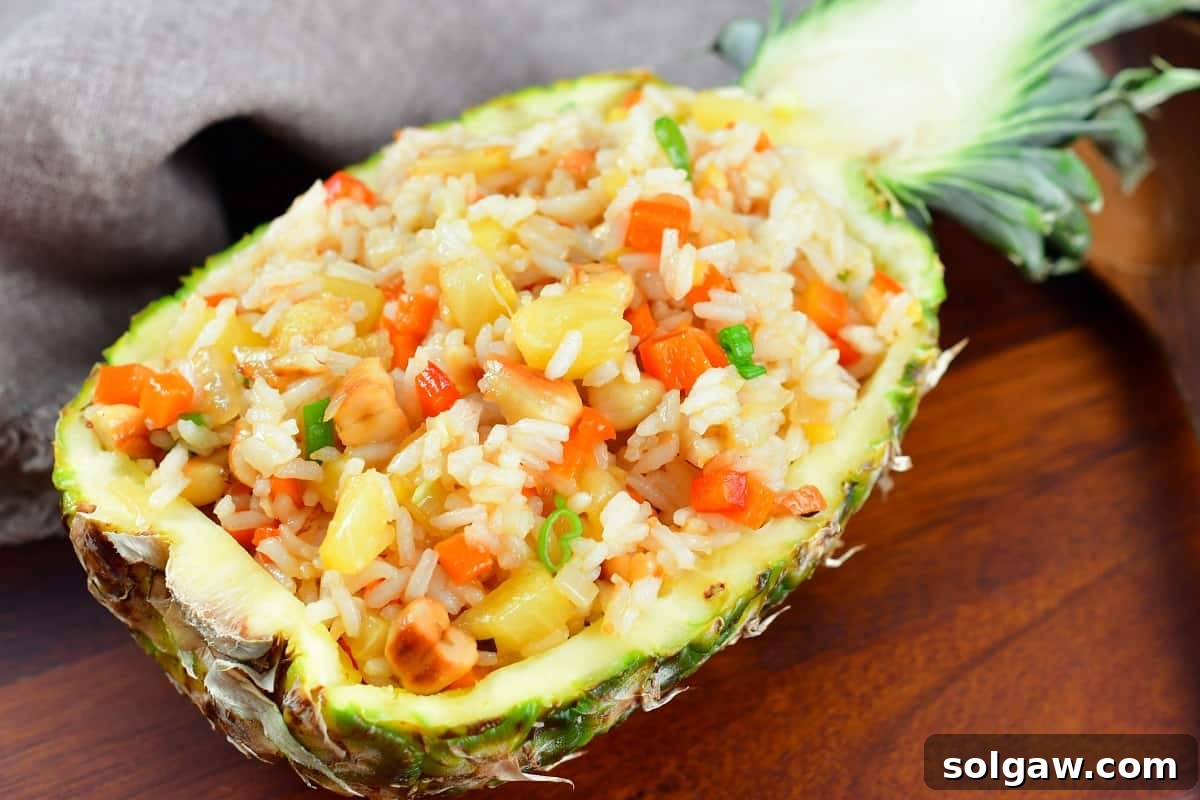
The beauty of Thai Pineapple Fried Rice lies in its harmonious balance. Imagine tender grains of rice infused with fragrant garlic and ginger, mingling with succulent pineapple chunks, crisp vegetables, and a tantalizing sauce. The addition of toasted cashews provides a delightful crunch, elevating the texture profile. While traditional fried rice often leans entirely savory, this pineapple-infused version introduces a subtle sweetness that perfectly complements the rich umami, making it a true masterpiece for those who adore the sweet and salty dynamic.
Why This Is Your Next Favorite Fried Rice Recipe
If your palate craves a departure from the conventional, this Thai Pineapple Fried Rice offers an exciting and flavorful adventure. While classic Thai fried rice (Khao Pad) holds a special place, this variation introduces a captivating fruity dimension that will undoubtedly charm your taste buds. Here’s why this recipe stands out:
- A Harmonious Blend of Flavors: Unlike many fried rice dishes that are purely savory, this recipe ingeniously incorporates sweet pineapple chunks, creating a delightful sweet and savory interplay. This unique balance is further enhanced by a subtly sweet sauce, ensuring a complex yet incredibly approachable flavor profile. It’s not overly sweet; rather, it offers a refreshing “pop” of juiciness that beautifully contrasts with the deep umami notes.
- Irresistible Textural Contrast: Beyond its incredible taste, this dish offers a captivating variety of textures. The soft, perfectly cooked rice provides a comforting base, while the addition of crunchy cashews introduces an exciting textural counterpoint that keeps every bite interesting and satisfying. Crisp bell peppers and carrots add another layer of fresh bite.
- Highly Customizable for Every Diet: This recipe is wonderfully adaptable. It can be easily kept vegetarian by simply omitting meat, or you can enhance it with plant-based proteins like tofu for a complete meal. For meat lovers, the recipe includes instructions for adding delicious seared shrimp, and the same seasoning can be applied to chicken for another fantastic protein option. This flexibility makes it a go-to for diverse dietary preferences.
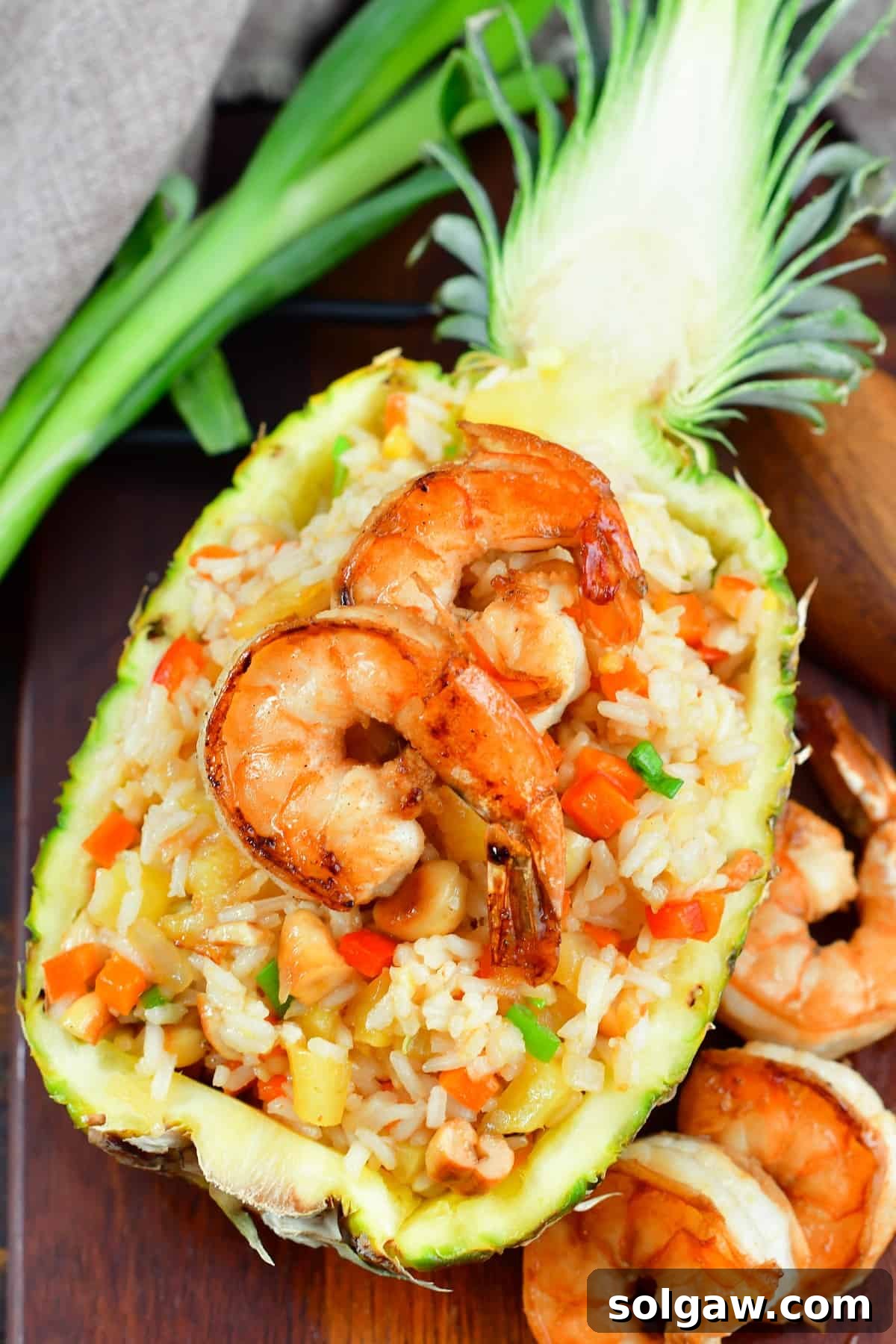
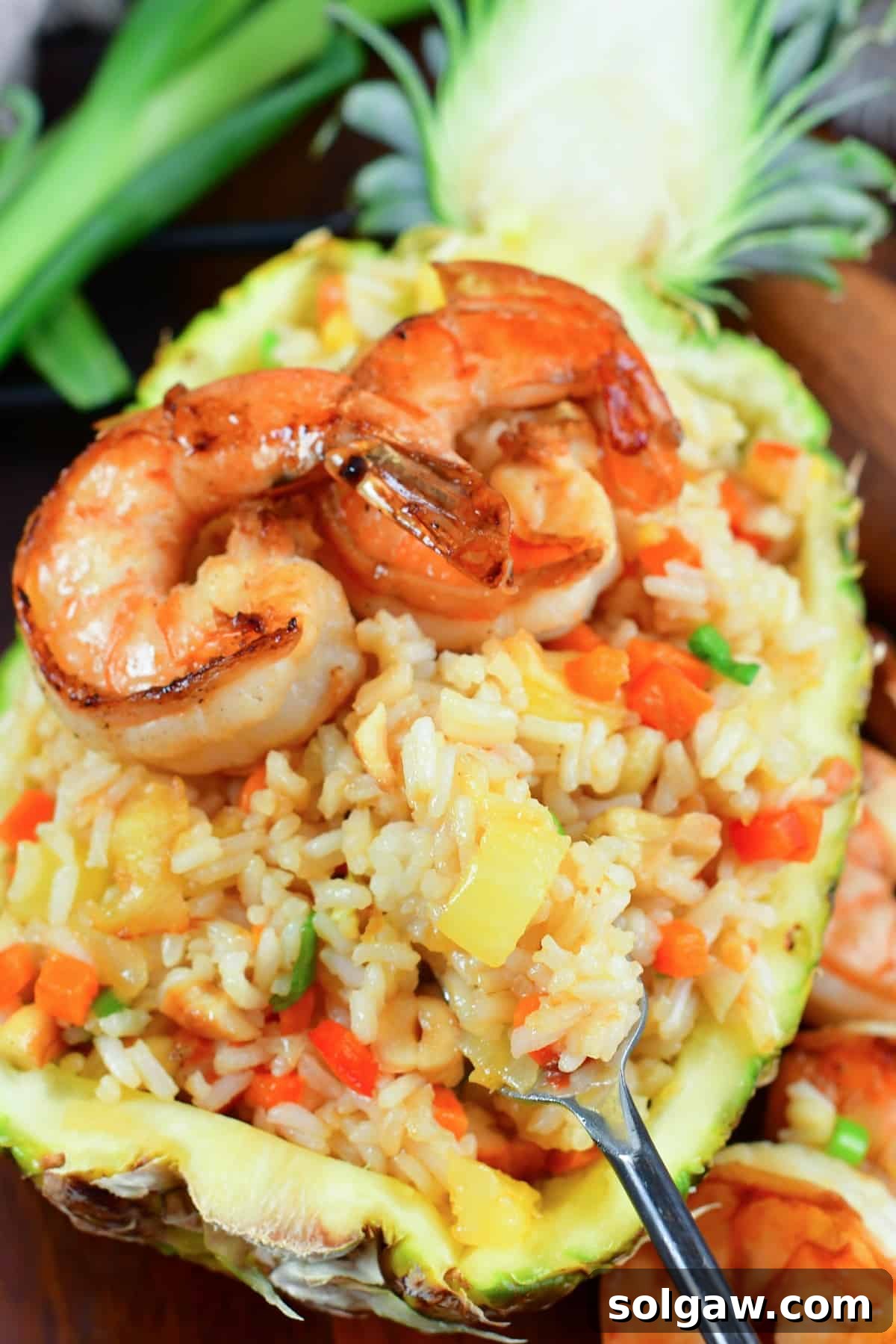
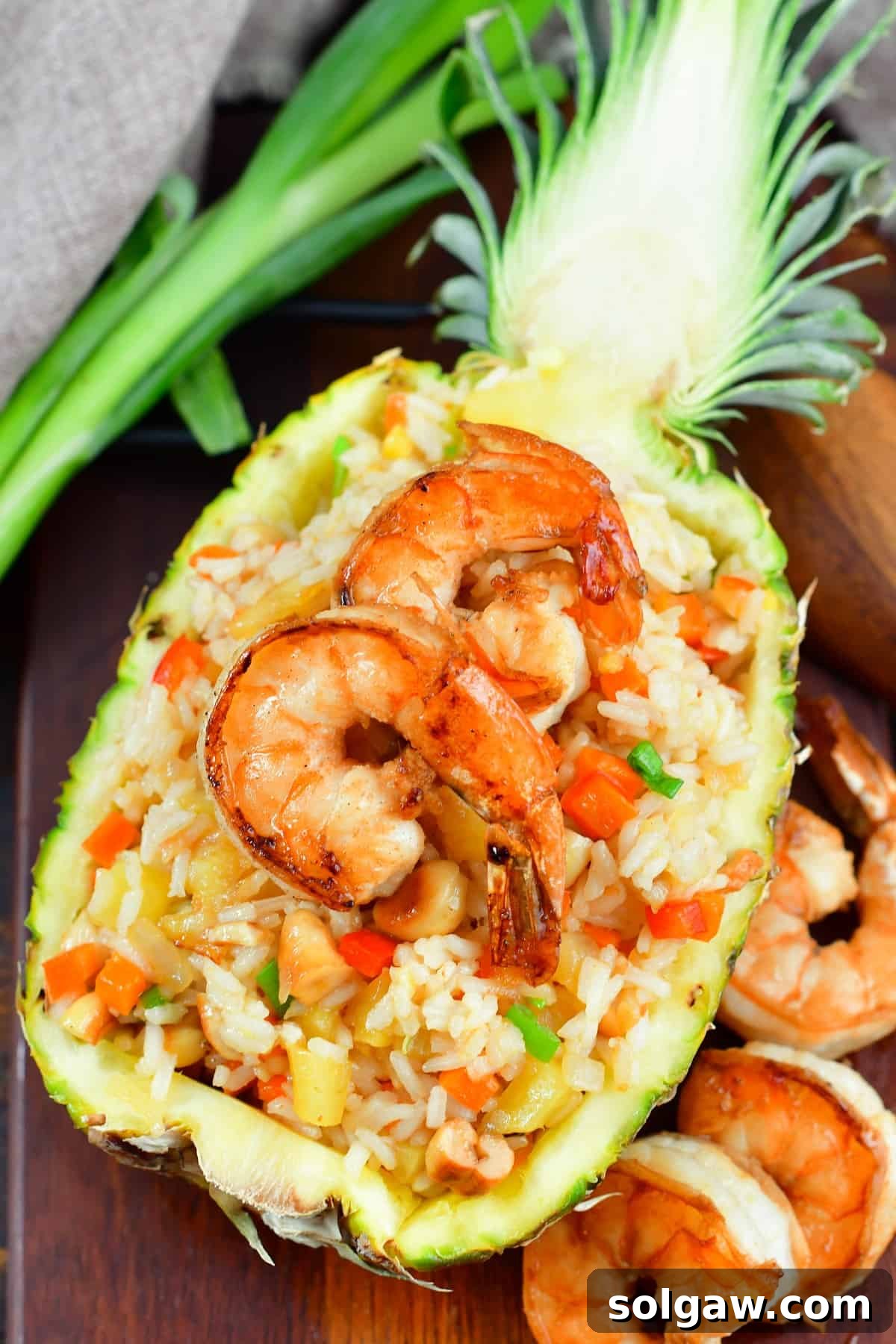
- Visually Stunning Presentation: Served often in a hollowed-out pineapple half, this dish is as beautiful to look at as it is to eat. Its vibrant colors—golden pineapple, green onions, red bell peppers, and succulent pink shrimp—make it a showstopper at any dinner table.
Essential Ingredients and Clever Substitutions
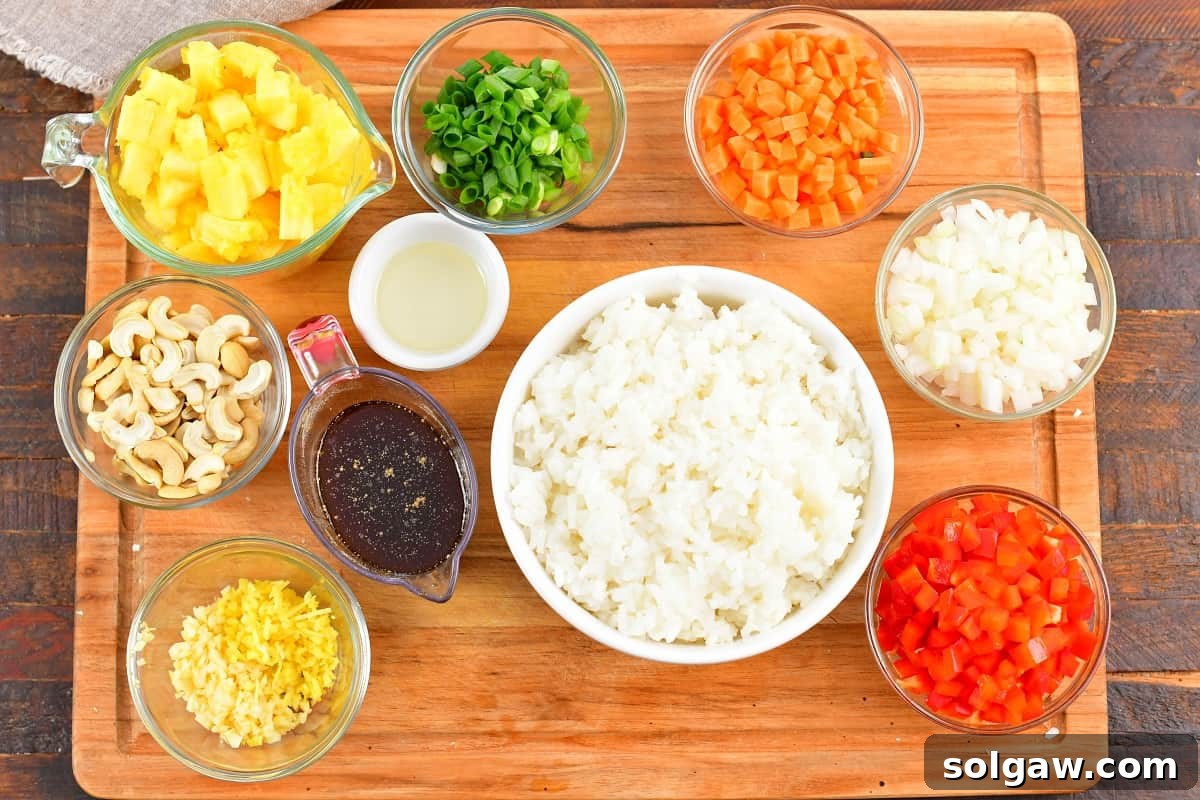
Crafting the perfect Thai Pineapple Fried Rice starts with understanding its core components. Quality ingredients make a significant difference, but smart substitutions can also ensure a delicious outcome even if you’re missing an item.
Pineapple: The Tropical Star
For an unparalleled taste and texture, fresh pineapple chunks are highly recommended. Their natural sweetness and vibrant acidity elevate the dish. If you’re new to preparing fresh pineapple, consider checking out a guide on how to cut a pineapple for ease. Should fresh pineapple not be available, canned pineapple rings or chunks can be used. Just be sure to drain any excess juices thoroughly and pat them dry to prevent making your fried rice soggy.
Rice: The Foundation of Flavor
The secret to truly great fried rice lies in the rice itself. Leftover, cold jasmine or long-grain rice from the day before is ideal. The primary reason for this is that day-old rice has dried out significantly, resulting in separate, firm grains that don’t clump together when stir-fried. This allows each grain to absorb the delicious sauce flavors beautifully without becoming mushy. If you find yourself needing to cook rice specifically for this dish and don’t have leftovers, cook it slightly under al dente. After cooking, immediately spread it in a thin layer on a baking sheet and let it cool completely, preferably in the refrigerator, to mimic the texture of day-old rice. This quick cooling method helps to reduce moisture and achieve the desired grain separation.
Nuts: A Touch of Crunch (Optional)
Cashews are chosen for their mild, buttery flavor and satisfying crunch that isn’t overly hard. They add a wonderful dimension to the dish. However, if you or your guests have a nut allergy, cashews can be easily omitted without compromising the core flavors of the fried rice. Alternatively, for a different crunch, roasted peanuts could be considered if allergies aren’t a concern, though cashews are traditional for this dish.
Gluten-Free Considerations
Making this recipe gluten-free is straightforward. The most important step is to use gluten-free oyster sauce. Many brands offer gluten-free versions, so check labels carefully. Most other ingredients, such as fresh vegetables, rice, and fish sauce, are naturally gluten-free, but always double-check product labels to be completely sure.
The Savory Base: Vegetables and Aromatics
- Yellow Onion, Bell Pepper, Carrot: These vegetables form the aromatic and textural core of the fried rice. Dice them evenly for consistent cooking. Feel free to use different colored bell peppers for a more vibrant dish.
- Garlic & Fresh Ginger: Essential aromatics that provide depth and warmth. Minced fresh ginger offers a zesty kick that dried ginger cannot replicate.
- Green Onions: Added at the end for a fresh, mild onion flavor and a pop of color.
The Irresistible Sauce
The sauce is where the magic happens, bringing together all the distinct flavors into a cohesive, mouthwatering experience. It’s a blend of:
- Fish Sauce: Provides the essential umami and salty foundation characteristic of Thai cuisine.
- Oyster Sauce: Adds a rich, savory, slightly sweet depth. Remember to use a gluten-free variety if needed.
- Fresh Lime Juice: A crucial element that brightens the entire dish with its tangy acidity, balancing the sweetness and savory notes.
- Brown Sugar: Contributes a touch of sweetness, enhancing the pineapple’s natural sugars and rounding out the savory elements.
- Thai Sweet Chili Sauce: Offers a mild heat and extra layer of sweet-tangy flavor. Adjust to your spice preference.
- White Pepper & Salt: Seasoning to taste, white pepper offering a distinct, milder heat than black pepper that complements Asian dishes.
Mastering Thai Pineapple Fried Rice: Step-by-Step Guide
Creating this flavorful dish is a quick and rewarding process, especially when you have all your ingredients prepped and ready. Follow these steps for a perfectly cooked Thai Pineapple Fried Rice:
Preparation is Key
- Ingredient Mise en Place: Before you even turn on the stove, ensure all your ingredients are prepared. Dice the vegetables, mince the garlic and ginger, and measure out all components for the sauce. Speed is crucial in stir-frying, so having everything at arm’s reach makes the process smooth and prevents overcooking.
- Crafting the Sauce: In a small bowl or measuring cup, combine all the sauce ingredients: fish sauce, oyster sauce (gluten-free if preferred), fresh lime juice, brown sugar, Thai sweet chili sauce, white pepper, and salt. Whisk them together thoroughly until well combined.
- Shrimp Marinade (Optional): If you plan to add shrimp, peel and devein them as needed. In a separate bowl, combine the shrimp with lime juice, oyster sauce (gluten-free if needed), a touch of oil, pressed garlic, white pepper, and salt. Mix well and set aside to marinate while you proceed with the fried rice preparation.
Cooking the Fried Rice
- Heat Your Wok: Preheat a large wok or a spacious cooking pan with high sides over medium-high heat. A hot pan is essential for achieving that authentic stir-fry texture and flavor.
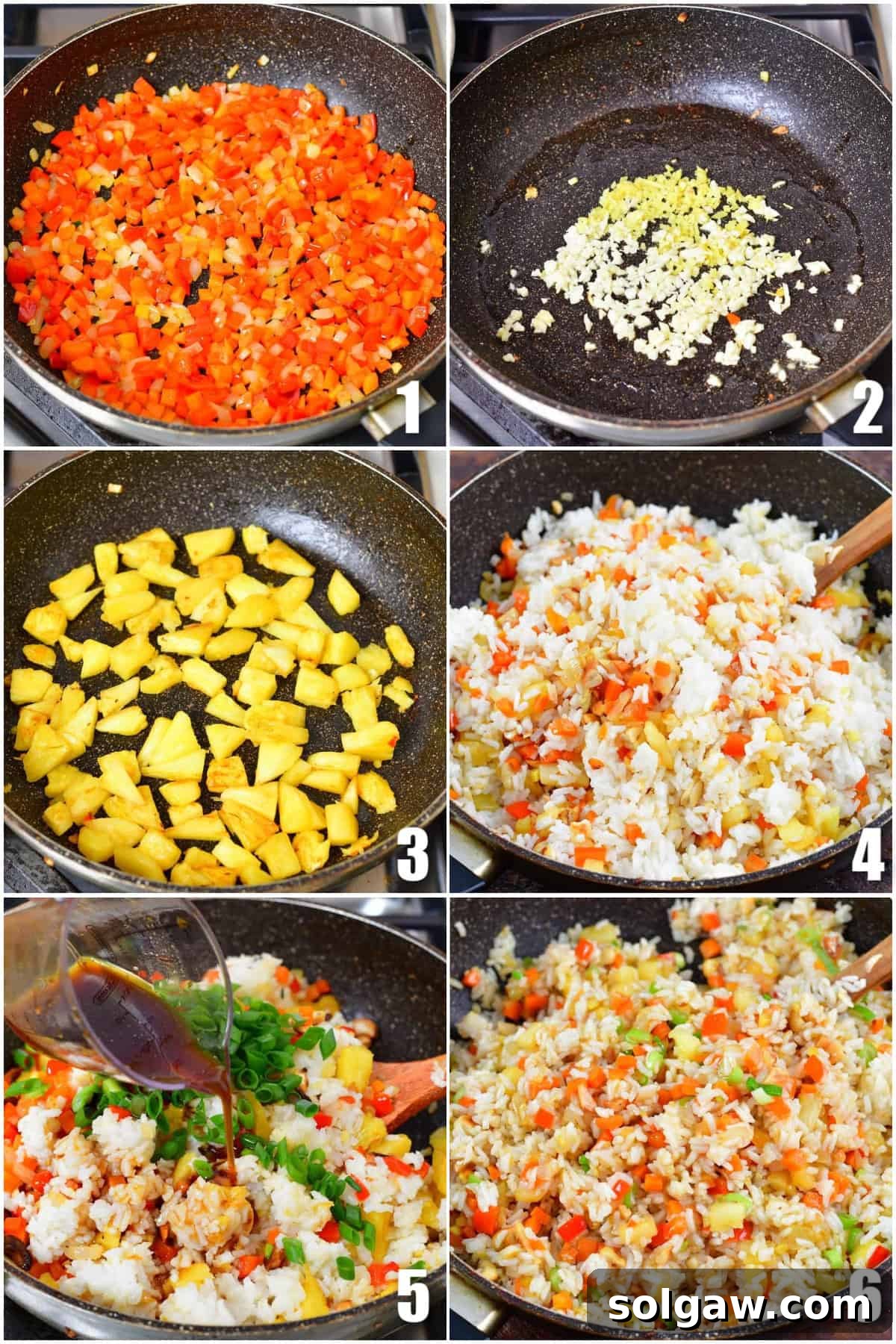
- Toast the Cashews: Once the pan is hot, add the cashews and toast them lightly until they turn golden brown and fragrant. Remove them immediately from the pan and set aside to cool; they will crisp up further as they cool.
- Sauté the Vegetables: Add a tablespoon or two of peanut oil to the hot pan. Add the diced yellow onion, carrots, and bell peppers. Sauté them, stirring frequently, until they begin to soften but still retain a slight crispness.
- Infuse with Aromatics: Create a small well in the center of the pan by pushing the softened vegetables to the sides. Add the minced garlic and ginger to the well. Sauté for about 30 seconds until intensely fragrant, then mix them thoroughly with the vegetables. Once combined, remove all the cooked vegetables and aromatics from the pan and set them aside with the cashews.
- Caramelize the Pineapple: Add a little more oil to the pan if needed. Introduce the chopped fresh pineapple chunks. Sauté them until they develop a beautiful golden-brown caramelization, enhancing their sweetness and adding depth of flavor.
- Combine and Stir-Fry: Add the cold cooked jasmine rice to the pan with the caramelized pineapple. Return the sautéed vegetables and toasted cashews to the pan. Sprinkle in the chopped green onions. Lower the heat slightly and gently toss everything together until evenly distributed.
- Introduce the Sauce: Give your prepared sauce another quick stir to ensure all ingredients are mixed. Pour the entire sauce mixture over the rice and ingredients in the pan. Gently stir and fold everything together, ensuring every grain of rice and every ingredient is coated with the flavorful sauce.
- Final Sauté and Serve: Continue to sauté for just a couple more minutes, allowing the flavors to meld and the rice to heat through completely. Remove from heat and serve immediately.
Why Day-Old Rice is Non-Negotiable for Perfect Fried Rice
The texture of fried rice is paramount, and the secret to achieving perfectly separated, slightly chewy grains—rather than a sticky, mushy mess—lies in using day-old, cooked rice. When rice is freshly cooked, it contains a high amount of moisture, making it soft and prone to clumping. Attempting to stir-fry fresh, warm rice often results in a soggy dish that lacks the distinct texture characteristic of authentic fried rice.
Day-old rice, having had time to cool and air dry in the refrigerator, loses much of its surface moisture. This dehydration firms up the individual grains, allowing them to withstand the high heat of a wok without breaking down. The result is a lighter, fluffier fried rice where each grain is distinct and capable of absorbing the rich flavors of the sauce and aromatics more effectively. It’s a foundational technique in Asian stir-frying that dramatically impacts the final quality of the dish.
Quick Cooling Method for Freshly Cooked Rice
Occasionally, you might not have leftover rice on hand. Don’t let this deter you from making a delicious batch of pineapple fried rice! You can still achieve excellent results with freshly cooked rice by following a simple cooling technique:
- Cook Al Dente: Cook your jasmine or long-grain rice as usual, but aim for it to be slightly undercooked, or “al dente.” The grains should still have a very slight bite or firmness in the center.
- Spread and Cool: As soon as the rice is cooked, immediately transfer it from the pot. Spread it out in a very thin, even layer on a large rimmed baking sheet lined with parchment paper. This maximizes the surface area exposed to air, facilitating rapid cooling and moisture evaporation.
- Refrigerate Promptly: Place the baking sheet with the rice in the refrigerator. Within about 20-30 minutes, especially if spread thinly, the rice will cool down completely and firm up, mimicking the characteristics of day-old rice. This method ensures your grains are perfectly prepared for stir-frying, preventing sogginess and promoting ideal texture.
Expert Tips for Flawless Thai Pineapple Fried Rice
Achieving restaurant-quality fried rice at home is entirely possible with a few key techniques:
- High Heat is Your Friend: A wok or a large, heavy-bottomed pan should be searing hot before you add any ingredients. This high heat is crucial for stir-frying, allowing ingredients to cook quickly and develop a slightly charred, flavorful exterior without steaming.
- Don’t Overcrowd the Pan: Cooking in batches, especially with vegetables and proteins, prevents the pan from losing too much heat. Overcrowding can lead to steaming instead of stir-frying, resulting in soggy ingredients.
- Prep Everything Ahead (Mise en Place): Fried rice cooks very quickly. Have all your ingredients chopped, measured, and ready before you start cooking. This ensures a smooth process and prevents anything from burning while you’re scrambling for the next ingredient.
- Taste and Adjust: Always taste your sauce before adding it to the rice, and then taste the fried rice as it cooks. Adjust seasoning (salt, sugar, lime juice, chili sauce) to suit your preference. Thai cuisine is all about balancing sweet, sour, salty, and spicy.
- Optional Scrambled Egg: For added protein and richness, you can quickly scramble an egg in the hot wok before or after cooking the vegetables, then break it into small pieces and mix it into the fried rice at the end.
Exquisite Thai Pineapple Fried Rice Recipe
Thai pineapple fried rice is an incredibly flavorful and versatile recipe, perfect as a vibrant side dish or a satisfying main course. This dish beautifully balances sweet and savory notes, featuring a delightful medley of crunchy cashews, juicy fresh pineapple, crisp bell peppers, tender carrots, aromatic garlic, and ginger, all brought together with a savory Thai fried rice sauce. Enjoy it as is for a fantastic vegetarian option, or elevate it with perfectly seared shrimp or tender chicken.
Rating: 5 out of 5 stars (based on 1 vote)
Print Recipe |
Pin Recipe |
Watch Video
Course: Main Course, Side Dish
Cuisine: Thai
Prep Time: 10 minutes
Cook Time: 30 minutes
Total Time: 40 minutes
Servings: 4
Calories: 469 kcal
Author: Lyuba Brooke
Ingredients
- 4 cups cooked cold jasmine rice
- 1/2-3/4 cup halved cashews
- 2-3 tbsp peanut oil
- 1/2 yellow onion, diced
- 1 bell pepper, diced (any color)
- 1 medium carrot, finely diced
- 6 garlic cloves, minced
- 1 tbsp fresh ginger, shaved or minced
- 1 1/2 cups chopped fresh pineapple
- 3 green onion stalks, chopped
For the Sauce:
- 4 tbsp fish sauce
- 3 tbsp oyster sauce (use gluten-free if needed)
- 1 tbsp fresh lime juice
- 1 tbsp brown sugar
- 1 tbsp Thai sweet chili sauce
- 1/8-1/4 tsp white pepper
- Salt, to taste
Optional Shrimp Topping:
- 1 lb shrimp, peeled and deveined
- Juice of 1 lime
- 2 tbsp oyster sauce (use gluten-free if needed)
- 2 tbsp vegetable or peanut oil
- 2 garlic cloves, pressed or minced
- Pinch of white pepper
- Salt, to taste
Instructions
Before You Start Cooking:
- Prepare Ingredients: This recipe cooks quickly, so prepare all ingredients in advance. Dice vegetables, mince garlic and ginger, and measure out sauce components. Combine all sauce ingredients in a measuring cup and mix well.
- Marinate Shrimp (Optional): If adding shrimp, peel and devein them. In a bowl, combine shrimp with lime juice, oyster sauce, oil, pressed garlic, white pepper, and salt. Mix thoroughly and set aside to marinate while you prepare the fried rice.
Cooking the Fried Rice:
- Preheat a large wok or a spacious cooking pan with tall sides over medium-high heat.
- Once hot, add cashews to the dry pan and toast them until golden brown and fragrant. Remove and set aside.
- Add 2-3 tablespoons of peanut oil to the pan. Sauté diced onion, carrots, and bell peppers until softened (about 3-5 minutes).
- Create a well in the center of the pan, add minced garlic and ginger, and sauté for 30 seconds until aromatic. Mix with the vegetables. Remove all vegetables and aromatics from the pan and set aside.
- Add a little more oil if needed, then add pineapple chunks to the pan. Sauté until golden brown and slightly caramelized (about 2-3 minutes).
- Add the cold cooked jasmine rice to the pan, along with the previously cooked vegetables, cashews, and chopped green onions. Lower the heat to medium-low and gently stir everything together to combine.
- Give the prepared sauce another quick stir, then pour it evenly over the rice mixture. Continue to gently stir and toss everything together, ensuring all ingredients are well coated with the sauce.
- Sauté for another 2-3 minutes to allow flavors to meld and the rice to heat through. Remove from heat and serve immediately.
For the Shrimp (Optional):
- Preheat a separate cooking pan over medium-high heat until very hot.
- Add the marinated shrimp (without any excess liquid, as this will steam them). Cook for 1-2 minutes until one side turns opaque and slightly seared.
- Flip each shrimp and cook for another minute or so until the other side is opaque and cooked through. Avoid overcooking to keep them tender.
- Remove shrimp from the pan and serve immediately over the hot pineapple fried rice.
Recipe Video
Watch our step-by-step video guide to see how easily this delicious Thai Pineapple Fried Rice comes together for perfect results every time!
Notes for Success
How To Cool Rice Quickly: If you don’t have day-old rice, cook fresh rice slightly al dente. Immediately spread it in a thin layer on a rimmed baking sheet lined with parchment paper. Refrigerate for about 20 minutes while you prepare other ingredients. This rapid cooling and drying helps achieve the ideal fried rice texture.
Storing Leftovers: Store any leftover Thai Pineapple Fried Rice in an airtight food storage container in the refrigerator for up to 3-4 days. Ensure it’s cooled completely before storing.
Reheating Instructions: When reheating, whether in the microwave or on the stove-top, fried rice can sometimes dry out. To restore its moisture and texture, add a splash of chicken or vegetable broth (about 1-2 tablespoons per serving) during reheating. Stir occasionally until warmed through.
Nutrition Information (per serving)
- Calories: 469 kcal
- Carbohydrates: 75g
- Protein: 10g
- Fat: 15g
- Saturated Fat: 3g
- Polyunsaturated Fat: 4g
- Monounsaturated Fat: 7g
- Sodium: 2090mg
- Potassium: 506mg
- Fiber: 4g
- Sugar: 16g
- Vitamin A: 3618 IU
- Vitamin C: 79mg
- Calcium: 81mg
- Iron: 2mg
Tried this delightful recipe? We’d love to see your creations! Mention @willcookforsmiles or tag #willcookforsmiles on social media!
Serving Suggestions and Perfect Pairings
Thai Pineapple Fried Rice is a truly versatile dish that can adapt to many mealtime scenarios. It stands strong as a vegetarian main course, offering a complete and satisfying meal on its own. However, for those seeking additional protein, the included shrimp recipe makes for an outstanding topping, transforming it into a hearty and flavorful entrée. For a different protein, the same simple seasoning and cooking method can be applied to diced chicken breast or thigh, thinly sliced pork, or even firm tofu for an enhanced vegetarian option.
If you prefer to serve this vibrant rice dish as a delightful side, it pairs exceptionally well with a variety of Asian-inspired main dishes. Consider serving it alongside:
- Asian Baked Chicken Thighs: The succulent, savory chicken will beautifully complement the sweet and tangy notes of the fried rice.
- Teriyaki Salmon: The rich, glazed salmon offers a contrasting texture and a depth of umami that works wonderfully with the bright flavors of the pineapple rice.
- Mango Chicken: Lean into the tropical theme by pairing it with another fruity chicken dish, enhancing the overall vibrant experience.
- Sweet Garlic Grilled Chicken: The smoky, sweet, and garlicky notes of grilled chicken are a fantastic match for the complex flavors of the fried rice.
- Coconut Lime Chicken Drumsticks: For a truly tropical spread, the creamy, zesty chicken will harmonize perfectly with the pineapple fried rice.
Garnish your finished dish with fresh cilantro, a wedge of lime, or a sprinkle of extra toasted cashews for an added touch of freshness and appeal.
Frequently Asked Questions (FAQs)
Here are answers to some common questions about making Thai Pineapple Fried Rice:
- Can I use frozen pineapple?
- While fresh pineapple is recommended for the best texture and flavor, frozen pineapple can be used in a pinch. Thaw it completely and drain any excess liquid before adding it to the pan to prevent making the rice soggy.
- What kind of rice is best for fried rice?
- Jasmine rice is highly recommended due to its fragrant aroma and slightly sticky but firm texture when cooked. Long-grain rice also works well. Avoid short-grain or sushi rice, as they tend to be too sticky for fried rice.
- How do I prevent my fried rice from being soggy?
- The most crucial tip is to use cold, day-old rice. Also, ensure your wok or pan is very hot, don’t overcrowd it, and ensure vegetables are cooked but still have a slight bite before adding rice. Proper ventilation is key to allow moisture to evaporate.
- Is this dish spicy?
- The recipe uses Thai sweet chili sauce, which typically has a mild heat. You can adjust the amount of chili sauce to your preference. For more heat, add a pinch of red pepper flakes or a dash of sriracha. For less, reduce or omit the sweet chili sauce.
- Can I make this ahead of time?
- Fried rice is best enjoyed fresh from the pan. However, you can prepare all your ingredients (chop vegetables, mix sauce, marinate protein) ahead of time. This will significantly reduce cooking time when you’re ready to eat, allowing you to quickly stir-fry the dish to perfection.
- What if I don’t have a wok?
- A large, heavy-bottomed frying pan or skillet with high sides works perfectly fine. The key is to ensure it can get very hot and has enough surface area to avoid overcrowding ingredients, allowing them to stir-fry rather than steam.
Explore More Rice and Stir-Fry Delights
If you loved this Thai Pineapple Fried Rice, you’ll surely enjoy exploring other delicious rice and stir-fry recipes. Expand your culinary repertoire with these enticing options:
- Tropical Shrimp Rice Bowl: A fresh and vibrant bowl, perfect for a light yet satisfying meal, bursting with tropical flavors.
- Classic Shrimp Fried Rice: A timeless favorite featuring tender shrimp and savory rice, a staple for any Asian-inspired menu.
- Healthy Cauliflower Fried Rice: A fantastic low-carb alternative that mimics the texture and flavor of traditional fried rice, packed with vegetables.
- Fragrant Thai Basil Fried Rice: Experience the aromatic and slightly spicy kick of holy basil in this popular Thai street food classic.
- Quick Shrimp Stir Fry: A quick and easy weeknight meal, loaded with colorful vegetables and succulent shrimp, all coated in a savory sauce.
We hope you enjoy preparing and savoring this delightful Thai Pineapple Fried Rice. It’s a recipe that brings joy to the kitchen and an exotic touch to your dining table!