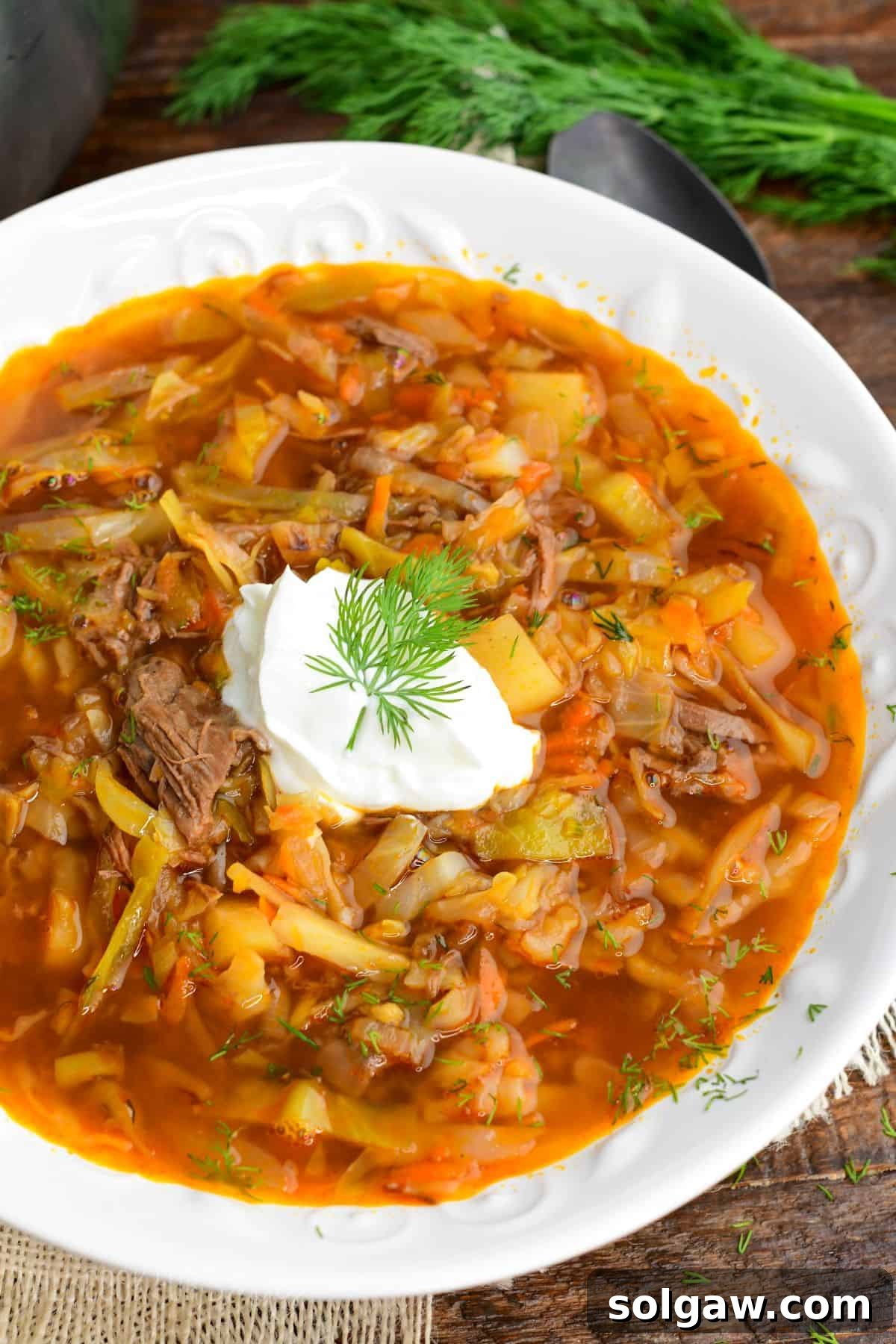
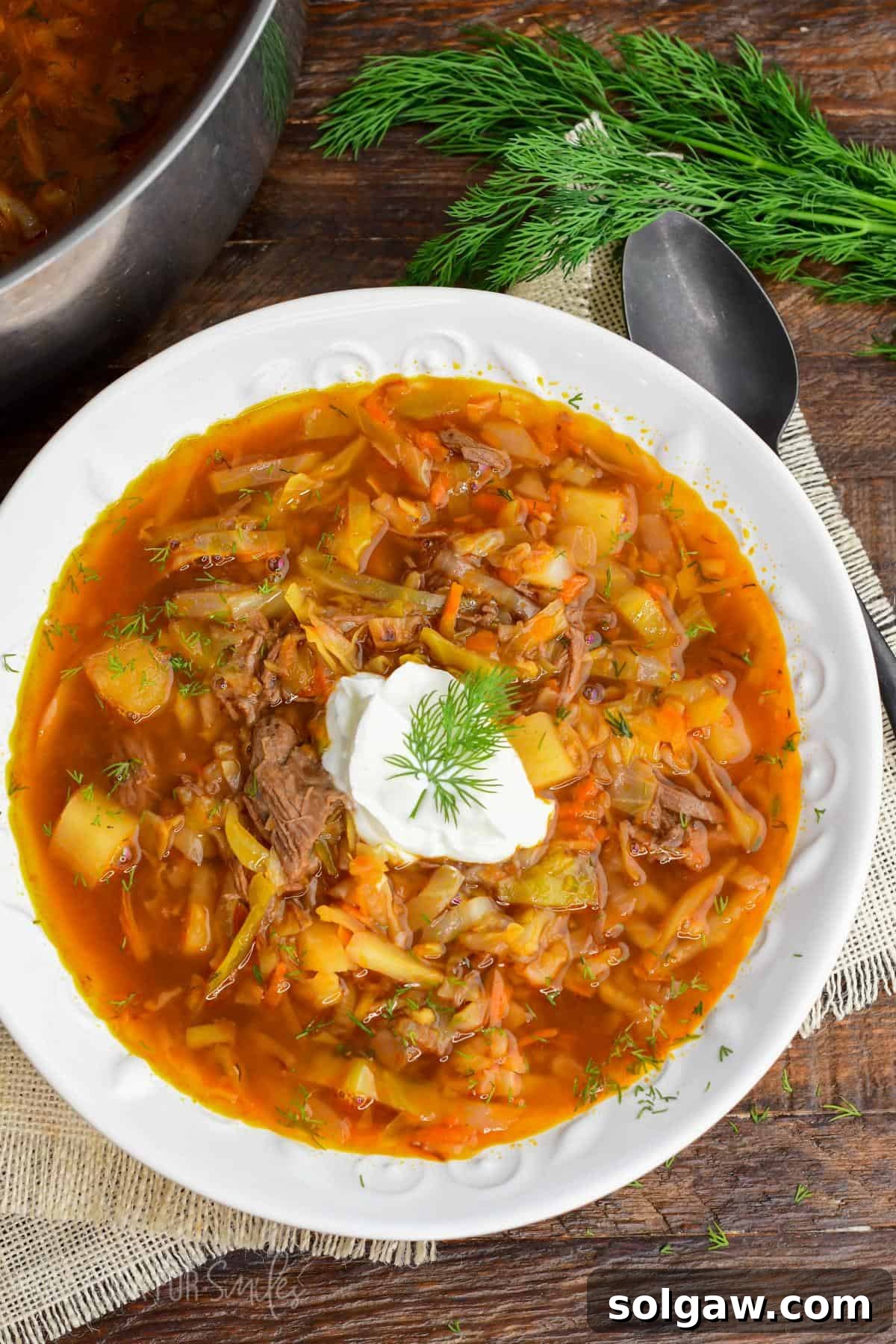
Authentic Shchi: The Ultimate Russian Beef and Cabbage Soup Recipe
There are certain dishes that transport you back to childhood, conjuring warmth, comfort, and the unmistakable aroma of home. For me, that dish is Shchi – the quintessential Russian beef and cabbage soup. Growing up in Russia, this hearty soup was a constant presence at our family table, a cherished staple prepared countless times by my mother, a professional chef. This isn’t just a recipe I’ve researched; it’s a culinary legacy, a soup I’ve been passionately making and savoring my entire life.
Dive into this authentic recipe and discover the deeply satisfying flavors of Shchi. From the rich, slow-simmered beef broth to the tender vegetables and fresh dill, every spoonful offers a taste of Russian culinary tradition, designed to warm you from the inside out.
Table of Contents
What is Shchi – Russian Cabbage Soup?
Shchi (pronounced “shee”) holds a venerable place in Russian culinary history, with its origins tracing back to the 9th-11th centuries. More than just a soup, it’s a cultural icon, a symbol of Russian home cooking. At its heart, Shchi is a robust and incredibly satisfying soup, built upon a rich, savory beef broth. It features tender cabbage, starchy potatoes, and sweet carrots, all harmoniously simmered together. The soup is traditionally brightened with a generous garnish of fresh dill weed and finished with a dollop of cool, creamy sour cream, adding a delightful tang that perfectly complements the rich flavors.
My particular recipe yields a soup that is profoundly rich, deeply savory, and boasts a subtle sweetness. These complex layers of flavor are developed through the careful caramelization of the vegetables and a patient simmering process, allowing all the ingredients to meld beautifully. While there are countless variations of Shchi – some made with sauerkraut, others with different meats – this version, featuring fresh green cabbage, remains my absolute favorite for its balanced taste and comforting texture.
Shchi vs. Borscht: Understanding the Distinction
For those familiar with Eastern European cuisine, the question often arises: what sets Shchi apart from Borscht? Both are beloved, hearty soups from the region, often featuring beef and cabbage. However, the key differentiator lies in their primary vegetable and resulting color. Borscht, famously Ukrainian in origin, is beet-based, which gives it its iconic deep ruby-red hue. Shchi, a traditional Russian soup, places cabbage at the forefront, resulting in a lighter, golden-brown broth. Think of them as culinary cousins, each offering a unique and delicious experience rooted in a shared heritage, but with distinct personalities and flavor profiles.
Essential Ingredients for Authentic Shchi
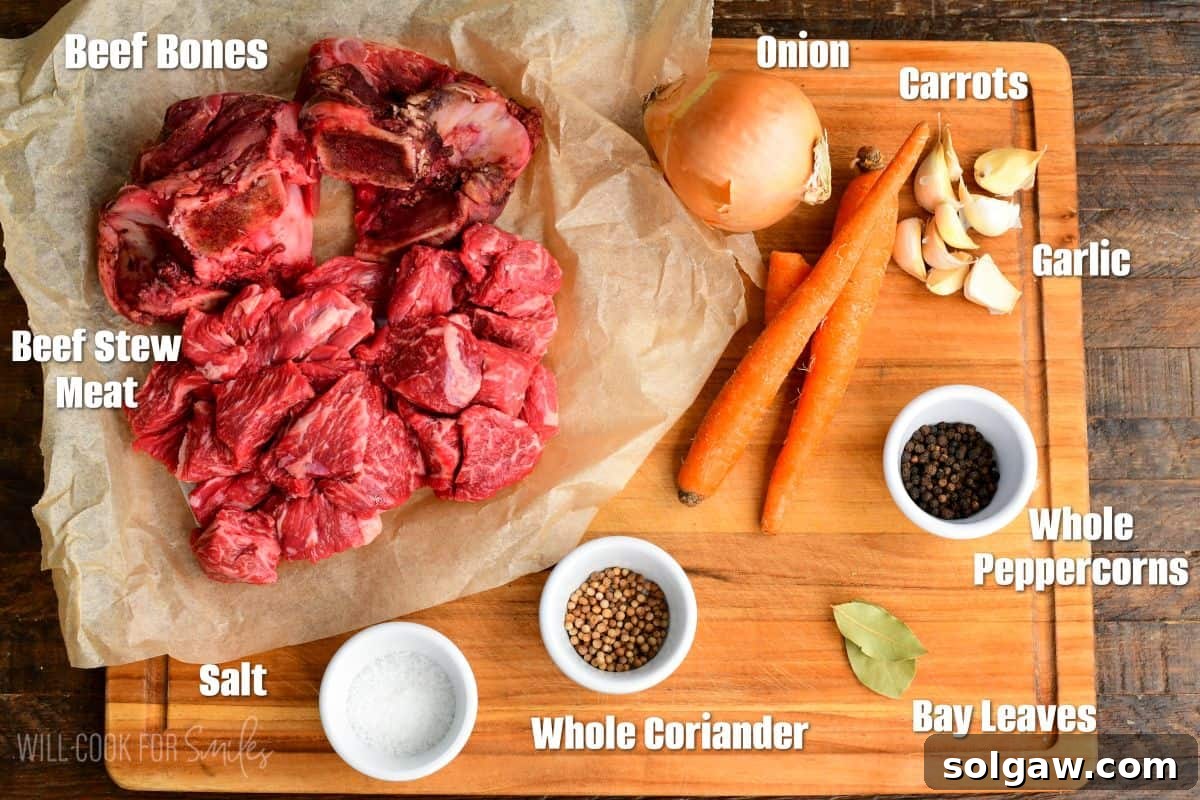
Crafting exceptional Shchi begins with selecting the right ingredients. Each component plays a vital role in achieving the authentic flavor and comforting texture of this classic Russian soup:
- Beef Bones & Stew Meat: This combination is truly non-negotiable for a superior Shchi. The bones are crucial for imparting gelatin and body to the broth, creating a luxurious mouthfeel, while the stew meat contributes deep, robust beefy flavor and ensures you have succulent, tender pieces of beef in your finished soup. If you can source marrow bones, they will enhance the richness even further. Otherwise, any good quality beef bones from your local butcher or grocery store will suffice.
- Whole Spices (Peppercorns & Coriander Seeds): Using whole spices rather than ground varieties is a chef’s secret for a clear, pristine broth. They infuse the liquid with subtle, clean, and aromatic notes without clouding it. These whole spices will be strained out later, leaving behind only their exquisite essence.
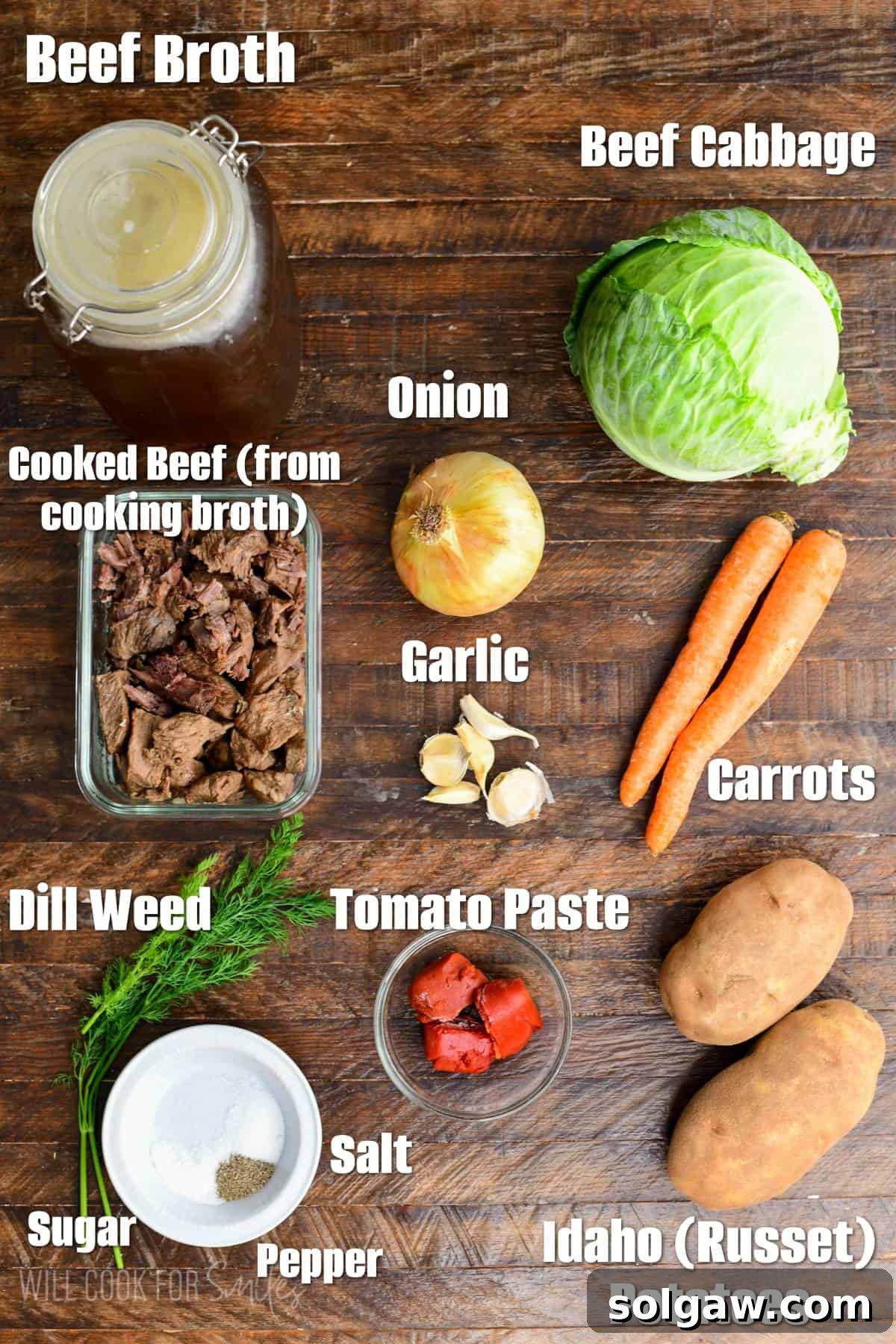
- Green Cabbage: A medium-sized head, typically around 2 pounds, is ideal. The key is to slice it thinly. This ensures it cooks evenly, softens beautifully, and provides a more pleasant texture in the soup compared to large, unwieldy chunks. Cabbage is the star here, so don’t skimp!
- Idaho Potatoes: These starchy baking potatoes are chosen for their ability to maintain their shape remarkably well during simmering, yet still become wonderfully tender and creamy when cooked. They add essential heartiness and substance to the soup.
- Tomato Paste: Crucial for depth and color, tomato paste offers a rich, concentrated tomato flavor that tomato sauce simply cannot replicate. It provides a foundational umami note and helps caramelize the vegetables beautifully.
- Fresh Dill: This herb is absolutely indispensable for authentic Shchi. Its distinctive, fresh, slightly anise-like flavor is what gives the soup its signature Russian character. Always stir fresh herbs in at the very end of cooking to preserve their vibrant flavor. If fresh dill is unavailable, fresh parsley can serve as a decent, though less traditional, substitute.
- Granulated Sugar: Just a small teaspoon of sugar might seem unusual, but it’s a brilliant touch. It helps to balance the acidity of the tomato paste and cabbage, while also enhancing the natural sweetness of the carrots and onions, rounding out the overall flavor profile of the soup.
Step-by-Step Guide to Making Shchi
Creating this traditional Russian Beef and Cabbage Soup is a rewarding process. Follow these detailed steps to achieve a perfectly authentic and delicious Shchi.
Crafting the Rich Beef Broth (2-4 hours)
The secret to truly outstanding Shchi lies in a homemade beef broth. While it requires time, the majority of this is passive simmering, allowing deep flavors to develop effortlessly.
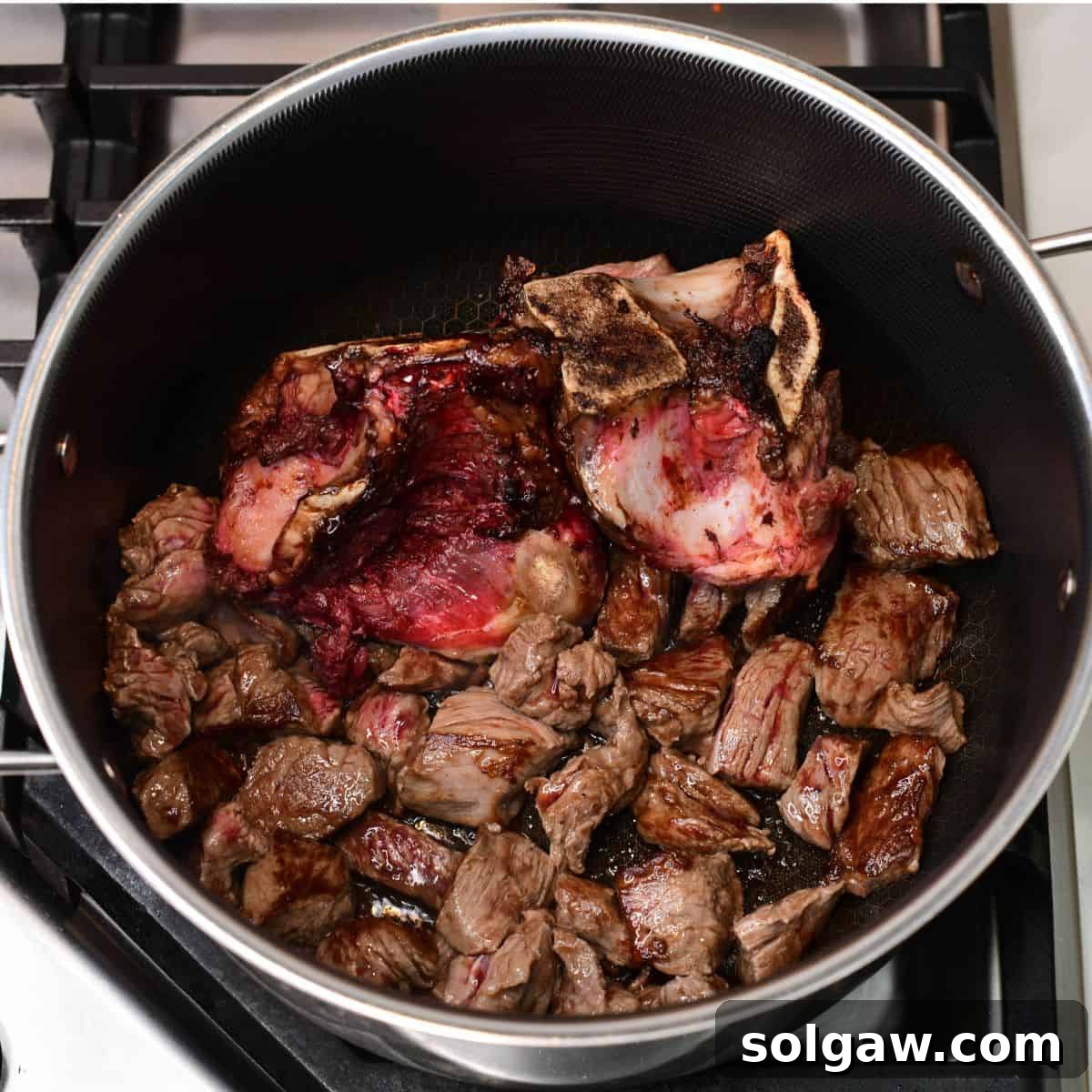
Step 1: Sear the Beef. In a large, heavy-bottomed pot (preferably a 6-quart soup pot or larger), heat 2 tablespoons of avocado or olive oil over medium-high heat. Add the beef bones, ensuring not to overcrowd the pot, and sear them until they develop a deep, rich golden-brown crust on all sides. This caramelization is where the foundational depth of flavor for your broth begins. Remove the bones and set aside. Next, sear the beef stew meat until it is also golden brown, then remove and set aside with the bones.
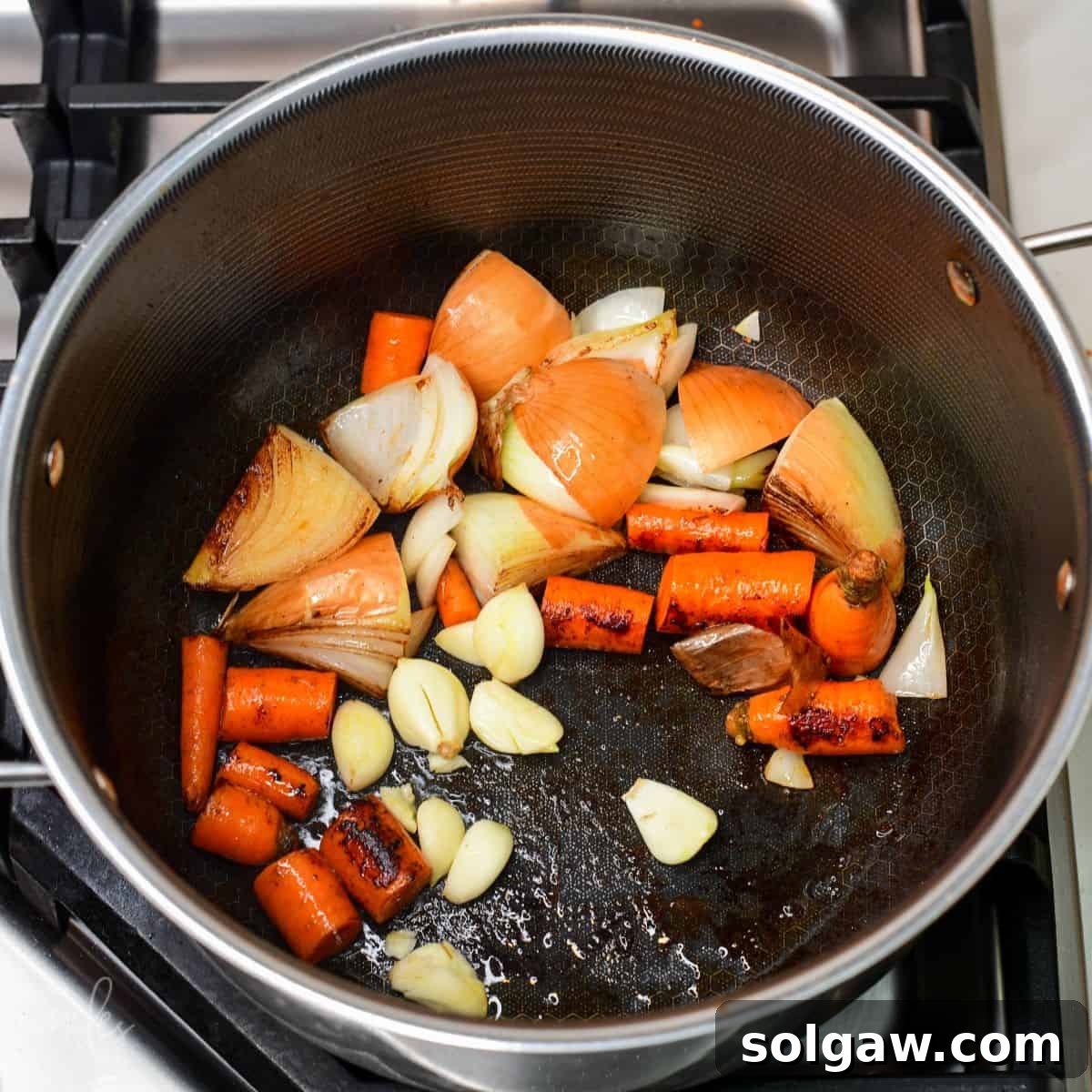
Step 2: Caramelize Aromatics. In the same pot, add the quartered yellow onion and carrots. Sear them until they too are golden-brown and slightly softened, extracting their natural sweetness. Add the smashed garlic cloves to the pot, allowing them to become fragrant for just a few seconds – be careful not to burn them.
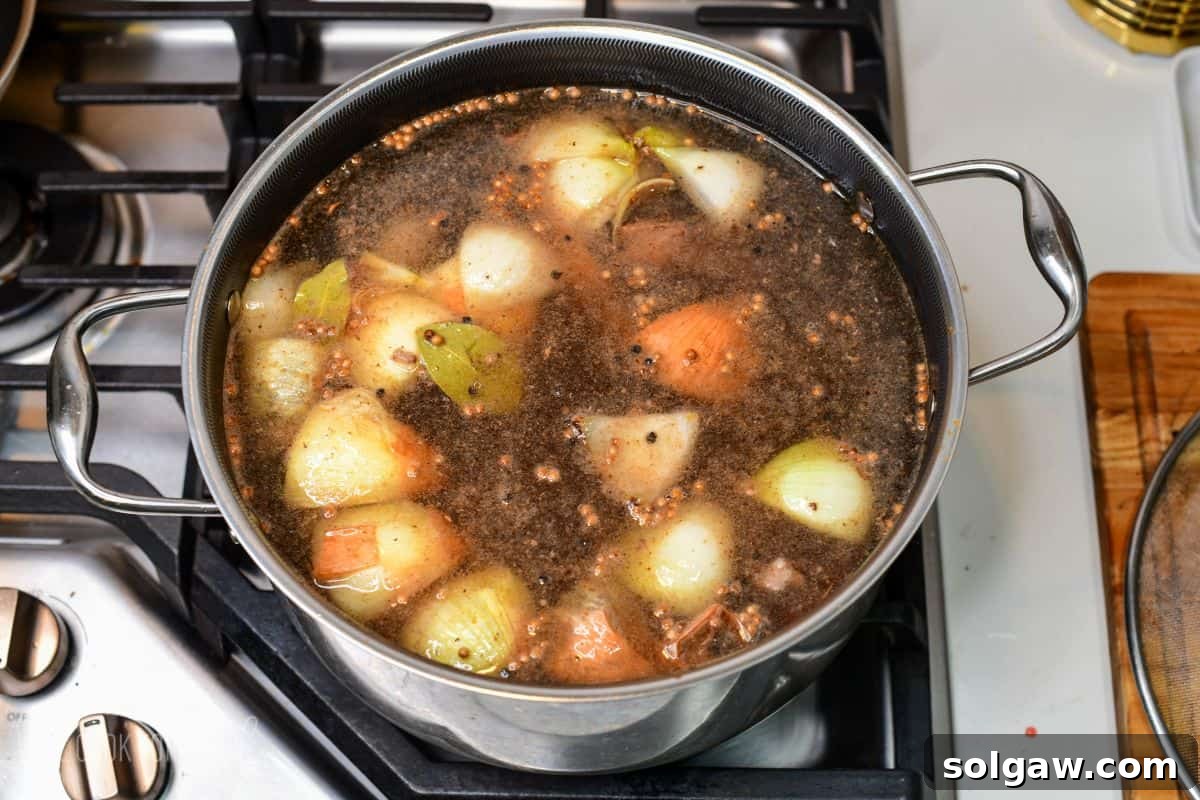
Step 3: Simmer the Broth. Return the seared beef bones and stew meat to the pot. Add the whole spices (peppercorns and coriander seeds), bay leaves, and 18 cups of warmed water. Bring the mixture to a very low boil, then immediately reduce the heat to the lowest possible setting. The broth should barely simmer, with only occasional gentle bubbles. Cook, uncovered, for 2 to 4 hours. This gentle, slow cooking process is crucial for extracting maximum flavor from the ingredients without making the broth cloudy or reducing it too quickly.
Step 4: Double Strain for Clarity. Once the broth has finished simmering, allow it to cool slightly. This step is absolutely critical for a beautifully clear and refined broth. Strain the broth through a fine-mesh strainer lined with cheesecloth or a clean vegetable mesh bag. Double straining ensures that all fine particles are removed, resulting in a crystal-clear, deeply flavored liquid.
Step 5: Prepare the Beef. Carefully pick out the tender pieces of beef from the strained broth, discarding the bones, spent vegetables, and spices. Shred or chop the beef into bite-sized pieces; these will be added back into your finished soup.
Assembling the Cabbage Soup (Approx. 45 minutes)
With your exquisite homemade beef broth ready, the final stages of preparing the Shchi come together remarkably quickly.
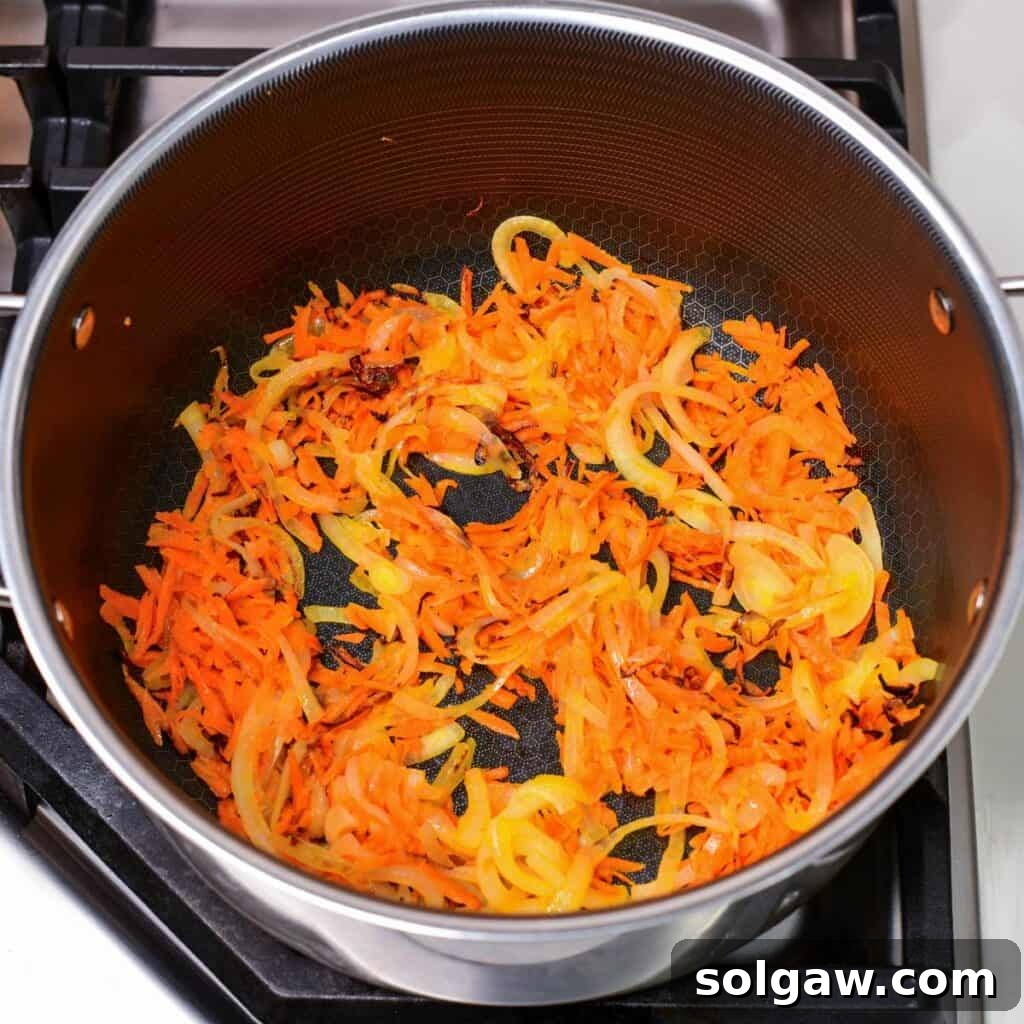
Step 1: Sauté Aromatics. In the same large soup pot (cleaned if needed), heat 2 tablespoons of avocado or olive oil over medium heat. Add the thinly sliced onions and grated carrots. Sauté them until they are softened and beautifully golden-brown, allowing them to caramelize slightly without stirring too frequently. This caramelization builds another layer of flavor. Add the minced garlic and sauté for just 30-45 seconds until fragrant.
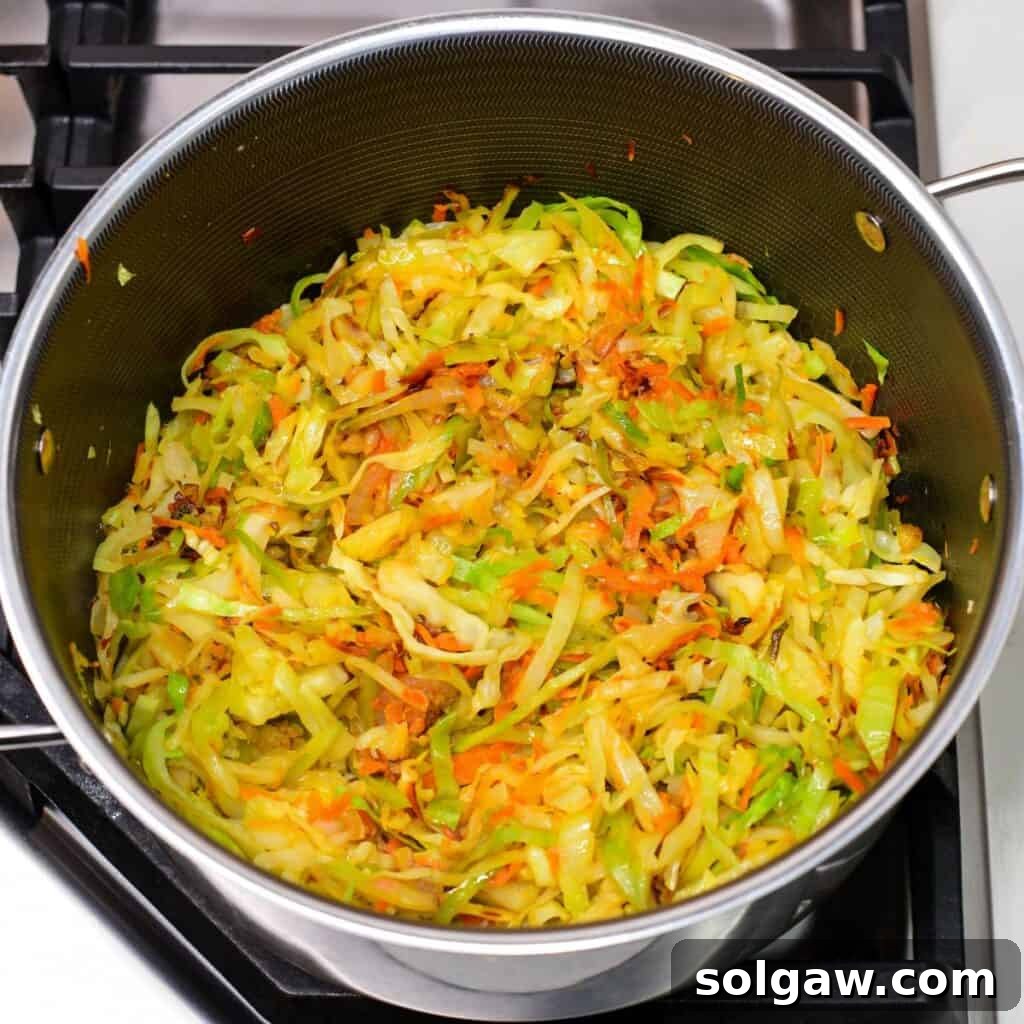
Step 2: Caramelize Cabbage. Push the sautéed vegetables to the sides of the pot to create space in the center. Add the thinly sliced green cabbage. Allow it to sauté undisturbed for several minutes until it begins to golden on the bottom. Then, mix it with the other vegetables and repeat the process. This caramelization of the cabbage is a crucial step, lending Shchi its characteristic slightly sweet and wonderfully complex flavor.
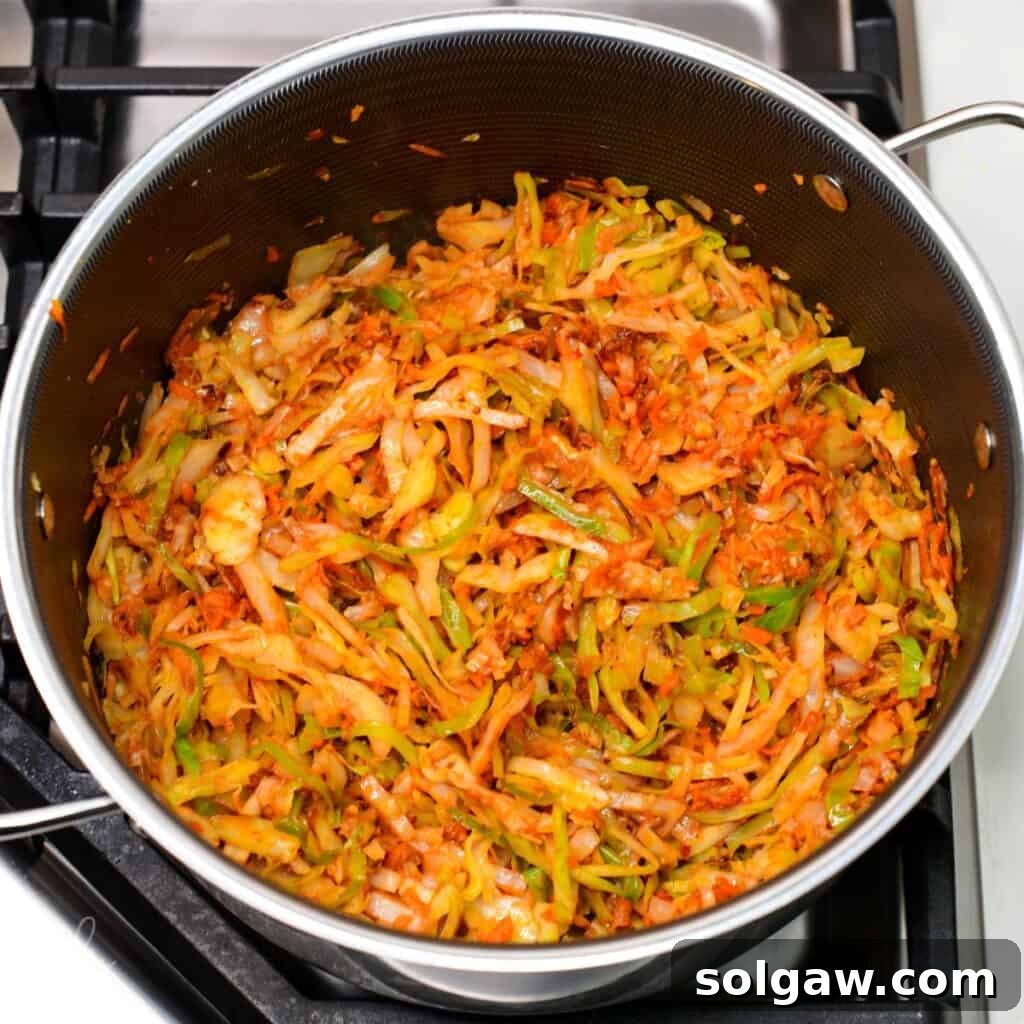
Step 3: Incorporate Tomato Paste. Add 3 tablespoons of tomato paste to the sautéed vegetables and mix it in thoroughly. Ensure it is fully incorporated to prevent clumps and guarantee an even distribution of its rich, concentrated flavor throughout the soup.
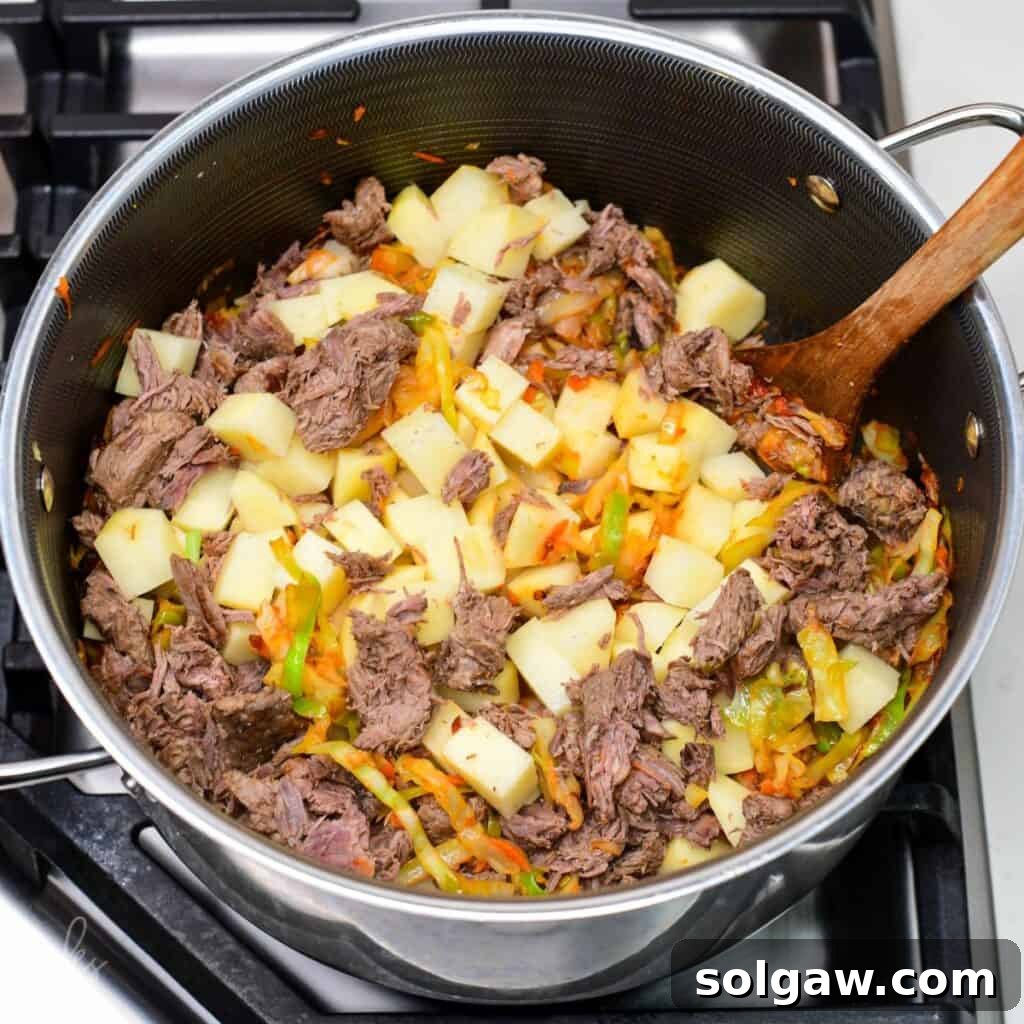
Step 4: Add Potatoes and Beef. Stir in the cubed Idaho potatoes and the reserved, cooked beef pieces. Break up the tender beef chunks into smaller, manageable pieces to ensure the best texture and distribution in every spoonful of soup.
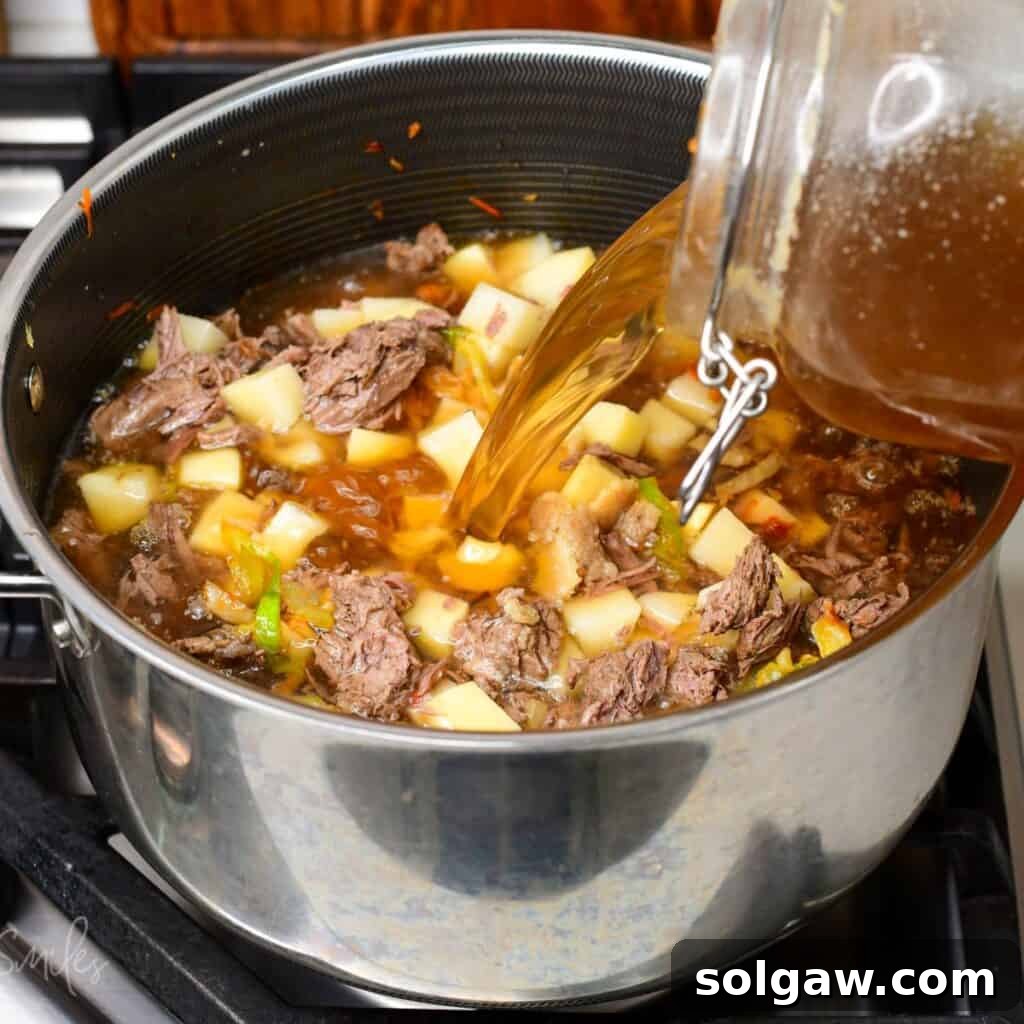
Step 5: Simmer the Soup. Pour in your beautifully clarified homemade beef broth. Season with coarse kosher salt, black pepper (1/2 to 1 teaspoon, to taste), and that crucial 1 teaspoon of white granulated sugar. Stir everything together well and taste to adjust seasonings as needed. Bring the soup to a gentle boil, then reduce the heat to medium-low and simmer until the potatoes are perfectly tender, which should take approximately 20 minutes.

Step 6: Finish with Dill. Once the potatoes are cooked through, turn off the heat. Stir in the fresh minced dill weed. The residual heat from the soup will gently warm the dill, releasing its aromatic oils and perfuming the entire pot, infusing the soup with its signature fresh flavor. Serve hot, traditionally with a dollop of sour cream and an extra sprinkle of dill.
Expert Tips for Perfect Russian Cabbage Soup
Achieving Shchi perfection involves a few key techniques and considerations. As someone who has made this soup countless times, I’m delighted to share my tried-and-true expert tips:
- Prepare the Broth in Advance: This is my number one recommendation! Homemade beef broth is what truly elevates Shchi from good to absolutely phenomenal. Since it’s the most time-consuming part, consider making it a day ahead. Prepare the broth, let it cool completely, and then refrigerate it. This not only makes soup day much faster but also allows the flavors to deepen even further.
- Managing Fat Content (When Making Ahead): If you make your broth a day in advance and refrigerate it, you’ll find that any excess fat will solidify on the surface. This makes it incredibly easy to skim off as much or as little fat as you prefer before reheating, giving you more control over the soup’s richness.
- Avoid Overcooking the Vegetables: It’s tempting to let soups simmer for ages, but with Shchi, precision is key for the vegetables. Overcooked potatoes and cabbage can become mushy and lose their appealing texture. You want your vegetables to be tender, but still retain a slight bite – the potatoes should be fork-tender but hold their shape, and the cabbage should be wilted but not disintegrated.
- Double Strain for Optimal Clarity: As mentioned in the instructions, double straining the beef broth is a game-changer. Beef broth can naturally contain fine particles that can make it appear cloudy or grainy. Passing it through a fine-mesh strainer lined with cheesecloth ensures a crystal-clear, smooth broth that is as visually appealing as it is delicious. This small step makes a significant difference in the final presentation and mouthfeel.
- Allow Flavors to Mellow and Develop: Like many traditional stews and soups, Shchi truly benefits from a little resting time. The flavors continue to meld, deepen, and harmonize as the soup sits. Many Russian families intentionally make Shchi a day in advance for this very reason. It’s not just a saying – the soup genuinely tastes even better the next day! If you have the patience, resist eating it all immediately and enjoy the enhanced flavors.
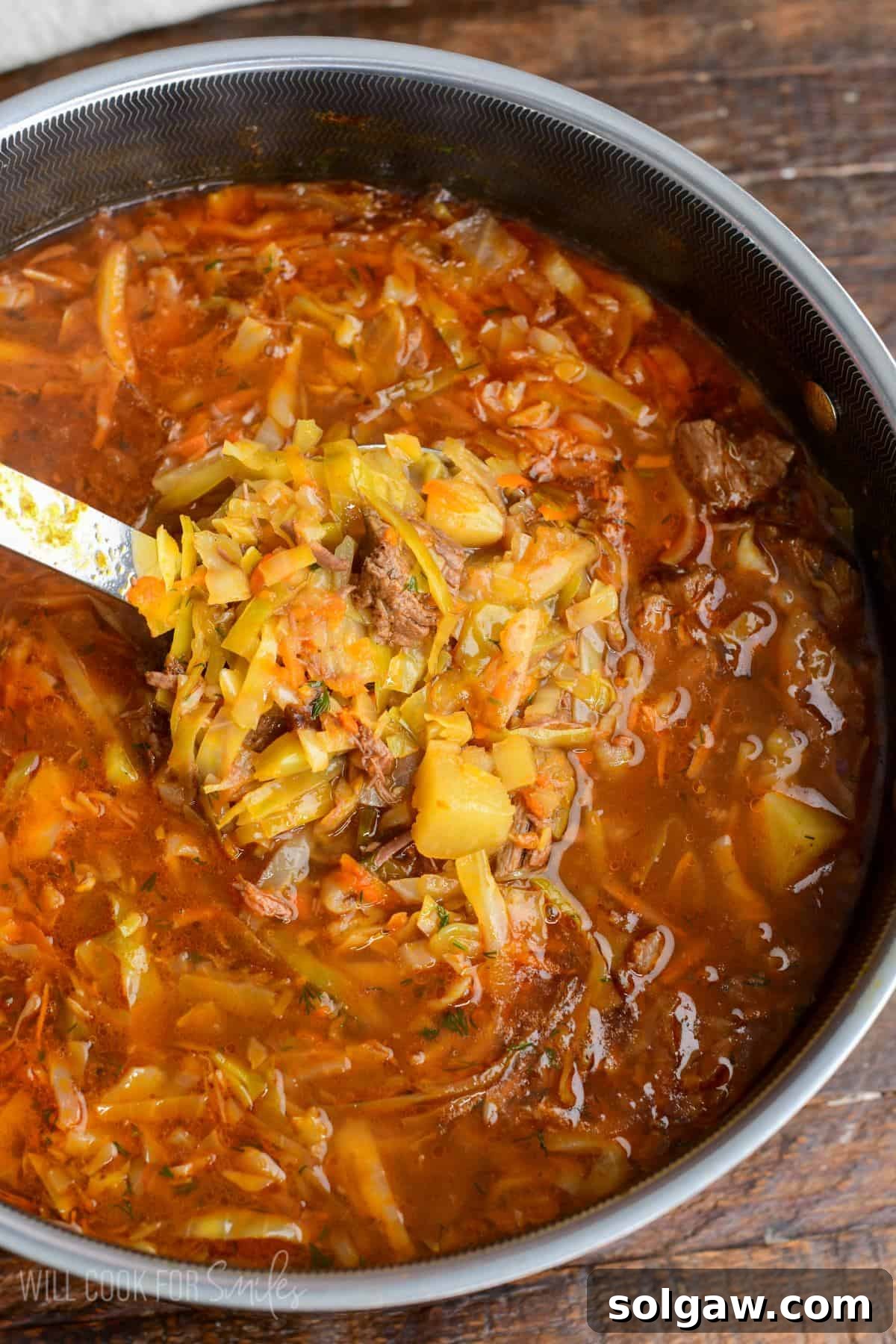
Make-Ahead and Storage Instructions
One of the many wonderful qualities of Shchi is that its flavors deepen and improve over time, making it an ideal make-ahead meal. Here’s how to best store and reheat your delicious Russian Beef and Cabbage Soup:
- Homemade Beef Broth: If you’re making the broth in advance (highly recommended!), strain it, cool it completely, and then transfer it to airtight glass jars or containers. It can be stored in the refrigerator for up to 1-2 days. For longer storage, freeze the broth in freezer-safe containers or bags for up to 3 months. Always label with the date.
- Cooked Soup in the Refrigerator: Once the Shchi is fully cooked and has cooled down to room temperature, transfer it to an airtight container. It will keep beautifully in the refrigerator for up to 5 days. To extend its shelf life and prevent contamination, always use a clean ladle each time you serve a portion.
- Reheating Shchi: Gently warm individual or larger portions of the soup on the stovetop over medium-low heat, stirring occasionally, until it is heated through. Avoid boiling vigorously, as this can break down the vegetables. For individual servings, you can also microwave in 45-second increments, stirring between each to ensure even heating.
- Freezing Shchi: While it is technically possible to freeze Shchi, I personally find that the texture of the potatoes and cabbage can change significantly after thawing and reheating, becoming somewhat softer than ideal. If you don’t mind this slight textural alteration, feel free to freeze the cooled soup in airtight, freezer-safe containers for up to 3 months. To thaw, transfer the frozen soup to the refrigerator for up to 24 hours before reheating.
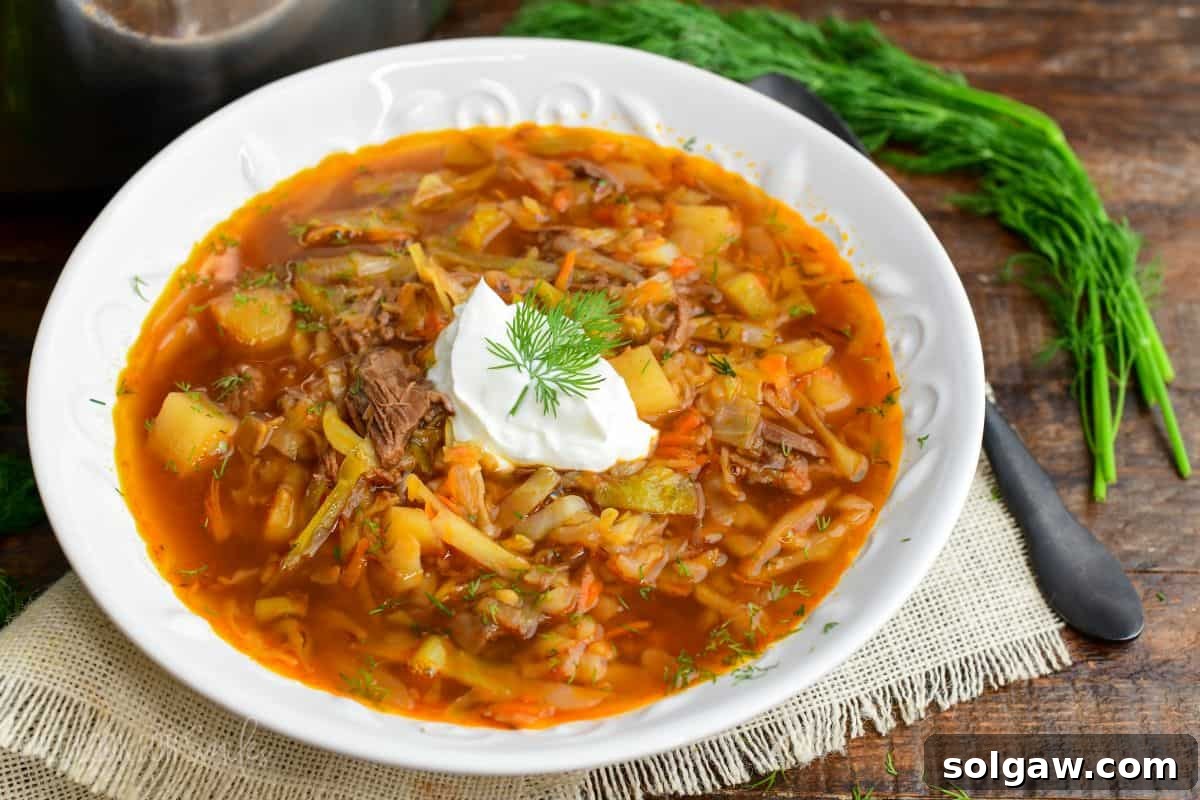
Frequently Asked Questions About Shchi
It’s pronounced like “shee” (as in the English word ‘she’), with a soft “sh” sound. The Cyrillic letters “щи” are notoriously challenging to transliterate into English, but “shchi” or “shchee” are the most commonly accepted spellings. The ‘ch’ sound is not pronounced as it would be in English.
Yes, you can, but please be aware that the soup’s flavor will not be as rich, deep, or nuanced as with homemade broth. If you’re pressed for time, opt for a high-quality beef bone broth. If using store-bought broth, I still recommend searing your beef stew meat first to build flavor before adding the broth and other vegetables. Note that if you omit the long simmering of beef, the meat might need extra cooking time to become tender, or you can opt for already tender beef cuts.
Absolutely! The slow cooker is a fantastic tool for this recipe. You can prepare the beef broth in your slow cooker on a low setting for 8-10 hours, then strain it. Afterward, sauté the vegetables on the stovetop as directed, and finally combine all ingredients in the slow cooker to simmer for an additional 2-3 hours on low, allowing the flavors to fully meld.
Fresh dill is a cornerstone of traditional Shchi flavor and is highly recommended for authenticity. However, if it’s unavailable or not to your taste, fresh parsley can be a good substitute, offering a fresh, herbaceous note. If you must use dried dill weed, use slightly less than the fresh amount, as dried herbs are typically more potent.
Many variations of Shchi exist, and incorporating other vegetables is common. Turnips or parsnips are actually traditional additions in some regions, adding a lovely earthy sweetness. Some recipes also include fresh or canned tomatoes for extra tang and depth, while others might feature mushrooms or even peas. Feel free to experiment with what you have on hand or what you enjoy!
Certainly! While beef is traditional, you can absolutely substitute chicken for a lighter version. Follow the same process for making the broth, preferably using bone-in chicken pieces to maximize flavor. The resulting soup will have a different, milder flavor profile, but it will still be delicious and comforting.
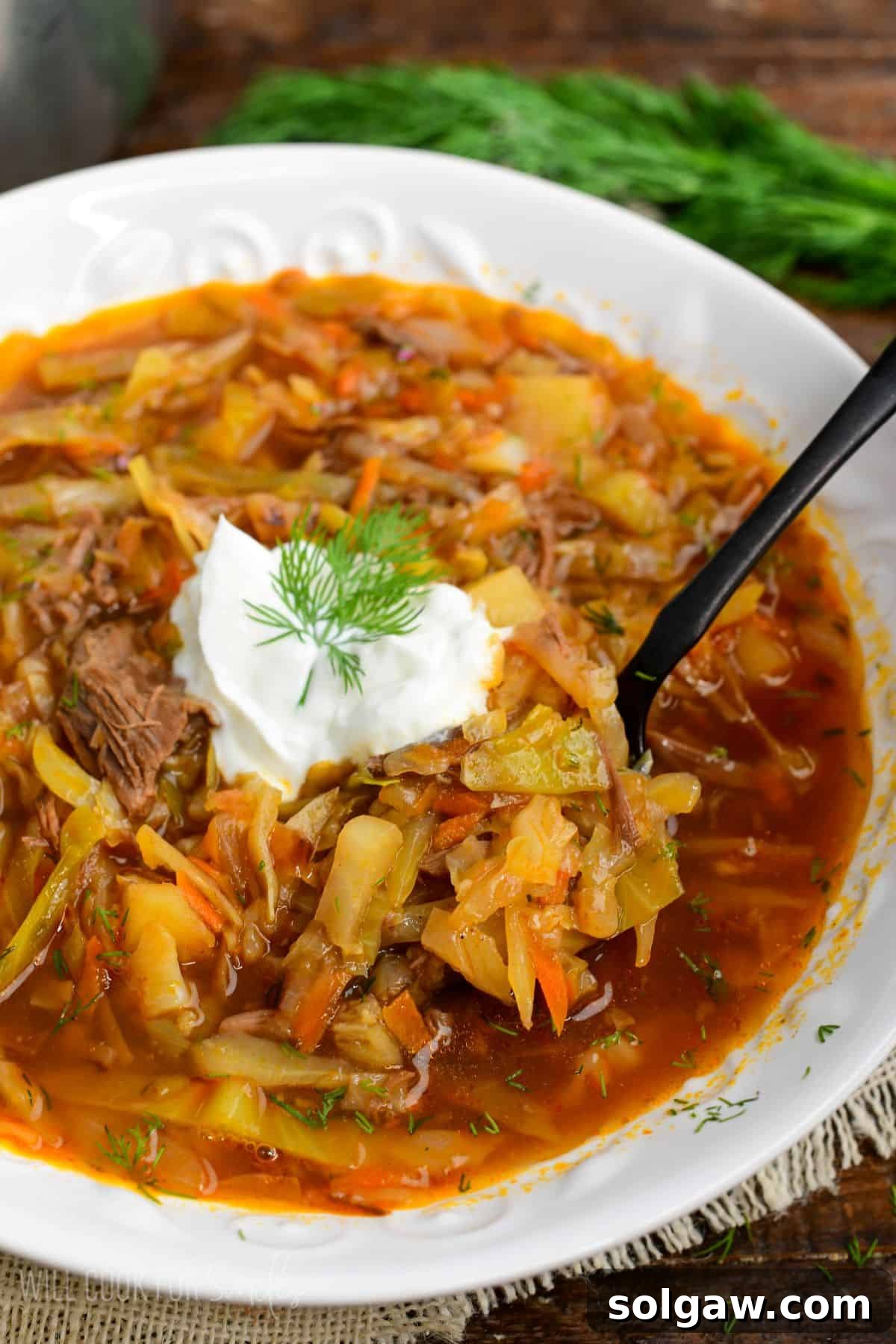
PIN THIS RECIPE FOR LATER
Thank you for exploring this cherished recipe from my kitchen to yours. Your feedback is invaluable. Please leave a star rating and comment below if you try this recipe, or share and tag me on social media @willcookforsmiles. Don’t forget to subscribe to my newsletter for more comforting recipes!
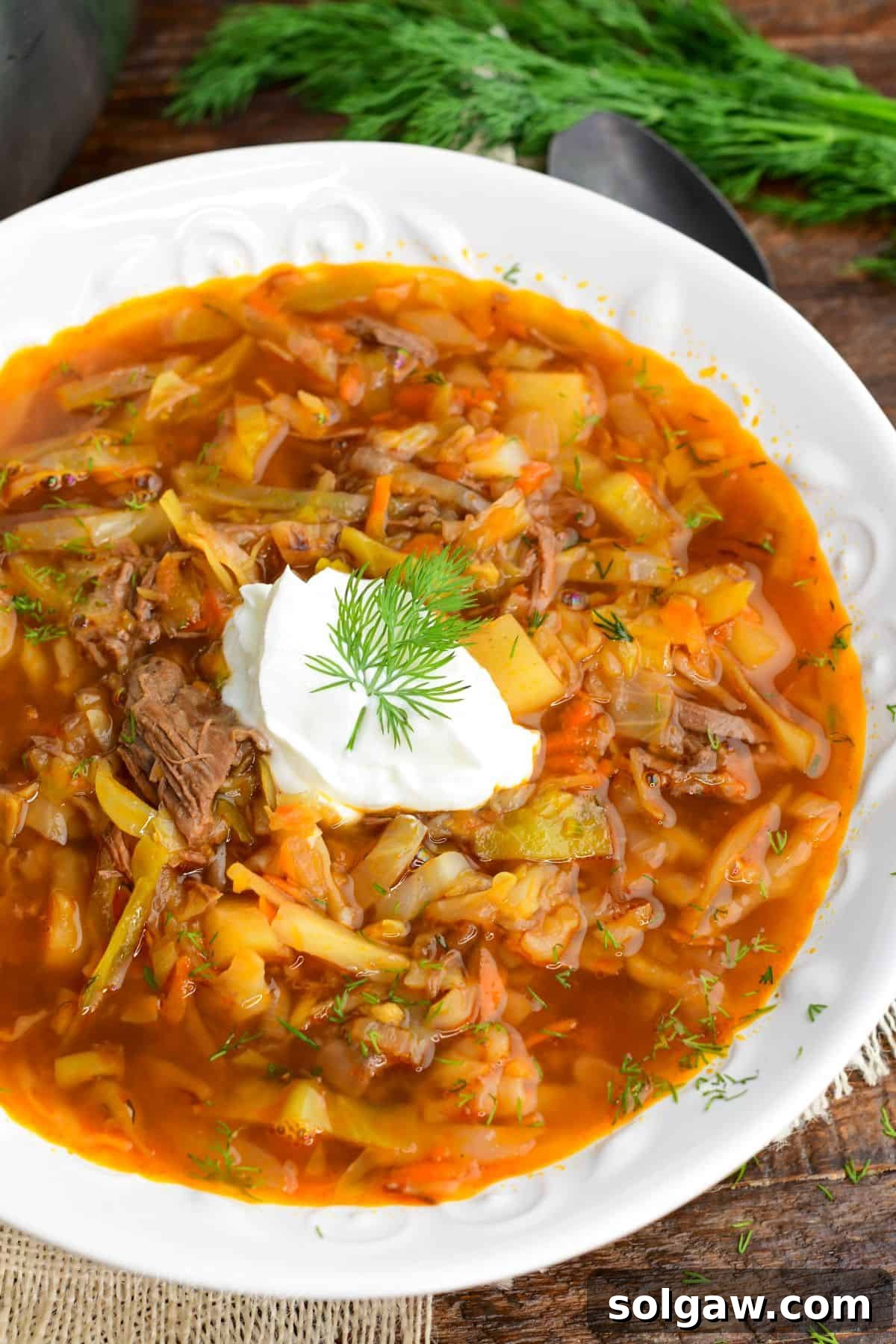
Shchi – Russian Beef and Cabbage Soup Recipe
If you’re looking for a hearty, comforting soup that will warm you from the inside out, this traditional Russian beef and cabbage soup, called Shchi, is exactly what you need. With a rich, homemade beef broth, tender vegetables, and the perfect balance of savory and slightly sweet flavors, this soup has been a staple in Russian homes for over a thousand years, including mine. This recipe ensures a truly authentic experience, rich in heritage and flavor.
No ratings yet
Print Recipe
Pin Recipe
Rate This Recipe
Course: Appetizer, Comfort Food, Dinner, Soup
Cuisine: Eastern European, Russian, Slavic
Diet: Gluten Free, Halal, Kosher
Prep Time: 15 minutes
Cook Time: 4 hours
Total Time: 4 hours 15 minutes
Servings: 10
Calories: 215 kcal
Author: Lyuba Brooke
Ingredients
For the Beef Broth:
- 2 Tbsp avocado or olive oil (for searing)
- 1 lb beef bones
- 1.2-2 lbs beef stew meat
- 1 yellow onion, quartered
- 2-3 carrots, roughly chopped
- 6-8 garlic cloves, smashed
- 2 bay leaves
- 1 Tbsp whole peppercorns
- 1 Tbsp whole coriander seeds
- 1 Tbsp coarse kosher salt (optional, adjust to taste)
- 18 cups warmed water
For the Shchi – Cabbage Soup:
- 2 tbsp avocado or olive oil (for sautéing)
- 1 yellow onion, thinly sliced
- 2-3 carrots, grated on a large box grater
- 1 head of cabbage, thinly sliced (about 2 lbs.)
- 2 Idaho baking potatoes, cubed (about 1.5 lbs.)
- 4-5 garlic cloves, minced
- 3 Tbsp tomato paste
- 1 tsp white granulated sugar
- Coarse kosher salt (to taste)
- 1/2-1 tsp black pepper (to taste)
- 2 Tbsp minced fresh dill weed (plus more for garnish)
Instructions
To Make The Beef Broth:
- Prep: For the vegetables, you can choose to leave some onion skin on for a deeper color and flavor in the broth, or peel it. Wash and scrub the carrots, no need to peel. Peel and smash the garlic cloves.
- Preheat a large pot (approximately 6-quart capacity) over medium-high heat and add 2 tablespoons of oil.
- Sear the beef bones until deeply golden brown on all sides. Remove and set aside. Then, sear the beef stew meat until golden brown. Remove and set aside.
- In the same pot, sear the quartered onions and carrots until golden-brown. Add the smashed garlic cloves and cook for just a few seconds until fragrant.
- Return the seared beef bones and stew meat to the pot. Add the bay leaves, whole peppercorns, whole coriander seeds, and pour in 18 cups of warmed water. Bring the broth to a low boil, then reduce the heat to the lowest setting. Cook, uncovered, for 2-4 hours. The broth should maintain a very gentle simmer with only occasional bubbles.
- Let the broth cool down. Then, double strain it through a fine-mesh strainer lined with cheesecloth or a vegetable mesh bag into glass containers. Refrigerate or use immediately. Discard the bones, spent vegetables, and spices. Pick the tender meat from the bones and cut into smaller pieces for the soup.
To Make Cabbage Soup:
- Prep: Thinly slice the yellow onion. Peel and grate the carrots on a large box grater. Quarter the head of cabbage, remove the core, and slice the cabbage thinly. Peel and chop the Idaho potatoes into cubes. Smash and mince the garlic cloves. Break up the cooked beef chunks from the broth into smaller, bite-sized pieces.
- Preheat the same large soup pot over medium heat and add 2 tablespoons of oil. Sauté the thinly sliced onions and grated carrots until golden-brown and softened. Add the minced garlic and sauté for 30-45 seconds until fragrant.
- Push the sautéed vegetables to the sides of the pot. Add the thinly sliced cabbage to the center and let it sauté undisturbed for several minutes until it starts to golden on the bottom. Mix and continue to sauté until the cabbage is tender and slightly caramelized.
- Stir the tomato paste thoroughly into the vegetables until it’s well combined and no clumps remain.
- Add the cubed potatoes and the prepared cooked beef pieces to the pot. Pour in your homemade beef broth. Season with coarse kosher salt, black pepper, and the white granulated sugar. Stir well and taste to adjust seasonings as needed. Bring the soup to a gentle boil.
- Reduce the heat to medium-low and let the soup simmer until the potatoes are tender, which typically takes about 20 minutes.
- Once the potatoes are fully cooked, turn off the heat. Stir in the minced fresh dill weed until well combined.
- Serve the Shchi hot, traditionally with a generous dollop of sour cream and an optional extra sprinkle of fresh dill. Enjoy!
Nutrition
Calories: 215kcal |
Carbohydrates: 21g |
Protein: 15g |
Fat: 9g |
Saturated Fat: 2g |
Polyunsaturated Fat: 1g |
Monounsaturated Fat: 5g |
Cholesterol: 34mg |
Sodium: 825mg |
Potassium: 710mg |
Fiber: 5g |
Sugar: 6g |
Vitamin A: 4253IU |
Vitamin C: 41mg |
Calcium: 94mg |
Iron: 2mg
Tried this recipe?
Mention @willcookforsmiles or tag #willcookforsmiles!
More Hearty Soup Recipes
If you love comforting, soul-warming soups, here are more recipes to add to your culinary repertoire:
- Borscht (Ukrainian Beet Soup) – A vibrant and flavorful beet-forward soup, another cherished childhood favorite.
- Hearty Beef Stew – A rich and satisfying beef-based stew, much like the comforting dishes I grew up enjoying.
- Classic Chicken Noodle Soup – A timeless remedy and regular fixture in my home since I was a young cook.
- Creamy Mushroom Soup – Earthy and luxurious, perfect for mushroom lovers.
- Wholesome Chicken and Rice Soup – A simple yet incredibly satisfying meal.
- Instant Pot Vegetable Beef Soup – Quick to make with all the classic, comforting flavors.
- Flavorful Split Pea Soup – A thick, hearty, and incredibly flavorful soup, perfect for cold days.