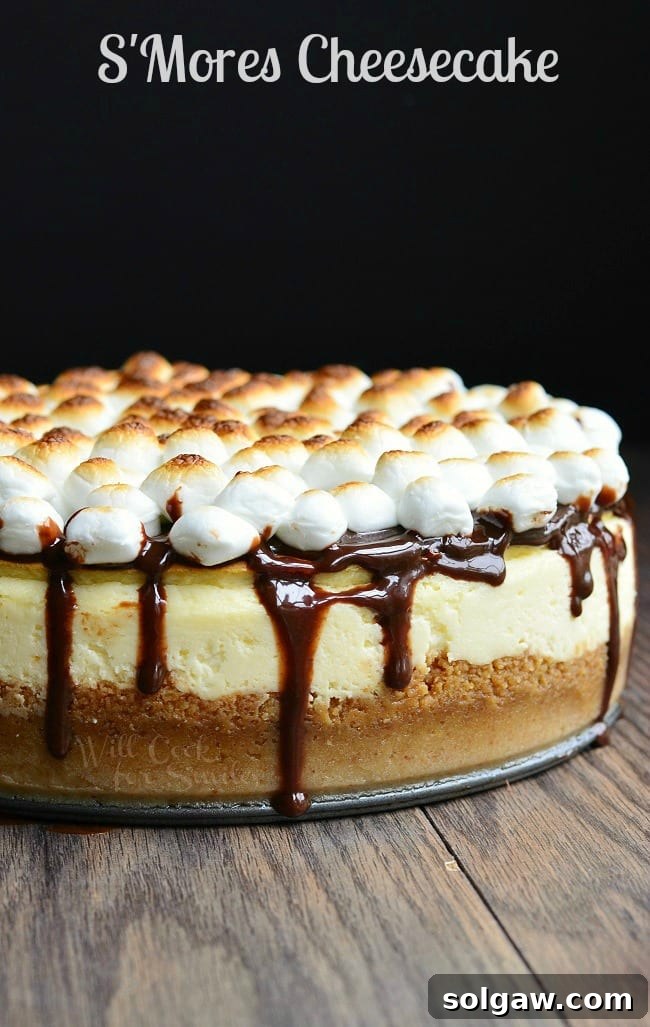
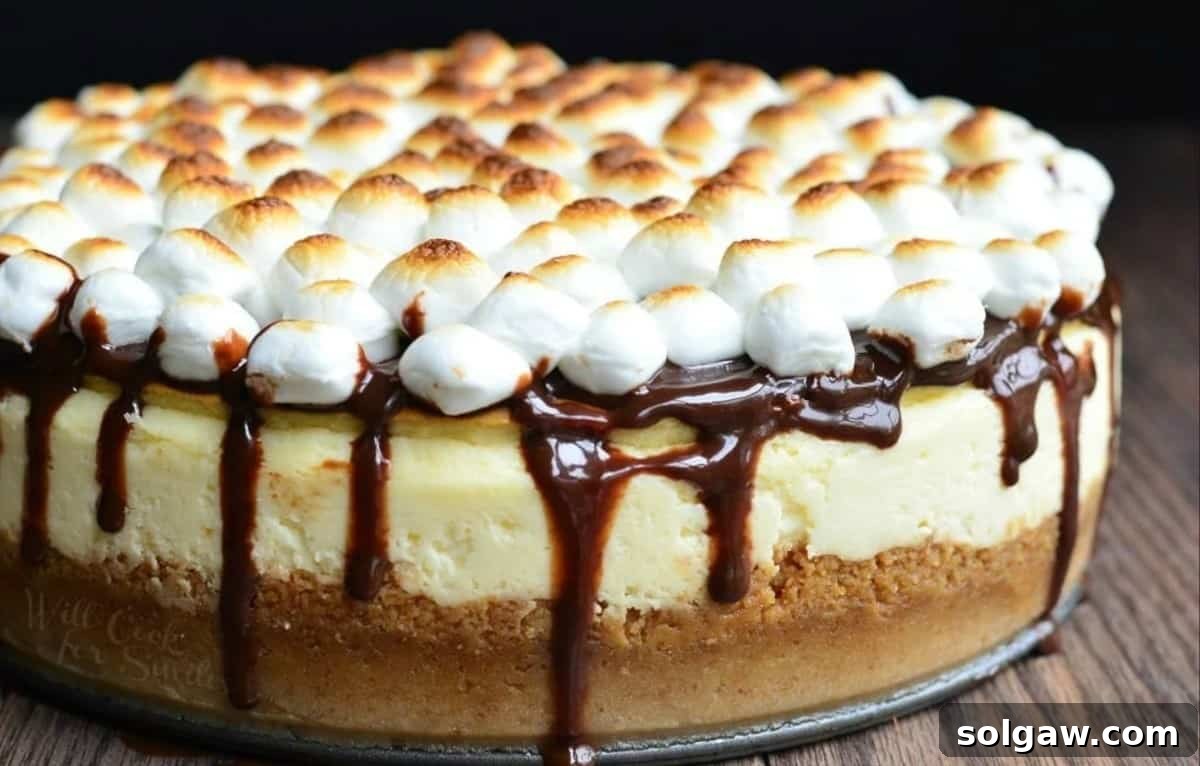
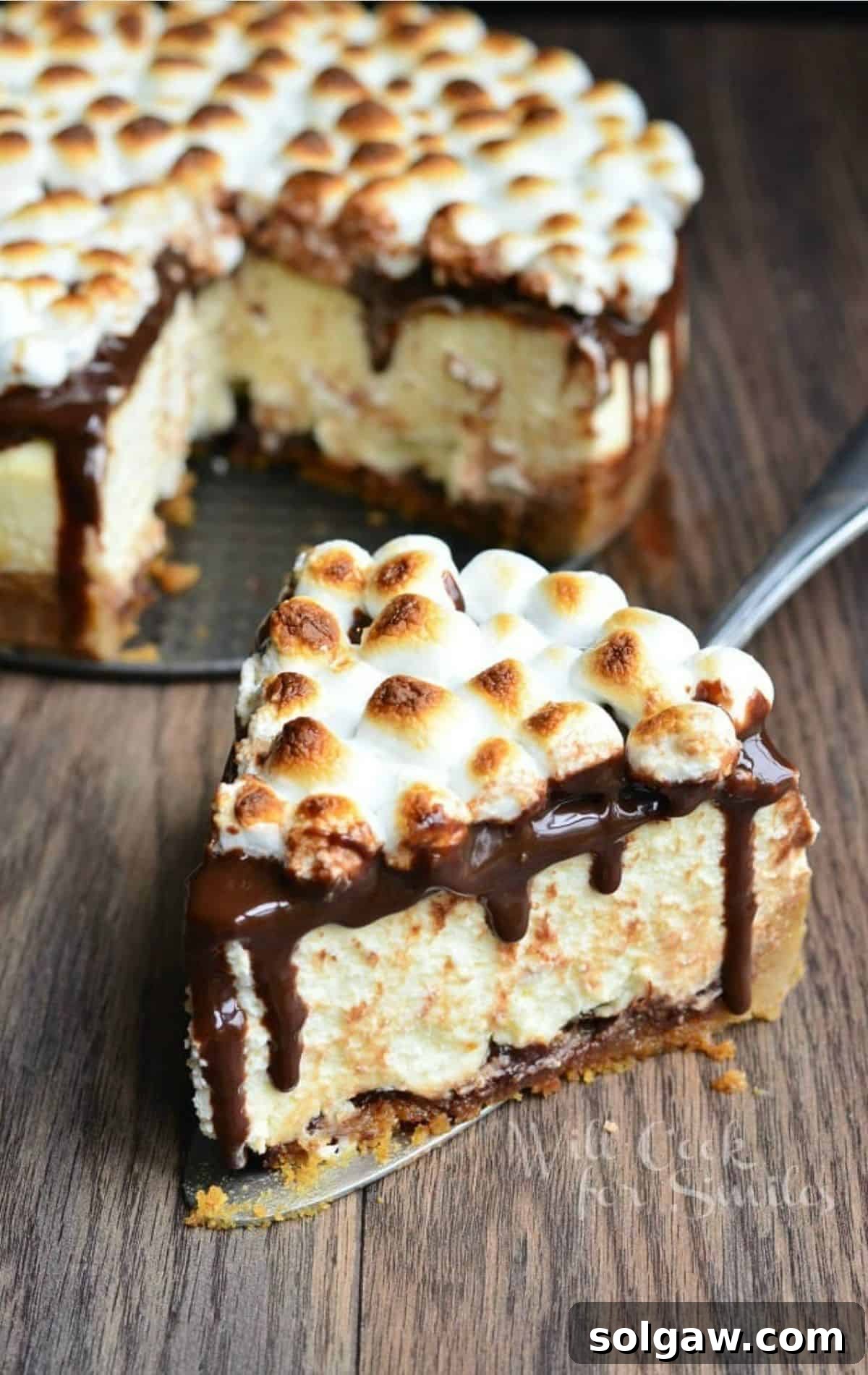
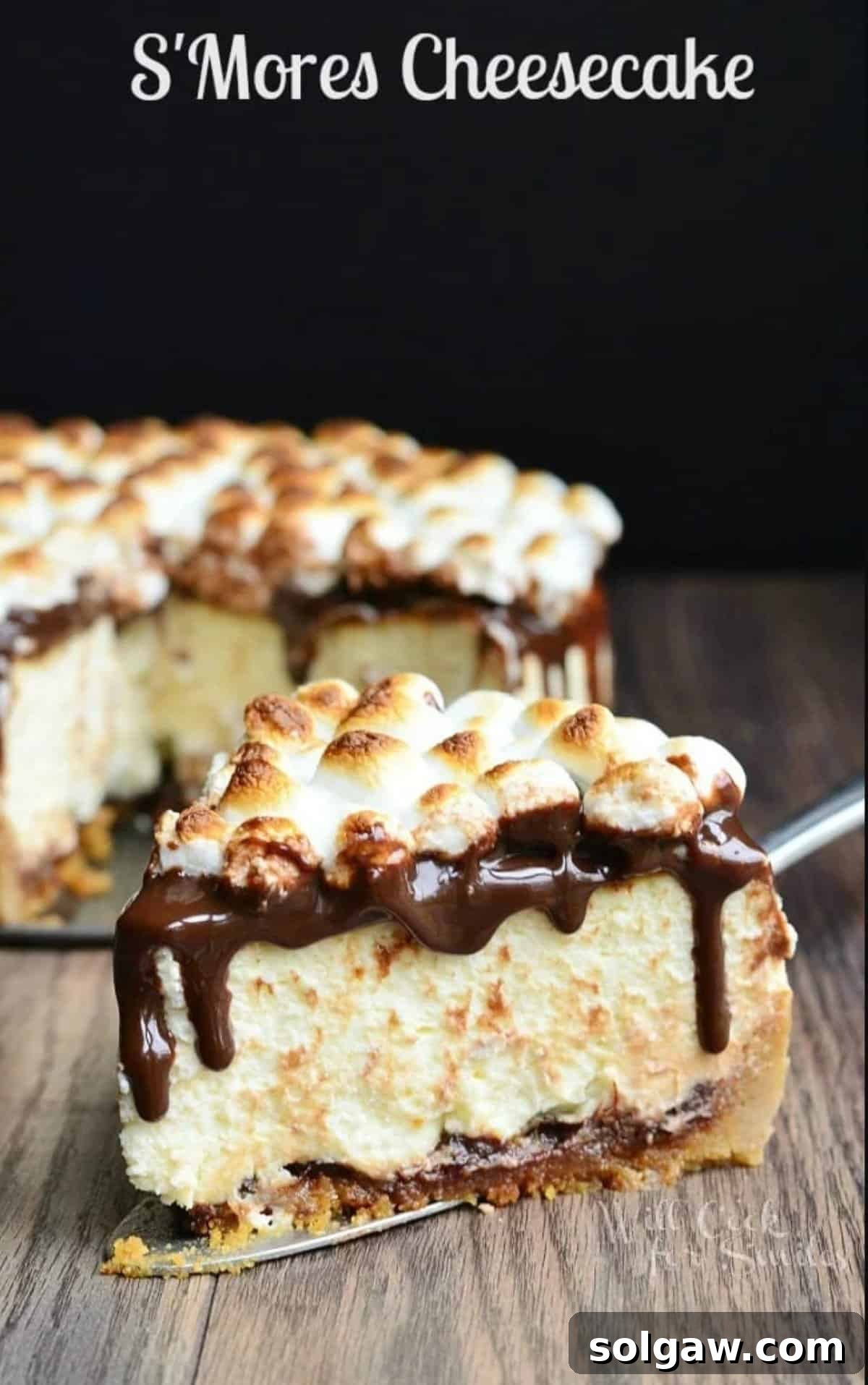
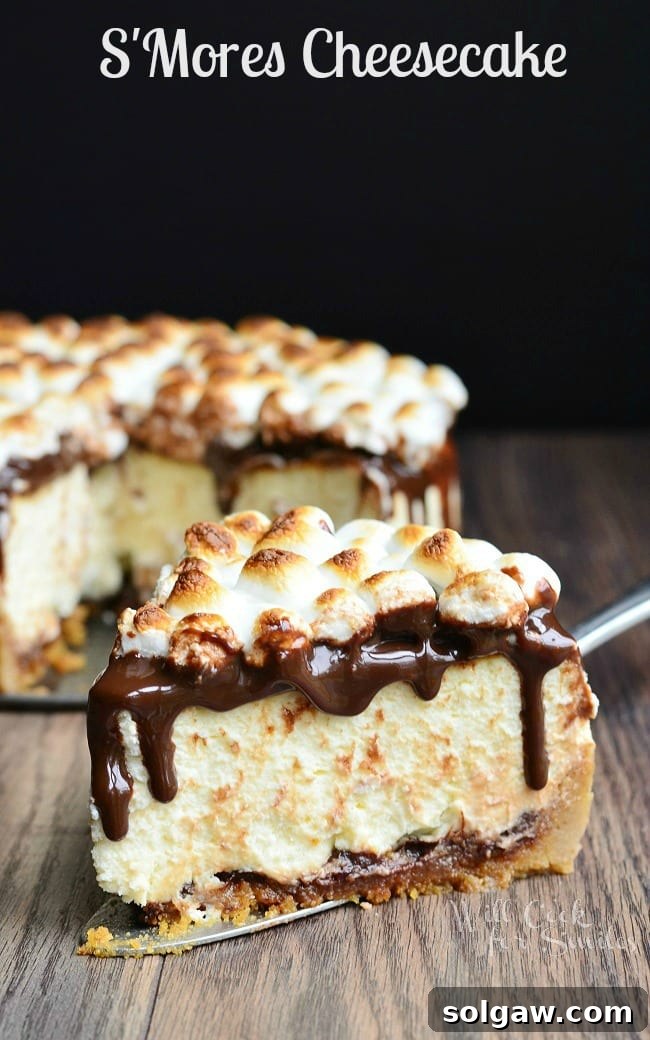
Indulge in the ultimate dessert experience with this show-stopping S’mores Cheesecake. Imagine a rich, buttery graham cracker crust, generously layered with mini marshmallows and decadent chocolate morsels, all crowned with an unbelievably creamy, homemade cheesecake. The masterpiece is then completed with a luscious hot fudge topping and perfectly toasted marshmallows, recreating that beloved campfire delight without the need for a tent or a roaring fire. This recipe isn’t just a dessert; it’s a celebration of classic s’mores flavors elevated to a sophisticated, irresistible cheesecake perfection.
If your heart yearns for more gooey, chocolatey, marshmallowy treats, be sure to explore my Layered Double Chocolate S’mores Cookie Bars and the effortlessly delicious S’mores Skillet Cookie! They are guaranteed to satisfy any s’mores craving, anytime, anywhere.
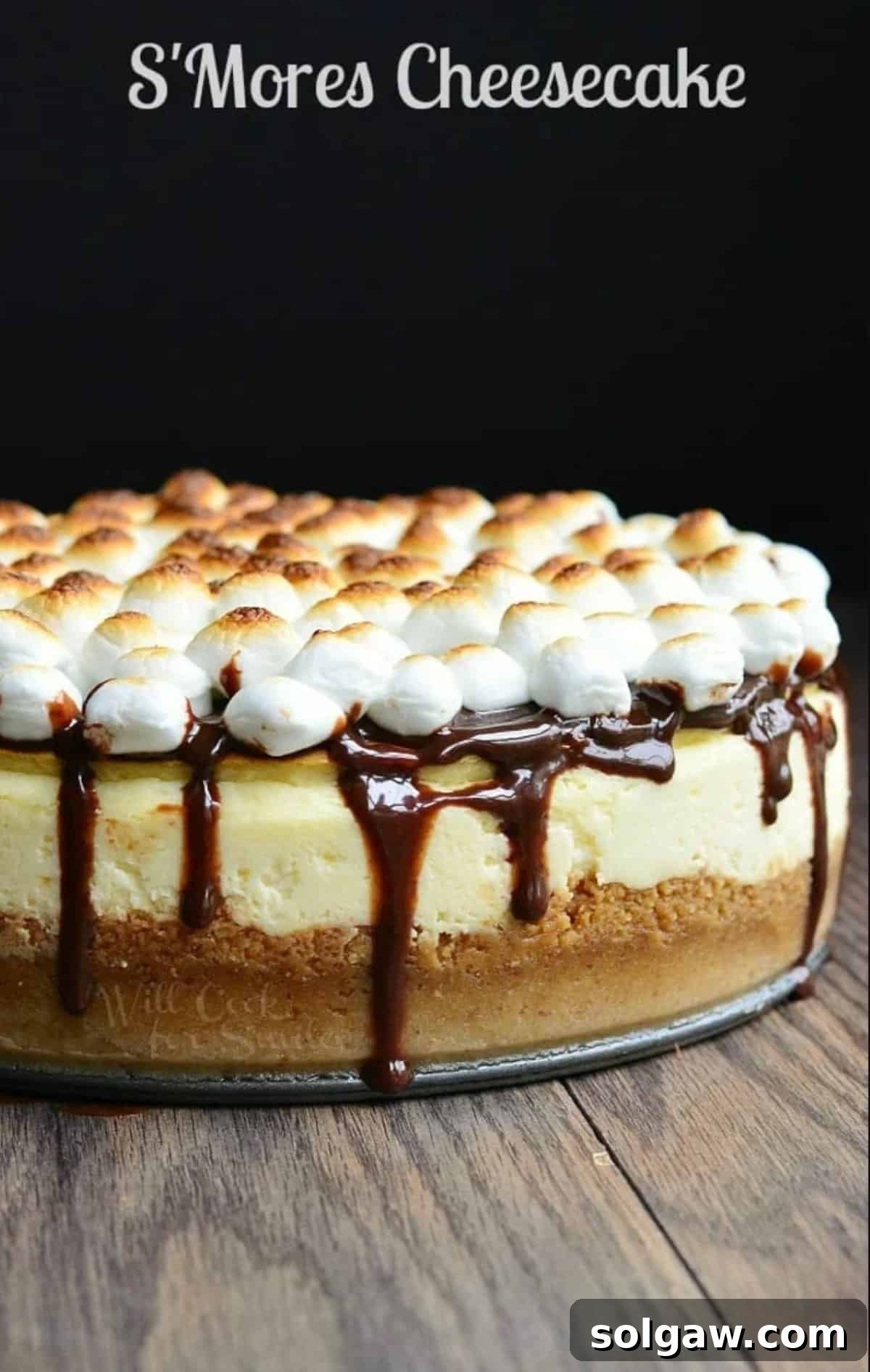
Table of Contents
Introduction to S’mores Cheesecake
For me, finding true culinary bliss often means revisiting the comforting flavors of my childhood, and few things evoke that nostalgia quite like s’mores. This cheesecake recipe isn’t just a dessert; it’s a culinary journey back to those blissful bonfire nights, but with a luxurious, grown-up twist. Imagine the sweet, smoky essence of toasted marshmallows, the rich depth of melted chocolate, and the unmistakable crunch of graham crackers – all meticulously transformed into a smooth, creamy cheesecake that you can enjoy in the comfort of your home. It’s perfect for those warm summer evenings when the thought of sitting by a blazing fire is less appealing than a cool, decadent treat.
The foundation of this extraordinary dessert is a classic buttery graham cracker crust, but we take it a step further. We infuse this base with extra layers of sweet marshmallows and delectable chocolate morsels, ensuring that signature s’mores flavor is present in every single bite, right from the bottom up. Perched atop this delightful base is my signature cheesecake filling, a recipe perfected over countless trials to achieve that unparalleled smooth, rich, and utterly irresistible texture. Finally, it’s crowned with a lavish layer of warm hot fudge sauce and perfectly gooey, toasted marshmallows. Are you starting to feel that undeniable craving yet?
While this homemade S’mores Cheesecake might look like a masterpiece reserved for professional bakers, I assure you, it’s a whole lot easier to create than you might anticipate. It consistently garners rave reviews and becomes the centerpiece of any gathering, from casual potlucks to elegant dinner parties. As someone who considers myself a bit of a cheesecake aficionado, I’ve packed this guide with plenty of little tips and expert tricks. These insights are designed to demystify the process, making your cheesecake baking experience wonderfully simple, enjoyable, and ultimately, incredibly rewarding. Get ready to impress yourself and everyone you share it with!
Key Ingredients for the Perfect S’mores Cheesecake
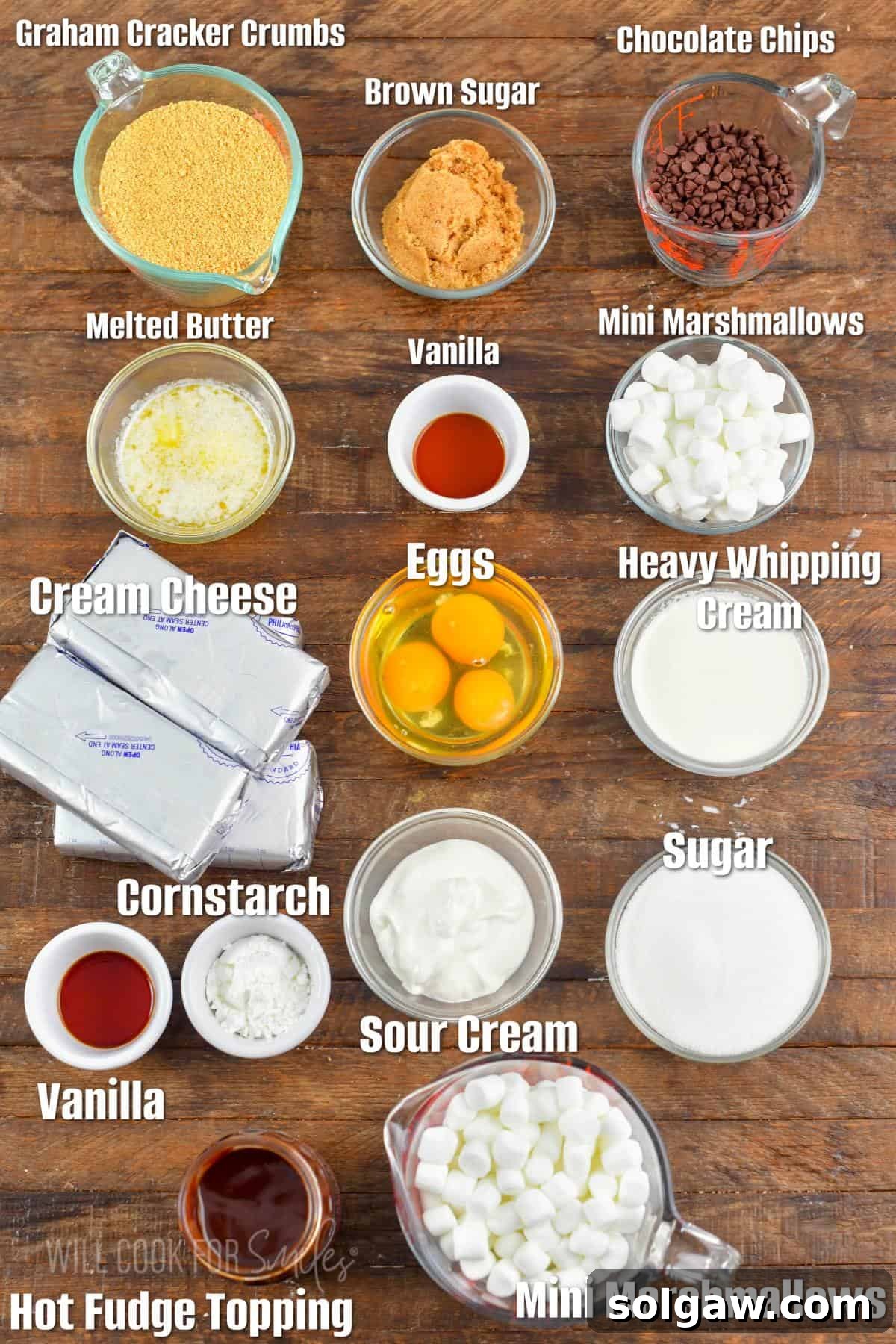
Creating a truly exceptional S’mores Cheesecake begins with understanding the role each ingredient plays. Here’s a closer look at the key components and some helpful notes to ensure your dessert turns out perfectly.
Pure Vanilla Extract – This isn’t just a flavoring; it’s an enhancer that deepens the overall sweetness and complexity of the cheesecake. I always advocate for using pure vanilla extract over imitation. The difference in flavor is significant, offering a more nuanced and aromatic profile that truly elevates the final taste. Don’t underestimate its power to transform a good cheesecake into a great one.
Graham Cracker Crumbs – The foundation of our s’mores experience! If you can’t easily find pre-made graham cracker crumbs at your local grocery store, don’t fret. You can simply purchase whole graham crackers and pulse them in a food processor until they reach a fine, even crumb consistency. This method works perfectly and ensures you have the freshest base for your crust. Aim for about 1 ½ cups of crumbs for the ideal crust thickness and texture.
Heavy Cream – Essential for achieving that rich, creamy texture in your cheesecake batter. While it’s best to use heavy whipping cream for its high-fat content and luxurious mouthfeel, you can use half and half in a pinch. However, it’s crucial to note that you should not go any less fat than half and half, as it will compromise the cheesecake’s structure and creaminess. Also, remember that half and half is thinner than heavy whipping cream, so use about a tablespoon less to maintain the correct consistency in your batter.
Full-Fat Cream Cheese – This is arguably the most critical ingredient for any cheesecake. The success of your S’mores Cheesecake hinges on the quality and fat content of your cream cheese. Do not be tempted to make the cheesecake “lighter” by using low-fat cream cheese. It will drastically alter the texture, resulting in a less dense, often rubbery, and crumbly cheesecake. Always opt for full-fat, original cream cheese. For the smoothest possible batter, it’s vital to ensure your cream cheese is properly softened. Take it out of the refrigerator 30-45 minutes before you plan to use it, allowing it to reach room temperature for easy, lump-free blending.
Hot Fudge Topping – The luscious crown jewel of our S’mores Cheesecake. A warm, gooey hot fudge topping provides the perfect chocolatey contrast to the creamy cheesecake and toasted marshmallows. If you find yourself completely enamored with how the hot fudge complements this dessert, you’ll definitely want to try my Oreo Mint Chocolate Chip Cheesecake! It features a very similar, irresistible vibe that chocolate lovers will adore.
For a comprehensive list of all ingredients and precise quantities, please refer to the complete recipe card below.
Step-by-Step Guide: How to Make S’mores Cheesecake
Crafting this incredible S’mores Cheesecake is a truly rewarding experience, especially when you follow these easy, detailed steps to ensure perfection. Get ready to create a dessert that will be the talk of the town!
- Prepare Your Workspace and Equipment: Begin by preheating your oven to 325°F (160°C). This ensures the oven is at the optimal temperature when your cheesecake is ready to go in. Next, take a 9-inch springform pan and lightly grease it. You’ll also need a large roasting pan – preferably one that is bigger and deeper than your springform pan, as it will be used to create a crucial water bath. Disposable aluminum foil roasting pans work wonderfully for this purpose.
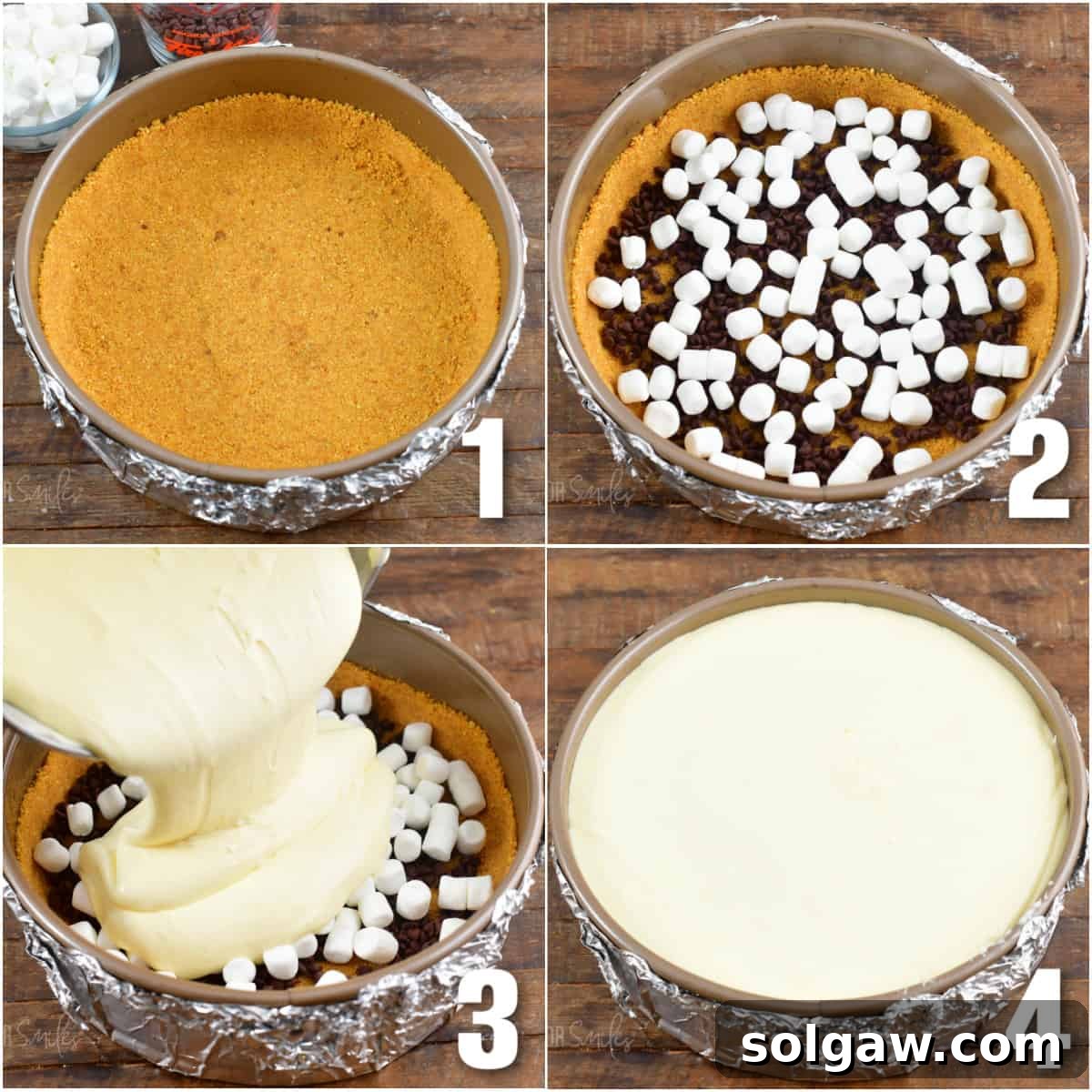
- Craft the Buttery Graham Cracker Crust: In a medium-sized bowl, combine the graham cracker crumbs, melted unsalted butter, a hint of vanilla extract, and the rich brown sugar. Mix these ingredients thoroughly until the crumbs are uniformly moistened and resemble wet sand. This ensures a sturdy, flavorful crust. Carefully spread this crumb mixture into the bottom of your prepared springform pan. Using the back of a spoon or your fingertips, press it firmly and evenly over the bottom and about half-way up the sides of the pan. This creates a secure, delicious base (1).
- Build the Signature S’mores Layer: This is where the magic truly begins! Once your crust is set, generously spread a layer of mini chocolate morsels and fluffy marshmallows directly over the crust (2). These will melt slightly during baking, creating that irresistible gooey s’mores foundation within your cheesecake.
- Prepare the Silky Cheesecake Mixture: In the bowl of an electric stand mixer fitted with a paddle attachment, add your softened full-fat cream cheese. Beat the cream cheese on medium-high speed for about 2-3 minutes until it is incredibly smooth, light, and fluffy. Stop the mixer, scrape down the sides and bottom of the bowl thoroughly with a spatula, and beat for another minute to ensure there are no lumps. Next, add the cornstarch and white granulated sugar, mixing on low speed until they are just combined. Avoid overmixing at this stage.
- Incorporate Eggs and Liquids: Gently beat in the eggs one at a time, mixing only until each egg is fully incorporated. Overmixing eggs can introduce too much air, leading to cracks in your baked cheesecake. Finally, mix in the sour cream, the remaining vanilla extract, and the heavy cream until everything is just combined and the batter is smooth and uniform. Again, avoid overmixing to maintain the cheesecake’s creamy texture.
- Pour the Decadent Batter: Carefully pour the freshly prepared cheesecake batter into the springform pan, spreading it evenly over the marshmallow and chocolate base (3, 4). Take your time here to ensure an even layer for a beautifully baked cheesecake. If you’re concerned about your springform pan potentially leaking during the water bath, you can wrap the bottom and sides in heavy-duty aluminum foil before placing it in the roasting pan.
Baking and Cooling Perfection
Achieving that perfectly creamy, crack-free cheesecake requires careful attention during the baking and cooling phases. The water bath technique is a game-changer for cheesecake texture.
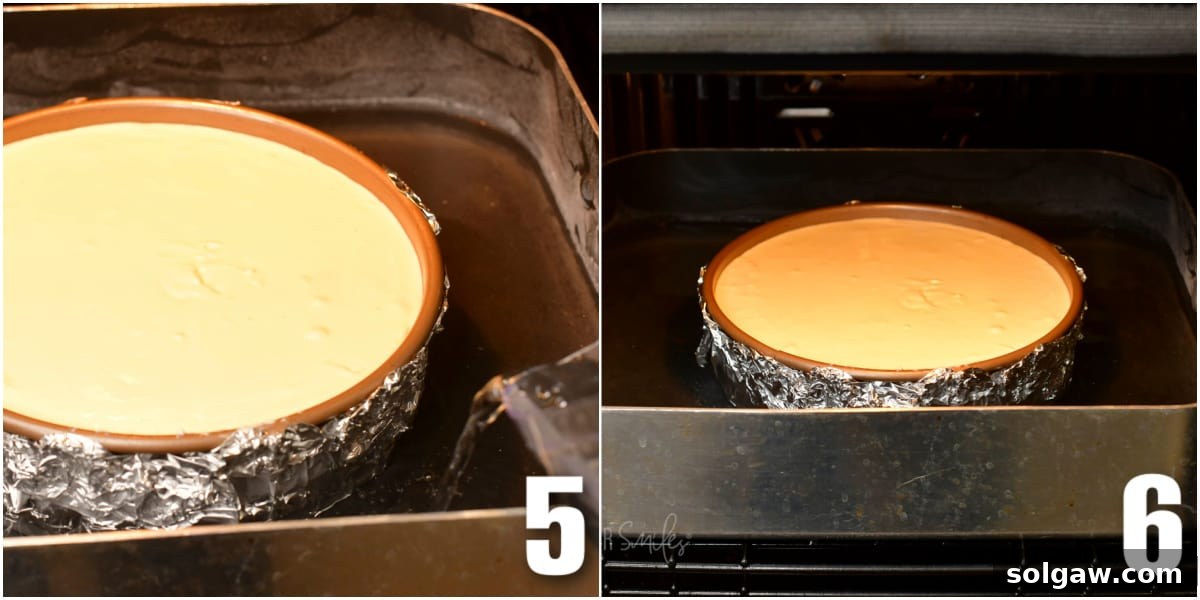
- Set Up the Essential Water Bath: Carefully place the large roasting pan into your preheated oven. Then, gently place the cheesecake springform pan inside the roasting pan. Now, with extreme caution, add hot water to the roasting pan, ensuring it goes about halfway up the side of the springform pan (5). This water bath creates a moist, even heat environment, preventing cracks and ensuring your cheesecake bakes uniformly and creaminess.
- Bake and Begin the Resting Process: Bake your cheesecake for approximately 90-95 minutes. You’ll know it’s done when the edges are set, but the center still has a slight jiggle – like firm gelatin. Once baked, turn off the oven and immediately open the oven door halfway. Allow the cheesecake to rest in the cooling oven for 10 minutes. This slow, gradual cooling prevents temperature shock, which can cause cracking (6).
Adding the Iconic S’mores Topping
The final steps involve a crucial second rest, chilling, and then adding the spectacular s’mores topping that truly makes this cheesecake unforgettable.
- The Second Rest and Initial Release: After its time in the cooling oven, remove the cheesecake from the oven and let it rest on your kitchen counter for another 10 minutes. During this rest, the residual heat will continue to gently set the center. Then, take a gentle hand and run a thin butter knife carefully between the sides of the cheesecake and the springform pan. This step is important for separating the cheesecake from the pan without damaging the edges, preventing future sticking. You don’t need to fully remove the cheesecake yet, just create that initial separation.
- First Chill for Firmness: Once separated from the pan sides, allow the cheesecake to cool completely at room temperature, then transfer it to the refrigerator to chill for at least an hour. This initial chilling helps the cheesecake firm up before the toppings are added.
- Prepare for Topping – Broiler Time: When the cheesecake is sufficiently chilled, it’s time to prepare for the grand finale. Turn on the broiler in your oven. Make sure the oven rack is positioned such that the top of your cheesecake will be about 6-8 inches from the broiler element.
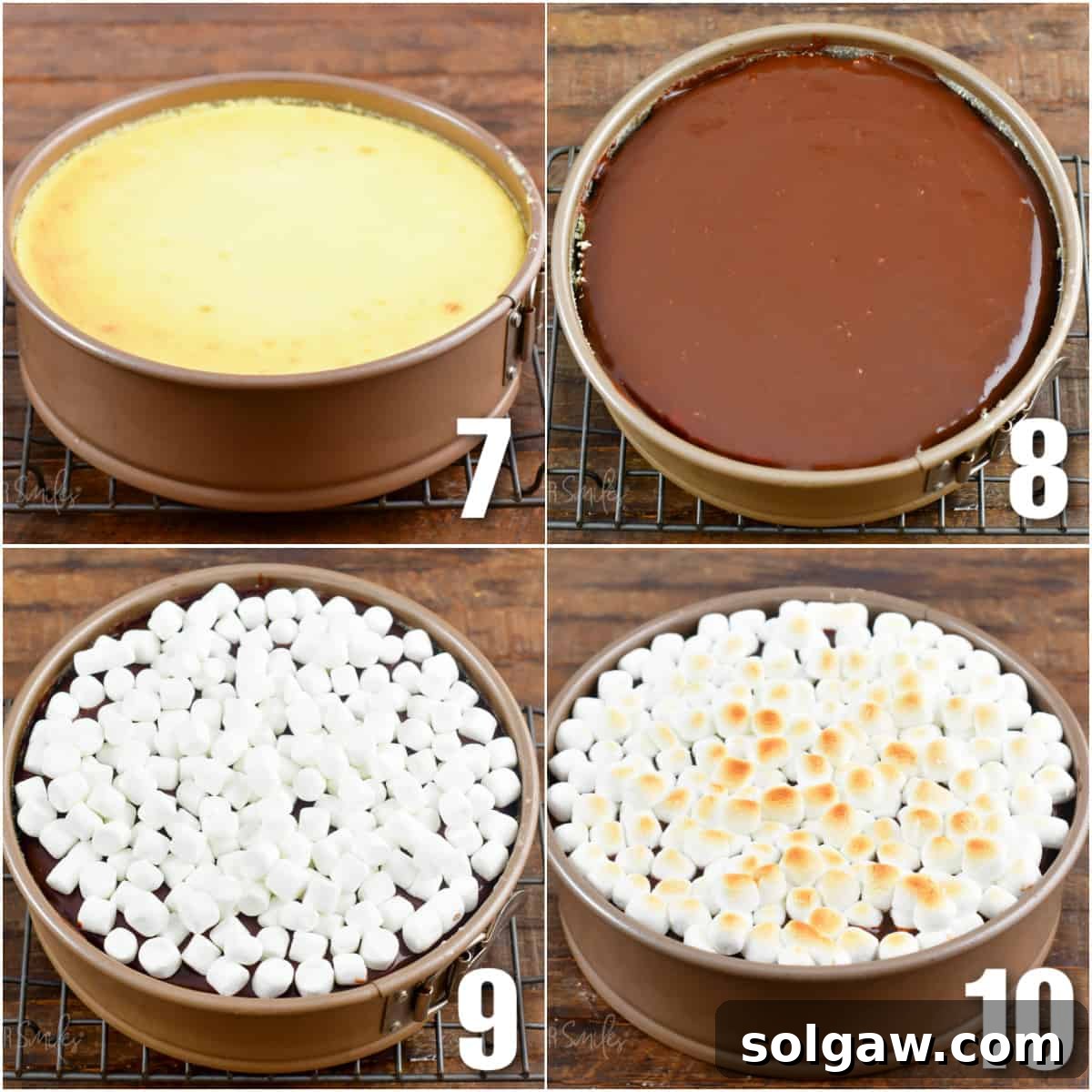
- Lavish with Toppings: Evenly spread the slightly warmed hot fudge sauce across the entire top of the cheesecake (8). Don’t be shy; ensure a generous, smooth layer. Then, sprinkle the remaining marshmallows liberally and evenly over the fudge topping (9). You can use mini marshmallows for a more classic s’mores look, or larger ones for bigger, gooey pockets.
- Toast the Marshmallows to Golden Perfection: Place the cheesecake back into the center of the oven, directly under the broiler. This step requires your undivided attention! Let the marshmallows toast for just 30-35 seconds. They brown incredibly quickly under the broiler, so watch them continuously to prevent burning. The goal is a beautiful, lightly browned, and slightly caramelized top. Remove the cheesecake from the oven immediately once the marshmallows have reached that perfect golden hue (10).
- Final Chill for Ultimate Decadence: To allow all the flavors to meld and the cheesecake to fully set into its decadent glory, cover it loosely with aluminum foil (to prevent condensation from dripping onto the marshmallows) and refrigerate for a minimum of 4 hours, or ideally, overnight. This final chill is crucial for a perfectly firm, sliceable cheesecake with integrated flavors.
Frequently Asked Questions About S’mores Cheesecake
YES! Baking a cheesecake in a water bath (also known as a bain-marie) is not just a suggestion; it’s a technique that dramatically impacts the texture and appearance of your finished cheesecake. The primary reason for using a water bath is to insulate the baking dish from the direct, intense heat of the oven.
Cheesecakes are incredibly rich in both cream cheese and eggs. If subjected to direct heat without the protective barrier of a water bath, the cheesecake will bake unevenly and too rapidly. This often leads to the edges becoming overdone and dry, while the center remains undercooked and gooey. The water bath ensures that the cheesecake bakes slowly and uniformly throughout. The steam created by the hot water also keeps the oven environment moist, which prevents the surface of the cheesecake from drying out and cracking.
Without the water bath, your cheesecake is highly susceptible to a range of common problems: it will likely sag in the middle, it is almost guaranteed to crack across the top, and most importantly, it would be over-cooked on the outside and under-cooked on the inside. The water bath is your secret weapon for a perfectly smooth, creamy, and beautifully baked cheesecake every time.
As presented in this recipe, S’mores Cheesecake is not inherently gluten-free, but it can very easily be adapted! The only component of this delicious cheesecake that contains gluten is the graham cracker crust. To make this recipe completely gluten-free, simply make one crucial swap:
Use gluten-free graham crackers and process them into fine crumbs to create your crust. All other ingredients listed in this recipe, such as cream cheese, eggs, sugar, vanilla extract, heavy cream, sour cream, chocolate morsels, marshmallows, and hot fudge topping, are typically naturally gluten-free. However, it is always a good practice to double-check the labels of all packaged ingredients just to be absolutely certain, especially if you are catering to severe gluten allergies.
Removing a cheesecake gracefully from a springform pan can seem daunting, but with a few simple tricks, it’s effortless:
Before Baking (for the bottom): For a completely smooth transfer, you can prepare the pan bottom in advance. Separate the springform side from the bottom part. Lay the bottom part of the pan onto a sheet of parchment paper. Use a pencil to trace around the bottom of the pan. When you cut out the circle, make sure it’s just a little bit bigger than your tracing, allowing for a slight overlap. Reassemble the springform pan. Spray the springform with cooking spray and then fit the parchment paper circle neatly on the bottom before adding the crust ingredients. This creates a non-stick barrier that makes sliding the cheesecake off incredibly easy.
After Baking (for the sides): Once your cheesecake has cooled and chilled completely as per the instructions, you are ready to remove it. You’ll need a large, sturdy spatula and your chosen serving dish or a cardboard cake circle ready nearby.
First, release the springform latch and gently lift the ring straight up and away from the cheesecake. If you already ran a knife around the edges during the cooling phase, this should be smooth. Now, carefully slide your large spatula in between the parchment paper (if used) and the metal bottom of the springform pan. Gently pull the cheesecake off of the springform base and right onto the serving dish or cake board. Keep the cheesecake and the serving dish side by side and maintain a level surface, making sure you don’t tilt the cheesecake pan as you transfer it. This technique minimizes any risk of breakage or damage to your beautiful dessert.
Storage Tips for Your S’mores Cheesecake
To keep your delicious S’mores Cheesecake tasting fresh and maintaining its wonderful texture, proper storage is essential. Cheesecake, with its delicate dairy components, requires refrigeration.
Always store the cheesecake in the refrigerator. It is crucial to keep it covered tightly with plastic wrap or placed within an airtight container. This prevents the cheesecake from absorbing other odors in the refrigerator and, more importantly, keeps it from drying out. When properly stored in this manner, your homemade S’mores Cheesecake will stay fresh and delightful for up to 5 days.
For convenience and to minimize handling, I often recommend simply storing it in the same springform pan it was baked in, with the sides secured and covered. If you’ve already transferred it to a serving plate, ensure that the entire cheesecake is thoroughly wrapped.
How to Freeze S’mores Cheesecake for Later
Planning ahead or simply want to savor your S’mores Cheesecake over a longer period? Freezing is an excellent option! However, there’s a key consideration: if you plan on freezing s’mores cheesecake, you must do so without the toppings. The toasted marshmallows and hot fudge topping tend to lose their ideal texture once frozen and thawed. It’s best to add these fresh just before serving after thawing.
Here’s how to properly freeze your cheesecake:
- Pre-Freeze Preparation: Once your cheesecake has been baked and cooled completely to room temperature, gently run a butter knife along the inside edge of the springform pan to ensure the cheesecake is separated from the sides. Place the pan with the cheesecake (still on its base) into the freezer and freeze for about an hour, or until the cheesecake is firm to the touch. This initial freeze makes it easier to handle without damaging its structure.
- Remove from Pan: After the cheesecake has firmed up, carefully take off the side portion of the springform pan. At this point, you have two options: you can either keep the bottom of the springform pan attached to the cheesecake, or you can transfer the cheesecake (with its parchment paper base, if used) onto a piece of thick cardboard cake holder that has been covered with aluminum foil for extra protection.
- Double Wrap for Protection: To prevent freezer burn and preserve freshness, wrap the cheesecake (and its base) meticulously. First, wrap it tightly with plastic wrap in 2-3 layers, ensuring no part of the cheesecake is exposed to air. Then, wrap the entire thing securely with aluminum foil. For an added layer of protection against air and odors, you can place the whole wrapped cheesecake into a large, zip-lock freezer bag, though this step is not strictly necessary if wrapped well with foil.
- Label and Freeze: Always make sure to date and label your wrapped cheesecake before placing it back in the freezer. This cheesecake will stay wonderfully fresh in the freezer for up to 2-3 months.
- Thawing Instructions: When you’re ready to enjoy your frozen cheesecake, it’s crucial to thaw it slowly. Transfer the cheesecake directly from the freezer into the refrigerator and let it thaw overnight. This slow thawing process helps maintain its creamy texture and prevents condensation. Once thawed, you can then add your warmed hot fudge and toast fresh marshmallows just before serving for the ultimate S’mores experience.
Discover More Irresistible Cheesecake Recipes
If you’ve fallen in love with the art of cheesecake making, or simply can’t get enough of its creamy decadence, I invite you to explore more of my tried-and-true cheesecake recipes. Each one offers a unique flavor profile and a guaranteed delightful experience:
-
Vanilla Bean Cheesecake: A timeless classic, rich with the aromatic essence of real vanilla beans.
-
Ricotta Cheesecake: Lighter in texture with a delicate flavor, offering a wonderful Italian-inspired twist.
-
New York Cheesecake: The epitome of dense, smooth, and utterly luxurious cheesecake perfection.
-
Strawberry Cheesecake: A vibrant and fresh dessert, featuring sweet strawberries atop a creamy base.
PIN THIS RECIPE FOR LATER
If you’ve made this recipe and found a lot of good information here, PLEASE leave a 🌟 star rating! Let me know how you liked it by leaving a 📝 comment below as well. Don’t forget to subscribe to my newsletter for more delicious recipes!
S’Mores Cheesecake Recipe
Pin
Video
Rate
Ingredients
Crust:
- 1 ½ cups graham cracker crumbs
- ½ cup brown sugar
- 1 tsp vanilla extract
- 5 Tbsp melted unsalted butter
- ¾ cup mini chocolate morsels
- 1 cup marshmallows
Cheesecake:
- 32 oz cream cheese softened
- ½ cup sour cream
- 2 eggs
- ¾ cup heavy cream
- ¾ cup white granulated sugar
- 2 Tbsp corn starch
- 2 tsp vanilla extract
Topping:
- 10 oz hot fudge topping warmed
- 2 cups marshmallows
Instructions
- Preheat the oven to 325°F (160°C) and grease a 9-inch springform pan. You will need a large roasting pan (one that’s bigger and longer than the springform). Disposable aluminum foil ones work great.
- In a small bowl, combine graham cracker crumbs, melted butter, vanilla extract, and brown sugar. Mix very well until fully combined.
- Spread the crumb mixture evenly in the bottom of the springform pan, pressing it over the bottom and halfway up the sides to form a firm crust.
- Evenly spread mini chocolate morsels and marshmallows over the prepared crust.
- In the bowl of an electric mixer, beat softened cream cheese on medium-high speed until smooth and fluffy. Scrape the sides and bottom of the bowl and beat for another minute to ensure no lumps remain.
- Add cornstarch and granulated sugar, mixing until just combined on low speed.
- Beat in eggs one at a time until well incorporated, scraping the bowl after each addition. Do not overmix.
- Add sour cream, vanilla extract, and heavy cream, and beat until all ingredients are just mixed very well and the batter is smooth.
- Carefully transfer the cheesecake batter into the springform pan, spreading it evenly over the s’mores base. (For extra security against water leakage, you can wrap the bottom of the springform in heavy-duty aluminum foil.)
- Place the large roasting pan into the oven. Carefully place the cheesecake springform pan inside the roasting pan. Add hot water to the roasting pan, filling it about halfway up the side of the springform pan.
- Bake for 90-95 minutes. The cheesecake is done when the edges are set and the center is slightly soft and jiggly. Turn off the oven and open the oven door halfway. Let the cheesecake rest in the cooling oven for 10 minutes before removing it.
- Let the cheesecake rest for another 10 minutes on the counter. Then, gently run a butter knife between the sides of the cheesecake and the springform pan to carefully separate it. (The cheesecake can stay in the pan until you’re ready to serve).
- Cool the cheesecake completely at room temperature, then refrigerate for at least an hour to chill.
- Once chilled, turn on the broiler in your oven.
- Evenly spread warmed hot fudge sauce over the top of the cheesecake. Then, evenly spread the remaining marshmallows on top of the fudge.
- Place the cheesecake back in the center of the oven, under the broiler. Watch carefully as marshmallows toast very quickly—about 30-35 seconds is usually enough. Remove the cheesecake from the oven once the marshmallows are lightly browned and slightly puffed.
- Cool the cheesecake completely again, then cover it loosely with foil and refrigerate for a minimum of 4 hours, or ideally, overnight, to allow it to fully set and for flavors to meld.
Video
Watch the S’mores Cheesecake Video Tutorial on YouTube!
Notes
- Water Bath: Remember, DO use the water bath technique. It significantly improves the texture of the cheesecake, making it wonderfully creamy and crack-free.
- How To Tell If Cheesecake Is Done: You can tell the cheesecake is perfectly baked when the edges are set, but the center still has a slight, gentle jiggle. As it cools in the oven and on the counter, the center will continue to set and become more firm. DO NOT insert a knife or toothpick into the center, as this can cause the cheesecake to crack.
- Cooling: DO cool the cheesecake in three essential steps: first, 10 minutes in the turned-off oven with the door ajar; second, on the counter until it reaches room temperature; and finally, chill thoroughly in the refrigerator for at least 4 hours (preferably overnight).