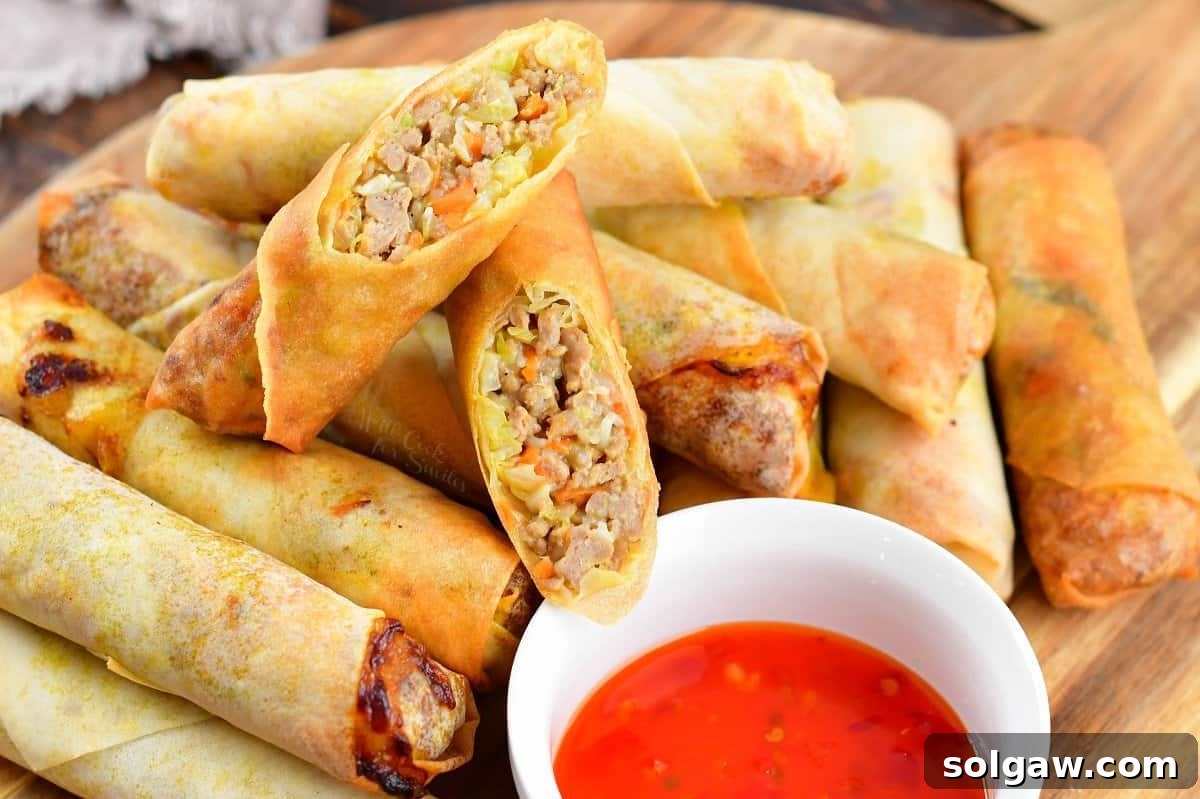
Welcome to the ultimate guide for crafting the most exquisite homemade Thai Spring Rolls! Forget those mediocre takeout versions; once you experience the crisp, golden perfection and savory explosion of flavor from these freshly prepared rolls, you’ll never look back. We’re diving deep into the art of making perfect Thai spring rolls, offering three distinct cooking methods – classic frying, modern air-frying, and a healthier baked option – each guaranteed to deliver that coveted crispy crunch. Whether you’re a seasoned chef or a kitchen novice, this comprehensive guide will equip you with all the tips and tricks needed to create an unforgettable culinary masterpiece.
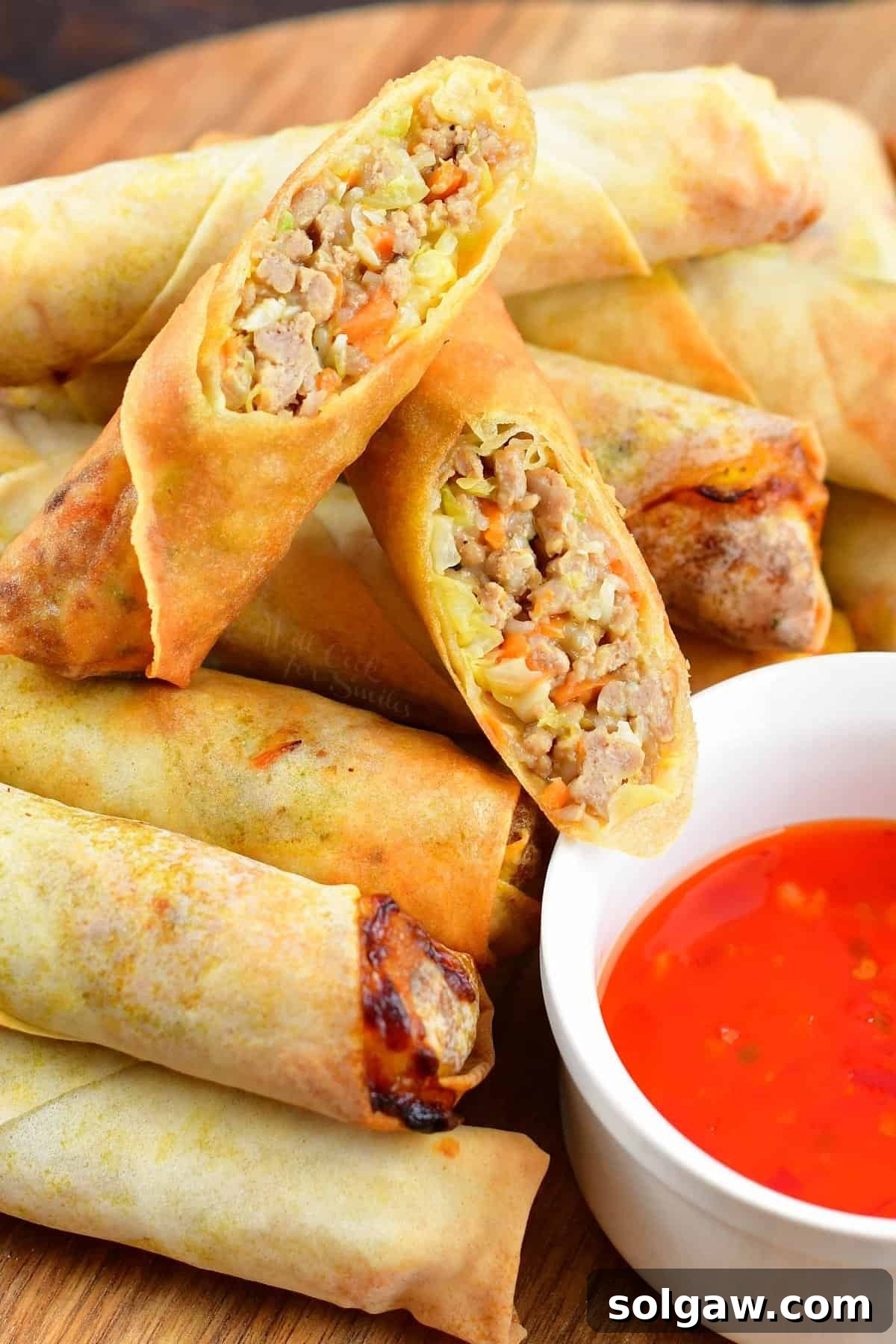
Homemade Thai Spring Rolls: Achieve Perfect Crispy Perfection Every Time
There’s something uniquely satisfying about biting into a crispy spring roll, especially when it’s made from scratch with love and fresh ingredients. While I appreciate a good spring roll in any form, I can confidently say that these homemade Thai spring rolls are the absolute best I’ve ever tasted! They embody the perfect balance of texture and taste, making them an irresistible treat for any occasion.
- The hallmark of these rolls is their impossibly crispy fried wrapper, which encases a richly savory filling without ever feeling greasy. It’s delicate enough to provide a light, airy crunch, yet robust enough to hold the generous filling securely.
- These Thai spring rolls are incredibly versatile. Serve them as an elegant appetizer at your next dinner party, a delightful finger food for a casual gathering, or a savory side dish to complement your favorite Thai-inspired main course.
- I frequently prepare a batch of these golden delights whenever I’m making popular Thai dishes like Pad Thai, Khao Pad (Thai Fried Rice), or other beloved Thai recipes. They truly elevate the entire dining experience.
Why You’ll Love This Thai Spring Roll Recipe
Making spring rolls at home might seem daunting at first, but with this recipe, it’s an enjoyable and rewarding experience. Here’s why you’ll fall in love with these homemade crispy treats:
- Unmatched Crispiness: We provide detailed instructions for three cooking methods – deep-frying, air-frying, and baking – ensuring you achieve that perfect golden-brown, shattering crispness, no matter your preference.
- Flavorful, Hearty Filling: The stuffing is a meticulously balanced blend of seasoned ground pork, vibrant vegetables, earthy shiitake mushrooms, and delicate glass noodles, all brought together with aromatic garlic and a savory blend of sauces. Each bite is packed with authentic Thai flavors.
- Customizable to Your Taste: Whether you prefer chicken or turkey over pork, or need gluten-free options, this recipe offers flexible substitutions to suit various dietary needs and preferences.
- Entertaining Made Easy: These spring rolls are excellent for meal prepping and can be frozen before cooking, making them a fantastic make-ahead appetizer for parties or quick weeknight snacks.
- Authentic Thai Experience: Recreate the magic of your favorite Thai restaurant in your own kitchen. This recipe delivers genuine flavors that transport you straight to the bustling streets of Thailand.
Key Ingredients and Essential Substitutions
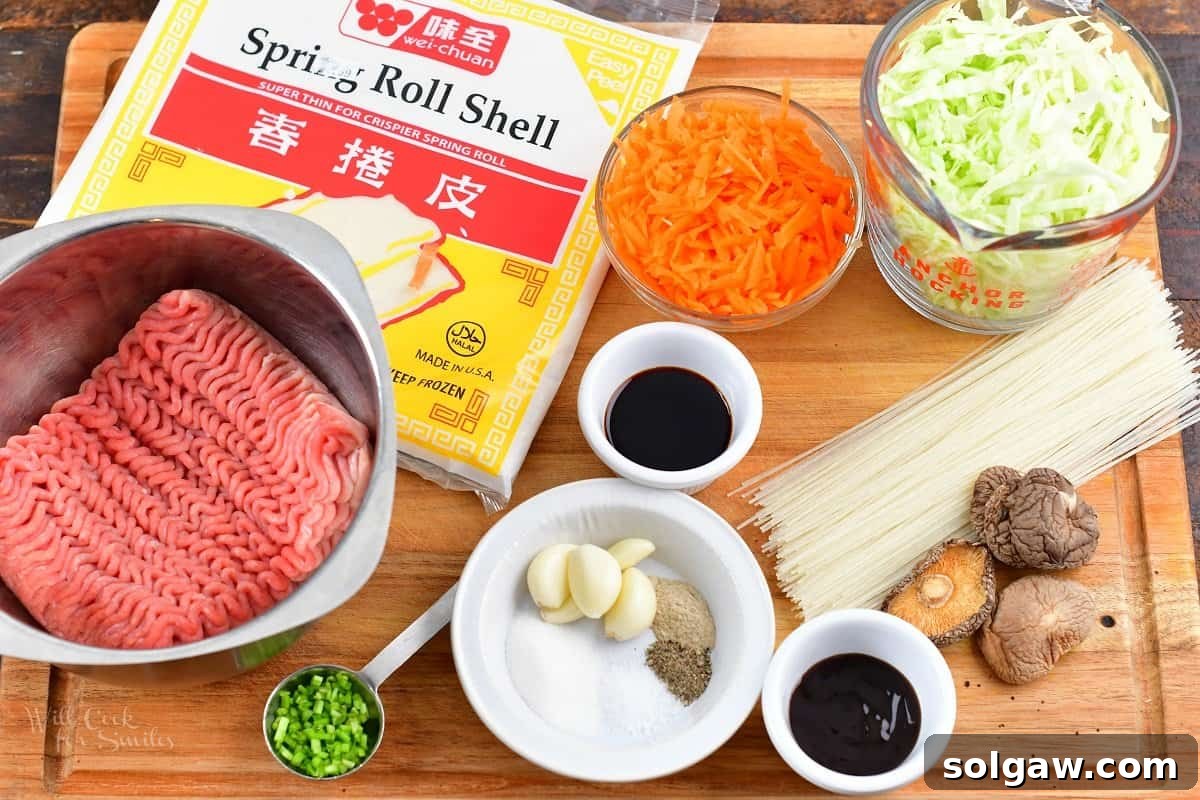
Creating truly authentic and delicious Thai spring rolls starts with understanding the role of each ingredient. Here’s a detailed look at what you’ll need and how to adapt if necessary:
- Spring Roll Wrappers: This is arguably the most critical ingredient. It is imperative to use spring roll wrappers, NOT dried rice paper wrappers (which are typically used for fresh, non-fried spring rolls) or thicker egg roll wrappers. Spring roll wrappers are specifically designed to fry up thinly and crisply, providing that characteristic crunch. You can often find them in the frozen section of Asian supermarkets or well-stocked grocery stores. Ensure they are fully thawed before use.
- Ground Pork: The traditional choice for its rich flavor and tender texture in the filling. If you’re looking for lighter alternatives, ground chicken or ground turkey are excellent substitutions that absorb the flavors beautifully. For a vegetarian option, finely crumbled firm tofu or tempeh, thoroughly pressed to remove excess water, can be seasoned similarly.
- Rice Noodles (Glass Noodles or Vermicelli): These transparent, delicate noodles add a wonderful texture and absorb the savory sauce of the filling. Both glass noodles (made from mung bean starch) and vermicelli (made from rice flour) work perfectly. The key is to soak them until tender, then chop them into manageable 1-inch pieces before mixing into the filling.
- Dried Shiitake Mushrooms: These are a powerhouse of umami flavor. It’s highly recommended not to substitute dried shiitake mushrooms with other types if possible, as their intense, earthy flavor is distinct and adds significant depth. If fresh shiitake mushrooms are your only option, use them, but be aware that the flavor will be milder. Make sure to rehydrate dried mushrooms thoroughly before mincing.
- Fresh Vegetables: Shredded cabbage and carrots provide essential crunch, sweetness, and vibrant color to the filling. You can also experiment with other finely shredded vegetables like bean sprouts, water chestnuts, or bamboo shoots for added texture and authentic flavor.
- Aromatic Staples: Fresh garlic and cilantro stems are fundamental for building the aromatic base of the filling. Their pungent and fresh notes are irreplaceable.
- Flavorful Sauces:
- Low Sodium Soy Sauce: Provides a salty, umami depth. Using low-sodium helps control the overall saltiness.
- Oyster Sauce: This rich, savory, and slightly sweet sauce is a cornerstone of many Thai and Asian dishes, adding complexity and glossiness to the filling.
- Sweetener and Spices: White granulated sugar balances the savory notes. Black and white pepper add a subtle kick and traditional aroma. A pinch of salt can be added to taste after the sauces are incorporated.
Gluten-Free Options:
Adapting this recipe for a gluten-free diet is straightforward for most ingredients:
- For the sauces, easily substitute regular soy sauce with gluten-free tamari or coconut aminos, and use a certified gluten-free oyster sauce. Read labels carefully as some brands may contain wheat.
- When it comes to spring roll wrappers, it’s a bit trickier. You can find rice spring roll wrappers (the clear ones), but they MUST be specifically labeled “for frying” or “for fried spring rolls.” Standard rice paper wrappers for fresh spring rolls are too delicate and will not fry up properly. Always double-check the packaging to ensure they are suitable for deep-frying or air-frying.
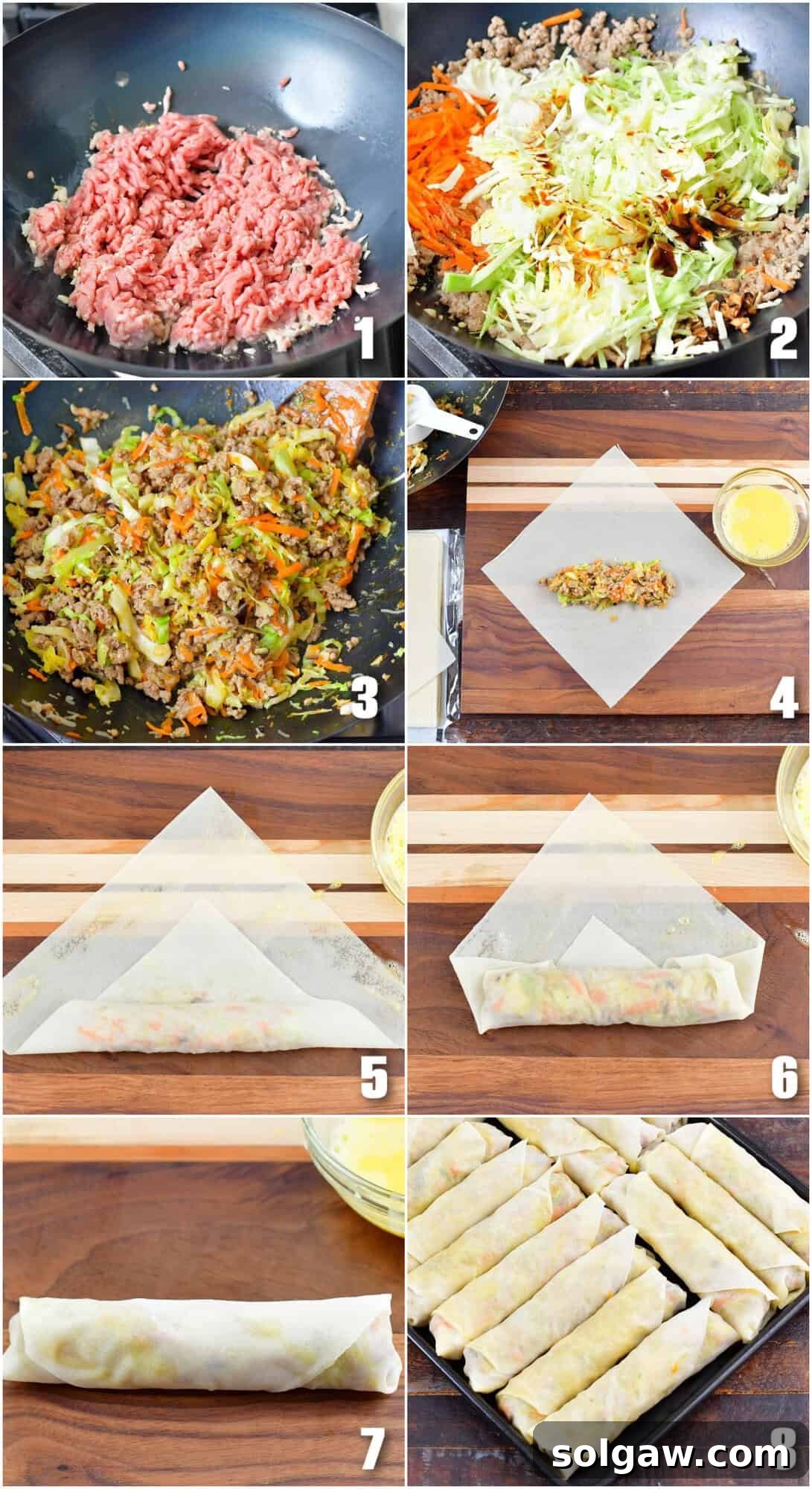
How to Craft Irresistible Homemade Thai Spring Rolls
Making these delicious spring rolls involves a few key steps, from preparing your ingredients to mastering the rolling technique. Follow these instructions for perfect results every time:
Step 1: Ingredient Preparation (The Foundation of Flavor)
- Hydrate and Soak: Begin by re-hydrating the dried shiitake mushrooms in a bowl of warm water until they become soft and pliable, which typically takes about 20-30 minutes. Similarly, soak your glass or vermicelli noodles according to package directions, usually 3-4 minutes in hot boiling water, then drain. Once rehydrated, finely mince the shiitake mushrooms and chop the noodles into approximate 1-inch pieces to ensure they integrate well into the filling.
- Vegetable Prep: Shred or finely shave your cabbage and carrots. Precision in shredding ensures even cooking and a consistent texture in the filling.
- Aromatics: Smash and mince the garlic cloves for maximum flavor release. Mince the cilantro stems, which offer a more robust cilantro flavor than the leaves in cooked dishes.
- Organize and Thaw: Measure out all remaining ingredients and arrange them on your workstation. If your spring roll wrappers were frozen, ensure they are fully thawed and separated before you begin filling.
Step 2: Crafting the Savory Filling
- Sauté Aromatics: Preheat a large wok or a deep, spacious cooking pan over medium-high heat. Drizzle in a small amount of canola or vegetable oil. Add the minced garlic and sauté for just a few seconds until fragrant – be careful not to burn it.
- Cook the Protein: Add the ground pork (or your chosen alternative) to the wok. Break up the meat with your spoon or spatula and add about a tablespoon of soy sauce to season it early on. Continue cooking and breaking up the pork until it’s nearly cooked through and no longer pink.
- Add Vegetables and Mushrooms: Incorporate the shredded cabbage and carrots. Stir them well with the pork mixture and cook until they have softened considerably, about 5-7 minutes. Then, stir in the minced cilantro stems and the rehydrated, minced shiitake mushrooms.
- Season and Finish: Add the remaining soy sauce, oyster sauce, sugar, black pepper, and white pepper. Stir everything thoroughly to combine. Continue cooking until all the vegetables are completely soft and the flavors have melded together.
- Cool the Filling: Remove the wok from the heat and allow the filling to cool down to room temperature. This is a crucial step; hot filling can make the wrappers soggy and difficult to handle, potentially causing them to tear during rolling or frying.
Step 3: Mastering the Art of Wrapping Spring Rolls
- Prepare Your Workspace: Whisk one egg in a small bowl; this will be your egg wash for sealing the wrappers. Place it conveniently on your clean workstation.
- Position the Wrapper: Lay a single spring roll wrapper flat on your work surface, orienting it like a diamond (with one corner pointing towards you).
- Add the Filling: Spoon approximately 3-4 tablespoons of the cooled filling onto the lower part of the diamond, forming a neat line. Ensure you leave a generous 2 inches of space clear on both the left and right sides of the filling.
- The First Fold: Gently but firmly fold the bottom corner of the wrapper up and over the filling, tucking it in tightly. This creates a secure base for your roll.
- Fold the Sides: Next, fold both the left and right side corners inwards towards the center. At this point, your spring roll should resemble an open envelope.
- Seal and Roll: Dip your fingers into the whisked egg and lightly brush it along the remaining exposed edges of the wrapper. This acts as a glue. Carefully and tightly roll the spring roll upwards, away from you, until you reach the top corner. Ensure the roll is firm and compact to prevent it from unraveling during cooking.
- Repeat: Continue this process with the remaining filling and wrappers until all your spring rolls are assembled.
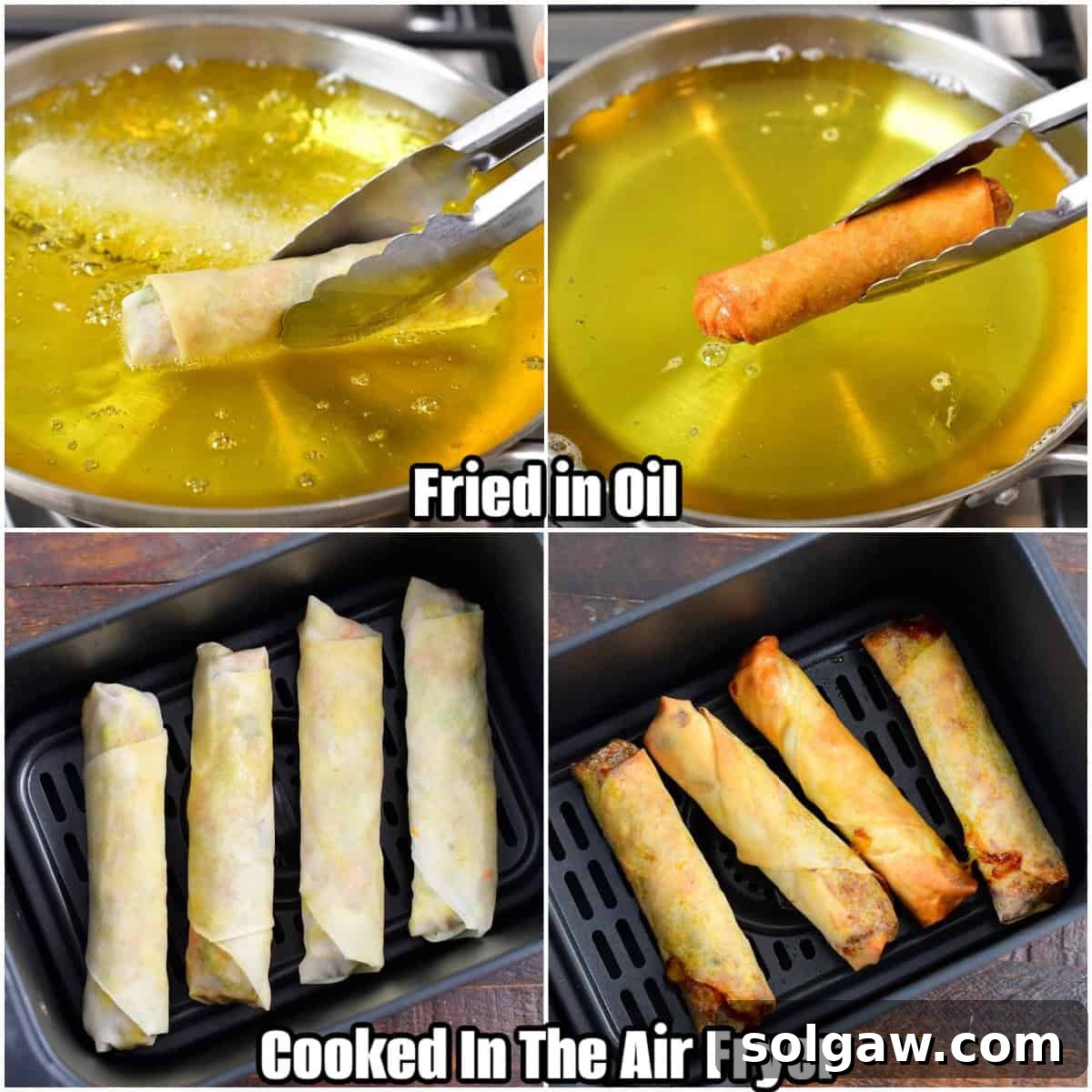
Mastering the Crisp: Three Cooking Options for Your Spring Rolls
Achieving that perfect golden, crispy exterior is key to an exceptional spring roll. Here are three reliable methods to cook your homemade Thai spring rolls:
- Classic Deep Frying (For Ultimate Crispness): This method traditionally yields the most consistently crispy results.
- Set up: Place a few sheets of paper towel over a wire rack set on a baking sheet. This will allow excess oil to drain, keeping the spring rolls crisp.
- Oil Temperature: Heat canola or vegetable oil in a deep pot or wok to 350°F (175°C). Use a cooking thermometer to ensure accuracy; maintaining the correct temperature is crucial for proper frying and preventing greasy rolls.
- Frying: Carefully place spring rolls into the hot oil in small batches, ensuring you don’t overcrowd the pot. Overcrowding will drop the oil temperature and result in soggy, rather than crispy, rolls. Fry for 5-6 minutes, turning occasionally, until they achieve a beautiful golden-brown color and are cooked through.
- Drain: Use metal tongs to remove the fried spring rolls and immediately transfer them to the prepared wire rack to drain.
- Air Frying (The Healthier Crisp): Air fryers have become a popular kitchen appliance, offering a healthier way to achieve crispy results with less oil.
- Preparation: Lightly spray the spring rolls with cooking spray or brush with a thin layer of oil to help with browning and crisping.
- Arrangement: Place the prepared spring rolls in a single layer in the air fryer basket, ensuring there is a little space between each one for even air circulation. Do not overcrowd.
- Air Frying: Air fry at 375°F (190°C) for approximately 12-14 minutes, flipping them halfway through. Continue cooking until they are golden brown and wonderfully crispy.
- Baking (A Lighter Alternative): While not as intensely crispy as frying or air-frying, baking offers a significantly lighter option.
- Preheat & Prep: Preheat your oven to 400°F (200°C). Fit a wire rack inside a baking sheet and lightly grease the wire rack. This elevates the spring rolls, allowing air to circulate for more even baking and a crispier bottom.
- Arrangement: Place the wrapped spring rolls onto the prepared wire rack in a single layer.
- Baking: Bake for 18-20 minutes, or until they are golden brown and heated through. For extra crispiness, you can brush them with a thin layer of oil before baking.
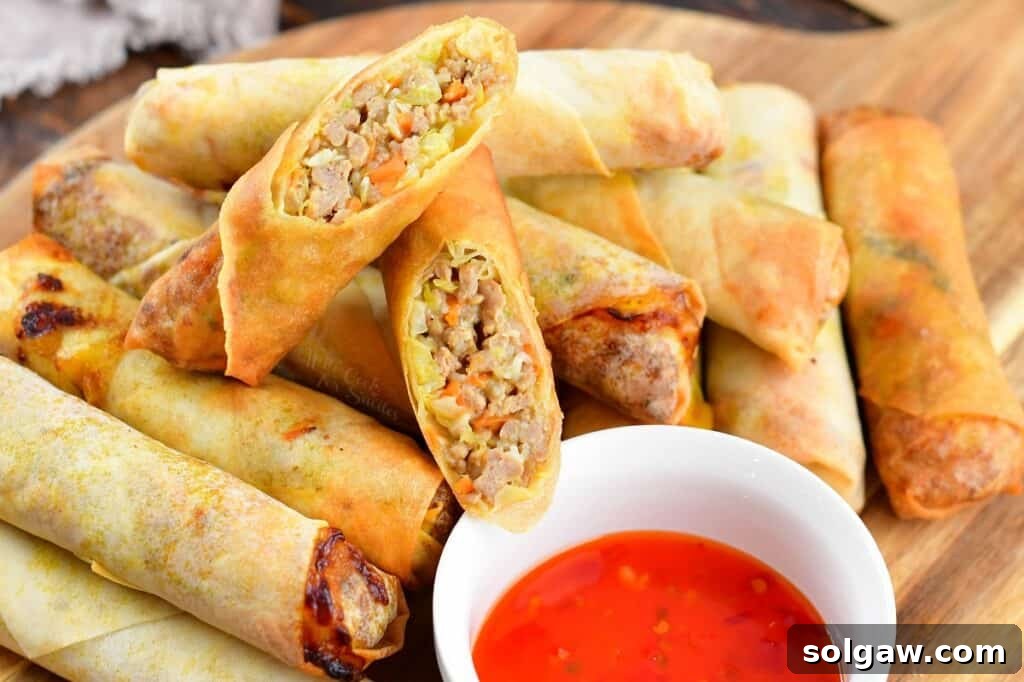
Keeping Your Spring Rolls Warm Between Batches
If you’re cooking multiple batches of spring rolls and want to serve them all warm, here’s a simple trick:
- Preheat your oven to a low temperature, around 200°F (95°C).
- Place a clean wire rack on top of a baking sheet.
- As each batch finishes cooking, transfer the hot spring rolls to the wire rack in the warm oven. This keeps them warm and crispy without overcooking.
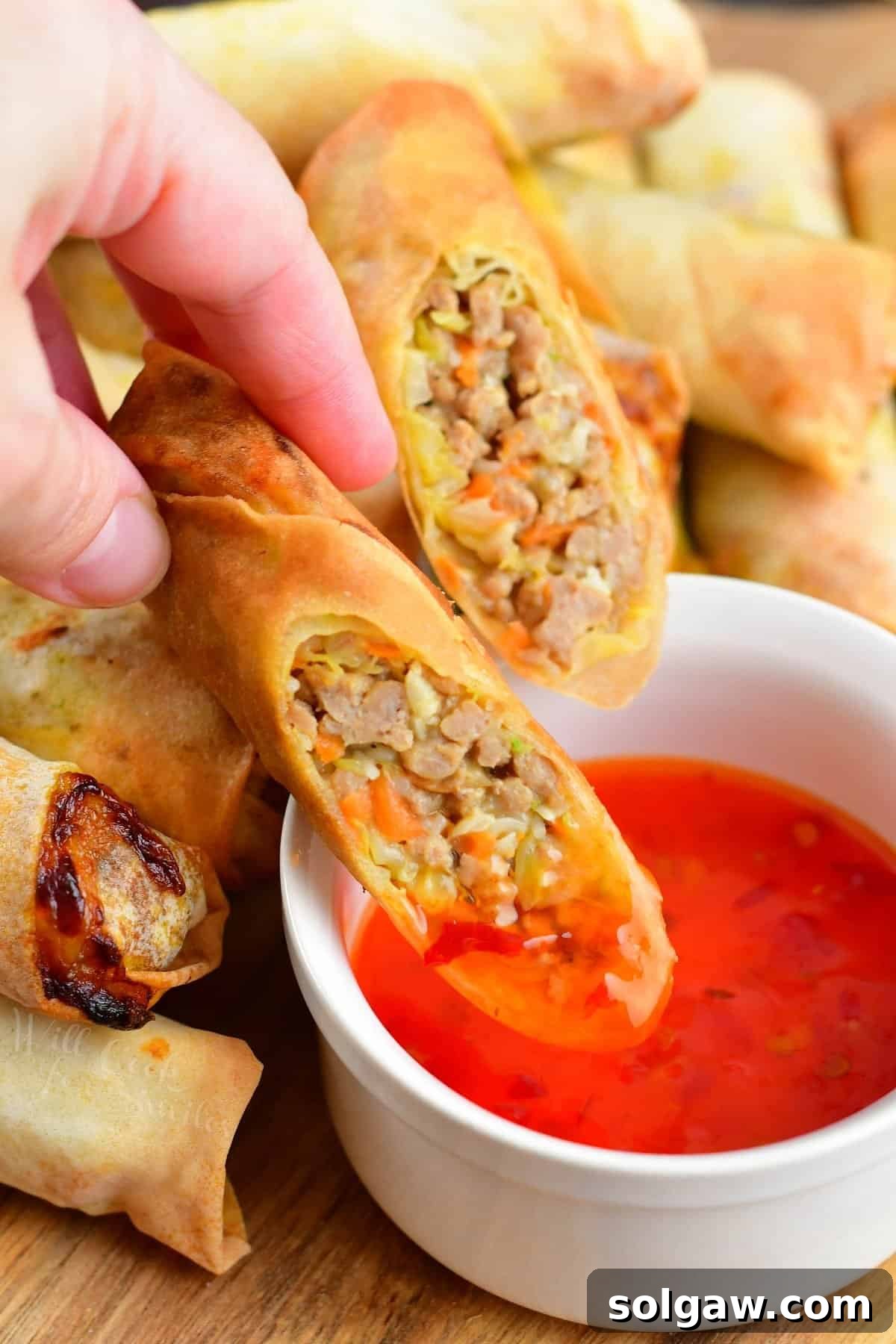
Serving Suggestions & Perfect Pairings
These homemade Thai spring rolls are delicious on their own, but they truly shine when paired with the right dipping sauce. The classic choice is a vibrant Sweet Thai Chili Sauce, which offers a delightful balance of sweet, spicy, and tangy notes. You can find this sauce pre-made in most Asian grocery stores, or easily whip up your own. Other excellent options include a savory peanut sauce (like the one used for chicken satay), a tangy plum sauce, or even a simple mixture of soy sauce and lime juice. Serve them fresh and hot for the best experience!
Storage and Reheating Tips
Planning ahead or dealing with leftovers is simple with these spring rolls:
- Storing Cooked Spring Rolls: If you have any leftovers, allow them to cool completely before transferring them to an airtight food storage container. Store them in the refrigerator, where they will stay fresh for about 3-4 days.
- Reheating Cooked Spring Rolls: For best results and to regain that desired crispiness, I highly recommend reheating them using an air fryer or a conventional oven.
- Air Fryer: Place the spring rolls in a single layer in the air fryer basket and air fry at 375°F (190°C) for 3-4 minutes, or until heated through and crispy.
- Oven: Preheat your oven to 350°F (175°C). Arrange spring rolls on a baking sheet and reheat for 7-10 minutes, or until hot and crispy.
- Freezing Uncooked Spring Rolls (Make-Ahead Option): This is a fantastic way to prepare ahead!
- After rolling the spring rolls, arrange them in a single layer on a baking sheet lined with parchment paper.
- Freeze until solid (about 1-2 hours).
- Once frozen, transfer the spring rolls to a freezer-safe bag or airtight container. They can be stored in the freezer for up to 3 months.
- When ready to cook, you can fry or air fry them directly from frozen. They might require an extra few minutes of cooking time compared to fresh rolls.
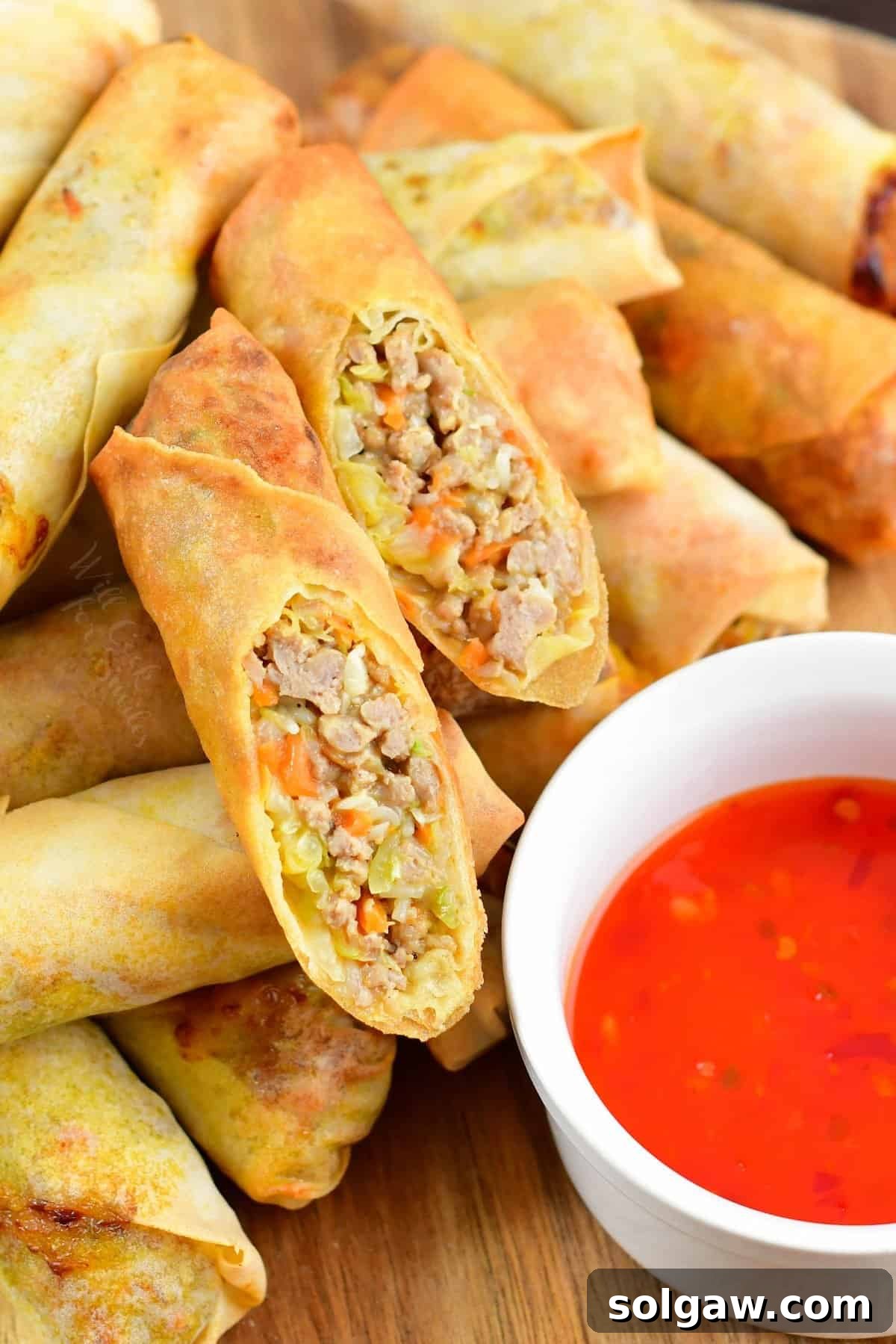
Crispy Thai Spring Roll Recipe
Print
Pin
Video
Rate
Ingredients
- 25 spring roll wrappers thawed
- 1 egg whisked
Filling:
- 1 lb ground pork or ground chicken, or ground turkey
- 1 1/2 cups shredded cabbage
- 1 cup shredded carrots
- 3 oz glass noodles or vermicelli
- 4-6 dried shiitake mushrooms soaked
- 4 garlic cloves minced
- 4-5 cilantro stems minced
- 3 tbsp low sodium soy sauce divided
- 3 tbsp oyster sauce
- 2 tsp white granulated sugar
- 1/2 tsp black pepper
- 1/4 tsp white pepper
- pinch salt if needed
Instructions
Before Cooking:
-
Soak the dried shiitake mushrooms in warm water until fully rehydrated and soft. Follow package instructions to soak the glass or vermicelli noodles (usually 3-4 minutes in hot water). Once rehydrated, finely mince the mushrooms and chop the noodles into approximately 1-inch pieces.
-
Shred or thinly shave the cabbage and carrots. Crush and mince the garlic cloves, and finely mince the cilantro stems.
-
Measure out all remaining ingredients and organize them on your countertop (mise en place).
-
Ensure spring roll wrappers are completely thawed if they were frozen.
Prepare the Filling:
-
Preheat a large wok or a deep, large cooking pan over medium-high heat and drizzle with some canola oil.
-
Add minced garlic and sauté for a few seconds until fragrant. Add the ground pork, breaking it up with a spatula. Incorporate about a tablespoon of soy sauce. Continue cooking and breaking up the meat until it’s almost fully cooked.
-
Stir in the shredded cabbage and carrots. Cook, stirring occasionally, until both vegetables have softened. Then, stir in the minced cilantro stems and minced shiitake mushrooms.
-
Add the remaining soy sauce, oyster sauce, sugar, black pepper, and white pepper. Stir well to combine all ingredients. Continue cooking until the vegetables are completely tender and the flavors are thoroughly blended.
-
Remove the filling from heat and allow it to cool completely to room temperature before proceeding to roll the spring rolls. This prevents the wrappers from becoming soggy.
Wrapping Spring Rolls:
-
Whisk the egg in a small bowl to create an egg wash, and place it at your workstation for sealing the wrappers.
-
Place one spring roll wrapper on your clean work surface, positioning it like a diamond (with one corner facing you).
-
Spoon about 3-4 tablespoons of the cooled filling onto the lower third of the diamond, forming a horizontal line. Leave about 2 inches of wrapper free on each side.
-
Gently fold the bottom corner of the wrapper up and over the filling, tucking it in tightly. Then, fold both side corners inwards towards the center, creating an open envelope shape.
-
Dip your fingers into the whisked egg and lightly brush it along the remaining exposed edges of the wrapper to help seal. Carefully and tightly roll the spring roll upwards from the bottom until it is fully rolled. Repeat with the remaining filling and wrappers.
Frying Spring Rolls:
-
Line a wire rack with a couple of sheets of paper towel and place it over a baking sheet. This setup is for draining the fried spring rolls.
-
In a deep pot or wok, preheat canola or vegetable oil to 350°F (175°C). Fry spring rolls in small batches (do not overcrowd the pot) for 5-6 minutes, or until they are golden-brown and crispy. Use metal tongs to carefully remove them and place them onto the prepared wire rack to drain excess oil.
Air-Frying Spring Rolls:
-
Place the spring rolls into the air fryer basket in a single layer, ensuring there is a little space between each roll for optimal air circulation. Do not overcrowd. Lightly spray the spring rolls with cooking oil before frying.
-
Air fry spring rolls at 375°F (190°C) for 12-14 minutes, flipping them halfway through, until they are crispy and golden brown.
Baking Spring Rolls:
-
Preheat your oven to 400°F (200°C). Fit a wire rack inside a baking sheet and lightly grease the wire rack to prevent sticking.
-
Place the wrapped spring rolls onto the wire rack in a single layer. Bake for 18-20 minutes, or until they are golden brown and heated through.
To Serve:
-
These crispy Thai spring rolls are absolutely fantastic when served immediately with Sweet Thai Chili Sauce!
Video
Notes
Gluten-Free Options – For a gluten-free version, easily substitute regular soy sauce with gluten-free tamari or coconut aminos. For oyster sauce, look for a certified gluten-free oyster sauce option, as many standard brands contain wheat. Regarding wrappers, you can use clear rice spring roll wrappers, but they must be explicitly labeled “for frying” to ensure they will crisp up properly. Standard fresh rice paper wrappers will not work for this recipe.
Storing Cooked Spring Rolls – Any leftover cooked spring rolls should be stored in an airtight container in the refrigerator. When properly stored, they will remain fresh for approximately 3-4 days.
To Reheat – To restore their delicious crispiness, I strongly recommend reheating spring rolls in an air fryer or a conventional oven. Use an air fryer at 375°F (190°C) for 3-4 minutes, or an oven at 350°F (175°C) for 7-10 minutes, until thoroughly heated and re-crisped.
Nutrition
More Delicious Thai Recipes to Explore
If you loved these crispy Thai Spring Rolls, you’ll undoubtedly enjoy exploring more authentic Thai flavors. Expand your culinary repertoire with these fantastic recipes:
- Chicken Satay with Peanut Sauce: Tender grilled chicken skewers served with a rich and creamy peanut dipping sauce – a classic Thai appetizer.
- Authentic Thai Peanut Sauce: Master the art of making this versatile, savory, and slightly sweet sauce from scratch, perfect for satay, salads, or spring rolls.
- Thai Basil Fried Rice (Khao Pad Krapow): A quick and incredibly flavorful fried rice dish, featuring fragrant Thai basil, chili, and your choice of protein.
- Thai Fried Rice (Khao Pad): A comforting and savory staple, this traditional fried rice is packed with vegetables, egg, and your preferred protein.
- Homemade Green Curry Paste: Elevate your Thai curries with a vibrant, aromatic, and intensely flavorful green curry paste made from fresh ingredients.
Happy cooking, and enjoy your journey through the rich and diverse flavors of Thai cuisine!