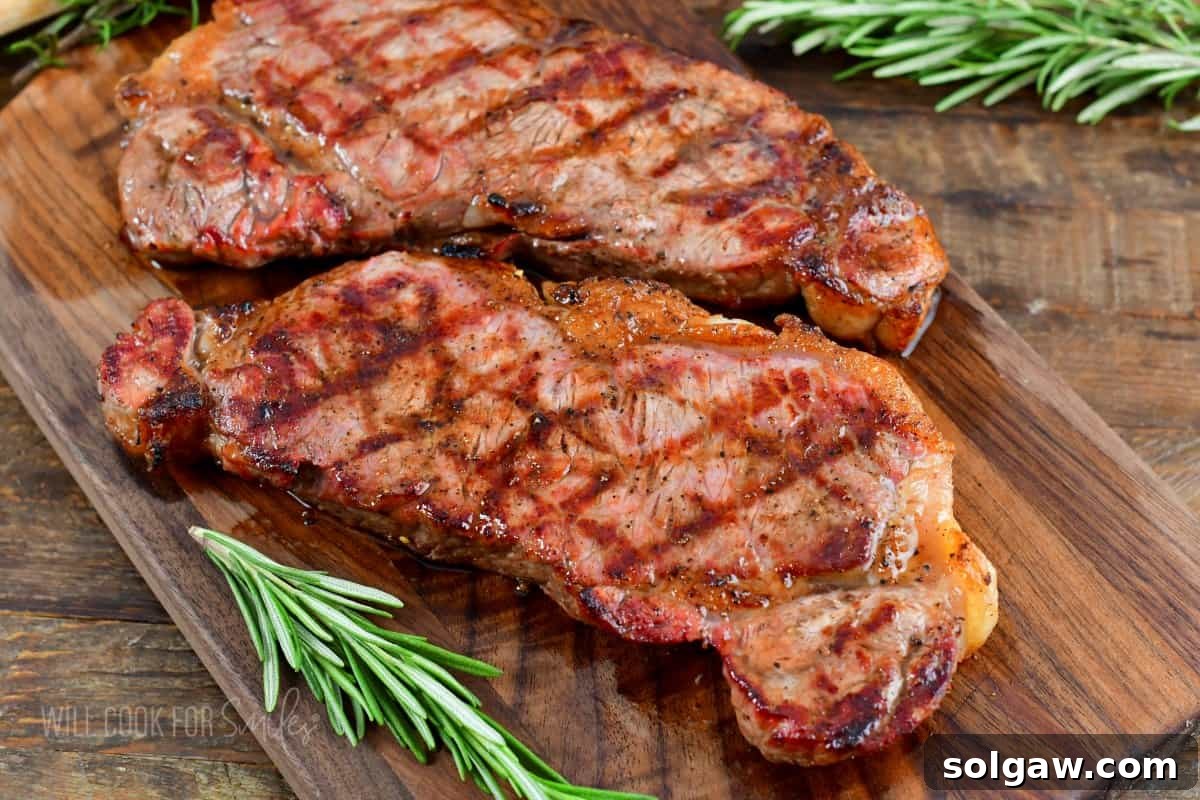
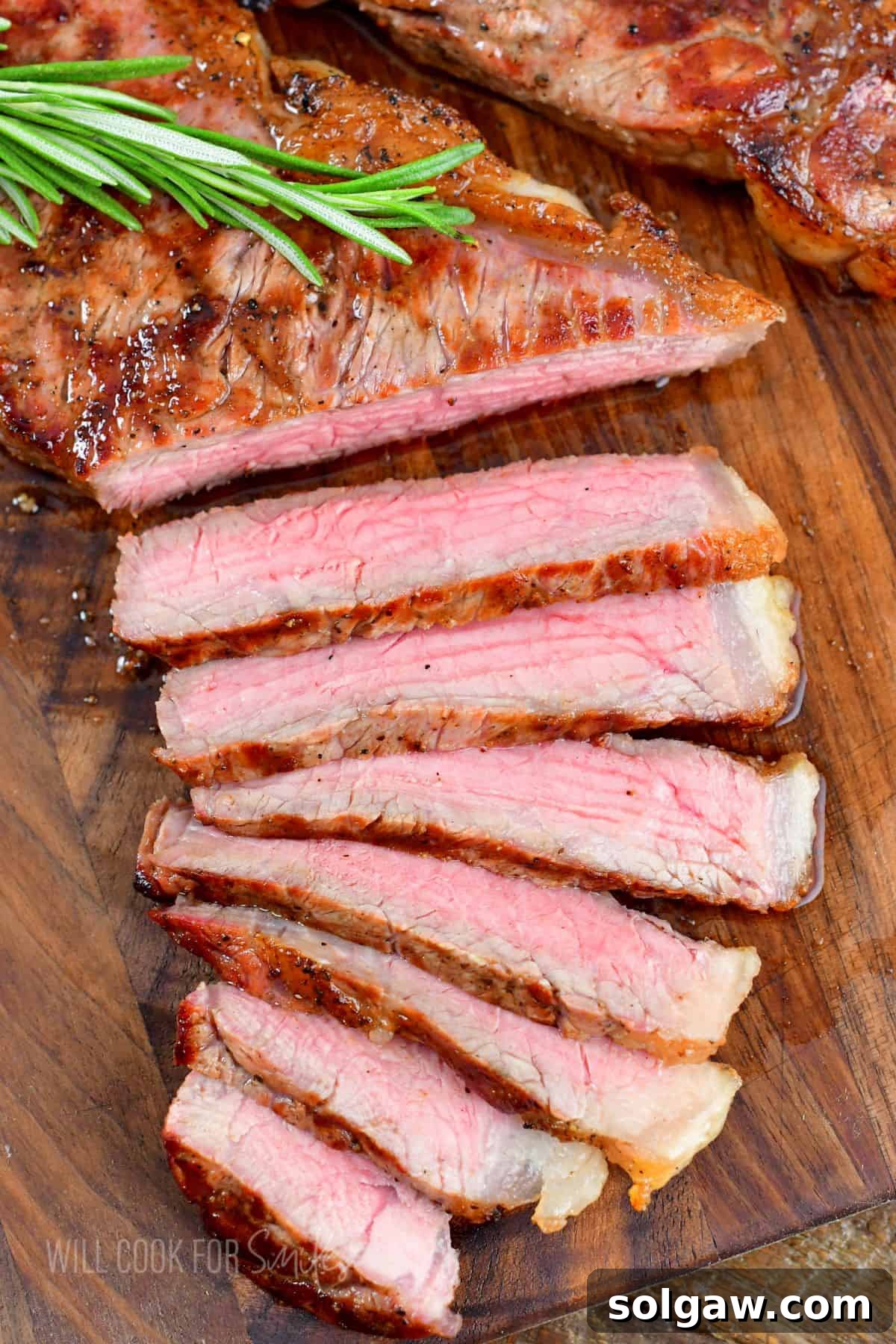
Mastering the Grill: Your Ultimate Guide to Achieving the Best Grilled Steaks
There’s an undeniable joy in biting into a perfectly grilled steak – tender, juicy, bursting with rich flavor. It’s a culinary experience many aspire to recreate at home, whether you’re pan-searing steaks, cooking them in the oven, or firing up the grill. Our collective goal is often to deliver that “wow” factor, impressing family and friends with a steak so good it could rival any restaurant. While the concept of a “perfect” steak can be subjective, influenced by individual preferences like desired doneness or cut, achieving your *best* steak is entirely within reach.
This comprehensive guide is designed to equip you with the essential tips and techniques for grilling exceptional steaks every single time. We’ll delve into everything from selecting the right cut of meat and mastering the art of seasoning to executing flawless grilling techniques and ensuring proper resting. Forget the guesswork; these insights will empower you to consistently create delicious, memorable grilled steaks tailored to your taste, transforming your backyard into a steakhouse-worthy kitchen.
Tips On Buying A Steak: Selecting the Ideal Cut
Before the tantalizing aroma of grilling fills the air, the journey to an outstanding steak begins at the butcher shop or supermarket. While almost any cut of beef can be grilled, some are simply destined for greatness over an open flame. Choosing wisely is the first crucial step in culinary success.
- Focus on Loin Cuts: For superior grilling results, prioritize cuts from the loin. Excellent choices include sirloin steaks, ribeye steaks, New York strip steaks, and even larger cuts like T-Bone or Porterhouse. These cuts are renowned for their balance of tenderness and flavor, making them ideal for high-heat cooking.
- The Magic of Marbling: The most critical indicator of a high-quality steak is its marbling. This refers to the intricate network of intramuscular fat visible as fine white streaks throughout the lean meat. Unlike external fat, which can be trimmed, marbling melts during cooking, infusing the steak with unparalleled juiciness, tenderness, and rich beefy flavor. Look for an abundance of thin, evenly distributed fat lines, not large, thick pockets.
- Optimal Thickness: A steak’s thickness significantly impacts how it cooks. Steaks that are too thin tend to overcook quickly, becoming dry and tough. Conversely, overly thick steaks can be challenging to cook evenly without burning the exterior before the interior reaches the desired doneness. The sweet spot is typically a thickness of 1.5 inches, with 2 inches being the absolute maximum for most home grills. This thickness allows for a beautiful sear on the outside while maintaining control over the internal temperature. Always aim for steaks of uniform thickness to ensure consistent cooking across all pieces.
- Understanding Beef Grades: In many regions, beef is graded based on quality characteristics, primarily marbling and maturity. In the U.S., the top grades are Prime, Choice, and Select.
- Prime: Represents the highest quality, boasting abundant marbling and exceptional tenderness. Often found in high-end restaurants and specialty butcher shops.
- Choice: Still very high quality, with less marbling than Prime but more than Select. Widely available and an excellent choice for grilling.
- Select: Leaner than Choice, with less marbling, resulting in a less juicy and tender steak. While still palatable, it’s generally less preferred for grilling.
For the best grilling experience, aim for Prime or Choice grade steaks.
PRO TIP: For the most flavorful and satisfying grilled steak, seek out loin cuts such as sirloin, ribeye, or New York strip. Opt for Prime or Choice grade with significant fine marbling distributed throughout the meat. The ideal thickness for these steaks is between 1.5 to 2 inches. Always select steaks that are of similar thickness to ensure even cooking.
Best Way to Season Steaks: Less is Often More
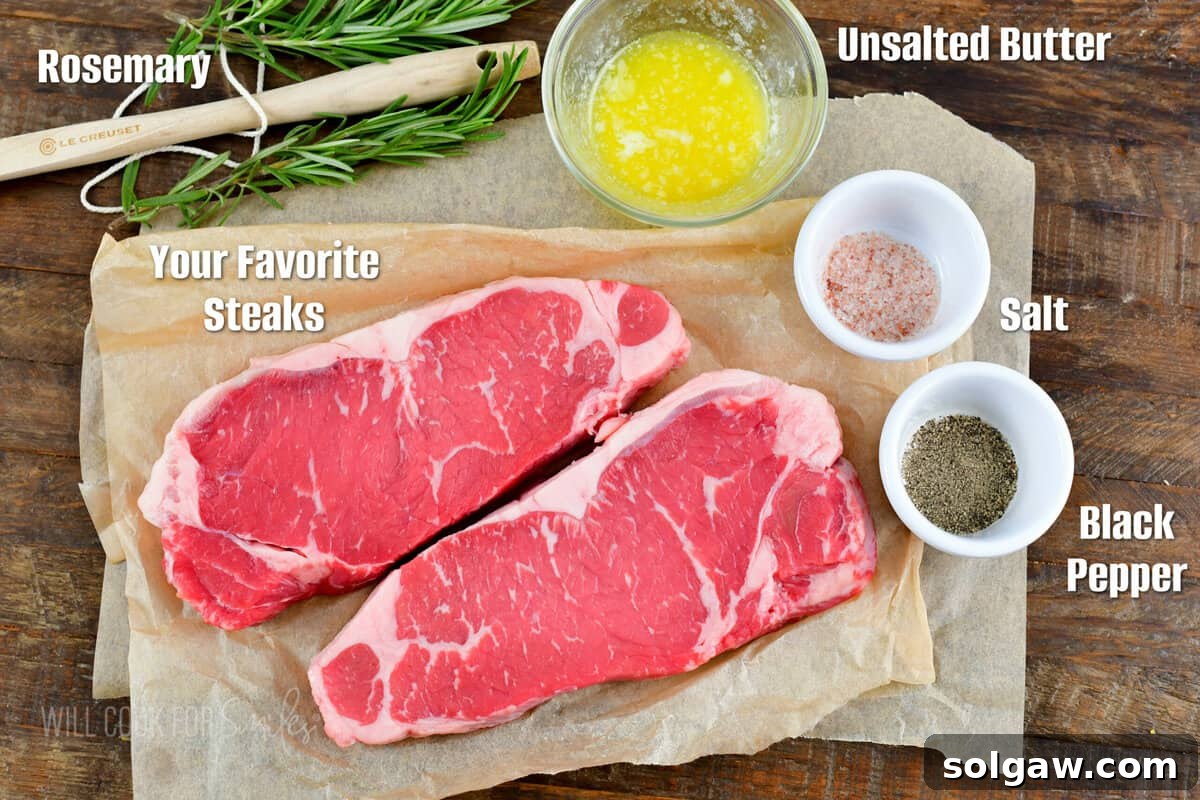
When you’ve invested in a premium cut of steak with beautiful marbling, its natural flavor is the star of the show. Overpowering it with complex seasoning mixes or marinades can detract from the beef’s inherent richness. For a truly excellent piece of steak, simplicity is key: good quality salt and freshly ground black pepper are often all you need.
This minimalist approach allows the deep, savory notes of the beef to shine through. Save the elaborate rubs, sauces, and marinades for lesser cuts or when you specifically want to impart a different flavor profile. The goal here is to enhance, not mask, the steak’s natural deliciousness.
The Art of Salting
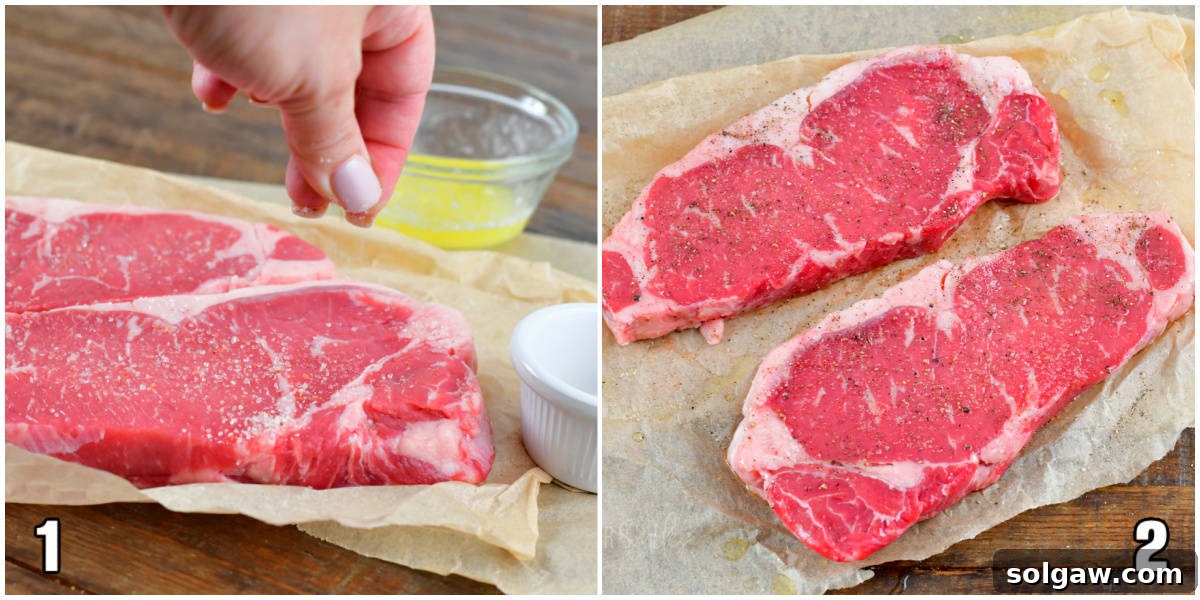
Don’t be shy with the salt! A generous application of coarse kosher salt or flaky sea salt helps draw moisture to the surface, where it dissolves, creating a brine that’s reabsorbed by the meat. This process, often referred to as “dry brining,” tenderizes the steak and seasons it deeply from within, leading to a more flavorful and juicy result. Apply salt evenly over all surfaces of the steak just before grilling, or ideally, 30-45 minutes beforehand to allow time for the salt to work its magic.
The Finishing Touch: Aromatic Butter
To elevate your steak further, consider finishing it with an aromatic butter. This adds a layer of richness and a subtle fragrant note that beautifully complements the beef. You’ll need:
- Unsalted butter: Crucial because you’ll already be salting your steak generously. Using unsalted butter prevents over-salting.
- Fresh rosemary sprigs: For a classic, earthy aroma.
- Garlic cloves (optional): Crushed or minced, garlic adds a pungent, savory depth that pairs wonderfully with steak.
- Other herbs (optional): Fresh thyme or sage can also be lovely additions.
The butter will be melted and brushed onto the steak towards the end of the cooking process, allowing its flavors to meld with the hot meat without burning the delicate herbs or garlic. This technique creates a glossy, flavorful crust that is truly irresistible.
PRO TIP: The best seasoning for a truly good steak is a generous amount of salt and pepper. Finish it with a brush of fragrant butter to enhance richness and aroma.
How To Cook Steaks On The Grill: A Step-by-Step Guide for Succulent Results
Grilling a steak to perfection is a skill that combines preparation, temperature management, and timing. Follow these steps to achieve a beautifully seared exterior and a juicy, tender interior.
- Bring to Room Temperature (The First Rest): This crucial step ensures more even cooking. Remove your steaks from the refrigerator approximately 30 minutes before cooking. Place them on a cutting board and allow them to come closer to room temperature. This reduces the temperature differential between the outside and inside of the steak, allowing for a more consistent cook.
- Prepare Your Grill (Two-Zone Setup): A clean grill grate prevents sticking and ensures even heat distribution. For optimal steak grilling, set up your grill for two temperature zones:
- Hot Zone (Direct Heat): This side will be used for searing and creating that desirable crust. For charcoal grills, pile your lit and ashed-over charcoal on one side. For gas grills, turn one or two burners to high, aiming for a temperature between 425°F and 450°F.
- Cooler Zone (Indirect Heat): This side will allow your steak to cook through gently after searing, preventing the exterior from burning. For charcoal, this is the side without coals. For gas, turn off the burners directly beneath this area or use a higher cooking rack. Preheat your grill for at least 10-15 minutes to reach the target temperatures.
- Season Generously: Pat the steaks thoroughly dry with paper towels. Excess moisture can steam the meat instead of searing it, preventing a good crust. Once dry, rub the steaks lightly with a high smoke point oil (like avocado oil) on all sides. Then, season them generously with salt and freshly ground black pepper on both sides, ensuring every inch is covered. Remember to oil the meat itself, not the grill grates, to prevent flare-ups and ensure the seasoning adheres.
- Track Internal Temperature: An accurate meat thermometer is your best friend for grilling steaks. If you have a leave-in meat thermometer, insert the probe horizontally through the side of the steak, aiming for the very center of the thickest part. This allows you to monitor the internal temperature without repeatedly opening the grill. If using an instant-read thermometer, you’ll take the steak off the grill for a quick check.
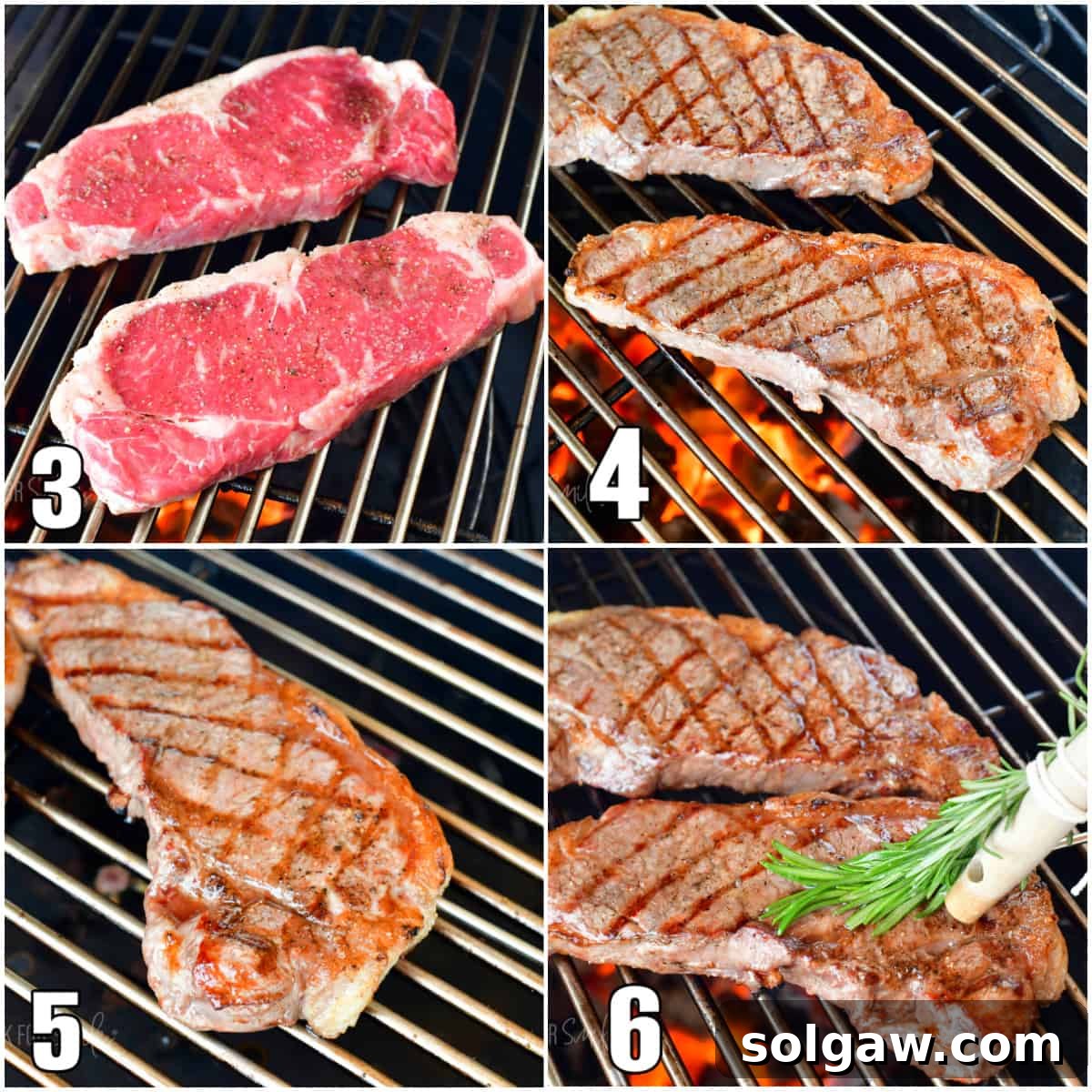
- Grill and Sear: Place your seasoned steaks directly over the hot side of the grill. Sear for 2-3 minutes per side to develop a beautiful, flavorful crust (the Maillard reaction). Use sturdy metal tongs to flip the steaks. Avoid pressing down on the meat, as this pushes out precious juices.
- Finish Cooking with Indirect Heat: After searing both sides, move the steaks immediately to the cooler side of the grill. Close the lid to allow the heat to circulate evenly, mimicking an oven. Continue cooking, monitoring the internal temperature with your thermometer, until the steak reaches your desired doneness.
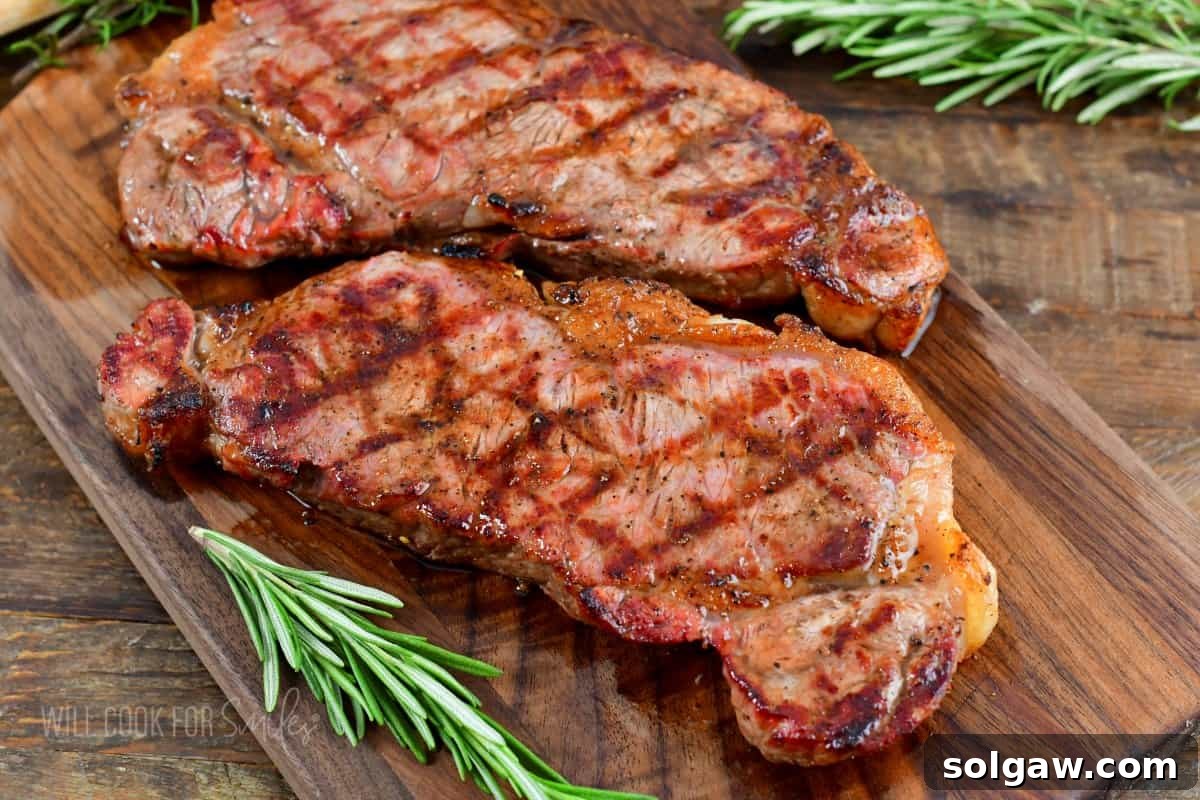
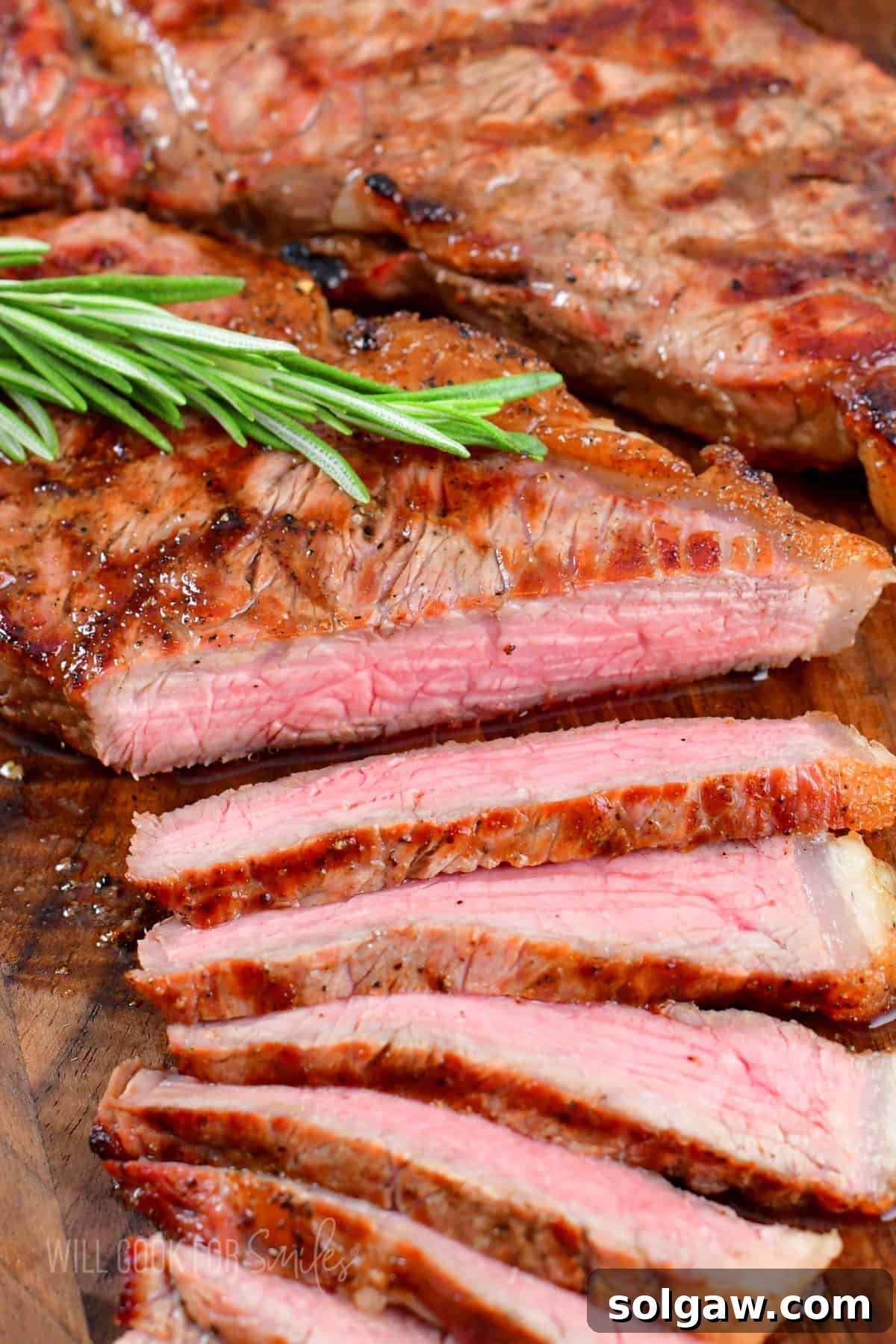
- Brush with Aromatic Butter & Rest: Just before the steaks reach their final desired temperature (aim for about 5°F below, as carry-over cooking will occur), liberally brush them with your prepared melted aromatic butter using the rosemary brush. This adds an incredible depth of flavor and moisture. Remove the steaks from the grill, transfer them to a clean cutting board or platter, and tent them loosely with aluminum foil. Let them rest for 5-10 minutes. This resting period is crucial for the juices to redistribute throughout the meat, resulting in a more tender and juicy steak. Finally, slice the steak against the grain for maximum tenderness.
How To Check If Steaks Are Done? The Thermometer is Your Ally
Relying on cooking time alone is a recipe for inconsistency when it comes to steaks. Many factors, such as steak thickness, initial temperature, grill temperature fluctuations, and even ambient weather, can affect cooking duration. The only reliable way to accurately determine your steak’s doneness is by using an instant-read meat thermometer.
To get an accurate reading, gently hold the steak with metal tongs and insert the thermometer probe horizontally through the side of the steak, pushing it towards the very center of the thickest part. It’s crucial to hit the true center, as this is the slowest part to cook. If you’re cooking a bone-in steak, ensure the probe does not touch the bone, as the bone conducts heat differently and can give an inaccurate (usually higher) reading. Pull the probe slightly away from the bone if necessary.
An instant-read thermometer gives you a reading in just a few seconds, allowing you to quickly check and return the steak to the grill if needed, minimizing heat loss. This simple tool will eliminate guesswork and consistently help you achieve your desired doneness.
Steak Temperatures: Your Guide to Doneness
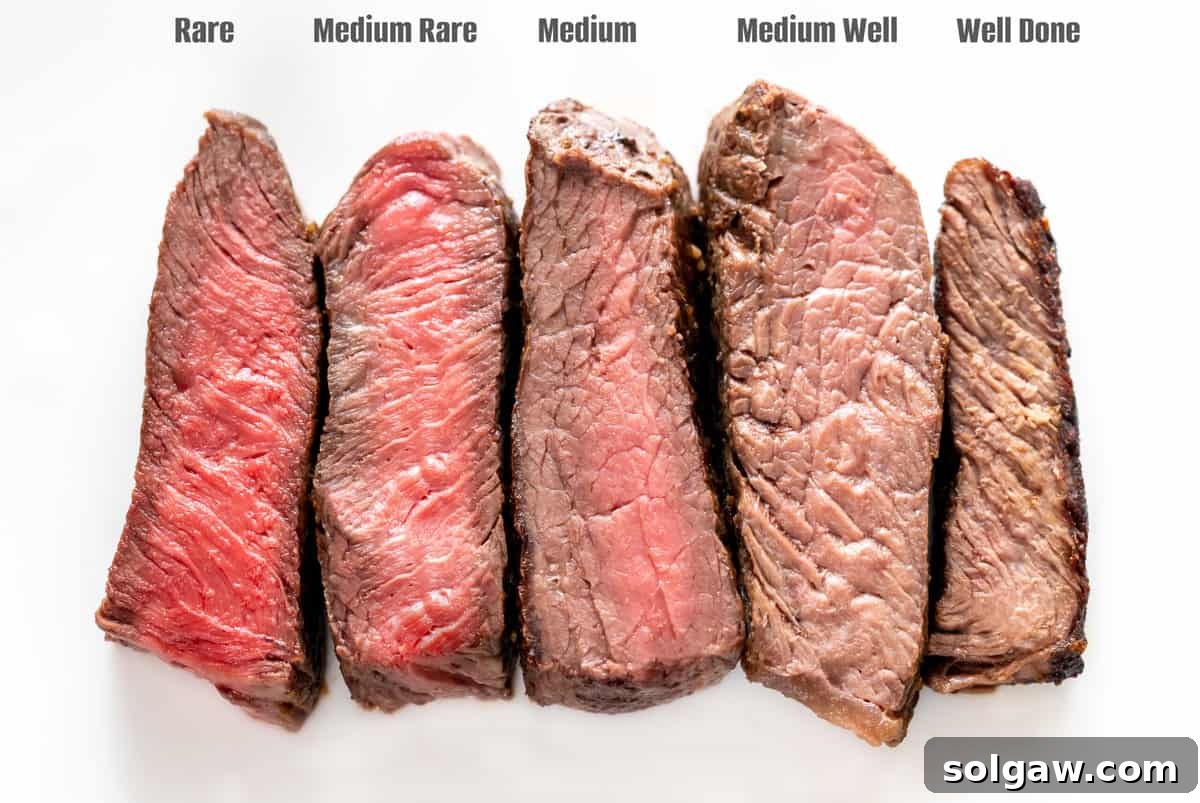
Understanding internal temperatures is key to achieving your preferred steak doneness. Remember that steaks will continue to cook a few degrees (known as “carry-over cooking”) after being removed from the heat. Therefore, it’s best to pull them off the grill when they are 5-10 degrees below your target temperature.
Here’s a general guide for internal steak temperatures:
- Rare: 125°-130°F (Remove from grill at 120-125°F) – Cool red center.
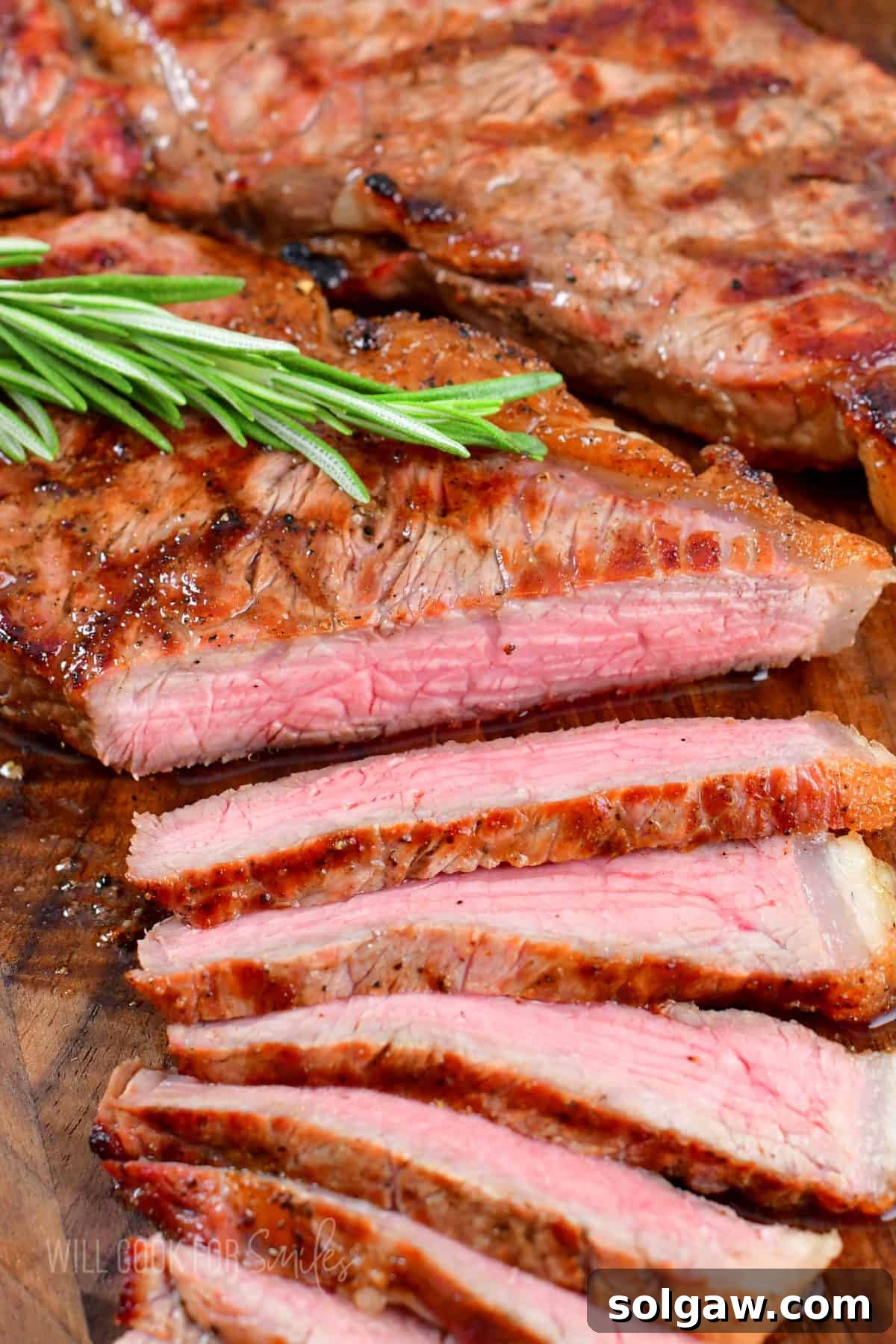
- Medium-Rare: 135°-140°F (Remove from grill at 130-135°F) – Warm red center. This is often considered the ideal doneness by many steak aficionados for maximum juiciness and flavor.
- Medium: 145°-150°F (Remove from grill at 140-145°F) – Warm pink center.
- Medium-Well: 150°-155°F (Remove from grill at 145-150°F) – Slightly pink center.
- Well-Done: 160°-165°F (Remove from grill at 155-160°F) – Little to no pink. While some prefer this, be aware that well-done steaks can be less tender and juicy.
Always allow for a 5-10 minute rest period after removing the steak from the grill. During this time, the internal temperature will rise slightly (carry-over cooking), and the juices will redistribute.
Is It Important To Let The Steaks Rest? Absolutely!
Allowing your steak to rest after cooking is not just a recommendation; it’s a critical step for achieving the most tender, juicy, and flavorful results. Skipping this step is one of the most common mistakes people make when grilling steaks, often leading to dry, tough meat.
Here’s why resting is so important:
- Muscle Fiber Relaxation: When meat cooks, the muscle fibers contract and tighten, pushing the internal juices towards the center of the steak. If you cut into the steak immediately after it comes off the heat, these highly concentrated juices will simply run out onto your cutting board, leaving you with a dry piece of meat.
- Juice Redistribution: As the steak rests, the temperature throughout the meat equalizes. More importantly, the contracted muscle fibers begin to relax. This relaxation allows the trapped juices to redistribute evenly throughout the entire steak. The result is a piece of meat where every bite is succulent and flavorful, rather than just the center.
- Carry-Over Cooking: As mentioned, the steak continues to cook for several minutes after being removed from the grill. Resting allows this “carry-over cooking” to gently raise the internal temperature to its final desired point.
For most steaks, a resting period of 5 to 10 minutes is ideal. For larger, thicker cuts, you might extend this to 10-15 minutes. To rest your steak, transfer it to a warm platter or cutting board and loosely tent it with aluminum foil. Avoid wrapping it tightly, as this can steam the steak and soften the beautiful crust you worked so hard to achieve.
What Is A Rosemary Brush? An Aromatic Finishing Touch
A “rosemary brush” is a simple yet incredibly effective tool that imparts a subtle, fresh, and aromatic flavor to your grilled steaks. It’s a fantastic way to introduce a gourmet touch without overpowering the natural taste of the beef. Essentially, it’s a homemade basting brush created from fresh rosemary sprigs, which gently infuses melted butter with herbaceous notes as you apply it to the meat.
How to Make and Use a Rosemary Brush:
- Gather Your Materials: You’ll need a few fresh rosemary sprigs (about 2-3), a wooden spoon or spatula, and a piece of kitchen twine.
- Assemble the Brush: Gather the rosemary sprigs into a small bunch. Using the kitchen twine, securely tie the rosemary bunch to the wooden handle end of your spoon or spatula. Ensure it’s tight enough to withstand brushing.
- Prepare the Aromatic Butter: In a small, heatproof metal bowl, melt 2-3 tablespoons of unsalted butter (adjust quantity based on the number of steaks you’re grilling). For an extra layer of flavor, you can crush 1-2 garlic cloves and add them to the melted butter.
- Infuse and Apply: Place your homemade rosemary brush into the melted butter mixture and let it sit for a few minutes while your steaks are grilling. This allows the rosemary to gently infuse the butter with its distinctive aroma. Towards the end of the grilling process, especially when the steaks are on the cooler side of the grill and approaching their target temperature, use this beautifully aromatic brush to liberally baste the steaks with the flavored butter. The heat of the steak will absorb the butter and release the herbs’ fragrance, creating a truly exquisite finish.
This technique adds a fresh, earthy dimension to your grilled steak, enhancing its flavor profile without heavy sauces, making it an ideal choice for showcasing a high-quality cut of beef. You can also experiment with other fresh herbs like thyme or sage for different aromatic experiences.
Explore More Beef Recipes
If you’ve enjoyed mastering the art of grilling steaks, you’re likely eager to explore other delicious beef preparations. Our extensive collection of beef recipes offers a wide array of options, from comforting weeknight dinners to impressive dishes perfect for entertaining. Dive into our selection of steaks, sandwiches, and main courses designed to satisfy any beef craving.
- Rib Eye Steaks with The Best Cream Sauce
- Steak Diane Recipe
- Red Wine Steak Sauce Recipe
- Creamy Mushroom Steak Sauce Recipe
- Surf and Turf Recipe
PIN THIS RECIPE FOR LATER
If you’ve grilled steaks using our recipe and found this information helpful, please share your experience! We’d love to hear how your steaks turned out.
Grilled Steaks Recipe
Print
Pin
dinner, lunch, Main Course
American, Barbecue, grill
Gluten Free
5 minutes
15 minutes
35 minutes
55 minutes
2
945kcal
Lyuba Brooke
Equipment
-
Grill
-
Meat Thermometer
-
Metal tongs
-
Rosemary Brush (see post for instructions)
Ingredients
-
2
1 1/2 inch thick steaks, such as ribeye, sirloin, or New York strip (refer to the post for other recommended cuts) -
1
tbsp
avocado oil
or another high smoke point oil - Kosher Salt
- Freshly Ground Black Pepper
For the Rosemary Brush (sufficient for 3-4 steaks):
-
2
sprigs of fresh rosemary -
2-3
tbsp
unsalted butter
melted -
2
garlic cloves
crushed (optional)
Instructions
Preparing the Steak:
-
Remove steaks from the refrigerator 30 minutes before cooking and place them on a cutting board to reach room temperature. This promotes even cooking.
Pat the steaks thoroughly dry with paper towels just before seasoning. Season with oil, salt, and pepper immediately before grilling.
Preparing the Grill (Two-Zone Setup):
-
For charcoal grills: Arrange lit and ashed-over charcoals on one half of the grill to create a hot searing zone and a cooler indirect cooking zone.
For gas grills: Set one or two burners to high for direct heat and turn off adjacent burners for an indirect, cooler zone. Preheat the grill to 425°-450°F in the hot zone.
Grilling the Steak:
-
Prepare the rosemary brush: Melt butter and mix with crushed garlic (if using). Tie rosemary sprigs onto a wooden handle (like a spatula or spoon) with kitchen twine. Place the rosemary brush into the melted butter and set aside near the grill.
-
Rub the steaks with oil and season generously with salt and pepper on all sides. If using a leave-in thermometer, insert the probe horizontally into the thickest part of the steak’s center.
-
Place steaks on the hot side of the grill to sear for 2-3 minutes per side, creating a delicious crust.
-
Flip the steaks and sear the other side for another 2-3 minutes.
-
Move the steaks to the cooler side of the grill (or higher shelf for gas grills), close the lid, and continue cooking until they reach your desired internal temperature.
-
Regularly check the internal temperature using your meat thermometer. Insert the thermometer through the side into the thickest part, ensuring it does not touch any bone.
-
Once the steaks are about 5°F away from your desired final temperature, brush them liberally with the prepared melted butter using the rosemary brush.
-
Remove the steaks from the grill when they reach 5 degrees below your target doneness (accounting for carry-over cooking). Transfer to a cutting board or platter and loosely tent with foil.
-
Allow the steaks to rest for about 5-10 minutes before slicing or serving. Always cut against the grain for maximum tenderness.
Notes
- Nutritional Note: The nutritional information provided is calculated for a 13 oz. strip steak (average weight for a 1.5-inch thick strip steak is 12-13 oz; for a ribeye of the same thickness, it’s typically 15-16 oz.). Please be aware that different steak cuts and sizes will have varying nutritional values.
- Choosing Steaks: Always aim for Prime or Choice grade beef. Look for loin steaks like sirloin, ribeye, or New York strip, characterized by ample fine marbling. Ideal thickness is between 1.5 to 2 inches. Ensure all steaks are of similar thickness for consistent cooking results.
- Steak Temperatures (Internal, remove 5-10°F below target):
- Rare = 125°-130°F
- Medium-Rare = 135°-140°F
- Medium = 145°-150°F
- Medium-Well = 150°-155°F
- Well-Done = 160°-165°F
- Rest and Slice: It is crucial to rest the steak for 5-10 minutes after cooking to allow juices to redistribute. Always slice your steaks against the grain to ensure maximum tenderness.
Nutrition
Tried this recipe?Mention @willcookforsmiles or tag #willcookforsmiles!
Originally published on Will Cook For Smiles on May 31, 2016.