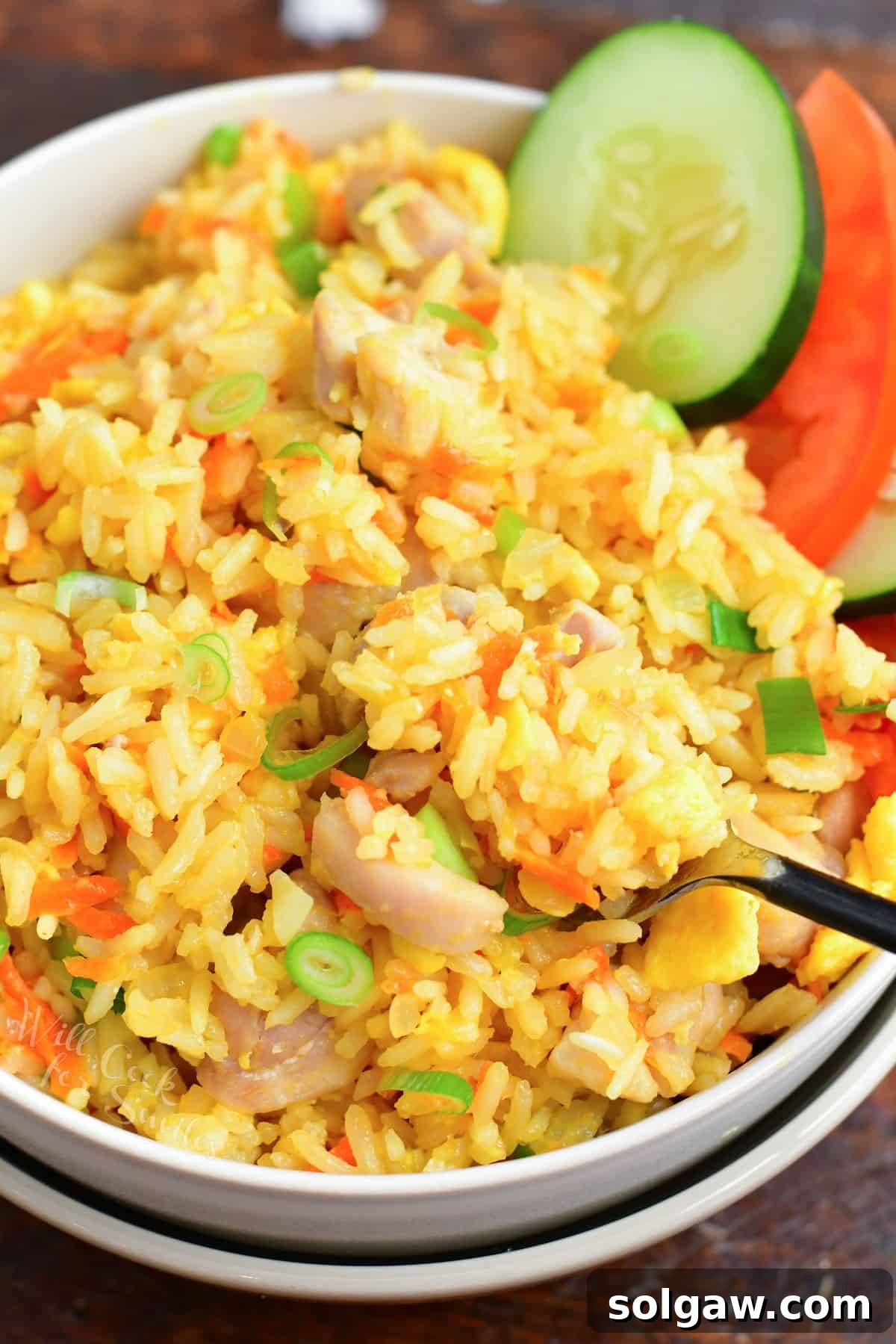
There are some dishes that leave an indelible mark on your palate, creating an instant craving that beckons you back to the flavors again and again. For me, that dish is Thai Fried Rice. My first encounter with this incredible meal happened years ago at a cozy Thai restaurant, and from that moment, I was determined to bring its vibrant taste into my own kitchen. After several attempts and a bit of culinary experimentation, I successfully recreated that authentic flavor, transforming this dish into a cherished staple in our home. It’s a recipe that consistently delivers on taste, ease, and satisfaction, making it a perfect choice for any day of the week.
What Exactly Is Thai Fried Rice (Khao Pad)?
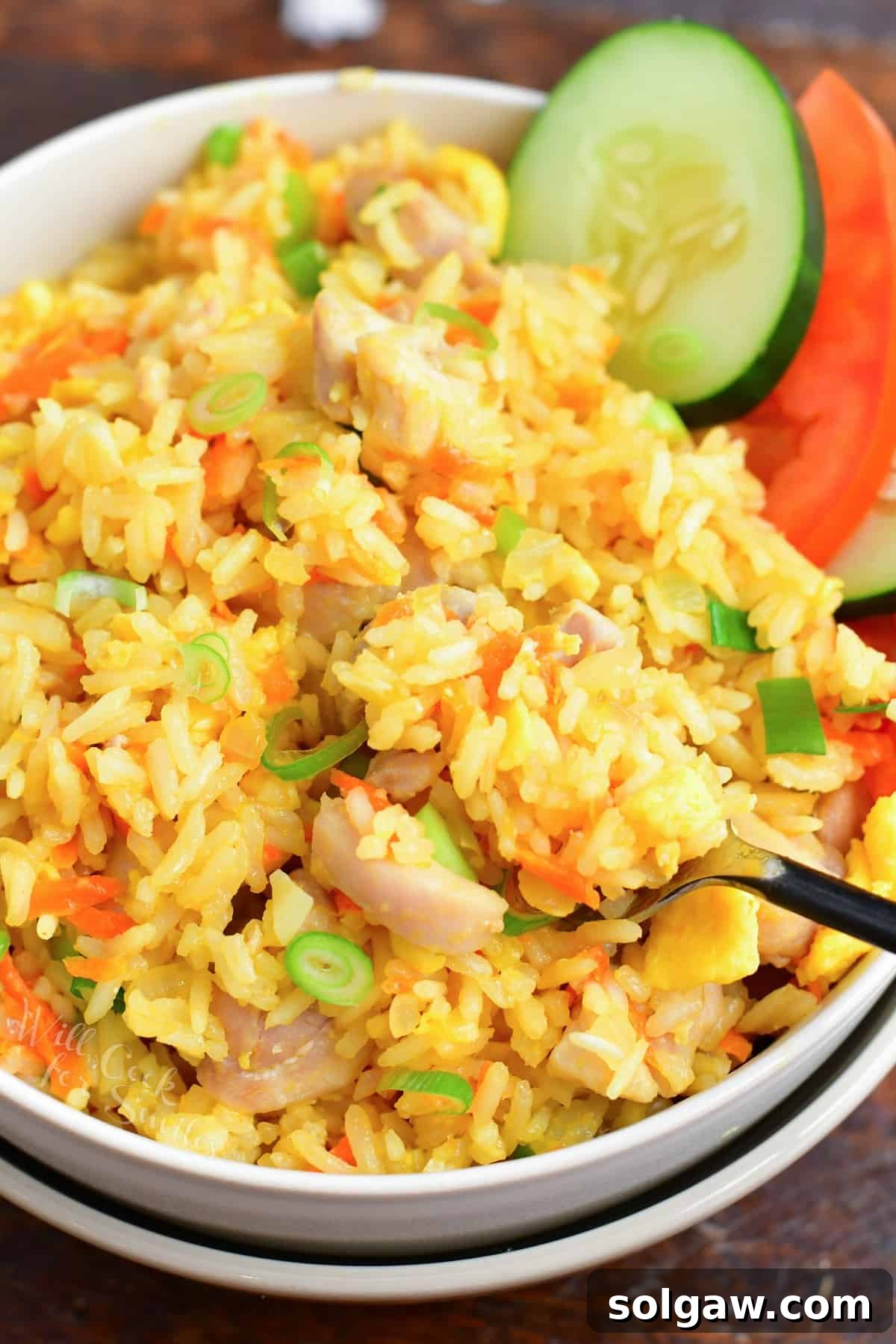
Thai Fried Rice, known locally as “Khao Pad” (ข้าวผัด), is a quintessential Thai dish celebrated for its aromatic and harmonious blend of flavors. Far more than just a simple stir-fry of rice, it’s a culinary experience that captures the essence of Thai street food culture. Originating from Thailand, Khao Pad typically features stir-fried jasmine rice combined with a choice of protein such as shrimp, crab meat, pork, or chicken, along with fresh vegetables and eggs. What sets it apart from other fried rice varieties, particularly Chinese fried rice, are its distinct seasoning agents and aromatic ingredients that deliver a unique sweet, sour, salty, and spicy balance.
This beloved dish is a testament to the Thai culinary philosophy of balancing contrasting tastes. It’s a versatile and satisfying meal, often customized with various proteins and garnishes, and it’s a staple for quick lunches and dinners across Thailand. The beauty of Khao Pad lies in its simplicity and the depth of flavor achieved through fresh ingredients and traditional Thai sauces.
Fun fact: Unlike many Asian noodle dishes, fried rice in Thailand is traditionally eaten with a spoon and fork, not chopsticks. Chopsticks are typically reserved for noodle-based dishes, a custom influenced by Chinese culinary traditions. So, when you serve your homemade Thai Fried Rice, feel free to skip the chopsticks and embrace the authentic Thai dining experience!
Thai Fried Rice vs. Chinese Fried Rice: Understanding the Distinctions
While both Thai and Chinese fried rice dishes are incredibly delicious and popular worldwide, they possess distinct characteristics that set them apart. Understanding these differences can enhance your appreciation for each cuisine and help you achieve authentic flavors in your home cooking.
- Rice Variety: A primary difference lies in the type of rice used. Traditional Thai fried rice exclusively utilizes fragrant jasmine rice (Khao Hom Mali), known for its delicate aroma and slightly sticky texture when cooked. In contrast, many Chinese fried rice recipes often call for long-grain white rice, which tends to be less aromatic and has a firmer, separate grain structure.
- Signature Sauces: Perhaps the most significant distinction is the choice of seasoning sauces. While Chinese fried rice heavily relies on soy sauce for its savory depth and color, traditional Thai fried rice typically omits soy sauce. Instead, Thai cuisine leverages the rich umami of fish sauce (Nam Pla) and the savory sweetness of oyster sauce (Nam Man Hoy) to create its characteristic flavor profile. These sauces are foundational to Thai cooking and impart a unique complexity not found in soy-sauce-based dishes.
- Aromatic & Spice Profile: Thai fried rice often incorporates distinct aromatics such as fresh garlic and ginger, which contribute to its fragrant essence. For those who enjoy a kick, red chilies are a common addition, offering a vibrant heat that is a hallmark of Thai cuisine. Chinese fried rice, while also using garlic, tends to have a more savory and less overtly spicy flavor, often relying on sesame oil for its aromatic finish. The flavor balance in Thai fried rice often leans towards a harmony of sweet, sour, salty, and spicy, thanks to ingredients like lime juice and a touch of sugar.
Essential Ingredients: Notes and Smart Substitutions
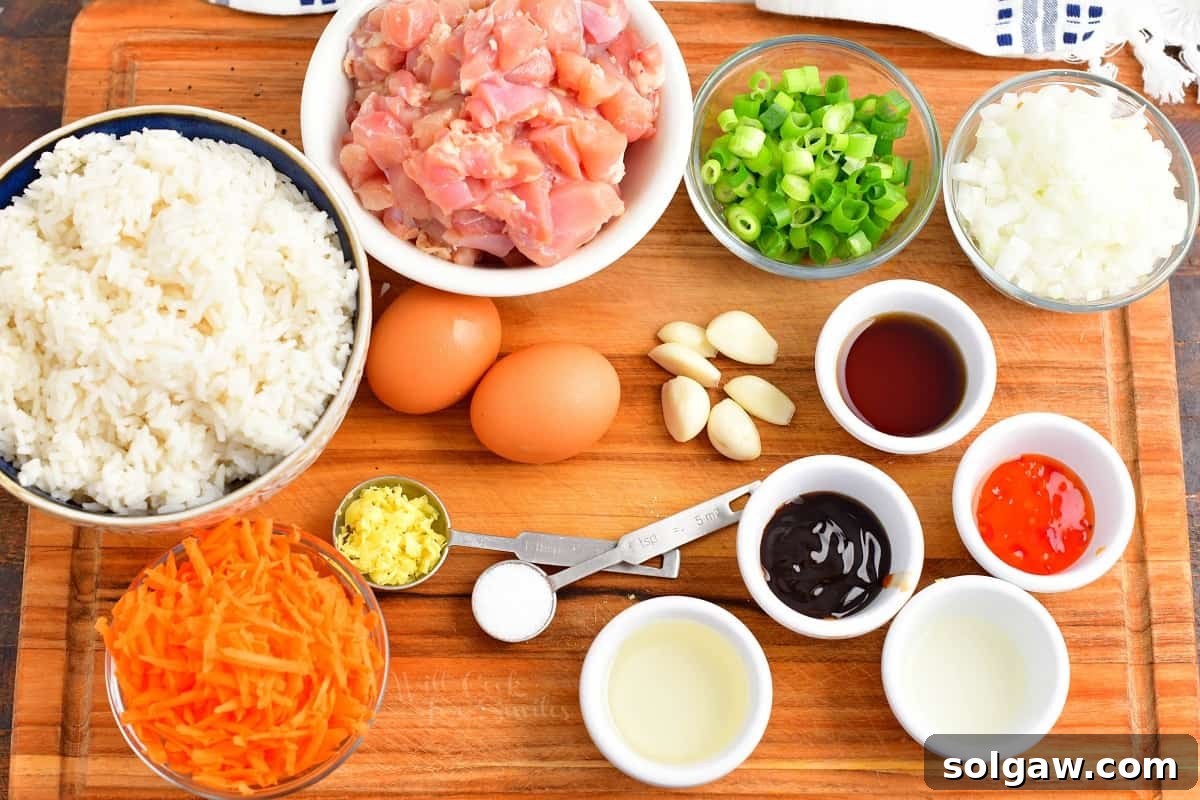
Creating truly authentic and delicious Thai Fried Rice starts with understanding each ingredient’s role and knowing how to choose or substitute wisely. Here’s a breakdown of the key components for your Khao Pad recipe:
The Best Rice to Use (and Why)
For the most authentic and flavorful Thai Fried Rice, day-old jasmine rice (Khao Hom Mali) is absolutely crucial. Jasmine rice has a wonderful aroma and a slightly softer texture that works beautifully in fried rice. Using day-old rice is key because it dries out slightly in the refrigerator, preventing your fried rice from becoming mushy and allowing the grains to separate perfectly during stir-frying. If you don’t have jasmine rice, a good quality long-grain white rice can be a substitute, but the flavor and texture might be slightly different. Avoid freshly cooked rice as it contains too much moisture, leading to a clumpy and sticky result.
Making It Gluten-Free
Many traditional Thai Fried Rice ingredients are naturally gluten-free. However, one common culprit is oyster sauce. To ensure your dish is entirely gluten-free, make sure to use a gluten-free oyster sauce, which is readily available in most Asian markets or specialty grocery stores. Always double-check the labels for fish sauce and Thai chili sauce as well, although they are typically gluten-free, brands can vary.
Protein Choices: Versatility at its Best
While this recipe features tender chicken, Thai Fried Rice is incredibly versatile when it comes to protein. Feel free to customize it based on your preferences or what you have on hand:
- Chicken: Boneless, skinless chicken thighs are excellent for their flavor and tenderness, but chicken breast works just as well. Dice it into small, even pieces for quick and uniform cooking.
- Shrimp: For a seafood twist, add medium or large shrimp. Season them lightly and sear them quickly in the hot wok until they turn opaque, typically 1.5-2 minutes per side. Add them back to the rice at the end of the cooking process to avoid overcooking.
- Crab Meat: If you’re feeling luxurious, lump or claw crab meat makes a fantastic addition. Just remember to sift through it carefully to remove any shell fragments before adding it to the dish.
- Pork: Both leftover cooked pork or fresh ground pork are great options. If using leftover pork, chop it and add it towards the end to heat through. If using ground pork, cook it first until browned and crumbled.
- Tofu: For a vegetarian option, firm or extra-firm tofu, pressed and diced, can be pan-fried until golden before adding to the stir-fry.
Aromatics for Deep Flavor
Fresh aromatics are paramount in Thai cuisine:
- Garlic: Use fresh garlic, minced or pressed, for the best flavor. It’s a foundational aromatic for many stir-fries.
- Fresh Ginger: Shaved or grated fresh ginger adds a warm, pungent zing. It pairs beautifully with garlic and chicken.
The Essential Thai Sauce Blend
The sauce is where the magic happens, achieving that signature balance of sweet, salty, sour, and spicy:
- Fish Sauce (Nam Pla): This is the backbone of Thai savory flavor. Don’t skip it! It provides a salty, umami depth that is irreplaceable.
- Oyster Sauce: Adds a rich, savory, and slightly sweet glaze. Remember to use a gluten-free version if needed.
- Thai Chili Sauce: For that characteristic Thai heat. Adjust the amount to your preferred spice level. Sriracha can be a substitute if Thai chili sauce isn’t available, but it has a different flavor profile.
- Fresh Lime Juice: A squeeze of fresh lime at the end brightens the entire dish, adding essential acidity and freshness.
- White Granulated Sugar: Balances the saltiness of the fish sauce and the acidity of the lime, contributing to the dish’s well-rounded flavor.
Vibrant Vegetables
The vegetables add texture, color, and nutrients:
- Yellow Onion & Carrot: These are classic additions, providing sweetness and crunch. Dice them evenly so they cook at a similar rate.
- Scallions (Green Onions): Used both in the stir-fry and as a fresh garnish, adding a mild oniony flavor and vibrant color.
- Eggs: Whisked eggs are cooked directly in the pan, adding richness and texture.
- Optional Vegetables: Feel free to add other quick-cooking vegetables like peas, corn, bell peppers, or thinly sliced bok choy.
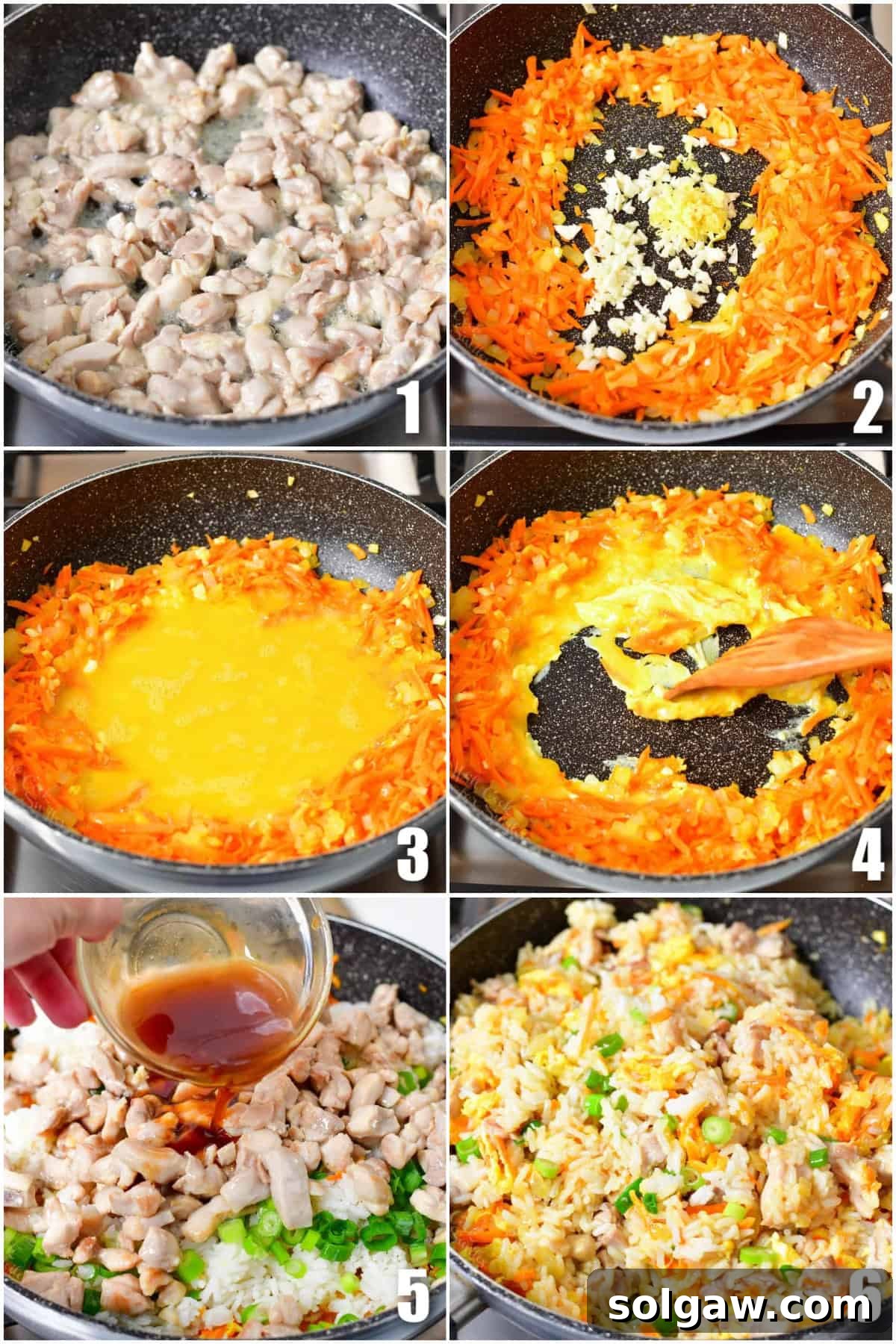
How to Make the Best Thai Fried Rice: Step-by-Step
Making delicious Thai Fried Rice at home is simpler than you might think, especially when you follow these clear steps. The key is efficient preparation and cooking at high heat.
- Preparation is Key: This is a fast-paced dish, so “mise en place” (everything in its place) is critical. Dice your chicken, onion, and scallions. Shred your carrot, mince your garlic, and grate your fresh ginger. In a small bowl, whisk the eggs with a pinch of salt. In another bowl, whisk together the fish sauce, oyster sauce, Thai chili sauce, fresh lime juice, and sugar. Have your day-old jasmine rice ready.
- Cook the Protein: Heat a large wok or a heavy-bottomed, high-sided non-stick pan over medium-high heat until it’s very hot. Add a tablespoon of peanut oil (or another high smoke point oil like canola or vegetable oil). Add the diced chicken, season with a little salt, and stir-fry until fully cooked through and lightly browned. Remove the chicken from the wok and set it aside.
- Sauté the Vegetables and Aromatics: If needed, add a touch more oil to the hot wok. Add the diced onions and shredded carrots, stir-fry for 2-3 minutes until they begin to soften. Push the vegetables to one side of the wok, then add the minced garlic and grated ginger to the cleared space. Sauté the aromatics for about 30 seconds until fragrant, then mix them with the softened vegetables.
- Scramble the Eggs: Push the vegetable-aromatic mixture to the side of the pan again, creating an empty space in the center. Pour the whisked eggs into this space. Allow the eggs to set for a minute or two until mostly cooked, then gently scramble them with your spatula, breaking them into smaller pieces. Once scrambled, mix the eggs with the vegetables.
- Combine and Flavor: Add the cooked day-old jasmine rice, the cooked chicken, and most of the chopped scallions (reserve some for garnish) to the wok. Pour the prepared sauce mixture evenly over the ingredients.
- Stir-Fry to Perfection: Using a spatula or wok tool, quickly and carefully stir-fry all the ingredients together, ensuring the sauce coats every grain of rice and all components are well combined. Continue to stir-fry for another 1-2 minutes, allowing the flavors to meld and the rice to heat through and develop a slightly chewy texture. Remove from heat immediately to prevent overcooking.
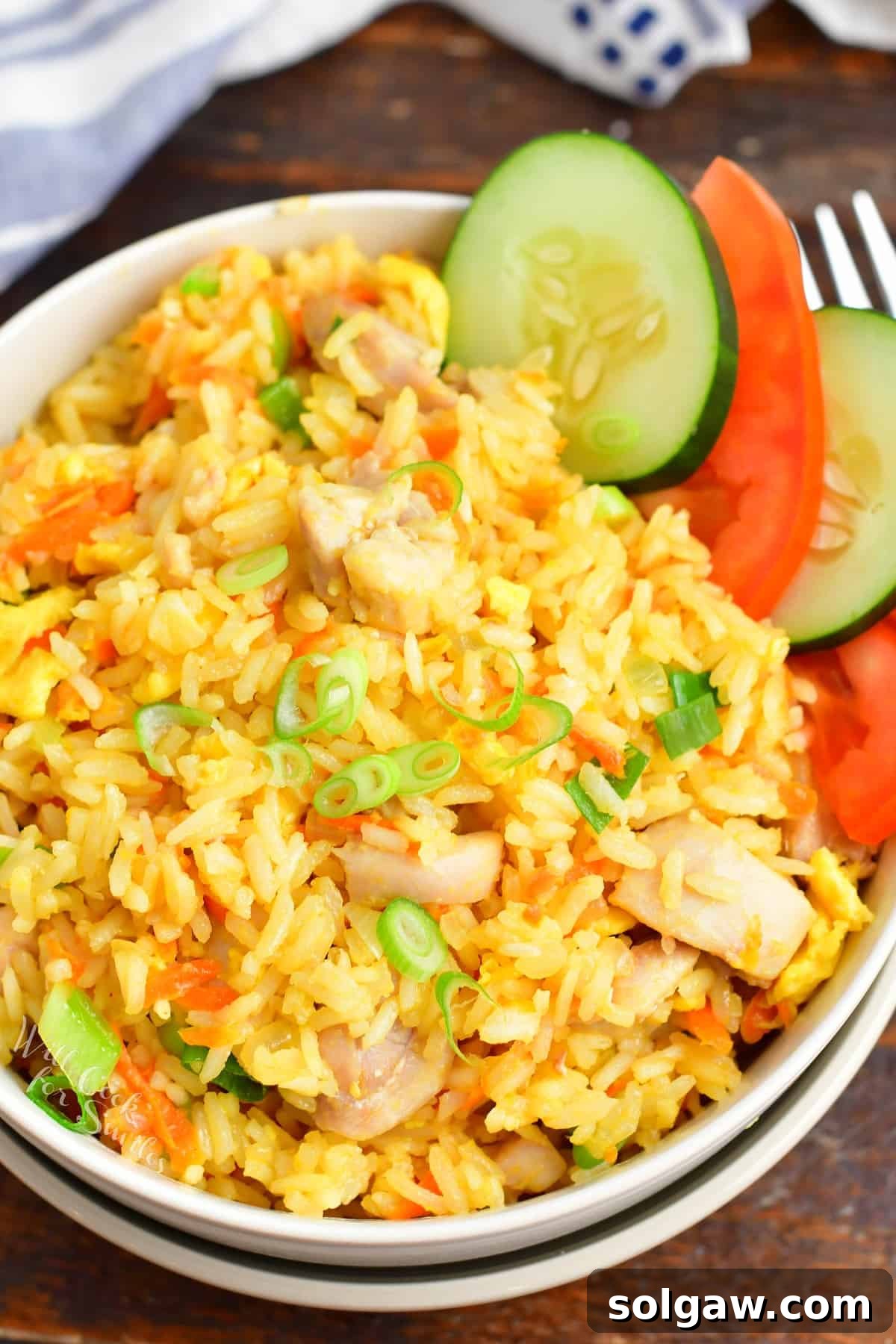
PIN THIS RECIPE FOR LATER
Did you try this fantastic Thai Fried Rice recipe? Your feedback means a lot! Please take a moment to leave a star rating and a comment below. Share your delicious creations on social media and tag me @willcookforsmiles. Don’t forget to subscribe to my newsletter for more easy and delightful recipes!
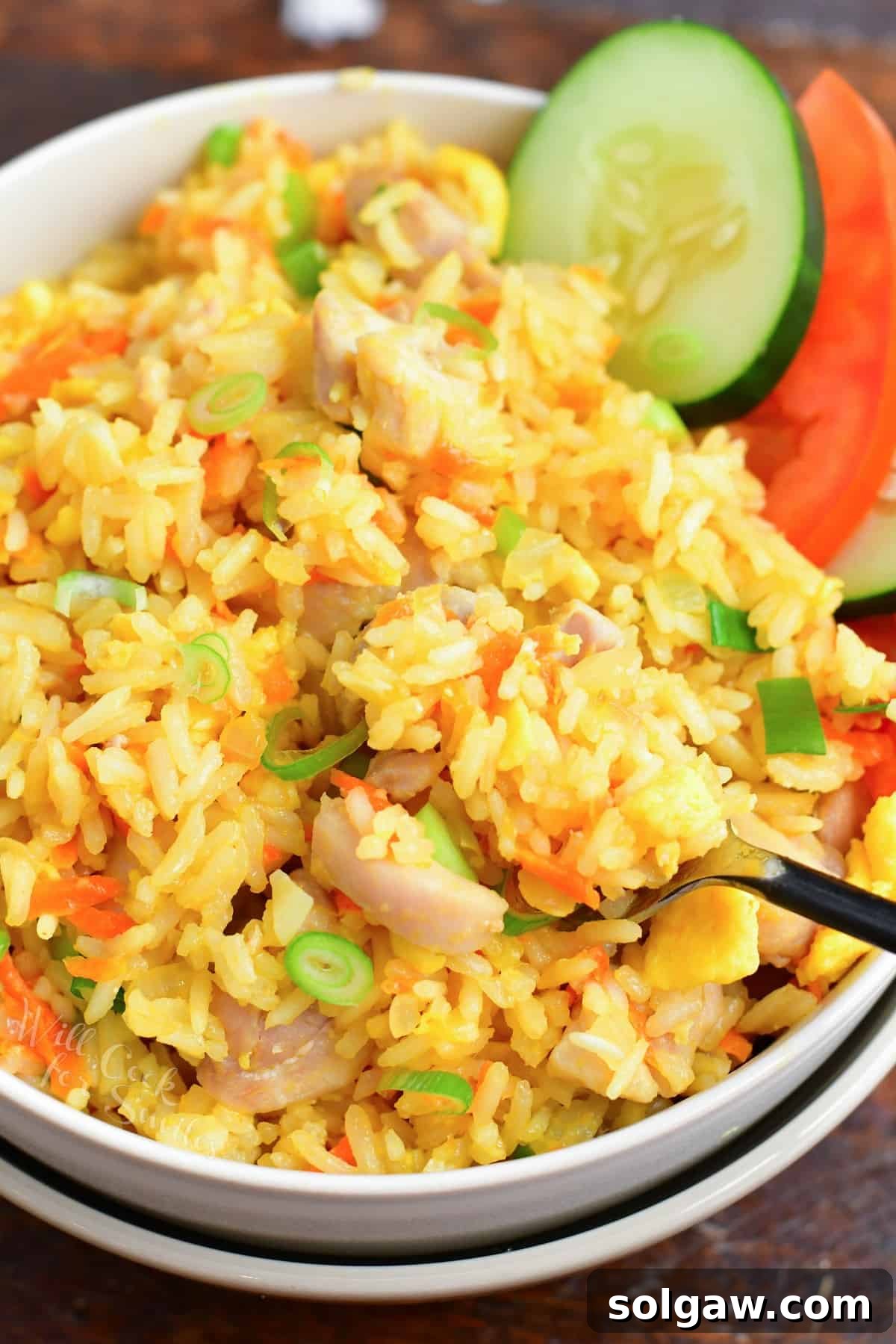
Thai Fried Rice Recipe (Khao Pad)
This incredible Thai Fried Rice, or Khao Pad, is an easy-to-make dish bursting with authentic flavors. Featuring tender chicken, fluffy jasmine rice, crisp vegetables, and scrambled egg, it’s expertly seasoned with aromatic garlic, fresh ginger, savory fish sauce, and rich oyster sauce. Perfect for a quick and satisfying weeknight dinner, this recipe is incredibly versatile and can be made with your choice of chicken or shrimp!
Print Recipe
Pin Recipe
Rate This Recipe
Main Course
Thai
10 minutes
20 minutes
30 minutes
4
518
kcal
Lyuba Brooke
Ingredients
Instructions
-
Prepare All Ingredients: As this is a quick-cooking recipe, ensure all ingredients are prepped and ready before you start cooking. Dice your chicken, yellow onion, and scallions. Shred the carrot, mince the garlic, and grate or shave the fresh ginger. In a small bowl, whisk the eggs with a pinch of salt. In a separate bowl, whisk together the fish sauce, oyster sauce, Thai chili sauce, fresh lime juice, and granulated sugar to create your sauce mixture.
-
Cook the Chicken: Heat a large wok or a spacious non-stick pan with tall sides over medium-high heat until it’s very hot. Add 1 tablespoon of peanut oil. Add the diced chicken, season lightly with salt, and stir-fry until it’s fully cooked through and lightly golden. Remove the cooked chicken from the pan and set it aside.
-
Sauté Vegetables and Aromatics: If necessary, add another tablespoon of peanut oil to the hot wok. Add the diced yellow onion and shredded carrot. Stir-fry for about 2-3 minutes until they begin to soften. Push the softened vegetables to one side of the pan. Add the minced garlic and grated ginger to the cleared space. Sauté for about 30 seconds until they become fragrant, then mix them thoroughly with the vegetables.
-
Scramble the Eggs: Create another cleared space in the pan by pushing the vegetable mixture to the side. Pour the whisked eggs into this space. Allow the eggs to set and cook for a few minutes until they are mostly firm, then gently break them apart with your spatula and mix them with the cooked vegetables.
-
Combine with Rice and Protein: Add the cooked day-old jasmine rice, the previously cooked chicken, and about two-thirds of the chopped scallions to the wok. Pour the prepared sauce mixture evenly over all the ingredients.
-
Finish Stir-Frying: Using a sturdy spatula or wok utensil, thoroughly and carefully stir-fry all ingredients together. Ensure the sauce is well distributed and coats every grain of rice. Continue to cook for another 1-2 minutes, stirring constantly, until everything is heated through and the flavors have fully melded. Remove from heat and serve immediately, garnished with the remaining fresh scallions.
Notes for Success
No Day-Old Rice? No Problem! While day-old rice is ideal, you can quickly cool freshly cooked rice. Simply spread the freshly cooked jasmine rice thinly on a large parchment paper-lined plate or a rimmed baking sheet. Place it in the refrigerator for 15-20 minutes to chill and dry out slightly before using.
Storing Leftovers: Any leftover Thai Fried Rice should be stored in an airtight food storage container in the refrigerator. It will stay fresh and delicious for 3-4 days.
Reheating Tips: You can reheat fried rice in the microwave or in a lightly greased pan or wok over medium heat. Remember that rice tends to dry out in the refrigerator. To restore moisture and flavor, add a small splash of liquid, such as chicken broth or even a little water, when reheating. This prevents the rice from becoming too dry and brings back its original texture.
Versatile Protein Options: If chicken isn’t your preferred protein, here are some excellent alternatives:
- For Shrimp Fried Rice: Season raw shrimp lightly and sear them in a preheated wok with peanut oil until they are opaque and pink on both sides (about 1.5-2 minutes per side, depending on size). Remove and add them back with the rice.
- For Crab Fried Rice: Use lump or claw crab meat. Be sure to carefully pick through it beforehand to remove any lingering shells. Add it towards the end of cooking to gently warm through.
- For Pork Fried Rice: You can use leftover cooked pork, chopped into small pieces and added at the end to heat. Alternatively, cook some seasoned ground pork in the wok until browned before proceeding with the recipe steps.
- For a Vegetarian Option: Firm or extra-firm tofu, pressed and cubed, can be pan-fried until golden and added in place of meat.
Nutrition Information (Approximate Per Serving)
Calories:
518
kcal
|
Carbohydrates:
56
g
|
Protein:
36
g
|
Fat:
15
g
|
Saturated Fat:
3
g
|
Trans Fat:
1
g
|
Cholesterol:
217
mg
|
Sodium:
1821
mg
|
Potassium:
609
mg
|
Fiber:
2
g
|
Sugar:
6
g
|
Vitamin A:
2795
IU
|
Vitamin C:
6
mg
|
Calcium:
76
mg
|
Iron:
2
mg
Tried this recipe? Mention @willcookforsmiles or tag #willcookforsmiles!
Why You’ll Love This Authentic Thai Fried Rice
There are countless reasons why this Thai Fried Rice recipe has become a permanent fixture in our weekly meal rotation. Firstly, it’s incredibly quick and easy to prepare, making it an ideal choice for busy weeknights when you crave something satisfying without spending hours in the kitchen. From start to finish, you can have a flavorful and wholesome meal on the table in about 30 minutes.
Beyond its speed, this Khao Pad offers an unbeatable combination of authentic Thai flavors. The carefully balanced blend of sweet, sour, salty, and a touch of heat, derived from traditional ingredients like fish sauce, oyster sauce, and fresh lime juice, truly transports your taste buds to the bustling streets of Thailand. It’s a much healthier and more customizable alternative to takeout, allowing you to control the quality of ingredients and adjust the spice level to your family’s preference.
Its versatility is another major draw. Whether you prefer chicken, shrimp, pork, or even tofu, this recipe adapts beautifully to your chosen protein. You can also easily incorporate a wider variety of vegetables, adding more color, texture, and nutrients to your dish. It’s a complete meal in one pan, minimizing cleanup and maximizing enjoyment. Once you try this homemade version, you’ll understand why it’s so much more rewarding and delicious than any store-bought alternative!
Tips for Perfect Thai Fried Rice Every Time
Achieving restaurant-quality fried rice at home is entirely possible with a few key techniques. Here are my top tips to ensure your Thai Fried Rice is always a resounding success:
- Use Day-Old, Cold Rice: This cannot be stressed enough. Freshly cooked rice has too much moisture, which will lead to a sticky, mushy mess. Day-old rice, having dried out in the refrigerator, will separate beautifully in the wok, giving you those distinct, perfectly textured grains.
- High Heat is Your Friend: A wok or large pan needs to be screaming hot. High heat is essential for a proper stir-fry, creating that desired slight char on the ingredients and ensuring everything cooks quickly without steaming. Don’t be afraid to let your pan preheat thoroughly before adding oil.
- Don’t Overcrowd the Wok: Cooking in batches, especially the protein, is important if your pan isn’t large enough. Overcrowding lowers the pan’s temperature, leading to steaming instead of stir-frying, which results in soggy ingredients.
- Prep Everything Ahead (Mise en Place): As highlighted in the instructions, stir-frying is fast. Once you start, there’s no time to chop. Have all your ingredients—diced chicken, chopped vegetables, minced aromatics, and whisked sauce—ready and within arm’s reach.
- Balance the Flavors: Thai cuisine is all about balancing sweet, sour, salty, and spicy. Taste your sauce mixture before adding it to the wok and adjust as needed. A squeeze of fresh lime juice at the end can brighten the entire dish.
- Stir Continuously: Keep the ingredients moving in the wok to ensure even cooking and to prevent anything from sticking or burning. A sturdy spatula or wok tool is indispensable for this.
Serving and Customization Ideas
Once your Thai Fried Rice is perfectly cooked, the fun isn’t over! How you serve and garnish it can elevate the experience even further.
- Traditional Garnishes: Always serve your Khao Pad with fresh garnishes. Chopped scallions (the green part), fresh cilantro, and a wedge of fresh lime are classic. A sprinkle of chopped roasted peanuts or crispy fried shallots can add extra texture and flavor.
- Add a Side of Heat: For those who love extra spice, offer a small bowl of sliced fresh bird’s eye chilies (Prik Kee Noo) or a drizzle of sriracha on the side.
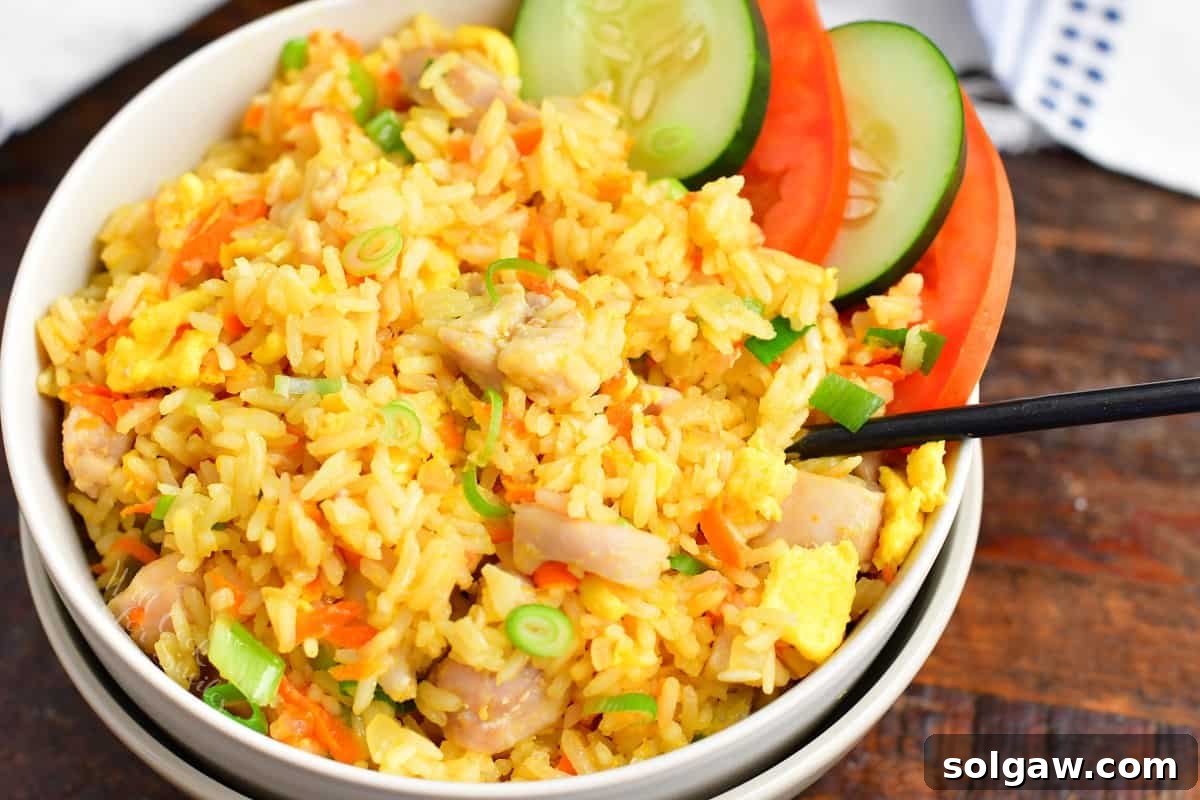
- Complementary Sides: Thai Fried Rice is often a meal in itself, but it can be accompanied by a simple clear soup, fresh cucumber slices, or tomato wedges for a refreshing contrast.
Beyond Chicken: More Customization Ideas
Feel free to experiment with other ingredients to make this dish your own:
- Vegetable Variety: Incorporate finely chopped bell peppers, green beans, baby corn, mushrooms, or even a handful of spinach at the very end.
- Spice Level: Easily adjust the amount of Thai chili sauce or add fresh chilies to make it as mild or fiery as you like.
- Nutty Crunch: A tablespoon of finely chopped cashews added at the very end of cooking can provide a delightful crunch.
Frequently Asked Questions (FAQs) About Thai Fried Rice
Can I use other types of rice besides jasmine?
While jasmine rice is traditionally used for its fragrant aroma and texture, you can use other long-grain white rice varieties. However, the unique flavor and authenticity will be best achieved with jasmine rice, especially when it’s day-old and cold.
What if my fried rice is mushy?
Mushy fried rice is almost always a result of using freshly cooked rice that has too much moisture. Always use day-old (or at least well-chilled) rice. Additionally, ensure your wok is hot and you’re not overcrowding it, as this can cause ingredients to steam rather than fry, leading to a softer texture.
I don’t have a wok; what can I use?
A large, heavy-bottomed non-stick pan with tall sides will work as an excellent substitute for a wok. The key is to use a pan that can get very hot and has enough surface area to allow ingredients to spread out and stir-fry properly.
Is this recipe spicy?
The spice level is adjustable! The Thai chili sauce is where the heat comes from. You can reduce or increase the amount to suit your preference, or omit it entirely for a mild version.
Can I make this vegetarian or vegan?
Absolutely! For a vegetarian version, substitute chicken with pressed and pan-fried tofu. For a vegan version, use tofu, omit the eggs, and substitute fish sauce with a vegetarian/vegan “fish sauce” alternative or a combination of soy sauce (though not traditional Thai), mushroom sauce, and a pinch of salt.
Some More Fried Rice and Thai-Inspired Recipes
If you loved this Thai Fried Rice, explore more delightful Asian-inspired dishes and other variations of fried rice to expand your culinary repertoire:
- Pineapple Fried Rice: A sweet and savory twist with juicy pineapple chunks.
- Shrimp Fried Rice: Classic comfort food featuring succulent shrimp.
- Thai Basil Fried Rice: Fragrant and spicy with aromatic Thai basil.
- Coconut Rice Recipe: A sweet and creamy side dish perfect with any Thai curry.
- Chicken Fried Rice: A versatile and family-friendly staple.
- Cauliflower Fried Rice: A low-carb, vegetable-packed alternative.