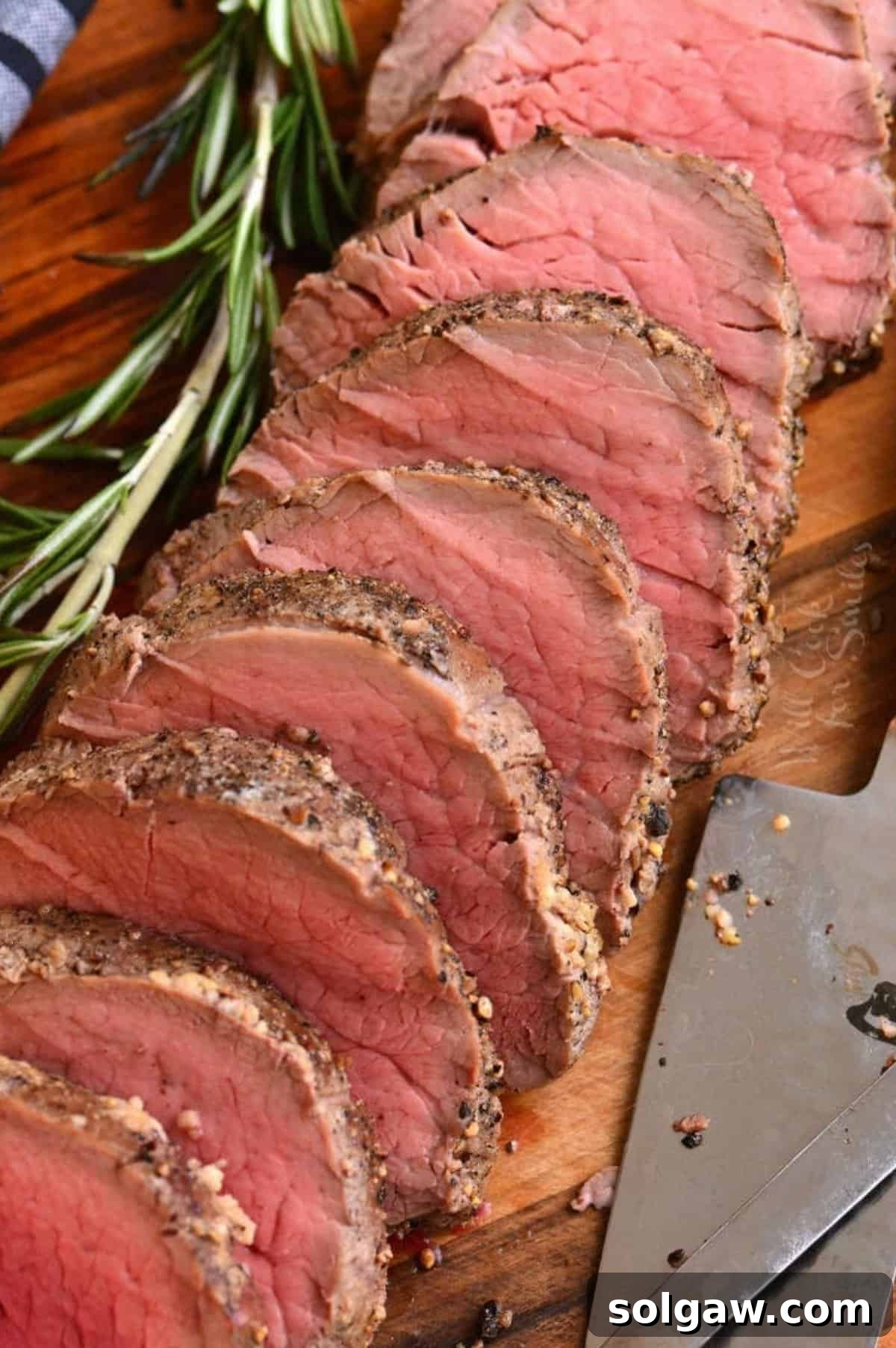
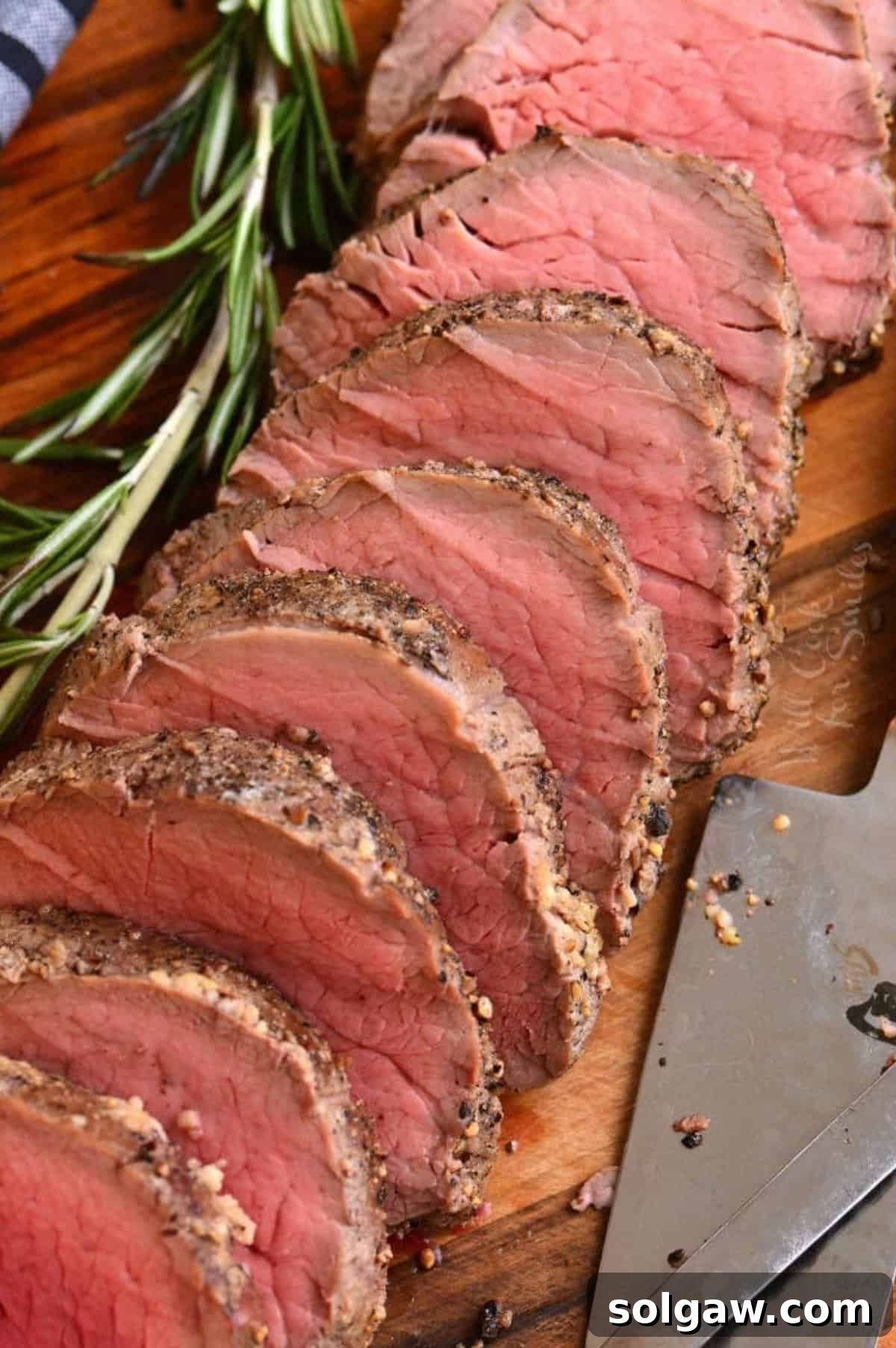
Mastering the Art of Oven-Roasted Beef Tenderloin
Few dishes command as much respect and anticipation as a perfectly cooked beef tenderloin. Known universally as the most exceptionally tender cut of beef, the very first bite of this luxurious roast will forever change your perception of culinary excellence. It’s not just a meal; it’s an experience, a melt-in-your-mouth sensation that elevates any occasion, from an intimate family dinner to a grand holiday feast.
Understanding Beef Tenderloin: The Pinnacle of Tenderness
The beef tenderloin is a long, lean, and incredibly delicate muscle that runs along the back of the cow. Its prime location deep within the animal means it’s a non-weight-bearing muscle, doing very little work. This lack of strenuous activity, coupled with minimal connective tissue, is precisely what gives the tenderloin its signature, unparalleled tenderness. Unlike tougher cuts that require slow cooking to break down fibers, beef tenderloin shines with quick, high-heat methods that preserve its soft texture and rich flavor.
This premium cut is the source of some of the most highly coveted steaks in the culinary world. When you hear names like Filet Mignon, Tenderloin Steak, or Chateaubriand, you’re talking about variations expertly carved from the beef tenderloin. Even classic dishes like the beloved Steak Diane rely on this exquisite cut for their signature succulence. Preparing a whole beef tenderloin allows you to enjoy these various cuts, whether you choose to roast the entire piece or focus on the prized central portion known as the Chateaubriand.
A whole beef tenderloin typically ranges from 5 to 8 pounds, making it an ideal choice for entertaining. A single roast can generously serve anywhere from 6 to 12 people, depending on how thickly you slice it and the variety of accompanying side dishes. It’s a show-stopping centerpiece that promises to impress your guests with both its presentation and its exquisite taste.
Essential Preparation: Cleaning and Tying Your Beef Tenderloin
Before you embark on the roasting process, proper preparation of your beef tenderloin is key to achieving the best results. While some tenderloins come pre-trimmed, many whole cuts will require a bit of attention to remove excess fat and connective tissue.
Cleaning Whole Beef Tenderloin
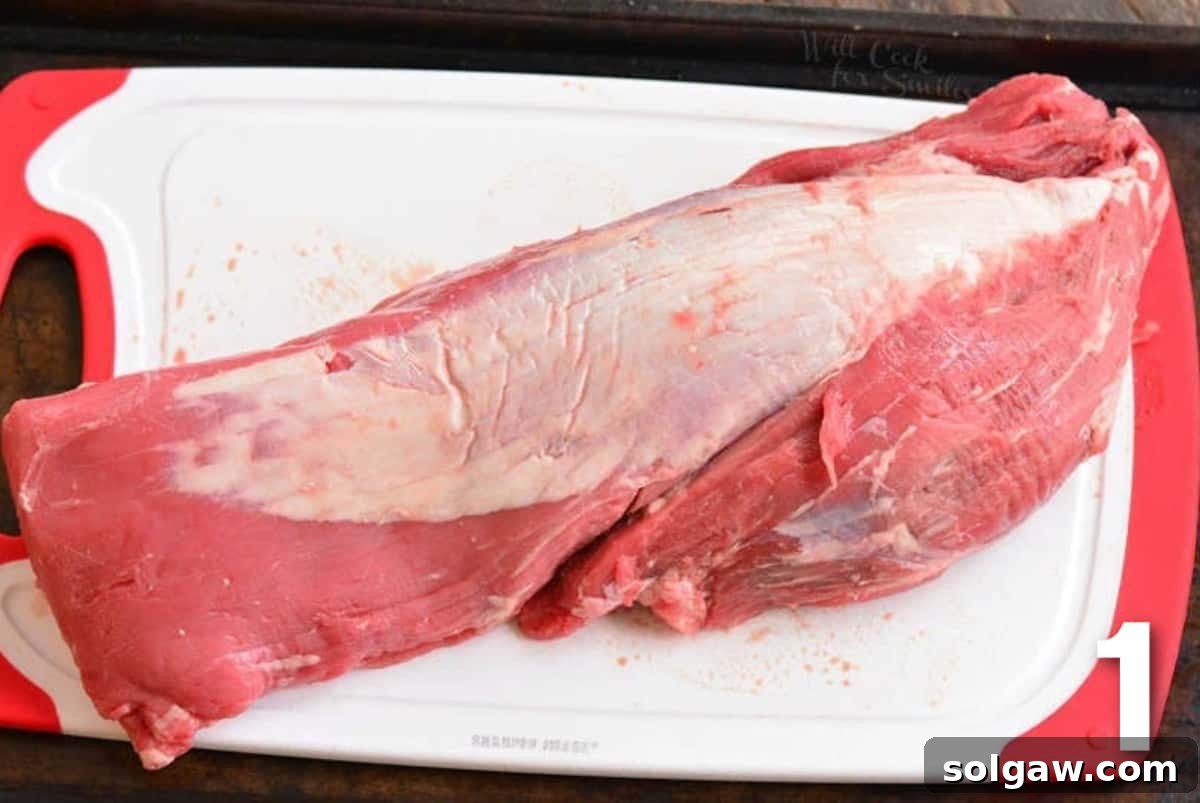
Cleaning a whole beef tenderloin might sound intimidating, but it’s a straightforward process that ensures an unblemished, tender roast. This involves removing the “chain” and the “silverskin.”
- The Chain: This is a thin, somewhat fatty muscle that runs along the length of the tenderloin. While it’s edible and flavorful, it has a different texture than the main roast and can be easily removed. Simply follow the natural seam with your fingers or a small knife, gently separating it from the main tenderloin. You can save the chain for other uses, like stew meat or ground beef.
- The Silverskin: This is a tough, silvery-white connective tissue that won’t break down during cooking, making the meat chewy if left on. To remove it, lift a small section of the silverskin at one end. Using a sharp, thin knife (a filet knife works best), slide the blade just underneath the silverskin, angling it slightly upwards. With a gentle sawing motion and a firm grip on the silverskin, carefully cut it away from the meat, trying to remove as little actual meat as possible. You want to get rid of every bit of this shiny membrane.
PRO TIP: If you’re not comfortable cleaning the tenderloin yourself, don’t hesitate to ask your local butcher. Most grocery stores with a butcher department are happy to trim a whole beef tenderloin for you. You can also request them to cut the tenderloin to a specific size or into individual steaks, if preferred, saving you time and effort.
How To Tie Beef Tenderloin for Even Cooking
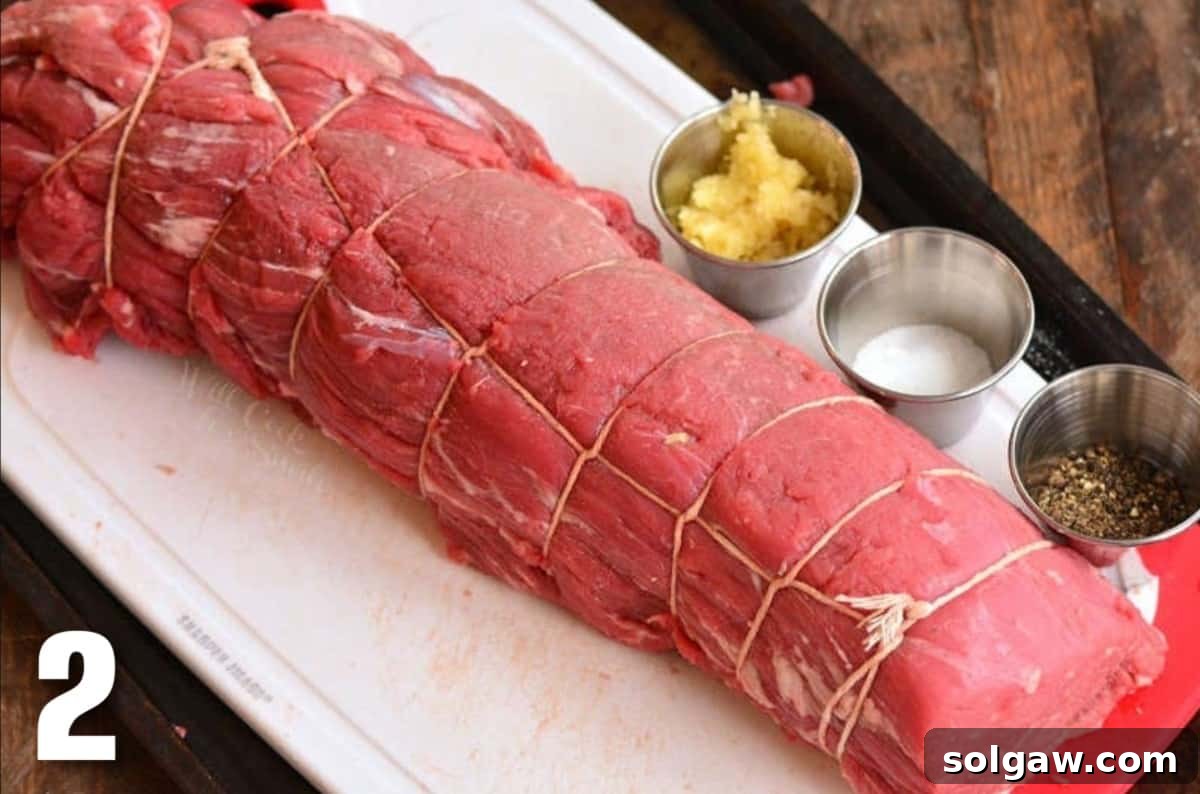
Tying the beef tenderloin is a crucial step that ensures the roast cooks evenly, resulting in a consistently tender and perfectly cooked piece of meat from end to end. The tenderloin naturally tapers at one end, so tying helps create a uniform thickness.
- Prepare the Shape: To ensure a more even thickness, especially at the thinner, tapered end, gently fold the narrow tip under the tenderloin. You can make a small, partial cut where it begins to narrow, but do not cut it off completely. This allows the thinner section to be tucked and secured, matching the thickness of the rest of the roast.
- Apply Cooking Twine: Use heat-safe cooking twine to tie the tenderloin along its entire length. Start from one end and tie individual loops or a continuous series of knots at approximately 1-inch intervals. The goal is to bind the meat snugly, helping it maintain its cylindrical shape, but not so tightly that the twine cuts into the flesh. Consistent shape equals consistent cooking.
Seasoning for Maximum Flavor
The delicate flavor of beef tenderloin requires simple yet effective seasoning to truly shine. For an unforgettable roast, a classic combination of fresh garlic, salt, and freshly cracked black pepper is all you need.
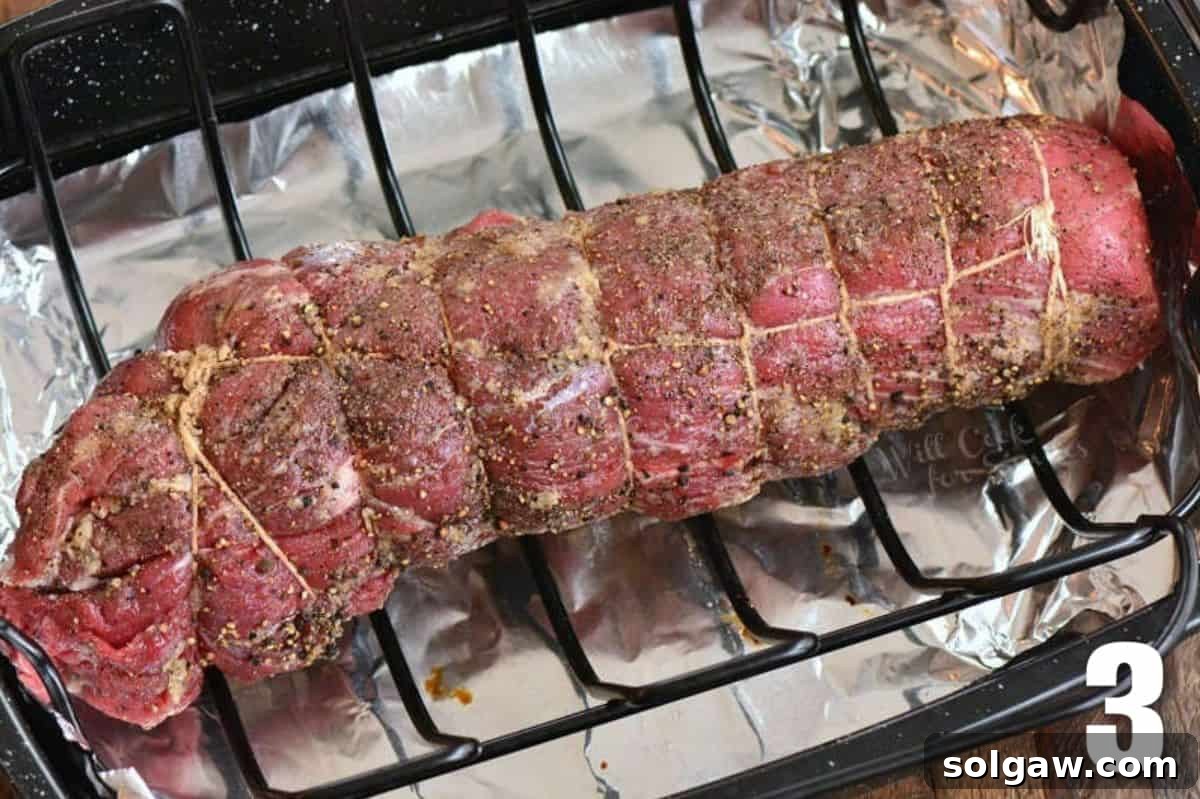
- Garlic Infusion: Once the tenderloin is tied, generously rub it all over with freshly pressed or minced garlic. The garlic will infuse its aromatic flavor directly into the meat as it roasts.
- Salt and Pepper: Don’t be shy with the seasoning. Sprinkle kosher salt and freshly cracked black pepper liberally over all sides of the tenderloin. These staples enhance the beef’s natural richness and create a delightful crust.
PRO TIP: Always tie the meat before applying your seasonings. This prevents precious spices from falling off during the tying process and ensures they adhere well to the roast for the best possible flavor and crust development.
Mastering the Roast: How to Cook Beef Tenderloin to Perfection
Achieving a perfectly cooked beef tenderloin involves a two-stage roasting method: an initial high-heat sear followed by a lower temperature roast. This technique locks in juices, creates a beautiful crust, and allows the interior to cook evenly to your desired doneness.
- Preheat and Prepare: Begin by preheating your oven to a high temperature of 425°F (220°C). Line the bottom of a sturdy roasting pan with aluminum foil for easier cleanup. Place a wire rack inside the roasting pan; this elevates the tenderloin, allowing heat to circulate evenly around the entire roast.
- Position the Tenderloin: Carefully place your cleaned, tied, and seasoned beef tenderloin onto the wire rack in the roasting pan. For precise temperature monitoring, insert a leave-in meat thermometer into the thickest part of the meat, ensuring it doesn’t touch any bone or the pan itself. This allows you to track the internal temperature without repeatedly opening the oven, which can affect cooking times. If you don’t have a leave-in thermometer, you’ll need to remove the roast to check its temperature periodically.
- High-Heat Sear: Place the roasting pan into the preheated oven and cook for 15 minutes at the high temperature (425°F/220°C). This initial blast of high heat creates a beautiful, flavorful sear on the exterior of the tenderloin, forming a delicious crust.
- Lower Temperature Roast: After 15 minutes, reduce the oven temperature to 325°F (160°C). Continue roasting until the internal temperature reaches your desired level of doneness.
- For medium-rare: aim for an internal temperature of 130°-135°F (54°-57°C).
- For medium: target 135°-140°F (57°-60°C).
- For rare: cook to 120°-125°F (49°-52°C).
Remember that the meat will continue to cook and its internal temperature will rise another 5-10 degrees Fahrenheit during the resting period (carryover cooking), so it’s often best to remove it a few degrees below your final target temperature.
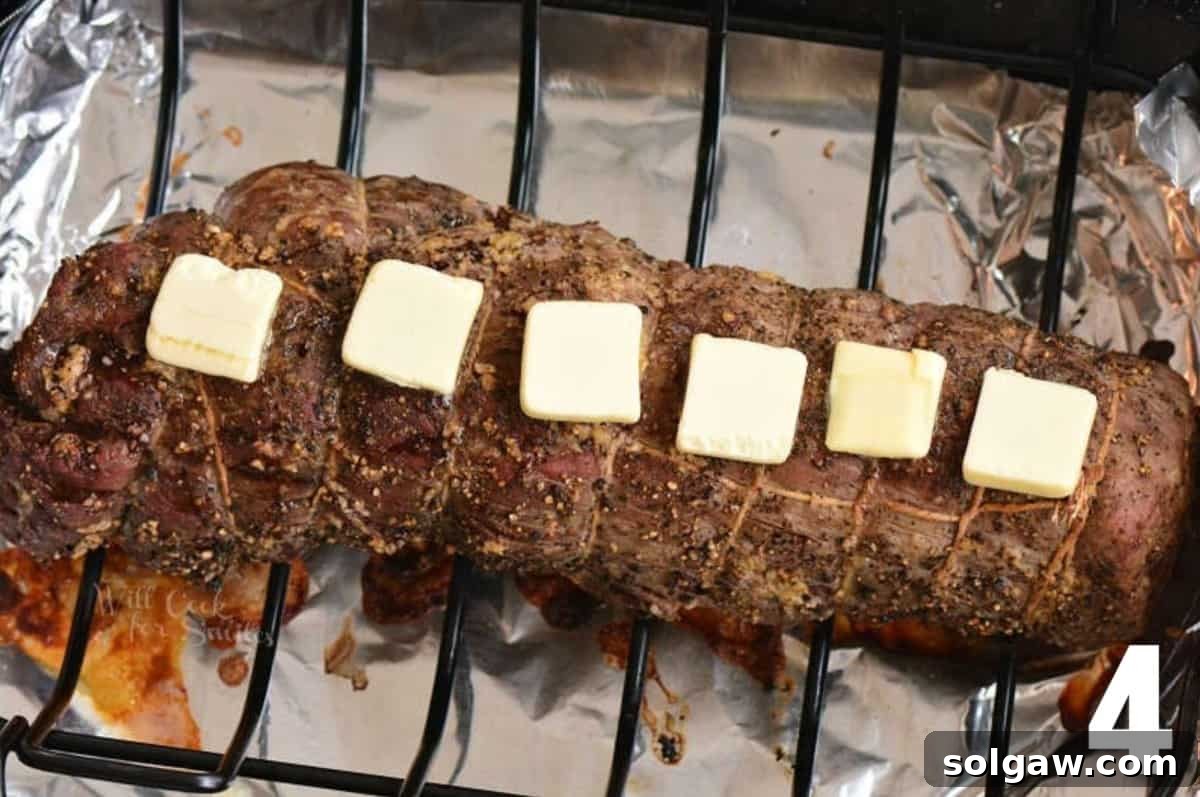
- The Critical Rest: Once the tenderloin reaches the desired temperature, carefully remove it from the oven. You can leave it on the rack in the roasting pan, or transfer it to a large plate or cutting board. Immediately place several pieces of salted butter over the top of the hot tenderloin, allowing them to melt and baste the roast. Loosely tent the entire roast with a sheet of aluminum foil. Let it rest for a crucial 10 minutes. This resting period allows the juices to redistribute throughout the meat, ensuring a tender, moist, and flavorful final product.
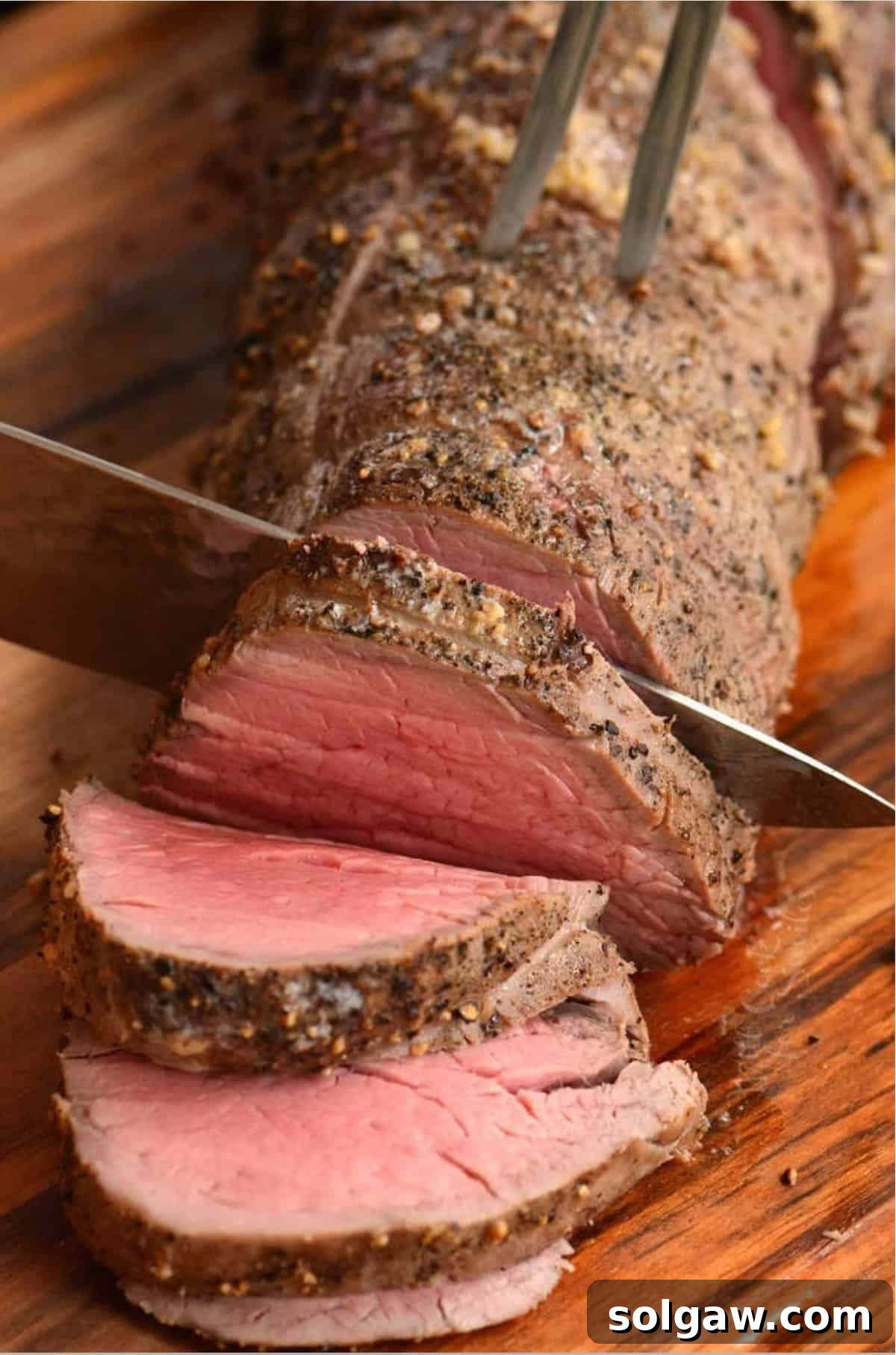
- Final Touches and Slice: After the initial rest, remove the aluminum foil and carefully cut the cooking twine off the tenderloin. Let it rest for an additional 10-15 minutes. This second rest further ensures juiciness. Finally, transfer the tenderloin to a large cutting board and slice it against the grain into beautiful, thick medallions. Arrange the sliced beef on a serving platter and pour any accumulated buttery juices from the pan over the top, adding an extra layer of richness.
Frequently Asked Questions (FAQs) About Beef Tenderloin
How Much Beef Tenderloin Per Person?
When planning for a beef tenderloin roast, portion sizes can differ slightly from other main meats due to its premium price and richness. While a general rule for main meats is often 1/2 lb (or 8 oz.) per person, for trimmed beef tenderloin, you can typically estimate a slightly smaller portion of 4-6 oz per person. This allows you to manage costs while still providing a satisfying serving. You can always balance out the meal by offering hearty and abundant side dishes.
What Is the Best Way to Reheat Beef Tenderloin?
Properly reheating beef tenderloin is essential to preserve its tenderness and prevent it from drying out. Store cooled leftover beef tenderloin in an airtight food storage container in the refrigerator for up to 3 days.
To reheat: Preheat your oven to 350°F (175°C). Wrap each individual slice of beef tenderloin loosely in aluminum foil to create a steam packet. Place the wrapped slices directly onto the oven rack and reheat for 10-15 minutes, or until just warmed through in the middle. The exact time will depend on the thickness of your slices. Be careful not to overcook, as this can quickly dry out the tender and lean meat.
Can I Sear the Tenderloin on the Stovetop First?
Absolutely! Many chefs prefer to sear the beef tenderloin on the stovetop in a hot, oven-safe pan (like a cast iron skillet) before transferring it to the oven. This creates an even more pronounced crust and can develop deeper flavors. To do this, pat the seasoned tenderloin dry, then sear it over medium-high heat in a little oil for 2-3 minutes per side, until a golden-brown crust forms. Then, transfer the pan directly to the oven to finish cooking as per the recipe instructions, adjusting the initial high-heat oven time if needed.
What Should I Serve with Beef Tenderloin?
Beef tenderloin pairs beautifully with a variety of side dishes that complement its rich flavor without overpowering it. Classic choices include roasted vegetables like asparagus, green beans, or carrots, creamy mashed potatoes, or a light potato gratin. A simple side salad with a vinaigrette can also offer a refreshing contrast. For sauces, consider a classic béarnaise, a red wine reduction, or a mushroom sauce to elevate the dish further.
Oven Roasted Beef Tenderloin Recipe
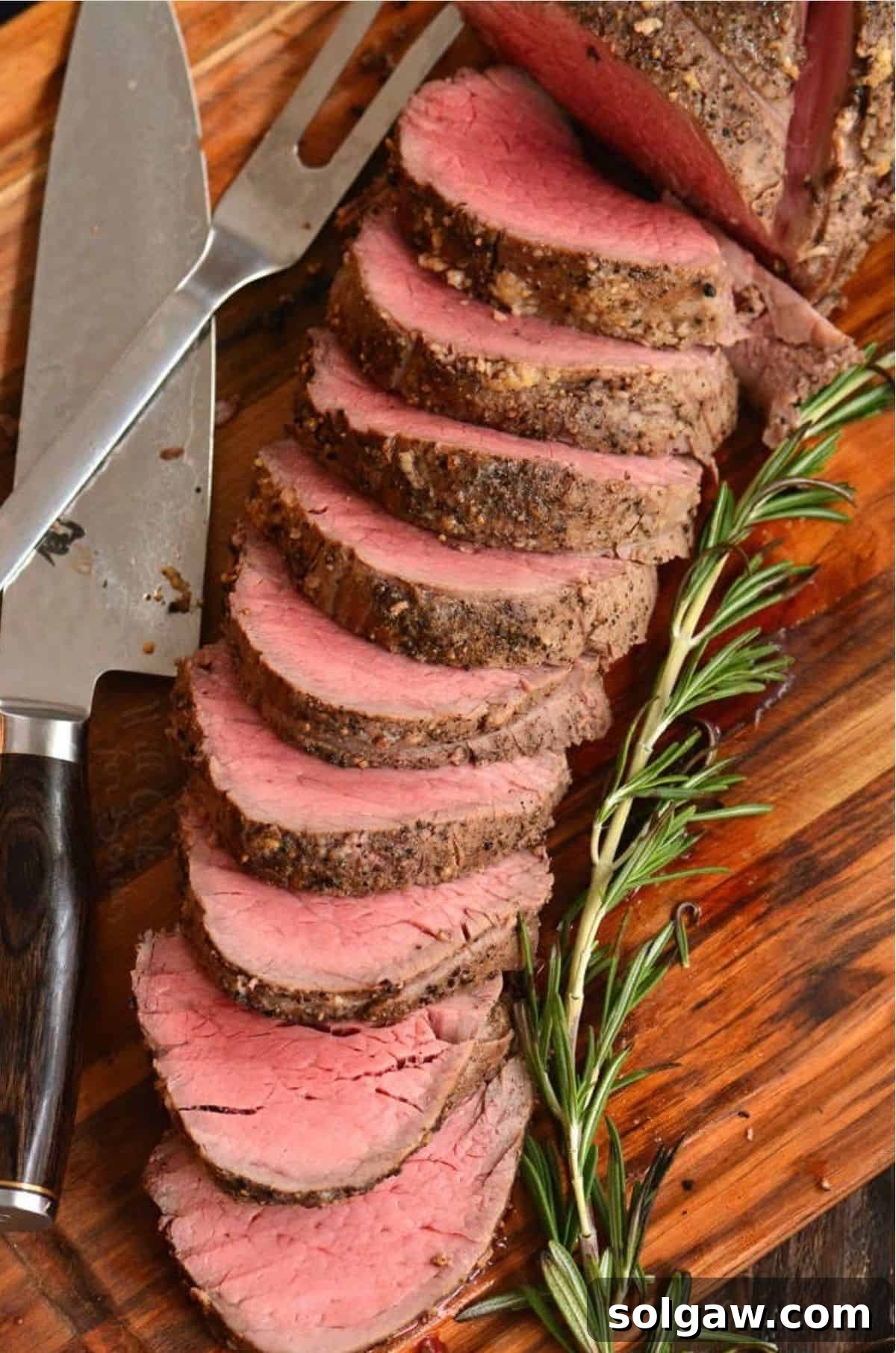
Beef Tenderloin Recipe
Beef tenderloin is the most tender cut of beef and a perfect way to celebrate a special occasion. It’s very lean, flavorful, and so soft, it practically melts in your mouth. This guide will walk you through preparing and roasting beef tenderloin in the oven with simple seasoning of fresh garlic, salt, and pepper.
Course: Main Course | Cuisine: American | Diet: Gluten Free
Prep Time: 20 minutes | Cook Time: 1 hour | Resting and warm time: 40 minutes | Total Time: 2 hours
Servings: 12 (can serve 10-14 people)
Calories: 574kcal
Author: Lyuba Brooke
Ingredients
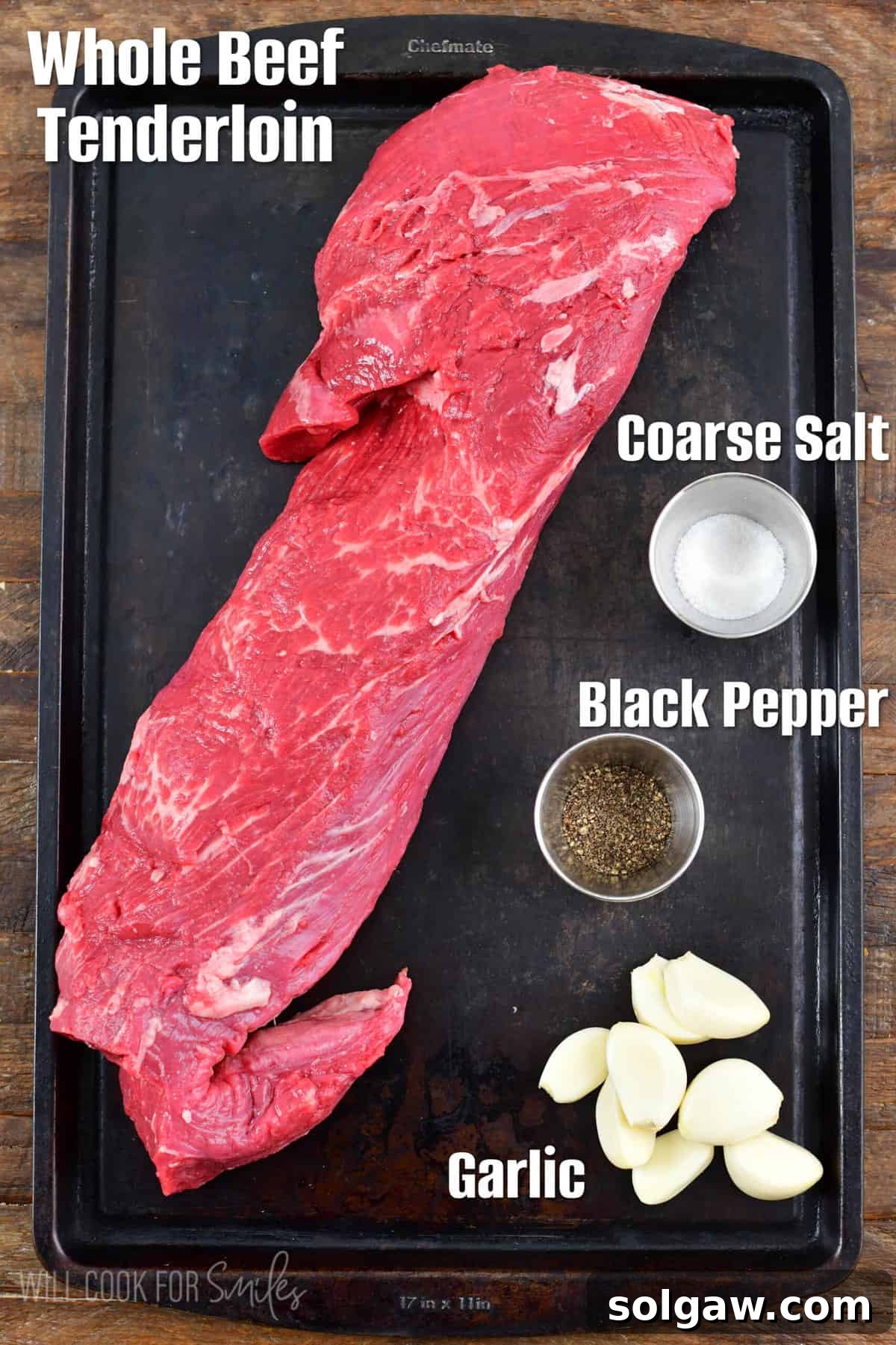
- 5 lb whole beef tenderloin, trimmed
- 8 cloves of garlic, pressed
- Kosher salt
- Freshly cracked black pepper
- 6-8 tbsp salted butter
Instructions
- NOTE: Most grocery stores with a butcher department can help you clean the tenderloin if you are not willing to do it yourself. You can also request a butcher to cut the tenderloin to a more desired size if needed.
-
Cleaning Beef Tenderloin:
- CHAIN: Although most packaged tenderloin will come without the chain, some tenderloin may still have it attached. It looks like a thin, fatty piece of meat running down the length of the entire tenderloin. It will be quite easy to spot and very easy to remove. You can actually remove it with your hands and may just need a few assist cuts along the way. Just follow it along, separating it from the tenderloin.
- SILVERSKIN: Silverskin is a tough layer of white, shimmery connective tissue that runs along the tenderloin. It MUST be removed. To remove it, pull up some of the silver skin at one end of the tenderloin and then use a thin knife to cut along the silver skin to separate it from the meat. Some silverskin will pull up just by tugging and pulling with your hands. Use a knife to remove remaining pieces of silverskin but try not to remove any of the actual meat.
-
Tie and Season Beef Tenderloin:
- To make the tenderloin more even thickness at the thin end, cut the tip where it starts to get narrow almost all the way off but not completely off. Tuck the narrow, thin tip under the tenderloin.
- Use cooking twine to tie the tenderloin all along the whole length in about 1-inch intervals. Make sure not to tie too tight where it starts cutting into meat.
- Rub pressed garlic all over the tenderloin, on all sides. Season generously with kosher salt and cracked pepper all over as well.
- TIP: Always tie the meat before adding seasoning so the seasoning does not fall off during the tying process.
-
Cooking Beef Tenderloin:
- Preheat the oven to 425°F (220°C) and line the bottom of the roasting pan with aluminum foil.
- Place cleaned, tied, and seasoned beef tenderloin on a rack inside the roasting pan and insert a leave-in thermometer in the center of the meat. (If you don’t have a leave-in thermometer, you will need to take the meat out of the oven to take the temperature.)
- Place the roasting pan in the oven and cook for 15 minutes at high temperature (425°F/220°C).
- Turn the oven temperature down to 325°F (160°C) and cook until the internal temperature is at 130°-135°F (54°-57°C) for medium-rare. (Cook to 135°-140°F / 57°-60°C for medium or 120°-125°F / 49°-52°C for rare.) Remember that the meat continues to cook while resting under the tent, it will go up another 5°F or so.
- Take the beef out of the oven. You can keep it on the rack, or place it on a large plate, or a cutting board. Place pieces of butter on top of the tenderloin, along the whole cut.
- Loosely tent it with a sheet of aluminum foil and let it rest for about 10 minutes. Cut the string off the tenderloin and let it rest another 10-15 minutes.
- Place the tenderloin onto a large cutting board and slice it against the grain. Place cut beef slices back in the plate and pour the buttery juices that were left in the pan over the top.
Notes
- You can watch how to break down the whole tenderloin in a separate video guide.
- To store leftovers: Place cooled beef tenderloin in an airtight food storage container with a lid and keep it in the refrigerator for about 3 days.
- To reheat beef tenderloin: Preheat the oven to 350°F (175°C) and wrap each slice of beef tenderloin in aluminum foil. Don’t wrap it too tight. Place wrapped tenderloin pieces directly onto the oven rack and reheat for 10-15 minutes. (Time will depend on the thickness of cuts.) Reheat it just until warm in the middle so it doesn’t overcook.
- Remember: Beef tenderloin is a lean and tender cut so it’s best to be cooked to medium-rare or medium temperature at the most to maintain its juiciness and flavor.
Nutrition
Calories: 574kcal | Carbohydrates: 1g | Protein: 35g | Fat: 47g | Saturated Fat: 21g | Cholesterol: 147mg | Sodium: 1306mg | Potassium: 599mg | Fiber: 1g | Sugar: 1g | Vitamin A: 182IU | Vitamin C: 1mg | Calcium: 24mg | Iron: 5mg
Explore More Delicious Beef Recipes
- Steak Recipe In The Oven
- Beef Brisket Recipe In the Oven
- Filet Mignon Recipe
- Pan Seared Steaks
- The Best Grilled Steaks Recipe
PIN THIS RECIPE FOR LATER
DID YOU MAKE THIS RECIPE? PLEASE leave a ⭐ ⭐ ⭐ ⭐ ⭐ star rating! Let me know how you liked it by leaving the 📝 comment below or share and tag me on social media @willcookforsmiles. DON’T FORGET to subscribe to my newsletter!
Originally published on Will Cook For Smiles in December 2019.