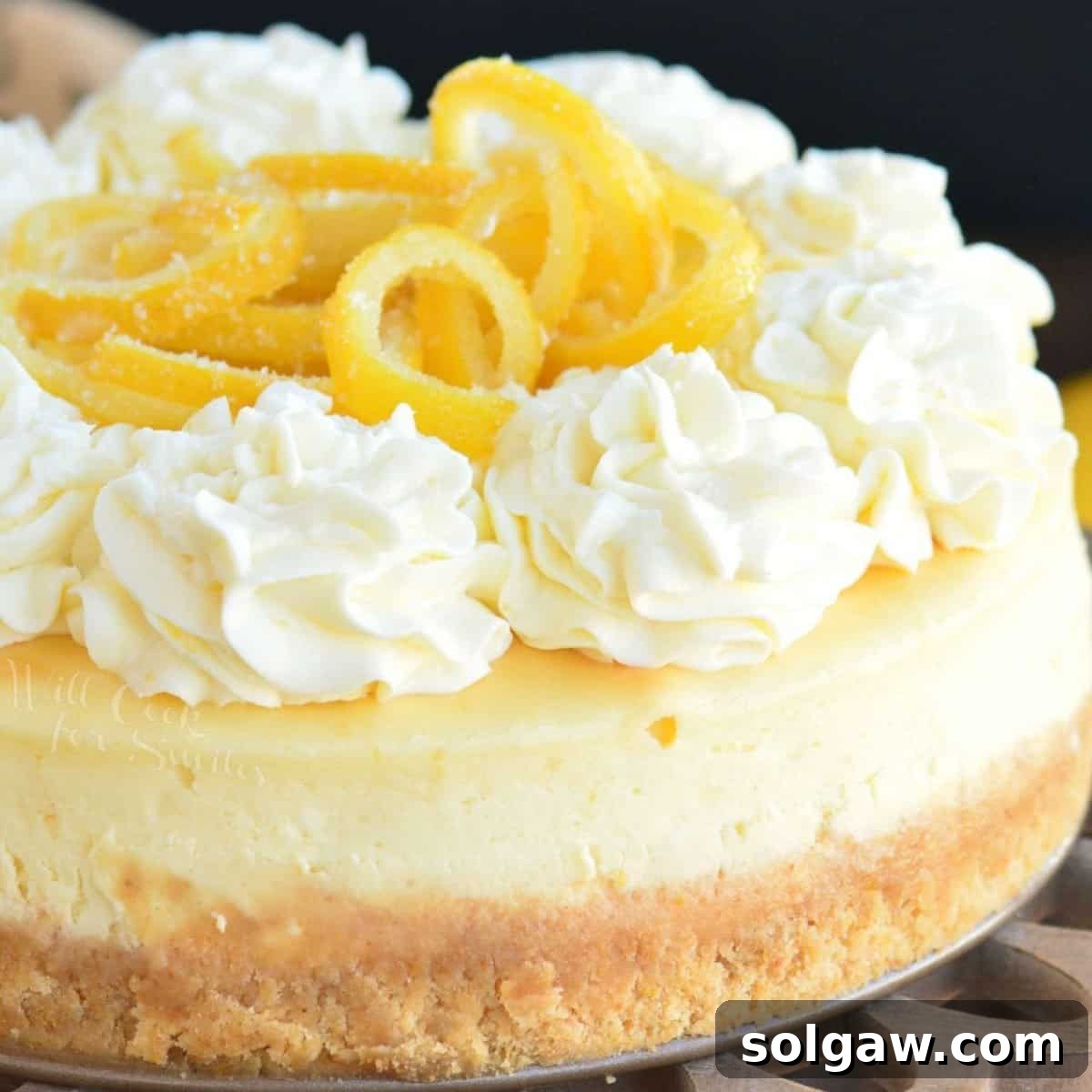
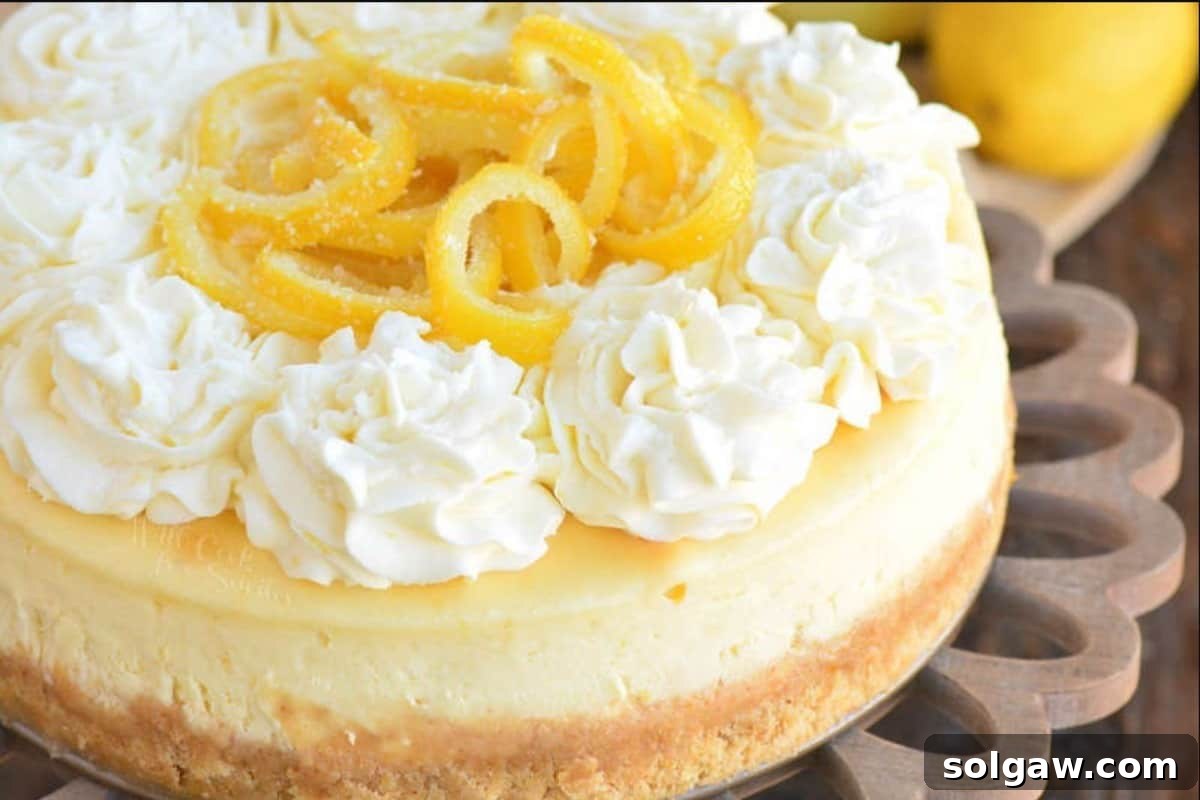
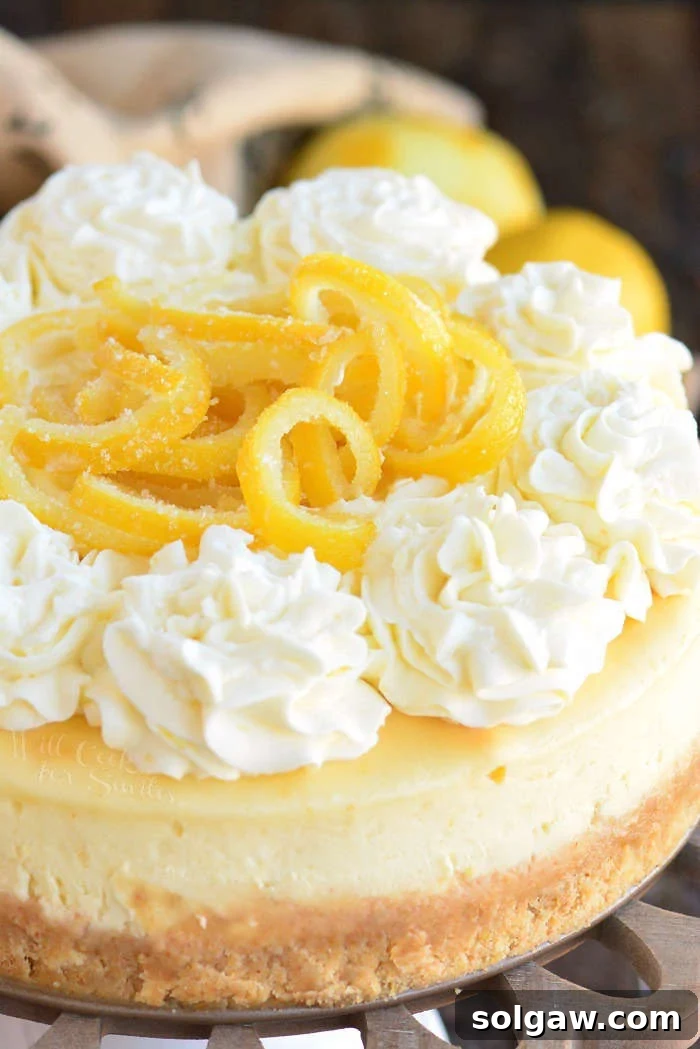
Lemon Cheesecake is a wonderfully bright and refreshingly zesty dessert, perfectly suited for both the vibrant days of spring and the warm evenings of summer. Each exquisite layer of this cheesecake delivers a delightful burst of lemon flavor, creating a harmonious balance that pairs beautifully with the rich, luscious cheesecake filling. Crowned with a homemade cream cheese whipped frosting, subtly infused with an extra twist of lemon, this dessert promises an unforgettable experience for citrus lovers.
If you’re captivated by the irresistible charm of this lemon-infused dessert, you’ll undoubtedly want to explore other sensational citrus creations. Don’t miss out on our creamy Key Lime Pie Cheesecake, a tropical delight, or the nostalgically sweet Orange Creamsicle Cheesecake, reminiscent of a classic childhood treat.
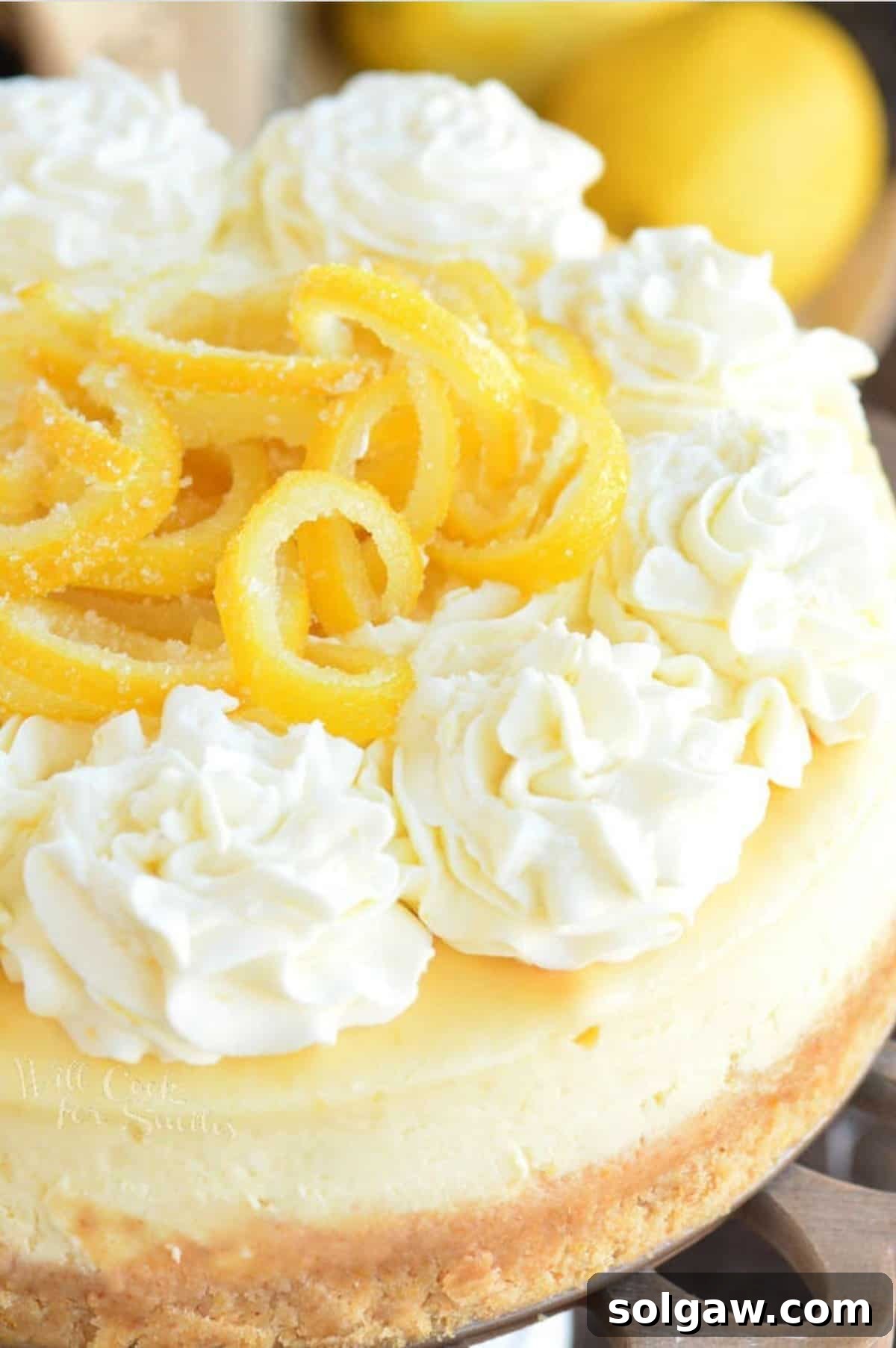
The Allure of Lemon Cheesecake
The arrival of warmer weather signals the perfect time to indulge in desserts bursting with the fresh flavors of citrus and berries. Among these, the bright and zesty profile of lemon holds a special place, making it one of the most cherished ingredients in my dessert repertoire. The delightful interplay between sweet and sour notes in lemon creates an incredibly pleasing and utterly refreshing taste sensation. This vibrant fruit truly shines when combined with rich, creamy elements like cream cheese or custard, transforming simple ingredients into something extraordinary.
My kitchen is rarely without a plentiful supply of lemons, and I often have a jar of homemade lemon curd on hand. These staples are perfect for those spontaneous Sunday mornings when the urge strikes to whip up treats like delightful Lemon Cream pastries or fluffy Lemon Filled Donut Holes. However, for truly special occasions or when you simply crave a show-stopping dessert, a homemade Lemon Cheesecake is the ultimate choice. Its elegant presentation and bold flavor never fail to impress.
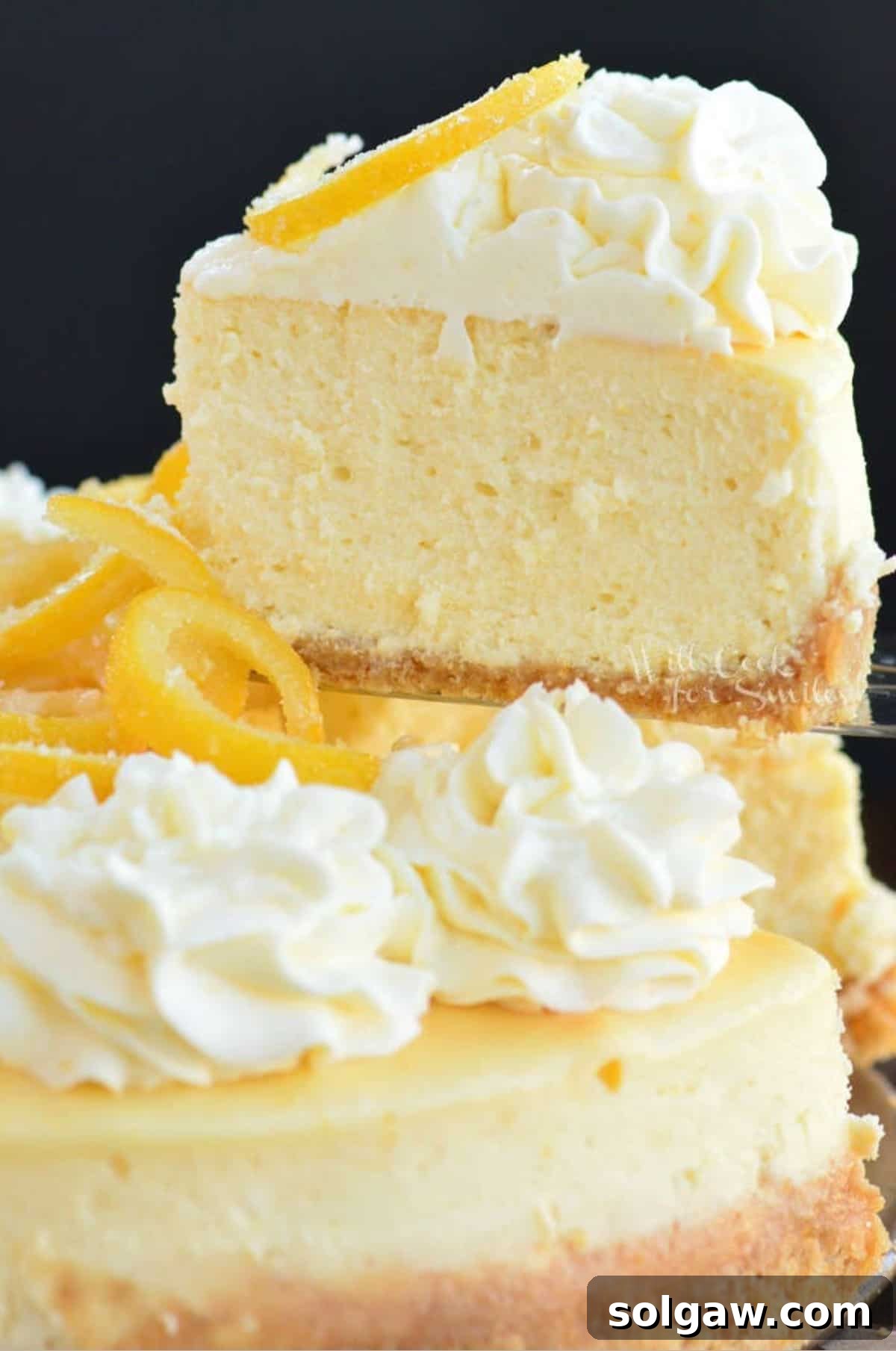
This exquisite lemon cheesecake is a testament to layered flavor, with lemon infused into every component. From the subtly tangy crust to the incredibly luscious cheesecake filling, and finally, the smooth, airy whipped cream cheese frosting, each bite is a symphony of citrus. To elevate its visual appeal and add another layer of texture and taste, this beautiful dessert is traditionally decorated with our signature homemade candied lemon peels. While crafting these candied peels takes approximately an hour and requires a bit of dedication, the effort is undeniably worth it. The good news is, you can always prepare them in advance, making your cheesecake assembly even smoother.
Essential Ingredients for Your Lemon Cheesecake
Achieving the perfect texture and flavor in your homemade lemon cheesecake begins with selecting high-quality ingredients and preparing them correctly. Here’s a detailed look at the key components and why their specific preparation matters for the best possible outcome.
- Sugars: This recipe utilizes a variety of sugars to achieve balanced sweetness and texture. You’ll need brown sugar for the crust, contributing a subtle molasses note and tenderness; standard white granulated sugar for the creamy cheesecake filling; and delicate powdered sugar for the frosting, ensuring a silky-smooth finish. If you opt to make the impressive candied lemon peels, you’ll also require some extra fine sugar for coating, which adheres beautifully to the delicate peels.
- Cream Cheese: For a truly decadent and rich cheesecake, always use full-fat cream cheese. The higher fat content ensures a wonderfully creamy consistency and prevents a watery or grainy texture. It’s crucial to pull the cream cheese out of the refrigerator at least 30-45 minutes before you begin mixing. This allows it to soften thoroughly to room temperature, which is essential for beating it smooth and lump-free, ensuring even incorporation with other ingredients.
- Eggs: Similar to cream cheese, eggs should also be at room temperature before baking. This typically means taking them out of the fridge 30-45 minutes prior to use. Room temperature eggs emulsify more effectively with the cream cheese and sugar, leading to a smoother, more uniform cheesecake batter and helping to prevent cracks during baking.
- Heavy Whipping Cream: This ingredient is vital for the rich, creamy texture of both the cheesecake filling and the light, airy frosting. Do NOT substitute heavy whipping cream with lighter dairy products like milk or half-and-half. These alternatives lack the necessary fat content and will result in a cheesecake with an incorrect consistency, often too thin or lacking richness.
- Sour Cream: Another key player in achieving that signature decadent consistency is full-fat sour cream. Its tangy flavor complements the lemon beautifully, and its high-fat content contributes significantly to the cheesecake’s velvety smoothness and rich mouthfeel. Avoid reduced-fat versions, as they can alter the texture.
- Vanilla Extract: For the most authentic and pleasing flavor, I highly recommend using 100% pure vanilla extract. Artificial or imitation vanilla simply cannot replicate the depth and warmth that pure vanilla brings, enhancing the overall complexity of your lemon cheesecake.
- Lemons: Of course, fresh lemons are paramount! You’ll be using both the zest (the fragrant yellow outer peel) for intense lemon flavor without adding excess liquid, and the juice in various stages, though primarily for the optional candied peels. Choose bright, firm lemons with smooth skin for the best zest and juicing results.
- Graham Cracker Crumbs: These form the classic, buttery base of our cheesecake. If you don’t have pre-made crumbs, you can easily make your own by pulsing graham crackers in a food processor until fine.
- Lemon Extract: While fresh lemon zest provides natural flavor, a touch of lemon extract amplifies that citrus punch, especially in the crust and frosting, ensuring a consistent and bright lemon note throughout.
- Cornstarch: A small amount of cornstarch acts as a stabilizer in the cheesecake filling. It helps prevent cracking and ensures a smooth, firm-but-creamy texture, especially important in cheesecakes baked in a water bath.
Please refer to the complete recipe card below for precise measurements and quantities of all ingredients.
Step-by-Step Baking Instructions
Creating this stunning lemon cheesecake is a rewarding process, and following these detailed instructions will ensure a perfectly baked and beautifully presented dessert.
Preparing Your Springform Pan
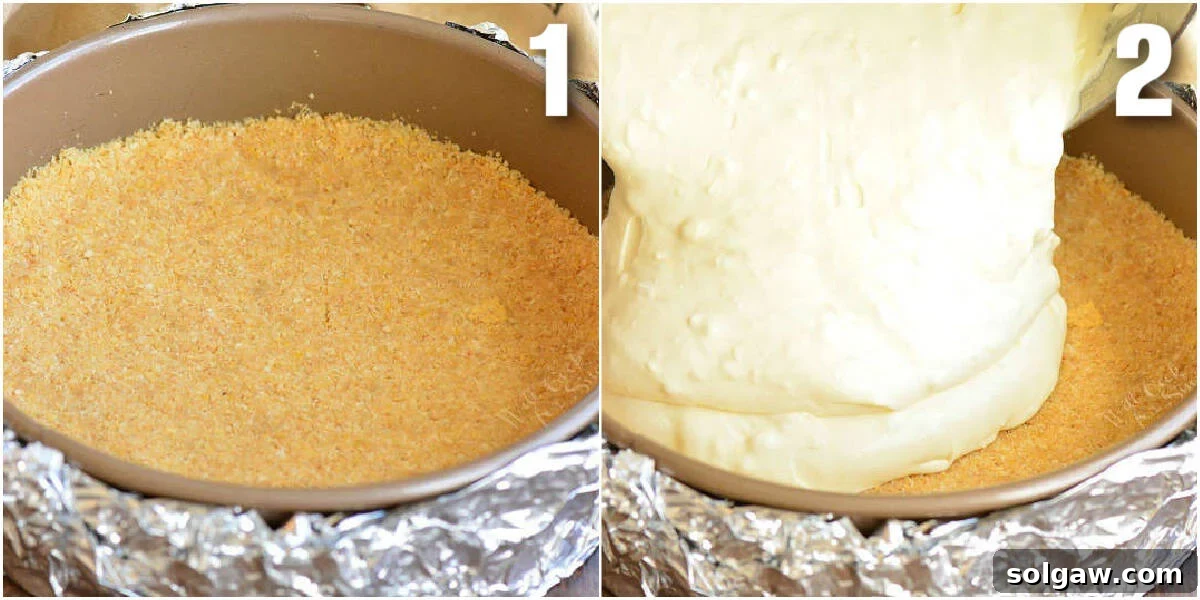
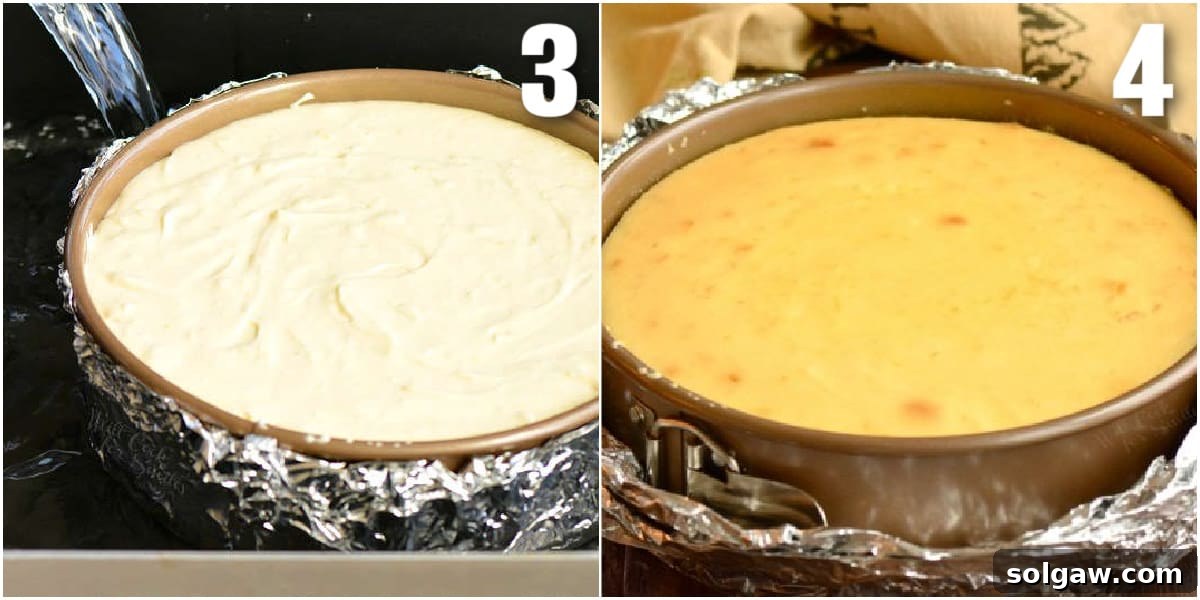
Before you even begin mixing, it’s essential to prepare your springform pan to prevent any water from seeping in during the water bath. Wrap the entire outside of the springform pan securely with several layers of heavy-duty aluminum foil. This creates a protective barrier, especially for older or well-used pans that might be prone to small leaks. Even a tiny amount of water can compromise the crust, so this step is crucial for success.
Crafting the Flavorful Crust
The foundation of our lemon cheesecake is a subtly lemon-infused graham cracker crust.
- In a medium mixing bowl, combine the graham cracker crumbs, melted butter, lemon extract, fresh lemon zest, and brown sugar. Mix these ingredients thoroughly until the mixture is uniformly moist and crumbly.
- Lightly spray the inside of your prepared springform pan with a non-stick cooking spray, ensuring to coat both the bottom and a little up the sides. This helps prevent the crust from sticking and makes for easier slicing later.
- Transfer the crumb mixture into the bottom of the prepared springform pan. Using the back of a spoon or your fingertips, press the mixture evenly over the bottom and slightly up the sides of the pan. A firm, even base is key to a stable and delicious crust.
Mixing the Luscious Cheesecake Filling
This creamy filling is the heart of your lemon cheesecake, so take care with each step to ensure a smooth, velvety texture.
- In the bowl of an electric mixer fitted with a paddle attachment, beat the softened full-fat cream cheese on medium-high speed for about 2-3 minutes. You want it to be incredibly smooth, light, and fluffy, with no lumps remaining. Scrape down the sides and bottom of the bowl frequently to ensure even mixing.
- With the mixer still running on medium speed, gradually pour in the white granulated sugar, allowing it to incorporate fully.
- Add the room temperature eggs, one at a time, beating just until each egg is fully incorporated before adding the next. Overmixing at this stage can incorporate too much air, which can lead to cracks. Again, scrape down the bowl as needed to ensure everything is well combined.
- Reduce the mixer speed to low. Add the sour cream, pure vanilla extract, lemon extract, and heavy whipping cream. Beat until just fully incorporated. Be careful not to overmix.
- Finally, still on low speed, beat in the cornstarch and the remaining lemon zest. Continue to mix for just a few more seconds, scraping the sides and bottom of the bowl one last time to guarantee an evenly mixed batter.
- Carefully pour the smooth cheesecake batter evenly into your prepared springform pan, smoothing the top with a spatula if necessary.
Baking Your Cheesecake to Perfection
The water bath is essential for a crack-free and silky-smooth cheesecake.
- Preheat your oven to 325°F (160°C).
- Place a large roasting pan (one that is large enough to comfortably hold your springform pan) into the preheated oven. Carefully place your foil-wrapped springform pan containing the cheesecake batter inside the roasting pan.
- With extreme caution, pour hot water into the roasting pan, ensuring it comes about halfway up the side of the springform pan. This creates a gentle, moist baking environment that prevents the cheesecake from drying out and cracking.
- Bake for 85-90 minutes. The cheesecake is done when the edges are set, but the center still has a slight jiggle.
- Once baked, turn off the oven. Prop the oven door open halfway and allow the cheesecake to rest inside the cooling oven for 10-15 minutes. This gradual cooling prevents sudden temperature changes that can cause cracking.
- Carefully remove the cheesecake from the oven and take off the aluminum foil wrap from the springform pan.
- Let the cheesecake rest on a wire rack at room temperature for another 10 minutes. After this time, gently run a thin butter knife between the sides of the cheesecake and the springform pan to carefully separate it. This crucial step helps prevent cracks as the cheesecake continues to cool and contract. You don’t need to actually remove the cheesecake from the pan until you’re ready to serve it.
- Cool the cheesecake completely on the wire rack for at least an hour. Once cooled, cover the pan tightly with plastic wrap and refrigerate for a minimum of 6 hours, or ideally, overnight. Chilling is essential for the cheesecake to fully set and develop its firm yet creamy texture.
Whipping Up the Dreamy Lemon Frosting
This light and zesty cream cheese frosting is the perfect crowning glory for your lemon cheesecake. Remember to prepare it right before you’re ready to frost!
- Ensure your cream cheese is softened (about 30-45 minutes on the counter) but keep your heavy whipping cream very cold. Attach the whisk attachment to your electric mixer.
- In the mixer bowl, beat the softened cream cheese and powdered sugar on medium-high speed for about 1 minute, until smooth and well combined.
- While the mixer is running on medium speed, slowly pour in the cold heavy whipping cream. Add the lemon extract. Continue whisking on medium-high speed until the frosting is whipped into stiff peaks and forms lovely waves.
- Reduce the mixer speed to low (or “stir” setting) and gently mix in the lemon zest. Give it just a few turns to evenly distribute the zest without deflating the frosting. Turn off the mixer.
- Transfer the luscious frosting to a piping bag fitted with your desired decorative tip (a 1M star tip works beautifully) and adorn the top of your chilled cheesecake to your heart’s desire!
PRO TIP: The frosting whips up quite quickly. Keep a close eye on it to avoid over-whipping, which can make it grainy.
Crafting Homemade Candied Lemon Peels
While optional, homemade candied lemon peels add an elegant touch and an extra layer of zesty sweetness that truly elevates this dessert. The process takes about an hour, but the vibrant garnish is well worth the effort.
- Begin by carefully peeling the skin off 2-3 lemons. Use a sharp vegetable peeler or a paring knife, taking care to avoid getting too much of the white pith (the bitter part) underneath the zest.
- Once peeled, slice the lemon peels into thin strips, about 1/8 to 1/4 inch wide.
- Place the sliced peels into a small pot and cover them with cold water. Bring the water to a boil and let the peels boil for just about 30 seconds. This blanching process helps to remove some of the bitterness from the pith.
- Immediately drain the peels and rinse them thoroughly with cold water.
- Repeat the boiling, draining, and rinsing process two more times. This triple blanching ensures the peels are tender and not overly bitter.
- In a clean pot, combine 1 cup of fresh water and 1 cup of white granulated sugar. Heat this mixture over medium heat, stirring continuously until the sugar is completely dissolved, forming a clear simple syrup.
- Add the blanched lemon peels to the simple syrup and bring the mixture to a boil. Once boiling, reduce the heat to low and let the peels simmer gently for about 30 minutes. The peels should become translucent and tender.
- After simmering, carefully drain the candied lemon peels, reserving the delicious lemon simple syrup in a separate container for other uses (it’s fantastic in cocktails or iced tea!).
- Toss the drained peels in about 2 tablespoons of extra fine sugar, ensuring they are thoroughly coated.
- Spread the sugared peels out on a wire rack to dry completely, which can take several hours depending on the humidity. Once dry, they will be beautifully crystallized and ready to adorn your cheesecake.
Expert Tips for Lemon Cheesecake Perfection
Achieving a truly spectacular lemon cheesecake involves a few key techniques and considerations. Here are some expert tips to help you bake the best lemon cheesecake every time:
- Plan Ahead for Candied Lemons: If you’re opting for the beautiful candied lemon peel garnish, remember that you can prepare them well in advance. Once dried, store them in an airtight container at room temperature until you’re ready to decorate your cheesecake. This helps streamline your baking day.
- Don’t Waste the Lemon Simple Syrup: The leftover lemon simple syrup from candying the peels is a flavorful bonus! Save it in an airtight jar in the refrigerator. It’s fantastic for sweetening iced tea, drizzling over pancakes, or as a bright addition to cocktails, like my favorite Lemon Drop Martini.
- Graham Cracker Crust Alternatives: No graham cracker crumbs on hand? No problem! You can easily substitute them with Nilla wafers. Simply pulse about 40-50 wafer cookies in a blender or food processor until they form fine crumbs. If using Nilla wafers, you may want to omit or significantly reduce the brown sugar in the crust recipe, as the wafers are already quite sweet.
- The Mighty Water Bath: I cannot stress enough the importance of using a water bath when baking cheesecake. This technique, also known as a bain-marie, provides a gentle, even heat that cooks the cheesecake slowly and prevents it from drying out, cracking, or developing a rubbery texture. The difference in the final texture—a smooth, creamy, and delicate cheesecake—is truly remarkable and well worth the extra step.
- Foil is Your Friend: Even with the water bath, it’s highly recommended to wrap the outside of your springform pan in several layers of heavy-duty aluminum foil. This acts as a protective barrier, preventing any water from seeping into the crust, especially if your springform pan has seen a lot of use and might not be perfectly sealed.
- Avoid Overmixing the Batter: When preparing the cheesecake filling, beat the cream cheese until smooth and then add ingredients gradually. Overmixing, especially after adding the eggs, can incorporate too much air into the batter, which can cause the cheesecake to puff up in the oven and then fall and crack as it cools.
- Chill Thoroughly: Patience is key for a perfect cheesecake. The lengthy chilling time (6 hours or overnight) is non-negotiable. It allows the cheesecake to set completely, firm up, and fully develop its flavors. Rushing this step will result in a less-than-perfect, overly soft cheesecake.
- Temperature Matters: Ensure your cream cheese and eggs are at room temperature as specified. This allows them to combine smoothly without lumps, leading to a much better texture in the final product.
Lemon Cheesecake FAQs
Yes, lemon cheesecake freezes beautifully, but it’s crucial to freeze it WITHOUT any topping or frosting. Frostings, especially whipped cream or cream cheese-based ones, can change texture and consistency after freezing and thawing. You can add them fresh once the cheesecake has been thawed.
To freeze, ensure the cheesecake has cooled completely to room temperature. Run a butter knife along the inside edge of the springform pan to gently separate the cheesecake from the pan sides. You can freeze the cheesecake directly on the bottom of the springform pan, or carefully transfer it onto an aluminum foil-covered piece of thick cardboard for easier handling.
Wrap the cheesecake (with its base) in 2-3 layers of plastic wrap, ensuring it’s completely airtight. Then, wrap the entire package with a layer of heavy-duty aluminum foil for added protection against freezer burn. For an extra layer of security, you can place the wrapped cheesecake in a large, zip-lock freezer bag. Don’t forget to date and label your cheesecake before placing it in the freezer. It will maintain its quality for 2-3 months.
To thaw, transfer the frozen cheesecake from the freezer to the refrigerator and allow it to slow-thaw overnight. This gradual thawing process helps maintain its creamy texture. Once thawed, you can prepare and apply your fresh frosting and toppings.
Frosted lemon cheesecake can be stored in the refrigerator for up to 5 days. It’s best to store it in its original springform baking pan, ensuring it’s tightly re-wrapped with plastic wrap after each serving to prevent air exposure. Be aware that if decorated with candied lemon peels, they may absorb moisture from the cheesecake over time and become softer. For the freshest taste and texture, enjoy within 3-4 days.
Determining when a cheesecake is perfectly baked is a bit of an art. You’ll know it’s ready when the edges appear set and slightly puffed, but the very center (about a 2-3 inch circle) still has a slight, delicate jiggle when you gently shake the pan. It should not look liquidy or completely unset. As the cheesecake cools, first in the oven and then on the counter, the residual heat will continue to cook the center, allowing it to firm up further. It is crucial DO NOT insert a knife or toothpick into the center of the cheesecake to test for doneness, as this will almost certainly cause an unsightly crack. Trust the jiggle!
More Irresistible Cheesecake Recipes
If you’ve fallen in love with the art of cheesecake making, or simply enjoy a rich, creamy dessert, explore these other fantastic cheesecake recipes that are perfect for any occasion.
- Ricotta Cheesecake
- Strawberry Cheesecake
- Strawberry No Bake Cheesecake
- Ultimate Coconut Cheesecake
- White Chocolate Blueberry Cheesecake
PIN THIS RECIPE FOR LATER
We hope you enjoyed crafting this delightful Lemon Cheesecake! If you’ve tried our recipe and found these tips helpful, please consider leaving a 🌟 star rating below. Your feedback means a lot! Share your thoughts and any questions in the 📝 comment section, and don’t forget to subscribe to our newsletter for more delicious recipes delivered straight to your inbox.
Lemon Cheesecake
Print
Pin
Dessert
American
30
1
25
7
8
45
10
886
kcal
Lyuba Brooke
Equipment
-
9-inch springform pan
-
Larger roasting pan that fits the springform comfortably inside
-
Electric mixer (stand or hand-held)
-
Piping bag with decorative tip (optional, for frosting)
-
Small pot (for candied peels)
Ingredients
Crust:
- 1 1/2 cups graham cracker crumbs
- 1/4 cup brown sugar
- 4 tbsp butter melted
- 1 lemon – zest only
- 1/2 tsp lemon extract
Cheesecake Filling:
- 32 oz cream cheese softened, full-fat
- 1 cup white granulated sugar
- 3 eggs room temperature
- 1/2 cup heavy whipping cream
- 1/2 cup sour cream full-fat
- 2 tbsp cornstarch
- 1 tsp vanilla extract pure
- 1 tsp lemon extract
- 2 lemons – zest only
Frosting:
- 8 oz cream cheese softened
- 1 cup heavy whipping cream cold
- 1/2 tsp lemon extract
- 1 lemon – zest only
- 1 cup powdered sugar
Candied Lemon Peels – takes about an hour (optional):
- 2-3 lemons – peel only
- 3/4 cup water (for blanching)
- 1 cup white granulated sugar (for syrup)
- 1 cup water (for syrup)
- 2 tbsp extra fine sugar for coating
Instructions
-
Before making the cheesecake, prepare the pan by wrapping the outside of the pan in several layers of heavy-duty aluminum foil. This helps prevent water from leaking into the pan during the water bath.
-
While there’s a slight chance a small amount of water could still leak in, this protective measure significantly reduces the risk and typically will NOT ruin the cheesecake.
Crust:
-
Combine graham cracker crumbs, melted butter, lemon extract, lemon zest, and brown sugar in a mixing bowl and mix very well until thoroughly combined and moist.
-
Spray the inside of the springform pan with some non-stick cooking spray, ensuring to coat the bottom and a little up the sides.
-
Spread the crumb mixture into the bottom of the prepared springform, evenly pressing it over the bottom and slightly up the sides to form a firm crust.
Cheesecake Filling:
-
In the bowl of an electric mixer, beat the softened cream cheese on medium-high speed for a couple of minutes until it is perfectly smooth and fluffy, with no lumps. Scrape down the bottom and sides of the bowl as needed.
-
While continuing to beat, gradually pour in the white granulated sugar. Once the sugar is incorporated, add the room temperature eggs, one at a time, beating just until each egg is fully combined before adding the next. Avoid overmixing.
-
Add the sour cream, pure vanilla extract, lemon extract, and heavy whipping cream. Beat on medium-high speed until all ingredients are just very well mixed and the batter is smooth.
-
Lower the speed to low and beat in the cornstarch and lemon zest. Scrape the sides and bottom of the bowl and mix for just a few more seconds to ensure everything is evenly incorporated.
-
Carefully transfer the smooth batter into the prepared springform pan and spread it evenly across the crust.
Baking Cheesecake:
-
Preheat your oven to 325°F (160°C).
-
Place a large roasting pan into the preheated oven. Carefully place the foil-wrapped cheesecake springform inside the roasting pan. With caution, pour hot water into the roasting pan, ensuring it comes about halfway up the side of the springform pan.
-
Bake for 85-90 minutes. The cheesecake is done when the edges are set, and the center still has a slight, delicate jiggle. Turn off the oven, open the oven door halfway, and let the cheesecake rest in the cooling oven for 10-15 minutes. This prevents cracking from a sudden temperature change. Then, remove it from the oven and carefully take off the foil wrap from the pan.
-
Let it rest for another 10 minutes on the counter. Then, gently run a thin butter knife between the sides of the cheesecake and the springform to carefully separate it. (You do not need to remove the cheesecake from the pan completely until you are ready to serve.)
-
Allow the cheesecake to cool completely on a wire rack for at least an hour. Once cooled, cover the pan tightly with plastic wrap and refrigerate for a minimum of 6 hours, or ideally, overnight, to allow it to fully set.
Frosting:
-
Ensure your cream cheese has softened for about 30-45 minutes on the counter, but keep the heavy whipping cream very cold. Use a whisk attachment on your electric mixer.
-
Start by beating the softened cream cheese and powdered sugar together for about a minute on medium-high speed until smooth.
-
Slowly pour in the cold heavy whipping cream while the mixer is running. Add the lemon extract. Continue beating until the frosting is whipped into stiff peaks and forms beautiful waves. (This happens quickly, so watch it closely!)
-
Lower the speed back down to a stir setting and gently mix in the lemon zest. Give it just a few turns to combine evenly, then turn off the mixer.
-
Transfer the fluffy frosting onto a piping bag fitted with a decorative tip (such as a 1M star tip) and decorate the top of your chilled cheesecake as desired.
Candied Lemon Peel (Takes about an hour):
-
Using a vegetable peeler or paring knife, carefully peel the skin off 2-3 lemons, trying to avoid the bitter white pith. Slice the peels into thinner strips.
-
Place the peels into a small pot and cover them with water. Bring it to a boil and boil for approximately 30 seconds. Drain the peels and rinse thoroughly with cold water. Repeat this blanching process two more times to remove bitterness.
-
In the same pot (or a clean one), combine 1 cup of water and 1 cup of white granulated sugar. Heat on medium heat, stirring until the sugar is completely melted and a clear syrup forms.
-
Add the blanched lemon peels to the sugar syrup and bring the mixture to a boil. Lower the heat to low and let the peels simmer gently for about 30 minutes, or until they become translucent.
-
Drain off the lemon simple syrup into a container and save it for future use (e.g., in cocktails or beverages).
-
Toss the drained peels in about 2 tablespoons of extra fine sugar until evenly coated. Lay them out on a wire rack to dry completely, which can take several hours.
Notes
- Water Bath Importance: DO use the water bath technique. It is essential for achieving the signature smooth, creamy, and crack-free texture of a classic cheesecake.
- How To Tell Cheesecake Is Done: A baked cheesecake will have set edges and a center that still shows a slight, gentle jiggle when the pan is lightly moved. The center will continue to set as it cools. DO NOT insert a knife or toothpick into the center, as this can cause it to crack.
- Cooling Process: Ensure proper cooling by following three crucial steps: first, 10-15 minutes of resting in the turned-off oven with the door ajar; second, cooling on the counter for at least an hour; and finally, thorough chilling in the refrigerator for 6 hours or overnight.
- Frosting Timing: Remember NOT to frost the cheesecake until it has been completely chilled and set. Prepare the cream cheese frosting fresh, right before you are ready to decorate the cheesecake for the best texture and appearance.
Nutrition
Calories:
886
kcal
|
Carbohydrates:
77
g
|
Protein:
10
g
|
Fat:
61
g
|
Saturated Fat:
35
g
|
Cholesterol:
241
mg
|
Sodium:
532
mg
|
Potassium:
247
mg
|
Fiber:
1
g
|
Sugar:
67
g
|
Vitamin A:
2331
IU
|
Vitamin C:
5
mg
|
Calcium:
173
mg
|
Iron:
1
mg
Tried this recipe?
Mention @willcookforsmiles or tag #willcookforsmiles!