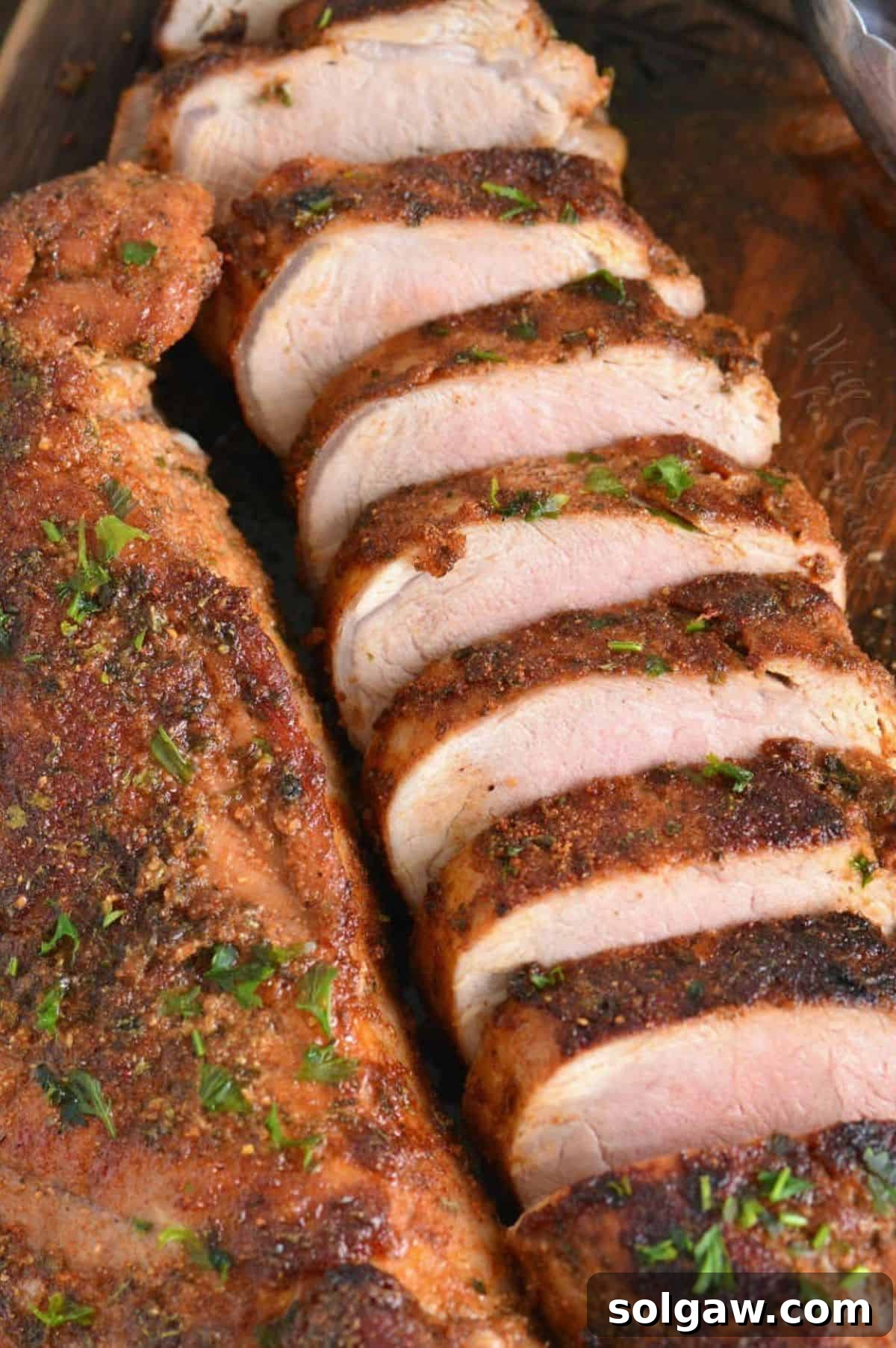
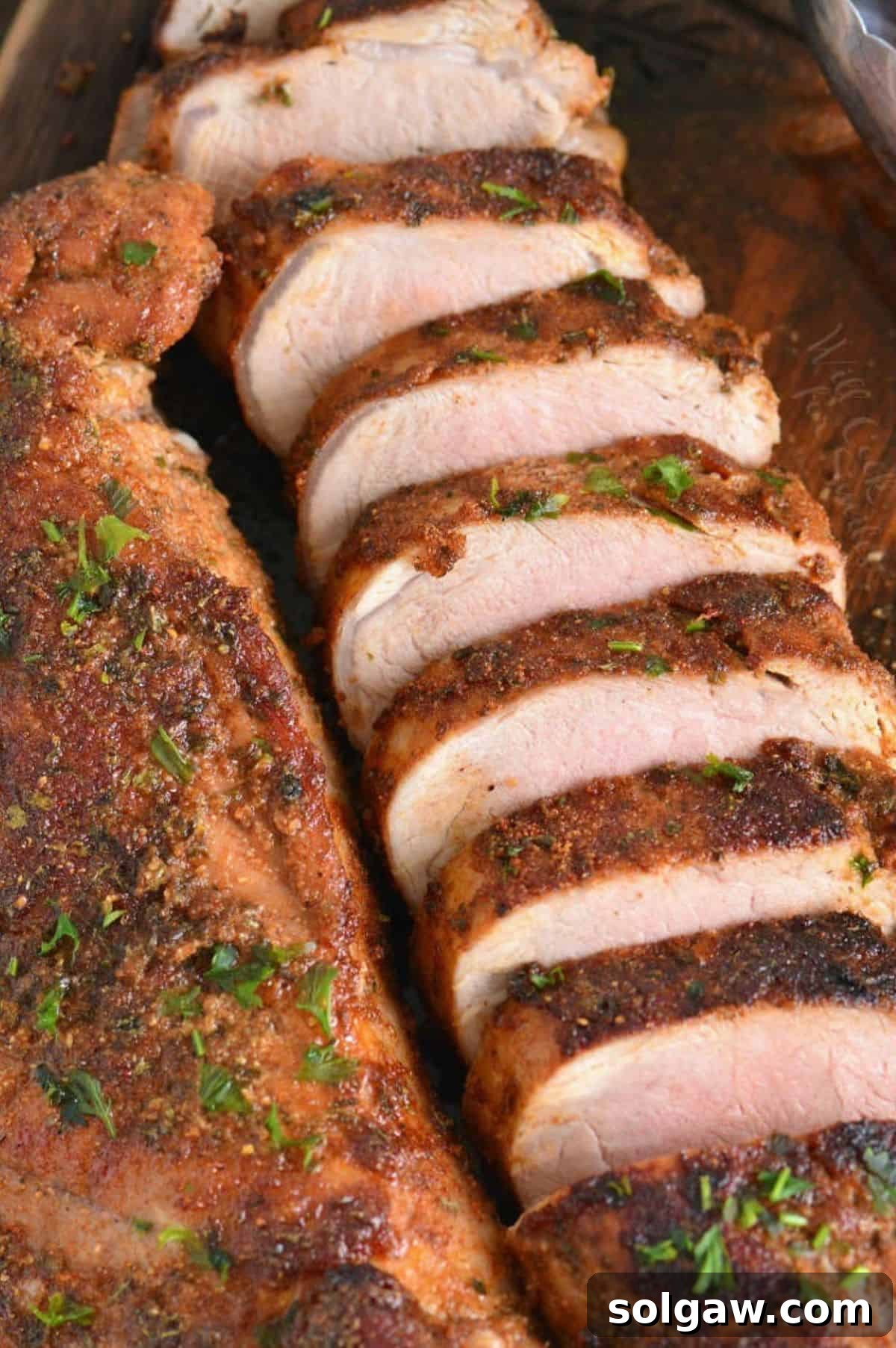
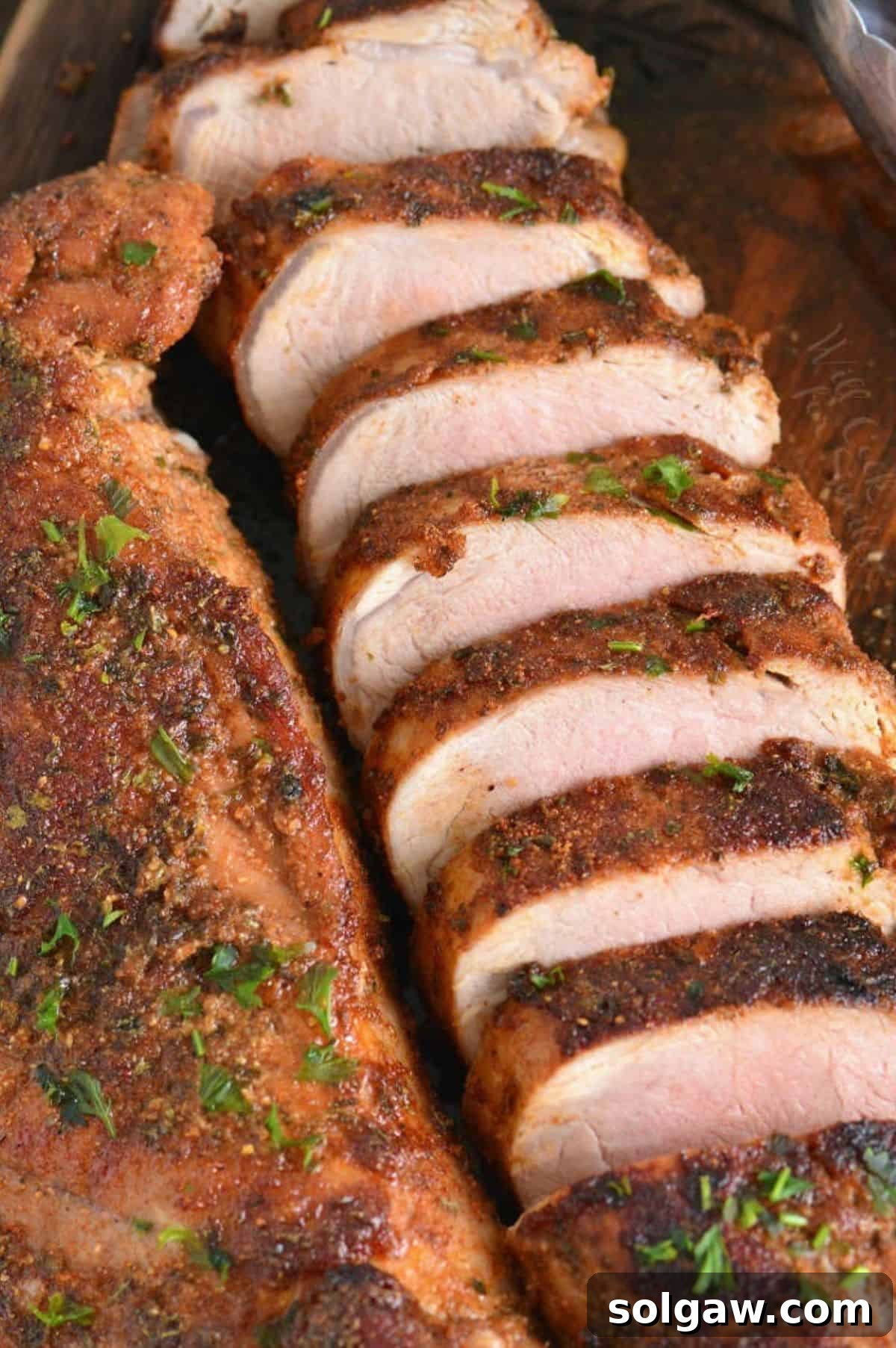
Discover the ultimate recipe for perfectly roasted pork tenderloin that promises a tender, juicy interior with an irresistibly crispy, spice-rubbed crust. This isn’t just another pork recipe; it’s our absolute favorite method, consistently delivering exceptional flavor that even surpasses popular variations like bacon-wrapped pork tenderloin. If you’re searching for an easy yet impressive weeknight meal or a show-stopping dish for entertaining, look no further. This recipe has become a staple in our kitchen, making regular appearances on our weekly menu due to its simplicity and incredible results.
Over the years, I’ve experimented with countless cooking techniques and roasting temperatures for pork tenderloin, rigorously testing each approach to find the sweet spot between doneness and juiciness. This method is the culmination of all that testing – a foolproof strategy that you can rely on every time. The secret lies in a quick, high-heat sear to lock in flavors and create that coveted crust, followed by roasting at a precise 400°F (205°C) until the internal temperature reaches 145°F (63°C). This ensures the pork remains incredibly moist and tender inside while developing a deeply flavorful, crisp exterior. Get ready to elevate your pork tenderloin game and delight your taste buds with this unforgettable dish.
What Our Readers Say
“Best pork roast we have ever eaten. This is the only recipe we use now and have used it on pork shoulder roast as well as standing tenderloin. Am making it for dinner tonight. Yum Yum.” ~Jesse
Table of Contents
Key Ingredients and Expert Tips
Creating this delicious roasted pork tenderloin requires just a few simple, pantry-friendly ingredients and a couple of key techniques. Understanding each component will ensure your dish turns out perfectly every time.
Choosing Your Pork: Tenderloin vs. Other Cuts
The star of this recipe is, of course, the pork tenderloin. It’s crucial to select the correct cut – make sure you’re getting tenderloin and not a pork loin or other pork cuts, as their cooking times and ideal preparations differ significantly. Pork tenderloin is a long, thin, cylindrical cut of pork, typically weighing between 1 to 1.5 lbs (450-680g) per piece. It comes from the back of the animal, running along the backbone, and is renowned for being incredibly lean, wonderfully tender, and exceptionally soft. Its delicate nature makes it ideal for quick cooking methods at higher temperatures, ensuring it remains succulent and doesn’t dry out. Often, packages will contain one or two tenderloins. Always check the label to ensure you have the right cut for optimal results in this recipe.
Crafting the Perfect Homemade Pork Rub
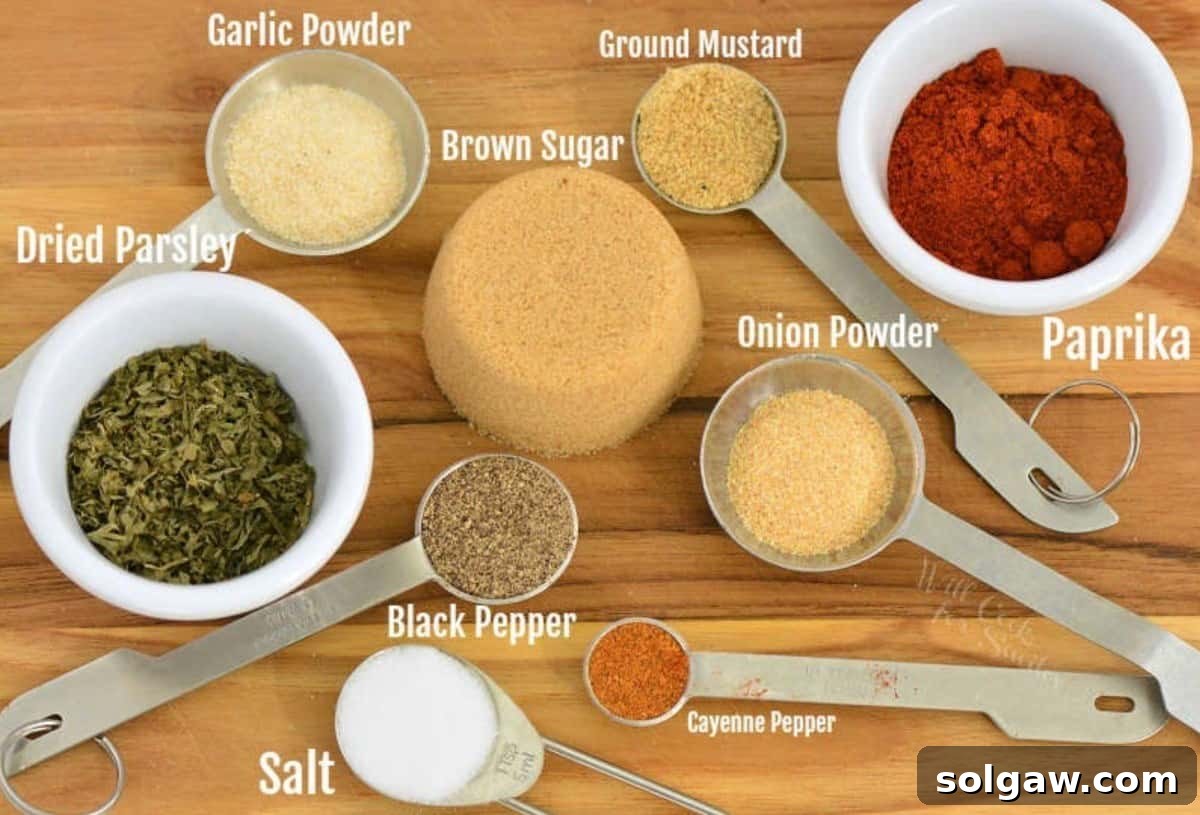
The secret to this pork tenderloin’s phenomenal flavor lies in its custom-blended homemade pork rub. While you can find store-bought rubs, creating your own allows for precise flavor control and ensures freshness. This rub is designed to deliver a harmonious balance of sweet, savory, smoky, and a hint of spice:
- Foundational Flavors: We start with the essential quartet of salt, black pepper, onion powder, and garlic powder. These form the aromatic backbone, enhancing the pork’s natural richness.
- Sweetness: A touch of brown sugar is added to provide a subtle sweetness that caramelizes beautifully during roasting, creating a delightful crust and balancing the savory notes.
- Smoky Depth: Paprika is key for both color and a rich, smoky essence. You can choose regular paprika for a mild flavor, or elevate it with smoky, Spanish, or Hungarian varieties for distinct profiles.
- A Hint of Heat: A pinch of cayenne pepper introduces a gentle warmth that awakens the palate without overpowering the other flavors.
- Classic Pork Companion: Ground mustard is a non-negotiable addition. Its pungent, earthy notes complement pork exceptionally well, adding a depth that truly makes this rub shine.
- Herbaceous Finish: Finally, dried parsley brings a fresh, herbaceous touch that brightens the overall profile without being overwhelming.
Customizing Your Pork Rub
One of the beauties of a homemade rub is its versatility. Feel free to adjust the ingredients to suit your personal preference:
- Spiciness: Easily control the heat by increasing or decreasing the amount of cayenne pepper. For a milder rub, reduce it; for more kick, add a little extra.
- Paprika Variations: Experiment with different types of paprika. Smoky paprika will impart a deeper, more pronounced smoky flavor, while Spanish paprika offers a sweet, vibrant taste, and Hungarian paprika can range from sweet to hot.
- Additional Herbs: For a more complex herbal note, consider adding a small amount of dried thyme or dried sage to the mix. These herbs pair wonderfully with pork and can add an extra layer of aroma.
Mixing this rub yourself ensures you get a burst of fresh flavor that perfectly seasons your pork tenderloin.
Mastering the Perfect Roasted Pork Tenderloin
Achieving a perfectly roasted pork tenderloin with a crispy crust and tender interior is simpler than you might think. Follow these detailed steps for a flawless result:
-
Preheat and Prepare Your Pan: Begin by preheating your oven to 400°F (205°C). While the oven heats, prepare your cooking vessel. A large cast-iron skillet is highly recommended as it excels at searing and transitions seamlessly from stovetop to oven, ensuring even cooking and a beautiful crust. If you don’t have a cast-iron skillet, any other oven-safe cooking pan that can withstand high stovetop heat (like a stainless steel skillet) will work. Lightly grease the pan with a neutral oil, such as canola or avocado oil, to prevent sticking.
-
Mix the Homemade Pork Rub: In a small bowl, combine all the ingredients for your homemade pork seasoning. Whisk them together thoroughly until all the spices are evenly distributed. This ensures every bite of your pork tenderloin is bursting with balanced flavor.
-
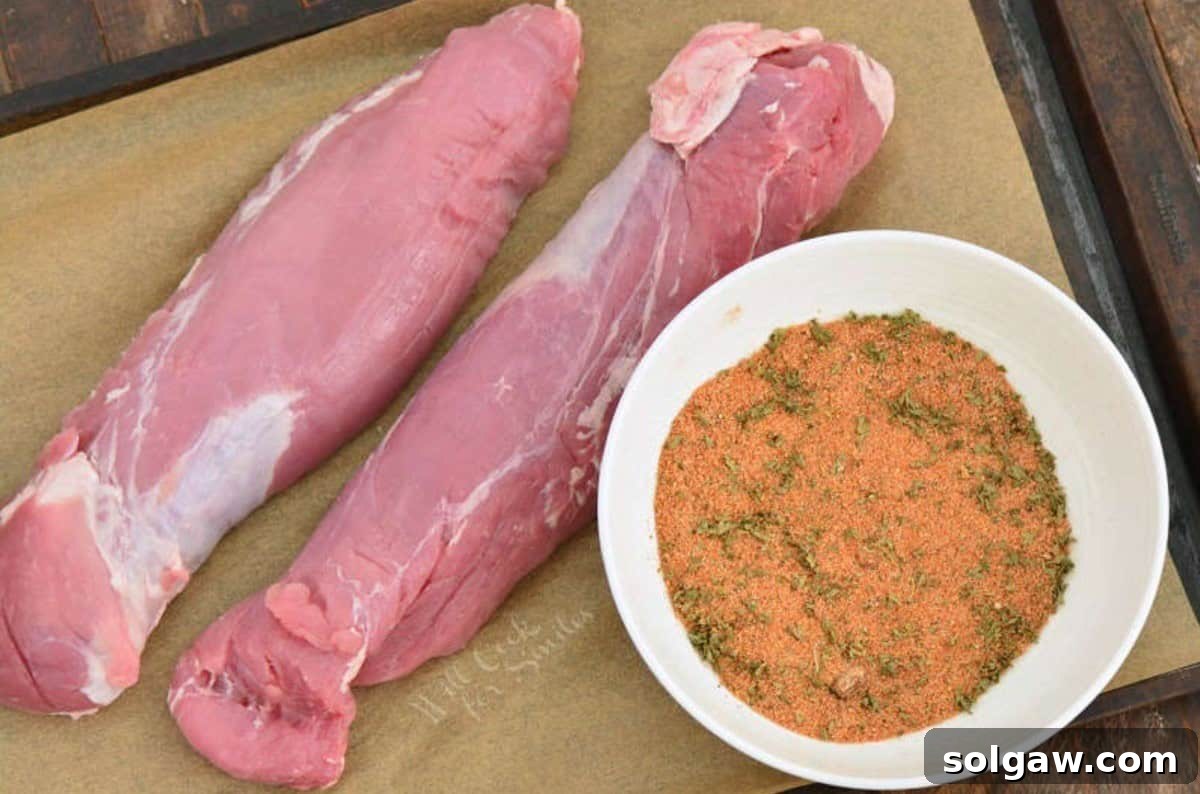
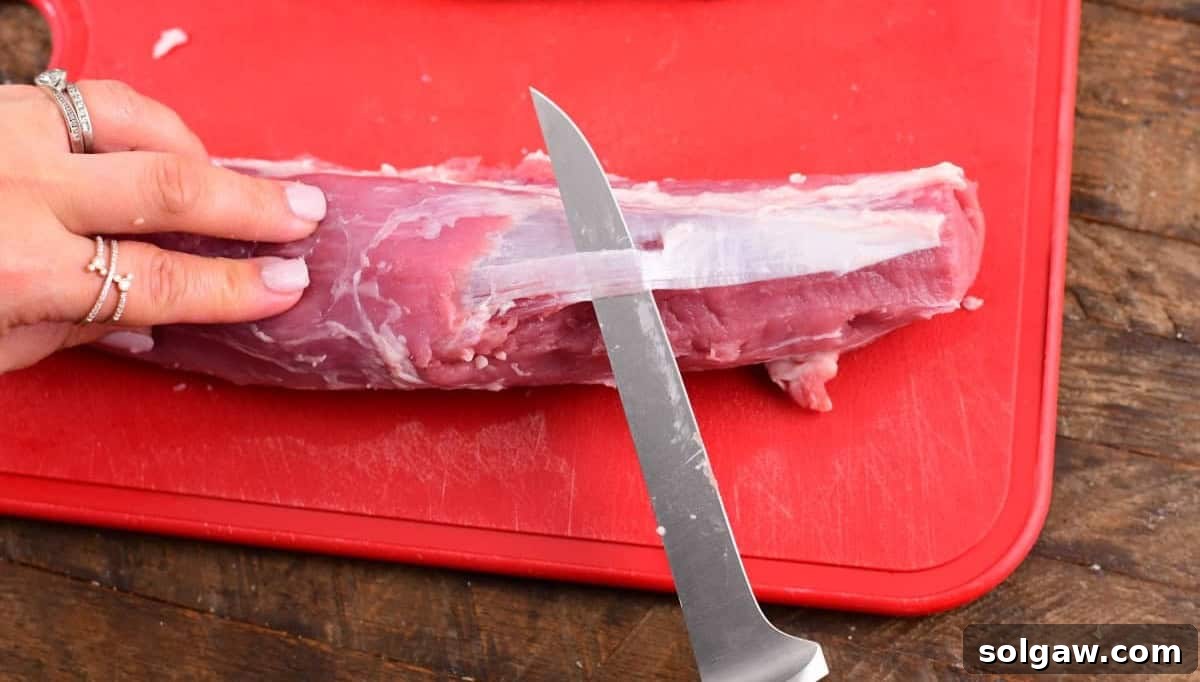
Prepare the Pork Tenderloin: Remove the pork tenderloins from their packaging. It’s crucial to pat them completely dry with paper towels. This step is vital for achieving that desirable crispy crust during searing, as excess moisture will steam the meat instead of browning it. Check for “silverskin,” a thin, silvery, shimmering connective tissue that often runs along the length of the muscle. This tissue is tough and chewy if left on, so it must be removed. To do this, use a sharp, thin knife (a paring knife works well). Carefully slide the knife just under the silverskin, keeping the blade flat against the meat to avoid losing too much flesh. Gently lift the silverskin and slice it off along the meat in one smooth motion.

-
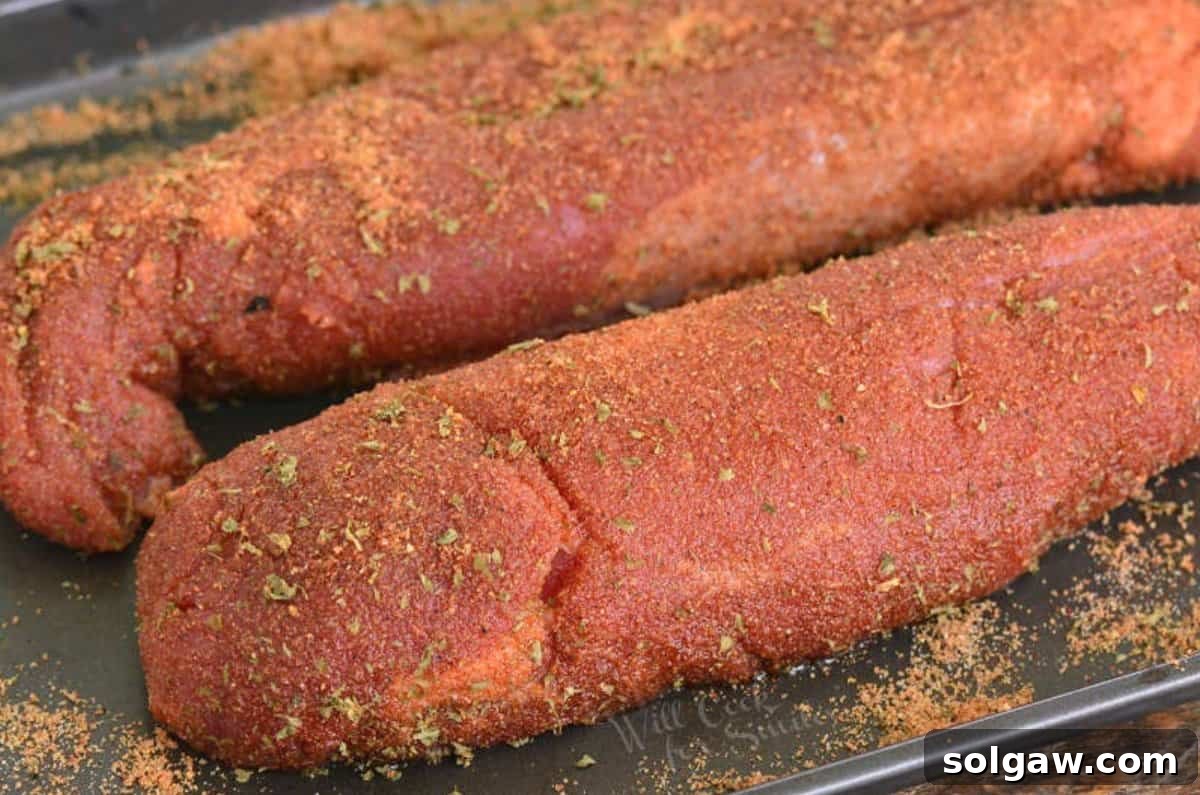
Season Generously: Place the patted-dry tenderloins onto a rimmed baking sheet or a large cutting board. This helps contain any mess from the seasoning. Now, generously coat the entire surface of the pork with the prepared spice rub. Instead of rubbing, which can clump the spices, gently roll the tenderloin and then press the seasoning firmly into the meat with your hands. This technique ensures an even distribution of spices, promotes better adhesion, and helps create a beautiful, flavorful crust when seared and roasted.
-
Sear for the Perfect Crust: Place your skillet over medium-high heat and allow it to get quite hot. Add a little more canola or avocado oil if needed. Once shimmering, carefully place the seasoned tenderloins into the hot skillet. Sear each side for about 1 minute until a golden-brown crust forms. It’s crucial not to sear for too long, as the sugars in the spice rub can burn quickly, leading to a bitter taste. The goal is a quick, intense sear to kickstart the Maillard reaction and build that incredible outer layer.
-
Roast to Perfection: To ensure accurate cooking and food safety, insert a leave-in meat thermometer into the thickest part of one of the tenderloins, making sure it doesn’t touch any bone (though tenderloins are boneless, avoid pushing it all the way through). Transfer the skillet directly into the preheated oven. Roast for approximately 20 minutes, or until the internal temperature registered by the thermometer reaches 145°F (63°C). Cooking time can vary depending on the thickness and starting temperature of your pork, so always rely on the thermometer rather than time alone. Once it hits 145°F, immediately remove the skillet from the oven and transfer the pork tenderloins to a clean cutting board. Leaving them in the hot skillet will cause them to continue cooking, potentially leading to dryness.
-
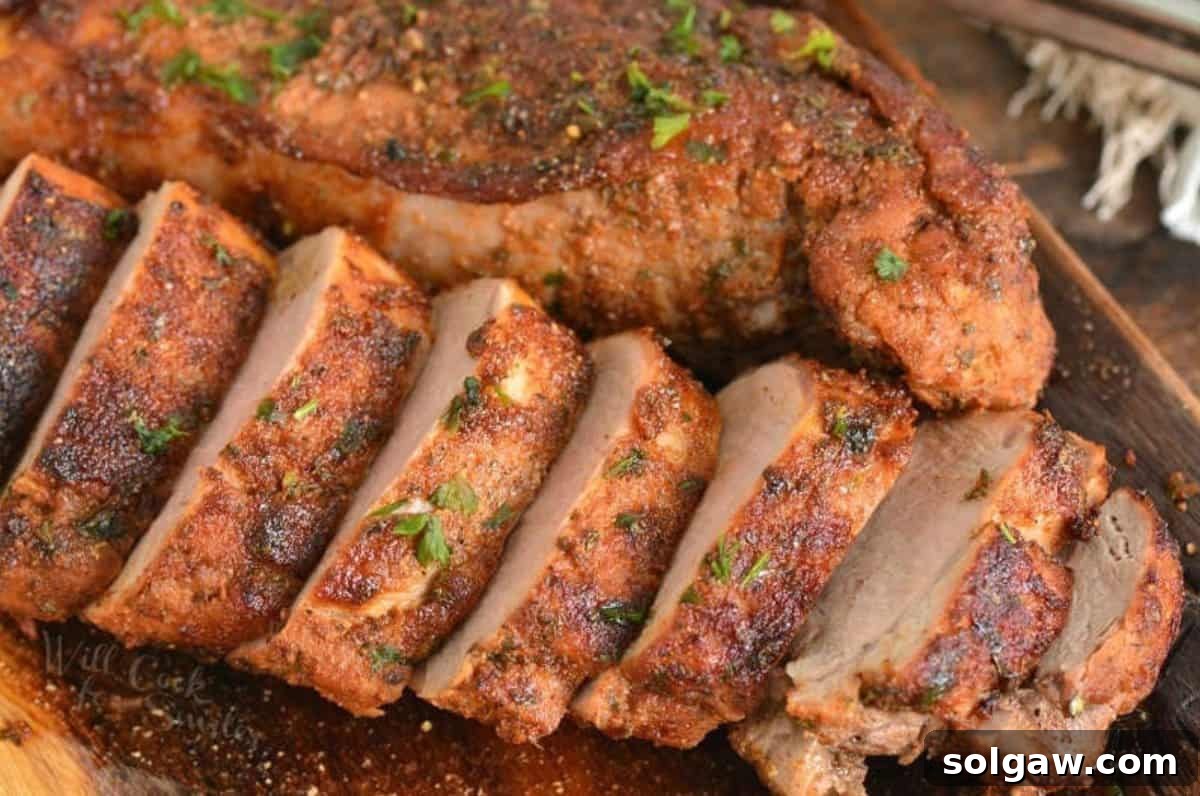
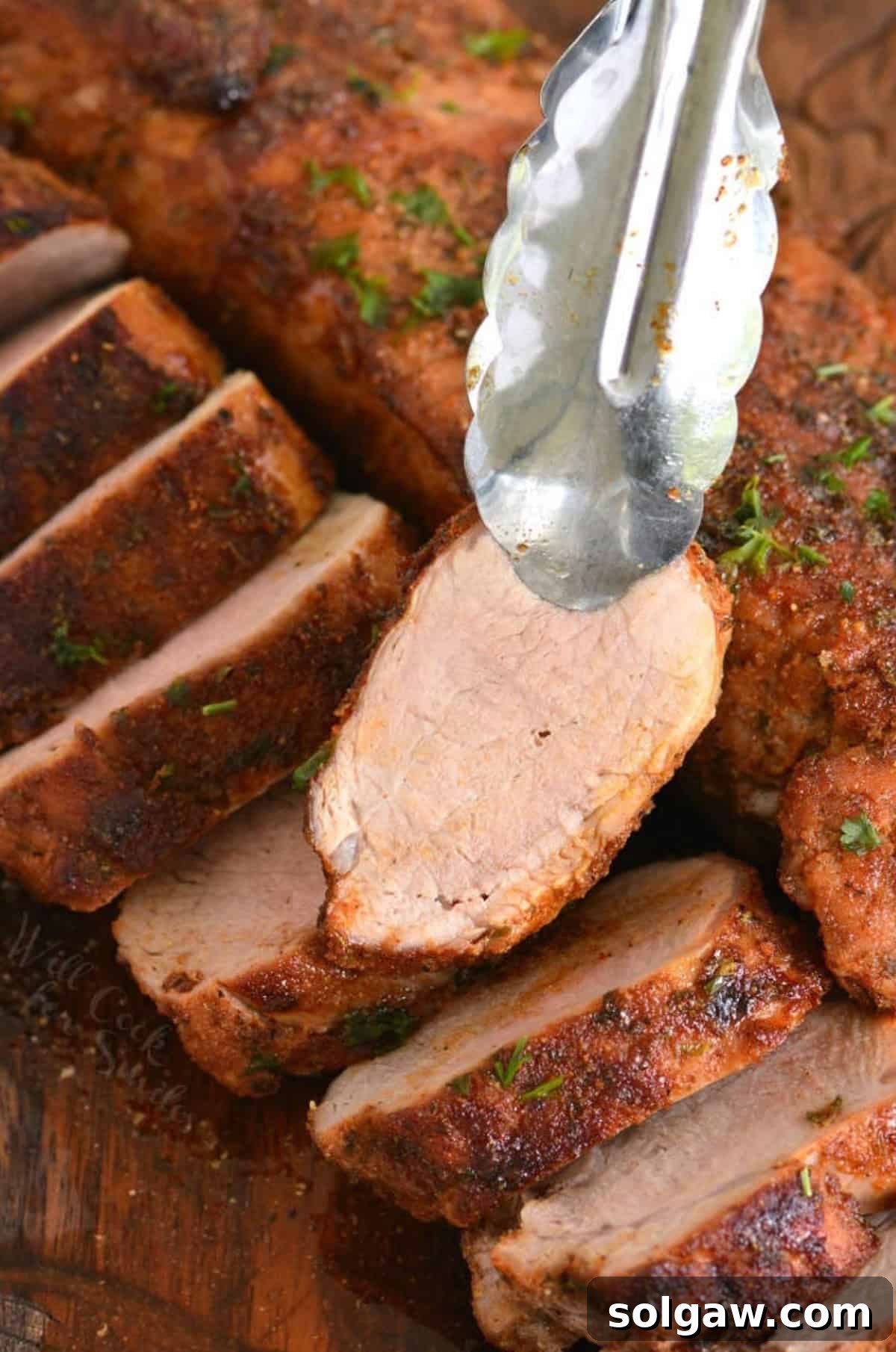
Rest and Slice: This is a critical step for juicy pork. Allow the roasted pork tenderloins to rest uncovered for about 10 minutes before slicing. Resting allows the muscle fibers to relax and the internal juices, which have been pushed to the center during cooking, to redistribute throughout the meat. Skipping this step will result in juices running out onto your cutting board, leaving you with dry pork. After resting, slice the tenderloin against the grain into medallions of your desired thickness. Serve immediately and enjoy your perfectly cooked, flavorful roasted pork tenderloin!
Frequently Asked Questions About Roasted Pork Tenderloin
Can pork tenderloin be slightly pink?
Absolutely, yes! It is not only perfectly safe but also highly recommended for optimal tenderness and juiciness. The USDA guidelines state that whole cuts of pork, including tenderloin, are safe to eat when they reach an internal temperature of 145°F (63°C), followed by a 3-minute rest. At this temperature, the pork will often have a hint of pink in the center, much like a medium-rare steak. This slight pinkness indicates that the meat is perfectly cooked to a safe temperature without being overdone. Overcooking pork, especially a lean cut like tenderloin, will inevitably result in tough, dry, and less flavorful meat. Embrace the pink for a truly succulent experience!
How to reheat roasted pork tenderloin?
Reheating pork tenderloin correctly is key to maintaining its tender texture. Since it’s a lean cut, it’s susceptible to drying out if reheated improperly. Here are a few effective options:
- Microwave: For quick reheating of individual slices, use the microwave in short bursts of 20-30 seconds. Heat just until warmed through, checking frequently to avoid overcooking.
- Stovetop: Place slices of leftover roasted pork tenderloin in a pan over medium-low heat with a small amount of broth or water. Cover and heat gently until warmed through. This method helps retain moisture.
- Air Fryer: An air fryer can also reheat slices effectively. Set it to 350°F (175°C) and reheat for 2-3 minutes. Again, the goal is just to warm it, not to cook it further.
Regardless of the method, remember the golden rule: do not overcook when reheating! Stop as soon as the pork is warm to the touch.
Would it be possible to make a sauce with the pan drippings and seasoning?
Yes, absolutely! Creating a pan sauce from the drippings is an excellent way to capture all the incredible flavors left in the skillet. Here’s how:
- After the pork has finished roasting, transfer the tenderloins to a cutting board to rest.
- Place the skillet back on the stovetop over medium to medium-low heat.
- Pour in about ½ cup of chicken or vegetable broth to deglaze the pan. Use a wooden spatula to scrape up all the delicious browned bits (fond) from the bottom of the skillet – these are packed with flavor.
- Stir in 1 teaspoon of Dijon mustard for a tangy kick that complements the pork beautifully.
- Simmer the sauce for 2-3 minutes, allowing it to reduce slightly and thicken.
- Finally, whisk in 1 tablespoon of cold butter. This will add richness and a silky texture to your sauce.
- Taste the sauce and adjust seasonings if desired, adding a little more salt, pepper, or even a touch more of the pork rub if you wish. Drizzle this flavorful sauce over your sliced pork tenderloin for an extra layer of gourmet taste.
After cooking, could you turn it into pulled pork?
Unfortunately, no. Pork tenderloin is a very lean cut of meat, designed for quick cooking to a medium-rare or medium doneness (145-150°F). It simply does not have the connective tissue or fat content necessary to break down into tender, shreddable pulled pork. Attempting to “pull” cooked tenderloin would only result in dry, stringy pieces. For delicious pulled roast pork, you need a cut with more fat and connective tissue, such as pork shoulder or pork butt. These cuts are best cooked low-and-slow (either in a slow cooker, oven, or pressure cooker) until they are fall-apart tender and easily shreddable.
Can I make it without brown sugar?
Yes, you can certainly omit the brown sugar from the pork rub if you prefer or if you’re managing your sugar intake. However, be aware that the flavor profile will be less balanced, as the brown sugar plays an important role in caramelization and tempering the savory and spicy elements. For those looking for alternatives, you can use a brown-sugar-style substitute. Readers have reported good results with artificial sweeteners like Splenda Brown. I have also tried it with coconut sugar, which offers a similar depth of flavor with a lower glycemic index. While the exact taste and crust might vary slightly, the pork will still be flavorful and delicious.
How to Prep Roast Pork Tenderloin Ahead of Time
Preparing components of your roasted pork tenderloin ahead of time can significantly reduce stress and cooking time on a busy day.
- Pork Rub Seasoning: The homemade pork rub can be mixed and stored in advance. Simply combine all the ingredients in a mixing bowl, blend well, and transfer to an airtight glass jar or container. Store it in a cool, dark pantry for up to several months. This way, your custom rub is ready whenever you are!
- Pork Tenderloin Itself: You can season the pork tenderloin ahead of time. After trimming and patting dry, apply the rub generously. Wrap the seasoned tenderloin tightly in plastic wrap or place it in an airtight glass container or on a metal baking sheet covered with plastic wrap. Store it in the refrigerator for a minimum of 2 hours and up to 24 hours. Marinating it for this period allows the flavors to deeply penetrate the meat. Remember to take the seasoned pork out of the refrigerator about 30 minutes before you plan to roast it, allowing it to come closer to room temperature for more even cooking.
Serving Suggestions and Leftover Ideas
Roasted pork tenderloin is a versatile main course that pairs wonderfully with a wide array of side dishes. Its rich flavor profile complements both starchy and fresh vegetable accompaniments, making it perfect for any meal.
Classic Pairings
Pork and potatoes are a match made in culinary heaven. You can serve it with virtually any potato dish: creamy mashed potatoes, rich and decadent scalloped potatoes, or rustic oven-roasted potatoes seasoned with herbs. For vegetables, choose vibrant options like sweet honey-roasted carrots, crisp sautéed green beans with garlic, or savory roasted Brussels sprouts with bacon. A simple side salad with a light vinaigrette also provides a refreshing contrast.
Sweet & Savory Combinations
Don’t shy away from incorporating fruit! The subtle sweetness of apples, especially when cooked, creates an exquisite balance with savory pork. Our tenderloin would be delightful alongside fried apples seasoned with cinnamon and a hint of brown sugar. In fact, I’ve previously combined these flavors in my popular roasted pork with apples recipe, proving how well they complement each other.
Creative Leftover Solutions
If you find yourself with leftover roasted pork tenderloin, reheating it carefully is essential to preserve its tenderness. Remember to heat it up as quickly as possible without overcooking to avoid drying it out. Beyond simple reheating, leftover pork tenderloin shines in various dishes:
- Sandwiches and Wraps: Slice it thinly and layer it in sandwiches or wraps with your favorite cheese, lettuce, and a touch of a flavorful sauce like honey mustard or a creamy horseradish spread.
- Salads: Cube or slice cold pork tenderloin and add it to a vibrant green salad for a protein-packed lunch.
- Quick Stir-fries: Dice the pork and toss it into a vegetable stir-fry for a fast and healthy meal.
- Tacos or Quesadillas: Shred or chop the pork and use it as a filling for quick tacos or cheesy quesadillas.
PIN THIS RECIPE FOR LATER
DID YOU MAKE THIS RECIPE? PLEASE leave a 🌟 star rating! Let me know how you liked it by leaving the 📝 comment below or share and tag me on social media @willcookforsmiles. DON’T FORGET to subscribe to my newsletter!
Seasoned Roasted Pork Tenderloin Recipe
Print
Pin
Rate
Ingredients
Pork Seasoning/Rub
- 1/4 cup brown sugar
- 1 tbsp paprika
- 2 tsp salt
- 1 tsp black pepper
- 2 tsp garlic powder
- 2 tsp onion powder
- 3 tsp ground mustard
- 1 tbsp dried parsley
- 1/4 tsp cayenne pepper
Pork:
- 2.5 lbs pork tenderloin
- 2 tbsp canola oil for cooking
Instructions
-
Preheat the oven to 400°F (205°C) and grease a large cast iron skillet. (If you don’t have a skillet, use another oven-safe cooking pan that can go from stove-top to oven.)
-
In a small bowl, combine all ingredients for pork seasoning and mix them well.
-
Take tenderloins out of the package, pat dry with a paper towel, and remove any silverskin. Place them into a rimmed baking dish or on a large cutting board and generously coat with the seasoning, pressing it firmly into the meat.
-
Preheat the skillet over medium-high heat, drizzle a little avocado (or another neutral oil), and sear the tenderloins for about a minute on all sides until a golden crust forms.
-
Insert a meat thermometer into the center of the thickest part of the meat and place the skillet into the oven.
-
Roast for approximately 20 minutes, until the internal temperature reaches 145°F (63°C). (Exact time will depend on the size and thickness of the meat.)
-
Remove the skillet from the oven and immediately transfer the pork tenderloins to a cutting board. Let them rest for about 10 minutes before slicing against the grain.
Notes
- Pork A Little Pink In The Center? It is perfectly safe and even desired to be slightly pink in the middle. When the pork is slightly pink in the middle, the meat is done to safe temperature (145°F / 63°C) but not so done to be dry. Overcooking pork will result in tough, dry meat.
-
Reheating: Pork tenderloin is a tender meat and it will stay tender while reheating. You can reheat it in 20-30 second increments in the microwave just until warmed through.
Another option is to reheat slices of leftover roasted pork tenderloin in the pan over medium-low heat. You can also use an air-fryer and reheat the slices at 350°F (175°C) for 2-3 minutes. Remember to reheat just until heated through, don’t overcook!
Nutrition
Explore More Pork Recipes
- Italian Stuffed Pork Tenderloin
- Brown Sugar Dijon Pork Tenderloin
- The Ultimate Dry Rub
- Bacon Wrapped Pork Tenderloin
- Roasted Pork Loin
Originally published on Will Cook For Smiles in November 2019.