Irresistible Strawberry Cheesecake: Your Guide to a Flawless Dessert
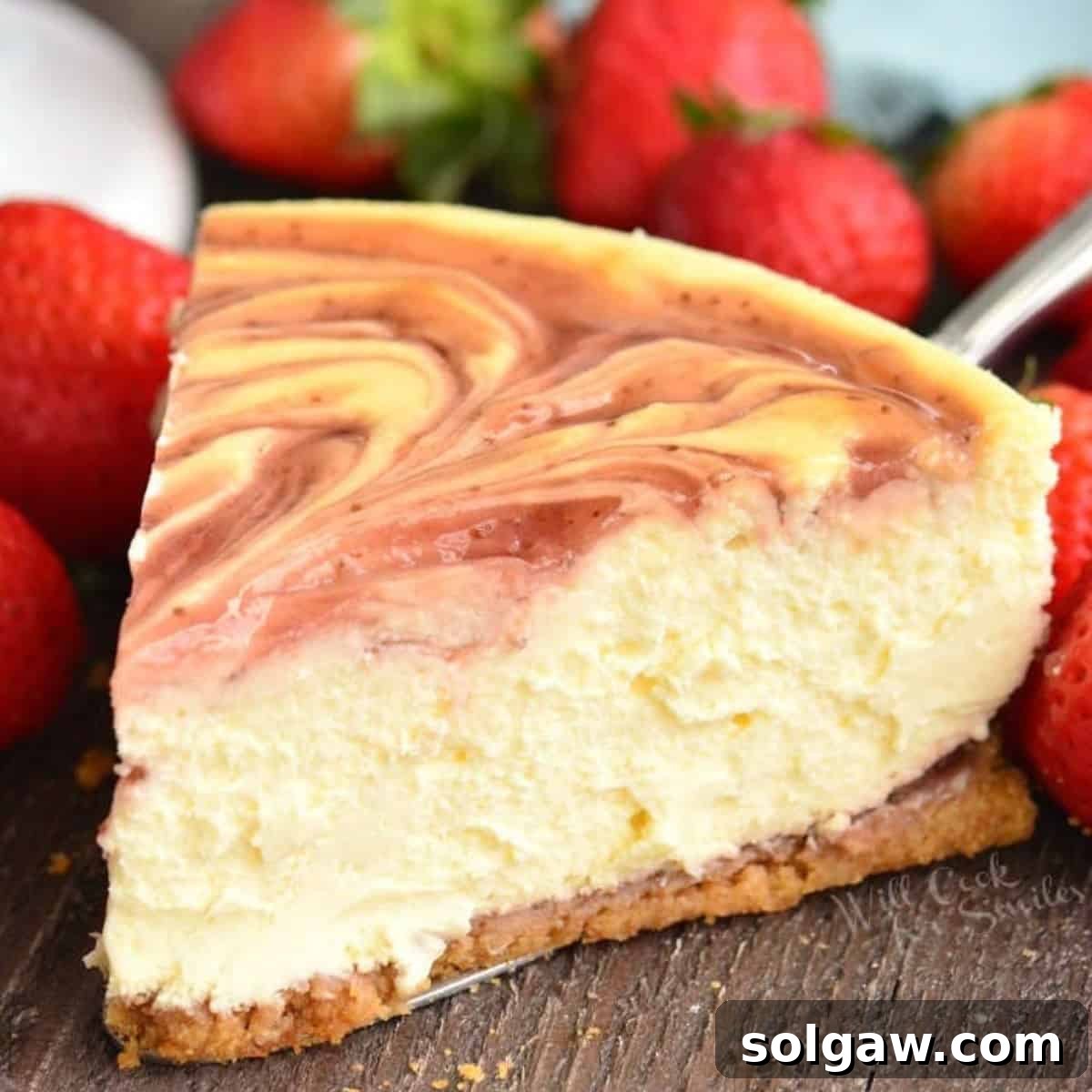
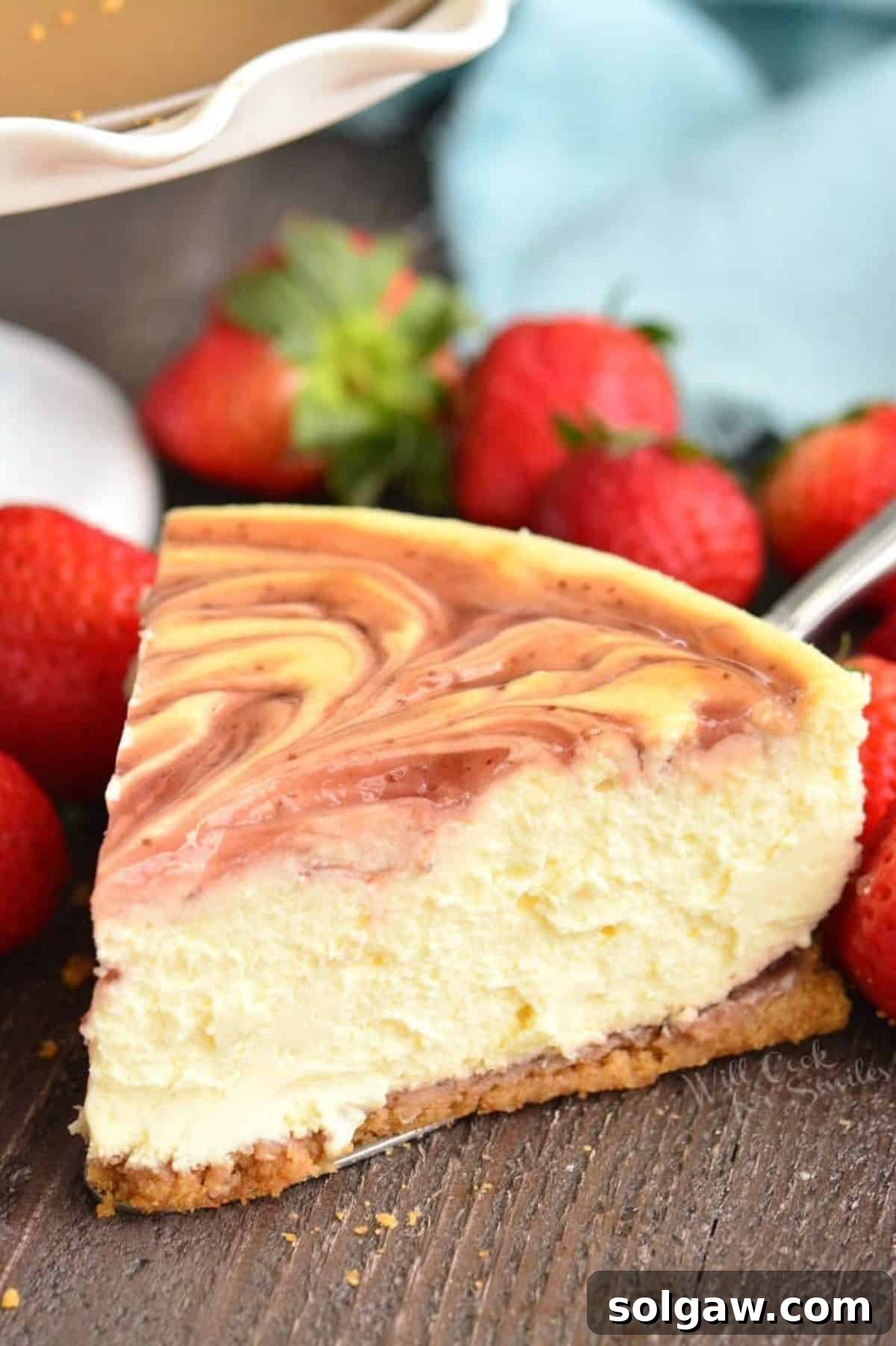
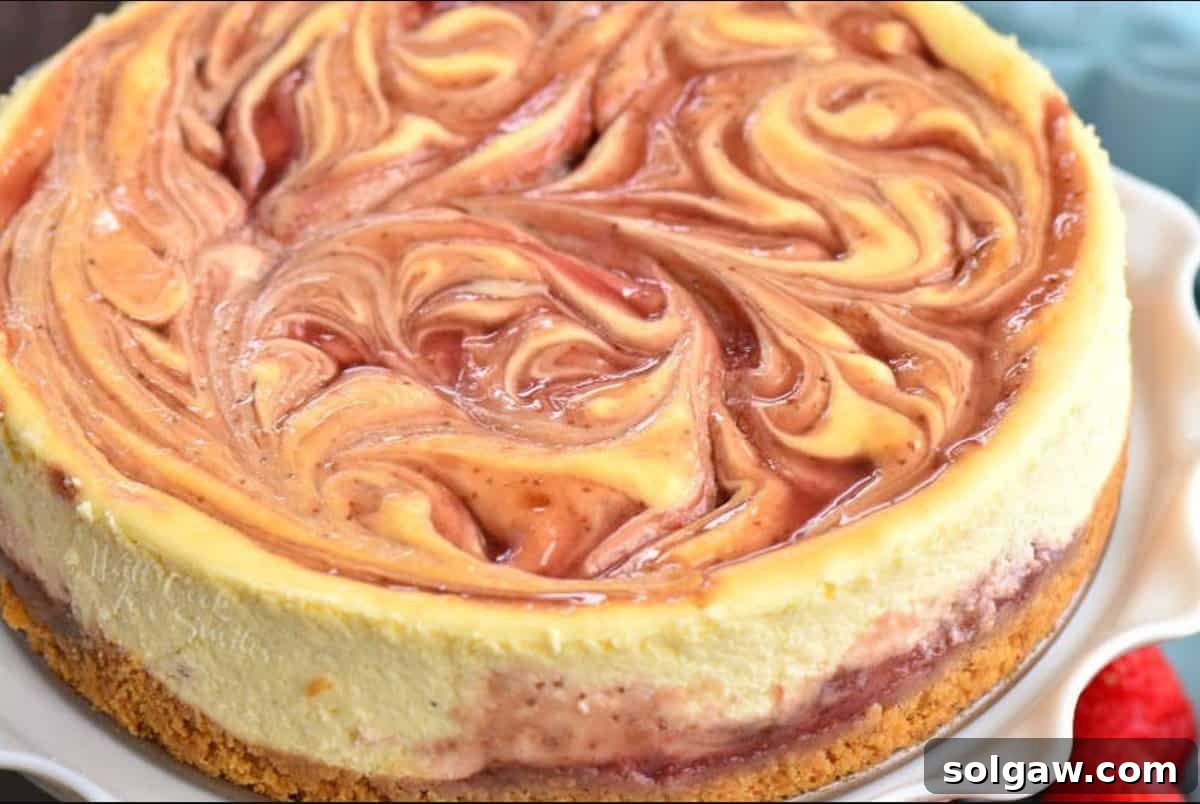
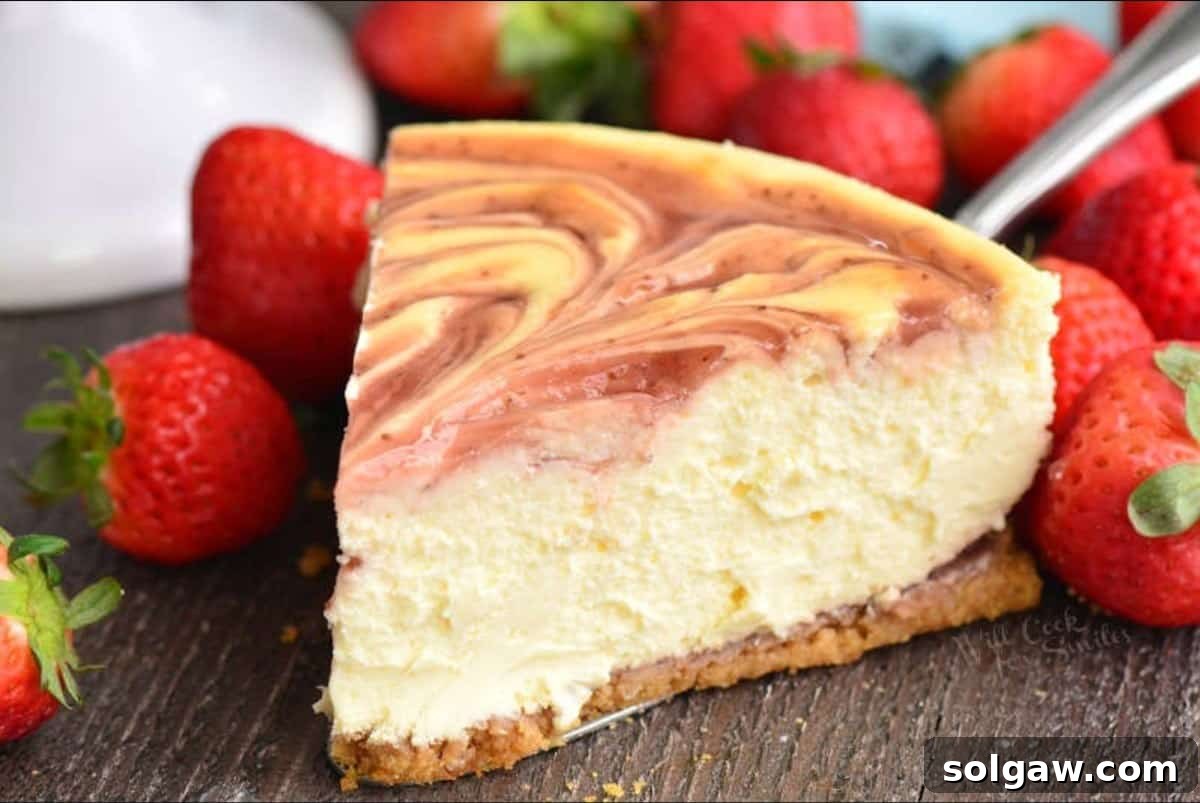
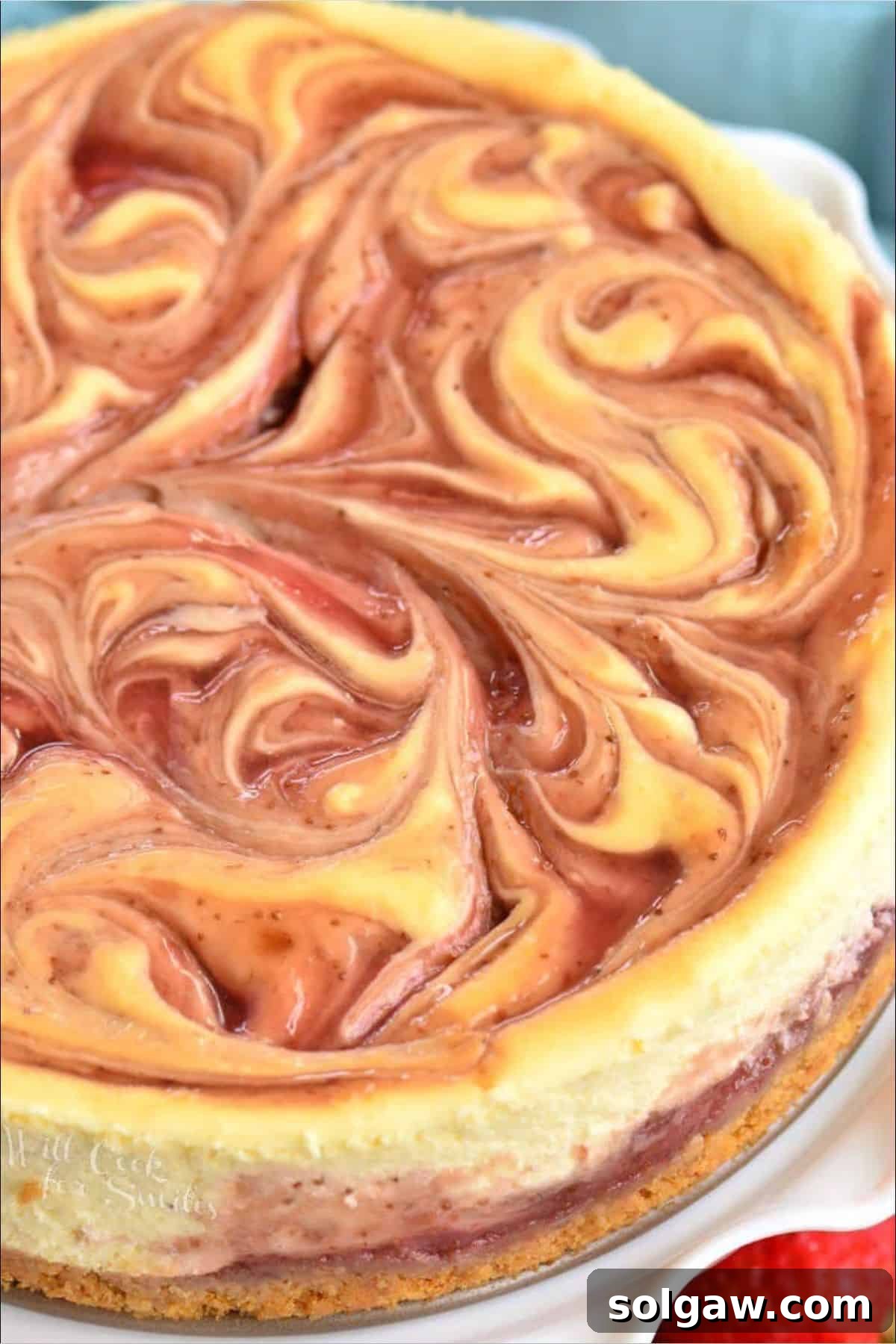
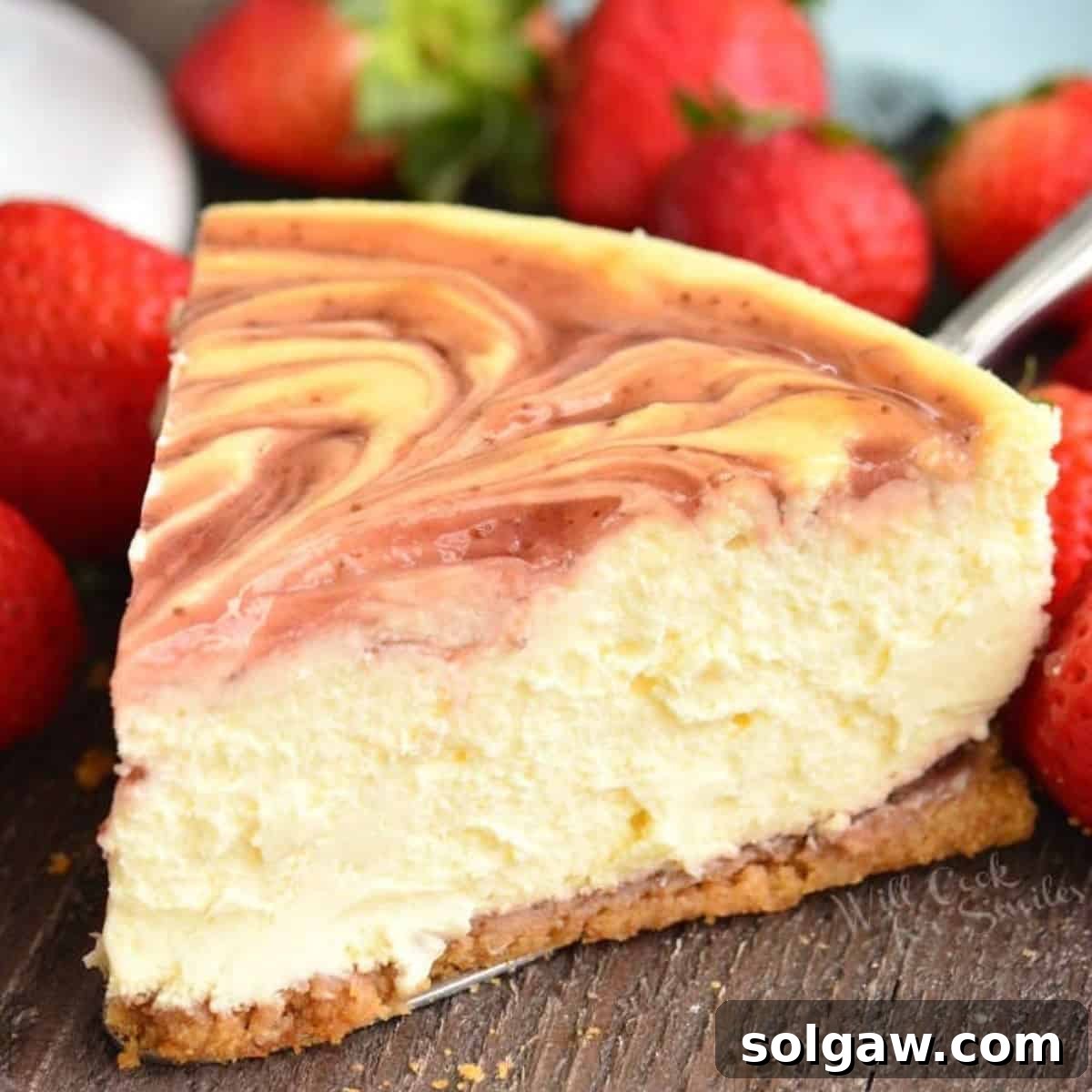
There’s a special joy in crafting elaborate cheesecakes, complete with intricate frostings and an array of toppings. Yet, sometimes, the sheer elegance of simplicity reigns supreme. This classic strawberry cheesecake recipe embodies that philosophy perfectly. It spotlights the vibrant, fresh flavor of strawberries, transforming a humble dessert into a show-stopping centerpiece without the need for excessive adornments. The secret lies in a beautiful, homemade strawberry sauce, gracefully swirled into the cheesecake’s surface, creating a visual and culinary masterpiece that’s both vivid and incredibly delicious.
Inspired by the stunning visual appeal of my White Chocolate Raspberry Cheesecake, this strawberry version achieves a similarly mesmerizing design. The swirling technique isn’t just for aesthetics; it infuses every bite with bursts of fresh fruit flavor. While the cheesecake itself is so striking it doesn’t require a frosting, you’ll want to reserve any extra strawberry sauce. This luscious leftover can be drizzled over individual slices, allowing guests to customize their dessert with an extra touch of strawberry goodness, enhancing the experience for those who simply can’t get enough.
Essential Tips for Crafting the Ultimate Strawberry Cheesecake
Achieving cheesecake perfection is simpler than you might think, especially with a few key strategies. Follow these expert tips to ensure your strawberry cheesecake is exceptionally creamy, flavorful, and crack-free, making it a dessert to remember.
- Advance Preparation of Strawberry Sauce: To streamline your baking process, prepare the strawberry sauce a day or two in advance. Store it in an airtight container in the refrigerator. When you’re ready to assemble the cheesecake, gently warm the sauce. This will soften it, making it much easier to spread smoothly over the crust and swirl beautifully into the filling, ensuring an even distribution of flavor and a gorgeous aesthetic.
- Generous Sauce Yield: This recipe is designed to yield a bit more strawberry sauce than you’ll initially use in the cheesecake itself. This isn’t an oversight! The extra sauce is perfect for serving alongside individual slices. Many people enjoy an additional drizzle of fresh strawberry flavor with their cheesecake, and having a ready supply makes for a delightful presentation and customizable experience.
- Crust Alternatives: If traditional graham cracker crumbs aren’t available or you’re looking for a slightly different flavor profile, Nilla wafers make an excellent substitute. Simply pulse about 40-50 wafer cookies in a blender or food processor until fine crumbs form. When using Nilla wafers, you might want to reduce or even omit the brown sugar in the crust recipe, as these cookies are inherently sweeter than graham crackers.
- The Indispensable Springform Pan: A springform baking pan is non-negotiable for cheesecake. Its removable sides allow for effortless demolding, ensuring your beautifully baked cheesecake comes out intact and pristine. Attempting to use a standard cake pan will make it impossible to remove the cheesecake without damaging its structure.
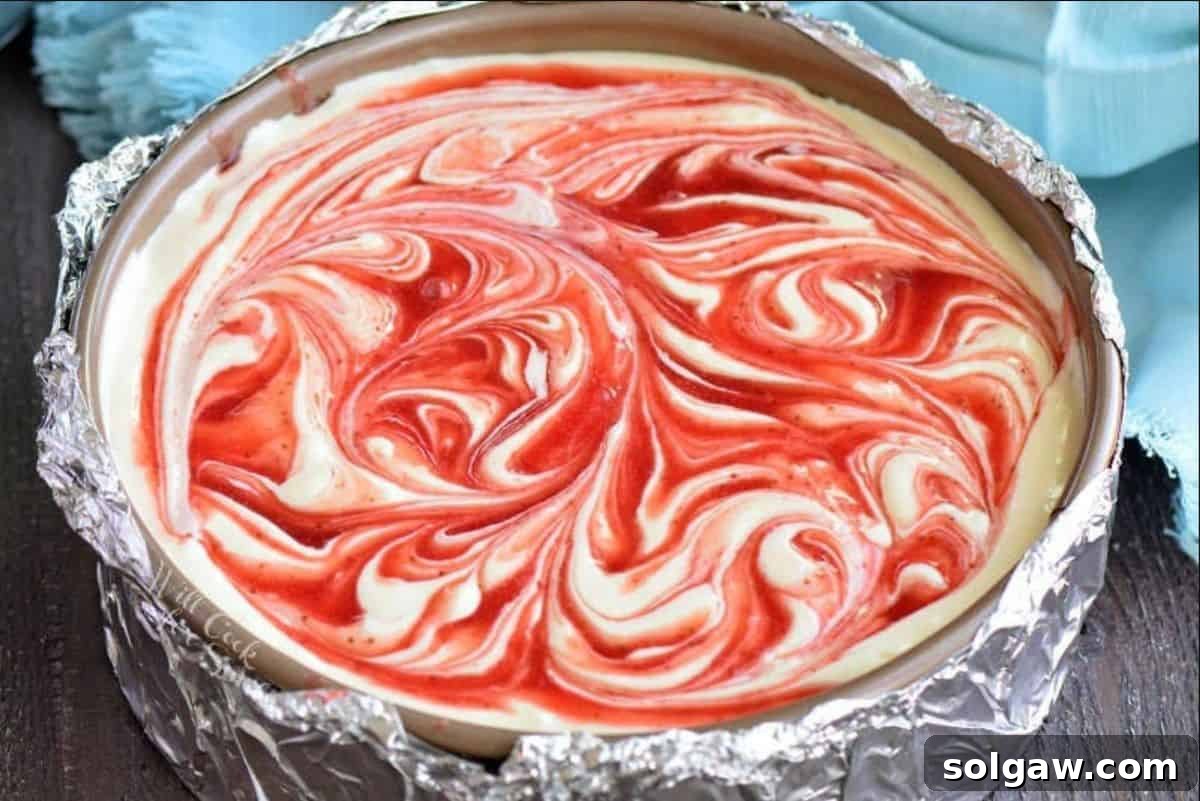
- Mastering the Swirl Technique: When incorporating the strawberry sauce into the cheesecake filling, precision is key. Use the back of a spoon or a thin-handled utensil (like a skewer) to gently *swirl* the sauce. The goal is to create an artistic marbled effect, not to completely mix the sauce into the batter. Avoid scraping the sides of the pan or digging too deep, which could disturb the crust beneath. A light hand will yield the most stunning and delicious results.
- Protecting Your Cheesecake in the Water Bath: To prevent any water from seeping into your cheesecake during the water bath baking process, it’s highly recommended to wrap the outside of your springform pan with several layers of heavy-duty aluminum foil. Even well-sealed pans can sometimes leak, and this simple step acts as an effective barrier.
- Embrace the Water Bath: The water bath, or “bain-marie,” is a technique beloved by professional bakers for delicate desserts, and it’s absolutely crucial for cheesecake. It provides a moist, even heat environment, resulting in an incomparably silky-smooth texture and preventing cracks on the surface. While it’s an extra step, the profound difference in the final product’s quality is well worth the effort.
- Cooling and Storage Convenience: There’s no rush to remove the cheesecake from its springform pan. In fact, it’s best to cool it and chill it directly in the pan. This provides support as it sets and makes storing leftovers incredibly convenient. You can simply cover the pan with plastic wrap and place it back in the refrigerator.
How to Properly Freeze Strawberry Cheesecake for Future Indulgence
Cheesecake is a fantastic make-ahead dessert, and knowing how to freeze it correctly ensures you can enjoy a perfect slice whenever a craving strikes. Follow these steps for optimal preservation:
- Once your cheesecake has fully cooled to room temperature, gently run a thin butter knife along the inner edge of the springform pan. This slight separation prevents the cheesecake from sticking to the pan as it chills. Place the entire pan with the cheesecake into the freezer for approximately one hour. This initial freeze, known as flash freezing, helps to firm up the cheesecake, making it easier to handle without damage.
- After the flash freeze, carefully unclip and remove the side portion of the springform pan. You have two options: either keep the cheesecake on the bottom plate of the springform or transfer it to a sturdy piece of thick cardboard cake holder, preferably one covered with aluminum foil for extra protection. Whichever base you choose, wrap the cheesecake and its base securely with at least 2-3 layers of plastic wrap. Ensure the plastic wrap adheres tightly to prevent freezer burn.
- For an additional layer of protection, wrap the entire plastic-wrapped cheesecake with heavy-duty aluminum foil. This dual wrapping is crucial for maintaining freshness and preventing any off-flavors from permeating the dessert. Don’t forget to date and label your cheesecake before returning it to the freezer. Properly stored, your strawberry cheesecake will remain fresh and delicious for about 2-3 months.
- To enjoy your frozen cheesecake, always thaw it slowly. Transfer the cheesecake from the freezer directly into the refrigerator and allow it to slow-thaw overnight. This gradual thawing process helps maintain the cheesecake’s creamy texture and prevents condensation from forming and making it soggy.
Mastering the Art of Removing Cheesecake from a Springform Pan
Removing a delicate cheesecake from its springform pan without cracks or imperfections is a moment of truth for many bakers. A little preparation and a steady hand are all you need for a flawless presentation:
- Before assembling your cheesecake, separate the springform side from its bottom. Lay the bottom part of the pan onto a sheet of parchment paper. Use a pencil to trace around the base. It’s important to cut the parchment paper circle just a little larger than the traced line; this slight overhang will give you extra leverage when removing the cheesecake. Reassemble the springform pan, lightly spray the interior with cooking spray (especially the sides), and then fit your slightly-larger parchment paper circle onto the bottom.
- Once your cheesecake is baked and thoroughly chilled, have your serving platter or a sturdy cardboard cake circle ready and positioned close by. The key tool for removal is a large, hard spatula – preferably a metal one with a thin edge.
- Carefully slide the spatula in between the parchment paper and the bottom of the springform pan. Work slowly and gently around the entire circumference of the cheesecake, making sure to fully separate it from the pan’s base. Once loosened, gently pull the cheesecake, still on the parchment paper, directly onto your serving dish. Keep the serving dish and the cheesecake pan side by side during this transfer to avoid tilting the cheesecake, which could cause it to slide or break.
The Science Behind the Water Bath: Why It’s Essential for Perfect Cheesecake
The water bath, a baking technique known as “bain-marie,” is more than just an extra step; it’s a fundamental method for achieving the signature texture of delicate desserts like crème brûlée, custards, and, of course, cheesecakes. Understanding its importance elevates your baking from good to truly exceptional.
- The primary function of a water bath is to shield the baking dish from direct, intense oven heat. By surrounding the cheesecake pan with hot water, it creates a buffer that moderates the temperature and ensures a more gentle, even baking process. This indirect heat is crucial for the delicate balance of ingredients in cheesecake.
- Cheesecake batter is rich in cream and eggs, components that are highly susceptible to uneven cooking. Without the regulated heat of a water bath, the outer edges of the cheesecake would bake much faster and set more firmly than the center. This differential cooking would result in an overbaked, dry perimeter and a still-gooey, undercooked interior. The water bath, however, acts as a protective layer, conducting heat uniformly around the entire baking dish. This consistent, gentle heat allows the cheesecake to bake slowly and evenly from edge to center, ensuring a perfectly smooth, uniform texture throughout.
- The consequences of skipping the water bath are often disappointing: a cheesecake that sags in the middle, develops unsightly cracks on its surface, and, most importantly, suffers from an undesirable texture—overcooked and rubbery on the outside, yet unset and liquidy within. The moist environment created by the steam from the water bath also helps prevent the cheesecake’s surface from drying out and cracking, ensuring a beautifully smooth and intact top. Embracing this technique guarantees a cheesecake that is not only delicious but visually stunning, free from the common pitfalls of direct baking.
PIN THIS RECIPE FOR LATER
If you’ve made my Strawberry Cheesecake recipe and found this information helpful, please consider leaving a 🌟 star rating! Your feedback is invaluable. Let me know how you enjoyed it by leaving a 📝 comment below. Don’t forget to subscribe to my newsletter for more delicious recipes!
Strawberry Cheesecake Recipe
Ingredients
Strawberry Sauce:
- 16 oz strawberries
- 1 cup white granulated sugar
- 1 tsp vanilla
- 1 tbsp fresh lemon juice
- 2 tbsp cornstarch
- 2 tbsp cold water
Crust:
- 1 1/2 cups graham cracker crumbs
- 1/4 cup brown sugar
- 4 tbsp salted butter melted
- 1 tsp vanilla extract
Cheesecake Filling:
- 32 oz cream cheese softened
- 1 cup white granulated sugar
- 3 eggs room temperature
- 1/2 cup heavy whipping cream
- 1/2 cup sour cream
- 2 tsp vanilla extract
- 2 tbsp cornstarch
Instructions
Strawberry Sauce:
-
Wash strawberries thoroughly and remove the leaves. Chop the clean berries and place them into a sauce pot.
-
Stir in the granulated sugar, vanilla extract, and fresh lemon juice. Bring the mixture to a gentle simmer over medium heat, then reduce the heat to medium-low. Allow it to simmer for about 20 minutes, stirring occasionally to prevent sticking and ensure even cooking.
-
In a small, separate bowl, whisk together the cornstarch and cold water until smooth. Pour this cornstarch slurry into the simmering strawberry sauce and stir well.
-
Continue to cook, stirring, until the strawberry mixture thickens. Once thickened, use an immersion blender directly in the pot, or carefully transfer the sauce to a regular blender, and blend until smooth. Set aside to cool slightly.
Prepare the Pan:
-
Before you begin assembling the cheesecake, prepare your springform pan for a water bath. Wrap the entire exterior of the springform pan tightly with several layers of heavy-duty aluminum foil. This crucial step helps prevent any water from seeping into the pan during baking, as many springform pans, especially older ones, can develop small leaks.
-
While aluminum foil significantly reduces the risk, a minimal amount of water might occasionally still seep in. Rest assured, this typically will not ruin your cheesecake.
-
Preheat your oven to 325°F (160°C).
Crust Preparation:
-
In a mixing bowl, combine the graham cracker crumbs, melted butter, vanilla extract, and brown sugar. Mix thoroughly until all ingredients are well incorporated and the mixture resembles wet sand.
-
Lightly spray the inside of the prepared springform pan with cooking spray, ensuring both the bottom and sides are covered. Press the crumb mixture evenly into the bottom of the pan and slightly up the sides, forming a firm crust.
-
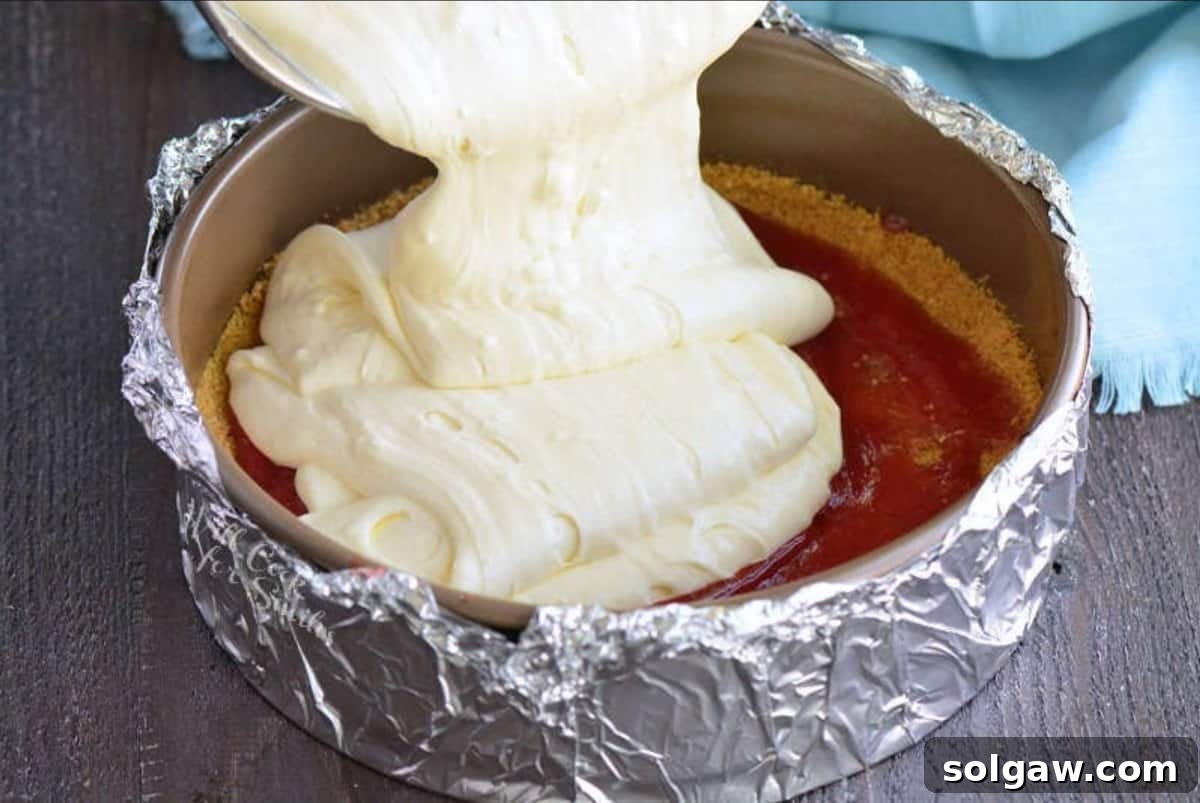
Drizzle approximately 1/2 cup of the prepared strawberry sauce over the crust. Gently spread it with the back of a spoon to create an even layer of fruity flavor at the base.
Cheesecake Filling Assembly:
-
In the bowl of an electric mixer fitted with a paddle attachment, beat the softened cream cheese on medium-high speed until it becomes exceptionally smooth and fluffy. This typically takes a good 2-3 minutes. Stop periodically to scrape down the sides and bottom of the bowl to ensure uniform consistency.
-
Gradually add the white granulated sugar while continuing to beat. Then, incorporate the eggs one at a time, mixing well after each addition until just smooth. Avoid overmixing once the eggs are added, as this can introduce too much air and lead to cracks. Again, scrape the bottom and sides of the bowl.
-
Add the sour cream, vanilla extract, and heavy cream to the mixture. Continue to beat on medium-high speed until all ingredients are thoroughly combined and smooth.
-
Reduce the mixer speed to low and gradually beat in the cornstarch. Scrape down the sides and bottom of the bowl once more, then mix for a few additional seconds to ensure everything is perfectly blended.
-
Carefully pour the prepared cheesecake batter over the strawberry sauce layer and crust in the springform pan, spreading it evenly to cover the entire surface.
-
Spoon several dollops of the remaining strawberry sauce onto the top of the cheesecake filling. Using a long, thin handle of a spatula or a skewer, gently swirl the sauce into the cheesecake batter. Remember, the goal is a beautiful marble effect, not full incorporation. Be careful not to scrape the sides of the pan or go too deep, which could disturb the crust below. (Reserve any additional strawberry sauce to drizzle over individual slices when serving.)
Baking the Cheesecake:
-
Place a large roasting pan into your preheated oven. Carefully set the foil-wrapped cheesecake springform pan inside the roasting pan. Then, with extreme caution, pour hot water into the roasting pan until it reaches about halfway up the sides of the springform pan.
-
Bake the cheesecake for 85-90 minutes. To check for doneness, gently jiggle the pan; the edges should be set, but the very center should still have a slight wobble. Once baked, turn off the oven and prop the oven door open halfway. Allow the cheesecake to rest in the cooling oven for 10-15 minutes before carefully removing it. Take off the aluminum foil wrap from the pan.
-
Transfer the cheesecake to a wire rack and let it cool on the counter for another 10 minutes. During this time, gently run a butter knife between the sides of the cheesecake and the springform pan to prevent sticking as it cools further. (You don’t need to remove the cheesecake from the pan completely until you are ready to serve it.)
-
Allow the cheesecake to cool completely at room temperature for an additional hour. Then, cover the pan tightly with plastic wrap and refrigerate for a minimum of 6 hours, or ideally, overnight. This crucial chilling period allows the cheesecake to fully set and develop its signature dense, creamy texture.
Chef’s Notes & Pro Tips
- Strawberry Sauce Flexibility: As mentioned, the homemade strawberry sauce can be prepared in advance. This is a fantastic time-saver! Just ensure it’s stored in an airtight container in the refrigerator and gently warmed before you’re ready to use it in the cheesecake assembly.
- The Power of the Water Bath: Reiterate this golden rule: ALWAYS use a water bath when baking cheesecake. It’s the secret to that incredibly smooth, creamy texture and prevents the dreaded cracks, making all the difference in the final product.
- Detecting Cheesecake Doneness: Knowing when your cheesecake is perfectly baked is crucial. The key indicator is that the edges should appear set and slightly firm, while the center retains a gentle, subtle jiggle when the pan is lightly tapped. Don’t worry, this jiggle is normal! The residual heat will continue to set the center as it cools. A critical warning: Avoid inserting a knife or toothpick into the center to check for doneness, as this almost guarantees a crack on the surface.
- The Essential Three-Step Cooling Process: Proper cooling is as vital as proper baking for cheesecake success. Follow these three stages:
- In the Turned-Off Oven: Allow the cheesecake to rest for 10-15 minutes in the turned-off oven with the door ajar. This gradual temperature change helps prevent sudden shrinking and cracking.
- On the Counter: Remove the cheesecake from the oven and let it cool completely on a wire rack at room temperature for about an hour. Running a knife around the edges during this time further helps prevent sticking.
- In the Refrigerator: Finally, cover the cooled cheesecake with plastic wrap and chill it in the refrigerator for at least 6 hours, or preferably overnight. This final long chill sets the cheesecake fully, perfecting its texture and flavor.
Nutrition Information
More Decadent Dessert Recipes to Explore:
- Creamy Eggnog Cheesecake
- Classic Apple Pie Cheesecake
- Effortless Strawberry No-Bake Cheesecake
- Rich and Smooth Ricotta Cheesecake
- Bright and Zesty Lemon Cheesecake