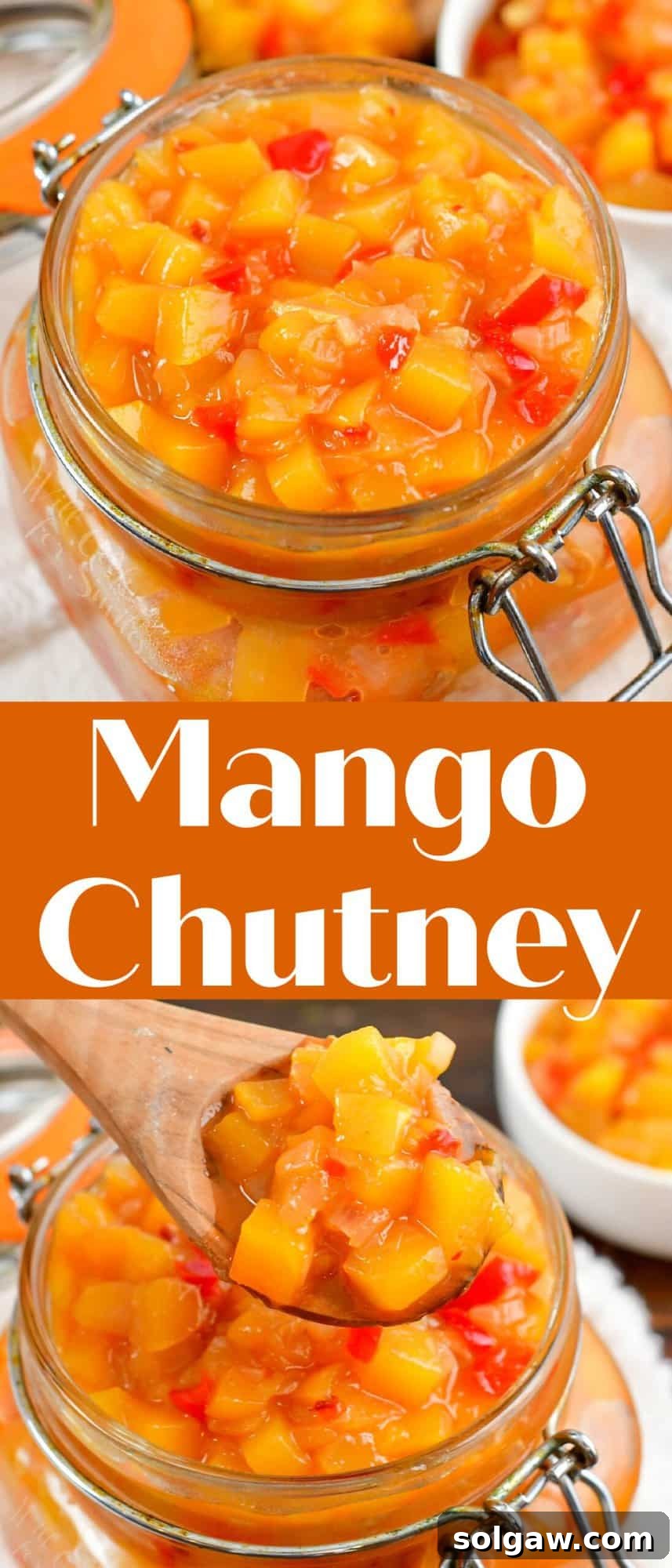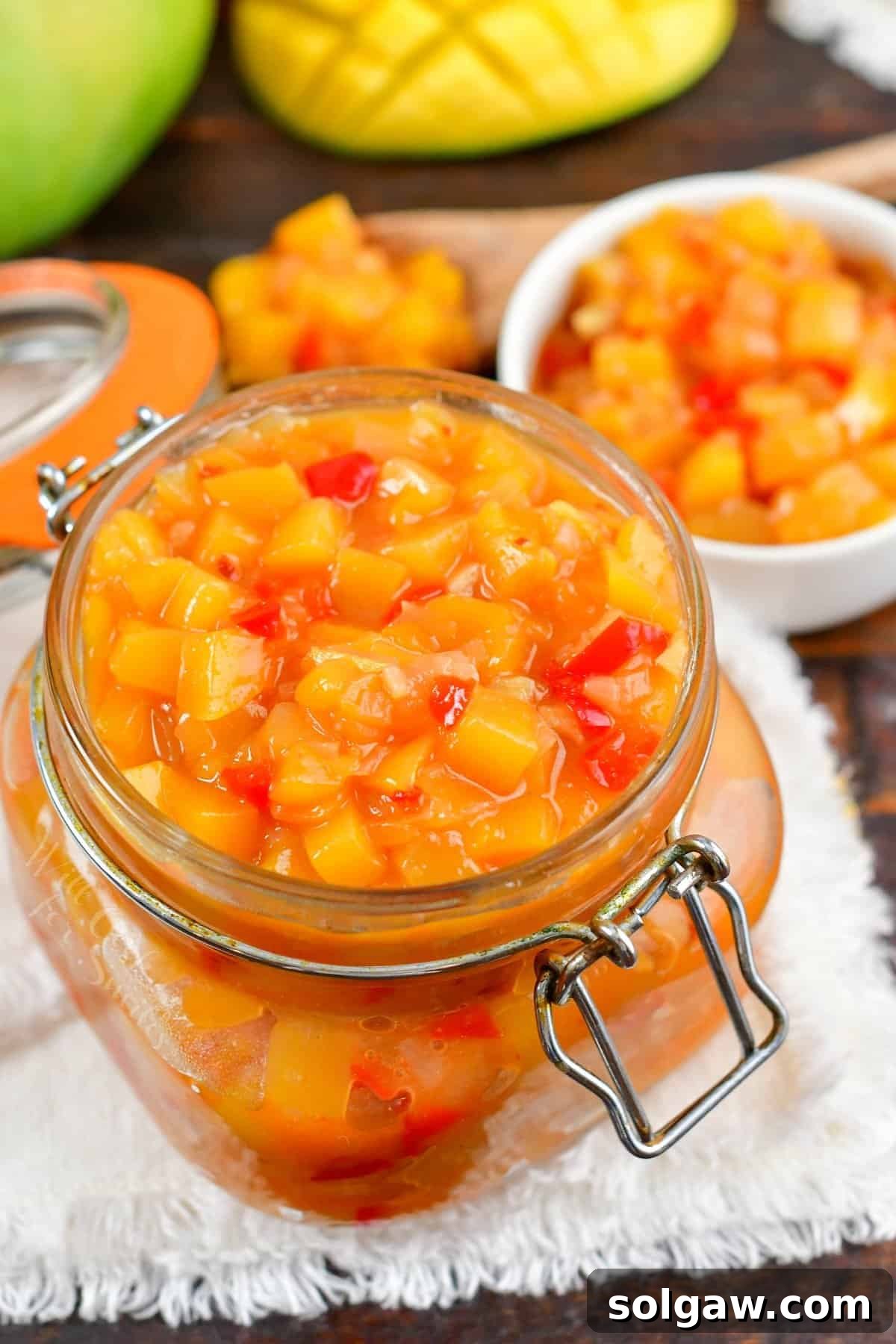
Homemade Mango Chutney: A Sweet, Savory, and Spicy Delight
As the weather warms and the sun shines brighter, especially in regions like Florida, the season for ripe, succulent mangoes truly blossoms. This abundance means it’s the perfect time to craft a batch of homemade mango chutney – a vibrant condiment that captures the essence of spring and summer in every spoonful. Forget store-bought versions; this easy-to-make recipe blends the natural sweetness of ripe mangoes with an intriguing medley of savory and spicy notes, creating a complex flavor profile that will elevate any meal.
Our mango chutney is a masterpiece of balance, combining the tropical fruit with aromatic ginger, a touch of rich brown sugar, and the subtle warmth of red pepper flakes. This harmonious fusion of sweet, savory, and spicy elements makes it an incredibly versatile and deeply satisfying addition to your culinary repertoire. Whether you’re looking for a zesty topping for grilled meats, a flavorful spread for your morning toast, or a unique dip for snacks, this homemade mango chutney promises to be a delightful staple in your kitchen.
Imagine having a jar of this golden, aromatic goodness ready in your fridge throughout the warmer months. It’s an effortless way to transform a simple chicken dinner into a gourmet experience, or to add an exotic twist to your midday snack with crunchy pita chips or soft, pillowy naan bread. The “something special” factor it brings to virtually any dish makes it an indispensable condiment you’ll wonder how you ever lived without.
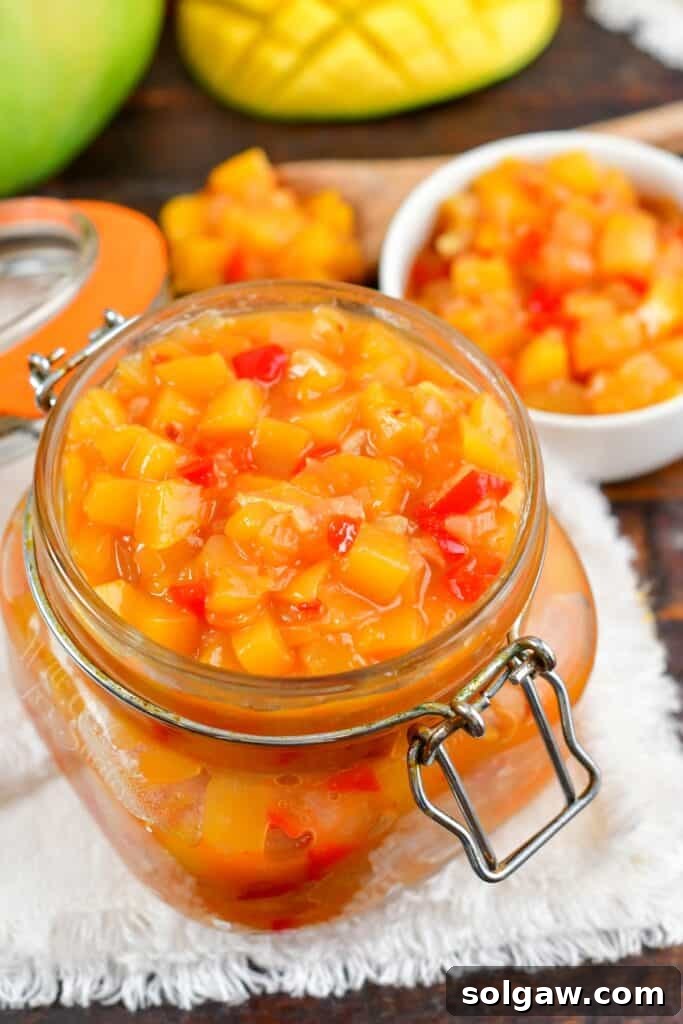
Understanding Chutney: A Global Culinary Gem
At its heart, chutney is a traditional Indian condiment that has captivated palates worldwide. Originating from the Indian subcontinent, the word “chutney” is derived from the Hindi word “chatni,” meaning to lick, referring to the enticing flavors that make you want to savor every last drop. These versatile preparations come in an astonishing variety of flavors, textures, and ingredient combinations, most of which lean towards savory, though sweet and spicy versions are equally beloved.
The essence of chutney lies in its method of preparation: a slow cooking process that melds fruits, vegetables, or even nuts with a distinctive vinegar mixture and a complex blend of aromatic spices. This slow simmer allows the flavors to deepen and harmonize, creating a rich and nuanced condiment. Fruit chutneys, like our mango variation, typically incorporate sugar to balance the acidity of the vinegar and enhance the natural sweetness of the fruit, resulting in a perfectly balanced taste.
While the basic formula for chutney remains consistent – fruit/vegetable, acid, sugar, and spices – the possibilities for variation are endless. Common additions to mango chutney include the pungent warmth of ginger, the sharp kick of garlic, and the fiery heat of chili peppers or red pepper flakes. Each ingredient plays a crucial role in building layers of flavor, transforming simple components into a culinary marvel that can be enjoyed in countless ways.
Creative Ways to Enjoy Your Mango Chutney
One of the greatest joys of homemade mango chutney is its incredible versatility. Far beyond just a simple topping, this vibrant condiment can enhance a wide array of dishes and add an exotic flair to your everyday meals. Its unique blend of sweet, savory, and spicy notes makes it a perfect accompaniment to various proteins, from poultry to seafood and beyond.
- With Meats: Mango chutney pairs exceptionally well with grilled or roasted chicken, pork, lamb, and a variety of seafood, including fish and shrimp. Serve it on the side as a vibrant relish or spoon it directly over the protein as a flavorful glaze. It also makes an excellent marinade for tenderizing meats and infusing them with its aromatic spices before cooking.
- As a Dip: This chutney is a fantastic dip for a snack spread. Pair it with crunchy pita chips, warm naan bread, crispy crackers, or even fresh vegetable sticks for a flavorful appetizer.
- Breakfast Boost: For a simple yet delicious breakfast, spread a generous amount of mango chutney on a piece of toasted bread or a bagel. The sweet and tangy flavors provide a wonderful way to start your day.
- Curry & Rice Companion: Mix it directly into plain rice for an instant flavor upgrade, creating a fragrant and delicious side dish. It can also be stirred into curries or stews to add depth and a hint of tropical sweetness.
- Cheese Boards & Appetizers: Elevate your next cheese board by including a small bowl of mango chutney. It complements hard cheeses, soft cheeses, and charcuterie beautifully, offering a burst of flavor that cuts through richness.
- Sandwiches & Wraps: Use it as a vibrant spread in sandwiches or wraps instead of mayonnaise or mustard for a unique twist. It works particularly well with turkey, ham, or even veggie sandwiches.
- Glaze for Vegetables: Brush mango chutney over roasted root vegetables like carrots or sweet potatoes during the last few minutes of cooking for a glossy, flavorful finish.
No matter how you choose to enjoy it, this homemade mango chutney is sure to become a beloved condiment in your home, adding a distinctive and delightful touch to countless culinary creations.
Crafting the Perfect Mango Chutney: A Step-by-Step Guide
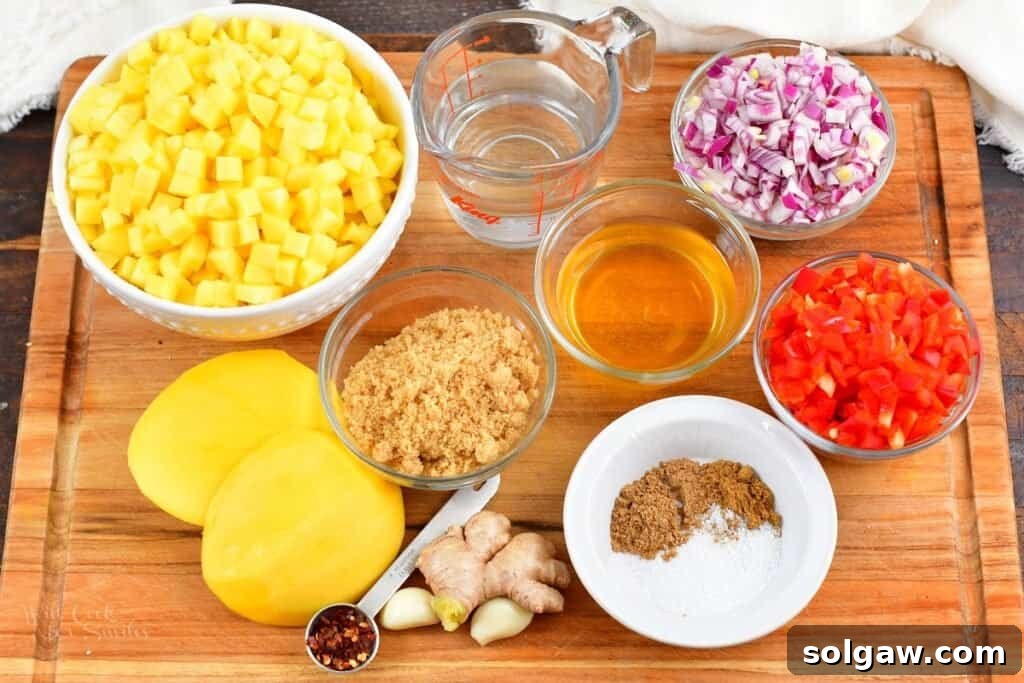
Essential Ingredients for a Flavorful Chutney:
The secret to an exceptional mango chutney lies in selecting fresh, high-quality ingredients. Each component contributes uniquely to the complex profile of sweet, savory, and spicy.
- Olive Oil: A good quality extra virgin olive oil provides a rich base for sautéing, enhancing the flavors of the aromatics. Vegetable or canola oil can be used as alternatives.
- Mangoes: The star of the show! Always opt for fresh, ripe mangoes for the best flavor and texture. Frozen mangoes, while convenient, often lack the vibrant sweetness and firm texture ideal for chutney. Look for mangoes during their peak season, typically from April to October, when they are at their ripest and most flavorful. A ripe mango should yield slightly to gentle pressure and have a fragrant aroma near the stem.
- Red Onion: Red onions bring a potent, slightly sweet, and pungent onion flavor that stands up well to the other strong flavors in the chutney, making them perfect for this recipe.
- Red Bell Pepper: The natural sweetness of a red bell pepper adds another layer of fruitiness and a beautiful, vibrant color to the chutney, making it visually appealing and deliciously balanced.
- Ginger: Fresh ginger is non-negotiable! Its zesty, pungent, and slightly peppery notes are crucial to the chutney’s aromatic depth. Dried ginger or ginger paste simply cannot replicate the bright, fresh flavor that freshly grated or minced ginger provides.
- Garlic: Similar to ginger, freshly minced garlic is essential for the best results. Its sharp, savory aroma and taste are fundamental to building the chutney’s robust flavor base. Pre-minced garlic can often lack the potency and freshness needed.
- Light Brown Sugar: This provides a deep, molasses-like sweetness that beautifully complements the tang of the vinegar and the spice, adding richness and helping to caramelize the chutney.
- Apple Cider Vinegar: A key ingredient, apple cider vinegar contributes both sweetness and a crucial tangy acidity. It acts as a natural preservative and brightens all the other flavors. If unavailable, white wine vinegar can be used as a substitute, though it will impart a slightly different flavor profile.
- Water: Used to help create the liquid base for simmering, ensuring the chutney cooks down to the right consistency.
- Apple Juice: Adds a subtle fruitiness and natural sweetness, complementing the mango and rounding out the overall flavor profile. Choose a pure apple juice without added sugars for the best result.
- Red Pepper Flakes: These deliver the “spicy” element of the chutney. You can easily adjust the amount to suit your preference, adding more for a fiery kick or less for a milder warmth.
- Aromatic Seasonings:
- Cumin: Adds an earthy, warm, and slightly pungent flavor that is quintessential to Indian cuisine.
- Coriander: Contributes a citrusy, slightly sweet, and earthy aroma that balances the bolder spices.
- Cardamom: Offers a unique floral, citrusy, and slightly sweet flavor that adds a layer of sophistication and depth. These three spices together create a rich, authentic Indian flavor profile.
- Coarse Salt: A sprinkle of coarse salt is vital for balancing all the sweet, tangy, and spicy flavors, enhancing their individual nuances and bringing them into harmony.
Detailed Cooking Directions:
Follow these steps carefully to ensure your mango chutney turns out perfectly balanced and richly flavored.
How To Cut the Mango:
- Begin by placing the mango on a sturdy cutting board with the stem facing upwards. The stem serves as a guide to the relatively flat, central seed.
- Carefully slice down each side of the mango, staying approximately 1/4 inch to the right and 1/4 inch to the left of the stem. This technique helps you cut around the large, flat seed in the center.
- Once the two larger halves are separated, lay each cut-side-up on the cutting board. Using a sharp knife, score the mango flesh length-wise and then width-wise, creating a grid pattern. Be careful not to cut through the skin.
- Finally, use a spoon to scoop out the perfectly diced mango flesh from the skin, ensuring you get all the juicy fruit.
Prepare the Ingredients:
- Dice the red bell pepper and red onion into uniform, small pieces.
- Peel the fresh ginger root and either slice it thinly or finely mince it, depending on your preferred texture in the final chutney.
- Peel, smash, and mince the garlic cloves. Freshly minced garlic yields the best flavor.
- In a separate bowl, combine the remaining liquid ingredients: water, apple cider vinegar, and apple juice. Whisk them together with the light brown sugar, red pepper flakes, ground cumin, ground coriander, ground cardamom, and coarse salt until well combined and the sugar begins to dissolve.
Cooking the Chutney:
- Place a large, heavy-bottomed cooking pan or Dutch oven over medium heat and add the olive oil. Allow the oil to heat gently.
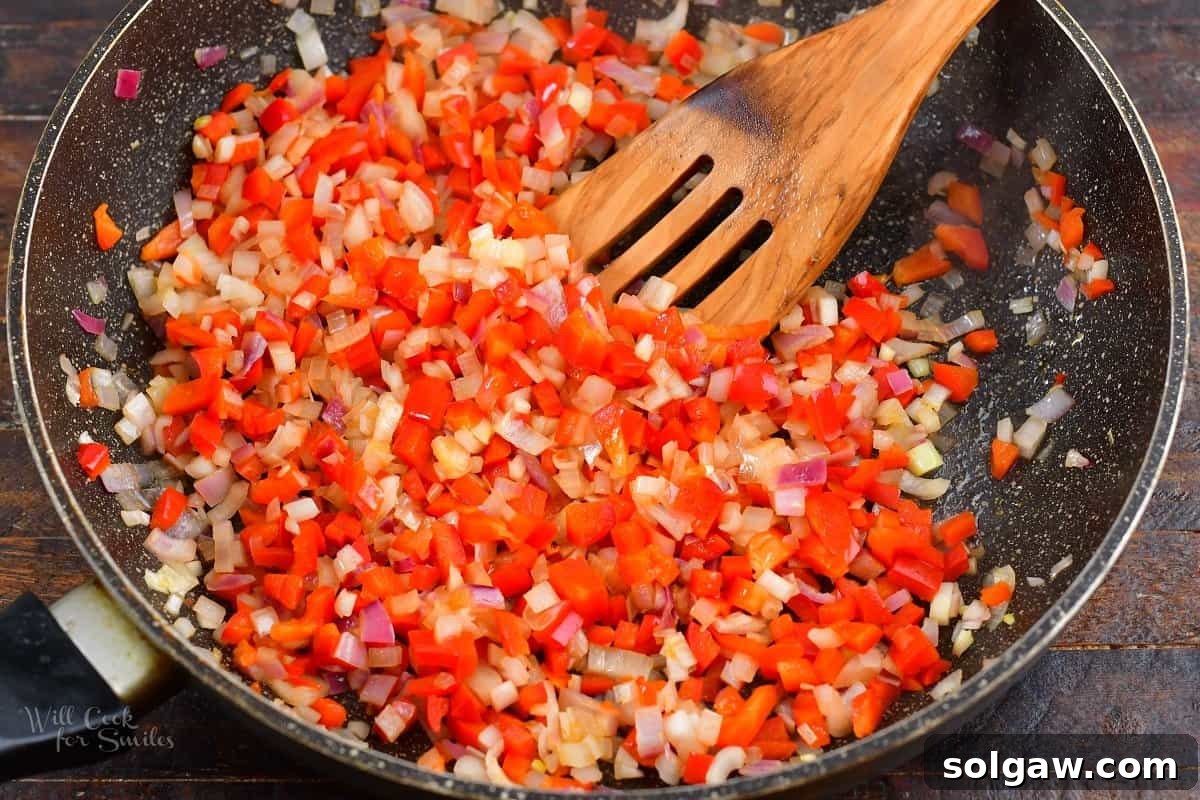
- Add the diced red onions and bell pepper to the pan. Sauté them for about 5-7 minutes, stirring occasionally, until they have softened and become translucent.
- Stir in the minced garlic and ginger. Cook for an additional 30-60 seconds, or until they become fragrant, being careful not to burn the garlic.
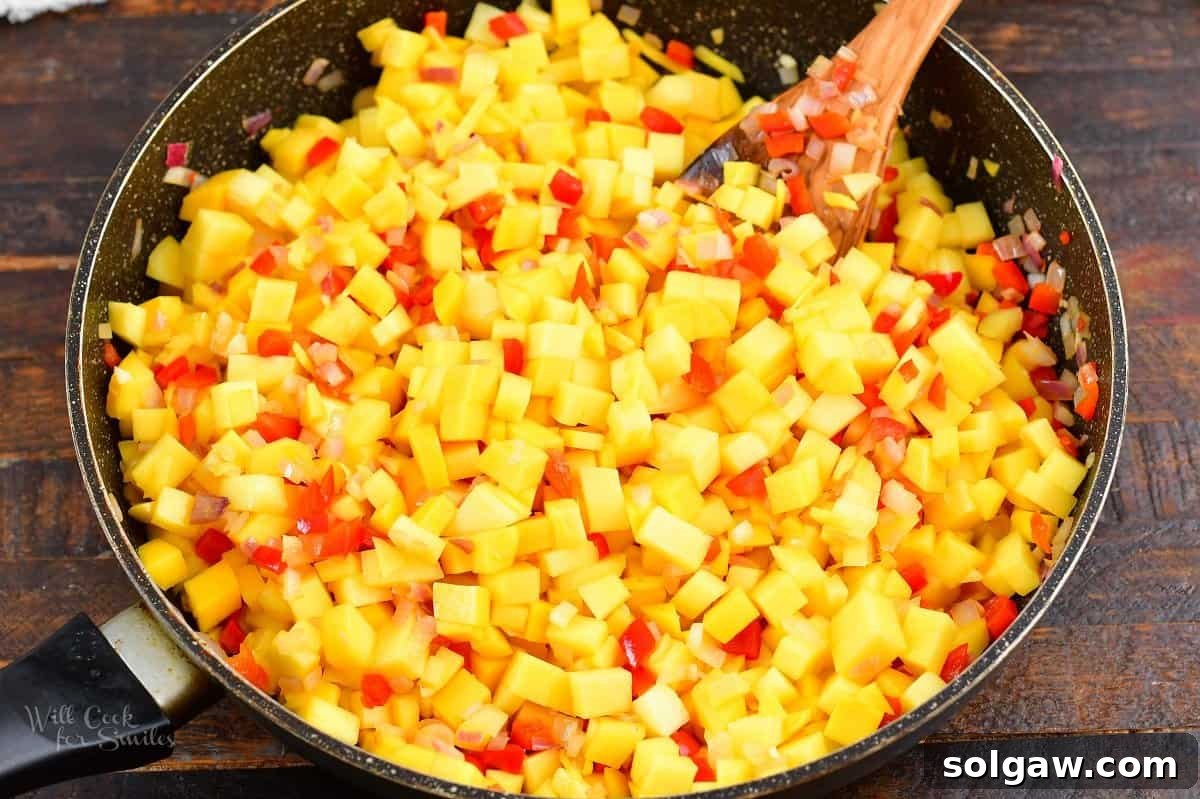
- Add the diced mango to the pan with the sautéed aromatics. Cook for another 3-5 minutes, stirring gently, to allow the mango to soften slightly and release some of its natural juices.
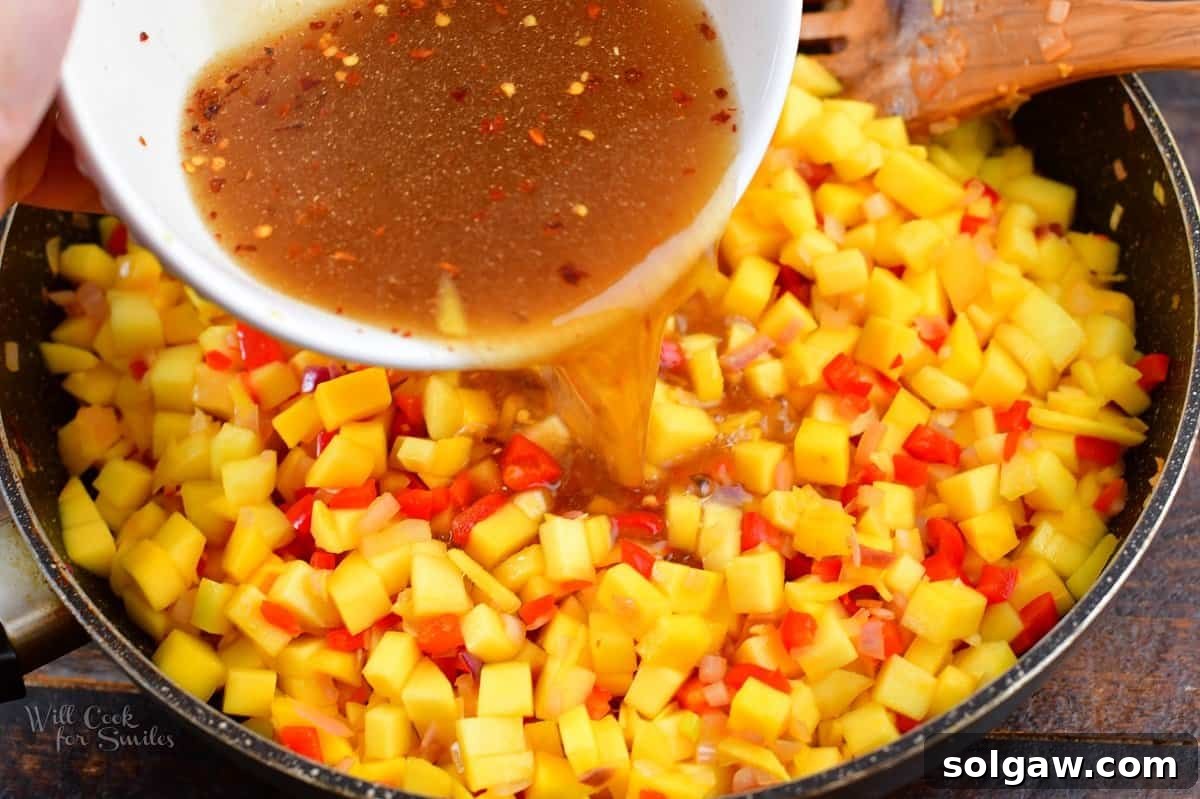
- Give the liquid mixture (water, vinegar, juice, sugar, spices) a quick whisk one more time to ensure everything is fully dissolved and combined. Pour this mixture into the pan with the mango and vegetables. Stir everything together thoroughly to ensure all ingredients are coated.
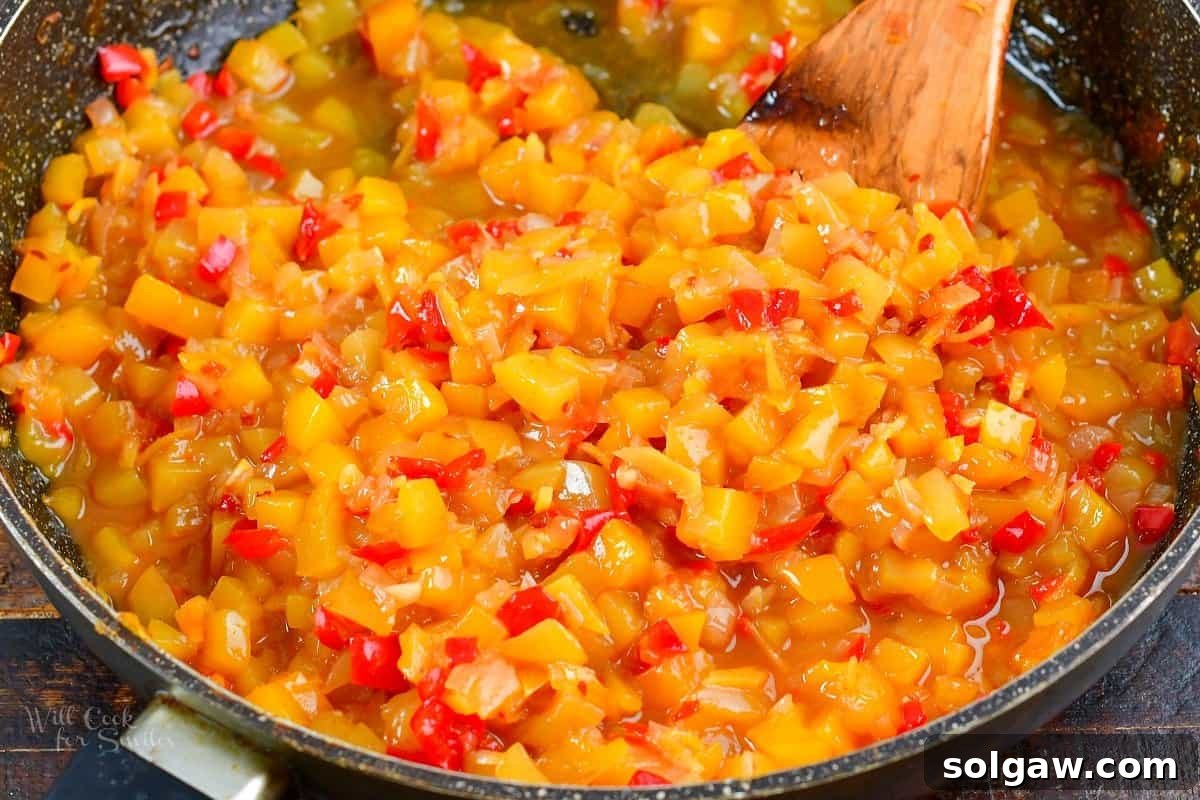
- Bring the mixture to a gentle simmer. Once simmering, reduce the heat to low, cover the pan with a lid, and let it cook for approximately 30 minutes. This slow cooking allows the mango and vegetables to become completely tender and for the flavors to meld beautifully. Remember to stir the chutney from time to time to prevent sticking and ensure even cooking.
- After 30 minutes, remove the lid and increase the heat to medium-low. Continue to simmer the chutney uncovered for another 15-20 minutes, or until a significant amount of the liquids have cooked off and the chutney has thickened to your desired consistency. It should be rich and glossy. Stir every so often to prevent scorching.
- Once thickened, remove the pan from the heat and allow the chutney to cool slightly before transferring to storage jars.
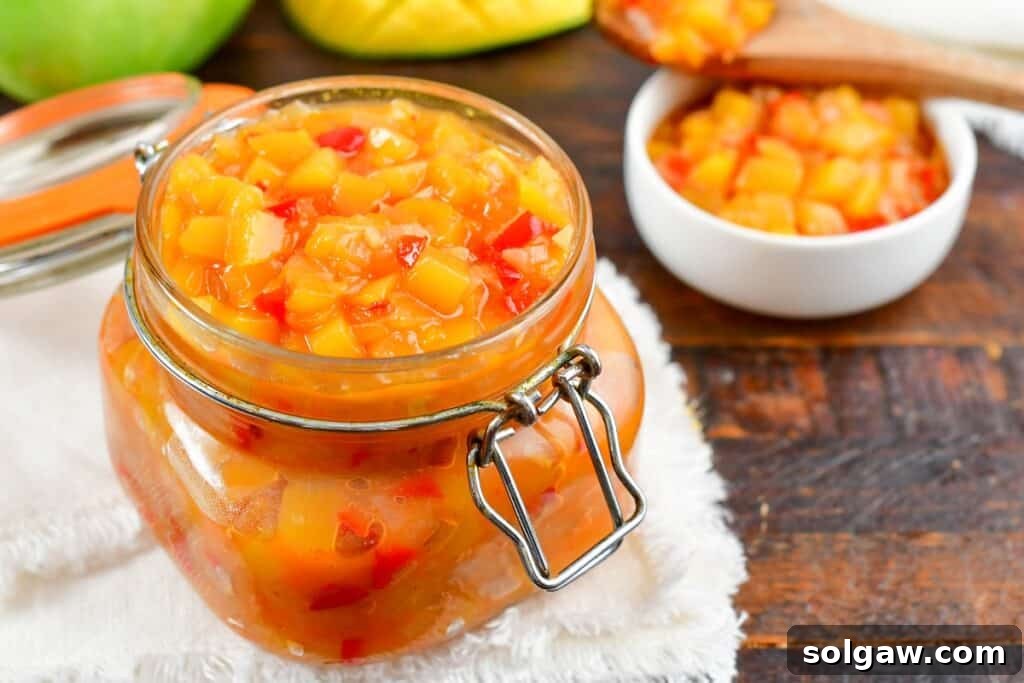
Storing Your Homemade Mango Chutney for Longevity
Proper storage is key to enjoying your delicious homemade mango chutney for weeks or even months to come. Whether you prefer short-term refrigeration or long-term canning, following these guidelines will help maintain its freshness and flavor.
How to Store Chutney in Jars in the Refrigerator:
Once your mango chutney has finished cooking and has cooled completely to room temperature, you can prepare it for refrigeration. Divide the cooled chutney into clean, airtight glass jars. Ensure the lids are closed tightly before transferring them to the refrigerator. To prevent spoilage and bacterial contamination, always use a clean spoon each time you remove a portion of chutney from the jar. Introducing unwashed utensils can introduce bacteria, significantly reducing its shelf life. When properly stored in the refrigerator, this homemade mango chutney can remain fresh and flavorful for 6-8 weeks.
How to Can Chutney for Extended Shelf Life:
For a longer-lasting supply, canning your mango chutney is an excellent option. This method allows you to store it in a cool, dark pantry for up to a year or even longer. Follow these steps for safe home canning:
- Sterilize Jars: Before filling, thoroughly clean and sterilize your glass canning jars and lids in hot boiling water. This eliminates any potential bacteria that could lead to spoilage.
- Fill Jars: Carefully fill the sterilized jars with the hot chutney, leaving about 1/2 inch of headspace from the top rim of the jar. This headspace is crucial for proper sealing and to allow for expansion during processing.
- Remove Air Bubbles: Gently tap the filled jars on a cutting board or use a non-metallic spatula to remove any trapped air bubbles. This ensures a tight seal and prevents spoilage.
- Wipe Rims & Seal: Wipe the rims of the jars clean with a damp cloth to ensure a good seal. Place the lids and screw bands onto the jars, tightening them to fingertip-tight.
- Process in Canner: Follow the specific directions of your water bath canner for processing and sealing the jars. For acidic foods like chutney, a water bath canner is typically used. The processing time will vary based on your altitude and jar size, so always consult a reliable canning guide for precise instructions.
- Cool & Check Seals: After processing, carefully remove the hot jars from the canner and place them on a clean towel or wire rack to cool completely for 12-24 hours. Once cooled, check the seals: the center of the lid should be concave and not flex when pressed. If a lid hasn’t sealed, refrigerate that jar and consume its contents within a few weeks.
- Label & Store: Label your sealed jars with the contents and date. Store them in a cool, dark, and dry place, such as a pantry or cellar, away from direct sunlight and temperature fluctuations.
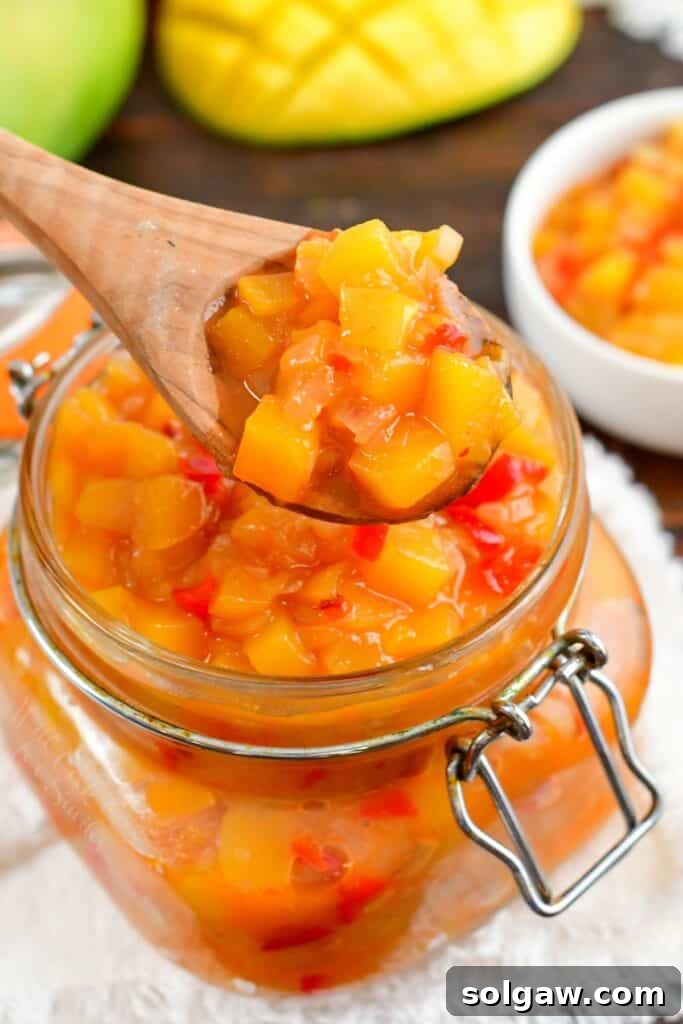
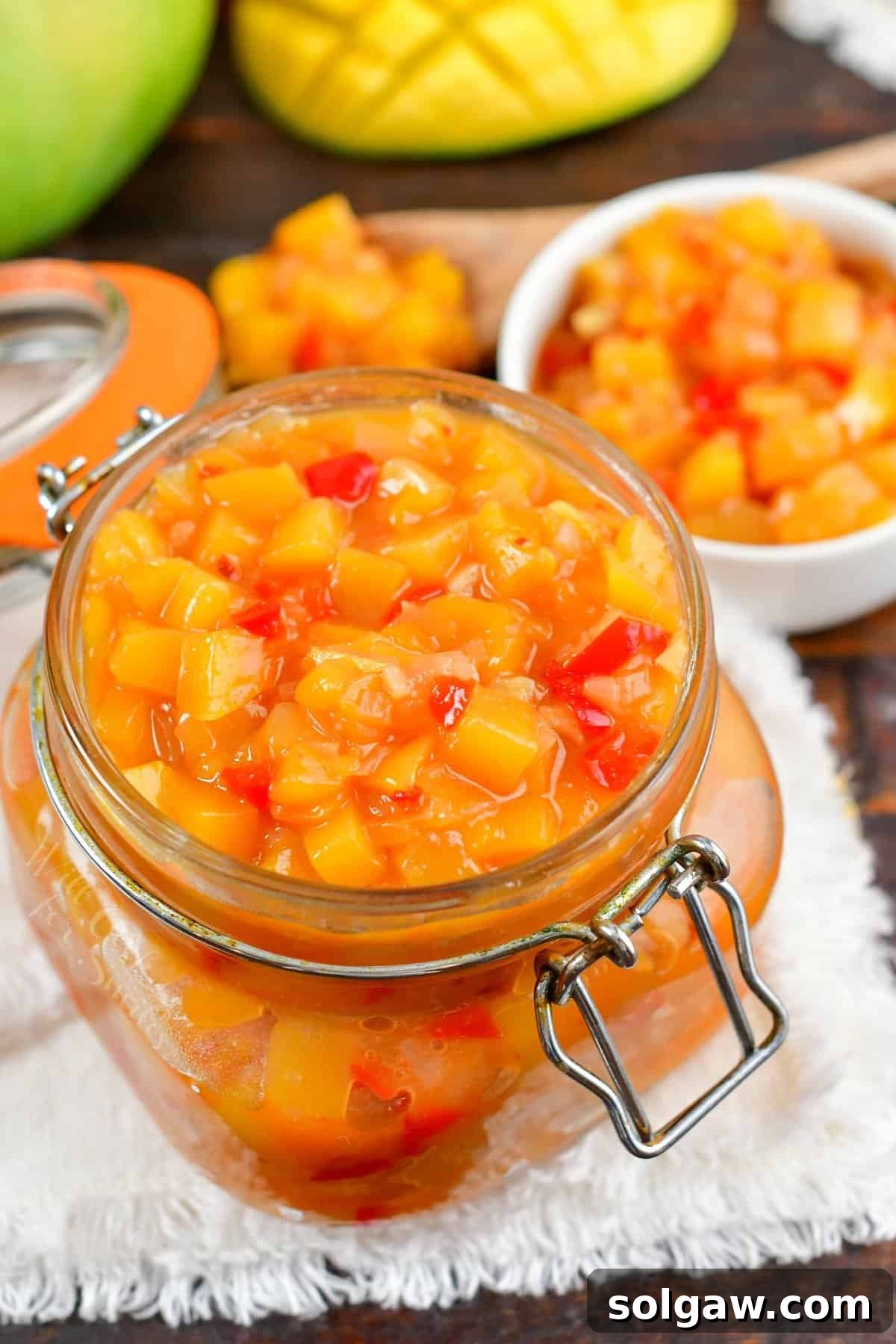
Mango Chutney
Mango Chutney is an incredibly flavorful, fresh condiment with a combination of sweet, savory, and spicy flavors. It goes great with meats like chicken, pork, and all kinds of seafood. It’s also tasty as a dip with crunchy pita chips or soft naan!
Ingredients
- 2 tbsp olive oil
- 4-5 ripe mangoes
- 1 red onion
- 1 red bell pepper
- 2 inch ginger root sliced thin or minced
- 2 garlic cloves
- 1/2 cup light brown sugar
- 1/2 cup apple cider vinegar
- 3/4 cup water
- 1/4 cup apple juice
- 1/2-1 tsp crushed red pepper flakes
- 1/2 tsp ground cumin
- 1/2 tsp ground coriander
- 1/2 tsp ground cardamom
- 1 tsp coarse salt
Instructions
How To Cut Mango:
- Locate the stem and stand mango on the cutting board, stem up. The stem will be your guide to the center of the seed.
- The seed inside the mango is long and flat, so you will be cutting along the seed. Slice side of the mango, along the seed, about 1/4 inch to the right and 1/4 inch to the left of the stem.
- Lay both halves onto the cutting board, cut side up, and slice mango flesh length-wise and then width-wise. Do not cut through the skin!
- Use a spoon to scoop out the diced flesh out of the mango skin.
Prepare your ingredients:
- Dice bell pepper and red onion. Peel the ginger root and either slice it thinly or mince it. Peel, smash, and mince the garlic.
- Measure remaining ingredients and combine them in a bowl. (Whisk together water, vinegar, juice, sugar, and seasonings.)
Cooking the Chutney:
- Preheat a large cooking pan over medium heat and add oil.
- Sauté onions and pepper until softened and garlic and ginger. Cook a few seconds, until fragrant.
- Stir in mango and cook a few minutes.
- Whisk the liquids mixture in a bowl one more time and pour it into the pan. Mix well.
- Bring it to simmer and lower the heat to low. Close the pan with a lid and let the mixture cook for about 30 minutes, until mango and veggies are completely softened. Make sure to stir from time to time.
- Take the lid off and raise the heat to medium-low. Let the mixture gently simmer uncovered until some of the liquids are cooked off, about 15-20 more minutes. Remember to stir once in a while.
Storing:
- Divide the chutney among the clean jars. When they are cooled, close with air-tight lids and store in the refrigerator. Make sure to use a clean spoon each time you need to scoop out some chutney or pour some out of the jar.
- Properly stored, homemade chutney can last 6-8 weeks in the refrigerator. To extend the shelf life, you can freeze it in freezer storage bags or can it.
- To can chutney: Make sure to clean and sterilize the glass canning jars in hot boiling water before filling them with chutney. Fill the jars a little more than 3/4 of the way, leaving about 1/2″ off the top. Gently tap the filled jars on the cutting board to remove air bubbles. Follow the directions of your canner to process and seal the the jars properly. Label and store in a cool, dry place.
Notes
How to Store Chutney in Jars:
Once the chutney has cooled to room temperature, place it into glass jars, close the lids tightly, and store the jars in the refrigerator. Remember to always use clean spoons to scoop some out! Properly stored, this mango chutney can stay fresh for 6-8 weeks in the refrigerator.
How to Can Chutney:
Before using your cans, make sure to clean and sterilize them in hot boiling water. Then, you can fill the cans with chutney, making sure to leave about 1/2″ off the top.
Gently tap the cans to make sure there are no air bubbles. Follow the directions of your canner to process and seal the jars. Label them and store them in a cool, dark place.
Nutrition
Carbohydrates: 13g |
Protein: 1g |
Fat: 2g |
Saturated Fat: 1g |
Polyunsaturated Fat: 1g |
Monounsaturated Fat: 1g |
Sodium: 121mg |
Potassium: 112mg |
Fiber: 1g |
Sugar: 12g |
Vitamin A: 650IU |
Vitamin C: 23mg |
Calcium: 14mg |
Iron: 1mg