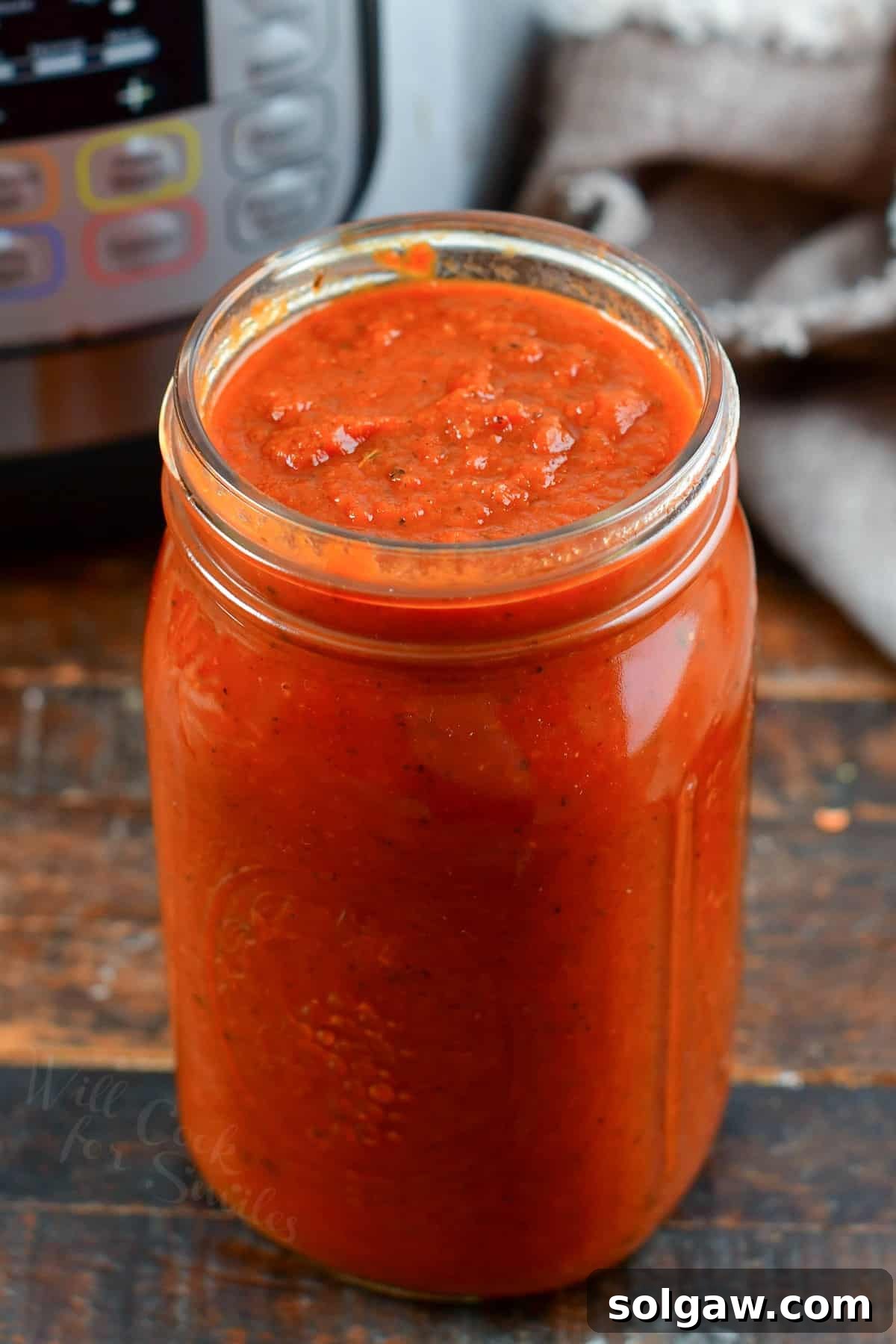
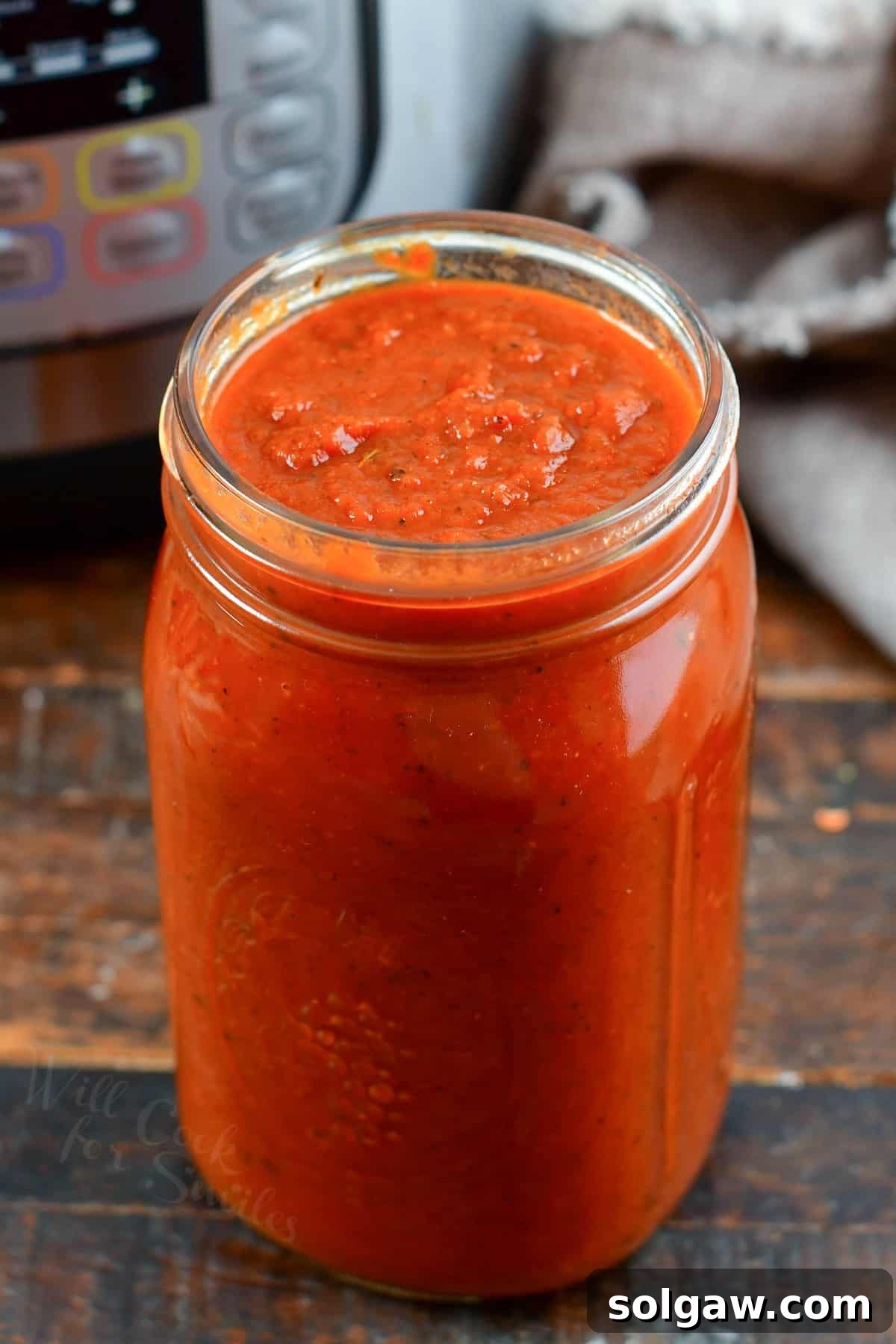
Effortless & Flavorful: Your Guide to Instant Pot Spaghetti Sauce
Transform your weeknight dinners with this incredible Instant Pot Spaghetti Sauce recipe. Prepare to be amazed as the pressure cooker works its magic, delivering a rich, bold, and robust sauce in a fraction of the time compared to traditional stovetop methods. This recipe isn't just about speed; it's about infusing deep, mouthwatering flavors that taste like they've simmered all day, but are ready in under an hour. Say goodbye to long hours over the stove and hello to a truly hands-off experience that yields consistently delicious results.
For years, spaghetti sauce has been a staple in countless kitchens, a symbol of comforting home cooking. My own family’s favorite has evolved, finding its perfect home in the Instant Pot. While I might still whip up a quick marinara for dishes like Eggplant Parmesan or a classic Lasagna, for everyday spaghetti, the Instant Pot has become my go-to for its unparalleled convenience and flavor development. I've fine-tuned my cherished spaghetti sauce recipe, adapting it perfectly for the pressure cooker, and it consistently turns out fantastic.
This recipe is a dream come true for anyone who values efficiency without compromising on taste. If you're someone who loves to plan meals ahead of time, this Instant Pot spaghetti sauce is an absolute game-changer. It’s ideal for making in advance, providing a ready-to-go solution that can be stored in the refrigerator or freezer for those busy pasta nights. Its simplicity, deliciousness, and make-ahead potential make it the ultimate choice for busy individuals and families seeking wholesome, flavorful meals.
Why the Instant Pot is Your Secret Weapon for Homemade Sauce
The Instant Pot isn't just a trendy gadget; it's a culinary powerhouse, especially when it comes to developing complex flavors in a short amount of time. For spaghetti sauce, this means you can achieve that slow-simmered taste in a fraction of the time. Here’s why it excels:
- Unmatched Speed: Pressure cooking significantly reduces cooking time. What might take hours on the stovetop to develop rich flavors can be accomplished in minutes under pressure.
- Deep Flavor Development: The high-pressure environment forces liquids and ingredients into foods, intensifying flavors and creating a depth that usually requires prolonged simmering.
- Hands-Off Cooking: Once the lid is sealed and the timer set, your work is done. No constant stirring, no worrying about scorching the bottom of the pot. This frees you up to attend to other tasks or simply relax.
- One-Pot Wonder: From sautéing your aromatics to simmering the sauce, everything happens in one pot, drastically cutting down on cleanup.
- Consistency: The controlled environment of the Instant Pot ensures a consistent result every time, taking the guesswork out of achieving perfect sauce texture and taste.
Essential Ingredient Notes and Tips
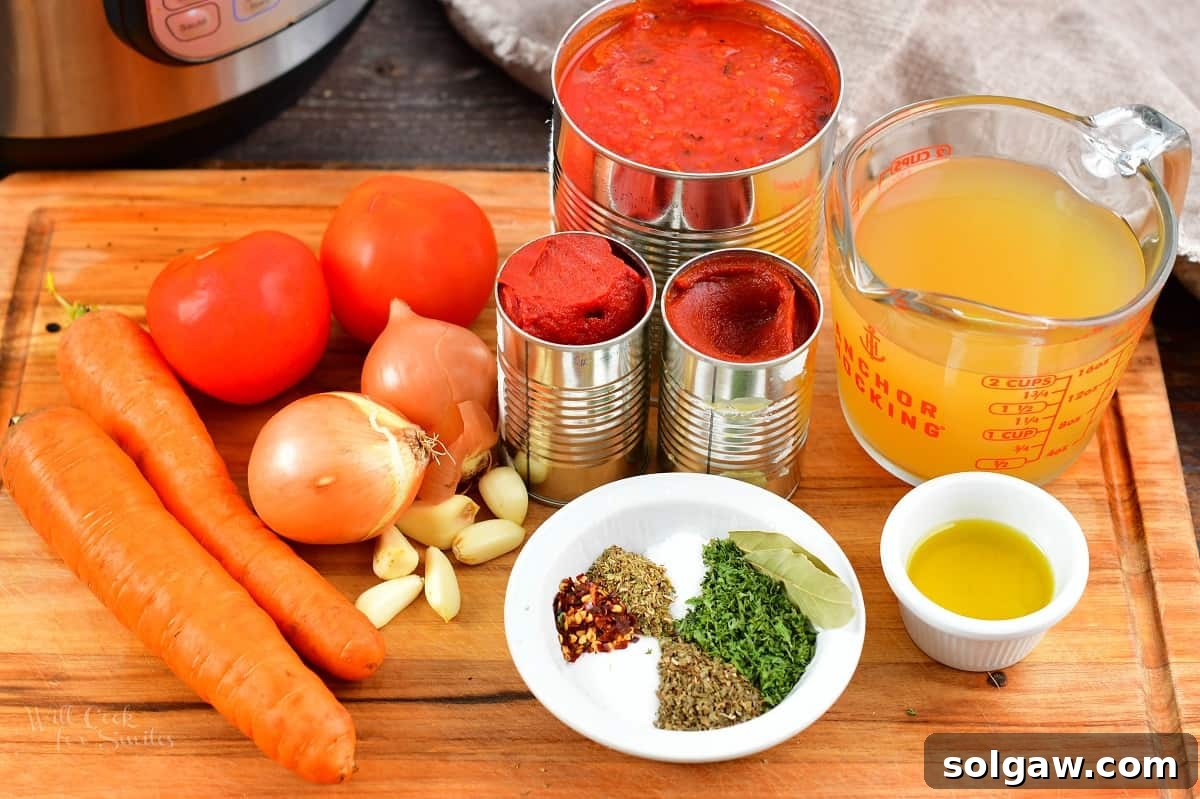
The quality of your ingredients makes all the difference in a truly outstanding spaghetti sauce. Here’s a closer look at what you’ll need and some tips for selecting the best ones:
- Olive Oil: Opt for a light, mild-tasting olive oil with a high smoke point. This ensures you can sauté your vegetables without burning the oil, laying a perfect flavor foundation. Avocado oil is an excellent alternative due to its similar properties and neutral taste.
- Fresh Vegetables:
- Onions: Vidalia onions are prized for their sweetness, which balances the acidity of the tomatoes beautifully. If unavailable, a classic yellow onion is a perfectly good substitute.
- Carrots: These add a subtle sweetness and body to the sauce. They become incredibly tender under pressure and blend seamlessly into the sauce.
- Tomatoes: While canned fire-roasted tomatoes are key, incorporating a couple of fresh heirloom tomatoes or good quality tomatoes on the vine can add a bright, fresh dimension to the initial sauté, though they are optional.
- Garlic: Always, and I mean always, use fresh garlic. Pre-minced or jarred garlic simply cannot compare to the pungent, aromatic flavor of freshly minced cloves, which are crucial for a vibrant sauce.
- Fire Roasted Crushed Tomatoes: This is a secret weapon for depth. The fire-roasted element introduces a smoky, complex flavor that elevates the entire sauce. While plain crushed tomatoes work in a pinch, fire-roasted varieties offer an unparalleled richness. Ensure they are unflavored to control the overall seasoning.
- Tomato Paste: This concentrated ingredient is a powerful flavor enhancer. It adds a deep umami and robust tomato essence that cannot be achieved with tomato sauce. Make sure you use paste, not sauce.
- Stock (Chicken or Vegetable): Use low-sodium or no-salt-added chicken stock to control the seasoning of your sauce. For a completely vegetarian or vegan option, vegetable stock or broth works wonderfully. The liquid is essential for pressure building and adds another layer of savory flavor.
- Aromatic Herbs and Seasoning: A thoughtfully chosen blend of herbs brings the sauce to life:
- Bay Leaves: These contribute a subtle, earthy, almost minty aroma that deepens during pressure cooking. Remember to remove them before serving!
- Dried Oregano, Basil, and Parsley: This classic Italian trio forms the backbone of the sauce’s herbal profile. Dried herbs are excellent for long-cook applications as their flavors intensify.
- Crushed Red Pepper Flakes: A small sprinkle adds a gentle warmth and zest without making the sauce overly spicy. Adjust the quantity to your personal preference for heat.
- Coarse Salt or Sea Salt: Essential for balancing and enhancing all the other flavors. Always taste and adjust seasoning at the end.
- Sugar (optional, a touch): A small amount of granulated sugar can help balance the acidity of the tomatoes, creating a smoother, more rounded flavor profile.
For precise ingredient quantities and nutritional information, please refer to the recipe card below.
How To Make Instant Pot Spaghetti Sauce: A Step-by-Step Guide
Making rich, flavorful spaghetti sauce in your Instant Pot is incredibly straightforward. Follow these steps for a perfect batch every time:
- Preparation is Key: Before you even turn on your Instant Pot, take a few minutes for mise en place. Peel and dice your onions, carrots, and any fresh tomatoes you’re using. Mince your fresh garlic. Measure out all your other ingredients and have your canned items open and ready. This ensures a smooth cooking process, especially with faster recipes.
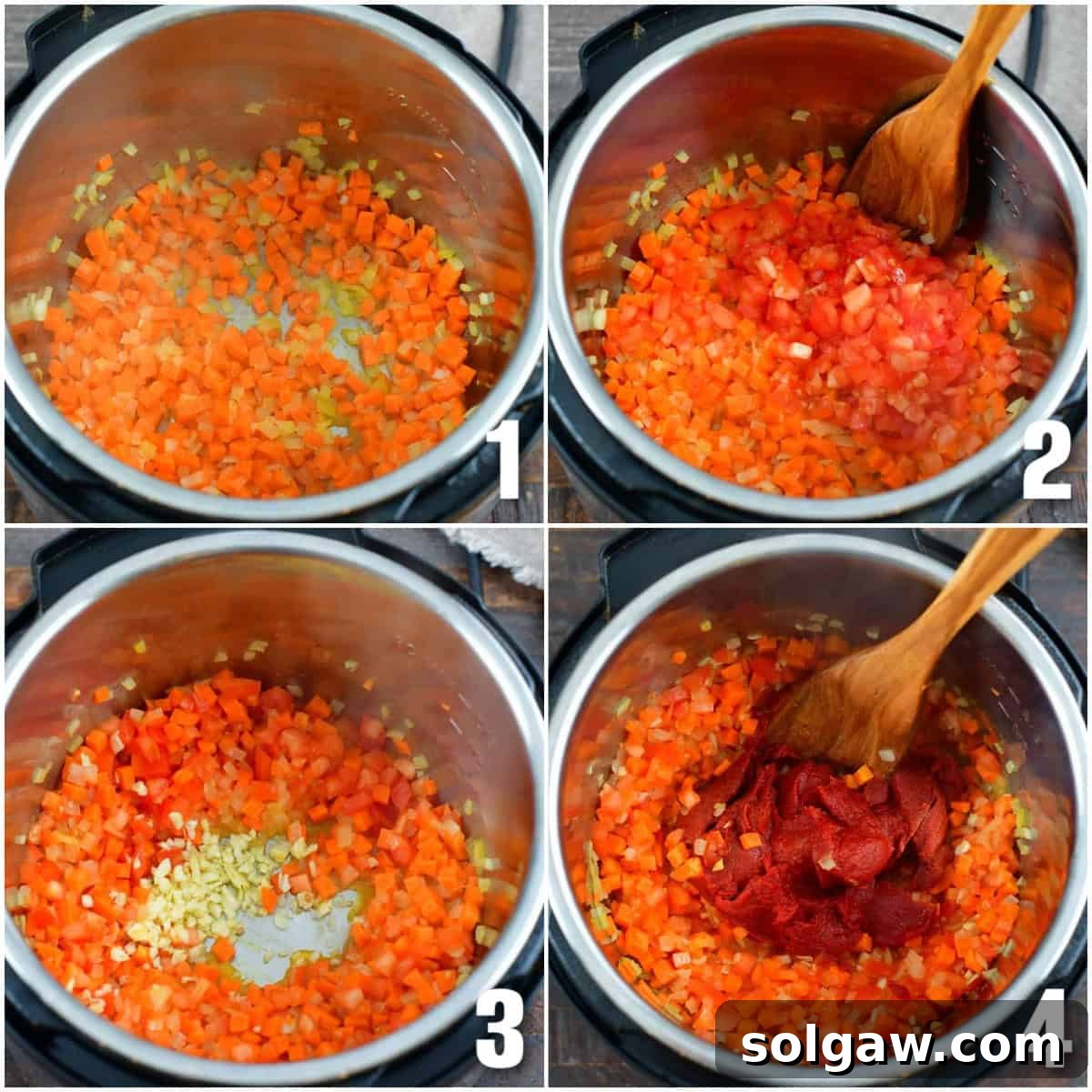
- Sautéing the Aromatics: Select the “Sauté” setting on your Instant Pot and allow it to heat up. Once hot, add your olive oil. Toss in the diced onions and carrots and sauté them for several minutes until they are softened and begin to turn golden. If using fresh diced tomatoes, add them now and cook until they soften as well. This step builds the crucial flavor base for your sauce.
- Infusing Garlic & Tomato Paste: Stir in the minced garlic and sauté for about 30 seconds until it becomes fragrant. Be careful not to burn it. Next, add the tomato paste and continue to sauté for approximately one minute, stirring constantly. This brief cooking step deepens the flavor of the tomato paste, removing any raw taste.
- Deglazing and Combining Flavors: Pour in the chicken or vegetable stock. As you stir, make sure to scrape the bottom of the pot thoroughly with a wooden or silicone spatula. This deglazing process removes any browned bits stuck to the bottom, which adds flavor and, more importantly, prevents the dreaded "Burn" notice on your Instant Pot. Now, add the fire-roasted crushed tomatoes, sugar, bay leaves, dried oregano, dried basil, dried parsley, and crushed red pepper flakes. Stir everything together until well combined.
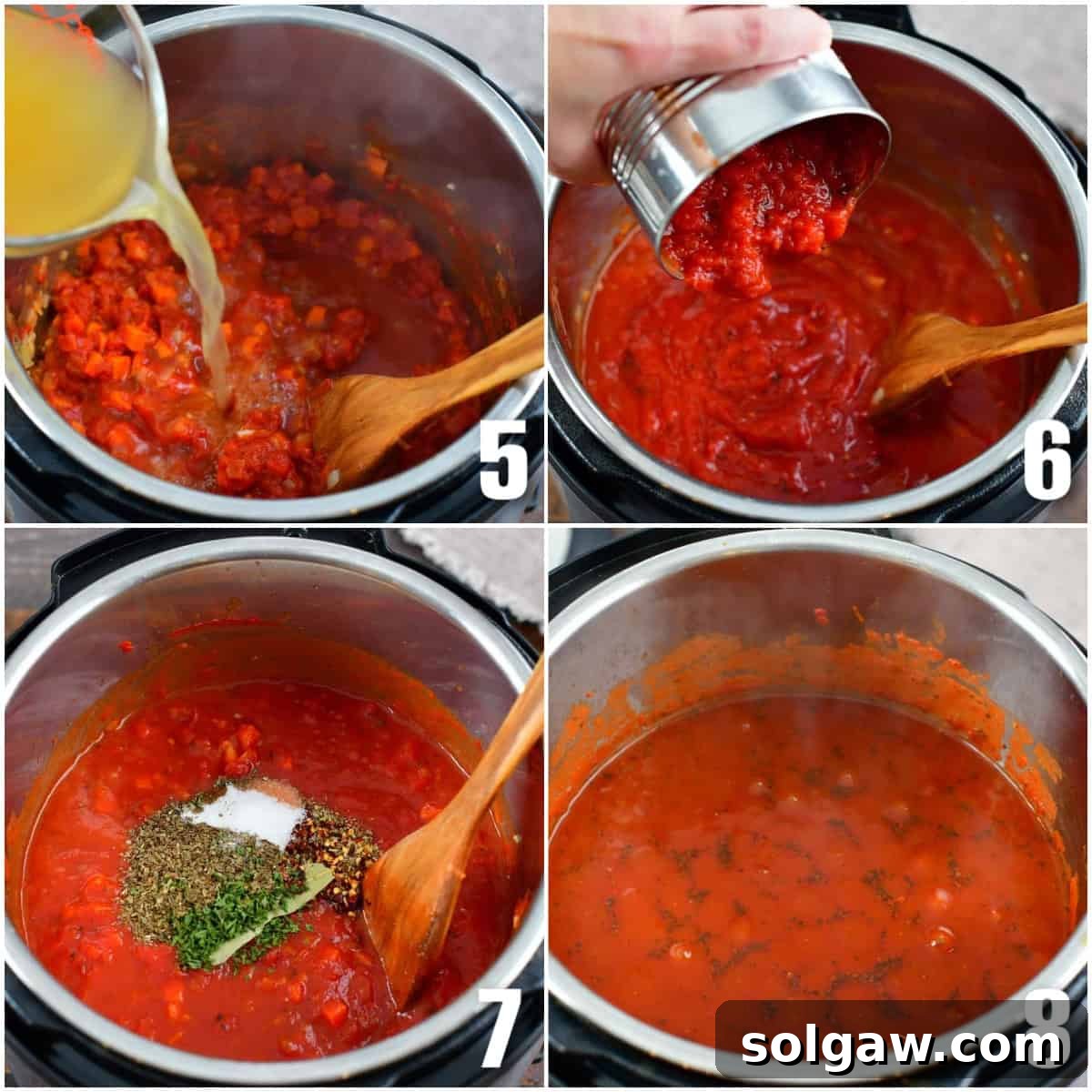
- Pressure Cooking Phase: Secure the lid on your Instant Pot, ensuring it is fully latched. Rotate the steam release valve to the “Sealing” position. Set the pressure cooker to cook on the “High Pressure” setting for 20 minutes. The Instant Pot will take about 10-15 minutes to build pressure before the actual cooking time begins. Always consult your specific pressure cooker manual for exact operating instructions and safety guidelines.
- Releasing the Pressure: Once the 20-minute cooking cycle is complete, allow the Instant Pot to perform a Natural Release for 10 minutes. This means you do nothing and let the pressure come down gradually. After 10 minutes, carefully switch the steam release valve to the “Venting” position for a Quick Release. Use a wooden spoon or tongs to turn the valve to protect your hands from the scalding steam.
- Simmer to Perfection: Once the pressure has fully released and the lid can be safely opened, stir the sauce. Turn the “Sauté” setting back on. Allow the sauce to simmer gently for 5-7 minutes, stirring occasionally, to allow it to thicken slightly and for flavors to meld further.
- Final Touches: Turn off the Instant Pot. Carefully remove and discard the bay leaves from the sauce.
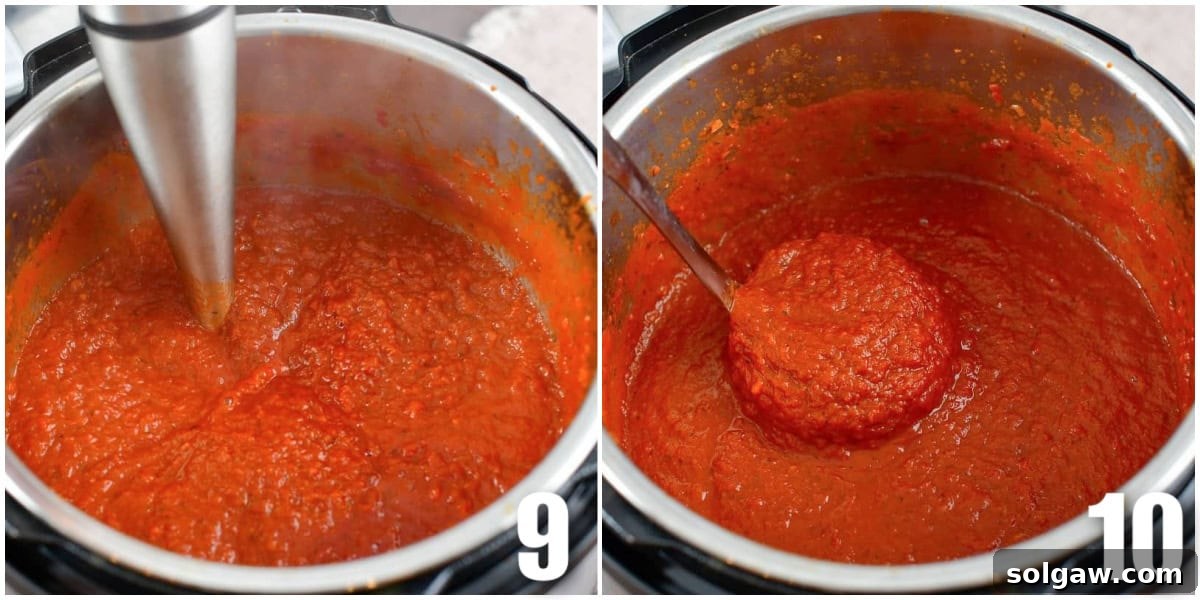
- Smooth or Chunky: At this stage, your sauce is ready. If you prefer a smoother sauce, use an immersion blender directly in the pot, or carefully transfer portions to a regular blender. Blend until you reach your desired consistency. If you enjoy a heartier, chunky texture, simply leave it as is. Caution: The sauce will be extremely hot. If using a regular blender, fill it only halfway, hold the lid down securely, and start blending on low speed, gradually increasing. For safety, it’s always best to let the sauce cool for 30-45 minutes before blending if you have the time.
Storing, Freezing, and Meal Prep Mastery
One of the greatest advantages of this Instant Pot spaghetti sauce is how wonderfully it lends itself to meal planning and batch cooking. Properly storing your homemade sauce ensures you always have a delicious, ready-to-use base for countless meals.
Storing in the Refrigerator:
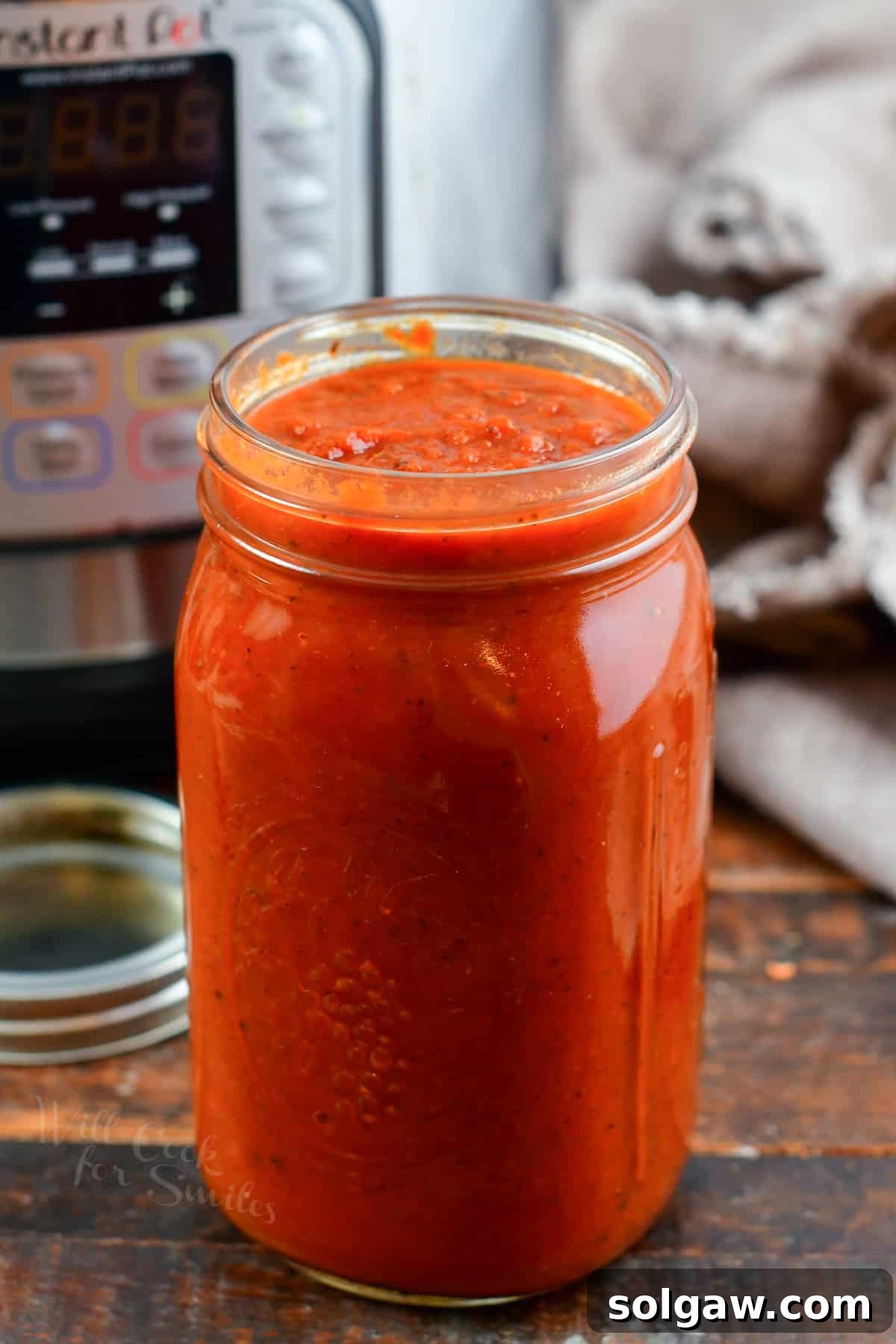
Always ensure the pasta sauce has cooled completely to room temperature before transferring it to storage containers. Store your Instant Pot spaghetti sauce in airtight glass jars or other food-safe containers with tight-fitting lids. When stored correctly in the refrigerator, the sauce will maintain its freshness and flavor for up to one week. For optimal freshness and to prevent bacterial contamination, always pour out the portion you need rather than scooping directly from the main storage jar.
Freezing for Long-Term Storage:
For longer preservation, freezing is an excellent option. Again, allow the sauce to cool completely to room temperature before freezing. This prevents ice crystal formation and helps maintain the sauce's texture. Transfer the cooled sauce into freezer-safe food storage containers, such as freezer zip-top bags or rigid plastic containers. If using bags, try to remove as much air as possible before sealing. You can also separate the sauce into smaller, individual portions, which makes thawing and reheating much more convenient for single meals or quick additions to recipes. Label and date your containers or bags clearly. Frozen spaghetti sauce can be stored for up to 3 months, allowing you to enjoy homemade goodness whenever cravings strike.
Thawing and Reheating:
When you're ready to use your frozen sauce, simply transfer it from the freezer to the refrigerator to thaw overnight. For a quicker thaw, you can use the defrost setting on your microwave or place the sealed container in a bowl of cold water. Reheat the sauce gently on the stovetop over medium-low heat, stirring occasionally, until it is heated through. You can also reheat it in the microwave or even directly in the Instant Pot on the "Sauté" setting.
Beyond Pasta: Creative Uses for Homemade Spaghetti Sauce
While this sauce is undeniably perfect for classic spaghetti, its rich and versatile flavor profile makes it suitable for much more than just pasta. Think outside the box and discover a world of culinary possibilities!
- Pizza Base: Forget store-bought pizza sauce! Spread this homemade goodness on your pizza crust for a flavorful foundation. It's a fantastic alternative to traditional pizza sauce, offering a richer, more complex taste.
- Hearty Sandwiches: Elevate your sandwiches, especially warm ones. It's an absolute must-have for classic meatball subs, adding moisture and depth to every bite.
- Dipping Delight: Serve it warm as a dipping sauce for garlic bread, mozzarella sticks, breadsticks, or even crusty artisan bread.
- Soups and Stews: Add a dollop to your favorite minestrone soup or vegetable stew for an extra layer of tomato flavor and richness.
- Eggs Shakshuka Style: Use it as a base for a quick and easy shakshuka! Poach eggs directly in the simmering sauce for a delicious and satisfying breakfast or brunch.
- Casseroles and Bakes: It's the perfect layering component for dishes like The Best Lasagna Recipe, Stuffed Shells Recipe, or Vegetable Lasagna.
- With Meatballs: A natural pairing! Simmer your homemade Italian Meatballs directly in this sauce for an irresistible meal.
- Breakfast Skillets: Use it to braise sausages, peppers, and onions, then top with eggs for a savory breakfast or brunch skillet.
Frequently Asked Questions About Instant Pot Spaghetti Sauce
Have questions about perfecting your homemade Instant Pot spaghetti sauce? Here are answers to some common inquiries:
What are the best tomatoes to use for spaghetti sauce?
For truly exceptional spaghetti sauce, canned tomatoes are generally preferred over fresh, as they are picked and processed at their peak ripeness, offering consistent flavor. Whenever possible, seek out fire-roasted crushed tomatoes; the roasting process imparts a beautiful depth and smoky sweetness that significantly enhances the sauce. Among all canned varieties, San Marzano tomatoes are often considered the gold standard for Italian sauces. Look for cans explicitly labeled "San Marzano" at your grocery store for superior flavor and texture.
Can I use fresh tomatoes to make spaghetti sauce?
While fresh tomatoes are delicious, traditional spaghetti sauce recipes are formulated around the concentrated flavor of canned tomatoes. Using fresh tomatoes creates a distinctly different, albeit equally delicious, kind of sauce known as Pomodoro Sauce. "Pomodoro" is the Italian word for "tomato," and this sauce celebrates the bright, vibrant taste of ripe, fresh tomatoes. If you choose to use fresh tomatoes for a Pomodoro-style sauce, my favorites are juicy heirloom tomatoes or flavorful tomatoes on the vine, especially when in season.
How do I add meat to my Instant Pot spaghetti sauce?
Adding meat to your spaghetti sauce is simple and creates a heartier, more substantial meal. You can use various ground meats like ground beef, ground Italian sausage, ground turkey, or ground chicken. Here’s how to incorporate it:
- Brown the Meat: Set your Instant Pot to the “Sauté” setting. Add a tablespoon of olive oil, and once hot, add your chosen ground meat. Cook, breaking it up with a spoon, until it's just cooked through and no longer pink.
- Remove Excess Fat: Carefully drain any excess fat from the pot.
- Set Aside: Remove the cooked meat from the Instant Pot and set it aside in a bowl.
- Continue with Veggies: Add a little more oil to the Instant Pot if needed, then proceed with cooking the onions, carrots, and garlic as outlined in the main recipe instructions.
- Combine and Cook: Once the vegetables have softened and you've added the tomato paste, stock, and crushed tomatoes, return the cooked ground meat to the pot. Stir it in well with the rest of the sauce ingredients. Continue with the pressure cooking steps as written in the recipe.
Can I make this sauce vegetarian or vegan?
Yes, absolutely! This recipe is inherently adaptable. To make it vegetarian, simply use vegetable stock or broth instead of chicken stock. To make it completely vegan, ensure your sugar is cane sugar (not bone-char processed) and continue to use vegetable stock. The rest of the ingredients are plant-based.
My sauce came out too thin, how can I thicken it?
If your sauce is thinner than you'd prefer after pressure cooking, don't worry! You can easily thicken it. After the pressure release, use the "Sauté" setting and let the sauce simmer uncovered for an additional 5-10 minutes, stirring occasionally. The open lid allows steam to escape, reducing the liquid and concentrating the sauce. If you're in a hurry, you can mix a small amount of cornstarch or flour with an equal amount of cold water (a slurry), then stir it into the simmering sauce until it thickens.
My Instant Pot showed a "Burn" notice. What happened?
The "Burn" notice on an Instant Pot is usually a safety feature indicating that the bottom of the inner pot is getting too hot, often due to food sticking. This usually happens when you haven't thoroughly deglazed the pot after sautéing or if there isn't enough liquid. If it occurs, immediately turn off the Instant Pot, let it cool for a few minutes, then carefully remove the lid. Scrape the bottom of the pot to loosen any stuck food, add a little more liquid if necessary, and then restart the cooking cycle. Your food is likely not burned, it's just a warning!
PIN THIS RECIPE FOR LATER
DID YOU MAKE THIS RECIPE? PLEASE leave a 🌟 star rating! Let me know how you liked it by leaving the 📝 comment below or share and tag me on social media @willcookforsmiles. DON’T FORGET to subscribe to my newsletter!
Instant Pot Spaghetti Sauce Recipe
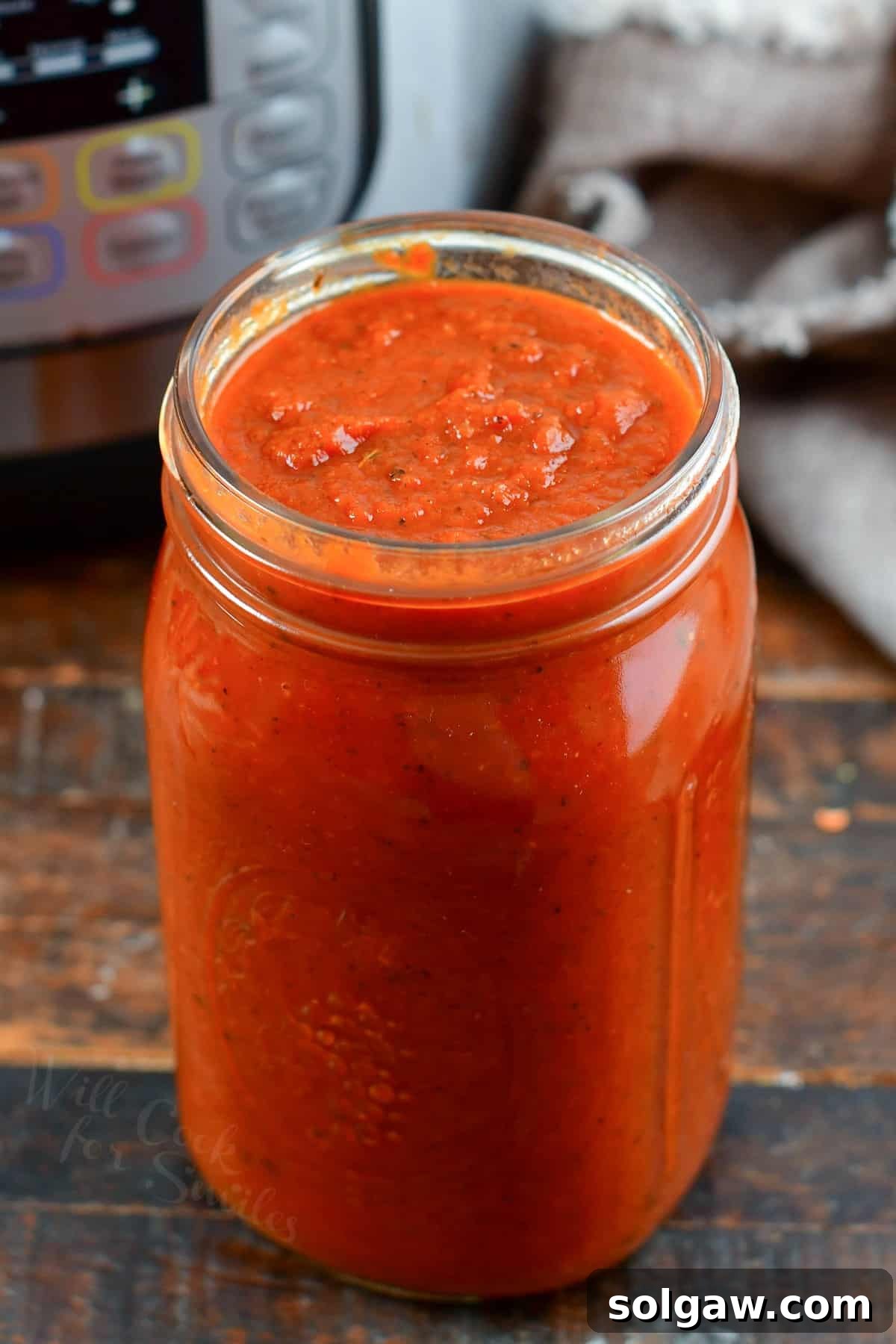
Instant Pot Spaghetti Sauce is quick and easy to make and features flavors of onions, carrots, tomatoes, garlic, and basil. The flavors here are so rich because they develop well from pressure cooking but in a very short period of time.
Print
Pin
Video
Rate
Ingredients
- 2-3 tbsp olive oil
- 1 large Vidalia onion
- 2-3 medium carrots
- 2 tomatoes on the vine
- 6 garlic cloves
- 28 oz fire roasted crushed tomatoes
- 12 oz tomato paste
- 2 cups chicken stock or vegetable stock
- 2 tsp white granulated sugar
- 2 bay leaves
- 1 tsp dried oregano
- 1 tbsp dried basil
- 2 tbsp dried parsley
- 1/2-1 tsp crushed red pepper flakes
- coarse salt or sea salt
Instructions
-
Dice onions and carrots, peel and mince garlic. (Don’t worry about the exact size of the cut since the sauce will be blended.) Measure the remaining ingredients and open the cans.
-
Set your Instant Pot to a “Sauté” setting and let it heat up. Add some oil and throw in onions and carrots. Let the veggies sauté for a few minutes until softened. Add in diced tomatoes if using and cook until softened.
-
Mix in garlic and sauté until fragrant. Stir in tomato paste and let it sauté for about a minute as well.
-
Slowly stir in chicken stock, while you scrape the bottom and sides of the pot to deglaze. Pour in crushed tomatoes, sugar, herbs, and seasoning. Stir well and make sure to scrape the bottom of the pot with a wooden or silicone spatula completely while you stir. (Never use a metal spatula, as it can damage the non-stick coating.)
(If you don't scrape the bottom well before closing the lid, it might lead to a "Burn" notice. Don't worry if it happens, it just means that the bottom got too hot, not that your food is burned! It's a precautionary notice, but check with your manual how to remedy that.) -
Close the lid and make sure it is latched all the way. Turn the valve to “Sealing” and set the pressure cooker to cook on “High Pressure” setting for about 20 minutes. (Consult your pressure cooker manual for exact proper operations and safety.)
NOTE: The pressure cooker will take about 10-15 minutes to build the pressure inside first, before it starts cooking. -
Once time is up, let it do a natural release for about 10 minutes, and then carefully do a quick release.
-
Stir the sauce and turn on the "Sauté" setting again and let it simmer for 5-7 minutes to thicken the sauce a little bit. Make sure to stir the sauce from time to time.
-
Turn off the pressure cooker and discard bay leaves.
-
You can blend the spaghetti sauce or leave it chunky if you'd prefer. If you choose to blend it, please NOTE that it will be very hot, so be careful.
Blend sauce in a regular blender or using an immersion blender until smooth. Again, be careful, you are dealing with scalding-hot sauce. (If you have time, let the sauce cool down for 30-45 minutes before blending for added safety.)
Video
(Video demonstration of this recipe would appear here.)
Notes
Freezing: If you plan to freeze the sauce, let the sauce cool completely to room temperature, then place it in a freezer-safe food storage container (like a freezer zip-top bag) and get as much air out as you can. Label and date the bag(s) accordingly, then place them in the freezer. Freeze for up to 3 months.
Nutrition
Carbohydrates: 18g |
Protein: 5g |
Fat: 4g |
Saturated Fat: 1g |
Polyunsaturated Fat: 1g |
Monounsaturated Fat: 2g |
Sodium: 402mg |
Potassium: 765mg |
Fiber: 4g |
Sugar: 10g |
Vitamin A: 2978IU |
Vitamin C: 21mg |
Calcium: 71mg |
Iron: 3mg
Tried this recipe?Mention @willcookforsmiles or tag #willcookforsmiles!
Originally published on Will Cook For Smiles in January 2022.