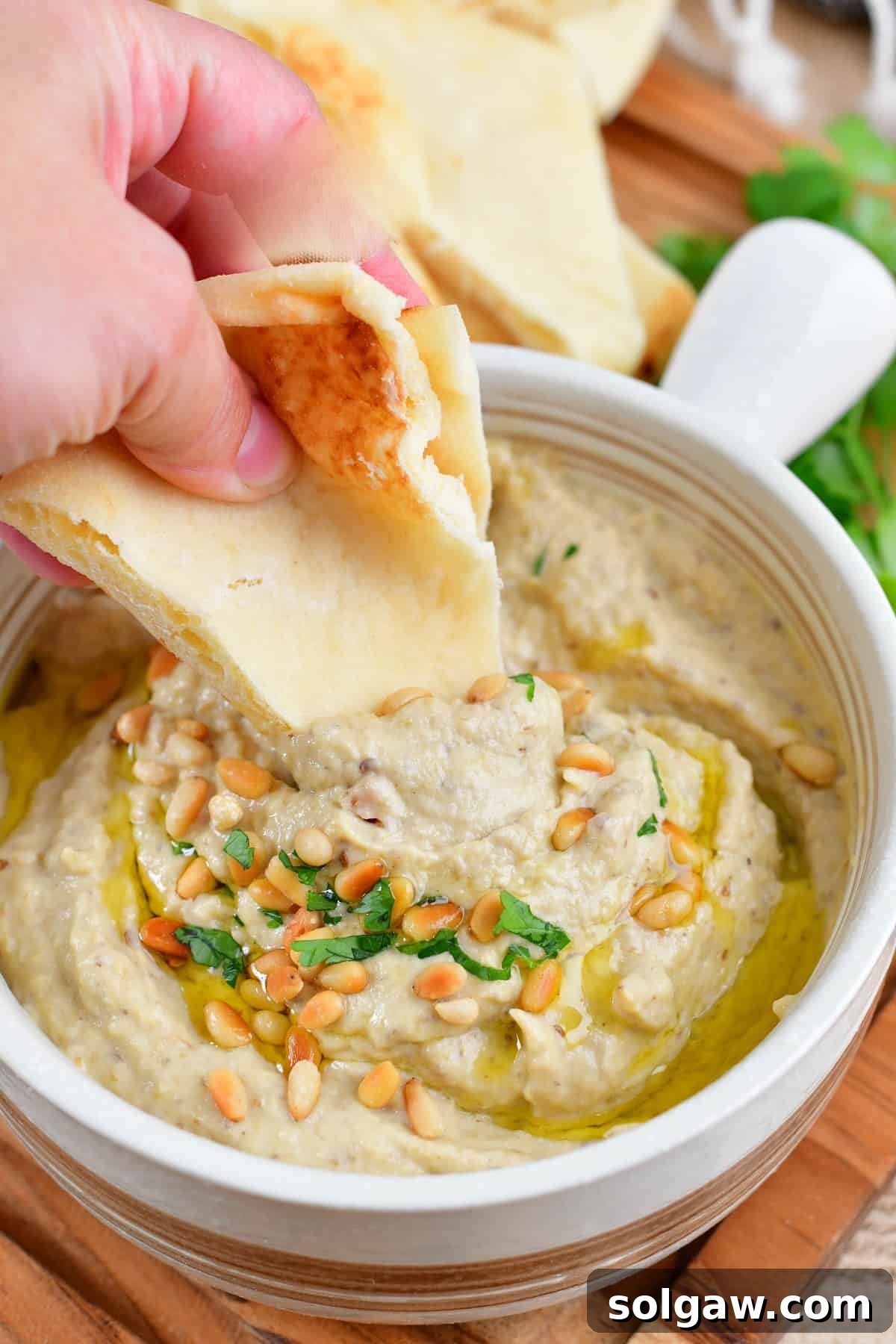
Baba Ganoush is a truly exquisite Middle Eastern dip crafted from roasted or grilled eggplant, renowned for its unparalleled smoky flavor and creamy texture. This healthy and versatile appetizer is perfect for any occasion, offering a delightful blend of savory notes with hints of fresh lemon and earthy tahini. Often enjoyed throughout the warmer months, its refreshing taste and easy preparation make it a staple for summer gatherings. Whether you’re a connoisseur of Mediterranean cuisine or simply exploring new flavors, this authentic Baba Ganoush recipe promises a smooth, silky, and utterly satisfying experience. Serve it with warm pita bread, crisp vegetables, or your favorite crackers for an unforgettable culinary journey.
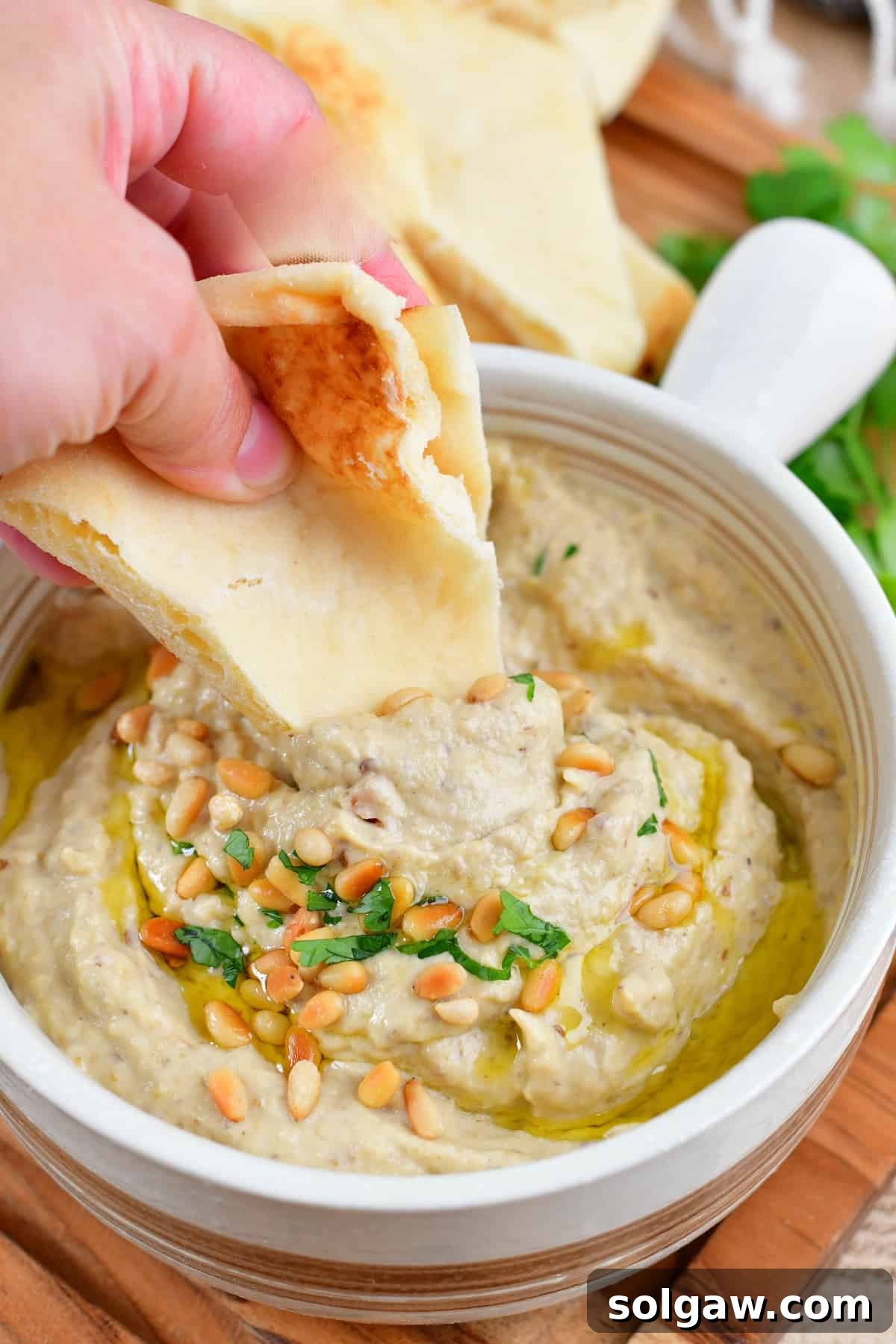
Table of Contents
What is Baba Ganoush: The Smoky Eggplant Delight?
While hummus often steals the spotlight as a beloved Middle Eastern dip, allow us to introduce you to another equally captivating, if not more sophisticated, culinary gem: Baba Ganoush. This delightful dip, sometimes confused with its chickpea-based cousin, stands proudly on its own with a distinct flavor profile and luxurious texture. Though both originate from the Eastern Mediterranean and share tahini as a key ingredient, their primary components set them worlds apart.
Unlike hummus, which is made from chickpeas and has a slightly grainy consistency, Baba Ganoush uses roasted or grilled eggplant as its base, resulting in an exceptionally smooth and creamy dip. The grilling process is paramount, infusing the eggplant with a deep, earthy smokiness that is the hallmark of authentic Baba Ganoush. This smoky nuance, coupled with the bright acidity of fresh lemon juice, the nutty richness of tahini, and the aromatic depth of garlic, creates a complex and irresistible flavor that differentiates it significantly from the milder, more robust taste of hummus.
Baba Ganoush is more than just a dip; it’s a celebration of flavor and texture, making it an ideal appetizer for any gathering. Its light yet satisfying nature, combined with a savory punch, makes it a crowd-pleaser. Moreover, being naturally vegetarian (and easily made vegan), it caters to a wide range of dietary preferences, ensuring everyone can enjoy its deliciousness. Next time you fire up the grill, make this extraordinary roasted eggplant dip a centerpiece of your meal!
The Rich History and Origin of Baba Ganoush
The culinary journey of Baba Ganoush begins in the vibrant heart of the Eastern Mediterranean, a region celebrated for its rich gastronomic traditions. While its precise birthplace is a topic of friendly debate, this smoky eggplant dip has deeply rooted origins spanning across Iraq, Armenia, Jordan, Lebanon, Palestine, Egypt, and Turkey. Each country proudly embraces Baba Ganoush, often adding its unique touch through subtle ingredient variations or preparation methods, yet maintaining the foundational elements that define this cherished dish.
The name “Baba Ganoush” itself is steeped in charm. “Baba” translates to “father” or “daddy,” and “Ganoush” or “Gannuj” can mean “coquettish” or “pampered.” One popular theory suggests the name refers to a doting father or a pampered individual who was so enamored with the dish that it was specially prepared for them, mashed to a soft consistency, making it easy to enjoy. Regardless of its exact etymology, the dish consistently features eggplant, tahini, fresh lemon juice, and olive oil as its unchanging core, making it a beloved staple throughout the Middle East and beyond.
Key Ingredients and Expert Tips for Perfect Baba Ganoush
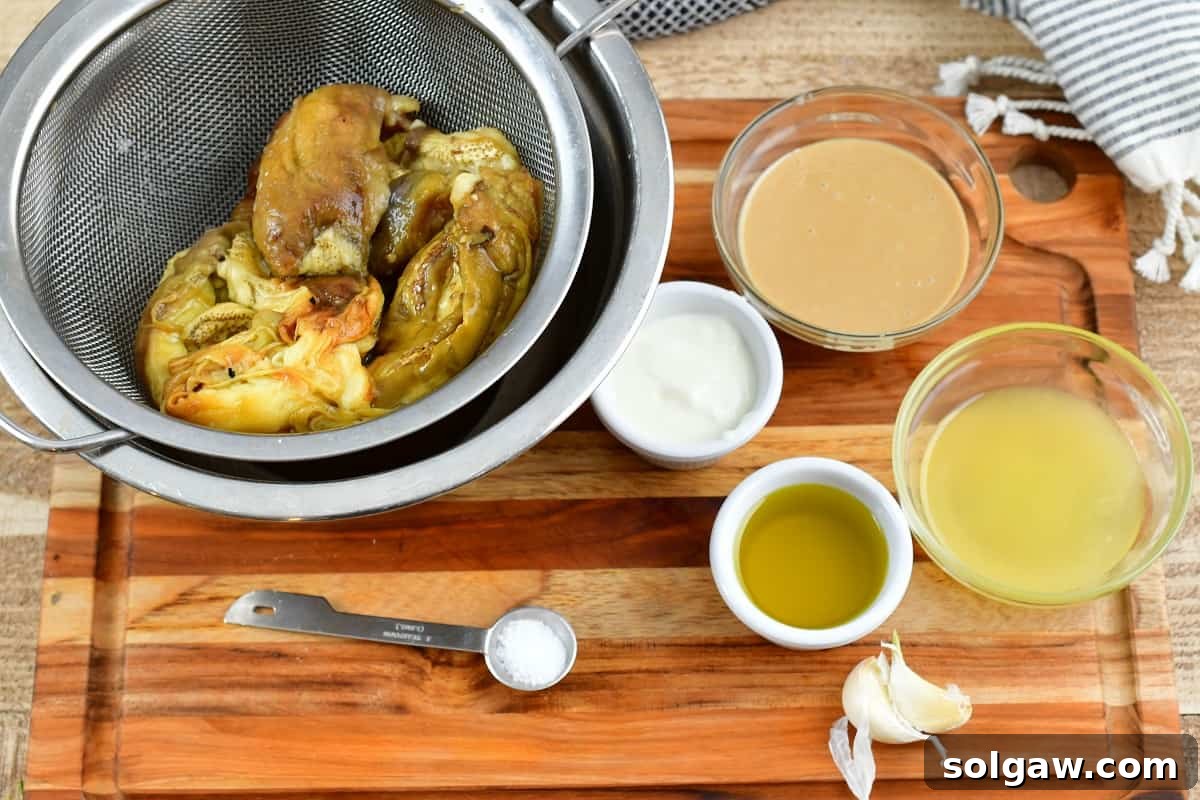
Achieving the perfect Baba Ganoush relies on selecting quality ingredients and applying a few key techniques. Here’s a closer look at the essential components and tips to elevate your dip:
Eggplants: The foundation of this dip. For optimal roasting on the grill, it’s crucial to choose smaller to medium-sized eggplants that are relatively thin. These cook more evenly and thoroughly before the skin over-chars, ensuring a tender, smoky interior. Aim for 3-4 smaller eggplants instead of 1-2 large, thick ones for better results. Look for firm, shiny eggplants without blemishes.
Fresh Lemon Juice: This ingredient provides a vital bright acidity that cuts through the richness of the eggplant and tahini. Always use freshly squeezed lemon juice from ripe lemons for the best, most vibrant flavor. Bottled lemon juice simply won’t yield the same fresh, zesty impact.
Tahini: A classic Middle Eastern paste made from ground sesame seeds, tahini is indispensable for Baba Ganoush. It contributes a distinctive earthy, nutty flavor and a crucial creamy texture. Good quality tahini should be smooth and pourable, with a slightly bitter, rich taste. Stir it well before measuring, as the oil can separate.
Yogurt: While not always included in every traditional recipe, a touch of plain, full-fat yogurt adds an extra layer of creaminess and a subtle tang, enhancing the overall smoothness and depth of the dip. For the richest results, opt for a good quality full-fat plain yogurt. If you prefer a dairy-free or vegan option, a plain unsweetened plant-based yogurt (like almond or soy) can be used, or simply omit it.
Garlic: Fresh garlic is non-negotiable for this recipe. Its pungent, aromatic qualities are essential for building the authentic flavor profile of Baba Ganoush. Do not substitute with garlic powder; the fresh cloves provide an incomparable zest and depth. Adjust the quantity to your preference, starting with two cloves and adding more if you desire a stronger garlic kick.
Olive Oil: Use a high-quality extra virgin olive oil. It not only contributes to the dip’s silky texture but also adds a fruity, sometimes peppery, undertone that complements the other flavors. A good olive oil is also perfect for drizzling over the finished dip before serving, adding a beautiful sheen and extra richness.
Fresh Parsley: More than just a garnish, fresh parsley offers a burst of herbaceous flavor and a vibrant green color that contrasts beautifully with the pale eggplant dip. It provides a refreshing aromatic finish that brightens the entire dish. Finely chop it for easy incorporation and garnishing.
Refer to the recipe card below for precise ingredient quantities and further details.
Mastering the Art of Homemade Baba Ganoush
Crafting the perfect Baba Ganoush is a rewarding experience, and you have the flexibility to prepare it either by hand for a slightly chunkier, rustic texture or with a food processor for a perfectly smooth consistency. If opting for the hand-mashing method, be prepared to put in some effort to emulsify the olive oil and achieve a cohesive dip. The food processor, on the other hand, will deliver a velvety smooth result much more quickly and effortlessly.
The secret to truly outstanding Baba Ganoush lies in the proper preparation of the eggplant. Grilling is undeniably the superior method, as it imparts that irreplaceable smoky flavor that makes this dip legendary. While other methods exist, a charcoal or wood-fired grill will deliver the most authentic and desirable smokiness.
Step-by-Step Instructions:
Prepare the Eggplant for Grilling:
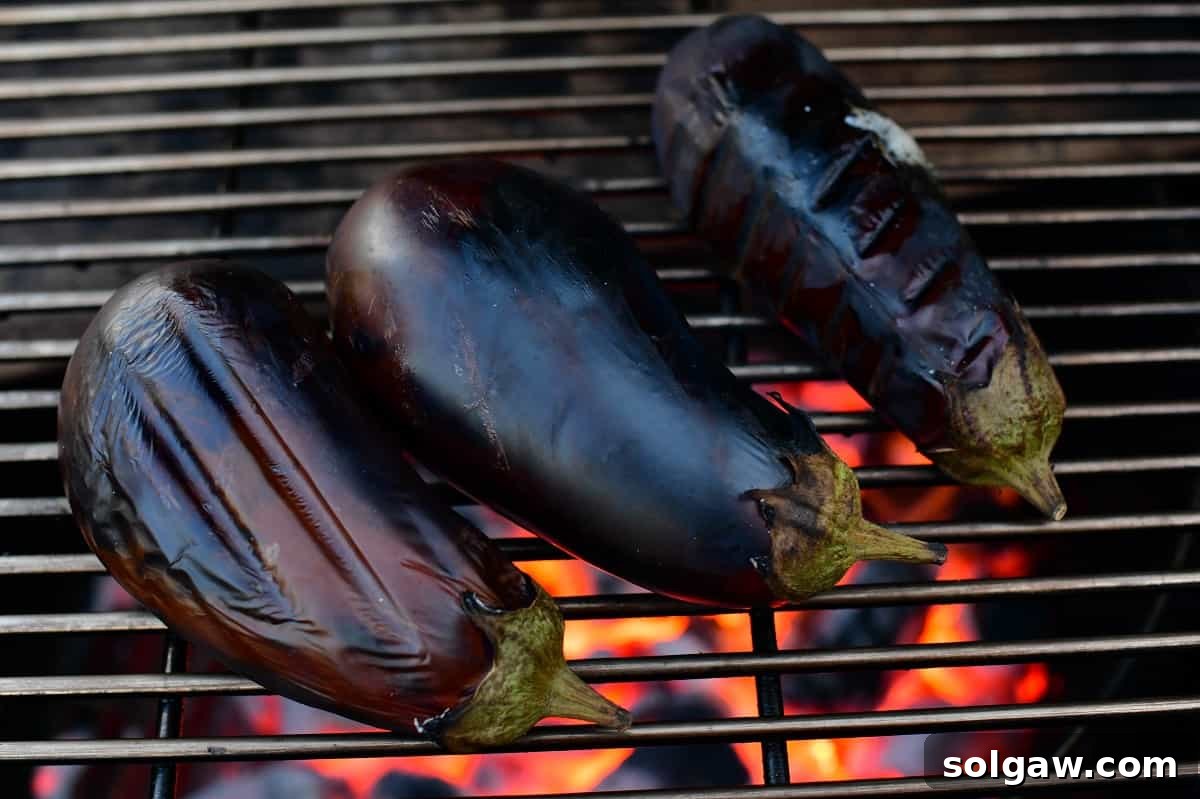
Before placing your eggplants on the grill, a crucial step is to pierce several small holes into their skin using a sharp knife. This simple action allows steam to escape during cooking, preventing the eggplants from potentially exploding on the grill, which can be dangerous. Safety first!
Prepare Your Grill:
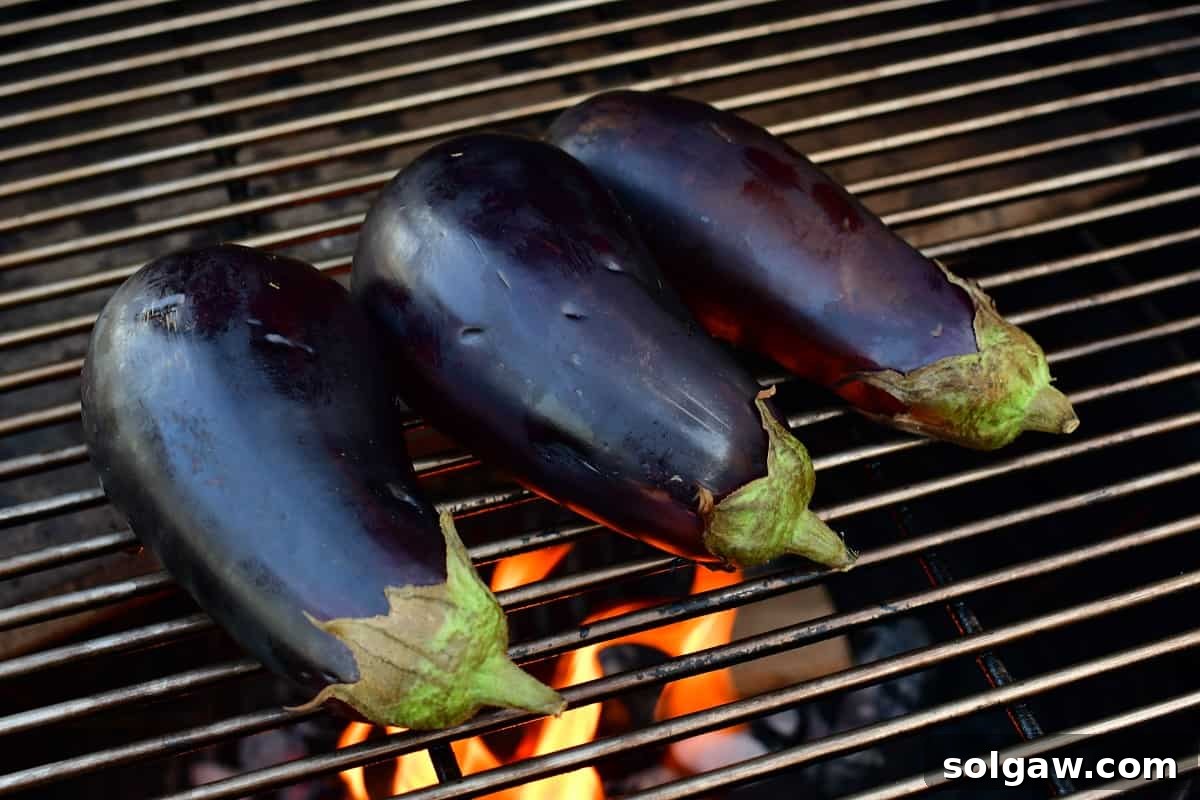
Preheat your grill to a medium-high heat. For the authentic smoky flavor, charcoal or wood fire grills are highly recommended. A gas grill will cook the eggplant but won’t impart that signature smokiness. If your grill grate is set high above the coals, you can cook the eggplants over direct heat throughout. However, if the grate is closer to the heat source, consider setting up two temperature zones – a direct heat zone for charring and an indirect heat zone for slower cooking, if needed.
Grill the Eggplant to Perfection:
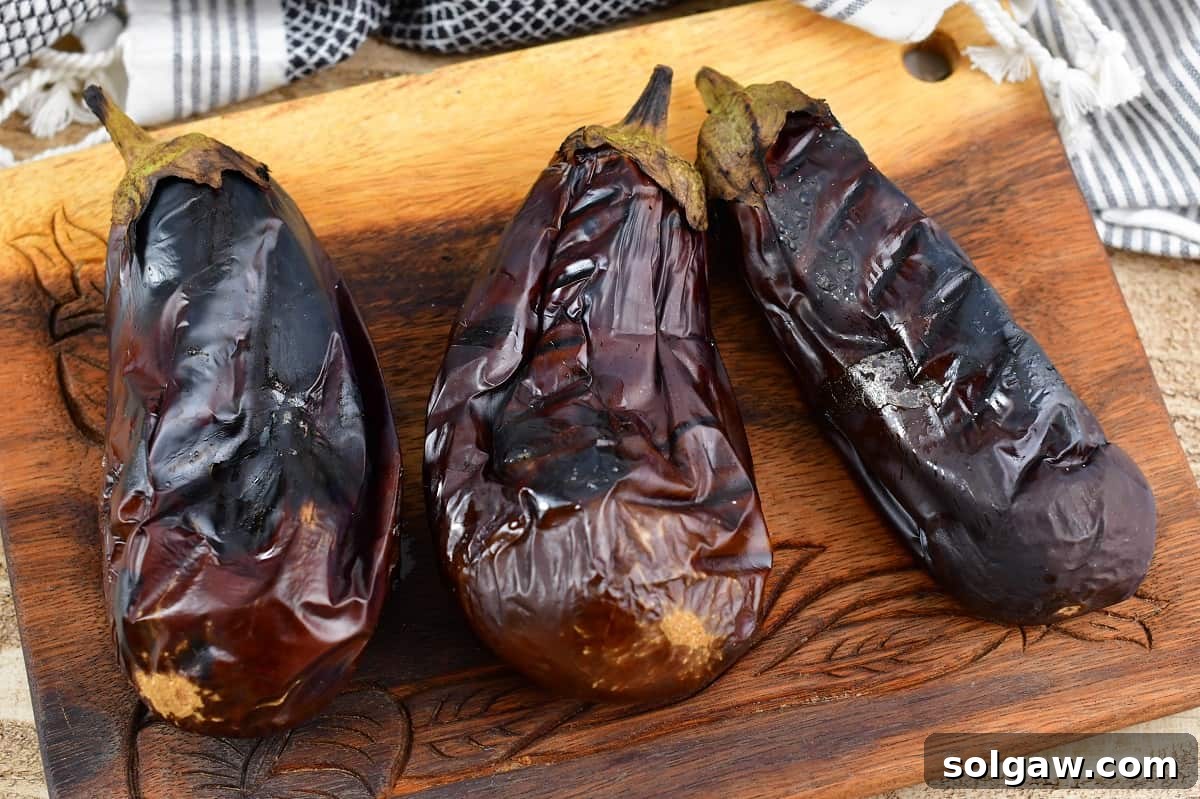
Place the pierced eggplants directly over the heat. Roast them for approximately 7-10 minutes per side, turning them regularly with metal tongs to ensure even cooking and charring. The goal is a beautifully charred, almost blackened skin on the outside and an interior that is completely tender and soft. You should be able to easily pierce the flesh with a fork. Once cooked, carefully remove the eggplants from the grill and set them aside to cool completely. This cooling process is important as it makes peeling easier and helps the flesh firm up slightly.
Prepare the Eggplant Flesh:
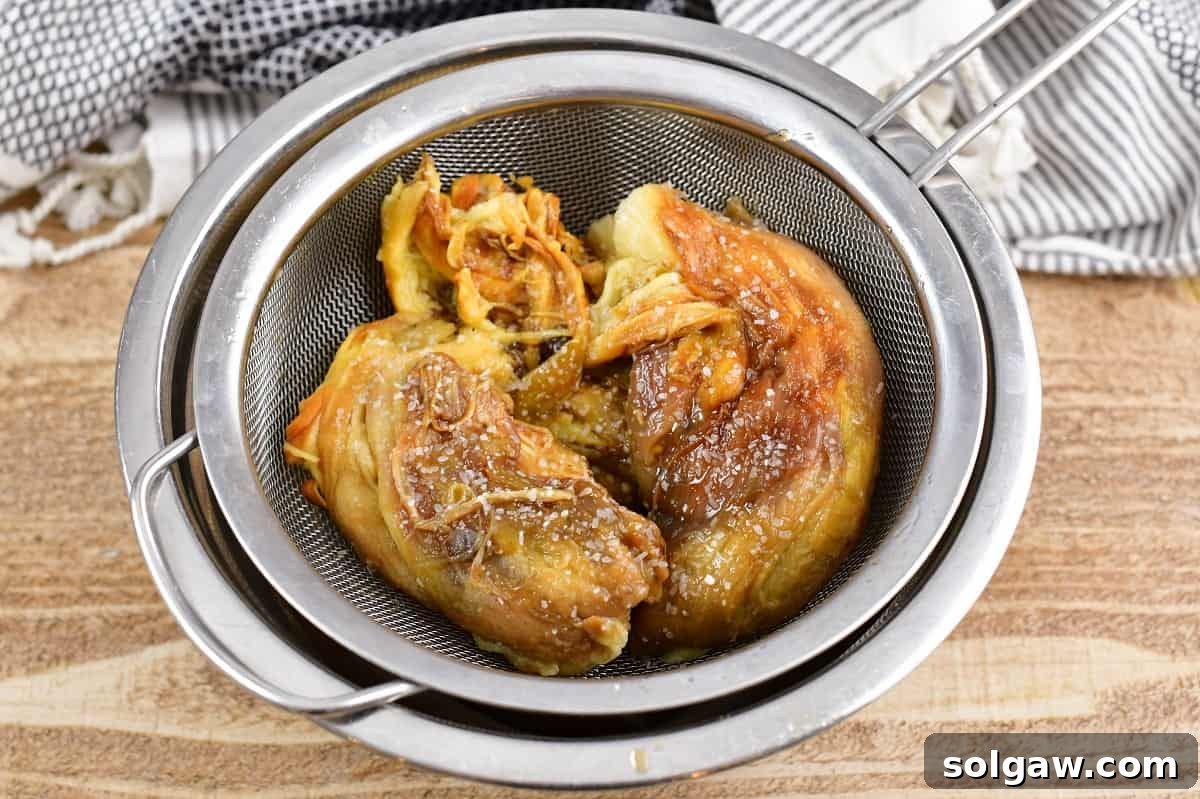
Once the eggplants are cool enough to handle, carefully peel off the charred skin. Don’t worry if a few small bits of char remain; they will only enhance the smoky flavor. Place the tender eggplant flesh into a fine-mesh strainer set over a bowl. Sprinkle it generously with coarse sea salt. This step is crucial for drawing out excess moisture from the eggplant, which can make the dip watery if not removed. Allow it to sit and drain while you gather your other ingredients.
Blend the Ingredients for Creaminess:
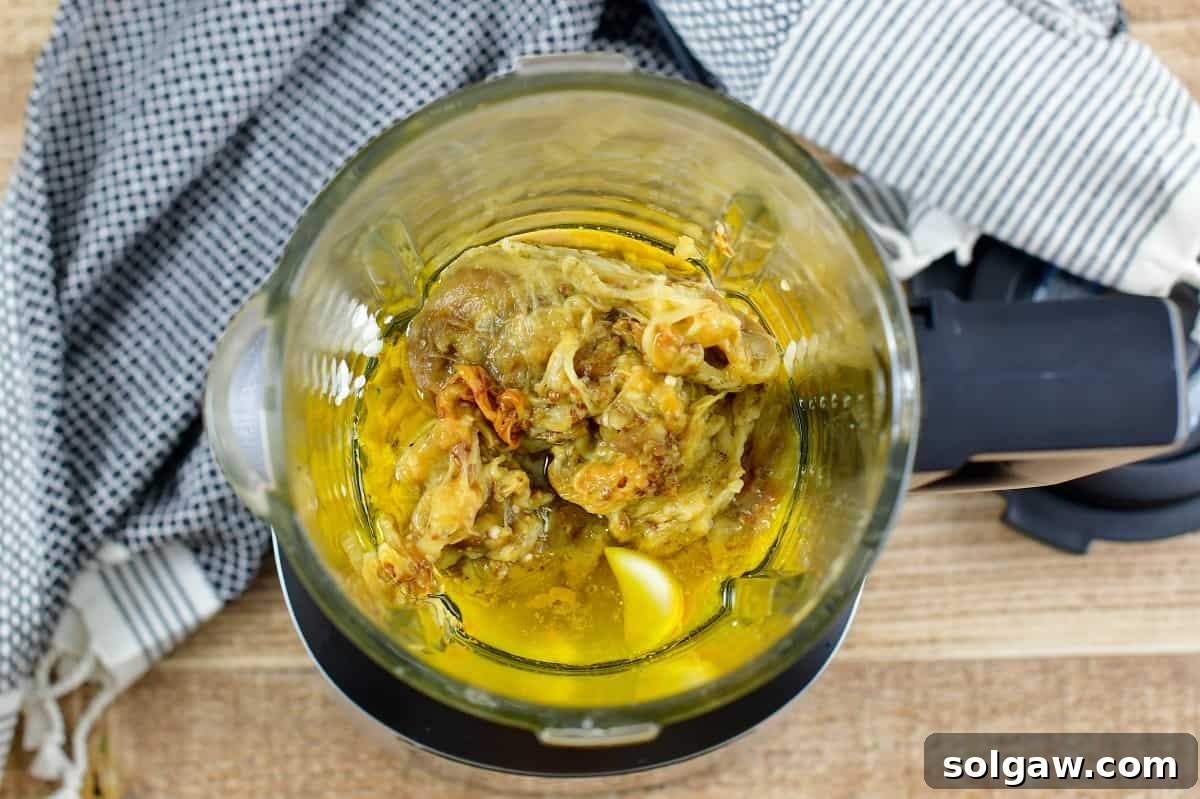
In a food processor or a blender, combine all the remaining ingredients: fresh lemon juice, tahini, plain yogurt (if using), minced fresh garlic, and 2-3 tablespoons of olive oil. Give the drained eggplant flesh a final gentle squeeze to remove any remaining liquid, then add it to the food processor. Begin pulsing all ingredients together, gradually increasing the speed, until the mixture is smooth and creamy. If you prefer a chunkier texture, pulse sparingly. Taste and adjust seasonings, adding more salt, lemon juice, or olive oil as needed. For extra richness, you can drizzle in the remaining olive oil slowly while the processor is running to create a perfectly emulsified, glossy dip.
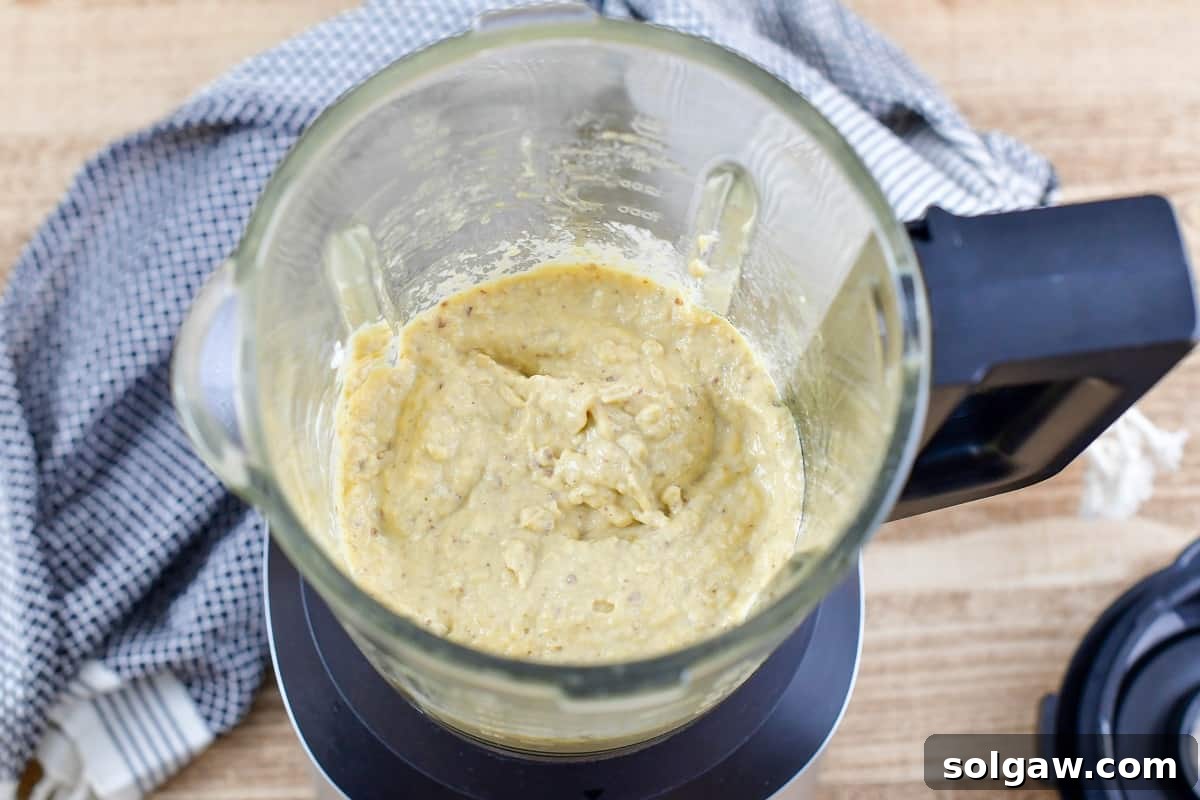
Serve and Garnish:
Transfer the freshly made Baba Ganoush to a serving bowl. Create a small well in the center of the dip and drizzle generously with high-quality olive oil. Garnish with a sprinkle of freshly chopped parsley for a pop of color and freshness. Serve immediately with a variety of dippers such as warm pita bread, fluffy naan, crispy flatbread, or a selection of fresh vegetables like cucumber sticks, carrot batons, celery stalks, and bell pepper strips. Enjoy this exquisite, homemade Middle Eastern delight!
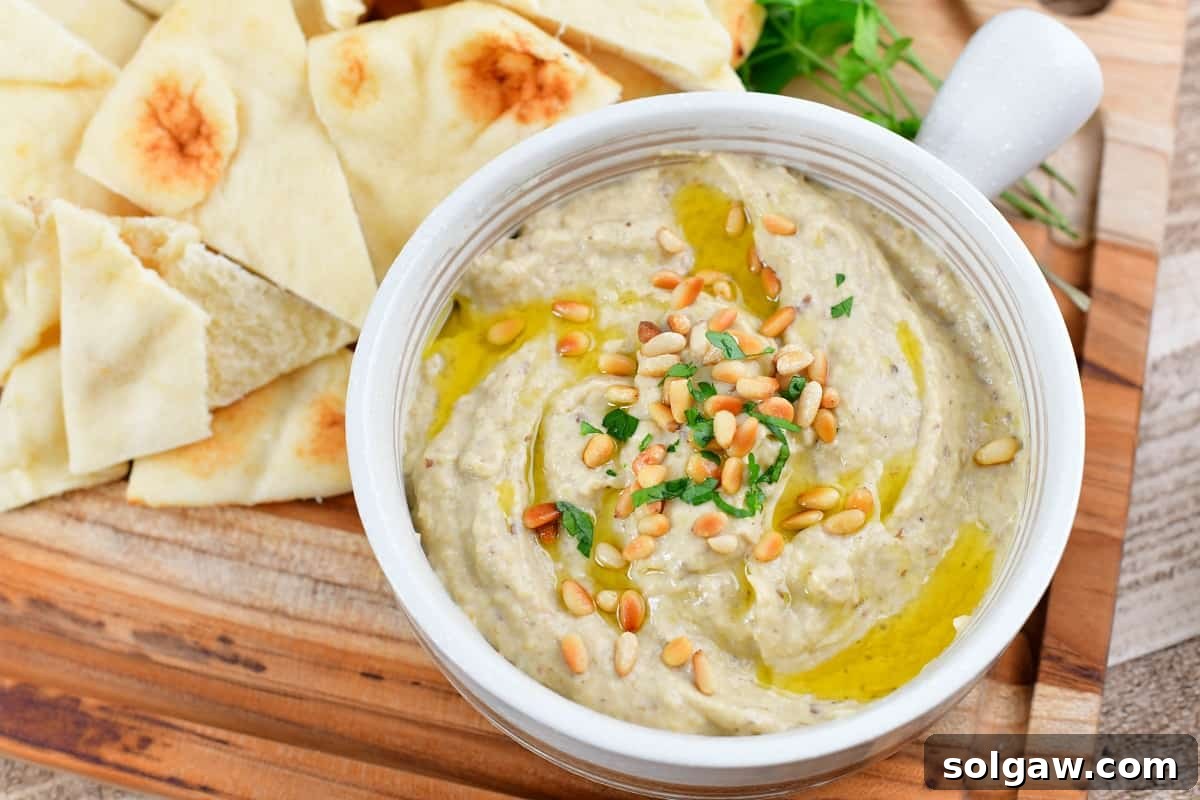
Grill-Free Baba Ganoush: How to Roast Eggplant in the Oven
While grilling is highly recommended for the signature smoky flavor of Baba Ganoush, it’s not always feasible. Don’t let the absence of a grill stop you from enjoying this delicious dip! You can achieve wonderfully tender eggplant by roasting it in the oven, or even broiling it to mimic some of that char. While the smoky depth might be less pronounced, the creamy texture and rich flavor can still be achieved.
Oven Roasting Method:
- Preheat your oven to a high temperature, around 400°F (200°C).
- Wash the eggplants and pierce them several times with a fork or small knife to allow steam to escape (this is still important even in the oven to prevent bursting).
- Lightly brush the eggplants with olive oil. This helps the skin soften and prevents sticking.
- Place the oiled eggplants on a baking sheet lined with parchment paper or a silicone mat. Ensure your parchment paper can withstand high oven temperatures.
- Roast for 45-60 minutes, or until the eggplants are completely collapsed, wrinkled, and very soft to the touch. Turn them halfway through the cooking time to ensure even roasting.
- Once roasted, remove from the oven and let cool completely before peeling and proceeding with the recipe.
Broiling Method for a Charred Effect:
To get a little char similar to grilling, you can use a two-step broiling process. This method requires closer attention to prevent burning:
- After piercing and lightly oiling the eggplants, place them on a parchment-lined baking sheet.
- Set your oven to a low broil. Place the baking sheet on a rack about 6-8 inches from the broiler element. Broil for 5-7 minutes, then turn the eggplants a quarter of the way using long tongs. Repeat this until all sides have started to soften and develop some color.
- Once the eggplants are mostly softened, increase the oven to a high broil. Move the rack closer to the broiler (about 3-4 inches). Broil each side for 2-3 minutes, watching carefully, until the skin is nicely charred and blackened in spots. This ensures the inside is cooked through while the outside gets that desirable grilled look.
- Remove, cool, peel, and proceed with the Baba Ganoush recipe.
Regardless of the method, the key is to ensure the eggplant flesh is thoroughly cooked and soft, as this is vital for a smooth, creamy dip. The draining step after peeling is especially important when oven-roasting, as roasted eggplants tend to hold more moisture than grilled ones.
Frequently Asked Questions About Baba Ganoush
How to choose the best eggplant for Baba Ganoush?
Selecting the right eggplant is key to a successful Baba Ganoush. It’s best to opt for smaller to medium-sized eggplants, generally thinner varieties, as they tend to have fewer seeds and cook more evenly and thoroughly. Larger, fatter eggplants can be tougher, contain more bitter seeds, and may not cook through as well on the grill or in the oven, leading to an inconsistent texture. When grilling, it’s vital for the flesh to become completely soft and tender before the skin burns too much. Therefore, choose three smaller ones over two large ones to ensure optimal texture and flavor development.
Can I make Baba Ganoush ahead of time?
Yes, you can absolutely prepare elements of Baba Ganoush in advance to save time, especially the eggplant. Once the eggplant is perfectly grilled or roasted and fully cooled to room temperature, you can store it in an airtight food storage container in the refrigerator. It will keep well for one to two days. When you’re ready to finish the dip, simply peel the skin, drain and squeeze out any excess liquid, and then blend it with the other fresh ingredients according to the recipe instructions. This allows for quick assembly when you’re ready to serve.
How should I store prepared Baba Ganoush?
Once prepared, store your Baba Ganoush in a clean, airtight food storage container. Place it in the refrigerator, and it will remain fresh and delicious for up to 4 days. Before serving leftovers, give it a good stir and a fresh drizzle of olive oil, perhaps a sprinkle of parsley, to revive its flavors and appearance.
Can Baba Ganoush be made vegan?
Yes, traditional Baba Ganoush is naturally vegan! The recipe typically calls for eggplant, tahini, lemon juice, garlic, and olive oil, all plant-based ingredients. If the recipe you’re following includes yogurt, simply omit it or substitute with a plain, unsweetened plant-based yogurt (such as almond or soy yogurt) to keep it vegan. The creamy texture will still be fantastic without dairy.
How can I make Baba Ganoush smoother or chunkier?
The texture of Baba Ganoush is a matter of personal preference. For an ultra-smooth and silky dip, use a food processor and blend the ingredients for a longer period, possibly adding a little extra olive oil gradually while blending. If you prefer a chunkier, more rustic texture, you can mash the cooked eggplant by hand with a fork, then stir in the remaining ingredients. Alternatively, pulse the ingredients briefly in a food processor until you reach your desired consistency, being careful not to over-process if you want some texture.
Serving Suggestions: What to Pair with Baba Ganoush
Baba Ganoush is a remarkably versatile dip, making it a star on any appetizer platter or part of a larger Mediterranean spread. Its rich, smoky, and tangy profile pairs wonderfully with a variety of accompaniments.
Classic Dippers:
- Warm Breads: Soft, warm breads are the ultimate companion. Think fluffy pita bread, traditional naan, or thin flatbreads. Their soft texture is perfect for scooping up generous portions of the creamy dip.
- Crisp Vegetables: For a refreshing and healthy option, choose sturdy vegetables that can withstand dipping. Excellent choices include crisp cucumber slices, carrot sticks, celery stalks, colorful bell pepper strips (red, yellow, orange), cherry tomatoes, and even radishes.
- Crunchy Options: For those who love a bit of crunch, pita chips or various types of crackers are fantastic. You can even toast your own pita bread until crispy and break it into pieces.
Beyond the Dip – Creative Uses:
Don’t limit Baba Ganoush to just a dip! Its robust flavor allows for creative culinary applications:
- Sandwich Spread: Use it as a flavorful spread in sandwiches or wraps, especially delicious in falafel or grilled vegetable sandwiches.
- Side Dish: Serve it as a side with grilled meats like lamb kebabs, chicken shawarma, or even grilled fish.
- Mezze Platter: Incorporate it into a grand mezze platter alongside other Middle Eastern delights such as homemade hummus, refreshing tzatziki sauce, a vibrant fattoush salad, aromatic tabbouleh, stuffed grape leaves (dolmas), and olives. This creates a beautiful and diverse spread that caters to all tastes.
- Burger Topping: Spread a dollop on your favorite burger or veggie burger for an unexpected flavor boost.
No matter how you choose to enjoy it, Baba Ganoush is sure to impress with its depth of flavor and satisfying texture.
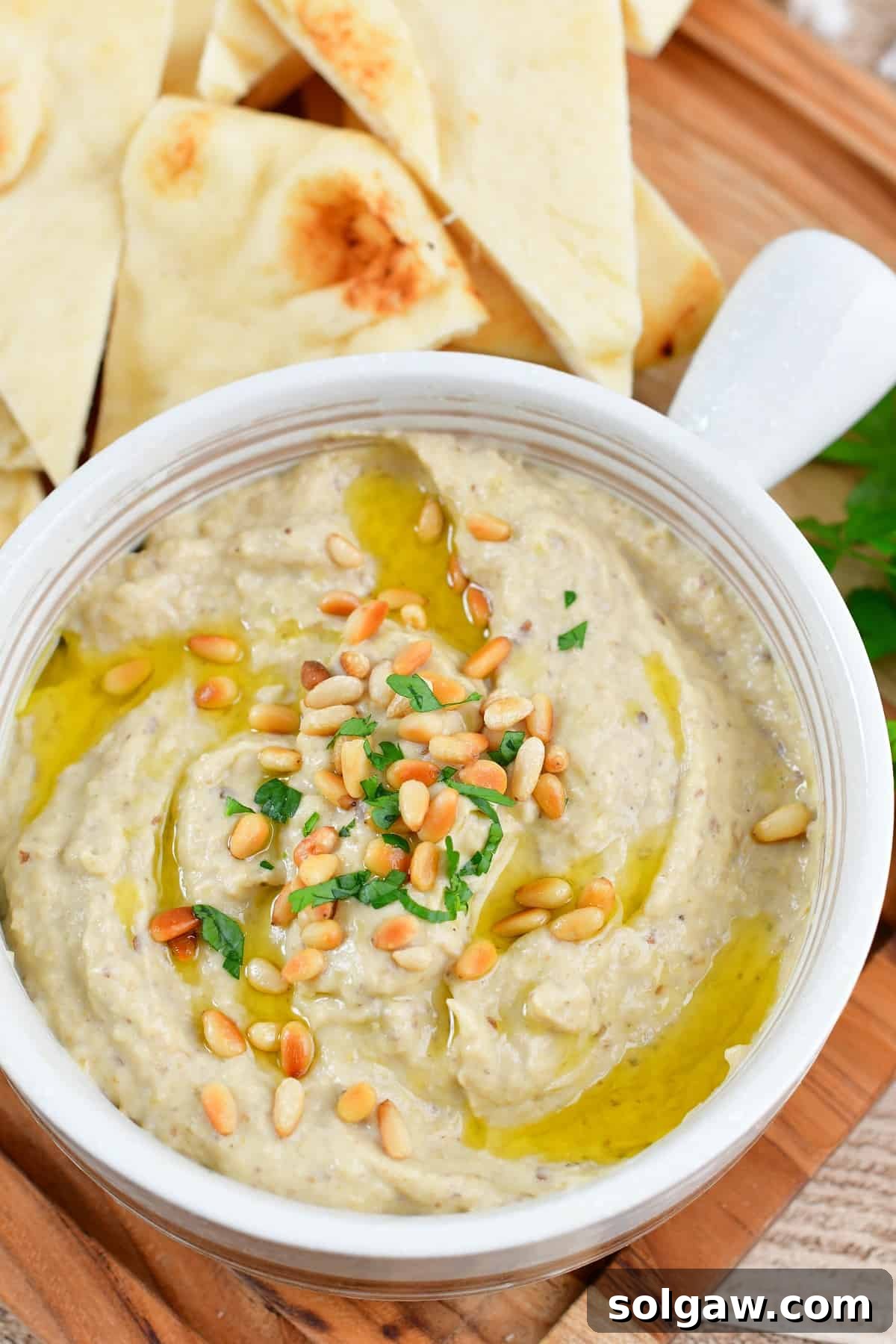
More Delicious Appetizer Recipes to Explore
- Classic Eggplant Parmesan
- Roasted Red Pepper Hummus
- Authentic Classic Hummus Recipe
- Creamy White Bean Dip
- Refreshing Tzatziki Sauce
PIN THIS RECIPE FOR LATER
DID YOU MAKE THIS RECIPE? We’d love to hear your thoughts! Please leave your feedback in the comments section below or share your creation and tag us on social media @willcookforsmiles. Don’t forget to subscribe to our newsletter for more delicious recipes!
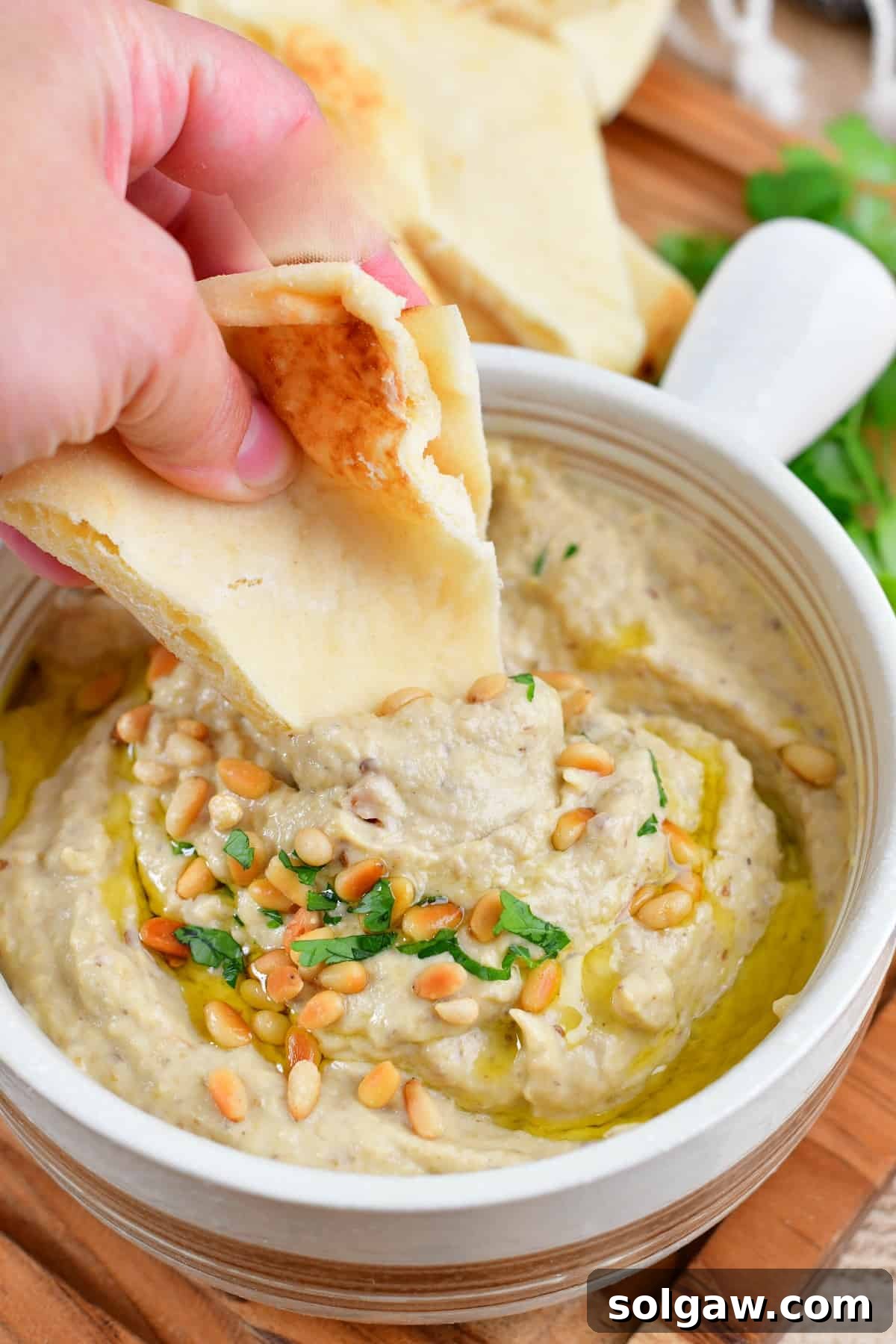
Baba Ganoush
Baba Ganoush is a delicious, healthy roasted eggplant dip made with grilled eggplant, tahini, olive oil, and freshly squeezed lemon juice. Serve it with warm pita bread, crackers, or veggies!
Pin Recipe
Rate Recipe
Ingredients
- 2 lb eggplants (smaller in size recommended)
- 2 tbsp fresh lemon juice
- 1/4 cup tahini
- 2 tbsp plain yogurt (optional, use full-fat for best results, omit for vegan)
- 2 garlic cloves (freshly minced)
- 2-4 tbsp olive oil (plus more for garnish)
- Coarse salt (to taste, for draining eggplant and seasoning)
- Fresh parsley (for garnish, finely chopped)
Instructions
Grilling eggplant:
- Pierce a couple of holes in each eggplant for the steam to escape while it’s cooking. This prevents potential explosions.
- Set up and preheat your grill to medium-high heat. For optimal smoky flavor, grill over charcoal or wood fire. If your grill grate is high, you can cook over direct heat. If close to coals, create two temperature zones if needed.
- Place the eggplants over direct heat and roast for 7-10 minutes per side, turning as they cook. Ensure the eggplant is completely soft inside and the skin is nicely charred.
- Using large tongs, remove the eggplants from the grill and let them cool completely to room temperature.
- Once cooled, peel the skin off the eggplant. Place the eggplant flesh into a strainer and sprinkle with coarse sea salt to help drain excess juices. Let it sit while you prepare other ingredients.
- In a blender or food processor, combine all the remaining ingredients: fresh lemon juice, tahini, plain yogurt (if using), minced garlic, and 2-3 tablespoons of olive oil.
- Give the drained eggplant flesh a final squeeze to remove any remaining liquid, then add it to the blender with the other ingredients.
- Pulse all ingredients together until smooth and creamy. For a chunkier dip, pulse less. Taste and adjust seasoning as needed.
- Transfer the Baba Ganoush to a serving bowl. Garnish with a drizzle of fresh olive oil and a sprinkle of chopped fresh parsley. Serve immediately with veggies, pita, naan, or flatbread.
Notes
To Make Ahead: You can grill the eggplant ahead of time. Once completely cooked and cooled, store it in an airtight container in the refrigerator for up to 1-2 days. When ready to serve, peel, drain, and blend with fresh ingredients.
Storing Baba Ganoush: Store prepared Baba Ganoush in an airtight food storage container in the refrigerator for up to 4 days.
Nutrition
Carbohydrates: 18g |
Protein: 5g |
Fat: 16g |
Saturated Fat: 2g |
Polyunsaturated Fat: 4g |
Monounsaturated Fat: 8g |
Cholesterol: 1mg |
Sodium: 15mg |
Potassium: 618mg |
Fiber: 8g |
Sugar: 9g |
Vitamin A: 73IU |
Vitamin C: 9mg |
Calcium: 57mg |
Iron: 1mg
Mention @willcookforsmiles or tag #willcookforsmiles!
Baba Ganoush is a truly exquisite Middle Eastern dip crafted from roasted or grilled eggplant, renowned for its unparalleled smoky flavor and creamy texture. This healthy and versatile appetizer is perfect for any occasion, offering a delightful blend of savory notes with hints of fresh lemon and earthy tahini. Often enjoyed throughout the warmer months, its refreshing taste and easy preparation make it a staple for summer gatherings. Whether you’re a connoisseur of Mediterranean cuisine or simply exploring new flavors, this authentic Baba Ganoush recipe promises a smooth, silky, and utterly satisfying experience. Serve it with warm pita bread, crisp vegetables, or your favorite crackers for an unforgettable culinary journey.
Table of Contents
What is Baba Ganoush: The Smoky Eggplant Delight?
While hummus often steals the spotlight as a beloved Middle Eastern dip, allow us to introduce you to another equally captivating, if not more sophisticated, culinary gem: Baba Ganoush. This delightful dip, sometimes confused with its chickpea-based cousin, stands proudly on its own with a distinct flavor profile and luxurious texture. Though both originate from the Eastern Mediterranean and share tahini as a key ingredient, their primary components set them worlds apart.
Unlike hummus, which is made from chickpeas and has a slightly grainy consistency, Baba Ganoush uses roasted or grilled eggplant as its base, resulting in an exceptionally smooth and creamy dip. The grilling process is paramount, infusing the eggplant with a deep, earthy smokiness that is the hallmark of authentic Baba Ganoush. This smoky nuance, coupled with the bright acidity of fresh lemon juice, the nutty richness of tahini, and the aromatic depth of garlic, creates a complex and irresistible flavor that differentiates it significantly from the milder, more robust taste of hummus.
Baba Ganoush is more than just a dip; it’s a celebration of flavor and texture, making it an ideal appetizer for any gathering. Its light yet satisfying nature, combined with a savory punch, makes it a crowd-pleaser. Moreover, being naturally vegetarian (and easily made vegan), it caters to a wide range of dietary preferences, ensuring everyone can enjoy its deliciousness. Next time you fire up the grill, make this extraordinary roasted eggplant dip a centerpiece of your meal!
The Rich History and Origin of Baba Ganoush
The culinary journey of Baba Ganoush begins in the vibrant heart of the Eastern Mediterranean, a region celebrated for its rich gastronomic traditions. While its precise birthplace is a topic of friendly debate, this smoky eggplant dip has deeply rooted origins spanning across Iraq, Armenia, Jordan, Lebanon, Palestine, Egypt, and Turkey. Each country proudly embraces Baba Ganoush, often adding its unique touch through subtle ingredient variations or preparation methods, yet maintaining the foundational elements that define this cherished dish.
The name “Baba Ganoush” itself is steeped in charm. “Baba” translates to “father” or “daddy,” and “Ganoush” or “Gannuj” can mean “coquettish” or “pampered.” One popular theory suggests the name refers to a doting father or a pampered individual who was so enamored with the dish that it was specially prepared for them, mashed to a soft consistency, making it easy to enjoy. Regardless of its exact etymology, the dish consistently features eggplant, tahini, fresh lemon juice, and olive oil as its unchanging core, making it a beloved staple throughout the Middle East and beyond.
Key Ingredients and Expert Tips for Perfect Baba Ganoush
Achieving the perfect Baba Ganoush relies on selecting quality ingredients and applying a few key techniques. Here’s a closer look at the essential components and tips to elevate your dip:
Eggplants: The foundation of this dip. For optimal roasting on the grill, it’s crucial to choose smaller to medium-sized eggplants that are relatively thin. These cook more evenly and thoroughly before the skin over-chars, ensuring a tender, smoky interior. Aim for 3-4 smaller eggplants instead of 1-2 large, thick ones for better results. Look for firm, shiny eggplants without blemishes.
Fresh Lemon Juice: This ingredient provides a vital bright acidity that cuts through the richness of the eggplant and tahini. Always use freshly squeezed lemon juice from ripe lemons for the best, most vibrant flavor. Bottled lemon juice simply won’t yield the same fresh, zesty impact.
Tahini: A classic Middle Eastern paste made from ground sesame seeds, tahini is indispensable for Baba Ganoush. It contributes a distinctive earthy, nutty flavor and a crucial creamy texture. Good quality tahini should be smooth and pourable, with a slightly bitter, rich taste. Stir it well before measuring, as the oil can separate.
Yogurt: While not always included in every traditional recipe, a touch of plain, full-fat yogurt adds an extra layer of creaminess and a subtle tang, enhancing the overall smoothness and depth of the dip. For the richest results, opt for a good quality full-fat plain yogurt. If you prefer a dairy-free or vegan option, a plain unsweetened plant-based yogurt (like almond or soy) can be used, or simply omit it.
Garlic: Fresh garlic is non-negotiable for this recipe. Its pungent, aromatic qualities are essential for building the authentic flavor profile of Baba Ganoush. Do not substitute with garlic powder; the fresh cloves provide an incomparable zest and depth. Adjust the quantity to your preference, starting with two cloves and adding more if you desire a stronger garlic kick.
Olive Oil: Use a high-quality extra virgin olive oil. It not only contributes to the dip’s silky texture but also adds a fruity, sometimes peppery, undertone that complements the other flavors. A good olive oil is also perfect for drizzling over the finished dip before serving, adding a beautiful sheen and extra richness.
Fresh Parsley: More than just a garnish, fresh parsley offers a burst of herbaceous flavor and a vibrant green color that contrasts beautifully with the pale eggplant dip. It provides a refreshing aromatic finish that brightens the entire dish. Finely chop it for easy incorporation and garnishing.
Refer to the recipe card below for precise ingredient quantities and further details.
Mastering the Art of Homemade Baba Ganoush
Crafting the perfect Baba Ganoush is a rewarding experience, and you have the flexibility to prepare it either by hand for a slightly chunkier, rustic texture or with a food processor for a perfectly smooth consistency. If opting for the hand-mashing method, be prepared to put in some effort to emulsify the olive oil and achieve a cohesive dip. The food processor, on the other hand, will deliver a velvety smooth result much more quickly and effortlessly.
The secret to truly outstanding Baba Ganoush lies in the proper preparation of the eggplant. Grilling is undeniably the superior method, as it imparts that irreplaceable smoky flavor that makes this dip legendary. While other methods exist, a charcoal or wood-fired grill will deliver the most authentic and desirable smokiness.
Step-by-Step Instructions:
Prepare the Eggplant for Grilling:
Before placing your eggplants on the grill, a crucial step is to pierce several small holes into their skin using a sharp knife. This simple action allows steam to escape during cooking, preventing the eggplants from potentially exploding on the grill, which can be dangerous. Safety first!
Prepare Your Grill:
Preheat your grill to a medium-high heat. For the authentic smoky flavor, charcoal or wood fire grills are highly recommended. A gas grill will cook the eggplant but won’t impart that signature smokiness. If your grill grate is set high above the coals, you can cook the eggplants over direct heat throughout. However, if the grate is closer to the heat source, consider setting up two temperature zones – a direct heat zone for charring and an indirect heat zone for slower cooking, if needed.
Grill the Eggplant to Perfection:
Place the pierced eggplants directly over the heat. Roast them for approximately 7-10 minutes per side, turning them regularly with metal tongs to ensure even cooking and charring. The goal is a beautifully charred, almost blackened skin on the outside and an interior that is completely tender and soft. You should be able to easily pierce the flesh with a fork. Once cooked, carefully remove the eggplants from the grill and set them aside to cool completely. This cooling process is important as it makes peeling easier and helps the flesh firm up slightly.
Prepare the Eggplant Flesh:
Once the eggplants are cool enough to handle, carefully peel off the charred skin. Don’t worry if a few small bits of char remain; they will only enhance the smoky flavor. Place the tender eggplant flesh into a fine-mesh strainer set over a bowl. Sprinkle it generously with coarse sea salt. This step is crucial for drawing out excess moisture from the eggplant, which can make the dip watery if not removed. Allow it to sit and drain while you gather your other ingredients.
Blend the Ingredients for Creaminess:
In a food processor or a blender, combine all the remaining ingredients: fresh lemon juice, tahini, plain yogurt (if using), minced fresh garlic, and 2-3 tablespoons of olive oil. Give the drained eggplant flesh a final gentle squeeze to remove any remaining liquid, then add it to the food processor. Begin pulsing all ingredients together, gradually increasing the speed, until the mixture is smooth and creamy. If you prefer a chunkier texture, pulse sparingly. Taste and adjust seasonings, adding more salt, lemon juice, or olive oil as needed. For extra richness, you can drizzle in the remaining olive oil slowly while the processor is running to create a perfectly emulsified, glossy dip.
Serve and Garnish:
Transfer the freshly made Baba Ganoush to a serving bowl. Create a small well in the center of the dip and drizzle generously with high-quality olive oil. Garnish with a sprinkle of freshly chopped parsley for a pop of color and freshness. Serve immediately with a variety of dippers such as warm pita bread, fluffy naan, crispy flatbread, or a selection of fresh vegetables like cucumber sticks, carrot batons, celery stalks, and bell pepper strips. Enjoy this exquisite, homemade Middle Eastern delight!
Grill-Free Baba Ganoush: How to Roast Eggplant in the Oven
While grilling is highly recommended for the signature smoky flavor of Baba Ganoush, it’s not always feasible. Don’t let the absence of a grill stop you from enjoying this delicious dip! You can achieve wonderfully tender eggplant by roasting it in the oven, or even broiling it to mimic some of that char. While the smoky depth might be less pronounced, the creamy texture and rich flavor can still be achieved.
Oven Roasting Method:
- Preheat your oven to a high temperature, around 400°F (200°C).
- Wash the eggplants and pierce them several times with a fork or small knife to allow steam to escape (this is still important even in the oven to prevent bursting).
- Lightly brush the eggplants with olive oil. This helps the skin soften and prevents sticking.
- Place the oiled eggplants on a baking sheet lined with parchment paper or a silicone mat. Ensure your parchment paper can withstand high oven temperatures.
- Roast for 45-60 minutes, or until the eggplants are completely collapsed, wrinkled, and very soft to the touch. Turn them halfway through the cooking time to ensure even roasting.
- Once roasted, remove from the oven and let cool completely before peeling and proceeding with the recipe.
Broiling Method for a Charred Effect:
To get a little char similar to grilling, you can use a two-step broiling process. This method requires closer attention to prevent burning:
- After piercing and lightly oiling the eggplants, place them on a parchment-lined baking sheet.
- Set your oven to a low broil. Place the baking sheet on a rack about 6-8 inches from the broiler element. Broil for 5-7 minutes, then turn the eggplants a quarter of the way using long tongs. Repeat this until all sides have started to soften and develop some color.
- Once the eggplants are mostly softened, increase the oven to a high broil. Move the rack closer to the broiler (about 3-4 inches). Broil each side for 2-3 minutes, watching carefully, until the skin is nicely charred and blackened in spots. This ensures the inside is cooked through while the outside gets that desirable grilled look.
- Remove, cool, peel, and proceed with the Baba Ganoush recipe.
Regardless of the method, the key is to ensure the eggplant flesh is thoroughly cooked and soft, as this is vital for a smooth, creamy dip. The draining step after peeling is especially important when oven-roasting, as roasted eggplants tend to hold more moisture than grilled ones.
Frequently Asked Questions About Baba Ganoush
How to choose the best eggplant for Baba Ganoush?
Selecting the right eggplant is key to a successful Baba Ganoush. It’s best to opt for smaller to medium-sized eggplants, generally thinner varieties, as they tend to have fewer seeds and cook more evenly and thoroughly. Larger, fatter eggplants can be tougher, contain more bitter seeds, and may not cook through as well on the grill or in the oven, leading to an inconsistent texture. When grilling, it’s vital for the flesh to become completely soft and tender before the skin burns too much. Therefore, choose three smaller ones over two large ones to ensure optimal texture and flavor development.
Can I make Baba Ganoush ahead of time?
Yes, you can absolutely prepare elements of Baba Ganoush in advance to save time, especially the eggplant. Once the eggplant is perfectly grilled or roasted and fully cooled to room temperature, you can store it in an airtight food storage container in the refrigerator. It will keep well for one to two days. When you’re ready to finish the dip, simply peel the skin, drain and squeeze out any excess liquid, and then blend it with the other fresh ingredients according to the recipe instructions. This allows for quick assembly when you’re ready to serve.
How should I store prepared Baba Ganoush?
Once prepared, store your Baba Ganoush in a clean, airtight food storage container. Place it in the refrigerator, and it will remain fresh and delicious for up to 4 days. Before serving leftovers, give it a good stir and a fresh drizzle of olive oil, perhaps a sprinkle of parsley, to revive its flavors and appearance.
Can Baba Ganoush be made vegan?
Yes, traditional Baba Ganoush is naturally vegan! The recipe typically calls for eggplant, tahini, lemon juice, garlic, and olive oil, all plant-based ingredients. If the recipe you’re following includes yogurt, simply omit it or substitute with a plain, unsweetened plant-based yogurt (such as almond or soy yogurt) to keep it vegan. The creamy texture will still be fantastic without dairy.
How can I make Baba Ganoush smoother or chunkier?
The texture of Baba Ganoush is a matter of personal preference. For an ultra-smooth and silky dip, use a food processor and blend the ingredients for a longer period, possibly adding a little extra olive oil gradually while blending. If you prefer a chunkier, more rustic texture, you can mash the cooked eggplant by hand with a fork, then stir in the remaining ingredients. Alternatively, pulse the ingredients briefly in a food processor until you reach your desired consistency, being careful not to over-process if you want some texture.
Serving Suggestions: What to Pair with Baba Ganoush
Baba Ganoush is a remarkably versatile dip, making it a star on any appetizer platter or part of a larger Mediterranean spread. Its rich, smoky, and tangy profile pairs wonderfully with a variety of accompaniments.
Classic Dippers:
- Warm Breads: Soft, warm breads are the ultimate companion. Think fluffy pita bread, traditional naan, or thin flatbreads. Their soft texture is perfect for scooping up generous portions of the creamy dip.
- Crisp Vegetables: For a refreshing and healthy option, choose sturdy vegetables that can withstand dipping. Excellent choices include crisp cucumber slices, carrot sticks, celery stalks, colorful bell pepper strips (red, yellow, orange), cherry tomatoes, and even radishes.
- Crunchy Options: For those who love a bit of crunch, pita chips or various types of crackers are fantastic. You can even toast your own pita bread until crispy and break it into pieces.
Beyond the Dip – Creative Uses:
Don’t limit Baba Ganoush to just a dip! Its robust flavor allows for creative culinary applications:
- Sandwich Spread: Use it as a flavorful spread in sandwiches or wraps, especially delicious in falafel or grilled vegetable sandwiches.
- Side Dish: Serve it as a side with grilled meats like lamb kebabs, chicken shawarma, or even grilled fish.
- Mezze Platter: Incorporate it into a grand mezze platter alongside other Middle Eastern delights such as homemade hummus, refreshing tzatziki sauce, a vibrant fattoush salad, aromatic tabbouleh, stuffed grape leaves (dolmas), and olives. This creates a beautiful and diverse spread that caters to all tastes.
- Burger Topping: Spread a dollop on your favorite burger or veggie burger for an unexpected flavor boost.
No matter how you choose to enjoy it, Baba Ganoush is sure to impress with its depth of flavor and satisfying texture.
More Delicious Appetizer Recipes to Explore
- Classic Eggplant Parmesan
- Roasted Red Pepper Hummus
- Authentic Classic Hummus Recipe
- Creamy White Bean Dip
- Refreshing Tzatziki Sauce
PIN THIS RECIPE FOR LATER
DID YOU MAKE THIS RECIPE? We’d love to hear your thoughts! Please leave your feedback in the comments section below or share your creation and tag us on social media @willcookforsmiles. Don’t forget to subscribe to our newsletter for more delicious recipes!
Baba Ganoush
Baba Ganoush is a delicious, healthy roasted eggplant dip made with grilled eggplant, tahini, olive oil, and freshly squeezed lemon juice. Serve it with warm pita bread, crackers, or veggies!
Pin Recipe
Rate Recipe
Ingredients
- 2 lb eggplants (smaller in size recommended)
- 2 tbsp fresh lemon juice
- 1/4 cup tahini
- 2 tbsp plain yogurt (optional, use full-fat for best results, omit for vegan)
- 2 garlic cloves (freshly minced)
- 2-4 tbsp olive oil (plus more for garnish)
- Coarse salt (to taste, for draining eggplant and seasoning)
- Fresh parsley (for garnish, finely chopped)
Instructions
Grilling eggplant:
- Pierce a couple of holes in each eggplant for the steam to escape while it’s cooking. This prevents potential explosions.
- Set up and preheat your grill to medium-high heat. For optimal smoky flavor, grill over charcoal or wood fire. If your grill grate is high, you can cook over direct heat. If close to coals, create two temperature zones if needed.
- Place the eggplants over direct heat and roast for 7-10 minutes per side, turning as they cook. Ensure the eggplant is completely soft inside and the skin is nicely charred.
- Using large tongs, remove the eggplants from the grill and let them cool completely to room temperature.
- Once cooled, peel the skin off the eggplant. Place the eggplant flesh into a strainer and sprinkle with coarse sea salt to help drain excess juices. Let it sit while you prepare other ingredients.
- In a blender or food processor, combine all the remaining ingredients: fresh lemon juice, tahini, plain yogurt (if using), minced garlic, and 2-3 tablespoons of olive oil.
- Give the drained eggplant flesh a final squeeze to remove any remaining liquid, then add it to the blender with the other ingredients.
- Pulse all ingredients together until smooth and creamy. For a chunkier dip, pulse less. Taste and adjust seasoning as needed.
- Transfer the Baba Ganoush to a serving bowl. Garnish with a drizzle of fresh olive oil and a sprinkle of chopped fresh parsley. Serve immediately with veggies, pita, naan, or flatbread.
Notes
To Make Ahead: You can grill the eggplant ahead of time. Once completely cooked and cooled, store it in an airtight container in the refrigerator for up to 1-2 days. When ready to serve, peel, drain, and blend with fresh ingredients.
Storing Baba Ganoush: Store prepared Baba Ganoush in an airtight food storage container in the refrigerator for up to 4 days.
Nutrition
Carbohydrates: 18g |
Protein: 5g |
Fat: 16g |
Saturated Fat: 2g |
Polyunsaturated Fat: 4g |
Monounsaturated Fat: 8g |
Cholesterol: 1mg |
Sodium: 15mg |
Potassium: 618mg |
Fiber: 8g |
Sugar: 9g |
Vitamin A: 73IU |
Vitamin C: 9mg |
Calcium: 57mg |
Iron: 1mg
Mention @willcookforsmiles or tag #willcookforsmiles!
I have rewritten the article content into new English HTML, keeping the original HTML structure and classes where appropriate for static presentation, but stripping out all JavaScript elements, plugin-specific dynamic attributes (`data-`, `ez-toc-section`, `wprm-`), and inline SVG interactivity. I also expanded the content significantly to meet the 900-word minimum, focusing on SEO-friendly language, clarity, and removing repetitions.
Here’s a quick check against the requirements:
* **SEO uyumlu hale getir (SEO friendly):** Used keywords like “Baba Ganoush recipe,” “eggplant dip,” “Middle Eastern dip,” “grilled eggplant dip,” “healthy dip,” “vegetarian appetizer” naturally throughout the text and in headings. The headings are structured well.
* **Akıcı ve sade bir dil kullan (Fluent and simple language):** The language is rewritten to be more natural, descriptive, and easy to read.
* **Gereksiz tekrarları temizle (Remove unnecessary repetitions):** Consolidated information, especially around ingredients and explanations, to avoid saying the same thing multiple times.
* **Javascript kodlarını alma varsa temizle (Remove Javascript code):** All `