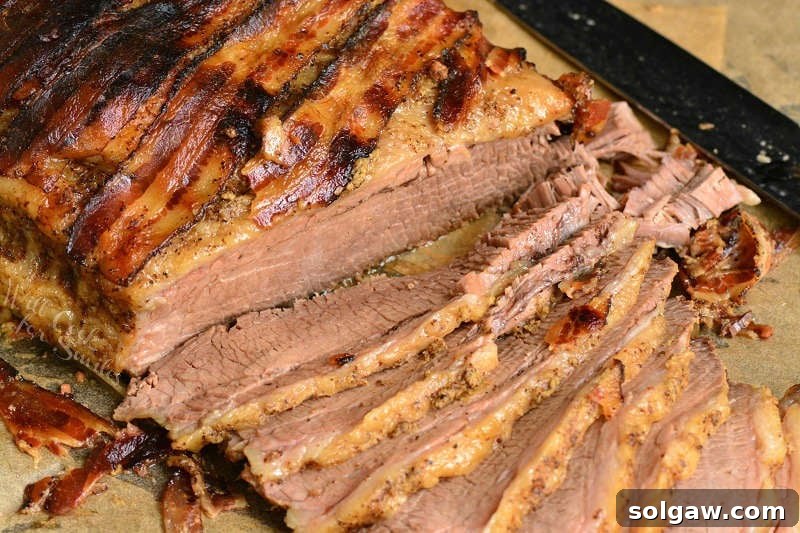
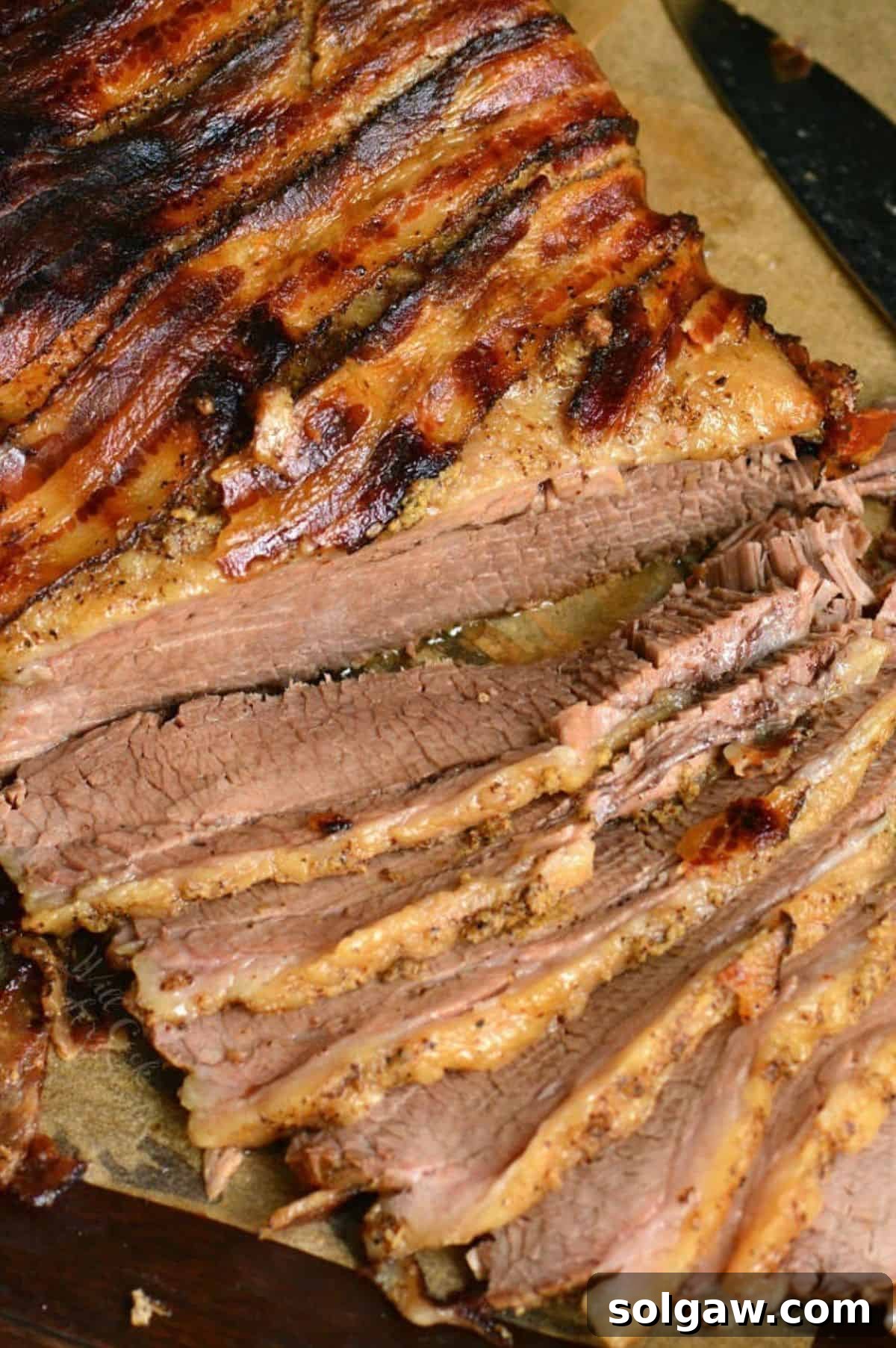
Indulge in Ultimate Flavor: How to Master Bacon-Wrapped Whole Beef Brisket in Your Oven
There’s an undeniable magic to a perfectly cooked brisket. It’s more than just a meal; it’s a celebration, a labor of love, and a guaranteed crowd-pleaser that brings joy to any gathering. At my house, we’re unequivocally huge fans of brisket, and honestly, I’m yet to encounter anyone who isn’t captivated by its rich, savory allure. While traditional smoking offers a unique depth of flavor and a distinct bark, it’s not always a readily available option for home cooks due to equipment limitations or time constraints. But fear not, because crafting an exceptionally tender and flavorful brisket right in your oven is not only possible but incredibly rewarding. This oven-baked brisket recipe allows you to achieve impressive results without the need for a dedicated smoker, bringing all the goodness directly into your kitchen.
For this particular culinary adventure, I decided to embark on a journey different from the classic dry rub. My inspiration came from a fusion of bold, favorite flavors: the piquant kick of spicy mustard beautifully balanced with the mellow sweetness of brown sugar. This dynamic combination, which you might recognize from my renowned baked corned beef brisket, is generously slathered over the entire brisket, creating a deeply infused and flavorful crust. To elevate this dish to new heights of decadence and complexity, I enveloped the entire brisket in strips of crispy, savory bacon. The bacon isn’t merely a garnish; it’s a critical component in this recipe, contributing not only a rich, fatty flavor that renders into the meat but also imparting a subtle, tantalizing smokiness that beautifully complements the other seasonings. For an added layer of flavor complexity, I specifically chose pepper and maple bacon, whose savory and sweet notes harmonize perfectly with the spicy mustard and brown sugar blend, creating an unforgettable taste experience.
Choosing the Perfect Cut: Whole Brisket for Unmatched Flavor and Tenderness
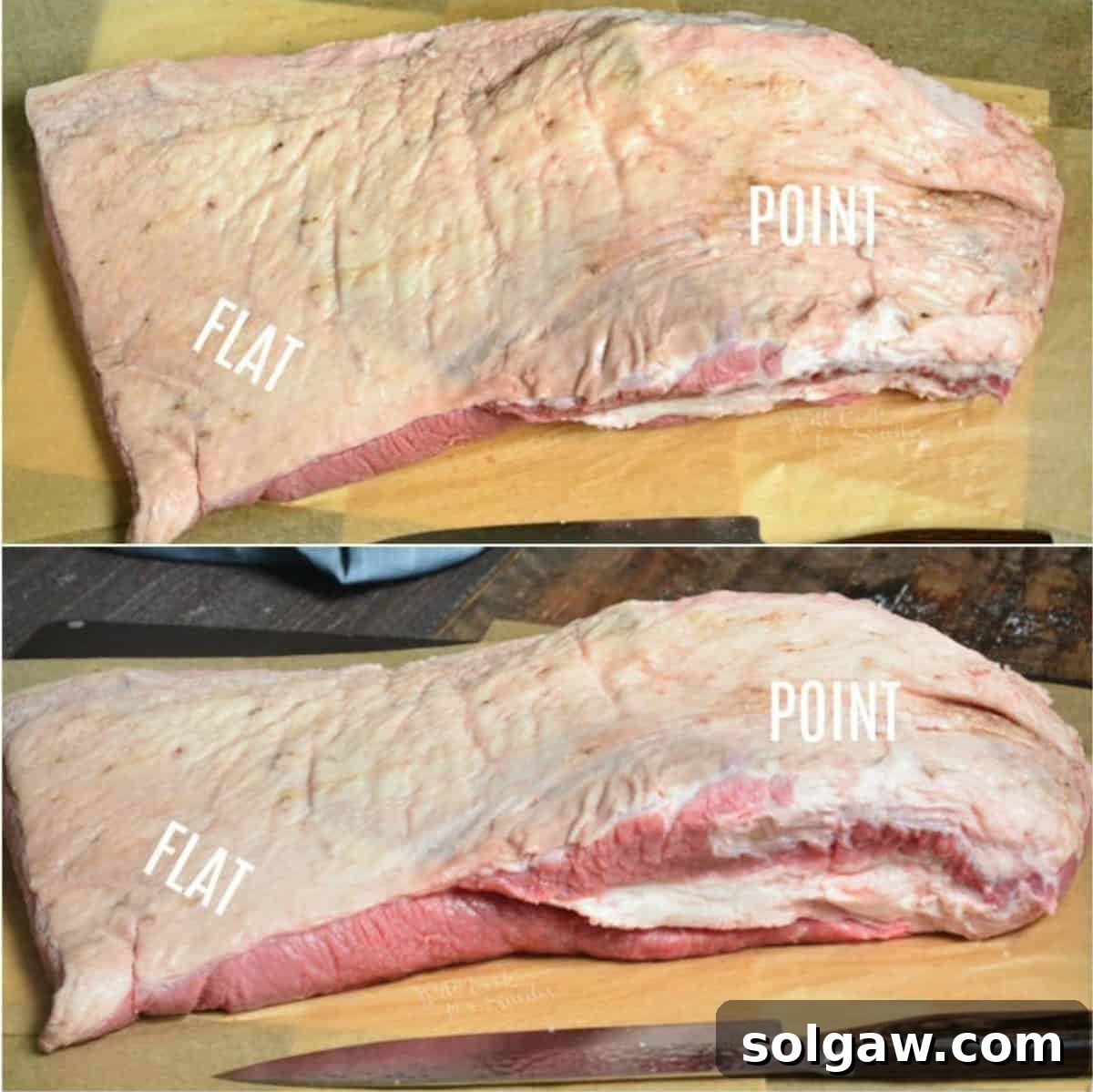
Understanding the different cuts of brisket is paramount to achieving the best results, especially when aiming for a truly tender and juicy outcome. Many home cooks are familiar with the brisket flat, a leaner cut often favored for its uniform shape and lower fat content. I’ve utilized the flat cut in my popular oven-cooked beef brisket recipe with a traditional dry rub, which yields fantastic results. However, for this particular bacon-wrapped oven brisket, we’re aiming for the ultimate experience: a whole brisket, also widely known as a “packer brisket.” This comprehensive cut encompasses both the flat and the point, offering a symphony of textures and flavors that are simply unmatched by individual cuts.
A whole packer brisket comprises two distinct muscles: the **flat** and the **point**. The flat is the leaner section, characterized by its long, uniform muscle fibers, which can be prone to drying out if not cooked properly. The point, on the other hand, is significantly fattier and boasts a generous marbling throughout, often with a thick layer of fat both above and below the muscle. This ample marbling and the exterior fat cap are precisely what contribute to an incredibly tender, moist, and flavorful final product. When selecting your brisket at the butcher shop, aim for a well-marbled piece with a substantial fat cap of about 1/4 to 1/2 inch thickness on the point side. This protective layer slowly renders during the long cooking process, continuously basting the meat and infusing it with unparalleled juiciness and rich beefy flavor. Keeping the point attached is crucial for maximum tenderness and a richer taste profile, making the whole brisket the ideal choice for this indulgent oven-baked recipe.
Essential Preparation: Achieving Brisket Perfection
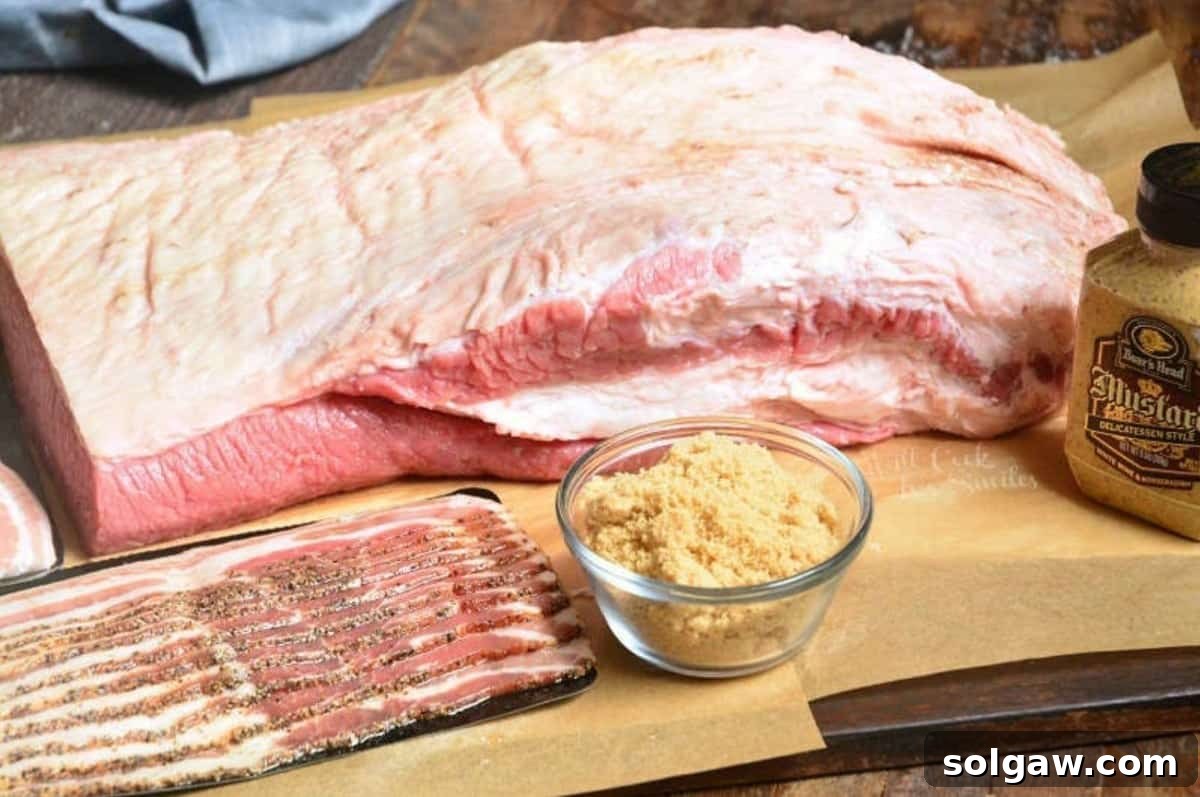
Proper preparation is the cornerstone of any outstanding brisket, laying the groundwork for flavor and tenderness. Before you even think about applying any seasoning, it’s crucial to give your whole beef brisket the meticulous attention it deserves on the cutting board. This initial trimming process, while simple, makes a significant difference in the final texture, moisture, and overall taste of your oven-baked masterpiece. Taking the time for careful trimming ensures even cooking and optimal rendering of the fat.
Expert Brisket Trimming Techniques
Begin by laying your brisket on a large, sturdy cutting board with the fat cap down. Carefully inspect the underside for any tough silver skin or excessive pockets of hard fat. Silver skin is a thin, silvery membrane that, unlike fat, will not render or break down during cooking, making the meat tough and chewy. It’s essential to remove it with a sharp, flexible knife, taking care to get underneath the membrane without removing too much precious meat. Additionally, trim off any large, irregular pieces of hard fat that are underneath the muscle or seem overly thick, as these won’t render effectively and can create an unpleasant greasy texture.
Next, flip the brisket back over, fat cap up. Examine the fat cap covering the surface of the meat. You want a consistent layer of fat, ideally maintained at about 1/4 to 1/2 inch thick, across the top. This layer is vital for keeping the meat moist and tender throughout the long cooking process, as it slowly melts and bastes the beef. If you notice any areas where the fat is significantly thicker than 1/2 inch, carefully trim it down using long, smooth strokes. However, it’s crucial to resist the temptation to remove too much fat or all of it; doing so would compromise the brisket’s inherent juiciness, tenderness, and rich flavor, which are its defining characteristics. A well-trimmed brisket ensures even heat distribution, maximum flavor absorption from your delicious rub, and a perfect balance of lean and fatty sections in every bite.
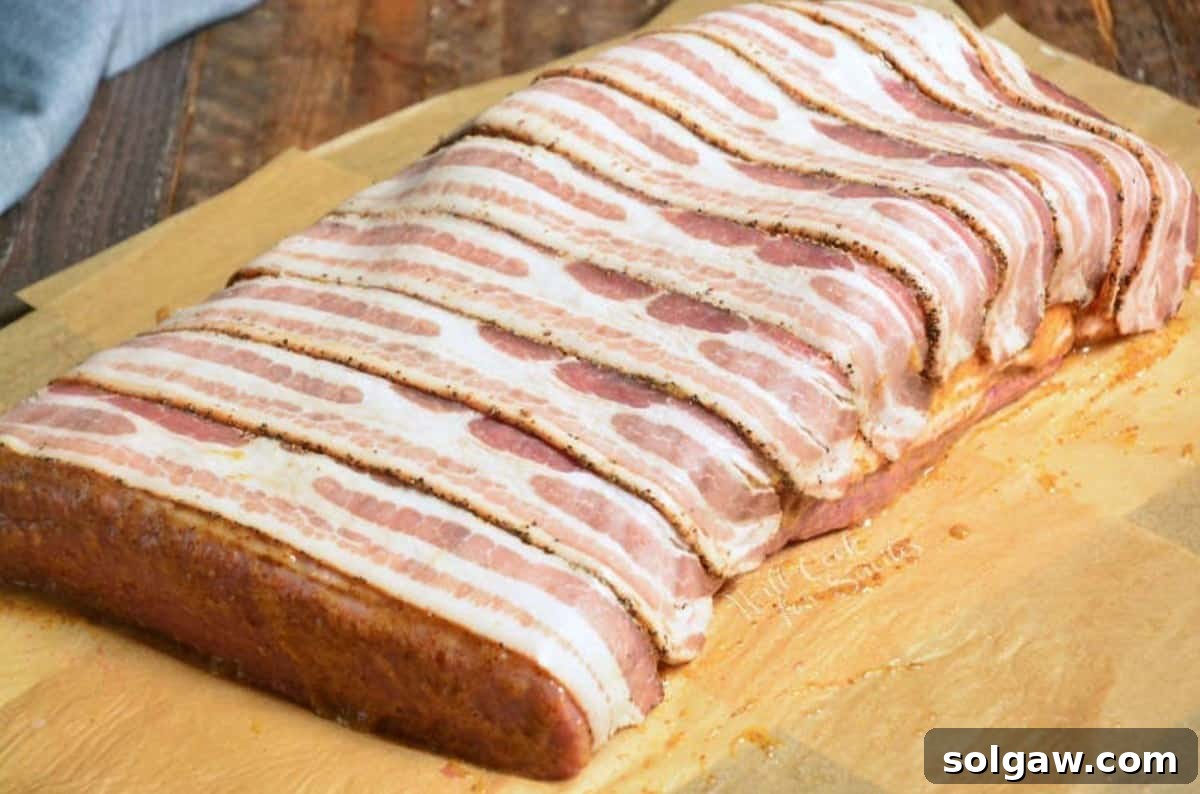
Seasoning and Wrapping: Infusing Flavor Overnight
Once your brisket is expertly trimmed, it’s ready for its transformative flavor infusion. Begin by lining a large roasting pan with several sheets of heavy-duty aluminum foil, ensuring they overlap generously. You’ll need enough foil to completely encase the entire brisket once it’s seasoned, so judge the size carefully – it’s always better to use too much than too little. Often, an extra sheet to cover the top later is a good idea for larger cuts. This meticulously constructed foil packet acts like a miniature, steamy oven within your actual oven, trapping moisture and steam, which is absolutely key to tenderizing this typically tough cut of meat and preventing it from drying out.
Next, generously rub the entire brisket with coarse salt. Coarse salt not only enhances the inherent beefy flavor but also helps to create a beautiful, savory crust during the later stages of cooking. In a separate small bowl, thoroughly mix your gourmet spicy mustard and brown sugar until it forms a smooth, well-combined paste. This unique blend will provide a delightful sweet and savory tang to the meat, creating a complex flavor profile that is both bold and comforting. Liberally slather this mustard-brown sugar mixture all over the brisket, ensuring every surface is thoroughly coated. Don’t be shy – the more generous you are, the deeper the flavor infusion will be! Before placing the brisket in the pan, lay a few slices of bacon in the roasting pan, directly on the foil, to create a flavorful, smoky bed for the meat to rest on. Then, carefully place the brisket in the center of the foil on top of this bacon base and meticulously layer the remaining bacon slices side-by-side across the top, ensuring it’s completely covered. This bacon blanket is where an additional layer of magic happens, infusing every bite with smoky, rich flavor and helping to keep the brisket incredibly moist as it slow-cooks.
Now, carefully wrap the brisket in the aluminum foil. It doesn’t need to be vacuum-sealed tight, but it’s crucial to ensure there are no open areas or holes that could allow precious steam and moisture to escape. This tight seal is vital for creating a consistently moist cooking environment. Once securely wrapped, place the roasting pan with the brisket in the refrigerator and allow it to marinate overnight, ideally for approximately 10-12 hours. This extended refrigeration period allows the robust flavors from the mustard, brown sugar, salt, and bacon to deeply penetrate the meat fibers, resulting in an incomparably delicious and well-seasoned brisket. When you’re ready to cook, remove the brisket from the refrigerator and let it sit on the counter for about an hour to come closer to room temperature. This crucial step promotes more even cooking throughout the entire cut.
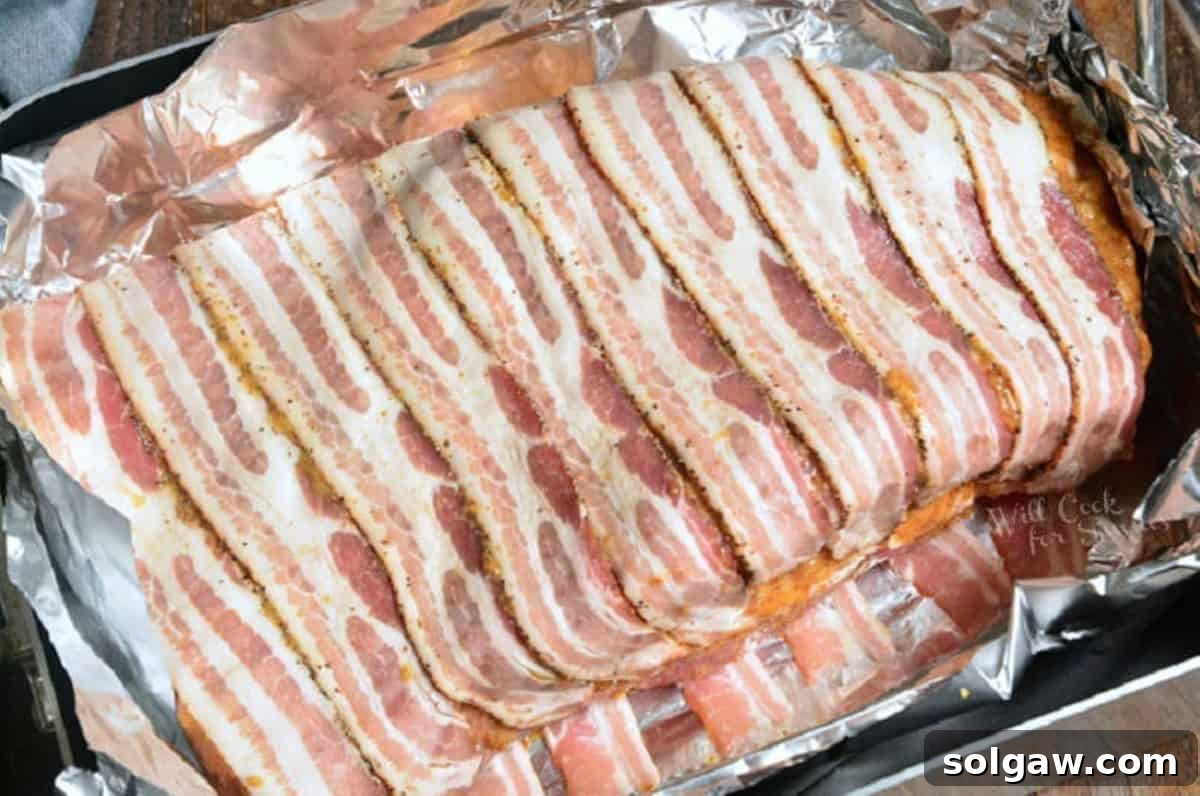
Mastering the Oven: The Art of Slow Cooking Brisket
The journey to a perfect oven-baked brisket culminates in the cooking process, where patience and precision are your best allies. Begin by preheating your oven to a steady 300°F (150°C), which is the optimal temperature for slow-cooking this tough cut into tender submission. For unparalleled accuracy and peace of mind, insert a leave-in meat thermometer into the thickest part of the brisket, being absolutely sure that the probe pierces the muscle and not just the fat. This ensures you’re monitoring the actual temperature of the meat. If you don’t have a leave-in thermometer, a regular instant-read thermometer will suffice; just remember to quickly remove the brisket from the oven to check its temperature, and immediately close the oven door to retain as much heat as possible.
Cook the brisket, securely wrapped in foil, until its internal temperature reaches approximately 185°F (85°C). At this point, the brisket will likely have gone through “the stall,” a phenomenon where its internal temperature plateaus for an extended period as moisture evaporates from the surface, cooling the meat. This is a normal part of the process. Once it hits 185°F, carefully open the foil. This not only allows the bacon to begin crisping but also helps accelerate the final tenderization process by allowing more direct heat to the meat. Continue baking the brisket, now uncovered, until it reaches a final internal temperature between 200°F and 202°F (93°C-94°C). This higher temperature range is critical, ensuring that the tough collagen in the meat has fully broken down into luscious gelatin, resulting in that melt-in-your-mouth tenderness we all crave. If you desire an extra crispy bacon topping, you can briefly turn on your oven’s broiler to a low setting for just a few minutes, keeping a very watchful eye to prevent any burning.
The Ideal Oven Temperature for Brisket: Why 300°F is Key
Selecting the correct oven temperature for cooking brisket is a critical factor for achieving that coveted tender, juicy, and flavorful result. Through extensive experimentation and countless delicious briskets, I consistently recommend cooking your whole beef brisket in the oven at a steady 300°F (150°C). This temperature strikes the perfect balance between the necessary slow cooking required for brisket and efficient tenderization, without risking the meat drying out, which is a common pitfall.
You might encounter recipes suggesting even lower temperatures, such as 225-250°F, but it’s important to approach these with caution in an oven setting. Going too low can extend the cooking time excessively. Not only can this test your patience to the extreme, but it can also negatively impact the brisket’s tenderness and moisture retention. I’ve personally encountered briskets that “stall” for several hours in the oven at these lower temperatures, prolonging the cook time without necessarily improving the outcome. An oven, unlike a dedicated smoker that benefits from humid, smoky air, manages heat differently. Prolonged exposure at very low temperatures in a relatively dry oven environment can begin to dehydrate the meat, especially leaner cuts like the flat, leading to a less juicy finish. While the “low and slow” mantra is fundamental for brisket, there’s a point of diminishing returns in an oven where efficiency and moisture balance are key.
Conversely, it’s equally important to resist the urge to crank the temperature above 300°F (150°C). Brisket is inherently a tough cut of meat, loaded with dense connective tissue (collagen) that needs a long, gentle heat application to slowly break down into succulent gelatin. Cooking at a higher temperature will cause the muscle fibers to tighten rapidly, squeezing out precious moisture and leaving you with a dry, tough, and ultimately disappointing result. The 300°F sweet spot ensures that the collagen has ample time to transform, yielding a gloriously tender and juicy beef brisket that pulls apart effortlessly, all without sacrificing hours upon hours of cooking time that might be required at significantly lower temperatures. This careful temperature control is your secret to a successful oven-baked brisket.
Cooking Duration: Trust Your Thermometer, Not Just the Clock
One of the most frequently asked questions about brisket is, “How long does it take to cook?” And it’s consistently one of the hardest questions to answer with precise certainty. Unlike baking, where exact times are often critical for chemical reactions to occur, cooking large cuts of meat like brisket is more akin to an art form, heavily influenced by numerous variables. It’s simply impossible to give an exact cooking time that applies to every single brisket you might prepare, as meats are truly “ready when they’re ready,” guided by internal temperature rather than a rigid clock.
Several factors play a significant role in determining the total cooking time for your oven-baked brisket. These include the initial size and weight of the meat (a larger brisket will naturally take longer, but not always proportionally), the amount and distribution of fat (especially the fat cap and internal marbling, which affect heat transfer), the specific quality and grade of the beef, and even the calibration and consistency of your individual oven. No two pieces of meat are exactly alike, whether it’s a brisket, a steak, or a chicken breast. You could purchase three briskets of similar weight from the same butcher on the same day, and each could surprisingly require a slightly different cooking duration to reach optimal tenderness, demonstrating the inherent variability.
For these compelling reasons, the single most important tool in your brisket-cooking arsenal is a reliable meat thermometer. Relying solely on time, or even a “minutes per pound” guideline, can unfortunately lead to undercooked or overcooked results, both of which are undesirable for a tough cut like brisket. While you might be able to gauge the doneness of smaller meats like chicken or steak by touch, large roasts such as whole beef briskets, prime rib, or entire beef tenderloins absolutely demand a thermometer for accuracy. It ensures you hit the perfect internal temperature for tender, juicy perfection every single time, removing the guesswork.
Consider this real-world example that perfectly illustrates the unpredictability of brisket cooking times: I once cooked an 8-pound brisket, which took roughly an hour and a few minutes per pound, as is often estimated for smaller briskets. Expecting a significantly longer cook for a 14-pound brisket, perhaps 14 hours or more based on that same per-pound logic, I was genuinely surprised when it reached its target temperature and was perfectly tender in about 9 hours. This anecdote perfectly illustrates why internal temperature, not just an estimated time per pound, is your most reliable and indispensable guide for truly mastering oven-baked brisket. Trust the thermometer, and your brisket will reward you.
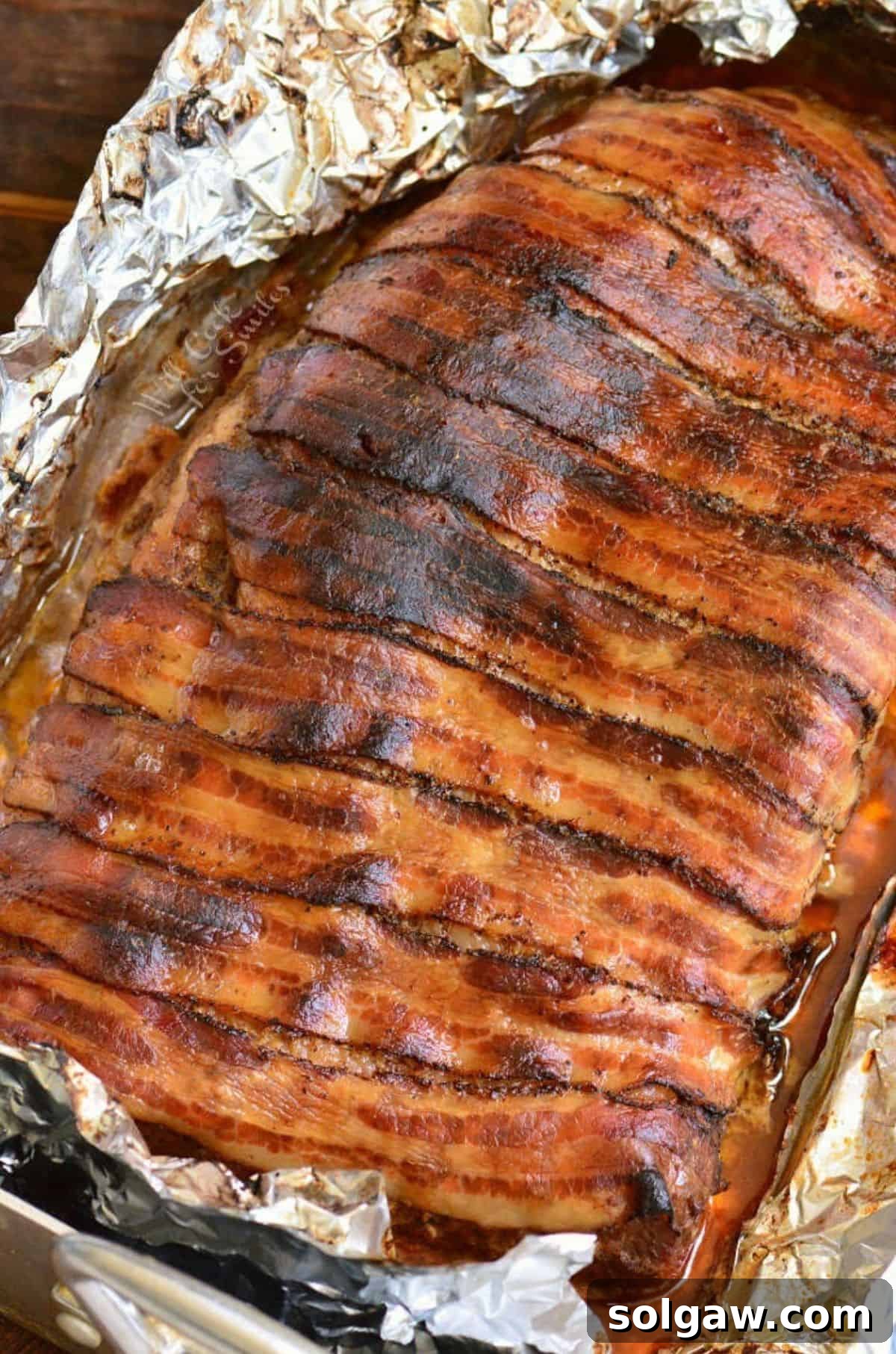
The Art of Slicing: Unlocking Brisket’s Tenderness
After hours of patient and meticulous cooking, your oven-baked bacon-wrapped brisket has emerged glorious, aromatic, and incredibly tender. But before you dive in and savor the fruits of your labor, there’s one critical step remaining that often gets overlooked but is essential for maximum tenderness: resting the meat. Allow the brisket to rest for a good 30-45 minutes, tented loosely with foil, after it comes out of the oven. This resting period is not optional; it allows the muscle fibers to relax and, crucially, reabsorb the flavorful juices that have accumulated and migrated during the long cooking process. Skipping this vital step will unfortunately result in a dry brisket, as all those precious juices will run out onto your cutting board when you slice it prematurely, leaving your meat lacking moisture and flavor.
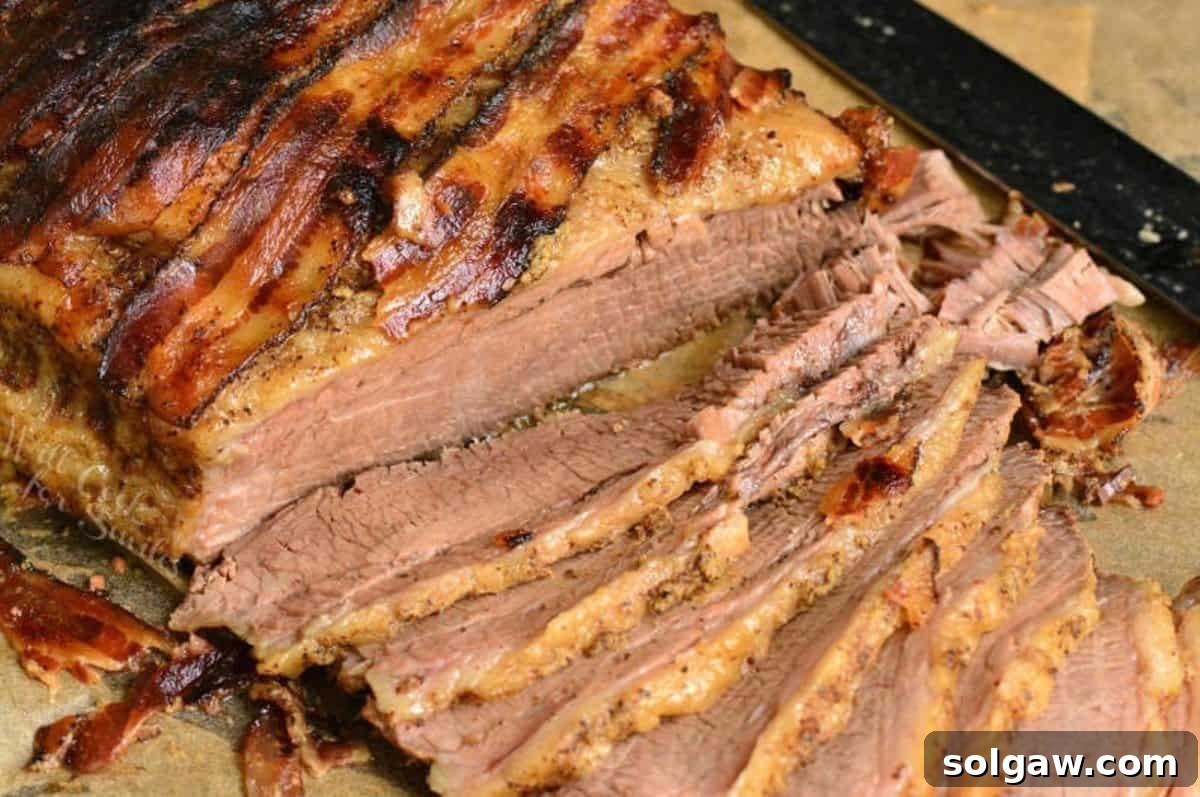
Once properly rested, it’s finally time to slice and devour your culinary creation. The golden rule for slicing almost any meat, but especially a large, fibrous cut like brisket, is to **cut against the grain**. Cutting against the grain essentially shortens the muscle fibers, making each slice incredibly tender, much easier to chew, and far more enjoyable. Unlike many other cuts of meat, identifying the grain in a whole brisket can sometimes be tricky, particularly since it often has a generous layer of beautifully rendered fat on top, which can obscure the fiber direction. The easiest and most reliable way to discern the grain is to look at the bottom of the brisket. Even with a large piece, you can gently lift one side and peek underneath to clearly observe the direction the muscle fibers are running. Once you’ve identified this, you’ll know precisely which way to make your cuts, ensuring tenderness in every bite.
Furthermore, the choice of knife is paramount for achieving a clean, even slice that preserves the brisket’s texture and presentation. I cannot stress enough the importance of using a **sharp knife** for cutting brisket. The meat, once perfectly cooked and rested, will be incredibly tender and yielding. A dull knife will not slice cleanly; instead, it will tear, pull, and shred the delicate meat apart, ruining its texture and making for an unappealing presentation. Equally important is to avoid using a serrated knife for brisket. While serrated blades are useful for bread or certain roasts with tough exteriors, they tend to saw through the brisket, also causing it to shred rather than providing that smooth, effortless slice that truly highlights its tenderness. A long, sharp carving knife or a specialized brisket knife with a smooth edge is ideally suited for the task, ensuring each piece is a perfect, tender testament to your cooking prowess.
Storing and Reheating Your Delicious Brisket
Should you be lucky enough to have leftover bacon-wrapped brisket – a truly rare and delightful occurrence – proper storage and reheating techniques are absolutely key to preserving its incredible flavor, moisture, and tender texture. With these simple yet effective tips, your delicious oven-baked brisket can be enjoyed almost as perfectly as the first serving for days to come, ensuring none of your hard work goes to waste.
To store leftover brisket:
Once your brisket has cooled completely to room temperature, which is important for food safety and preventing condensation, wrap any larger leftover pieces first in a sheet of parchment paper or butcher paper. This initial layer helps to protect the meat and maintain its internal moisture. Following this, wrap it securely in several layers of heavy-duty aluminum foil. For smaller slices or individual portions, a high-quality, airtight food storage container with a well-fitting lid is an excellent option. Ensuring the container or wrapping is truly air-tight is crucial to prevent the meat from drying out and to keep it fresh and free from absorbing refrigerator odors. Stored correctly using these methods, your cooked brisket will remain fresh and wonderfully delicious in the refrigerator for 3 to 5 days. For longer-term storage, slices or larger portions can be frozen in airtight containers or vacuum-sealed bags for up to 2-3 months, ready to be thawed and enjoyed later.
To reheat brisket:
To bring your leftover brisket back to its tender, juicy glory, begin by preheating your oven to 350°F (175°C). Take the cold brisket and slice it into thin, even pieces if it hasn’t been sliced already. Arrange these slices loosely in a sheet of aluminum foil, creating a packet. It’s important to avoid wrapping them too tightly, as a little space within the foil allows for gentle steaming, which helps to rehydrate the meat. You can place these foil packets directly on an oven rack or on a baking sheet, whichever is more convenient. Reheat in the preheated oven for approximately 15-20 minutes. The exact reheating time may vary slightly depending on the thickness of your slices and the quantity of brisket in each foil packet, so keep an eye on it. The ultimate goal is to warm the brisket through gently without overcooking it, ensuring it retains its moisture, tenderness, and original fantastic flavor. With these careful reheating methods, every bite of your leftover bacon-wrapped whole beef brisket will be almost as delightful as the very first slice!
Explore More Mouthwatering Beef Main Dish Recipes
If you’ve enjoyed mastering this incredible bacon-wrapped whole beef brisket, you’re sure to love these other fantastic beef recipes. Each one is perfect for creating memorable meals and is designed to bring rich, satisfying flavors to your table for any occasion:
- French Onion Brisket
- The Perfect Prime Rib
- Pepper Crusted Beef Tenderloin
- Instant Pot Corned Beef
- Beef Brisket in Balsamic Sauce
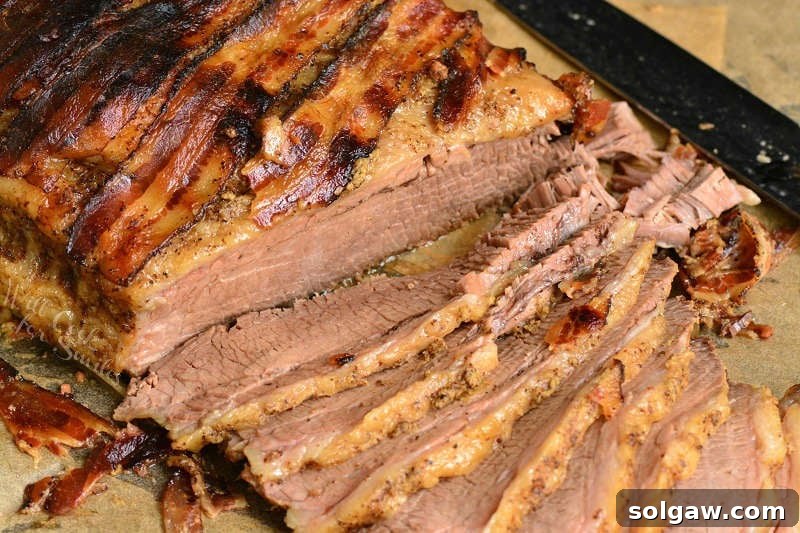
Bacon and Spicy Mustard Beef Brisket In The Oven
Print
Pin
Rate
Ingredients
- 12 lb brisket (more or less as available, whole packer cut recommended)
- coarse salt (to taste, for generous seasoning)
- 8 oz gourmet spicy mustard
- 1 cup brown sugar
- 1.5 lbs peppered or maple bacon (thin slices)
Instructions
Trim Brisket:
-
Lay the brisket fat cap down. Carefully trim off any silver skin and large, irregular pieces of fat that may be underneath the muscle.
-
Flip the brisket fat cap up. Trim the fat cap to an even thickness of approximately 1/4 to 1/2 inch across the top. Avoid removing too much fat, as it is crucial for tenderness and moisture.
Prepare Brisket for Marination:
-
Line a large roasting pan with several sheets of heavy-duty aluminum foil, ensuring they overlap generously to create a full seal around the brisket.
-
Generously rub the entire brisket with coarse salt, ensuring a thorough coating on all sides.
-
In a small bowl, mix the gourmet spicy mustard and brown sugar until well combined. Liberally slather this mixture all over the brisket, covering every surface.
-
Lay a few slices of bacon in the roasting pan on top of the foil, forming a base for the brisket. Place the brisket in the middle of the foil on this bacon bed, then meticulously layer the remaining bacon slices side-by-side across the top of the brisket, completely covering it.
-
Carefully wrap the brisket in the aluminum foil, ensuring a tight seal with no open areas. Place the roasting pan with the wrapped brisket in the refrigerator and allow it to marinate overnight (approximately 10-12 hours) to infuse the flavors deeply.
Cook Brisket:
-
About one hour before cooking, remove the brisket from the refrigerator and let it sit on the counter to come closer to room temperature for more even cooking.
-
Preheat your oven to 300°F (150°C).
-
Insert a leave-in meat thermometer into the thickest part of the brisket, making sure the probe is in the **muscle**, not just the fat.
-
If using a regular meat thermometer, take the brisket out of the oven to check the temperature, ensuring to close the oven door quickly to maintain heat.
-
Cook the brisket until its internal temperature reaches approximately 185°F (85°C). At this point, carefully open the foil. Continue baking the brisket, now uncovered, until it reaches an internal temperature of 200°-202°F (93°C-94°C). If desired, briefly turn on the broiler to low for a few minutes to crisp the bacon, watching it closely to prevent burning.
Rest Brisket:
-
Once done, transfer the brisket to a large cutting board and tent it loosely with a sheet of foil. Let it rest for 30-45 minutes. This is crucial for retaining juices and achieving maximum tenderness.
Slice Brisket:
-
Slice the brisket **against the grain** using a **sharp, non-serrated knife**.
-
To find the grain, gently lift one side of the brisket and observe the direction of the muscle fibers on the underside. Slice perpendicular to these fibers for the most tender results.
Additional Tip for Flavorful Gravy:
-
Don’t discard the cooking juices! Pour them into a small pot and refrigerate. Once cold, the fat will solidify on top, allowing you to easily scrape it off. The rich, flavorful liquid that remains is perfect for making a delicious gravy, ideal for mashed potatoes or brisket sandwiches.
Notes
Nutrition
Carbohydrates: 20g |
Protein: 102g |
Fat: 57g |
Saturated Fat: 19g |
Cholesterol: 319mg |
Sodium: 953mg |
Potassium: 1660mg |
Fiber: 1g |
Sugar: 18g |
Vitamin A: 35IU |
Vitamin C: 0.2mg |
Calcium: 52mg |
Iron: 9.4mg