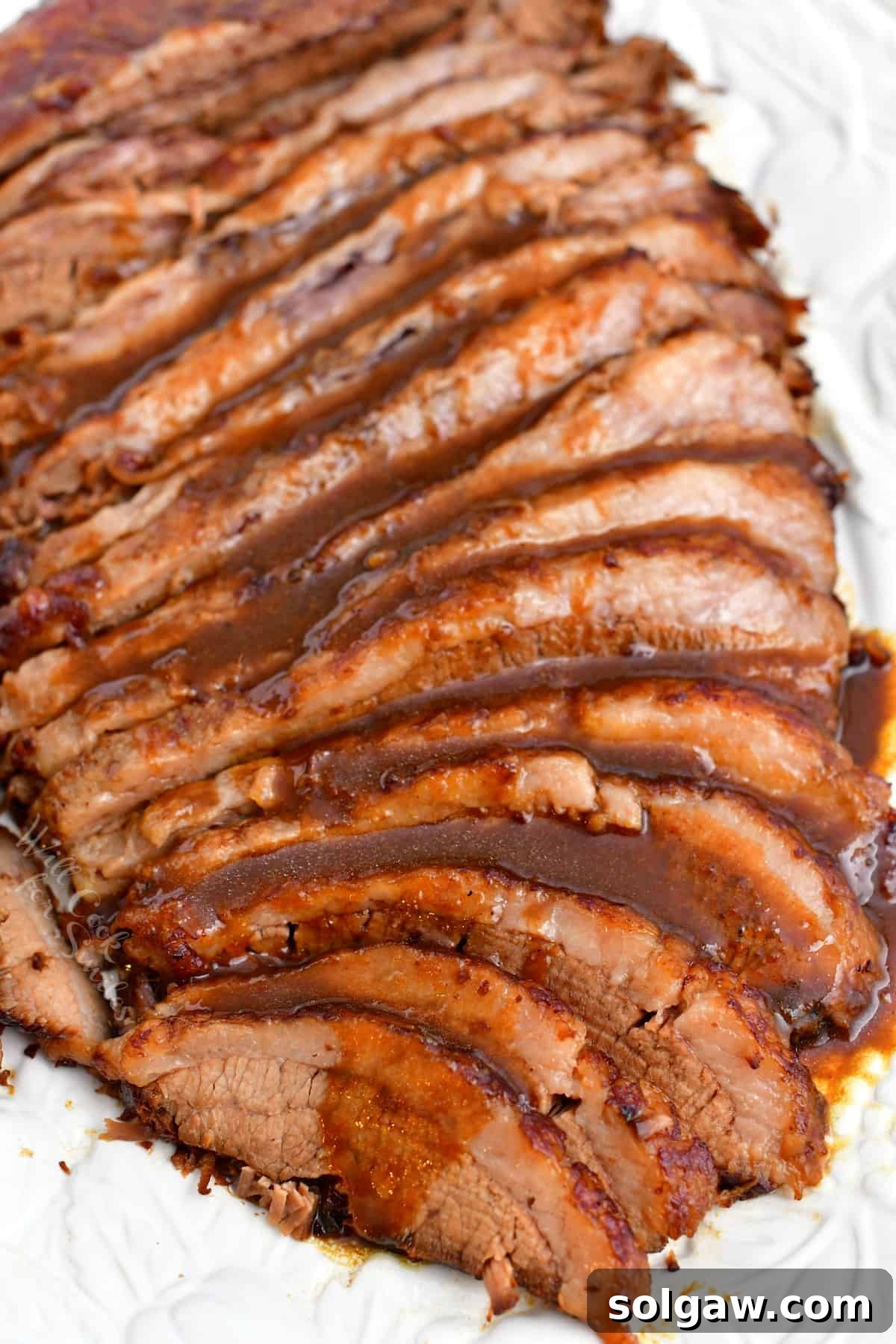
Prepare to be enchanted by the most succulent, flavorful, and incredibly **tender beef brisket in the oven** you’ve ever tasted. This culinary masterpiece, slow-cooked to perfection over several hours with an exquisite **balsamic sauce**, promises an unforgettable dining experience. Whether you’re hosting a festive holiday gathering or simply seeking to elevate your family dinner, this recipe for **oven-baked beef brisket with balsamic glaze** is sure to impress and become a cherished favorite.
If you’re a devotee of homemade brisket, we invite you to explore more of our cherished recipes. Dive into the rich flavors of our dry-rubbed beef brisket recipe or savor the comforting depths of our French Onion Oven Beef Brisket. Each recipe offers a unique journey into the world of perfectly cooked beef.
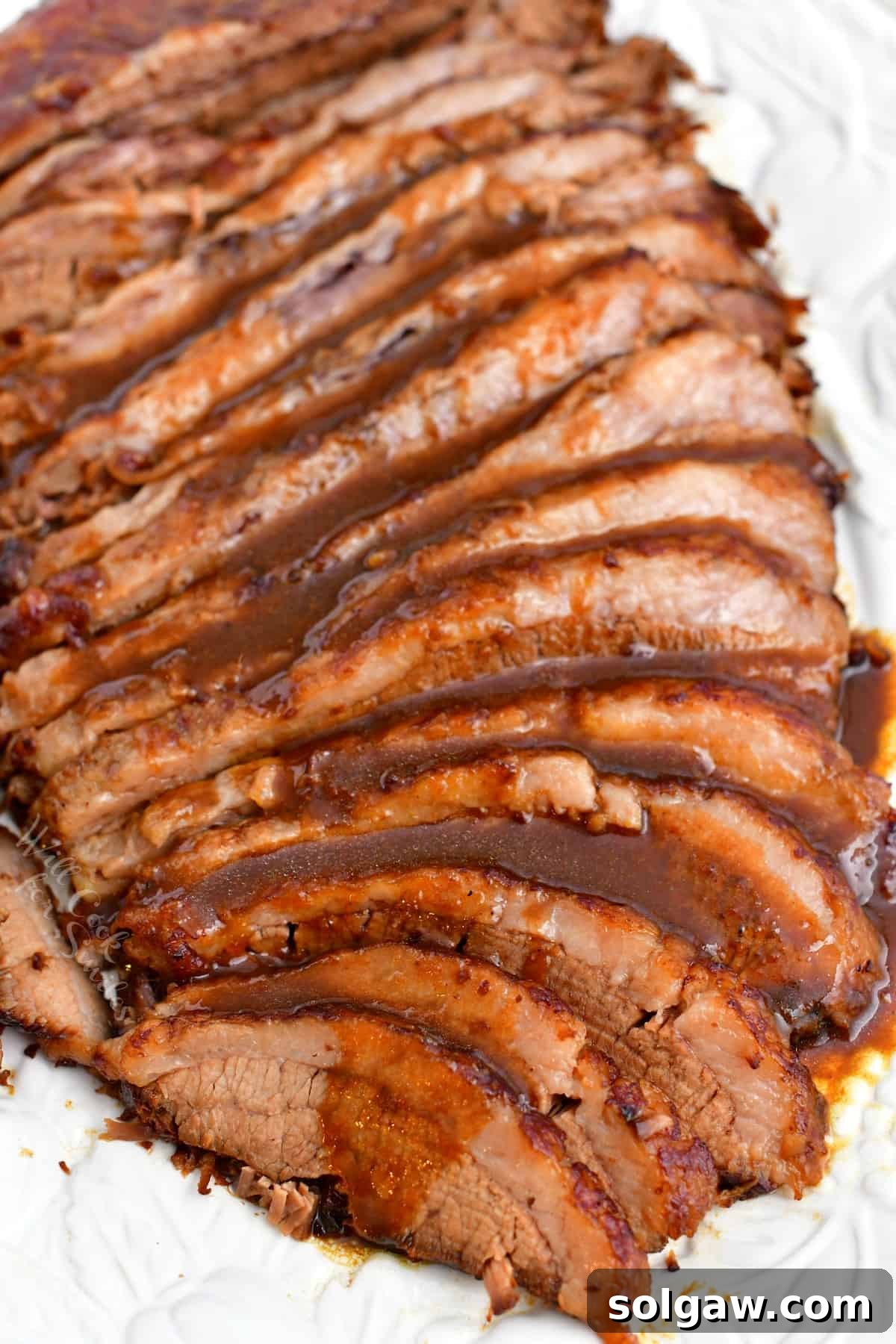
What is Brisket? The Ultimate Slow-Cooking Cut
Brisket is a distinctive cut of beef sourced from the lower chest or breast of the cow. This area, which supports a significant portion of the animal’s weight, is comprised of strong pectoral muscles rich in connective tissue. This inherent toughness, while challenging for quick cooking methods, is precisely what makes brisket exceptionally suited for long, slow cooking. When subjected to low heat for extended periods, the connective tissues gradually break down, transforming into gelatin and infusing the meat with unparalleled tenderness and moisture.
Its robust flavor and unique texture have made brisket a staple in culinary traditions worldwide, from American BBQ to Jewish holiday feasts. Achieving that signature melt-in-your-mouth texture requires patience and the right cooking environment. This is why you’ll often encounter recipes for **brisket in the oven**, slow cookers, or smokers – methods designed to embrace the “low and slow” philosophy crucial for this cut.
While smokers deliver that iconic smoky flavor and slow cookers offer convenience, the oven stands out as an incredibly versatile and accessible alternative. Not everyone has access to a smoker, and a slow cooker can often be too small to accommodate a full-sized brisket or even a larger brisket flat. The oven provides ample space and consistent, controllable heat, making it an ideal choice for achieving a perfectly tender and juicy **oven-baked brisket** right in your home kitchen.
Choosing Your Brisket: Flat, Point, and Packer Cuts
Understanding the different cuts of brisket is paramount to selecting the best one for your recipe and desired outcome. Brisket is typically a substantial cut, often weighing anywhere from 12 to 20 pounds before being portioned by butchers. It’s generally divided into two main sections: **the flat** (or “first cut”) and **the point** (or “second cut”). Sometimes, the flat is further trimmed into smaller pieces for easier handling and cooking.
The **brisket flat** is recognized for its leaner profile and uniform, rectangular shape, making it ideal for slicing. It contains less marbling (intramuscular fat) compared to the point, which is why it’s a popular choice for many home cooks and often the only cut available in standard grocery stores. However, this leanness also means the flat can be prone to drying out if not cooked carefully. To mitigate this, always look for a flat cut with a visible, decent layer of fat on top – this “fat cap” will render during cooking, basting the meat and contributing significantly to its juiciness and flavor.
In contrast, the **brisket point** is characterized by its irregular shape, abundant marbling, and a substantial fat cap. A distinct layer of fat often separates the flat and the point when they are together. While the point might not boast the aesthetic appeal of a cleanly sliced flat, its high fat content renders down beautifully, resulting in an exceptionally rich, moist, and flavorful piece of meat. The point is often preferred for making shredded beef, such as **pulled brisket sandwiches**, due to its incredibly tender, falling-apart texture.
For the ultimate in flavor and juiciness, my personal recommendation, whenever feasible, is to cook a whole “packer” brisket. This cut includes both the flat and the point still attached. Cooking both sections together allows the fat from the point to render and baste the leaner flat, ensuring an incredibly moist and flavorful result across the entire roast. After cooking, you can easily separate the two sections; slice the flat for a classic presentation and shred the point for delicious pulled brisket.
When purchasing a brisket flat, always prioritize one with a good, visible layer of fat on top. This crucial fat cap is key to achieving a truly juicy and tender result, preventing the leaner meat from drying out during the long cooking process.
Mastering the Balsamic Sauce Beef Brisket: Cooking Instructions
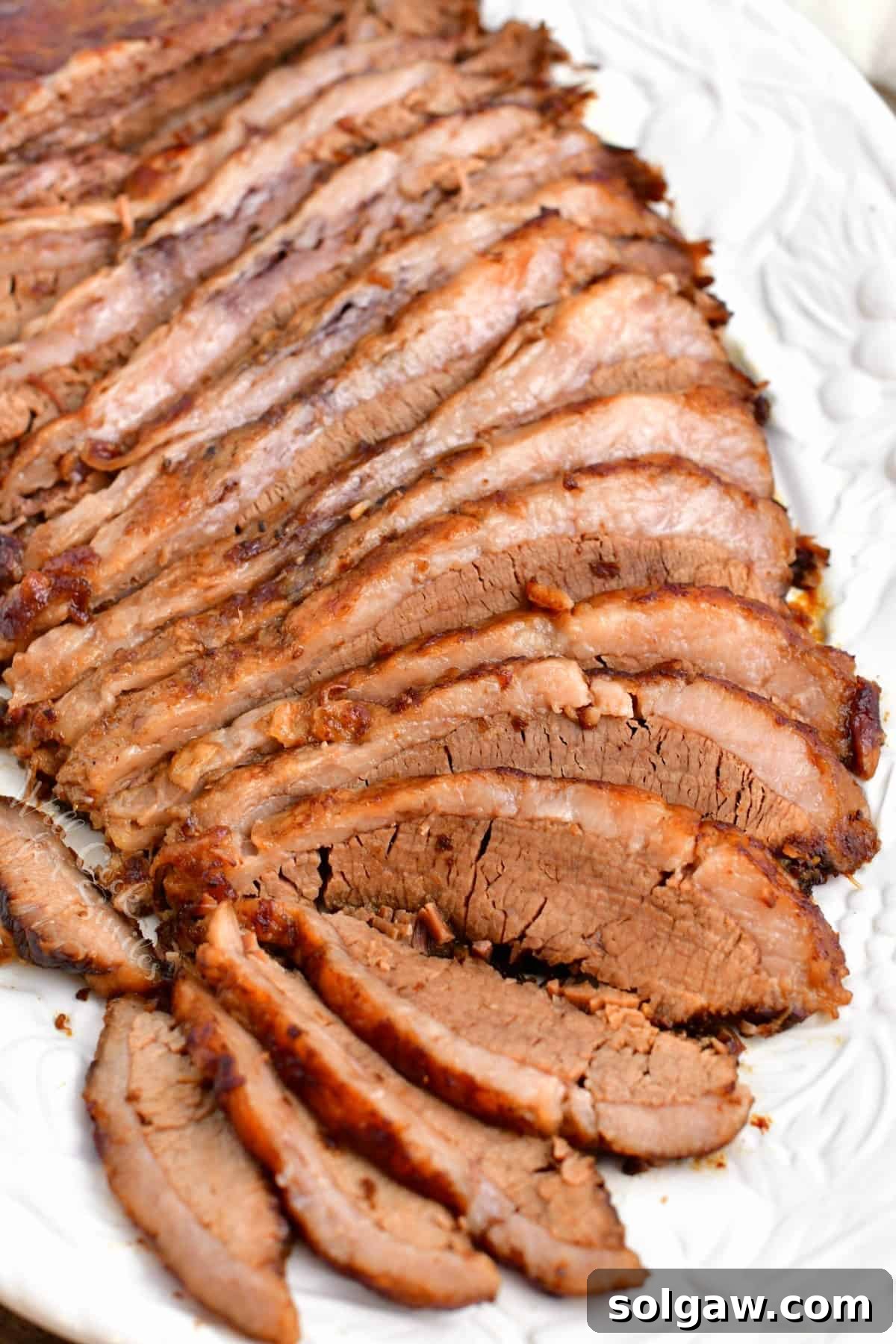
Regardless of whether I’m preparing brisket in the oven or on a smoker, a crucial first step is to apply a generous salt rub approximately 12 hours in advance. This process, often referred to as dry brining, deeply seasons the meat and helps break down muscle fibers for enhanced tenderness. For this particular **balsamic sauce beef brisket recipe**, salt will be the primary seasoning applied directly to the meat, allowing its natural beefy flavor to shine through, complemented by the rich sauce.
EQUIPMENT NOTE: The choice of roasting pan is vital for successful oven-baked brisket. Opt for a pan that comfortably fits your brisket without excess empty space, but also without squeezing the meat. Proper air and heat circulation around the brisket is essential for even cooking and achieving that perfect tender texture. A pan that’s too small restricts air flow, while one that’s excessively large can cause pan juices to burn.
The Heart of the Dish: Balsamic Sauce Ingredients
While the perfectly cooked beef brisket is undoubtedly delicious on its own, it’s the accompanying balsamic sauce (or gravy, as some prefer to call it) that truly elevates this dish to an extraordinary level. This rich, tangy, and slightly sweet glaze forms the cornerstone of our **oven brisket recipe**, transforming every slice of meat into a gourmet experience.
The foundation of this exceptional sauce is built upon two distinct yet complementary vinegars: robust balsamic vinegar and bright red wine vinegar. Balsamic vinegar lends a deep, complex sweetness and tang, while red wine vinegar adds an extra layer of acidity and fruitiness, creating a beautifully balanced flavor profile. These vinegars are crucial for cutting through the richness of the beef and adding a vibrant zing to the overall dish.
Beyond the vinegars, the remaining ingredients are a carefully selected blend of basic spices and aromatics designed to create a harmonious symphony of flavors. You’ll also need high-quality beef broth or stock to provide a savory base and ensure the sauce has the right consistency. A touch of oil is used for sautéing the aromatics, and a small amount of all-purpose flour acts as a thickener, helping to create that luxurious, glossy texture that perfectly coats the tender brisket slices. A hint of brown sugar balances the tartness of the vinegars, creating a perfectly rounded, irresistible glaze.
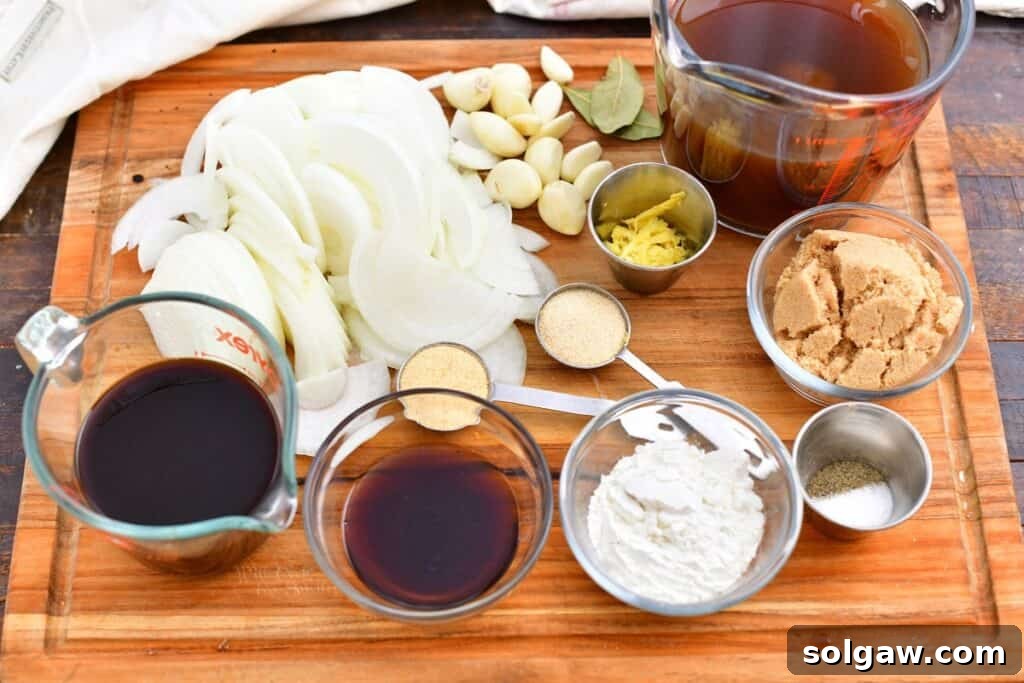
Detailed Prep Before Cooking for Oven Brisket
1. Salt Rub the Beef for Maximum Flavor and Tenderness
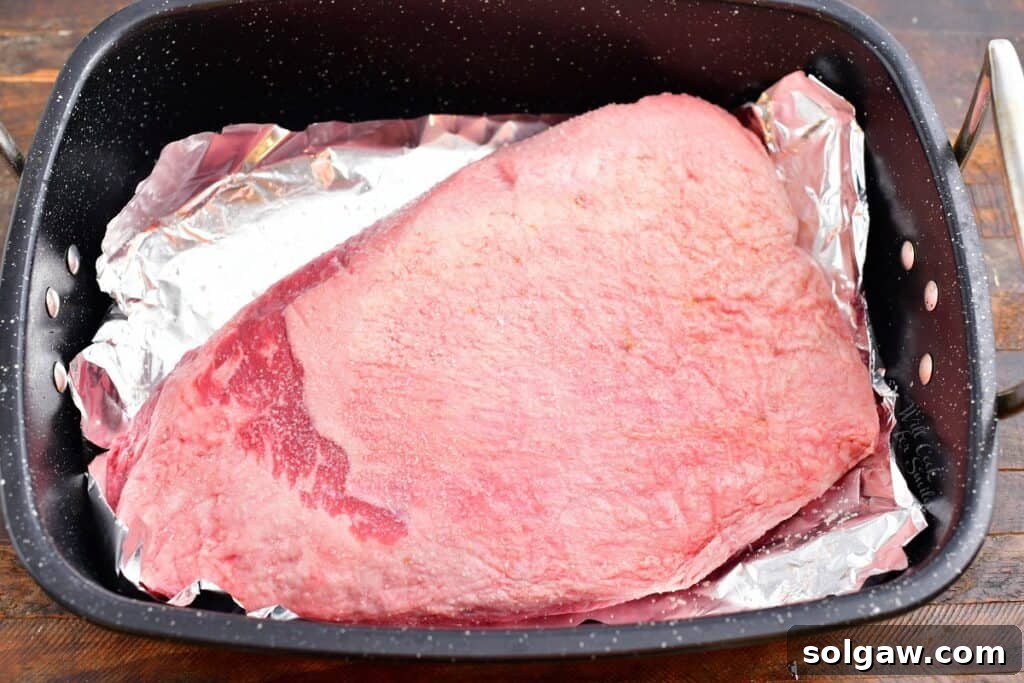
The salt rub is more than just seasoning; it’s a dry brining technique essential for a truly tender and flavorful **oven-baked brisket**. This process needs ample time to work its magic, ideally about 12 hours. For utmost convenience and minimal cleanup, I prefer to prepare the beef directly in the roasting pan I’ll use for cooking. This way, it’s perfectly seasoned and ready to go straight into the oven the following day.
NOTE: It’s crucial to keep your brisket fat cap facing upwards both when salting the meat and during the entire cooking process. The fat cap acts as a natural basting mechanism, slowly melting and rendering its juices into the meat, ensuring unparalleled moisture and tenderness.
To make cleanup even easier, begin by lining your chosen roasting pan with two long sheets of heavy-duty aluminum foil, ensuring they overlap generously to create a robust foundation. Once the brisket is nestled into the foil-lined pan, liberally sprinkle the coarse salt evenly over all exposed sides of the meat. Gently pat the salt into the surface to ensure good adhesion. After salting, tightly wrap the brisket in several layers of aluminum foil, creating a sealed packet. This ensures the salt penetrates effectively. Place the wrapped brisket into the refrigerator for approximately 12 hours, allowing the dry brining process to work its magic.
2. Bring the Beef to Room Temperature for Even Cooking
A frequently overlooked but critical step for any large roast, especially brisket, is bringing the meat to room temperature before it enters the oven. When meat is cold, its muscle fibers and connective tissues are constricted and rigid. Introducing cold meat directly into a hot oven can cause the exterior to cook too quickly while the interior struggles to reach the desired temperature, leading to an unevenly cooked and potentially tough result. To avoid this, I highly recommend removing your brisket from the refrigerator at least an hour, or even up to two hours, before you plan to start cooking. This allows the internal temperature of the meat to rise gradually, promoting more even heat distribution and a more tender final product. This hour is also the perfect window to prepare your luscious balsamic brisket sauce.
3. Crafting the Perfect Balsamic Sauce
The balsamic sauce is the crowning glory of this **oven brisket recipe**, delivering a beautiful balance of sweet, tangy, and savory notes that will permeate the meat during slow cooking.
- Sauté Onions and Garlic to Build a Flavor Base: Begin by gently sautéing thinly sliced yellow onions in a Dutch oven or a large, heavy-bottomed pot over medium heat. Cook them until they are completely softened and translucent, which develops a sweet base flavor. To prevent the more delicate garlic from burning, only add the minced garlic once the onions are soft. Create a small well in the center of the onions and nestle the garlic in it, allowing it to cook for just a minute or two until fragrant before stirring it into the onions. This ensures the garlic’s full flavor without any bitterness.
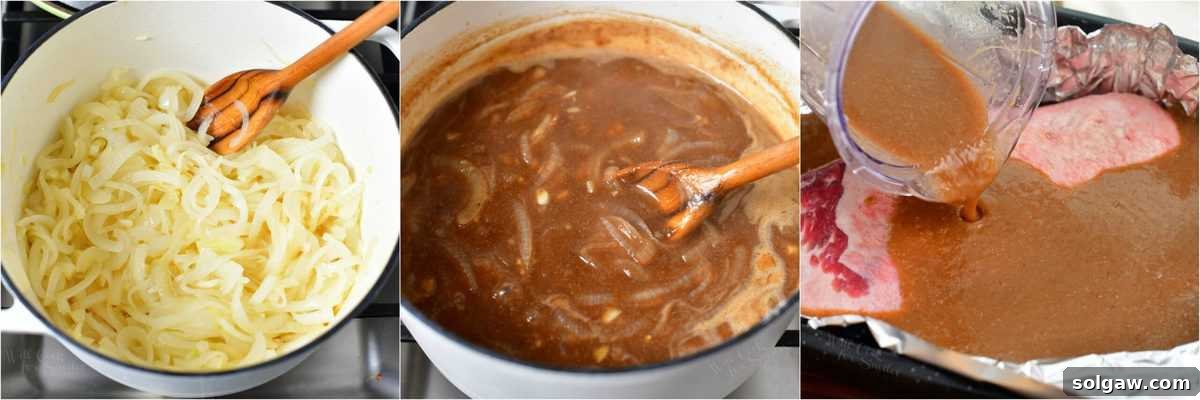
- Building the Sauce Layers: Once the aromatics are perfectly cooked, sprinkle the all-purpose flour evenly over the onions and stir continuously for about a minute. This step, known as creating a roux, helps thicken the sauce. Next, slowly and gradually pour in the balsamic vinegar and red wine vinegar, stirring constantly to prevent lumps and ensure a smooth consistency. Follow with the beef stock, continuing to stir as it incorporates. Finally, mix in the remaining seasonings: brown sugar, bay leaves, garlic powder, onion powder, freshly minced ginger, and season generously with salt and black pepper to taste. Bring the mixture to a gentle simmer, allowing it to cook for a few minutes until it begins to thicken to a gravy-like consistency.
- Achieving a Silky Smooth Gravy: For a truly luxurious and smooth sauce, once it has thickened, carefully transfer it to a high-speed blender or food processor. Blend until completely smooth and velvety. Alternatively, if you own an immersion blender, you can achieve the same silky texture directly in the pot, saving on cleanup.
NOTE: When blending hot liquids in a regular blender or food processor, exercise extreme caution. If your appliance doesn’t have a vented lid or a flap for steam release, it’s imperative to allow the sauce to cool for a bit before blending. The pressure from hot steam can build up rapidly and blow off the lid, causing a dangerous mess or burns. Blend in small batches and start at a low speed, gradually increasing.
4. Oven Cooking Instructions for Tender Balsamic Brisket
With the brisket prepped and the balsamic sauce ready, it’s time for the oven to work its magic and transform this tough cut into a melt-in-your-mouth masterpiece.
Before placing the brisket back in the pan, spread a thin layer of the prepared balsamic sauce directly onto the aluminum foil where the brisket will rest. Then, carefully place the brisket, fat-cap up, onto this sauce bed. Pour the remaining rich balsamic sauce generously over the top of the brisket, ensuring it’s well-coated. Gently bring the overlapping sheets of aluminum foil up and around the brisket, carefully crimping the edges to create a tightly sealed pocket. This foil packet will trap steam and moisture, creating a moist cooking environment that is crucial for tenderizing the brisket. If your foil sheets don’t completely enclose the brisket, add an additional sheet on top and tuck its edges securely under the existing foil to form a complete seal.
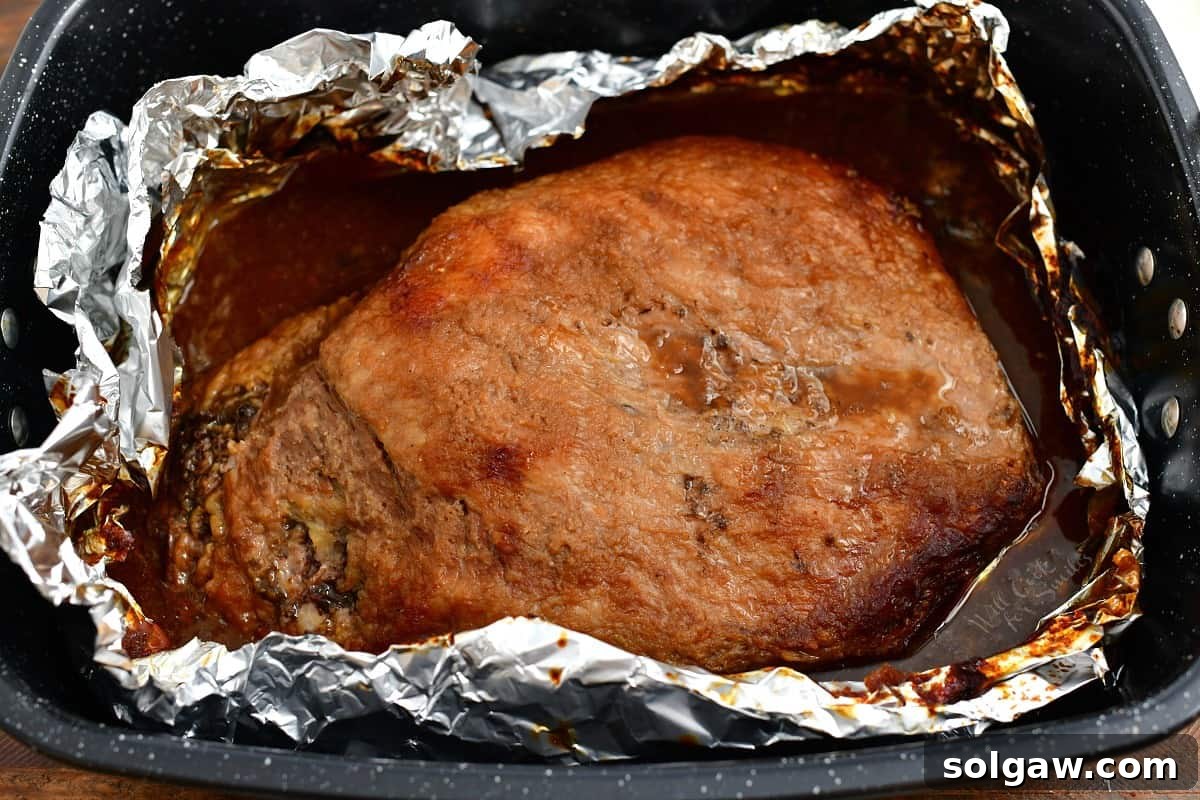
Preheat your oven to a consistent 300°F (150°C). Place the foil-wrapped brisket in the preheated oven. The general rule of thumb for oven-baked brisket is approximately one hour of cooking time per pound of meat. So, for a 6-pound brisket, you can expect an initial cooking time of about 6 hours. This low and slow method allows the collagen and connective tissues to gradually break down, resulting in incredibly tender beef. Monitor the oven temperature to ensure it remains steady throughout this long cooking period.
After the initial covered cooking period, carefully remove the roasting pan from the oven and open the foil. Be cautious of the hot steam escaping from the packet. Return the now-uncovered brisket to the oven and continue to cook for an additional 45-60 minutes. This final uncovered stage is essential for a few reasons: it allows the sauce to reduce slightly and caramelize on the surface of the brisket, enhancing the depth of flavor and creating a beautiful, glossy finish.
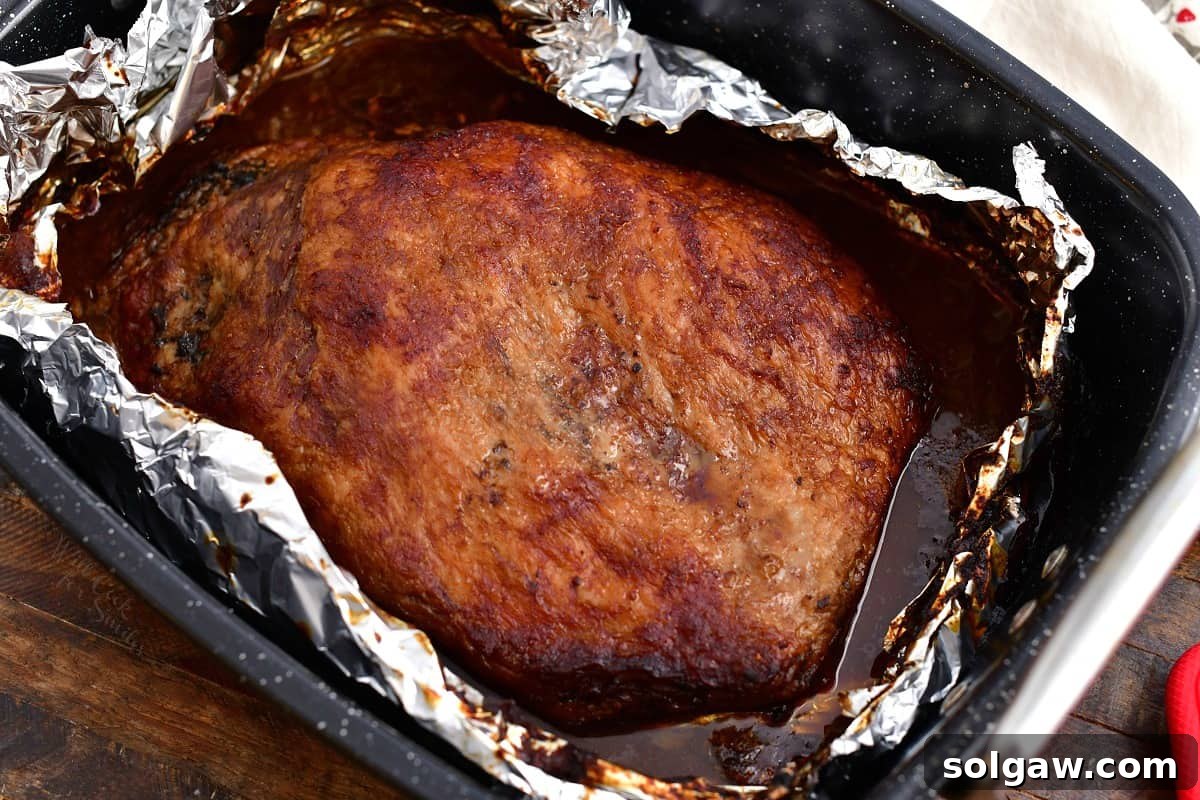
TIP: The resting period is just as crucial as the cooking process for a truly succulent and **juicy beef brisket**. Once you remove the brisket from the oven, transfer it to a clean cutting board. Loosely tent it with a sheet of aluminum foil and allow it to **rest for at least 15-20 minutes** before carving. This critical step allows the juices, which have been pushed to the center of the meat during cooking, to redistribute evenly throughout the brisket, ensuring every slice is moist and flavorful. Skipping this step will result in juices running out onto the cutting board, leaving you with dry meat.
While the brisket is resting, seize the opportunity to finish your exquisite balsamic sauce. Carefully collect all the flavorful liquid and rendered fat from the roasting pan and pour it into a small saucepot. Bring the sauce to a gentle simmer over medium heat, then reduce the heat to medium-low and let it simmer for 10-15 minutes. This will further reduce and concentrate the flavors, thickening the sauce to a perfect consistency for serving. Stir occasionally to prevent sticking.
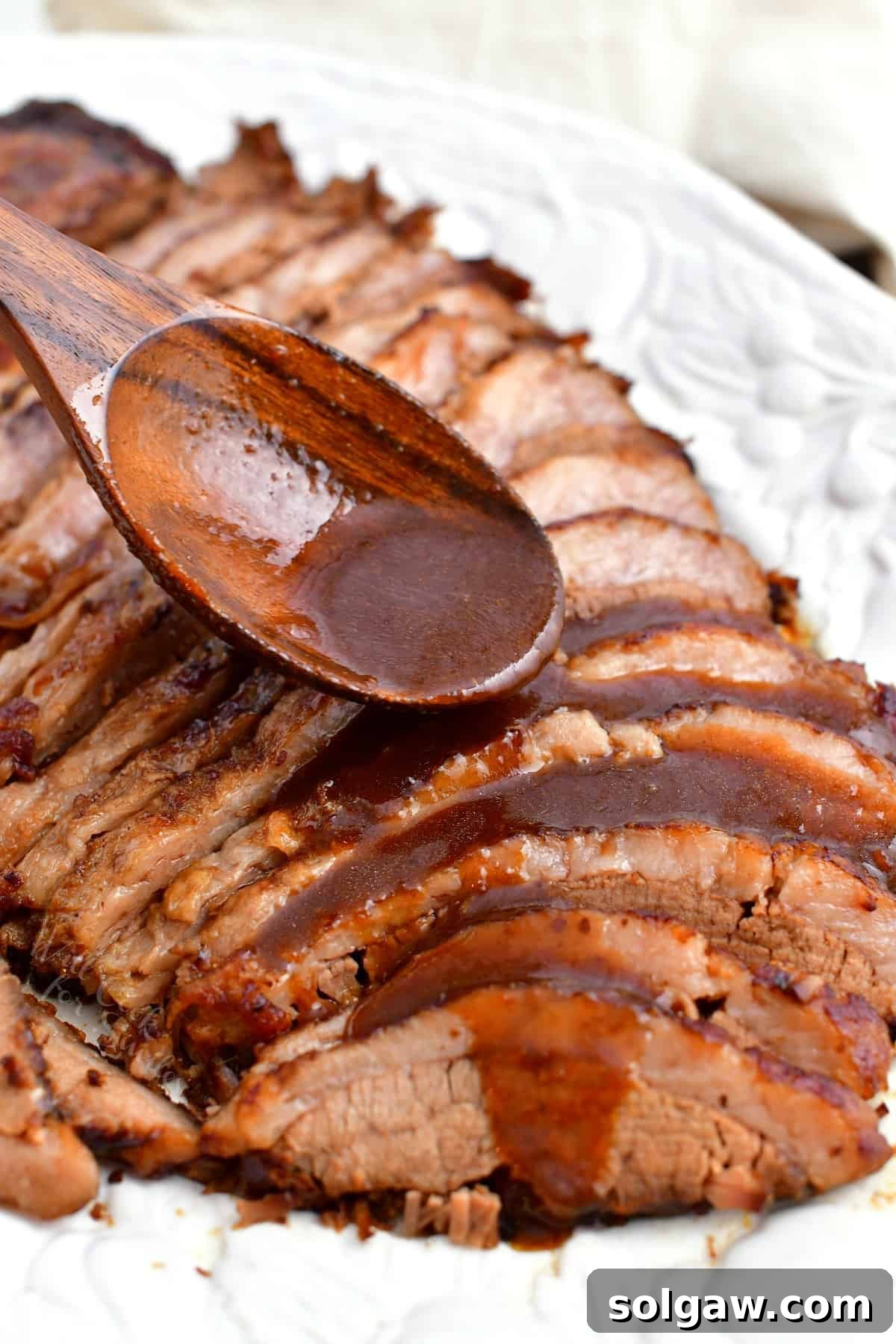
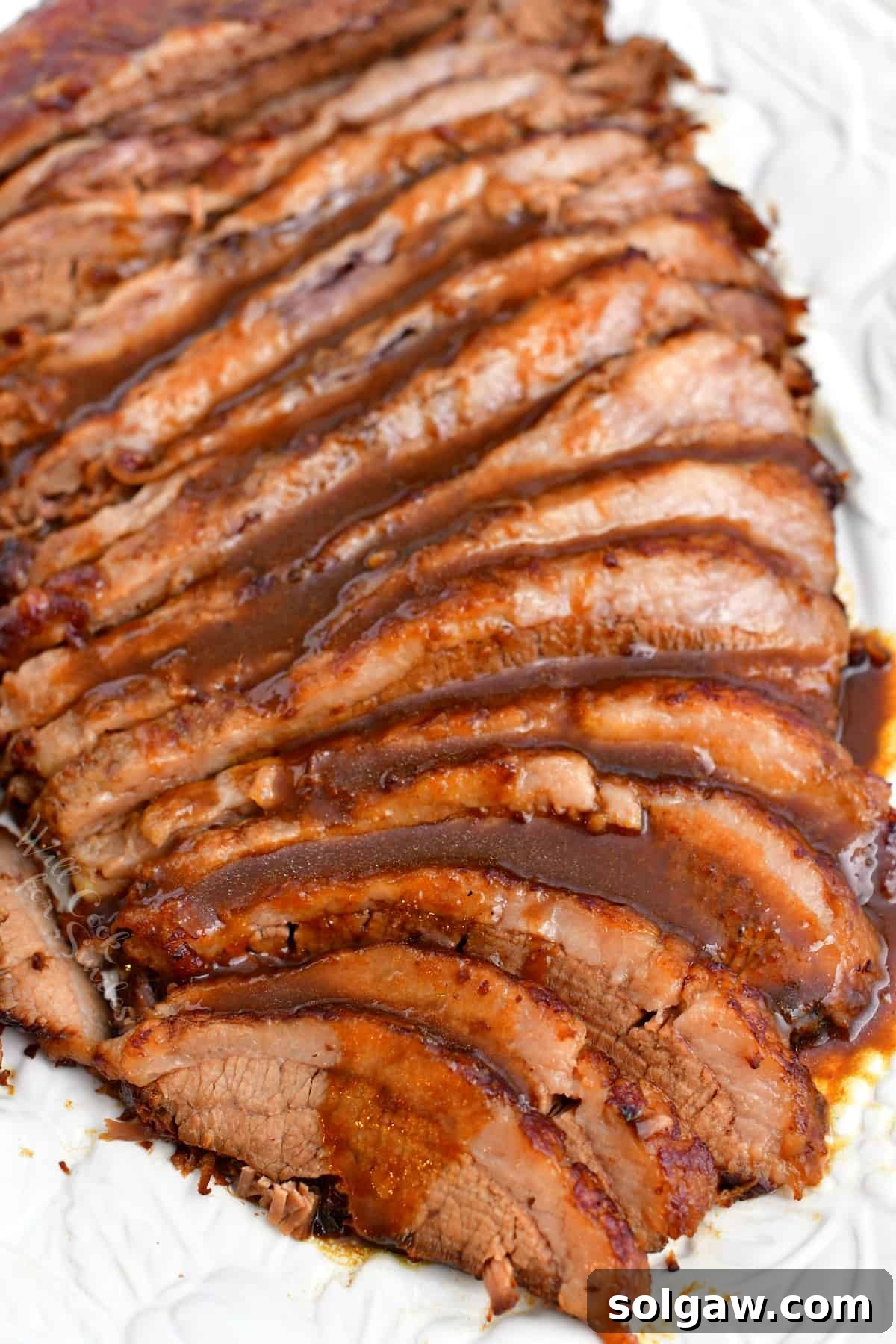
Once rested, use a sharp carving knife to slice the brisket against the grain. Slicing against the grain shortens the muscle fibers, making each slice incredibly tender and easy to chew. Arrange the slices beautifully on a serving platter and generously ladle the warm, reduced balsamic sauce over the top. Serve immediately and watch your guests marvel at this perfectly cooked **tender beef brisket with balsamic glaze**.
PIN THIS RECIPE
DID YOU MAKE THIS RECIPE? PLEASE leave a 🌟 star rating! Let me know how you liked it by leaving your 📝 comment below or share and tag me on social media @willcookforsmiles. DON’T FORGET to subscribe to my newsletter for more delicious recipes!
Oven Baked Beef Brisket with Balsamic Sauce
This beef brisket in the oven is so tender, juicy, and delicious, cooked for several hours at low temperature in the oven with an amazing balsamic sauce.
Rating: 5 out of 5 stars (from 3 votes)
Print Recipe
Pin Recipe
Course: Main Course
Cuisine: American
Prep Time: 30 minutes
Cook Time: 7 hours 30 minutes
Refrigerate: 12 hours
Total Time: 20 hours
Servings: 10
Calories: 561 kcal
Author: Lyuba Brooke
Ingredients
For the Brisket:
- 6 lb beef brisket flat
- 3 tbsp coarse salt
For the Balsamic Sauce:
- 2 tbsp canola oil
- 2 large yellow onions, thinly sliced
- 1 bulb of garlic, peeled and chopped
- 1/2 cup all purpose flour
- 3 cups beef stock
- 1 cup balsamic vinegar
- 1/4 cup red wine vinegar
- 1/2 cup brown sugar
- 2 bay leaves
- 1 1/2 tbsp garlic powder
- 1 tbsp onion powder
- 1 tbsp fresh ginger, minced
- Salt, to taste
- Black pepper, to taste
Instructions
Prepare the Brisket:
- Line a roasting pan with two long, overlapping sheets of aluminum foil. Ensure the pan is appropriately sized for the brisket.
- Remove the brisket flat from its packaging, place it in the roasting pan with the fat cap facing up, and pat it dry thoroughly with paper towels.
- Season the brisket generously with coarse salt over all sides, patting it in evenly. Tightly wrap the brisket in several layers of aluminum foil.
- Refrigerate the wrapped brisket overnight, or for up to 12 hours. Remove the brisket from the refrigerator an hour before cooking and unwrap it to allow it to come to room temperature.
Prepare the Balsamic Sauce:
- Thinly slice all onions, peel and chop the garlic, shave and mince the ginger, and measure out the remaining sauce ingredients.
- Preheat a Dutch oven or a large pot over medium heat and add canola oil. Add the sliced onions and cook until they are completely softened and translucent.
- Create a small well in the center of the softened onions, add the chopped garlic, and sauté until fragrant (about 1 minute), then mix it into the onions.
- Sprinkle the flour evenly over the onions and stir to coat them completely. Cook for 1 minute.
- Slowly pour in the balsamic vinegar and red wine vinegar, stirring constantly. Continue to pour in the beef stock while stirring to maintain a smooth consistency.
- Add the bay leaves, brown sugar, garlic powder, onion powder, minced ginger, and season with salt and pepper to taste. Stir slowly as the sauce comes to a simmer and thickens.
- Allow the sauce to simmer for a few minutes to let the flavors meld.
- Carefully transfer the hot sauce to a food processor or blender and blend until completely smooth. (If your blender/food processor doesn’t have a vented lid, let the sauce cool slightly before blending to prevent steam pressure buildup.)
Cook the Brisket:
- Preheat the oven to 300°F (150°C).
- Spread a portion of the balsamic sauce onto the foil in the roasting pan. Place the brisket (fat cap up) on the sauce, then pour the remaining sauce over the top. Close the foil tightly around the brisket to form a sealed pocket. Add extra foil if needed to ensure a complete seal.
- Place the roasting pan in the preheated oven and cook for approximately 6 hours (estimate cooking time at about one hour per pound of brisket).
- After the initial cooking time, carefully open the foil (watch for steam) and cook the brisket uncovered for another 45-60 minutes, or until the sauce has slightly reduced and caramelized.
- Remove the roasting pan from the oven. Carefully transfer the tender brisket from the pan to a cutting board. (Use large spatulas or tongs as the brisket will be very tender.) Loosely tent the brisket with a sheet of foil and let it rest for about 15-20 minutes before slicing.
Finish the Sauce:
- While the brisket rests, pour all the leftover sauce and pan juices from the roasting pan into a saucepot.
- Bring the sauce to a simmer over medium-low heat and let it gently simmer for about ten minutes, stirring occasionally, until it reaches your desired consistency.
- Once the brisket has rested, slice it against the grain with a sharp knife and serve generously topped with the warm balsamic sauce.
Nutrition
Calories: 561 kcal | Carbohydrates: 25g | Protein: 59g | Fat: 23g | Saturated Fat: 7g | Cholesterol: 169mg | Sodium: 2462mg | Potassium: 1137mg | Fiber: 1g | Sugar: 16g | Vitamin C: 2mg | Calcium: 46mg | Iron: 6mg
Tried this recipe?
Mention @willcookforsmiles or tag #willcookforsmiles!