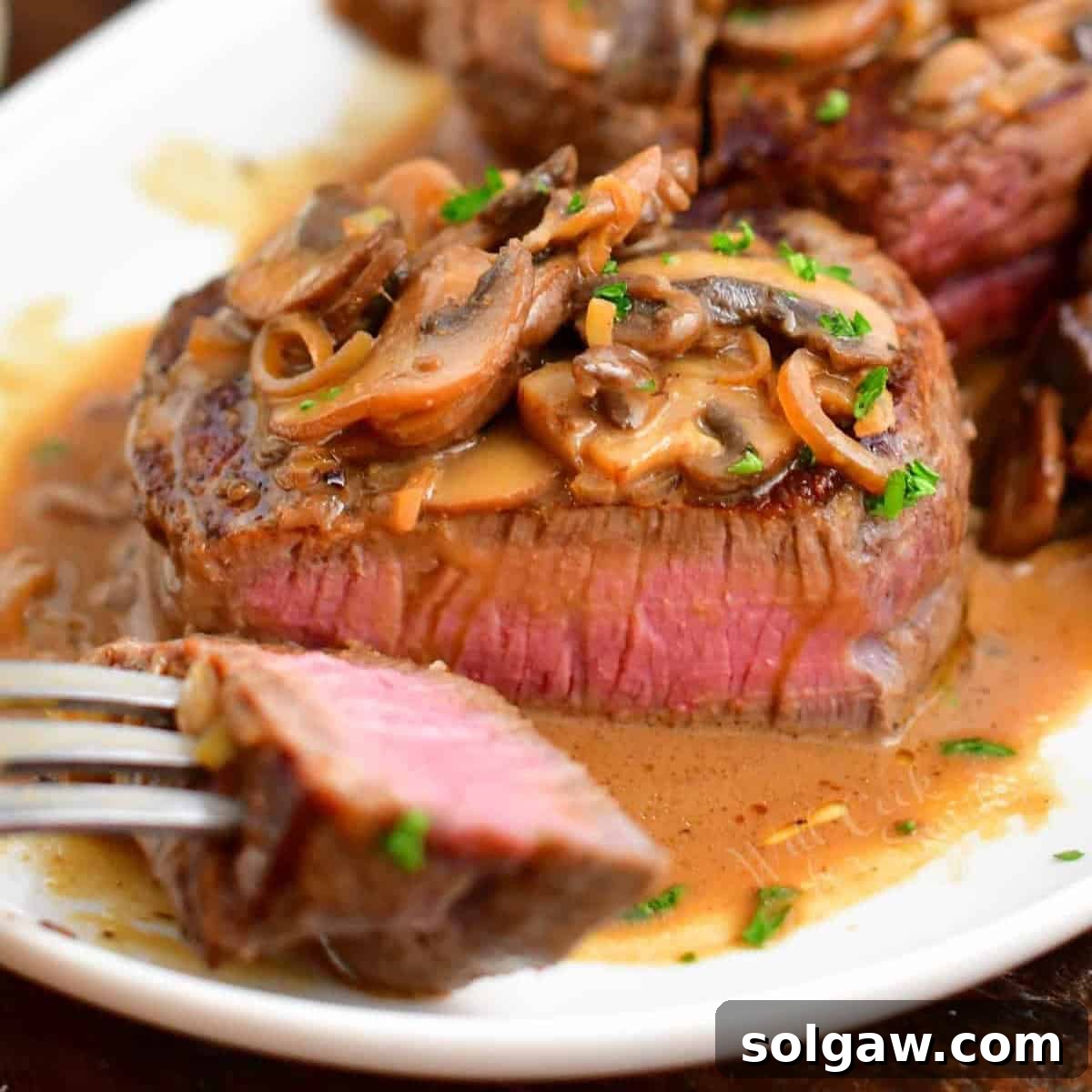
Welcome, food enthusiasts! Today, we’re diving into the sophisticated yet surprisingly simple world of Steak Diane. This classic dish holds a special place in my heart, a recipe I’ve lovingly prepared for my husband since our early dating days. I even recall my very first attempt in college, where a fire extinguisher stood ready as a precautionary measure – a testament to the dramatic flair of this recipe, yet also how achievable it is for anyone!
Get ready to impress with a restaurant-quality meal that comes together in under 30 minutes, from searing perfectly tender filet mignon to crafting a rich, flavorful pan sauce. And don’t miss the demo video further down the page for a visual guide that makes the process even easier.
Steak Diane: A Culinary Gem Explained
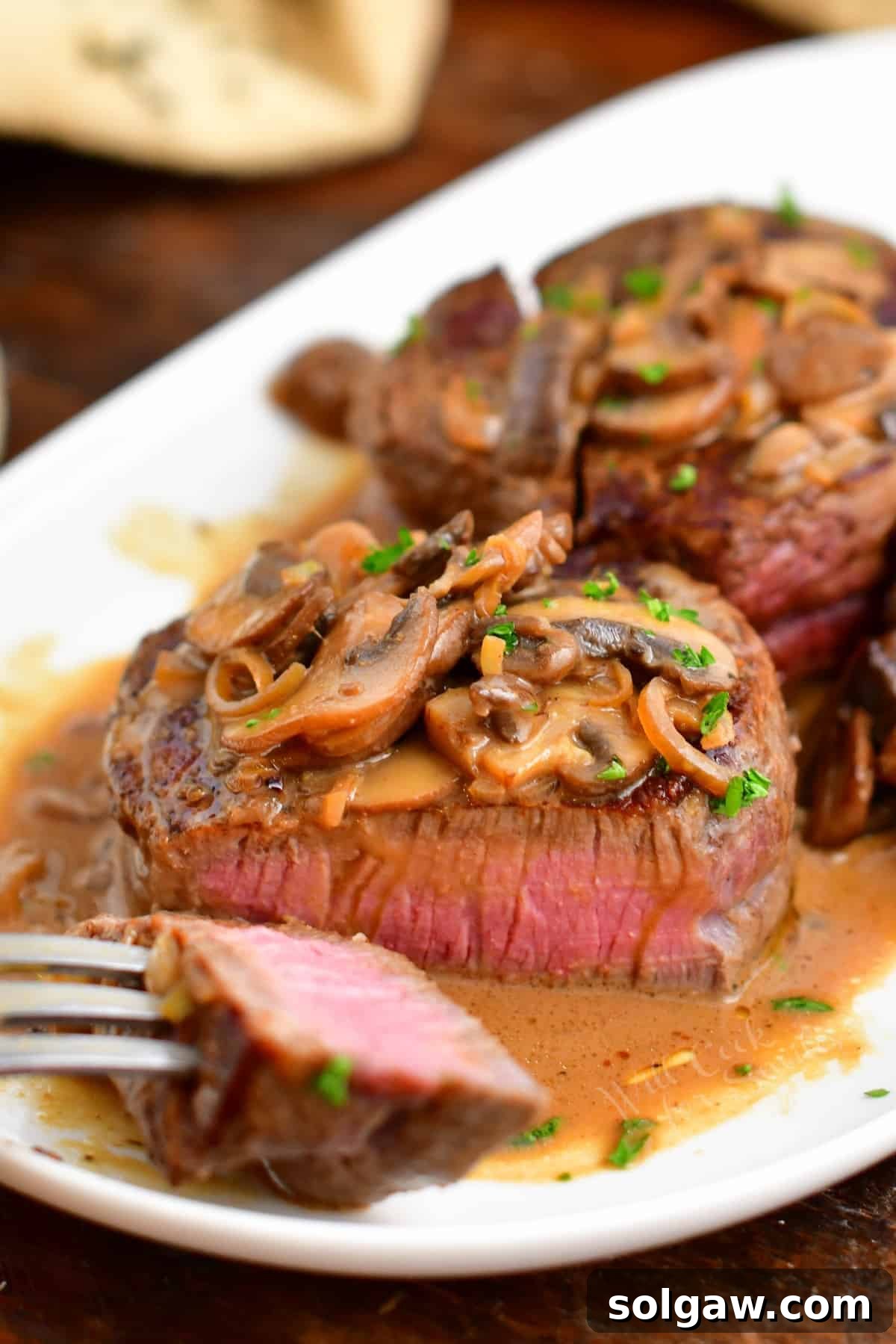
Steak Diane is more than just a meal; it’s an experience. This elegant dish centers around tender, pan-seared filet mignon, complemented by a luxurious, creamy pan sauce. The sauce, infused with the deep, aromatic notes of cognac (or brandy), is famously brought to life through the dramatic “flambé” technique. This method involves briefly igniting the alcohol, allowing the flames to burn off the alcohol content while leaving behind a concentrated, rich essence that elevates the entire dish.
While the core elements remain consistent, Steak Diane’s sauce can feature a delightful array of supporting ingredients. Common additions include savory Worcestershire sauce, tangy Dijon or gourmet mustard, decadent heavy whipping cream, earthy mushrooms, sweet shallots, and a robust beef stock or demi-glace. Each component plays a crucial role in building the complex flavor profile that makes Steak Diane so beloved.
To ensure your success, I’ve meticulously detailed every step of this recipe, providing clear photos and a comprehensive guide below. I’ve also created a quick demo video to walk you through the process, making it as straightforward as possible for home cooks of all skill levels. Remember, mastering the flambé is a showstopper, but safety is paramount. Be sure to review the dedicated safety guide for this technique before you begin.
The Intriguing History of Steak Diane
Steak Diane carries an air of classic sophistication, often associated with elegant dining rooms and tableside preparations. Its exact origins are a topic of friendly debate among culinary historians, with claims spanning from London in the 1930s to upscale New York City restaurants in the 1950s. Regardless of its precise birthplace, Steak Diane rose to prominence as a staple of continental cuisine, particularly in the mid-20th century. It became synonymous with fine dining, a dish that promised both exquisite flavor and a captivating theatrical presentation, thanks to the flambé. The name “Diane” itself is believed to refer to Diana, the Roman goddess of the hunt, possibly hinting at its rich game-like sauce or perhaps just a nod to its regal appeal.
Mastering the Flambé Cooking Technique: Safety First!
The flambé cooking technique is undeniably impressive, transforming a simple pan sauce into a culinary spectacle. More than just a show, this method is designed to infuse your sauce with the deep, nuanced flavors of rich liquor while safely burning off its alcohol content. The process involves carefully pouring alcohol over hot food and then igniting it. As the flames dance and eventually die out, the alcohol evaporates, leaving behind only its pure essence and aroma. The French term flambé translates directly to “flaming” or “flamed,” perfectly describing this dynamic kitchen skill.
While various pure spirits and liqueurs can be used for flambé, cognac, brandy, bourbon, or rum are the most common choices due to their robust flavor profiles and alcohol proofs. The high heat of the live flame efficiently burns away the alcohol, ensuring that your dish is left with a concentrated flavor, not an alcoholic taste. This technique is a fantastic way to deepen and round out the flavors of your sauce, adding a gourmet touch.
Though dazzling to behold and a fantastic way to impress your guests, executing the flambé technique requires strict adherence to safety precautions. Please review these essential tips carefully before attempting to flambé:
- Alcohol Proof: Always check the proof of your liquor. Do not flambé anything over 100 proof (50% alcohol by volume) as it can burn too intensely and be harder to control.
- Measure Carefully: Never pour liquor directly from the bottle into a hot pan! Always measure the required amount into a separate small dish or measuring cup first. This prevents the entire bottle from igniting if the flame travels up the stream of alcohol.
- Maintain Distance: When igniting, take a step back. Do not stand directly over or too close to the pan. Keep your face and hands a safe distance away.
- Remove from Heat: Critical step! Always, take the pan off the heat source (e.g., slide it to an unheated burner) or turn off the burner if you are using a gas stove, before adding the alcohol. This prevents the alcohol from igniting prematurely or too aggressively.
- Use a Long Lighter: Always use a long match or a long lighter to ignite the alcohol. This keeps your hands safely away from the flames.
- Ignite the Fumes: Ignite the fumes near the edge of the pan, just above the liquid, rather than trying to ignite the liquid itself directly. The fumes are what will catch fire.
- Do Not Move: Do not carry or touch the pan while the flames are still present. Wait until they have completely died down.
- Clear Surroundings: Do not perform flambé next to anything highly flammable, such as curtains, paper towels, or open containers of cooking oil. Ensure your cooking area is clear.
- Keep a Lid Handy: Have a metal lid close by that fits your pan. In the unlikely event that the flames become too large or uncontrollable, you can quickly smother them by placing the lid on the pan.
Crafting the Perfect Steak Diane: A Step-by-Step Guide
Making Steak Diane is an art of timing and technique, but entirely achievable at home. Follow these steps for a sensational result.
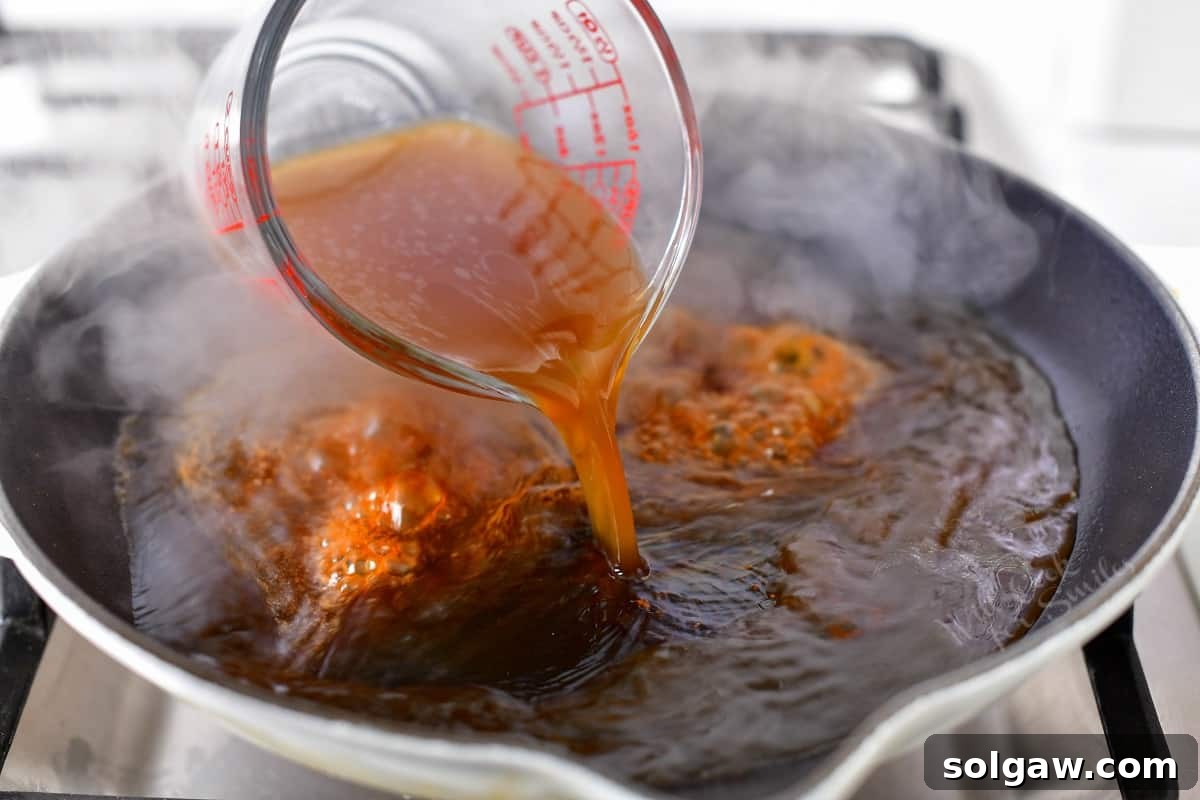
- Prepare the Beef Stock Reduction: Begin by creating a concentrated beef stock reduction. A reduction is a culinary technique where a liquid is simmered to evaporate water, intensifying its flavor and thickening its consistency. This rich, concentrated base will deeply enhance the overall taste of your Diane sauce. While traditionally done after cooking the meat to incorporate pan drippings, I recommend doing it first. This ensures your beautifully seared steaks remain warm while you finish the sauce, rather than getting cold.
- To do this, simply pour 1 1/2 cups of unsalted or low-sodium beef stock into a skillet over medium heat. Let it gently simmer, stirring occasionally, until the volume has reduced to approximately 1/2 cup. This process typically takes about 15 minutes, depending on your stovetop’s heat. Once reduced, carefully pour the stock into a separate bowl and set it aside. This will be added to your sauce later.
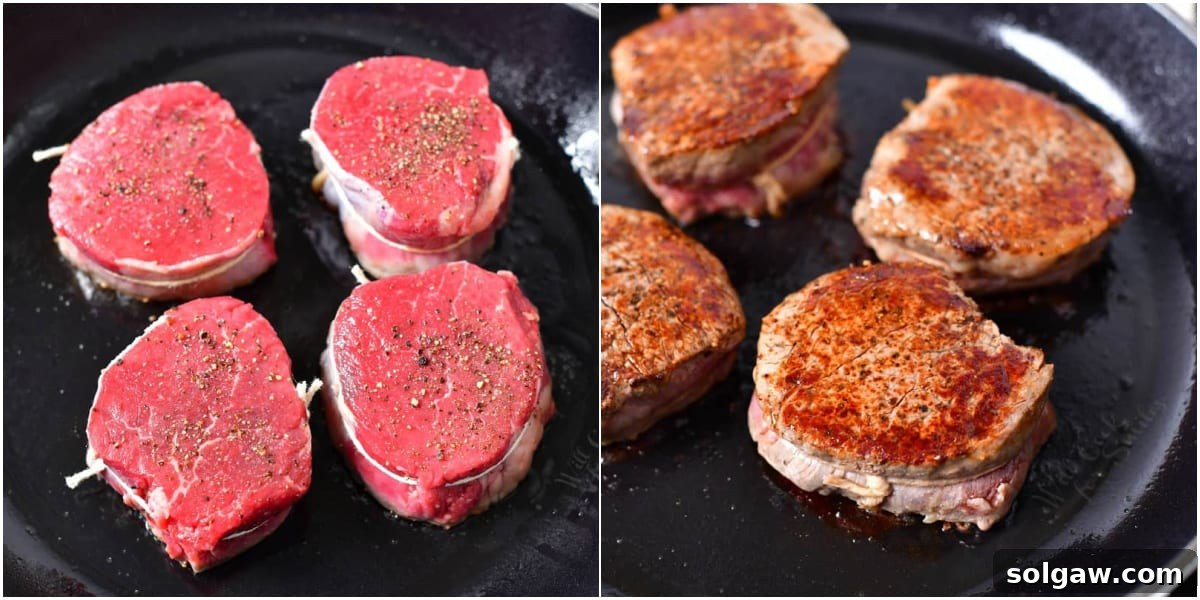
- Sear the Filet Mignon to Perfection: Achieving a beautiful crust on your filet mignon is key. For best results, use a skillet that retains heat exceptionally well and cooks evenly, such as a cast iron pan or any other heavy-bottomed skillet.
- Pro Tip for Searing: Crucially, ensure your skillet is preheated for several minutes until it’s smoking hot, and your steaks have reached room temperature before they touch the pan. Cold meat hitting a hot pan can cause the connective tissues to seize, resulting in a tough and chewy steak. Remove your steaks from the refrigerator about 30 minutes before cooking to allow them to come to room temperature.
- Prepare your steaks by patting each one thoroughly dry with paper towels. This removes surface moisture, which is essential for a crisp, even sear. If your filets are tied with cooking twine, you can keep them tied during searing to help them maintain their shape. Season generously with salt and freshly cracked black pepper on all sides, including the edges, just before placing them in the hot pan.
- Add canola oil to your preheated skillet. Once the oil shimmers, carefully place the seasoned filet mignon steaks into the pan. Cook for a couple of minutes on each side, turning as little as possible to allow a beautiful crust to form. The ideal internal temperatures for filet mignon are: 120°-125°F for Rare, 130°-135°F for Medium-Rare, and 135°-140°F for Medium. Use a meat thermometer for accuracy.
- Once the steaks reach your desired doneness, remove them from the pan and transfer them to a plate or cutting board to rest. If twine was used, carefully remove it now. Resting is vital; it allows the juices to redistribute throughout the meat, ensuring a tender and succulent result.
Crafting the Signature Steak Diane Sauce
With your steaks resting, it’s time to create the star of the show: the rich, aromatic Diane sauce. This will be made in the same pan, capturing all the delicious fond (browned bits) left from searing the steaks, which adds immense flavor.
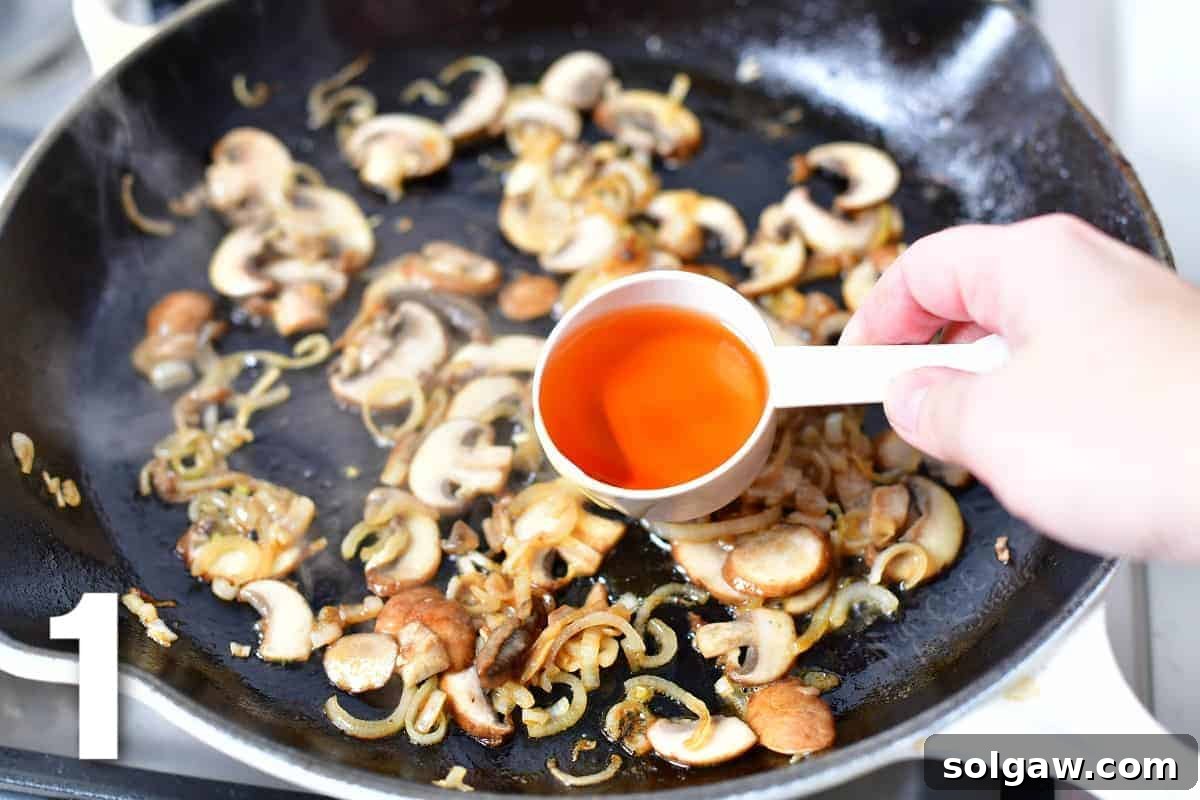
- Sauté Shallots and Mushrooms: Return the pan to medium heat. Add the unsalted butter and allow it to melt. Once melted, add the thinly sliced shallots and baby bella mushrooms. Sauté them, stirring occasionally, until they are softened and beautifully golden brown. Avoid overcrowding the pan to ensure they caramelize properly.
- The Flambé Moment (Read Safety Precautions Carefully!): This is the most dramatic and flavor-enhancing step. Please, be extremely cautious and re-read the detailed safety precautions mentioned earlier. You are dealing with ignited liquid.
- First, remove the pan completely from the heat source or turn off the burner if you are using a gas stove. This step is critical to prevent accidental ignition and ensures a controlled flambé.
- Carefully pour the measured 1/4 cup of cognac over the sautéed shallots and mushrooms.
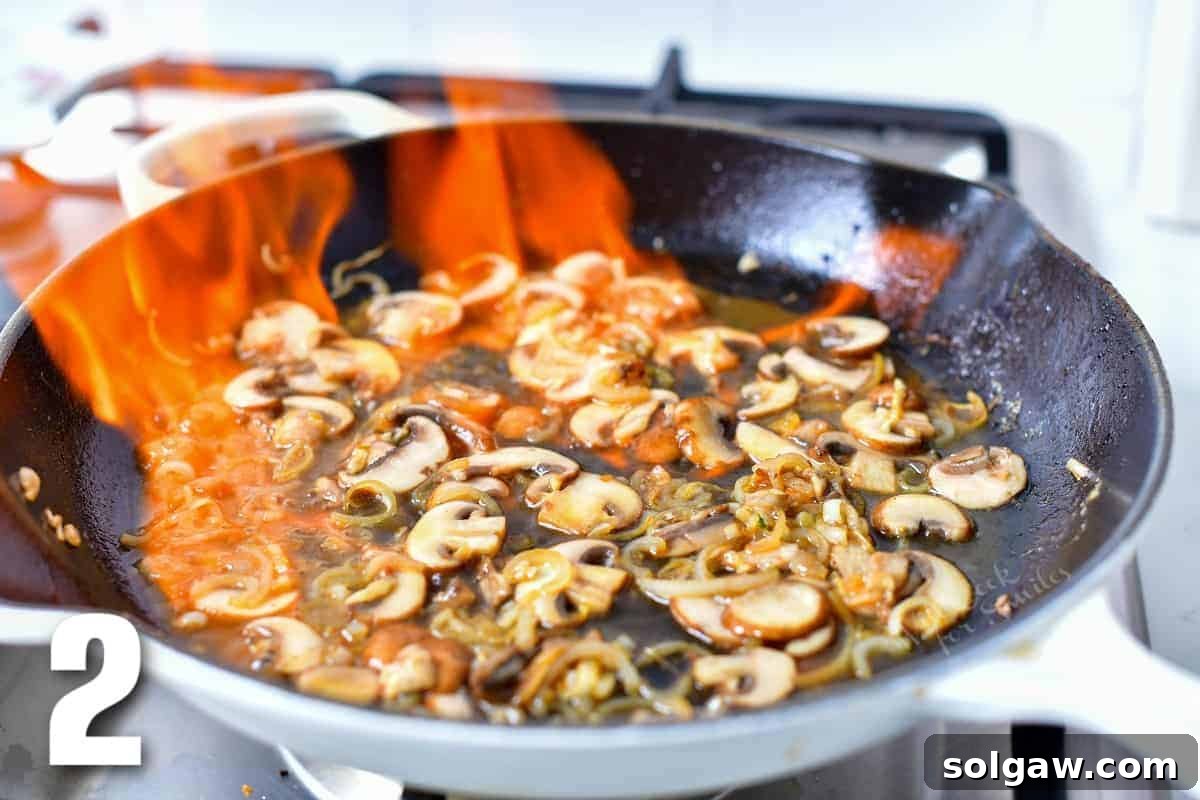
- Using a long match or a long lighter, carefully ignite the cognac. Aim the flame near the edge of the pan, just above the liquid, to catch the alcohol fumes.
- Do NOT shake, move, or swirl the pan while the flames are present. Maintain your distance and allow the fire to burn on its own. The flames will naturally subside and extinguish once the alcohol has cooked out and evaporated.
- Once the flames have completely died down, return the pan to the stove (or turn the burner back on to medium-low heat).
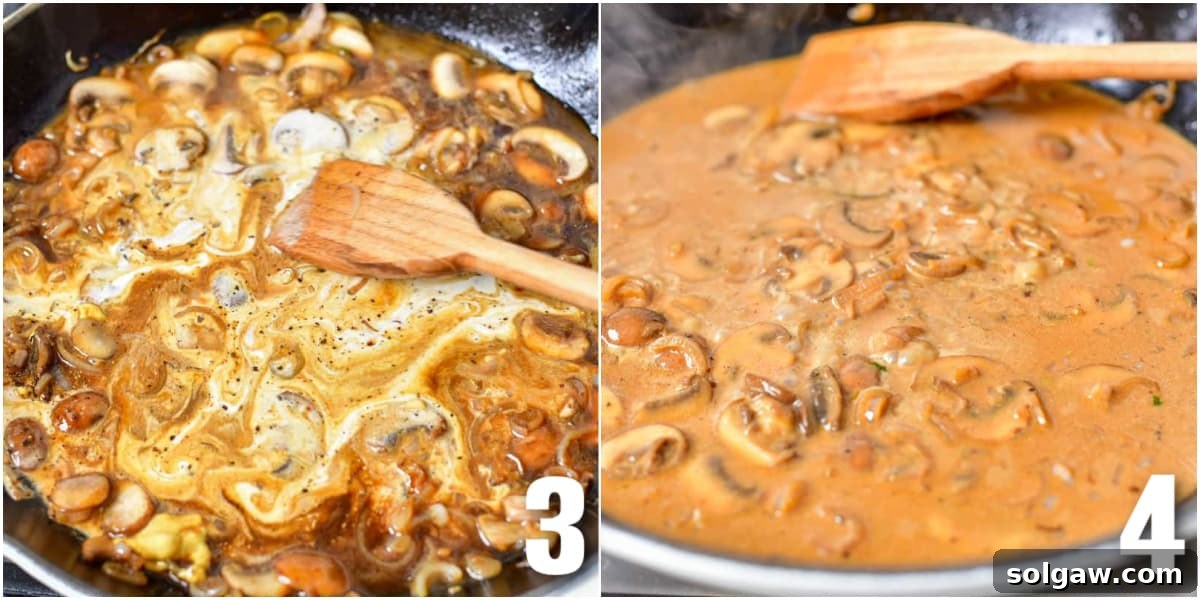
- Finish and Serve the Sauce: Into the pan, pour the reserved reduced beef stock, Dijon mustard, Worcestershire sauce, and season with salt and freshly cracked black pepper to taste. Stir well to combine all ingredients, scraping up any browned bits from the bottom of the pan to incorporate all the flavors. If any juices have accumulated from the resting steaks, add those to the sauce as well for extra richness.
- Finally, stir in the heavy whipping cream. Adjust the heat to medium-low and let the sauce gently simmer for about one to two minutes, allowing it to thicken slightly and for the flavors to meld beautifully. Do not boil vigorously. Once the sauce has reached your desired consistency, remove it from the heat immediately.
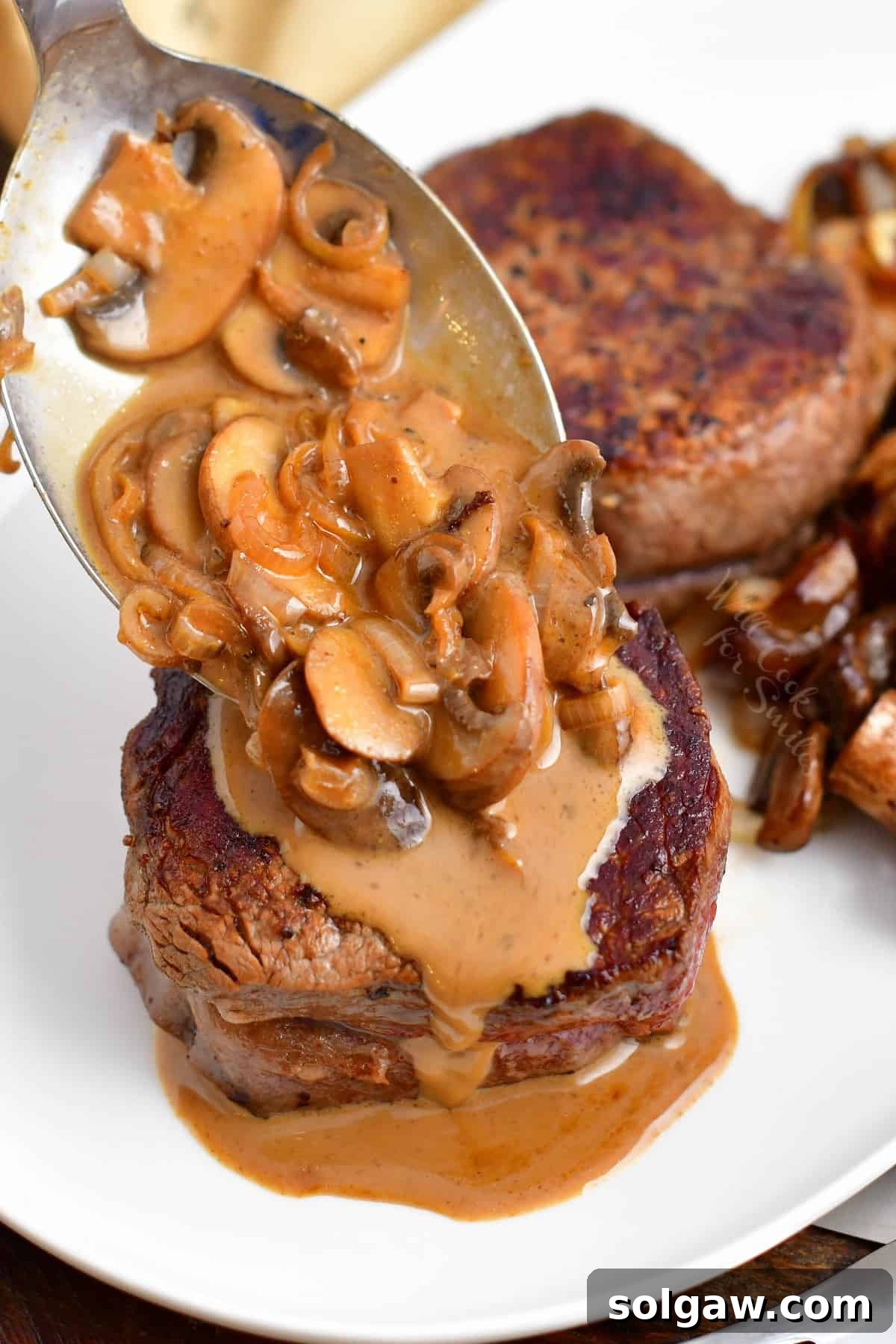
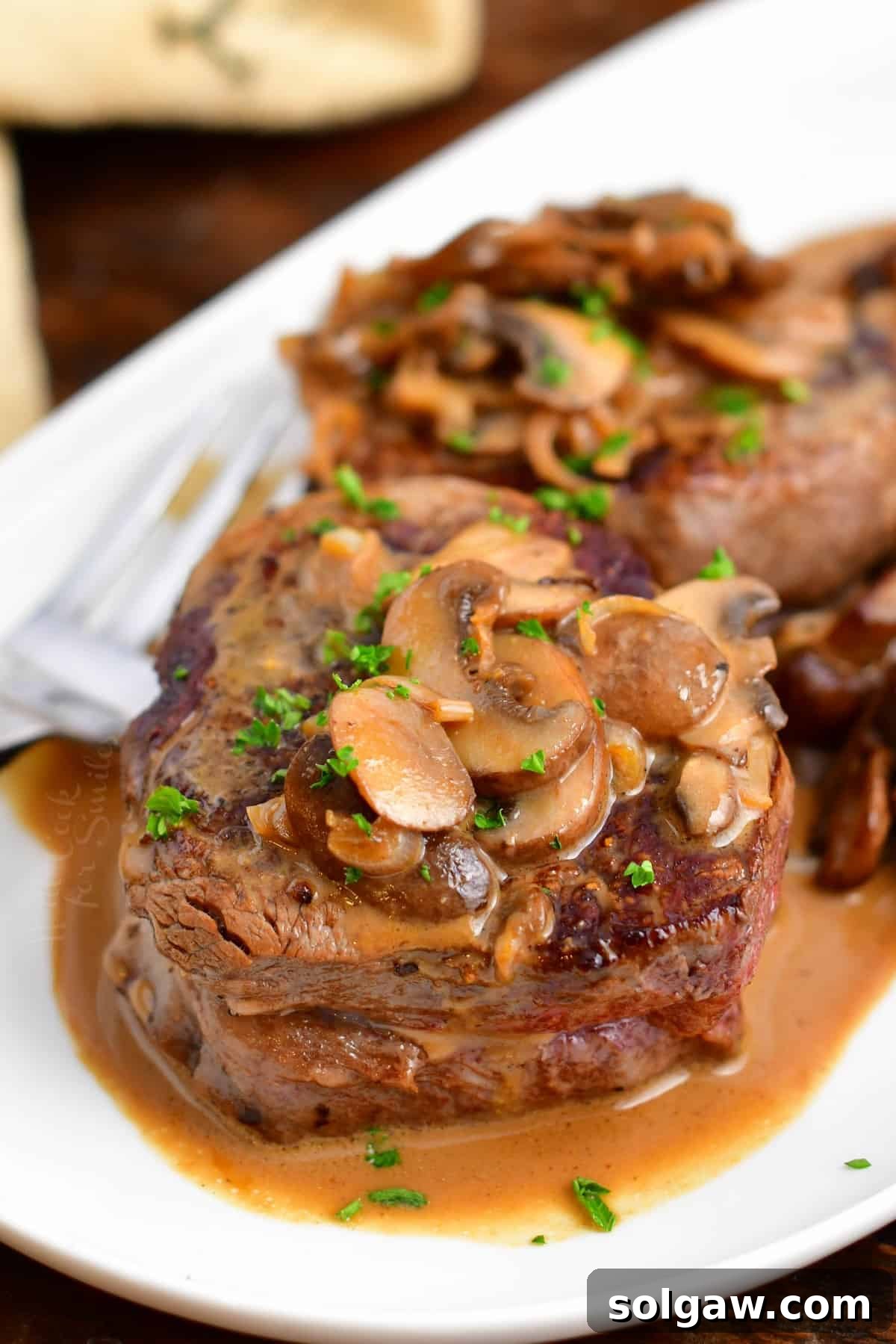
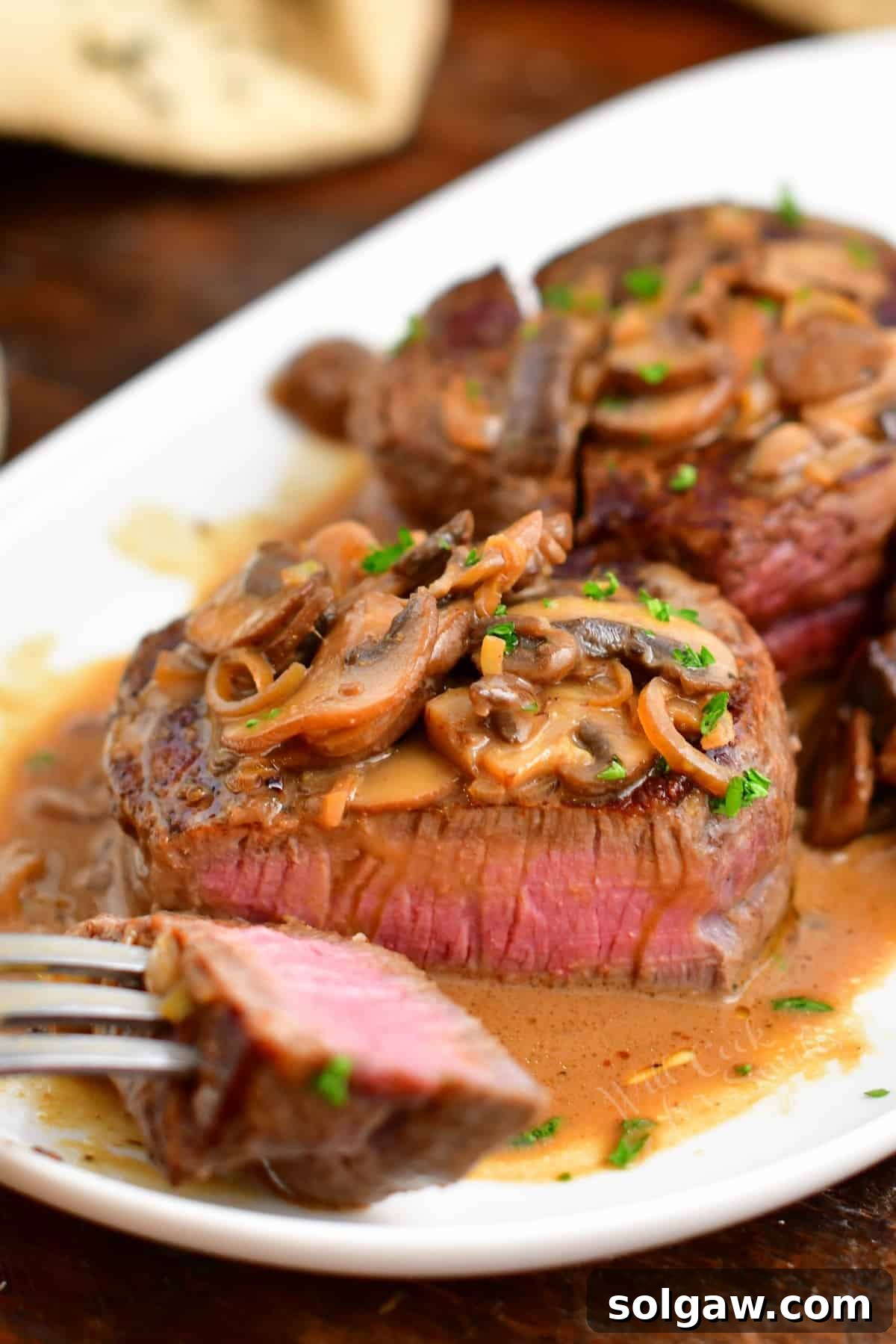
Plate your perfectly rested filet mignon steaks and generously spoon the warm, velvety Steak Diane sauce over them. Garnish with a sprinkle of fresh parsley for a touch of color and freshness. Serve immediately and enjoy!
PIN THIS RECIPE FOR LATER
DID YOU MAKE THIS RECIPE? PLEASE leave a 🌟 star rating! Let me know how you liked it by leaving the 📝 comment below or share and tag me on social media @willcookforsmiles. DON’T FORGET to subscribe to my newsletter!
Steak Diane
Steak Diane is a classic filet mignon recipe that is first pan-seared to your perfect temperature and then, topped with an amazing cream sauce. This signature sauce features shallots, mushrooms, Dijon mustard, Worcestershire sauce, reduced beef stock, cream, and finished with a cognac set ablaze!
Average Rating: 5 from 4 votes
Print Recipe |
Pin Recipe |
Watch Video
Course: Main Course | Cuisine: American | Diet: Gluten Free
Prep Time: 10 minutes | Cook Time: 20 minutes | Rest steaks before cooking: 30 minutes | Total Time: 1 hour
Servings: 4 | Calories: 692kcal
Author: Lyuba Brooke
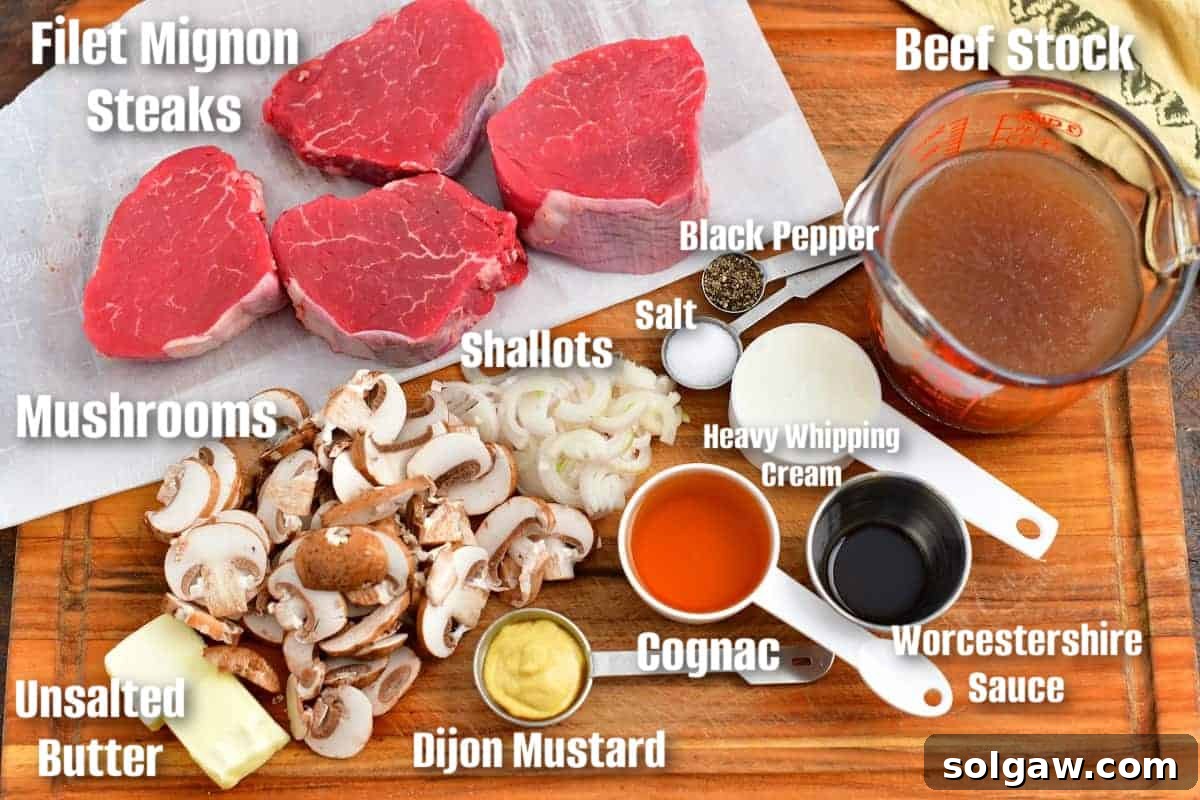
Ingredients
Filet Mignon:
- 2 tbsp canola oil
- 4 Filet Mignon steaks, about 8 oz. each (as close to the same size as possible)
- Salt
- Cracked black pepper
The Sauce:
- 1 1/2 cups beef stock (unsalted or low sodium)
- 2 tbsp unsalted butter
- 1-2 shallots (sliced thin)
- 4 oz baby bella mushrooms (sliced thin)
- 1/4 cup Cognac
- 2 tsp Dijon mustard
- 1 tbsp Worcestershire sauce
- 1/4 cup heavy whipping cream
- Salt
- Fresh cracked black pepper
- Fresh parsley (for garnish)
Instructions
- Flambé technique precautions: read precautions in the notes below first, before starting to cook.
- Pull the steaks out of the refrigerator and out of the packaging about 30 minutes before cooking to bring them to room temperature.
Reduce Beef Stock:
- Preheat a skillet over medium heat and when it’s heated through, add beef stock. Let it simmer until reduced to about 1/2 cup. This will take about 15 minutes, depending on temperature.
- Pour the reduced stock out of the pan and set aside to use in sauce.
Filet Mignon:
- Use a paper towel to pat each steak dry. Tie a string of cooking twine around each filet mignon steak. Tie it firm but not too tight where it starts to cut into meat. Trim off long sting ends.
- TIP: Make sure to season the steaks right before placing them into the hot skillet. Salt draws out moisture from food so if you salt too early, the exterior of the steak will be wet and it will hinder the beautiful sear.
- Add oil to the preheated pan, making sure the pan is hot before you add the steaks. Season steaks with salt and pepper on all sides, don’t forget to season around the edges as well, and place steaks into the pan.
- Cook steaks, flipping and touching them as little as possible, until they reach your desired temperature.
- The best temperatures to cook filet mignon to are medium-rare or medium. For medium-rare, cook it to 130°-135°F. For medium, cook to 135°-140°F and for rare, cook it to 120°-125°F.
- Take steaks out of the pan and set aside to rest while preparing the sauce.
The Sauce:
- Add butter to the same skillet and let it melt.
- Once butter is melted, add shallots and mushrooms and sauté until softened and browned. Try not to disturb them too much while sautéing so they get a nice brown.
- Take the skillet away from the heat (you can do it on the counter nearby, an unheated burner, or turn off the burner under the skillet if using a gas stove).
- Pour in cognac over the veggies and use a long lighter (or a long match) to ignite the cognac. Ignite the fumes near the edge or the pan, not the liquid itself. Don’t touch or move the pan and let the flames die down. You don’t need to put it out, the flame will go out on its own once the alcohol is burned out.
- Return the skillet to the burner (or turn the burner back on) and mix in Dijon mustard, Worcestershire, reduced beef stock, heavy whipping cream, and some salt and pepper to taste. (If there are any juices accumulated from the steaks resting, add that too!)
- Lower the heat a little below medium and let the sauce gently simmer over medium heat for about a minute or two and take off heat.
- Pour the sauce over the steaks right away and serve with some parsley as a garnish.
Video
Notes & Expert Tips
Can’t Use Alcohol? While Cognac is a quintessential component of Steak Diane, you can choose to omit it if alcohol consumption is a concern. If you skip the alcohol, simply prepare extra reduced beef stock. You can double the initial amount of beef stock (use 3 cups) and reduce it down to about 1 cup to ensure a rich, flavorful base for your sauce. Naturally, there will be no need for the flambé technique if you’re not using alcohol, simplifying the process while still yielding a delicious sauce.
Why Room Temperature Steaks Matter: Allowing your steaks to come to room temperature before cooking is a game-changer. It promotes more even cooking from edge to center and helps achieve that perfect, desirable sear without overcooking the exterior. Plan for at least 30 minutes, or even up to an hour, depending on the thickness of your steaks.
The Importance of Resting: This cannot be stressed enough. After searing, the muscle fibers of the steak tighten, trapping juices in the center. Resting allows these fibers to relax, redistributing the juices throughout the entire cut. Skipping this step means a less tender, drier steak, as all the delicious juices will run out onto your plate when sliced.
Mastering Pan Heat: A properly heated pan is crucial for a good sear. Look for a light smoke from the oil before adding the steaks. This indicates the pan is hot enough to create the Maillard reaction, responsible for that beautiful, flavorful crust.
While flambé is quite an impressive technique to show off your family and friends, make sure to follow the safety precautions like:
- Check the proof on the liquor and don’t flambé anything over 100 proof.
- Never pour the liquor out of the bottle! Always measure out what you need into a separate dish.
- Take a step back, don’t stand right over or next to the pan.
- Always, take the pan off the heat, or turn off the burner if using a gas stove.
- Use a long match or a long lighter to ignite the alcohol.
- Ignite the fumes near the edge of the pan, not the liquid itself.
- Don’t carry or touch the pan while the flames are still present.
- Don’t perform flambé next to something that is highly flammable.
- Have a metal lid close by in case you need to extinguish the flame quickly.
Nutrition Information (per serving)
Calories: 692kcal | Carbohydrates: 5g | Protein: 34g | Fat: 56g | Saturated Fat: 23g | Cholesterol: 155mg | Sodium: 341mg | Potassium: 876mg | Fiber: 1g | Sugar: 2g | Vitamin A: 396IU | Vitamin C: 1mg | Calcium: 38mg | Iron: 5mg
Tried this recipe?
Mention @willcookforsmiles or tag #willcookforsmiles!
What to Serve with Steak Diane? Perfect Pairings
Steak Diane, with its rich, savory sauce, pairs beautifully with a variety of side dishes that complement its luxurious flavors. When served at a restaurant, you’ll typically find it accompanied by some form of potatoes and fresh vegetables, offering a balanced and satisfying meal.
Potato Pairings:
Classic mashed potatoes are an exceptional choice, as their creamy texture and mild flavor provide a perfect canvas for soaking up every drop of the exquisite Diane sauce. If you prefer something with a bit more texture, consider roasted potatoes or even crispy potato gratin. For a lighter, lower-carb alternative, mashed cauliflower offers a similar creamy consistency without overwhelming the main dish.
Vegetable Companions:
A fresh, vibrant vegetable side cuts through the richness of the steak and sauce, adding balance to your plate. You can serve your favorite sautéed or roasted vegetables. Excellent choices include crisp haricots verts (French green beans), tender asparagus, delicate zucchini, or sweet balsamic-roasted carrots. A simple green salad with a light vinaigrette can also be a refreshing accompaniment.
Additional Ideas:
- Crusty Bread: Don’t forget a good loaf of crusty bread to mop up any remaining sauce – it’s too delicious to leave behind!
- Wine Pairing: A medium-bodied red wine, such as a Pinot Noir, Merlot, or a lighter Cabernet Sauvignon, would complement the richness of the beef and cognac sauce beautifully.
More Elegant Dinner Recipes for Special Occasions
If you’ve enjoyed the refined simplicity of Steak Diane, you’ll be delighted to discover many other seemingly fancy dishes that are surprisingly easy to make at home. These recipes are perfect for impressing guests or simply treating yourself to a special meal without the fuss.
Beef and Poultry Classics:
Dishes like hearty coq au vin, rich beef bourguignon, and even elegant lamb chops might sound daunting, but they are incredibly rewarding and straightforward to prepare. For a more rustic yet equally flavorful steak experience, try my recipe for steaks with mushrooms and onions, a comforting classic that’s always a hit.
Exquisite Seafood Options:
If your palate leans towards seafood, there are plenty of impressive options that are quick and easy. Explore my recipes for delicate Salmon Florentine, luxurious Lobster Tails, or perfectly flaky Crispy Skin Salmon. Each offers a gourmet experience with minimal effort, proving that special occasion dinners don’t have to be complicated.
These recipes are designed to bring the joy of cooking and fine dining into your home, ensuring that every meal can feel like a celebration.
This recipe was originally published on Will Cook For Smiles on March 24, 2012, and has since been updated to provide even more detail and tips for your culinary success.