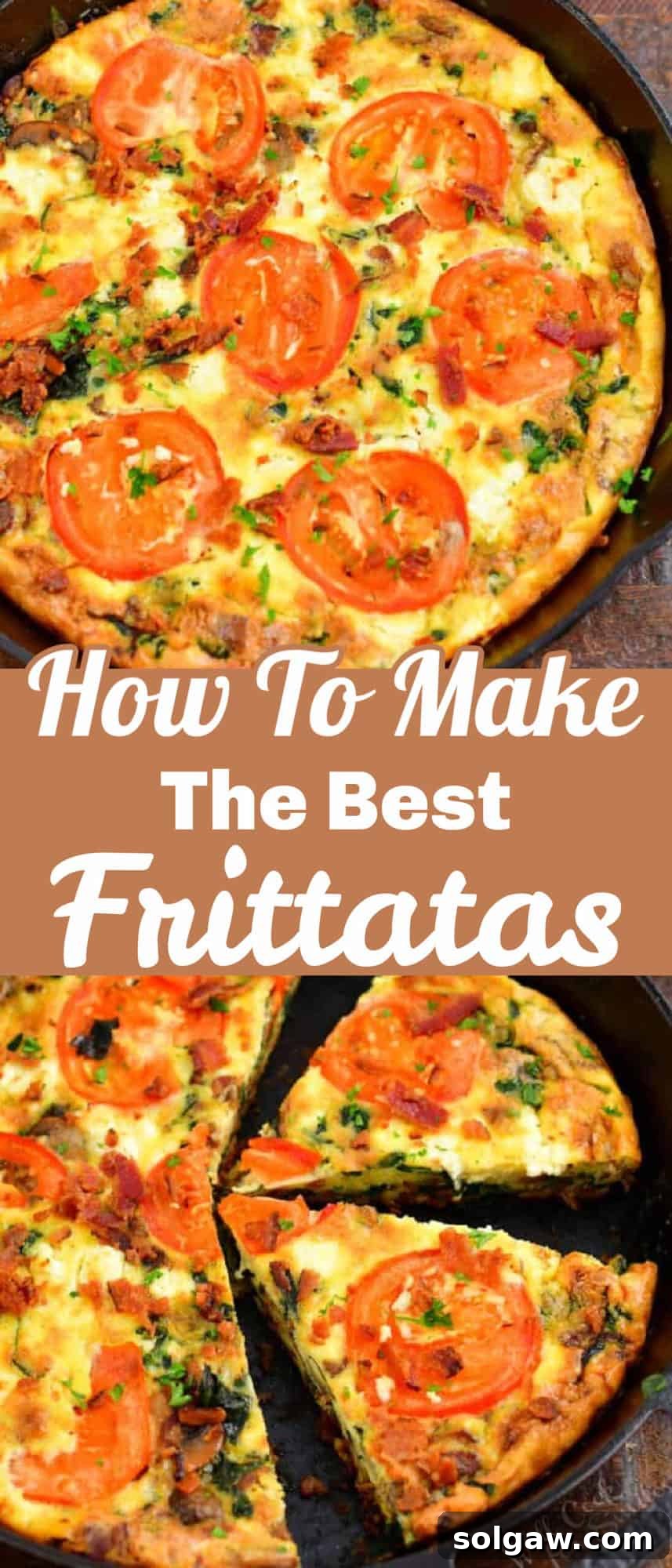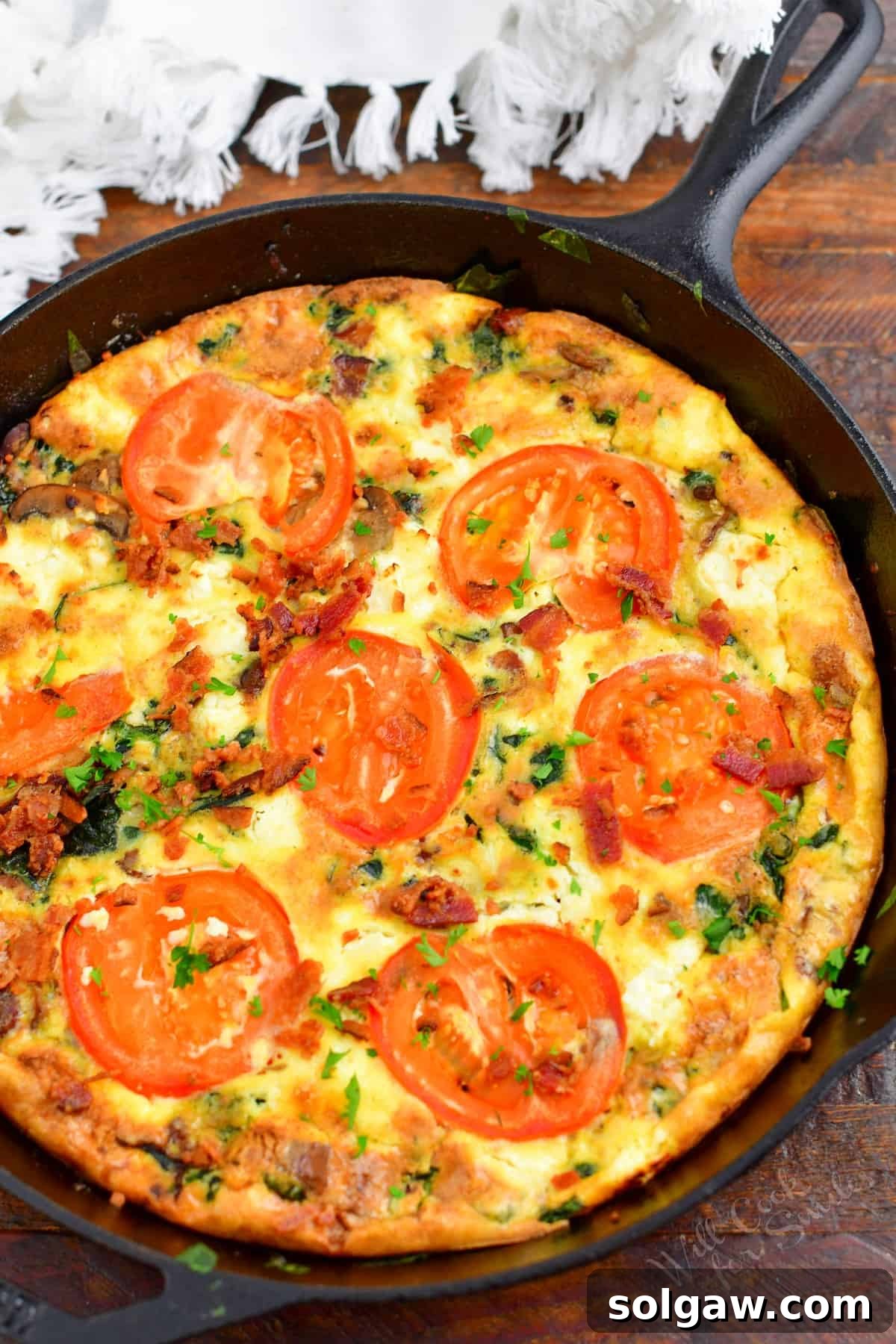
Embark on a culinary journey with the classic Frittata, a versatile Italian egg dish renowned for its soft, silky, and creamy texture. Brimming with your favorite meats, cheeses, and garden-fresh vegetables, this completely customizable masterpiece is the epitome of a perfect breakfast or brunch. Whether you’re a seasoned chef or a kitchen novice, this straightforward recipe allows you to effortlessly add or remove ingredients, tailoring it precisely to your palate. Best of all, this delightful entrée graces your table in a mere 30 minutes, making it an ideal choice for busy mornings or relaxed weekend gatherings.
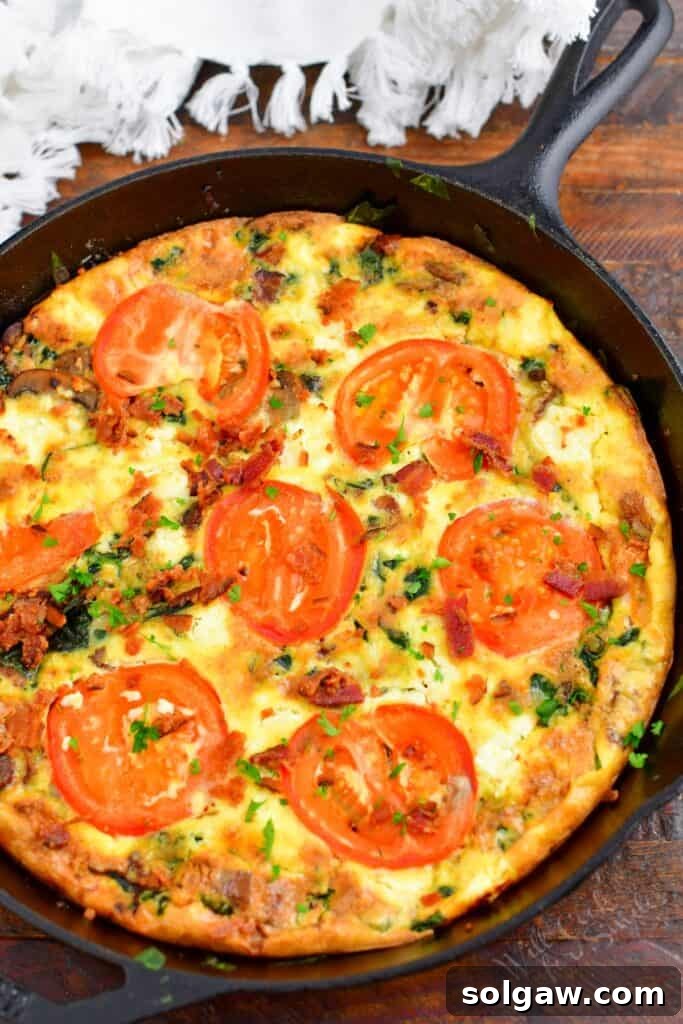
Why Frittata is Your Next Go-To Breakfast
Are you searching for a delectable and efficient way to transform various ingredients, from leftover veggies to holiday remnants, into a wholesome meal? Look no further! This easy-to-make frittata recipe is your ultimate solution for utilizing those beloved leftovers you simply can’t bear to discard. Frittatas are celebrated for being incredibly simple, satisfyingly filling, and remarkably adaptable breakfast dishes. They shine on lazy weekend mornings with family, impress at brunch parties with friends, and can even be transformed into convenient, grab-and-go frittata muffins!
While omelets and quiches hold a special place in my heart, frittatas undeniably stand out as my preferred egg-based breakfast entrée. Perhaps it’s the irresistible golden-brown crust that forms a perfect counterpoint to the interior, or maybe it’s the sheer decadence and silkiness imparted to the eggs by a generous splash of heavy cream. Whatever the secret, every time I prepare a frittata for a brunch gathering or a special occasion like Christmas morning, friends and family inevitably gravitate back to the kitchen, eager for a second helping. It’s a guaranteed crowd-pleaser that never disappoints.
This light and fluffy Italian breakfast staple is wonderfully simple to prepare and consistently delivers satisfaction, yet it’s important to acknowledge that there’s a right way and a wrong way to make it. I’ve encountered many frittatas that were either too dense, lacking that desired airy consistency, or entirely bland due to a sparse selection of ingredients. However, by adhering to my straightforward steps and incorporating a vibrant array of your favorite bold ingredients, you are sure to be delighted with a truly delicious and perfectly textured final result.
The Frittata Unveiled: Understanding This Italian Classic
A frittata is an exquisite Italian egg dish, its name derived from the Italian word “fritto,” meaning “fried.” In terms of texture and preparation, a frittata gracefully bridges the gap between a delicate omelet and a hearty, crustless quiche. It presents a more prominent egg flavor than a quiche, yet boasts a significantly creamier and fluffier consistency than a typical omelet. While these three egg dishes share common ground, several distinct characteristics set the frittata apart, making it truly unique.
- Ingredient Volume: Frittatas typically incorporate a greater quantity of eggs compared to an omelet, and are renowned for featuring a much more substantial and diverse array of mixed-in ingredients, spread throughout the dish rather than folded inside.
- The Role of Cream: Unlike omelets, which often use just a splash of water or milk, the secret to a frittata’s signature silky and creamy texture lies in adding a generous amount of heavy cream to the egg mixture. This enriches the flavor and contributes to its luxurious mouthfeel.
- Whisking Technique: To achieve its characteristic light and fluffy texture, the eggs for a frittata are vigorously beaten with a whisk. This crucial step incorporates ample air into the mixture, ensuring a delicate and airy crumb that distinguishes it from denser egg preparations.
- Ingredient Distribution: While omelets are traditionally folded in half or on both sides to encase the filling, in a frittata, the whisked egg mixture is poured directly over the cooked fillings, allowing the ingredients to be evenly distributed and integrated throughout the entire dish.
- Signature Finish: One of the most defining and appealing aspects of a frittata is its beautifully golden, slightly crusty top and bottom. This coveted finish is achieved by partially cooking the frittata on the stovetop and then transferring it to the oven to bake, concluding with a brief stint under the broiler to attain that perfect, appetizing golden hue.
Mastering Your Frittata: Essential Ingredient Notes
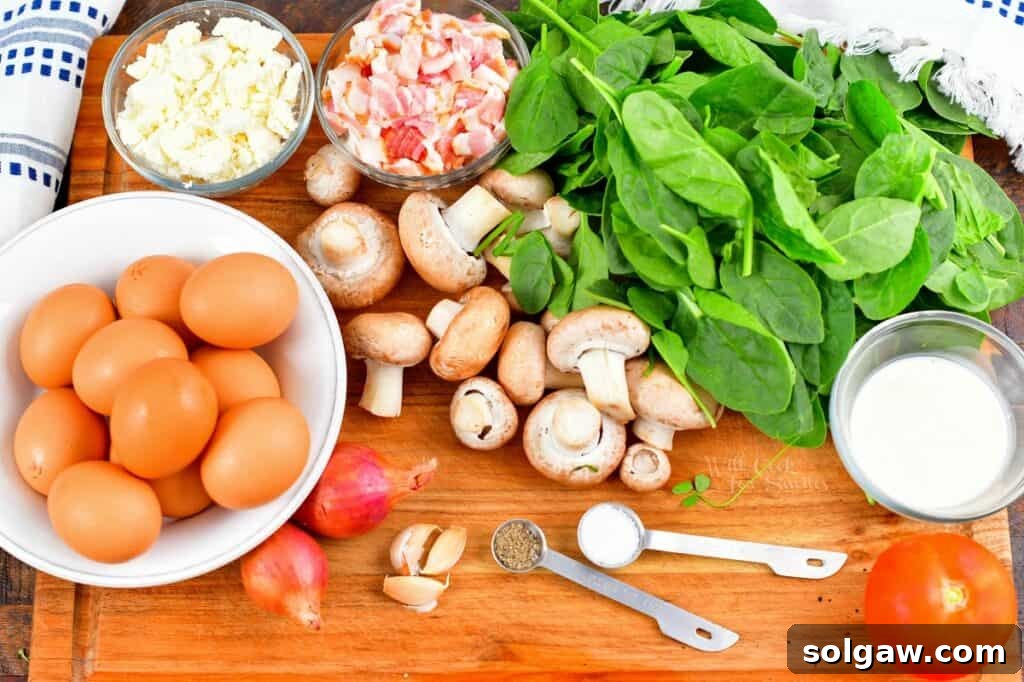
Remember, the frittata is a wonderfully customizable dish, truly limited only by your imagination! Beyond the foundational ingredient of creamy eggs (a perfect blend of fresh eggs and rich heavy whipping cream), you are encouraged to craft your own unique and favorite mix-in combinations. The most common and beloved additions typically fall into categories of vegetables, meats, cheeses, and potatoes, offering endless possibilities for flavor profiles.
- Vibrant Vegetables: The choice is vast! Consider adding chopped broccoli florets, fresh spinach, sliced mushrooms, diced onions, shredded carrots, juicy cherry tomatoes, colorful bell peppers, tender zucchini, or virtually any other vegetable you adore. For a burst of freshness, try incorporating herbs like parsley, chives, or basil.
- Hearty Meats: Elevate your frittata with savory meats such as crispy bacon bits, flavorful breakfast sausage, diced ham, thinly sliced prosciutto, shredded cooked chicken, or even leftover roasted turkey. Ensure any meat used is fully cooked and chopped into bite-sized pieces.
- Satisfying Potatoes: For added substance and texture, incorporate cooked shredded or diced hash browns, or classic Home Fries. These add a delightful starchiness that makes the frittata even more filling.
- Creamy Cheeses: Select cheeses that beautifully complement your other ingredients. Popular choices include milky mozzarella, tangy feta, nutty Gouda, sharp Gruyere, and classic cheddar. Don’t hesitate to experiment with smoked cheeses or a blend of several types for complex flavors.
Crucial Tip: Always ensure that your chosen vegetables, meats, and potatoes are fully cooked and, where necessary, excess moisture has been removed *before* adding them to the frittata mixture. This prevents a watery or undercooked final product. If you’re new to making frittatas, I highly recommend starting with the ingredients listed in the recipe below for a perfectly balanced, flavorful, yet straightforward introduction to this fantastic dish.
Step-by-Step Guide: Crafting the Perfect Frittata
Creating a perfect frittata is a straightforward process when you follow these clear steps. Begin by preheating your oven to 350°F (175°C) and adjusting the oven rack so it’s positioned approximately 6-8 inches away from the broiler element. Next, prepare your cast iron skillet or any other oven-safe pan, ensuring it’s ready for the culinary magic to unfold.
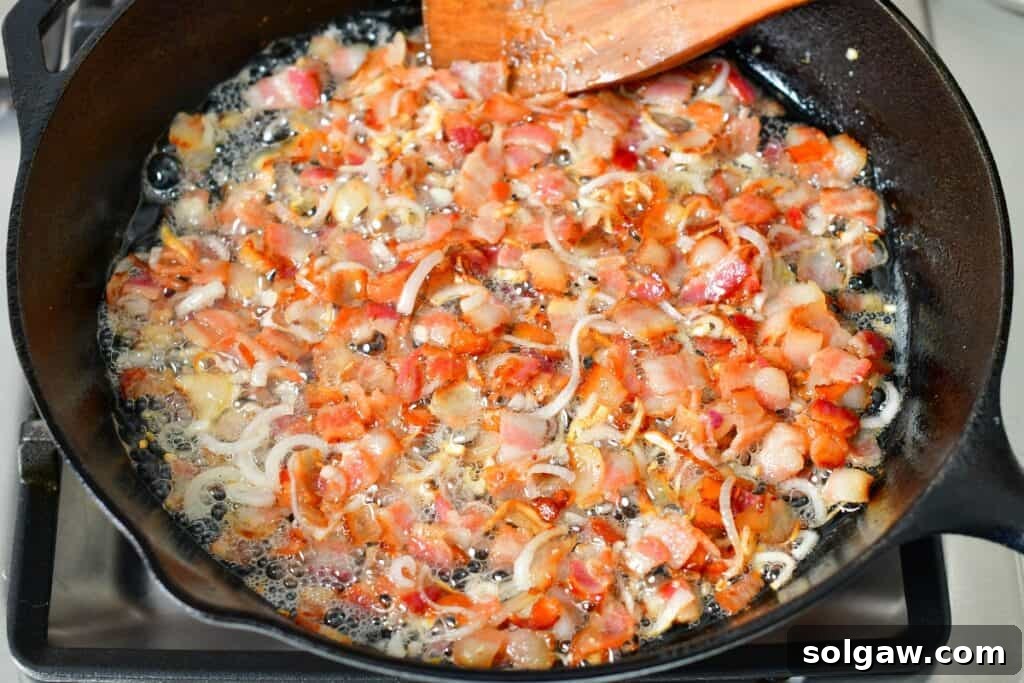
Heat your skillet over medium heat. Add the diced bacon and cook it until it’s beautifully crispy and most of its fat has rendered out. This rendered fat will be used to sauté the other ingredients, imparting a wonderful flavor.
Once the bacon is cooked, add the diced onion to the skillet. Sauté the onion, stirring occasionally, until it becomes translucent and starts to achieve a lovely golden-brown color. Carefully drain most of the excess bacon fat from the pan, leaving just a thin layer for flavor. Push the cooked bacon and onion to one side of the skillet, then add the minced garlic to the cleared center. Sauté the garlic for about 30 seconds, or until it releases its aromatic fragrance, being careful not to burn it. Once fragrant, mix the garlic with the bacon and onion.
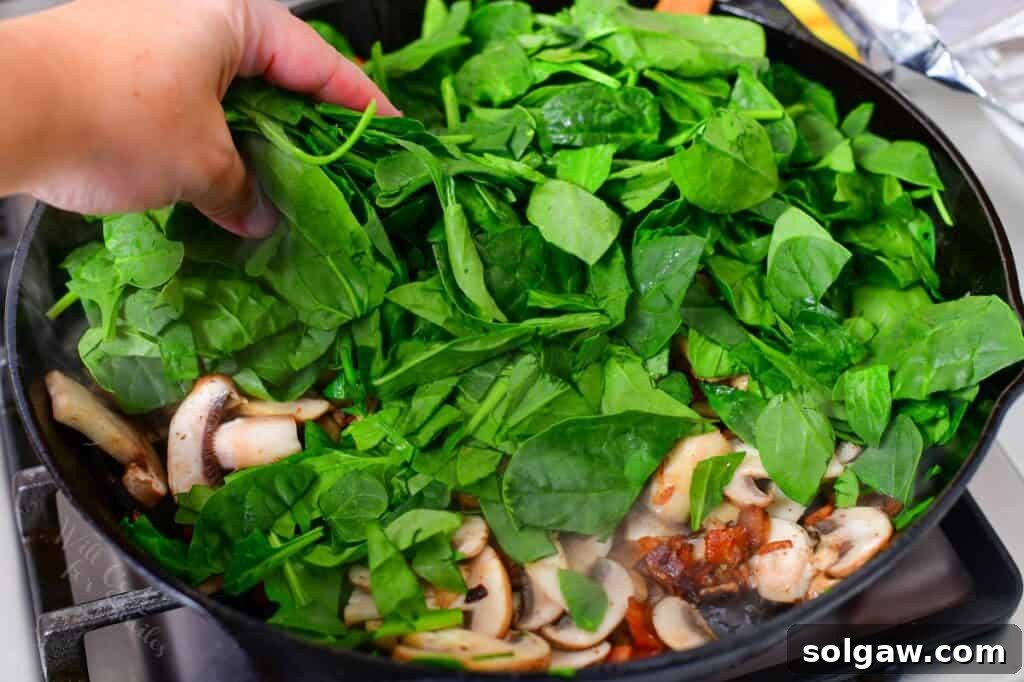
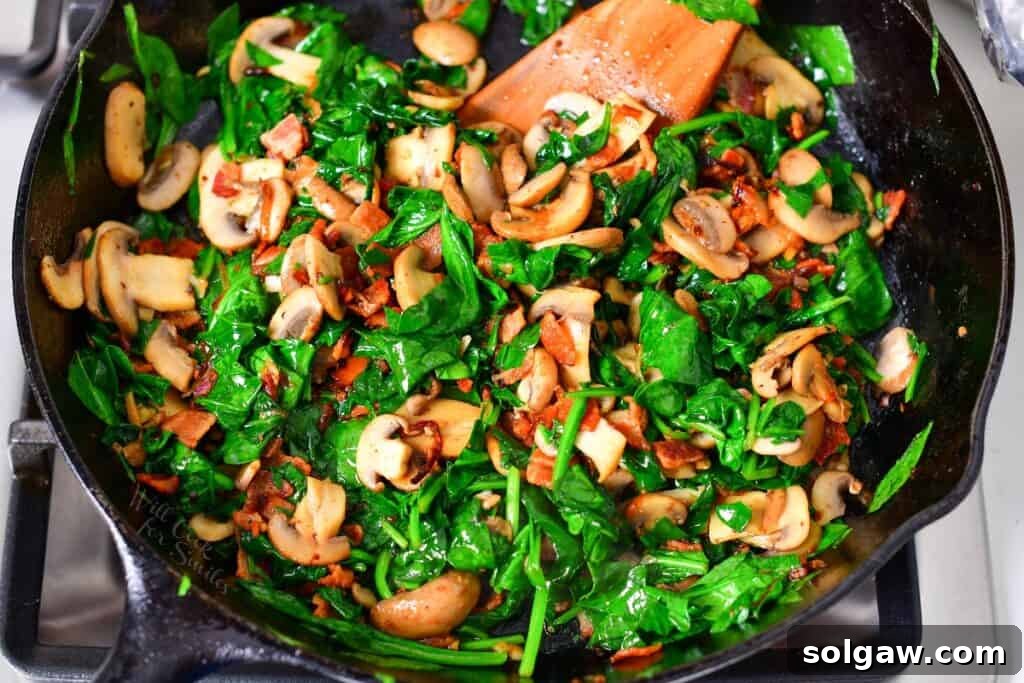
Add the sliced mushrooms and fresh spinach to the skillet. Continue cooking, stirring frequently, until the mushrooms are tender and the spinach has completely wilted down. This step is crucial for removing excess moisture. Once cooked, strain off any remaining liquids from the pan to prevent a watery frittata. Ensure your filling is relatively dry.
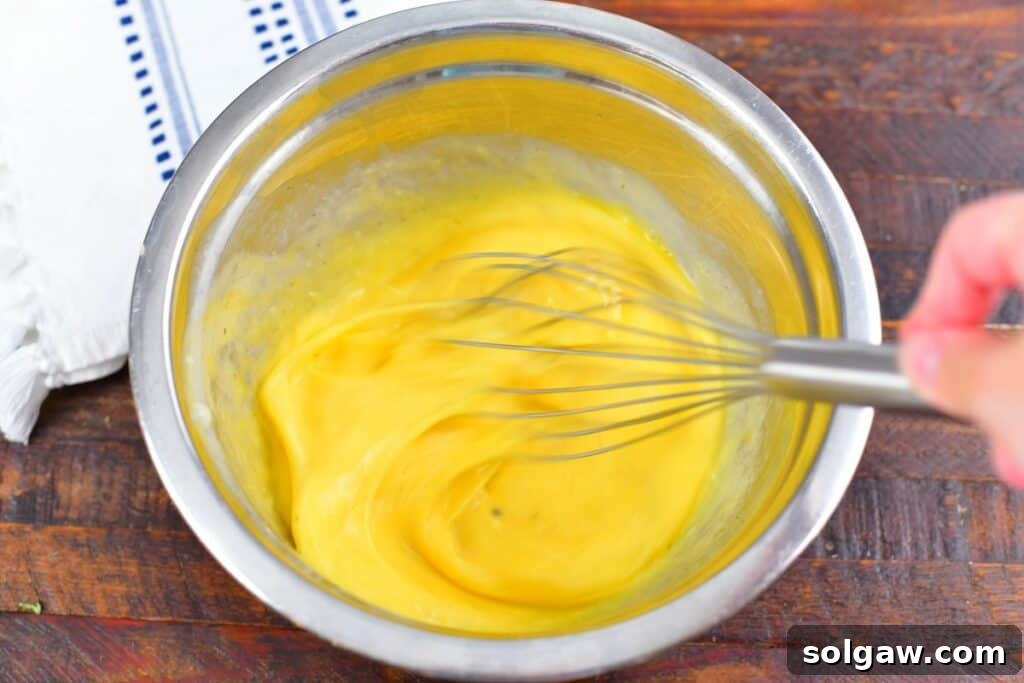
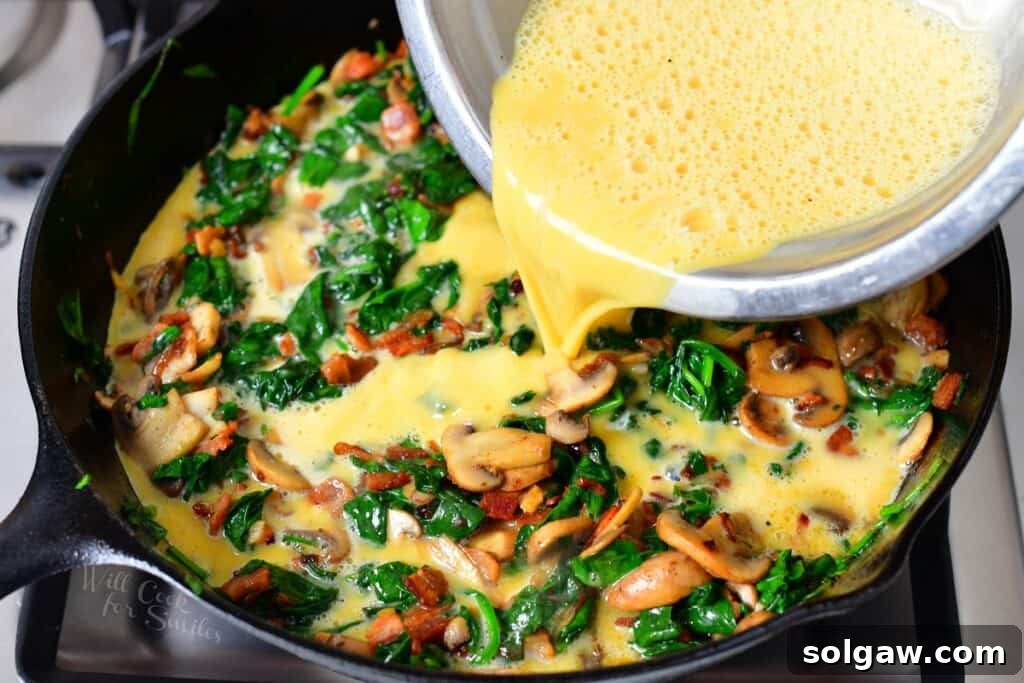
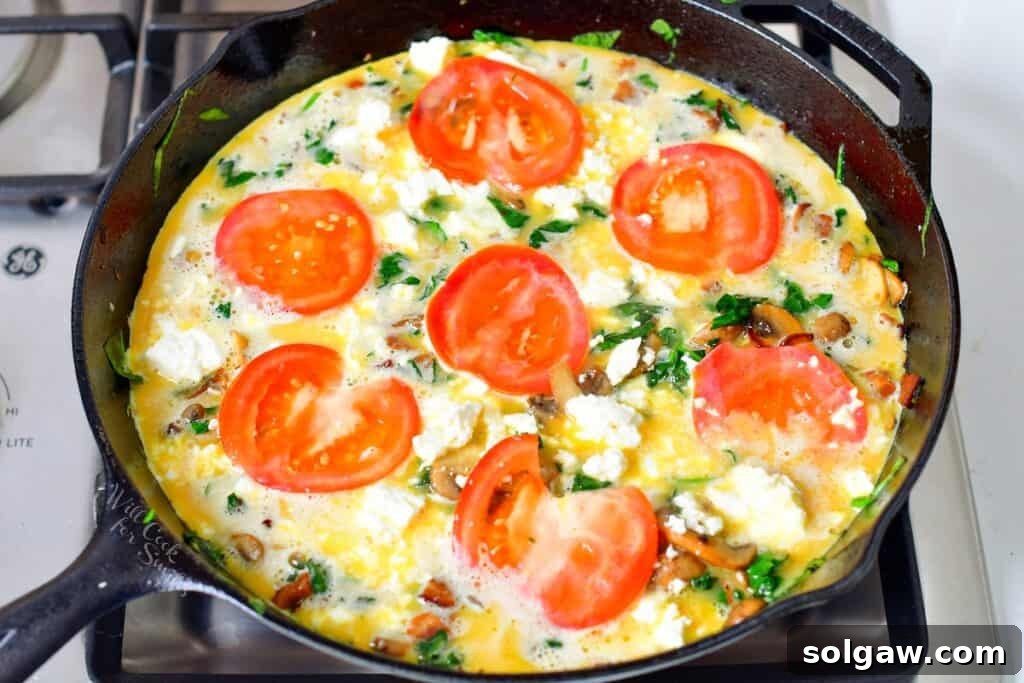
In a separate, medium-sized bowl, vigorously whisk together the eggs, heavy whipping cream, a pinch of salt, and a dash of black pepper. Whisk for at least 30-45 seconds until the mixture is light, frothy, and uniformly combined. This aeration contributes significantly to the frittata’s fluffy texture.
Pour the prepared egg mixture evenly over the cooked ingredients in the pan. Gently shake the pan or lightly stir with a spatula to ensure that all the delicious filling ingredients are well-distributed throughout the egg mixture. Continue cooking on the stovetop over medium heat for an additional 1-2 minutes, allowing the edges to begin setting. Then, carefully transfer the entire oven-safe pan to the preheated oven.
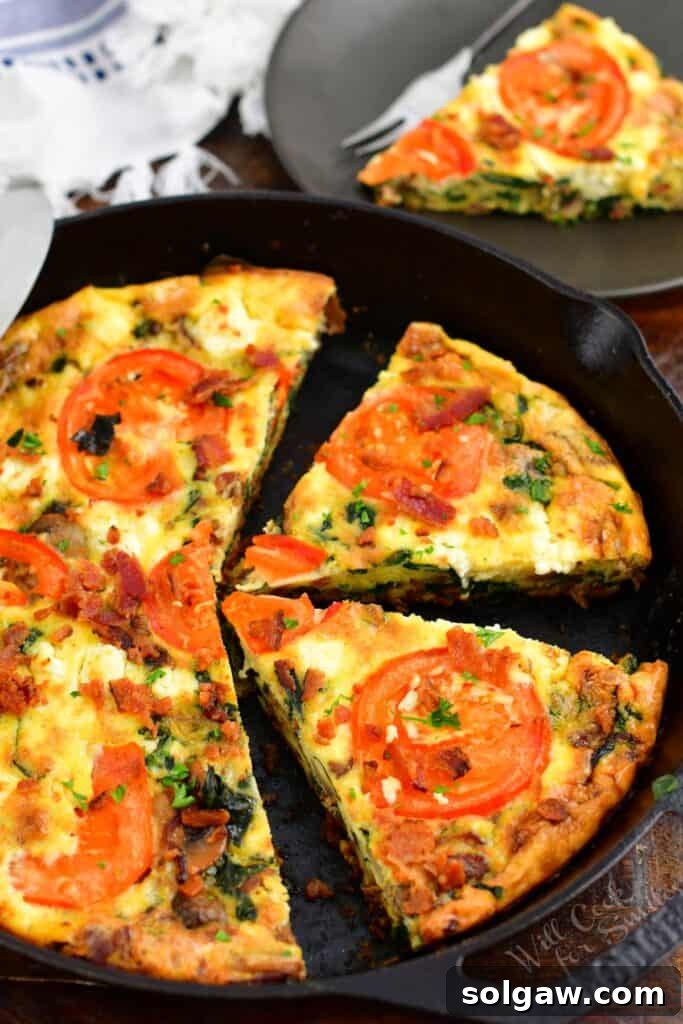
Bake in the oven for approximately 6-8 minutes, or until the frittata is mostly set but still slightly jiggly in the center. To achieve that coveted golden-brown top, turn on your broiler and carefully watch the frittata. Broil for 1-3 minutes, ensuring it develops a beautiful golden crust without burning. Keep a close eye on it, as broilers can brown food very quickly!

Tips for Frittata Success & Troubleshooting
Achieving a consistently perfect frittata involves a few key considerations and knowing how to troubleshoot common issues. Here are some extra tips to ensure your frittata is always a culinary triumph:
- Pan Choice Matters: A well-seasoned cast iron skillet (10-inch is ideal for this recipe) is highly recommended for its even heat distribution and ability to go from stovetop to oven seamlessly. If you don’t have one, any oven-safe, non-stick skillet will work, but you might need to adjust cooking times slightly.
- Preventing a Watery Frittata: Overly moist vegetables can release liquid during cooking, making your frittata watery. Always sauté vegetables thoroughly and drain any excess liquid before adding the egg mixture. This is especially true for spinach, mushrooms, and tomatoes.
- Avoiding Rubbery Eggs: The key to a soft, silky frittata is to avoid overcooking. Eggs become rubbery when cooked at too high a temperature or for too long. Monitor your frittata closely, especially under the broiler. The center should be just set, not dry.
- Even Heat Distribution: Starting the frittata on the stovetop helps set the bottom evenly, preventing a soggy base, while finishing in the oven ensures the entire dish cooks through gently and uniformly.
- Doneness Check: A frittata is done when the edges are set and golden, and the center is firm to the touch but still yields slightly. A knife inserted into the center should come out clean.
- Rest Before Serving: Like many baked dishes, letting the frittata rest for 5-10 minutes after removing it from the oven allows it to set further and makes for cleaner slices.
- Flavor Boosters: Don’t shy away from fresh herbs! Chopped parsley, chives, dill, or basil can be mixed into the egg mixture or sprinkled on top after cooking for a burst of fresh flavor. A pinch of nutmeg can also enhance the richness of egg dishes.
Frequently Asked Questions About Frittata
Absolutely! While the golden, broiled top is a delightful signature of a frittata, it’s not strictly necessary. If you don’t have oven access or prefer stovetop cooking, you can finish your frittata by covering the pan with a lid for the latter half of the cooking time. This traps heat and helps the top set evenly. Keep the heat low to avoid burning the bottom. Alternatively, you could attempt to flip the frittata using a plate, but this can be quite challenging and messy, so the lid method is generally recommended for ease.
It’s incredibly simple to adapt this pie-sized frittata recipe into convenient, individual breakfast muffins! To do so, first preheat your oven to 375°F (190°C) and prepare a muffin pan by generously coating it with cooking spray or lining it with paper liners. Pour the prepared frittata mixture evenly into the muffin tins, filling each cup about two-thirds full. Bake for approximately 12-15 minutes, or until the muffins are puffed, golden, and set in the center. This creates perfect portion-controlled frittatas, ideal for meal prep or quick breakfasts.
Yes, frittatas are excellent for meal prep! You can cook the entire frittata a day or two in advance and store it in the refrigerator. Simply reheat individual slices in the microwave or a warm oven until heated through. Alternatively, you can prepare all the filling ingredients (cook bacon, sauté vegetables) ahead of time and store them separately. When ready to cook, just whisk the eggs, combine with the pre-cooked fillings, and proceed with the baking instructions.
Leftover frittata should be stored in an airtight container in the refrigerator for up to 3-4 days. For longer storage, individual slices can be wrapped tightly and frozen for up to 1-2 months. Thaw in the refrigerator overnight and reheat as desired.
More Delicious Breakfast & Brunch Inspirations
Breakfast Burritos – Our ultimate breakfast burritos are packed with all the fixings: cheesy scrambled eggs, perfectly crispy bacon, savory breakfast sausage, sweet sautéed onions and peppers, and fluffy hash browns, all wrapped in a warm tortilla for a truly satisfying start to your day.
Spinach Artichoke Crustless Quiche – Indulge in this delightful crustless quiche, featuring a rich blend of fresh spinach, tender artichoke hearts, and an abundance of melted, savory cheese, making it a light yet incredibly flavorful option.
Eggs Benedict with Easy Homemade Hollandaise Sauce – Experience the classic elegance of Eggs Benedict, featuring perfectly soft, poached eggs nestled atop warm Canadian bacon and toasted English muffins, all generously crowned with an incredibly easy-to-make, creamy homemade Hollandaise sauce.
Shakshuka – Discover this wonderful one-dish breakfast recipe where eggs are gently poached in a vibrant, chunky tomato and vegetable sauce. Expertly seasoned with the perfect blend of cumin, paprika, and a hint of red pepper flakes, it offers a flavorful and comforting meal.
PIN THIS RECIPE FOR LATER
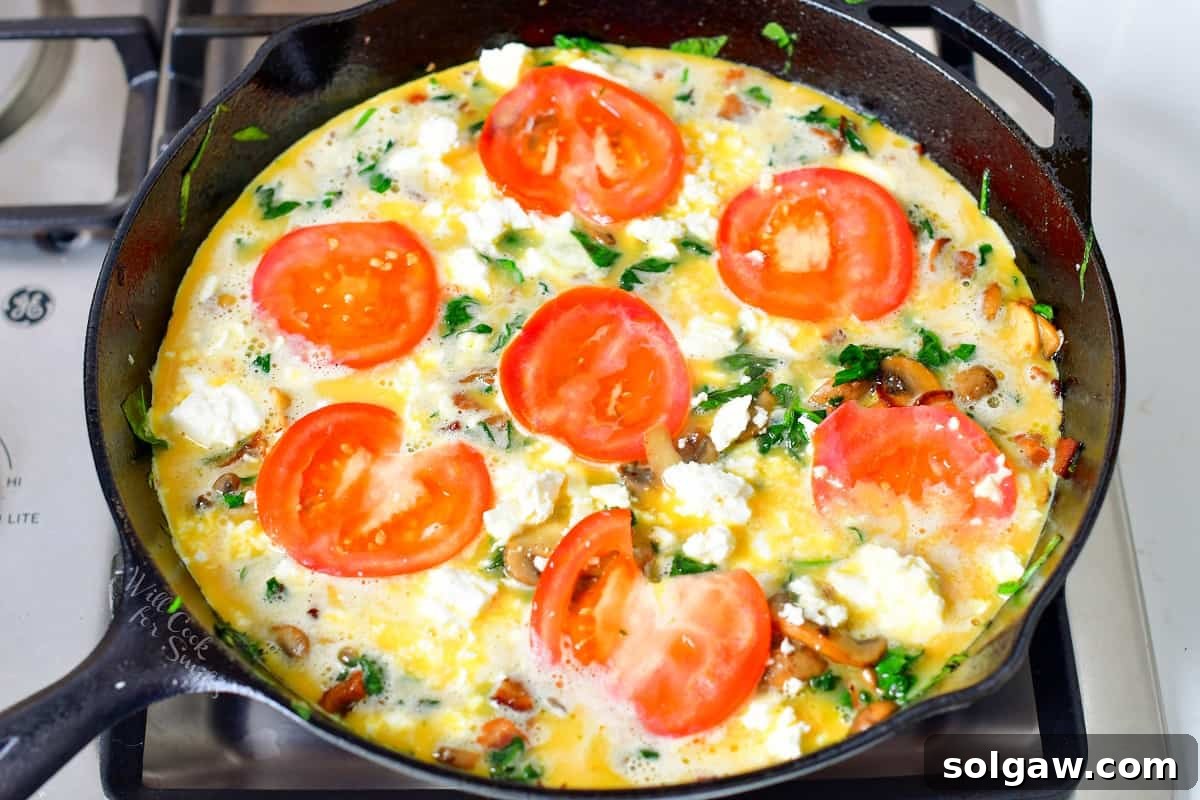
Frittata (Bacon, Spinach, Mushroom, and Feta Frittata)
Frittata is a great breakfast egg dish that’s soft, silky, creamy, and loaded with meats, cheese, and vegetables that you love.
Course: Breakfast
Cuisine: American, Italian
Prep Time: 10 minutes
Cook Time: 20 minutes
Total Time: 30 minutes
Servings: 6
Calories: 360 kcal
Author: Lyuba Brooke
Print Recipe |
Pin Recipe
Ingredients
- 10 large eggs
- 1/3 cup heavy whipping cream
- Salt
- Black pepper
- 1/2 lb bacon, diced
- 1/2 onion, diced
- 3 garlic cloves, minced
- 4-6 oz mushrooms, sliced
- 5 oz spinach, chopped
- 1-2 tomatoes, sliced
- 1/2 cup feta cheese, crumbled
Instructions
- Preheat the oven to 350°F (175°C) and set the oven rack 6-8 inches away from the broiler.
- Use a 10-inch cast iron skillet that is well seasoned to prepare the frittata. If a cast iron skillet is not available, ensure you use a pan that is oven-safe.
- Preheat the skillet over medium heat and add diced bacon. Cook until most of the fat is rendered and the bacon is crispy.
- Add diced onion and sauté until it starts to brown. Drain off most of the excess bacon fat, leaving just a little for flavor. Move bacon and onion aside and add minced garlic to the center of the skillet. Sauté just until fragrant (about 30 seconds) and then mix together with the bacon and onion.
- Add mushrooms and spinach to the skillet and cook until the spinach has completely wilted and the mushrooms are tender. Strain off any excess liquids from the pan to prevent a watery frittata.
- In a separate bowl, vigorously whisk eggs, heavy whipping cream, salt, and pepper together for about 30-45 seconds, until light and frothy.
- Pour the whisked egg mixture evenly all over the cooked filling ingredients in the pan. Ensure that the filling ingredients are distributed evenly throughout the frittata.
- Let the frittata cook over medium heat on the stovetop for 1-2 minutes, allowing the edges to begin to set. Then, carefully transfer the pan into the preheated oven. Bake for another 6-8 minutes, or until the frittata is mostly set.
- Turn on the broiler and let the top of the frittata get beautifully golden brown. Make sure to watch the oven closely during this step so the top doesn’t burn.
Notes
If you have a smaller cast iron skillet, like an 8-inch one, use 8 large eggs and 1/4 cup of heavy whipping cream. Cook until the edges are completely set and the desired doneness is reached in the center.
Nutrition
Calories: 360kcal | Carbohydrates: 6g | Protein: 18g | Fat: 30g | Saturated Fat: 12g | Polyunsaturated Fat: 4g | Monounsaturated Fat: 11g | Trans Fat: 1g | Cholesterol: 327mg | Sodium: 520mg | Potassium: 454mg | Fiber: 1g | Sugar: 2g | Vitamin A: 3043IU | Vitamin C: 11mg | Calcium: 144mg | Iron: 2mg
Tried this recipe? Mention @willcookforsmiles or tag #willcookforsmiles!