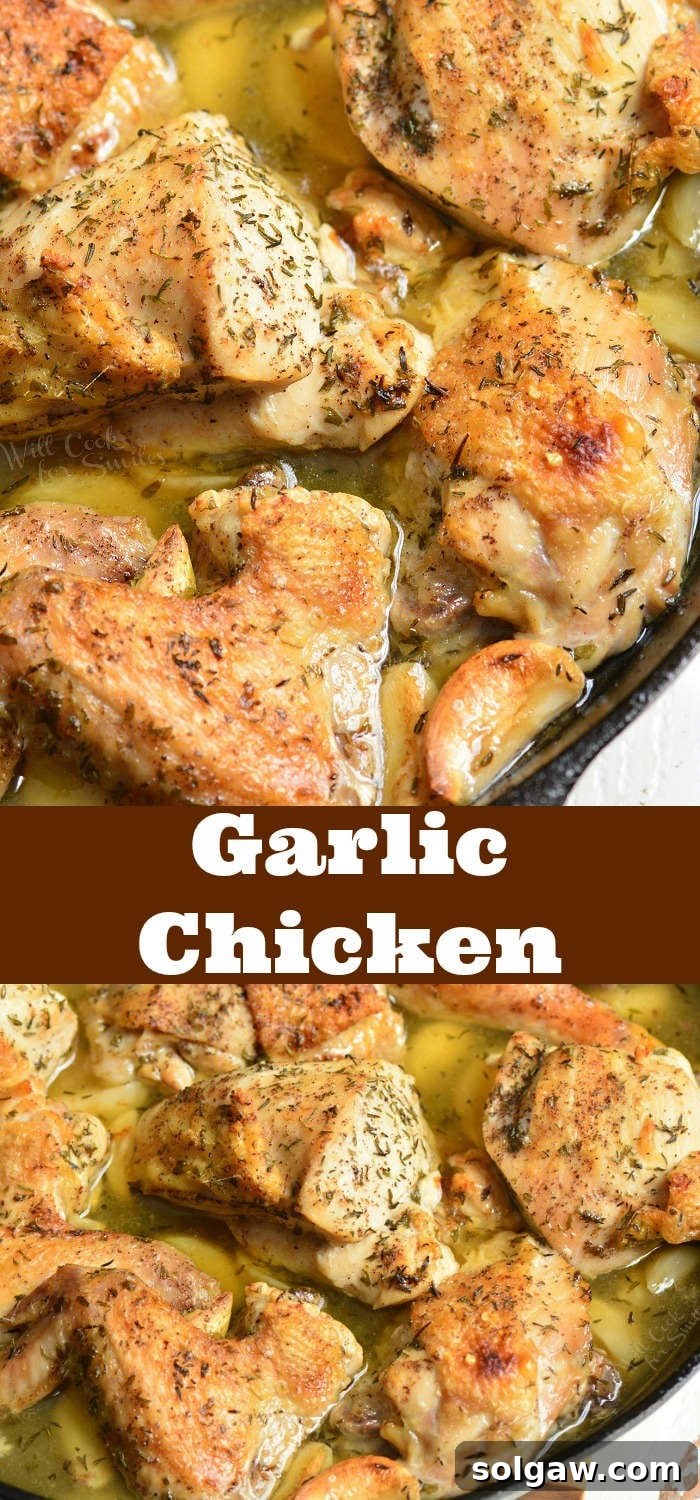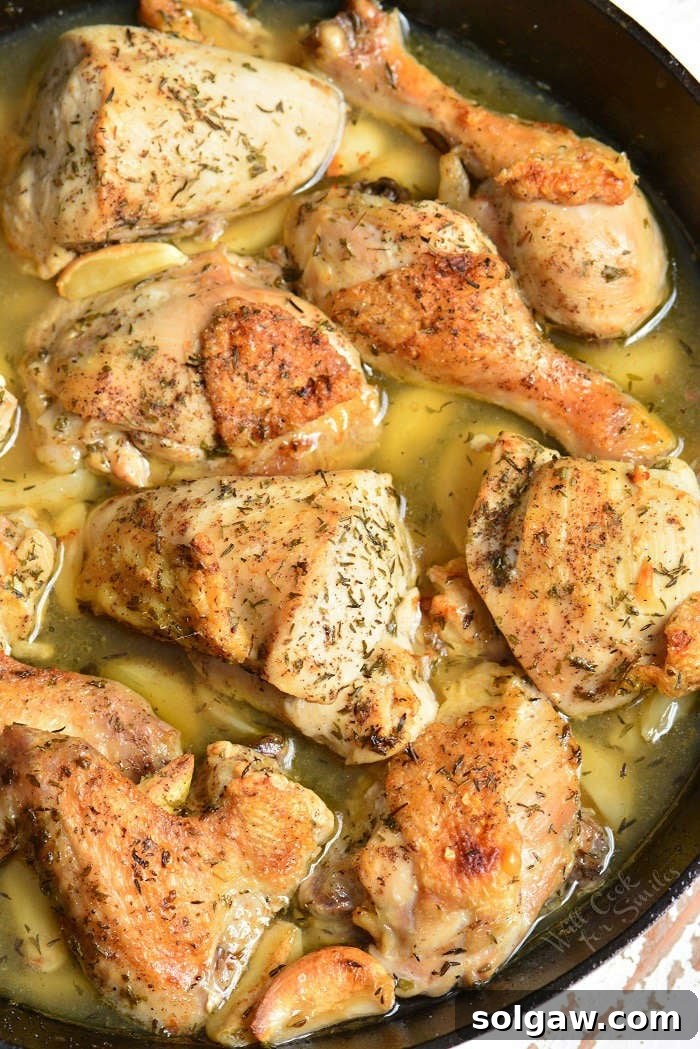
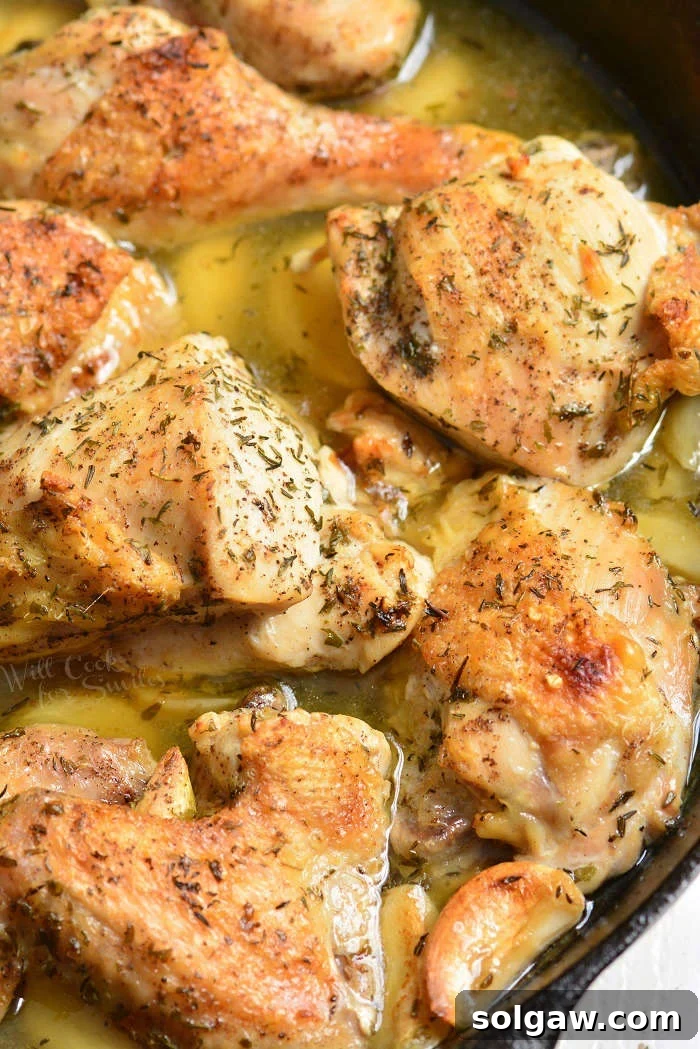
Experience the unparalleled flavor of our amazing baked garlic chicken, infused with a generous amount of garlic, delicate white wine, rich chicken broth, and fragrant herbs. This comprehensive guide not only provides a delicious recipe but also teaches you how to easily break down a whole chicken for optimal results. You’ll be surprised at how simple it is to butcher a chicken, a skill that takes just 5-10 minutes with practice. Serving a whole chicken ensures everyone at your table gets their choice of succulent white meat or rich dark meat, making it a perfect meal for any gathering.
Looking for more incredible baked chicken ideas? Don’t miss out on these fantastic recipes. Discover our unbelievably Baked Chicken Wings with the Best Dry Rub for a crispy, flavorful appetizer or main. For a classic and healthy option, try our simple Baked Chicken Breast recipe, guaranteed to be tender and juicy. If you’re seeking a unique flavor profile, these Ginger Peach Baked Chicken Thighs offer a delightful sweet and savory combination.
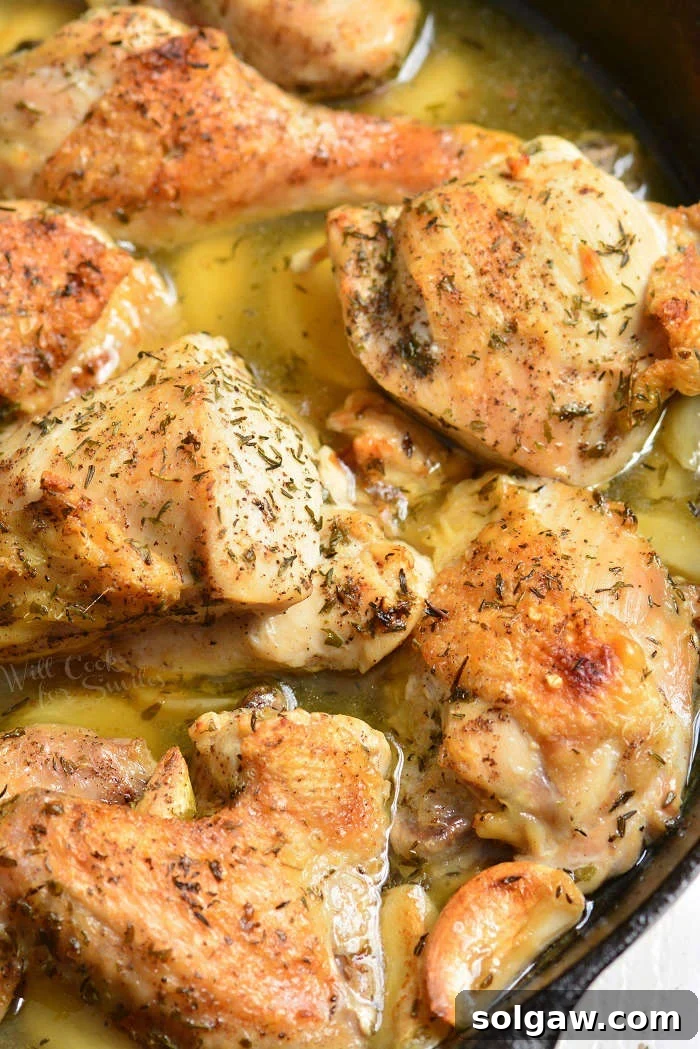
Garlic Baked Chicken: A Timeless Family Favorite
When the need for an effortless yet universally loved dinner strikes, chicken is always my go-to. Its incredible versatility means it readily absorbs the essence of any seasoning, sauce, vegetables, or spices it’s paired with, making it the ultimate canvas for culinary creativity. For those nights when decision fatigue sets in, I invariably turn to the comforting reliability of garlic chicken. It’s a dish built on simple flavors, readily available ingredients, and an easy preparation process, all culminating in a truly satisfying meal that brings smiles to every face.
One of my favorite secrets to consistently delicious and budget-friendly baked chicken recipes is to start with a whole chicken. The process of breaking it down yourself might seem daunting at first, but it typically takes no more than 10 minutes, and with each attempt, you’ll find yourself getting faster and more efficient. The reward? A diverse selection of both succulent dark meat and lean white meat, allowing everyone at the table to choose their preferred cut. Furthermore, purchasing a whole chicken is significantly more economical than buying pre-portioned cuts, offering substantial savings.
Beyond the cost-efficiency and variety of cuts, utilizing a whole chicken presents another fantastic opportunity: maximizing its potential across multiple meals. After you’ve skillfully broken down the chicken, the back portion is often left unused. Instead of discarding it, transform this flavorful piece into a rich, homemade chicken stock. This stock can then serve as the base for a hearty soup, providing you with a delicious dinner from your main chicken and a comforting lunch from the very same bird. It’s a smart, sustainable, and incredibly rewarding way to cook.
PIN THIS GARLIC CHICKEN RECIPE FOR LATER!
Mastering the Art of Breaking Down a Whole Chicken
Learning how to butcher a whole chicken is an invaluable skill for any home cook. Not only does it save money, but it also provides you with fresher, higher-quality cuts and allows you to utilize every part of the bird, including making homemade stock. It’s far less intimidating than it seems, requiring just a few basic tools and a bit of confidence. With practice, you’ll be able to break down a whole chicken in under 10 minutes, transforming it into perfectly portioned pieces for your favorite recipes.
Tools and Preparation:
Before you begin, ensure your workspace is clean and clear to safely handle raw poultry. You’ll need a large, sturdy plastic cutting board (ideal for sanitation) and a very sharp, large chef’s knife. For cutting through tougher bones like the rib cage or breastbone, a kitchen cleaver or heavy-duty kitchen shears can be incredibly helpful and make the task much easier. Having a bowl nearby for trimmings and the back bone is also a good idea.
Step-by-Step Guide to Butchering a Chicken:
- Prepare Your Space: Clear your counter and place a large plastic cutting board securely. Gather your sharp knife (or cleaver/kitchen shears) and a bowl for excess pieces.
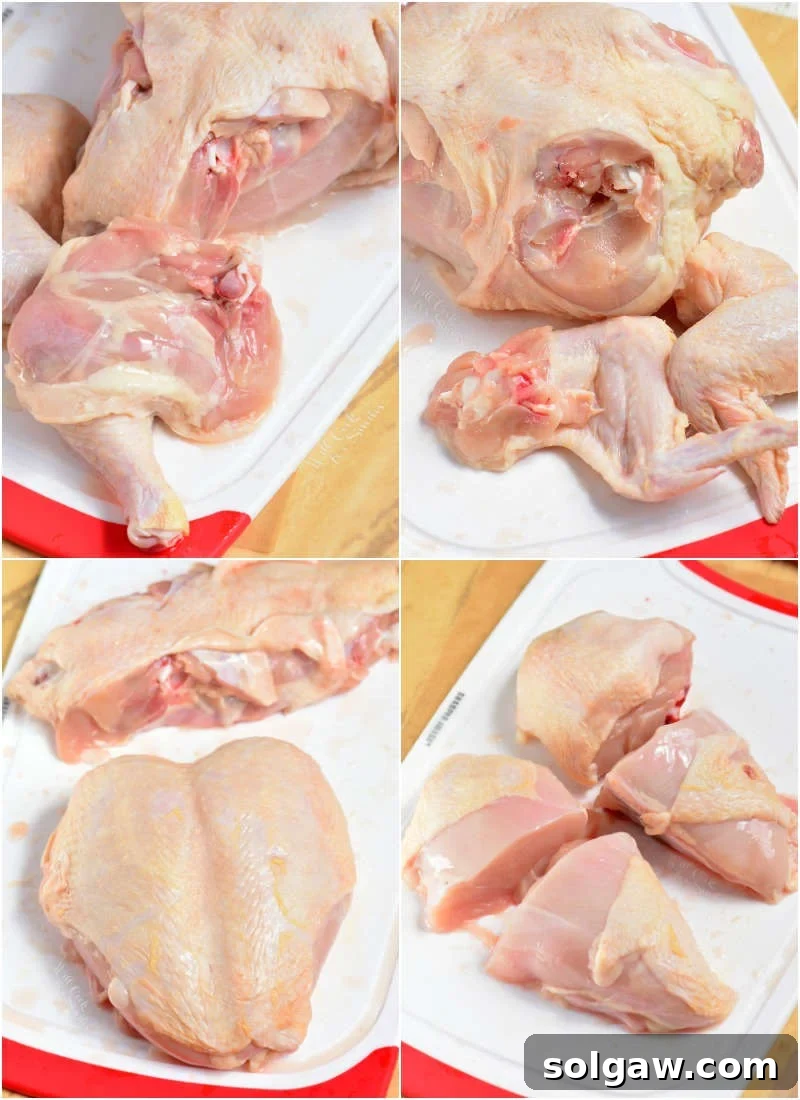
- Remove the Thighs: Begin by placing the chicken on its back. Locate a leg and gently pull the thigh away from the body. Using your knife, slice through the skin and meat that connects the thigh to the body, cutting only until you hit the hip joint. Do not cut all the way through the joint yet.
- Dislocate the Hip Joint: Once you’ve cut to the joint, use your hands to grasp the thigh and gently manipulate it, pulling it up and down and twisting it slightly until the hip bone pops out of its socket. This should create a visible separation.
- Separate the Leg: After the joint is dislocated, continue cutting through the remaining meat and skin to fully separate the entire leg (thigh and drumstick attached) from the chicken’s body.
- Repeat for the Second Leg: Perform steps 2, 3, and 4 for the other leg.
- Detaching the Wings: Follow a similar process for the wings. Pull a wing away from the body, make a small cut through the skin and meat to expose the joint, and then pop the joint out by applying gentle pressure and manipulation. Once dislocated, cut through the remaining connective tissue to remove the wing. Repeat for the other wing.
- Remove the Wishbone: This optional but recommended step makes carving the breast much simpler. Feel around the neck cavity for the small, V-shaped wishbone. Carefully cut along its shape to free it from the meat, then pull it out and discard.
- Separate Breast from Back: Stand the chicken upright on your cutting board, with the neck cavity facing down. Using your heavy chef’s knife or a cleaver, carefully cut straight down through the center of the chicken, between the breast and the back. This cut goes through the rib bones. Apply steady pressure and a rocking motion if needed. Set the back portion aside – this is excellent for making chicken stock!
- Split the Breasts: Place the breast section on the cutting board skin-side down. This position allows you to clearly see the breastbone (sternum). Using your knife, cut firmly down through the middle of the breastbone to separate the entire breast into two halves. This will require some effort.
- Quarter the Breasts: Since chicken breasts are often quite large and thick, cut each breast half in half again, crosswise, to create four smaller breast quarters. This ensures more even cooking with the other chicken pieces and more manageable portions.
- Separate Drumsticks and Thighs: Finally, take each whole leg (drumstick and thigh connected) and locate the joint between the two. Make a precise cut into this joint, pop it out, and then slice through the remaining meat and skin to separate the drumstick from the thigh.
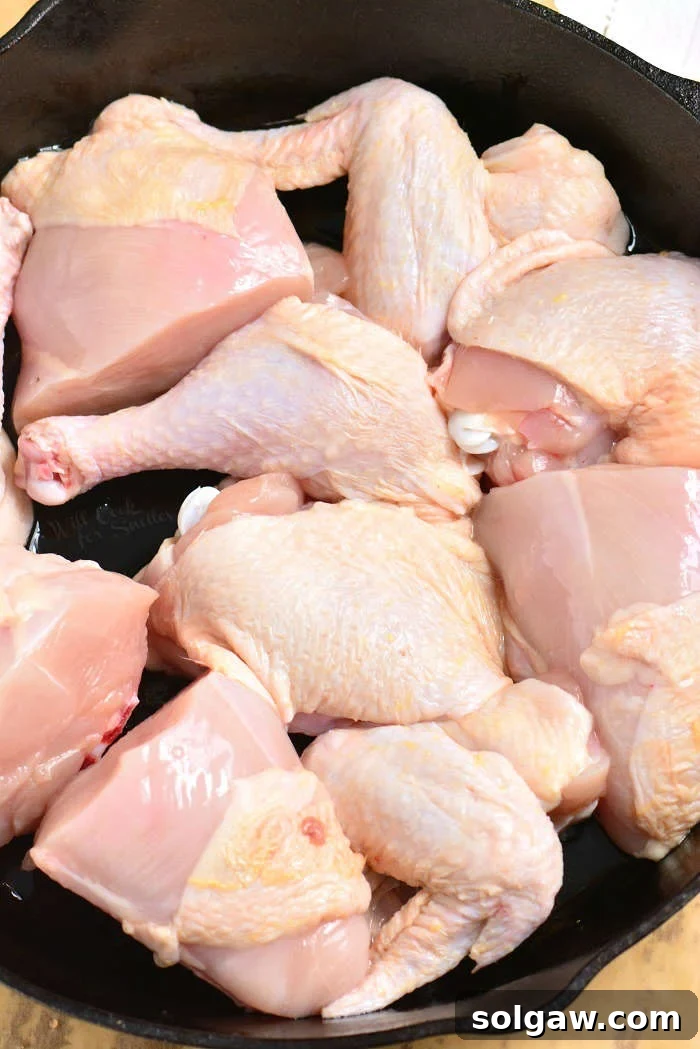
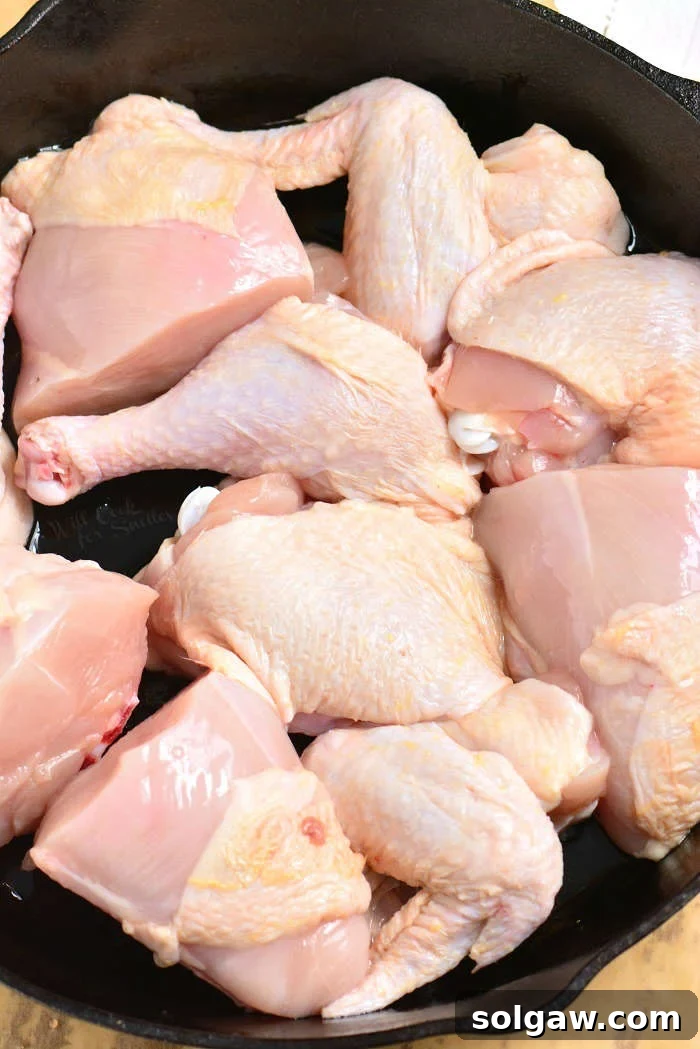
After completing these steps, you will have successfully broken down your whole chicken into 10 distinct pieces: two drumsticks, two thighs, four breast quarters, and two wings. Plus, you’ll have the valuable backbone, perfect for enriching your next homemade stock or soup!
Essential Tips for Perfect Garlic Chicken
Crafting the perfect baked garlic chicken involves more than just following the steps; a few key tips can elevate your dish from good to unforgettable. These insights will help you maximize flavor, save time, and ensure every bite is a delight.
Maximizing Flavor with Homemade Stock:
As previously mentioned, the chicken backbone is a hidden gem for culinary purposes. Don’t let it go to waste! Place the backbone, along with any other chicken trimmings (like wing tips or neck), into a large pot. Cover it with water and add aromatics such as a couple of bay leaves, a few coriander seeds, a roughly chopped onion, and a carrot. Simmer gently over low heat for at least 2 hours, or even longer for a richer flavor. Strain the liquid, and you’ll have a beautifully flavorful chicken stock ready for soups, sauces, or braising. You can also pick off any remaining meat from the bones to add to your soup, making it a truly zero-waste approach.
Garlic Preparation Made Easy:
This recipe calls for a substantial 3 ounces of garlic, which typically translates to 1-2 large garlic bulbs. Peeling this much garlic can be a time-consuming task. To save yourself effort, consider purchasing pre-peeled garlic cloves available in most grocery stores. Alternatively, you can peel the garlic ahead of time and store it in an airtight container in the refrigerator for a few days, or even freeze it for longer storage. A quick hack for peeling fresh garlic is to smash cloves lightly with the flat side of a knife or shake them vigorously in two metal bowls taped together; the skins will often fall right off.
Wine Alternatives for a Delicious Dish:
Can this recipe be made without wine? Absolutely! While white wine adds a wonderful depth and acidity that complements the garlic and herbs beautifully, you can certainly omit it if preferred or if you don’t have it on hand. The taste will shift slightly, but the prominent garlic and herbal flavors will still shine through. A good substitute for white wine would be an equal amount of additional chicken stock or even a splash of apple cider vinegar (about 1-2 tablespoons) mixed with more chicken broth to mimic the acidity. Ensure to use a good quality chicken stock for the best flavor outcome.
Choosing the Right Pan:
For this recipe, it’s essential to use a pan that is safe for both stovetop and oven use. A heavy-bottomed, oven-safe skillet or a Dutch oven works perfectly. Cast iron skillets, stainless steel pans with metal handles, or ceramic-coated Dutch ovens are excellent choices as they can withstand the high heat of the oven and provide even searing on the stovetop. This allows for a seamless transition from searing the chicken to baking it, minimizing cleanup and preserving all those delicious pan drippings.
Storing and Reheating Your Delicious Garlic Chicken Leftovers
One of the best things about baked garlic chicken is how wonderfully it holds up as leftovers. Proper storage and reheating can ensure you enjoy its delicious flavors for days to come, making meal prep a breeze.
Storing Leftovers Safely:
Once your garlic chicken has cooled to room temperature (within two hours of cooking), transfer it to a clean, airtight food storage container. It’s highly recommended to also include any leftover pan juices and garlic cloves from the baking process. These juices are packed with flavor and moisture, which will help keep the chicken tender and delicious upon reheating. Store the container in the refrigerator for 3-5 days. Always ensure the lid is sealed tightly to prevent any contamination and maintain freshness.
Reheating Methods for Optimal Taste:
There are several effective ways to reheat your garlic chicken, each with its own advantages:
- Microwave: For a quick and easy reheat, place individual portions of chicken in a microwave-safe dish. Add a spoonful or two of the saved pan juices to the dish to help retain moisture. Cover the dish with a microwave-safe plastic lid or a damp paper towel to prevent drying out and ensure even heating. Reheat on medium power in 1-2 minute increments, checking internal temperature until heated through.
- Stovetop: To achieve a slightly crisper skin and maintain a more even warmth, reheat the chicken in a cooking pan on the stovetop. Add a little of the reserved pan juices or a splash of chicken broth to the pan. Place the chicken pieces in a single layer, cover with a lid, and heat over medium-low heat. This method gently warms the chicken while keeping it moist and preventing it from drying out.
- Oven: For larger quantities or to replicate that freshly baked texture, reheating in the oven is ideal. Preheat your oven to 300°F (150°C). Arrange the chicken pieces in a single layer in an oven-safe dish. Again, add a small amount of pan juices or chicken broth to the bottom of the dish to keep the chicken moist. Cover the dish tightly with aluminum foil to trap moisture. Reheat for 15-20 minutes, or until the chicken is thoroughly warmed. Removing the foil for the last few minutes can help crisp up the skin if desired.
By saving the flavorful juices and garlic, you ensure that every reheated portion of your garlic chicken is just as aromatic and tender as it was on the first day, ready to flavor any side dishes you pair it with.
Frequently Asked Questions About Garlic Chicken:
- Can I use boneless chicken for this recipe? Yes, you can. Boneless, skinless chicken thighs or breasts will cook faster. Adjust baking time accordingly, aiming for an internal temperature of 165°F (74°C). However, using bone-in, skin-on chicken will yield more flavor and juicier meat.
- What kind of white wine should I use? A dry white wine such as Sauvignon Blanc, Pinot Grigio, or Chardonnay (unoaked) works best. Avoid sweet wines. If you don’t have wine, extra chicken stock or a mix of stock and a splash of white vinegar is a good substitute.
- How can I make the chicken skin crispier? For extra crispy skin, pat the chicken pieces very dry before searing. You can also broil the chicken for the last 5 minutes of baking, uncovered, watching it carefully to prevent burning.
- Can I add vegetables to the pan? Absolutely! Vegetables like chopped potatoes, carrots, onions, or bell peppers can be added to the pan during the last 20-25 minutes of baking. They’ll absorb the wonderful garlic and wine flavors.
- Is it necessary to sear the chicken first? Searing is highly recommended as it creates a beautiful golden crust and locks in moisture and flavor. While you could skip it, the final dish might lack the same depth of flavor and appealing texture.
More Irresistible Chicken Recipes to Explore
If you’ve enjoyed the simplicity and deliciousness of our baked garlic chicken, you’re in for a treat with these other fantastic chicken creations. Each recipe offers a unique flavor profile and is designed to be a memorable addition to your meal rotation:
- Southwest Baked Chicken: Infused with bold, smoky, and zesty flavors, perfect for a lively weeknight dinner.
- Creamy Chipotle Pepper Baked Chicken Thighs: A rich and slightly spicy dish that’s incredibly comforting and full of depth.
- Baked Chicken Parmesan: The classic Italian-American comfort food, featuring crispy chicken, melted cheese, and a vibrant tomato sauce.
- Easy Baked Chicken Tenders: A healthier alternative to fried tenders, these are perfect for kids and adults alike, crispy on the outside and tender within.
- Honey Soy Chicken Thighs: A delightful blend of sweet and savory, these sticky, caramelized thighs are utterly addictive.
If you’ve whipped up any of my recipes and shared them on Instagram, remember to tag me @willcookforsmiles and use #willcookforsmiles so I can see all your wonderful creations! Your culinary adventures inspire me!
Connect with Will Cook For Smiles!
Be sure to click below and follow me on my social media channels, so you never miss out on a delicious new recipe or helpful cooking tip.
Don’t miss out on any new recipes! Be sure to sign up for our email newsletter to get delicious updates delivered straight to your inbox.
PIN THIS RECIPE NOW!
Garlic Chicken
Print Recipe
Pin Recipe
Leave a Comment
Ingredients
- 2 tbsp canola oil
- 5 lbs whole chicken
- 3 oz garlic (1 large or 2 small bulbs) peeled
- 1/2 cup white wine
- 1 cup chicken stock
- 1 tsp dry thyme
- 1 tbsp dry parsley
- salt
- fresh cracked black pepper
Instructions
-
Carefully break down the whole chicken into 10 pieces – 4 quarters of breasts, 2 drumsticks, 2 thighs, and 2 wings. (A detailed guide on how to break down the chicken is provided in the post above.)
-
Preheat your oven to 375°F (190°C).
-
Preheat a large, oven-safe pan over medium heat and add the canola oil.
-
Season all the chicken pieces generously with salt and fresh cracked black pepper on both sides. Sear them in the hot pan for 2-3 minutes per side until golden brown.
-
Pour in the white wine and let it simmer for about a minute, allowing it to deglaze the pan.
-
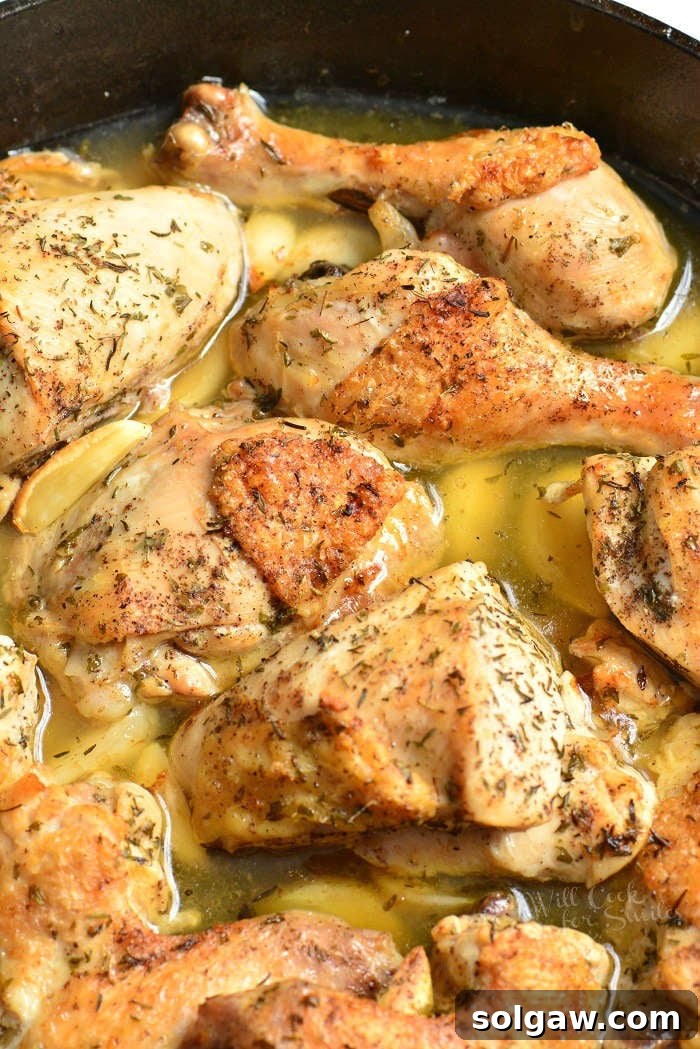
Add the chicken stock, nestle the peeled garlic cloves amongst the chicken, and sprinkle the dry thyme and parsley evenly over the top.
-
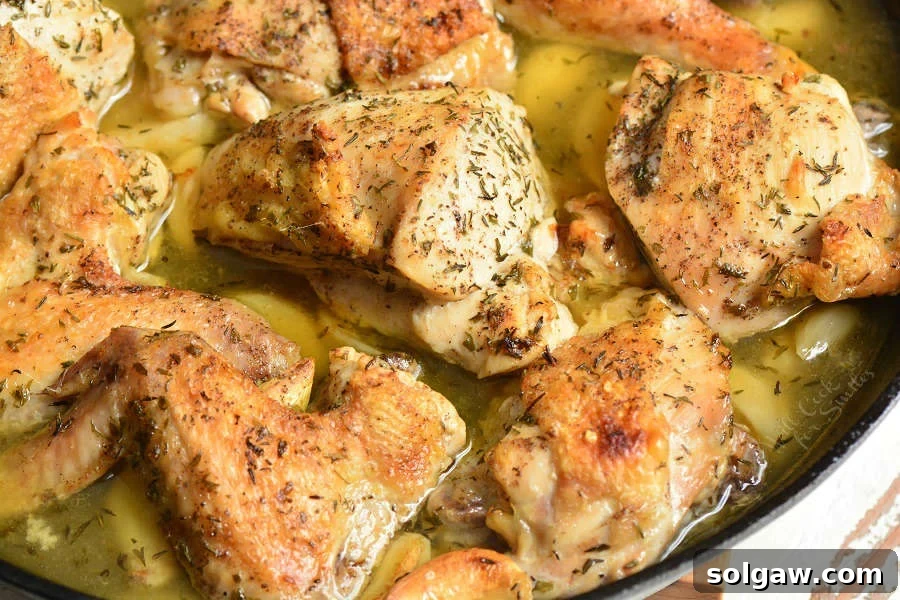
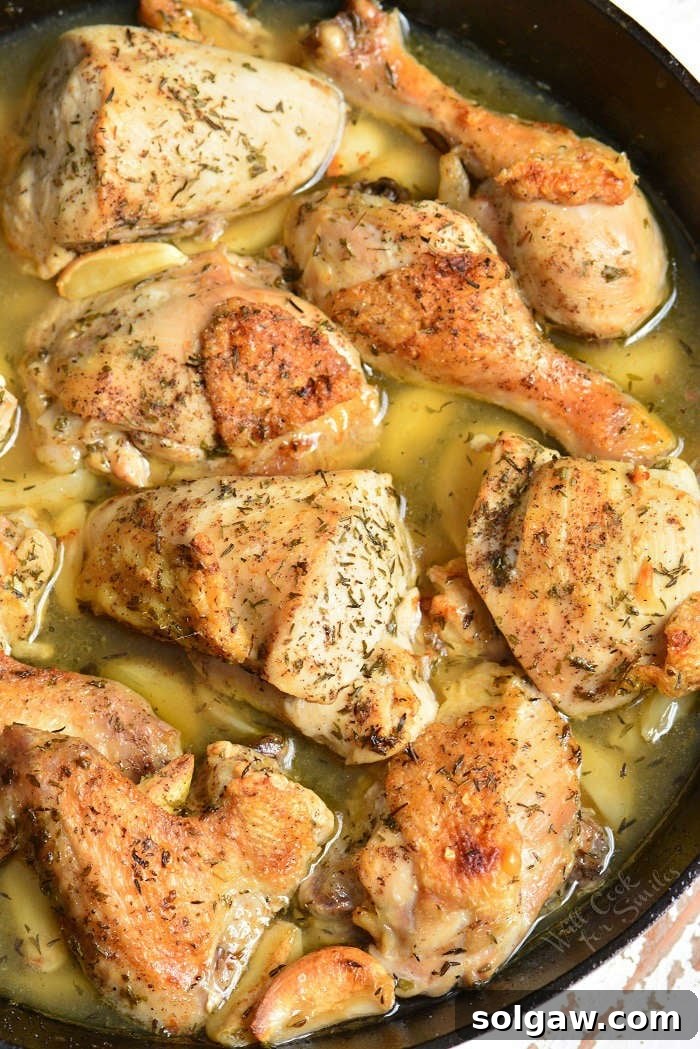
Transfer the pan into the preheated oven and bake for 30-35 minutes. Check the temperature of the thickest piece of chicken; it should reach 165°F (74°C) with a meat thermometer.
Notes
Nutrition
Breaking Down A Whole Chicken
Print Guide
Pin Guide
Leave a Comment
Equipment & Ingredients
- 1 whole chicken (approx. 4-5 lbs)
- Large, sharp chef’s knife or kitchen cleaver
- Sturdy cutting board (plastic recommended for raw poultry)
- Kitchen shears (optional, for convenience)
Instructions
-
Begin by preparing your workspace. Clear out ample counter space and lay down a large, sturdy cutting board. A plastic cutting board is highly recommended when handling raw poultry for easy sanitation.
-
Ensure you have a large, very sharp chef’s knife. For easier cutting through tougher bones like the rib cage or breastbone, a kitchen cleaver or robust kitchen shears can also be highly effective.
-
Start by removing the thighs and wings. To detach a thigh, gently pull the leg away from the chicken’s body. With your knife, make a careful slice through the skin and meat connecting the thigh to the body, cutting *just* to the joint, not all the way through.
-
Locate the hip joint by feeling around with your fingers. Once found, manipulate the leg up and down to pop the hip bone out of its socket. Finish cutting through the remaining meat, skin, and connective tissue to fully separate the leg.
-
Repeat the exact same procedure for the other leg.
-
Apply the identical technique to remove the wings: make a small incision near the joint, find the joint by wiggling the wing, pop the bone out, and then cut through to detach the wing.
-
Next, carefully remove the wishbone located at the neck end of the chicken. Feel for its V-shape and carefully cut around it to separate it from the surrounding meat. Once loosened, pull it out and set aside or discard. Removing this makes carving the breast much easier.
-
Stand the chicken upright with the neck cavity facing downwards. Using a heavy chef’s knife or cleaver, carefully cut straight down through the middle of the chicken, separating the breast section from the back section. You may need to apply firm pressure to cut through the rib bones.
-
Do not discard the back part of the chicken. Instead, set it aside. This bone-rich piece is excellent for making flavorful chicken stock or soup, maximizing your use of the whole bird.
-
Place the breast section skin-side down on your cutting board. This orientation allows you to clearly see the sternum or breastbone. Carefully cut straight down through the center of the breastbone to separate the entire breast into two halves. This may require some strength.
-
To ensure even cooking, especially since breast pieces are generally thicker than thighs, cut each breast half in half again, crosswise, to create four smaller, more manageable breast quarters. This helps all chicken pieces cook consistently.
-
Finally, separate each leg into a drumstick and a thigh. Locate the joint between the drumstick and thigh. Make a precise cut into this joint, pop it out, and then slice through the remaining meat and skin to fully separate the two pieces.
-
Following these steps will result in a total of 10 perfectly portioned pieces of chicken: two drumsticks, two thighs, four breast quarters, and two wings, plus the backbone for stock.
Nutrition