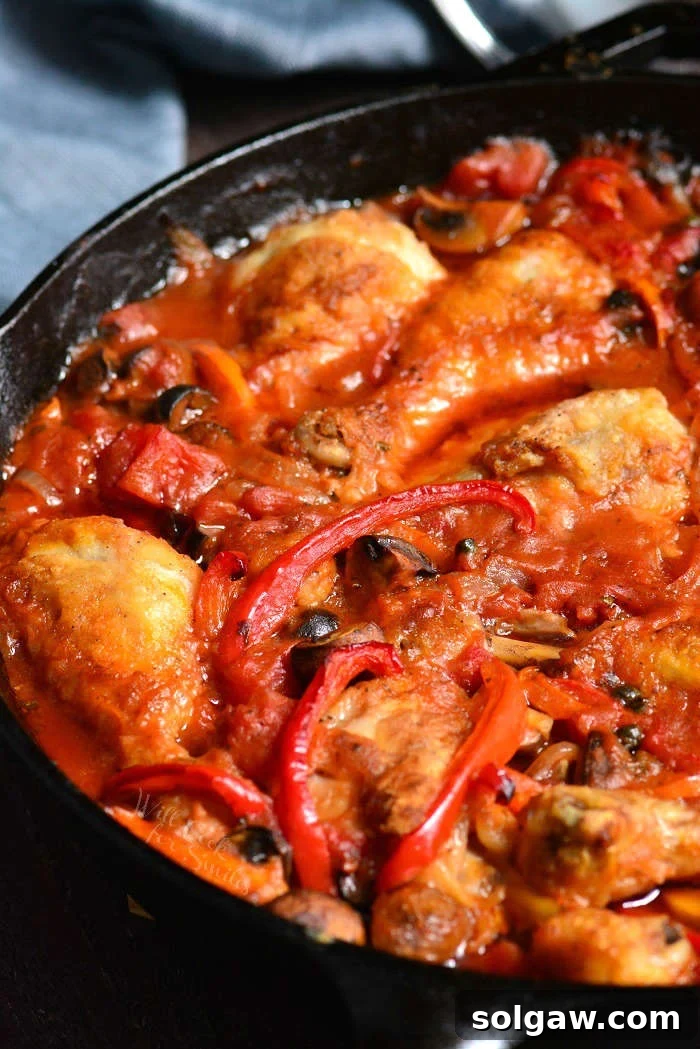
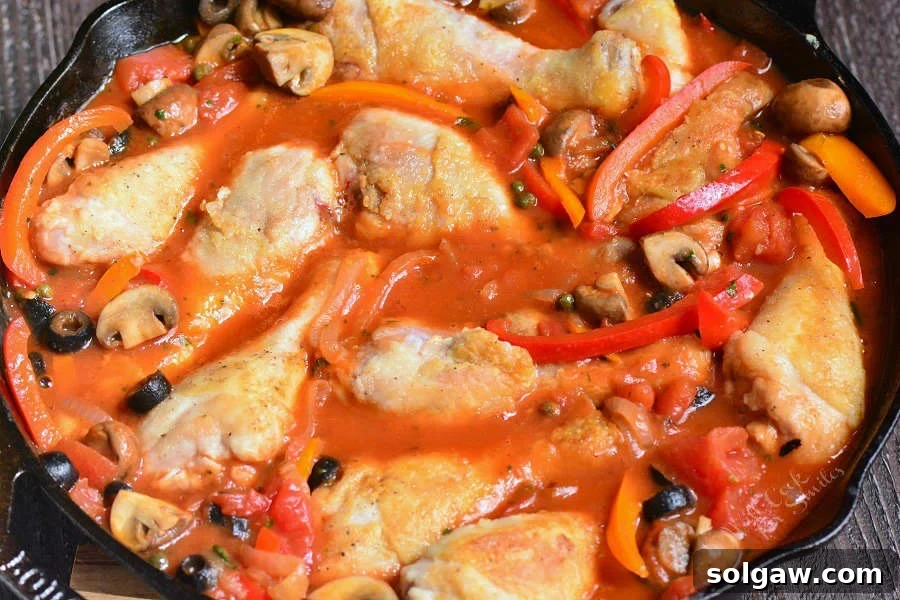
Chicken Cacciatore is a beloved classic Italian dish, revered for its robust flavors and hearty simplicity. Traditionally featuring chicken, vibrant bell peppers, savory onions, aromatic garlic, and ripe tomatoes, this recipe elevates the experience further with the addition of white wine, briny capers, rich olives, and earthy mushrooms. Cooked first on the stovetop to develop depth, then finished in the oven for tender perfection, this Chicken Cacciatore truly delivers a remarkable meal. While chicken drumsticks are highlighted here for their succulent texture, feel free to use any cut of chicken you prefer.
For those who appreciate more delectable baked chicken dishes, explore options like this easy baked chicken breasts recipe, or discover a flavorful Garlic Baked Chicken that utilizes a whole chicken. And for a crowd-pleasing appetizer or side, these Baked Chicken Wings are simply amazing.
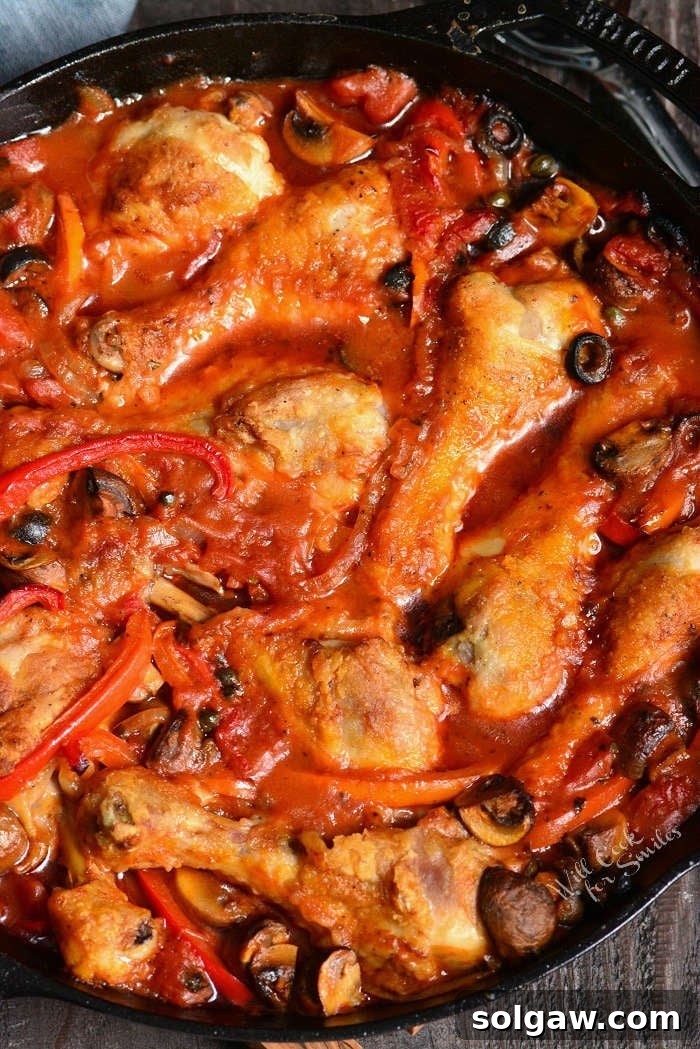
Classic Chicken Cacciatore: An Authentic Italian Hunter’s Stew
Chicken Cacciatore, meaning “hunter’s style” chicken, is more than just a dish; it’s a culinary journey through Italy’s diverse regions, each offering its unique twist on this comforting classic. At its heart, Cacciatore is a rustic stew featuring chicken braised with a medley of vegetables and herbs, typically tomatoes, onions, bell peppers, and garlic, often enriched with wine. Its appeal lies in its ability to transform simple ingredients into a meal brimming with complex, layered flavors that evoke the warmth of Italian home cooking.
While the core ingredients remain consistent, the interpretation of Cacciatore varies significantly across Italy. In some northern regions, like Tuscany, the dish might be made with white wine, a lighter tomato base or even no tomatoes at all, and perhaps a touch of rosemary. Journey south to regions like Rome, and you might find a richer tomato sauce, often enhanced with red wine, olives, and mushrooms, reflecting the bolder flavors characteristic of southern Italian cuisine. When Cacciatore migrated to the United States, it continued to evolve, with some adaptations even incorporating marinara sauce, showcasing its versatility and enduring popularity.
My version of Chicken Cacciatore is designed to be a flavor powerhouse, packing in an abundance of vegetables not only for their nutritional benefits but also for the incredible depth they add. This approach turns the dish into a complete, one-pan meal, eliminating the need for additional side dishes. I prefer to use white wine in my Chicken Cacciatore, a choice made for specific culinary reasons. Red wine, with its dominant and robust flavor, can often overpower other ingredients, making the entire dish taste primarily of wine, especially when cooking vegetables. While I enjoy red wine in meat-centric dishes, I find it can be too assertive for a mixed vegetable and chicken stew.
White wine, on the other hand, offers a more subtle and elegant contribution. It gently enhances the natural flavors of the vegetables, chicken, and sauce, rather than dominating them. Its delicate acidity brightens the dish and helps deglaze the pan, incorporating all those delicious browned bits from searing the chicken into the sauce, contributing to a truly harmonious and well-balanced flavor profile.
PIN THIS RECIPE
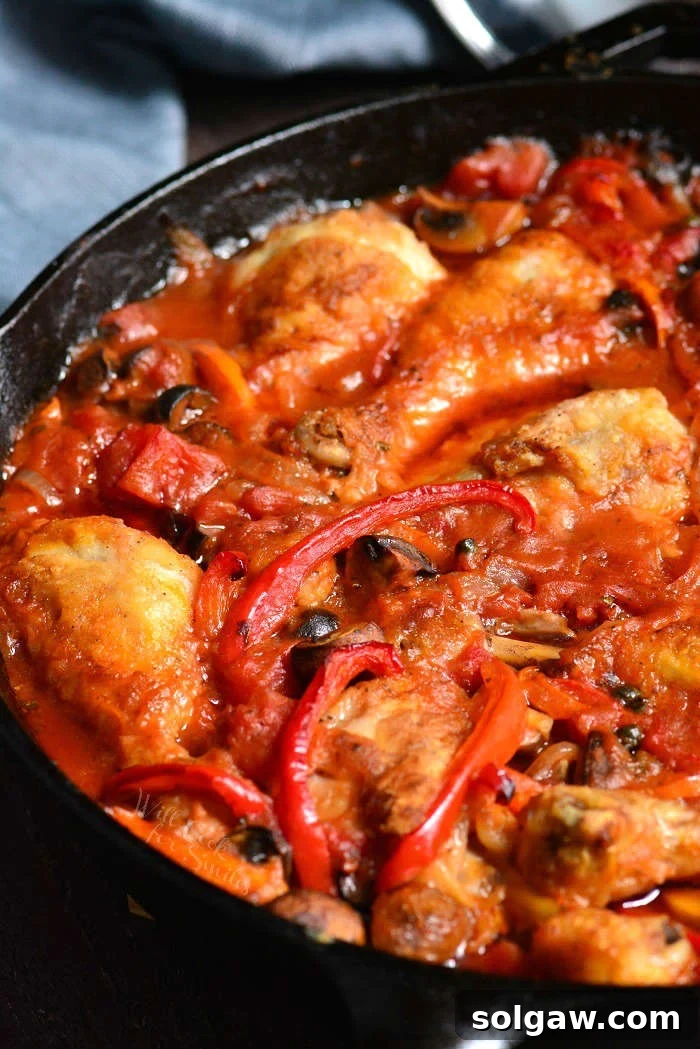
Mastering the Art of Chicken Cacciatore: A Step-by-Step Guide
Creating a truly magnificent Chicken Cacciatore involves a few key steps, each contributing to the rich, layered flavors of the final dish. Follow this detailed guide to ensure a perfect outcome every time.
1. Preparation is Key (Mise en Place)
Before you even turn on the stove, ensure all your ingredients are prepped. This crucial step, known as mise en place, makes the cooking process smooth and enjoyable, especially for a fast-paced, multi-ingredient dish. Slice all bell peppers and onions, peel and mince the garlic (or smash it if you prefer a more rustic texture), slice the mushrooms, and have all canned ingredients (diced tomatoes, tomato paste, capers, olives) opened and ready. This organized approach prevents rushing and ensures you add ingredients at precisely the right moment.
2. Preparing and Searing the Chicken
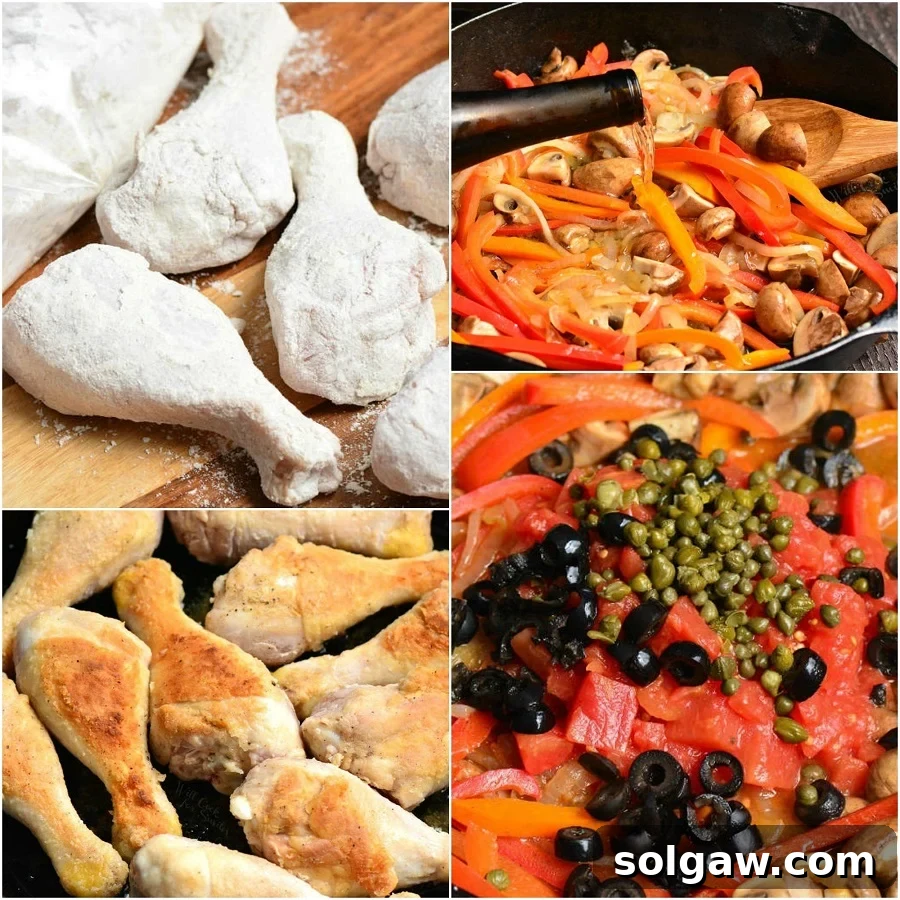
Start by preparing your chicken. In a large zip-lock bag, combine all-purpose flour, salt, and freshly cracked black pepper. Add your chicken drumsticks (or preferred chicken cuts) to the bag, seal it, and shake vigorously until all pieces are evenly coated. This flour coating helps create a beautiful golden crust when seared and contributes to a slightly thicker sauce. Gently shake off any excess flour from each drumstick before cooking.
Preheat a large, oven-safe baking pan or Dutch oven over medium heat, then add a generous drizzle of olive oil. Once hot, carefully place the coated chicken drumsticks in the pan, ensuring not to overcrowd it (cook in batches if necessary). Sear the drumsticks for several minutes on each side until they are beautifully golden brown. This searing step is vital as it locks in juices and develops a rich, savory crust known as the Maillard reaction, which is fundamental to the dish’s flavor. Once seared, remove the chicken from the pan and set it aside on a separate plate.
3. Building the Aromatic Base and Deglazing
In the same pan, reduce the heat slightly if needed, and add the sliced onions and bell peppers. Cook them, stirring occasionally, until they begin to soften and become slightly translucent, about 5-7 minutes. Next, add the minced garlic and sliced mushrooms. Continue to cook for another 2-3 minutes, or until the garlic is fragrant and the mushrooms have released some of their moisture and softened. The pan will have delicious browned bits stuck to the bottom – these are packed with flavor!
Now, pour in the white wine. This is the deglazing step: use a wooden spoon to scrape up all those flavorful browned bits from the bottom of the pan. Let the wine simmer for a few minutes, allowing some of the alcohol to cook off and its flavors to concentrate.
4. Assembling the Sauce and Oven Finish
While the wine simmers, preheat your oven to 375°F (190°C). Add the diced tomatoes, drained capers, sliced black olives, tomato paste, and chicken broth to the pan. Stir everything carefully to combine all the ingredients. Season generously with salt, fresh cracked black pepper, dried oregano, and minced fresh basil. Mix until all the seasonings are evenly incorporated into the sauce.
Finally, nestle the seared chicken drumsticks back into the pan, ensuring they are submerged in the rich sauce and vegetables. Transfer the entire oven-safe pan into the preheated oven. Bake for approximately 35 minutes, or until the chicken is fully cooked through and wonderfully tender. Always check the internal temperature of the chicken with a meat thermometer to ensure it reaches 165°F (74°C) for safety and optimal doneness.
Choosing the Best Chicken Cut for Your Cacciatore
The type of chicken you choose can significantly influence the texture and flavor of your Chicken Cacciatore. While the recipe highlights drumsticks, understanding the characteristics of different cuts will help you select the best option for your preferences.
- Chicken Drumsticks and Thighs (Dark Meat): These are my top recommendations for Cacciatore. Dark meat cuts are inherently more flavorful and contain more fat, which keeps them incredibly tender and juicy during the longer cooking process. They hold up exceptionally well to simmering and baking in the sauce, resulting in fall-off-the-bone deliciousness.
- Whole Chicken: For a truly authentic and economical approach, you can break down a whole chicken and use a mix of dark and white meat pieces. This provides a diverse texture profile and maximizes flavor. If you’re new to this, you can learn how to break down a chicken in this helpful post.
- Chicken Breasts (White Meat): If you prefer a leaner option, boneless, skinless chicken breasts can certainly be used. However, they cook much faster and can dry out if overcooked. To prevent this, consider adding them to the sauce later in the cooking process, perhaps during the last 15-20 minutes of baking, or adjust the baking time significantly. Always use a meat thermometer to ensure chicken breasts reach an internal temperature of 165°F (74°C) for safety, checking for doneness after about 20 minutes in the oven.
Customizing Your Cacciatore: Variations and Dietary Adjustments
Chicken Cacciatore is a wonderfully flexible dish that can be easily adapted to suit various dietary needs and flavor preferences.
How to Make Gluten-Free Chicken Cacciatore
Making this recipe gluten-free is quite simple. The only source of gluten in the traditional preparation is the all-purpose flour used to coat the chicken. You have a couple of straightforward options:
- Substitute Gluten-Free Flour: Simply swap the regular all-purpose flour with a 1:1 gluten-free all-purpose flour blend when coating the chicken. Ensure your chosen blend contains xanthan gum for optimal texture.
- Omit Flour Entirely: For the simplest gluten-free version, you can eliminate the flour coating altogether. While this will result in a slightly different texture on the chicken’s exterior and a thinner sauce, the core flavors of the Cacciatore will remain delicious. If you desire a slightly thicker sauce without flour, you can create a cornstarch slurry (1 tablespoon cornstarch mixed with 2 tablespoons cold water) and stir it into the simmering sauce on the stovetop during the last few minutes of cooking.
Can I Make Chicken Cacciatore Without Wine?
Absolutely! While wine adds a layer of depth and acidity, you can easily omit it without sacrificing too much flavor. If you choose to exclude wine, simply add an extra 1/2 to 3/4 cup of chicken broth (or vegetable broth for a deeper flavor) to the pan during the deglazing step. This will provide enough liquid to scrape up the browned bits and keep the sauce flavorful. Alternatively, you can use non-alcoholic red or white wine, or even a splash of red wine vinegar mixed with broth for a similar acidic kick.
Other Flavor Enhancements and Vegetable Additions
- Spicier Kick: Add a pinch of red pepper flakes with the garlic for a touch of heat.
- More Vegetables: Feel free to incorporate other vegetables like sliced carrots, celery, zucchini, or even artichoke hearts for added texture and nutrients. Add denser vegetables like carrots and celery with the onions and peppers, and more delicate ones like zucchini later in the cooking process.
- Fresh Herbs: Experiment with other fresh herbs like oregano or thyme sprigs added to the sauce as it simmers.
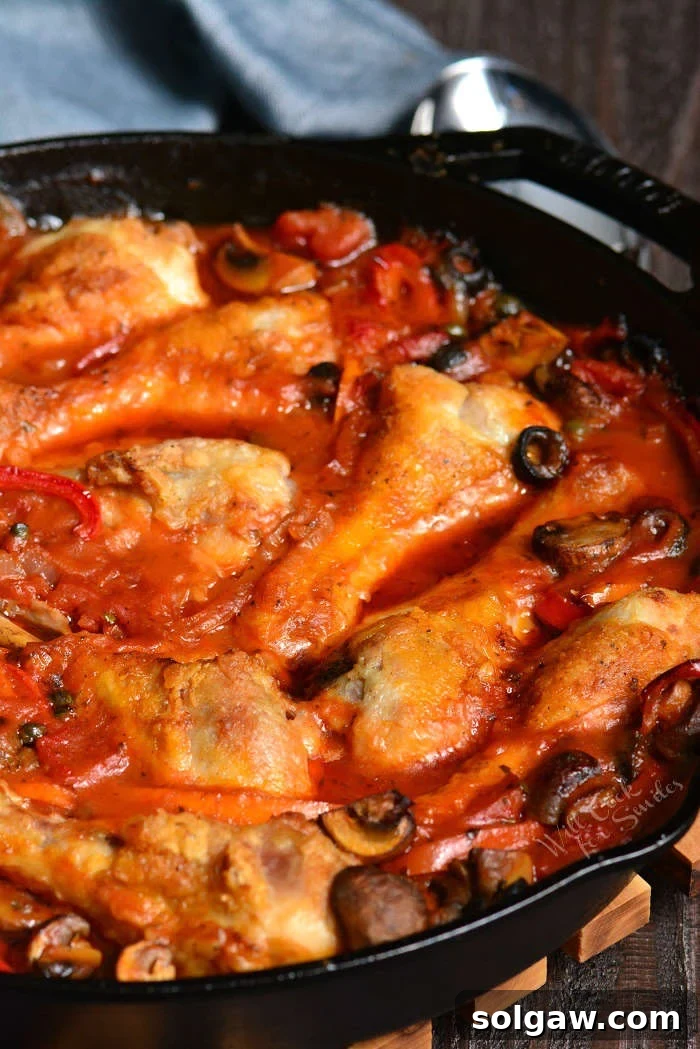
Serving Suggestions for Chicken Cacciatore
Chicken Cacciatore is a hearty, complete meal on its own, but it pairs beautifully with a variety of simple sides that complement its rich flavors. Here are some serving suggestions:
- Pasta: Serve it over a bed of al dente pasta such as tagliatelle, pappardelle, or even spaghetti, allowing the delicious sauce to coat the noodles.
- Polenta: Creamy polenta is a classic Italian accompaniment that perfectly soaks up the savory sauce.
- Crusty Bread: A warm, crusty baguette or focaccia is ideal for dipping into the flavorful sauce.
- Rice: Simple white or brown rice can be a great neutral base for the robust flavors of the cacciatore.
- Mashed Potatoes: Fluffy mashed potatoes offer a comforting pairing.
- Green Salad: A light, crisp green salad with a vinaigrette dressing provides a refreshing contrast to the richness of the dish.
Make Ahead, Storage, and Reheating Tips
Chicken Cacciatore is an excellent dish for meal prepping as its flavors often deepen and improve overnight.
- Make Ahead: You can prepare the entire dish a day in advance. Simply cool it completely, then store it in an airtight container in the refrigerator. Reheat gently on the stovetop or in the oven until warmed through.
- Storage: Leftovers can be stored in an airtight container in the refrigerator for up to 3-4 days.
- Freezing: Chicken Cacciatore freezes wonderfully. Once completely cooled, transfer it to freezer-safe containers or heavy-duty freezer bags. It can be frozen for up to 2-3 months. Thaw overnight in the refrigerator before reheating.
- Reheating: For best results, reheat frozen cacciatore gently on the stovetop over low heat, adding a splash of chicken broth if the sauce has thickened too much. You can also reheat it in the oven at 300°F (150°C) until warmed through.
Chicken Cacciatore Recipe
A classic Italian dish made with chicken, bell peppers, onion, garlic, and tomatoes. Elevated with white wine, capers, olives, and mushrooms for incredible flavor.
Ingredients
- 2.5 lbs chicken drumsticks
- 3/4 cup all-purpose flour
- 1 1/2 tsp fresh cracked black pepper
- 1 tsp salt
- 2 large bell peppers, sliced
- 1 small yellow onion, sliced
- 4 garlic cloves, minced
- 8 oz baby bella mushrooms, sliced
- 3/4 cup white wine
- 14.5 oz can diced tomatoes
- 2 oz capers, drained
- 3 oz sliced black olives, drained
- 8 oz tomato sauce
- 1/2 cup chicken broth
- 1 tsp dried oregano
- 1 tbsp minced fresh basil
- Salt, to taste
- Fresh cracked black pepper, to taste
Instructions
- Start by prepping the ingredients: slice all the vegetables, open cans, and peel garlic. Set aside.
- Combine flour, salt, and pepper in a large zip-lock bag and mix it together. Place chicken drumsticks into the bag with flour, close the bag, and shake it up to coat all the drumsticks evenly with flour mixture.
- Take drumsticks out and gently shake off excess flour if needed. Discard remaining flour and the bag.
- Preheat a large, oven-safe baking pan over medium heat. Add olive oil and chicken drumsticks. Sear drumsticks for just a few minutes on each side, until golden brown and take chicken out of the pan. Set them aside on a separate dish.
- Add onions and peppers to the pan and cook until softened. Smash and mince garlic and add it to the pan with veggies. Add mushrooms and cook until garlic is fragrant.
- Pour in wine and let it simmer for a few minutes.
- Preheat oven to 375°F (190°C).
- Add tomatoes, capers, sliced olives, tomato sauce, and chicken broth and carefully stir everything together. Season with salt, pepper, oregano, and basil and mix until everything is evenly incorporated.
- Nestle chicken back into the pan among all the vegetables and sauce and transfer the pan into the oven.
- Bake for about 35 minutes, until chicken is fully done (internal temperature of 165°F/74°C).
Notes
All images and text ©Lyubov Brooke for ©Will Cook For Smiles. Please do not use my images without prior permission. If using my posts in collections and features, please link back to this post for the recipe. Disclaimer: Nutrition information shown is not guaranteed to be 100% accurate as most ingredients and brands have a slight variation.
Nutrition Information (Approximate per serving)
Calories: 539kcal | Carbohydrates: 38g | Protein: 40g | Fat: 21g | Saturated Fat: 5g | Cholesterol: 174mg | Sodium: 2064mg | Potassium: 1335mg | Fiber: 6g | Sugar: 10g | Vitamin A: 2455IU | Vitamin C: 95.1mg | Calcium: 116mg | Iron: 5.1mg
If you make any of my recipes and share them on Instagram, make sure to tag me @willcookforsmiles and #willcookforsmiles so I can see all the delicious things you’ve tried!
Connect with Will Cook For Smiles!
Be sure to click below and follow me on my social media, so you never miss a recipe.


Don’t forget to sign up for email, so you won’t miss any new recipes.
PIN THIS RECIPE
This post has been UPDATED, it was originally published on Will Cook For Smiles on February 16, 2011.