Mastering Squid: A Comprehensive Guide to Cleaning, Cooking, and Enjoying Fresh Calamari
Squid, often known by its culinary name, calamari, is a versatile and delectable seafood enjoyed across the globe. Far from being an intimidating ingredient, cleaning and preparing fresh squid at home is surprisingly simple and incredibly rewarding. This extensive guide will demystify everything from identifying fresh squid to expertly cleaning it, understanding its unique cooking characteristics, and even harnessing the secret ingredient of its coveted ink. Prepare to elevate your home cooking with this accessible and flavorful mollusk.
What is Squid (Calamari)?
The term “calamari” frequently appears on restaurant menus, often leaving diners wondering about its identity. Simply put, calamari is squid! Derived from the Italian word for squid, “calamaro” (plural: “calamari”), this name has become widely synonymous with the popular dish of battered and deep-fried squid rings. However, squid is much more than just a fried appetizer; it’s a fascinating and nutritious mollusk with a rich culinary history.
Squid belongs to the cephalopod class, making it a close relative of cuttlefish and octopus. Like its cousins, squid possesses a unique protective mechanism: the ability to release a cloud of dark ink from its ink sac when threatened. While many commercially prepared squid have had their ink sacs removed, finding a whole squid with its sac intact offers a fantastic opportunity to experiment with a gourmet ingredient, perfect for enhancing pastas and rice dishes with its distinctive flavor and color.
Globally, squid is a staple in various cuisines. Its mild, slightly sweet flavor and firm texture make it a favorite in Mediterranean dishes, where it’s often grilled or stewed, and across many Asian countries, where it finds its way into stir-fries, curries, and soups. In Western countries, the most common encounter with squid is often the fried calamari appetizer. Yet, this only scratches the surface of its culinary potential. Squid can be seared, braised, grilled, sautéed, or even enjoyed raw in specific preparations, offering a diverse range of textures and flavors depending on the cooking method.
When shopping for squid, you’ll typically encounter sizes around one foot long, though variations exist. Opting for whole squid, rather than pre-cleaned, not only provides better value but also ensures maximum freshness and allows you to utilize every part of this incredible ingredient.
Why Clean Squid at Home? The Benefits of Fresh Preparation
While buying pre-cleaned squid might seem convenient, taking the extra 5-10 minutes to clean whole squid yourself offers several distinct advantages. It is significantly more economical, allowing you to enjoy this delicious seafood more frequently without breaking the bank. Furthermore, cleaning it yourself guarantees that you’re working with the freshest possible product, as the delicate flesh can deteriorate quickly once the protective skin is removed. You also retain control over which parts to keep or discard, such as the valuable ink sac or the edible fins. Once cleaned, squid can be used immediately or frozen for future use, making it a convenient option for meal planning.
Important Note on Thawing Frozen Squid
If you’ve purchased frozen whole squid, proper thawing is crucial to maintain its texture and flavor. Always slow-thaw frozen squid overnight in the refrigerator. Avoid thawing at room temperature or using hot water, as this can degrade the quality of the flesh and lead to a rubbery texture once cooked.
Step-by-Step Guide: How to Clean Squid Like a Pro
Cleaning squid at home is a straightforward process that requires minimal equipment and just a few minutes of your time. Once you master these steps, you’ll be able to prepare fresh squid for any recipe with confidence.
1. Separating the Head and Removing Innards
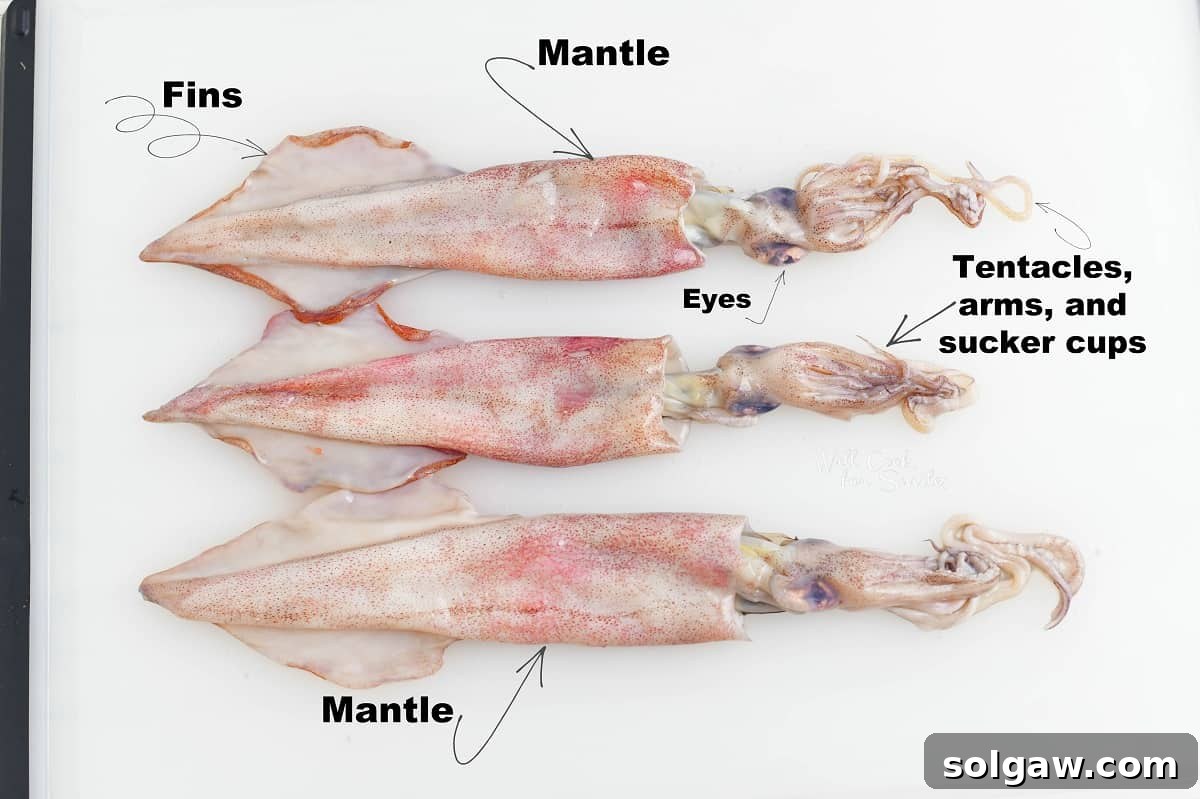
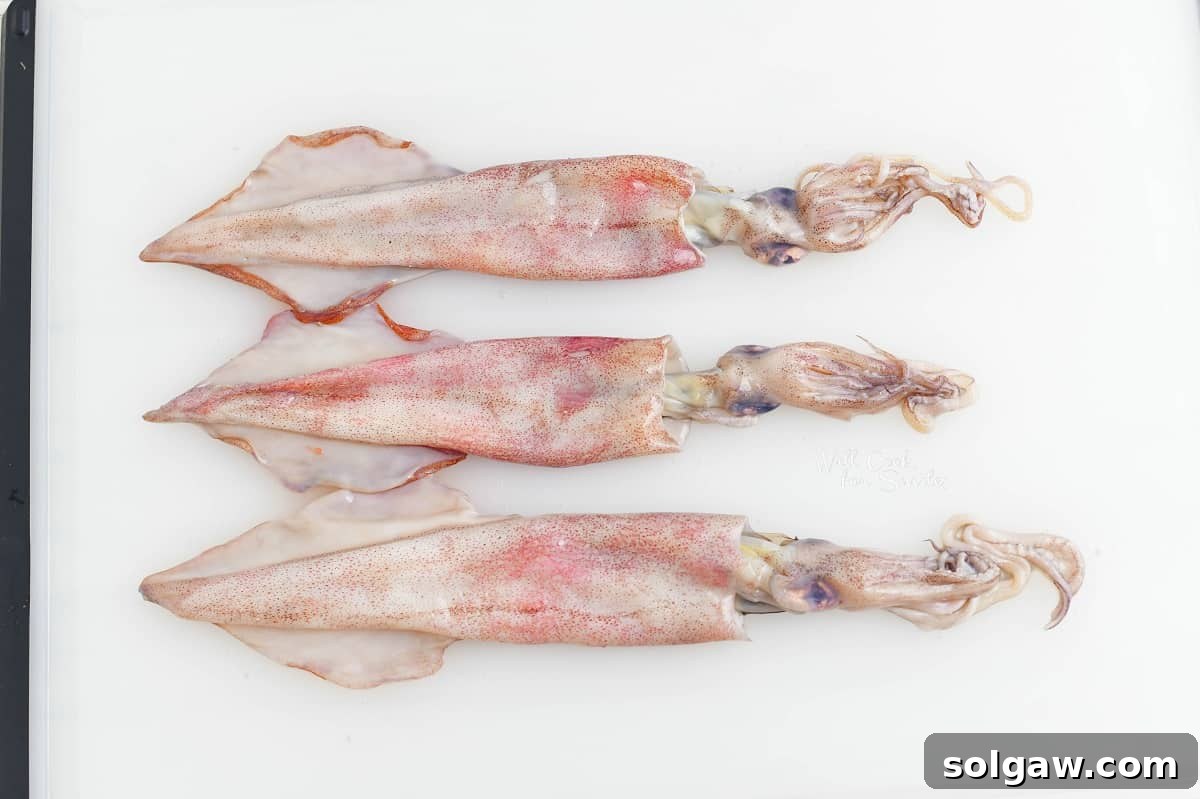
- Lay out your squid: Place your whole squid on a large, clean cutting board. Observe its structure: you’ll see the head, which includes the tentacles, and the main body, often called the mantle, with fins attached at one end.
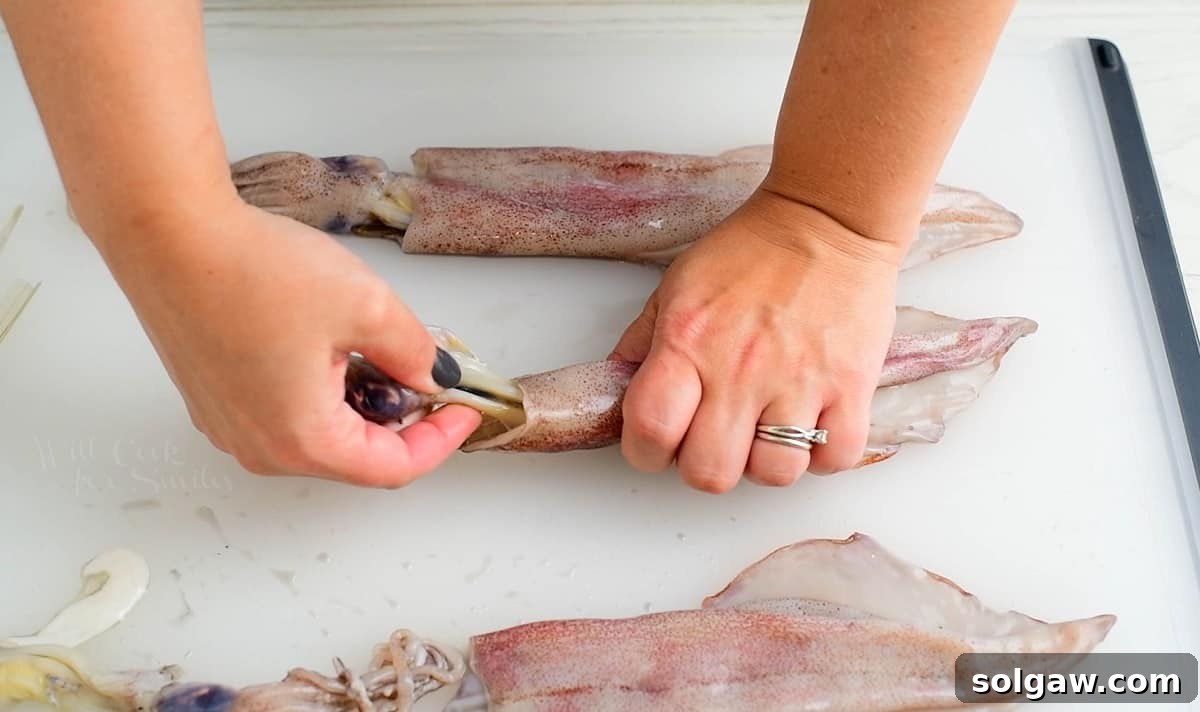
- Grasp and pull: Hold the mantle firmly in one hand, but avoid squeezing too tightly, as this could damage the delicate flesh. With your other hand, grip the head and tentacles. Gently but firmly pull the head away from the mantle. You might need to use a slight twisting motion to help detach the internal organs, which should come out in one connected piece.
- Check the mantle: After separating, inspect the inside of the mantle. If any innards remain, gently squeeze the mantle from the closed end towards the opening, much like coaxing toothpaste from a tube, to push out any lingering bits. The mantle should be clean and hollow.
2. Removing the Beak and Preparing Tentacles
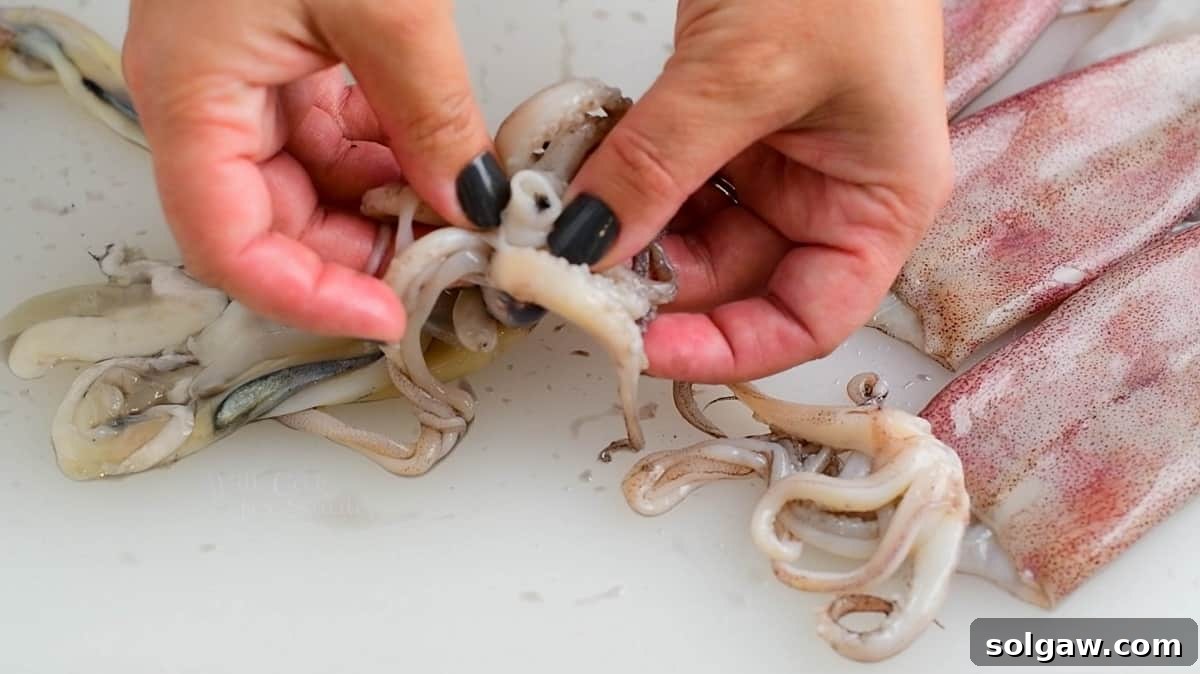
- Isolate the tentacles: The eyes and hard beak of the squid are not edible. Using a sharp knife, make a cut just above where the tentacles meet the head, and below the eyes. Discard the head and eyes.
- Extract the beak: At the center of the ring of tentacles, you’ll find a small, hard, parrot-like beak. Squeeze the base of the tentacles to expose the beak, then gently pinch and pull it out. It should come out easily. Discard the beak.
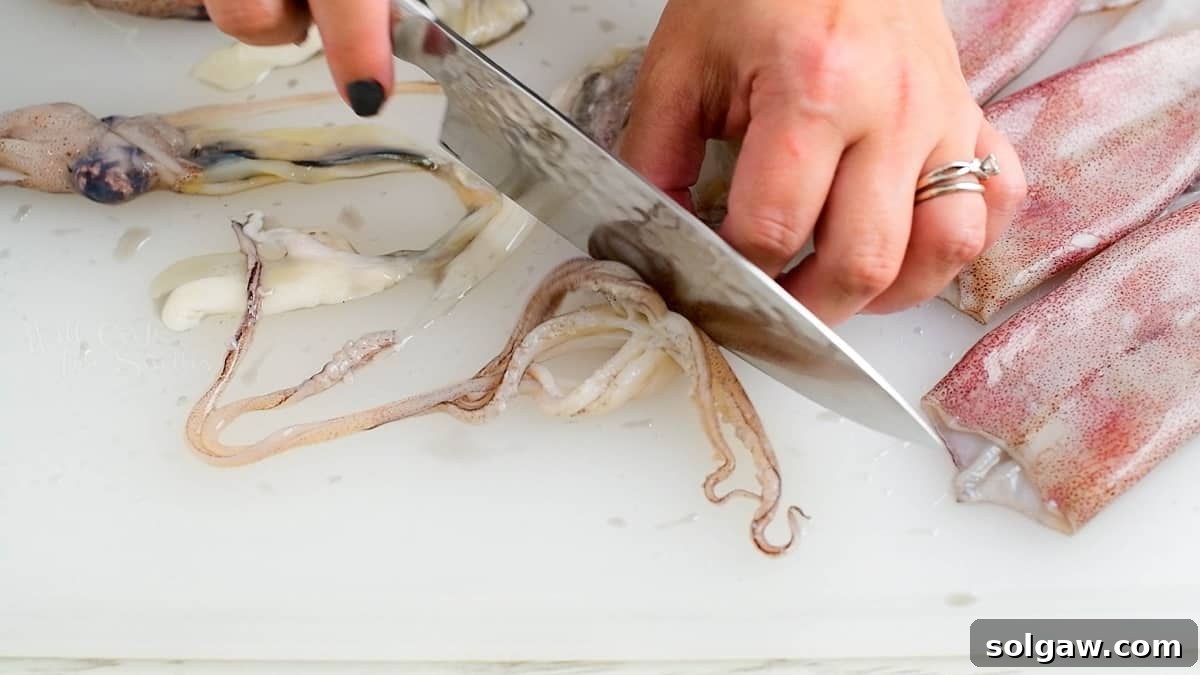
3. Removing the Cartilage (Quill/Cuttlebone)
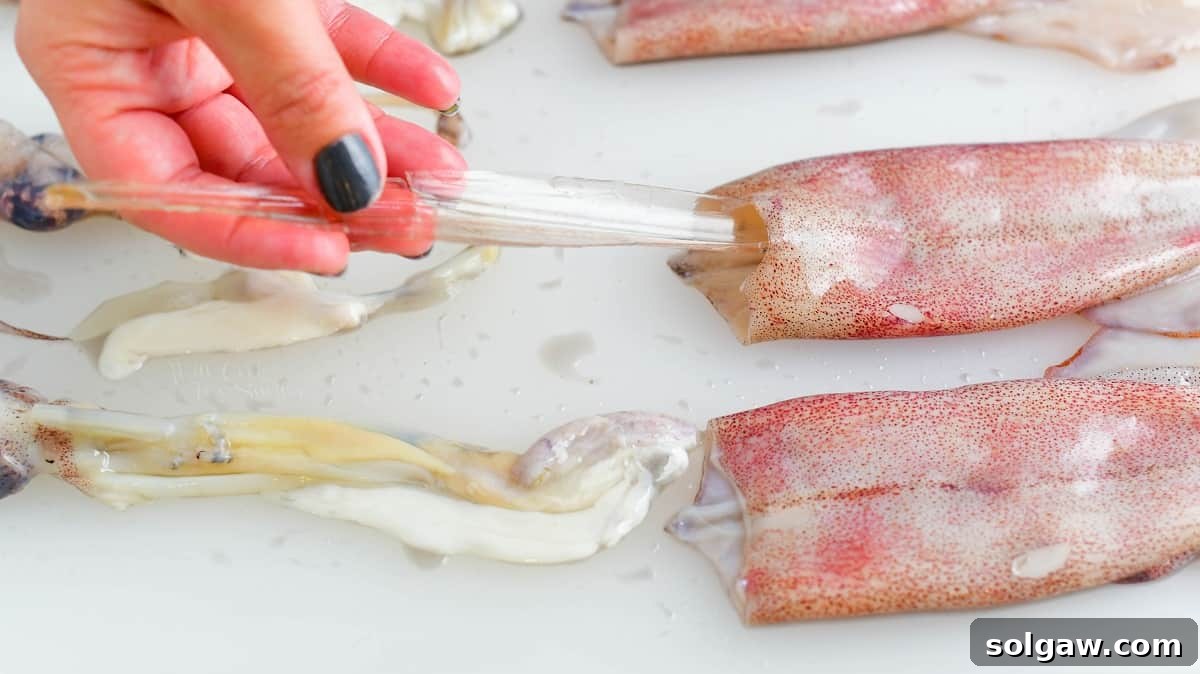
- Locate the quill: Inside the mantle, you’ll find a clear, thin, plastic-like strip. This is the squid’s gladius, or “cuttlebone.” It provides structural support but is not edible.
- Pull it out: Simply grasp the wider end of the quill at the mantle’s opening and gently pull it out in one smooth motion. If it breaks, don’t worry; you can push any remaining pieces through from the other end.
4. Peeling the Skin (Optional) and Preparing Fins
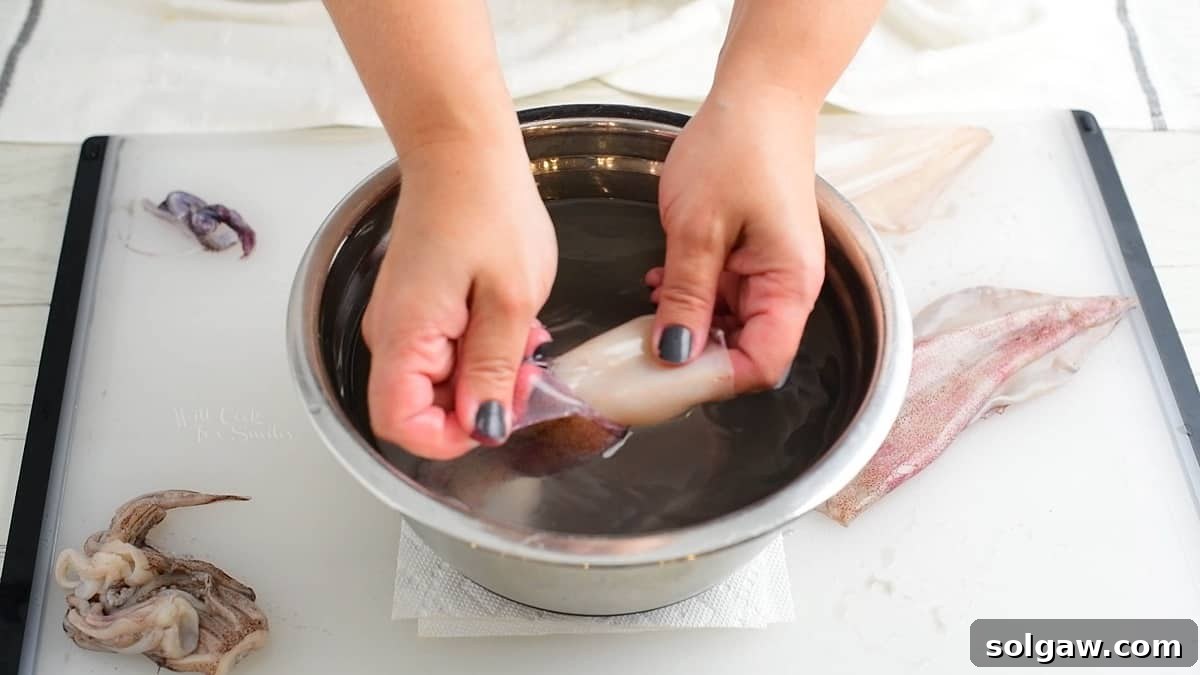
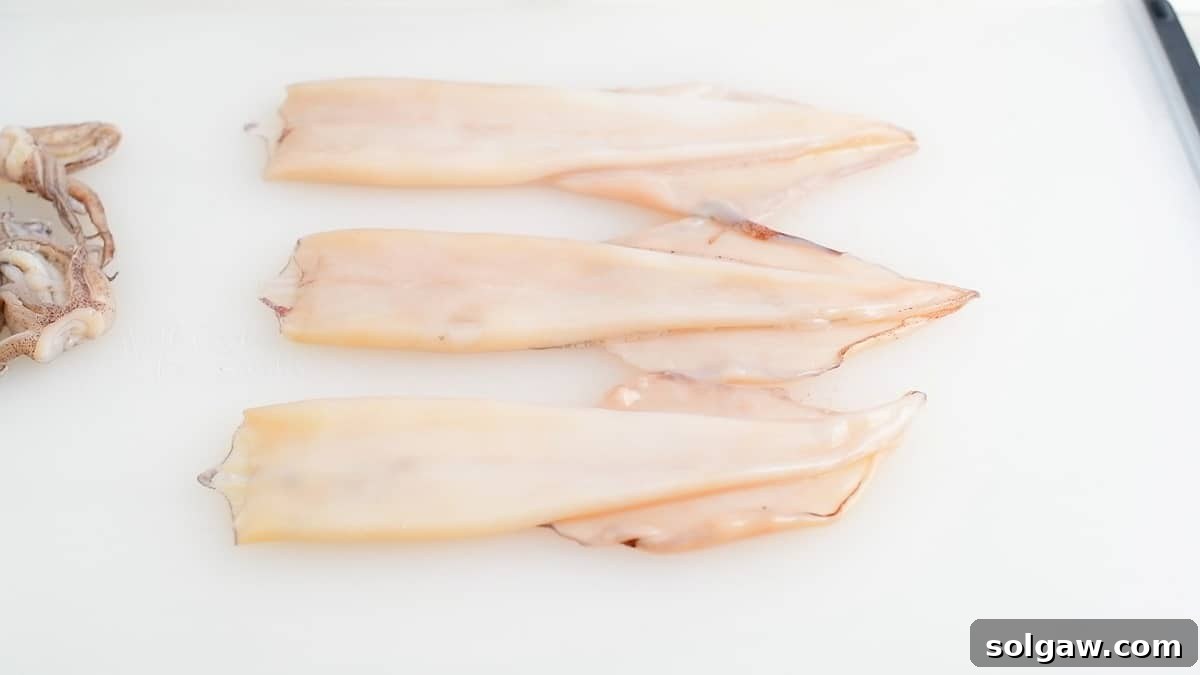
- To skin or not to skin? This step is largely a matter of preference. The squid’s skin is edible and can add a slightly richer flavor and texture, which some chefs appreciate. It also gives the cooked squid a more rustic, natural appearance. However, many culinary traditions prefer to remove the skin for a pristine, clean-white presentation, especially for dishes like fried calamari rings. If you’re going for classic fried calamari, a skinless mantle will yield more uniformly white rings.
- How to skin: If you choose to remove the skin, simply pinch it firmly at the opening of the mantle and gently peel it away. It usually comes off quite easily in strips. If it tears, just re-pinch and continue peeling.
- Preparing the fins: The triangular fins attached to the mantle are also edible and delicious. If you desire perfectly uniform calamari rings, you might choose to remove the fins. However, they can be sliced into strips and cooked alongside the mantle, adding another textural element to your dish.
5. The All-Important Rinse
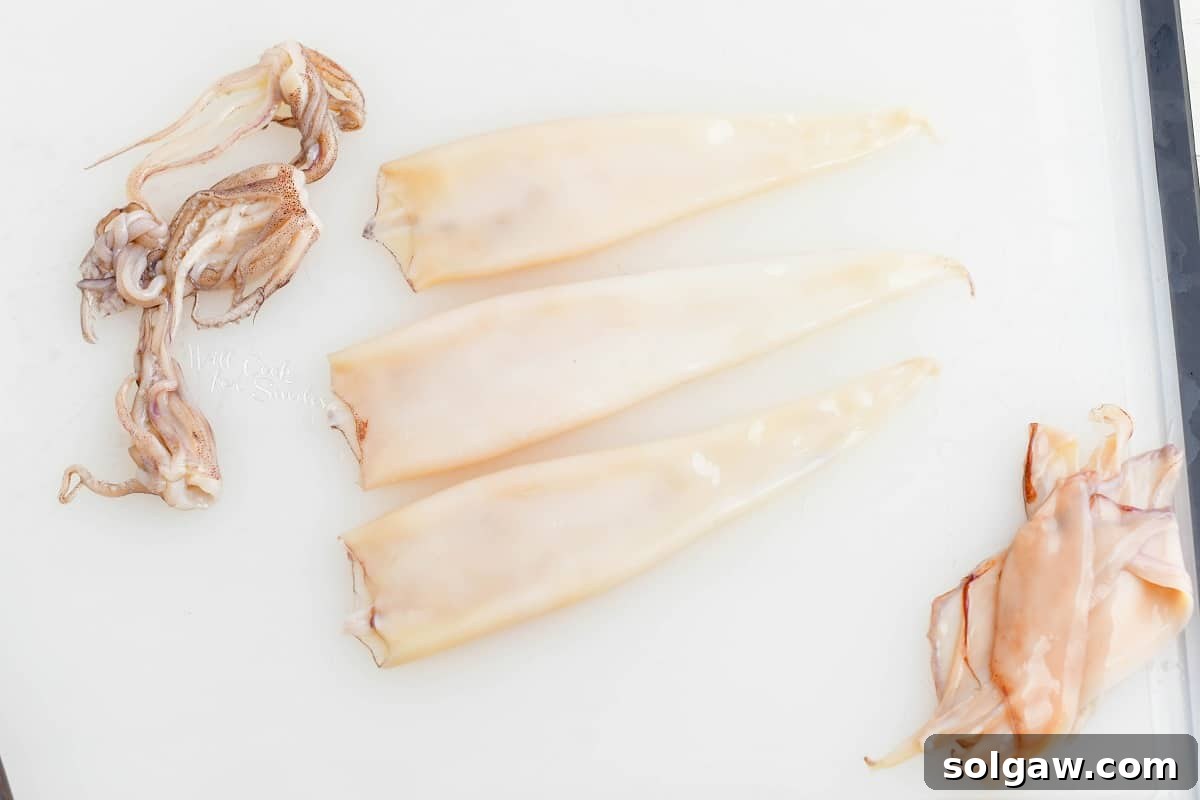
- Thorough cleaning: Once the mantle is hollowed, the quill removed, and the tentacles separated, give both the mantle and the tentacles a thorough rinse under cold running water. It’s crucial to rinse the inside of the mantle exceptionally well to remove any lingering bits of innards or grit.
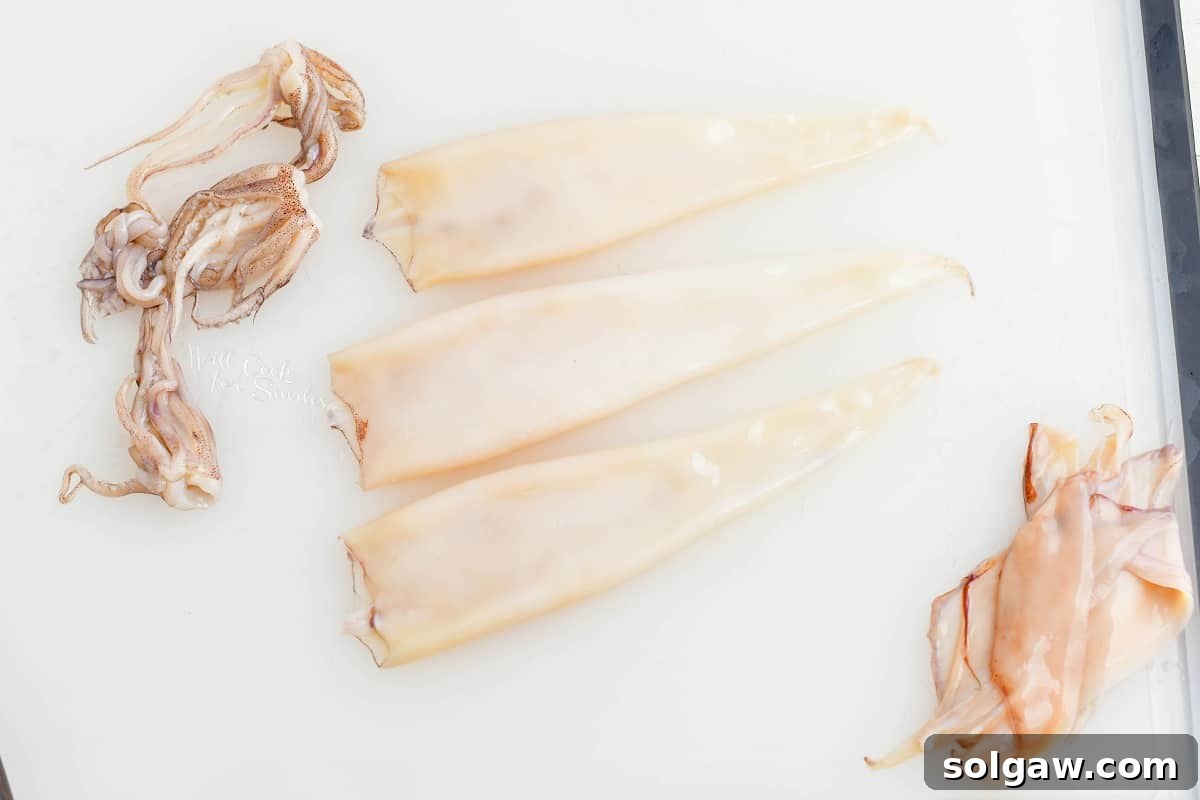
At this stage, you have perfectly cleaned squid bodies (mantles) and tentacles, ready for your culinary adventures! You can now slice the mantle into rings for classic fried calamari, chop it for paella, add it to a hearty soup, or incorporate it into a rich risotto.
Harnessing the Delicacy: How to Extract Squid Ink
- Locating the ink sac: The ink sac, a small, silvery-black vein-like pouch, is typically found among the innards that you pulled out of the mantle. If you’ve managed to keep it intact, consider yourself lucky! Squid ink is a prized ingredient in many culinary traditions, often harvested and sold separately at a premium by seafood markets.
- Gentle extraction: Carefully separate the ink sac from the rest of the innards, being extremely gentle to avoid puncturing it prematurely.
- Releasing the ink: To extract the ink, hold the sac over a tablespoon of water, broth, or white wine. Puncture the sac with the tip of a sharp knife or a needle, and gently squeeze out the dark, viscous liquid. A little goes a very long way, as the ink is highly concentrated and potent.
- Culinary uses: This rich, briny ink can be a fantastic natural food coloring and flavoring agent. It’s famously used to make striking black pasta, adds depth and umami to risottos, paellas, and soups, and can even be incorporated into bread dough for a unique presentation.
The Secret to Tender Squid: Understanding Cooking Methods
- The Golden Rule: Fast and Hot, or Low and Slow. Squid has a naturally firm, chewy texture due to its muscle fibers. The key to preventing it from becoming rubbery is to cook it either very quickly at high heat, or very slowly at a low temperature. There is no in-between; moderate cooking times will result in tough, unappetizing squid.
- Quick Cooking Methods:
- Frying: The most popular method, classic fried calamari, involves battering and deep-frying squid rings for just 1-2 minutes until golden brown and tender.
- Searing or Grilling: Thinly sliced or whole small squid can be quickly seared in a hot pan or grilled over high heat for 1-3 minutes per side. These methods create a beautifully tender texture with a slight char. Marinating the squid for 15-30 minutes beforehand can add extra flavor and help tenderize it further.
- Sautéing: A quick sauté in olive oil with garlic, chili, and herbs is another excellent way to cook squid rapidly, perfect for adding to pasta or serving as a light appetizer.
- Slow Cooking Methods:
- Braising and Stewing: For dishes that require longer cooking times, such as hearty soups, rich stews like cioppino, or Spanish paella and Italian risotto, squid can be slowly simmered for at least 30 minutes, and often up to an hour or more. This extended cooking time breaks down the muscle fibers, transforming the squid into an incredibly tender, melt-in-your-mouth delicacy.
- Curries and Sauces: Squid also excels in slow-cooked curries or tomato-based sauces, where it absorbs the flavors of the accompanying ingredients beautifully.

Storage Tips for Fresh and Cleaned Squid
Once your squid is cleaned, proper storage ensures it remains fresh and delicious:
- Refrigeration: For immediate use, place cleaned squid in a bowl, cover it with ice, and refrigerate. Use within 1-2 days. Alternatively, store in an airtight container in the coldest part of your refrigerator.
- Freezing: Cleaned squid freezes exceptionally well. Pat the mantles and tentacles dry, then place them in an airtight freezer bag or container, removing as much air as possible. Frozen squid can maintain its quality for up to 3-6 months. Thaw slowly in the refrigerator before cooking.
Purchasing the Best Squid: What to Look For
To ensure the best flavor and texture, choose fresh, high-quality squid:
- Appearance: Look for squid with vibrant, iridescent skin. Avoid any squid that appears dull, discolored, or bruised.
- Smell: Fresh squid should have a mild, briny, sea-like smell. Steer clear of any squid that has a strong, “fishy” or ammonia-like odor.
- Texture: The flesh should be firm and moist, not slimy or overly dry.
- Whole vs. Cleaned: As discussed, buying whole squid is generally more economical and ensures maximum freshness. If buying pre-cleaned, ensure the mantles are still white and plump, not yellowish or shriveled.
How To Clean Squid
Print Recipe
Appetizer, Main Course
American
10 minutes
10 minutes
4
104
kcal
Lyuba Brooke
Ingredients
-
1
lb
whole calamari
(as needed)
Instructions
Separate the head:
-
Pick up the squid and hold it firm but not too tight by the mantle (body). Slowly but firmly pull by the head to pull all the innards out from inside the mantle. You can use a little twisted motion to help separate the innards.
-
If any innards are still left inside the mantle, place it on the cutting board and gently squeeze and push them out of the opening.
Cut off tentacles and take out the beak:
-
Cut the space right above where tentacles attach to the head and below the eye. Look underneath the tentacles to see the beak. Squeeze to retract the beak and gently pull it out. It should come out pretty easy.
Remove the cuttlebone (cartilage):
-
The cartilage, also known as cuttlebone, is a thin piece of flat and clear bone. It’s very easy to pull out, so just grab it at the mantle opening and pull in one gentle motion. If the cartilage breaks, you can push it through from the top as well.
Ink Sac (optional):
-
The ink sac might have come out with the innards and is excellent for flavoring pastas and rice dishes. If you have it, you’re lucky, as many seafood markets harvest it first to sell.
-
The ink sac looks like a small black vein among the innards. Gently pull it out, trying not to pop it. To get the ink out, puncture it with a knife tip and squeeze it into a tablespoon of water, broth, or white wine. This liquid can be added when making pasta. (A small amount goes a long way!)
Take off the skin (optional):
-
You can stop here, or you can take it a step further and clean off the skin. Many chefs prefer to keep the skin on because it’s edible and can be quite pretty. On the other hand, many believe that clean, white-looking calamari makes for better presentation.
-
To clean off the skin, simply pinch it at the opening of the body and gently pull it off. It peels off fairly easily, and if it rips, just pinch and pull again.
-
Fins: If you are making calamari and want perfect little rings, you may remove the fins. They are edible, so you can also use them in your calamari by slicing them into strips.
Rinse:
-
Rinse out the mantle and the tentacles thoroughly in cold water. Make sure to rinse inside the body well!
Nutrition
Calories:
104
kcal
|
Carbohydrates:
3
g
|
Protein:
18
g
|
Fat:
2
g
|
Saturated Fat:
0.4
g
|
Polyunsaturated Fat:
1
g
|
Monounsaturated Fat:
0.1
g
|
Cholesterol:
264
mg
|
Sodium:
50
mg
|
Potassium:
279
mg
|
Vitamin A:
37
IU
|
Vitamin C:
5
mg
|
Calcium:
36
mg
|
Iron:
1
mg
Tried this recipe?
Mention @willcookforsmiles or tag #willcookforsmiles!
Conclusion: Embrace the Versatility of Squid
Cleaning squid at home is a simple yet rewarding skill that opens up a world of culinary possibilities. From quick-fried appetizers to slow-simmered stews, this versatile cephalopod can be adapted to countless dishes, offering a unique flavor and texture that delights the palate. By following these straightforward steps for cleaning and understanding the fundamental rules of cooking, you’ll be well on your way to preparing exquisite squid dishes that impress family and friends. Don’t be shy – dive into the delicious world of fresh calamari!