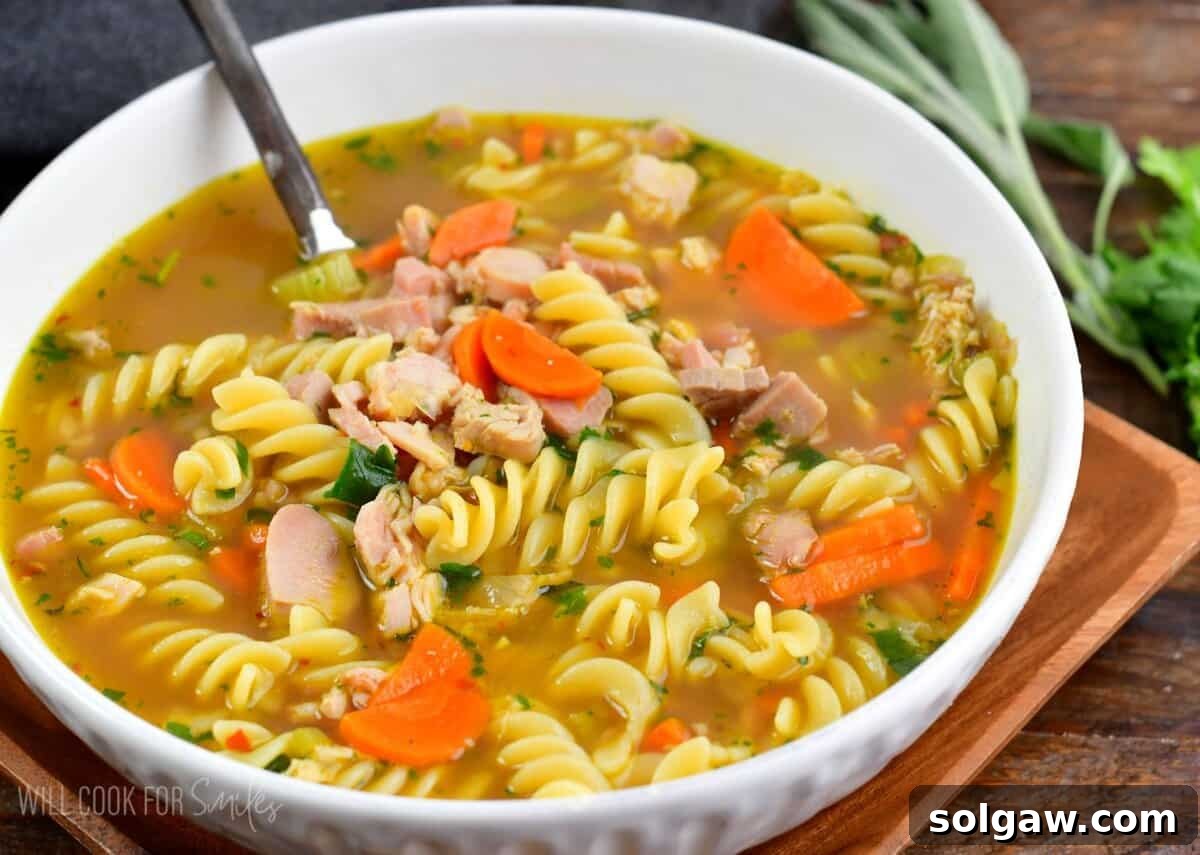
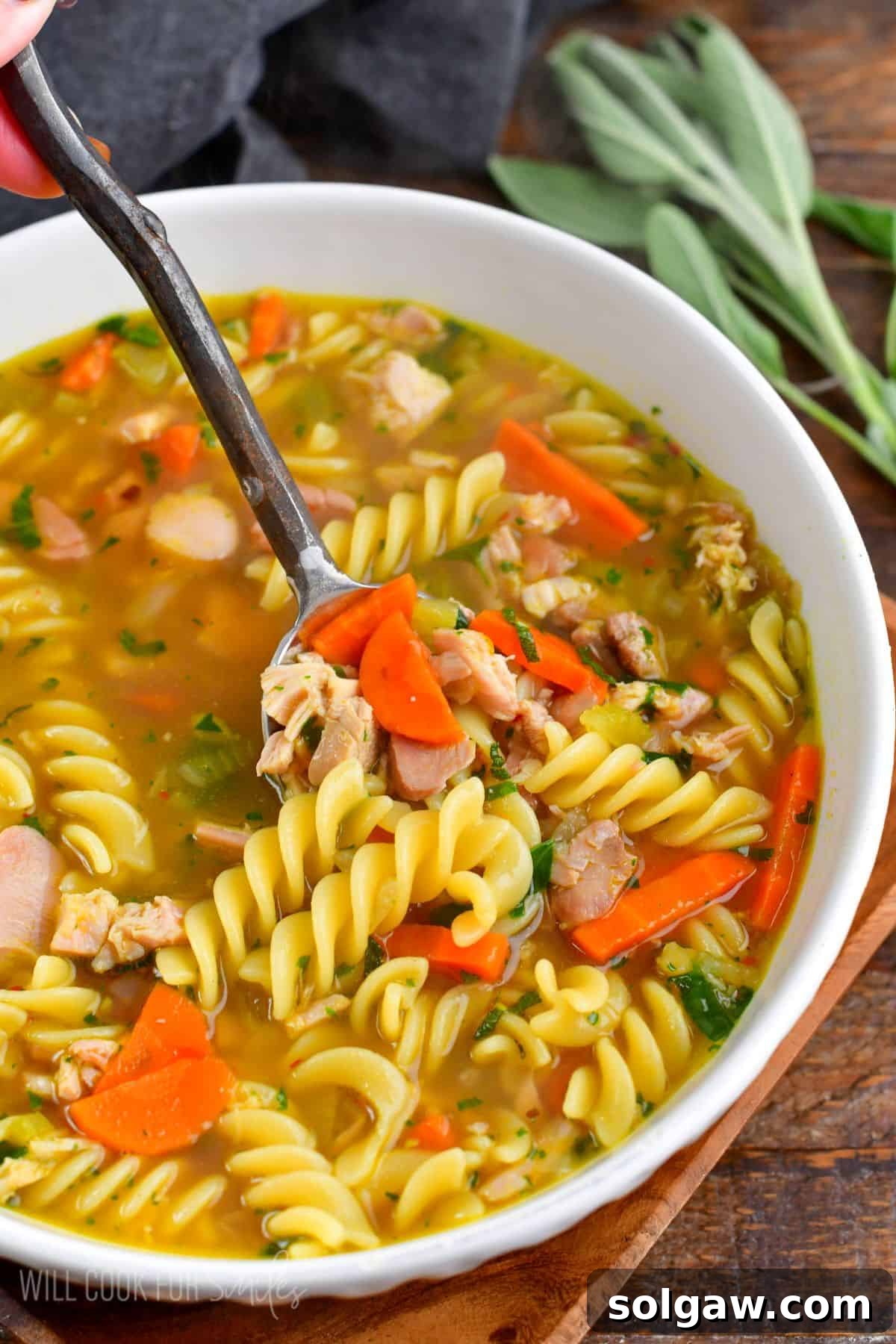
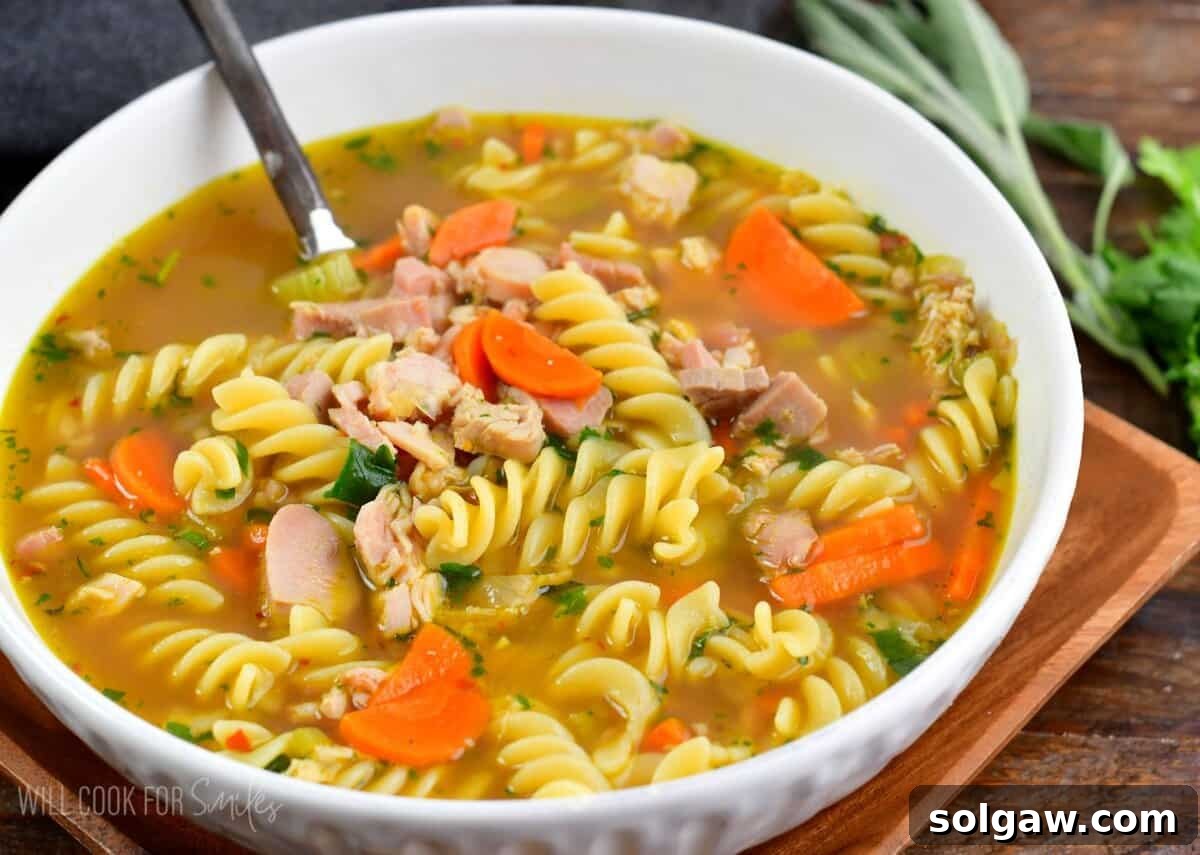
There’s an undeniable magic in transforming humble leftovers into something extraordinary. After years spent in professional kitchens and countless hours cooking for my family, I’ve come to appreciate that some of the most comforting and soul-nourishing meals often emerge from making the absolute most of what we have. This homemade turkey noodle soup stands as a shining example of that principle. It’s more than just a recipe; it’s a celebration of resourcefulness, turning every bit of holiday turkey, even the carcass, into a profoundly flavorful and easy-to-prepare dish. The turkey carcass, in particular, is the secret to an incredibly rich, aromatic homemade turkey stock – the very heart of this heartwarming soup. I always save it to create a deep, complex foundation that store-bought broth simply can’t replicate. Beyond this beloved soup, there are numerous creative recipe ideas for holiday leftovers that prevent food waste and extend the festive flavors.
This turkey noodle soup is designed to be both simple and satisfying, embracing the robust flavors of roasted turkey, fresh vegetables, and savory herbs. It’s a perfect post-holiday meal, offering warmth and nourishment without excessive effort. Whether you’re looking to use up that leftover Thanksgiving turkey or simply craving a classic comfort food, this recipe provides a clear, step-by-step guide to crafting a bowl of pure deliciousness. The process involves two main components: preparing a robust turkey stock from the carcass, and then assembling the soup itself. Each step is carefully detailed to ensure even beginner cooks can achieve a restaurant-quality result right in their own kitchen.
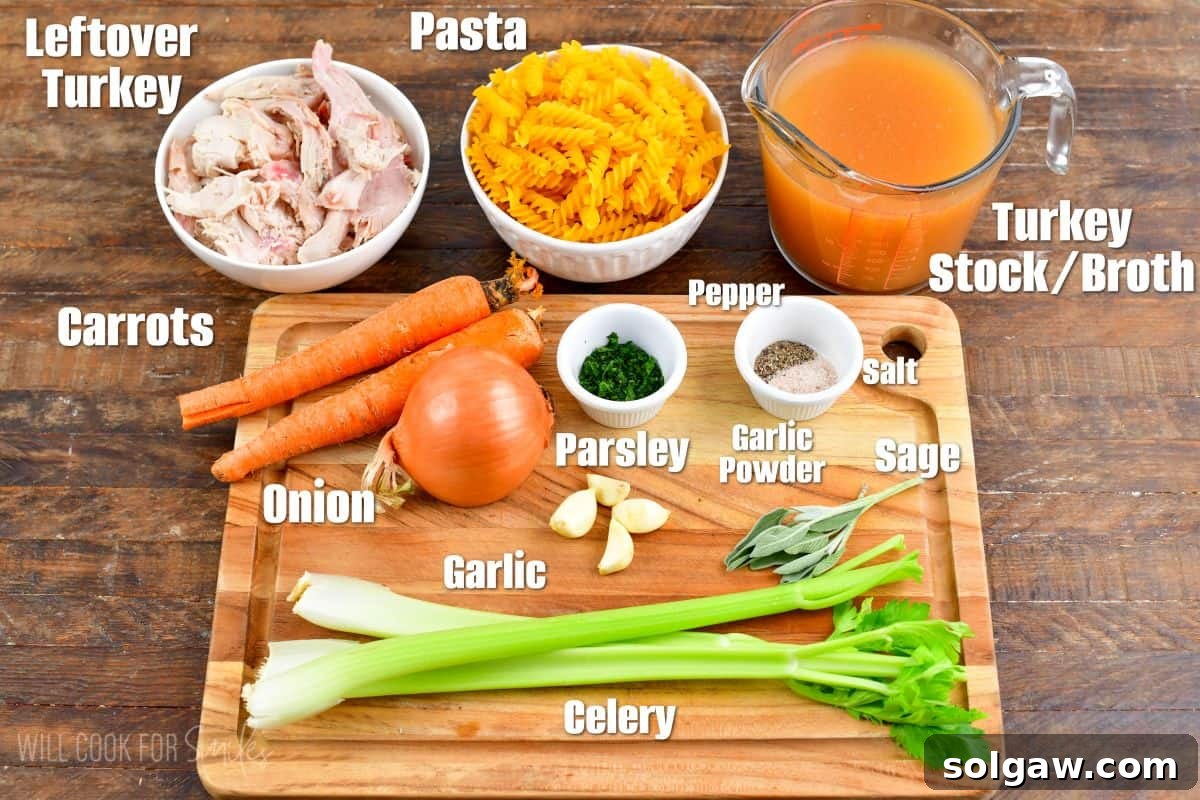
Key Ingredients, Expert Tips, and Smart Substitutions for Perfect Turkey Noodle Soup
Crafting the perfect turkey noodle soup relies on a few key ingredients and smart techniques. Understanding each component ensures a rich, deeply flavorful broth and tender, satisfying additions.
Turkey Carcass & Leftover Turkey Meat: The Soul of Your Soup
The turkey carcass is truly the star here, providing an unparalleled depth of flavor for your homemade stock. Don’t discard it after your holiday feast! Even if you only made a roasted turkey breast, save the bones and any drippings. You can easily freeze the carcass and leftover meat for later use, making this a convenient option long after the holidays are over. For the best possible flavor and texture in your soup, I highly recommend using a mix of both light and dark turkey meat. The light meat offers a tender, lean bite, while the dark meat contributes richness and a more robust turkey flavor, creating a well-rounded and satisfying soup experience.
Substitution Tip: If a turkey carcass isn’t available or you’re short on time, don’t worry! You can still enjoy this comforting soup. Opt for a high-quality, store-bought turkey or chicken stock. Always look for “low sodium” or “no salt added” options to control the seasoning precisely. To elevate store-bought stock, simmer it with a few aromatics like an onion half, a carrot, a celery stalk, and a couple of garlic cloves for 15-20 minutes before proceeding with your soup. This quick step adds a wonderful homemade touch.
Essential Vegetables for Stock and Soup Base
For both the initial stock and the final soup, we rely on the classic trio: onion, carrots, and celery. This aromatic foundation, known as mirepoix, creates a beautifully balanced and sweet-savory flavor base. When preparing the stock, rough chopping is sufficient as these vegetables will be strained out. For the actual soup, chop them into uniform, bite-sized pieces for an appealing presentation and even cooking.
Expert Tip: Many wonder if they should save the vegetables from making stock. The answer is generally no. By the time the stock has simmered for hours, all the flavor and nutrients have been extracted into the liquid, leaving the vegetables soft, mushy, and largely flavorless. They have served their purpose in creating that rich golden broth.
Fresh Herbs: Elevating the Aroma
Fresh thyme, sage, and parsley are traditional poultry herbs that perfectly complement the natural flavors of turkey. For the homemade stock, you can use whole sprigs of these herbs since they will be strained out. Their oils and aromas will infuse deeply into the broth. However, for the finished turkey noodle soup, it’s best to finely mince the sage and parsley. This ensures their vibrant flavors are evenly distributed throughout each spoonful without overwhelming the other ingredients.
Substitution Tip: If fresh herbs aren’t on hand, dried herbs can be used as a substitute. A general rule is to use about 1/2 to 1/3 the amount of dried herbs compared to fresh, as dried herbs are more concentrated. For the stock, a good substitute would be 1 tablespoon of dried parsley, 2 teaspoons of dried thyme, and 1 teaspoon of dried sage.
Pasta: Your Choice of Comfort
The beauty of noodle soup lies in its versatility when it comes to pasta. You can use any shape you adore – from small shells, rotini, and ditalini to orzo, or even wider egg noodles like tagliatelle or pappardelle. Just remember that different pasta shapes have varying cooking times, so adjust accordingly to achieve that perfect al dente texture. The goal is tender, not mushy, noodles.
Substitution Tip: To make this a gluten-free turkey noodle soup, simply swap regular pasta for your favorite gluten-free variety. Most gluten-free pastas cook similarly to their traditional counterparts, but always follow package directions for best results.
Crafting the Foundation: How to Make Rich Homemade Turkey Stock
Making your own turkey stock is a rewarding process that yields a superior flavor unmatched by store-bought options. It transforms what might be discarded into the savory backbone of your soup. This deep, flavorful stock is worth the effort and significantly elevates the final dish.
Step 1: Thoughtful Ingredient Preparation
Before you begin, carefully pick off any remaining turkey meat from the carcass, aiming for approximately 3 cups, and set it aside for your soup. This ensures no delicious meat goes to waste. Next, break or cut the turkey carcass into smaller pieces. Kitchen shears are excellent for this, or you can even use your hands to gently break it down. Packing the carcass snugly into your pot is crucial as it allows for maximum flavor extraction. Roughly chop the onion, carrots, and celery. Don’t worry about precision here; these vegetables are purely for flavor and will be strained out later. Finally, smash the garlic cloves gently; this helps release their aromatic compounds.
Step 2: Searing the Vegetables for Depth of Flavor
Heat 2 tablespoons of avocado or olive oil in a large stock pot over medium heat. Once the oil is shimmering, add the roughly chopped onion, carrots, and celery. Allow them to sear undisturbed until a beautiful golden-brown crust forms on the bottom. This caramelization, known as the Maillard reaction, is essential for developing complex, rich flavors in your stock. Give them another stir and let them brown again. Next, create a space in the center of the pot, add the smashed garlic, and cook for less than a minute until it becomes wonderfully fragrant. Stir the garlic into the other vegetables.
Step 3: The Gentle Simmer: Infusing Every Drop with Flavor
Add the prepared turkey carcass pieces to the pot, along with the seasoning (peppercorns, bay leaves, salt) and fresh herbs (thyme, sage, parsley sprigs). Pour in enough cold water to completely cover all the ingredients, ensuring it rises about an inch above them. Bring the pot to a low boil, then immediately reduce the heat to a gentle simmer. A gentle simmer is key to a clear, flavorful stock; a rolling boil can make your stock cloudy and potentially bitter. Cover the pot with the lid slightly cracked to allow some steam to escape. Simmer for 2 hours, then remove the lid and continue to simmer for an additional hour. This uncovered period allows the stock to reduce, intensifying its savory flavors and creating a truly robust base.
Step 4: The Art of Straining
Once the simmering is complete, carefully strain the rich turkey stock through a fine-mesh strainer into a large bowl or a clean pot. Discard all the solids – the vegetables, herbs, and bones have fully imparted their essence into the liquid and no longer contribute to the flavor or texture of your stock.
Step 5: Storage for Future Culinary Creations
Your homemade turkey stock is now ready to use! If you’re not making the soup immediately, allow the stock to cool completely to room temperature. Transfer it to airtight containers, such as glass jars, for storage. It can be refrigerated for up to 2-3 days or frozen for up to 3 months. Freezing in smaller portions is a great way to have ready-to-use stock for various recipes.
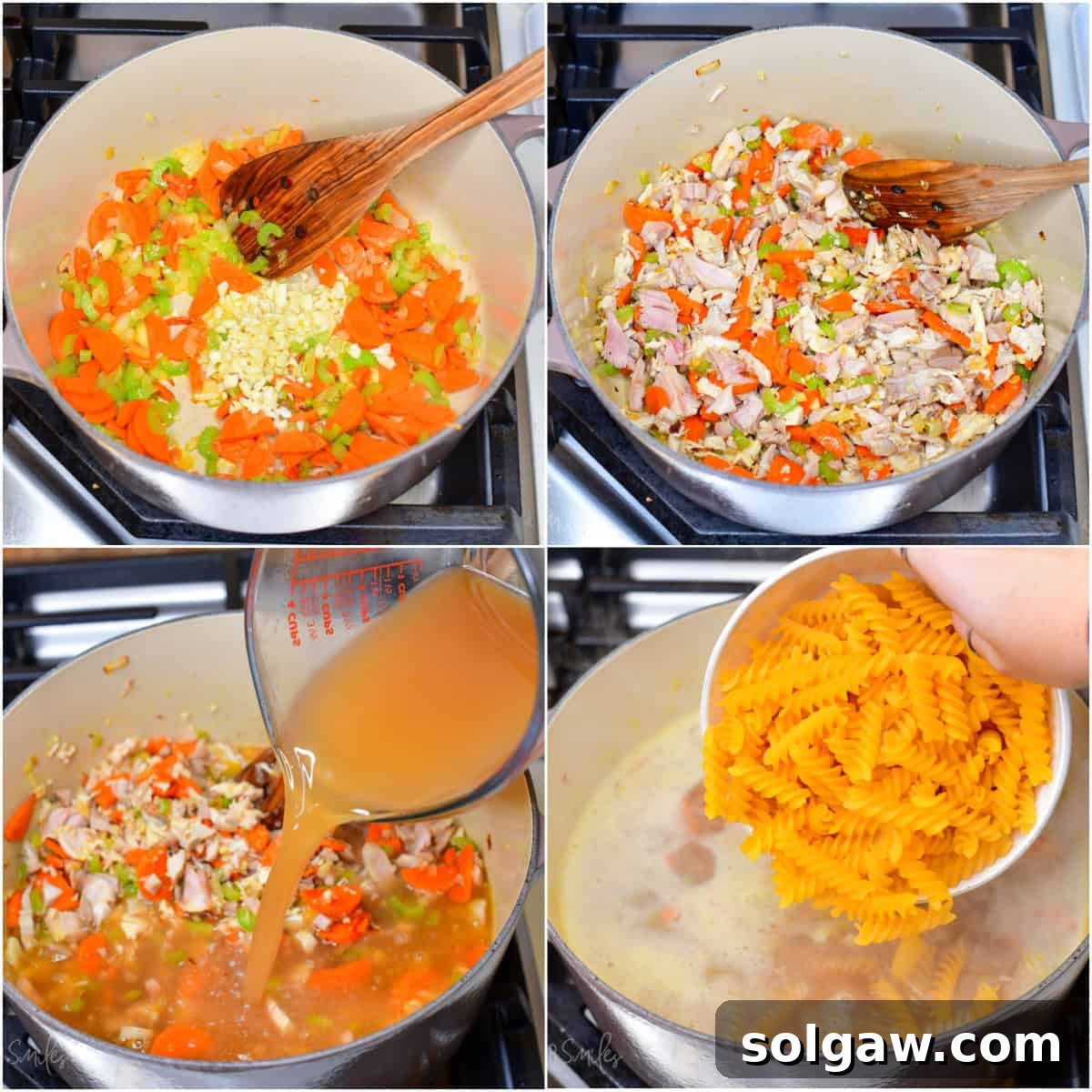
Assembling the Comfort: How to Make Delicious Turkey Noodle Soup
With your flavorful homemade turkey stock (or quality store-bought) ready, the actual assembly of the turkey noodle soup is surprisingly quick and straightforward, taking only about 30 minutes from start to finish. This recipe focuses on layering flavors to create a comforting and deeply satisfying meal.
Step 1: Efficient Prep with Mise en Place
Begin by meticulously cleaning and chopping your onion, celery, and carrots. Aim for uniform, bite-sized pieces; this ensures they cook evenly and look appealing in the soup. Smash your garlic cloves, then finely mince them to maximize their flavor release. Take a moment to measure out all your remaining ingredients, from the cooked turkey meat to the noodles and seasonings. This practice, known as “mise en place” (everything in its place), is a chef’s secret to making the cooking process flow smoothly and quickly, preventing last-minute rushes and ensuring you don’t miss a single ingredient.
Step 2: Sautéing Vegetables for a Rich Base
Preheat a large soup pot or Dutch oven over medium heat and add 2 tablespoons of avocado or olive oil. Once the oil is shimmering, add your chopped onion, celery, and carrots. Let them cook undisturbed for a couple of minutes until they begin to achieve a golden-brown hue on the bottom. This brief caramelization is crucial, as it deepens their natural sweetness and adds significant depth of flavor to the broth, laying a robust foundation for your soup.
Step 3: Infusing with Fragrant Garlic
Carefully push the sautéed vegetables to the edges of the pot, creating a clear space in the center. Add the finely minced garlic to this hot spot, allowing it to cook quickly for about 30-45 seconds, just until it releases its wonderful aroma. Be vigilant and stir frequently to prevent it from burning, which can turn garlic bitter. Once fragrant, stir the garlic thoroughly into the vegetables, distributing its flavor evenly.
Step 4: Incorporating the Leftover Turkey
Now, stir in your leftover cooked turkey meat, whether it’s chopped or shredded. Since the turkey is already cooked, you’re not aiming to cook it further but rather to warm it through and allow its flavors to meld with the sautéed vegetables. Let it cook for a few minutes, stirring occasionally.
Step 5: Building the Broth and Seasoning
Pour in your delicious turkey stock (8-9 cups) and add the dry seasonings, such as garlic powder, black pepper, and crushed red pepper flakes (if using). It’s important to hold off on adding the fresh herbs at this stage to preserve their bright, vibrant flavors until the very end. Before adding any more salt, taste the broth. Homemade stock and even some store-bought varieties can vary in their sodium content. Adjust the saltiness as needed. Bring the pot to a low boil, then reduce the heat to maintain a gentle simmer for a few minutes, allowing all the flavors to marry beautifully.
Step 6: Cooking the Noodles to Perfection
Add your chosen egg noodles or pasta to the simmering soup. Stir well to ensure they are fully submerged and prevent sticking. Cook the noodles according to package directions until they are just tender, or “al dente.” Remember that they will continue to soften slightly from the residual heat of the hot soup even after you remove it from the stove. Therefore, it’s best to take them off the heat when they are slightly firmer than your desired final texture.
Step 7: The Fresh Finishing Touch and Serving
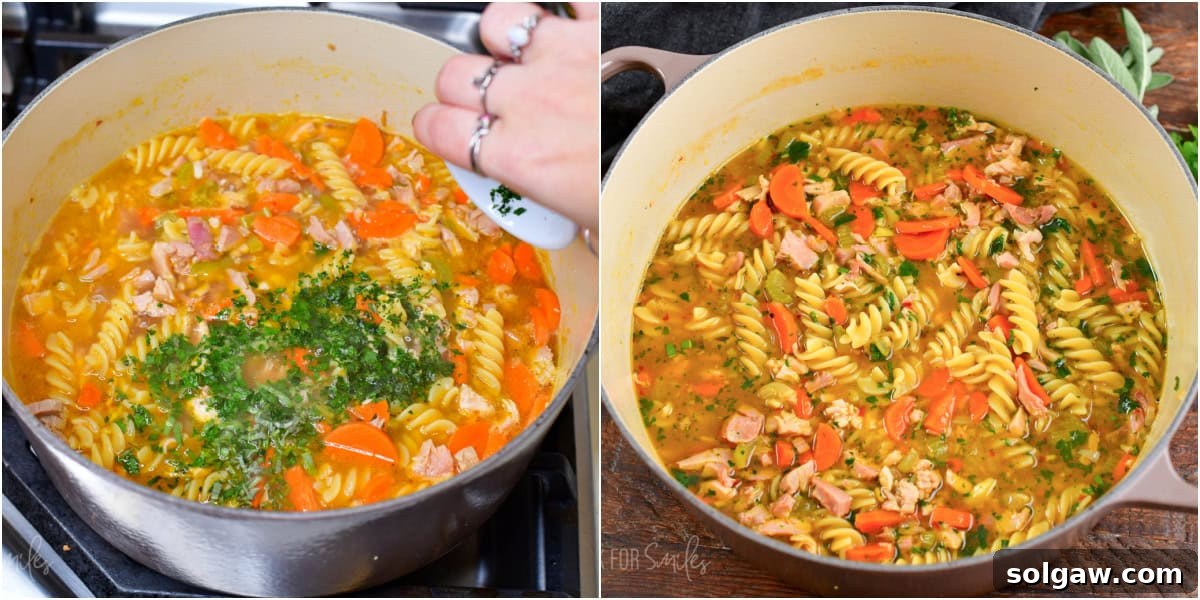
Once the noodles are perfectly cooked, stir in the minced fresh sage and parsley. Immediately turn off the heat. Adding fresh herbs at this final stage is crucial; it ensures their delicate flavors remain bright, fresh, and aromatic, contributing a vibrant herbaceous note to the soup. Serve the turkey noodle soup right away, while the noodles are at their best and the broth is steaming, full of fragrance and warmth. Enjoy this comforting bowl of homemade goodness!
Creative Variations to Elevate Your Turkey Noodle Soup
This classic turkey noodle soup recipe is fantastic on its own, but it also serves as an excellent canvas for customization. Feel free to experiment with these variations to suit your taste or what you have on hand:
- A Zesty Twist with Lemon: A squeeze of fresh lemon juice stirred in just before serving is highly recommended! The bright, acidic notes of lemon beautifully cut through the richness of the soup, adding a refreshing zest that truly awakens the flavors.
- Boost with Greens: For an extra dose of nutrients and a pop of color, stir in chopped kale, Swiss chard, or collard greens during the last few minutes of cooking. They will wilt perfectly in the hot broth.
- Switch to Rice: If you prefer rice over noodles, simply swap the pasta for cooked white or wild rice. Add it to the soup at the very end, just long enough to heat through, as pre-cooked rice can absorb a lot of liquid.
- Creamy Indulgence: For a richer, more luxurious broth, stir in a splash of heavy cream or half & half at the very end of cooking, just before serving. This adds a wonderful creaminess without making the soup too heavy.
- Year-Round Comfort: Love these comforting flavors but no leftover turkey? Try my equally delicious homemade chicken noodle soup, which uses similar techniques and ingredients for a cozy meal any time of year.
Storing, Freezing, and Reheating Your Turkey Noodle Soup
Proper storage is key to enjoying your delicious turkey noodle soup for days to come, or even saving it for a future meal. Here’s how to ensure it remains as comforting as the day it was made.
Storing Leftovers in the Refrigerator
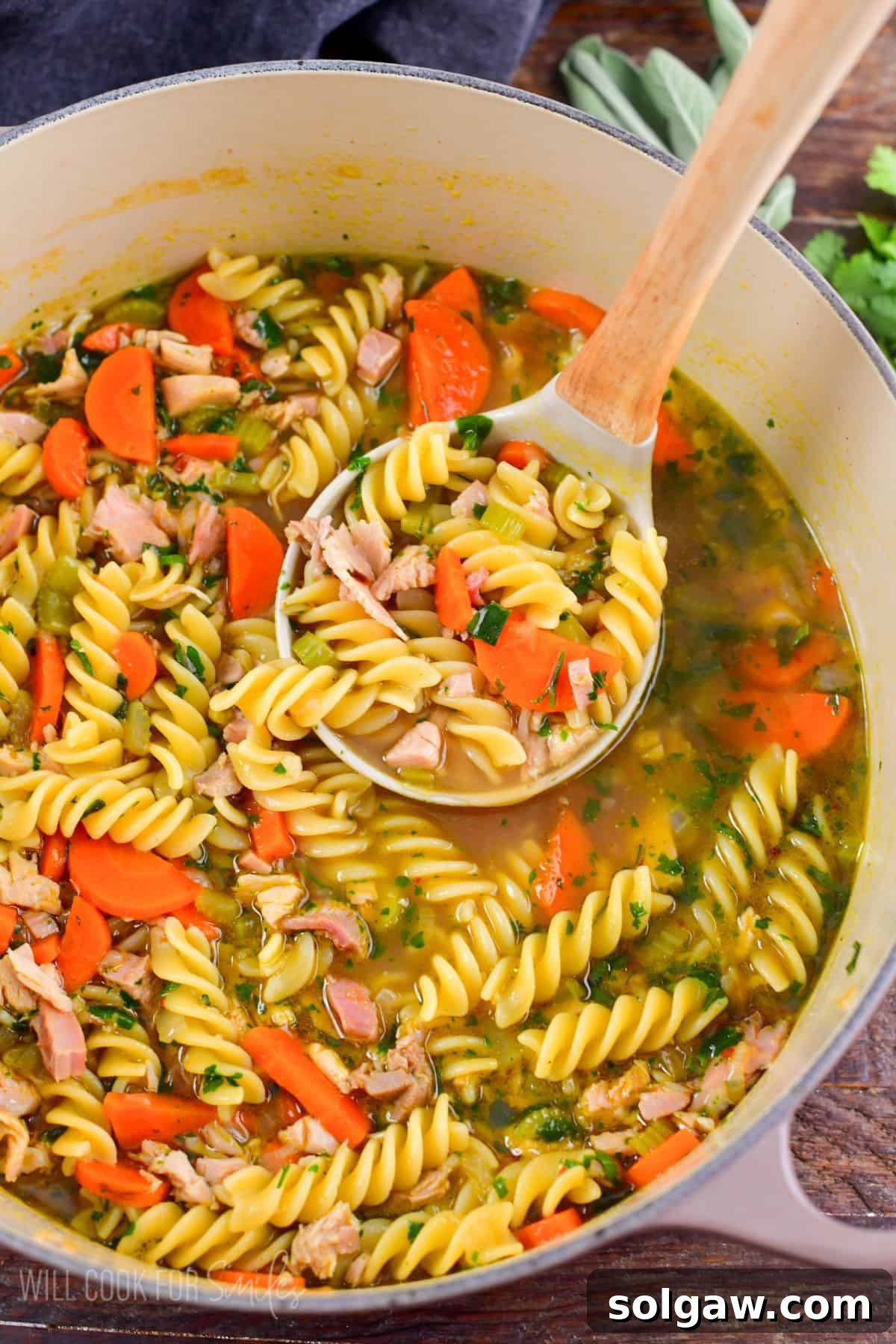
To store leftover soup, transfer it to an airtight container and refrigerate promptly. It will keep beautifully in the refrigerator for 3-4 days. As the soup sits, the noodles will continue to absorb liquid and expand, which will naturally thicken the broth. If you prefer a thinner, brothier consistency when reheating, simply add a splash of extra turkey stock or water.
Reheating for Continued Enjoyment
When you’re ready to enjoy your leftovers, reheat the soup gently on the stovetop over medium-low heat, stirring occasionally until it’s warmed through. For individual portions, the microwave works well; heat in 30-second intervals, stirring in between, until hot. Remember to add that extra splash of liquid if you desire a looser broth, as mentioned above.
Freezing for Long-Term Storage
For the best results when freezing, it is highly recommended to freeze the soup without the pasta. Noodles, especially egg noodles, tend to become mushy and break down when thawed and reheated after being frozen in liquid. To freeze, allow the soup (without noodles) to cool completely to room temperature. Transfer it to freezer-safe containers or heavy-duty freezer bags, leaving about an inch of headspace for expansion. Label with the date and freeze for up to 2-3 months.
Thawing and Preparing Frozen Soup
When you’re ready to enjoy your frozen soup, thaw it overnight in the refrigerator. Reheat the thawed soup gently on the stovetop. While it’s reheating, cook fresh pasta separately according to package directions. Once the soup is hot, you can either add the freshly cooked pasta directly to the pot, or add it to individual bowls before ladling in the hot soup. This method ensures your noodles are perfectly tender and not overcooked. Don’t forget to taste and adjust seasonings as needed after reheating.
Frequently Asked Questions About Turkey Noodle Soup
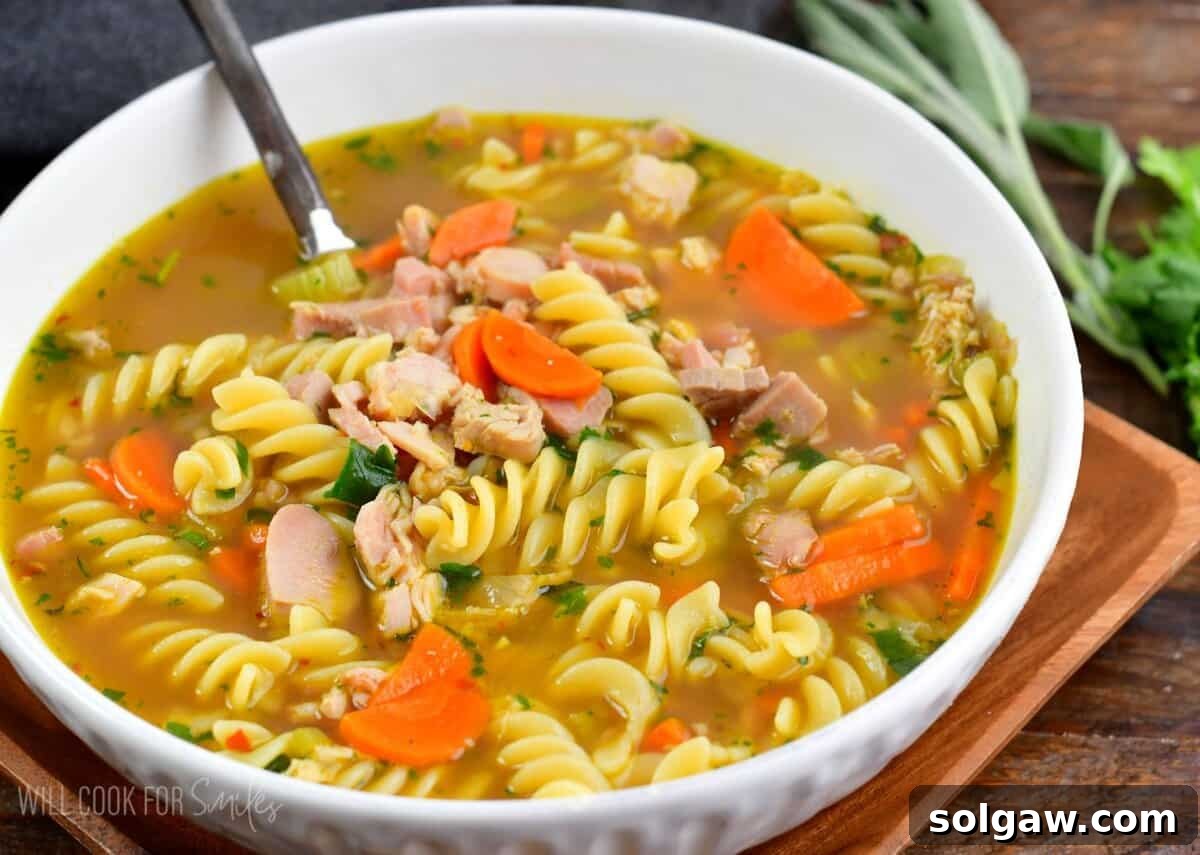
What other vegetables can I add to turkey noodle soup to make it even heartier?
Turkey noodle soup is wonderfully adaptable to a variety of vegetables. Here are some excellent additions to consider:
- Mushrooms: Sauté sliced mushrooms with the initial mirepoix (onion, carrots, celery) for an earthy depth.
- Peas: Add frozen peas during the last 5 minutes of cooking for a pop of color and sweetness.
- Green Beans: Fresh or frozen green beans can be added when you introduce the pasta to the soup.
- Corn: Stir in fresh or frozen corn kernels during the last 10 minutes of cooking.
- Leafy Greens: For an extra nutrient boost, kale, collard greens, or Swiss chard can be stirred in at the very end; they will wilt beautifully in the hot broth.
- Root Vegetables: Diced parsnips or turnips can be added along with the carrots for additional root vegetable flavor and texture.
I don’t have a turkey carcass. Can I still make this soup?
Absolutely! While a homemade turkey carcass stock provides the deepest flavor, you can certainly make a delicious soup without one. If you only have leftover turkey meat but no carcass, use a high-quality store-bought turkey or even chicken stock as your base. To enhance the store-bought stock, simmer it with a chopped onion, carrot, celery stalk, and a few garlic cloves for about 20-30 minutes before proceeding with the soup recipe. Strain out the solids for a clearer broth, or leave them in for extra texture.
Can I make this turkey noodle soup in a slow cooker?
Yes, the slow cooker is a fantastic tool for making both the stock and the soup! Here’s how:
- For the Stock: Place all stock ingredients (carcass, rough-chopped vegetables, garlic, herbs, seasonings, and water) into your slow cooker. Cook on LOW for 8-10 hours or on HIGH for 4-6 hours. Afterward, strain the stock as directed in the recipe.
- For the Soup Itself: For the best flavor, I recommend searing your fresh vegetables (onion, carrots, celery) and garlic in a skillet on the stovetop first. This quick step adds crucial caramelization. Then, transfer these seared vegetables to the slow cooker along with the cooked turkey meat, prepared turkey stock, and all seasonings (excluding the pasta and fresh herbs). Cook on LOW for 4-6 hours or on HIGH for 2-3 hours. Add the pasta during the final 30 minutes of cooking to prevent it from becoming overly soft. Stir in the fresh herbs just before serving to maintain their vibrant flavor and aroma.
PIN THIS RECIPE FOR LATER
DID YOU MAKE THIS RECIPE? PLEASE leave a 🌟 star rating! Let me know how you liked it by leaving a 📝 comment below or share and tag me on social media @willcookforsmiles. DON’T FORGET to subscribe to my newsletter for more delicious recipes!
Leftover Turkey Noodle Soup Recipe
Print
Pin
Rate
Soup
American
10 minutes
30 minutes
3 hours
3 hours
40 minutes
6
538
kcal
Lyuba Brooke
Ingredients
Turkey Stock
- 2 tbsp avocado or olive oil
- 1 leftover carcass from 10-16 lb. cooked turkey
- 1 yellow onion
- 3 carrots
- 2 celery ribs
- 5-6 cloves of garlic
- 2-3 sprigs of fresh thyme
- 3-4 fresh sage leaves
- 3-4 sprigs of fresh parsley
- 2 dried bay leaves
- 1 tbsp whole peppercorns
- 1 tbsp kosher coarse salt more or less as needed
- 10-12 cups water enough to cover everything and some
Turkey Noodle Soup:
- 2 tbsp avocado or olive oil
- 1 small sweet onion
- 3 celery ribs
- 3 carrots
- 4 garlic cloves smash and mince
- 3 cups leftover cooked turkey meat chopped or shredded
- 8-9 cups turkey stock
- 8 oz egg noodles or pasta of choice
- 1 tsp garlic powder
- 2-3 fresh sage leaves minced
- 1 tbsp fresh parsley minced
- 1/2 tsp crushed red pepper flakes more or less to taste
- 1/4-1/4 tsp black pepper to taste
- salt if needed, taste first
Instructions
To Make Homemade Turkey Stock:
-
Make sure to pick all the meat off the turkey carcass and break it up to fit into the pot easier. Chop the veggies but you don’t need to worry about it being uniform since it will be discarded once the stock is strained. Smash garlic cloves.
-
Preheat a large stock pot over medium heat and add some oil. Add chopped onion, carrots, and celery. Sear, undisturbed, until golden brown. Mix and sear again until golden brown. Make some space and add smashed garlic. Sear until fragrant, under a minute, and mix it in.
-
Add in the turkey carcass, water, peppercorns, salt, and herbs. Bring to a low boil then then turn the heat down to low. Cover with a lid but leave a crack for steam to escape. Cook for 2 hours and then take the lid off and cook another hour.
-
When finished, strain the stock through a fine mesh strainer. Discard vegetables, herbs, peppercorns, and bones.
-
You can use the stock right away or store.
If storing, let it cool and store the stock in one large or 2-3 smaller glass jars with a lid, in the refrigerator. Cook or freeze within 2 days.
Turkey Noodle Soup:
-
Clean and chop the vegetables and try to keep the cuts uniform. Smash and mince the garlic cloves. Gather and measure remaining ingredients.
-
Preheat a large soup pot over medium heat and add some oil. Add onion, celery, and carrots and sear undisturbed for a couple of minutes, until golden brown.
-
Move veggie aside in the pot and add garlic. Let it cook a little less than a minute, just until fragrant. Mix it in.
-
Mix in the leftover turkey meat and let it cook for a few minutes.
-
Pour in the turkey stock and add the seasoning (not the herbs yet). Taste first, before you add more salt and if needed. Let everything come to a low boil and lower the heat a little so it’s just simmering.
-
Add in the pasta, stir, and cook until pasta is done. Stir in the herbs and turn of heat. Serve right away.
Notes
- Turkey stock: if you don’t have the time or don’t have a turkey carcass, feel free to use store-bought turkey stock or broth. If you still want to make the stock but don’t have a carcass, you can use raw bone in turkey legs or bone in turkey breast.
- Gluten free option: pasta is the only ingredient here that contains gluten. So use your favorite gluten free pasta instead!
- Finishing with lemon: I love to finish my chicken noodle with lemon and I do the same with turkey noodle. Add lemon juice from 1/2 lemon to the pot or add a little squeeze to each bowl. Try it, it really brightens the soup!
- Storing: store leftovers in an air-tight container, in the refrigerator for 3-4 days. If you don’t like softer noodles after storing, you can cook noodles in chicken stock separately and add them directly to each bowl when reheated. If don’t mind softer noodles, store and cook them in the soup because that flavor will soak in and be delicious!
- Freezing: freeze soup without noodles and cool it before freezing. Store in one large portion or break it up into smaller portions. Use freezer friendly bags, leave some space for soup to expand, label and freeze for 2-3 months.
Nutrition
Carbohydrates: 53g |
Protein: 35g |
Fat: 20g |
Saturated Fat: 4g |
Polyunsaturated Fat: 4g |
Monounsaturated Fat: 11g |
Trans Fat: 0.1g |
Cholesterol: 118mg |
Sodium: 1769mg |
Potassium: 947mg |
Fiber: 5g |
Sugar: 12g |
Vitamin A: 10442IU |
Vitamin C: 12mg |
Calcium: 102mg |
Iron: 3mg
Tried this recipe?
Mention @willcookforsmiles or tag #willcookforsmiles!
More Delicious Leftover Recipes to Savor
Maximizing your holiday feast means enjoying those wonderful flavors in new and exciting ways. If you find yourself with extra ham in addition to turkey, my comforting ham and bean soup, or its quick-cooking counterpart, the Instant Pot ham and bean soup, is an excellent post-holiday option. For those who still have an abundance of turkey, consider another fantastic soup creation like my turkey tortellini soup, a hearty and flavorful dish that’s perfect for chilly evenings. And if you’re looking for more dinner options that utilize turkey leftovers beyond soup, I have delicious recipes for creamy turkey spinach enchiladas and savory leftover turkey noodles. These recipes ensure every morsel of your holiday meal is enjoyed to its fullest, transforming simple remnants into exciting new culinary adventures.