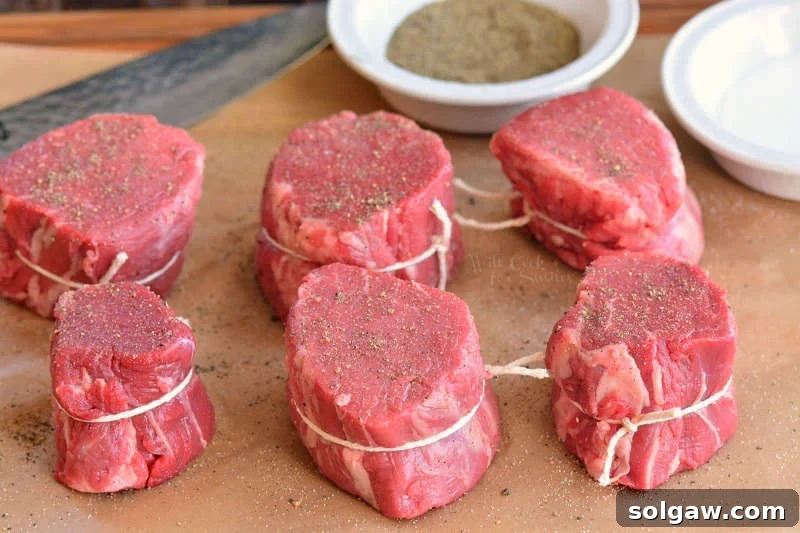
Discover the unparalleled elegance of beef tenderloin – a culinary jewel renowned for its exceptional tenderness, succulent juiciness, and delicate flavor. Often requiring nothing more than a whisper of salt and freshly ground pepper, this exquisite cut stands as a testament to pure, unadulterated taste. Its versatility is equally remarkable, lending itself beautifully to grand roasts or individual, perfectly seared steaks. Unlock the secrets to mastering this prime cut, from selecting a whole tenderloin to expertly trimming and preparing it for your chosen culinary masterpiece.
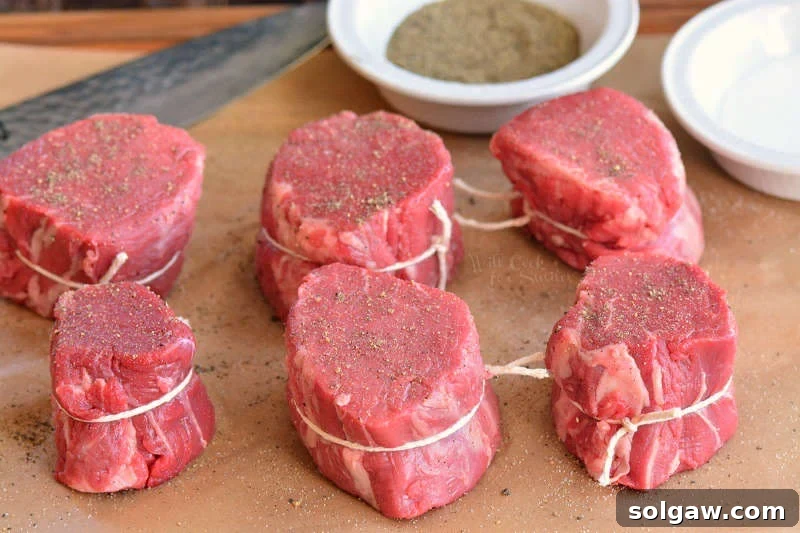
The Allure of Beef Tenderloin: A Culinary Masterpiece
Few cuts of beef evoke the same level of culinary reverence as the beef tenderloin. Often gracing the tables of fine dining establishments and special occasions, its reputation for melt-in-your-mouth tenderness is well-earned. When connoisseurs are asked about their favorite beef, prime cuts like ribeye, prime rib, and especially beef tenderloin or filet mignon, consistently top the list. For many, the tenderloin’s supreme tenderness makes it an undeniable favorite, whether enjoyed as a robust roast or a perfectly portioned steak.
But what exactly makes the beef tenderloin so uniquely tender? Anatomically, it is a long, lean muscle that runs deep inside the steer, nestled along the backbone, just beneath the spine. Crucially, this particular muscle is not weight-bearing and sees minimal exertion. Unlike muscles that are heavily worked, the tenderloin develops very little connective tissue, which is the primary source of toughness in meat. This inherent lack of connective tissue translates directly into the incredibly soft, buttery texture that defines this premium cut.
Due to its delicate nature and low fat content, beef tenderloin benefits greatly from high-temperature cooking methods that allow for a quick sear while preserving its internal juiciness. It excels when cooked in the oven, pan-seared on a stovetop, or grilled to perfection. The key is to cook it quickly and decisively to prevent it from drying out. Its lean profile means overcooking is the ultimate sin, as it can quickly transform this luxurious cut into something far less appealing.
For optimal flavor and texture, beef tenderloin is best enjoyed at medium-rare or medium doneness. We highly recommend using a reliable meat thermometer to ensure precision. Aim for an internal temperature of 130°-135°F for a sublime medium-rare, or 135°-140°F for a perfect medium. If you prefer a rare steak, target 120°-125°F. Remember, the meat’s temperature will continue to rise slightly after it’s removed from the heat (this is known as carryover cooking), so remove it a few degrees below your target. Crucially, always allow your tenderloin to rest after cooking. Steaks should rest for at least 5 minutes, while a whole roast benefits from a generous 10-15 minute rest, loosely tented with foil. This resting period allows the juices to redistribute evenly throughout the meat, resulting in a more succulent and flavorful experience.
PIN THIS RECIPE
The Strategic Advantage: Why Buy a Whole Beef Tenderloin?
For many home cooks, the idea of purchasing a whole, untrimmed beef tenderloin can seem daunting. However, embracing this approach offers significant benefits that far outweigh the initial effort of trimming. Savvy chefs and home cooks alike often choose a whole tenderloin for compelling reasons, primarily centering around cost savings, superior control over the final product, and an exceptional yield.
The most appealing reason is undoubtedly the price. Buying a whole beef tenderloin is almost always more cost-effective than purchasing pre-cut steaks or trimmed roasts. When you break it down yourself, the average cost per steak can drop dramatically, often ranging from $10-$13 for a high-quality filet mignon. This is a fraction of what you would pay for a similar cut at a butcher shop, let alone a steakhouse. For instance, a chateaubriand, which is a specific cut from the center of the tenderloin, can be nearly twice as expensive when bought pre-prepared compared to crafting it yourself from a whole tenderloin.
Beyond the financial savings, buying a whole tenderloin gives you ultimate control over your meat. You decide how it’s trimmed, how much fat to remove, and the precise thickness of your steaks. Whether you envision a magnificent whole roasted beef tenderloin for a holiday feast or perfectly proportioned filet mignon steaks for an intimate dinner, you dictate the cut. This level of customization ensures that the final product meets your exact specifications and culinary vision.
An often-overlooked but highly valuable advantage is the yield of “scrap” meat. After trimming and breaking down a whole tenderloin, you can easily end up with 2 to 4 pounds of flavorful beef trimmings. These aren’t scraps to be discarded; they are versatile pieces of meat perfect for a variety of other delicious meals. This essentially means you’re getting bonus meat to create an entirely separate meal, further enhancing the value of your initial purchase.
Choosing the Perfect Beef Tenderloin for Your Needs
Selecting the right beef tenderloin is the first step toward a successful culinary experience. Your choice will largely depend on how many people you plan to serve and whether you intend to roast it whole or cut it into individual steaks.
If roasting a whole beef tenderloin: When estimating portions for large roasts, a general rule of thumb is to calculate about 1/2 pound (or 8 ounces) of meat per person. However, given that beef tenderloin is a premium and often expensive cut, it’s perfectly acceptable to scale back slightly. For a tenderloin roast, you can comfortably estimate 4-6 ounces of trimmed beef tenderloin per person, especially if serving with rich side dishes. A larger tenderloin will ensure you have enough for your guests and perhaps even some delicious leftovers.
If making steaks: A whole tenderloin weighing around 5 pounds can typically yield about six 2-inch thick steaks. If your gathering requires more steaks, opt for a larger tenderloin. Bear in mind that a larger tenderloin will not only provide more individual steaks but also tend to produce wider, more substantial cuts, which can be a desirable feature for impressive plate presentation.
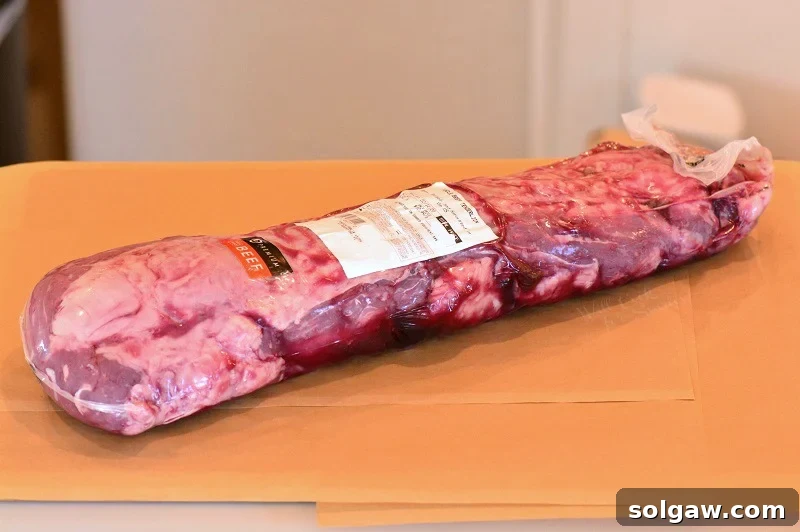
When purchasing, you’ll encounter beef tenderloin in a few common forms at most grocery stores. The most economical option is usually a whole, untrimmed tenderloin sealed in cryovac packaging. This vacuum-sealed package preserves freshness and allows for longer storage. Alternatively, some stores may offer already trimmed tenderloins, or even ones pre-cut into steaks, albeit at a higher price point. Many grocery stores with an in-house butcher will also provide the service of trimming a whole tenderloin for you, often returning the trimmings (the valuable “scraps”) on the side. This can be an excellent compromise if you’re new to trimming but still want to save money and customize your cuts at home.
Anatomy of a Whole Beef Tenderloin: Key Sections to Know
Understanding the different parts of a whole beef tenderloin is essential for efficient trimming and cutting. Don’t be intimidated; with a sharp knife and a large, stable cutting board, you’ll master it in no time. The primary tool you’ll need is a sharp boning knife, which is flexible enough to hug the contours of the meat. A shorter, sharp utility knife can also be useful for smaller, more precise cuts.
Once you remove the tenderloin from its packaging, lay it out and observe its natural shape. You’ll notice distinct sections:
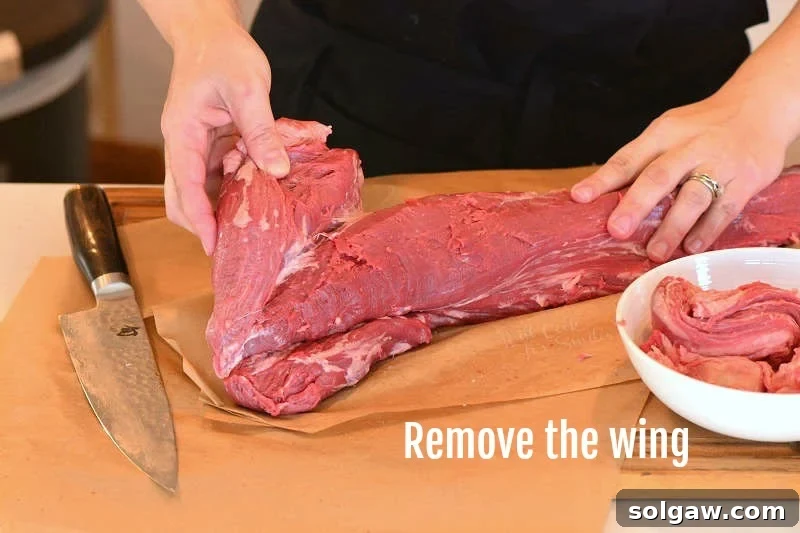
- The Butt End: This is the thickest part of the tenderloin. It’s often irregular in shape and typically has a “wing” or “side muscle” attached to it, which needs to be removed for a uniform roast or steak. The butt end is often where the flavorful Chateaubriand roast is sourced.
- The Center Cut: This is the most prized section of the tenderloin, known for its uniform thickness and cylindrical shape. It’s where the coveted Filet Mignon steaks and larger Chateaubriand roasts are cut from. This central portion offers the most consistent cooking and presentation.
- The Tip End: The opposite of the butt end, this is the thinner, tapered end of the tenderloin. While too small for large steaks, it’s perfect for smaller medallion-style cuts known as Tournedos, or for stir-fries and other quick-cooking applications.
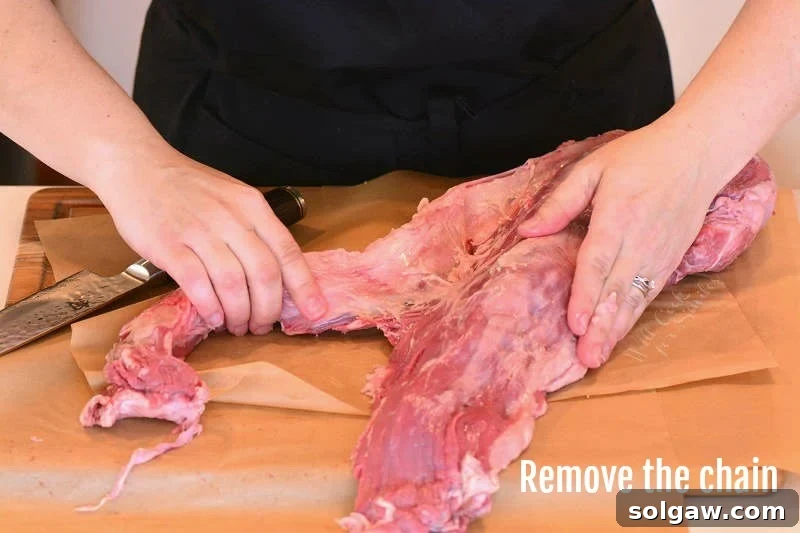
- The Chain: Running along the length of the tenderloin, the chain is a thin, fatty piece of meat that needs to be separated. It typically looks like a series of small, interconnected muscle pieces. While not part of the tenderloin itself, it’s packed with flavor and valuable for other recipes.
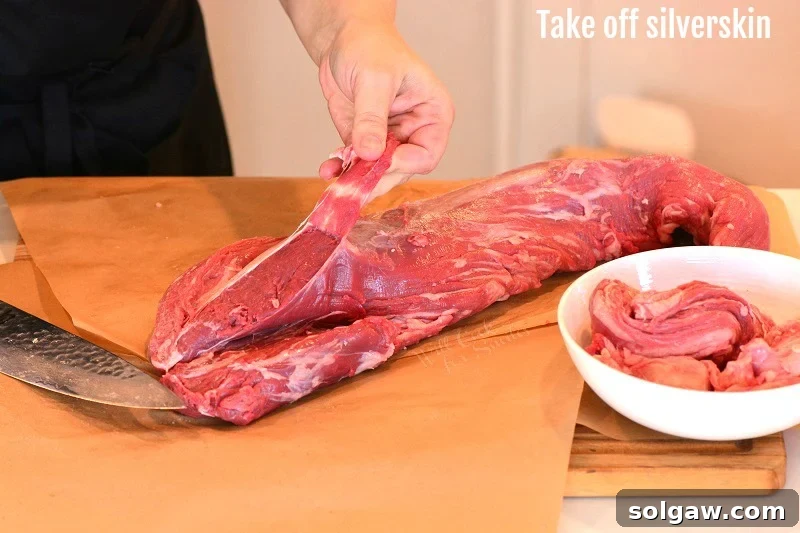
- Silverskin: This is a tough, silvery-white membrane that covers parts of the tenderloin. It’s connective tissue that won’t break down during cooking, so it absolutely must be removed for a tender result.
- Excess Fat: You’ll also find varying amounts of external fat that should be trimmed away.
The Art of Trimming Beef Tenderloin: A Step-by-Step Guide
Trimming a whole beef tenderloin may seem intimidating at first, but it’s a straightforward process that grants you control over your final dish and saves you money. With a sharp boning knife and a bit of patience, you’ll easily transform an untrimmed tenderloin into a pristine piece of meat ready for cooking. Remember, save all the trimmings – they are incredibly flavorful and versatile!
Step 1: Removing the Chain
The chain is typically the easiest part to identify and remove. It appears as a loosely attached, somewhat fatty strip of meat running along the length of the main tenderloin muscle. To remove it, gently pull the chain away from the tenderloin. You’ll find it separates quite easily with your hands, requiring only minimal assistance from your knife for any stubborn areas where it connects more firmly. Follow the natural seam between the chain and the tenderloin, carefully guiding your knife along the natural curve of the muscle. This part is not tenderloin, but it’s delicious meat, rich in flavor. Do not discard it; it’s excellent for making homemade beef stock, enriching soups, or adding depth to stews.
Step 2: Trimming Excess Fat
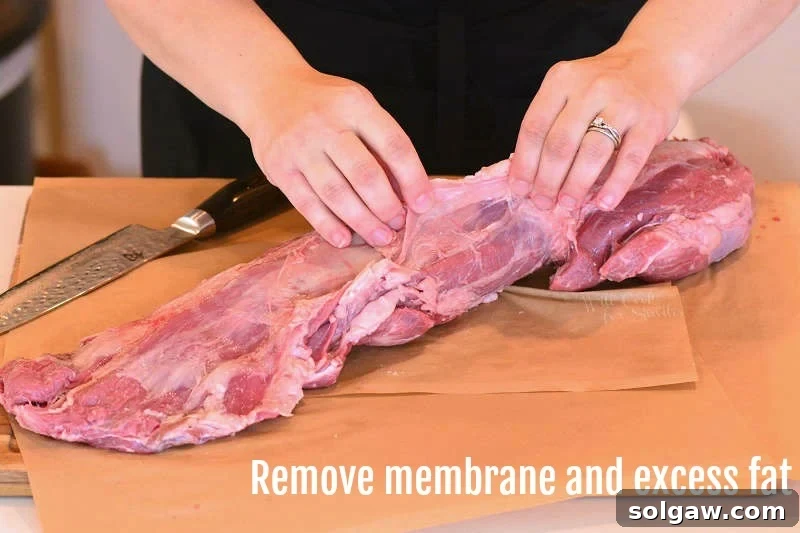
After the chain is removed, inspect the tenderloin for any thick, hard pieces of external fat. These are typically quite visible and can often be pulled off with your hands or carefully sliced away with your knife. Aim to remove as much of this exterior fat as possible, as it doesn’t contribute positively to the tenderloin’s texture or cooking process. Additionally, you may notice a thin, soft membrane covering parts of the tenderloin, often situated over the silverskin. This membrane should also be peeled or scraped off to expose the tougher silverskin beneath.
Step 3: Removing the Silverskin
The silverskin is a crucial element to remove. It’s a tough, glistening white layer of connective tissue that runs along portions of the tenderloin and will remain chewy and unappetizing even after cooking. To remove it effectively, start at the narrower end of the tenderloin. Gently pull up a small piece of the silverskin, creating a “handle.” Then, carefully slide the tip of your thin, sharp knife just underneath the silverskin, holding the blade almost parallel to the meat. Angle your knife slightly upwards, away from the meat, and use a sawing motion to cut along the silverskin, separating it from the tenderloin. Try to remove as little actual meat as possible. Sometimes, once you have a good grip, you can pull a long strip of silverskin off by hand, pulling it in the direction of the butt end while using the knife for assistance. For any smaller, remaining pieces, you can lightly scrape them off with the knife, again moving towards the butt end. Patience and a sharp knife are your best allies here.
Preparing Your Tenderloin for Roasting
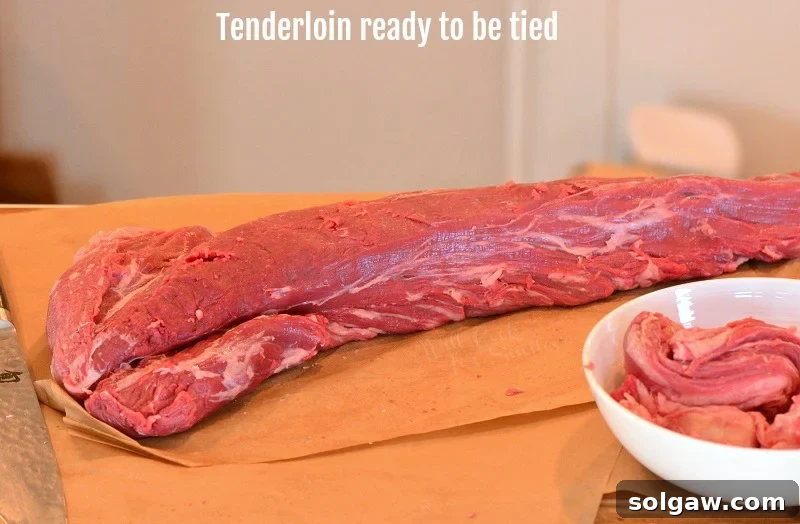
Once your beef tenderloin is meticulously cleaned and trimmed, the next step depends on your culinary goal. If you’re preparing a show-stopping whole roasted beef tenderloin, there’s a vital final step to ensure even cooking and a beautiful presentation: tying the roast.
The beef tenderloin is naturally thicker at one end (the butt end) and tapers significantly towards the other (the tip end). To encourage uniform cooking throughout the entire roast, it’s imperative to create a consistent thickness. Begin by addressing the thin, tapered tip. Instead of cutting it off completely, make a cut almost all the way through, leaving a small hinge. Then, tuck this narrow tip underneath the roast. This creates a more substantial, even thickness at that end.
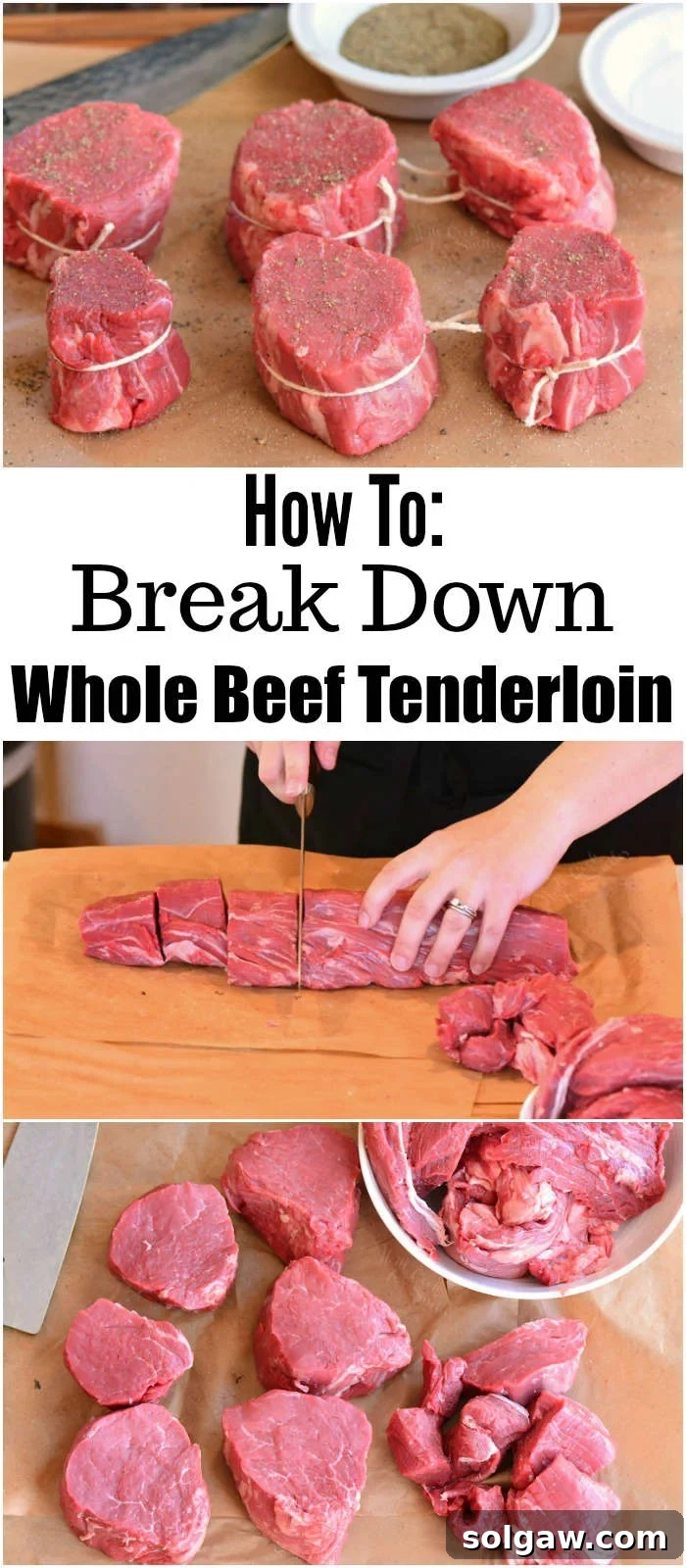
Next, use high-quality, food-safe cooking twine to tie the tenderloin along its entire length. Start at one end and make individual ties at approximately 1-inch intervals. The goal is to gently compress the meat, making its diameter as consistent as possible from end to end. Be careful not to tie the twine too tightly, as this can cut into the meat and affect its texture. The ties should be snug enough to hold the shape but not so restrictive that they deform the muscle. Once tied, your beautifully shaped beef tenderloin is ready for seasoning, searing (if desired), and its final journey into the oven. This preparation ensures that every slice from your roast will be perfectly cooked and equally tender.
Cutting Your Tenderloin into Steaks: Crafting Perfect Filet Mignon
If your aim is to transform your whole beef tenderloin into individual, restaurant-quality steaks, a slightly different final preparation is required after trimming. This process allows you to yield exquisite Filet Mignon and other tenderloin steaks tailored to your exact preferences.
First, separate the irregular “wing” and any protruding pieces of meat from the butt end of the tenderloin. Follow the natural curve and seam where this side muscle attaches to the main central tenderloin. A sharp knife will glide through, separating these portions with ease. These flavorful trimmings, along with the chain, should be saved for other culinary uses.
Next, address the thin and narrow tip end of the tenderloin. This section is generally too small and tapered to be cut into substantial steaks. Slice off the very end, once again saving these smaller pieces to be used with your other scrap meat. What you are now left with is the magnificent, uniform center cut of the beef tenderloin – the prime section for crafting perfect Filet Mignon and other tenderloin steaks.
Precision Cutting for Perfect Steaks
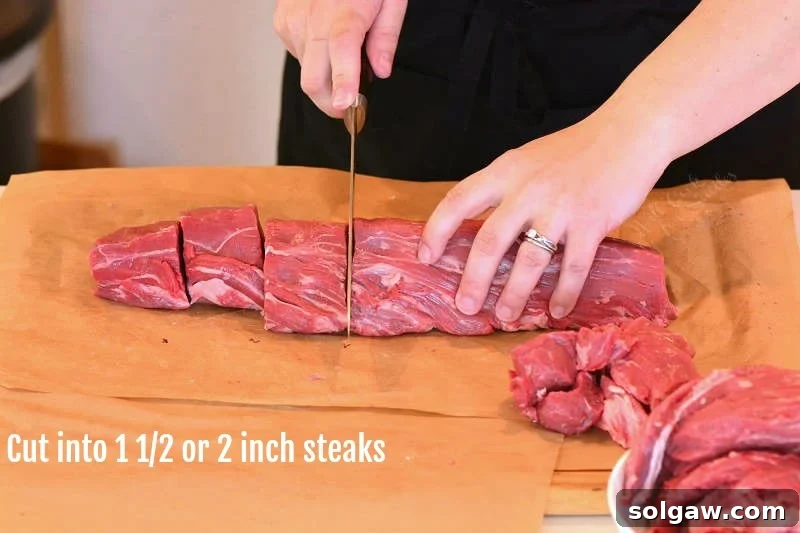
Achieving consistently sized and perfectly thick steaks is key to even cooking. A helpful tip is to use a ruler to measure and mark your desired steak thickness. You can draw lines on a piece of paper placed next to the tenderloin as a guide, or even make shallow scoring marks directly on the meat with your knife. The ideal thickness for a Filet Mignon is typically 1 ½ to 2 inches. This thickness allows for a beautiful sear on the exterior while keeping the interior perfectly tender and juicy at your desired doneness.
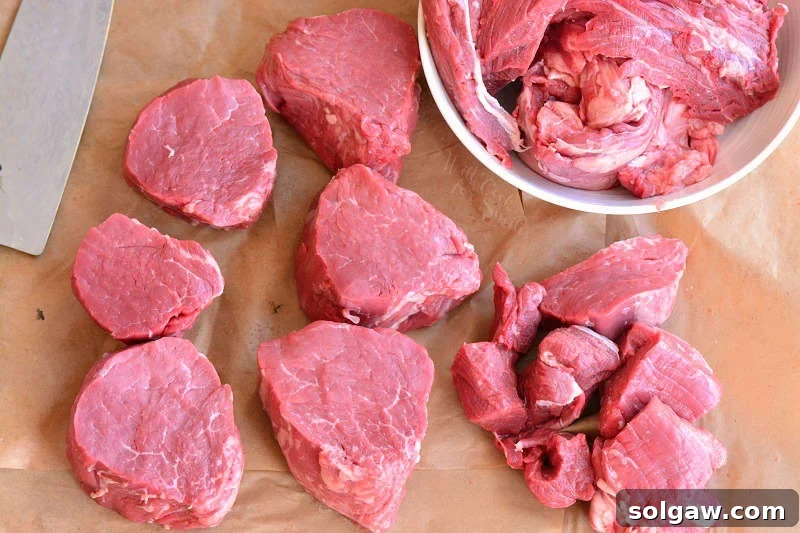
Avoid cutting steaks that are less than 1 ½ inches thick. Thinner steaks cook too rapidly, making them highly susceptible to overcooking and drying out, which diminishes the tenderloin’s prized qualities. With your sharp knife, cut straight down through the center portion of the tenderloin at your marked intervals. Each slice will reveal a stunning, perfectly portioned steak, ready for seasoning and cooking. You now possess a collection of premium steaks, crafted to perfection and ready to impress.
Maximizing Your Investment: Creative Uses for Beef Tenderloin Trimmings
One of the fantastic benefits of buying and trimming a whole beef tenderloin yourself is the generous yield of flavorful trimmings. These “scraps” are far from waste; they are valuable pieces of beef that can be transformed into a variety of delicious and economical meals. Depending on the size of your tenderloin, you can end up with anywhere from 2 to 4 pounds of versatile meat.
The chain, which is the fattier piece removed early in the trimming process, is particularly excellent for adding rich beefy flavor to stocks and slow-cooked dishes. Its higher fat content renders beautifully, infusing liquids with depth. Consider using it for:
- Homemade Beef Stock: Simmer with aromatic vegetables for a rich, flavorful broth.
- Soups and Stews: Cut into smaller pieces and add to hearty beef stews or savory soups, where its fat and flavor will melt into the dish.
- Ground Beef: If you have a meat grinder, combine the chain with other lean trimmings to make your own gourmet ground beef.
The other leftover scraps, typically from the wing, butt end, and tapered tip when cutting steaks, are lean and incredibly tender, just like the main tenderloin. Their versatility is immense, allowing you to create quick and gourmet meals without extra cost:
- Gourmet Beef Stew: Cut into uniform cubes and prepare a luxurious beef stew.
- Quick Saute or Stir-Fry: Slice thinly or cube the meat and quickly sauté it with onions, mushrooms, or your favorite stir-fry vegetables for a rapid weeknight meal.
- Philly Cheesesteak Sandwiches: Thinly slice the trimmings against the grain for authentic, melt-in-your-mouth cheesesteak filling.
- Beef Kebabs: Cut into 1-inch cubes, marinate, and skewer with vegetables for elegant beef kebabs.
- Beef Tips with Gravy: Sear the cubes quickly, then simmer in a rich, savory gravy for a classic comfort food dish, perfect served over mashed potatoes or egg noodles.
- Tacos or Burritos: Season and quickly cook the finely diced meat for a premium taco or burrito filling.
By utilizing these trimmings, you not only minimize waste but also extend the value of your whole tenderloin purchase, providing multiple gourmet meals from a single investment. It’s a smart and delicious way to get the most out of this prime cut.
Elevate Your Culinary Skills with Beef Tenderloin Recipes
Now that you’ve mastered the art of trimming and preparing a whole beef tenderloin, you’re ready to transform this prime cut into an unforgettable meal. The tenderloin’s delicate flavor and luxurious texture make it a star in a variety of culinary preparations. Whether you prefer a majestic roast for a special gathering or perfectly seared individual steaks, the possibilities are endless.
Here are some exceptional recipes that highlight the incredible versatility and exquisite taste of beef tenderloin, guiding you from preparation to plate:
- Roasted Beef Tenderloin: The epitome of elegant dining. This recipe guides you through creating a succulent whole roast, perfect for holidays and celebrations. It emphasizes precise cooking temperatures and resting techniques to achieve a moist, flavorful centerpiece.
- Pepper Crusted Beef Tenderloin: Elevate your tenderloin with a bold, aromatic crust. This recipe shows you how to achieve a beautifully seared exterior seasoned with a coarse pepper blend, creating a delightful contrast with the tender, juicy interior.
- Perfectly Cooked Filet Mignon: Learn the secrets to pan-searing or grilling individual filet mignon steaks to perfection. This guide covers techniques for achieving a gorgeous crust and your desired internal doneness, ensuring every bite is a luxurious experience.
Beyond these classic preparations, feel free to explore other techniques such as grilling for a smoky flavor, or reverse-searing for ultimate tenderness. With your newfound confidence in handling beef tenderloin, you’re well-equipped to impress your guests and savor one of the finest cuts of beef available. Enjoy the journey from whole tenderloin to culinary triumph!