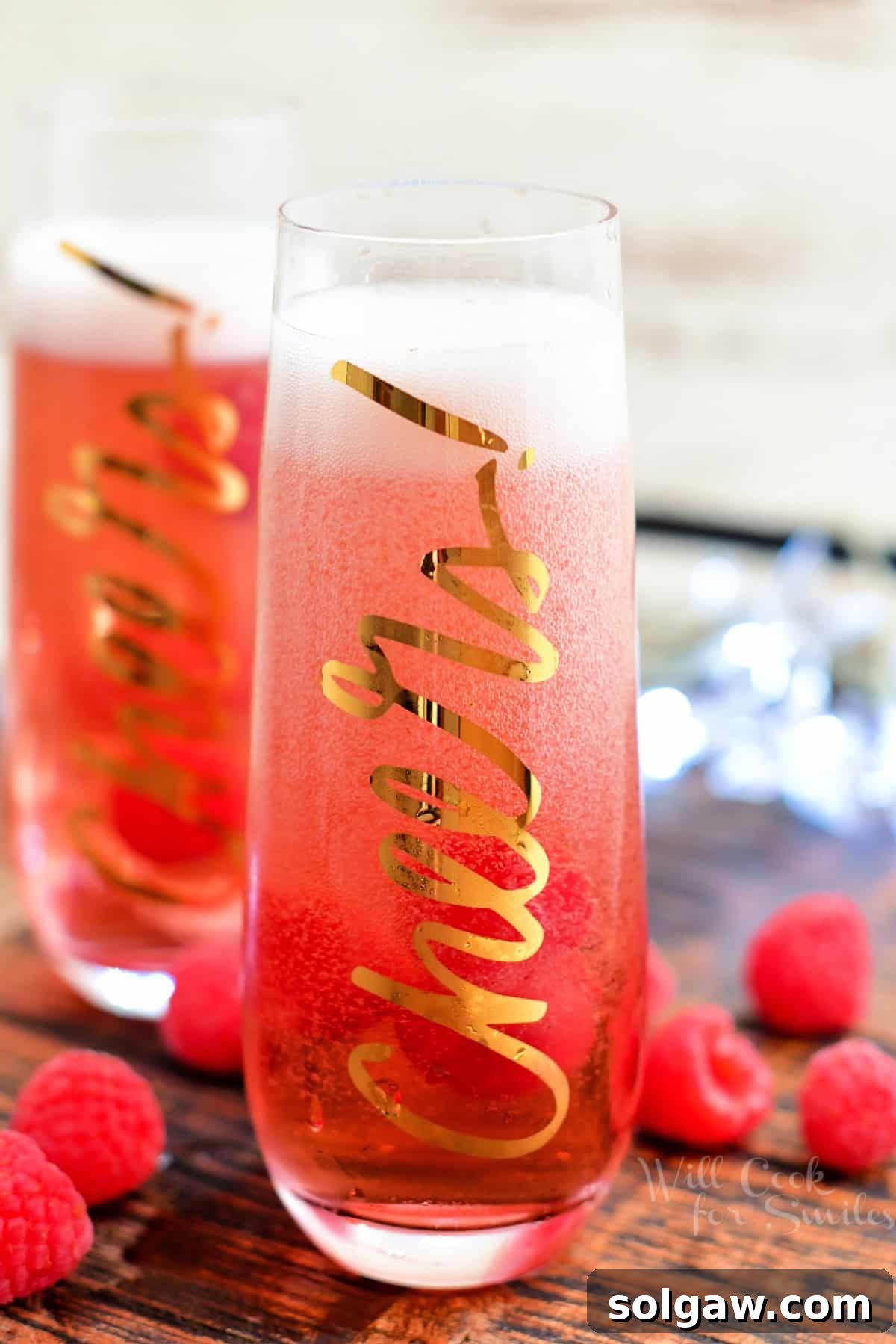
Experience the timeless elegance and effortless charm of a Kir Royale, a classic French champagne cocktail that requires only two exquisite ingredients. Renowned for its delicate balance of sweet and tart, this simple yet sophisticated bubbly concoction is the quintessential drink for special occasions, celebrations, or simply to elevate an ordinary moment into something extraordinary. With its vibrant hue, fruity aroma, and sparkling effervescence, the Kir Royale promises a refreshingly light and irresistibly delightful sipping experience.
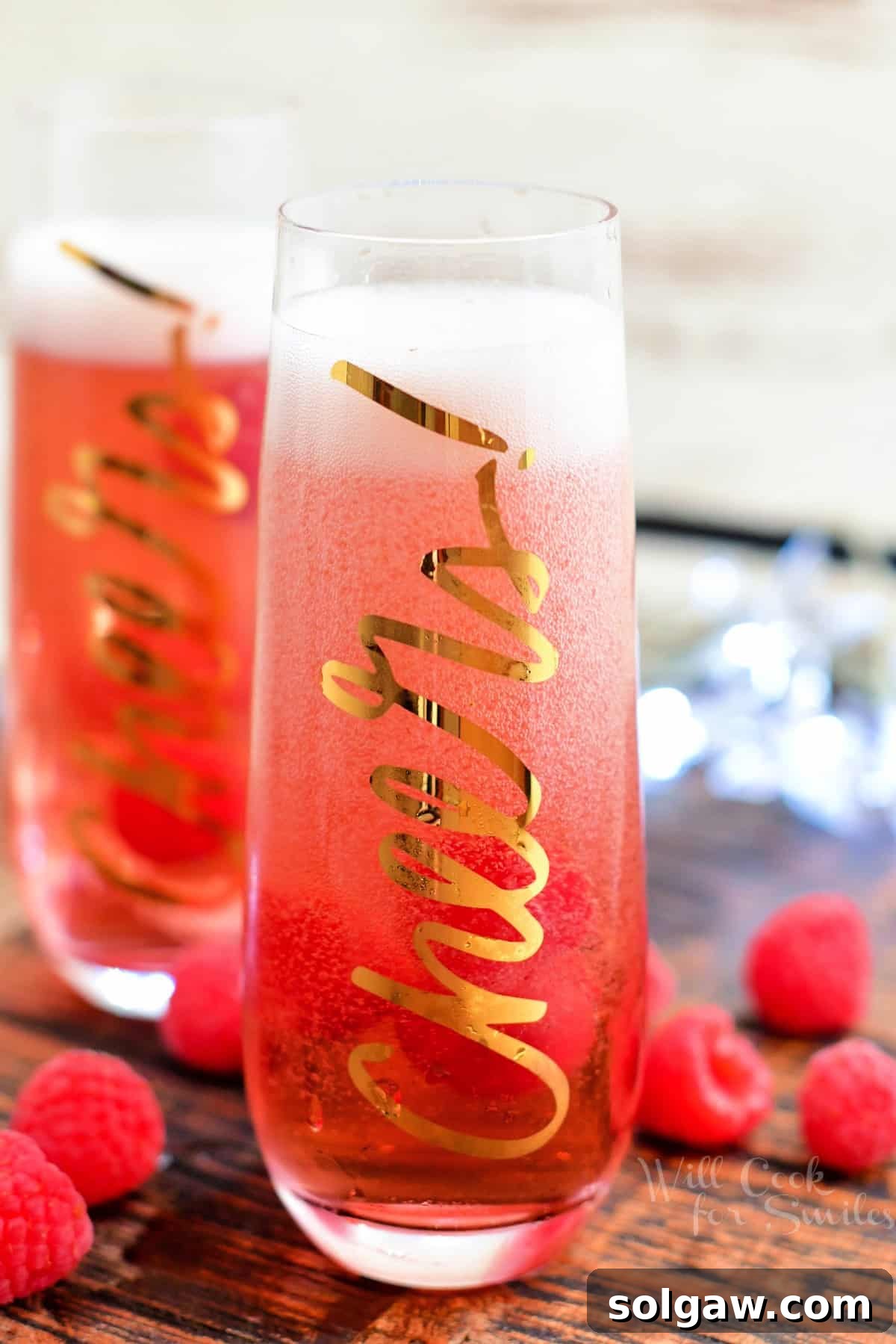
As the year draws to a close or any significant milestone approaches, celebrations naturally call for a touch of sparkle. While classics like the French 75, a spirited sour apple champagne cocktail, or countless other sparkling libations vie for attention, the Kir Royale stands out with its uncomplicated grace. It’s not overly sweet, but rather offers a pleasingly refreshing taste with just a hint of berry sweetness and a wonderfully crisp finish. This makes it an ideal choice for a sophisticated gathering, a celebratory toast at New Year’s Eve, or as a vibrant welcome drink at any festive event.
The beauty of the Kir Royale lies in its minimalist perfection. Just two core components come together to create a flavor profile that is truly harmonious and incredibly satisfying. The key is selecting high-quality ingredients, as their individual characteristics shine through to form a balanced and delicious cocktail. This elegant simplicity ensures that even novice mixologists can craft a flawless Kir Royale with ease, making it a go-to recipe for impressing guests without complex preparations.
The Essence of Kir Royale: Unveiling the Two Star Ingredients
At its heart, the Kir Royale is a study in complementary flavors. The effervescence and acidity of champagne are perfectly softened by the rich, fruity notes of a chosen liqueur. Understanding each component is crucial to mastering this classic cocktail.
1. The Sparkling Base: Champagne or Dry Sparkling Wine
- Champagne: For an authentic Kir Royale, a dry champagne is paramount. Look for labels indicating “Brut,” “Extra Brut,” or “Brut Nature.” These terms signify minimal sugar content, ensuring the cocktail isn’t cloyingly sweet and allows the fruit liqueur to truly shine. Brut champagne, being the most common dry style, is often the preferred choice, offering crisp acidity and subtle yeasty notes that beautifully complement berry flavors.
- Alternatives: While Champagne holds the prestige, you can certainly achieve a superb Kir Royale with other dry sparkling wines. Prosecco, with its typically fruitier profile and slightly softer bubbles, can offer a delightful variation. Cava, a Spanish sparkling wine made in the traditional method, provides a similar yeasty complexity to Champagne, often at a more accessible price point. The most important consideration, regardless of your choice, is to select a dry (Brut) variety to maintain the cocktail’s balanced sweetness and refreshing quality. Avoid “Demi-Sec” or “Doux” sparkling wines, as their higher sugar content will overwhelm the liqueur.
- Serving Temperature: Always ensure your sparkling wine is thoroughly chilled. An ideal temperature is between 45-50°F (7-10°C). Proper chilling is not just for taste; it also helps control the carbonation when pouring, preventing excessive foaming.
2. The Fruity Heart: Selecting Your Liqueur
- Crème de Cassis (Blackcurrant Liqueur): Traditionally, a Kir Royale is made with Crème de Cassis, a dark, sweet, and intensely flavored blackcurrant liqueur from Burgundy, France. It is known for its deep purple color and concentrated berry essence. Crème de Cassis is often quite syrupy and has a strong, almost overly sweet flavor if too much is used. Due to its intensity, you’ll typically use a smaller quantity of Crème de Cassis compared to other liqueurs to prevent the drink from becoming too sweet. Its robust flavor pairs wonderfully with the crispness of dry champagne, creating the iconic balance of the original Kir Royale.
- Chambord (Black Raspberry Liqueur): Chambord is a popular and exquisite choice, renowned for its rich black raspberry flavor. This French liqueur is crafted from a blend of black raspberries, blackcurrants, French cognac, Madagascan vanilla, and fragrant herbs, resulting in a complex, smooth, and fresh-tasting spirit. Its vibrant, reddish-pink hue makes for a visually stunning Kir Royale. Chambord offers a slightly less intense sweetness than Crème de Cassis, providing a beautifully balanced and aromatic cocktail that’s often preferred for its broader appeal.
- Crème de Framboise (Raspberry Liqueur): Another excellent option, Crème de Framboise offers a pure raspberry flavor. While similar to Chambord in its raspberry base, Crème de Framboise often features fruit from regions like Serbia and can present a subtle spicy or peppery aftertaste, along with hints of orange and a generally darker color compared to Chambord. It lends a distinct, sophisticated berry note to the Kir Royale, making it a favorite for those who appreciate a nuanced raspberry profile.
The choice of liqueur significantly influences the final taste and appearance of your Kir Royale. Each option delivers a unique berry experience, allowing for customization based on personal preference. No matter which you choose, ensure it is a high-quality liqueur for the best results.
How to Make the Perfect Kir Royale: A Step-by-Step Guide
Crafting a Kir Royale is refreshingly simple, but a few key steps ensure a perfect pour every time. Follow these instructions for a flawlessly bubbly and flavorful cocktail.
- Prepare and Chill Your Champagne Flutes.
This crucial first step enhances the drinking experience by keeping your Kir Royale colder for longer, which in turn preserves its delightful effervescence. To chill the glasses effectively, fill each champagne flute with ice and cold tap water. Let them stand for at least 5-10 minutes while you gather your other ingredients. Just before assembling the cocktails, remember to empty the flutes completely, discarding the ice and water. - Add Your Chosen Liqueur to the Glass.
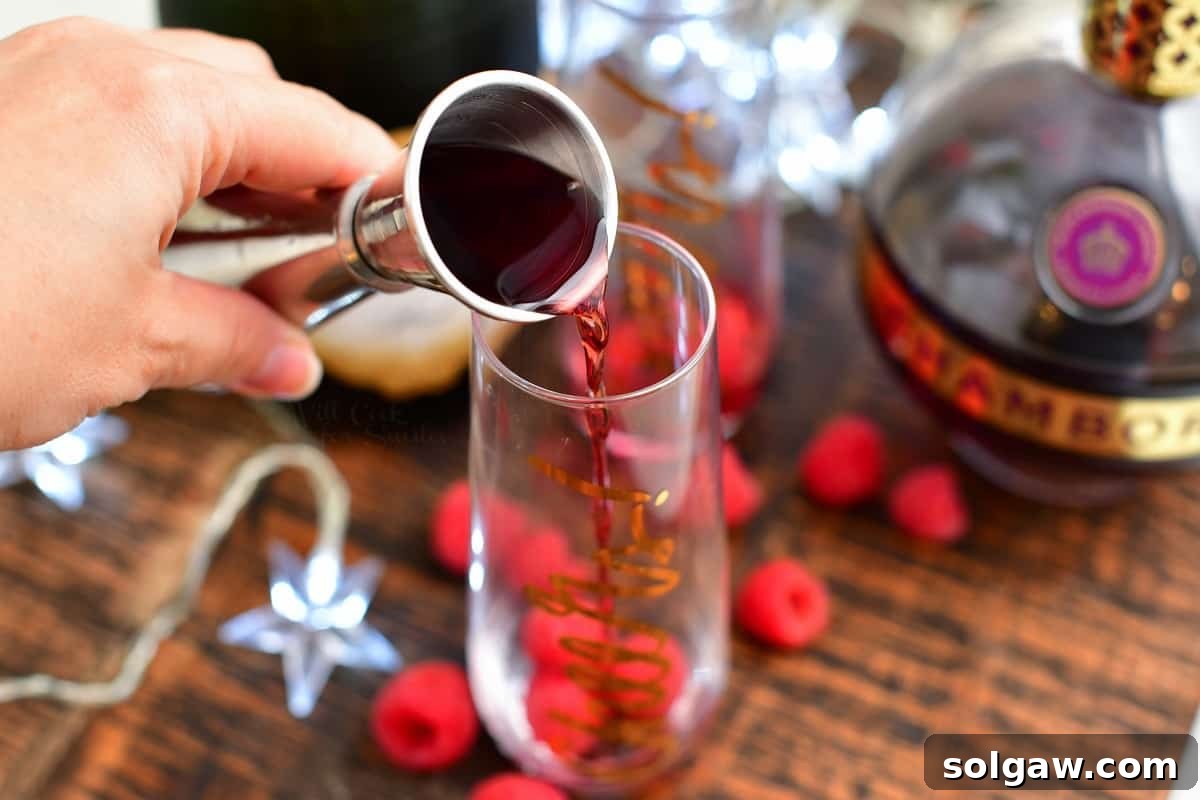
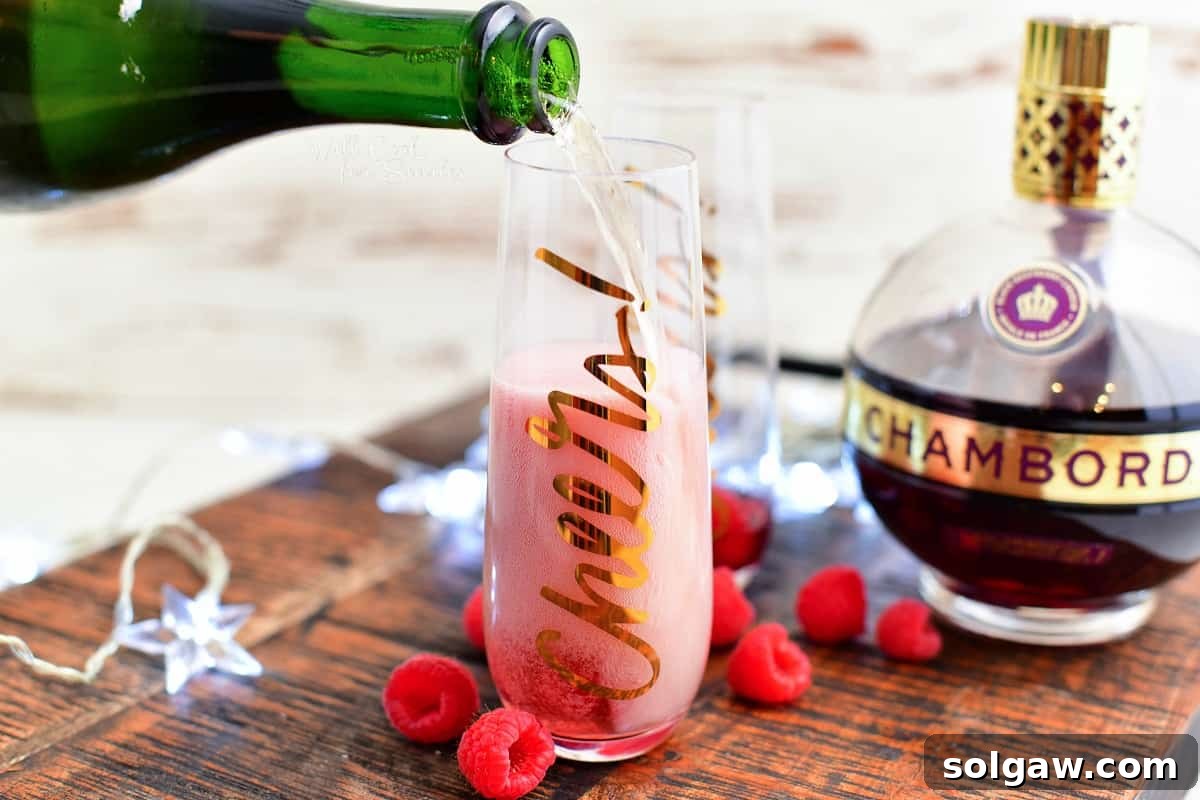
Pour the liqueur (Chambord, Crème de Cassis, or Crème de Framboise) directly into the bottom of each chilled champagne flute. It is essential to add the liqueur first. This ensures that the heavier, denser liqueur properly mixes with the lighter champagne as it’s poured, creating a beautiful gradient of color and ensuring an even distribution of flavor without the need for stirring, which can diminish the bubbles. For Chambord or Crème de Framboise, typically use 1 ounce per flute. If opting for Crème de Cassis, start with about 1/2 ounce due to its higher sweetness and syrupiness, then adjust to taste.
- Slowly Fill the Glass with Chilled Champagne.
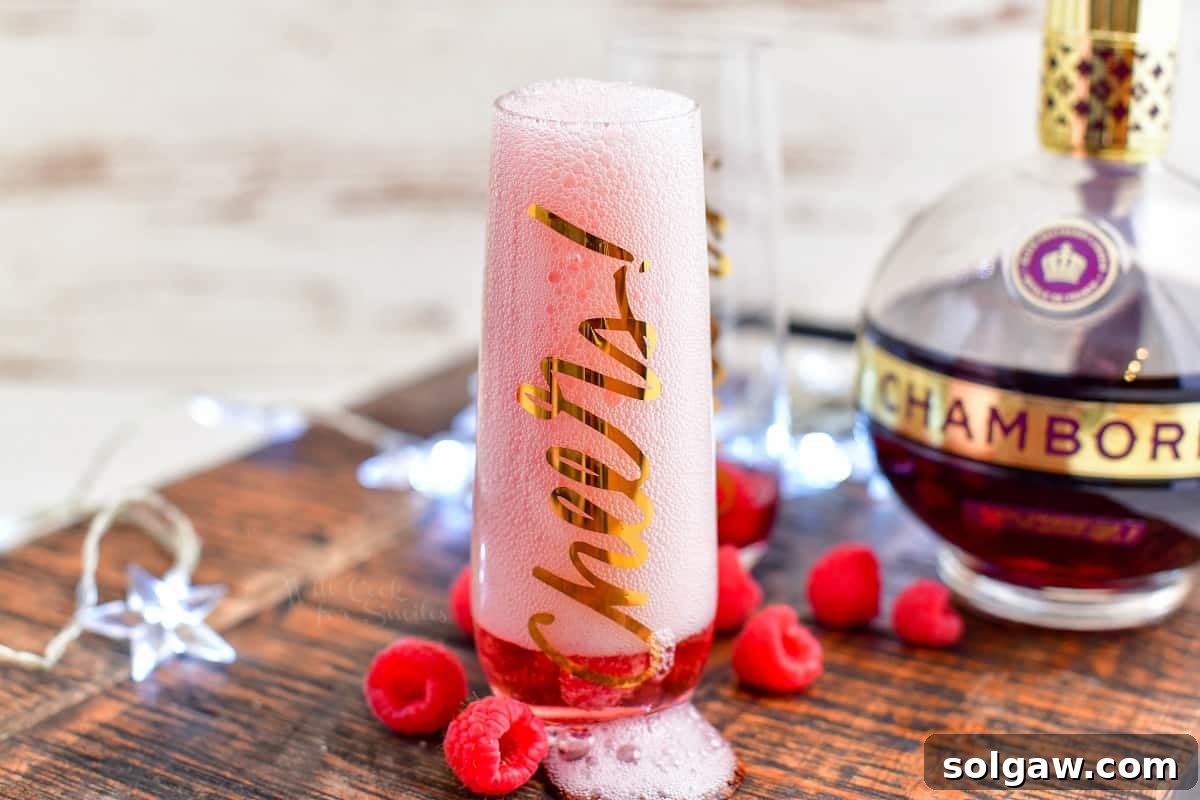
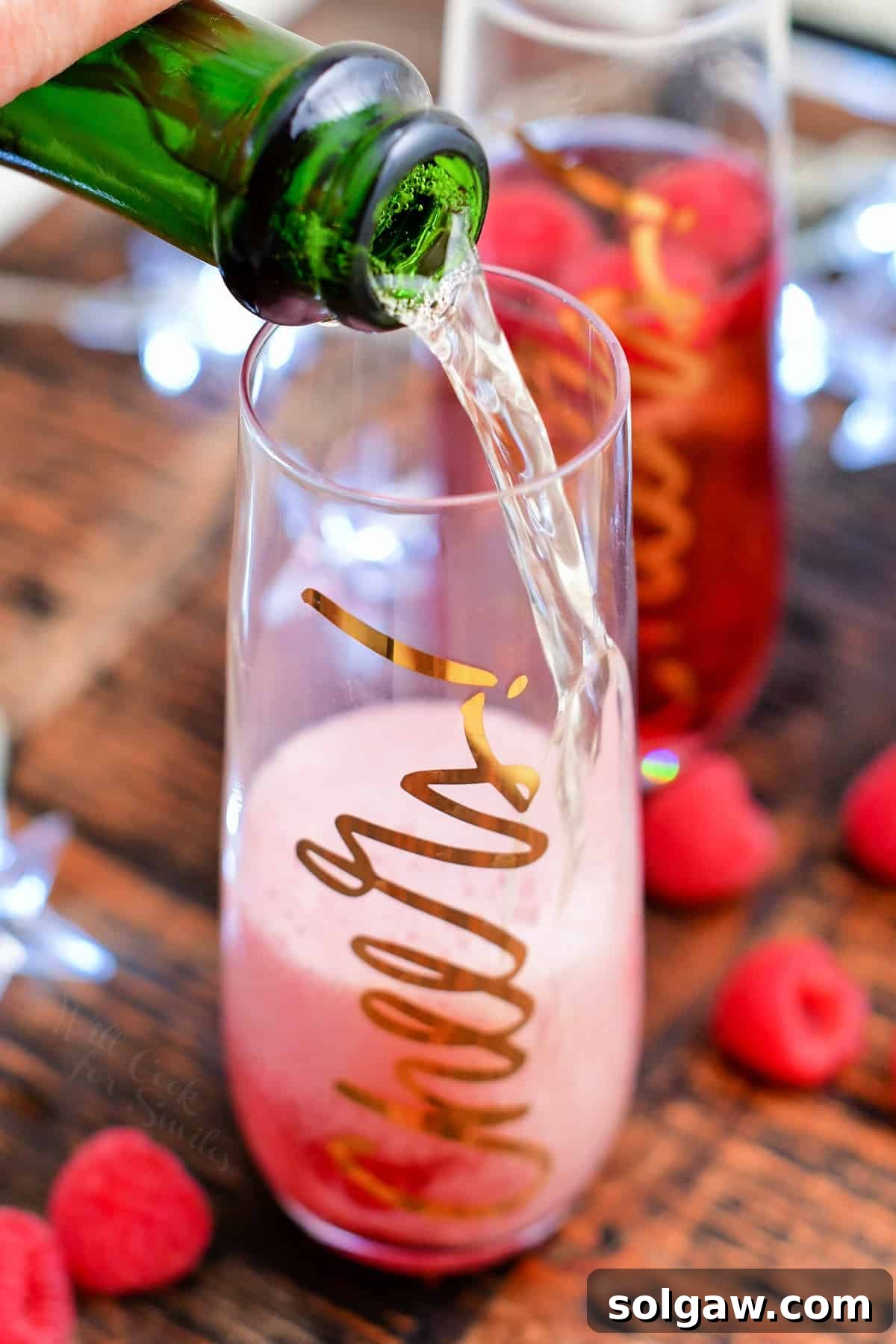
Once the liqueur is in place, gently tilt the champagne flute and slowly pour the chilled sparkling wine down the side of the glass. This technique helps to minimize excessive bubbling and preserve the effervescence, preventing overflow. Avoid filling the glass more than three-quarters full initially, as the bubbles will settle slightly. Pause, allow the foam to subside, and then top up with a little more champagne if desired, being careful not to overfill. The champagne will naturally mix with the liqueur, creating a vibrant, uniform color without any stirring needed.
- Garnish and Serve Immediately.
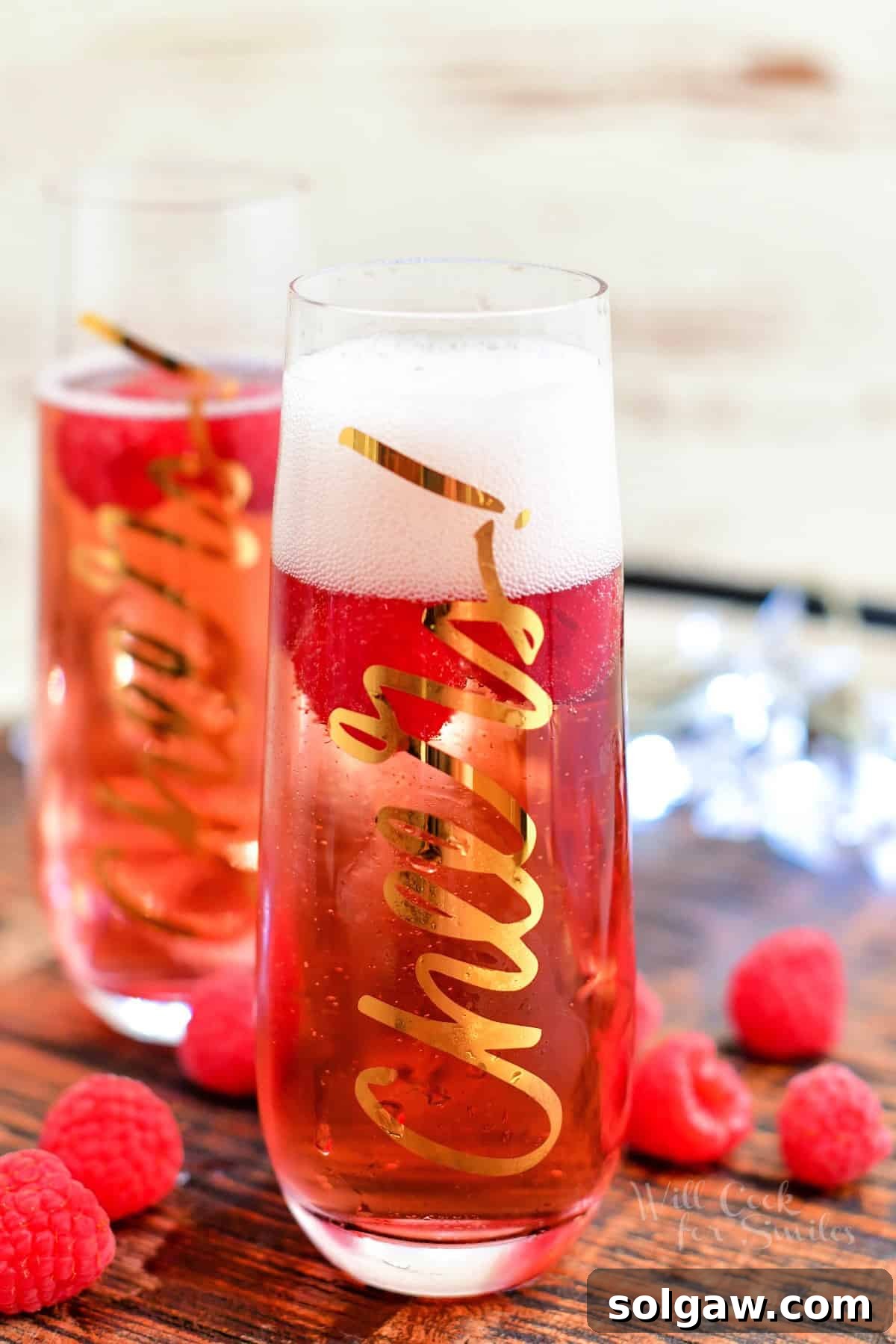
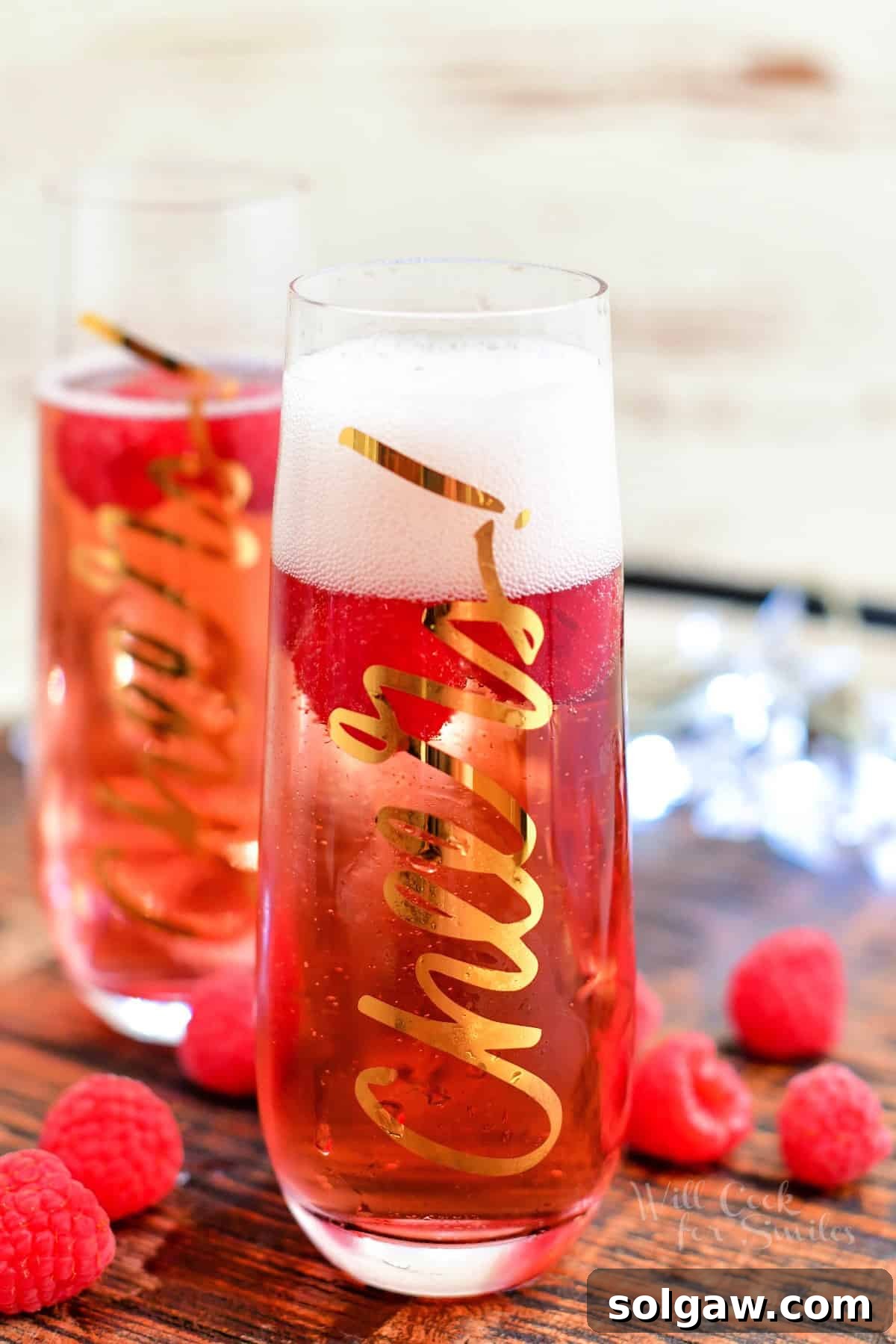
The final touch to your Kir Royale is an elegant garnish that enhances both its visual appeal and its flavor profile. If you’ve used Chambord or Crème de Framboise, the cocktail will boast a gorgeous pink or reddish-pink hue, making fresh raspberries or a few plump blackberries the perfect complementary garnish. These fresh berries not only add a pop of color but also a burst of fresh fruit aroma. Alternatively, a delicate lemon twist provides a sophisticated citrus note that can brighten the overall taste. For Crème de Cassis, a skewer of blackcurrants is a natural and traditional choice. Serve your Kir Royale immediately to enjoy its maximum effervescence and chill.
Diving Deeper into Liqueur Choices for Your Kir Royale
The choice of liqueur is what truly defines the Kir Royale, lending it distinct character and flavor. Each of the popular options brings its own unique qualities to the drink, transforming it subtly yet significantly.
Chambord: The Elegant Raspberry French Liqueur
Chambord is an exquisite black raspberry liqueur produced in the Loire Valley of France. Unlike many spirits, it’s celebrated more for its profound flavor profile than its alcoholic strength. Its intricate production involves infusing black raspberries and blackcurrants in French cognac for several weeks, then blending with Madagascan vanilla, honey, and aromatic herbs. This meticulous process results in a remarkably smooth, sweet, and complex spirit with a fresh, clean berry taste that is unmistakably Chambord. Its beautiful deep ruby-red color translates into a vibrant pink Kir Royale, making it a favorite for those seeking both flavor and visual appeal.
Crème de Cassis: The Traditional Blackcurrant Powerhouse
Originating from Burgundy, France, Crème de Cassis is the original liqueur used in the classic Kir (and subsequently, Kir Royale). It is made from macerated blackcurrants, yielding an incredibly strong, intensely sweet, and distinctly tart flavor. Crème de Cassis is noticeably more syrupy and viscous than other liqueurs, and its deep, dark purple hue gives the Kir Royale a dramatic, rich color. Because of its concentrated flavor and high sugar content, a little goes a long way. It’s not uncommon to find Crème de Cassis served as a digestif or drizzled over desserts, highlighting its versatility beyond cocktails. When using Crème de Cassis for a Kir Royale, it’s recommended to use about half the amount you would use for Chambord to achieve the perfect balance and prevent the drink from becoming overly sweet.
Crème de Framboise: The Spicy Raspberry Alternative
While also a raspberry liqueur, Crème de Framboise often features raspberries sourced from different regions, such as Serbia, giving it a slightly different character than Chambord. It typically boasts a fruit-forward raspberry taste but can surprise with a subtle spicy or peppery aftertaste, along with a delicate hint of orange. Its color tends to be a darker red compared to the brighter ruby of Chambord. Crème de Framboise offers a sophisticated twist on the raspberry theme, appealing to those who enjoy a more complex and subtly spiced berry flavor in their sparkling cocktails.
Remember, if you choose Crème de Cassis for your Kir Royale, use approximately half the amount you would typically use for Chambord or Crème de Framboise, due to its significantly higher sweetness and density.
Kir Royale Recipe: Frequently Asked Questions
Here are answers to some common questions about making and enjoying your Kir Royale.
What is the difference between a Kir and a Kir Royale?
The distinction is simple yet significant. A “Kir” cocktail is made with white wine (traditionally Aligoté from Burgundy) and Crème de Cassis. A “Kir Royale,” however, elevates the drink by replacing the white wine with champagne or another high-quality dry sparkling wine, hence the “Royale” designation, signifying its more luxurious base.
Do liqueurs need to be refrigerated?
Generally, most liqueurs do not require refrigeration after opening. With the notable exception of cream-based liqueurs (like Baileys Irish Cream), which should always be refrigerated, most liqueurs are shelf-stable. Storing them in a cool, dry place, away from direct sunlight, will typically keep them fresh and flavorful for many months, if not years, without spoiling.
Can I make a non-alcoholic Kir Royale?
Absolutely! To create a virgin Kir Royale, simply substitute the champagne with a non-alcoholic sparkling cider, sparkling grape juice (white or rosé), or even sparkling water with a splash of cranberry or raspberry juice for color and flavor. For the liqueur, you can use raspberry syrup, blackcurrant syrup, or grenadine to mimic the fruity sweetness. While it won’t have the same alcoholic kick, it can still be a festive and delicious mocktail.
Where else can I use Chambord or Crème de Cassis?
These versatile berry liqueurs are not just for Kir Royales! Their rich flavors make them excellent additions to a variety of culinary creations:
- Desserts: Drizzle them over vanilla bean ice cream, a fruit salad, or incorporate them into baking recipes like poke cakes, tiramisu, or fruit tarts. Crème de Cassis is particularly delightful poured over creamy sherbets or sorbets for an instant gourmet touch.
- Other Cocktails: Expand your mixology repertoire by using them in other drinks. Chambord is fantastic in a Sex on the Beach, a Christmas Punch, a Cranberry Sangria, or even a Mojito for a berry twist. Crème de Cassis can also be used to enhance various punches and sparkling wine cocktails.
- Culinary Uses: Experiment with these liqueurs in savory dishes too. A splash can enrich sauces for duck or pork, or be used to glaze roasted berries for a sophisticated dessert accompaniment.
Explore More Sparkling Sensations: Other Champagne Cocktails to Make
If you’ve enjoyed the Kir Royale, you’re sure to love these other delightful champagne cocktails:
- Pomegranate Champagne Punch
- Sour Apple Champagne Cocktail
- Cranberry Pomegranate Champagne Cocktail
- French 75 Cocktail Recipe
- St. Germain Champagne Cocktail
PIN THIS RECIPE
DID YOU MAKE THIS RECIPE? Please take a moment to leave a 🌟 star rating! Let me know how you enjoyed it by leaving a 📝 comment below, or share your creation and tag me on social media @willcookforsmiles. And don’t forget to subscribe to my newsletter for more delicious recipes!
Kir Royale
This simple champagne cocktail is perfect for special occasions and celebrations. It’s lightly sweet, fruity, and bubbly!
Ingredients
- 1 oz Chambord (or Crème de Cassis or Crème de Framboise)
- 4-6 oz champagne (dry, brut)
Garnish:
- raspberries, blackberries, or lemon twist
Instructions
- Chill the glass: Fill champagne flutes with ice and cold water. Let it sit while gathering ingredients. Empty the glasses before making the cocktail.
- Pour liqueur into the champagne flute.
- Fill the glass with champagne slowly, pouring down the side to preserve bubbles.
- Garnish with fresh raspberries, blackberries, or a lemon twist.
- Serve right away for optimal enjoyment.
Notes
Note: If using Crème de Cassis, use approximately 1/2 oz as it is significantly sweeter and more syrupy than Chambord. Adjust to your preferred sweetness.
Nutrition
Carbohydrates: 10g |
Protein: 1g |
Fat: 1g |
Saturated Fat: 1g |
Sodium: 10mg |
Potassium: 100mg |
Sugar: 10g |
Calcium: 10mg |
Iron: 1mg
Mention @willcookforsmiles or tag #willcookforsmiles!
Originally published on Will Cook For Smiles in December 2020.