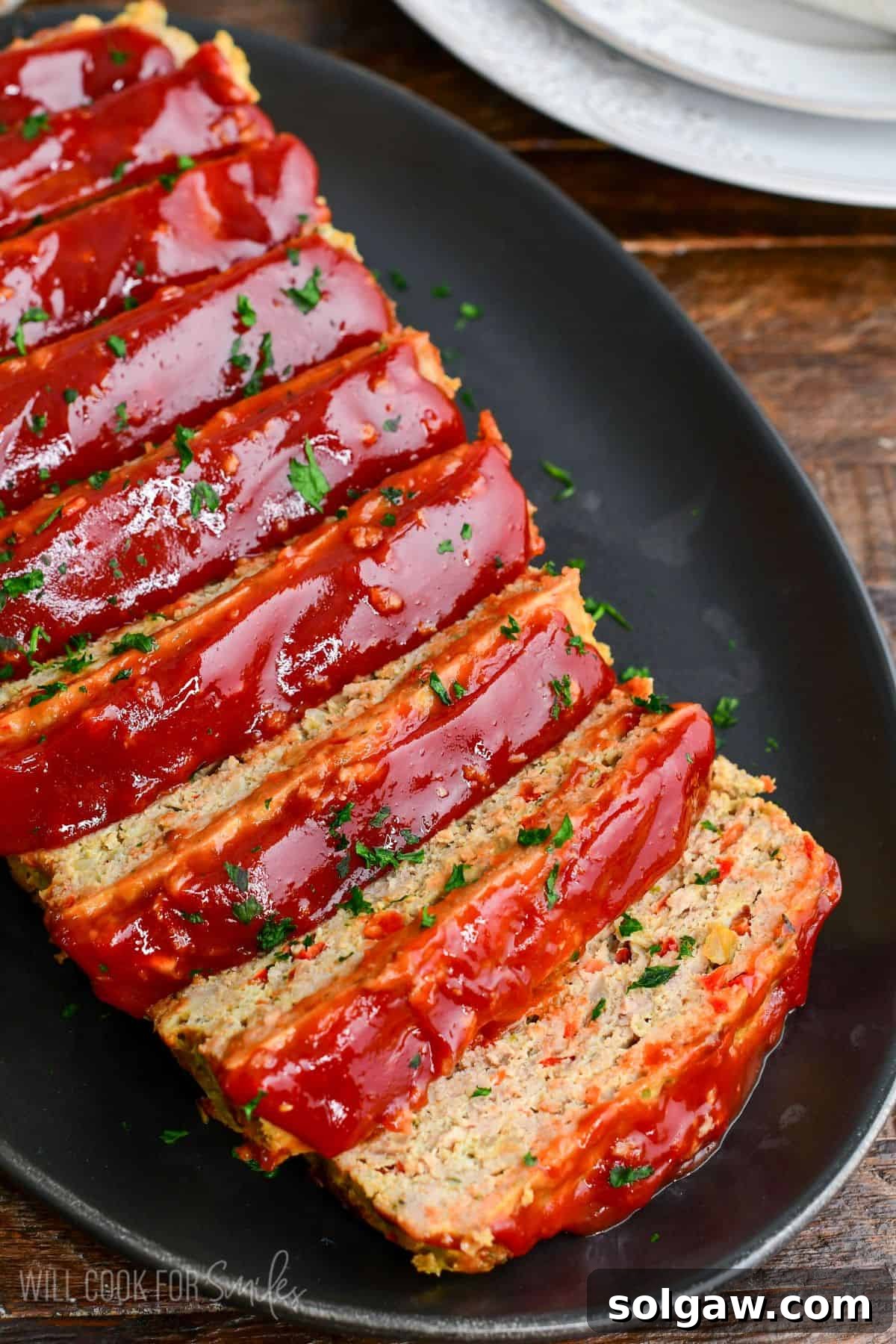
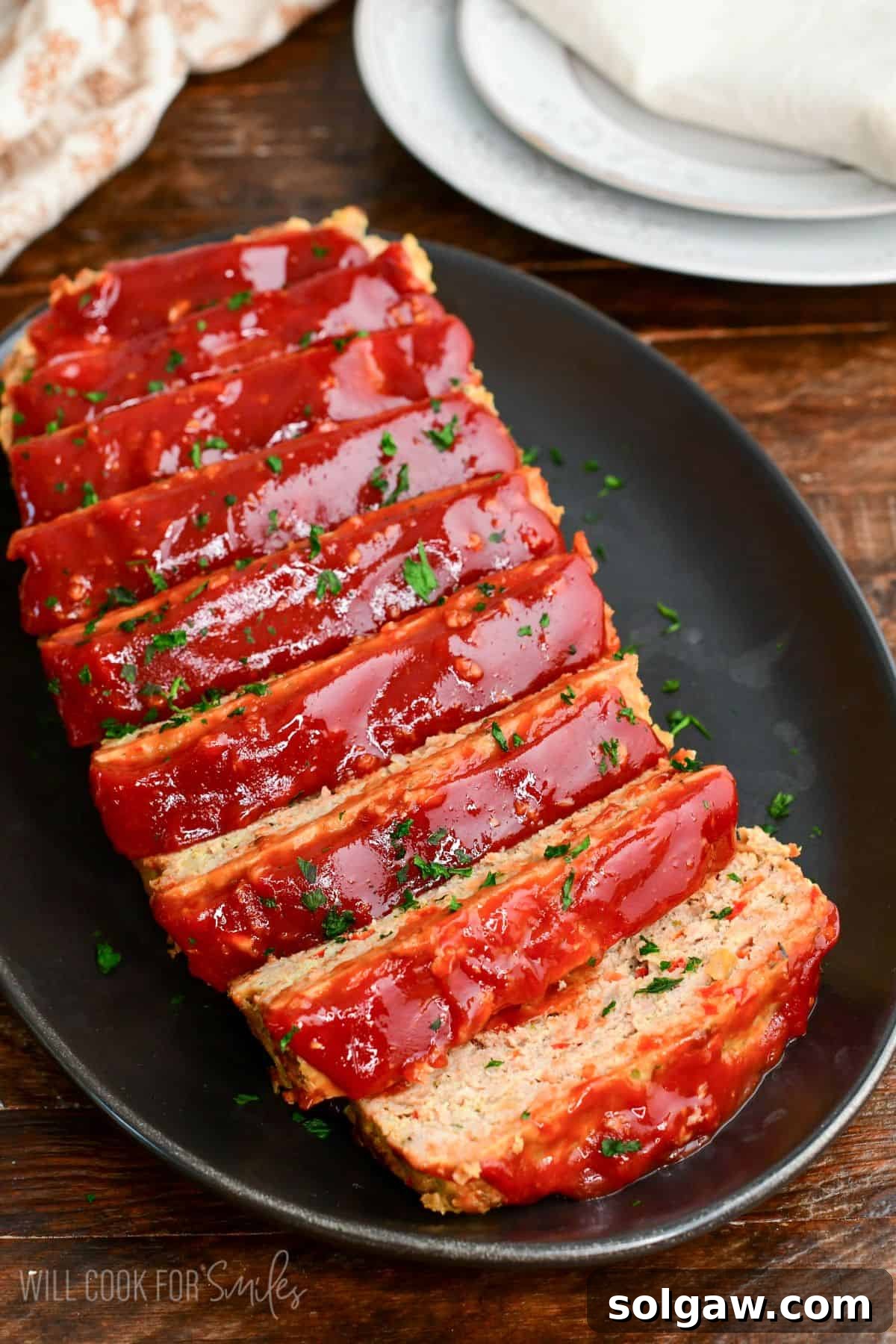
If you’ve ever been disappointed by a dry, bland turkey meatloaf, you’re not alone. It’s a remarkably common culinary challenge when working with ground turkey. Unlike its beefier counterpart, ground turkey is inherently leaner and possesses a milder flavor profile, which means it demands a bit more thoughtful preparation and a touch of creativity to truly shine. This recipe was meticulously crafted to address those very issues, and the results are truly exceptional. Prepare to savor a turkey meatloaf that is consistently tender, incredibly juicy, and bursting with robust flavor, thanks to a thoughtful blend of sautéed vegetables and a delightfully sweet yet tangy honey balsamic glaze.
Through years of culinary experimentation, I’ve developed a deep understanding of how to transform ground turkey into dishes that are wonderfully juicy, moist, and tender. My readers frequently praise my turkey burgers and turkey meatballs for their incredible texture and flavor, and this meatloaf recipe upholds that same standard of excellence. It’s designed to be a fool-proof guide to creating the best turkey meatloaf you’ve ever tasted, making it a reliable addition to your weekly dinner rotation.
Discover the Secret to Irresistibly Juicy Turkey Meatloaf!
This isn’t just another ground turkey meatloaf recipe; it’s a culinary revelation. The distinction between a dry, forgettable loaf and one that is genuinely juicy, satisfying, and deeply flavorful lies in a few crucial techniques and thoughtful ingredient choices:
- Sautéed Aromatic Vegetables: Before they ever meet the meat, finely diced onion and bell pepper are gently sautéed. This step is a game-changer. Cooking the vegetables first mellows their raw bite, caramelizes their natural sugars, and significantly deepens their flavor. More importantly, it removes excess moisture that would otherwise release during baking, preventing a soggy meatloaf and contributing a tender, uniform texture. These softened aromatics infuse the entire loaf with a rich, savory foundation.
- The Classic Panade (Milk-Soaked Bread): A time-honored technique, soaking bread in milk creates what is known as a “panade.” This mixture acts as a remarkable binder and moisture-retention agent. As the bread absorbs the milk, it swells and becomes incredibly soft. When mixed with the ground turkey, it prevents the meat proteins from tightening up too much during cooking, resulting in an exceptionally tender, moist, and light texture throughout the meatloaf, from the very center to the crust.
- A Touch of Mayonnaise for Ultimate Richness: Adding mayonnaise might seem unconventional, but it plays a vital role in elevating this turkey meatloaf. Mayonnaise contributes healthy fats and a subtle tang, acting as a secret weapon against dryness. It locks in moisture, ensuring the turkey stays succulent in the oven, and adds a luxurious richness that complements the lean ground turkey beautifully, making every slice incredibly satisfying.
- The Signature Honey Balsamic Glaze: The crowning glory of this meatloaf is its sweet and tangy glaze. A harmonious blend of ketchup, golden honey, pungent garlic, and complex balsamic vinegar creates a topping that’s far more dynamic and exciting than plain ketchup. As it bakes, the glaze caramelizes into a glossy, sticky coating that seals in moisture and adds an explosion of sweet-savory flavor, taking each bite to an unparalleled level of deliciousness.
Essential Ingredients and Expert Tips for Perfect Turkey Meatloaf
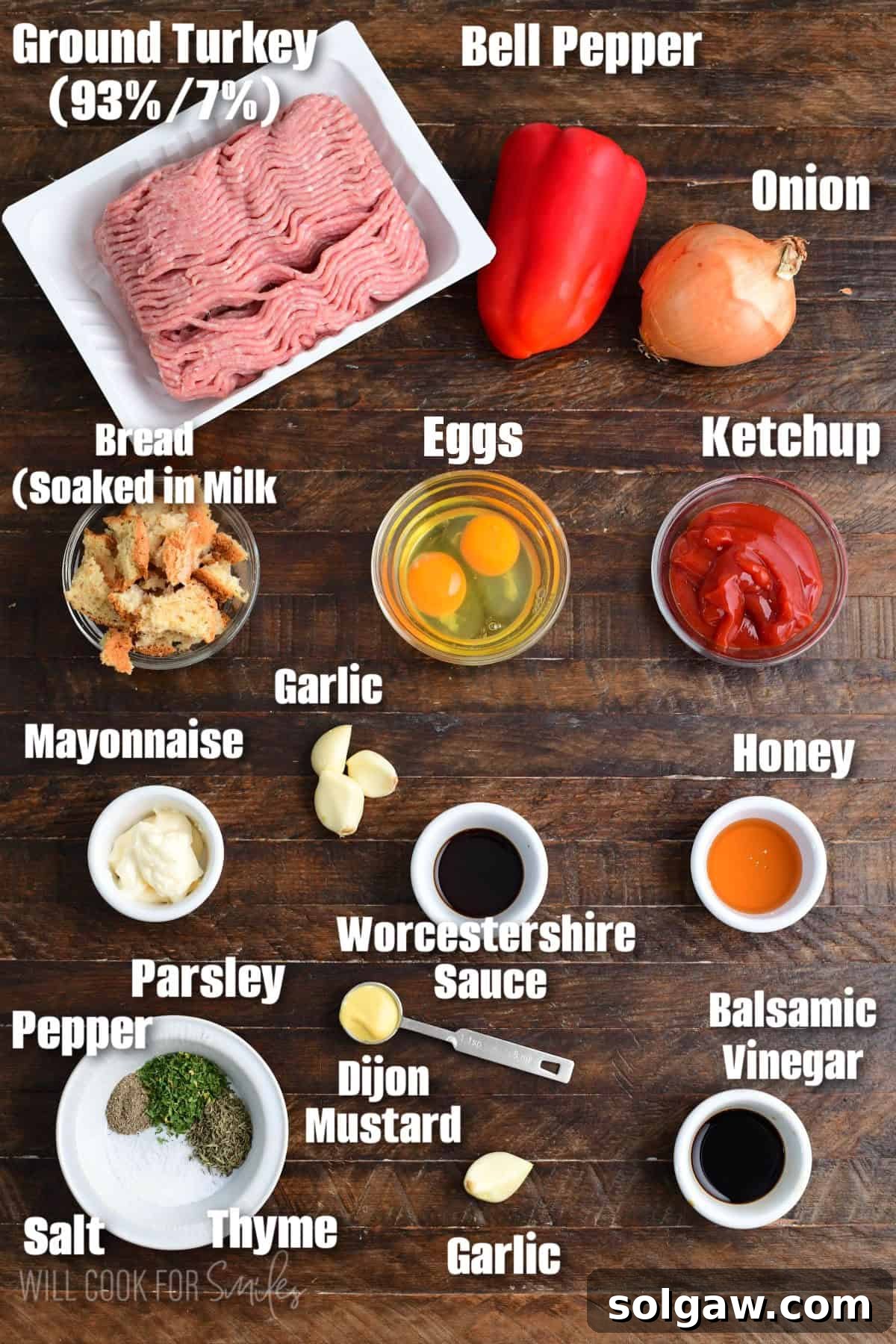
This turkey meatloaf recipe relies on readily available, pantry-friendly ingredients, yet each component is carefully chosen for its specific contribution to achieving the ideal tender texture and balanced flavor. Understanding their roles is key to your success:
- Ground Turkey Selection: The type of ground turkey you choose makes a significant difference. I highly recommend using 93% lean / 7% fat ground turkey. This ratio provides just enough fat content to keep the meatloaf incredibly moist and flavorful without making it greasy. Avoid extra-lean ground turkey breast (often labeled as 99% lean), as it contains minimal fat and tends to dry out considerably during baking, leading to a less enjoyable texture.
- The Indispensable Bread & Milk Panade: This step is non-negotiable for achieving a tender meatloaf. Soaking a slice of bread in milk and then gently squeezing out the excess liquid before incorporating it into the meat mixture creates a tenderizing binder. This panade is what prevents the meatloaf from becoming dense or rubbery, ensuring every slice remains soft and delightful. For those with dietary restrictions, a gluten-free bread slice works perfectly!
- Fresh Bell Pepper & Onion for Depth: These humble vegetables are flavor powerhouses. When sautéed, they impart a deep, savory sweetness and a beautiful aromatic complexity to the meatloaf. Pre-cooking them is crucial; it prevents the meatloaf from becoming watery by releasing their moisture before baking, while also softening their texture so they blend seamlessly into the loaf.
- The Star Meatloaf Glaze: Our honey balsamic glaze is designed to be much more exciting than a simple ketchup topping. The combination of classic ketchup, a pressed garlic clove, golden honey for sweetness, and a splash of balsamic vinegar for acidity creates a sophisticated balance. The balsamic vinegar adds a subtle, intriguing tang that perfectly cuts through the sweetness of the honey and the richness of the meat, resulting in a glossy, sticky, and deeply flavorful crust.
Crafting Your Masterpiece: A Visual Step-by-Step Guide to Turkey Meatloaf
Creating this incredibly tender and flavorful turkey meatloaf is a surprisingly simple and straightforward process. You won’t need any fancy kitchen gadgets – just a mixing bowl, a trusty loaf pan, and your hands. Follow these easy steps to bring this comforting dish to life:
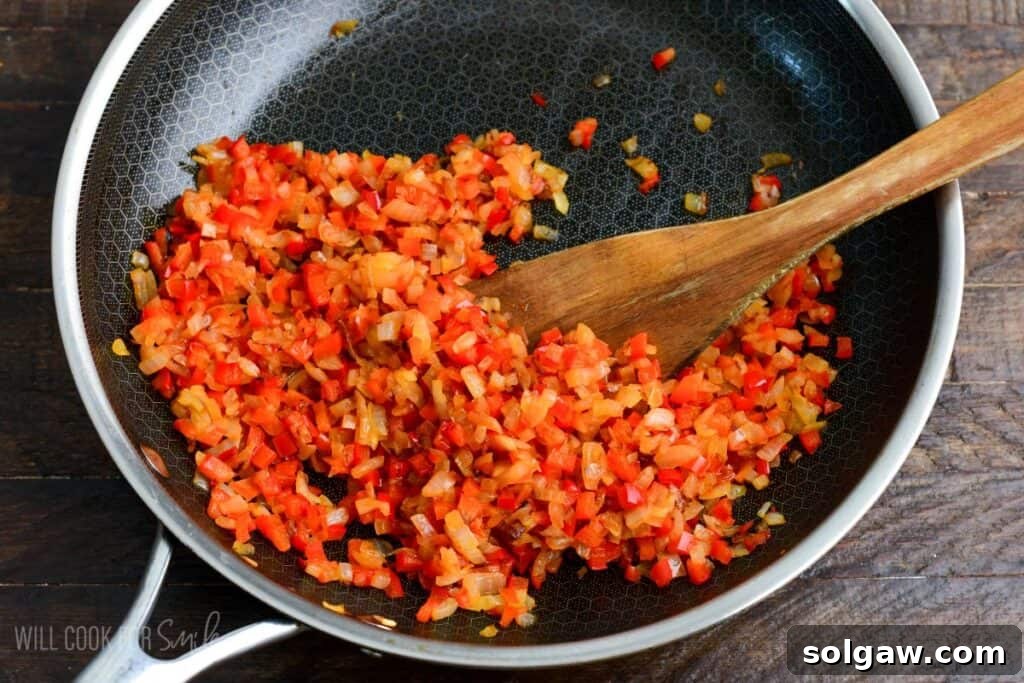
Step 1 – Sauté the Aromatic Vegetables. Begin by finely dicing your onion and bell pepper. Heat a small amount of oil in a medium skillet over medium to medium-low heat. Add the diced vegetables and cook them gently until they are beautifully soft and achieve a slight golden hue, typically 5-7 minutes. This step is vital for developing flavor and preventing excess moisture in your meatloaf. Once cooked, transfer them to a plate and allow them to cool slightly before adding them to the meat mixture; this ensures they don’t prematurely cook the eggs.
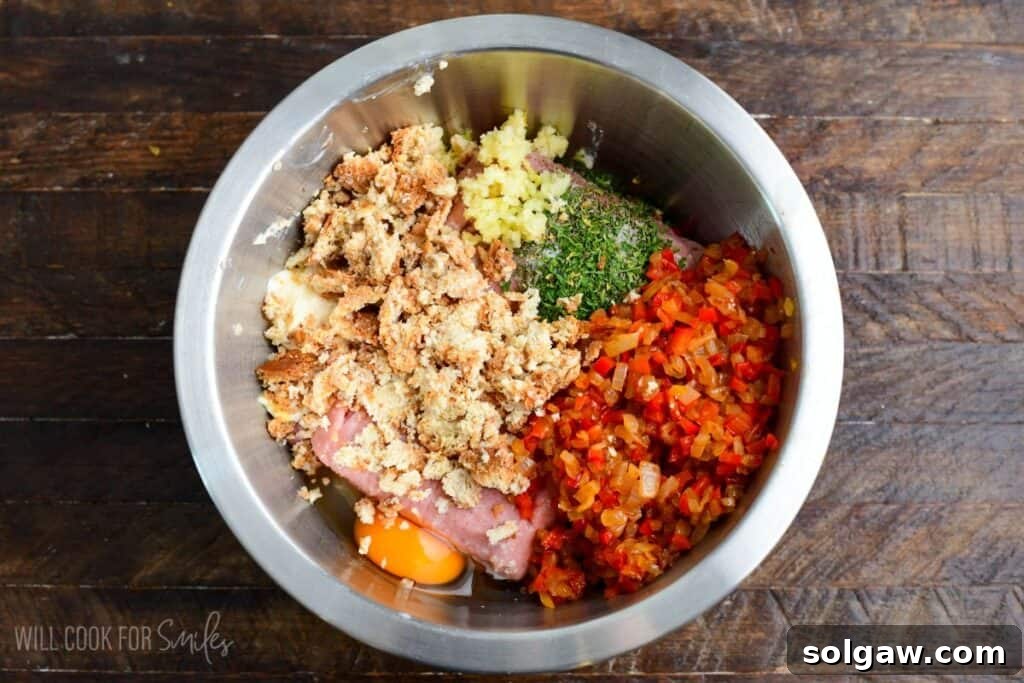
Step 2 – Prepare the Panade (Milk-Soaked Bread). While your vegetables are cooling, take a slice of bread and break it into several small pieces. Place these bread pieces in a small bowl and pour 2 tablespoons of milk over them, allowing the bread to soak for a few minutes. This process creates the panade, which is crucial for a tender meatloaf. Before adding to the mixture, gently but firmly squeeze out any excess milk from the soaked bread, then crumble it directly into your large mixing bowl.
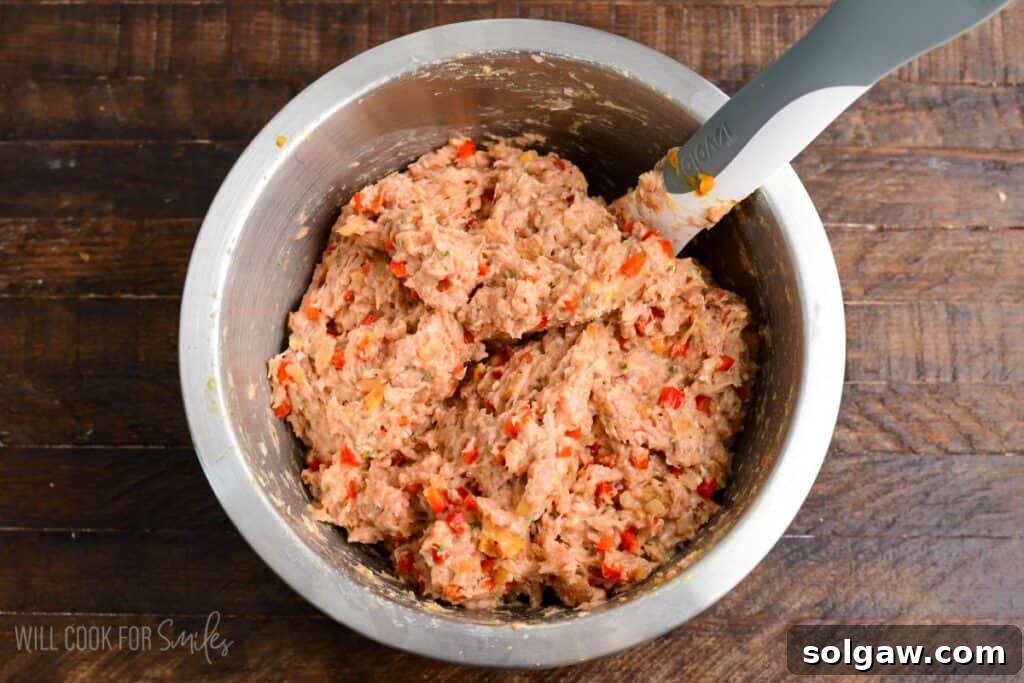
Step 3 – Gently Mix the Meatloaf Ingredients. In a large mixing bowl, combine the ground turkey, the cooled sautéed vegetables, pressed garlic, eggs, mayonnaise, Dijon mustard, Worcestershire sauce, dried parsley, dried thyme, and the crumbled, milk-squeezed bread. Season generously with kosher salt and black pepper to taste. Using your hands, mix all the ingredients thoroughly but gently. The key here is to avoid overmixing, which can lead to a tough, dense meatloaf. Mix just until all the ingredients are evenly incorporated and combined.
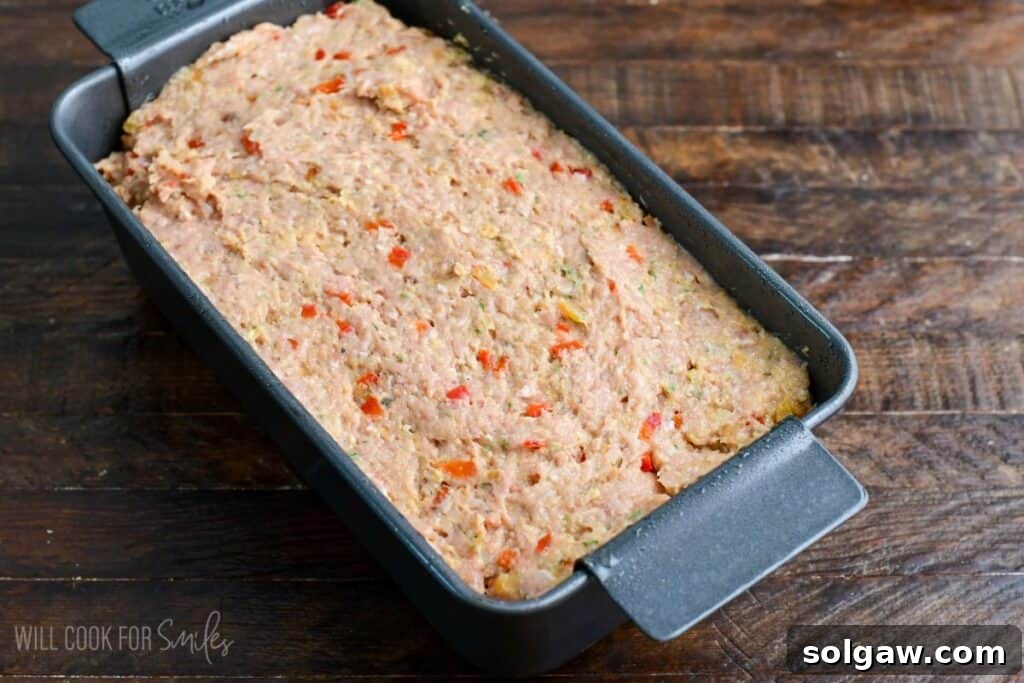
Step 4 – Shape and Bake the Meatloaf. Preheat your oven to 350°F (175°C) and lightly grease a 9×5-inch loaf pan. Transfer the thoroughly mixed meatloaf mixture into the prepared pan. Press it down and spread it out evenly, ensuring the top is relatively flat. This uniform distribution promotes even cooking and browning. Place the loaf pan in the preheated oven and bake for approximately 55 minutes. This initial baking period will allow the meatloaf to cook through before the glaze is applied.
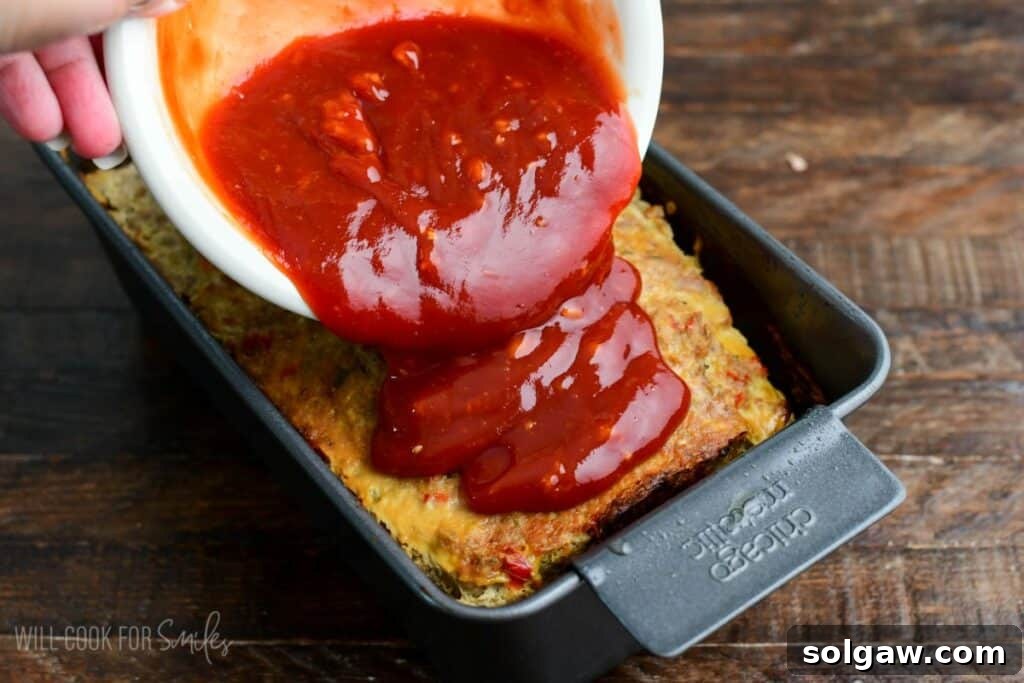
Step 5 – Glaze and Finish Baking. While the meatloaf is enjoying its initial bake, prepare the irresistible glaze. In a small bowl, whisk together the ketchup, pressed garlic, honey, and balsamic vinegar until well combined. Once the 55 minutes of initial baking are up, carefully remove the meatloaf from the oven. Evenly spread the prepared glaze over the entire top surface of the meatloaf. Return it to the oven and continue baking for another 7-10 minutes, or until the internal temperature of the meatloaf reaches 165°F (74°C) as measured with a reliable meat thermometer.
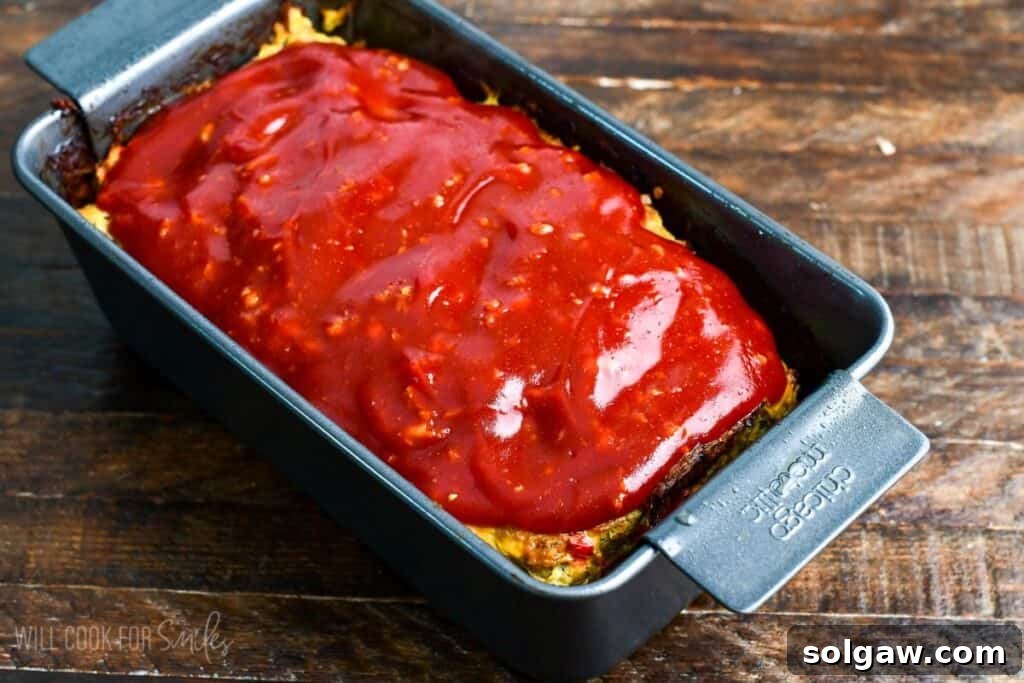
Step 6 – The Essential Rest Before Slicing. This final step is often overlooked but is absolutely critical for achieving a perfectly juicy meatloaf. Once the meatloaf has reached its ideal internal temperature, remove it from the oven and let it rest in the loaf pan for 10-15 minutes before attempting to remove it and slice. This resting period allows the internal juices to redistribute throughout the loaf, ensuring that every single slice remains incredibly moist, tender, and holds its shape beautifully. Skipping this step can result in juices running out and a drier, crumbly meatloaf.
Lyuba’s Expert Tip: Always use a reliable meat thermometer! When cooking with leaner meats like turkey, the window between perfectly cooked and disappointingly overcooked is much narrower than with beef. Relying solely on baking time can be misleading. A thermometer ensures your meatloaf reaches a safe 165°F (74°C) internal temperature without surpassing it, guaranteeing maximum juiciness and flavor.
Mastering Moisture: How to Prevent Dry Turkey Meatloaf
The quest for a juicy turkey meatloaf is a common one, and thankfully, it’s easily achievable with a few key strategies. By implementing these tips, you can guarantee a consistently moist and tender result every time:
- Choose the Right Ground Turkey: Opt for ground turkey with a higher fat content, specifically 93% lean / 7% fat. This small percentage of fat contributes significantly to the meatloaf’s moisture and flavor. Extra-lean (99% lean) turkey breast will inevitably yield a much drier product.
- Embrace the Panade: Never skip the step of soaking bread in milk. This classic technique introduces essential moisture and acts as a buffer, preventing the meat proteins from becoming tough and dry during cooking. It’s your secret weapon for a truly tender loaf.
- Pre-Cook Your Vegetables: Sautéing diced onions and bell peppers before mixing them into the meatloaf is crucial. It removes excess moisture that would otherwise steam out and make your meatloaf watery or crumbly, while also intensifying their flavors. Cool them slightly before adding to protect the eggs from cooking prematurely.
- Mindful Mixing is Key: Overmixing is the enemy of a tender meatloaf. Handle the mixture gently and mix only until all ingredients are just combined. Vigorous mixing develops the proteins in the meat too much, resulting in a dense, tough texture.
- Cook to Precision, Not Just Time: Always use a meat thermometer and aim for an internal temperature of 165°F (74°C). Turkey cooks quickly, and even a few degrees above this can lead to dryness. Remove the meatloaf promptly once it reaches this temperature. A slight carryover cooking (an additional 5 degrees or so) is acceptable, but significantly exceeding 165°F will diminish juiciness.
- Allow for Essential Resting Time: Once baked, let your meatloaf rest for 10-15 minutes before slicing. This allows the internal juices, which concentrate towards the center during cooking, to redistribute throughout the entire loaf. The result is a uniformly moist meatloaf that holds its shape beautifully when sliced.
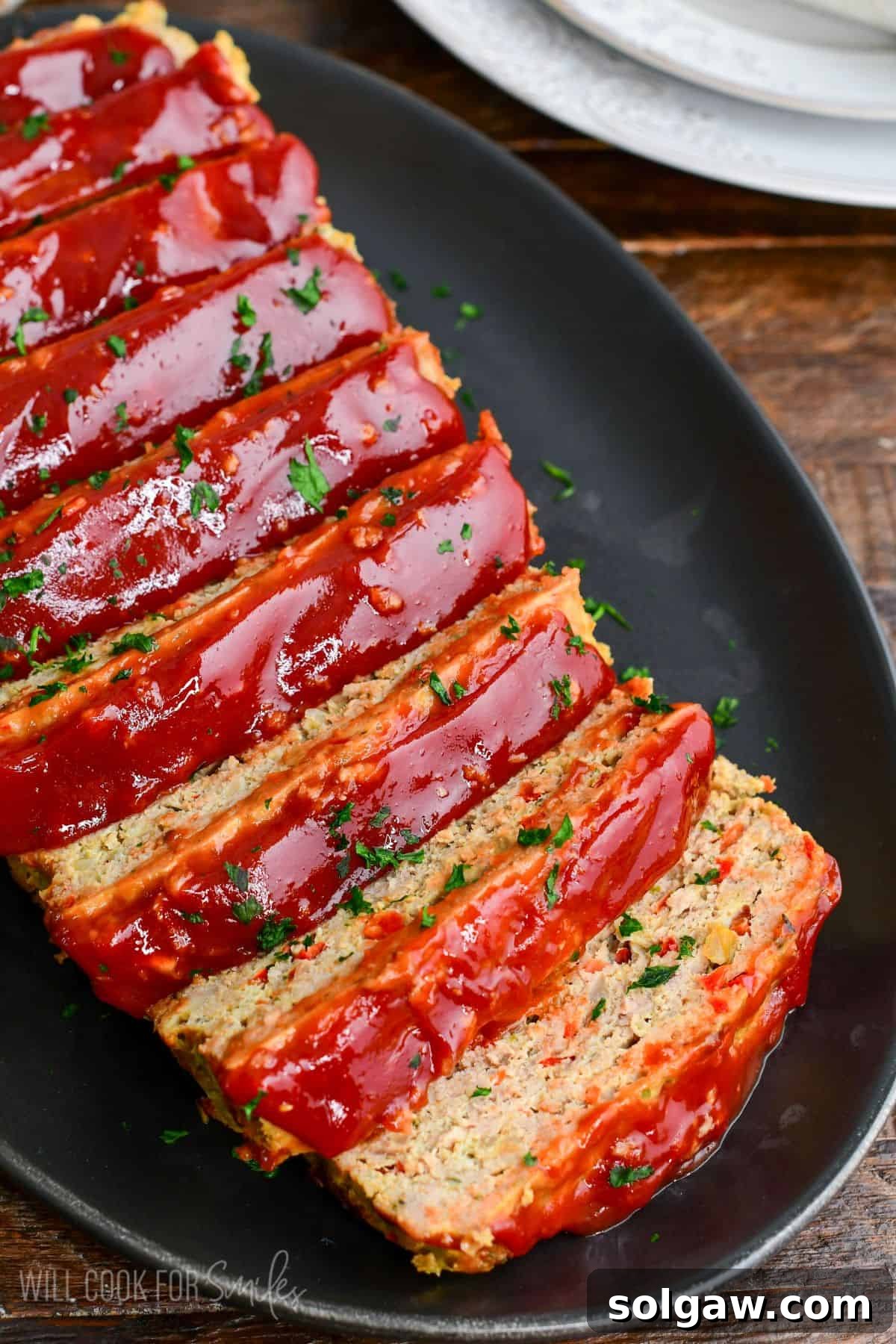
Perfect Pairings: What to Serve with Turkey Meatloaf
This savory turkey meatloaf, with its sweet and tangy glaze, is a versatile main course that complements a wide array of classic comfort food sides. Here are some of our favorite pairings that transform a simple meal into a delightful feast:
- Creamy Garlic Mashed Potatoes: The ultimate classic pairing. The rich, buttery texture of mashed potatoes perfectly soaks up any delicious meatloaf juices and glaze, creating a harmonious and comforting bite.
- Hearty Roasted Vegetables: A medley of roasted vegetables adds a healthy and flavorful balance. Consider serving with tender roasted cauliflower, naturally sweet honey roasted carrots, delicate roasted zucchini, or earthy roasted mushrooms. Roasting brings out their natural sweetness and creates a lovely caramelized edge.
- Crisp Green Beans: Whether it’s classic green beans with bacon and onions or elegant haricot verts, green beans offer a refreshing crunch and vibrant color that beautifully contrasts the meatloaf.
- Creamy Parmesan Rice: A bowl of creamy, cheesy Parmesan rice offers a wonderfully savory and satisfying alternative to potatoes, adding a touch of indulgence to your meal.
- A Fresh, Simple Side Salad: For a lighter touch, a crisp side salad is always a good choice. A bright Greek salad with its tangy dressing or a classic Caesar salad can provide a refreshing counterpoint to the richness of the meatloaf.
Storing, Freezing, and Reheating Your Turkey Meatloaf
This turkey meatloaf makes fantastic leftovers, perfect for quick weeknight meals or satisfying lunches. Proper storage ensures its deliciousness for days or even months:
- Refrigeration (Storing Leftovers): Allow any leftover meatloaf to cool completely to room temperature. Once cooled, transfer it to an airtight container. It will keep beautifully in the refrigerator for up to 4 days. Storing it in slices can make individual reheating easier.
- Reheating for Optimal Flavor:
- Microwave: For individual slices, place them on a microwave-safe plate and heat in 30-60 second intervals until warmed through. Be careful not to overheat, which can dry out the turkey.
- Stovetop: Place individual slices in a cooking pan over medium-low heat with a tablespoon of water or broth, cover, and gently warm until heated through. This method helps retain moisture.
- Oven: To reheat an entire leftover loaf or larger portions, preheat your oven to 300°F (150°C). Place the meatloaf in an oven-safe dish, add a splash of water or broth to the bottom, and cover tightly with foil. Heat for 20-30 minutes, or until warmed through, to prevent drying.
- Freezing for Future Enjoyment: Turkey meatloaf freezes exceptionally well, making it an excellent meal prep option. For best results, freeze it without the topping. Allow the baked meatloaf to cool completely. Wrap it tightly in plastic wrap, then an additional layer of aluminum foil, or place it in a freezer-safe container. It can be stored in the freezer for up to 3 months. When ready to enjoy, thaw the meatloaf overnight in the refrigerator. Apply fresh glaze when reheating for optimal flavor and texture.
- The Glorious Meatloaf Sandwich: Don’t underestimate the power of a meatloaf sandwich! Cold slices or gently warmed meatloaf, tucked into a soft brioche bun with a little extra glaze or your favorite condiments, create an absolutely incredible, comforting sandwich experience. It’s a highly recommended way to enjoy leftovers!
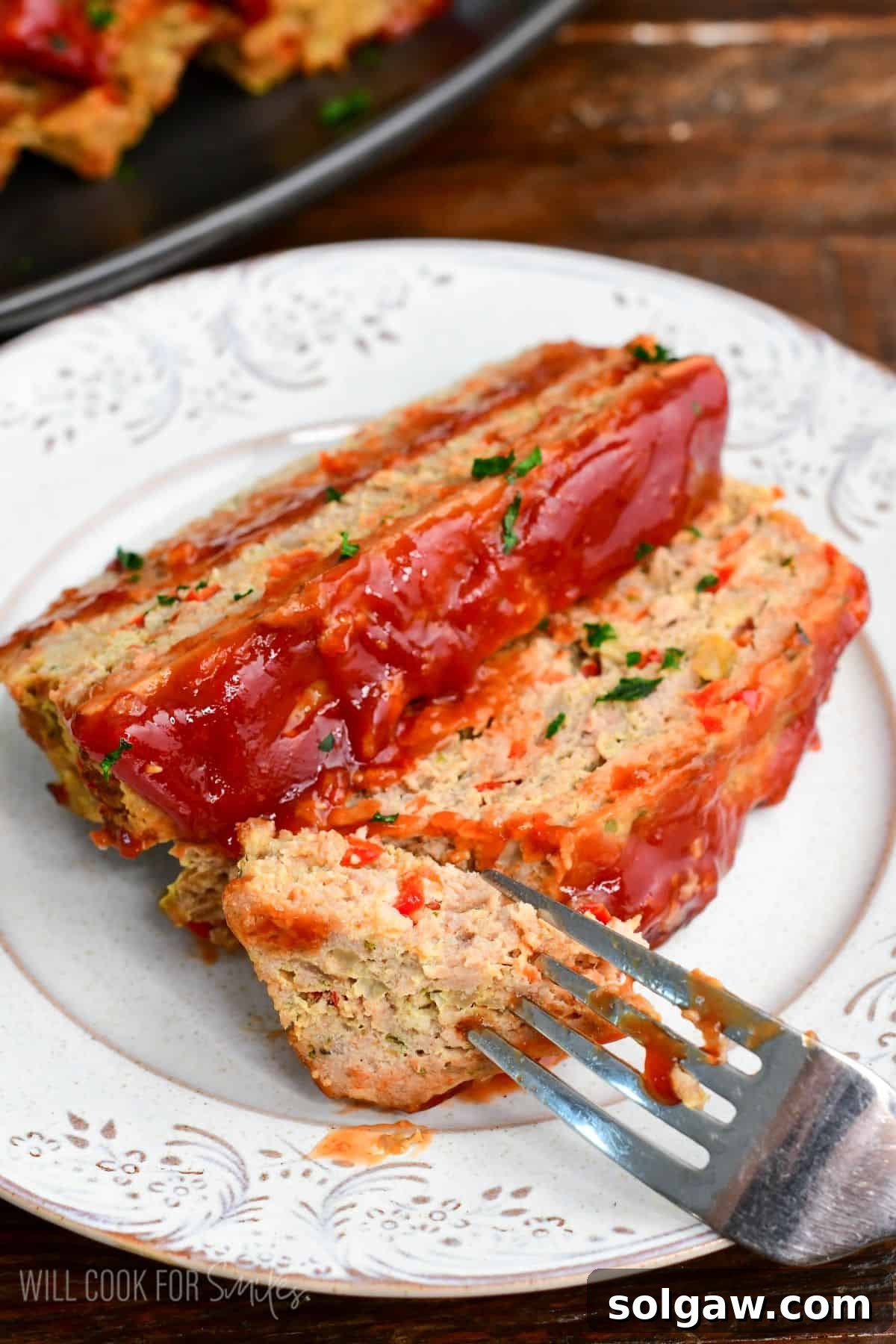
Frequently Asked Questions About Turkey Meatloaf
The primary differences lie in leanness, flavor, and moisture requirements. Turkey is significantly leaner than beef, resulting in a lighter and often softer texture. Its flavor is milder, which means it greatly benefits from additional seasonings and aromatics to build depth. Crucially, turkey meatloaf needs added moisture from components like sautéed vegetables and a panade (milk-soaked bread) to prevent it from drying out during cooking. When prepared correctly, turkey meatloaf can be just as satisfying as a traditional beef meatloaf, but with a noticeably lighter and less heavy feel, often making it a preferred choice for those seeking a healthier comfort food.
While you can use extra-lean (99%) ground turkey breast, be aware that the meatloaf will likely be considerably drier due to the lack of fat. If 99% lean turkey is your only option, I strongly recommend adding an extra tablespoon of mayonnaise to the mixture to introduce more moisture and richness. Additionally, be extra vigilant with your cooking time and pull the meatloaf from the oven precisely when it reaches 165°F (74°C) internal temperature to prevent overbaking.
Absolutely! The bell pepper is quite versatile. You can use any color bell pepper you prefer (red, yellow, orange, or green), as they all contribute a slightly different sweetness and flavor profile. Alternatively, feel free to swap it out for other finely diced vegetables such as zucchini, mushrooms (which add an umami depth), or even shredded carrots for a touch of natural sweetness and texture.
I highly, highly recommend sautéing the vegetables before adding them to the meatloaf mixture. This step serves two critical purposes: First, it removes excess moisture from the raw onion and bell pepper, preventing them from releasing steam during baking, which can cause the meatloaf to fall apart or become soggy. Second, sautéing enhances and deepens their flavor, contributing a richer, more complex taste to the final dish. Skipping this step often results in a less flavorful and potentially less structurally sound meatloaf.
It is absolutely and completely normal for a meatloaf to develop some cracks on its surface during baking! This is a common occurrence due to the expansion and contraction of the meat as it cooks. These minor cracks do not negatively affect the flavor or the tender texture of your meatloaf in any way. Plus, once you spread that luscious honey balsamic glaze over the top, most, if not all, of those cracks will be beautifully covered and disappear, leaving you with a perfectly appetizing appearance.
Yes, making this recipe gluten-free is very simple! The only ingredient you need to swap is the bread for the panade. Just use one slice of your preferred gluten-free bread in place of regular bread, and follow the soaking and squeezing instructions as written. All other ingredients in the recipe are naturally gluten-free.
You certainly can! Baking meatloaf in muffin tins is a fantastic idea for portion control and quicker cooking times. To do so, simply press the meatloaf mixture evenly into a greased muffin tin. Bake the meatloaf muffins at 350°F (175°C) for approximately 25-30 minutes, or until each muffin reaches an internal temperature of 165°F (74°C). You can add a dollop of glaze to each muffin for the last 5-7 minutes of baking.
Yes, baking your turkey meatloaf free-form is a great option, especially if you prefer more browning and a crisper exterior! To do this, shape the meatloaf mixture into a classic loaf shape directly on a parchment-lined baking sheet instead of using a loaf pan. Baking it free-form allows more hot air to circulate around all sides of the meat, leading to enhanced caramelization and a more savory crust. Just be sure to monitor the internal temperature carefully, as free-form meatloaves typically cook much faster. Start checking the internal temperature after about 30-35 minutes and remove it promptly when it reaches 165°F (74°C) to prevent it from drying out.
PIN THIS RECIPE FOR LATER
DID YOU MAKE THIS RECIPE? Please leave a 🌟 star rating! Let me know how you liked it by leaving a 📝 comment below or share and tag me on social media @willcookforsmiles. DON’T FORGET to subscribe to my newsletter for more delicious recipes!
Turkey Meatloaf Recipe
This easy turkey meatloaf is incredibly juicy, tender, and packed with flavor thanks to sautéed vegetables, a classic panade (milk soaked bread), and a sweet and tangy honey balsamic ketchup glaze. Made with 93% lean ground turkey, it’s a lighter take on traditional meatloaf that stays moist and slices beautifully. Ready in about an hour and a half, it’s the perfect leaner comfort food for any night of the week.
Course: Comfort Food, Dinner, Main Course
Cuisine: American
Diet: Low Calorie, Low Fat
Prep Time: 10 minutes
Cook Time: 1 hour 15 minutes
Total Time: 1 hour 25 minutes
Servings: 8 (8-10 slices)
Calories: 236 kcal
Author: Lyuba Brooke
Equipment
- 9×5 Loaf pan
- Mixing bowl
- Medium cooking pan
- Knife
- Cutting board
- Silicone spatula
Ingredients
Meatloaf:
- 2 lbs ground turkey (93%/7%)
- 1 yellow onion (diced)
- 1 bell pepper (diced)
- 3 garlic cloves (pressed)
- 2 large eggs
- 2 oz slice of bread (can use gluten free if needed)
- 2 Tbsp milk (to soak bread)
- 2 Tbsp mayonnaise
- 1 tsp Dijon mustard
- 1 Tbsp Worcestershire sauce
- 1 Tbsp dried parsley
- 1 tsp dried thyme
- 1 tsp coarse kosher salt (more or less to taste)
- 1/2 tsp black pepper (more or less to taste)
Topping:
- 1/2 cup ketchup
- 1 garlic clove (pressed)
- 2 Tbsp honey
- 1 Tbsp balsamic vinegar
Instructions
- Preheat the oven to 350℉ (175°C) and lightly grease a 9×5 loaf baking pan.
- Dice onion and bell pepper and sauté them with a little oil over medium to medium-low heat until soft and golden brown, about 5-7 minutes. Remove from heat and let cool slightly.
- While the veggies are cooling, break up the slice of bread into pieces and let it soak for a few minutes in 2 tablespoons of milk.
- In a large mixing bowl, combine the ground turkey, eggs, cooled sautéed veggies, pressed garlic (from meatloaf ingredients), mayonnaise, Dijon mustard, Worcestershire sauce, salt, pepper, parsley, and thyme. Squeeze the milk out of the soaked bread and crumble the bread into the mixing bowl (discard the milk).
- Mix everything thoroughly until all ingredients are evenly incorporated. Be careful not to overmix.
- Transfer the meatloaf mixture into the prepared baking dish and spread it evenly.
- Bake for about 55 minutes.
- While the meatloaf is baking, mix the ingredients for the topping (ketchup, pressed garlic, honey, and balsamic vinegar) in a small bowl and set aside.
- After 55 minutes, remove the meatloaf from the oven. Spread the prepared topping evenly over the top and bake for another 7-10 minutes, or until the internal temperature of the meatloaf reaches 165℉ (74°C).
- Let the meatloaf rest for 10-15 minutes before carefully removing it from the baking dish and slicing. This allows the juices to redistribute, ensuring a moist and tender result.
Notes
- Use 93% lean ground turkey for the juiciest and most tender meatloaf that is never dry.
- Don’t skip sautéing the vegetables. Cooking the onion and bell pepper first builds flavor and prevents excess moisture from affecting the texture of the meatloaf. Ensure they cool slightly before adding to the mixture to prevent cooking the eggs prematurely.
- Soak and squeeze the bread (panade). This essential step keeps the meatloaf incredibly tender. Be sure to squeeze out the excess milk before mixing it in. Use gluten-free bread if needed for a dietary-friendly option.
- Mix gently. Overmixing can develop the meat proteins too much, making the meatloaf dense and firm. Stir just until everything is evenly incorporated.
- Cook to 165°F (74°C) precisely. Always use a meat thermometer and remove the meatloaf from the oven as soon as it reaches 165°F. Turkey can dry out quickly if overbaked.
- Let it rest before slicing. Resting for 10-15 minutes allows the internal juices to redistribute, ensuring each slice stays moist and holds together beautifully.
- Free-form option. You can shape the meatloaf into a loaf on a parchment-lined baking sheet instead of using a loaf pan for more browning and caramelization. Adjust baking time accordingly (usually faster, check after 30-35 minutes).
- Storing leftovers. Store cooled meatloaf in an airtight container in the refrigerator for up to 4 days.
- Freezing. Wrap the fully cooled meatloaf tightly in plastic wrap and then foil, or store in a freezer-safe container, and freeze for up to 3 months. Thaw overnight in the refrigerator before reheating. Add fresh glaze when reheating for best results.
- Reheating tip. Reheat slices gently in the microwave, or in a cooking pan over medium-low heat. To warm a whole loaf, cover it in a 300°F (150°C) oven until heated through to prevent drying. Adding a tablespoon of broth or water can help maintain moisture.
- Meal prep tip. Slice the cooled meatloaf and portion it into containers with a simple side like roasted vegetables, mashed potatoes, or rice for easy grab-and-go lunches throughout the week.
Nutrition Information
Calories: 236kcal | Carbohydrates: 16g | Protein: 30g | Fat: 6g | Saturated Fat: 1g | Polyunsaturated Fat: 3g | Monounsaturated Fat: 2g | Trans Fat: 0.03g | Cholesterol: 105mg | Sodium: 595mg | Potassium: 498mg | Fiber: 1g | Sugar: 10g | Vitamin A: 652IU | Vitamin C: 22mg | Calcium: 42mg | Iron: 2mg