Reader Reviews
“
This was comforting and so good!” ~Alexia
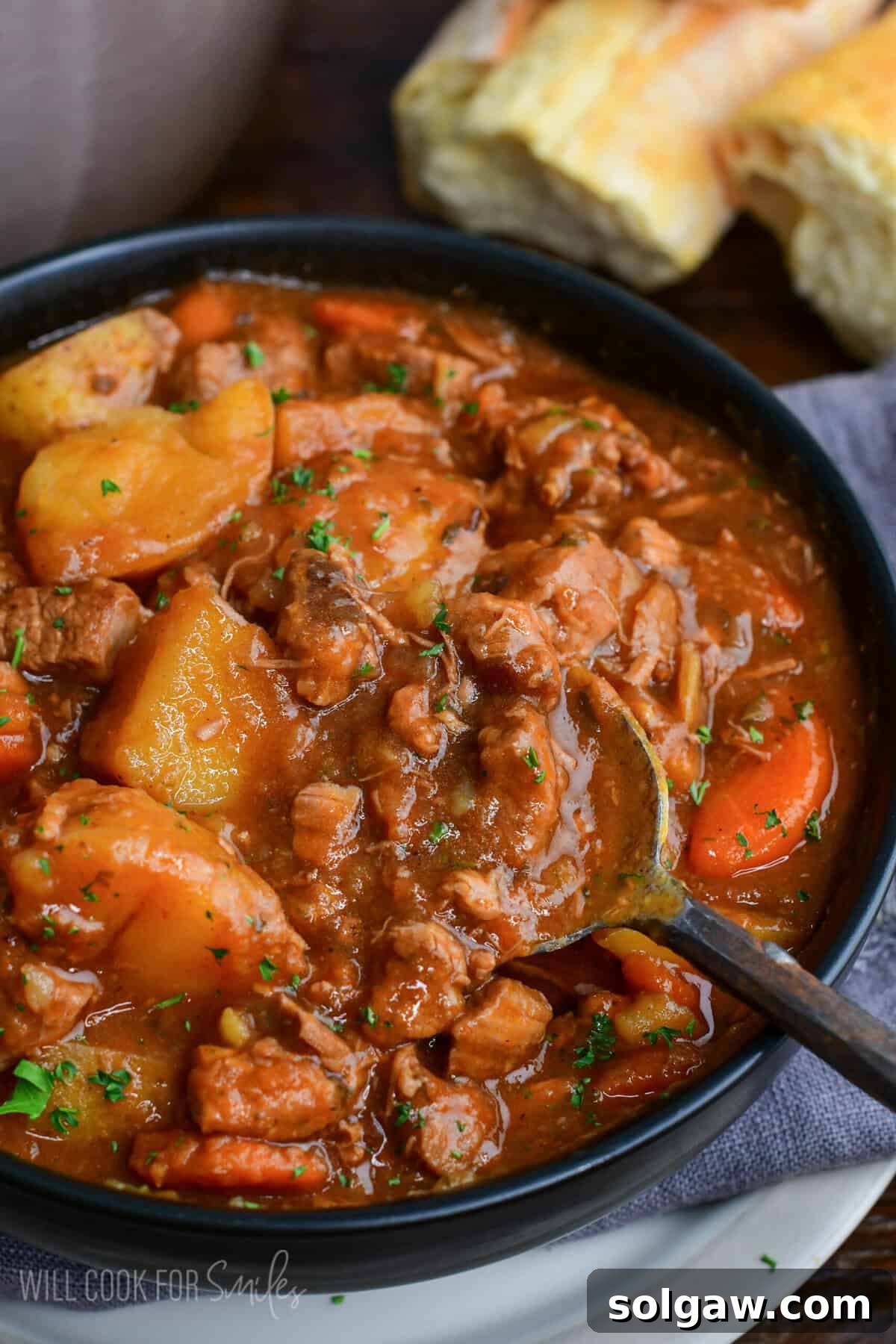
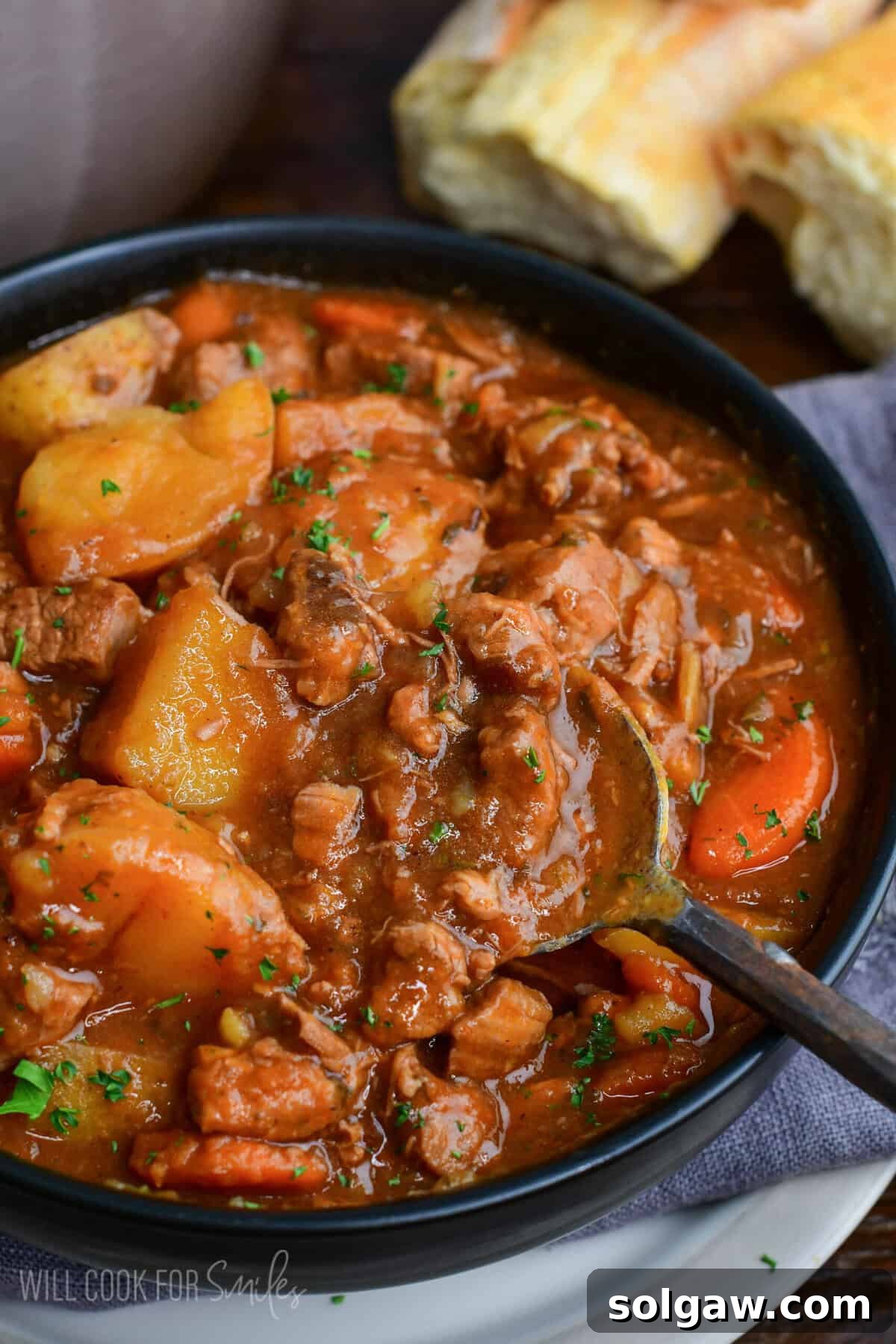
Authentic Irish Lamb Stew: A Hearty Classic for St. Patrick’s Day and Beyond
As St. Patrick’s Day approaches, my kitchen transforms into a haven of aromatic flavors, and this exquisite Irish lamb stew inevitably takes center stage. It’s more than just a meal; it’s a cherished tradition, a culinary journey that I eagerly anticipate all year long. While many associate St. Patrick’s Day with corned beef and cabbage, I encourage you to discover the truly authentic and deeply satisfying experience of a perfectly prepared lamb stew. This recipe goes beyond the ordinary, promising a rich, comforting dish that will earn a permanent spot in your family’s rotation.
Imagine the enticing fragrance of dark Guinness stout and fragrant thyme gently filling your home, a prelude to the rich, complex broth that slowly develops over hours of tender simmering. This isn’t just any stew; it’s a revelation. If your palate is accustomed to traditional beef stew, prepare for a delightful surprise. The distinct, tender quality of lamb elevates this dish, creating a depth of flavor that beef simply cannot replicate. Once you experience the unparalleled taste and comforting warmth of this authentic Irish lamb stew, you might just find that corned beef and cabbage has some serious competition for your holiday menu.
Ingredient Spotlight: Tips for Perfect Flavor and Smart Substitutions
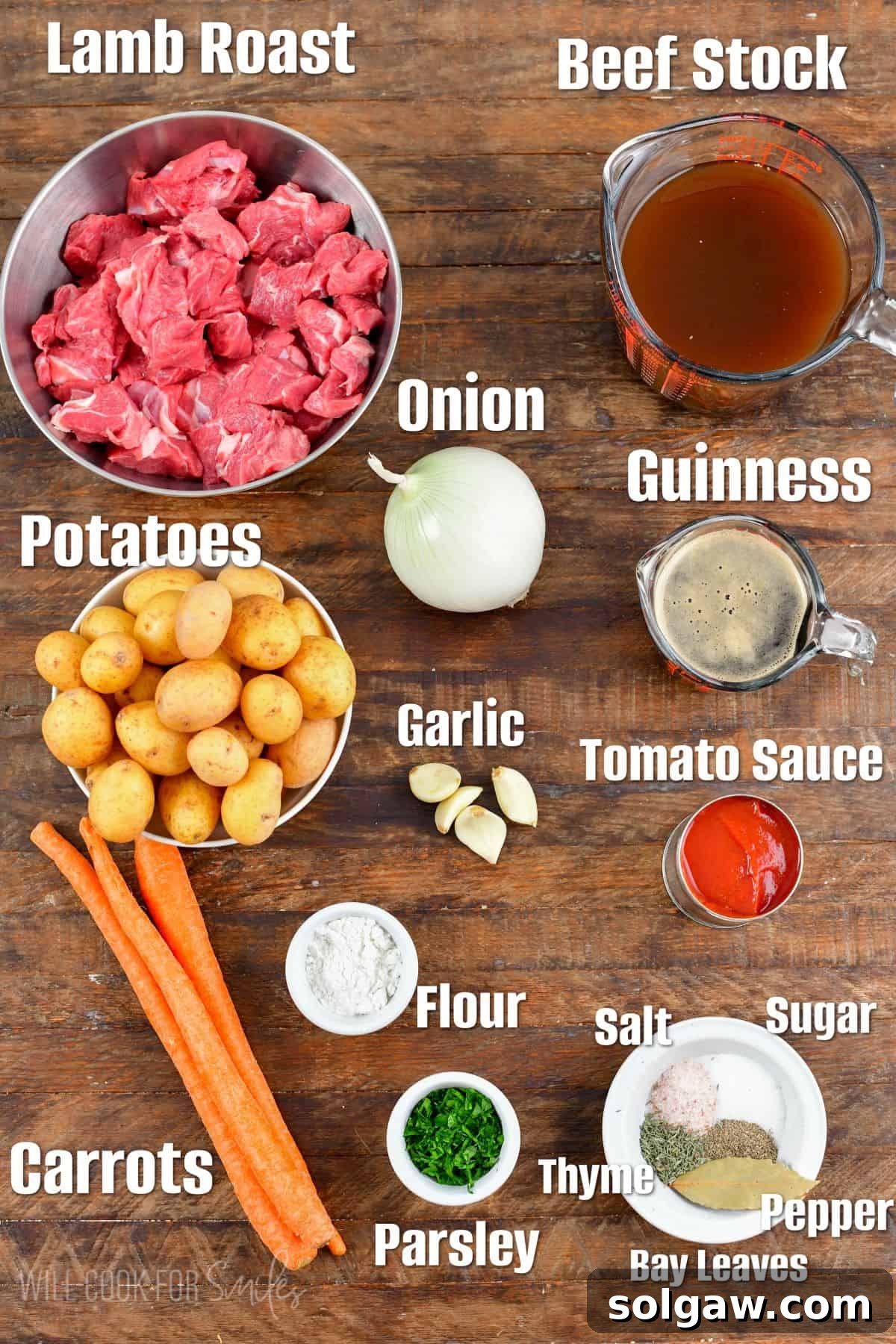
Crafting the perfect Irish lamb stew begins with selecting the right ingredients and understanding how each component contributes to the overall flavor profile. Here’s a detailed guide to ensure your stew is nothing short of exceptional:
- Lamb Roast: The Star of the Stew
You’ll need approximately 2 pounds of lamb roast meat. While you can purchase a whole lamb roast and butcher it yourself, many grocery stores conveniently offer pre-cut “lamb stew meat.” For the most tender and flavorful results, we highly recommend using lamb shoulder. This cut is rich in fat and connective tissue, which slowly breaks down during the long cooking process, infusing the broth with incredible richness and ensuring melt-in-your-mouth lamb. A leg of lamb can also be used; simply ask your butcher to de-bone it for you. However, it’s best to avoid lamb chops for stew, as their leaner nature means they can become tough with extended cooking. - Guinness Stout: The Soul of the Broth
Guinness Extra Stout is the quintessential choice for this recipe. Its robust, slightly bitter, and malty notes are essential for developing the stew’s signature deep, complex flavor and complement the richness of the lamb beautifully. If you happen to have any leftover Guinness (a rare occurrence for some!), it can be creatively used in other recipes like Guinness Chicken Drumsticks or even Stout Chocolate Cupcakes! - Balancing the Stout’s Bitterness: Tomato Sauce and Sugar
To harmonize the bold bitterness of the stout, our recipe incorporates tomato sauce and a touch of granulated sugar. This simple yet crucial addition helps to round out the flavors, adding a subtle sweetness and acidity that marries all the ingredients into a perfectly balanced and cohesive stew. It’s a culinary secret that elevates the entire dish. - Beer Substitute: Non-Alcoholic Options
If you prefer not to use alcohol, rest assured that you can still create a fantastic stew. Substitute the Guinness with an equal amount of non-alcoholic stout or dark beer, or simply omit it entirely and replace it with additional beef stock. While the Guinness adds a unique layer of depth, the stew will remain incredibly delicious and hearty without it. - Beef Stock: The Flavor Foundation
Traditionally, lamb stock would be the purest choice, but beef stock is much more readily available and works exceptionally well, contributing a robust base to the stew. If you have access to homemade beef stock, this is an excellent opportunity to use it! Homemade stock will undeniably make your broth noticeably richer and more luxurious, truly enhancing the stew’s overall appeal. - For a complete list of ingredients and precise quantities, please refer to the detailed recipe card below.
Mastering Irish Stew: Step-by-Step Guidance and Expert Tips
Creating an extraordinary Irish lamb stew is a rewarding process that relies on a few key techniques. Follow these steps carefully to achieve a deeply flavorful and tender stew that will impress everyone at your table:
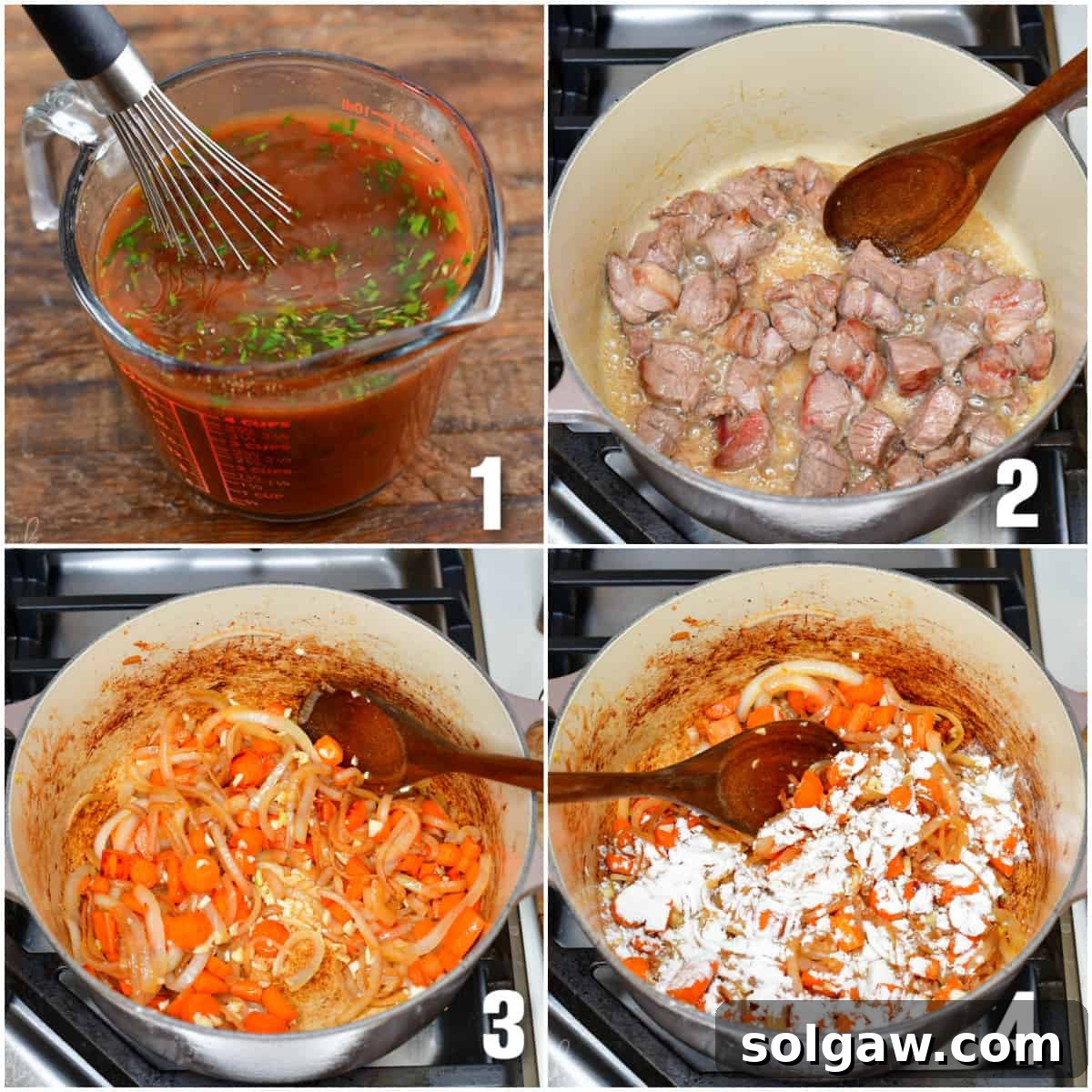
- Efficient Preparation (Mise en Place): Start by preparing all your ingredients. If your lamb is refrigerated, chop it first and let it come to room temperature while you prepare other components. In a separate bowl, thoroughly whisk together the beef stock, tomato sauce, fresh thyme, minced parsley, salt, pepper, and sugar. This ensures your liquid base is ready when needed.
- Achieving a Perfect Sear on the Lamb: The searing step is crucial for developing rich flavor. If your lamb meat appears overly moist, gently pat it dry with paper towels to remove any excess surface moisture. This allows the meat to brown beautifully rather than steam. Sear the lamb pieces in batches, ensuring not to overcrowd the pot. Overcrowding lowers the pan’s temperature, preventing a proper sear and leading to steamed, rather than browned, meat. Remove the perfectly seared lamb and set it aside. The browned bits left in the pot are called “fond” – pure flavor gold!
- Sautéing Vegetables for Depth: In the same pot, add your chopped onions and carrots. Sauté them until they become golden brown and slightly caramelized. This caramelization process sweetens the vegetables and adds another layer of complex flavor to the stew. Stir in the minced garlic and cook only until fragrant, typically about 30 seconds to a minute, to prevent burning.
- Adding Meat and Flour: Return the seared lamb to the pot with the sautéed vegetables. Sprinkle the all-purpose flour evenly over the meat and vegetables. Stir continuously to ensure that the flour thoroughly coats everything and doesn’t clump together. The flour will act as a thickener, creating a rich, luscious broth.
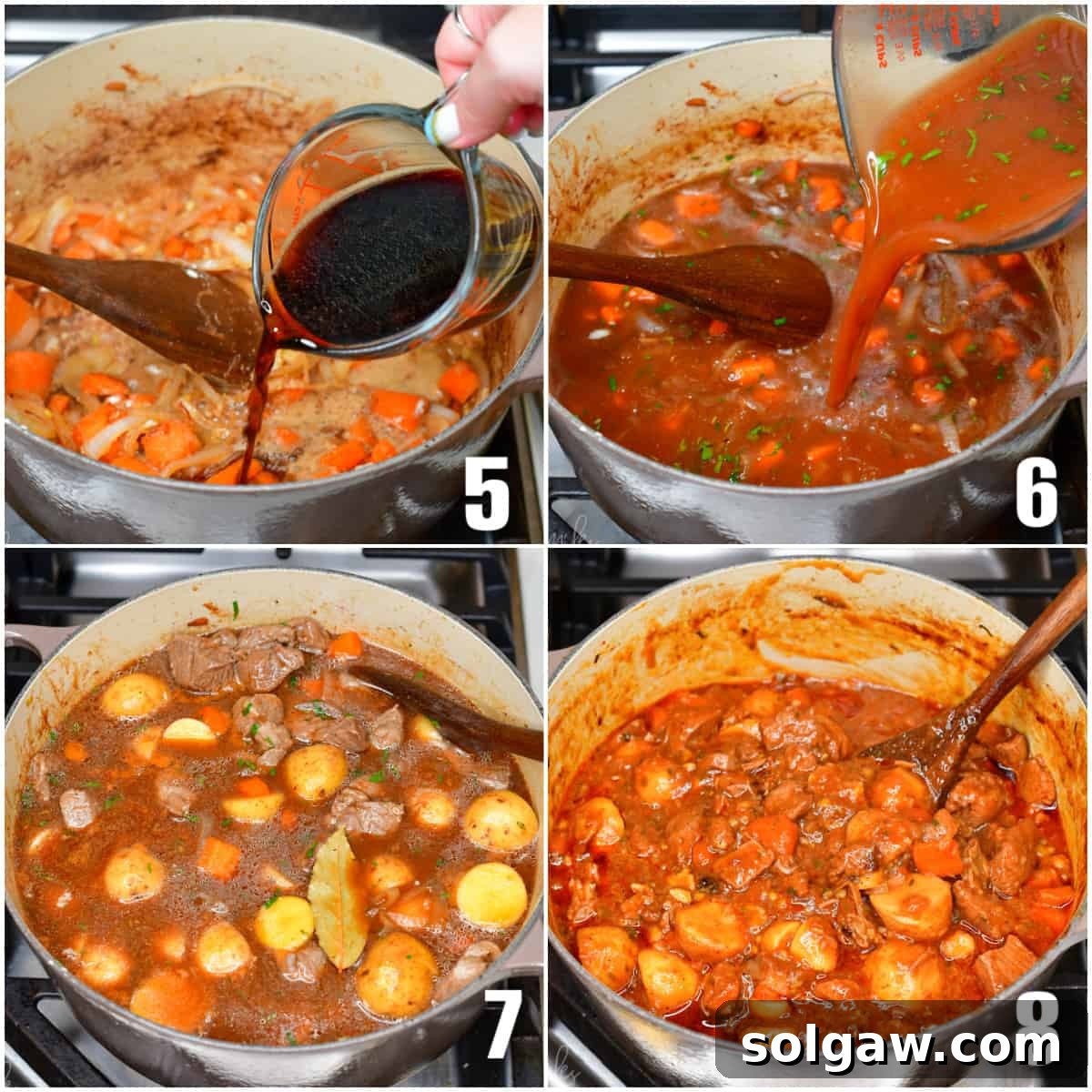
- Deglazing with Beer: Slowly pour in the Guinness stout. As you pour, use a wooden spatula to actively scrape the bottom of the pan, releasing all the flavorful browned bits (fond) that were created during searing. This deglazing step is vital for incorporating maximum flavor into your stew.
- Combining Ingredients and Simmering Start: Add the cubed potatoes to the pot, then pour in the previously prepared beef stock mixture. Stir everything gently to combine. Bring the stew to a gentle simmer, then immediately reduce the heat to low. A low and slow cooking process is key for tender lamb and a deeply flavored broth.
- Slow Cook Perfection: Cover the pot with a lid, leaving a small crack or opening to allow some steam to escape. This prevents the stew from becoming too thin while still allowing the flavors to meld beautifully. Let the stew cook for 2 to 2 1/2 hours, stirring occasionally and scraping the bottom of the pot to prevent sticking and ensure even cooking. The lamb should be incredibly tender, and the potatoes soft.
- Final Touch: Before serving, remember to discard the bay leaves. They have imparted their earthy aroma and should not be eaten.
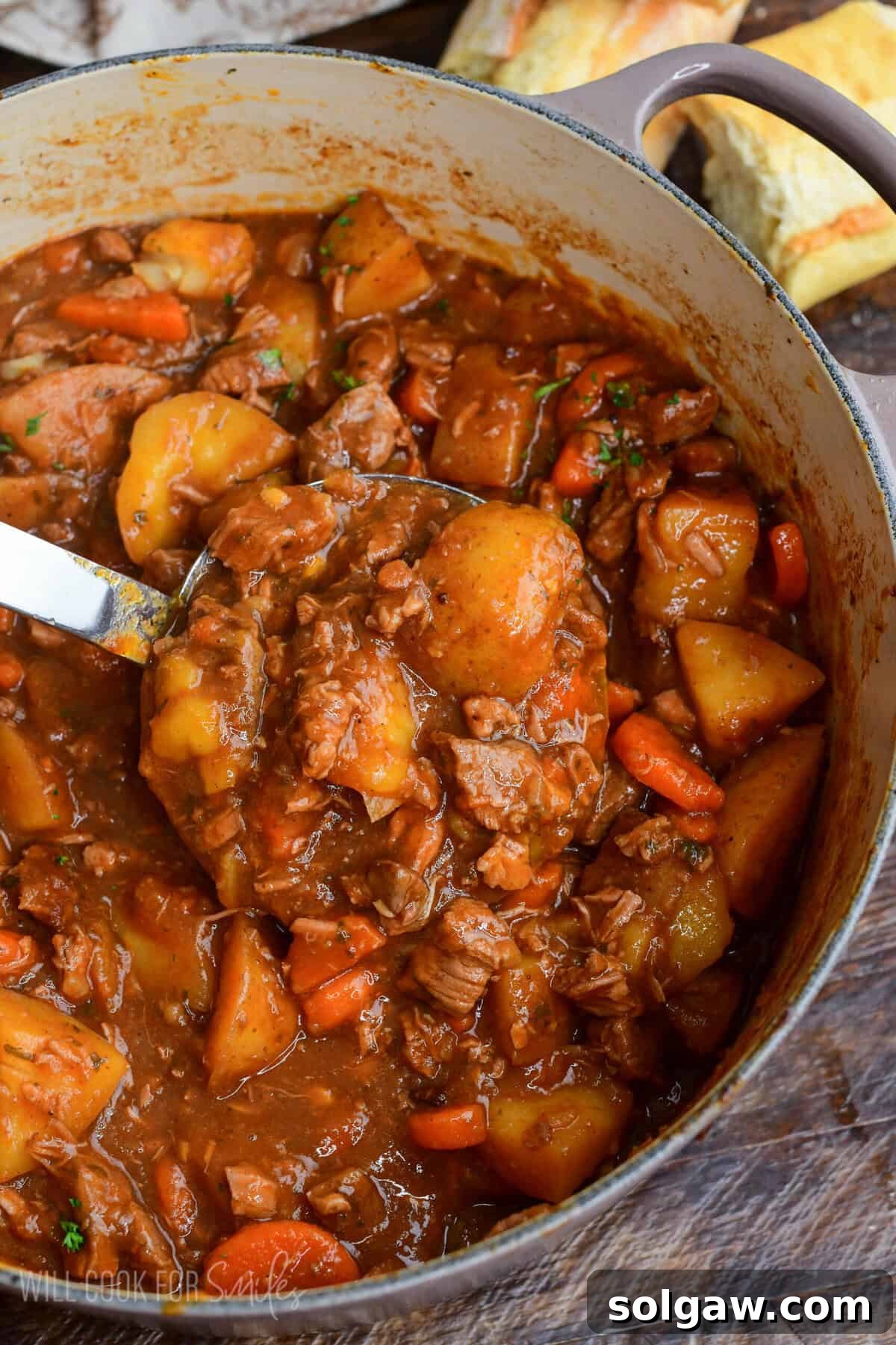
Plan Ahead: Optimal Storage and Reheating for Your Irish Lamb Stew
One of the many wonderful qualities of this Irish lamb stew is its ability to taste even better the day after it’s made. The flavors have more time to meld and deepen, transforming into an even more satisfying meal. This makes it an ideal dish for advance preparation, whether for a busy weeknight, a festive holiday gathering, or your annual St. Patrick’s Day celebration.
- Make It Ahead for Enhanced Flavor: This stew is truly a dish that benefits from a little resting time. As it chills overnight in the refrigerator, the robust flavors of the lamb, vegetables, and Guinness intermingle and intensify, resulting in a richer and more harmonious taste profile. Preparing it a day in advance allows for maximum flavor development and makes entertaining or meal prepping significantly easier.
- Storing Your Delicious Leftovers: After cooking, it’s crucial to allow the stew to cool completely to room temperature before transferring it to storage containers. This prevents bacterial growth and maintains the quality of the stew. Store the cooled stew in an airtight container in the refrigerator. When properly stored, it will remain fresh and delicious for approximately 4-5 days. Always use a clean utensil when scooping portions to avoid introducing bacteria and extend its shelf life.
- Effortless Reheating Methods: If you’re reheating from a frozen state, ensure the lamb stew is first defrosted in the refrigerator. For individual servings, the microwave works wonderfully: reheat in 30-second intervals, stirring each time until the stew is thoroughly warmed through. Alternatively, to reheat the entire dish, transfer it to a large pot and warm over medium-low heat, stirring frequently to ensure even heating and prevent sticking.
Freezing Irish Lamb Stew for Future Enjoyment
Irish lamb stew is an excellent candidate for freezing, allowing you to savor its comforting flavors another day. Here are a few recommendations for optimal freezing results:
- Potato Considerations for Freezing: Cooked potatoes, especially starchy varieties, tend to become mushy and break down after freezing and thawing. To avoid this, you can choose to freeze the cooked Irish stew without the potatoes. Once thawed and reheated, simply cook a fresh batch of potatoes directly in the stew. Alternatively, if you prefer to freeze the potatoes with the stew, opt for waxy potato varieties such as red potatoes or fingerling potatoes. Waxy potatoes hold their shape and texture much better through the freezing and thawing process than their starchier counterparts.
- Proper Freezing Technique: Once the stew has cooled completely, transfer it into a freezer-safe storage container. For convenience, you can portion it into freezer-friendly zip-top bags, pressing out as much air as possible before sealing. Ensure the stew is covered airtight to prevent freezer burn. It can be safely frozen for up to 2 months.
- PRO TIP: As mentioned, do not freeze potatoes that are high in starch, such as Idaho or Russet potatoes, unless you intend to mash them after thawing, as their texture will significantly degrade.
Recipe Frequently Asked Questions
Absolutely! If lamb isn’t your preference, beef chuck roast is an excellent substitute. This cut is not only economical but also boasts abundant marbling and connective tissue, which break down during slow cooking to deliver wonderfully tender and flavorful results, similar to lamb shoulder.
While the Guinness stout significantly contributes to the stew’s deep, authentic flavor, you can certainly omit it or substitute it with a non-alcoholic dark beer without compromising the dish’s overall deliciousness. Simply replace the beer with an equal amount of beef stock for a rich, alcohol-free alternative.
The most defining characteristic of traditional Irish stew is its use of lamb (or historically, mutton), rather than beef. This lends a distinctively richer and more profound flavor profile compared to beef. My particular rendition further distinguishes itself with the inclusion of Guinness stout, which, while not strictly traditional, enhances the depth and complexity immeasurably. I balance the stout’s bitterness with tomato sauce and a touch of sugar, creating a unique, well-rounded taste that sets it apart from any beef stew you’ve tried.
Yes, the slow cooker is a fantastic option for this stew! Begin by searing the lamb meat in a large pan to develop flavor, then transfer it to your Crockpot. Next, sear the diced onion and carrots in the same pan, then add the garlic and cook until fragrant before transferring to the slow cooker. Add the potatoes, Guinness, and beef stock mixture. Cover and cook on LOW for 7-8 hours or on HIGH for approximately 4 hours. Remember to remove the bay leaves before serving.
Absolutely! Use the Instant Pot’s sauté function to sear the lamb in batches, followed by sautéing the onions, carrots, and garlic. Return the lamb to the pot, skip the flour, and deglaze with the beer, ensuring you scrape the bottom thoroughly. Add all remaining ingredients, secure the lid, and cook on the stew/meat setting (or high pressure) for 45 minutes. Allow a natural release for 10 minutes, then perform a quick release. To thicken the stew, activate the sauté function and stir in a slurry of 2 tablespoons cornstarch mixed with 2 tablespoons of cold beef broth for a couple of minutes until it reaches your desired consistency.
Certainly! Parsnips and turnips are both traditional root vegetables in Irish cuisine and would make excellent additions. Feel free to add them along with the potatoes for extra heartiness and flavor. Celery is another great option that contributes a lovely savory note to the rich broth.
Expand Your Culinary Horizon: More Lamb and Beef Recipes to Savor
If you’ve enjoyed the rich flavors of this Irish Lamb Stew, you might be interested in exploring other delicious lamb and beef dishes from our collection. These recipes offer a variety of comforting and hearty meals perfect for any occasion:
- Perfectly Seared Lamb Chops
- Hearty Dublin Coddle
- Speedy Instant Pot Beef Stew
- Wholesome Instant Pot Vegetable Beef Soup
- Classic Shepherd’s Pie with a Modern Twist
PIN THIS RECIPE FOR LATER
DID YOU MAKE THIS RECIPE? Please leave a 🌟 star rating and share your thoughts by leaving a 📝 comment below! You can also share your creation and tag me on social media @willcookforsmiles. DON’T FORGET to subscribe to my newsletter for more delicious recipes!
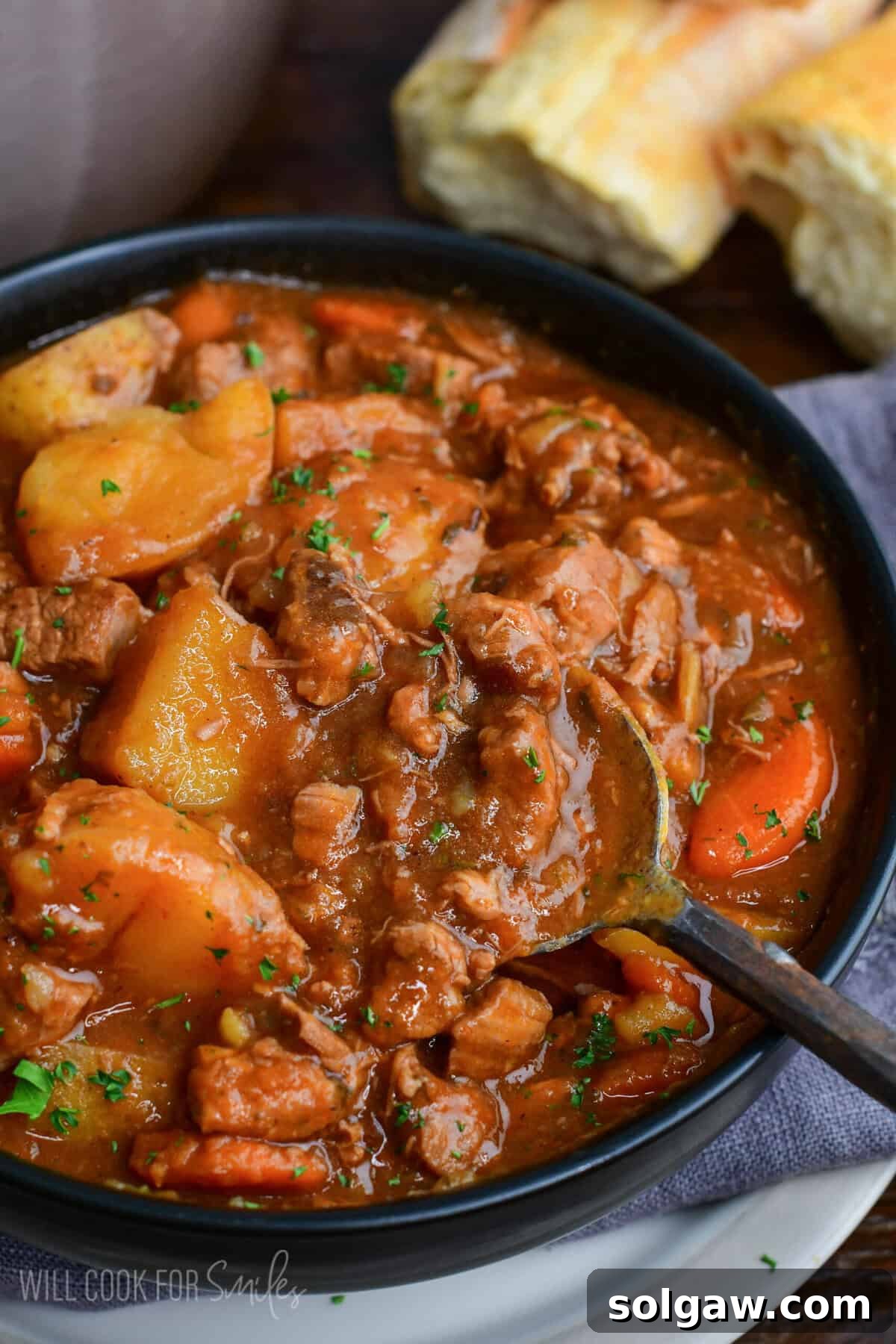
Authentic Irish Lamb Stew
Print
Pin
Video
Rate
Ingredients
- 2 lbs lamb roast (preferably shoulder cut for stew)
- 1 large yellow onion, chopped
- 3 medium carrots, peeled and sliced
- 4 garlic cloves, minced
- 2 tbsp all-purpose flour (use gluten-free flour for GF option)
- 1 cup Guinness stout (or non-alcoholic dark beer/beef stock)
- 2 lbs Yukon gold potatoes, peeled and quartered (or other waxy potatoes)
- 3 cups beef stock (preferably low sodium)
- 8 oz can tomato sauce
- 1 1/2 tsp white granulated sugar
- 1 tbsp fresh thyme, chopped
- 2 tbsp fresh minced parsley
- salt, to taste
- fresh cracked black pepper, to taste
- 2 bay leaves
Instructions
Prepare Ingredients:
-
In a medium bowl, combine beef stock, tomato sauce, fresh thyme, minced parsley, salt, pepper, and sugar. Whisk thoroughly until well combined, then set this mixture aside.
-
Carefully cut your lamb roast into approximately 1-inch pieces. Prepare the vegetables by dicing the carrots, quartering the potatoes, mincing the garlic, and slicing the onion.
Sear:
-
In a large, heavy-bottomed pot or Dutch oven, heat a tablespoon of oil over medium-high heat. Sear the chopped lamb pieces in several small batches until each piece is nicely browned on all sides. Avoid overcrowding the pot to ensure a proper sear rather than steaming. Once browned, transfer the seared lamb to a separate bowl and set aside.
-
Add the chopped onion and sliced carrots to the same pot, adding a touch more oil if needed. Sauté for several minutes until they begin to soften and turn golden brown, picking up the delicious fond from the bottom of the pan. Stir in the minced garlic and cook for just about 30-60 seconds until it becomes fragrant.
-
Return the seared lamb back into the pot with the vegetables. Sprinkle the all-purpose flour evenly over the meat and vegetables. Stir continuously for 1-2 minutes, ensuring that all the pieces are thoroughly coated with flour, which will help to thicken the stew.
-
Slowly pour the Guinness stout into the pot. As you pour, use a wooden spatula to scrape the bottom of the pan vigorously. This process, known as deglazing, releases all the caramelized bits of flavor (fond) from the bottom of the pot, integrating them into the stew’s liquid base for maximum taste.
Stew:
-
Add the quartered potatoes to the pot, then pour in the whisked beef stock mixture. Stir everything gently to combine all the ingredients. Finally, add the bay leaves to the pot. Bring the mixture to a gentle simmer, then immediately reduce the heat to low to maintain a very gentle, slow simmer.
-
Cover the pot with its lid, leaving a small crack or opening to allow some steam to escape. Allow the stew to cook slowly for approximately 2 to 2 1/2 hours. During this time, stir the stew once in a while, ensuring the lamb becomes incredibly tender and the flavors fully develop and meld.
-
Once the stew is cooked to perfection, carefully remove and discard the bay leaves before serving. Serve hot, perhaps with a side of crusty bread to soak up the rich, savory broth. Enjoy this comforting and flavorful Irish classic!
Video
Notes
- *Gluten-Free Adaptation: To make this recipe completely gluten-free, simply replace the traditional all-purpose flour with a gluten-free all-purpose flour blend. You can also use a gluten-free dark beer or, as mentioned, omit the beer entirely and use additional beef stock. Always double-check the packaging of all other ingredients to ensure they are certified gluten-free.
- Omitting Beer: While Guinness stout is a hallmark of this recipe, lending significant depth, it can be omitted or substituted with a non-alcoholic dark beer. If omitting entirely, use an equivalent amount of beef stock to maintain liquid levels and flavor.
- Using Beef as an Alternative: If lamb is not to your liking, beef chuck roast makes an excellent alternative. This cut is favored for stews due to its rich marbling and connective tissues, which render it incredibly tender and flavorful when slow-cooked, providing a robust base similar to lamb.
Nutrition
Carbohydrates: 32g |
Protein: 33g |
Fat: 36g |
Saturated Fat: 16g |
Cholesterol: 110mg |
Sodium: 951mg |
Potassium: 1454mg |
Fiber: 6g |
Sugar: 6g |
Vitamin A: 5427IU |
Vitamin C: 27mg |
Calcium: 109mg |
Iron: 9mg
Originally published on Will Cook For Smiles in February 2020.