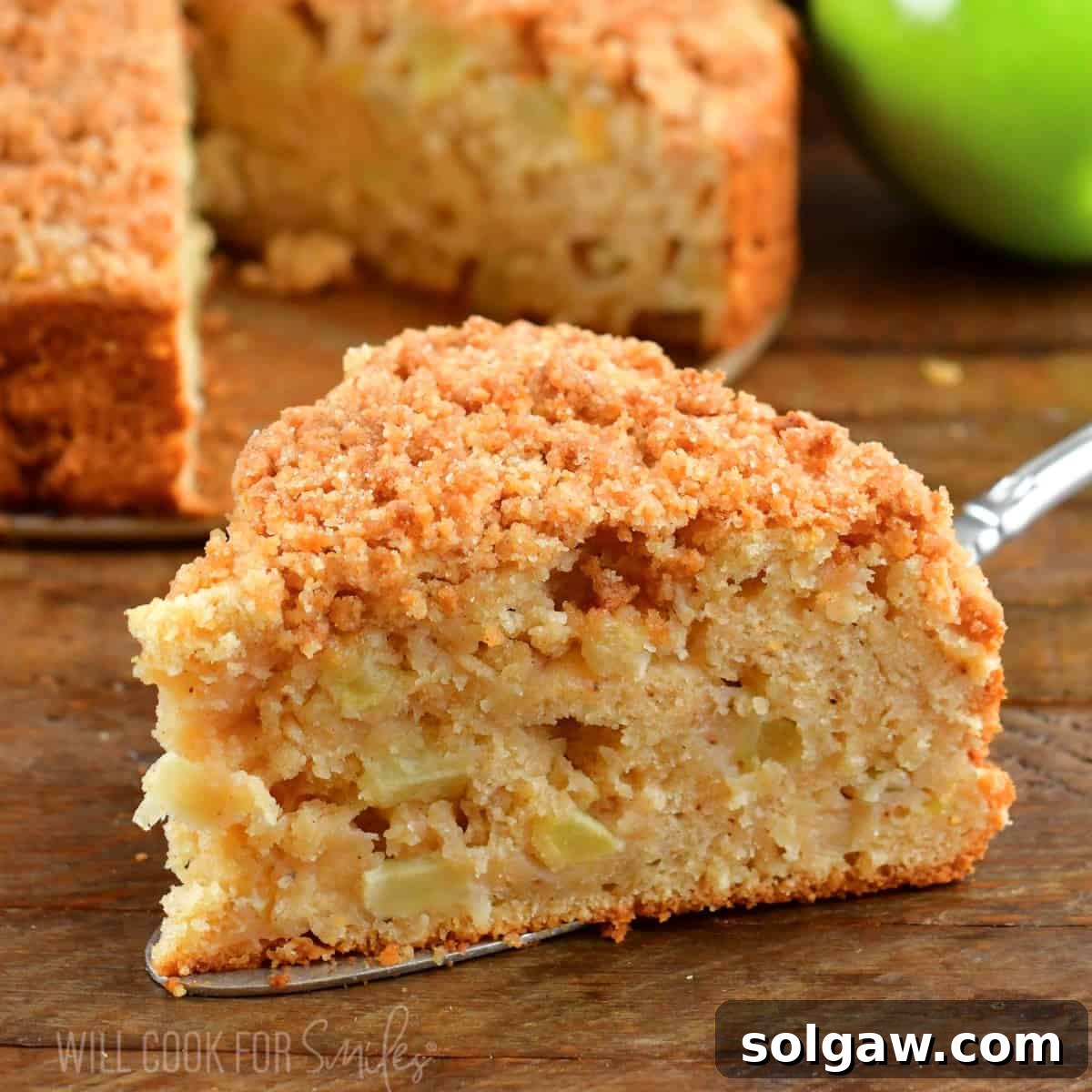
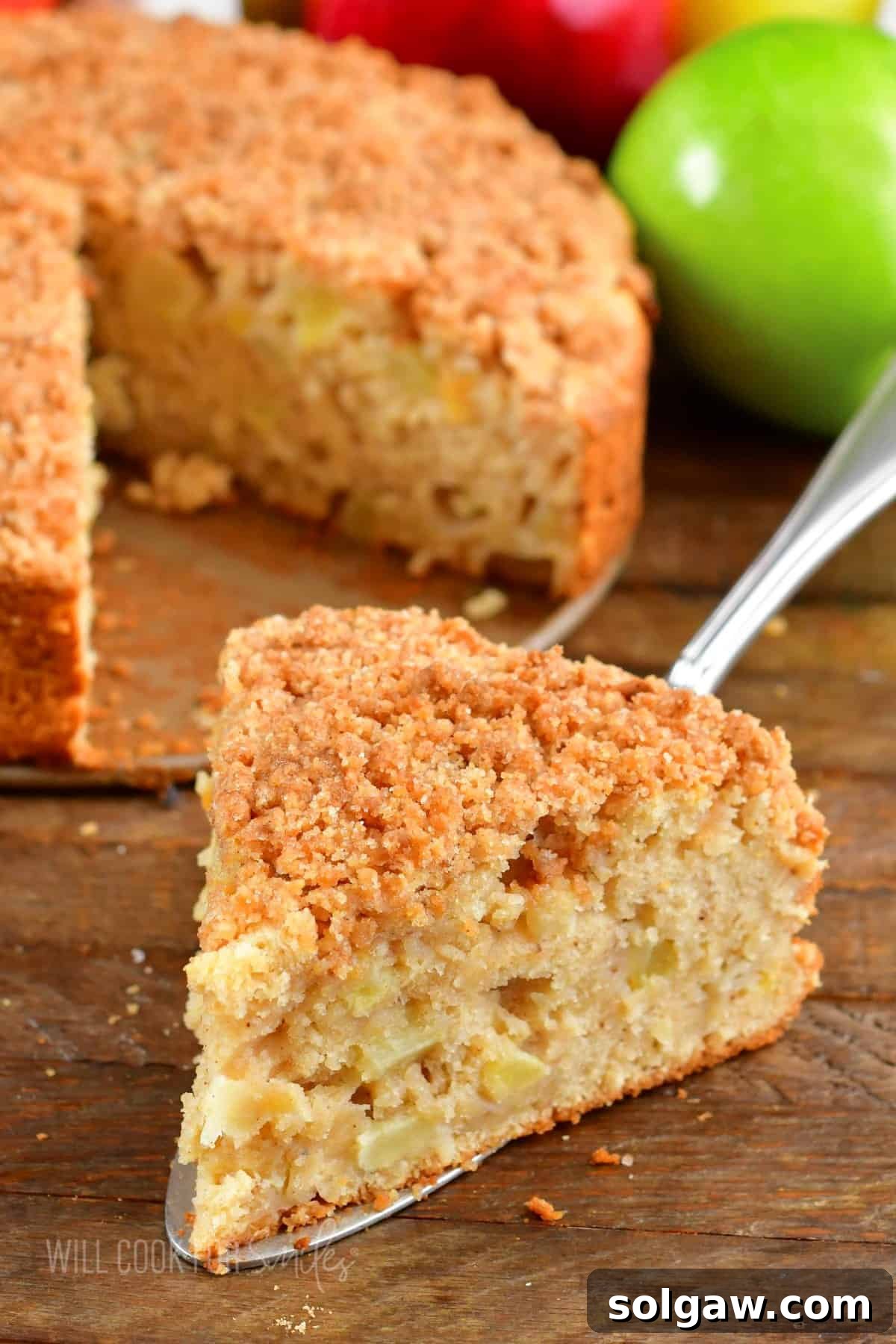
Authentic Irish Apple Cake: A Timeless Farmhouse Recipe with a Crumbly Topping
Step into the heartwarming tradition of Irish baking with this exquisite Irish Apple Cake recipe. More than just a dessert, this old-fashioned favorite embodies comfort and rustic charm, making it a staple in Irish homes for generations. Our rendition elevates the classic with a delightful blend of warming spices and a crave-worthy, buttery streusel topping, perfectly complementing the sweet-tart apples nestled within a moist, tender cake. Whether you’re gathering for an intimate family dinner, hosting an afternoon tea, or celebrating St. Patrick’s Day, this cake promises a memorable culinary experience. Its simplicity in preparation belies its rich, complex flavors, making it an accessible yet impressive bake for any occasion.
The inviting aroma of cinnamon, nutmeg, and ginger infused with ripe apples as it bakes will instantly transform your kitchen into a cozy haven. Each bite offers a harmonious balance of soft cake, yielding apples, and the satisfying crunch of the topping. This recipe is designed to be straightforward, ensuring even novice bakers can achieve a show-stopping result, while seasoned bakers will appreciate its authentic character and adaptable nature.
What Defines a Traditional Irish Apple Cake?
At its heart, Irish apple cake is a humble, farmhouse-style dessert, deeply rooted in the culinary traditions of Ireland. Often affectionately known as “Kerry Apple Cake” in certain parts of the Emerald Isle, it’s a testament to the beauty of simple, high-quality ingredients coming together to create something truly special. This cake is typically enjoyed in a relaxed setting, perhaps with a steaming cup of tea, or served warm as a dessert, traditionally accompanied by creamy custard, fresh whipped cream, or a touch of rich whiskey butter sauce. Our particular recipe preserves this cherished rustic essence while infusing it with a modern touch: a comforting spice blend that hints at autumn and a wonderfully crunchy crumble topping that adds an irresistible textural contrast.
Here’s what you can expect from this charming Irish Apple Cake:
- Style and Character: A classic farmhouse-style apple cake, distinguished by its tender crumb and a generously spiced crumble top that adds both visual appeal and a delightful crunch.
- Ideal Apple Varieties: We highly recommend firm, tart baking apples such as Granny Smith for their ability to hold shape and provide a bright, balancing tang. For a truly authentic Irish touch, Bramley apples are excellent if available, or you can mix tart with sweeter varieties like Honeycrisp for enhanced depth of flavor.
- Recommended Bakeware: A 9-inch springform pan is highly recommended. Its design ensures the easiest release of the cake, preserving its perfect form and intricate crumble topping for a beautiful presentation.
- Time Commitment: This recipe is surprisingly quick, requiring only about 15 minutes of active preparation. The baking process takes approximately 45-55 minutes, resulting in a golden, fragrant cake ready to be devoured in just over an hour.
- Best Serving Practices: For the most authentic and comforting experience, serve this cake warm. It pairs exquisitely with a warm vanilla custard sauce, a dollop of freshly whipped cream, or a scoop of your favorite vanilla bean ice cream.
Choosing the Perfect Apples for Your Irish Apple Cake
The choice of apples is paramount in creating an Irish Apple Cake that is both flavorful and structurally sound. The ideal apple should possess a firm texture to withstand baking without turning into complete mush, and a desirable level of tartness to provide a pleasant counterpoint to the sweetness of the cake and its crumble topping. Here’s a detailed guide to selecting the best apples:
- Tart, Firm Baking Apples:
- Granny Smith: These bright green apples are a top choice for baking due to their firm flesh and distinct tartness. They hold their shape exceptionally well during baking, ensuring you get delightful chunks of apple throughout your cake. Their vibrant tang beautifully cuts through the richness of the cake and crumble, creating a perfectly balanced flavor profile.
- Bramley Apples: If you’re aiming for a truly traditional Irish flavor, Bramley apples are a classic. Hailing from the UK and Ireland, they are renowned for their intense tartness and their unique ability to break down into a light, fluffy puree when cooked. This can result in a wonderfully moist cake with a soft, almost saucy apple layer. However, Bramleys can be harder to find outside of specific regions.
- Mixing Tart and Sweet Varieties for Depth:
For those who enjoy a more nuanced flavor, or if you find Granny Smiths a bit too tart, combining different apple varieties is an excellent strategy. A mix of tart and sweet apples can add complexity and an extra layer of juicy flavor to your cake.
- Honeycrisp: A popular choice, Honeycrisp apples are celebrated for their explosive crunch and delightful balance of sweet and tart notes. They maintain their firm texture beautifully when baked, making them a fantastic addition or alternative.
- Gala: These apples are sweeter and milder than Granny Smiths but still possess enough firmness to hold up well in baking. They contribute a gentle sweetness and a pleasant chewiness to the cake.
- Fuji or Pink Lady: Both are firm, juicy, and predominantly sweet with a slight tart finish. They are versatile and work well when paired with a tarter apple to achieve a balanced sweetness.
Important Consideration: Managing Apple Moisture
Regardless of the apple variety you choose, it’s worth noting that some apples release more moisture than others. If, after dicing your apples, they appear particularly juicy, a simple but effective trick is to gently pat them dry with a paper towel. This extra step helps prevent the cake batter from becoming overly wet, ensuring a perfectly moist (not soggy) crumb and allowing the cake to bake through evenly.
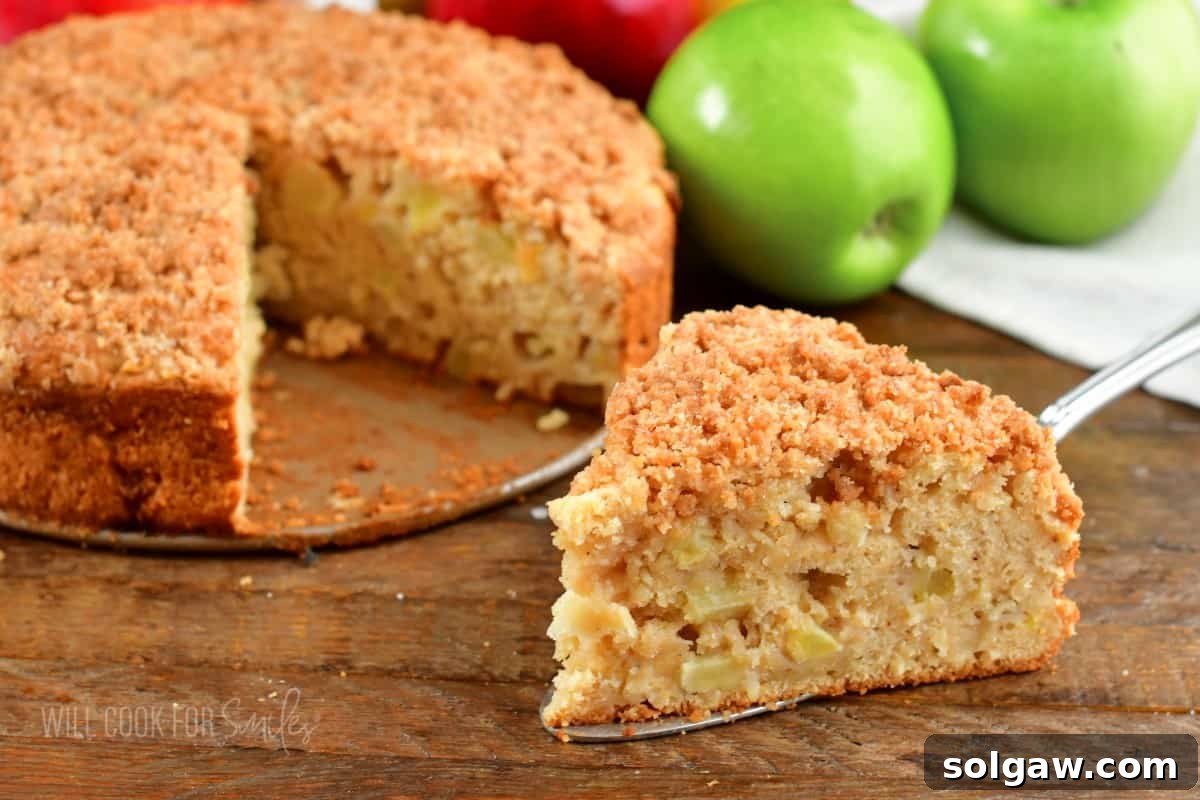
Expert Tips for Baking the Best Irish Apple Cake
Transforming simple ingredients into an extraordinary Irish Apple Cake involves a few crucial techniques that can make all the difference. Master these tips to ensure your cake is consistently moist, packed with flavor, and boasts that signature rustic texture:
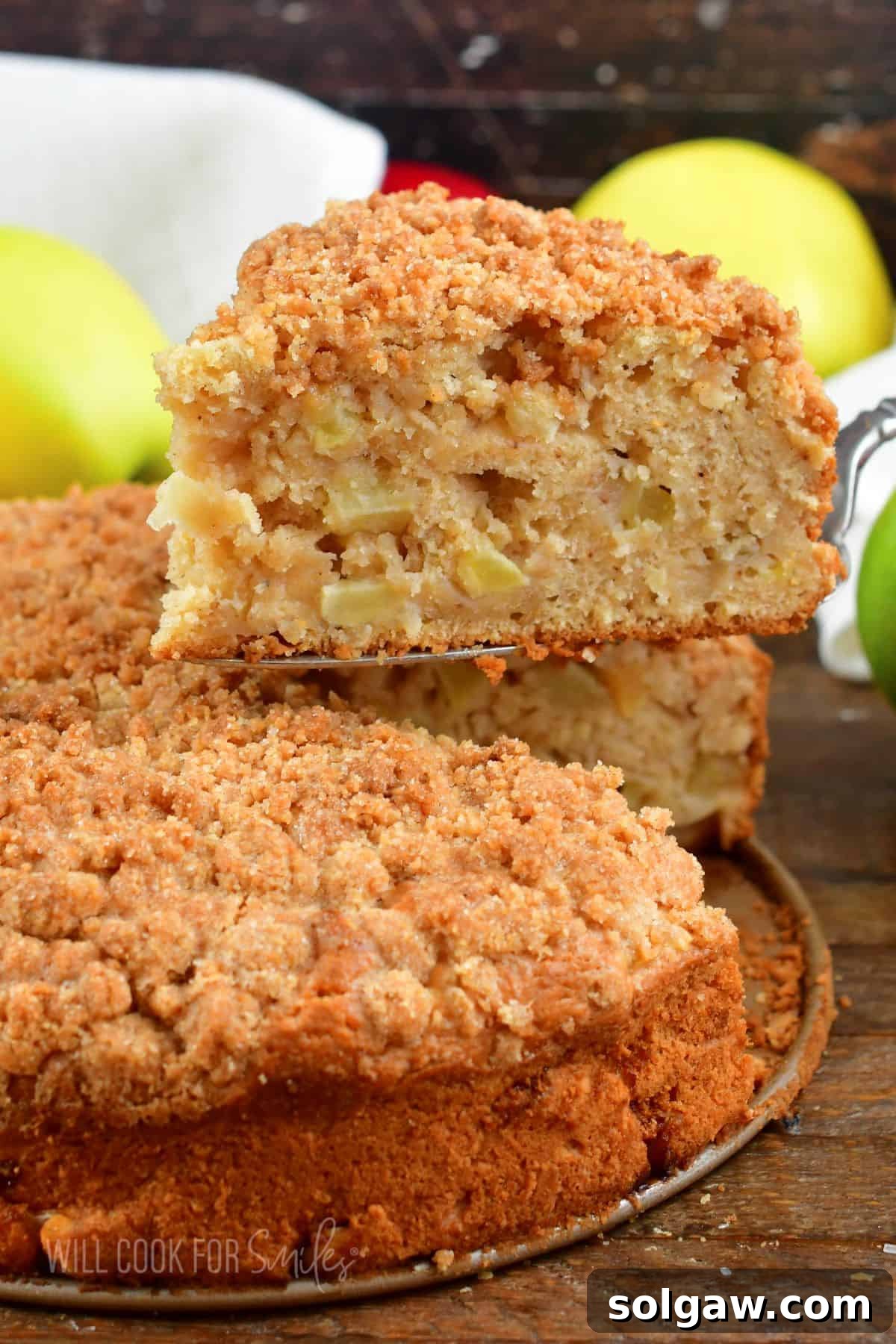
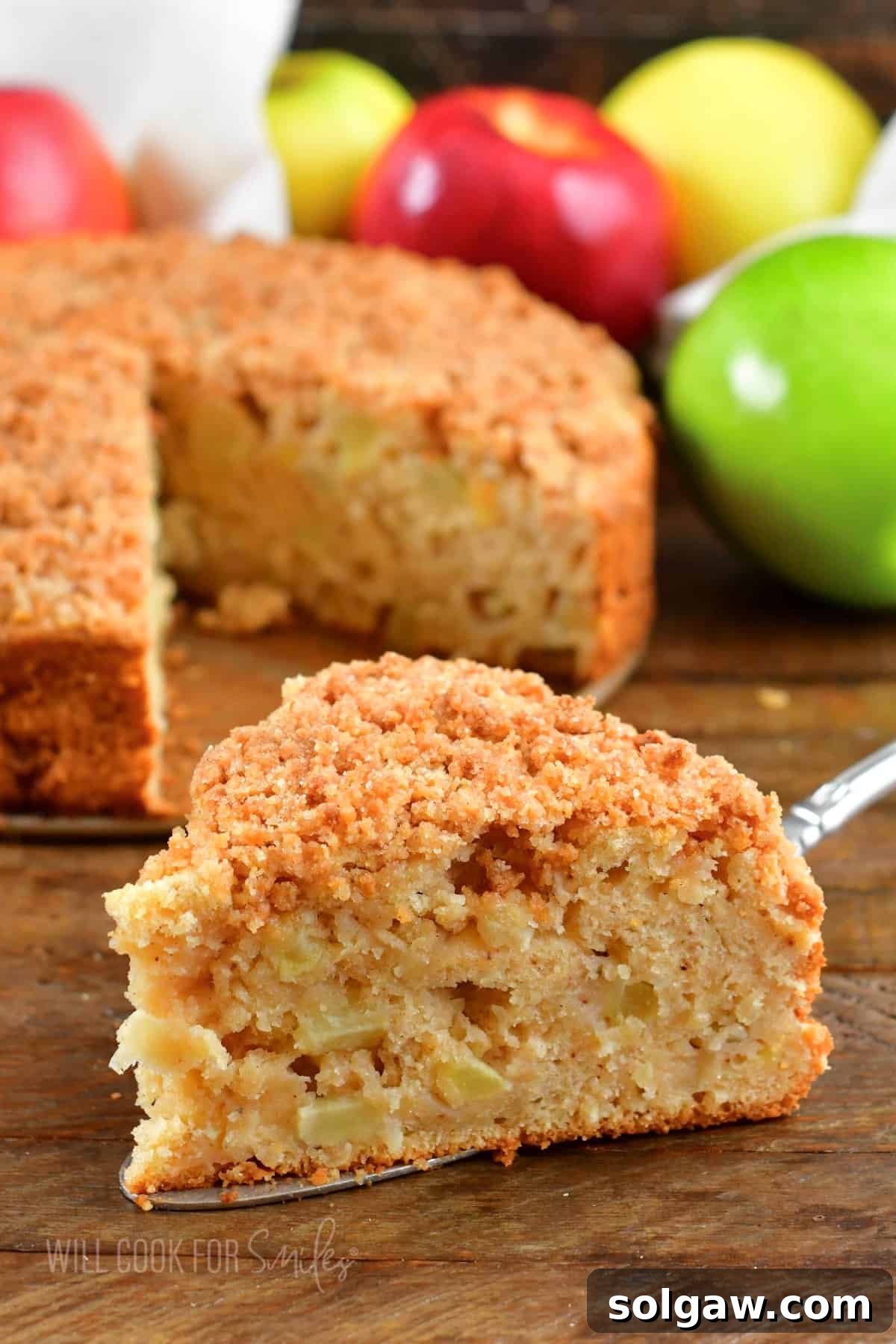
- Uniform Apple Dicing is Essential: For a harmonious texture throughout your cake, aim for apple pieces that are roughly uniform in size, ideally between 1/2 to 3/4 inch. Avoid cutting them too small, as they risk disintegrating entirely during baking, turning into mush. Consistent, slightly larger pieces ensure a delightful bite of tender apple in every forkful and allow for more even cooking.
- Embrace the “Biscuit-Making Style” for Batter: This method is a game-changer for achieving the perfect rustic yet tender crumb typical of Irish apple cake. Instead of creaming room-temperature butter and sugar, cold butter is grated or cut into the dry flour and spice mixture. This technique coats the flour particles with fat, which subtly inhibits gluten development. The result is a wonderfully tender, melt-in-your-mouth cake. Additionally, coating the diced apple pieces in this flour mixture before adding liquid helps them integrate better into the batter and, crucially, absorbs the juices released by the apples during baking, preventing a soggy cake bottom.
- The Indispensable 9-inch Springform Pan: For effortless cake removal and an immaculate presentation, a 9-inch springform baking pan is highly recommended. Its removable sides allow you to simply unclip and lift away the pan, leaving your beautiful, crumbly-topped cake perfectly intact. While a tall-sided 9-inch round cake pan can be used, ensure it’s generously greased and lined with parchment paper on the bottom to aid in removal. However, releasing slices from a regular pan will be more challenging.
- Mastering the Crumble Topping Technique: The sweet, crunchy streusel topping is a highlight of this cake. To achieve the ideal crumbly texture, begin by combining all the dry ingredients for the topping (brown sugar, white sugar, flour, cinnamon). Once well-mixed, pour in the melted butter. The key here is gentle incorporation: use a large fork or your fingertips to carefully fold and cut the butter into the dry mixture until distinct, coarse crumbs form. Resist the urge to overmix, as this will lead to a dense, pasty topping rather than a light, crisp streusel.
- Elevate Your Cake with Thoughtful Toppings: Irish Apple Cake is incredibly versatile and delicious on its own, but it truly shines with a complementary accompaniment. Traditional Irish servings include a warm, creamy vanilla custard sauce. Other fantastic options include a dollop of freshly whipped cream, a scoop of premium vanilla ice cream, or a rich drizzle of caramel sauce. For an adult twist, a homemade whiskey butter sauce is an indulgent and authentically Irish pairing.
- Precision in Doneness: The Toothpick and Thermometer Test: Overbaking is the arch-nemesis of a moist cake. To ensure your Irish Apple Cake is perfectly baked, conduct the toothpick test: insert a dry toothpick into the very center of the cake. If it comes out clean or with a few moist crumbs attached (not wet batter), your cake is done. For the most accurate measure of doneness, an instant-read thermometer inserted into the center should register an internal temperature of 200°F-205°F (93°C-96°C).
- Preventing Premature Browning: If you observe the crumble topping or the top surface of the cake browning too rapidly before the interior is fully cooked, loosely tent the cake with aluminum foil for the last 10-15 minutes of baking. This shields the top from excessive heat, allowing the center to finish baking without over-crisping or burning the surface.
Troubleshooting Common Irish Apple Cake Issues
Baking can sometimes present unexpected challenges, but most common issues with Irish Apple Cake have straightforward solutions. Don’t be discouraged if your first attempt isn’t perfect; understanding these troubleshooting tips will help you achieve perfection every time:
- If Your Cake Appears Crumbly or Falls Apart Easily:
A crumbly cake often indicates that the moisture balance or structural integrity was compromised during preparation or baking. Here are the likely culprits:
- Overbaking: This is a primary cause of dry, crumbly cakes. Excessive baking time or an oven running too hot extracts too much moisture. Always adhere to recommended baking times and use the doneness tests (toothpick or thermometer) to avoid this.
- Too Much Flour: Incorrect flour measurement can lead to a dense, dry crumb. Flour should be measured carefully, ideally by spooning it into a measuring cup and leveling it with a straight edge, rather than packing it by scooping directly from the bag.
- Overmixing the Batter: Vigorous or prolonged mixing of the wet and dry ingredients can overdevelop the gluten in the flour, resulting in a tough, crumbly texture. Mix only until the ingredients are just combined.
- Excessive Liquid from Apples: While apples contribute moisture, if they release too much liquid and it’s not absorbed, it can interfere with the cake’s structure. If diced apples appear very wet, pat them dry with a paper towel before adding them to the batter.
- Slicing When Too Warm: The cake’s structure is delicate when hot. Attempting to slice it before it has cooled sufficiently can cause it to crumble or fall apart. Always allow adequate cooling time.
- If Your Cake Turns Out Dry:
A dry cake is typically a sign of insufficient moisture, either from the baking process or the ingredients themselves:
- Overbaking is Key: This is the most common reason for a dry cake. Start checking for doneness a few minutes earlier than suggested. The goal is a center that is just set, with a toothpick coming out with moist crumbs, not wet batter.
- Drier Apple Varieties: Some apple varieties naturally contain less water. If you consistently find your cake dry, consider incorporating a juicier apple into your recipe, or ensure your cold butter is well distributed to create pockets of steam during baking.
- Inadequate Fat: Ensure your butter measurements are accurate. Fat contributes significantly to moisture and richness.
- Tent with Foil: If the top of your cake is browning rapidly, loosely covering it with aluminum foil will help the interior bake through without drying out the exposed surface.
Storing and Reheating Your Irish Apple Cake for Lasting Freshness
To preserve the delightful taste and texture of your homemade Irish Apple Cake, proper storage and reheating techniques are essential. Follow these guidelines to enjoy your cake at its best for days or even months:
- Storing at Room Temperature:
This apple cake can be stored successfully at room temperature for approximately two days. It is crucial to place it in an airtight container to protect it from drying out and to maintain its freshness and flavor. Keep in mind that environmental conditions within your home, such as temperature and humidity, can influence its shelf life. For instance, in a particularly humid climate, the cake’s freshness at room temperature may be shorter.
- Storing in the Refrigerator:
For a more extended shelf life, refrigerate the cake in an airtight container. When stored properly in the fridge, it will remain fresh for about a week. While the cool environment may cause the crumble topping to soften slightly, the cake’s delicious, spiced apple flavors will be well-preserved.
- Freezing for Long-Term Preservation:
Irish Apple Cake is an excellent candidate for freezing, making it ideal for meal prep, unexpected guests, or simply enjoying a slice whenever a craving strikes. For best results, allow the cake to cool completely. You can freeze it whole or wrap individual slices. Wrap the cake (or slices) tightly in plastic wrap, followed by an additional layer of aluminum foil, to prevent freezer burn and seal in moisture. It can be stored in the freezer for up to two months. When ready to enjoy, thaw the cake overnight in the refrigerator or at room temperature.
- Reheating for Optimal Enjoyment:
Serving the cake warm significantly enhances its flavors and softens the texture, mimicking a fresh-from-the-oven experience. To reheat individual slices, simply warm them in a microwave for 15-30 seconds (adjusting based on your microwave’s power). Alternatively, for a slightly crisper crumble, place slices in a preheated oven at a low temperature (around 250°F or 120°C) for 5-10 minutes, or until warmed through.
Your Irish Apple Cake Baking Questions Answered
Baking can sometimes lead to questions, especially when perfecting a classic recipe. Here are answers to some frequently asked questions about making the most delicious Irish Apple Cake:
Can I use all-purpose flour instead of cake flour?
Yes, all-purpose flour can certainly be used if cake flour is not available. Cake flour is specifically chosen for this recipe because its lower protein content contributes to a noticeably lighter, more tender, and delicate crumb – a hallmark of this traditional cake. When substituting, be aware that your cake might turn out slightly sturdier and a bit denser in texture. To achieve a result closer to that of cake flour, you can create a simple DIY substitute: for every cup of cake flour required, measure out 1 cup of all-purpose flour, then remove 2 tablespoons, and replace them with 2 tablespoons of cornstarch. Whisk this mixture very well before incorporating it into your recipe.
Can I use different types of apples or a mix of varieties?
Absolutely! The flexibility in apple choice is one of the joys of baking this cake. The most important characteristic is to select firm baking apples that will retain some of their structure during cooking and won’t release an excessive amount of juice. Tart baking apples, such as Granny Smith, are excellent as they provide a delightful tang that beautifully balances the sweetness of the cake. However, if you prefer a sweeter cake, or simply don’t favor tartness, feel free to use sweeter, firm apples like Honeycrisp, Gala, or Fuji. A combination of tart and sweet apples often yields the most complex and appealing flavor profile. If you find your chosen apples to be particularly juicy after dicing, a quick pat with a paper towel can help absorb excess moisture and prevent a soggy cake.
Why is my apple cake crumbly?
A crumbly apple cake can be a common issue, but it usually points to a few correctable factors. The most frequent reasons include slicing the cake while it’s still too warm, slightly overbaking it, or using an inaccurate measurement of flour (too much flour can dry out the cake). Cakes need time to set and firm up as they cool; slicing too early can disrupt their delicate structure. To ensure clean, intact slices, always allow your cake to cool completely, ideally for at least an hour. Additionally, baking just until the center is set (using an instant-read thermometer is the most accurate method) and precisely measuring your flour will significantly help in achieving the desired tender, non-crumbly texture.
What pan can I use if I don’t have a springform pan?
While a 9-inch springform pan is highly recommended for its ease of use and ability to preserve the cake’s delicate structure upon removal, you can certainly use a high-sided 9-inch round cake pan as an alternative. To ensure a smoother release, make sure to prepare the pan meticulously: generously grease both the bottom and sides, and line the bottom with parchment paper. This preparation will help prevent the cake from sticking and allow you to lift it out more easily, though removing individual slices might require a bit more care compared to a springform.
Can I freeze Irish apple cake?
Yes, Irish apple cake freezes exceptionally well, making it perfect for making ahead or enjoying later. To freeze, ensure the cake is completely cooled. You can wrap individual slices or the entire cake tightly first in plastic wrap, and then in a layer of aluminum foil. This double wrapping helps protect against freezer burn and preserves freshness. It can be stored in the freezer for up to two months. When you’re ready to indulge, simply thaw the cake overnight in the refrigerator or at room temperature, then warm it briefly before serving for the best possible texture and flavor.
How do I store leftovers?
Storing leftovers correctly is key to enjoying your Irish Apple Cake for longer. For short-term storage, keep the cake covered at room temperature for up to two days. If you need to store it for a longer period, transfer it to an airtight container and refrigerate it for up to five days. To bring your refrigerated slices back to their peak deliciousness, simply warm them up in the microwave for a few seconds or in a low oven before serving. This gentle warming will restore their delightful texture and re-awaken the cake’s wonderful spiced apple flavors.
Explore More Irish-Inspired and Delicious Apple Recipes
If you’ve enjoyed the comforting experience of baking this traditional Irish Apple Cake, we encourage you to explore other delightful recipes that celebrate Irish heritage and the versatility of apples. Expand your baking repertoire with these equally tempting treats:
- Hearty Irish Tea Cake Recipes: Discover a collection of comforting tea cakes, perfect for a cozy afternoon.
- Decadent Apple Caramel Carrot Cake: Indulge in a rich, flavorful cake combining the best of apples, caramel, and carrots.
- Simple Skillet Apple Cake: An effortlessly easy and quick apple cake baked in a skillet, ideal for a weeknight dessert.
- Classic Irish Coffee: The perfect warming beverage to accompany any Irish dessert, or to enjoy on its own.
PIN THIS RECIPE FOR LATER
DID YOU MAKE THIS RECIPE? Please leave a ⭐ star rating! Let me know how you liked it by leaving a 📝 comment below or share and tag me on social media @willcookforsmiles. Don’t forget to subscribe to my newsletter!
Irish Apple Cake Recipe
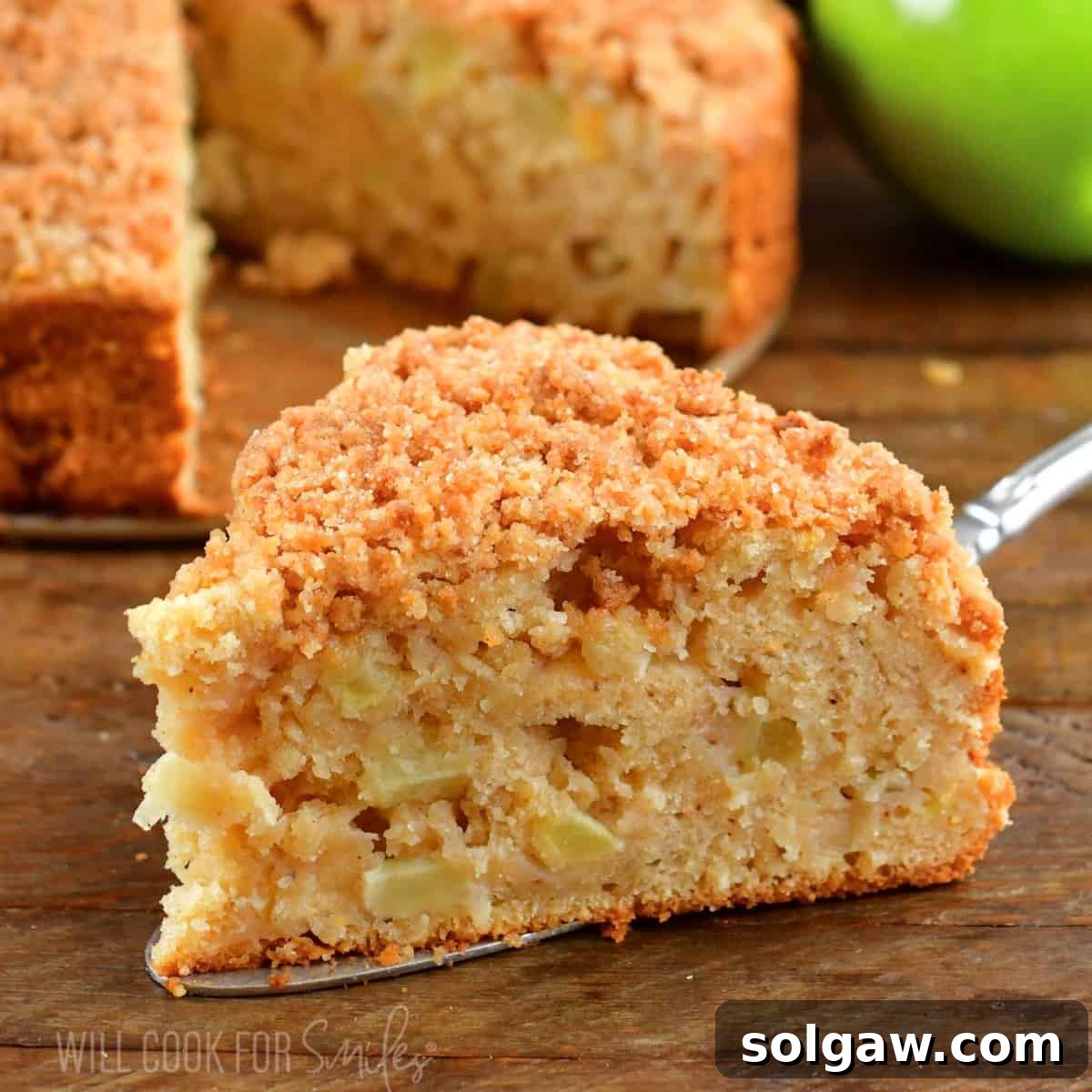
This old-fashioned Irish Apple Cake recipe combines a tender cake-flour batter with tart Granny Smith apples, infused with cozy warm spices, and topped with a buttery, irresistible crumble. This easy, one-bowl cake is quick to prepare in about 15 minutes and bakes up golden and fragrant in around an hour. It’s truly perfect when served warm with a luscious custard sauce, a dollop of whipped cream, a scoop of vanilla ice cream, or a drizzle of caramel.
Rating: 5 out of 5 stars based on 7 votes.
Print Recipe | Pin Recipe
- Course:
- Dessert
- Cuisine:
- American, Irish
- Prep Time:
- 15 minutes
- Cook Time:
- 50 minutes
- Total Time:
- 1 hour 5 minutes
- Servings:
- 8 (serves 8-10)
- Calories:
- 547 kcal
- Author:
- Lyuba Brooke
Ingredients
Apple Cake Batter:
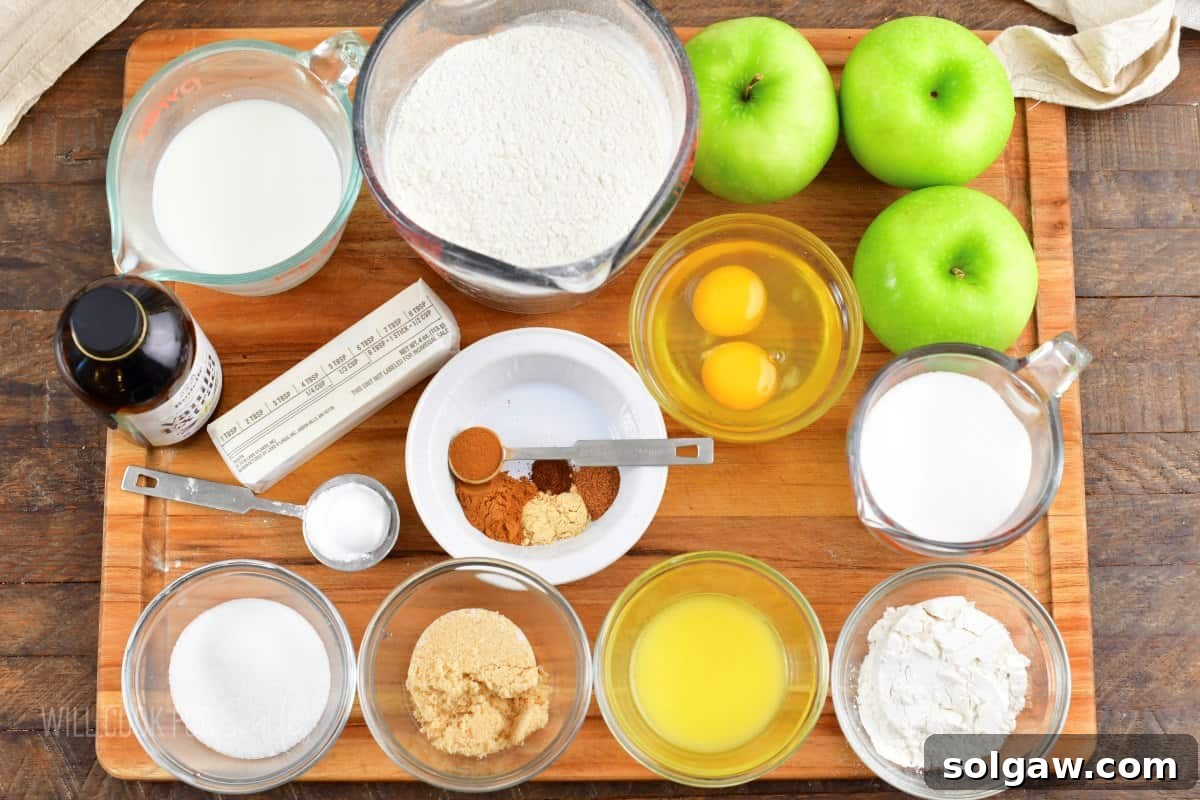
- 1.75 lbs Granny Smith apples (about 3-4 medium apples), peeled, cored, and diced into 1/2 to 3/4 inch pieces
- 3 cups cake flour (for a lighter crumb; see notes for DIY all-purpose flour substitute)
- 1 cup granulated sugar
- 2 tsp baking powder
- 1 tsp ground cinnamon
- 1/2 tsp ground ginger
- 1/4 tsp ground nutmeg
- 1/4 tsp ground cloves
- 1/2 cup (1 stick) unsalted butter, very cold and grated or shaved
- 2 large eggs
- 1 tsp pure vanilla extract
- 3/4 cup whole milk
Crumble Topping:
- 1/4 cup light brown sugar, packed
- 1/4 cup white granulated sugar
- 1/3 cup all-purpose flour
- 1/2 tsp ground cinnamon
- 2 tbsp unsalted butter, melted
Instructions
- Preheat Oven and Prepare Apples: Preheat your oven to 375°F (190°C). Peel, core, and dice the apples into roughly 1/2 to 3/4 inch pieces. Set aside.
- Combine Dry Cake Batter Ingredients: In a large mixing bowl, combine the cake flour, granulated sugar, baking powder, ground cinnamon, ground ginger, ground nutmeg, and ground cloves. Whisk these dry ingredients thoroughly until they are well combined and uniformly mixed.
- Incorporate Cold Butter: Add the very cold, grated or shaved unsalted butter into the dry flour mixture. Using a pastry blender, a fork, or your fingertips, cut the butter into the flour mixture until it resembles coarse crumbs. This technique helps create a tender, rustic crumb for the cake.
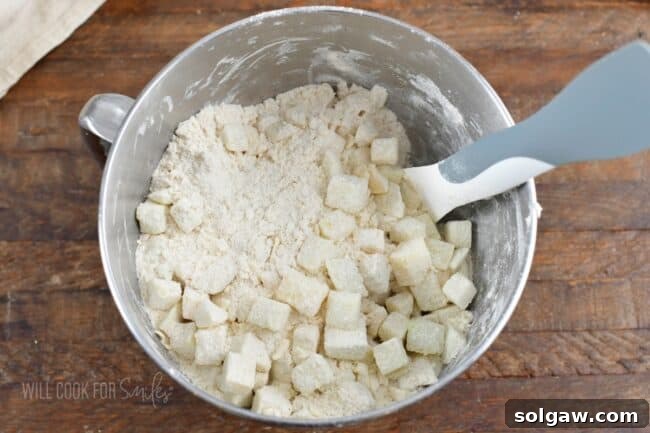
- Add Apples to Dry Mixture: Add the diced apples to the flour and butter mixture. Toss gently with a spoon or your hands to ensure that all the apple pieces are thoroughly coated. This step is crucial for distributing the apples evenly and helps absorb any moisture they might release during baking.

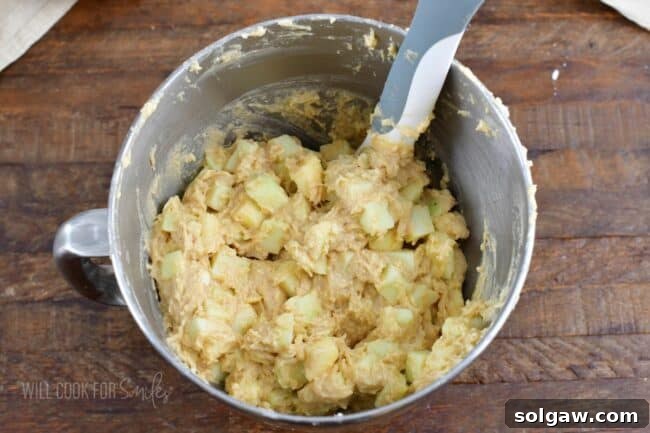
Ensure apples are well coated with the flour mixture before adding wet ingredients. - Combine Wet Ingredients and Form Batter: In a separate small bowl, whisk together the eggs, whole milk, and pure vanilla extract until smooth. Pour this wet mixture into the large bowl containing the apple and flour mixture. Mix carefully with a spoon or spatula until all ingredients are just evenly incorporated. Be careful not to overmix, as overworking the batter can lead to a tougher cake.
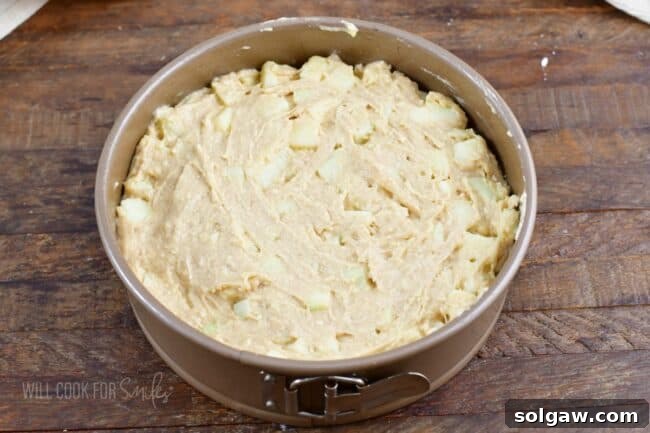
Gently fold in the wet ingredients until the batter is just combined. - Prepare Pan and Spread Batter: Lightly grease a 9-inch springform pan. Transfer the apple cake batter into the prepared pan, spreading it evenly across the bottom with a spatula.
Smooth the cake batter evenly in the prepared springform pan. - Prepare Crumble Topping: In a small, separate bowl, combine the brown sugar, white granulated sugar, all-purpose flour, and ground cinnamon for the crumble topping. Mix these dry ingredients thoroughly until well combined.
- Incorporate Melted Butter into Crumble: Pour the melted unsalted butter into the dry crumble mixture. Using a large fork or your fingertips, carefully fold and cut the butter into the dry ingredients. The goal is to achieve distinct, coarse crumbs, not a smooth paste. Avoid overmixing to maintain that desirable crumbly texture.
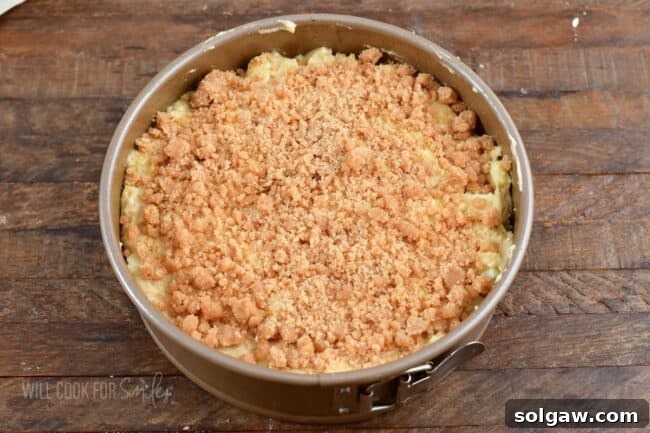
- Top the Cake with Crumble: Evenly spread the prepared crumble topping over the cake batter in the springform pan, ensuring a generous and uniform layer.
Generously sprinkle the streusel topping over the smooth cake batter. - Bake the Apple Cake: Place the cake in the preheated oven and bake for 45-55 minutes. Baking times can vary depending on your oven, so start checking for doneness around the 45-minute mark. Insert a dry toothpick into the very center of the cake; if it comes out clean or with a few moist crumbs attached (not wet batter), the cake is done. For ultimate precision, use an instant-read thermometer inserted into the center, aiming for an internal temperature of 200°F-205°F (93°C-96°C). If the topping begins to brown too quickly, loosely tent the cake with aluminum foil.
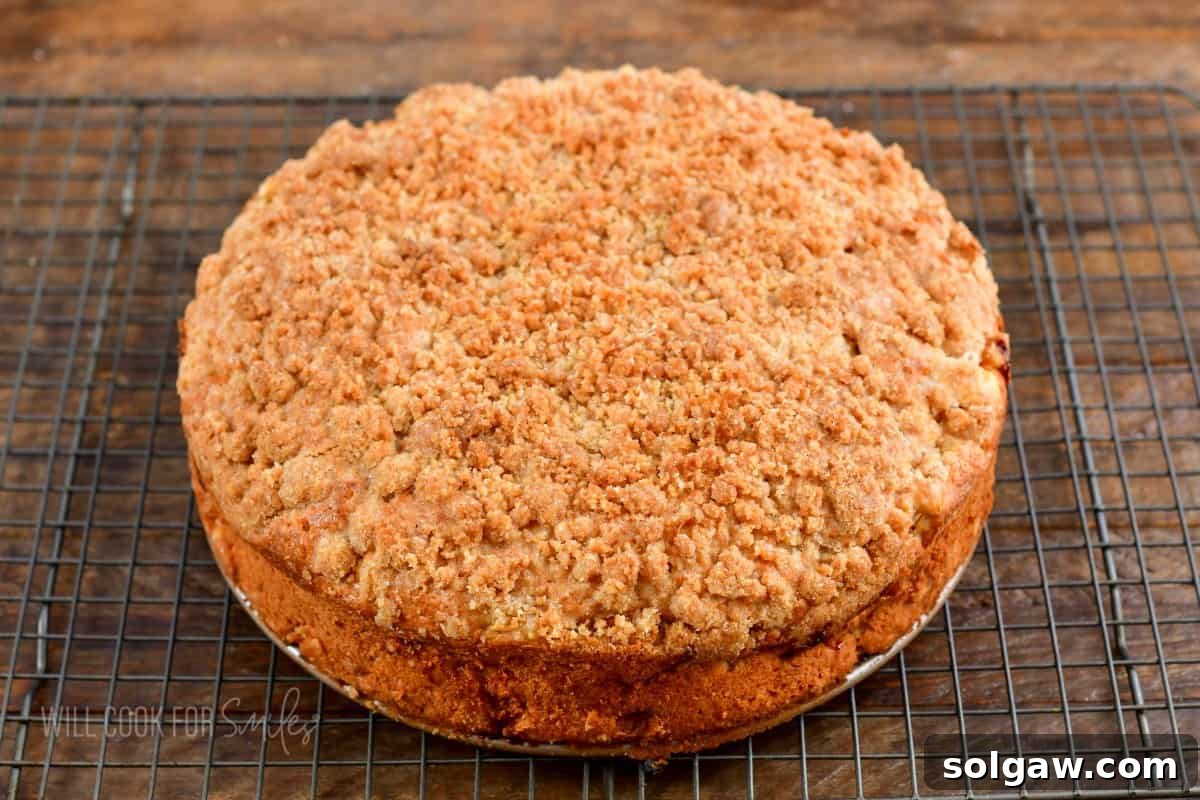
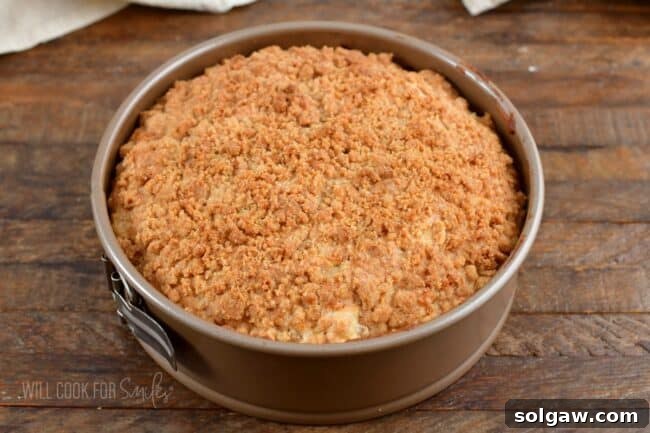
A perfectly baked Irish Apple Cake, golden and fragrant, fresh from the oven. - Cool and Serve: Allow the baked apple cake to cool in the springform pan on a wire rack for at least one hour before attempting to remove the sides. Cooling completely allows the cake’s structure to set, making for cleaner slices. Before releasing the springform, you can run a greased butter knife carefully around the edge of the cake to help prevent sticking. Serve warm with your preferred accompaniments!
Recipe Notes and Pro-Tips
- Understanding Cake Flour: Cake flour is key to this Irish Apple Cake’s tender, lighter crumb. Its lower protein content results in less gluten development, creating a more delicate texture. If you don’t have cake flour, you can easily create a substitute: for every 1 cup of cake flour required, measure 1 cup of all-purpose flour, remove 2 tablespoons, then add 2 tablespoons of cornstarch. Whisk it thoroughly before using in the recipe.
- Ensuring Perfect Doneness Every Time: Oven calibrations vary, and apple moisture content can affect baking times. The most reliable method to prevent overbaking and ensure a perfectly moist cake is to monitor its internal temperature. The cake is done when an instant-read thermometer inserted into the very center registers between 200–205°F (93–96°C). Additionally, look for a set center (no wet jiggle), a deeply golden-brown top, and a toothpick that comes out clean or with just a few moist crumbs (not wet batter). If the top browns too quickly before the center is cooked, loosely tent the cake with aluminum foil for the last 10-15 minutes of baking.
- Cooling and Slicing Properly: Patience during cooling is crucial for a beautifully presented cake. Allow the cake to cool for at least one hour in the pan before attempting to release the springform and slice it. This cooling period allows the cake’s structure to firm up completely, ensuring clean, stable slices and preventing it from crumbling.
- Storage Guidelines for Freshness:
- Room Temperature: Store the cooled cake, covered tightly, at room temperature for up to 2 days. An airtight container is best to prevent it from drying out, especially in humid environments.
- Refrigerator: For longer storage, refrigerate the cake in an airtight container for up to 5 days. Be aware that the crumble topping may soften slightly in the cooler, moister environment of the fridge.
- Freezing: This cake freezes wonderfully! Wrap individual slices (or the entire cooled cake) tightly first in plastic wrap, then in a layer of aluminum foil, and freeze for up to 2 months. Thaw overnight in the refrigerator or at room temperature, then warm gently before serving for the best texture and flavor.
Nutrition Information (per serving)
Calories: 547kcal | Carbohydrates: 92g | Protein: 9g | Fat: 17g | Saturated Fat: 10g | Polyunsaturated Fat: 1g | Monounsaturated Fat: 4g | Trans Fat: 1g | Cholesterol: 82mg | Sodium: 32mg | Potassium: 328mg | Fiber: 4g | Sugar: 50g | Vitamin A: 594IU | Vitamin C: 5mg | Calcium: 106mg | Iron: 1mg
(Nutrition values are estimates and may vary based on ingredients, brands, and preparation methods.)