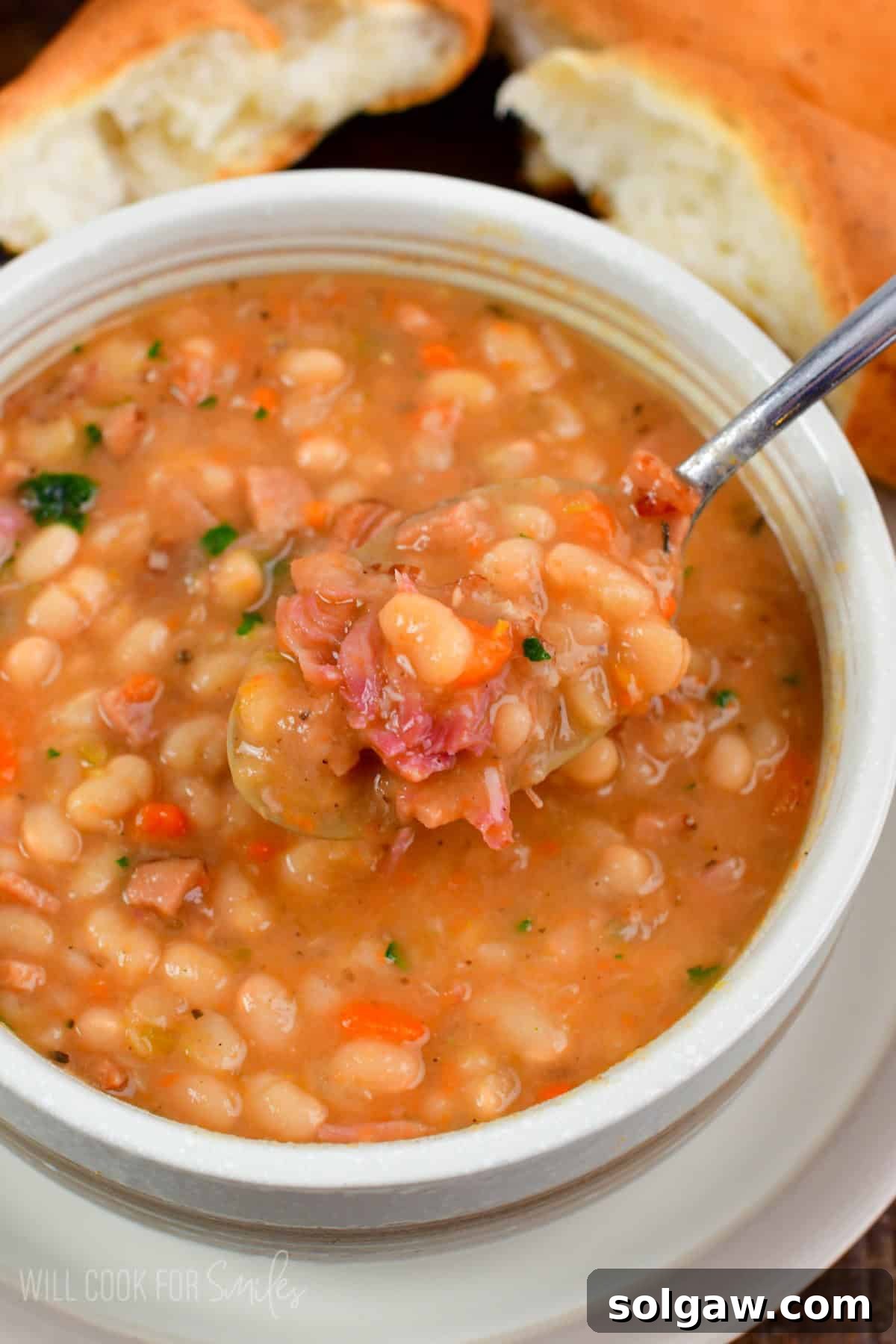
There’s nothing quite like a steaming bowl of homemade soup to warm the soul, and this Ham and Bean Soup recipe truly delivers. It’s my simple yet profoundly delicious take on a timeless classic, designed to bring unparalleled comfort and flavor right to your kitchen table. What makes this recipe so special? It all starts with the rich, smoky depth infused by using actual smoked ham bones, combined with a carefully selected medley of fresh vegetables and a thoughtful blend of seasonings. This isn’t just a meal; it’s an experience that evokes cherished memories of family gatherings, chilly evenings, and the simple joy of a truly nourishing dish. Prepare to savor a soup that’s incredibly easy to make, yet tastes like it’s been simmering with love for generations.
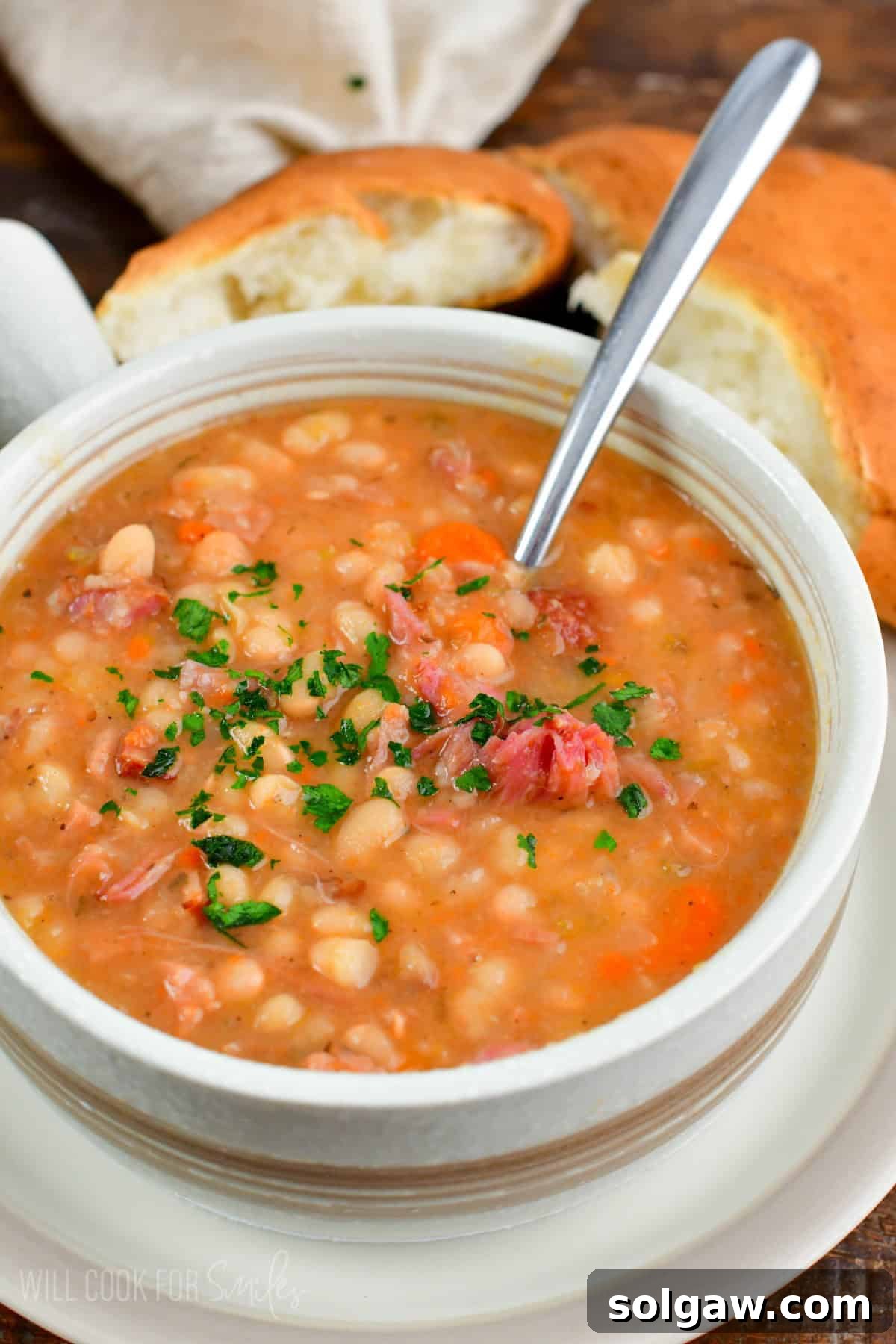
Featured Comment
This was such a comforting delightful meal! We really enjoyed it! ~Jane
Table of Contents: Your Guide to the Best Ham and Bean Soup
- Why You’ll Fall in Love with This Ham and Bean Soup
- The Secrets to Unforgettable Flavor
- Essential Ingredients and Smart Substitution Options
- Step-by-Step: Crafting Your Perfect Ham and Bean Soup
- Pro Tips for the Ultimate Ham and Bean Soup
- Serving Suggestions for Ham and Bean Soup
- Storing and Freezing Your Delicious Leftovers
- How to Freeze Ham and Bean Soup for Later Enjoyment?
- Is Soaking Beans Truly Necessary for This Soup?
- Common Questions: Ham and Bean Soup FAQs
- Explore More Cozy Soup Recipes
Why You’ll Fall in Love with This Ham and Bean Soup
This isn’t just another soup recipe; it’s a culinary staple that consistently earns its spot as one of my all-time favorites. Here’s why this particular ham and bean soup stands out:
- Incredibly Budget-Friendly: In an era where grocery bills can quickly add up, this recipe offers a delicious and satisfying solution. Dried beans and smoked ham bones are consistently among the most economical ingredients at the supermarket. Transforming these simple, inexpensive components into such a rich and flavorful meal makes it a true win for your wallet without compromising on taste.
- Nutritionally Robust and Filling: Beyond its amazing taste, this soup is a powerhouse of nutrition. Each generous serving provides approximately 22 grams of lean protein, essential for muscle health and satiety, and an impressive 15 grams of fiber, crucial for digestive wellness and keeping you feeling full longer. It’s a truly balanced and wholesome meal that nourishes from the inside out.
- The Perfect Make-Ahead Marvel: Unlike many dishes that are best served immediately, this ham and bean soup actually improves with time. The flavors continue to meld and deepen as it sits, making it an ideal candidate for meal prepping. Prepare a big batch on the weekend, and enjoy even more flavorful lunches and dinners throughout the week.
- A Brilliant Way to Use Leftover Holiday Ham: After a festive holiday feast, you often find yourself with a delicious ham bone (also known as a ham shank). This recipe provides the perfect opportunity to utilize that bone, extracting every last bit of its incredible savory flavor and transforming it into a spectacular new meal. It’s a sustainable and incredibly tasty way to extend your holiday celebration.
- Effortlessly Freezer-Friendly: This soup freezes exceptionally well, making it perfect for stocking your freezer. Whether you portion it into individual servings for quick meals or freeze the entire batch for a future busy weeknight, it thaws beautifully, retaining all its comforting texture and taste.
- Naturally Rich and Creamy Texture: You won’t find any dairy in this recipe, yet the soup achieves a wonderfully thick and velvety texture. This natural creaminess comes from the slow simmering of the beans, which release their starches into the broth, creating a luxurious mouthfeel without the need for heavy cream or other dairy products.
- True One-Pot Convenience: Forget about a sink full of dirty dishes. This entire soup comes together in a single pot, from sautéing the aromatics to the long, slow simmer. This not only minimizes cleanup but also allows all the ingredients to mingle and develop complex flavors together from the very beginning.
The Secrets to Unforgettable Flavor: Elevating Your Ham and Bean Soup
While the recipe itself is straightforward, a few key elements are non-negotiable for achieving that truly exceptional depth of flavor:
- I cannot stress this enough: always use smoked ham bones. Options like smoked neck bones or a smoked ham hock are game-changers. The slow cooking process allows the profound smoky, savory essence to permeate every single bean and every drop of broth, creating a foundational flavor that simply can’t be replicated with just diced ham. For an added bonus, smoked neck bones often have a good amount of meat attached, which can be easily picked off and stirred back into the soup, enriching it further. This is precisely why I also rely on them for my beloved split pea soup.
- Embrace the power of dried beans. While canned beans offer convenience, dried beans are the secret to a soup with truly deep, rich flavors, a naturally thicker and more satisfying consistency, and a wonderfully pleasant texture in every bite. They absorb the smoky ham flavor more effectively and break down just enough to create that desired creamy body without becoming mushy. This principle holds true for all my bean soups, including the elegant Tuscan white bean soup and the vibrant black eyed pea soup. As an added benefit, dried beans are typically more cost-effective and allow you to control the sodium content more precisely.
- For those times when you need comfort in a flash, remember that I’ve also developed an Instant Pot ham and bean soup version, perfectly optimized for pressure cooking, ensuring delicious results in a fraction of the traditional time.
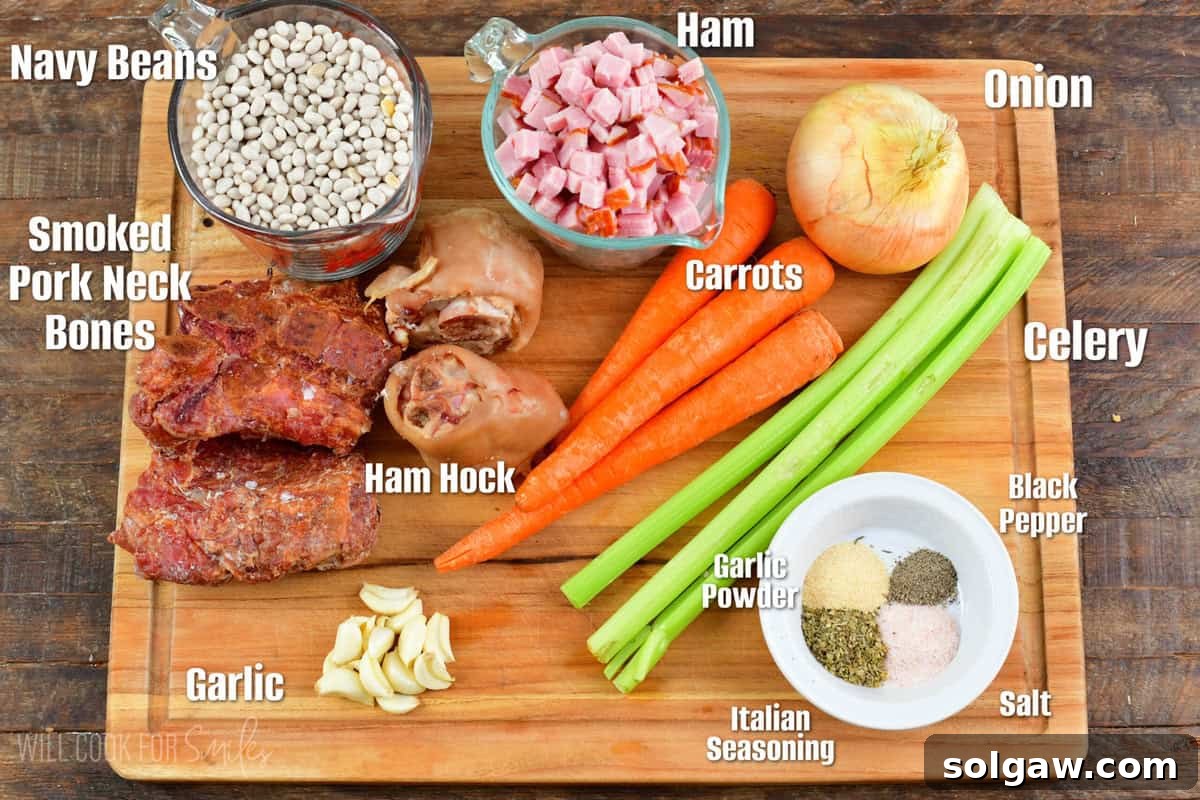
Essential Ingredients and Smart Substitution Options for Your Ham and Bean Soup
Creating this flavorful yet simple ham and bean soup requires just a handful of wholesome ingredients. Here’s what you’ll need, along with some flexible substitution ideas to suit your pantry and preferences:
- Smoked Ham Bones: These are the cornerstone of the soup’s flavor. Seek out smoked neck bones or a hearty smoked ham hock (or a combination of both if available). Their rich, smoky essence permeates the entire pot, transforming plain water into a deeply savory broth. If you’ve just enjoyed a holiday meal, a leftover ham bone from your roasted ham is absolutely perfect. Don’t worry if you don’t have one; many butchers sell ham bones for very little, specifically for making stocks and soups.
- Ham: I typically incorporate about 14 ounces of diced ham to add more hearty texture and flavor to the soup. This can be leftover ham from a roast, a pre-cooked ham steak, or even thick-cut deli ham. If your smoked ham bone still has a substantial amount of meat on it, you can certainly reduce or even omit the additional diced ham.
- Navy Beans: My personal preference for this recipe is small, delicate navy beans, as they break down beautifully to create a creamy soup. However, other white beans like great northern beans or cannellini beans (also known as white kidney beans) are excellent alternatives. Just remember that larger beans may require a slightly longer cooking time to reach that perfect tender consistency.
- Vegetables (The Holy Trinity): The classic aromatic base for many comforting soups, also known as mirepoix (French), soffritto (Italian), or the “Holy Trinity” (Cajun/Creole cuisine, though usually with bell peppers instead of carrots), is essential here. A combination of diced onions, chopped carrots, and sliced celery creates a sweet, earthy, and savory foundation that elevates the entire dish.
- Garlic: Freshly minced garlic adds a pungent depth that complements the smoky ham perfectly. I recommend 5-6 cloves for robust flavor, but feel free to adjust this amount to your personal taste preference – more if you love garlic, a little less if you prefer a subtle hint.
- Seasonings: A simple yet effective blend is all that’s needed. Italian seasoning provides an aromatic herbal note, while garlic powder reinforces the garlic flavor. Freshly cracked black pepper adds a touch of warmth, and bay leaves infuse a subtle, earthy aroma that’s classic in slow-simmered soups. When it comes to salt, exercise caution. Smoked ham is often quite salty, so it’s best to start with a minimal amount and taste the soup halfway through cooking, adjusting as needed at the very end.
- Water: Believe it or not, just plain water is all you need for the liquid base in this recipe! The smoked ham bones and diced ham impart such an incredible amount of flavor during the long simmer that a separate broth isn’t necessary. The result is a pure, unadulterated ham and bean flavor. However, if you find yourself without ham bones, substituting chicken broth for water will significantly boost the flavor profile.
Step-by-Step: Crafting Your Perfect Ham and Bean Soup
Making this comforting ham and bean soup is a rewarding process. Follow these detailed steps to achieve a rich, deeply flavorful, and perfectly creamy bowl:
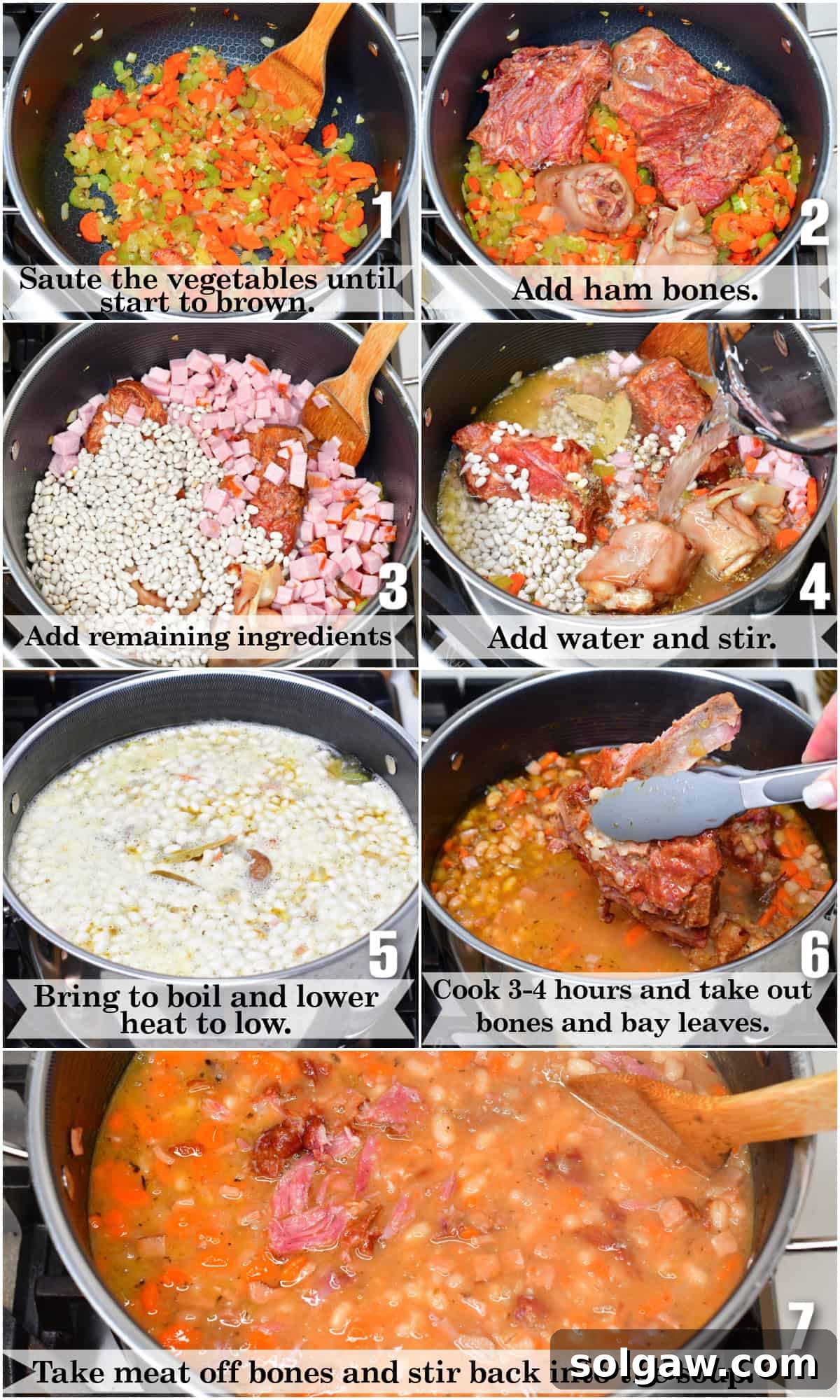
- Initial Preparation: Begin by precisely dicing your yellow onion, carrots, and celery – these are the aromatic foundation of your soup. Next, take your dried navy beans and transfer them to a fine-mesh strainer. Rinse them thoroughly under cold running water to remove any dust or debris, then set them aside. This quick rinse is important for cleanliness.
- Building the Flavor Base: Place a large, heavy-bottomed soup pot or Dutch oven over medium heat. Once it’s adequately preheated, add the avocado oil. Allow the oil to shimmer slightly, then add your diced onions, carrots, and celery. Sauté these vegetables, stirring occasionally, until they begin to soften and develop a light golden-brown hue, indicating their natural sugars are caramelizing and creating a deeper flavor. This crucial step is called sweating the vegetables. Immediately after, stir in the minced garlic. Sauté the garlic for just a few seconds, until it becomes wonderfully fragrant. Be careful not to overcook it, as burnt garlic can turn bitter.
- Adding the Hearty Elements: Carefully place the smoked ham bones into the pot. Then, add your diced ham, the rinsed dried beans, and all the specified seasonings (Italian seasoning, garlic powder, black pepper, and bay leaves). Give everything a good stir to combine these foundational ingredients.
- Introducing the Liquid: Pour in the 10 cups of water. Ensure all the solid ingredients are submerged. Bring the entire pot to a gentle, rolling boil over medium to medium-high heat. This initial boil helps to kickstart the cooking process and extract flavors.
- The Long, Slow Simmer: Once the soup has reached a boil, reduce the heat significantly to low. The goal is a gentle simmer, not a vigorous boil. Cover the pot with a lid, but crucially, leave a small crack or opening to allow steam to escape. Let the soup cook undisturbed for the first 1.5 to 2 hours. After this period, remove the lid entirely and continue to cook the soup uncovered for another 1.5 to 2 hours. This uncovered simmering allows some of the liquid to evaporate, concentrating the flavors and helping the soup to thicken naturally. Remember to stir the soup periodically throughout this extended cooking time to prevent sticking and ensure even cooking. The longer it simmers, the more tender the beans will become, and the starches they release will naturally create that desired thick, velvety, and creamy texture.
- Final Touches and Serving: Once the beans are perfectly tender and the soup has reached your desired consistency, carefully discard the bay leaves. Using tongs, remove the ham bones from the pot. If you used smoked neck bones or ham hocks with meat still attached, allow them to cool slightly. Then, pick off any edible meat from the bones and shred or chop it. Return this flavorful ham meat back into the soup. Before serving, thoroughly check the soup for any small bone fragments to ensure a safe and enjoyable meal. Taste and adjust seasonings one last time, adding more salt or pepper if desired.
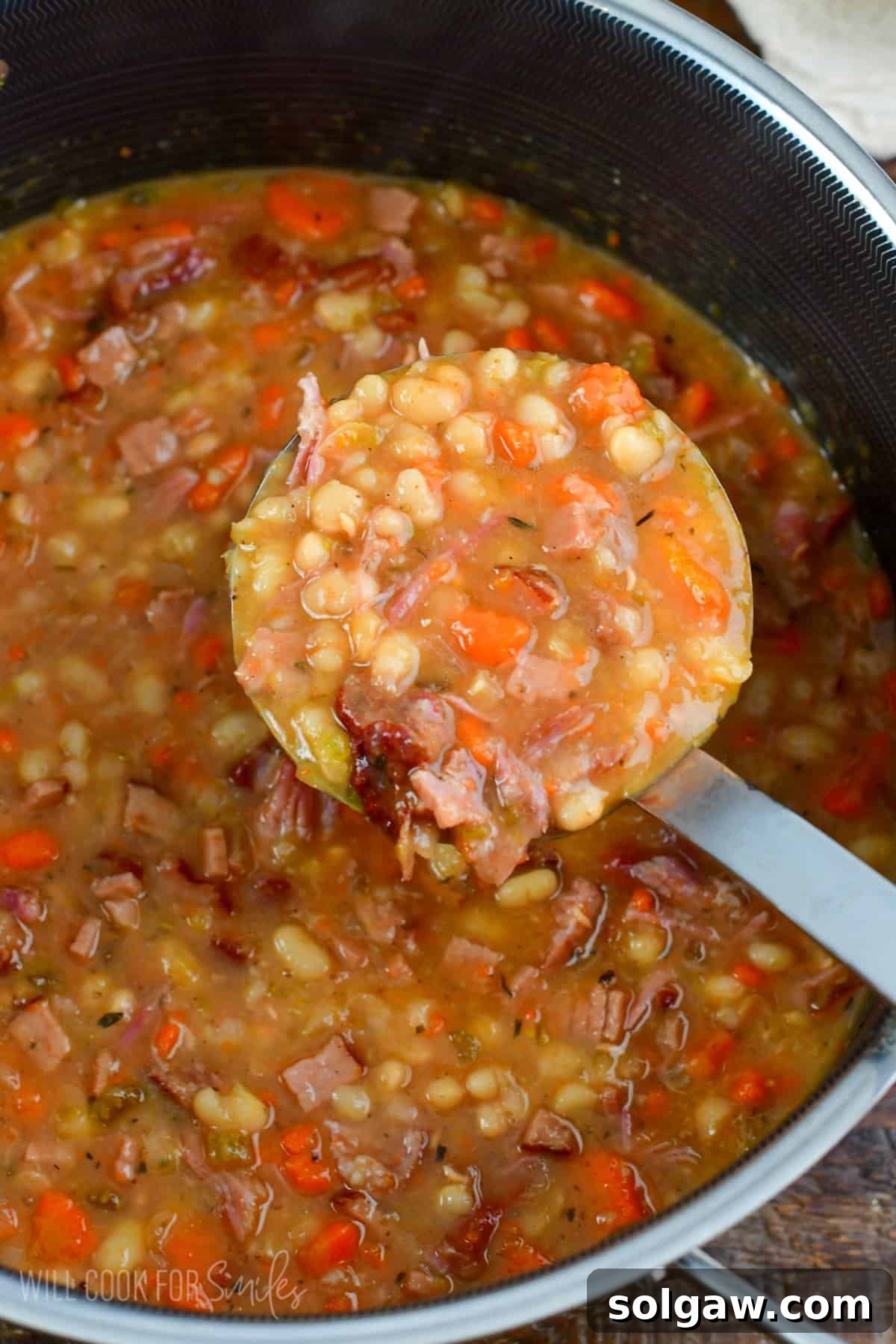
Pro Tips for the Ultimate Ham and Bean Soup: Enhancing Your Culinary Creation
Achieving a truly exceptional ham and bean soup involves a few nuanced techniques. Here are some expert tips to guide you to culinary success:
To Soak or Not to Soak Your Beans? Understanding the Debate: When it comes to smaller beans like navy beans and great northern beans, I’ve honestly observed very little noticeable difference in final texture between pre-soaked and un-soaked beans. If you choose not to soak them beforehand, the cooking time will naturally extend by approximately an hour, perhaps a little more. So, if you forget this step, it’s absolutely not a deal-breaker! More often than not, I skip soaking for smaller beans entirely. However, for larger bean varieties or if you’re aiming to slightly reduce the overall cooking duration, an 8-12 hour soak in cold water can be beneficial. Soaking also helps to soften the outer skin of larger beans, leading to a more uniform tenderness.
Achieving Your Desired Soup Thickness: Want a soup that’s even more luxuriously creamy and thick? You have a couple of easy options. One method is to use a wooden spoon to gently mash some of the tender beans against the side of the pot. This releases more of their natural starches and creates a richer consistency. Alternatively, for a smoother finish, carefully remove about 1 cup of the soup (ensuring it contains a good amount of cooked beans) and use an immersion blender or a regular blender (blending in batches, with the vent open and covered with a towel, to prevent pressure buildup) to puree it until smooth. Stir this pureed portion back into the main pot. Remember, the soup will naturally thicken further as it cools, due to the continuous release of starches from the beans.
Mastering Salt Levels with Salty Ham: Ham, especially certain varieties like honey-baked ham, can be quite salty. To prevent an overly seasoned soup, it’s crucial to be mindful of your salt additions. If you decide to substitute water with broth, opt for a low-sodium chicken or vegetable broth. A smart strategy is to hold back on adding any extra salt until you are at least halfway through the cooking process. At that point, taste the soup and adjust the salt content incrementally as needed. It’s always easier to add more salt than to fix a soup that’s too salty.
Boosting Nutrition and Color with Greens: Looking to enhance the nutritional profile and add a vibrant pop of color to your ham and bean soup? Stir in a few generous handfuls of chopped fresh spinach, kale, or collard greens during the final 5-10 minutes of cooking. These leafy greens will wilt beautifully into the hot soup, adding vitamins, minerals, and a delightful textural contrast without overpowering the main flavors.
Serving Suggestions for Ham and Bean Soup: Perfect Pairings
This hearty ham and bean soup is a meal in itself, but a few thoughtful accompaniments can elevate your dining experience. Here are some ideas to complete your cozy meal:
- Crusty Bread or Cornbread: A warm, crusty baguette or a slice of homemade cornbread is ideal for soaking up every last drop of the savory broth. The contrast of the soft soup with the crunchy bread is simply delightful.
- Simple Green Salad: A light, crisp green salad with a vinaigrette dressing provides a refreshing counterpoint to the rich, hearty soup. It adds a touch of freshness and balance to the meal.
- Cheese: A sprinkle of freshly grated Parmesan or a sharp cheddar can add an extra layer of savory depth.
- Fresh Herbs: A garnish of chopped fresh parsley or chives not only adds a burst of color but also a fresh, aromatic finish.
- Hot Sauce or Red Pepper Flakes: For those who enjoy a little kick, a dash of your favorite hot sauce or a pinch of red pepper flakes stirred into individual bowls can add a welcome layer of spice.
Storing and Freezing Your Delicious Leftovers: Maximizing Freshness
One of the many virtues of this ham and bean soup is how beautifully it keeps, making it ideal for future meals. Proper storage ensures you can enjoy its comforting flavors days or even months later.
- Refrigeration Guidelines: Once your cooked soup has cooled to room temperature, transfer it promptly into an airtight food storage container. Store it securely in the refrigerator, where it will remain fresh and delicious for up to 5-7 days. To maximize its shelf life and prevent premature spoilage, always make sure to use a clean ladle each time you serve yourself a portion from the container.
- Effortless Reheating: Reheating this soup is wonderfully simple. For individual servings, you can easily warm it up in the microwave. For larger quantities or a more even heat, transfer the soup to a small saucepan and reheat it over medium heat on the stovetop, stirring occasionally. It’s important to note that the soup will naturally thicken considerably as it chills in the refrigerator. If you prefer a looser consistency when reheating, feel free to add a splash of water or broth to thin it out to your liking.
How to Freeze Ham and Bean Soup for Later Enjoyment?
Freezing this ham and bean soup is an excellent way to prepare meals in advance and ensure you always have a comforting option on hand:
- Freezing Method: Once your ham and bean soup has completely cooled to room temperature, carefully portion it into durable freezer-safe zip-lock bags. Press out as much air as possible before sealing the bags tightly. Label each bag clearly with the contents and the date to keep track of its freshness. For efficient storage, lay the sealed bags flat on a cutting board or baking sheet and place them in the freezer. Once frozen solid, these flat portions can be neatly stacked, saving valuable freezer space. The soup can be safely stored in the freezer for up to 3 months.
- Expert Tip for Freezer Bags: Using freezer bags is a truly smart move for soup storage. Not only do they allow you to easily stack flat bags of frozen soup, thereby optimizing your freezer space, but they also facilitate much faster thawing compared to bulky containers.
- Thawing Instructions: To thaw your frozen soup, the safest and best method is to transfer it from the freezer to the refrigerator and allow it to thaw slowly overnight, or for up to 24 hours, depending on the volume of the portion. Once thawed, you can reheat it using the instructions above.
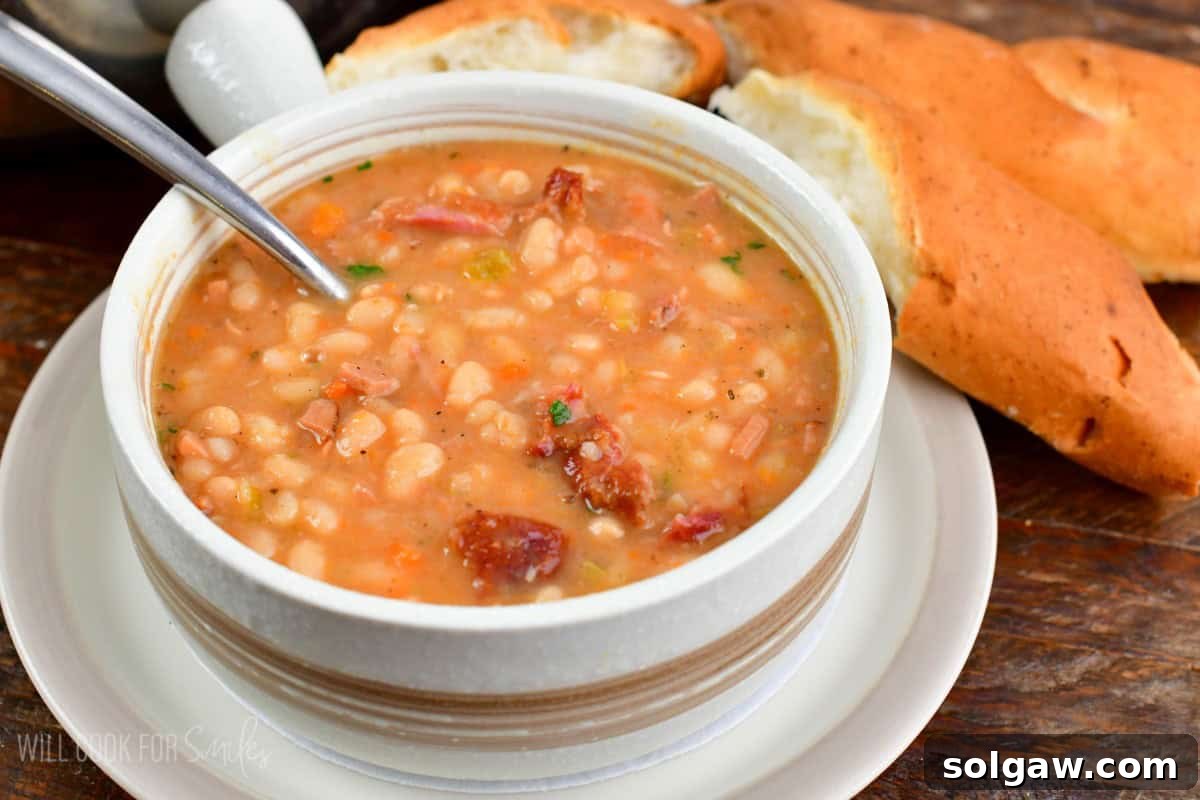
Is Soaking Beans Truly Necessary for This Ham and Bean Soup?
This is a common question among home cooks, and for this ham and bean soup, the short answer is: no, it’s not strictly necessary.
From my personal experience, especially with smaller bean varieties like navy beans and great northern beans, I haven’t observed a significant difference in the final texture of the beans, whether they were pre-soaked or cooked directly from dry. The long, slow simmer of this recipe naturally tenderizes them beautifully.
The primary effect of not soaking the beans beforehand is that the cooking time will be a little longer – typically by about an hour or so. So, if you find yourself short on time or simply forgot to plan ahead, it’s truly not a big deal. For smaller beans, I often don’t bother with the soaking step myself, and the results are consistently excellent. While soaking can slightly reduce cooking time and help soften the skin of larger, tougher beans, for this recipe, you have the flexibility to skip it without compromising the delicious outcome.
Common Questions: Ham and Bean Soup FAQs
Here are answers to some frequently asked questions to help you perfect your ham and bean soup:
Can I use different types of beans in this recipe?
Absolutely! This ham and bean soup recipe is wonderfully versatile. While I personally favor navy beans for their creamy texture, you can certainly use great northern beans, cannellini beans, or even a mix of white beans. Keep in mind that larger beans, such as great northern or pinto beans, tend to have a slightly longer cooking time and may retain a thicker skin or denser texture, so adjust your simmering time accordingly until they are perfectly tender.
What if I don’t have a ham bone readily available?
No ham bone? No problem! While a smoked ham bone is truly the secret to the most profound flavor, you have excellent alternatives. A smoked ham hock or ham shank can be purchased from most butchers or grocery stores for a very reasonable price and will impart a similar incredible smoky depth. If you only have diced ham or ham steak, you can still make a delicious soup; just consider using chicken broth instead of water for the liquid base to boost the savory flavor. Another fantastic trick to introduce that smoky essence is to add a small amount of smoked bacon, cooked until crispy, at the beginning of the recipe, rendering its fat to sauté the vegetables.
Are there other vegetables I can add to the soup?
This soup is incredibly adaptable to additional vegetables, allowing you to customize it to your taste or what you have on hand. Potatoes or sweet potatoes make a wonderful addition, adding heartiness and a touch of sweetness. If adding them, ensure they are cubed evenly and introduce them during the last hour of cooking to prevent them from becoming overly soft or mushy. You can also increase the amounts of celery and carrots for more vegetable goodness. For a nutritional boost and a pop of color, stir in a few handfuls of leafy greens like fresh spinach or kale during the final 10 minutes of simmering. Chopped tomatoes, either fresh or canned diced, and bell peppers can also be added for a slightly different flavor profile and added vibrancy.
Can I use canned beans as a shortcut?
Yes, canned beans are a fantastic shortcut if you’re pressed for time and need the soup ready faster. You’ll want to use approximately four 15-ounce cans of white beans (navy, great northern, or cannellini work well). It’s crucial to drain and rinse them thoroughly before adding them to the pot to remove excess sodium and any canning liquid. Since canned beans are already cooked, the soup will only need to simmer for about 30-45 minutes after all ingredients are combined, just long enough for the flavors to meld and the soup to heat through. While the flavor may not be quite as deep and complex as with dried beans that have simmered for hours, it will still be a wonderfully comforting and delicious meal.
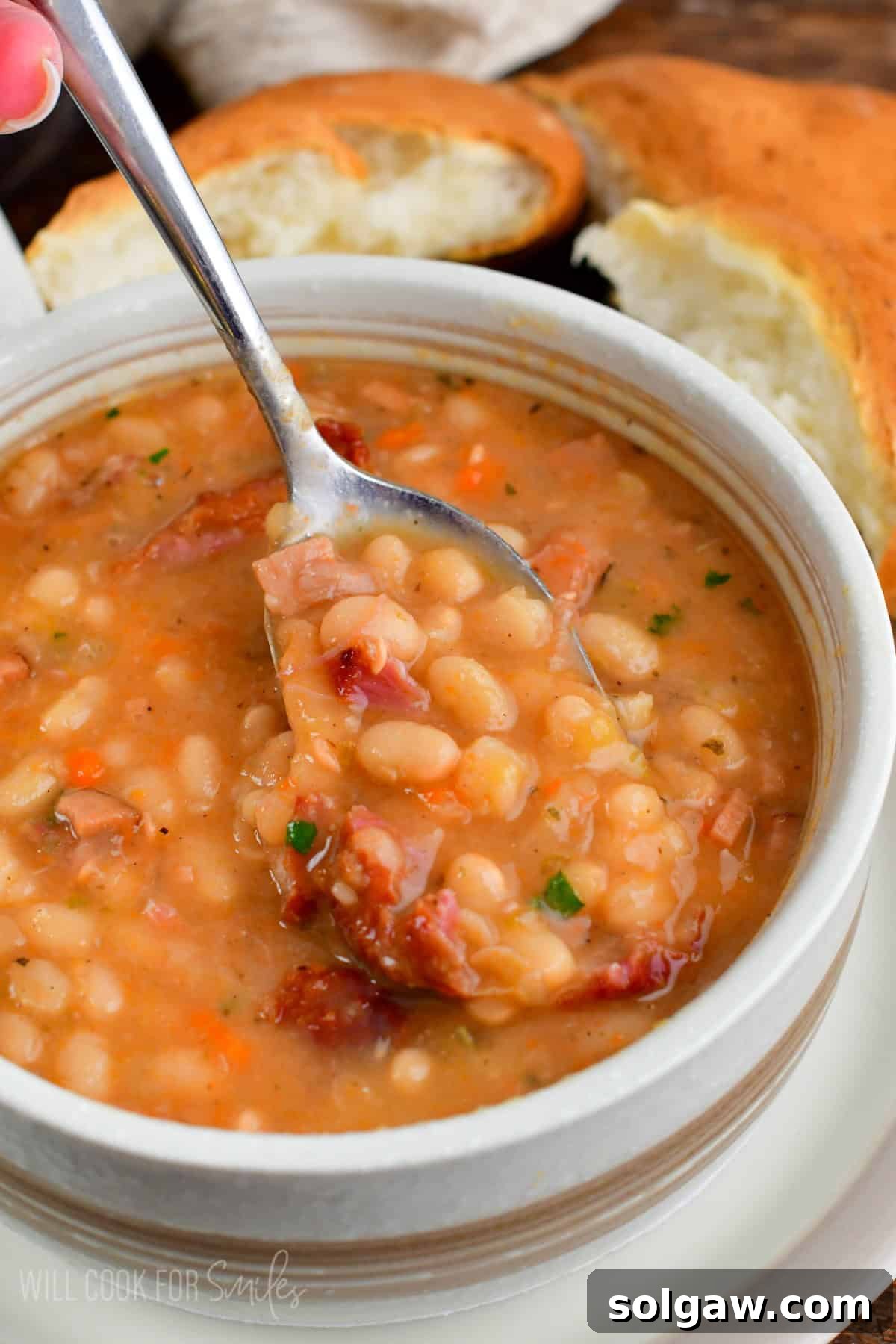
PIN THIS RECIPE FOR LATER
DID YOU MAKE THIS RECIPE? PLEASE leave a 🌟 star rating! Let me know how you liked it by leaving the 📝 comment below or share and tag me on social media @willcookforsmiles. DON’T FORGET to subscribe to my newsletter!
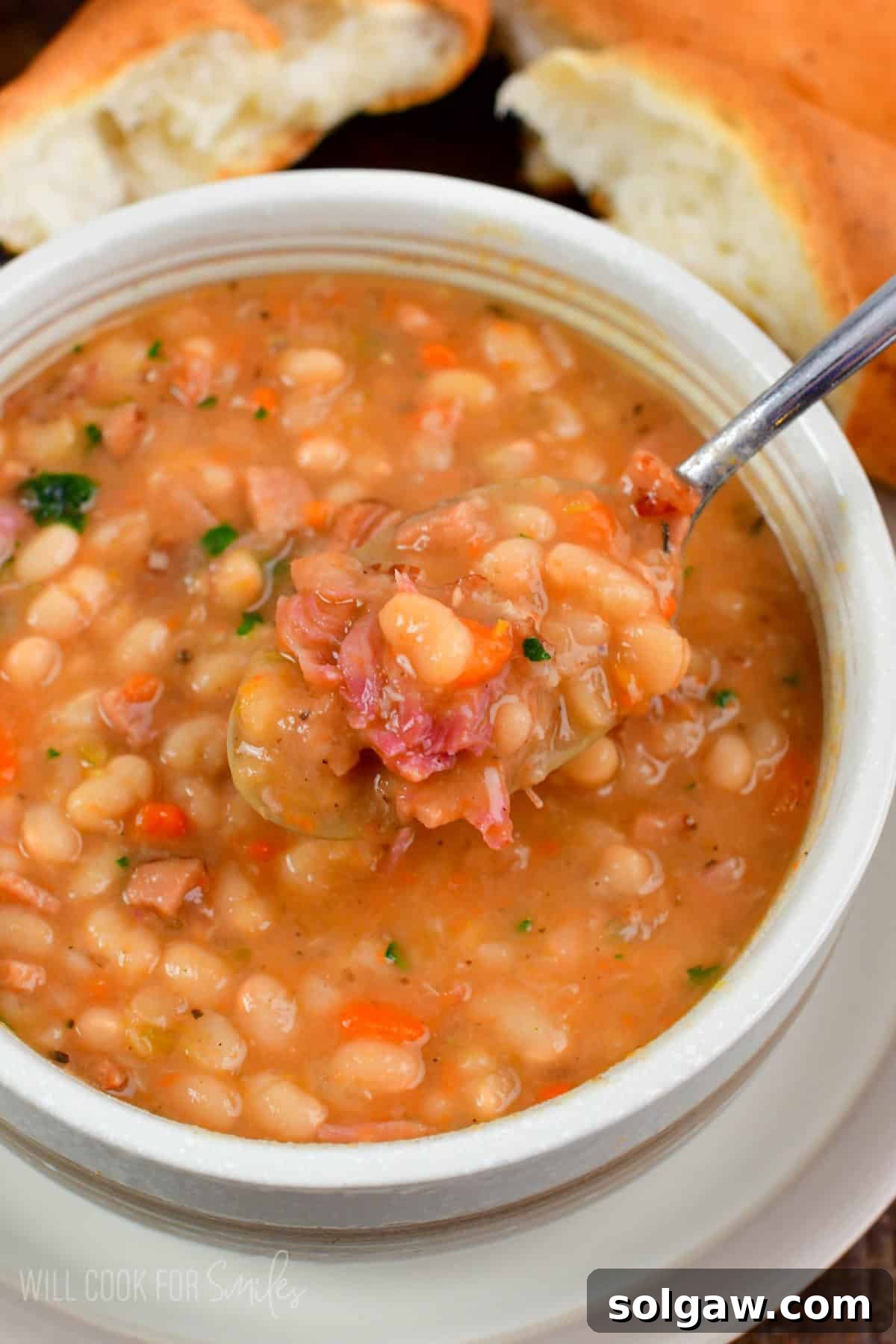
Ham and Bean Soup Recipe
Print
Pin
Video
Rate
Ingredients
- 2 tbsp avocado oil to sauté veggies
- 1 yellow onion
- 2-3 celery ribs
- 3 medium carrots
- 5-6 garlic cloves
- 1.5 lbs smoked ham bones (neck or hock) or leftover ham bone
- 14 oz ham
- 1 lb dried navy beans
- 2 bay leaves
- 1-2 tsp coarse salt to taste
- 1 tsp black pepper to taste
- 1 tbsp Italian seasoning
- 2 tsp garlic powder
- 10 cups water
Instructions
-
Dice the ham and onion. Slice the carrots and celery into uniform pieces. Transfer the dried beans into a mesh strainer and rinse them thoroughly under cold running water to remove any debris. Set the rinsed beans aside.
-
Preheat a large, heavy-bottomed soup pot or Dutch oven over medium heat. Once hot, add the avocado oil.
-
Add the diced onions, carrots, and celery to the pot. Sauté, stirring occasionally, until the vegetables begin to soften and lightly brown, about 8-10 minutes. Stir in the minced garlic and sauté for just a few seconds until fragrant; avoid overcooking to prevent bitterness.
-
Place the smoked ham bones into the pot. Add the diced ham, rinsed dried beans, Italian seasoning, garlic powder, black pepper, and bay leaves. Pour in the 10 cups of water and stir everything well to combine.
-
Increase the heat to medium-high and bring the soup to a gentle boil.
-
Once boiling, reduce the heat to low. Cover the pot with a lid, leaving a small crack to allow steam to escape. Simmer for 1.5-2 hours. After this time, remove the lid and continue to cook uncovered for another 1.5-2 hours, or until the beans are tender and the soup has thickened to your desired consistency. Stir occasionally to prevent sticking.
-
Remove and discard the bay leaves. Carefully take out the ham bones. If there is any meat remaining on the bones, allow them to cool slightly, then pick off the meat and shred or dice it. Return the picked ham meat to the soup. Thoroughly check the soup for any small bone fragments before serving. Taste and adjust seasoning with salt and pepper if needed.
Video
Notes
- Slow Cooker Method – For a hands-off approach, you can adapt this recipe for a slow cooker. First, sauté the onions, carrots, and celery in a separate pan until browned, then transfer them to a large slow cooker (5 qt. or larger). Add the ham bones, diced ham, rinsed beans, seasonings, and water. Cook on LOW for 8 hours or on HIGH for 4 hours, or until the beans are tender. Note that the final texture and depth of flavor might vary slightly compared to the stovetop method, but it will still be delicious.
- Beans Flexibility – Remember that soaking the beans beforehand is entirely optional. Skipping this step will extend the cook time by about an hour, but it won’t significantly impact the texture of smaller beans like navy or great northern. You can use navy beans, great northern beans, or cannellini beans in this soup; just be aware that larger bean varieties may require a slightly longer simmering time.
- Ham Bone Choice – For the most profound, savory flavor, I highly recommend using smoked ham bones, such as smoked neck bones or a smoked ham hock. A leftover ham shank from a holiday roast is also an excellent choice, infusing the soup with wonderful depth.
- Storage Best Practices – Store any cooled leftover soup in an airtight container in the refrigerator for 5-7 days. For longer storage, freeze the soup as described above, where it will keep well for up to 3 months.
Nutrition
Explore More Cozy Soup Recipes to Warm Your Soul
If you’ve fallen in love with the hearty goodness of this ham and bean soup, then you’re in for a treat! My kitchen is a treasure trove of comforting soup recipes designed to warm you from the inside out. For another fantastic way to utilize leftover ham, you simply must try my creamy ham and potato soup, a rich and satisfying dish that’s perfect for a chilly day. Or, if you’re looking for something with a delightful twist, my cauliflower ham soup offers a creamy, cheesy experience. For those who appreciate the robust flavors of bean-based soups, my Instant Pot split pea soup leverages smoked pork neck bones for an incredibly deep, complex flavor that’s both easy and delicious. The Tuscan white bean soup is a more elegant, yet equally comforting option, while my classic lentil soup remains a timeless comfort food favorite. Each recipe is crafted with simplicity and flavor in mind, ensuring a delightful cooking and eating experience every time.