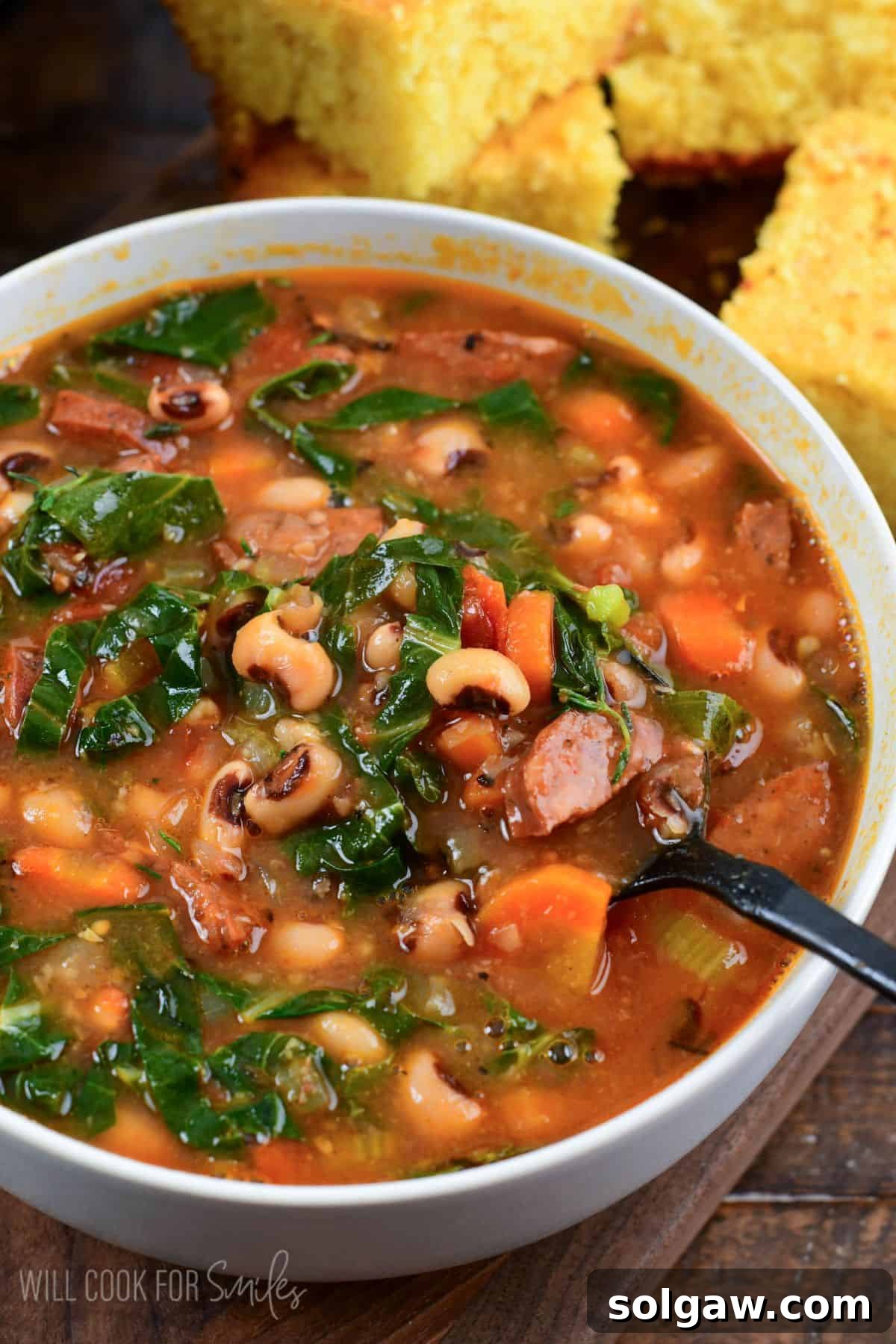
Unlock the incredible potential of your pressure cooker to create deeply flavorful and effortlessly tender meals in record time! This Southern Black-Eyed Pea Soup is a prime example, delivering perfectly tender black-eyed peas in just 30 minutes of active pressure cooking – eliminating the need for any overnight soaking. This convenience alone makes it a remarkable time-saver for busy weeknights or special occasions. We’ve meticulously perfected this recipe through countless trials, fine-tuning cooking times and flavor profiles to guarantee a consistently delicious and perfectly textured soup every single time you prepare it.
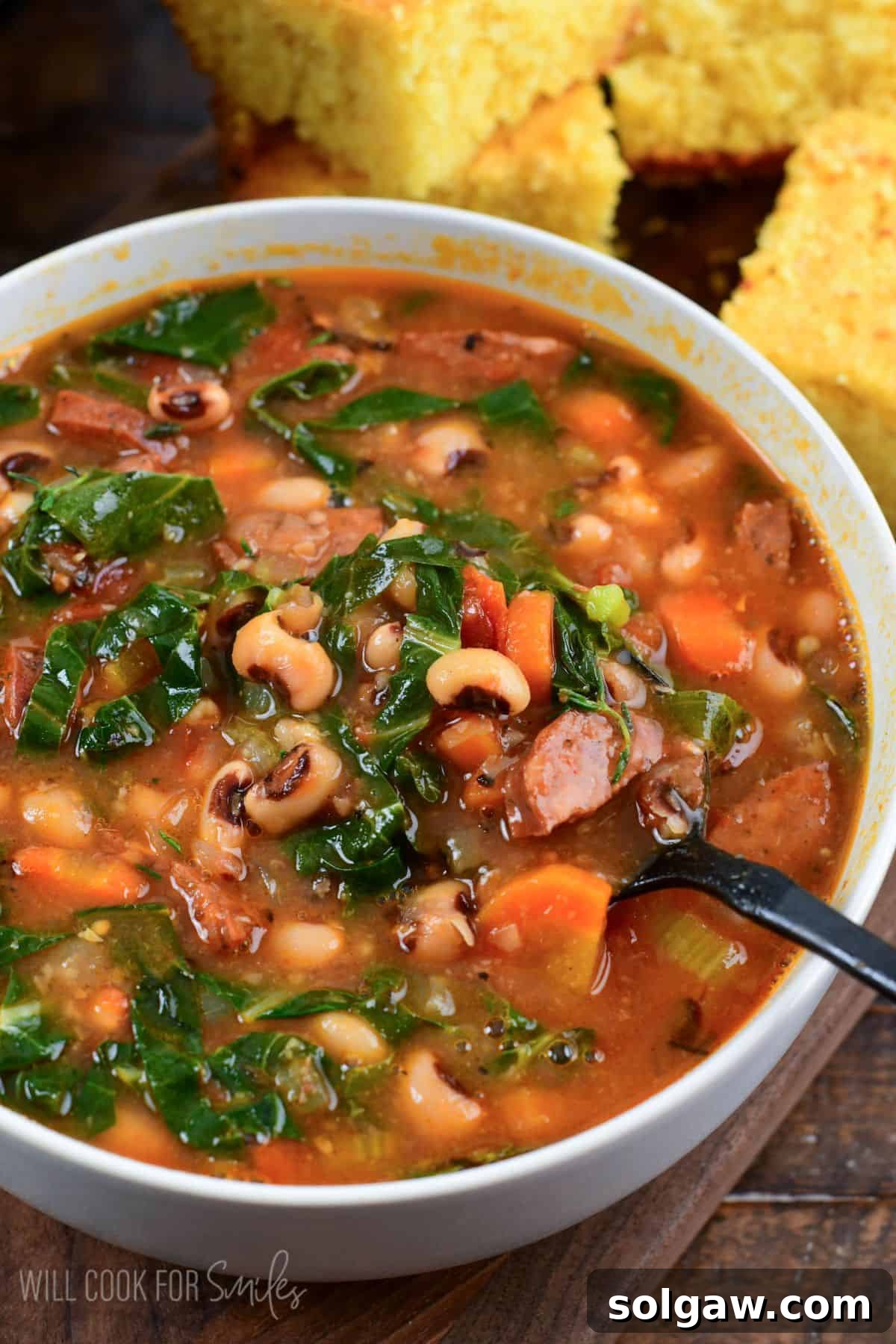
Table of contents
- Best New Year’s Good Luck Soup: A Taste of Tradition and Fortune
- Key Ingredients and Smart Substitutions for Your Black-Eyed Pea Soup
- Selecting the Best Greens for Black-Eyed Pea Soup
- Step-by-Step: Crafting the Perfect Black-Eyed Pea Soup
- Quick & Easy: Using Canned Black-Eyed Peas
- Effortless Cooking: How To Make This Soup in a Slow Cooker
- Exciting Recipe Variations to Explore
- Black-Eyed Pea Soup FAQs
- Storage, Freezing, and Reheating Instructions for Make-Ahead Meals
- More Irresistible Soup Recipes To Try
Best New Year’s Good Luck Soup: A Taste of Tradition and Fortune
Delve into a bowl of history and delicious tradition with our Southern Black-Eyed Pea Soup. In the American South, black-eyed peas are more than just a staple; they are a cherished symbol of good fortune and prosperity, especially when enjoyed on New Year’s Day. Paired with savory pork (like the smoky andouille sausage in this recipe) and vibrant collard greens, which represent wealth and paper money, this soup transforms into the ultimate dish to usher in the New Year with delicious hope. But don’t reserve this culinary delight solely for January 1st! Its comforting, hearty nature makes it an ideal meal any day of the year, perfect for a cozy family dinner or a wholesome, make-ahead lunch. This soup isn’t just a meal; it’s a flavorful embrace of tradition, designed to bring warmth and good vibes to your table.
- No Soaking Required: Thanks to the magic of the Instant Pot, dried black-eyed peas cook up incredibly tender without the fuss of overnight soaking, saving you valuable prep time.
- Authentic Southern Flavor: Each spoonful is bursting with rich, smoky notes from quality andouille sausage, the earthy goodness of collard greens, and a savory, tomato-based broth that defines true Southern comfort food.
- Cozy & Meal Prep Friendly: This recipe yields a generous pot of soup that tastes even better the next day as the flavors meld and deepen. It’s perfect for feeding a crowd or for enjoying as healthy, prepped meals throughout the week.
- Nutrient-Packed Goodness: Every hearty serving is loaded with essential protein, beneficial fiber, and an abundance of fresh vegetables, making it a wholesome and satisfying choice for any diet.
Key Ingredients and Smart Substitutions for Your Black-Eyed Pea Soup
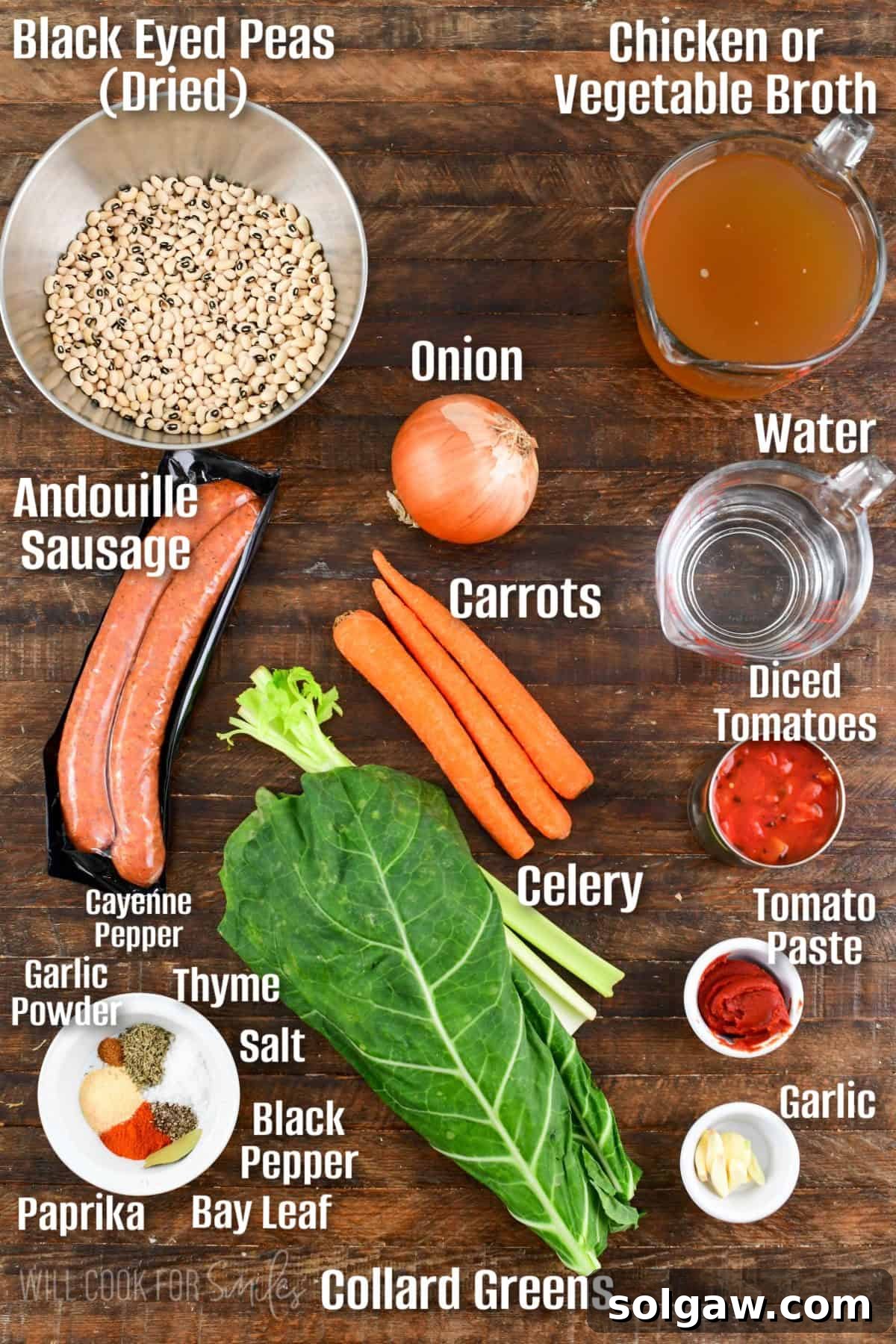
Crafting a truly exceptional Black-Eyed Pea Soup begins with selecting the right ingredients. Here’s a breakdown of what you’ll need and some convenient substitutions to ensure success, even if you’re missing a specific item:
- Dried Black-Eyed Peas: The star of our soup! Opt for dried black-eyed peas for the best flavor and texture. With the Instant Pot, pre-soaking is completely unnecessary, a significant time-saver. The pressure cooker renders them perfectly tender in just 30 minutes of cook time. Our extensive testing has confirmed that soaking doesn’t offer a noticeable advantage in an Instant Pot compared to stovetop methods.
- Andouille Sausage: This spicy, smoked pork sausage is crucial for infusing the soup with its characteristic depth and robust flavor. Its rich smokiness and subtle heat elevate the entire dish. If authentic andouille is hard to find, a good quality smoked kielbasa or another flavorful smoked sausage can be an excellent substitute, though the spice level may vary. For those who love an extra kick, seek out a spicy variety of andouille.
- Fire Roasted Diced Tomatoes: These tomatoes aren’t just for texture; their fire-roasted char adds a wonderful smoky undertone and complex sweetness to the broth, enhancing its overall richness. If you can’t find the fire-roasted variety, regular diced tomatoes will still provide a delicious base, but consider adding a pinch of smoked paprika to compensate for the missing smoky flavor.
- Collard Greens: A quintessential Southern vegetable, collard greens are a must-have for this soup. Their slightly bitter, earthy flavor and sturdy texture hold up beautifully during cooking, adding both nutritional value and authentic taste. Remember to meticulously remove the tough center ribs before chopping, as they can be fibrous and less palatable. Excellent substitutes include hearty greens like kale, Swiss chard, or mustard greens, each bringing its own unique nuances to the soup.
- Chicken Stock: For the most profound flavor, homemade chicken stock is always recommended, lending a depth that store-bought versions often lack. However, a good quality store-bought chicken broth or stock will work perfectly well. For dietary preferences, vegetable broth can be used to make the soup vegetarian-friendly. When choosing store-bought options, opt for “no salt added” or “low sodium” varieties to have greater control over the final seasoning of your soup.
- Tomato Paste: This concentrated paste is a flavor powerhouse, adding an intense umami and richness to the broth that diced tomatoes alone cannot achieve. It’s vital to use tomato paste, not tomato sauce, as the consistency and flavor contribution are vastly different. Cooking the paste briefly caramelizes its sugars, deepening its flavor and removing any raw, metallic notes.
- Seasonings (Garlic Powder, Paprika, Thyme, Cayenne Pepper): This blend of spices creates the signature Southern flavor profile. Garlic powder adds an aromatic base, paprika contributes warmth and color (smoked paprika can further enhance the smoky notes), thyme provides a classic earthy, herbaceous touch, and a pinch of cayenne pepper introduces a gentle heat. Feel free to adjust the amount of cayenne to match your preferred level of spiciness. A bay leaf is also highly recommended for an additional layer of aromatic complexity.
Selecting the Best Greens for Black-Eyed Pea Soup
While many leafy greens can be used in black-eyed pea soup, collard greens remain the gold standard for their classic Southern appeal. Their robust texture ensures they don’t turn mushy during cooking, and their distinct earthy flavor pairs perfectly with the peas and smoky sausage. They maintain their vibrant green color and slight bite, offering a satisfying contrast to the tender peas. However, if collard greens are unavailable or you simply want to experiment, several other greens make excellent alternatives. Kale, particularly lacinato or Tuscan kale, offers a slightly milder bitterness and a similar sturdy texture. Swiss chard brings a subtle sweetness and beautiful color, while mustard greens will introduce a more pungent, peppery kick. When using these alternatives, be mindful that they may soften more quickly than collards, so adjust cooking times accordingly, and always taste at the end to balance seasonings. For a very quick addition, chopped spinach can be stirred in right at the end of cooking, as it wilts almost instantly. Be cautious not to overcook spinach, though, as it can lose its color and develop a somewhat slimy texture if simmered for too long.
Step-by-Step: Crafting the Perfect Black-Eyed Pea Soup in Your Instant Pot
Creating this rich and hearty Southern Black-Eyed Pea Soup in your Instant Pot is a straightforward process that maximizes flavor with minimal effort. Follow these detailed steps for a truly comforting meal:
1. Prepare Your Ingredients (Mise en Place)
Before you even turn on the Instant Pot, practicing “mise en place” (French for “everything in its place”) is crucial. This means having all your ingredients prepped, measured, and ready to go. Dice your onions, carrots, and celery; mince your garlic; slice your andouille sausage; and clean and chop your collard greens. This organizational step ensures a smooth cooking process, preventing frantic searches for ingredients and the risk of overcooking delicate components. It makes cooking enjoyable and stress-free.
2. Preparing Collard Greens
Working with collard greens requires a little attention. First, thoroughly wash and dry the leaves. Collards can often harbor grit and dirt between their sturdy leaves, and you definitely don’t want that in your soup! Next, lay the leaves flat and carefully cut out the tough, fibrous center rib. This rib doesn’t soften well during cooking and can be quite bitter. You can discard the ribs or, if you’re adventurous, save them for making vegetable stock. Once the ribs are removed, stack the leaves and chop them into bite-sized pieces. Remember, these will be added towards the end of the cooking process to maintain their vibrant color and tender-crisp texture.
3. Building the Flavor Base: Sautéing Aromatics
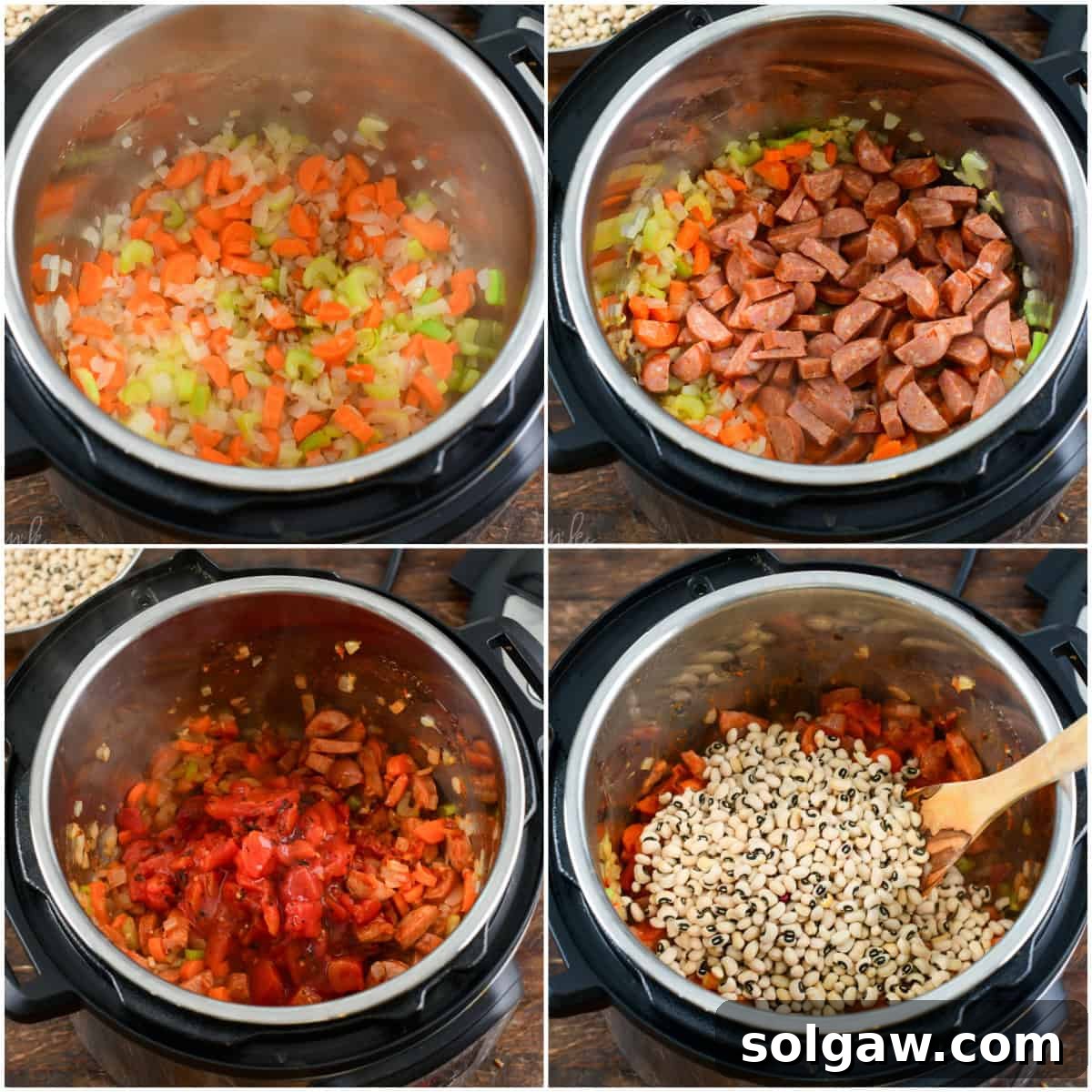
Set your Instant Pot to the “sauté” function and allow it to preheat for a few minutes until it indicates “Hot” or the oil shimmers. Add your avocado or olive oil, then introduce the classic trio of onions, carrots, and celery – often referred to as “mirepoix” in French culinary traditions. This aromatic base is the foundation of many delicious soups, contributing essential sweetness and depth. An important tip for maximum flavor development: resist the urge to stir constantly! Let these vegetables sit undisturbed for a minute or two at a time. This allows them to caramelize and develop beautiful golden-brown edges through the Maillard reaction, which in turn infuses your soup with a more profound and complex flavor. Once the vegetables are softened and lightly browned, create a small clearing in the center of the pot and add your minced garlic. Sauté the garlic for just 10-15 seconds, until its fragrant aroma fills your kitchen. Be extremely careful not to burn it, as burnt garlic quickly turns bitter and can ruin the delicate balance of flavors.
4. Layering the Key Ingredients
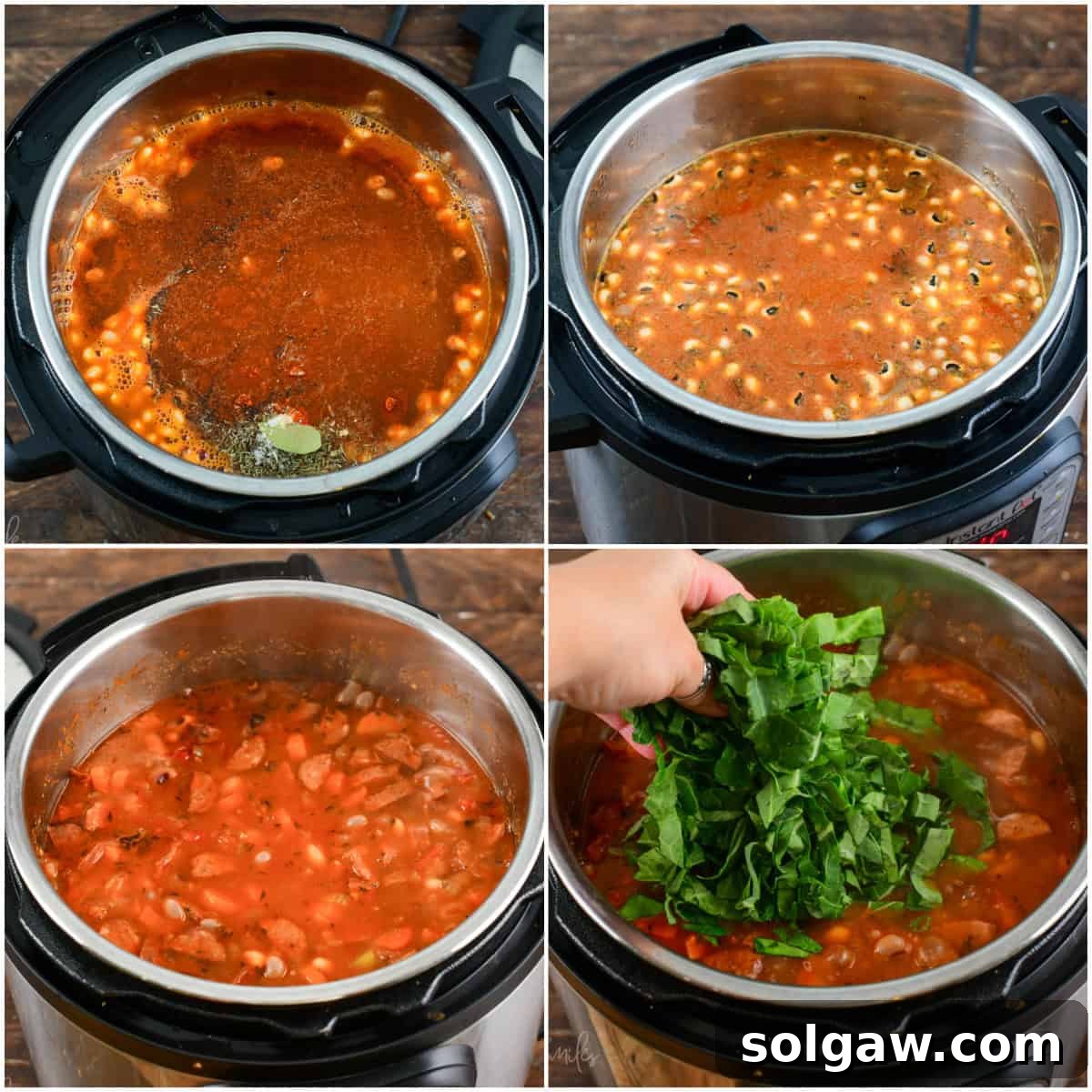
After the garlic is fragrant, stir in the tomato paste, ensuring it thoroughly coats the sautéed vegetables. Allow the tomato paste to cook for about a minute, stirring occasionally. This crucial step caramelizes the sugars within the paste, deepening its color and flavor and eliminating any raw, tinny taste. Next, add the sliced andouille sausage, fire-roasted diced tomatoes (undrained for their flavorful juices), dried black-eyed peas, chicken stock, water, and all your measured seasonings (kosher salt, black pepper, garlic powder, paprika, dried thyme, and a pinch of cayenne pepper, plus the bay leaf). Stir everything thoroughly to combine. A critical note: Do not add the collard greens at this stage! They would become overcooked and mushy if pressure-cooked for the full duration. We’ll incorporate them at the very end to ensure they remain bright green and tender-crisp.
5. Pressure Cooking for Perfection
Secure the Instant Pot lid, ensuring it’s properly latched, and turn the steam release valve to the “seal” position. Select the “Pressure Cook” function (or “Manual” on older models) and set the cooking time to HIGH pressure for 30 minutes. If you’re new to pressure cooking, remember that the timer won’t start immediately. The Instant Pot first needs to build up pressure, which typically takes about 15-20 minutes, depending on the volume and temperature of the liquid inside. You’ll know it has reached pressure when the small float valve on the lid pops up, at which point the actual 30-minute cooking countdown begins.
6. Finishing the Soup: Release and Greens
Once the pressure cooking cycle is complete, allow the Instant Pot to perform a natural pressure release for 10-15 minutes. This “natural release” is important; it allows the internal temperature and pressure to decrease gradually, which helps prevent overcooking and results in perfectly tender peas. It also minimizes sputtering when you eventually open the valve. After 10-15 minutes, carefully turn the steam release valve to the “venting” position to quick release any remaining pressure. Always use a wooden spoon or a kitchen towel to turn the valve, keeping your hands safely away from the escaping hot steam. Once the float valve drops, it’s safe to open the lid.
7. Incorporating Collard Greens and Final Adjustments
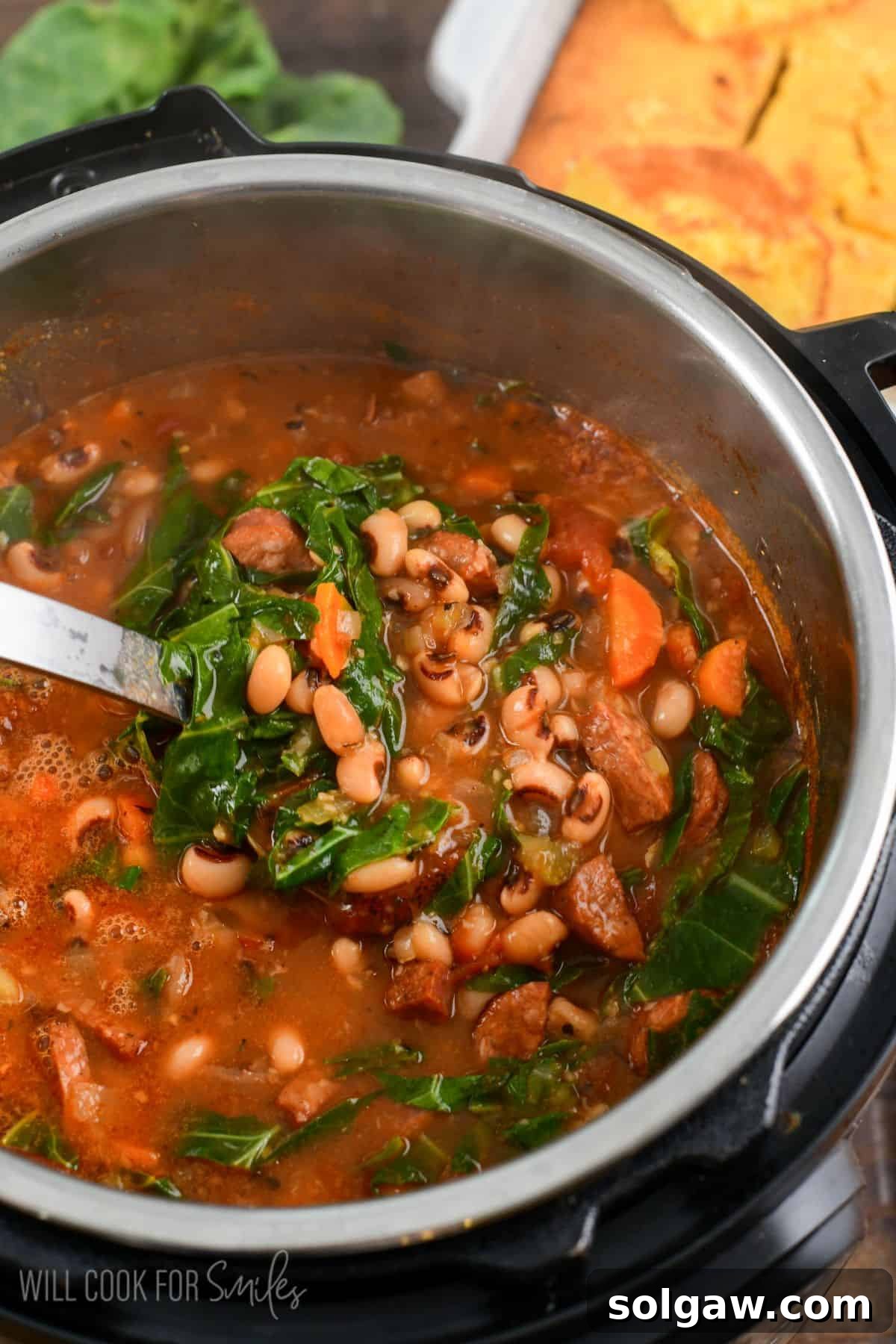
After removing the lid and discarding the bay leaf, turn the Instant Pot back to the “sauté” mode. Add your chopped collard greens to the hot soup. They will appear quite voluminous at first, but don’t worry – they will wilt down quickly as you stir them into the simmering liquid. Cook the greens for just 3-4 minutes, or until they are tender but still retain their vibrant green color and a slight bite. This brief cooking time ensures they don’t become overly soft or lose their fresh appeal. The soup may seem a bit thin immediately after cooking, but as it rests, the starches released from the black-eyed peas will naturally thicken it. If you prefer an even thicker consistency, simply mash some of the peas against the side of the pot with a wooden spoon or the back of a ladle. This simple trick adds creaminess and body to the soup without needing any additional thickeners. Taste and adjust seasonings one last time, adding more salt, pepper, or cayenne as needed. For the best flavor, make this soup a day in advance – the leftovers are always more delicious as the flavors have more time to meld and deepen.
Quick & Easy: Using Canned Black-Eyed Peas
For those times when you need dinner on the table even faster, canned black-eyed peas are a fantastic shortcut! You’ll need approximately three 15-ounce cans (about 4.5 cups cooked peas). Be sure to rinse and drain them thoroughly before adding to the soup. When using canned peas, significantly reduce the liquid amount to about 4 cups total (instead of 8 cups) to maintain the desired soup consistency, as the peas are already cooked and won’t absorb as much liquid. Adjust the Instant Pot pressure cooking time to just 1-3 minutes on high pressure, followed by a quick 3-5 minute natural release, then manual release. The goal is simply to meld the flavors and heat everything through, not to cook the peas further. This adaptation ensures a thick, hearty soup with all the classic flavors, but with minimal cooking time, making it an excellent option for last-minute meals.
Effortless Cooking: How To Make This Soup in a Slow Cooker
Adapting this comforting Black-Eyed Pea Soup for your slow cooker is incredibly easy, making it perfect for hands-off cooking and a warm meal waiting for you at the end of the day. Here’s how to do it:
- Sauté Aromatics and Sausage: In a separate skillet, begin by browning the andouille sausage over medium-high heat. Once lightly browned, remove the sausage and set aside. In the same skillet, add a little oil if needed, then sauté the diced onions, carrots, and celery until they are softened and slightly translucent. This initial sauté step is crucial for building a deep flavor base that a slow cooker alone can’t achieve.
- Combine Ingredients in Slow Cooker: Transfer the sautéed vegetables and the browned sausage to a 6-quart (or larger) slow cooker. Add the dried black-eyed peas (no soaking needed for slow cooking either!), chicken broth, fire-roasted diced tomatoes (undrained), tomato paste, and all your seasonings (garlic, paprika, thyme, salt, pepper, cayenne, and bay leaf). Stir everything together thoroughly to ensure all ingredients are well combined.
- Slow Cook to Perfection: Cover the slow cooker with its lid. Cook on the LOW setting for 8-10 hours, or on the HIGH setting for 4-5 hours. The cooking time will vary slightly depending on your slow cooker and the desired tenderness of the peas. The soup is ready when the black-eyed peas are wonderfully tender and the flavors have fully melded.
- Add Collard Greens: Approximately 30 minutes before the end of the cooking time, stir in the chopped collard greens. This ensures they cook just enough to become tender and vibrant, without becoming overcooked or losing their appealing texture and color. Once the greens are tender, your hearty slow cooker Black-Eyed Pea Soup is ready to serve!
Exciting Recipe Variations to Explore
This Black-Eyed Pea Soup recipe is wonderfully versatile, allowing for numerous adjustments to suit different tastes and dietary needs. Don’t hesitate to experiment with these exciting variations:
- Milder Sausage Option: If the spiciness of andouille sausage isn’t to your liking, or if you’re serving a more sensitive palate, simply swap it out for a milder smoked sausage such as kielbasa. This will still provide that essential smoky flavor without the heat.
- Vegetarian / Vegan Adaptation: To create a delicious plant-based version, omit the andouille sausage entirely and use vegetable broth instead of chicken stock. To maintain a savory, smoky depth, increase the amount of smoked paprika and add a dash or two of liquid smoke. You could also introduce plant-based sausages or mushrooms for extra texture and umami.
- Hearty Ham Version: If you have leftover ham from a holiday meal, it makes a fantastic addition! Instead of sausage, use chopped cooked ham. To prevent the ham from drying out and to preserve its tender texture, stir it into the soup after the pressure cooking (or slow cooking) is complete, allowing it to simply heat through.
- Amp Up the Spice: For those who crave extra heat, there are several ways to intensify the spice level. You can certainly add more cayenne pepper to the seasoning mix. For a fresh and vibrant kick, mince a jalapeño or serrano pepper and sauté it along with the other aromatics (onions, carrots, celery). The fresh chili will infuse the soup with a delicious, zesty heat.
- Add a Touch of Sweetness: For a slightly different flavor profile, consider adding a sweet potato, peeled and diced, along with the other vegetables. It will add a subtle sweetness and extra creaminess as it cooks down.
- Greens Medley: Instead of just one type of green, create a medley! Combine collard greens with a handful of fresh spinach or some chopped kale for a diverse texture and nutritional boost.
Black-Eyed Pea Soup FAQs
Have questions about making this delicious Black-Eyed Pea Soup? Here are some frequently asked questions to help you out:
What size Instant Pot do I need for this recipe?
For this particular Black-Eyed Pea Soup recipe, it is essential to use an Instant Pot that is 6 quarts or larger. This is a crucial safety consideration because pressure cookers, by design, cannot be filled past a specific fill line, typically marked on the inside of the pot. Adhering to this maximum fill line is vital for safe operation and to prevent potential overflow or malfunction during the pressure cooking process. A 6-quart model provides ample space for all ingredients without exceeding this limit.
What should I serve with Black-Eyed Pea Soup?
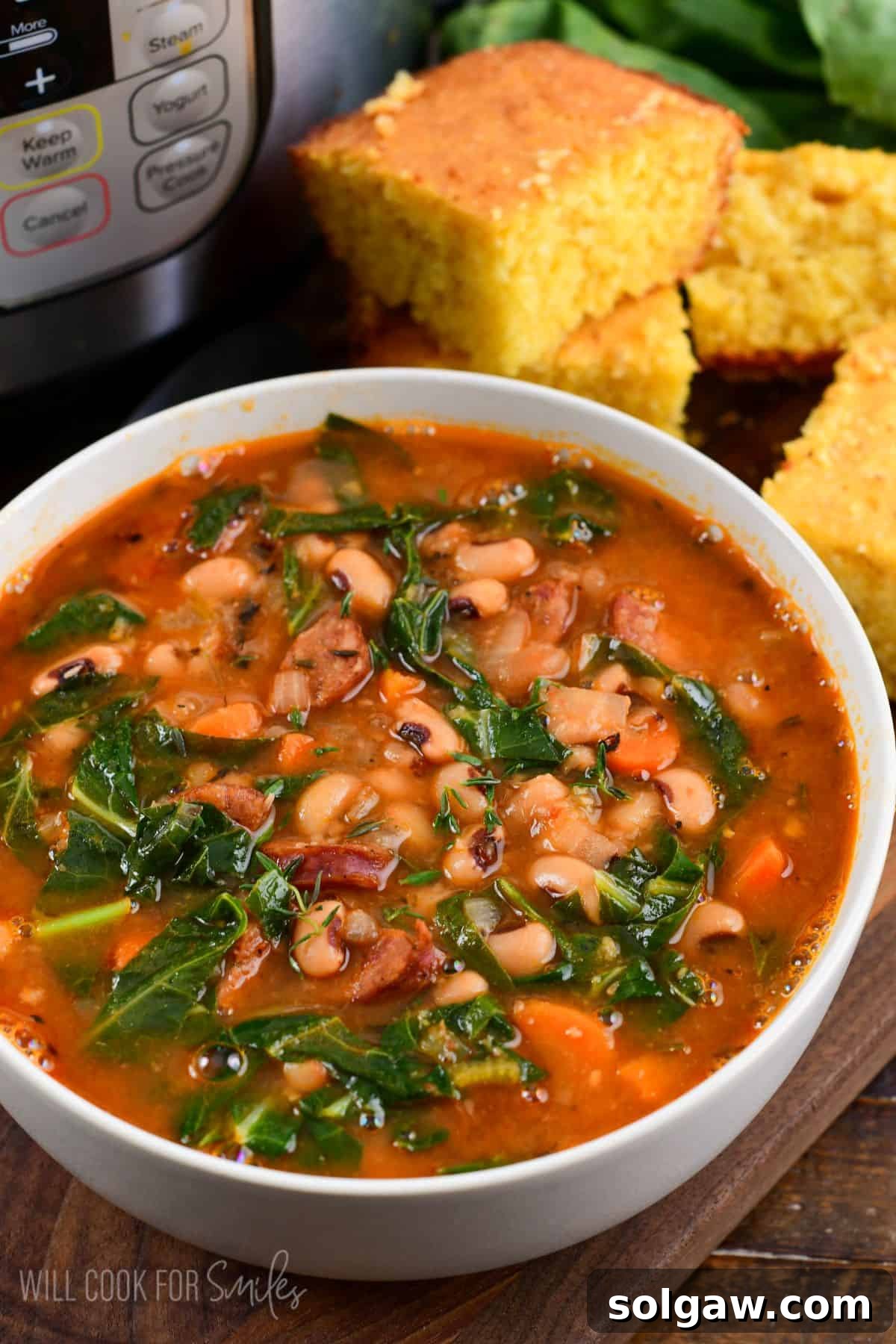
A warm, crusty bread is the quintessential accompaniment to any hearty soup, and black-eyed pea soup is no exception. Our top recommendation is a freshly baked batch of buttermilk cornbread – its slightly sweet and savory crumb is perfect for soaking up every last drop of the flavorful broth. For those who enjoy a spicier contrast, our jalapeno cornbread offers a delightful kick. Beyond cornbread, other excellent choices include soft potato dinner rolls or fluffy buttermilk biscuits. Any of these will provide the perfect textural balance and comforting satisfaction alongside your soup.
Can I make this soup ahead of time?
Absolutely! This soup is an excellent candidate for making ahead. The flavors deepen and meld beautifully overnight, often tasting even better the next day. It’s perfect for meal prepping a few days in advance or for holiday gatherings.
Why do black-eyed peas symbolize good luck?
The tradition of eating black-eyed peas for good luck, particularly on New Year’s Day, dates back to the Civil War. It’s believed that during Sherman’s March to the Sea, Union troops either ignored or left black-eyed peas as animal fodder, leading them to be one of the few food sources left for Southerners. Their humble nature and the idea of being “lucky” to have them evolved into a symbol of prosperity. The round shape of the peas is also thought to symbolize coins, further reinforcing the idea of wealth and good fortune.
Storage, Freezing, and Reheating Instructions for Make-Ahead Meals
This Black-Eyed Pea Soup is fantastic for meal prep, as its flavors only improve with time. Here’s how to properly store, freeze, and reheat it to enjoy delicious meals for days or weeks to come:
- Make Ahead: This soup is an ideal candidate for preparing in advance. We highly recommend making it 1-2 days before you plan to serve it, allowing the robust flavors to fully develop and meld. Store it properly in the refrigerator, and it will reheat beautifully on the stovetop or in the microwave.
- Storing Cooked Soup: Once the soup has cooled completely, transfer it to an airtight food storage container. It can be safely kept in the refrigerator for up to 5-7 days. To ensure maximum shelf life and prevent contamination, always use a clean ladle when serving portions from the container.
- Reheating: For individual servings, reheat in the microwave in 30-45 second intervals, stirring well between each interval, until thoroughly heated through. Alternatively, for larger quantities or a gentler reheat, transfer the soup to a small saucepan and warm it over medium heat on the stovetop, stirring occasionally, until it reaches your desired temperature. Add a splash of broth or water if it appears too thick.
- Freezing: This soup freezes exceptionally well, making it perfect for long-term meal planning. First, ensure the soup is completely cooled. To expedite this process, you can place the pot of soup into a larger container filled with ice water, stirring occasionally. Once cooled, portion the soup into freezer-safe zip-top bags or airtight freezer containers. When using bags, remove as much air as possible before sealing, then lay them flat on a cutting board to freeze; this makes for easy stacking and quicker thawing. Label each container or bag with the date. Frozen soup can be stored for up to 3 months.
- Thawing: For best results, thaw frozen soup overnight in the refrigerator. Once thawed, reheat following the instructions above.
PIN THIS RECIPE FOR LATER
DID YOU MAKE THIS RECIPE? Please leave a 🌟 star rating! Let me know how you liked it by leaving a 📝 comment below or share and tag me on social media @willcookforsmiles. DON’T FORGET to subscribe to my newsletter for more delicious recipes!
Southern Black-Eyed Pea Soup Recipe (Instant Pot)
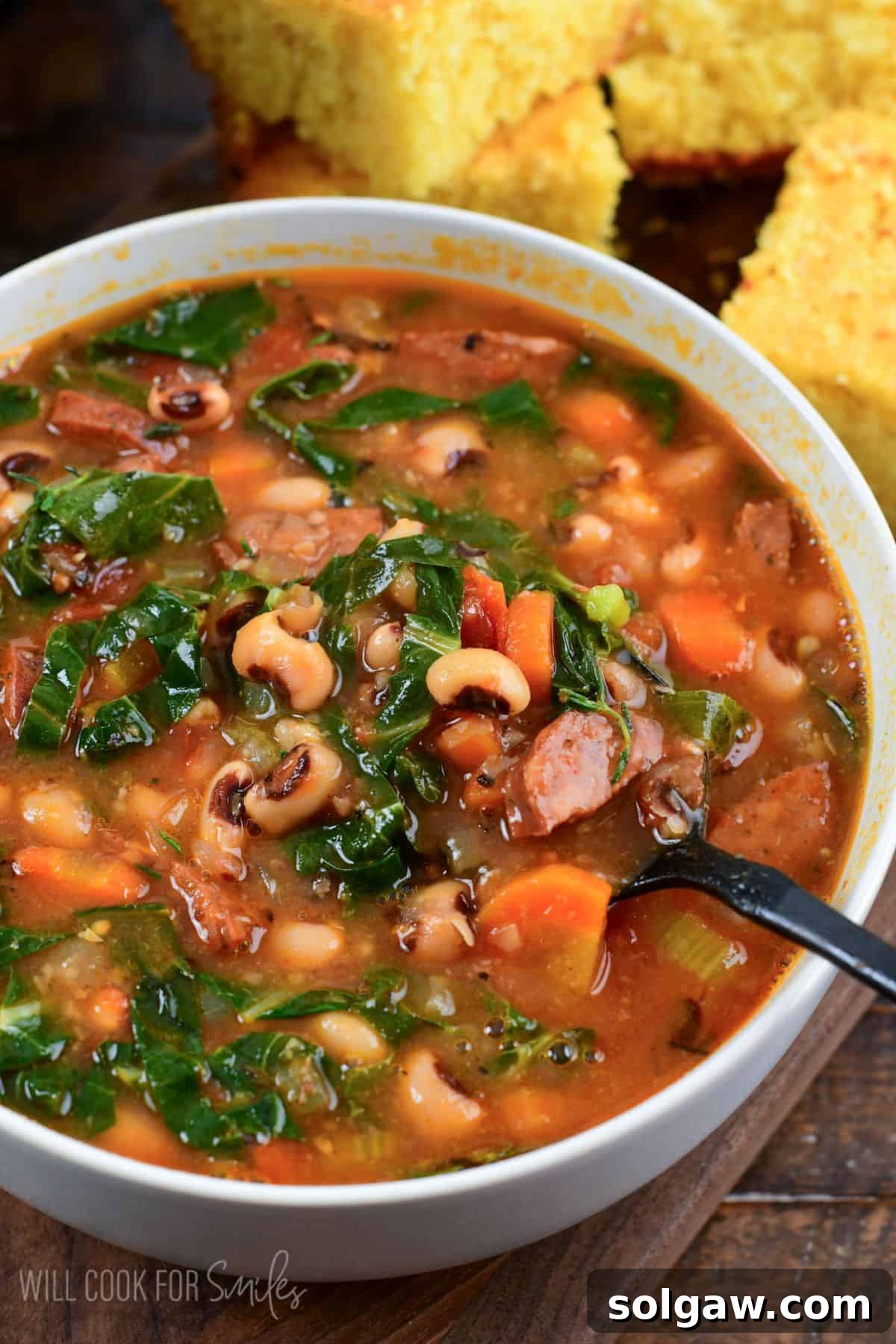
This incredibly hearty and cozy black-eyed pea soup is a celebration of Southern classic ingredients, featuring smoky andouille sausage, tender collard greens, and perfectly cooked peas, all simmered in a rich, smoky tomato-based broth within your Instant Pot. A true one-pot wonder, this meal comes together in just over an hour, making it ideal for a traditional New Year’s good luck dish or any chilly night when you crave comforting, homemade flavor.
Print Recipe |
Pin Recipe |
Jump to Video |
Rate This Recipe
Course: dinner, lunch, Soup
Cuisine: American, Southern
Diet: Gluten Free, Halal, Kosher
Prep Time: 10 minutes
Cook Time: 45 minutes
Build pressure and release: 20 minutes
Total Time: 1 hour 15 minutes
Servings: 8
Calories: 496 kcal
Author: Lyuba Brooke
Equipment
-
Pressure Cooker 6 Qt or larger
Ingredients
- 1 tbsp avocado or olive oil
- 1 yellow onion, diced
- 3 carrots, diced
- 2 celery ribs, diced
- 5-6 garlic cloves, minced
- 2 tbsp tomato paste
- 1 lb andouille sausage, sliced
- 14.5 oz can fire roasted diced tomatoes, undrained
- 1 lb dried black-eyed peas, rinsed
- 6 cups chicken stock or broth
- 2 cups water
- 1 tsp kosher coarse salt (more or less to taste)
- 1/2 tsp black pepper (more or less to taste)
- 2 tsp garlic powder
- 2 tsp paprika
- 1 tsp dried thyme
- Pinch cayenne pepper (adjust to heat preference)
- 1 bay leaf
- 3-4 oz collard greens, tough stems removed and chopped
Instructions
Before Cooking:
-
Prepare all ingredients: Peel and dice onions, carrots, and celery. Peel and mince the garlic cloves. Slice the andouille sausage into rounds. Measure out all remaining ingredients, including spices, stock, and peas.
Tips for working with collard greens: Thoroughly wash and dry the collard greens. Cut off the thick, fibrous center rib from each leaf. This rib can be discarded or saved for making vegetable stock. Chop the remaining deep green leaves into bite-sized pieces for the soup.
Cooking the Soup:
-
Preheat your Instant Pot by setting it to the “Sauté” function. Once hot, add the avocado or olive oil. Add the diced onion, carrots, and celery. Sauté until the vegetables are softened and slightly browned, stirring occasionally but allowing them to sit undisturbed for a minute or two at a time to develop rich flavor.
-
Create a small space in the center of the pot and add the minced garlic. Sauté the garlic for just 10-15 seconds until it becomes fragrant. Be careful not to burn it.
-
Stir in the tomato paste, coating the vegetables evenly. Let it cook for about 1 minute, stirring, to caramelize the paste. Then, add the sliced andouille sausage, fire-roasted diced tomatoes (undrained), and the rinsed dried black-eyed peas. Stir everything well to combine.
-
Pour in the chicken stock and water, then mix in all the seasonings: salt, black pepper, garlic powder, paprika, dried thyme, cayenne pepper, and the bay leaf. (Important: Do not add the collard greens yet! They will be added at the very end.)
-
Close the Instant Pot lid, ensuring it’s properly latched. Turn the steam release valve to the “Seal” position. Set the Instant Pot to cook on “High Pressure” mode for 30 minutes.
-
Once the cooking cycle is complete, allow the pressure to release naturally for 10-15 minutes. After this period, carefully turn the steam release valve to “Venting” to quick release any remaining pressure (use a wooden spoon to protect your hand from the steam). Once the float valve drops, open the lid and carefully remove and discard the bay leaf.
-
Set the Instant Pot back to “Sauté” mode. Add the chopped collard greens to the soup. Stir them into the hot liquid; they will wilt down quickly. Cook for just 3-4 minutes, until the greens are tender-crisp and vibrant green. Turn off the Instant Pot, taste, and adjust seasonings as needed. Allow the soup to rest for a few minutes before serving to allow the flavors to further meld and for the soup to thicken slightly.
Video
Video not available here. Please check the original source for the cooking video.
Notes
- Instant Pot Size: It’s crucial to use an Instant Pot that is 6 quarts or larger for this recipe. Pressure cookers have a maximum fill line for safety, and exceeding it can lead to issues. Ensure you adhere to this line.
- Storage: Store cooled leftover soup in an airtight food storage container in the refrigerator for 5-7 days. Always use a clean utensil when serving to maintain freshness.
- Reheating: Reheat individual portions in the microwave (30-45 second intervals, stirring) or on the stovetop over medium heat until warmed through. Add a splash of broth if the soup has thickened too much.
- Freezing: This soup freezes beautifully. Allow it to cool completely before freezing (you can use an ice bath to speed this up). Portion into freezer-safe containers or zip-top bags, leaving some headspace for expansion. Freeze for up to 3 months. Thaw overnight in the refrigerator before reheating.
Nutrition
Calories: 496kcal | Carbohydrates: 50g | Protein: 30g | Fat: 20g | Saturated Fat: 6g | Polyunsaturated Fat: 4g | Monounsaturated Fat: 9g | Trans Fat: 0.1g | Cholesterol: 54mg | Sodium: 1153mg | Potassium: 1203mg | Fiber: 8g | Sugar: 11g | Vitamin A: 4936IU | Vitamin C: 10mg | Calcium: 136mg | Iron: 7mg
Tried this recipe? Mention @willcookforsmiles or tag #willcookforsmiles!
More Irresistible Soup Recipes To Try
Black-eyed peas are incredibly versatile and shine in a variety of dishes beyond just this soup. If you love the hearty texture and rich flavor of these legumes, be sure to try our classic Instant Pot black-eyed peas recipe, which makes a fantastic side dish for New Year’s Day or any meal throughout the year. For those who can’t get enough of comforting, robust soups, we have plenty more to explore. You’ll undoubtedly enjoy the satisfying depths of our Instant Pot vegetable beef soup, perfect for a hearty family dinner. If you appreciate the combination of savory pork and tender legumes, don’t miss our Instant Pot ham and bean soup. And for another creamy, flavorful option, our Instant Pot split pea soup is a must-try. Each of these recipes offers unique flavors and textures, promising warmth and satisfaction with every spoonful.