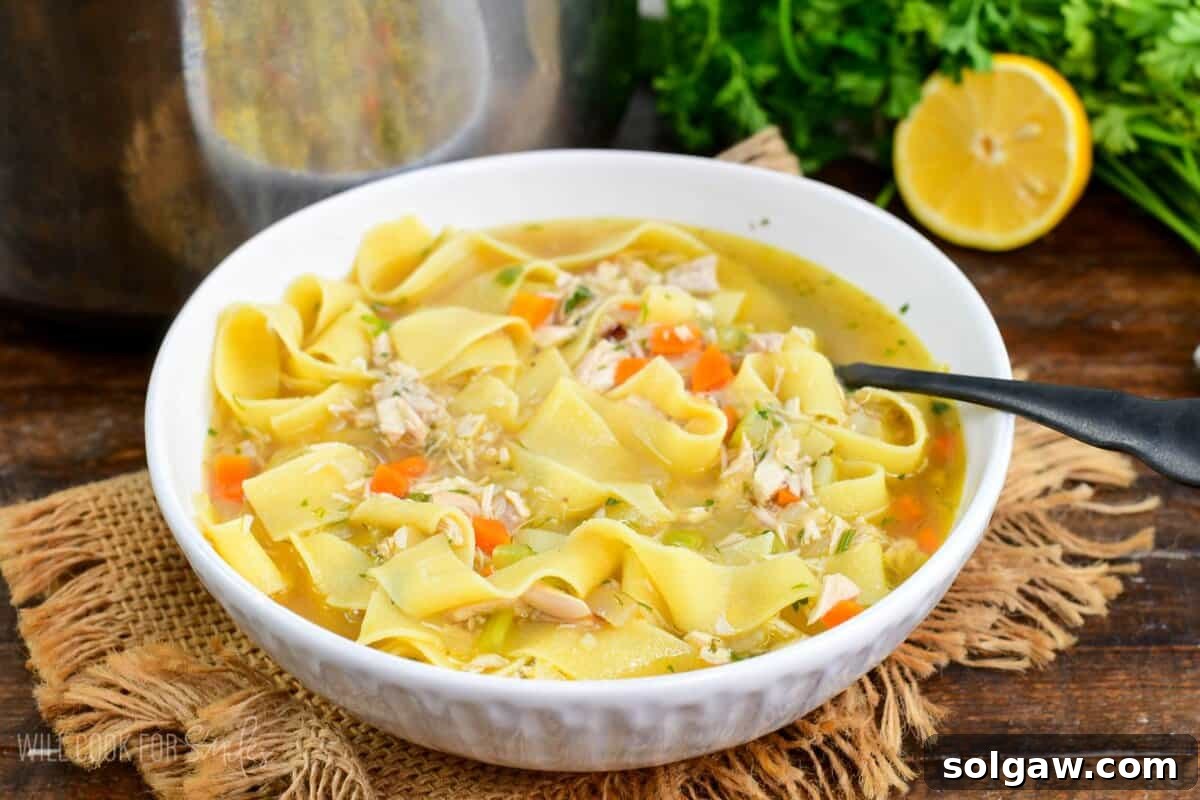
The Ultimate Guide to Homemade Chicken Noodle Soup: Comfort in Every Bowl
There’s a universally comforting magic in a warm bowl of chicken noodle soup, a feeling that instantly makes everything a little better. For me, it’s more than just a meal; it’s a cherished memory, a taste of home that I’ve been recreating since I was 12 years old. Growing up, this classic dish was a staple, and the very first soup I ever made came from my mom’s tattered recipe book. That simple act sparked a lifelong love affair with this hearty, wholesome concoction, and I’ve been perfecting it ever since.
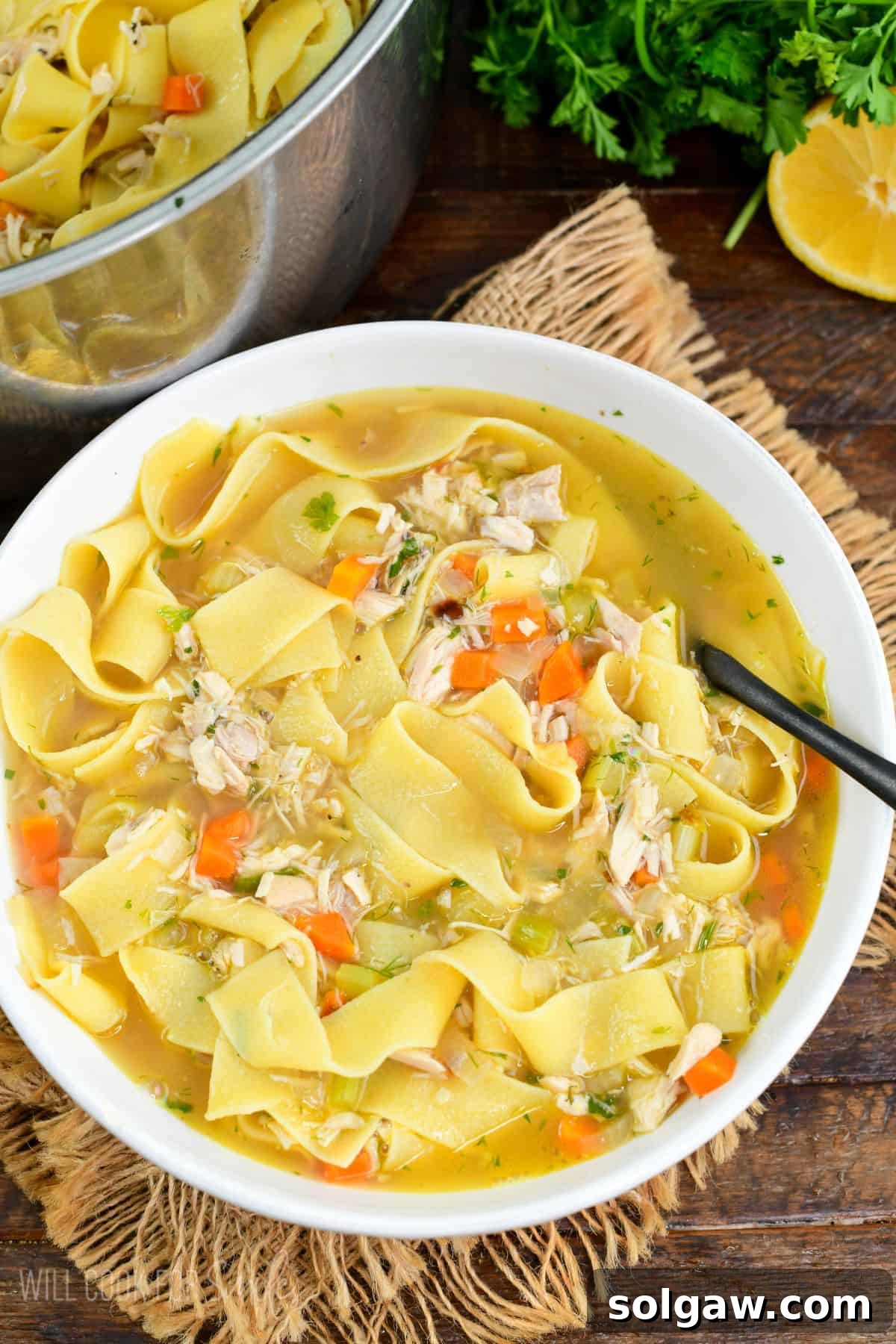
While convenience shortcuts like store-bought broth or a rotisserie chicken can save time, nothing truly compares to the unparalleled flavor and soul-satisfying richness of chicken noodle soup made entirely from scratch. It’s an act of love that transforms simple ingredients into an extraordinary culinary experience. The moment you savor that first spoonful of this homemade recipe, you’ll understand precisely what I mean. This comprehensive guide will walk you through every step, ensuring your kitchen is filled with the comforting aroma and your table with a bowl of pure deliciousness.
Featured Comment
Outstanding! The soup was terrific, but I am really pleased with the broth recipe. I am from the Southwest: looking forward to chicken enchiladas with Spanish rice using these as my prep! Promises to be unbelievable!!! ~Denis
Beyond Comfort: The Health Benefits of Homemade Chicken Noodle Soup
Chicken noodle soup isn’t just about comforting the soul; it’s also a powerhouse of essential vitamins and nutrients designed to support your body, especially when you’re feeling under the weather. While it’s not a magical cure for a cold or flu, it provides crucial hydration, replenishes vital nutrients, and offers much-needed solace, all of which are instrumental in your body’s healing process. The secret to its remarkable health benefits begins with the foundation: homemade chicken stock.
Crafted from bone-in chicken parts like legs and thighs, along with a medley of fresh vegetables, homemade stock is rich in collagen, amino acids, and minerals that are often missing from store-bought alternatives. These components are known to support gut health, boost immunity, and provide anti-inflammatory benefits. By slow-simmering these ingredients, you extract maximum flavor and nutrients, creating a potent, restorative base for your soup. Opting for bone-in chicken not only amplifies the depth of flavor but also ensures you’re infusing your soup with the highest possible nutritional value, making every spoonful a step towards feeling stronger and healthier.
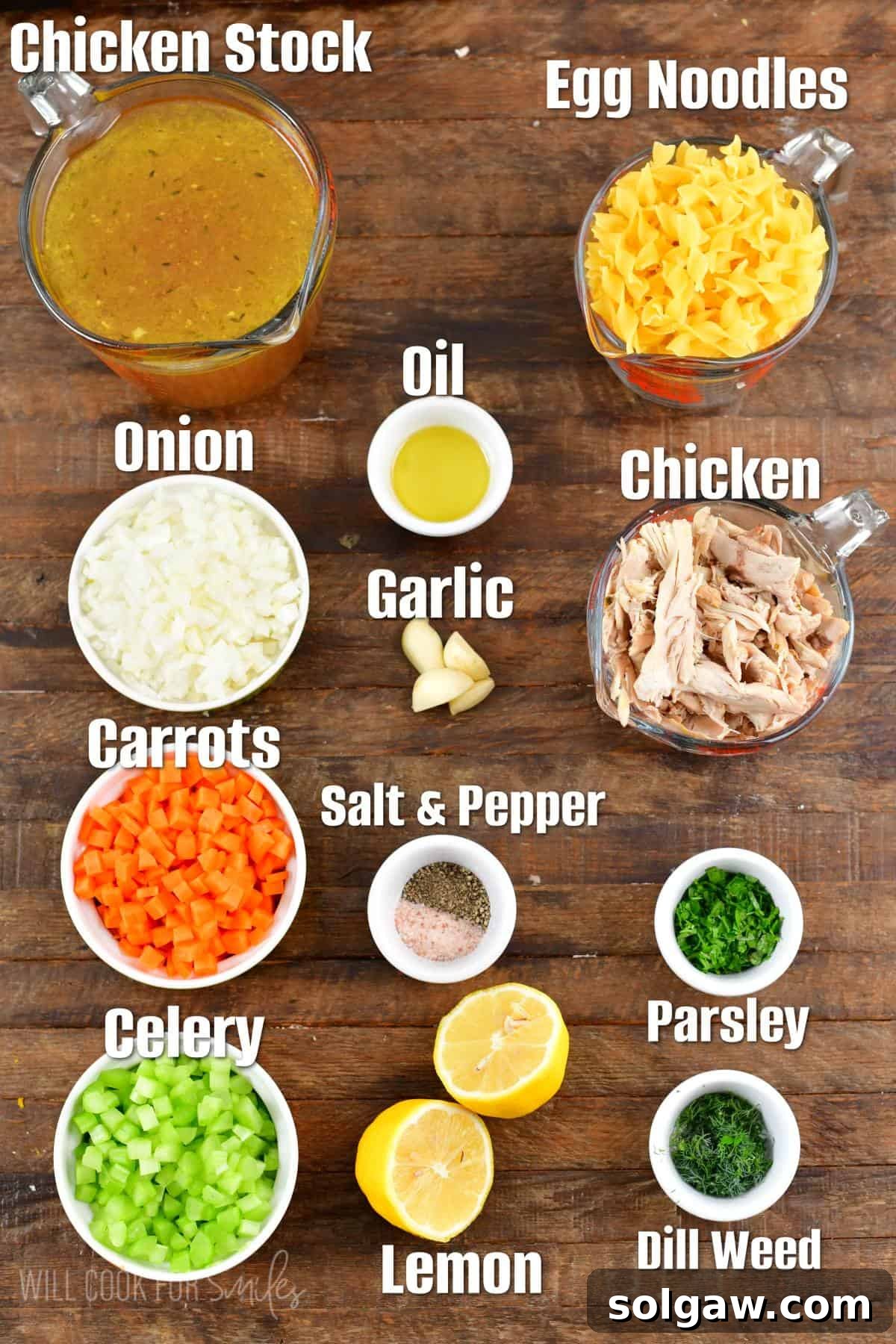
Essential Ingredients for Unforgettable Flavor in Your Soup
The magic of an exceptional chicken noodle soup lies in the quality and synergy of its ingredients. While the concept seems simple, a few key components elevate this dish from good to truly extraordinary. Here’s a closer look at the stars of our show:
Homemade Chicken Stock: The Soul of the Soup
About Homemade Chicken Stock – This is non-negotiable for the absolute best chicken noodle soup. When you make stock at home, you have complete control over what goes into it, ensuring no artificial flavors, excessive sodium, or preservatives. It can be easily adjusted to your personal taste, allowing you to fine-tune the seasoning and richness. Furthermore, it’s often significantly cheaper than buying pre-made broth, especially if you save chicken bones and vegetable scraps. Homemade stock will undoubtedly make your soup taste richer, deeper, and more authentic. It’s also incredibly convenient to prepare a large batch ahead of time and keep portions in the freezer for whenever a soup craving strikes.
Vibrant Fresh Herbs: A Burst of Aromatics
Using fresh herbs instead of dried ones makes a remarkable difference, imparting a stronger, more vibrant taste and a captivating aroma to your soup. Whenever possible, I highly recommend fresh parsley and dill for their bright, herbaceous notes. If you find yourself with leftover herbs, don’t let them go to waste! You can finely mince them and freeze them in small freezer bags or ice cube trays with a little water or oil. Alternatively, store bunches of leftover parsley, cilantro, dill weed, or green onions upright in a cup of water in the refrigerator, just like a bouquet of flowers, changing the water daily to keep them fresh throughout the week.
The Bright Finish: A Squeeze of Fresh Lemon
This might seem like a small detail, but a squeeze of fresh lemon juice is a true game-changer in chicken noodle soup. It’s the secret ingredient that brightens and enhances all the other flavors in the soup, adding a wonderful fresh, citrusy tang without making it overtly lemony. This touch of acidity balances the richness of the broth and vegetables, creating a more dynamic and memorable flavor profile.
Choosing Your Noodles: The Perfect Companion
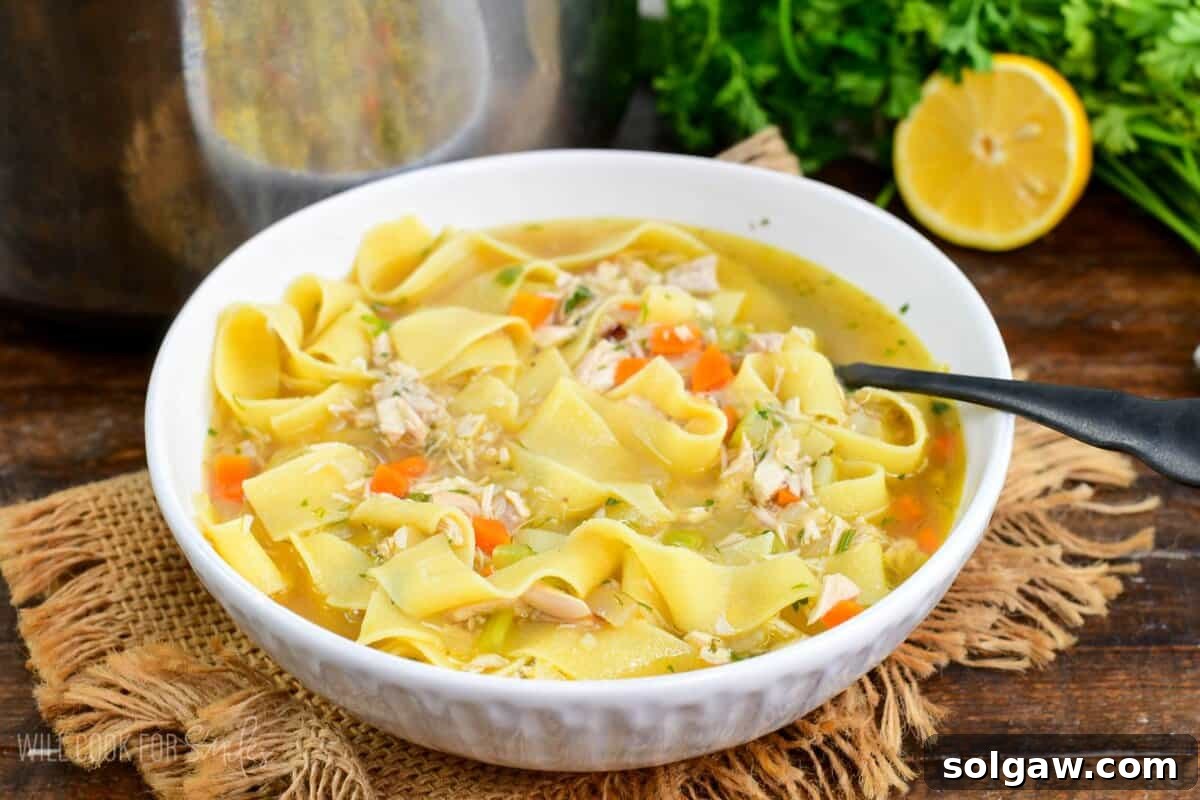
While wide egg noodles are traditionally considered the most classic pasta for chicken noodle soup, personal preference truly dictates the best choice. Their tender, chewy texture is beloved by many, but there are plenty of other fantastic options to explore:
- Tagliatelle pasta: These long, flat ribbons offer a more elegant feel and satisfying bite.
- Shells, elbows, or orecchiette: Smaller, shaped pastas are excellent for capturing bits of broth and chicken in every spoonful, making them particularly fun for children.
- Ditalini: These tiny tube-shaped pastas are a definite kid favorite at my house, easy to eat and delightful in texture.
No matter which noodle you choose, the key is to cook them perfectly al dente within the soup to absorb all the wonderful flavors without becoming mushy.
How to Make the Best Homemade Chicken Noodle Soup (Step-by-Step Guide)
Creating a truly magnificent homemade chicken noodle soup is a rewarding culinary journey that’s surprisingly straightforward. The cornerstone of most delicious soups, especially those where chicken is the star, is a robust homemade chicken stock. Our best time-saving tip? Prepare your stock ahead of time! It can be made a day or two in advance and stored in the refrigerator, or even frozen for months, ready to be pulled out for those busy days when you need a quick yet comforting meal. Once your stock is ready, the actual chicken noodle soup comes together in just 30-40 minutes, making it a perfect weeknight dinner.
Expert tip: When you cook your homemade stock, don’t discard the cooked chicken meat! Separate it from the skin and bones, then shred or dice it. This flavorful chicken can be stored in a separate airtight container in the refrigerator for a few days or frozen for later use, keeping it separate from your stock to maintain its texture and prevent overcooking.
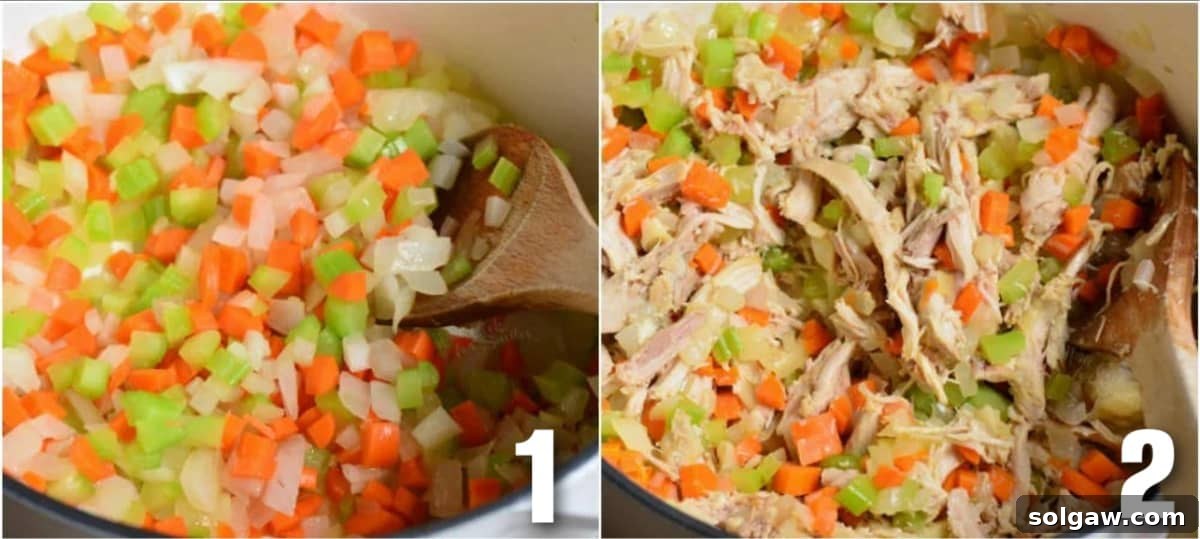
Step 1: Sauté the Aromatics
Preheat a large, heavy-bottomed pot or Dutch oven over medium-low heat. Add olive oil (or your preferred cooking oil) and then toss in your diced yellow onions, celery, and carrots. This classic trio, known as mirepoix, forms the aromatic backbone of your soup. Cook these vegetables gently for about 10 minutes, stirring occasionally but allowing them to sit undisturbed for periods. This technique encourages them to develop a beautiful golden-brown sear, which caramelizes their natural sugars and deepens the flavor of your soup. Once softened and slightly browned, add the minced garlic and cook for just another minute until it becomes wonderfully fragrant, being careful not to burn it.
Step 2: Incorporate the Chicken
Add the shredded or diced cooked chicken meat (saved from making your stock) to the pot with the sautéed vegetables. Stir it in well to combine the flavors.
Expert tip: If you’re short on time or don’t have leftover cooked chicken from your stock, a store-bought rotisserie chicken is an excellent time-saver. Simply shred the meat and add it at this stage.
Step 3: Simmer the Broth to Perfection
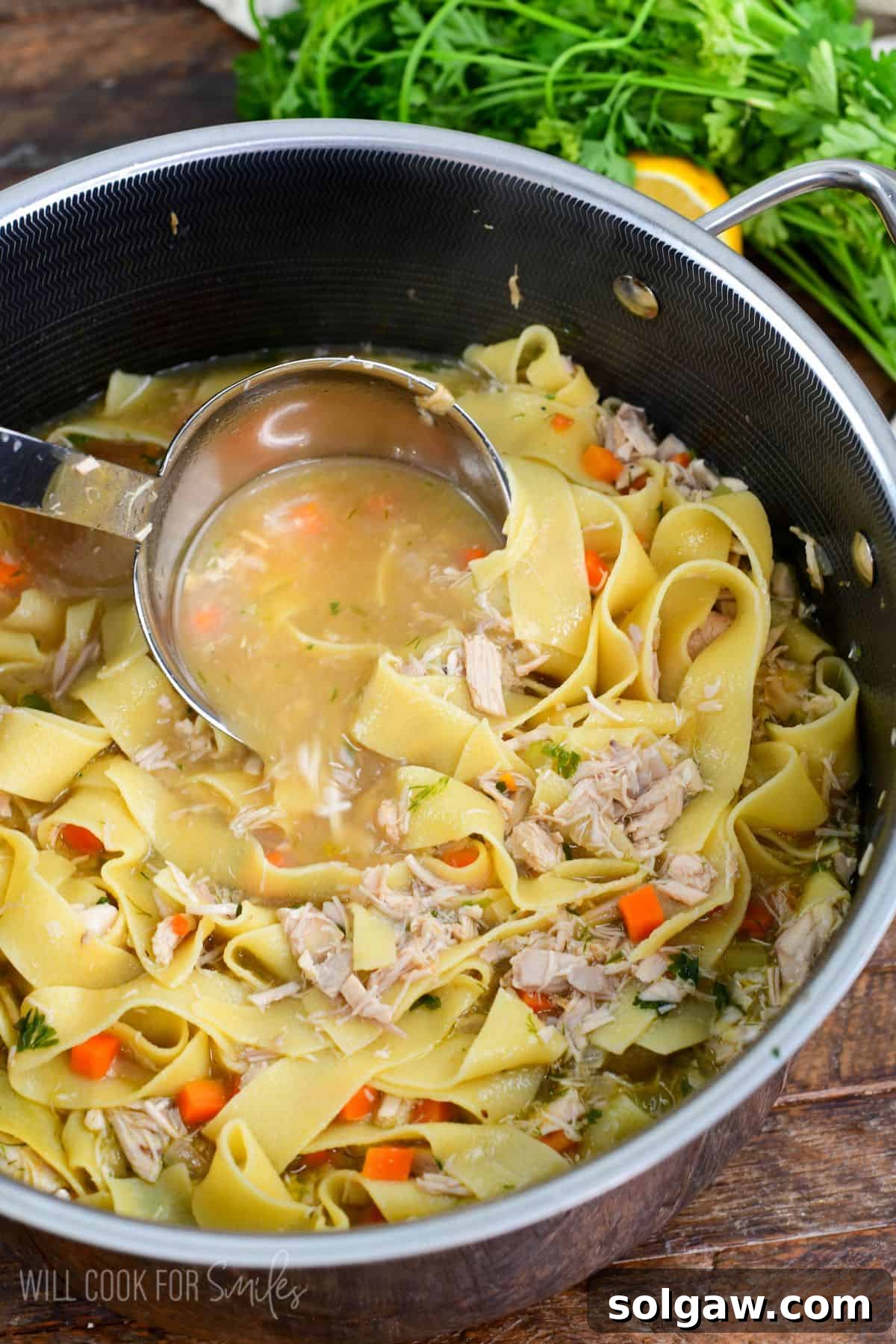
Pour in your homemade chicken stock. Before adding any extra seasoning, take a moment to taste the broth. Homemade stock can vary in saltiness, so it’s crucial to taste first and then adjust with salt and freshly cracked black pepper as needed. Bring the soup to a gentle simmer over medium to medium-low heat, ensuring you get steady but not vigorous bubbles. Allow it to simmer for about 15 minutes. This simmering time allows all the flavors to meld beautifully, and your kitchen will begin to fill with the most comforting aroma of chicken and herbs.
Step 4: Add Noodles and Fresh Herbs
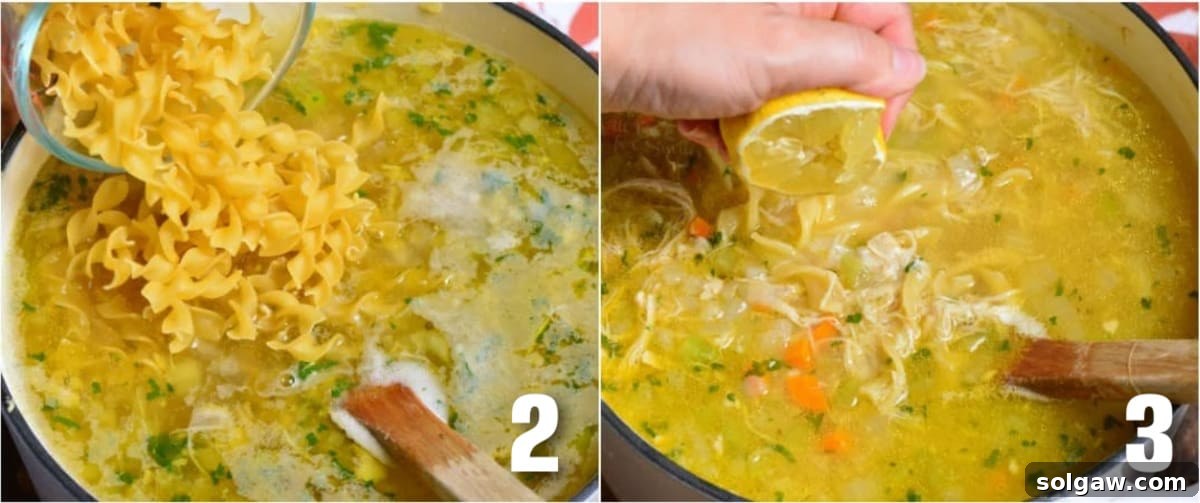
Once the soup has simmered, add your chosen noodles and the fresh minced herbs (parsley and dill). Stir gently to distribute them evenly. Let the soup cook just until the noodles are tender, checking the package directions for an estimated cooking time and tasting them for doneness before removing the pot from the heat. Remember, the goal is tender, not mushy, noodles!
Step 5: The Zesty Finish
As the ultimate finishing touch, squeeze in the fresh juice from half to a full lemon, depending on your preference. Stir it in and serve immediately. This bright burst of citrus elevates the entire dish. (If you’re unsure about the amount, you can test it on a single serving first: simply squeeze a lemon wedge into one bowl, stir, and taste before adding it to the whole pot).
Serving Suggestions for the Ultimate Comfort Meal
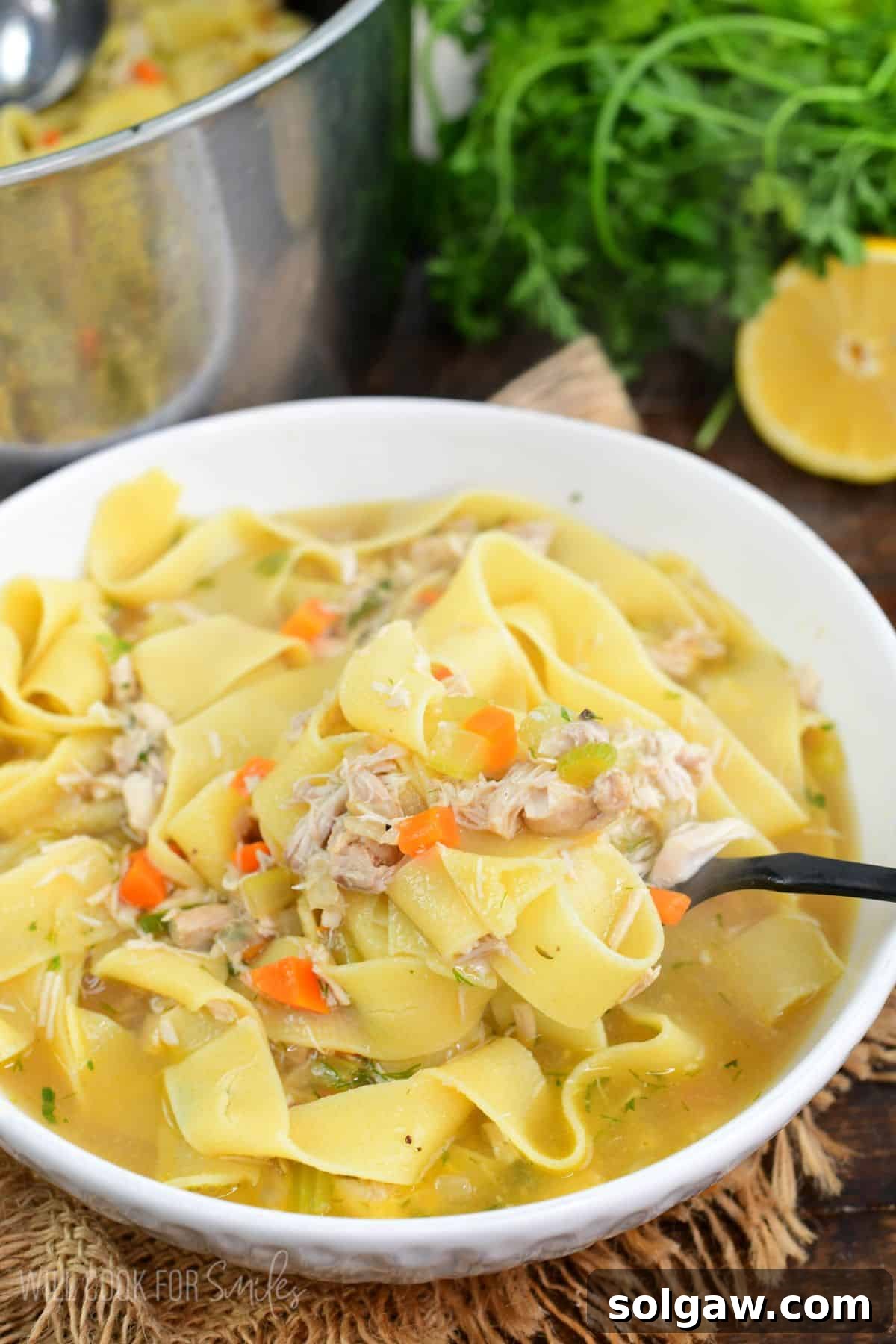
A hearty bowl of homemade chicken noodle soup is a meal in itself, but it pairs wonderfully with a few choice accompaniments that enhance the comfort factor. A crusty artisan baguette, a classic Italian loaf, or a tangy sourdough bread are all excellent choices, perfect for soaking up every last drop of the flavorful broth. Beyond bread, I also love to whip up a batch of fluffy homemade buttermilk biscuits or soft, pillowy potato dinner rolls. Their tender texture and buttery flavor make them ideal for dipping, transforming your soup experience into a truly complete and satisfying meal.
Smart Storage: How to Store, Reheat, and Freeze Chicken Noodle Soup
One of the best things about homemade chicken noodle soup is that it often tastes even better the next day! Proper storage ensures you can enjoy your delicious creation for longer. A crucial tip for preserving texture, especially if you plan to freeze, is to freeze the soup without the noodles. Noodles tend to get mushy and absorb too much liquid when frozen and thawed with the broth.
- Refrigerating Leftovers: Store leftover soup in the pot it was cooked in if it has a fitted lid, or transfer it to an airtight food storage container. It will keep beautifully in the refrigerator for 3-4 days.
- Freezing for Later: To freeze, first ensure the soup is cooled as quickly as possible to room temperature. Then, portion it into freezer-safe zip-lock bags (pressing out as much air as possible) or sturdy plastic containers with airtight lids. Remember to leave a little headspace for expansion if using containers. Label and date each bag or container, then place it in the freezer. If using freezer bags, lay them flat on a cutting board until frozen solid to create easily stackable portions. Freeze for up to 2 months for best quality.
- Thawing Frozen Soup: For best results, thaw frozen soup overnight in the refrigerator.
- Reheating Thawed Soup: Pour the thawed soup into a pot and gently heat it through over medium heat on the stove. Once simmering, add fresh noodles and cook until they are tender.
- Reheating Refrigerated Soup: I recommend reheating refrigerated soup in a small pot on the stove for even heating. If the noodles have absorbed too much liquid and the soup seems too thick, you can always add a splash of extra chicken stock or water to reach your desired consistency.
Frequently Asked Questions About Chicken Noodle Soup
Yes, absolutely! While bone-in chicken thighs and legs are ideal for making a rich, flavorful stock due to their higher fat content and connective tissue, you can certainly use chicken breast meat in the finished soup. If you’re using leftover cooked chicken breast from your homemade stock, it works perfectly. If you prefer to skip the stock-making step entirely, you can poach 2-3 boneless, skinless chicken breasts directly in store-bought chicken broth for approximately 15-20 minutes until cooked through. Then, shred or dice the cooked chicken and add it back to the soup at the appropriate stage.
Yes, both methods work beautifully for convenience!
- Slow Cooker Method: Combine your prepared vegetables (onions, celery, carrots), raw chicken pieces (boneless thighs or breast work well), and chicken stock in your slow cooker. Cook on LOW for 6-7 hours or on HIGH for 3-4 hours. About 20-30 minutes before you plan to serve, remove the chicken, shred it, and return it to the slow cooker along with your chosen noodles. Switch the setting to HIGH (if not already) and cook until the noodles are tender. Stir in fresh herbs and lemon juice just before serving.
- Instant Pot Method: Use the “Sauté” function on your Instant Pot to cook the vegetables for about 5 minutes until softened. Add the raw chicken (cut into pieces) and chicken stock. Secure the lid, ensure the vent is sealed, and pressure cook on HIGH for 15 minutes. Once cooking is complete, perform a quick release of the pressure. Remove and shred the chicken. Then, use the “Sauté” function again to cook the noodles directly in the soup (this usually takes about 7-8 minutes, depending on the noodle type). Finish with fresh herbs and a squeeze of lemon juice.
Absolutely! Rotisserie chicken is a fantastic time-saver for this recipe. It’s already cooked and seasoned, making it an ideal choice when you want to get homemade soup on the table quickly without cooking chicken from scratch. Simply shred the meat and add it to the pot when instructed.
How to Prevent Noodles from Getting Too Soft in Soup
Nobody likes mushy noodles! The key to perfectly tender noodles in your chicken noodle soup is timing. If you prefer your noodles with a bit more bite (al dente), cook them just until they reach your desired tenderness and then immediately take the soup off the heat. Serve the soup right away.
For those making a large batch with anticipated leftovers, here’s a professional tip: Ladle out the portion of soup you intend to save (without noodles) into a separate container. Then, add just enough noodles for the servings you plan to eat at that moment into the remaining soup in the pot. Cook these noodles until tender and serve.
When you’re ready to enjoy the saved, noodle-free soup later, simply reheat it and cook fresh noodles directly in that portion. This method ensures that all your noodles are cooked perfectly and absorb the rich flavors of the broth, which is always preferable to cooking them separately. It’s a small extra step that makes a big difference in the quality of your leftovers!
Recipe Variations Worth a Try: Customize Your Comfort
One of the joys of homemade chicken noodle soup is its versatility. Once you’ve mastered the classic recipe, feel free to experiment with these delicious variations to suit your taste or what you have on hand:
- Boost Your Veggies: Many readers love to enhance the nutritional profile and flavor with additional vegetables. Some excellent choices include sliced mushrooms, fresh green beans, thinly sliced leeks (add with onions), hearty leafy greens like kale or baby bok choy (add towards the end of cooking), sweet peas, or diced zucchini. Feel free to use a combination!
- Make It Creamy: For a richer, more luxurious soup, stir in about 1/4 to 1/3 cup of heavy whipping cream or half-and-half during the last few minutes of simmering. This adds a wonderful body and velvety texture without overpowering the classic flavors.
- Add Umami with Parmesan Rind: If you happen to have a leftover Parmesan rind, don’t discard it! Pop it into the pot while the soup simmers. It will slowly dissolve, infusing the broth with a deep, savory, umami flavor that is absolutely divine. Just remember to remove it before serving.
- Spice It Up: For those who enjoy a little heat, make your soup spicy with a pinch of red pepper flakes or a touch of cayenne pepper. Add a small amount at a time and taste until you reach your desired level of warmth.
Explore More Comforting Soup Recipes
If you’ve fallen in love with the comforting warmth of this chicken noodle soup, you’ll be delighted to explore other hearty options from our kitchen. I’ve created a couple of unique takes on the classic that many of my readers adore, such as my flavorful chicken meatball & orzo soup and the simple yet satisfying chicken meatballs soup. For another incredible soup that shares many comforting flavors but takes them up a few notches, be sure to try our Italian Wedding Soup. Happy cooking!
PIN THIS RECIPE FOR LATER
DID YOU MAKE THIS RECIPE? Please leave a 🌟 star rating! Let me know how you liked it by leaving a 📝 comment below or share and tag me on social media @willcookforsmiles. DON’T FORGET to subscribe to my newsletter!
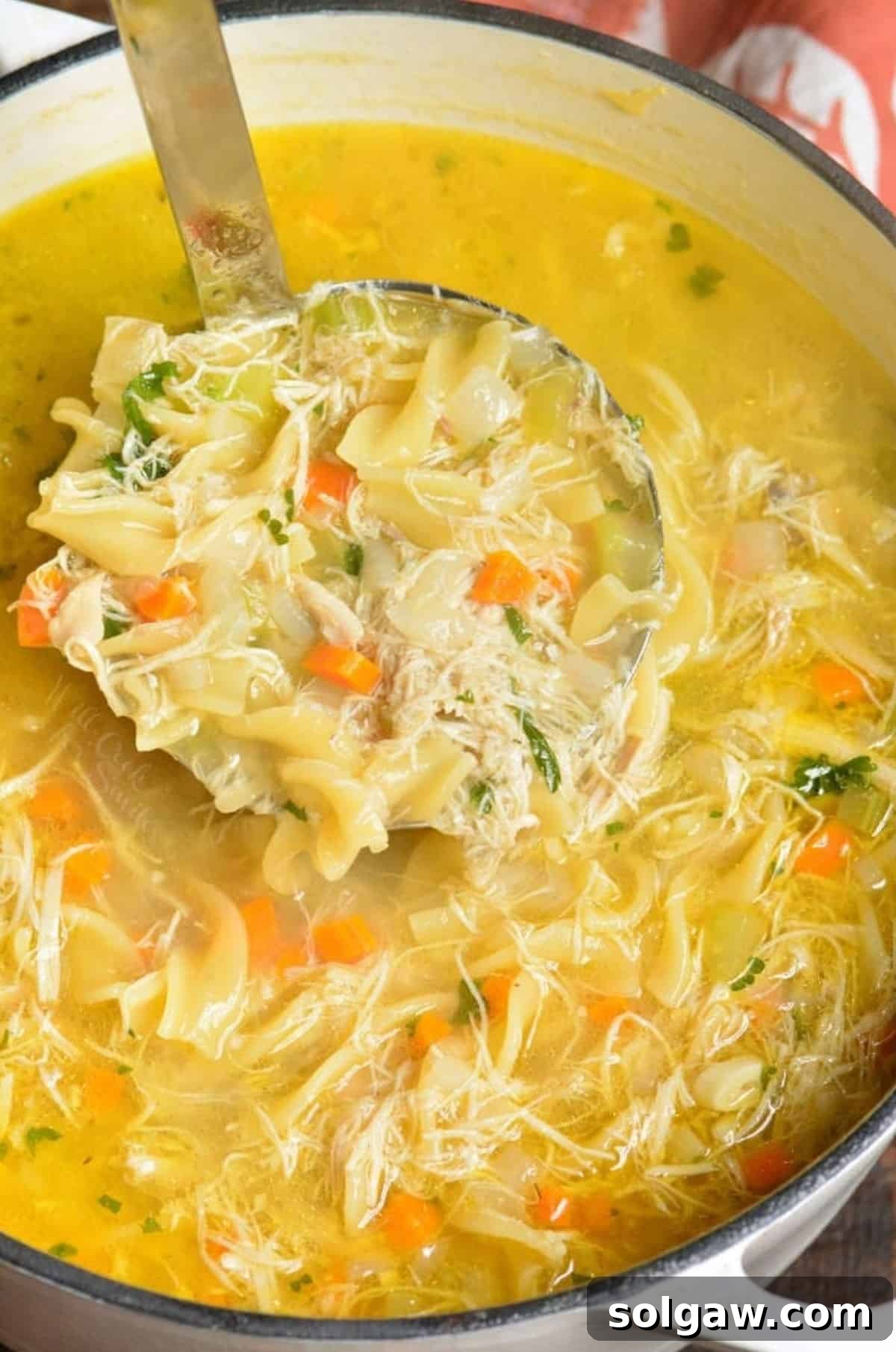
Classic Homemade Chicken Noodle Soup Recipe
Print
Pin
Video
Rate
Main Course, Soup
American
10 minutes
35 minutes
5 hours
5 hours
45 minutes
8
305
kcal
Lyuba Brooke
Ingredients
-
8-9
cups
homemade chicken stock
-
2
tbsp
avocado or olive oil -
1
yellow onion -
2
long celery ribs -
2
medium carrots -
4
garlic cloves -
2-3
cups
cooked chicken meat
saved from cooking stock -
salt -
fresh cracked black pepper -
1
tbsp
fresh minced parsley -
1
tbsp
fresh minced dill weed -
1/2-1
lemon – juice only -
8
oz
wide egg noodles
Instructions
Chicken Stock:
-
Prepare chicken stock according to the recipe. Chicken stock can easily be made ahead a day before or made ahead and frozen. Make sure to save the cooked chicken meat from preparing the stock. Chicken meat can also be frozen separately in a freezer zip-top bag, apart from the stock.
Chicken Noodle Soup:
-
Preheat a large pot over medium-low heat and add oil. Add diced onions, celery, and carrots. Stir and cook vegetables for about 10 minutes, until softened and slightly golden-brown. Increase the heat to medium.
-
Add minced garlic and cook for about 1 minute until fragrant. Add the shredded or diced cooked chicken meat (saved from making stock or from a rotisserie chicken) to the pot.
-
Pour in the homemade chicken stock. Taste the broth and season with salt and pepper as needed. It’s important to taste as you cook to ensure the soup is perfectly seasoned.
-
Bring the soup to a gentle simmer over medium heat and cook for about 15 minutes. Then, add the noodles and fresh minced herbs. Stir well and let the soup cook just until the noodles are tender, following package directions for cooking time.
-
As a final touch, squeeze in the fresh juice from 1/2 to 1 whole lemon (to taste), stir, and serve immediately for the best flavor.
Video
Notes
- Gluten-Free Note: This soup can be made entirely gluten-free by simply omitting the egg noodles and using your favorite gluten-free pasta instead. Egg noodles typically contain gluten.
- Rotisserie Chicken Shortcut: If you don’t have cooked chicken leftover from making stock, a store-bought rotisserie chicken is an excellent and delicious time-saving alternative.
- Don’t Skip the Lemon: A squeeze of fresh lemon juice at the end is truly a game-changer; it brightens and enhances all the flavors in the soup significantly.
- Preserving Fresh Herbs: To keep leftover bunches of parsley, cilantro, dill weed, or green onions fresh for longer, store them upright in a cup of water in the refrigerator, changing the water daily. Alternatively, wrap them in a damp paper towel and store in a sealed zip-top bag in the refrigerator for about a week.
- Storing Leftovers: Store cooled leftovers in an airtight container in the refrigerator for 3-4 days. (PRO TIP: For best texture, add noodles to the soup only during the last few minutes of cooking for the portion you plan to eat immediately. If you plan to save portions, the noodles will absorb more broth and become softer over time. If you prefer al dente noodles for leftovers, cook noodles separately and add them directly to each bowl before serving.)
- Freezing Soup: Freeze cooled soup (without noodles) in an airtight, freezer-safe container or zip-top bag. Leave some headspace for expansion. Label and date, then freeze for 2-3 months. Thaw overnight in the refrigerator and cook fresh noodles when reheating.
Nutrition
Calories:
305
kcal
|
Carbohydrates:
33
g
|
Protein:
16
g
|
Fat:
12
g
|
Saturated Fat:
3
g
|
Cholesterol:
52
mg
|
Sodium:
382
mg
|
Potassium:
468
mg
|
Fiber:
2
g
|
Sugar:
6
g
|
Vitamin A:
2652
IU
|
Vitamin C:
11
mg
|
Calcium:
35
mg
|
Iron:
2
mg
Tried this recipe?
Mention @willcookforsmiles or tag #willcookforsmiles!
Originally published on Will Cook For Smiles in August 2018.