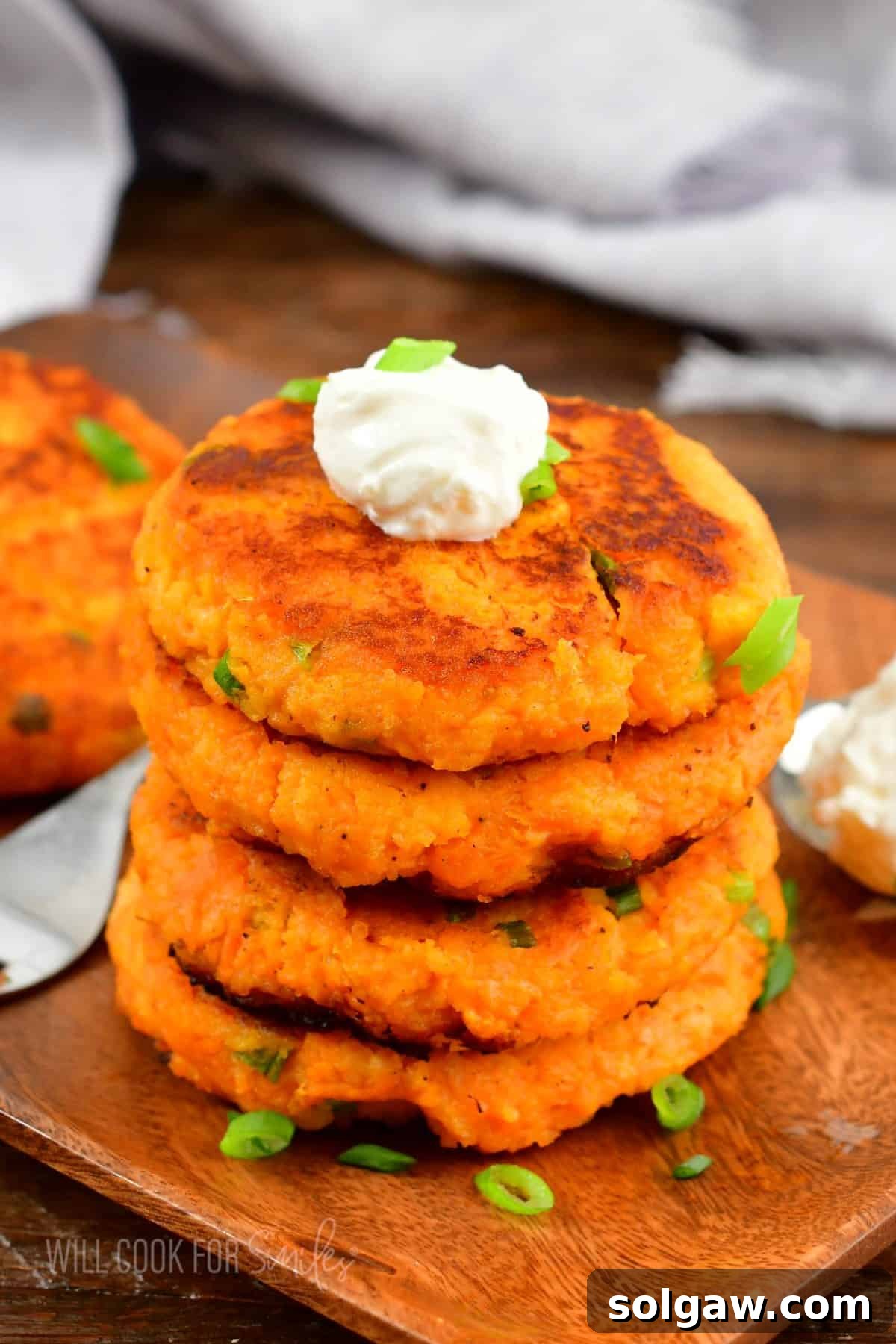
If you’re a sweet potato enthusiast like me, you’ll surely adore these Sweet Potato Casserole and Roasted Sweet Potatoes with Bacon recipes. But today, we’re diving into a truly special dish: Sweet Potato Cakes.
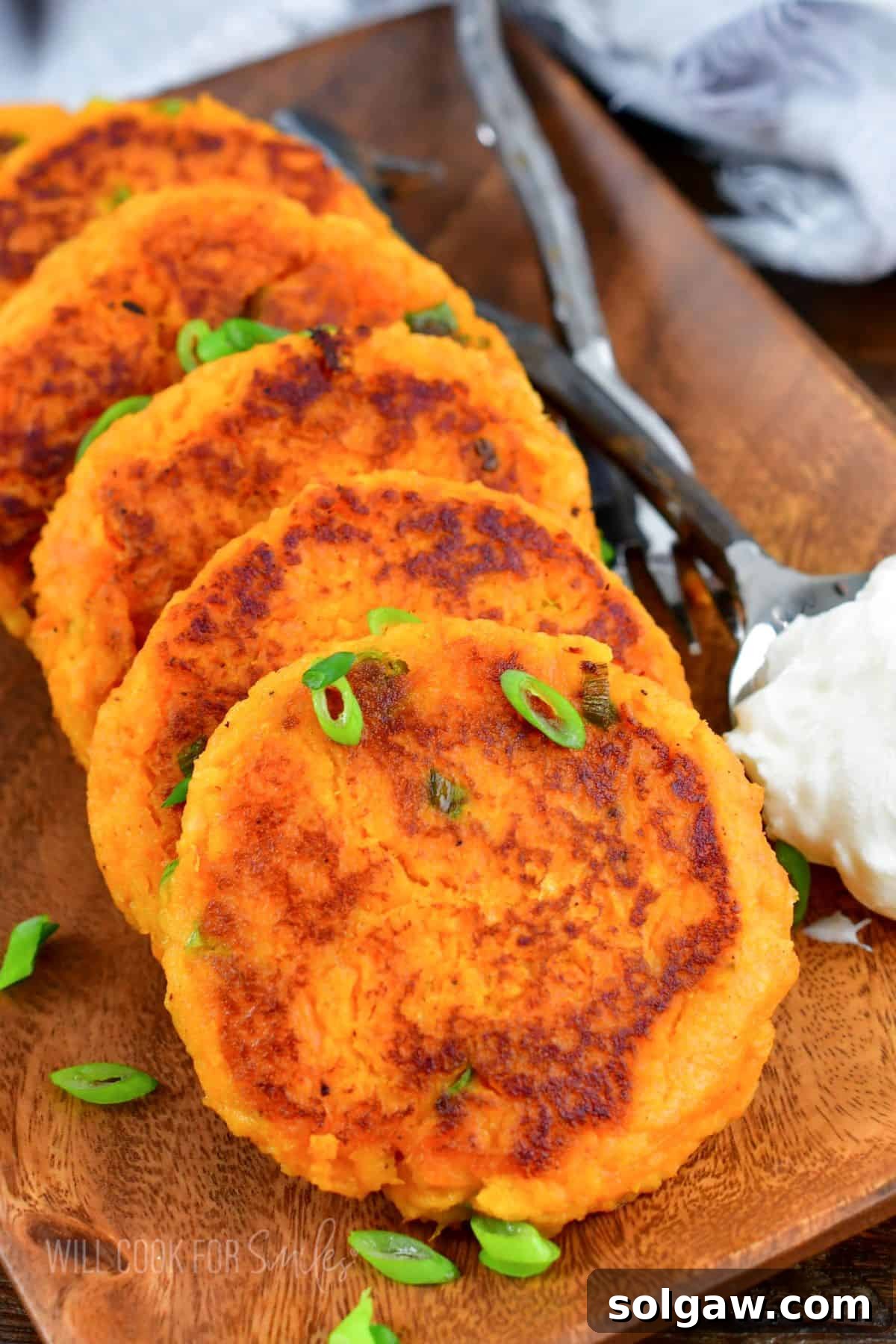
Irresistible Sweet Potato Cakes: Crispy & Flavorful Side Dish for Any Occasion
Sweet Potato Cakes are a culinary delight, offering a perfect blend of crispy exterior and tender, flavorful interior. While they shine as an ideal Thanksgiving side dish, their versatility means you can enjoy them year-round. They effortlessly transition from a comforting lunch option to an exquisite dinner side dish. Much like their cousins, mashed potato cakes or potato pancakes, these sweet potato creations are incredibly adaptable and bring a touch of wholesome goodness to any meal.
What makes these sweet potato cakes truly remarkable is the simplicity of preparation and the control you have over their flavor profile. I’ve included detailed instructions for both boiling and baking the sweet potatoes, allowing you to choose the method that best suits your taste and time constraints. Remember, baking sweet potatoes naturally enhances their sweetness by caramelizing their sugars, resulting in richer, more dessert-like cakes. Conversely, boiling them yields a more savory potato cake, perfect for pairing with heartier main courses. Both approaches deliver incredibly delicious results, so feel free to experiment and find your favorite!
Table of Contents
Why You’ll Love These Sweet Potato Cakes
These sweet potato cakes are more than just a side; they’re a celebration of flavor and texture. Imagine a golden-brown crust giving way to a soft, fluffy interior, seasoned to perfection. They’re incredibly easy to prepare, relying on simple, inexpensive ingredients found in any kitchen. Whether you’re hosting a grand holiday feast or simply seeking a quick, wholesome addition to a weeknight meal, these cakes fit the bill. Their comforting nature makes them a family favorite, offering a delightful alternative to traditional potato dishes. Plus, sweet potatoes are packed with vitamins and fiber, making this dish a nutritious choice you can feel good about.
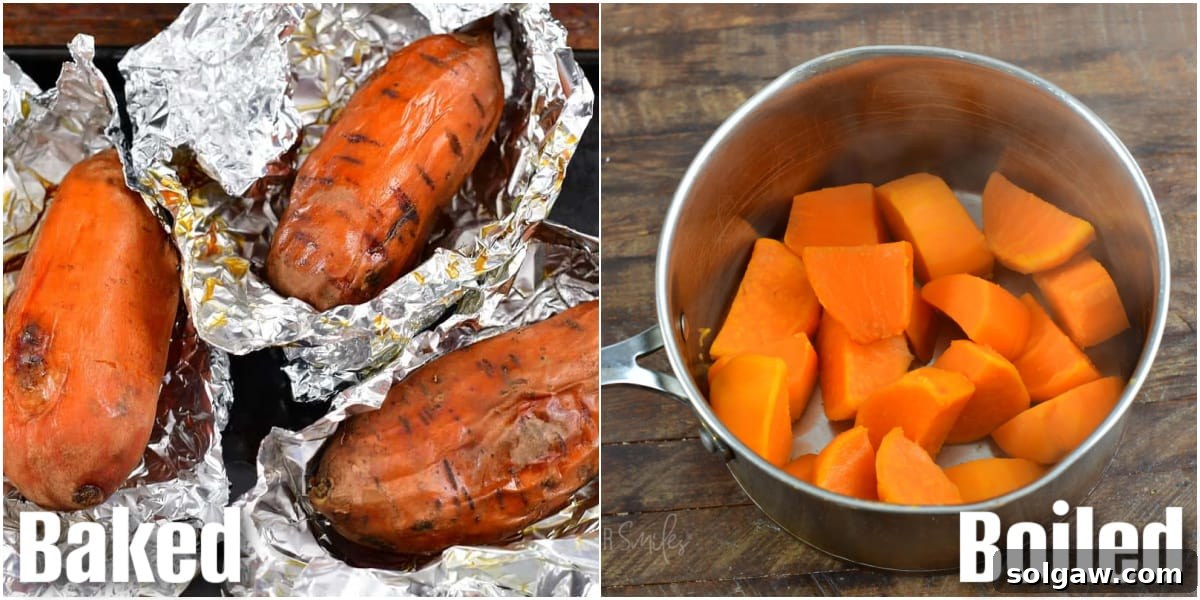
The Sweet Potato Prep Debate: Bake or Boil?
The method you choose to cook your sweet potatoes significantly impacts the final taste and texture of your cakes. Both baking and boiling have distinct advantages, and understanding them will help you achieve your desired flavor profile.
PRO TIP: For significantly sweeter cakes with a richer, more concentrated flavor, opt for baking your sweet potatoes. The dry heat of the oven caramelizes their natural sugars. Be sure to drain any excess liquid that might accumulate during baking. If you prefer a more savory potato cake that pairs well with hearty entrees, boiling is the way to go. It’s also generally a faster cooking method, though baking retains more nutrients.
Baking Sweet Potatoes for Enhanced Sweetness
Baking sweet potatoes is a fantastic way to bring out their inherent sweetness and achieve a deeper, more complex flavor. This method is especially recommended if you’re aiming for a dish with a slightly sweeter profile, reminiscent of sweet potato pie.
- To bake, start by thoroughly washing your sweet potatoes. There’s no need to peel them at this stage.
- Carefully poke a few holes in each potato with a knife or fork. This allows steam to escape, preventing them from bursting.
- Wrap each sweet potato individually in aluminum foil. This helps to lock in moisture and promotes even cooking.
- Bake in a preheated oven at 400°F (200°C) until fork-tender. Depending on their size, this usually takes 45-60 minutes. Smaller sweet potatoes will cook faster.
- Once baked, let them cool slightly until they are comfortable to handle. Then, simply scoop the soft, cooked flesh out of the skin and into a mixing bowl. Remember to discard any excess liquid.
Boiling Sweet Potatoes for Savory Perfection
Boiling is a quicker method for preparing sweet potatoes, yielding a milder, more savory flavor that is excellent for a side dish or even in savory recipes like soups.
- Begin by washing, peeling, and cutting your sweet potatoes into roughly 1-inch chunks. Uniform pieces ensure even cooking.
- Place the cut sweet potato pieces into a large pot and add enough water to completely cover them.
- Add a pinch of salt to the water. This helps season the potatoes from the inside out.
- Bring the water to a boil over medium-high heat. Once boiling, reduce the heat to medium and continue to cook until the potatoes are tender when pierced with a butter knife, typically 15-20 minutes.
- Thoroughly drain all the water from the pot, then add the cooked potatoes into your mixing bowl. Ensure they are as dry as possible to prevent a watery cake mixture.
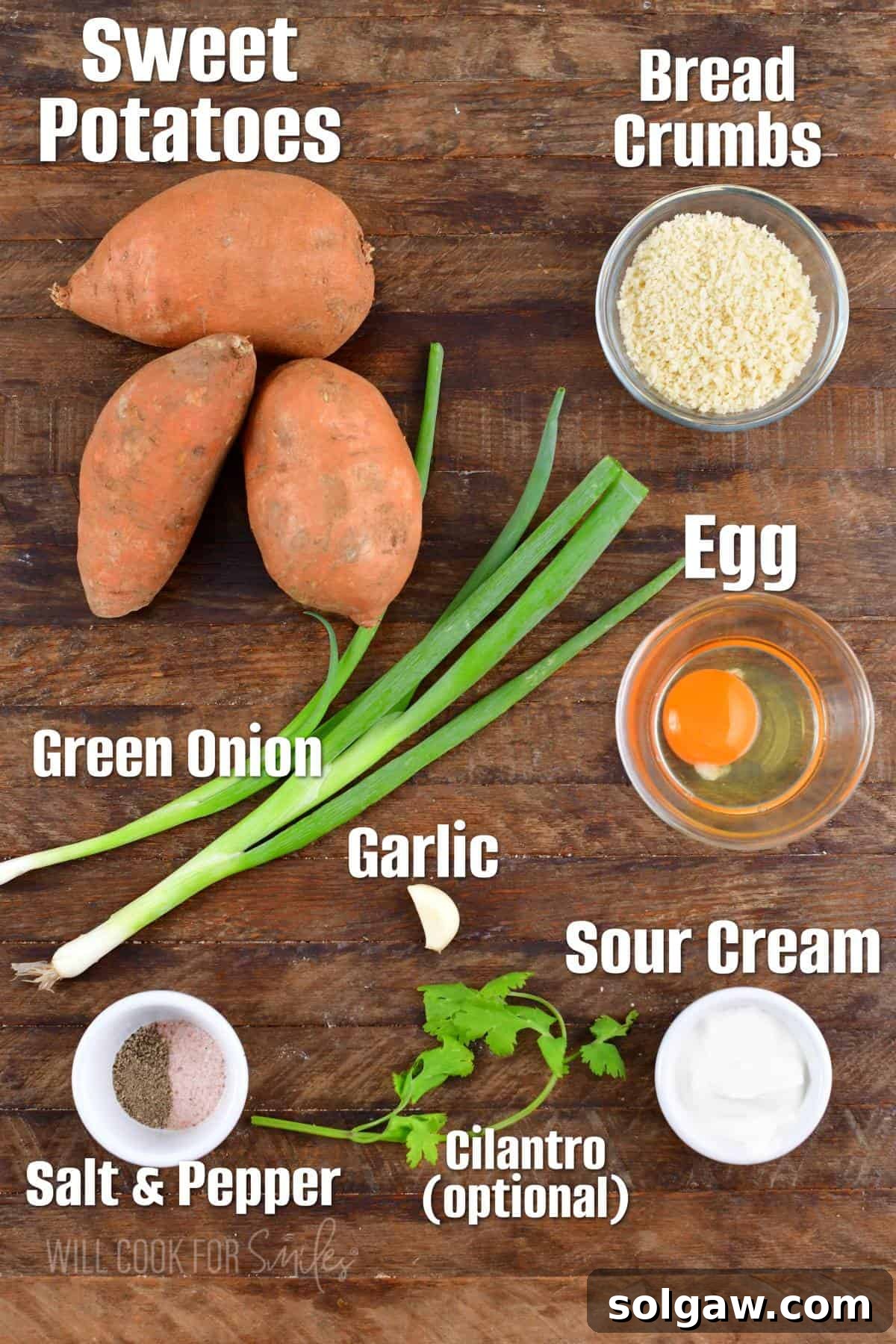
Essential Ingredients for Perfect Sweet Potato Cakes
Crafting delicious sweet potato cakes requires a thoughtful selection of ingredients that contribute to both flavor and texture. Here’s a closer look at what you’ll need and why each component is crucial:
Key Components & Their Roles
- Sweet Potatoes: The star of our show! As mentioned, peeled for boiling, skin on for baking. Their natural sweetness forms the base of the cakes.
- Plain Bread Crumbs: These are vital for binding all the ingredients together, ensuring your cakes hold their shape and achieve that desirable crispy exterior. You’ll need about 1/2 cup, but keep a little extra on hand for adjustments.
- Sour Cream: Full-fat sour cream (avoid low-fat versions for best results) adds richness, moisture, and a subtle tang that beautifully complements the sweet potatoes. It contributes significantly to the tender consistency.
- Egg: Working in conjunction with the bread crumbs, the egg acts as a primary binder, helping to prevent the cakes from crumbling during cooking. One large egg is usually sufficient.
- Green Onions (Scallions): Diced green onions add a mild oniony flavor and a touch of freshness that brightens the overall taste. About 1/3 cup provides a pleasant aromatic note.
- Garlic: A single large clove of pressed garlic infuses a savory depth, balancing the sweet notes of the potatoes and enhancing the overall flavor profile.
- Salt & Freshly Cracked Pepper: Essential for seasoning to taste. Start with a moderate amount and adjust as needed to bring out the best flavors.
- Vegetable or Avocado Oil: Used for cooking the cakes in a pan, these oils are neutral in flavor and have a high smoke point, ideal for achieving a perfectly golden, crispy crust.
Optional Fresh Herbs & Spices
- Cilantro: An optional but highly recommended ingredient. Minced fresh cilantro (about 1 tablespoon) introduces a wonderfully subtle, fresh, and herbaceous note that elevates the cakes. If you’re not a fan, fresh parsley is an excellent alternative.
For the precise measurements and detailed instructions, please refer to the complete recipe card below.
Step-by-Step Guide: How to Make Sweet Potato Cakes
Creating these delightful sweet potato cakes is a straightforward process. Follow these simple steps for perfect results every time:
Preparing Your Sweet Potatoes
- Cook the Sweet Potatoes: As discussed, choose your preferred method: baking for sweeter cakes or boiling for more savory ones. Ensure they are thoroughly cooked until very tender.
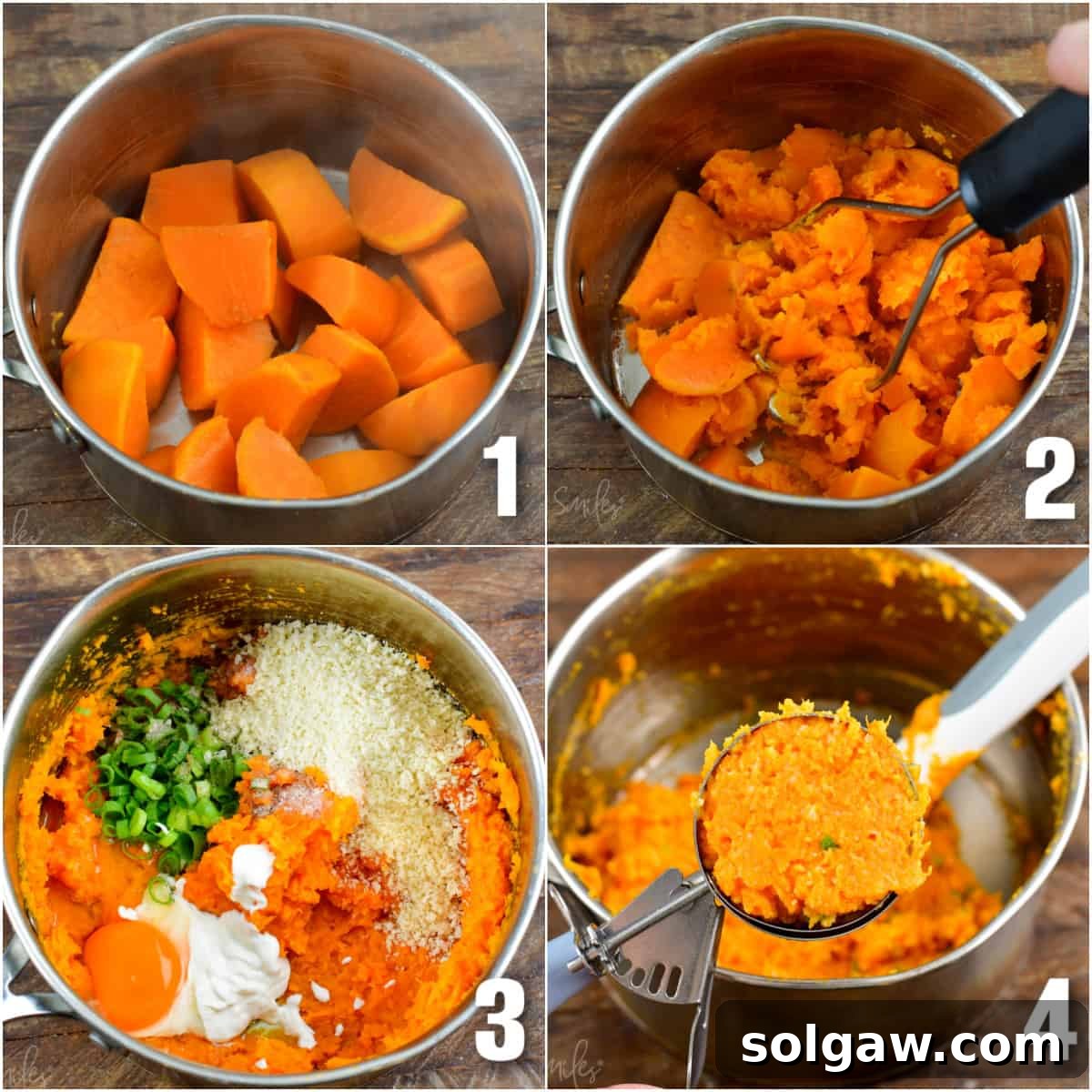
- Mash Them: Transfer the cooked sweet potatoes into a large mixing bowl or pot. Using a potato masher, mash them until they are smooth and free of large lumps (refer to images 1 and 2 for visual guidance).
Mixing the Delicious Batter
- Combine Ingredients: To the mashed sweet potatoes, add the diced green onions, minced cilantro (if using), sour cream, egg, plain bread crumbs, pressed garlic, salt, and freshly cracked pepper.
- Mix Well: Thoroughly combine all the ingredients until a uniform, thick mixture forms (as shown in image 3). The mixture should be pliable enough to form into patties.
Forming and Frying Your Cakes
- Form the Cakes: For consistent sizing, use a cookie scoop or a measuring spoon to portion out the sweet potato mixture. Gently form each portion into a flat, round patty, about 1/2 to 3/4 inch thick (see image 4).
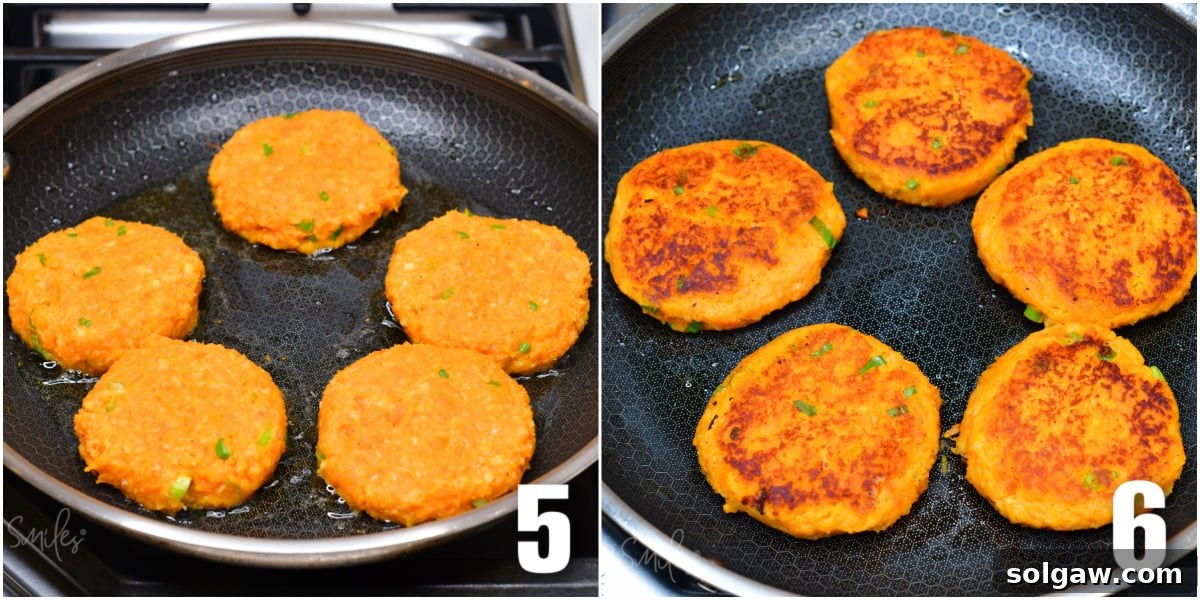
- Cook the Cakes: Heat a non-stick skillet or frying pan over medium heat and add a tablespoon or two of vegetable or avocado oil. Once the oil is shimmering, carefully place the sweet potato cakes into the pan, ensuring not to overcrowd it. Cook for approximately 5-7 minutes per side, or until they are beautifully golden brown and crispy (observe images 5 and 6). Use a thin spatula to flip them gently to maintain their shape.
Expert Tips for Sweet Potato Cake Success
- Choosing the Right Sweet Potatoes: Look for firm, unblemished sweet potatoes. Varieties like Beauregard or Jewel are excellent choices for their sweetness and creamy texture.
- Achieving Perfect Consistency: If your mixture feels too wet (common with baked potatoes), gradually add more bread crumbs, a tablespoon at a time, until it’s easy to form patties. If it’s too dry, a tiny bit more sour cream or a splash of milk can help.
- Even Cooking: Don’t overcrowd the pan when cooking. Cook in batches if necessary to ensure each cake gets enough direct heat to become crispy.
- Make Ahead: You can prepare the sweet potato mixture up to 24 hours in advance. Store it covered in the refrigerator. Form the patties just before cooking for the best results.
- Freezing Instructions: To freeze, arrange uncooked patties on a parchment-lined baking sheet and freeze until solid. Transfer to a freezer-safe bag or container and store for up to 3 months. Cook from frozen, adding a few extra minutes to the cooking time.
- Reheating: Leftover cooked cakes can be reheated in a pan over medium heat until warmed through and crispy again, or in an oven at 350°F (175°C) for about 10-15 minutes.
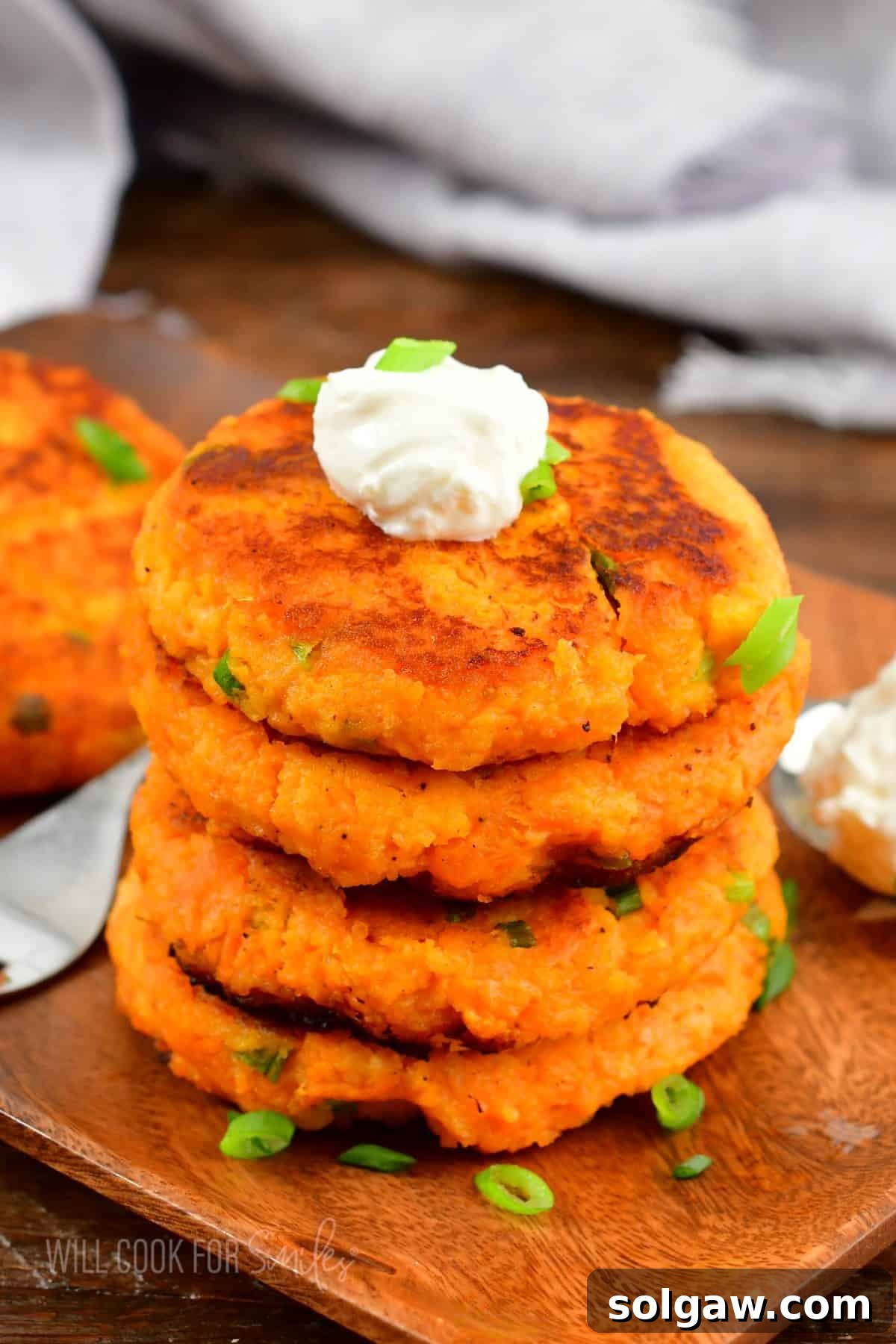
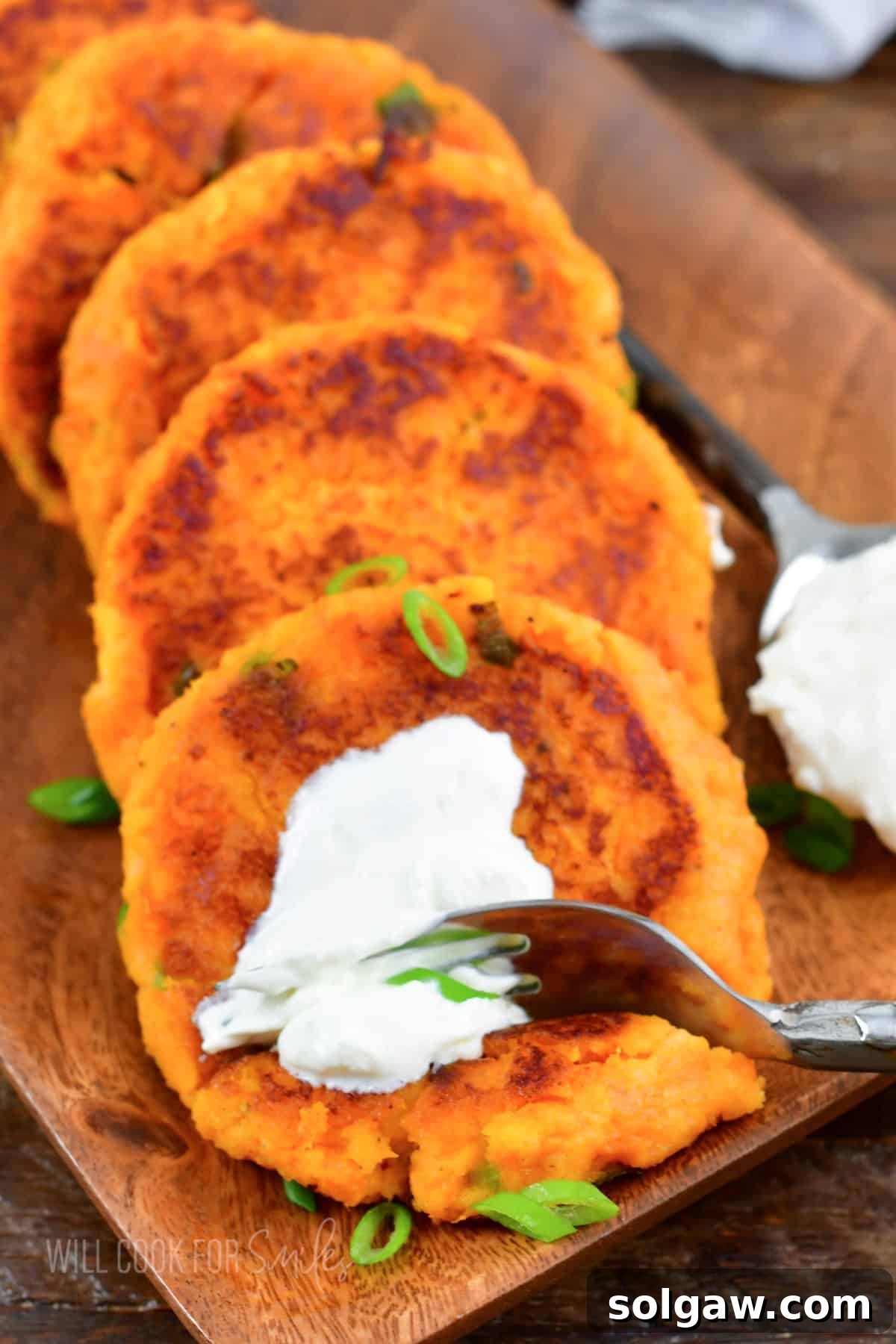
- Serving Suggestions: These cakes are delicious on their own, topped with a dollop of sour cream or Greek yogurt. They also pair wonderfully with roasted meats, grilled chicken, or a fresh green salad.
Customize Your Sweet Potato Cakes: Flavor Variations
These sweet potato cakes are a fantastic canvas for culinary creativity! While delicious as is, consider these additions to tailor them to your preference or complement your meal:
- Savory Enhancements:
- Crispy Bacon: Crumble cooked bacon into the mixture for a smoky, salty crunch.
- Sautéed or Caramelized Onions: Adding finely chopped and softened onions (especially caramelized ones) brings a wonderful depth and natural sweetness.
- Cheese: A sprinkle of shredded sharp cheddar or smoked gouda can add a savory, gooey dimension.
- Spicy Kick: A pinch of cayenne pepper or finely diced jalapeño can introduce a pleasant heat.
- Sweet & Earthy Touches:
- Nuts: Toasted and chopped pecans or walnuts add a delightful crunch and nutty flavor, especially when aiming for a sweeter profile.
- Pumpkin Pie Spice: A dash of pumpkin pie spice (cinnamon, nutmeg, ginger, cloves) transforms these into a cozy, autumnal treat, reminiscent of Sweet Potato Pie. This is excellent if you used the baking method for your sweet potatoes.
- Maple Syrup or Brown Sugar: A small drizzle of maple syrup or a teaspoon of brown sugar can boost the sweetness even further.
- Topping Ideas:
- Sour Cream or Plain Greek Yogurt: A classic and refreshing topping that provides a creamy contrast.
- Chipotle Aioli: For a spicy, smoky kick, mix a little adobo sauce from canned chipotles into mayonnaise or sour cream.
- Fresh Herbs: A garnish of fresh chopped chives, parsley, or more green onions enhances visual appeal and flavor.
Frequently Asked Questions (FAQs)
Here are answers to some common questions about making sweet potato cakes:
Can I make sweet potato cakes gluten-free?
Absolutely! To make them gluten-free, simply substitute regular bread crumbs with gluten-free bread crumbs. All other ingredients in this recipe are naturally gluten-free.
Do I have to add cilantro?
No, not at all! Cilantro is an optional ingredient. If you’re not a fan of cilantro, you can easily omit it entirely. A great alternative is to swap it with fresh, chopped parsley for a different herbaceous note.
How do I thicken the sweet potato mixture?
If you baked your sweet potatoes, the mixture might sometimes appear a bit thin due to the retention of potato juices. If your sweet potato cake batter seems too loose after mixing, gradually add a little more bread crumbs. I recommend starting with about 1/4 cup, mixing it in, and checking the consistency. If it’s still too thin, add another couple of tablespoons until it reaches a firm, manageable consistency for forming patties.
Can I make these cakes ahead of time?
Yes, you can! The sweet potato mixture can be prepared up to a day in advance and stored in an airtight container in the refrigerator. When you’re ready to cook, simply form the patties and proceed with frying. This makes them an excellent option for meal prep or entertaining.
More Delicious Sweet Potato Recipes to Explore
If you’ve fallen in love with sweet potatoes, here are more fantastic recipes to inspire your culinary journey:
- Sweet Potato Gnocchi: A delicate and flavorful pasta dish.
- Sweet Potato Casserole Cake: A dessert twist on a classic side.
- Sweet Potato Soup: Creamy and comforting, perfect for a chilly day.
- Sweet Potato Muffins: A wholesome and delicious breakfast or snack.
- Mashed Sweet Potatoes: A simple yet satisfying classic.
- Sweet Potato Cheesecake: An unexpected and decadent dessert.
PIN THIS RECIPE FOR LATER
DID YOU MAKE THIS RECIPE? Please leave a 🌟 star rating! Let me know how you liked it by leaving a 📝 comment below or share and tag me on social media @willcookforsmiles. DON’T FORGET to subscribe to my newsletter!
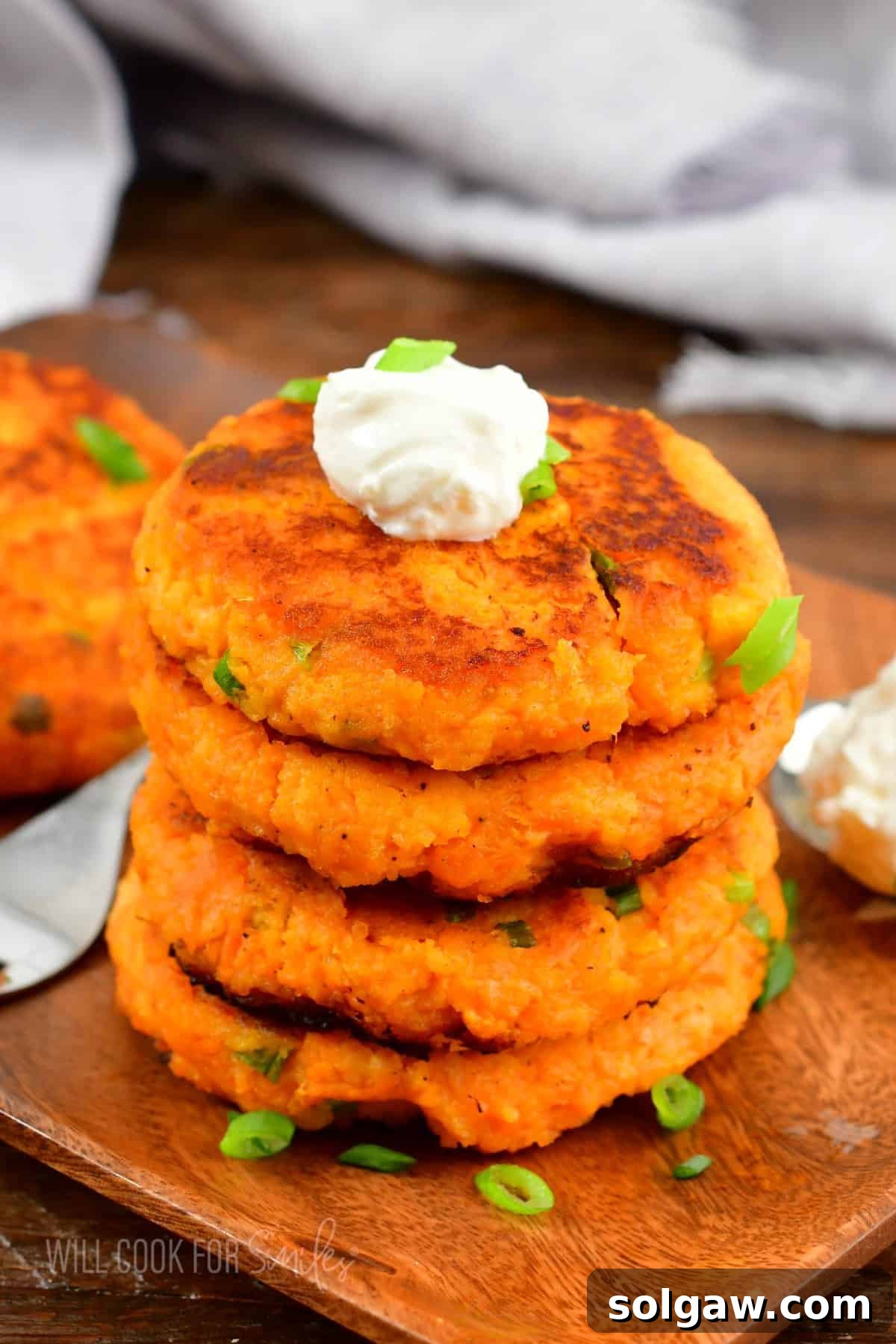
Sweet Potato Cakes Recipe
Sweet Potato Cakes are easy to make with just a handful of inexpensive ingredients! Crispy on the outside and tender on the inside, this sweet potato side dish recipe is ideal for holidays and weeknight dinners alike. Instructions for both baking and boiling the potatoes are included!
Rating: 4.09 from 35 votes
Course: Appetizer, Side Dish
Cuisine: American
Diet: Gluten Free (with substitution)
Prep Time: 15 minutes
Cook Time: 35 minutes
Total Time: 50 minutes
Servings: 6 (10-12 cakes)
Calories: 154 kcal
Author: Lyuba Brooke
Ingredients
- 1.5 lbs sweet potatoes
- 1/3 cup diced green onions
- 1 egg
- 1/2 cup plain bread crumbs*
- 1 Tbsp minced fresh cilantro (optional)
- 2 Tbsp sour cream
- 1 large clove of garlic, pressed
- Salt, to taste
- Fresh cracked pepper, to taste
- Vegetable or avocado oil for cooking
Instructions
Cooking sweet potatoes:
- Boiling sweet potatoes: Wash, peel, and cut sweet potatoes into about 1-inch chunks. Add cut sweet potato pieces into a pot and fill it with water, enough to cover them completely.
- Add some salt to the water, bring water to boil over medium-high heat, and lower the heat to medium. Cook until a butter knife easily goes through the potatoes. Drain all the water well and add sweet potatoes into the mixing bowl.
- Baking sweet potatoes: Wash them well, poke a couple of holes with a knife, wrap in foil, and bake at 400°F (200°C) until soft (45-60 minutes). Once cooked, cool until easy to handle and scoop the cooked potato out of the skin and into a bowl.
Sweet Potato Cakes:
- Mash sweet potatoes in a mixing bowl until smooth.
- Add green onions, cilantro, sour cream, egg, bread crumbs, pressed garlic, salt, pepper, and mix well.
- Preheat a cooking pan over medium heat and add some cooking oil.
- Use a cookie scoop to get even amounts of the mixture. Form sweet potato patties and cook for about 5-7 minutes on each side. Use a small spatula and flip carefully until golden brown and crispy.
Notes
- *Mixture too thin? If the sweet potato cake batter looks a little thin after mixing (especially if using baked potatoes), you can simply add a little more bread crumbs. Start with about 1/4 cup and mix to see if it’s thick enough. If not, add a couple more tablespoons and mix.
- Gluten Free: To make them gluten-free, substitute gluten-free bread crumbs for regular ones.
Nutrition (per serving)
Calories: 154 kcal | Carbohydrates: 30g | Protein: 4g | Fat: 2g | Saturated Fat: 1g | Polyunsaturated Fat: 0.4g | Monounsaturated Fat: 1g | Trans Fat: 0.003g | Cholesterol: 30mg | Sodium: 141mg | Potassium: 433mg | Fiber: 4g | Sugar: 6g | Vitamin A: 16212IU | Vitamin C: 4mg | Calcium: 64mg | Iron: 1mg
Mention @willcookforsmiles or tag #willcookforsmiles if you tried this recipe!
Originally published on Will Cook For Smiles in November, 2014.