rave reviews
“Since I have used this recipe, I will not do my roast any other way. My family enjoys the flavor and tenderness of it!!!” ~Latasha W
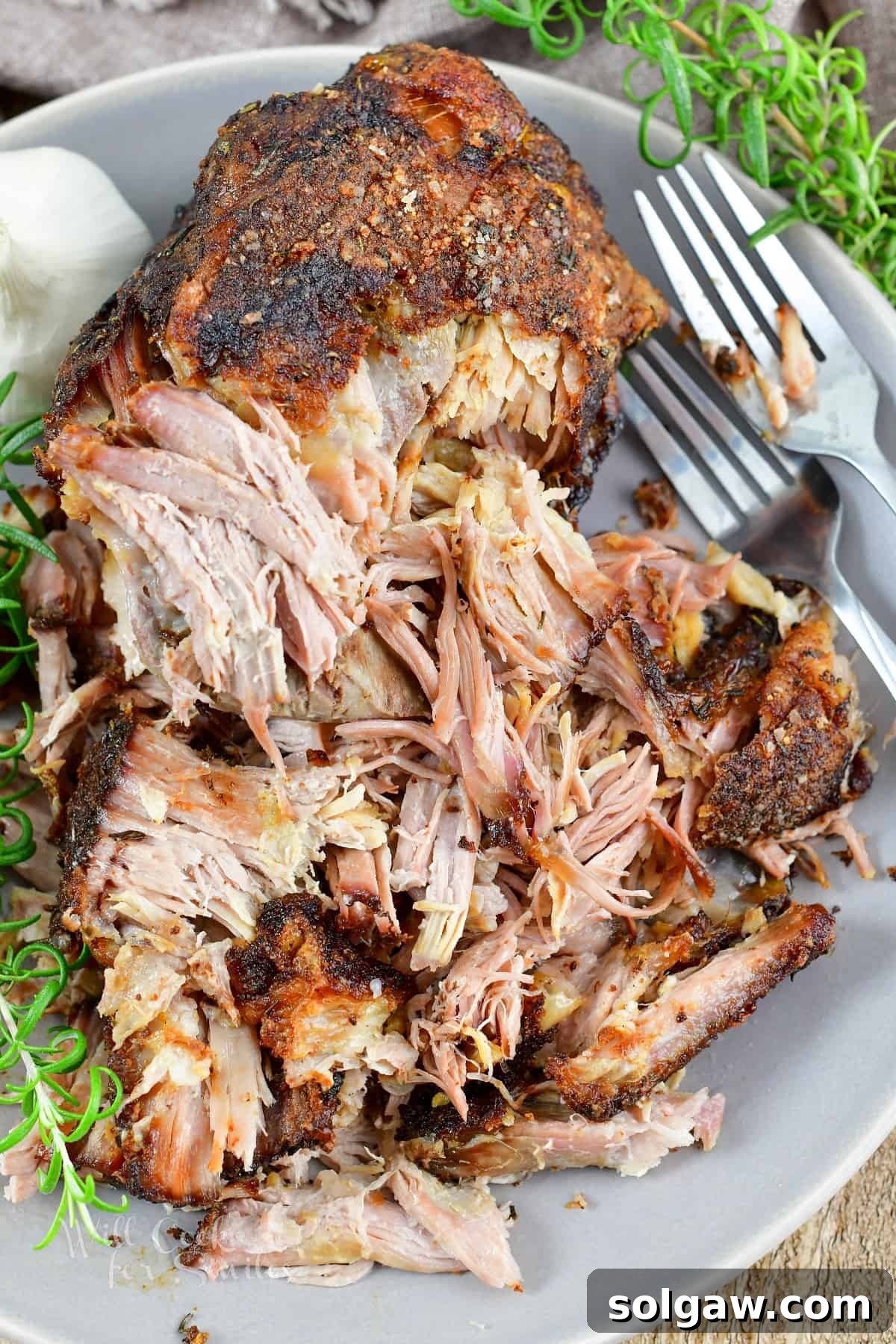
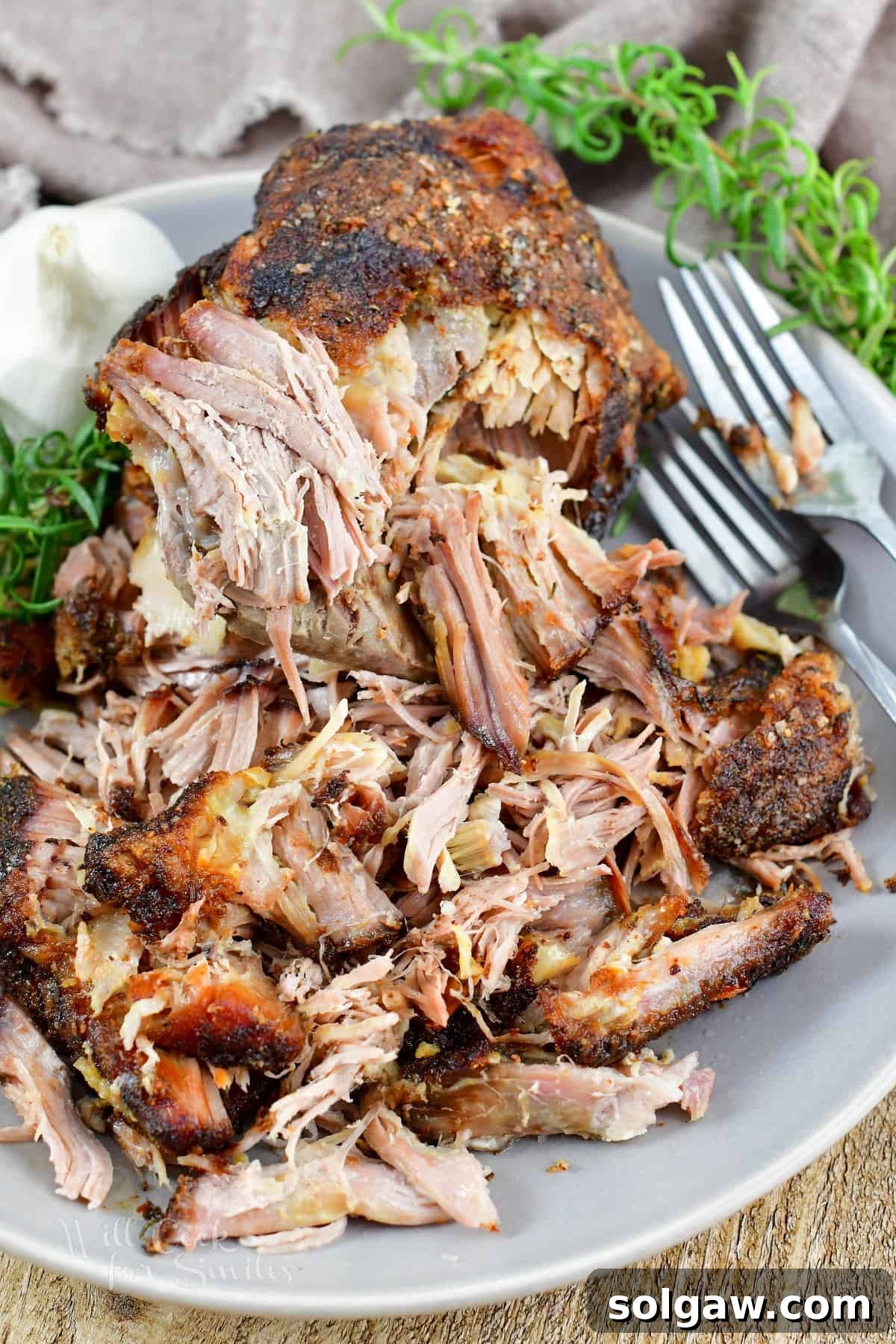
The Ultimate Fall-Apart Tender Oven-Roasted Pork Shoulder
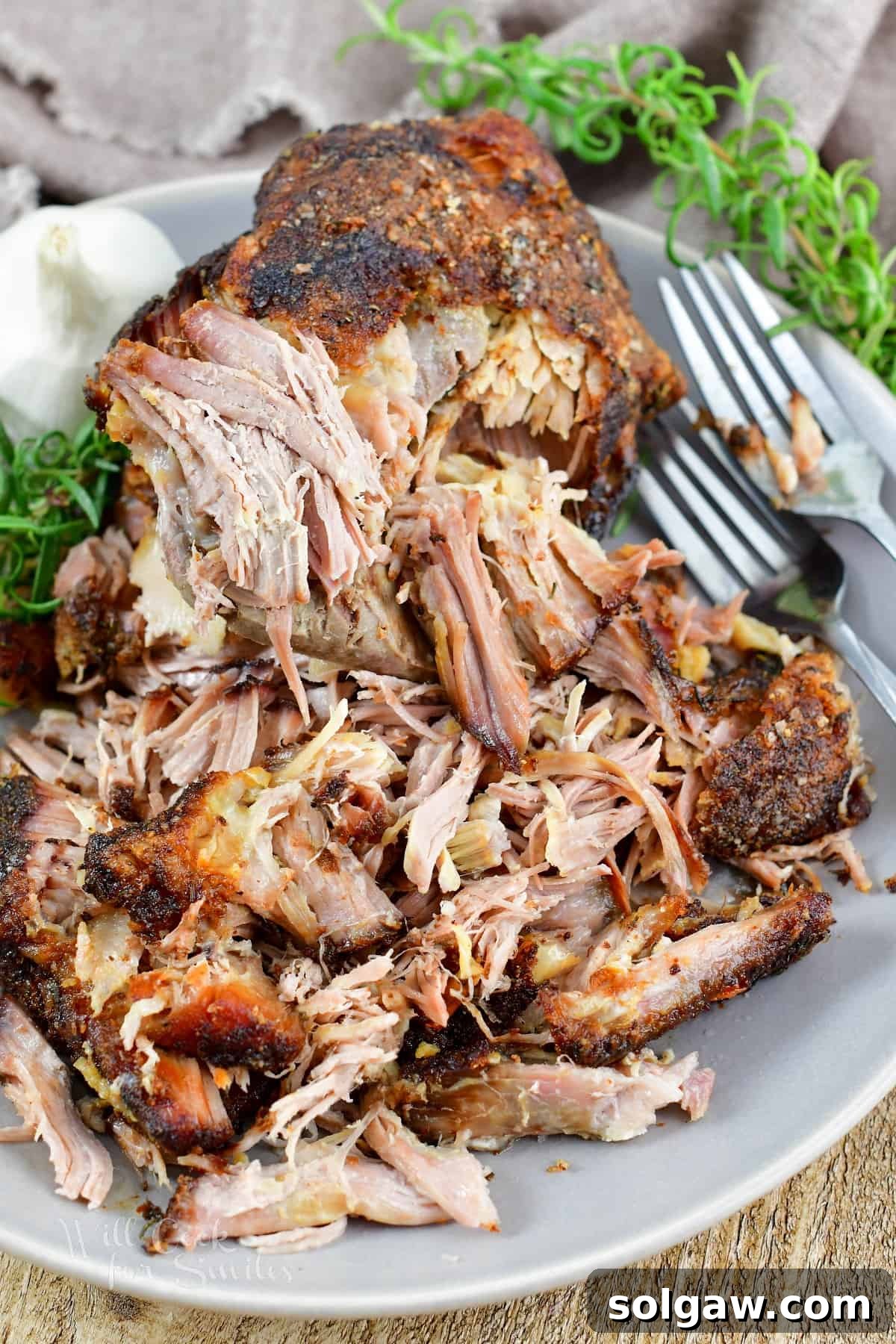
Pork, a remarkably versatile and satisfying meat, offers a delightful departure from everyday chicken or beef dinners. While an elegant Garlic Pork Loin might be reserved for special occasions and dinner parties, this incredibly simple yet profoundly flavorful roast pork recipe is destined to become your new go-to for effortless, show-stopping meals. Imagine a dish so tender it practically melts in your mouth, infused with aromatic spices, all achieved with minimal hands-on effort. That’s precisely what this slow-roasted pork shoulder delivers.
The secret to this exceptional roast lies in a harmonious blend of seasonings: robust garlic cloves, earthy coarse salt, zesty fresh cracked peppercorns, pungent ground mustard, sweet onion powder, and fragrant fresh minced rosemary. Each component contributes to a complex flavor profile, but it’s the ingenious technique of inserting garlic halves directly into the meat that truly elevates this dish. This method ensures that every fiber of the pork is permeated with deep, savory garlic essence, making it my not-so-secret ingredient for achieving the most irresistibly flavorful roast pork every single time.
One of the many reasons to adore this pork shoulder recipe is the sheer simplicity of oven roasting. It’s a set-it-and-forget-it affair that transforms a humble cut of meat into a culinary masterpiece. For optimal flavor and juiciness, I highly recommend salting the pork the night before. This overnight treatment works wonders, creating a natural brine that locks in moisture and tenderizes the meat from within. Then, in the morning, a quick seasoning and into the oven it goes, cooking slowly to perfection. This hands-off approach ensures that by evening, a magnificent dinner awaits, completely stress-free. As the pork gently roasts, an intoxicating aroma will waft through your kitchen, a delightful precursor to the deliciousness to come. Trust me, the tantalizing scent alone will have your family eagerly anticipating dinner.
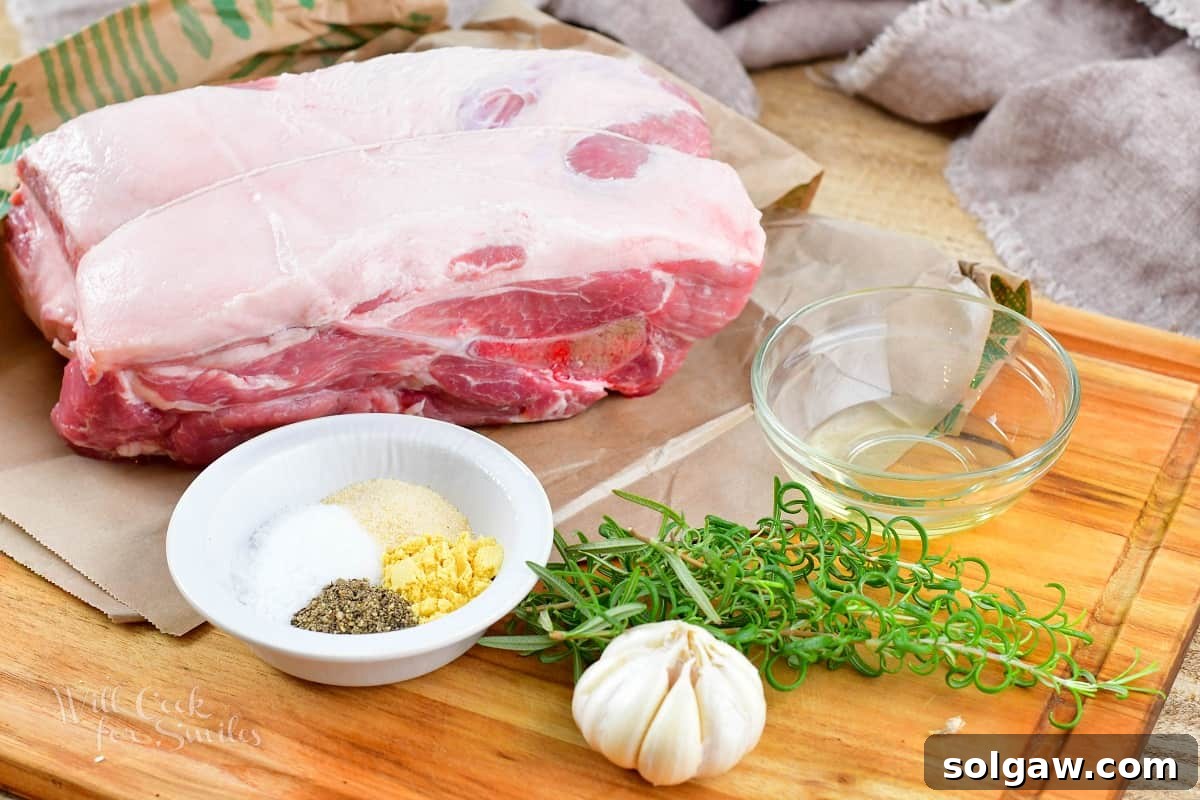
Key Ingredients for the Perfect Roast Pork
Selecting the right ingredients is fundamental to achieving a tender, juicy, and flavorful roast pork. Here’s a closer look at what you’ll need and why each plays a crucial role:
- Pork Butt (Bone-In Boston Butt): For this recipe, a bone-in Boston pork butt is absolutely essential. Don’t be fooled by the name; this cut actually comes from the upper part of the pig’s shoulder. It’s prized for its ideal fat-to-meat ratio and connective tissue, which, when slow-cooked, breaks down into gelatin, resulting in incredibly tender, juicy, and succulent meat perfect for pulling apart.
- Coarse Salt: You’ll use coarse salt twice in this recipe: first for the overnight seasoning, and again as part of the main seasoning blend. Coarse salt, unlike fine table salt, draws moisture from the surface of the meat, creating a more concentrated flavor and contributing to a crispier exterior crust. It also helps to tenderize the meat by breaking down protein structures.
- Fresh Garlic Cloves: Fresh garlic is non-negotiable for this recipe. Its pungent, aromatic qualities are key to the roast’s distinctive flavor. By inserting slices directly into the meat, the garlic’s essence permeates deep into the pork as it cooks, creating an unmatched depth of flavor.
- Freshly Cracked Peppercorns: For the brightest and most vibrant pepper flavor, always opt for freshly cracked peppercorns. Their sharp, slightly spicy notes provide a perfect contrast to the rich pork, adding a delightful layer of complexity that pre-ground pepper simply cannot achieve.
- Ground Mustard: A common ingredient in many pork recipes, and for good reason. Ground mustard adds a sharp, tangy, and slightly spicy kick that beautifully complements the natural richness of pork. It helps to cut through the fat and brightens the overall flavor profile.
- Onion Powder: This provides a concentrated, savory onion flavor without adding moisture, ensuring a consistent seasoning. It enhances the overall umami of the dish and pairs wonderfully with garlic and rosemary.
- Fresh Rosemary: Fresh rosemary is paramount here. Its distinct piney, citrusy, and slightly peppery notes are classic accompaniments to pork. The fresh herb releases its aromatic oils as it slow-cooks, infusing the meat with a captivating fragrance and taste that dried rosemary cannot replicate.
How to Make Perfectly Tender Oven-Roasted Pork
Achieving a fall-apart tender roast pork is a straightforward process when you follow these steps. Patience is key, but the results are always worth the wait.
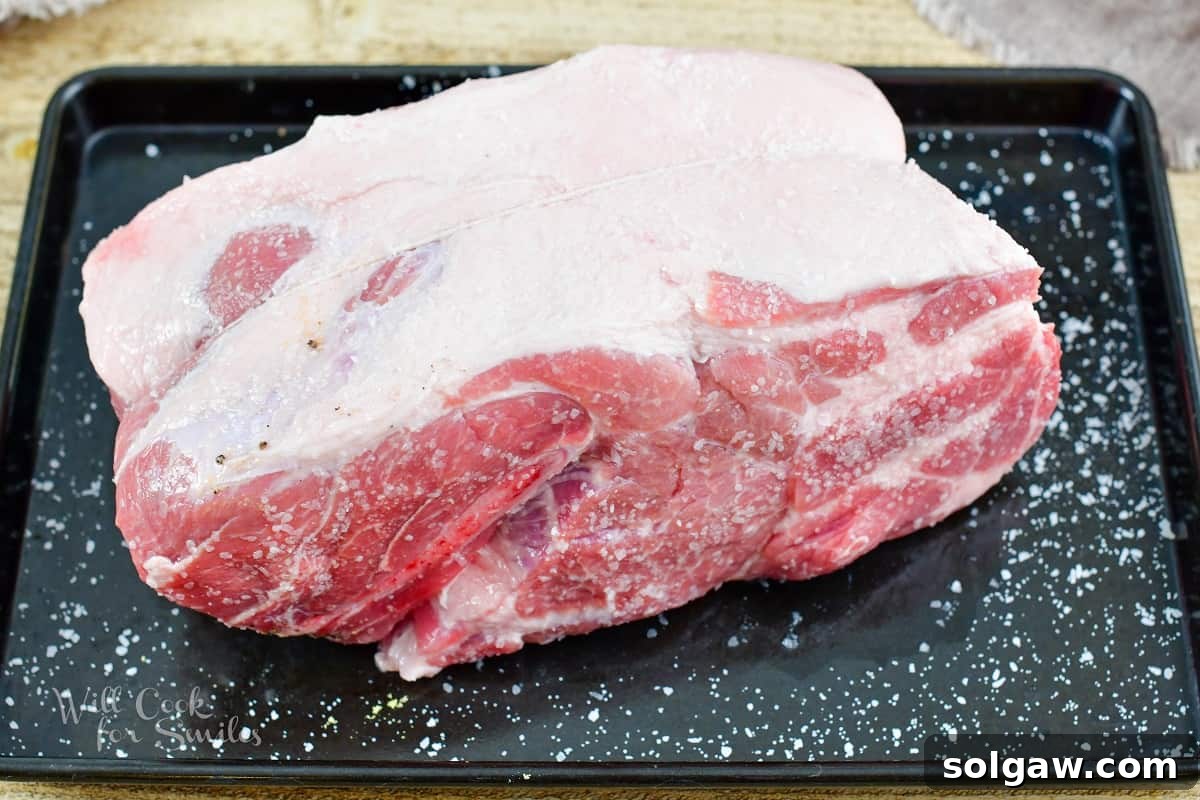
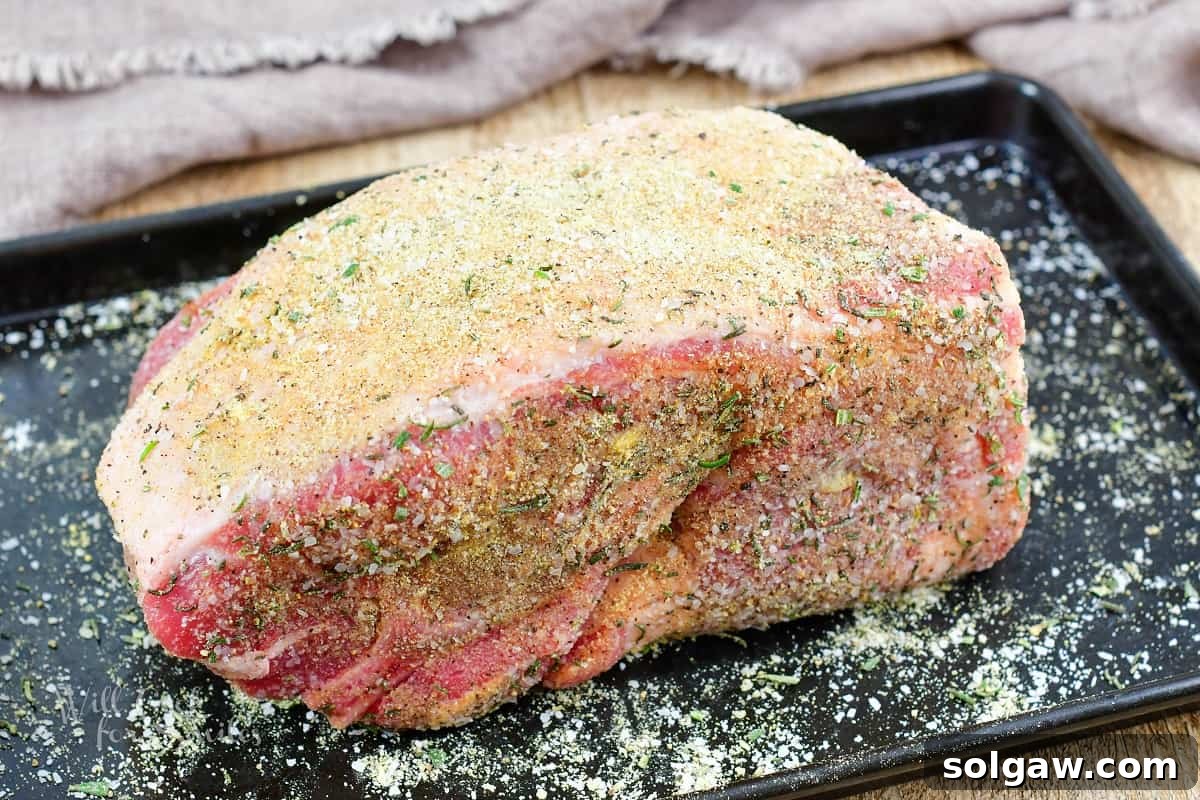
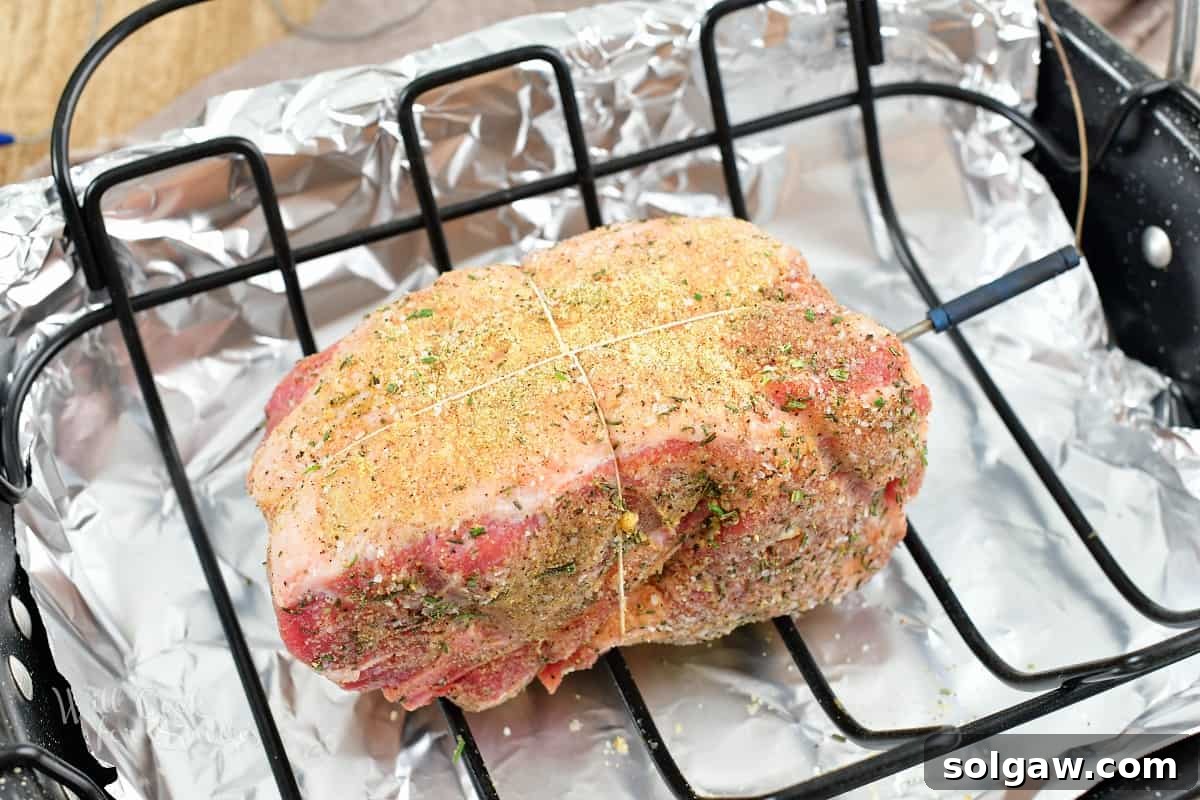
Step 1: Overnight Salting and Preparation. Begin by generously seasoning your pork shoulder with coarse salt. This initial salting isn’t just for flavor; it acts as a dry brine, helping the meat retain moisture and become incredibly juicy during the long cooking process. After salting, securely tie the pork with butcher’s twine if it’s irregularly shaped; this helps it cook more evenly. Wrap it tightly in plastic wrap or place it in an airtight container, and refrigerate it overnight. Allowing the pork to sit for at least 8 hours, or up to 24 hours, gives the salt ample time to penetrate the meat and work its tenderizing magic. About 30 minutes before you plan to cook, remove the pork from the refrigerator and let it sit on the counter to come closer to room temperature. This step promotes more even cooking.
Step 2: Infusing Flavor and Seasoning. Preheat your oven to a high temperature of 450°F (230°C). Prepare your roasting pan by lining the bottom with aluminum foil for easier cleanup and setting a roasting rack inside. This elevated rack ensures even air circulation around the pork. Next, take your fresh garlic cloves, cut them in half lengthwise, and prepare to infuse the meat. Using a sharp, small knife, make deep, evenly spaced slits all over the pork shoulder—aim for about ½ inch deep, or the length of your garlic clove halves. Carefully push a garlic clove half into each slit. This technique directly embeds garlic flavor throughout the roast, rather than just on the surface. In a shallow dish or small rimmed baking sheet, combine the remaining coarse salt, freshly cracked peppercorns, ground mustard, onion powder, and minced fresh rosemary. Gently pat the pork into this seasoning mixture, ensuring all sides are thoroughly coated. Avoid rubbing, as patting helps the seasoning adhere better and form a beautiful crust.
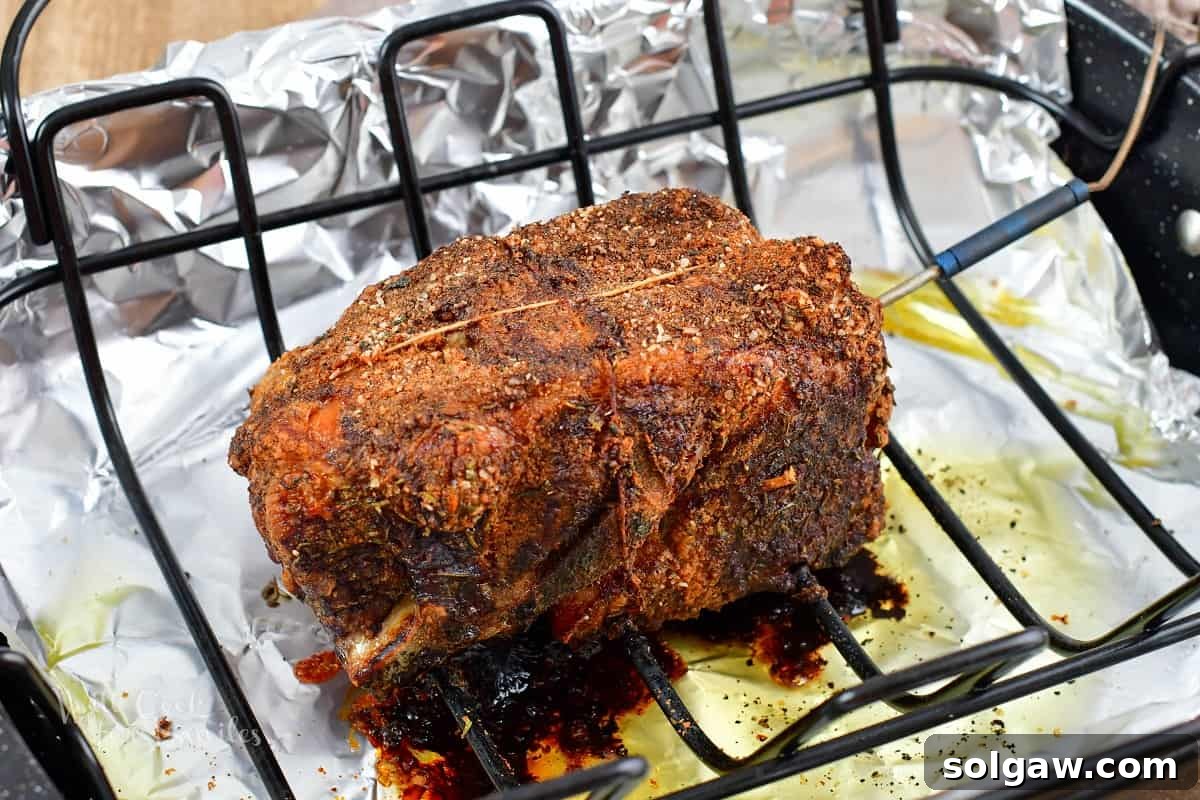
Step 3: The Roasting Process. Once seasoned, place the pork shoulder, fat-cap side up, onto the prepared roasting rack in the pan. Insert a leave-in meat thermometer into the thickest part of the meat, making sure it’s close to but not touching the bone. This thermometer will be your most reliable guide to doneness. Place the roasting pan into the preheated 450°F oven for an initial 15 minutes. This high-heat sear helps to develop a flavorful crust on the exterior of the pork. After 15 minutes, reduce the oven temperature to a low 275°F (135°C). The magic of slow roasting begins here. The pork will cook slowly for several hours, allowing the connective tissues to break down and the fat to render, naturally basting the meat and keeping it incredibly moist. You’ll notice the enticing aroma of garlic and rosemary filling your kitchen – a sure sign that deliciousness is underway.
Step 4: Patience and Resting. Resist the urge to constantly check or fuss with the pork while it cooks. Let it roast undisturbed until it reaches an internal temperature of 200°F to 203°F (93-95°C) for perfectly pull-apart tender pork. A 4-5 pound pork shoulder can take anywhere from 5 to 8 hours, but remember to always track the temperature, not just the time, as every piece of meat is unique. When it’s ready, a fork should easily slide into the meat, and it should pull apart effortlessly. The bone should also release cleanly. If it still feels firm, it needs more time. Once the desired temperature is reached, remove the pork from the oven and, crucially, allow it to rest for at least 20-30 minutes before pulling or slicing. This resting period allows the juices to redistribute throughout the meat, ensuring every bite is moist and tender. What you’re left with is a flavorful, succulent roast pork that is fantastic served as a centerpiece or transformed into mouthwatering pulled pork sandwiches, savory pulled pork tacos, or irresistible pulled pork nachos.
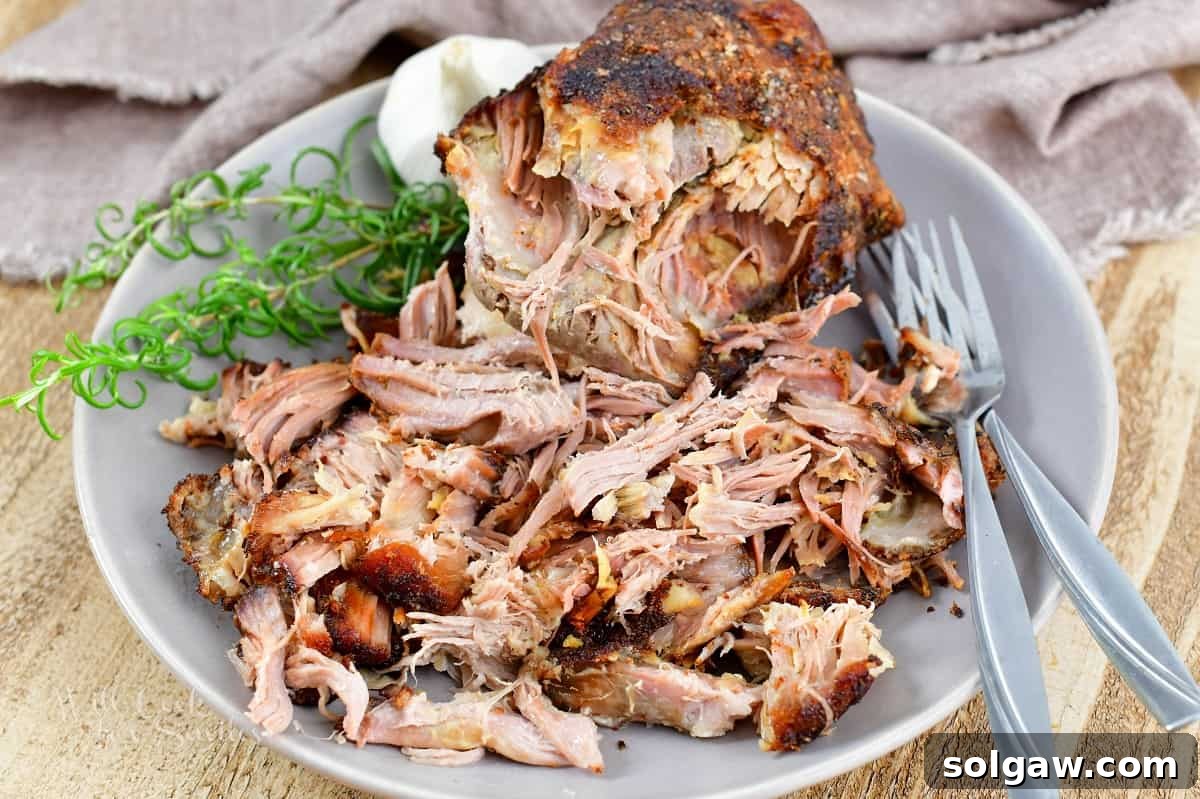
Expert Tips for the Best Tender Roast Pork Shoulder
To ensure your roast pork shoulder turns out perfectly tender and packed with flavor every time, keep these invaluable tips in mind:
- Salt Overnight for Maximum Flavor and Juiciness: This is arguably the most crucial step for incredible results. Seasoning the pork with coarse salt the night before and refrigerating it covered allows the salt to act as a dry brine. This process draws out moisture, then reabsorbs it, making the meat exceptionally tender and flavorful while preventing it from drying out during the long cook. It also means less fuss on cooking day!
- Bring to Room Temperature: Never put cold meat directly into a hot oven. For more even cooking, remove the pork from the refrigerator about 30 minutes to an hour before placing it in the oven. This allows the meat to relax and cook more consistently from edge to center.
- Utilize a Leave-In Meat Thermometer: This is your best friend for precise cooking. A digital leave-in meat thermometer is the most accurate way to monitor the internal temperature and ensure your pork is cooked to perfection. Relying solely on cooking time can be misleading as oven temperatures vary, and every cut of meat is different.
- Proper Thermometer Placement: When inserting the thermometer probe, aim for the thickest part of the meat, avoiding the bone. The bone conducts heat differently and can give you an inaccurate reading of the meat’s overall temperature.
- Embrace the Slow Cook: Resist the temptation to increase the oven temperature to speed up the cooking process. Pork shoulder is a tough cut of meat rich in connective tissue. It requires a long, slow roast at a lower temperature to allow this connective tissue to break down into gelatin, resulting in that desirable fall-apart tenderness. Patience is truly a virtue here.
- Roast Fat-Cap Up: Always place your pork shoulder in the roasting pan with the fat cap facing upwards. As the fat slowly renders during cooking, it will naturally baste the meat below, infusing it with flavor and keeping it incredibly moist and juicy.
- Understand Cooking Time Variability: A 4-5 lb bone-in pork shoulder typically takes anywhere from 5 to 8 hours to cook. However, these are estimates. Factors like the exact size and shape of the roast, your oven’s calibration, and even the initial temperature of the meat can affect cooking time. Again, track the internal temperature diligently, not just the clock.
- Target Temperature for Pulled Pork: For ideal pull-apart pork, cook your shoulder until it reaches an internal temperature of 200°F-203°F (93-95°C). At this temperature, the collagen has fully broken down, making the meat incredibly tender and easy to shred.
- Target Temperature for Sliced Pork: If you’re using a boneless pork shoulder and prefer to slice it rather than pull it, you’ll want to remove it from the oven a bit sooner. Aim for an internal temperature of 190°F-195°F (88-90°C) for perfect slices that are still moist and tender.
Frequently Asked Questions About Roast Pork
This flavorful roast pork is incredibly versatile! It makes a fantastic main course for a family dinner, served alongside your favorite side dishes. Beyond that, the tender, shredded meat is perfect for repurposing into a variety of delicious meals. Think classic pulled pork sandwiches piled high, flavorful pulled pork tacos, or ultimate pulled pork nachos. It’s also a phenomenal addition to creamy Mac and Cheese, hearty stews, or even as a topping for salads. The possibilities are truly endless!
For the best results when making pulled pork, you should absolutely use a bone-in Boston butt. This cut is superior because it contains less fat on the exterior, and the marbling (fat distribution) is more evenly spread throughout the muscle fibers. This even fat distribution, combined with the bone, contributes to a richer flavor and ensures the meat remains exceptionally tender and juicy as it slow-cooks – precisely what you want for melt-in-your-mouth pulled pork. An added bonus is that you typically don’t need to trim much fat off this cut before cooking, making preparation even easier.
Surprisingly, a bone-in pork roast generally cooks in about the same amount of time as a boneless cut of comparable size, and in some cases, it might even cook slightly faster due to the bone conducting heat. The most critical factor influencing cooking time is the overall size and thickness of the meat, not necessarily the presence of the bone. Always rely on an internal meat thermometer to accurately gauge doneness, rather than strictly adhering to time guidelines.
This can be a bit confusing, but both pork butt and pork shoulder actually come from the shoulder section of the pig! The name “pork butt” is historical and doesn’t refer to the animal’s rear. Both cuts are tough and fatty, making them ideal for slow-cooking methods that break down connective tissue, like roasting, smoking, or cooking in an Instant Pot or slow cooker.
- Pork Butt (or Boston Butt): This is the upper part of the shoulder, situated higher on the foreleg. It’s typically a rectangular cut, well-marbled with fat, and often comes with a bone-in. It’s excellent for shredding and pulling.
- Pork Shoulder (or Picnic Shoulder/Picnic Roast): This is the lower part of the shoulder, closer to the leg. It often has a thick layer of skin and a triangular shape. While also good for slow cooking and shredding, it tends to be slightly leaner and can be a bit more challenging to break down than a Boston butt.
For this recipe, a Boston butt is preferred for its superior marbling and texture that yields the best fall-apart pulled pork.
Explore More Delicious Pork Recipes
If you’ve fallen in love with this tender roast pork, you’ll be thrilled to discover a treasure trove of other fantastic pork recipes on my site. Whether you’re looking for a quick weeknight meal or an impressive dish for entertaining, there’s something for every occasion. Try my juicy garlic pork loin or convenient pork cutlets for an easy dinner. For more elegant options, consider my flavorful stuffed pork chops, a hearty stuffed pork loin, perfectly roasted pork tenderloin, or a comforting pot roasted pork loin. You can even customize the flavor of this roast pork by substituting the seasoning blend with my robust homemade pork rub. No matter the cut or cooking style, these pork recipes are thoughtfully designed to be approachable, incredibly flavorful, and ideal for elevating your everyday cooking.
PIN THIS RECIPE FOR LATER
DID YOU MAKE THIS RECIPE? Please leave a 🌟 star rating! Let me know how you liked it by leaving a 📝 comment below or share and tag me on social media @willcookforsmiles. DON’T FORGET to subscribe to my newsletter for more delicious recipes!
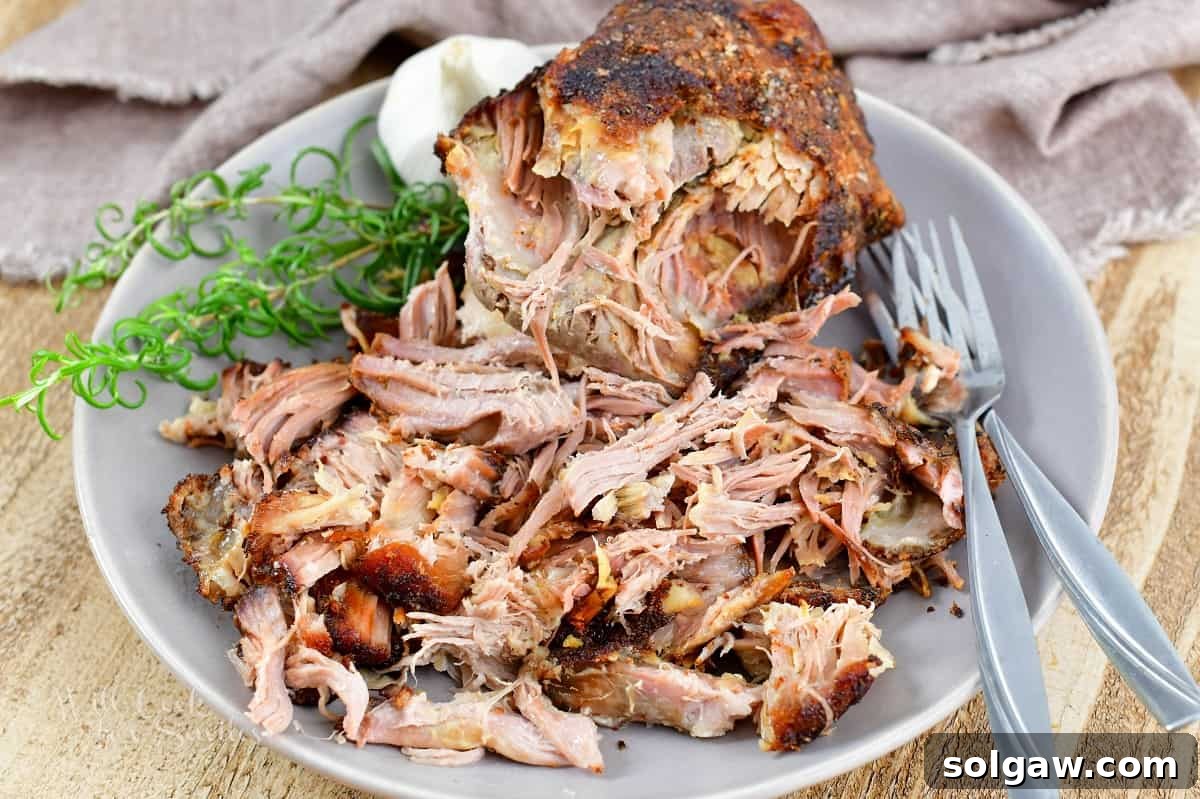
Tender Roast Pork Recipe
Print
Pin
Rate
Equipment
-
Leave-in Meat Thermometer
-
Roasting pan
Ingredients
- 4-5 lb bone-in Boston pork butt
- 2 tbsp coarse salt to season overnight
Seasoning:
- 4-6 garlic cloves
- 1 tbsp coarse salt
- 1/2 tbsp fresh cracked peppercorns
- 1 1/2 tbsp ground mustard
- 1 1/2 tbsp onion powder
- 2-3 tbsp minced fresh rosemary
Instructions
Salt pork:
-
Season the pork with 2 tablespoons of coarse salt in the evening. This dry brine significantly enhances flavor and tenderness.
-
Rub the pork shoulder thoroughly with the coarse salt, tie it with butcher’s twine if desired for even cooking, wrap it air-tight, and place it in a sheet pan or roasting dish. Refrigerate overnight for at least 8 hours.
-
About 30 minutes before you plan to start cooking, pull the pork out of the refrigerator to allow it to warm up slightly to room temperature.
Season:
-
Preheat your oven to 450°F (230°C). For easy cleanup, line the bottom of a roasting pan with aluminum foil and place a roasting rack inside.
-
Slice each garlic clove in half lengthwise. Using a small, sharp knife, poke about 1/2-inch deep slits all over the pork. Insert one garlic clove half into each slit, ensuring the garlic is embedded within the meat.
-
In a small, rimmed baking sheet or shallow dish, mix together the remaining 1 tbsp coarse salt, 1/2 tbsp fresh cracked peppercorns, 1 1/2 tbsp ground mustard, 1 1/2 tbsp onion powder, and 2-3 tbsp minced fresh rosemary.
-
Carefully dip and pat the pork into the seasoning mixture, making sure all sides are thoroughly and evenly coated.
-
Place the seasoned pork shoulder onto the roasting rack in the prepared roasting pan, fat-cap side up.
Roasting pork:
-
Insert a leave-in digital meat thermometer probe into the center of the thickest part of the meat, ensuring it does not touch the bone.
-
Place the roasting pan into the preheated oven and roast for 15 minutes at 450°F (230°C). This high heat helps to develop a flavorful crust.
After 15 minutes, reduce the oven temperature to 275°F (135°C) and continue to slow cook until the internal temperature reaches 200°F-203°F (93-95°C) for ultra-tender, pull-apart pork.
(A 4-5 lb pork shoulder typically takes about 5-8 hours to cook, but always rely on your thermometer for accuracy.)
-
Once the pork reaches the desired internal temperature, remove it from the oven. Tent it loosely with foil and let it rest for at least 20-30 minutes before pulling or carving. This allows the juices to redistribute, ensuring maximum moisture and tenderness.
Notes
If you prefer to cook a boneless pork shoulder and slice it rather than pull it, remove it from the oven when it reaches an internal temperature of 190°F-195°F (88-90°C).
Nutrition
Carbohydrates: 3g |
Protein: 37g |
Fat: 14g |
Saturated Fat: 5g |
Polyunsaturated Fat: 2g |
Monounsaturated Fat: 6g |
Cholesterol: 124mg |
Sodium: 3631mg |
Potassium: 685mg |
Fiber: 1g |
Sugar: 0.3g |
Vitamin A: 37IU |
Vitamin C: 3mg |
Calcium: 55mg |
Iron: 3mg