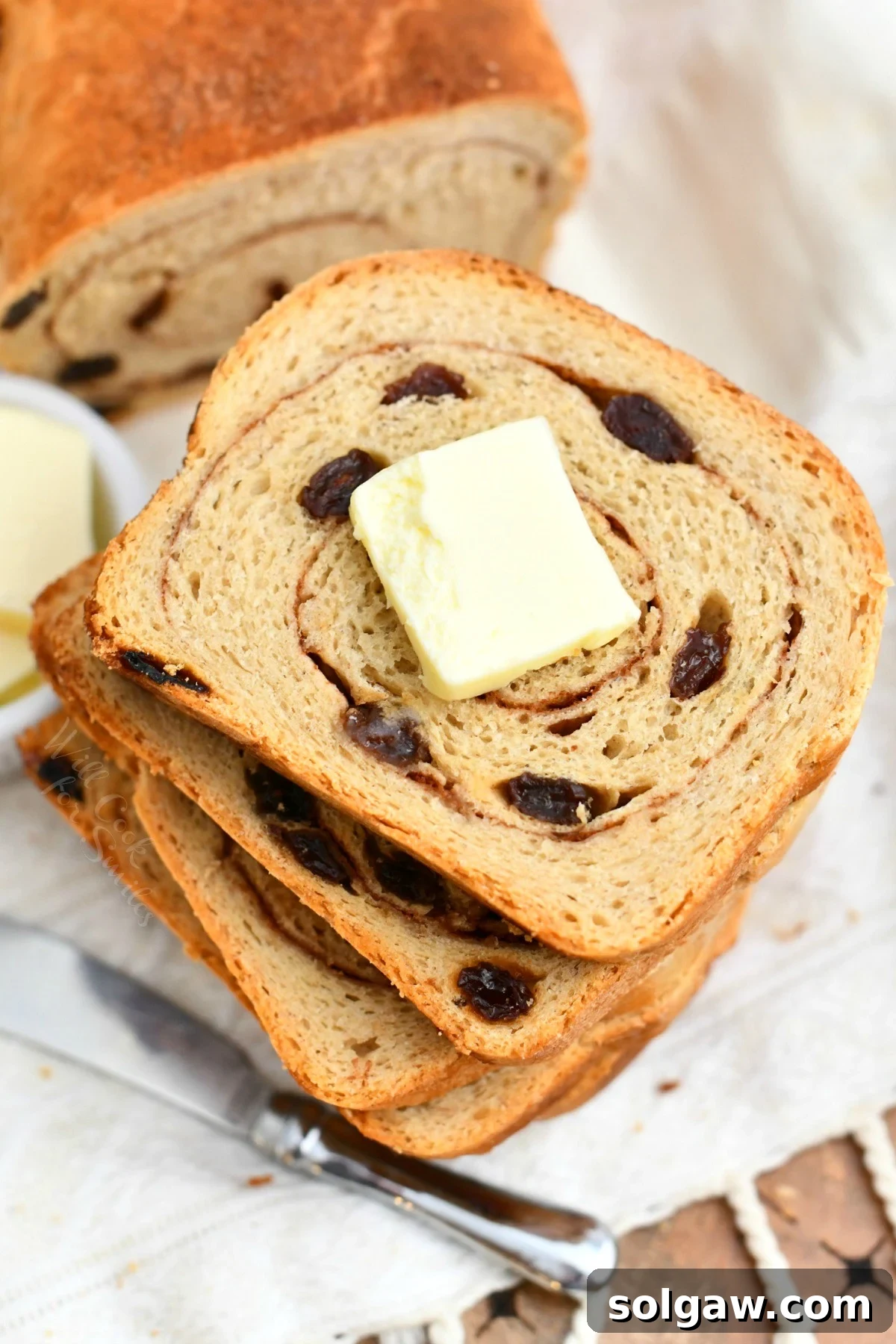
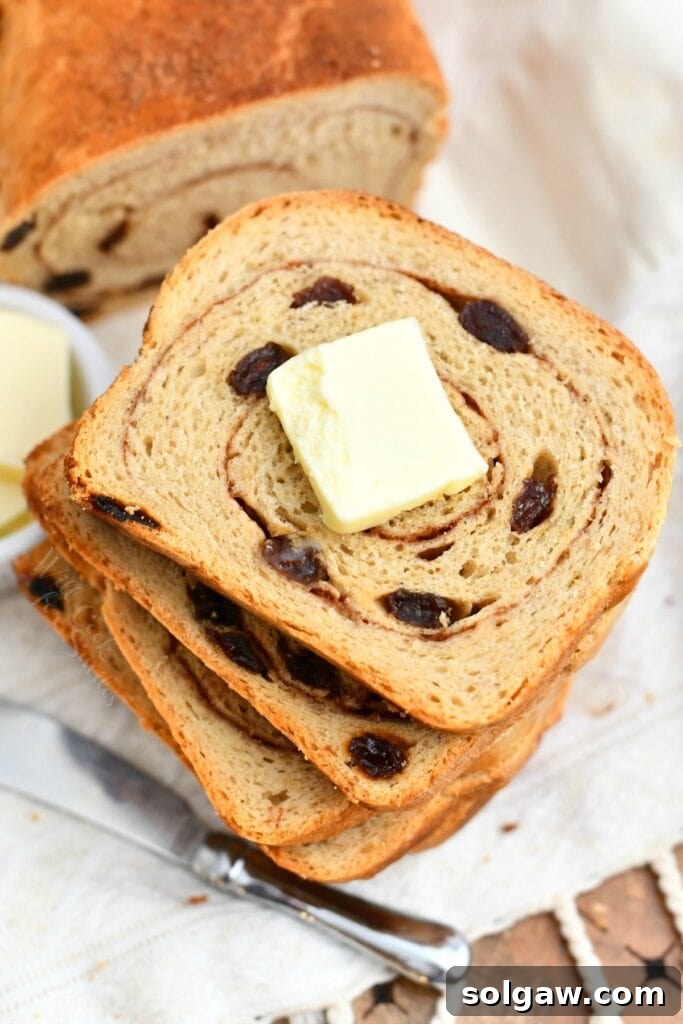
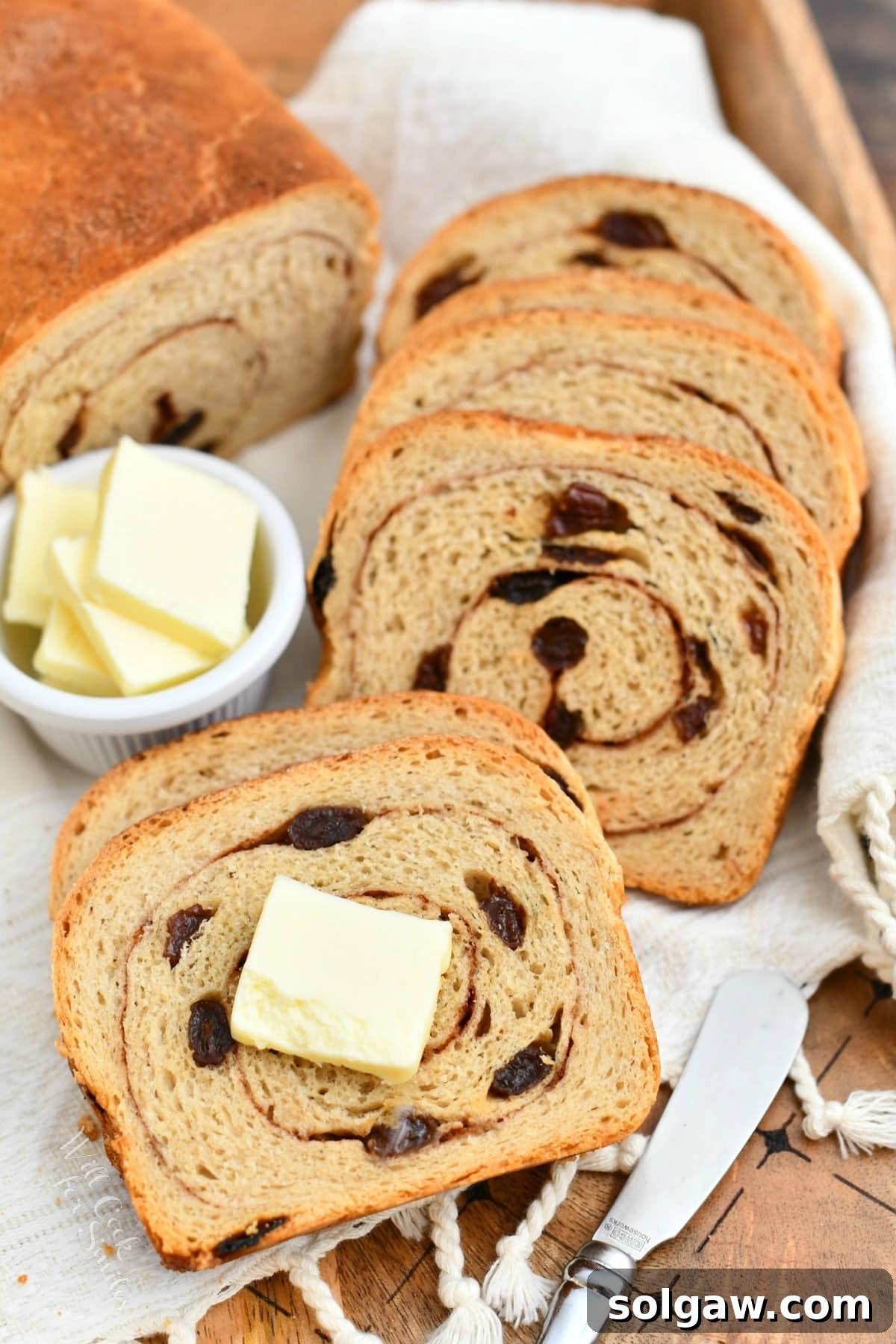
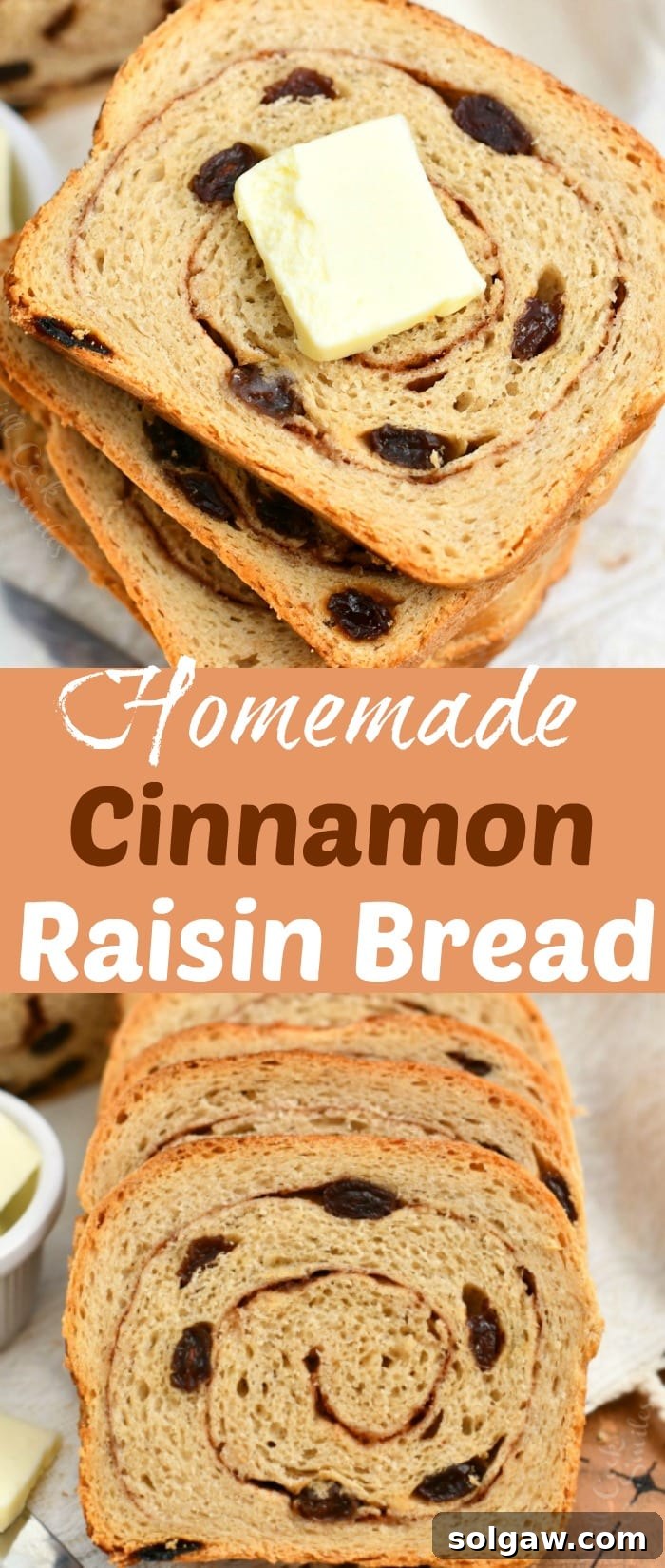
Cinnamon raisin bread is a timeless classic, offering a delightful blend of sweet, soft dough intertwined with aromatic cinnamon swirls and plump, juicy raisins. This homemade comfort bread is destined to become a cherished family favorite, so irresistible you’ll want to bake it every weekend.
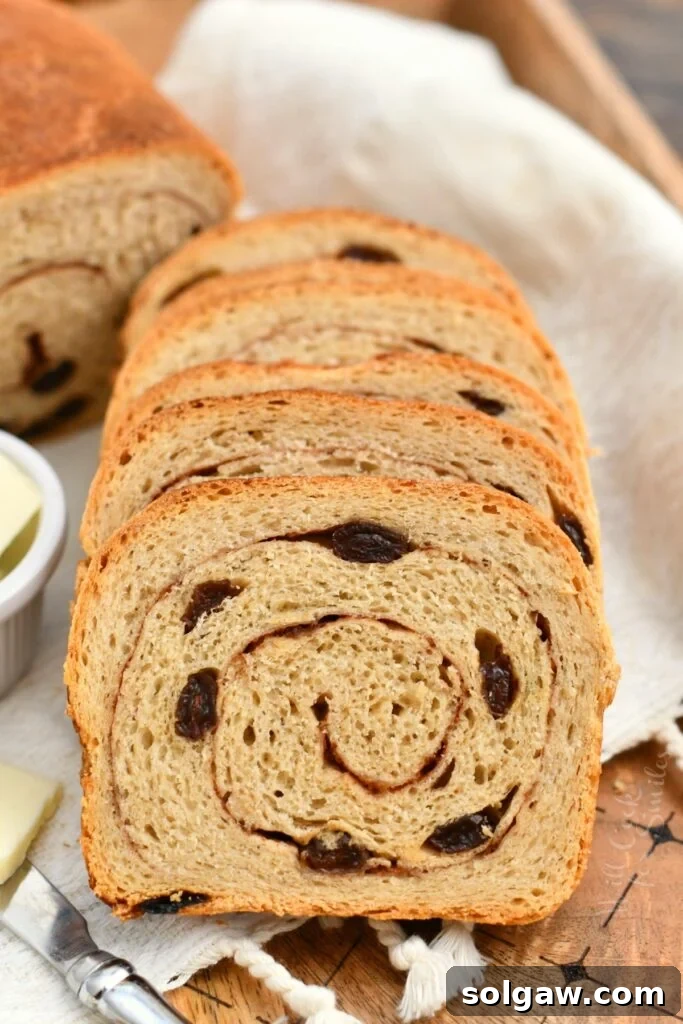
There’s nothing quite like the comforting aroma of freshly baked bread filling your home. This cinnamon raisin bread, in particular, holds a special place in our family’s heart. My children adore it, finding the sweet cinnamon swirl and the burst of tender raisins an irresistible treat for breakfast or an afternoon snack. It’s truly the perfect grab-and-go option for busy mornings, offering a delicious start to any day.
For many, the thought of baking with yeast can seem daunting, a culinary challenge reserved for experienced bakers. I completely understand that feeling; I once felt the same way. However, I soon discovered that with a little patience and a clear, step-by-step guide, yeast baking is surprisingly straightforward and incredibly rewarding. I promise, if you approach this recipe slowly and follow each instruction meticulously, you’ll quickly realize that achieving a perfectly risen, fragrant loaf is well within your grasp. Soon, your kitchen will be filled with that unmistakable, warm, and inviting scent of homemade bread, a testament to your newfound baking confidence.
The combination of cinnamon and raisins is a universally loved pairing, a classic for good reason. Even the pickiest eaters find it hard to resist a slice of this wonderfully flavorful bread. It’s a versatile staple that transcends simple breakfast fare, making a delicious addition to any meal or snack time.
Why Homemade Cinnamon Raisin Bread is a Must-Try
Beyond the sheer joy of baking, there are countless reasons to try your hand at homemade cinnamon raisin bread. The superior taste and texture are paramount; store-bought versions simply can’t compare to the soft, pillowy crumb and the vibrant flavor of a loaf fresh from your oven. You also gain complete control over the ingredients, allowing you to choose high-quality components and avoid unwanted preservatives or artificial flavors. This ensures a healthier and more wholesome product for your family.
Baking bread is also a wonderfully therapeutic process. From the initial mixing of ingredients to the satisfying act of kneading and watching the dough rise, it’s an experience that engages all your senses. The reward, of course, is a warm, aromatic loaf that brings immense satisfaction and pride. It’s more than just food; it’s a creation that fosters connection, turning simple ingredients into a cherished family tradition and creating lasting memories around the breakfast table.
Understanding Your Ingredients: Notes and Tips for Success
Each ingredient plays a vital role in achieving the perfect cinnamon raisin bread. Understanding their specific functions and how to best use them will elevate your baking results.
Choosing the Right Yeast: Active Dry vs. Instant
This recipe specifically calls for active dry yeast, which is typically labeled clearly on its packaging. It’s crucial to ensure you are not accidentally purchasing rapid rise, also known as “instant yeast.” While both are leavening agents, they behave differently in the baking process. Active dry yeast requires a preliminary “proofing” step in warm liquid to activate it, allowing you to confirm its vitality before adding it to the rest of your ingredients. This step is a fantastic confidence booster for new bakers, as it visibly demonstrates the yeast is alive and ready to work. Instant yeast, on the other hand, can be mixed directly with dry ingredients without proofing. Using the incorrect type without adjusting the method can lead to disappointing results, so always double-check your yeast packet!
For optimal results, I strongly advise purchasing yeast just before you plan to use it. Fresh yeast is the most active and reliable, so avoid stocking up far in advance to ensure your bread rises beautifully every time.
The Secret to Juicy Raisins
One of the keys to preventing dry, hard raisins in your baked bread is to plump them beforehand. Soaking raisins in warm water helps them absorb moisture, ensuring they remain wonderfully soft and juicy throughout the baking process. This simple step not only rehydrates the raisins but also contributes to the overall moistness of the bread’s interior, creating a delightful texture contrast with the soft dough.
The Perfect Cinnamon Swirl
After rigorous testing, I’ve perfected the ideal amount of cinnamon swirl filling for this bread. Using too little will result in a barely visible swirl and a muted flavor. Trust me, the recipe’s call for 1 1/2 tablespoons of cinnamon in the swirl, alongside a teaspoon in the dough itself, is intentional. This generous quantity ensures that classic, striking swirl and a rich, unmistakable cinnamon flavor in every single bite. Don’t be shy with the cinnamon; it’s what makes this bread truly spectacular!
Baking Your Own Cinnamon Raisin Bread: A Step-by-Step Guide
While the overall time commitment for making yeast bread might seem extensive, remember that much of it is inactive waiting time. This means you can easily go about your day, tackling other tasks while your dough works its magic. The actual hands-on effort is quite manageable, making this a rewarding project for any home baker.
- Prepare the Raisins and Proof the Yeast: Begin by placing your raisins in a small bowl and covering them with hot water to plump for about 10 minutes. While they soften, measure out 1 cup of the warm raisin water (ensure it’s around 105-115°F or a little warmer than room temperature, but not hot) into the bowl of your stand mixer. Sprinkle the active dry yeast over the water and let it sit for 5-10 minutes until it becomes foamy, indicating the yeast is active. If it doesn’t foam, your yeast may be old, or the water temperature was incorrect, and you’ll need to start again with fresh yeast.
- Combine Wet Ingredients: Once the yeast is visibly active, stir in the warmed whole milk, melted unsalted butter, and salt into the yeast mixture in your stand mixer bowl.
- Form the Dough: Gradually add the all-purpose flour and the teaspoon of ground cinnamon to the wet ingredients. Using the paddle attachment on your stand mixer (or a sturdy spoon if mixing by hand), mix on low speed until a “shaggy” dough forms. This means the dough will look rough, uneven, and somewhat wet – it hasn’t come together smoothly yet.
- Knead to Perfection: Switch to the dough hook attachment on your mixer. Knead the dough on low to medium speed for 8-10 minutes. If kneading by hand, work the dough on a lightly floured surface for the same duration. The dough should transform from shaggy to smooth, elastic, and slightly tacky to the touch. It should pull away from the sides of the bowl. If it’s too sticky, add a tiny bit more flour, a tablespoon at a time.
- Incorporate Raisins: With the mixer still on low (or gently by hand), add the plumped, strained raisins. Continue kneading just until the raisins are evenly distributed throughout the dough. Over-kneading at this stage can tear the dough.
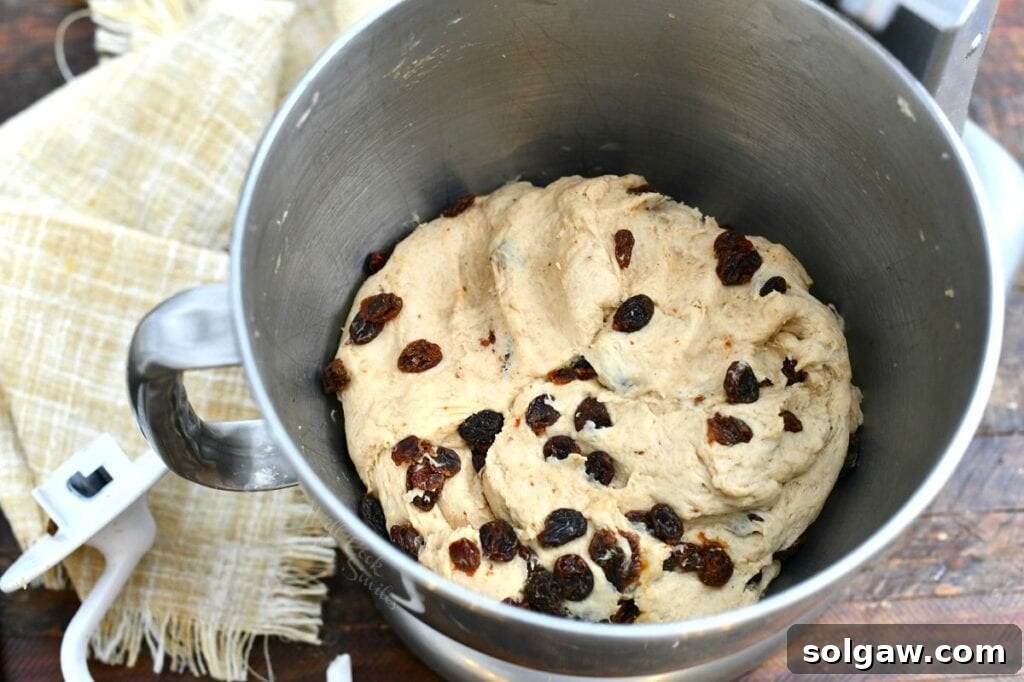
- First Rise (Bulk Fermentation): Lightly grease a large bowl with a neutral oil. Place the dough ball into the greased bowl, turning it once to coat all sides. Cover the bowl tightly with plastic wrap or a clean, lint-free kitchen towel. Let the dough rise in a warm, draft-free place until it has roughly doubled in size. This usually takes about 1 to 1.5 hours, depending on your kitchen’s temperature.
For an ideal rising environment, find a warm, dry spot. I often turn my oven on to the lowest setting (or simply the light on) for a few minutes to warm it slightly, then turn it off and let the dough rise on the counter nearby, ensuring it’s not too close to direct heat.
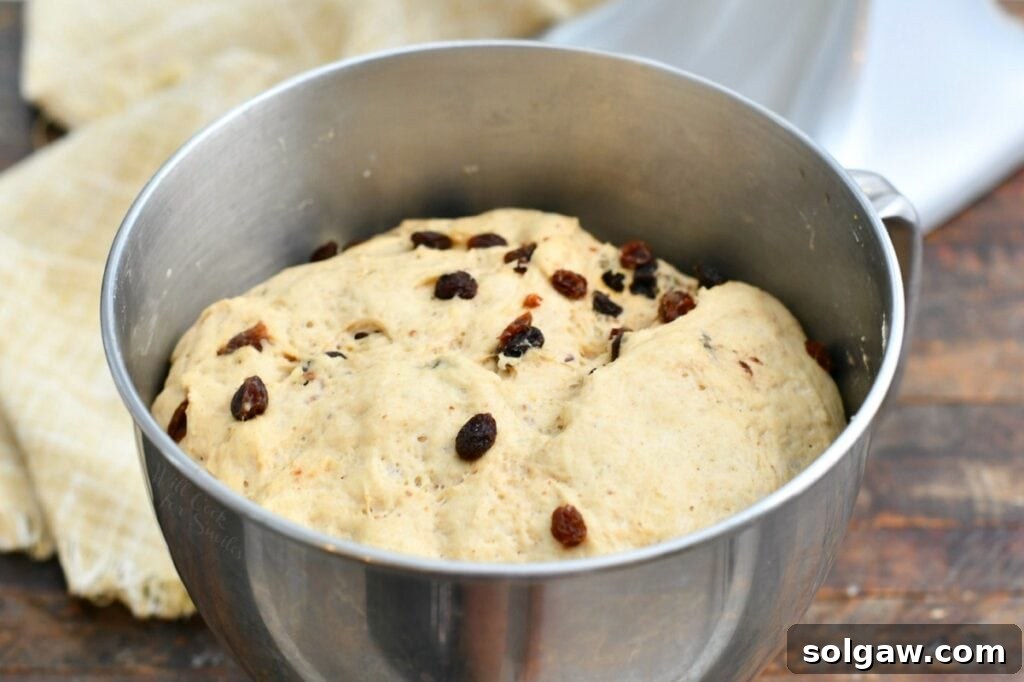
- Shape the Loaves: Gently punch down the risen dough to release the air. Turn it out onto a lightly floured surface and divide it into two equal pieces for two loaves. Take one piece of dough and roll it out with a rolling pin into a rough rectangle, ensuring it’s slightly less wide than the length of your loaf pan and about 1/6 to 1/8 inch thick.
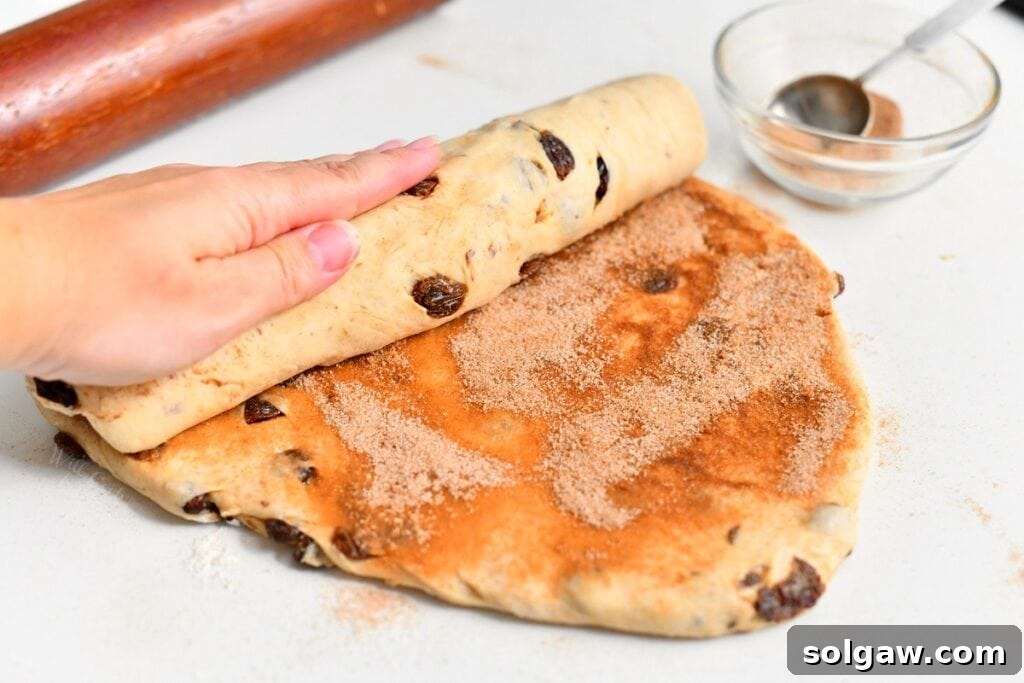
- Add the Swirl: In a small bowl, combine the 1/2 cup white granulated sugar and the 1 1/2 tablespoons cinnamon for the filling. Whisk the egg in another small bowl. Lightly brush the entire surface of your rolled-out dough with the whisked egg. Then, generously sprinkle the cinnamon-sugar mixture evenly over the egg-washed dough, similar to how you would prepare cinnamon rolls.
- Roll and Place in Pans: Starting from one of the longer sides, tightly roll up the dough into a log. Pinch the seam firmly to seal it. Place the rolled dough into a lightly greased 9×5-inch loaf pan, seam-side down. Repeat the process with the second piece of dough and a second loaf pan.
- Second Rise (Proofing): Cover the loaf pans loosely with a clean kitchen towel. Let the loaves rise again in a warm, draft-free spot until they are beautifully mounded over the top of the pans, approximately 30-45 minutes. During the last 15 minutes of this rise, preheat your oven to 375°F (190°C). For an extra touch, you can lightly sprinkle the tops of the risen loaves with a bit more cinnamon-sugar mixture before baking.
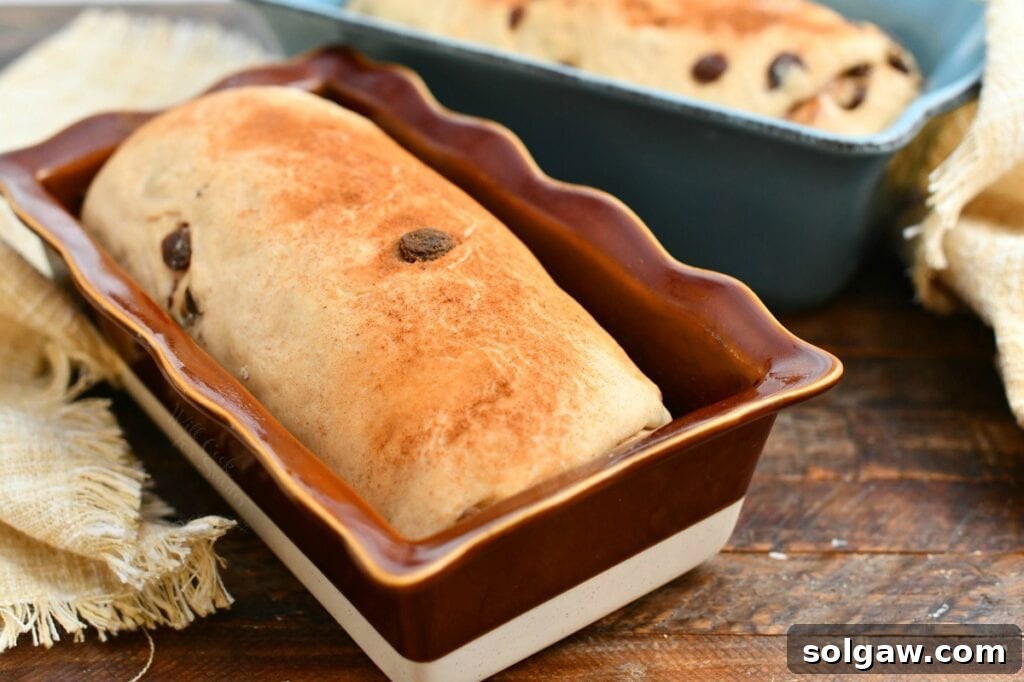
- Bake and Cool: Bake the loaves in the preheated oven for 40-45 minutes, or until they are golden brown on top and sound hollow when tapped on the bottom. For a foolproof way to ensure doneness, use an instant-read thermometer. The internal temperature of the bread should reach 190-200°F (88-93°C). Allow the bread to cool in the pans for at least 15-20 minutes before carefully removing them to a wire rack to cool completely before slicing. This prevents the interior from becoming gummy.
Mastering Your Bake: Essential Equipment and Techniques
Having the right tools and understanding a few key techniques can make all the difference in your bread-baking journey.
Recommended Equipment: Loaf Pans
For baking this cinnamon raisin bread, I recommend using two loaf pans made of either ceramic or metal. Consistency is key here: always use two pans of the same size and material. Different materials (e.g., glass vs. metal) and even slight variations in size can affect baking times and heat distribution, leading to unevenly baked loaves. Ceramic pans might bake slightly slower than metal, but as long as both your pans are identical, your loaves will bake uniformly.
Whether they are ceramic, metal, or glass, always use two loaf pans that are the exact same size and material to ensure even baking.
These versatile pans aren’t just for yeast breads! They’re also perfect for creating delicious quick breads, ideal for expanding your breakfast spread. Consider classic Zucchini Bread for late summer harvests, or my tropical-inspired Coconut Banana Bread for a taste of sunshine any time of year.
The Baker’s Secret Weapon: An Instant-Read Thermometer
An instant-read thermometer is an indispensable kitchen tool, not just for ensuring perfectly cooked meats, but also for guaranteeing expertly baked bread. While the traditional method of tapping the loaf for a hollow sound is a good indicator, measuring the internal temperature is the most foolproof way to confirm doneness. Removing bread from the oven too early can result in a dense, gummy interior or a collapsed loaf, especially in richer breads like this one. An internal temperature of 190° to 200°F (88-93°C) typically signals that most breads are fully baked and ready for cooling.
For yeast breads, an internal temperature of 190° to 200°F is your reliable indicator of a perfectly baked loaf.
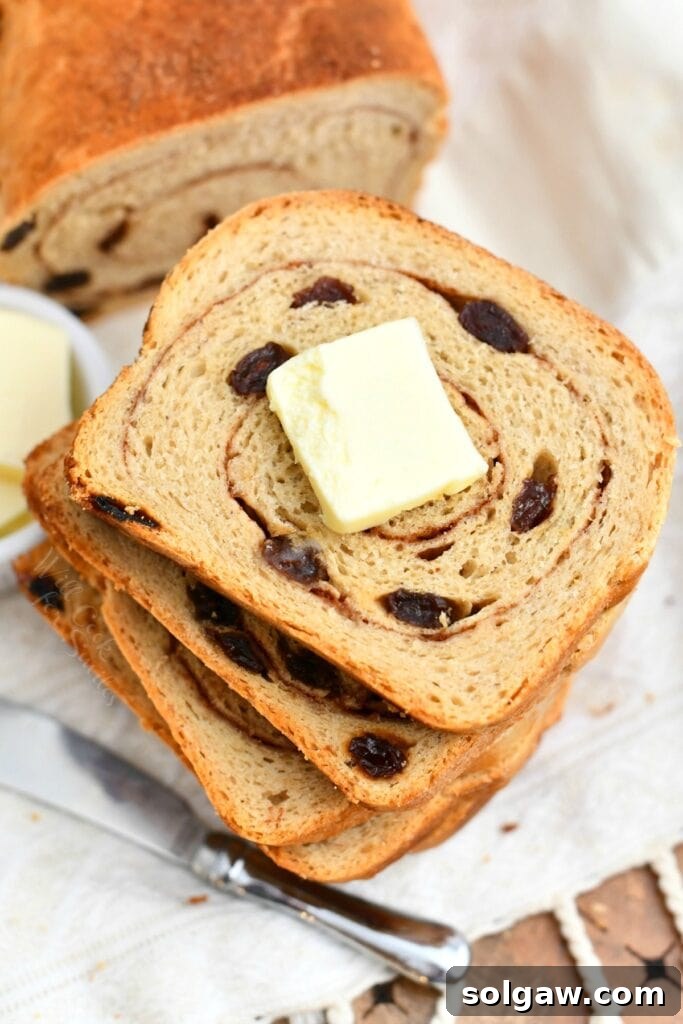
Storage and Freezing Tips for Maximum Freshness
Once you’ve invested the time and love into baking this delicious bread, you’ll want to ensure it stays fresh for as long as possible. Proper storage is key.
Can I Freeze Cinnamon Raisin Bread?
Absolutely, freezing cinnamon raisin bread is an excellent way to extend its shelf life and enjoy homemade goodness whenever a craving strikes! For ultimate convenience, I highly recommend freezing it in slices. This allows you to easily grab just a slice or two as needed, minimizing waste.
To freeze slices: First, ensure the baked loaves have cooled completely to room temperature. Then, slice the bread to your desired thickness. Lay the slices in a single layer on a baking sheet and flash freeze for about an hour until firm. This prevents them from sticking together. Once firm, transfer the frozen slices into a large, heavy-duty freezer-safe zip-top bag. Arrange them neatly, pressing out as much air as possible before sealing and labeling with the date. Avoid overfilling or squishing the slices. Freeze for up to 2 months. When you want a slice, simply pop it directly into the toaster – no defrosting necessary! If you prefer it untoasted, let it sit on the counter for 15-20 minutes to thaw.
Note: You might need more than one bag to avoid overcrowding and maintain the integrity of the bread slices.
You can also freeze a whole loaf if you prefer. Again, ensure the loaf is completely cool. Wrap it tightly in several layers of plastic wrap, making sure it’s as airtight as possible to prevent freezer burn. For additional protection, you can then place the wrapped loaf into a freezer zip-top bag or wrap it in aluminum foil. Label and freeze for up to 3 months. To defrost, simply leave it on the counter at room temperature for several hours or overnight.
Creative Ways to Enjoy Your Cinnamon Raisin Bread
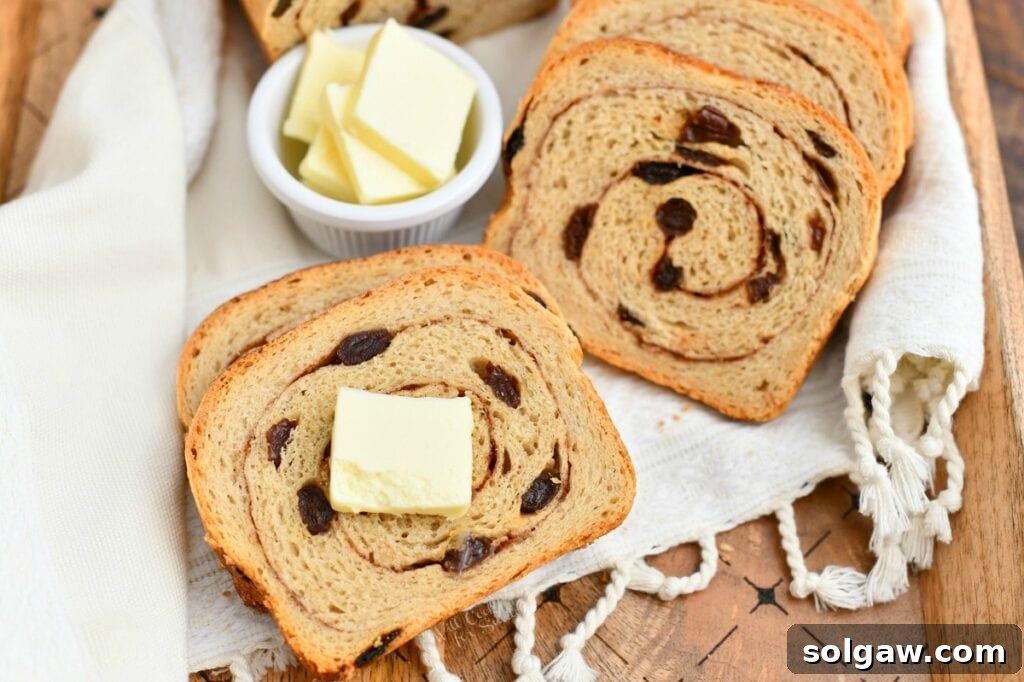
While a warm slice slathered with butter is arguably the pinnacle of enjoyment for homemade cinnamon raisin bread, its versatility extends far beyond! If a loaf miraculously lasts more than a day in your household (it rarely does in mine!), consider these delicious serving suggestions:
- Classic Breakfast Delight: Enjoy it toasted with a generous spread of butter, cream cheese, or your favorite jam.
- Elevated French Toast: Transform day-old slices into the most incredible French Toast. The inherent sweetness and spice of the bread take this classic dish to a whole new level.
- Brunch Extravaganza: Round out a festive brunch spread by serving toasted cinnamon raisin bread alongside fluffy scrambled eggs, a refreshing pitcher of Peach Lemonade, or comforting mugs of Homemade Hot Chocolate.
- Sweet Snack: A plain slice pairs wonderfully with a cup of coffee or tea for a cozy afternoon treat.
- Dessert Twist: Lightly grill a slice and top it with a scoop of vanilla ice cream for a surprisingly delightful dessert.
Don’t forget to explore seasonal variations like our equally delightful Pumpkin Spice Raisin Bread for a festive autumn twist!
If you made any of my recipes and shared them on Instagram, make sure to tag me @willcookforsmiles and #willcookforsmiles so I can see all the delicious things you tried!
Don’t forget to sign up for email, so you won’t miss any new recipes.
PIN THIS RECIPE
Cinnamon Raisin Bread
Print
Pin
Rate
Breakfast, Snack
American
2 hours
45 minutes
2 hours
45 minutes
28
2 loaves
142
kcal
Lyuba Brooke
Ingredients
Bread:
-
1
cup
raisins -
1
cup
warm water -
1
tbs
active dry yeast -
1
cup
whole milk
warmed -
1/4
cup
unsalted butter
melted -
2
teaspoons
salt -
1 1/2
tsp
ground cinnamon -
5 1/2
cups
all-purpose flour -
little more flour for the surface
Filling:
-
1/2
cup
white granulated sugar -
1 1/2
tbsp
cinnamon -
1
egg
whisked
Instructions
-
Put the raisins in a small bowl filled with hot water. Let the raisins plump up, about 10 minutes. Strain them through a fine mesh strainer but save the raisin water.
-
Pour a cup of warm raising water into the bowl of a standing mixer or large mixing bowl. (Note: if the water cooled down, warm it up a little more. Water should be a little warmer than room temperature but not hot. Make sure there is 1 cup of water.)
-
Add yeast to water and stir gently. Give it a about 10 minutes for the yeast to bloom and then stir.
-
Stir warmed milk, melted butter, and salt into the water.
-
Add 5 1/2 cups of the flour and cinnamon and mix on low to form a shaggy dough.
-
Switch to a dough hook and knead in your mixer on low speed with the dough hook (or knead by hand for 8-10 minutes to form a smooth, slightly tacky dough). If the dough is too sticky, add a little more flour.
-
With the mixer on low, gradually add raisins to the dough and continue kneading until they are evenly distributed.
-
Cover bowl with a plastic wrap or a towel and place in the warm dry place. Let rise for about an hour.
-
Divide the dough into two even pieces. Roll the dough out on the counter. Make sure that the dough is a little less wide that your loaf pan. Try to make the dough about 1/6th to 1/8th of an inch think.
-
Brush the entire surface of the dough with egg.
-
Combine cinnamon and sugar in a small bowl and mix completely. Sprinkle the dough generously with cinnamon and sugar mixture.
-
Roll up the dough and place it in the greased loaf pan, seam side down.
-
Repeat with the other half of the dough.
-
Cover the pans with a towel and let the loaves rise until mounded over the top, about 30 minutes. Sprinkle with some cinnamon and sugar over the top.
-
Preheat the oven to 375° while the dough is rising.
-
Bake for 40-45 minutes until golden brown. You can check internal temperature of the dough in the center. Bread is ready when it reaches 190° internal temperature. (Note, bread baked in smaller pans will take a few minutes longer than wider pans.)
-
Take the loaves out of the oven and let it cool to room temperature before taking out and slicing.
Nutrition
Calories:
142
kcal
|
Carbohydrates:
27
g
|
Protein:
3
g
|
Fat:
2
g
|
Saturated Fat:
1
g
|
Cholesterol:
11
mg
|
Sodium:
175
mg
|
Potassium:
86
mg
|
Fiber:
1
g
|
Sugar:
4
g
|
Vitamin A:
73
IU
|
Vitamin C:
1
mg
|
Calcium:
22
mg
|
Iron:
1
mg
Tried this recipe?
Mention @willcookforsmiles or tag #willcookforsmiles!
Originally published on Will Cook For Smiles on May 1, 2012. Updated October 8, 2020.