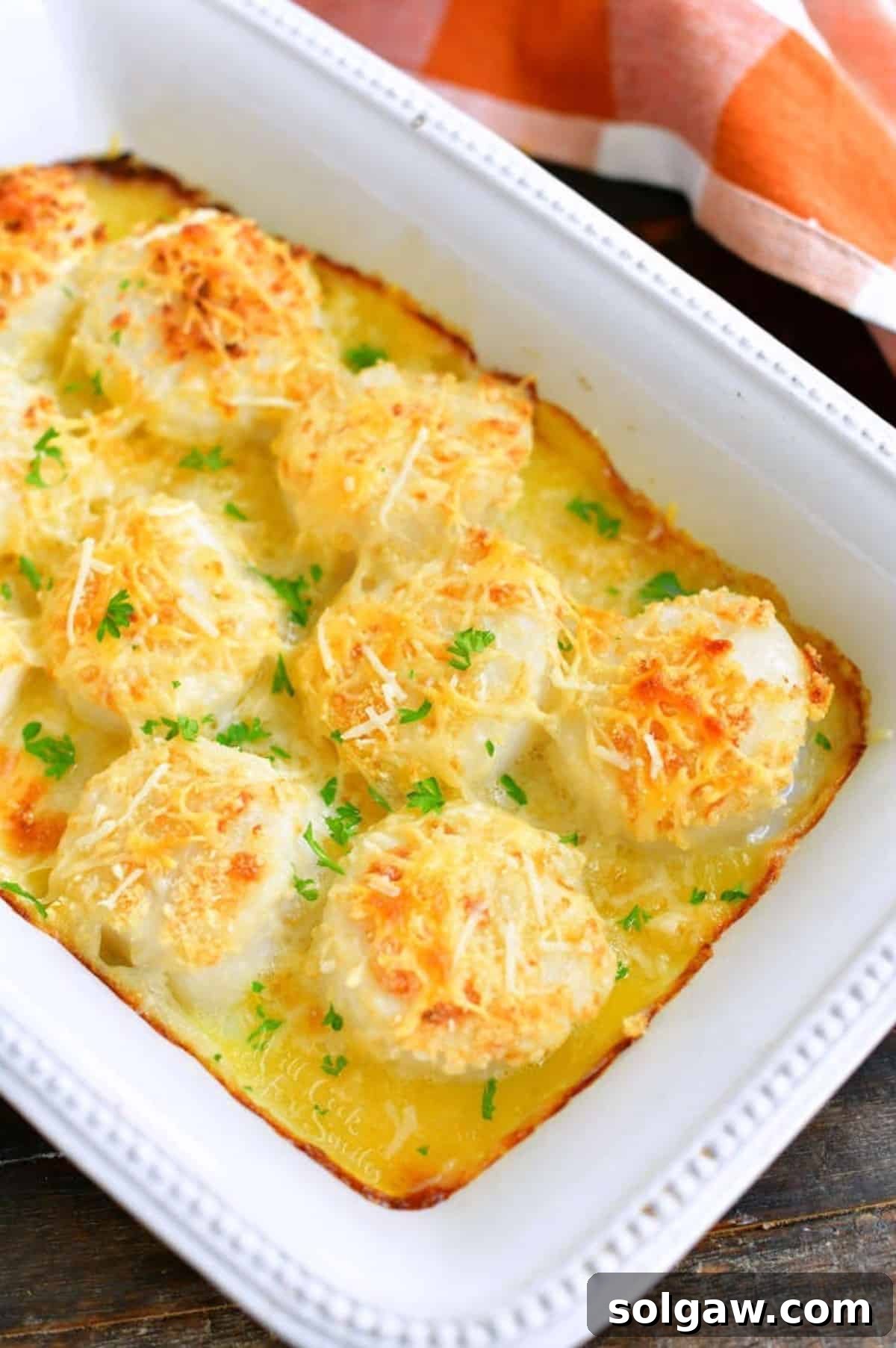
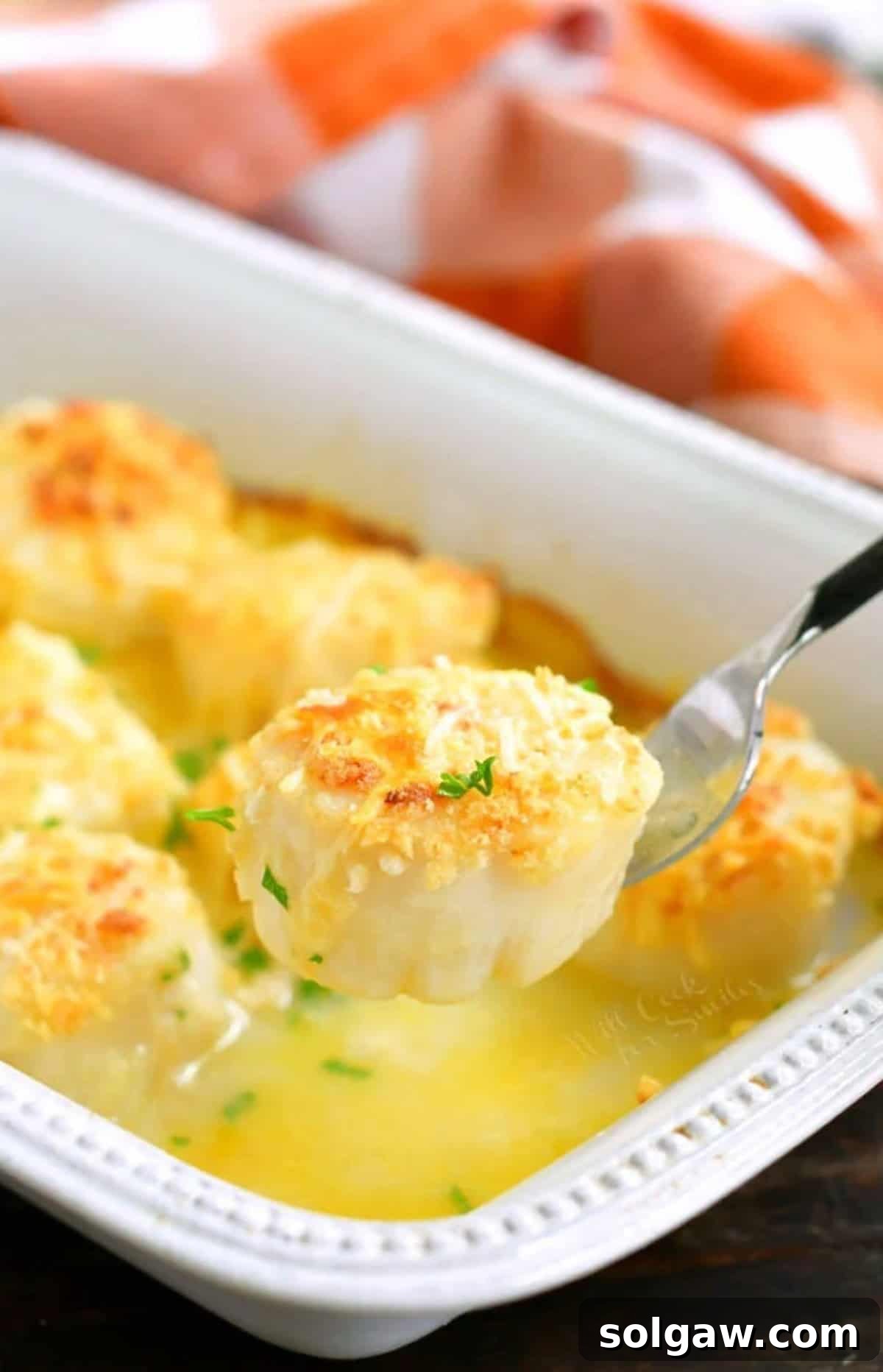
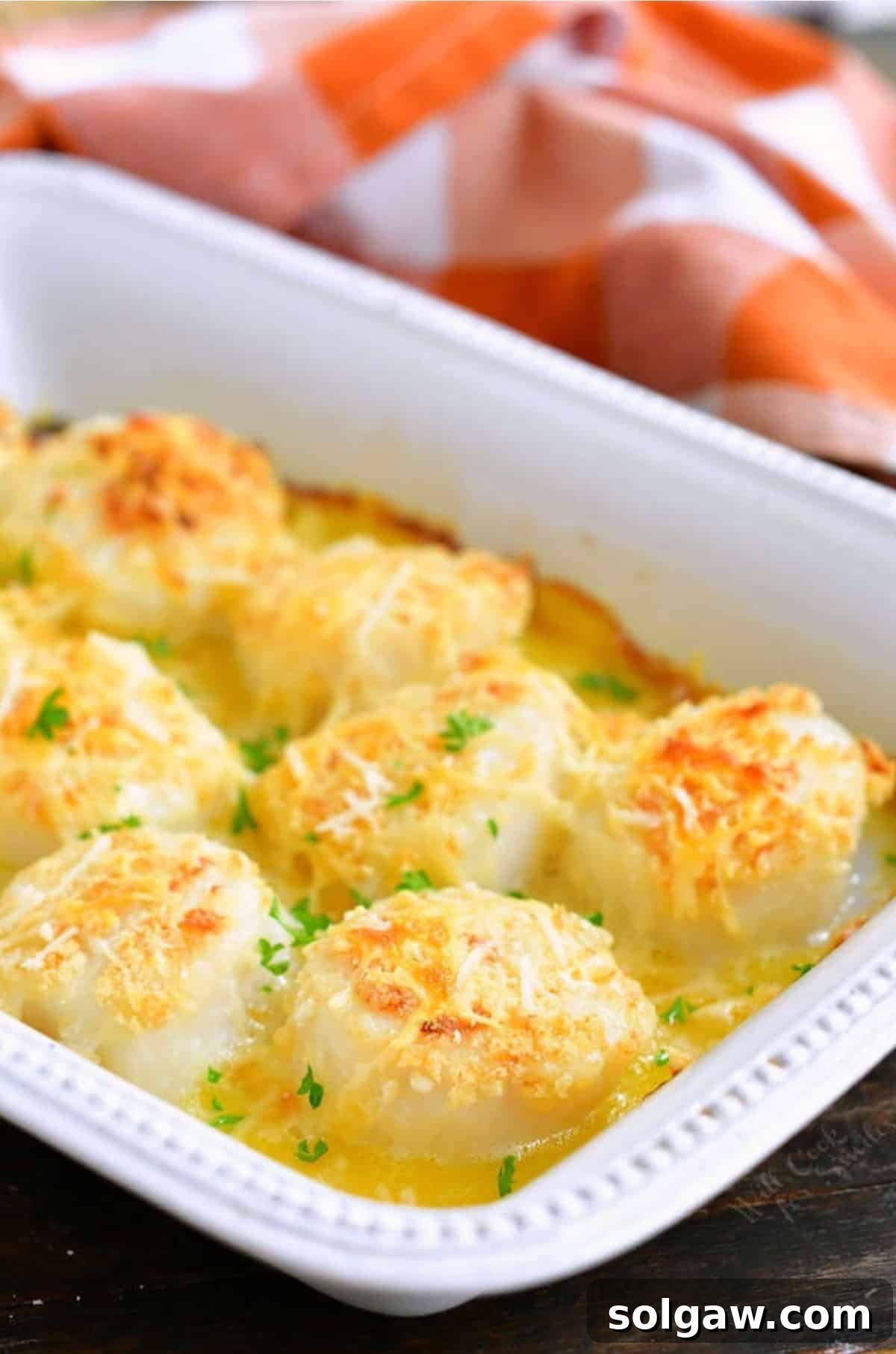
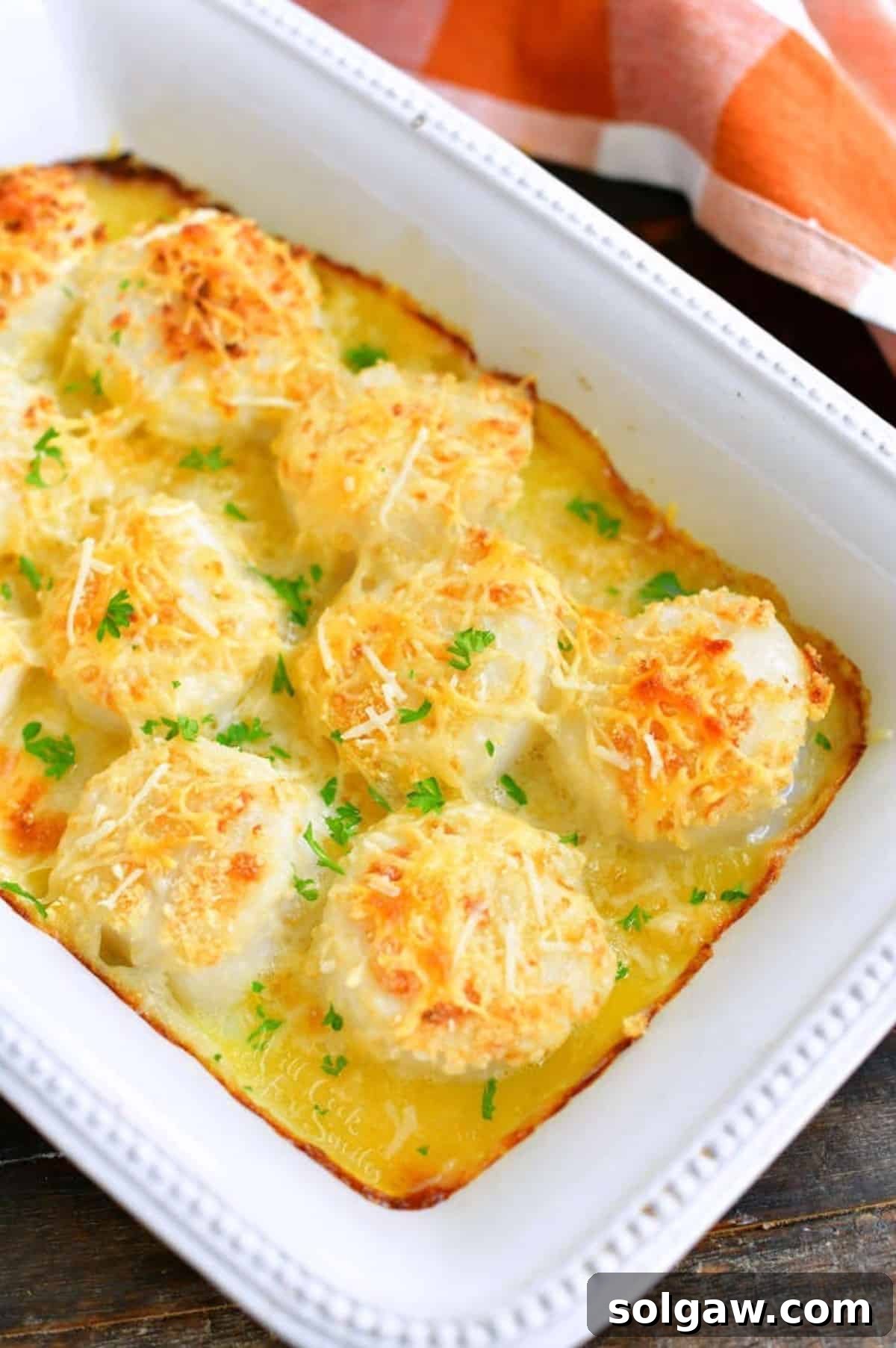
There’s a reason this baked scallops recipe has become a cherished favorite among our readers. It’s a beautifully simple, yet incredibly satisfying way to prepare plump, tender, and intensely flavorful scallops, perfect for any night of the week. Forget the fancy restaurant bills; you can now master this elegant seafood dish in your own kitchen with minimal effort and maximum deliciousness.
Scallops often feel like a special-occasion treat reserved for dining out, but they are, in fact, one of the easiest and quickest seafoods to cook at home. Their delicate texture and subtly sweet flavor make them a culinary delight, and their fast cooking time means less time in the kitchen and more time enjoying your meal. For instance, pan-seared scallops are ready in about 5 minutes, while baked scallops, like these, take approximately 10-14 minutes to reach perfection. Many home cooks are intimidated by preparing scallops, fearing they might overcook them or simply get it wrong. But let me assure you, baking scallops is a low-maintenance, foolproof method that yields consistently succulent results.
Decoding Scallop Labels: Size and Type
Understanding the labels on scallops is crucial for choosing the right ones for your recipe. Whether you’re at the fish counter or browsing the frozen aisle, a little knowledge goes a long way in ensuring you get the best quality and size for your culinary needs.
What the Numbers Mean on Scallop Packaging
When you see numbers like “36/40” or “21/25” next to scallops or shrimp, these figures indicate the approximate count of individual pieces you’ll receive per pound. A smaller number signifies larger scallops, meaning fewer pieces make up a pound. Conversely, a higher number indicates smaller scallops, with more pieces per pound. For example, “U10” or “U15” on a label simply means “under 10” or “under 15” scallops per pound, further specifying their impressive size.
Navigating Scallop Varieties: Sea, Bay, and Diver Scallops
- Sea Scallops: These are the largest and most commonly recognized scallops, often referred to as “jumbo” scallops. Their diameter typically ranges from 1 to 2 inches, making them ideal for dishes where you want a substantial, meaty bite, such as seared scallops or our delicious baked version. Their size allows them to develop a beautiful crust while remaining tender in the center.
- Bay Scallops: Significantly smaller than their sea counterparts, bay scallops are usually found in shallower waters. These delicate morsels are typically only 1/2 to 3/4 inch in diameter. Due to their petite size, bay scallops cook very quickly and are not well-suited for searing, as they can easily overcook and become rubbery. They are best used in quick-cooking preparations like stir-fries, pasta dishes, or stews where their tenderness can shine without prolonged heat.
- Diver Scallops: Considered the premium choice, diver scallops are hand-harvested by divers rather than being caught by nets dragged along the ocean floor. This sustainable and selective harvesting method typically means divers choose only the largest, fully mature scallops, which is reflected in their higher price point. While their size can vary, they are generally large and boast an exceptional, clean flavor due to minimal handling and the care taken during collection.
The Crucial Difference: Wet vs. Dry Scallops
One of the most important distinctions when buying scallops is whether they are “wet” or “dry.” This factor significantly impacts their flavor, texture, and how well they cook.
- Wet Scallops: These scallops have been treated with a phosphate solution, which whitens their appearance and causes them to absorb more liquid. While this makes them appear larger and heavier, you’re essentially paying more for added water. More importantly, wet scallops release a substantial amount of liquid during cooking, preventing them from browning properly and often resulting in a rubbery texture. It is highly recommended to avoid “wet scallops” whenever possible.
- Dry Scallops: Dry scallops are the superior choice. They have not been soaked in any chemical solutions and retain their natural, slightly off-white or even faintly pinkish color. These “dry-packed” or “chemical-free” scallops offer the best natural flavor, have no excess liquid to contend with, and caramelize beautifully, whether baked or seared, ensuring a tender, succulent result every time. Always look for these labels for the best cooking experience.
Working with Frozen Scallops
While fresh scallops are undeniably ideal, frozen scallops can be a perfectly acceptable alternative if you don’t live near a coast or can’t find fresh, dry-packed options. Many local fishermen flash-freeze their catches immediately after harvesting to preserve peak freshness, so quality frozen scallops can sometimes be remarkably good.
If you opt for frozen scallops, proper thawing is key to maintaining their texture and flavor. Always thaw them slowly overnight in the refrigerator. Avoid thawing at room temperature or using hot water, as this can compromise their delicate structure. Once thawed, use them the very next day and never refreeze them.
Achieving Scallop Perfection: How to Tell When They’re Done
The secret to cooking perfect scallops lies in knowing when to stop. Scallops cook very quickly, and even a minute too long can turn them from tender and buttery to tough and rubbery.
- Scallops are fully cooked when they turn opaque throughout their center. This transformation from translucent to opaque is your primary visual cue. The goal is to cook them just until this point, then immediately remove them from the heat.
- When baking scallops in a sauce or with butter, there’s a little more leeway than with searing, as the liquid helps prevent them from drying out too quickly. However, continuous vigilance is still important to prevent overcooking.
- The exact baking time will vary based on the size of your scallops. For precise cooking, you can use an instant-read thermometer. Scallops are perfectly cooked when their internal temperature reaches 125°-130°F in the thickest part. Remove them from the oven a couple of degrees before they reach this target, as they will continue to cook slightly from residual heat.
Storing and Reheating Baked Scallops
If you happen to have any leftover baked scallops, proper storage and reheating will help preserve their deliciousness, though they are always best enjoyed fresh.
- Storing: Cooked scallops should be stored promptly in an airtight container in the refrigerator. They are best consumed within 2 days of cooking. Beyond this, their quality can diminish.
- Reheating: To reheat scallops without overcooking them, use a gentle approach. Place them in a baking dish and warm them in a preheated oven at a low temperature (around 275-300°F) until just heated through. Alternatively, reheat them on the stovetop over medium-low heat with a small amount of butter or broth to prevent drying. The key is to warm them just enough, not to cook them further.
What to Serve with Baked Scallops
Baked scallops are incredibly versatile and pair wonderfully with a variety of side dishes, adapting to both comforting and lighter meal preferences.
For a heartier, more comforting meal, consider serving your buttery baked scallops over a bed of creamy pasta, alongside rich scalloped potatoes, or with a luxurious Parmesan risotto. These options create a decadent and fulfilling dining experience.
If you’re aiming for a lighter, more refreshing meal, scallops complement fresh salads beautifully. Alternatively, pair them with simple vegetable sides such as crisp roasted asparagus, tender roasted cauliflower, or a vibrant avocado corn salad. The delicate flavor of the scallops shines when balanced with these fresh and simple accompaniments.
We absolutely love hearing from you! If you’ve tried this recipe, please share your thoughts and a 🌟 star rating in the comments below. You can also tag us on social media @willcookforsmiles and use #willcookforsmiles to show off your culinary creations. Don’t forget to subscribe to our newsletter for more delicious and easy recipes!
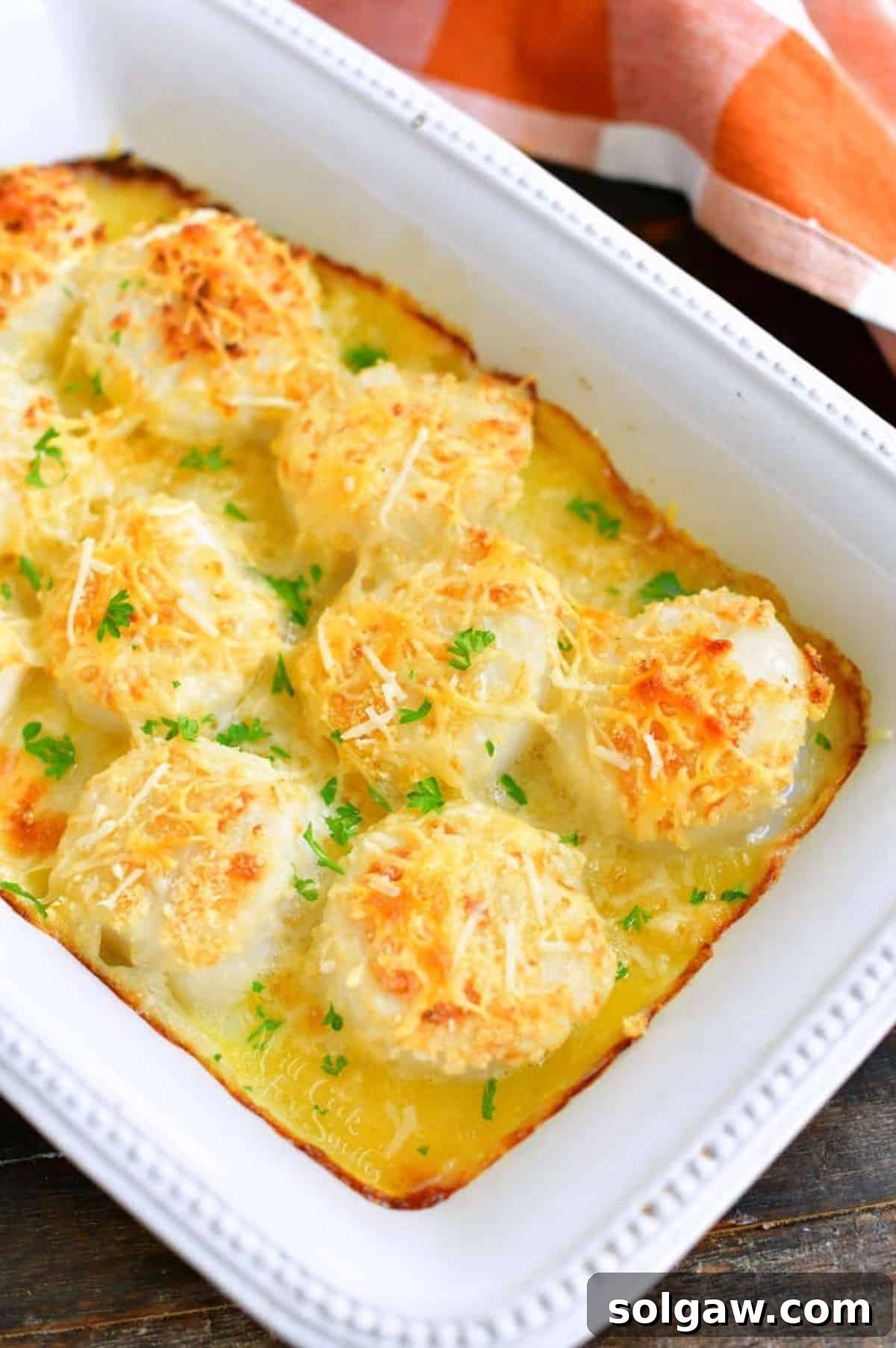
Butter Parmesan Baked Scallops
Ingredients
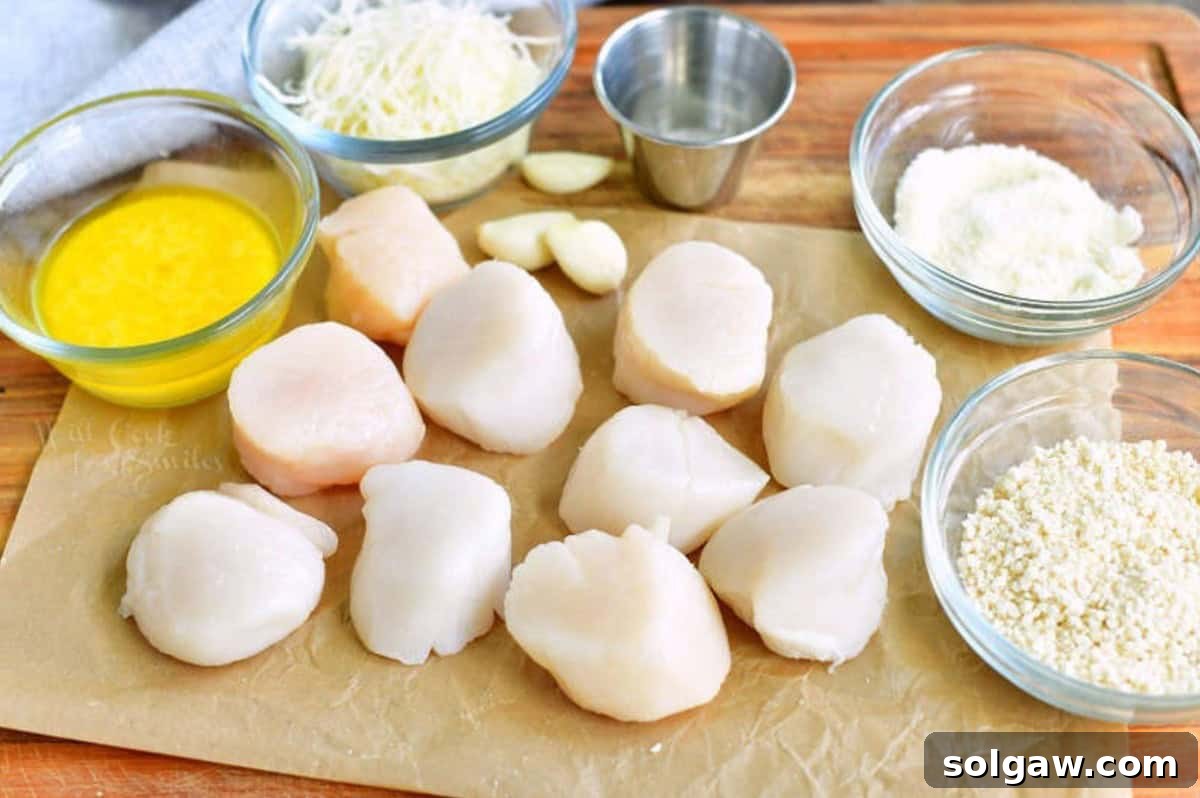
- 1 lb sea scallops
- 4 tbsp butter melted
- 3 garlic cloves pressed
- salt (to taste)
- 1/3 cup Panko bread crumbs*
- 3 tbsp grated Parmesan cheese
- 1/2 cup shredded Parmesan cheese for topping
Instructions
-
Preheat your oven to 425°F (220°C). This high heat helps to quickly bake the scallops and create a beautiful crust.
-
In a small bowl, combine the melted butter, a pinch of salt, and the pressed garlic. Stir well and set this aromatic butter mixture aside.
-
In a separate shallow bowl, mix together the Panko bread crumbs and grated Parmesan cheese. This will be your crispy coating. Set it aside.
-
Remove the scallops from their packaging. It is crucial to thoroughly pat each scallop dry with paper towels. Removing excess moisture is key to achieving a good crust and preventing a rubbery texture.
-
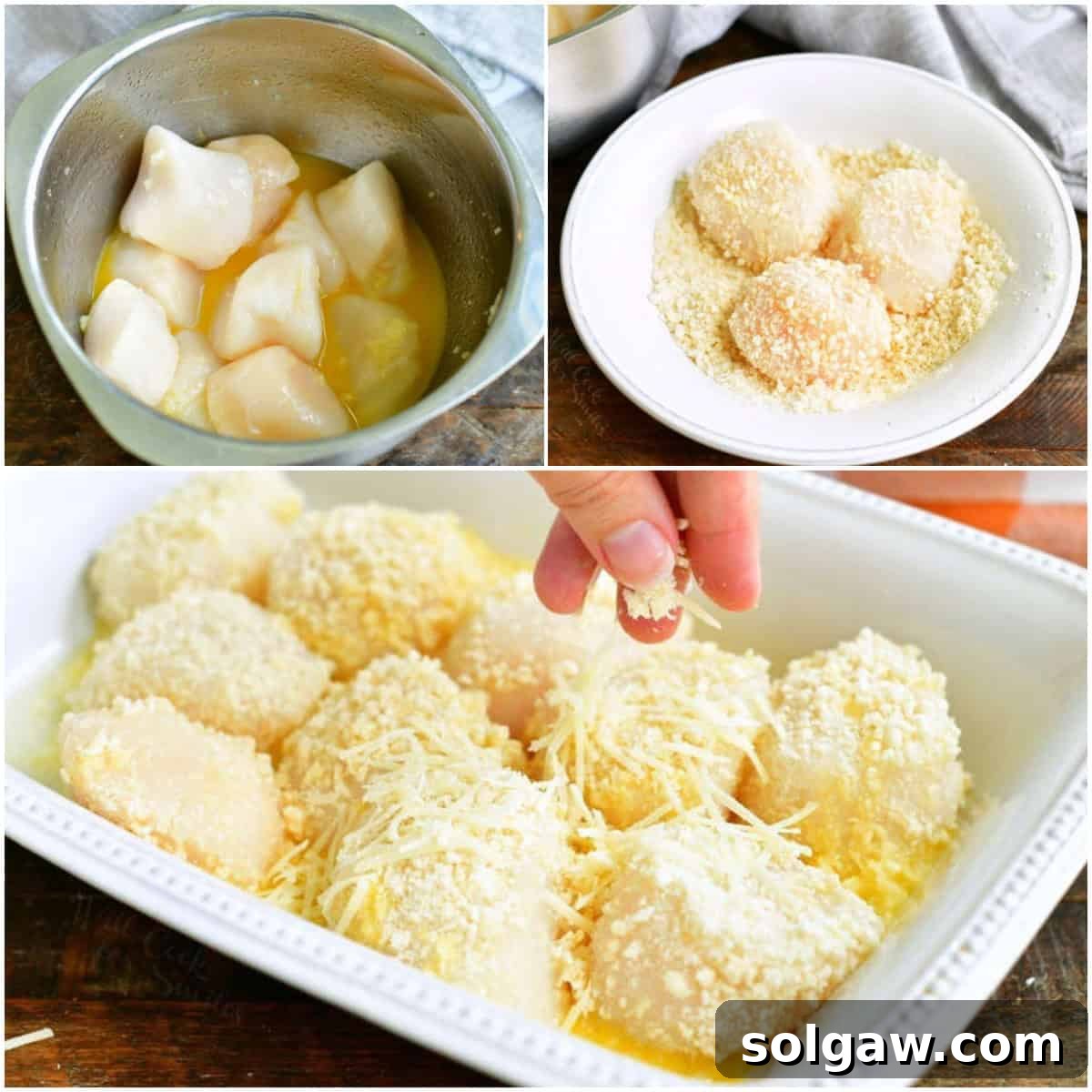
Dip each dried scallop into the melted butter mixture, ensuring it’s fully coated. Then, transfer it to the Panko/Parmesan mixture and coat it evenly on all sides, pressing gently if needed to adhere the crumbs.
-
Arrange the coated scallops in a single layer in a baking dish. Make sure there is a little space in between each scallop to allow for even cooking and browning.
-
Carefully pour any remaining melted butter mixture into the baking dish, around and in between the scallops. Avoid pouring it directly onto the breaded tops to keep them crisp.
-
Sprinkle additional shredded Parmesan cheese over each scallop. Bake for 10-14 minutes, or until the scallops are opaque throughout and the breading is golden brown and crispy. The exact time will depend on the size of your scallops.
Notes
- *Gluten Free Option: This recipe can easily be made gluten-free by simply substituting traditional Panko bread crumbs with a high-quality gluten-free Panko alternative.
- Achieving Perfect Doneness: The critical sign that scallops are cooked through is when their flesh turns opaque from edge to center. To prevent a rubbery texture, cook them just until this point is reached. While baking in butter offers a bit more forgiveness, precise timing is still essential. The baking duration will vary with scallop size. For the most accurate result, aim for an internal temperature of 125°-130°F.
- Storage Guidelines: Any leftover cooked scallops should be stored in an airtight container in the refrigerator for a maximum of 2 days to maintain optimal freshness and quality.
- Reheating Tips: When reheating, exercise caution to avoid overcooking. Gently warm them on the stovetop over medium-low heat or in the oven at a low temperature until they are just heated through. Overheating will toughen the scallops.
Nutrition
Carbohydrates: 9g |
Protein: 21g |
Fat: 17g |
Saturated Fat: 10g |
Cholesterol: 70mg |
Sodium: 840mg |
Potassium: 263mg |
Fiber: 1g |
Sugar: 1g |
Vitamin A: 485IU |
Vitamin C: 1mg |
Calcium: 213mg |
Iron: 1mg
Originally published on Will Cook For Smiles in July 2020. This article has been updated and expanded for clarity and comprehensiveness.