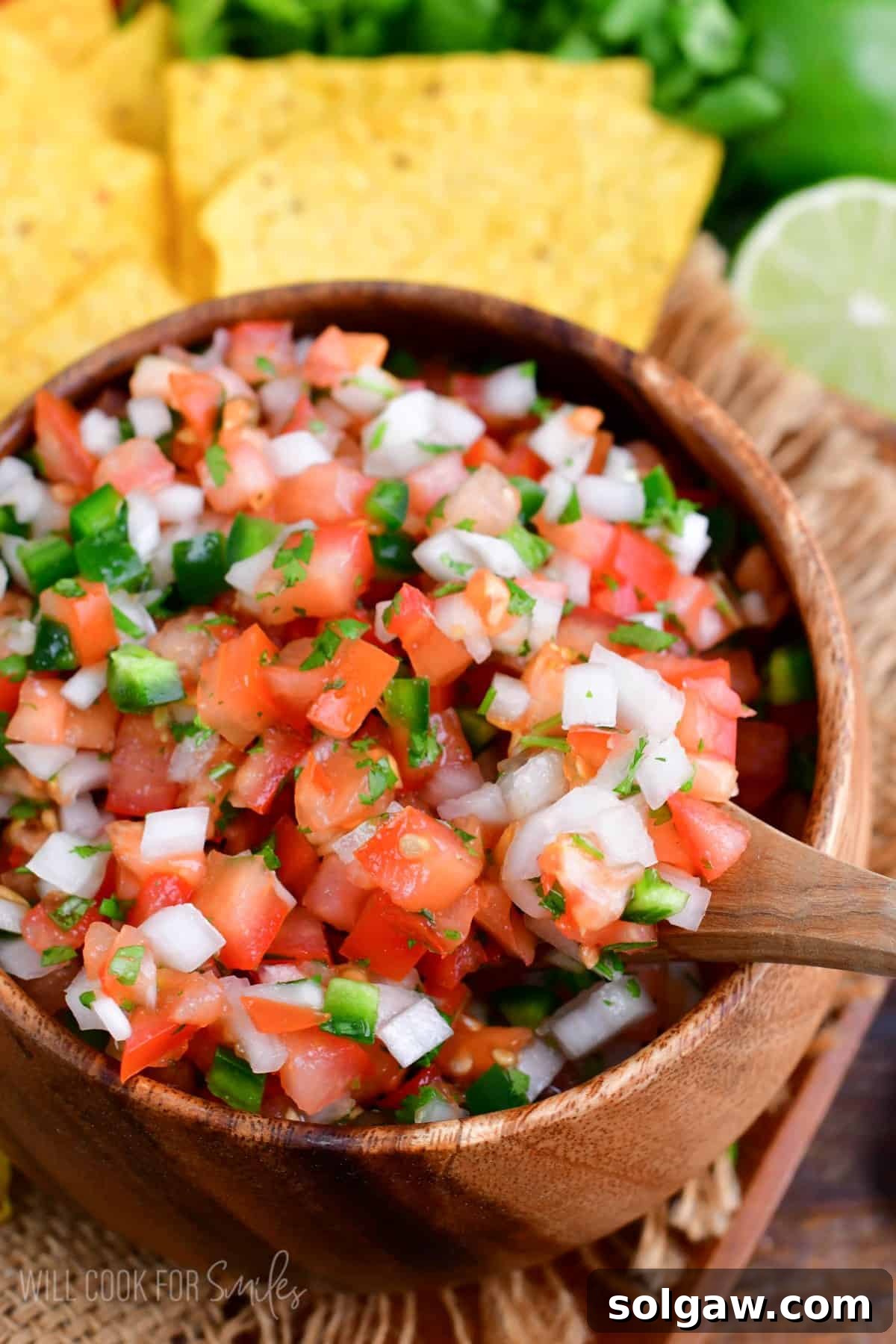
Dive into the vibrant world of Mexican cuisine with this incredibly easy homemade Pico de Gallo recipe. Boasting a mere six classic ingredients – ripe tomatoes, crisp onions, fiery jalapeños, pungent garlic, fresh cilantro, and tangy lime juice – this traditional fresh salsa is a celebration of simple, bold flavors. It’s the quintessential accompaniment for your favorite tortilla chips, a bright and zesty topping for grilled meats and tacos, or a refreshing side dish all on its own. Experience the unparalleled taste of garden-fresh ingredients harmonizing in every chunky, flavorful bite.
Looking to complete your Mexican feast? Don’t miss out on more of my cherished Mexican recipes like creamy Guacamole and rich Queso. Perfect for Cinco de Mayo or any day you crave authentic flavors!
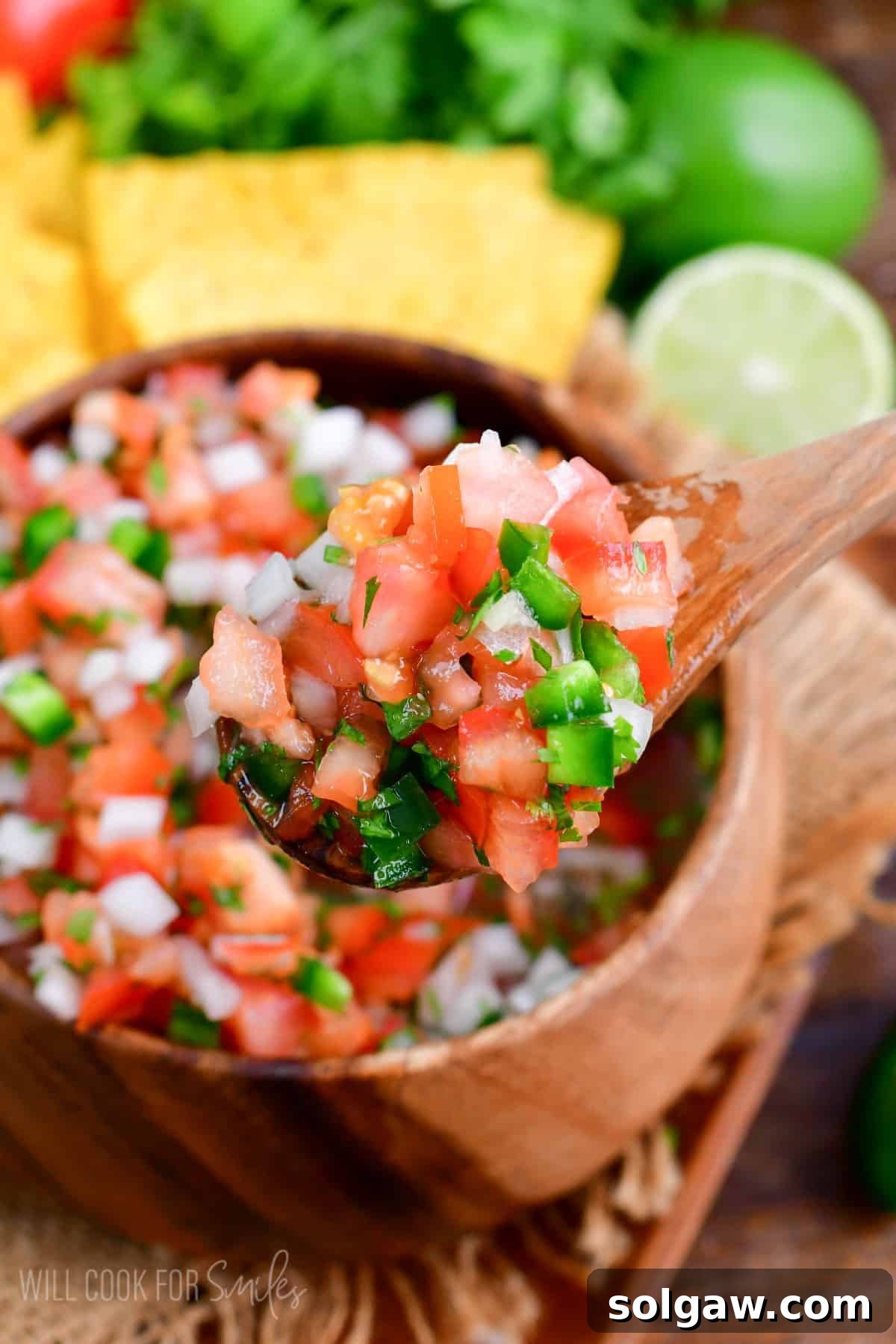
Table of Contents
What is Pico de Gallo?
Pico de Gallo, often referred to as “salsa fresca” or “salsa cruda,” is a quintessential Mexican condiment distinguished by its vibrant freshness and chunky texture. Unlike many cooked salsas, Pico de Gallo is made entirely from raw, finely diced ingredients, offering a bright, crisp, and intensely flavorful experience. Its core components include fresh tomatoes, onions, chili peppers (most commonly jalapeños), garlic, fresh cilantro, and a generous squeeze of fresh lime juice, all seasoned perfectly with salt.
This uncooked salsa is much thicker and contains less liquid than traditional blended salsas, making it an ideal topping that won’t make your dishes soggy. It’s truly the perfect accompaniment for virtually any dish with Mexican or Tex-Mex flavors, instantly elevating favorites like nachos, tacos, quesadillas, burritos, and more with its refreshing zest and mild spice.
The name “Pico de Gallo” directly translates from Spanish to “beak of rooster.” While this translation might seem entirely unrelated to a tomato-based salsa, its origin is shrouded in fascinating theories. One popular belief suggests the name derives from the traditional method of eating this chunky salsa: pinching it between the thumb and forefinger, a gesture thought to resemble a rooster’s beak. Another theory postulates that the vibrant, colorful medley of ingredients, particularly the diced red tomatoes and green chilies, reminded people of a rooster’s colorful plumage or perhaps even resembled feed for chickens.
Regardless of its precise etymology, what remains undisputed is Pico de Gallo’s enduring popularity and its crucial role in Mexican culinary tradition. Its crisp texture and balanced flavors make it a beloved staple, cherished for its ability to add a burst of garden-fresh goodness to a wide array of dishes.
Ingredient Essentials for the Best Pico de Gallo
The beauty of Pico de Gallo lies in its simplicity and the quality of its fresh ingredients. Choosing the best produce and preparing it thoughtfully are key to achieving that authentic, vibrant flavor. Here’s a deeper look at each essential component:
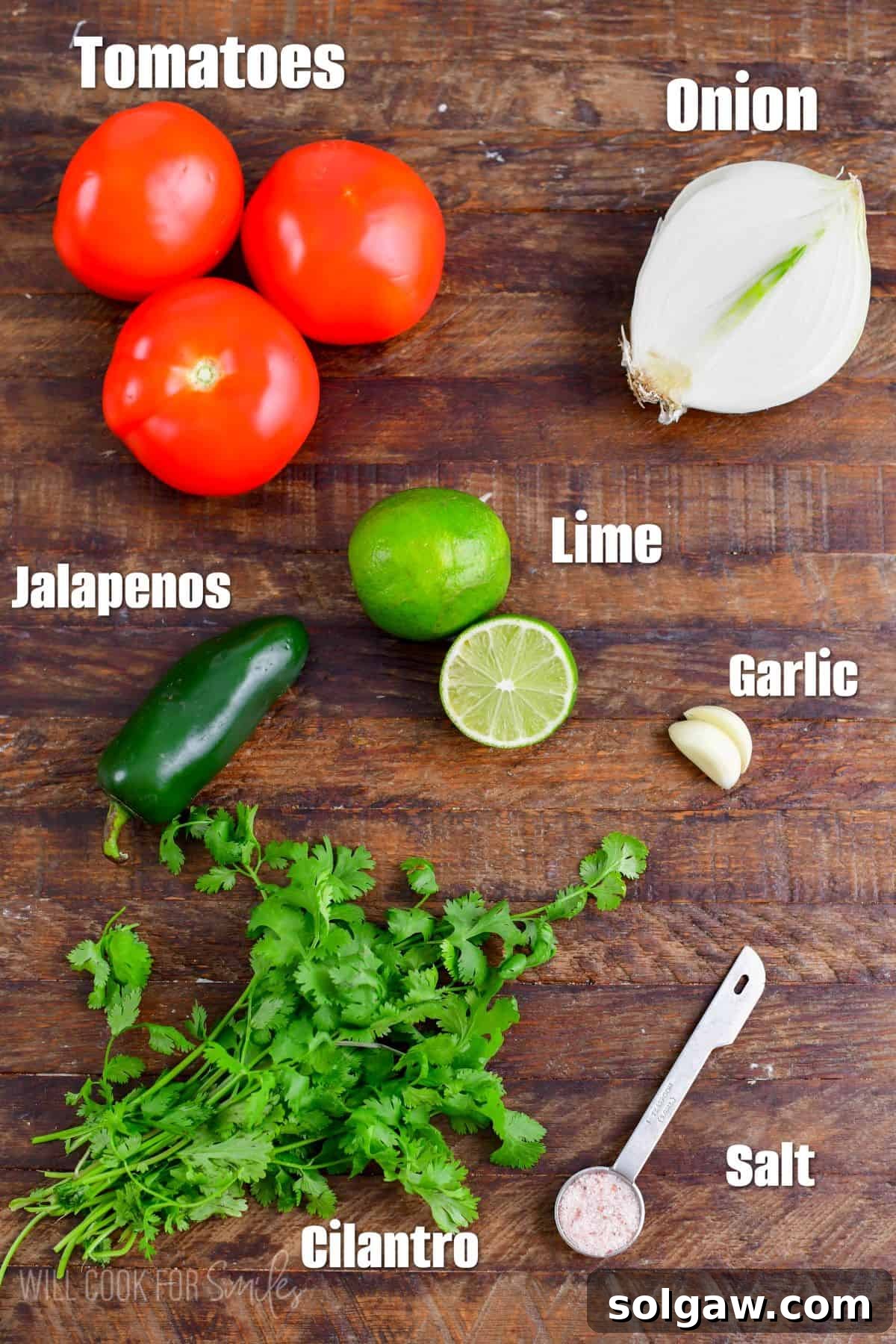
- Tomatoes: The heart of your Pico de Gallo. While you can use almost any variety, Roma tomatoes (plum tomatoes) are often preferred for their firm flesh and lower water content, which helps prevent a watery salsa. Vine-ripened or heirloom tomatoes also offer exceptional flavor. Crucially, ensure your tomatoes are ripe – they should be firm but yield slightly to pressure and smell fragrant. Dice them into even-sized pieces (about ¼-inch to ½-inch cubes) for consistent texture in every bite.
- Onion: A crisp, pungent counterpoint to the sweet tomatoes. A white onion is traditionally used for its sharp, clean flavor that mellows beautifully when mixed with lime juice. If white onions are unavailable, yellow onions can work as a substitute, though they tend to be slightly sweeter and less pungent. Red onions are also an option for a milder flavor and beautiful color, but their sweetness might alter the classic profile slightly.
- Lime Juice: The indispensable bright, tangy backbone of Pico de Gallo. For the most authentic and vibrant flavor, always use freshly squeezed lime juice. Bottled lime juice simply doesn’t compare in terms of zestiness and aroma. Roll the lime on your countertop before cutting and juicing to maximize the yield.
- Jalapeños: These provide the characteristic mild heat. Jalapeños are a relatively mild chili pepper, typically ranking between 2,500 and 8,000 on the Scoville heat unit scale. If you prefer a milder Pico de Gallo or have a sensitivity to spice, you can easily remove the seeds and white membranes (pith) from the jalapeño, as this is where most of the capsaicin (the compound responsible for heat) resides. For an even milder option, choose young jalapeños, which have smooth, firm skin. Older peppers, often characterized by visible striations or “veins” on their skin, tend to be spicier. For more heat, consider adding a serrano pepper (10,000-23,000 SHU) or a small amount of habanero for a significant kick, or simply leave some seeds in your jalapeños.
- Garlic: Adds a foundational aromatic depth. Just like lime juice, fresh garlic is paramount here. Avoid pre-minced garlic from a jar, which often lacks the potent, fresh flavor required. Two cloves, finely minced or pressed, usually suffice, but adjust to your preference.
- Cilantro: Provides an essential fresh, herbaceous note. Cilantro is a polarizing herb; some find its flavor bright and citrusy, while others perceive it as soapy. If you’re a fan, a generous ¼ cup of freshly minced cilantro is ideal. If you’re not fond of cilantro, you can decrease the amount or omit it entirely. While some might suggest parsley as a substitute, its flavor profile is quite different and generally not recommended for authentic Mexican dishes, as it doesn’t complement the other ingredients in the same way.
- Salt: A crucial seasoning that brings all the flavors together and enhances the natural sweetness of the tomatoes. Start with ½ teaspoon and adjust to taste, adding up to 1 teaspoon or more. Kosher or sea salt works beautifully.
For precise quantities and a printable recipe, please refer to the comprehensive recipe card below.
How to Make Perfect Pico de Gallo
Crafting fresh, homemade Pico de Gallo is incredibly straightforward, requiring minimal effort for maximum flavor payoff. Follow these simple steps to create a vibrant and irresistible salsa:
- Prepare Your Ingredients: Begin by washing all your fresh vegetables thoroughly. This step is crucial for hygiene and ensures the cleanest taste.
- Dice the Tomatoes: Take your ripe tomatoes and carefully dice them into small, uniform ¼-inch to ½-inch cubes. Consistency in size ensures an even distribution of flavor and texture throughout your Pico de Gallo.
- Chop the Onion and Jalapeño: Finely chop your white onion into similar small pieces. For the jalapeño, if you prefer less heat, slice it in half lengthwise, use a small spoon to scrape out the seeds and white membranes, then finely dice it. For more spice, leave some or all of the seeds in. Remember to wash your hands thoroughly after handling jalapeños to avoid any irritation.
- Mince the Garlic and Cilantro: Peel and finely mince your fresh garlic cloves. Gather your fresh cilantro, chop off the thick stems, and finely mince the leaves.
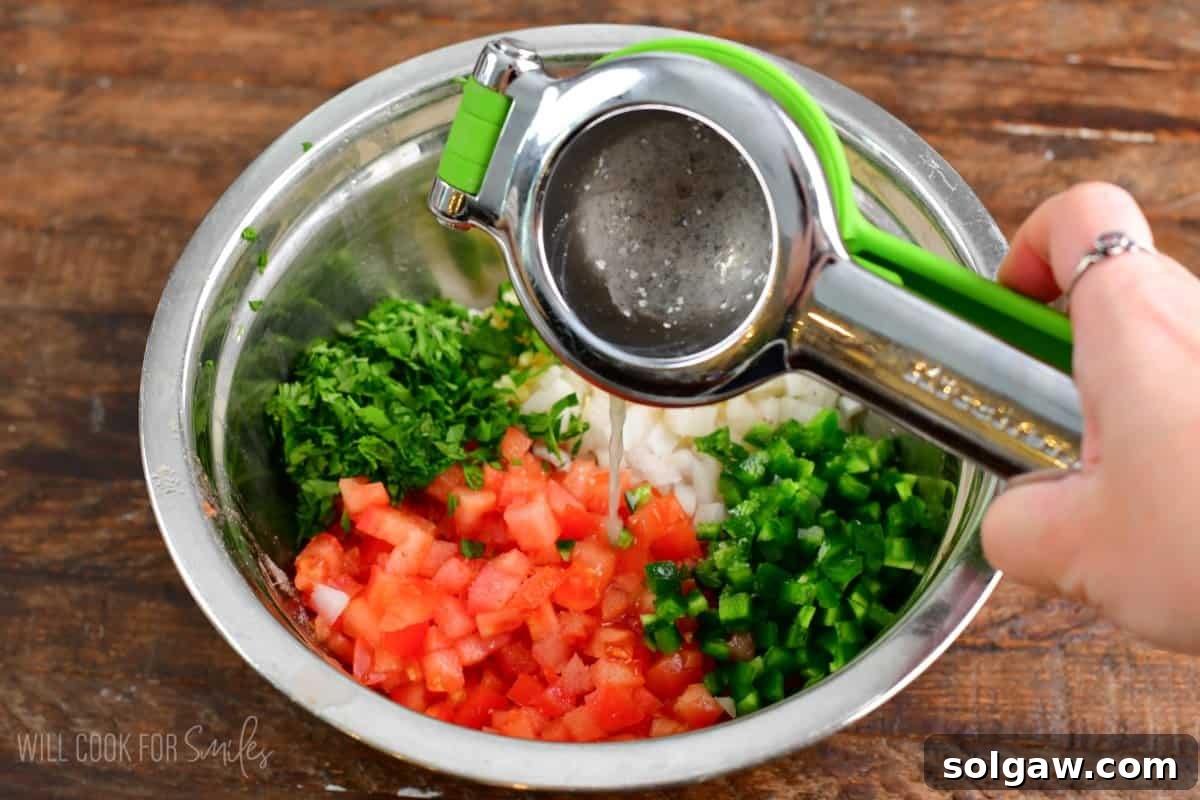
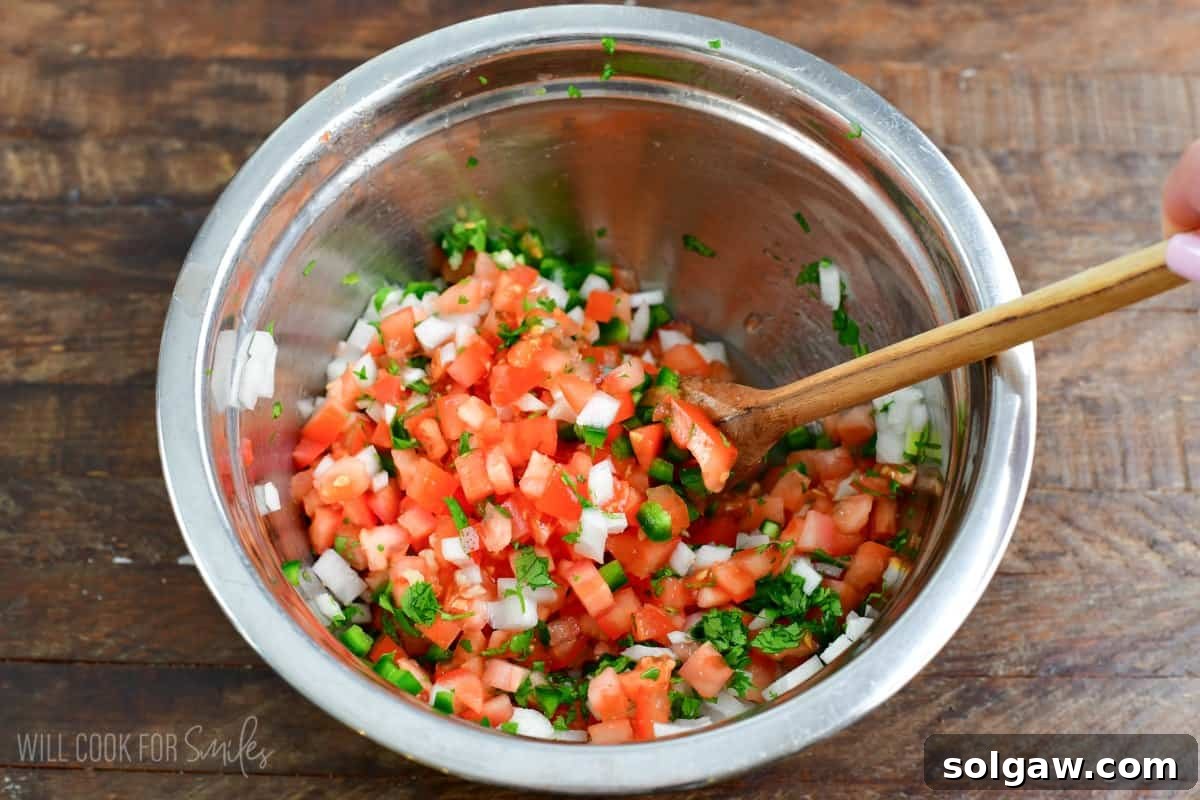
- Combine Ingredients in a Bowl: In a medium-sized mixing bowl, gently add all your diced tomatoes, chopped onion, jalapeño, minced garlic, and fresh cilantro.
- Add Lime Juice and Salt: Squeeze the juice from a fresh, ripe lime directly over the mixed vegetables. Start with about ½ teaspoon of salt, then mix everything together thoroughly with a spoon.
- Allow Flavors to Mingle (Resting Time): Once everything is combined, let the Pico de Gallo sit for at least 10-15 minutes at room temperature. This resting period is vital: it allows the flavors to meld beautifully, and the salt will draw out more natural juices from the tomatoes, intensifying the overall taste and creating a more cohesive salsa.
- Taste and Adjust: After the resting period, give your Pico de Gallo a taste. Adjust the salt, lime juice, or even add a pinch more jalapeño or cilantro if desired, to achieve your perfect balance of flavors.
How to Serve Pico de Gallo
The versatility of homemade Pico de Gallo is one of its most appealing qualities. Its fresh, bright, and slightly spicy profile complements an incredibly wide array of dishes, far beyond just chips and salsa. Here are some ideas to inspire your culinary creations:
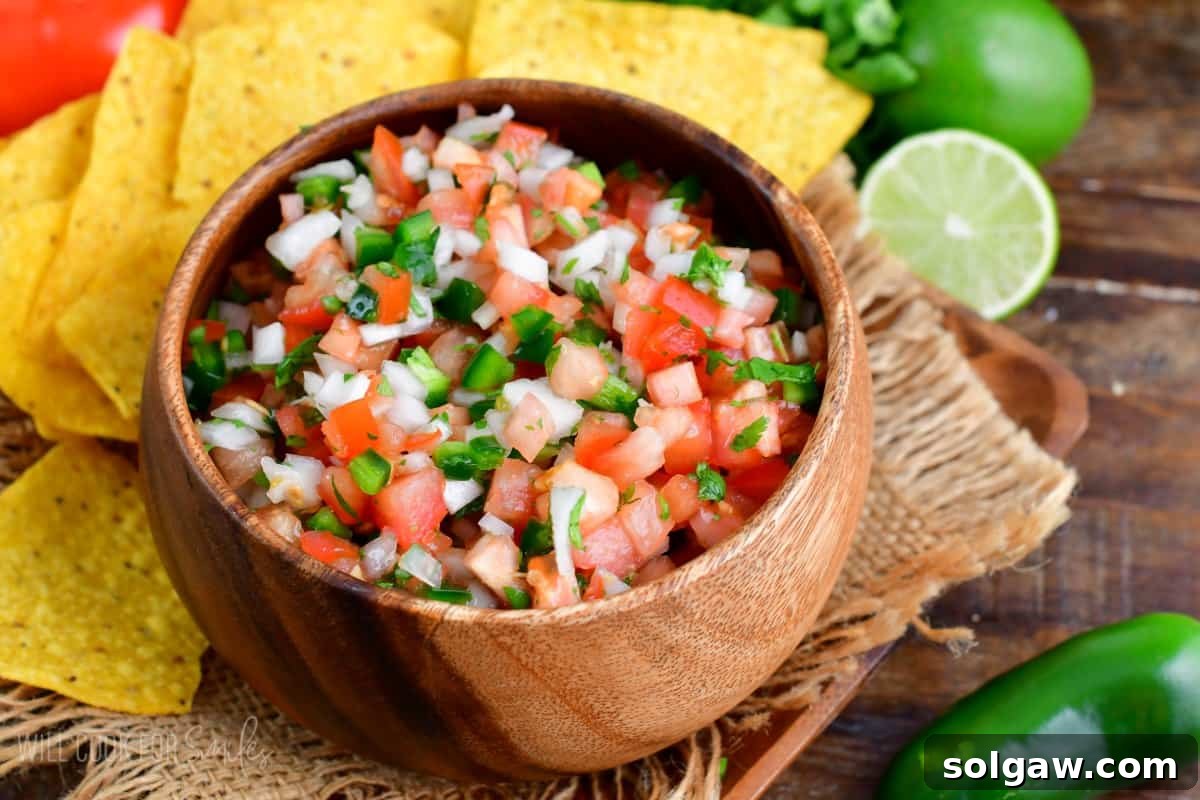
- Classic Dip: Undoubtedly the most popular way to enjoy it! Serve a generous bowl with crunchy tortilla chips at your next gathering. It’s always a crowd-pleaser and disappears quickly.
- Taco Topping: Elevate any taco night! Pico de Gallo is a must-have for Carne Asada Tacos, chicken tacos, fish tacos, or even vegetarian options. Its fresh crunch and tang cut through rich meats and heavy sauces beautifully.
- Burritos and Bowls: Mimic your favorite Chipotle order at home by adding a spoonful to a homemade Burrito Bowl. It adds freshness and texture that makes all the difference. Also fantastic in traditional burritos and wraps.
- Egg Dishes: Start your day with a flavor explosion! Pico de Gallo is incredible piled high on Huevos Rancheros, scrambled eggs, omelets, or breakfast burritos.
- Grilled Meats and Seafood: Spoon it over grilled chicken, steak, pork, or any kind of fish (salmon, cod, mahi-mahi). The acidity of the lime and tomatoes brightens up the rich flavors of grilled proteins.
- Quesadillas and Nachos: A fresh dollop on cheesy quesadillas or loaded nachos adds a refreshing contrast and cuts through the richness.
- Fajitas and Enchiladas: Serve it on the side or as a topping for sizzling fajitas or your favorite enchiladas to add a burst of freshness.
- Simple Side Salad: For a light and healthy option, enjoy Pico de Gallo all by itself as a simple, refreshing side dish. It’s naturally low in calories and packed with fresh vegetables.
- Avocado Toast: For a trendy and delicious twist, top your avocado toast with a generous helping of Pico de Gallo.
The options are truly limitless! Pico de Gallo adds a layer of freshness, acidity, and mild spice that makes any Mexican or Tex-Mex dish, and many others, sing with flavor.
How To Store Pico de Gallo
To keep your homemade Pico de Gallo tasting its best, proper storage is essential. Since it’s made with raw, fresh ingredients, its shelf life is shorter than cooked salsas, but with the right care, you can enjoy its vibrant flavor for a few days.
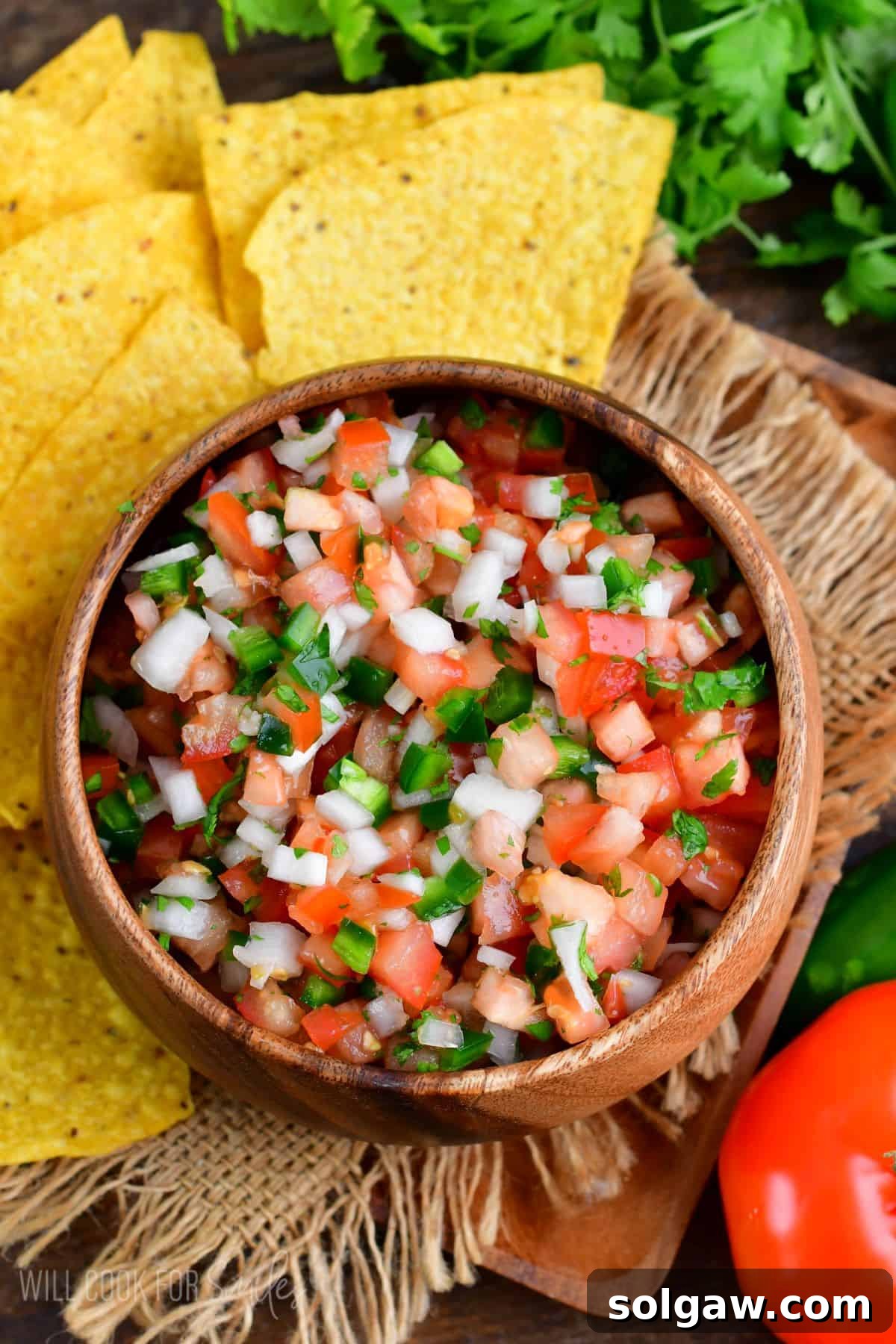
- Refrigeration is Key: Always store your Pico de Gallo in an airtight container in the refrigerator immediately after preparing or serving. The cool temperature helps slow down the degradation of the fresh ingredients.
- Opt for Glass: Due to the acidity of tomatoes and lime juice, it’s best to store Pico de Gallo in a glass jar with a lid or another glass airtight food storage container. Acidic foods can sometimes react with plastic containers, potentially affecting flavor or causing staining over time.
- Shelf Life: In an airtight container in the refrigerator, homemade Pico de Gallo will last about 3 days. While it might still be safe to eat slightly longer, its texture will become softer, and the flavors may dull. The freshest, most vibrant taste will be within the first 24-48 hours.
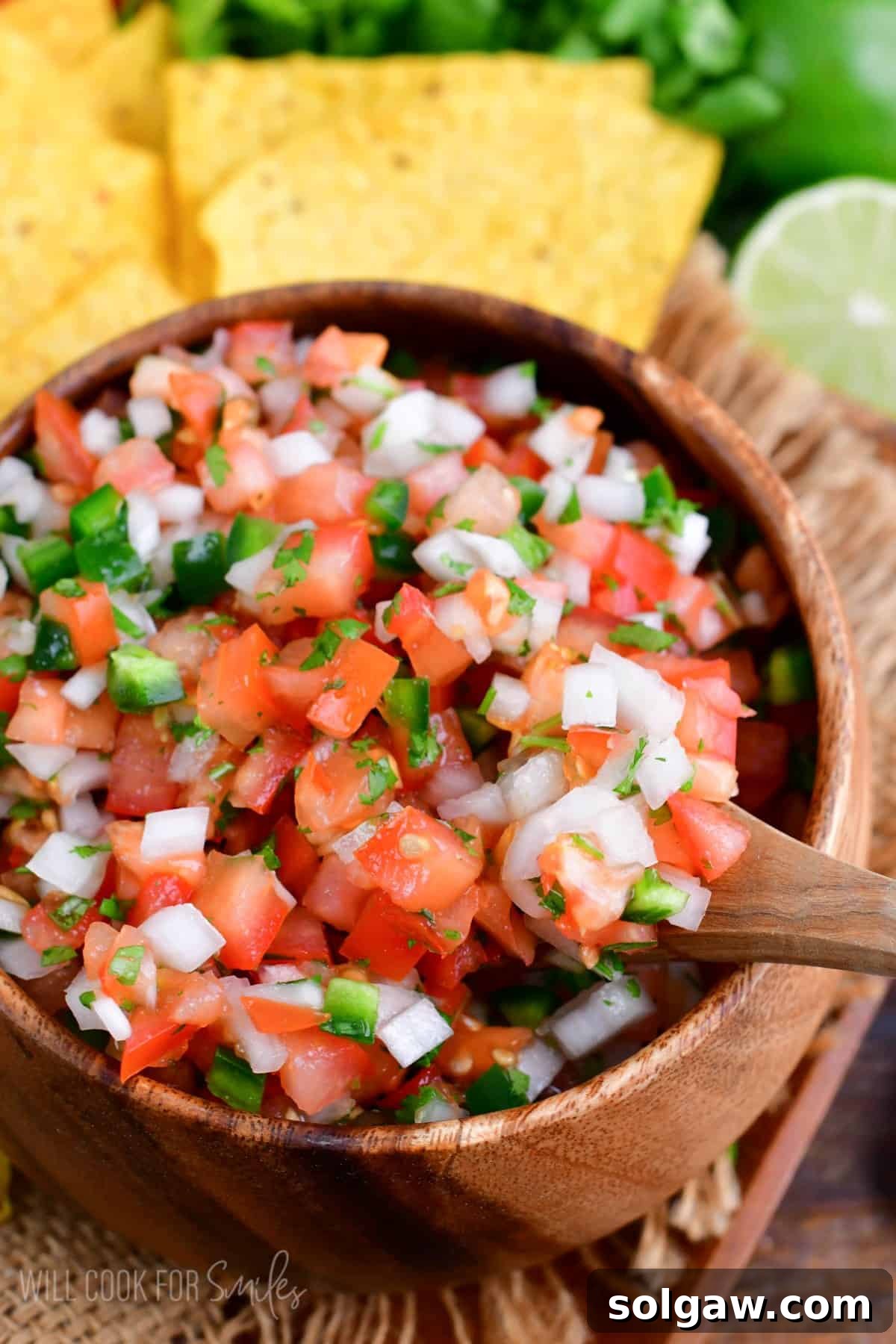
- Use a Slotted Spoon: As Pico de Gallo sits, especially overnight, the salt will draw out more liquid from the tomatoes. When serving, it’s highly recommended to use a slotted spoon. This allows you to scoop out the chunky salsa without adding too much excess liquid to your dish, maintaining the desired texture.
- Avoid Cross-Contamination: Always use a clean spoon each time you take some Pico de Gallo out of the container. Introducing foreign bacteria can significantly reduce its shelf life.
- Freezing is Not Recommended: I do not recommend freezing Pico de Gallo. The high water content in the fresh vegetables, particularly tomatoes and onions, means they will become mushy and lose their crisp texture upon thawing. The vibrant fresh flavors will also be significantly diminished.
By following these storage tips, you can ensure your homemade Pico de Gallo remains a delicious and refreshing addition to your meals for days.
Recipe FAQs
Here are answers to some common questions about making and enjoying Pico de Gallo:
While both Pico de Gallo and traditional salsas share many core ingredients like tomatoes, onions, and chili peppers, their primary distinctions lie in their preparation, texture, and liquid content. Pico de Gallo (salsa fresca) uses raw, freshly chopped ingredients that are simply mixed together. It’s known for its distinct chunky texture and minimal liquid. Traditional salsas, on the other hand, often involve cooking or roasting some ingredients (like tomatoes and chilies) and are typically blended or mashed to a smoother consistency, resulting in a sauce-like product with more liquid. Pico de Gallo is always served fresh and cold, emphasizing the crispness of its components, while some salsas can be served warm.
Pico de Gallo is wonderfully adaptable! Here are some fantastic additions to customize your salsa:
- Sweetness and Color: For a pop of natural sweetness and beautiful color, try mixing in some finely chopped bell peppers (red, yellow, or orange).
- Spice Level: To adjust the heat, experiment with different chili peppers. Stick with jalapeños for a mild to medium spice. For more significant heat, consider adding finely minced serrano peppers (much spicier than jalapeños) or even a tiny amount of habanero for extreme heat (handle with gloves!). For zero heat, simply omit the jalapeño.
- Fruity Twist: Add a delicious fruity note for a fun, summery twist by incorporating freshly chopped mango, pineapple, or even watermelon. These add a delightful sweetness and juicy burst, perfect for serving with grilled fish or chicken.
- Corn: Mixing in some fresh corn kernels, either boiled briefly or grilled (for a smoky flavor), adds another layer of sweetness and texture.
- Avocado: Diced avocado can be added right before serving for a creamier, richer version, though it will reduce the storage time.
- Cucumber: For an extra refreshing crunch, add finely diced cucumber.
I do not recommend substituting parsley for cilantro in Pico de Gallo. While both are fresh green herbs, their flavor profiles are quite distinct, especially when featured in Mexican cuisine. Cilantro has a bright, citrusy, and slightly pungent flavor that is quintessential to Pico de Gallo. Parsley, particularly flat-leaf Italian parsley, has a greener, sometimes peppery, and slightly bitter taste that simply does not complement the other ingredients in the same way. If you are among those who dislike cilantro, the best approach is to either significantly decrease the amount used or simply omit it entirely from the recipe. The Pico de Gallo will still be delicious and fresh due to the other vibrant ingredients.
Yes, you can certainly make Pico de Gallo ahead of time, and in fact, a short resting period (10-15 minutes) is recommended for flavors to meld. For optimal freshness and texture, it’s best to prepare it no more than 1-2 days in advance. Beyond that, the tomatoes and onions may release too much liquid, and the vegetables might lose some of their crispness. Always store it in an airtight glass container in the refrigerator.
To minimize excess liquid, especially if you’re making it ahead, there are a couple of tricks:
- Seed your tomatoes: When dicing tomatoes, gently squeeze out some of the excess juice and seeds.
- Salt and drain: After dicing the tomatoes, you can lightly salt them and let them sit in a colander for 10-15 minutes to drain some of their natural juices before mixing them with other ingredients. Pat them dry before adding to the bowl.
- Use a slotted spoon: As mentioned in the storage section, always use a slotted spoon when serving to leave behind any accumulated liquid.
Making Pico de Gallo requires very basic kitchen tools:
- A sharp chef’s knife for precise dicing.
- A sturdy cutting board.
- A medium-sized mixing bowl.
- A spoon for mixing.
- A citrus juicer (optional, but helpful for limes).
- An airtight glass container for storage.
More Salsa and Topping Recipes To Try
If you love the fresh flavors of Pico de Gallo, you’ll adore these other delightful salsa and topping recipes:
- Strawberry Dessert Salsa (for a sweet twist!)
- Salsa Verde (tangy and bright green)
- Mango Salsa (sweet and spicy)
- Pineapple Salsa (tropical and zesty)
- Corn Salsa (sweet and crunchy)
PIN THIS RECIPE FOR LATER to save it for your next Mexican feast!
DID YOU MAKE THIS RECIPE? Please leave a 🌟 star rating below and let me know how you liked it by leaving a 📝 comment. Share your creations and tag me on social media @willcookforsmiles. DON’T FORGET to subscribe to my newsletter for more delicious recipes!
Classic Pico de Gallo Recipe
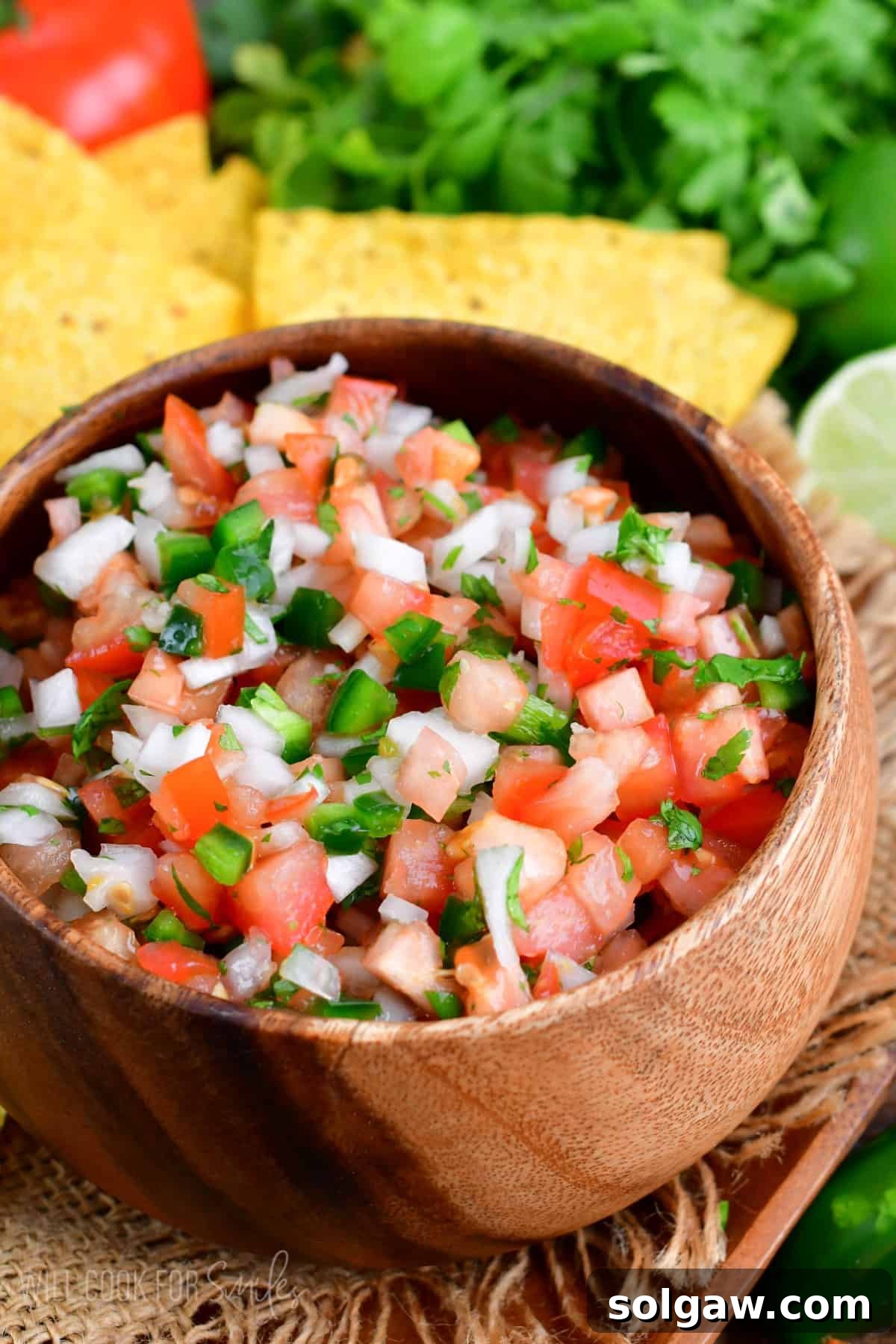
This easy homemade Pico de Gallo recipe features only six simple and classic ingredients like tomatoes, jalapeños, onions, cilantro, garlic, and fresh lime juice. It’s the perfect vibrant dip or fresh topping.
Rating: 5 out of 5 stars from 2 votes.
Print Recipe
Pin Recipe
Rate This Recipe
Recipe Details
- Course:
- Appetizer
- Cuisine:
- Mexican
- Diet:
- Gluten Free, Vegetarian, Vegan
- Prep Time:
- 10 minutes
- Resting Time:
- 10 minutes
- Total Time:
- 20 minutes
- Servings:
- 13 (about 26 oz)
- Calories:
- 13 kcal per serving
- Author:
- Lyuba Brooke
Ingredients
- 1.5 lb ripe tomatoes, diced
- ½ white onion, finely chopped
- 1-2 jalapeño peppers, finely diced (remove seeds/membranes for less heat)
- 2 garlic cloves, pressed or finely minced
- ¼ cup minced fresh cilantro
- Juice of 1 ripe lime
- ½-1 tsp salt, to taste
Instructions
- Combine Vegetables: Dice all the fresh vegetables (tomatoes, onion, jalapeño) and add them into a medium mixing bowl. (Note: For a spicier pico, leave some or all of the jalapeño seeds in; otherwise, discard them.)
- Season and Mix: Squeeze in the fresh lime juice, add the minced cilantro and salt to taste. Gently mix everything together until well combined.
- Rest for Flavor: Allow the Pico de Gallo to sit at room temperature for at least 10-15 minutes. This crucial resting time permits the flavors to fully develop and meld, and the salt will help draw out natural juices from the tomatoes for a more robust salsa.
- Serve: Taste and adjust seasonings as needed. Serve immediately or refrigerate until ready to enjoy.
Notes
- Storing: Store your Pico de Gallo in an airtight glass container in the refrigerator for up to 3 days. Glass is preferred due to the acidity of tomatoes.
- Serving Tip: When serving, use a slotted spoon to avoid adding excess liquid to your dish. Always use a clean spoon each time you retrieve some from the container.
- Freezing: Freezing Pico de Gallo is not recommended as it will result in a mushy texture and loss of fresh flavor upon thawing.
Nutrition Information (per serving)
- Calories: 13 kcal
- Carbohydrates: 3g
- Protein: 1g
- Fat: 0.1g
- Saturated Fat: 0.02g
- Polyunsaturated Fat: 0.05g
- Monounsaturated Fat: 0.02g
- Sodium: 93mg
- Potassium: 139mg
- Fiber: 1g
- Sugar: 2g
- Vitamin A: 470IU
- Vitamin C: 10mg
- Calcium: 8mg
- Iron: 0.2mg