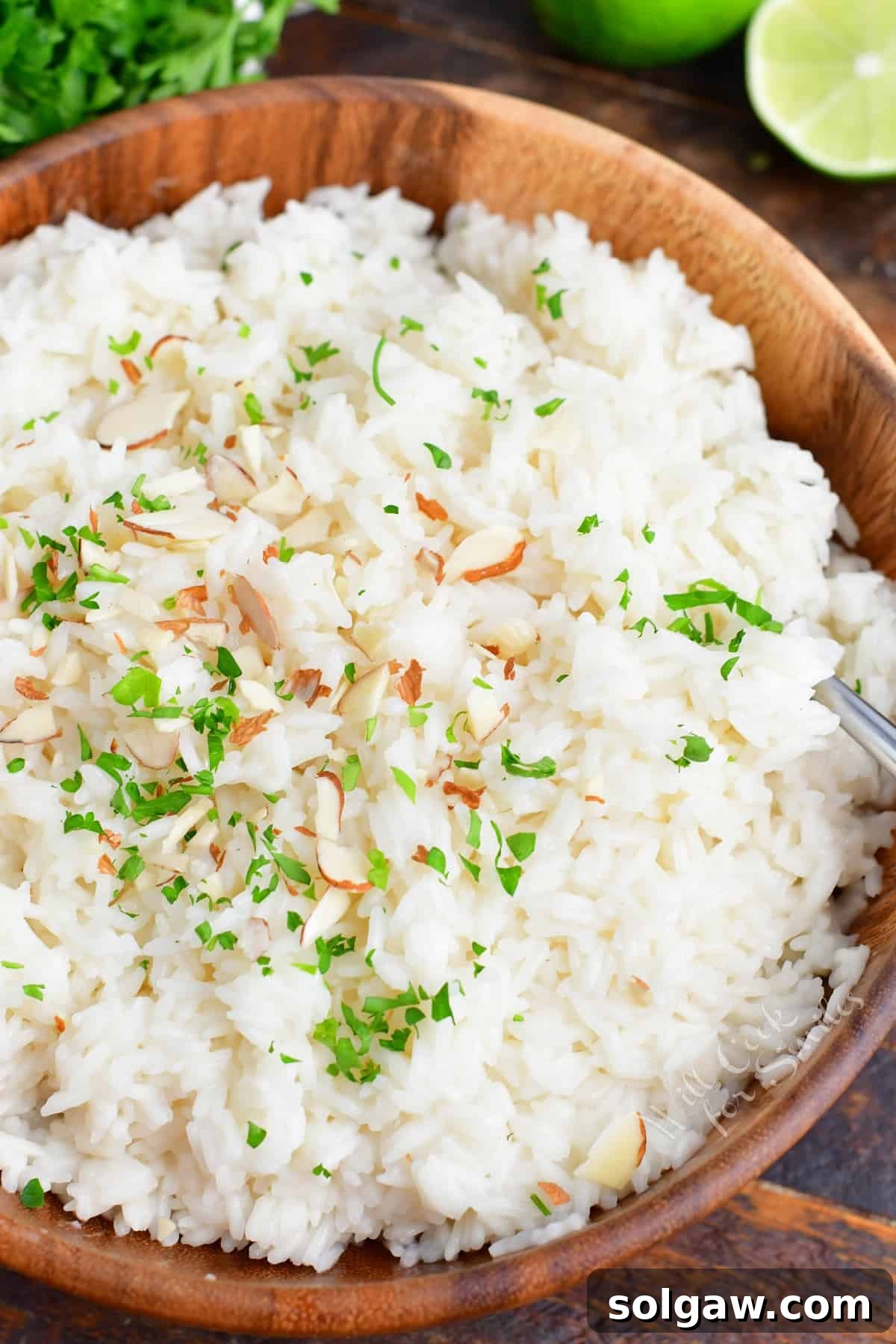
Featured Comment
“I made this as a side with some salmon and it was very good! I will definitely make this again!” ~Mandy
Mastering Fluffy Coconut Rice: Your Ultimate Guide to a Tropical Side Dish
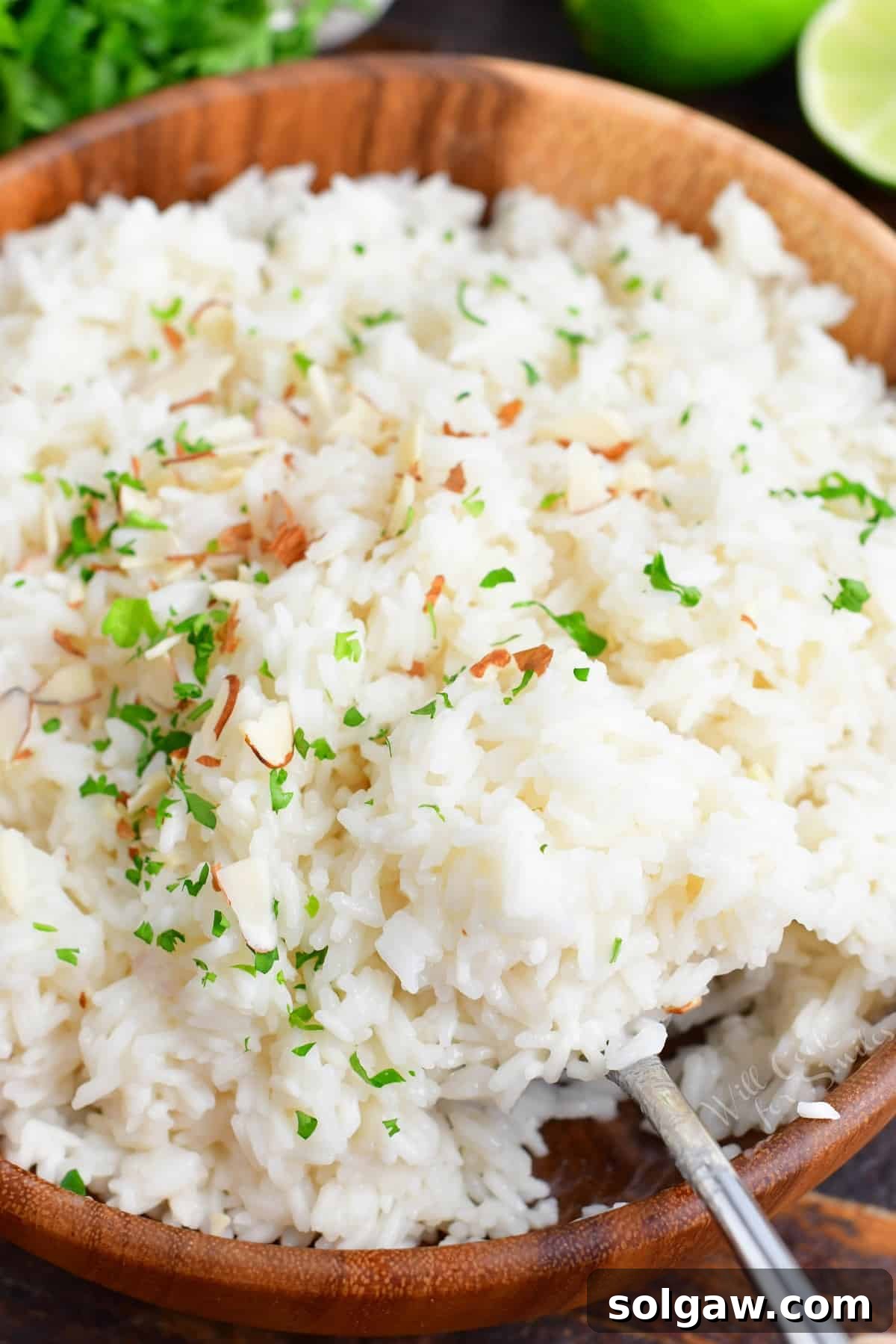
There’s an undeniable allure to a bowl of perfectly cooked coconut rice – its rich aroma, delicate sweetness, and creamy texture can transform any meal into a tropical escape. However, achieving that ideal balance of soft, fluffy, and never sticky or mushy grains can often feel like a culinary challenge. Many home cooks struggle with rice that is either too wet, too dry, or lacks that distinctive coconut essence. Fear not! This comprehensive guide and recipe will demystify the process, ensuring consistent, reliable results every time you step into the kitchen. We’ll explore the essential techniques and ingredient choices that guarantee a side dish worthy of any gourmet meal, all while keeping the language simple and the steps straightforward.
The Secret to Perfect Coconut Rice: Why This Recipe Works Every Time
Our recipe stands out because it focuses on a few key principles designed to deliver superior texture and flavor. Forget the guesswork; these scientific approaches ensure your coconut rice is consistently light, fluffy, and infused with rich coconut goodness.
- Optimal Ratio of Coconut Cream to Water: The most common pitfall in coconut rice is either an overpowering richness or a diluted flavor profile. Using only coconut cream can make the rice heavy, greasy, and dense, while too much plain water can wash out the delicate coconut notes. Our recipe strikes a masterful balance by combining unsweetened coconut cream with unsweetened coconut water. This ensures the rice cooks evenly, absorbing a deep, creamy coconut flavor without becoming overly rich or losing its light, fluffy character. The coconut water also subtly enhances the tropical essence, making every bite a delight.
- The Art of the Gentle Simmer: Rushing the cooking process can lead to unevenly cooked grains – some mushy, others still hard. We advocate for a low, steady simmer, which is crucial for perfect rice. This allows the jasmine rice grains ample time to gradually absorb the liquid, expanding beautifully without breaking apart. A gentle simmer prevents scorching on the bottom of the pot and ensures uniform tenderness throughout, leading to a consistently perfect texture. It’s a patient approach that yields truly exceptional results.
- The Indispensable Resting Period: Once your rice appears “done,” the temptation to immediately serve it is strong. However, allowing the cooked rice to rest, covered and off the heat, for a few precious minutes is perhaps the most critical step for achieving that signature fluffy texture. This resting phase permits any residual steam and moisture to redistribute evenly throughout the grains. The result? When you gently fluff it with a fork, you’ll uncover distinct, tender, and separate grains rather than a compacted, wet mass. This simple step makes all the difference between good coconut rice and truly great coconut rice.
Ingredient Notes and Tips for Exceptional Coconut Rice
The quality and type of your ingredients play a crucial role in the final outcome of your coconut rice. Pay close attention to these details for the best possible flavor and texture.
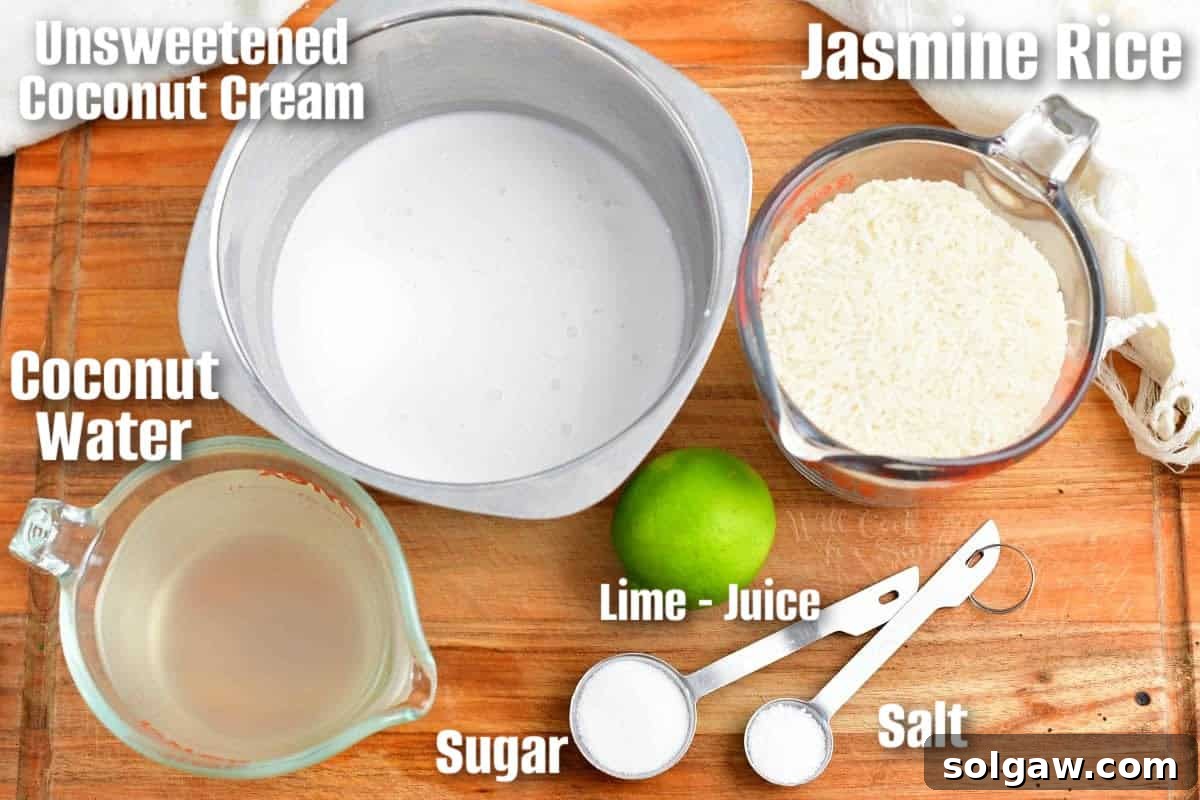
- Coconut Cream: This is the star of the show. It’s absolutely vital to use unsweetened coconut cream, not “cream of coconut.” Unsweetened coconut cream is designed for savory cooking and imparts a rich, natural coconut flavor, while sweetened “cream of coconut” is typically used for cocktails and would make your rice cloyingly sweet. You’ll often find unsweetened coconut cream in the ethnic foods aisle of your grocery store, particularly with Thai or Asian ingredients. Look for cans that are purely coconut extract and water, with no added sugars or thickeners if possible.
- Coconut Water: Elevate the coconut flavor even further by using coconut water instead of plain water for cooking. This subtle swap significantly enhances the tropical essence without adding overwhelming richness. I’ve experimented with various brands, and most unsweetened, unflavored coconut waters work beautifully. Just ensure it’s not sweetened and contains no additional fruit flavors, as these can drastically alter the taste of your dish. It should be pure coconut water for the most authentic result.
- Rice: For the quintessential fluffy texture and delicate aroma, jasmine rice is the unequivocal top choice. Its long grains and subtle floral fragrance perfectly complement the coconut. If jasmine rice isn’t available, basmati rice makes an excellent alternative, offering a similar light and separate grain structure. However, it is strongly advised to avoid short-grain rice, such as sushi rice or arborio rice, as these varieties are inherently much starchier and tend to become overly sticky or mushy, which is not the desired outcome for this recipe. Rinse your rice thoroughly before cooking to remove excess starch, which also contributes to a fluffier texture.
- Lime Juice, Sugar, and Salt: These seemingly minor additions are flavor powerhouses. Fresh lime juice adds a bright, zesty counterpoint that cuts through the richness of the coconut, preventing the dish from tasting flat. A small amount of white granulated sugar enhances the natural sweetness of the coconut and rounds out the flavor profile without making the rice overtly sweet. Salt, as always, is crucial for seasoning and bringing all the flavors into harmony. Adjust these to your personal preference for a truly customized side.
Refer to the recipe card below for precise measurements and quantities.
Step-by-Step Guide: How to Make Perfectly Fluffy Coconut Rice
Follow these detailed steps closely, and you’ll be enjoying perfectly cooked coconut rice in no time. Precision and patience are your best allies here.
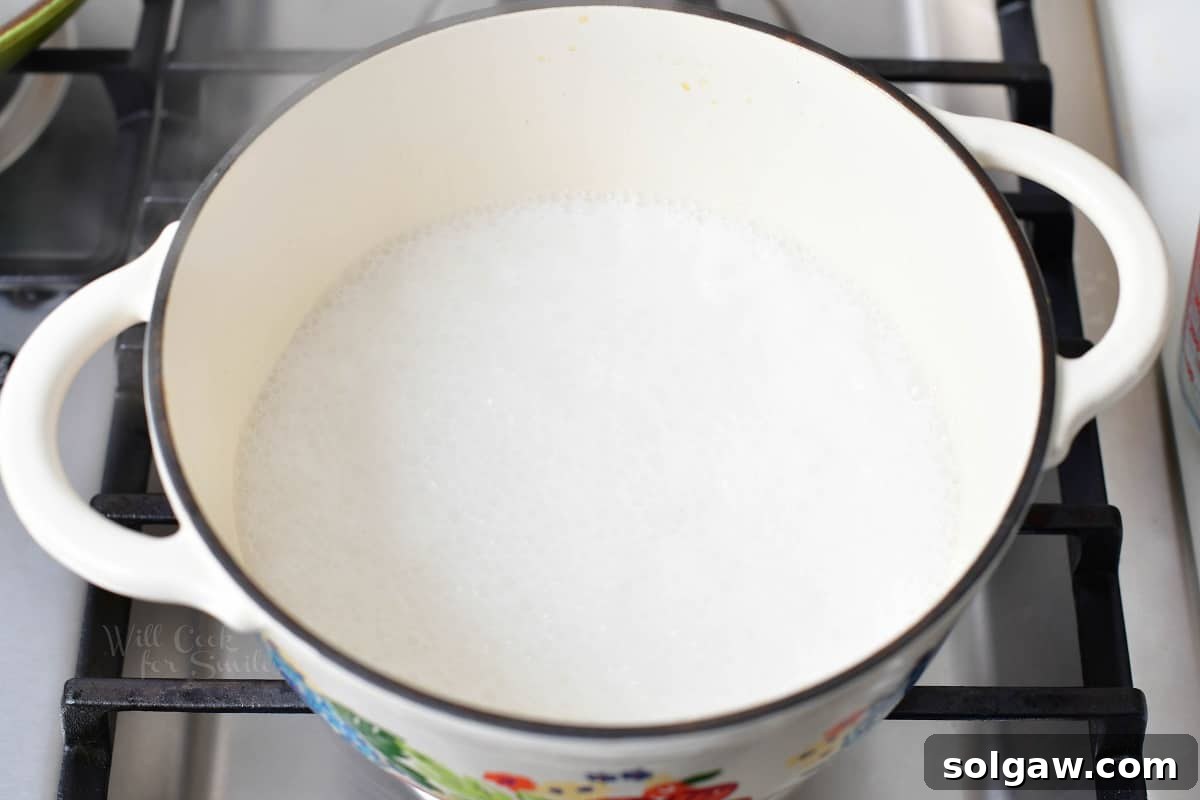
- Prepare the Liquid Base: In a medium-sized, heavy-bottomed cooking pot, combine the unsweetened coconut cream, unsweetened coconut water, fresh lime juice, granulated sugar, and salt. Place the pot over medium heat. Using a whisk, stir the mixture continuously as it heats up. This is crucial for two reasons: first, to fully incorporate all the ingredients, especially the sugar and salt; and second, to ensure the solid coconut cream melts smoothly and doesn’t stick to the bottom of the pot. Bring the mixture to a gentle boil, ensuring no lumps remain from the coconut cream.
- PRO TIP: Solid coconut cream tends to separate in the can, forming a thick layer at the top. Stirring frequently during the heating process will help it melt evenly into the coconut water, creating a uniform, creamy base for your rice. This prevents uneven cooking and ensures maximum flavor infusion.
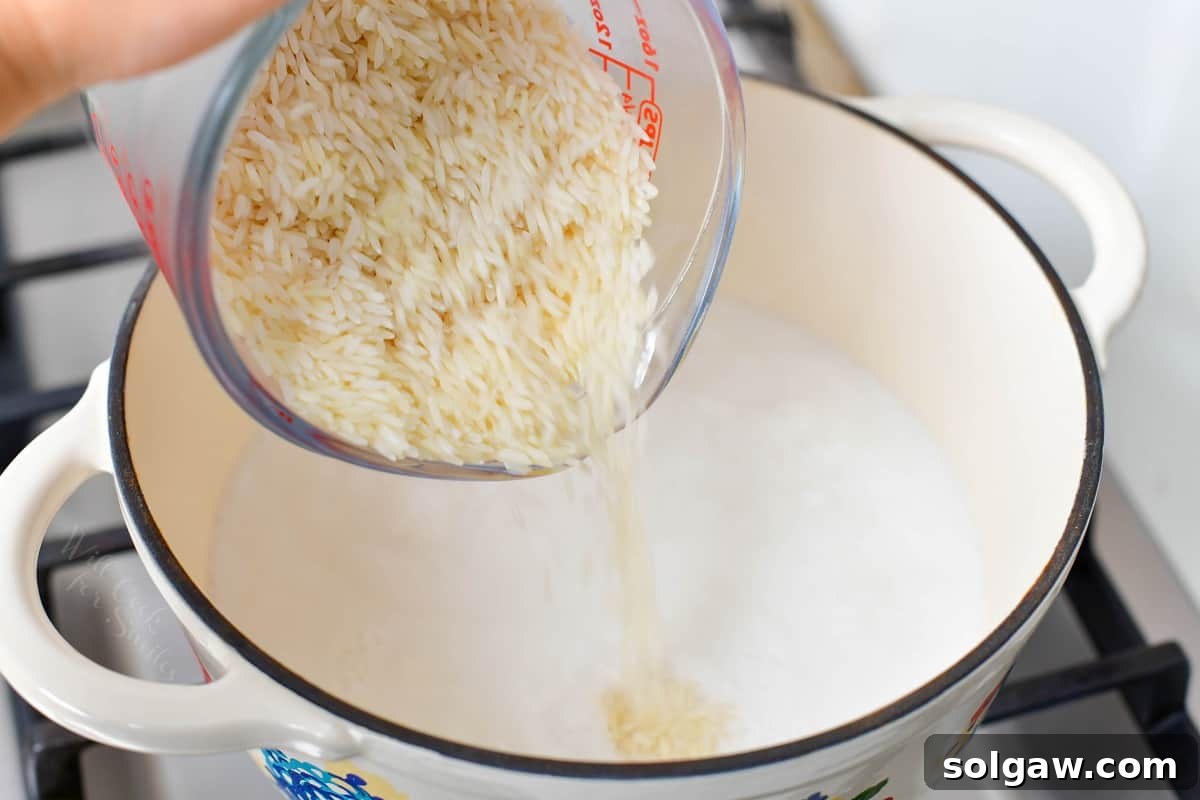
- Add Rice and Cover: Once the coconut liquid is boiling gently, carefully add the pre-rinsed jasmine rice to the pot. Give the rice just one quick, gentle stir to ensure it’s fully submerged and evenly distributed in the liquid. Avoid over-stirring, as this can release excess starch and lead to sticky rice. Immediately cover the pot tightly with a lid, then lower the heat to the lowest possible setting. The goal is a barely perceptible simmer.
- Resist the Urge to Peek: This is a golden rule for cooking perfect rice. Do NOT open the lid while the rice is cooking. Every time you lift the lid, precious steam escapes, lowering the internal temperature and disrupting the cooking process. This can result in unevenly cooked rice, with some grains still hard and others mushy. Trust the process and keep the lid on tightly.
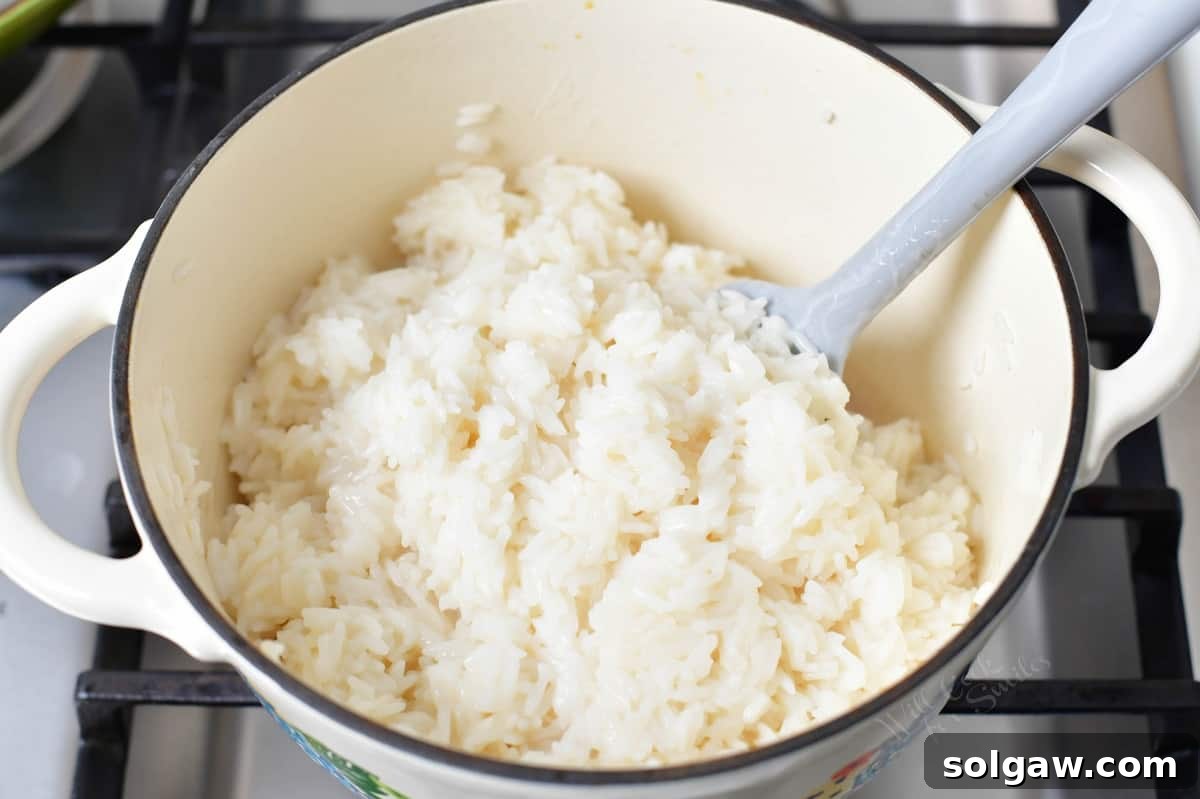
- Cook and Rest: Cook the rice for approximately 18-20 minutes on low heat. While 18-20 minutes is a general guideline for jasmine rice, the absolute best way to ensure your rice cooks for the correct amount of time is to follow the specific package instructions for the rice you are using. Different brands and types of rice can have slightly varying cooking times. After the cooking time, remove the pot from the heat (still covered) and let it rest undisturbed for 5-10 minutes. This resting period is vital for the steam to redistribute, resulting in incredibly fluffy grains.
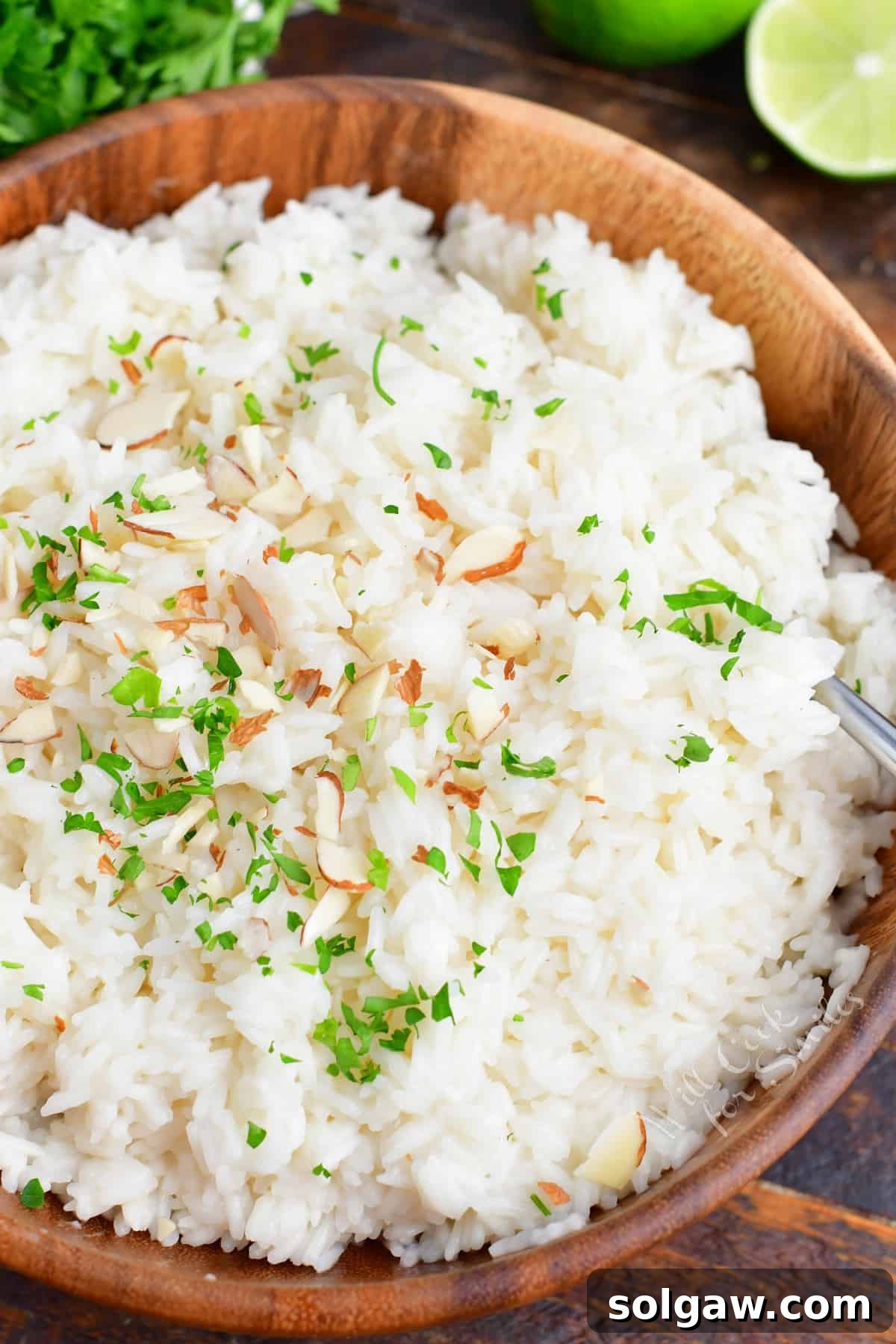
- Fluff and Garnish: Once rested, remove the lid and gently fluff the rice with a fork. Avoid pressing down or stirring vigorously, as this can crush the delicate grains. Serve immediately, garnishing it however you’d like!
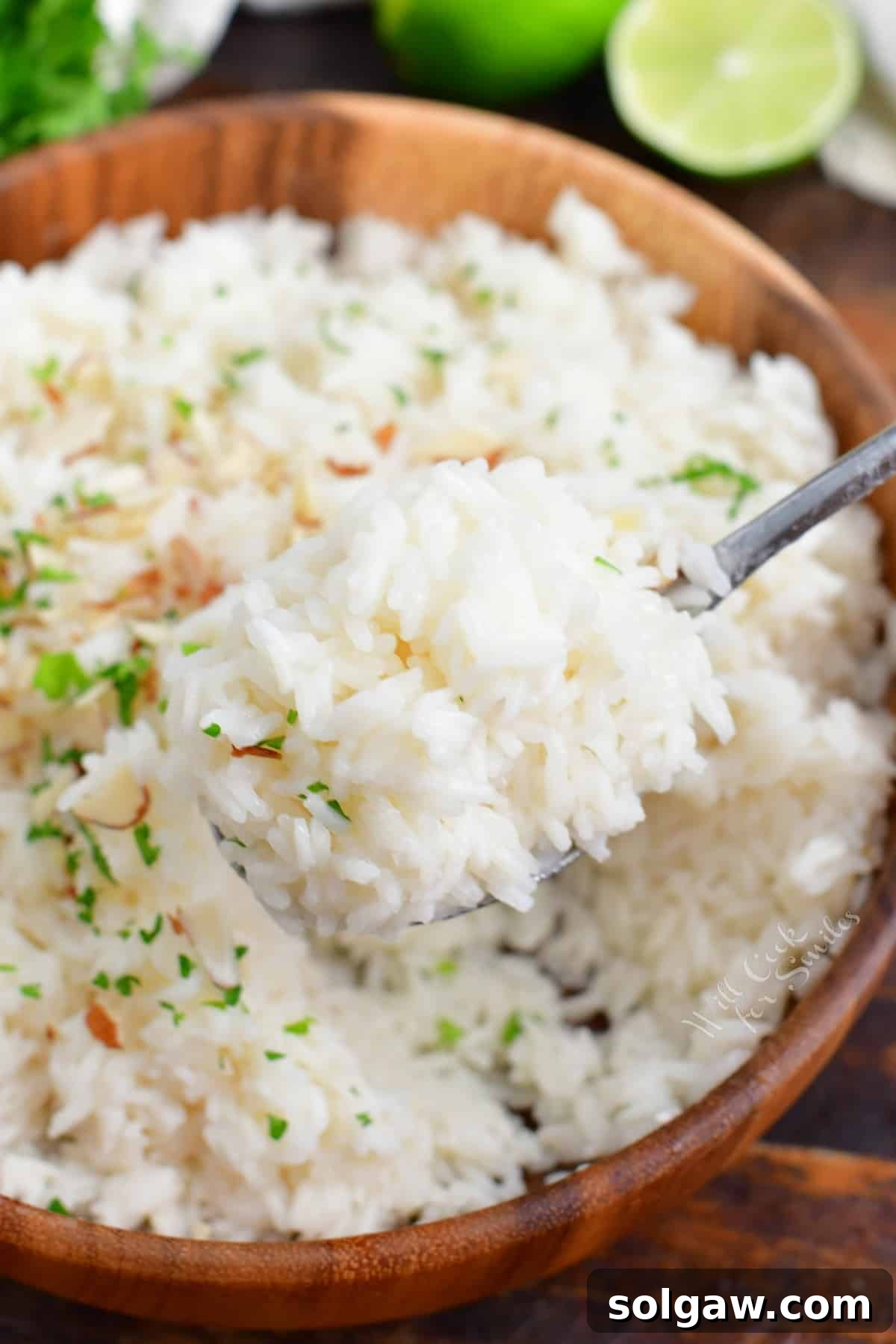
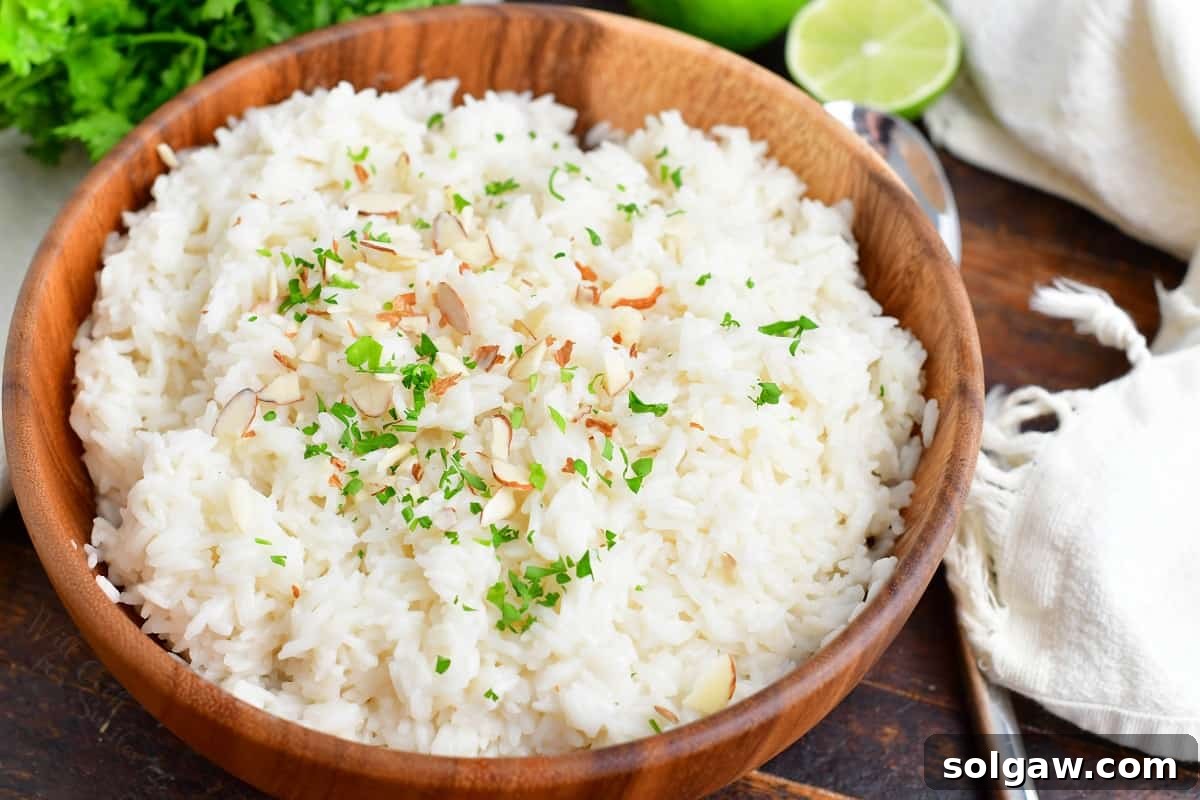
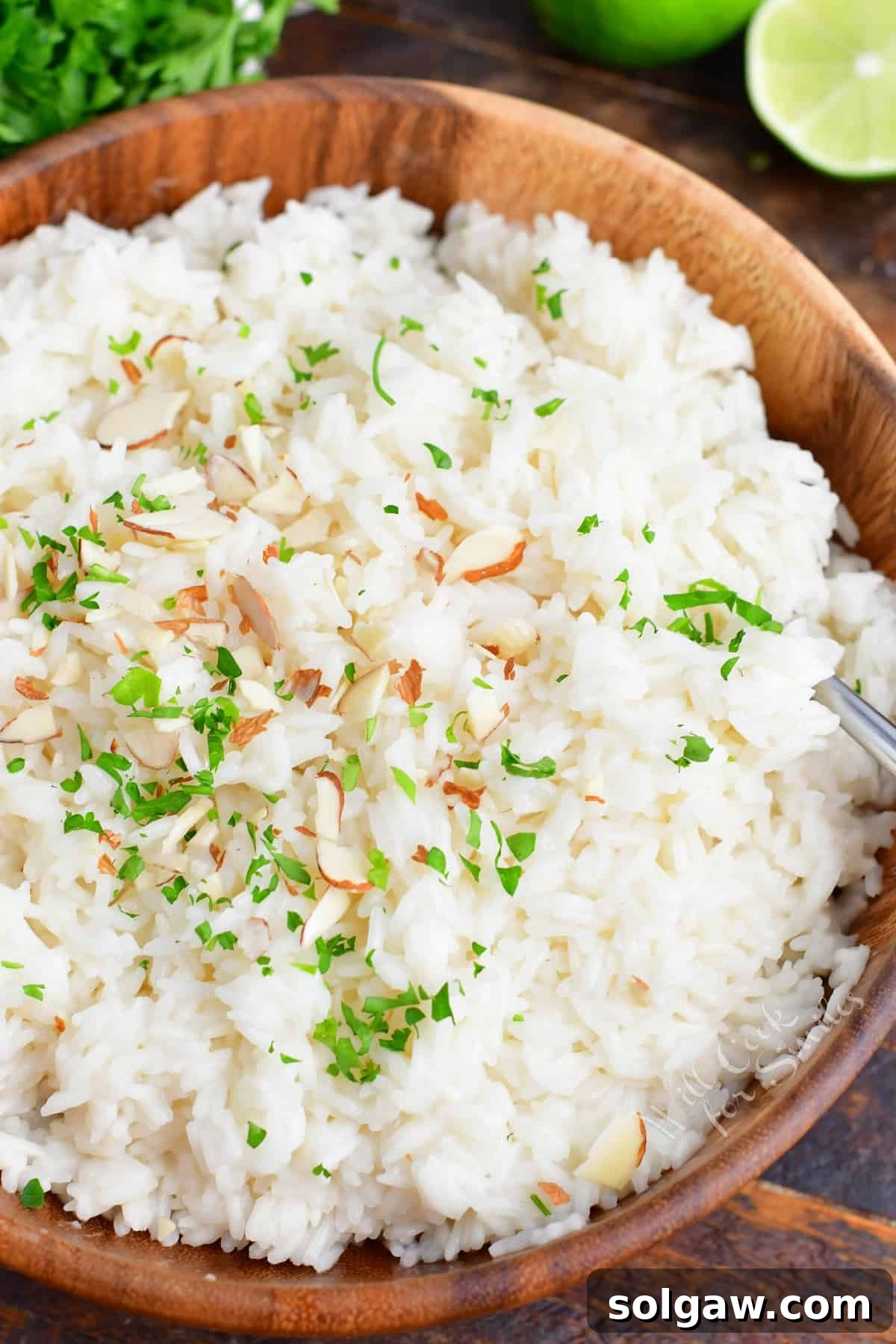
- Serving Suggestions for Toppings: My favorite toppings for coconut rice include fresh minced cilantro and thinly sliced, toasted almonds, which add a delightful crunch and herbaceous freshness. For a more tropical twist, consider adding diced fresh mango or pineapple, which complement the coconut flavor beautifully. A sprinkle of toasted shredded coconut is also a fantastic addition.
Tips and Troubleshooting for the Best Coconut Rice Every Time
While coconut rice is relatively simple, a few common issues can arise. Here’s how to master the perfect texture and troubleshoot any culinary mishaps.
- Why does my coconut rice turn mushy? Mushy coconut rice is typically caused by one or a combination of factors: too much liquid, overcooking, or excess starch on the rice grains.
FIX: Always rinse your rice thoroughly under cold running water until the water runs clear before cooking. This removes surface starch that can lead to stickiness. Use the precise liquid-to-rice ratio recommended in the recipe. Set a timer and stick to the suggested cooking duration, monitoring closely. Remember that different rice brands may have slightly different ideal cook times, so adjust accordingly. - Why is my coconut rice dry or undercooked? If your rice is still firm, crunchy, or dry, it likely didn’t have enough liquid to absorb, or it didn’t cook long enough. This can also happen if the heat was too high, causing the liquid to evaporate too quickly before the rice had a chance to fully cook.
FIX: Ensure your pot is tightly covered to trap all the steam. Keep the heat at a gentle simmer (the absolute lowest setting) throughout the cooking process. If the rice is still undercooked at the end, add a small splash (1-2 tablespoons) of extra coconut water or coconut milk, re-cover the pot, and let it steam on low heat for an additional 2-5 minutes until tender. - How to fix overly mushy rice: If your rice has turned out a bit too soft or wet, don’t despair! Spread it out thinly on a baking sheet. This allows some of the excess moisture to evaporate as steam, helping to dry out the grains slightly and improve their texture. You can even place it in a low oven (around 200°F / 95°C) for 10-15 minutes if you have time, stirring occasionally.
- How to fix dry or slightly undercooked rice: For rice that’s still a bit firm, simply add a tablespoon or two of hot coconut water or coconut milk back into the pot. Cover it tightly again and let it steam on the lowest heat setting for an additional 3-5 minutes. The added moisture and steam will help finish cooking the grains without making them mushy.
- Don’t skip the resting step! This cannot be emphasized enough. Once the rice finishes cooking, remove the pot from the heat and let it sit, still covered, for 5-10 minutes. This crucial resting period allows the steam to redistribute evenly throughout the grains, ensuring a light, fluffy, and perfectly tender texture. Skipping this step often results in dense, clumpy rice.
- Using a heavy-bottomed pot: A good quality heavy-bottomed pot is essential for even heat distribution. This prevents hot spots that can cause rice to stick or burn on the bottom while the top remains undercooked.
Creative Ways to Serve Delicious Coconut Rice
Coconut rice is incredibly versatile, pairing beautifully with a wide array of flavors. Its subtle sweetness and creamy texture make it an ideal accompaniment for dishes ranging from savory to slightly spicy. Here are some inspiring ideas to elevate your meals:
- Tropical Entrée Companion: This is a tropical side dish that naturally pairs well with other fruity and vibrant flavors. It’s fantastic with Thai curries and stir-fries, as well as main courses that feature tropical fruits. Dishes like Mango Chicken and Ginger Peach Baked Chicken Thighs are absolutely perfect when served alongside this fragrant rice.
- Foundation for Flavorful Bowls: Coconut rice serves as an excellent base for a variety of flavorful bowls. Try it with Key Lime Coconut Shrimp, or transform it into a unique Thai Fried Rice. It’s also the perfect foundation for vibrant Tropical Shrimp Rice Bowls, loaded with fresh veggies and a tangy dressing.
- Seafood’s Best Friend: The natural sweetness of coconut rice complements almost any seafood dish. Serve it with perfectly Seared Scallops, a flaky Teriyaki Salmon fillet, or golden brown Crab Cakes for a restaurant-quality meal at home.
- Grilled Meats and Skewers: The refreshing notes of coconut rice provide a lovely contrast to smoky, grilled meats. It’s a fantastic side for chicken or pork skewers marinated in Asian-inspired sauces, offering a delightful balance of flavors.
- Vegetarian and Vegan Delights: Since this recipe is naturally vegan and gluten-free, it’s an excellent staple for plant-based meals. Pair it with roasted vegetables, a lentil curry, or a vibrant bean salad for a complete and satisfying dish.
Storing and Reheating Instructions for Coconut Rice
Proper storage is key to enjoying your delicious coconut rice for days to come. Here’s how to keep it fresh and reheat it perfectly.
- Storing Cooked Rice: To ensure food safety and maintain the best texture, always allow the coconut rice to cool completely to room temperature before storing. Transfer any leftover rice into an air-tight food storage container. When properly stored in the refrigerator, it will last for a good 3-4 days. Prompt cooling prevents bacterial growth, which is especially important with cooked rice.
- Reheating for Freshness: Reheating coconut rice is simple and quick. For best results, place the desired portion in a microwave-safe bowl. Add a small splash of coconut water (about 1-2 tablespoons per cup of rice) to reintroduce moisture, then cover the bowl with a microwave-safe lid or damp paper towel. Reheat the rice in 30-40 second increments, fluffing with a fork after each interval, until it’s heated through and fluffy again. You can also gently reheat it in a pan on the stovetop over low heat, adding a splash of liquid and stirring occasionally.
- Freezing for Longer Storage: Yes, you can easily freeze coconut rice! Once cooked, make sure to cool it completely. Then, transfer it into a freezer-friendly zip-top bag or an air-tight freezer container. Press out all the excess air from the bag before sealing to prevent freezer burn. Label with the date and freeze for up to 3 months. This makes it perfect for meal prepping.
- Thawing Frozen Rice: For optimal texture, thaw frozen rice slowly in the refrigerator overnight. Once thawed, you can reheat it using the microwave or stovetop method described above, adding a small amount of liquid as needed.
Frequently Asked Questions About Coconut Rice
Yes, you can certainly use light coconut milk if you’re looking for a less rich or lower-calorie option. However, be aware that the flavor will be less intense and the texture less creamy. Full-fat unsweetened coconut cream is highly recommended for the most authentic and decadent coconut rice experience. If you opt for light coconut milk, you might consider adding a bit more sugar or a pinch more salt to enhance the overall flavor profile, as the fat content contributes significantly to richness.
Absolutely! Making coconut rice in a rice cooker is a convenient alternative. Simply add the thoroughly rinsed jasmine rice, unsweetened coconut cream, coconut water, sugar, and salt directly to your rice cooker pot. Give it a quick stir to combine the ingredients, then cook as you normally would according to your rice cooker’s instructions for white rice. Once the cooking cycle is complete, remember the crucial resting step: let the rice sit in the covered rice cooker for 5-10 minutes before opening the lid and fluffing. This ensures perfect texture.
Yes, rinsing your rice is a highly recommended and beneficial step for this recipe. Rinsing jasmine rice under cold running water until the water runs clear removes excess surface starch. This is vital for preventing the rice from becoming overly sticky or gummy during cooking, ensuring each grain cooks separately and results in that desirable light and fluffy texture. Skipping this step can lead to a less appealing, dense consistency.
You can substitute brown rice for white jasmine rice, but keep in mind that brown rice behaves differently. It requires significantly longer cooking times and typically more liquid (both coconut cream and water) to fully cook. The resulting texture will also be distinct: brown coconut rice will be chewier and nuttier, and it might be slightly easier to become mushy if overcooked compared to the distinct, fluffy grains of jasmine rice. If using brown rice, always follow the package instructions for liquid ratios and cooking times, then incorporate the coconut cream and water proportionately.
Discover More Delicious Rice Recipes to Explore
If you fell in love with this versatile coconut rice, you’ll be thrilled to discover plenty of other flavorful rice dishes to add to your culinary repertoire. Rice is a staple in so many cuisines, and each preparation offers a unique experience.
- For another delightful tropical twist, you must try my Key Lime Coconut Shrimp and Rice, a vibrant dish packed with bright, fresh flavors.
- If you enjoy the aromatic qualities of Asian cuisine, don’t miss the colorful and fragrant Pineapple Thai Fried Rice.
- For hearty and satisfying options, perfect for easy weeknight dinners, both Mango Chicken and Rice and Garlic Shrimp and Rice are always a hit.
- You can also keep things fresh and customizable with a Spring Roll Rice Bowl, loaded with crisp veggies and your favorite toppings for a light and healthy meal.
- And for more classic and comforting side dishes, be sure to explore my recipes for Rice Pilaf, savory Spanish Rice, and the incredibly decadent Creamy Parmesan Rice. Each offers a distinct flavor profile that can complement a variety of main courses.
Coconut Rice Recipe
This rich, soft, and creamy coconut rice, made with jasmine rice, unsweetened coconut cream, coconut water, and a hint of fresh lime juice, comes out perfectly fluffy and never mushy in about 25 minutes, with rich coconut flavor in every bite.
5 from 3 votes
Pin
Video
Rate
Ingredients
- 2 cup jasmine rice
- 13.6 oz unsweetened coconut cream
- 2 cups coconut water
- 1 tbsp fresh lime juice
- 2-3 tsp white granulated sugar (to taste)
- salt (to taste)
Instructions
- Rinse jasmine rice in a fine-mesh strainer under cold running water until the water runs clear. Set aside to drain.
- In a medium cooking pot, over medium heat, combine the coconut cream, coconut water, fresh lime juice, sugar, and salt. Whisk continuously to ensure the coconut cream melts and all ingredients are well combined. Bring the mixture to a gentle boil.
- Carefully add the rinsed rice to the boiling coconut mixture. Give it just one quick, gentle stir to distribute the rice evenly, then immediately cover the pot tightly with a lid and reduce the heat to the lowest setting for a gentle simmer.
- Important: Do not open the lid or disturb the rice while it is cooking, as this releases steam essential for proper cooking.
- Cook the rice for approximately 18-20 minutes, or according to the package instructions for your specific jasmine rice.
- Once the cooking time is complete, remove the pot from the heat (keeping the lid on) and let it rest undisturbed for 5-10 minutes. This allows the steam to redistribute and results in fluffier rice.
- After resting, remove the lid and gently fluff the rice with a fork. Add any desired mix-ins or garnishes, such as fresh cilantro or toasted almonds, and serve immediately.
Video
Video placeholder (replace with actual video embed code)
Notes
- Storing: Cool rice to room temperature. Store leftovers in an air-tight container in the refrigerator for 3-4 days.
- Reheating: Reheat in the microwave, covered, with a splash of coconut water, in 30-40 second increments until heated through.
- Freezing: Cool completely, transfer to a freezer-friendly zip-top bag (remove air), label, and freeze for up to 3 months. Thaw in the refrigerator before reheating.
Nutrition
Carbohydrates: 58g |
Protein: 7g |
Fat: 23g |
Saturated Fat: 20g |
Sodium: 90mg |
Potassium: 483mg |
Fiber: 3g |
Sugar: 4g |
Vitamin A: 1IU |
Vitamin C: 4mg |
Calcium: 44mg |
Iron: 2mg
Tried this recipe?
Mention @willcookforsmiles or tag #willcookforsmiles!