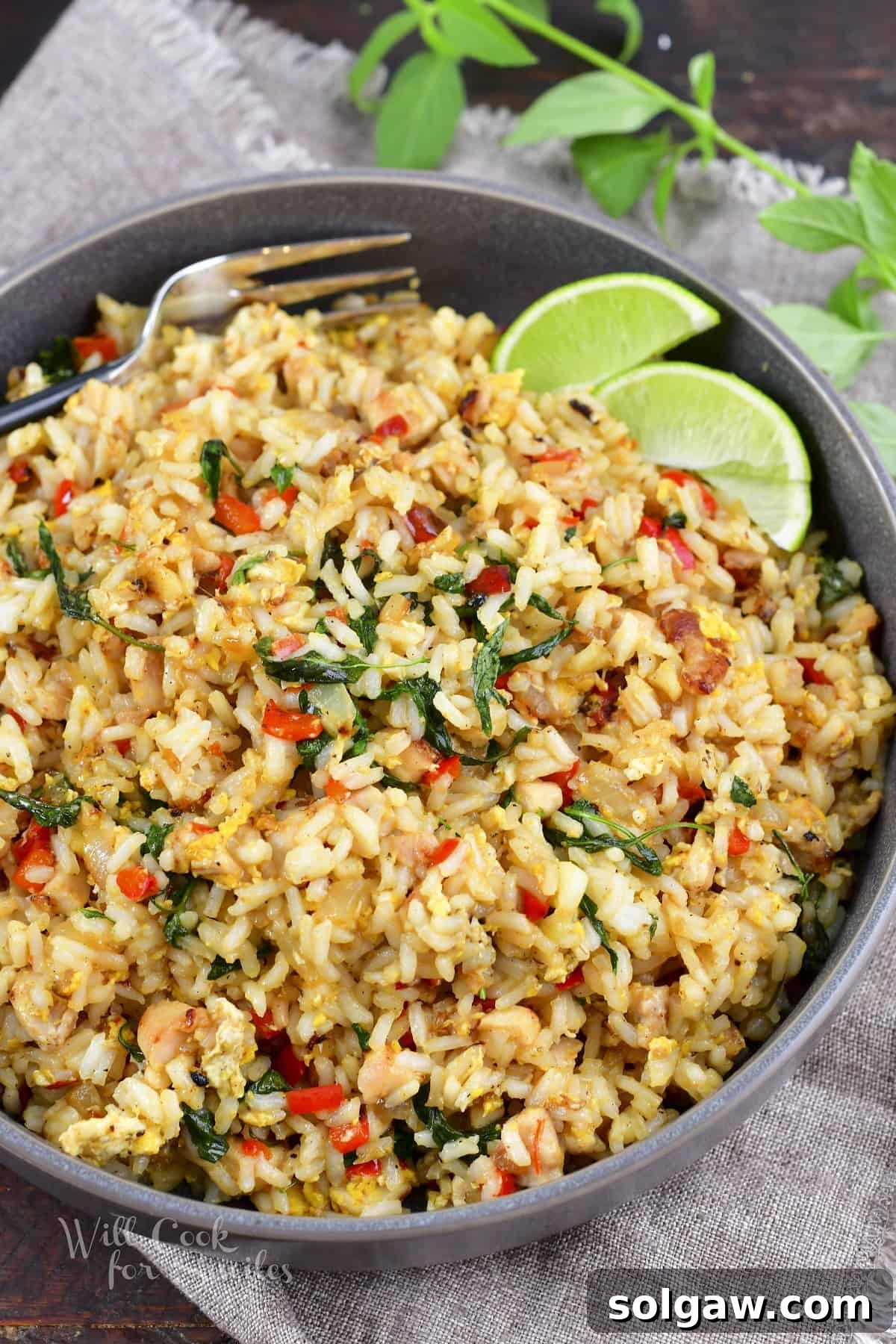
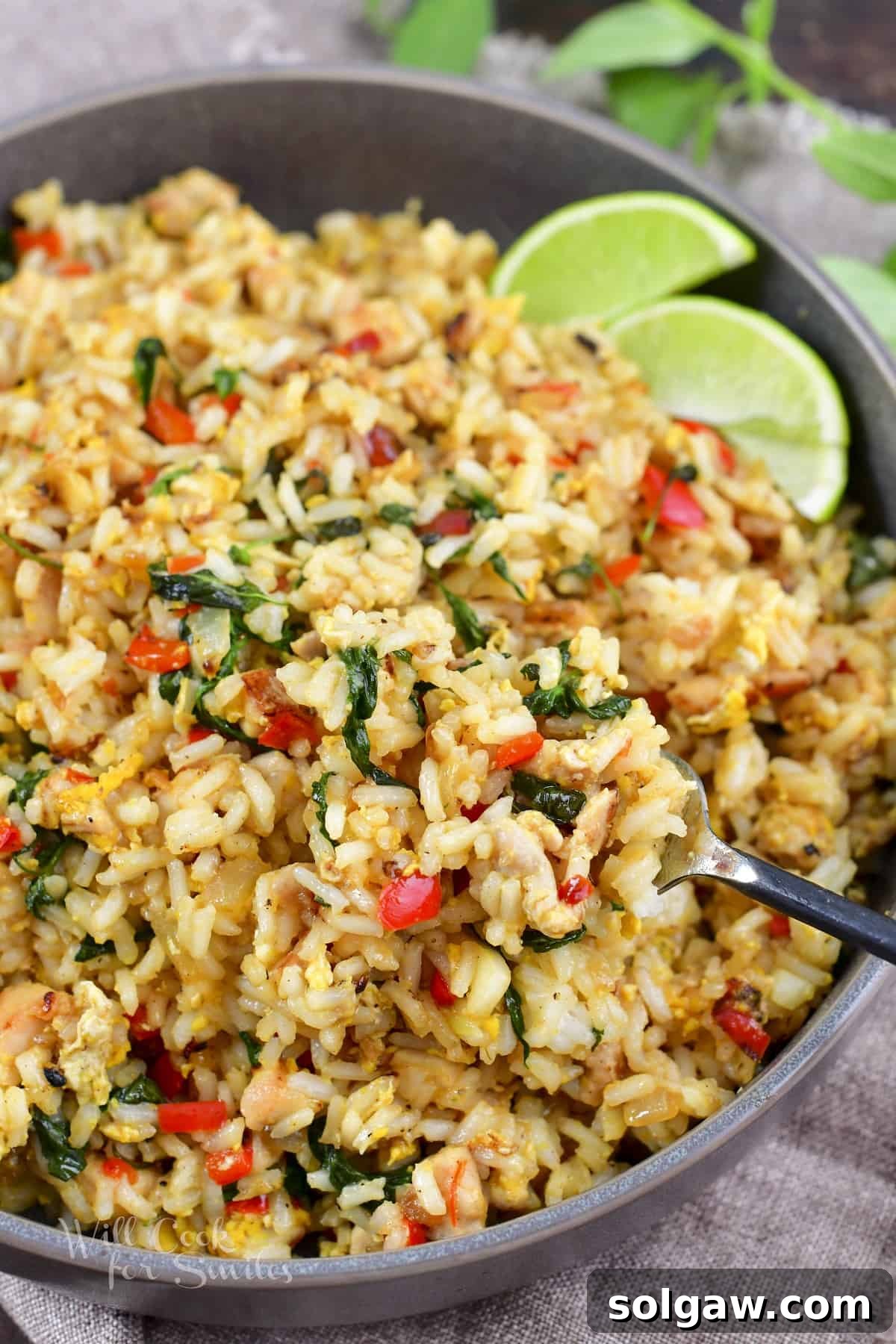
Experience Authentic Thai Flavors: The Ultimate Thai Basil Fried Rice Recipe (Khao Pad Bai Kraprow)
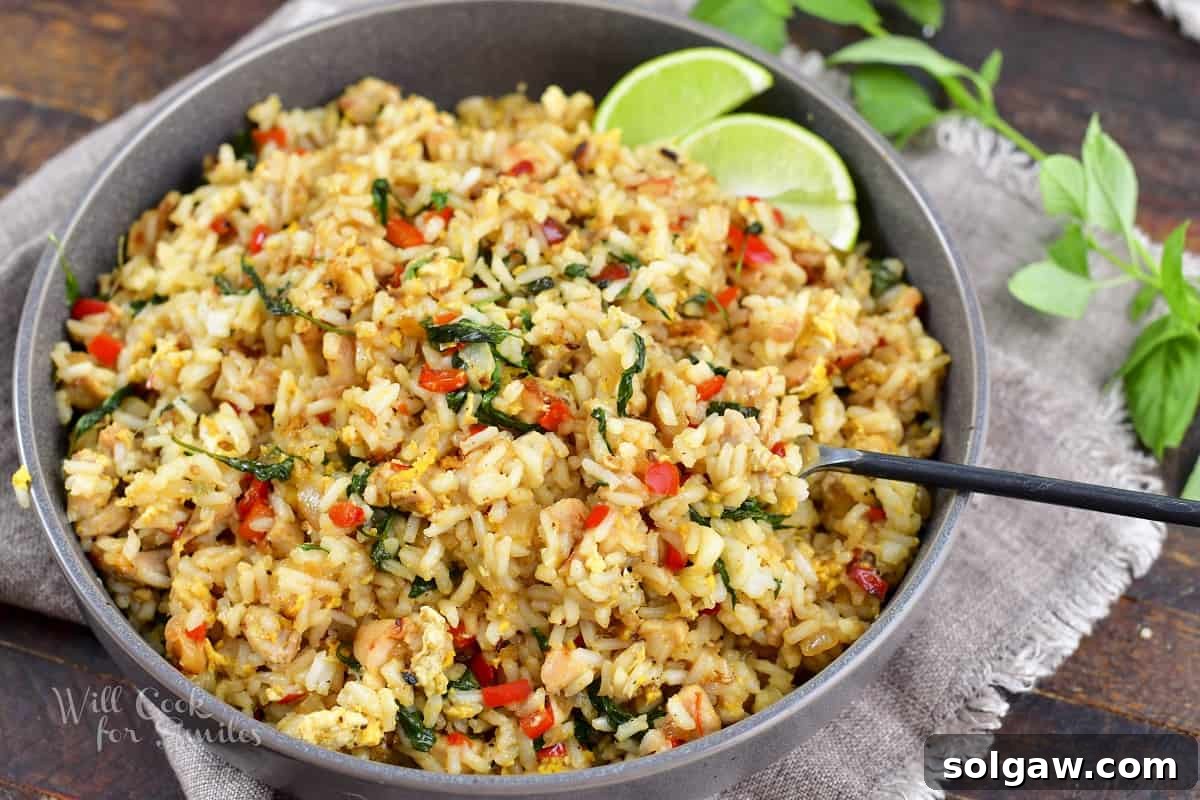
Embark on a culinary journey to the vibrant streets of Thailand with this incredible Thai Basil Fried Rice recipe, also known as Khao Pad Bai Kraprow. While many fried rice variations exist, this Thai rendition stands in a league of its own, captivating taste buds with its unparalleled depth of flavor, aromatic herbs, and a delightful hint of spicy warmth. It’s not just a meal; it’s an experience that transports you directly to the heart of Thai cuisine, making it a firm family favorite and a must-try for anyone craving authentic Asian flavors.
What sets Thai Basil Fried Rice apart is its distinctive blend of bold, unique ingredients. Fresh Thai basil, with its unique peppery and anise-like notes, combined with the fiery kick of Thai chili peppers, creates an unforgettable symphony of flavors that elevate this dish far beyond ordinary fried rice. Every spoonful offers a perfect balance of savory, sweet, and spicy, ensuring a truly mouthwatering experience.
The secret to this exceptional dish lies in its meticulously crafted sauce. A harmonious blend of savory fish sauce, rich oyster sauce, a touch of golden honey for sweetness, and the complex heat of Thai roasted red chili paste, all seasoned with a pinch of white pepper and salt, comes together to form a deeply complex and irresistible coating for the rice. This sauce is designed to perfectly complement the aromatic Thai basil, creating a flavor profile that is both robust and incredibly balanced.
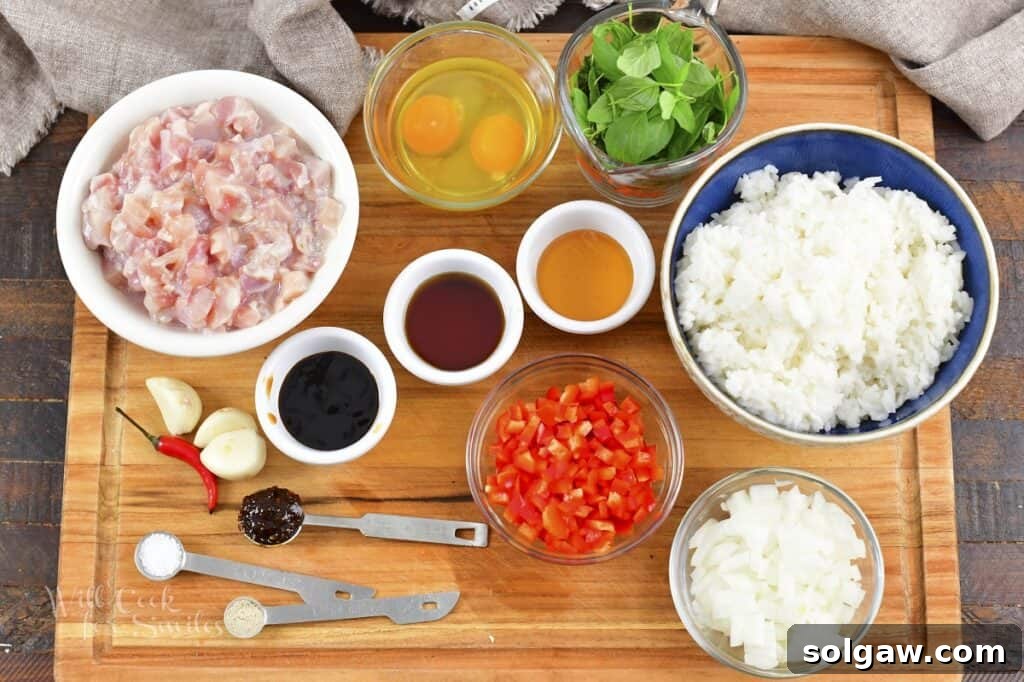
Essential Ingredients and Smart Substitutions for Thai Basil Fried Rice
Crafting the perfect Thai Basil Fried Rice begins with selecting the right ingredients. Some may be new to your pantry, but they are key to achieving that authentic Thai taste. Don’t worry, many are easily accessible, and we’ll guide you through where to find them and how to make smart substitutions if needed.
Sourcing Authentic Asian Ingredients
For the freshest and most authentic flavors, particularly for herbs like Thai basil and fresh Thai chilies, your best bet is often a local Asian market or specialty grocery store. These stores typically stock a wider array of unique produce that might be harder to find elsewhere. However, pantry staples like fish sauce, oyster sauce, and various chili pastes are becoming increasingly common in the international aisle of larger conventional supermarkets, and they are also readily available online through retailers like Amazon.
The Foundation: Perfect Rice
The golden rule for any fantastic fried rice is to use **day-old, cold cooked white rice**. This isn’t just a suggestion; it’s crucial for the texture. Refrigerated rice dries out, losing moisture and becoming firm, which prevents it from clumping together and allows it to absorb the sauce beautifully without becoming mushy. Jasmine rice is the traditional choice for its fragrant aroma and ideal texture, but other long-grain varieties like Basmati can also work well. If you find yourself without leftover rice, don’t despair! Cook a fresh batch of Jasmine rice, then spread it thinly on a baking sheet lined with parchment paper. Pop it into the refrigerator for at least 20-30 minutes while you prepare your other ingredients. This quick cooling method helps to dry out the grains, mimicking the texture of day-old rice.
The Star Herb: Thai Basil
Crucially, **Thai basil is not the same as Italian basil**. While both are basil, they belong to different varieties and possess distinct flavor profiles. Thai basil (Ocimum basilicum var. thyrsiflora) is characterized by its slightly spicier, peppery notes with a pronounced hint of anise or licorice. This unique flavor is fundamental to authentic Thai Basil Fried Rice. If you absolutely cannot find Thai basil, holy basil (Ocimum tenuiflorum), often used in Pad Kraprow dishes, is another excellent and even more authentic choice if available. Only as a last resort should you consider regular sweet basil, but be aware that the dish’s flavor will be notably different and lack the signature complexity. Thai basil is also wonderfully versatile and can be used in other popular dishes like Thai Basil Chicken, various curries, and pastes.
Your Choice of Protein
This recipe is highly adaptable when it comes to protein, allowing you to customize it to your preference. While chicken, particularly boneless, skinless chicken thighs for their tenderness and flavor, is a popular choice, feel free to swap it out or add other proteins. Succulent shrimp, savory pork, lean beef, or even plant-based tofu are all fantastic options. If you prefer to keep the dish entirely meatless, simply omit the protein and enjoy this flavorful fried rice as a satisfying vegetarian main course or a vibrant side dish.
The Essential Kick: Thai Chili Peppers
Thai chili peppers are responsible for the signature heat of this dish. Their small size belies their powerful punch! You can adjust the spice level to your liking by using more or fewer chilies, or by removing the seeds for a milder heat. Always handle fresh chilies with care, washing your hands thoroughly after mincing, or using gloves to avoid skin irritation. For those who prefer less heat, a pinch of red pepper flakes can be a milder substitute, though it won’t offer the same fresh pepper flavor.
The Flavorful Sauce Components
- Fish Sauce: This staple of Thai cuisine provides a deep umami, salty, and savory base that is irreplaceable.
- Oyster Sauce: Adds a rich, slightly sweet, and savory thickness to the sauce. Look for vegetarian oyster sauce if preparing a meatless version.
- Honey: Balances the savory and spicy elements with a touch of natural sweetness.
- Thai Roasted Red Chili Paste (Nam Prik Pao): This paste is a flavor powerhouse, offering a smoky, sweet, and savory taste with a mild chili kick. It’s crucial for depth.
- White Pepper & Salt: Essential seasonings that enhance all other flavors.
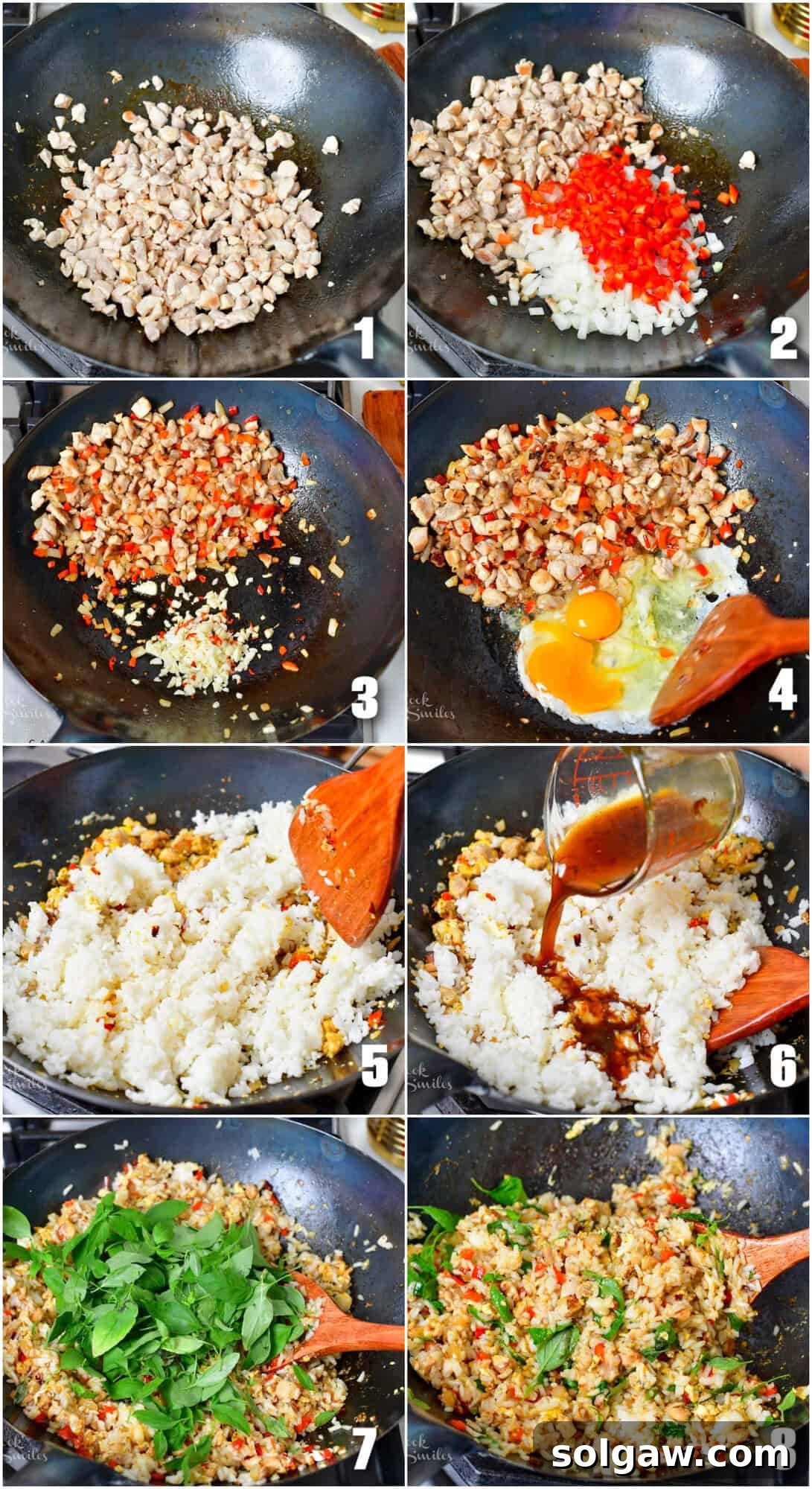
Mastering the Art of Thai Basil Fried Rice: A Step-by-Step Guide
Creating this authentic Thai Basil Fried Rice is a quick and rewarding process, especially if you follow these steps and have all your ingredients prepped in advance. The key to stir-frying is high heat and constant movement!
- Preparation is Key (Mise en Place): Before you even turn on the stove, ensure all your ingredients are prepped and ready to go. This recipe cooks fast, and you won’t have time to chop mid-fry. Dice your chicken into uniform small pieces for even cooking. Finely dice the yellow onion and bell pepper. Mince the garlic and carefully deseed and mince the Thai chili pepper(s) to your desired spice level. In a separate small bowl, crack and lightly whisk the eggs with a pinch of salt. Finally, whisk together all the sauce ingredients (fish sauce, oyster sauce, honey, Thai roasted red chili paste, white pepper, and salt) in another bowl until well combined.
- Heat the Wok: Place a large wok or a spacious non-stick frying pan with high sides over medium-high to high heat. Allow it to heat thoroughly until it just begins to smoke lightly. Add the peanut oil, swirling to coat the surface. The high heat is essential for achieving that characteristic “wok hei” flavor and preventing soggy fried rice.
- Cook the Protein: Add the diced chicken (or your chosen protein) to the hot wok along with a small sprinkle of salt. Sauté, stirring frequently, until the chicken is almost fully cooked through and lightly browned on the edges. Remove the chicken from the wok and set aside, reserving any drippings.
- Sauté Aromatics and Vegetables: Return the wok to the heat if necessary, adding a tiny bit more oil if it seems dry. Add the diced onion and bell pepper. Stir-fry for 2-3 minutes until they soften slightly, then push them to one side of the wok, creating an empty space in the center.
- Infuse Garlic and Chili: To the empty space in the center, add the minced garlic and Thai chili pepper. Sauté for about 30 seconds to 1 minute, just until the garlic becomes fragrant and lightly golden. Be careful not to burn the garlic, as it can turn bitter quickly. Once fragrant, mix the garlic and chili into the softened onions and bell peppers, combining all the sautéed vegetables.
- Scramble the Eggs: Push the chicken and vegetable mixture to one side of the wok, again creating an empty space. Add a touch more oil if needed, then pour the whisked eggs into the center. Let them set for a few seconds, then gently scramble them with your spatula until they are mostly cooked but still slightly soft. Once cooked, break them into smaller pieces and mix them thoroughly with the chicken and vegetables.
- Incorporate Rice and Sauce: Add the cold, day-old rice to the wok. Use your spatula to break up any clumps, spreading the rice evenly across the pan. Give your prepared sauce another quick whisk and drizzle it evenly over the rice. Stir-fry vigorously, tossing and folding the ingredients together to ensure the sauce, chicken, and vegetables are uniformly distributed and every grain of rice is coated in that delicious flavor. This step requires continuous stirring to prevent sticking and promote even cooking.
- Add the Thai Basil: Finally, add the fresh Thai basil leaves to the wok. Stir-fry for just a few more seconds, until the basil leaves wilt and release their incredible aroma. Overcooking the basil will diminish its vibrant flavor, so this step should be very brief.
- Serve Immediately: Remove the wok from the heat and serve your piping hot Thai Basil Fried Rice straight away. Garnish with a fresh sprig of basil or a lime wedge if desired. Enjoy the explosive flavors of this authentic Thai classic!
Elevate Your Experience: Creative Variations and Dietary Adaptations
One of the beauties of Thai Basil Fried Rice is its versatility. You can easily adjust it to suit various dietary preferences or simply experiment with different flavor combinations to make it uniquely yours.
Making it Vegetarian or Vegan
Transforming this dish into a delightful vegetarian or even vegan meal is quite straightforward. If you’re vegetarian, swap the chicken for firm or extra-firm tofu, cut into 1/2-inch cubes and pan-seared until golden brown and crispy before adding to the wok. Omit the eggs or use a vegan egg substitute if desired. For the sauce, you will need to substitute oyster sauce with a vegetarian oyster sauce, which is widely available in Asian markets and online. For fish sauce, a good quality soy sauce can be used as a substitute, but be aware that the flavor profile will shift slightly as fish sauce provides a unique depth of umami. You might need to add a pinch more salt to taste if using soy sauce.
Exploring Other Proteins
Don’t limit yourself to chicken! This recipe shines with a variety of proteins. Here are a few suggestions:
- Shrimp: Add raw, peeled, and deveined shrimp to the wok after sautéing the aromatics. Shrimp cooks very quickly, typically 2-3 minutes until pink and opaque. Remove them from the wok once cooked to prevent overcooking, then reintroduce them with the rice.
- Beef: Thinly sliced sirloin, flank steak, or even ground beef can be used. Cook it until browned and almost done before setting aside, similar to the chicken.
- Pork: Ground pork or thinly sliced pork tenderloin works wonderfully. Cook thoroughly before combining with other ingredients.
- Tofu: As mentioned for vegetarian options, pressing extra-firm tofu to remove excess water and then pan-searing it until crispy adds a delightful texture and absorbs the sauce beautifully.
Gluten-Free Modifications
For those avoiding gluten, making this fried rice gluten-free is simple. The primary ingredient to watch out for is oyster sauce, as many brands contain wheat. Ensure you purchase a certified gluten-free oyster sauce. Most fish sauces are naturally gluten-free, but it’s always wise to double-check the label to confirm. Other ingredients like rice, fresh produce, and honey are typically gluten-free, but always read packaging carefully if you have severe sensitivities.
Adding More Vegetables
Boost the nutritional value and crunch of your fried rice by incorporating additional vegetables. Diced carrots, green peas, corn kernels, thinly sliced mushrooms, or green beans can be added along with the onions and bell peppers. Ensure they are cut into small, uniform pieces for quick and even cooking. This also adds more color and texture to the dish.
Adjusting Spice Levels
The beauty of cooking at home is customization! If you love extra heat, add an extra Thai chili or two, or leave the seeds in. For a milder version, remove all chili seeds or reduce the number of chilies. A dash of Sriracha or extra chili paste can also be added at the end for an extra burst of heat for individual servings.
The Authentic Thai Basil Fried Rice Recipe (Khao Pad Bai Kraprow)
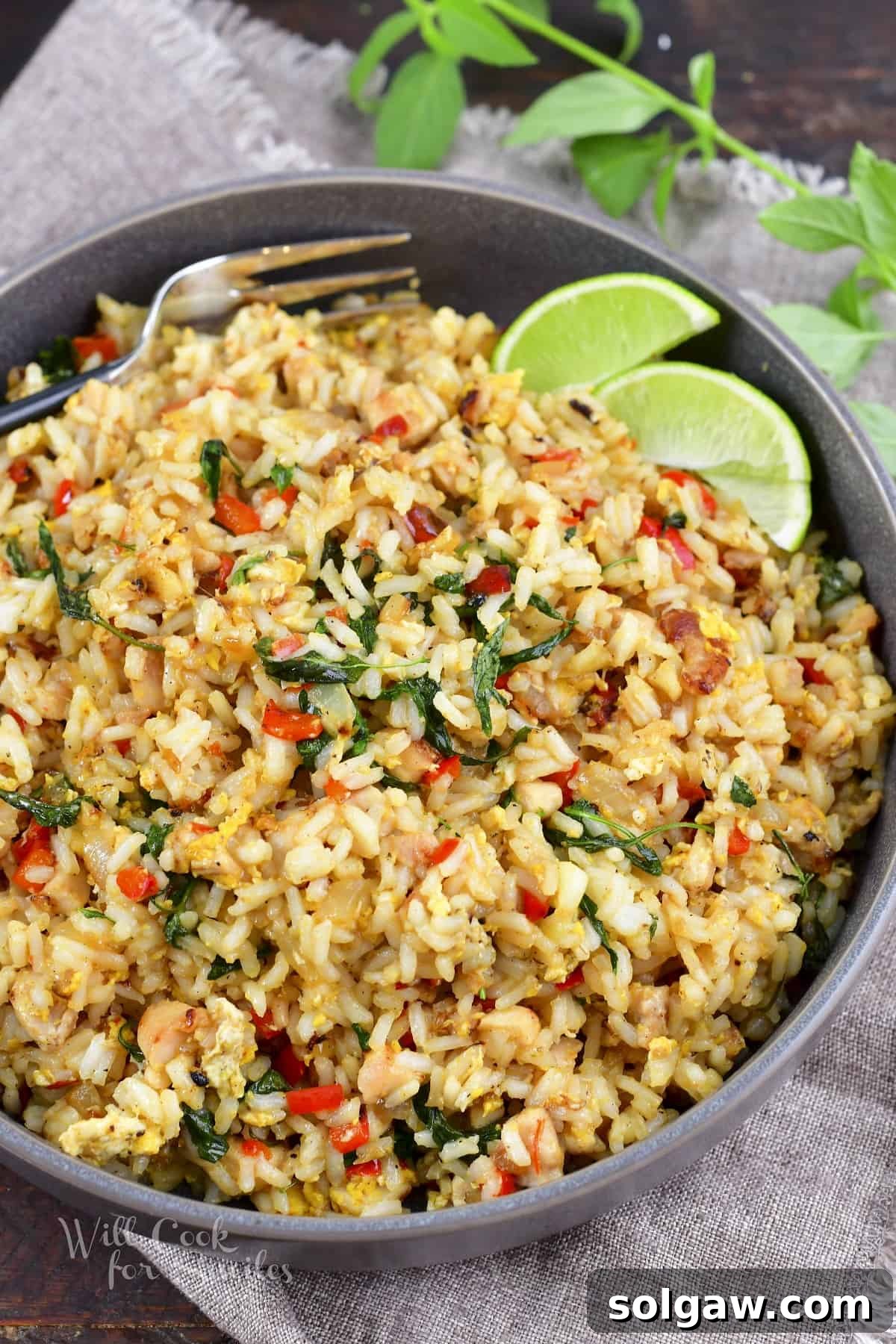
This recipe brings the vibrant flavors of Thailand right into your kitchen. Perfectly balanced with savory, sweet, and spicy notes, this Thai Basil Fried Rice is a quick and satisfying meal that’s sure to impress.
Rated 5/5 from 4 votes
Print Recipe | Pin Recipe | Rate This Recipe
- Course: Main Course
- Cuisine: Thai
- Prep Time: 15 minutes
- Cook Time: 15 minutes
- Total Time: 30 minutes
- Servings: 4
- Calories: 481 kcal
- Author: Lyuba Brooke
Ingredients
- 4 cups day-old/cold cooked jasmine or another long-grain rice
- 1 lb boneless skinless chicken thighs, diced
- 2 tbsp peanut oil (or other high-smoke point oil)
- 1/2 yellow onion, diced
- 1 small bell pepper, diced (any color)
- 4 garlic cloves, minced
- 1-2 Thai chili peppers, minced (adjust to desired spice level)
- 2 eggs, lightly whisked with a pinch of salt
- 1 cup fresh Thai basil leaves, packed
For the Sauce:
- 3 tbsp fish sauce
- 2 tbsp oyster sauce (use gluten-free if needed)
- 1 tbsp honey
- 2 tsp Thai roasted red chili paste
- 1/8-1/4 tsp white pepper
- Pinch of salt, to taste
Instructions
- Prepare All Ingredients: As this is a fast-cooking stir-fry, ensure all your ingredients are prepped and ready before you start. Dice chicken, onion, and bell pepper. Mince garlic and Thai chili. Whisk eggs in one bowl and all sauce ingredients in another.
- Heat the Wok: Preheat a large wok or a spacious non-stick pan with high sides over medium-high heat until hot. Add the peanut oil.
- Cook Chicken: Add the diced chicken to the hot wok with a little salt. Sauté, stirring frequently, until almost fully cooked and lightly browned. Remove from wok and set aside.
- Sauté Vegetables: Add diced onion and bell pepper to the wok. Sauté for 2-3 minutes until softened. Push to one side.
- Aromatics: To the empty space, add minced garlic and Thai chili pepper (add a little more oil if needed). Sauté for 30 seconds until fragrant. Mix with vegetables.
- Scramble Eggs: Push everything to one side. Add a little oil if needed, then pour in the whisked eggs. Scramble until mostly cooked, then mix with chicken and vegetables.
- Add Rice and Sauce: Add the cold rice to the wok, breaking up any clumps. Whisk the sauce again and pour it evenly over the rice. Stir-fry vigorously, tossing until all ingredients are well combined and the rice is evenly coated.
- Finish with Basil: Stir in the fresh Thai basil leaves. Cook for just a few more seconds until the basil is wilted and aromatic.
- Serve Immediately: Remove from heat and serve your delicious Thai Basil Fried Rice hot!
Chef’s Notes for Success
- No Leftover Rice? Quick Chill Method: The key to great fried rice is using cold, drier rice to prevent stickiness. If you don’t have day-old rice, cook fresh rice, then immediately spread it in a thin, even layer on a parchment-lined baking sheet. Place it in the refrigerator for at least 20 minutes while you prep other ingredients. This quickly cools and dries out the rice.
- Storing Leftovers: Any leftover Thai Basil Fried Rice should be stored in an airtight container in the refrigerator. It will keep well for 3-4 days.
- Reheating Tips: Cooked rice tends to dry out in the refrigerator. When reheating, whether in the microwave or on the stovetop, add a splash of chicken broth (or water/vegetable broth for vegetarian versions) to restore moisture and flavor, preventing it from becoming too dry.
Nutrition Information (per serving)
Calories: 481kcal | Carbohydrates: 56g | Protein: 31g | Fat: 14g | Saturated Fat: 3g | Polyunsaturated Fat: 4g | Monounsaturated Fat: 6g | Trans Fat: 0.03g | Cholesterol: 190mg | Sodium: 1442mg | Potassium: 534mg | Fiber: 2g | Sugar: 7g | Vitamin A: 1410IU | Vitamin C: 43mg | Calcium: 69mg | Iron: 2mg
Tried this recipe? Please leave a 🌟 star rating and share your thoughts in the 📝 comments below! You can also tag @willcookforsmiles or use #willcookforsmiles on social media!
Craving More Fried Rice Adventures? Discover These Delicious Recipes!
If you’ve fallen in love with the art of fried rice, there’s a whole world of variations to explore. Each offers a unique twist on this beloved dish, from classic comfort food to exotic flavor combinations. Broaden your culinary horizons with these other fantastic fried rice recipes:
- Succulent Shrimp Fried Rice: A delightful seafood take on the classic, featuring plump shrimp and a savory sauce.
- Classic Chicken Fried Rice: The timeless favorite, perfect for a quick and comforting meal any night of the week.
- Authentic Thai Fried Rice (Khao Pad): Explore the foundational Thai fried rice, a slightly milder yet equally flavorful cousin to our basil version.
- Exotic Thai Pineapple Fried Rice: A vibrant and sweet-savory blend, often served in a hollowed-out pineapple, offering a touch of tropical paradise.
- Healthy Cauliflower Fried Rice: A fantastic low-carb alternative that doesn’t compromise on flavor, perfect for a lighter meal.
Each of these recipes offers a unique culinary experience, proving just how versatile and delicious fried rice can be. Happy cooking!