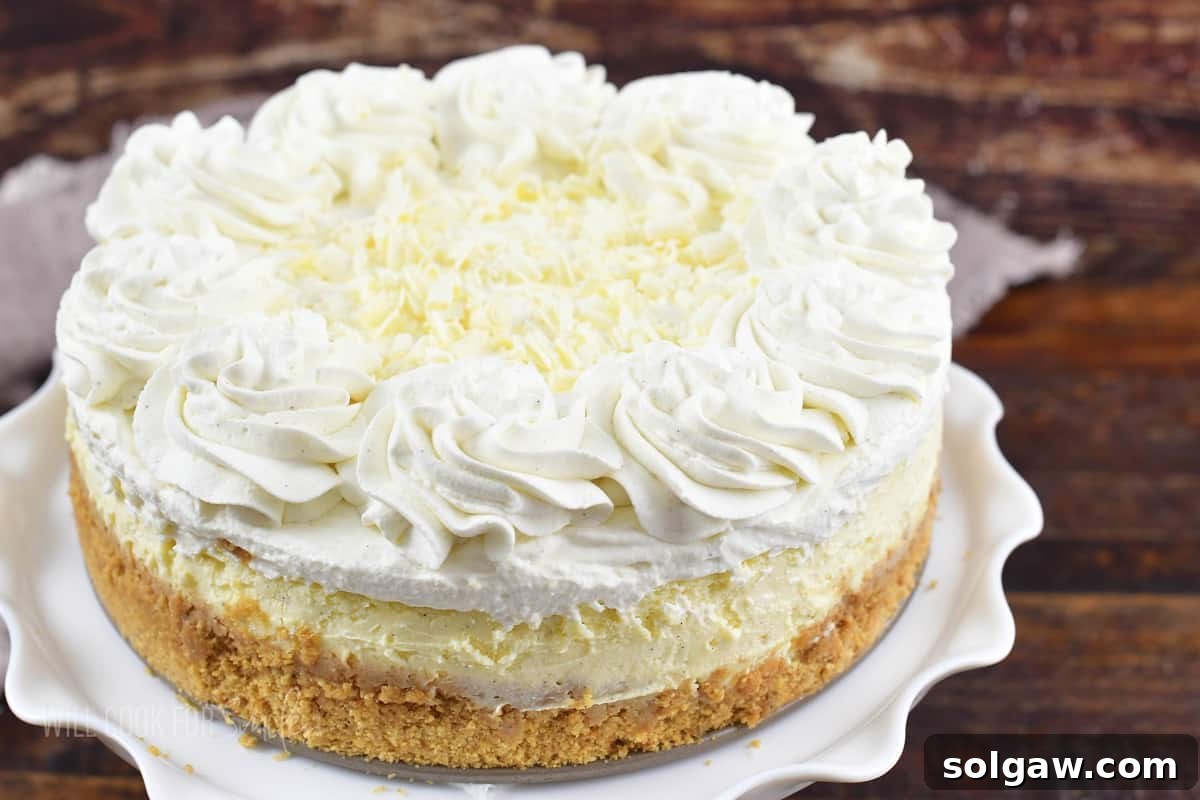
Decadent Vanilla Bean Cheesecake with Homemade Whipped Cream
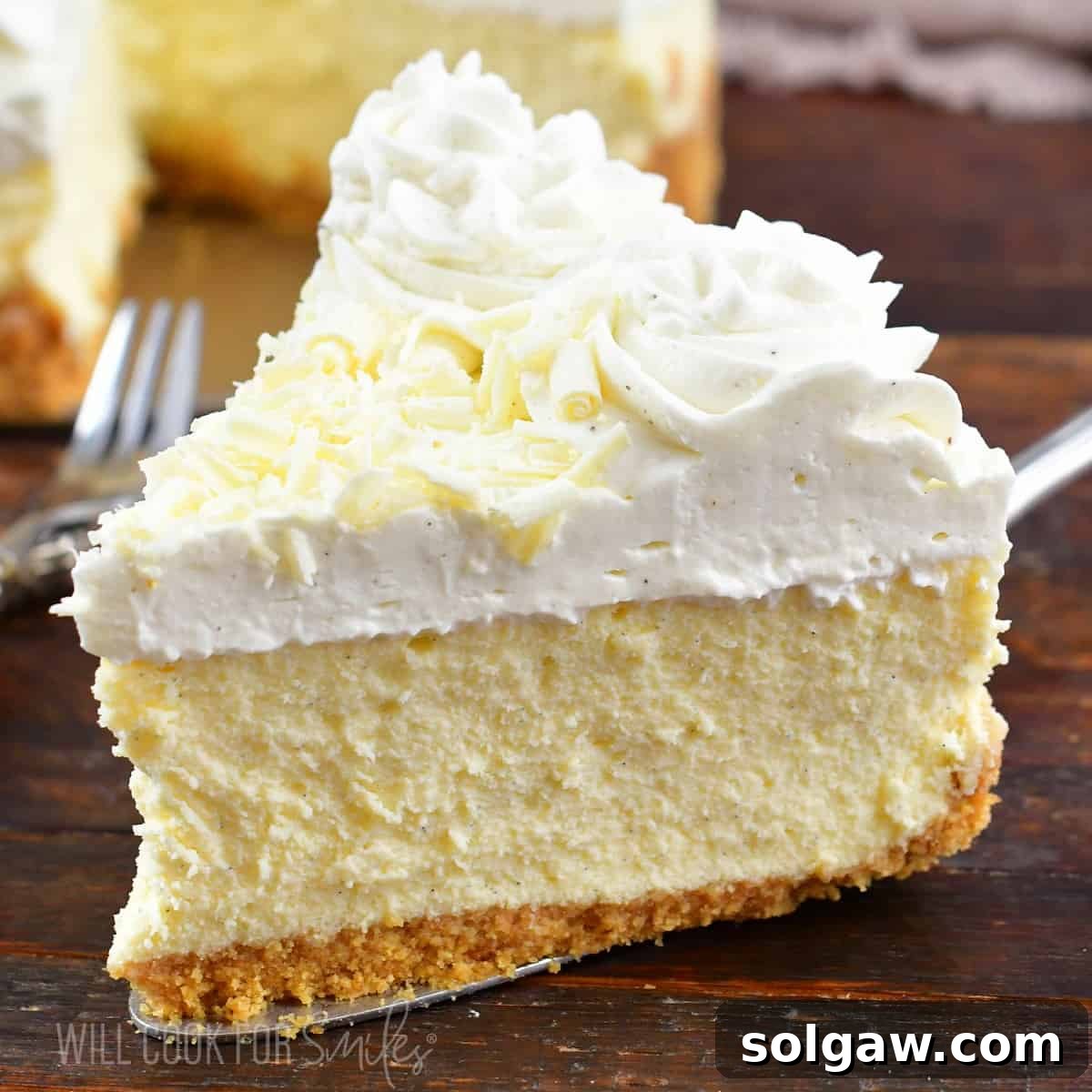
Prepare to be enchanted by the unparalleled richness of our Vanilla Bean Cheesecake. This recipe delivers an exceptionally smooth, undeniably silky, and exquisitely decadent dessert, boasting a deep, pronounced vanilla bean flavor that is simply divine. Elevate this classic with a generous topping of homemade vanilla bean whipped cream, making it a showstopper perfect for any celebration or cherished holiday gathering.
For those who adore the creamy allure of cheesecake, be sure to explore our other beloved classic cheesecake recipes, including the rich New York Cheesecake and the vibrant Strawberry Cheesecake.
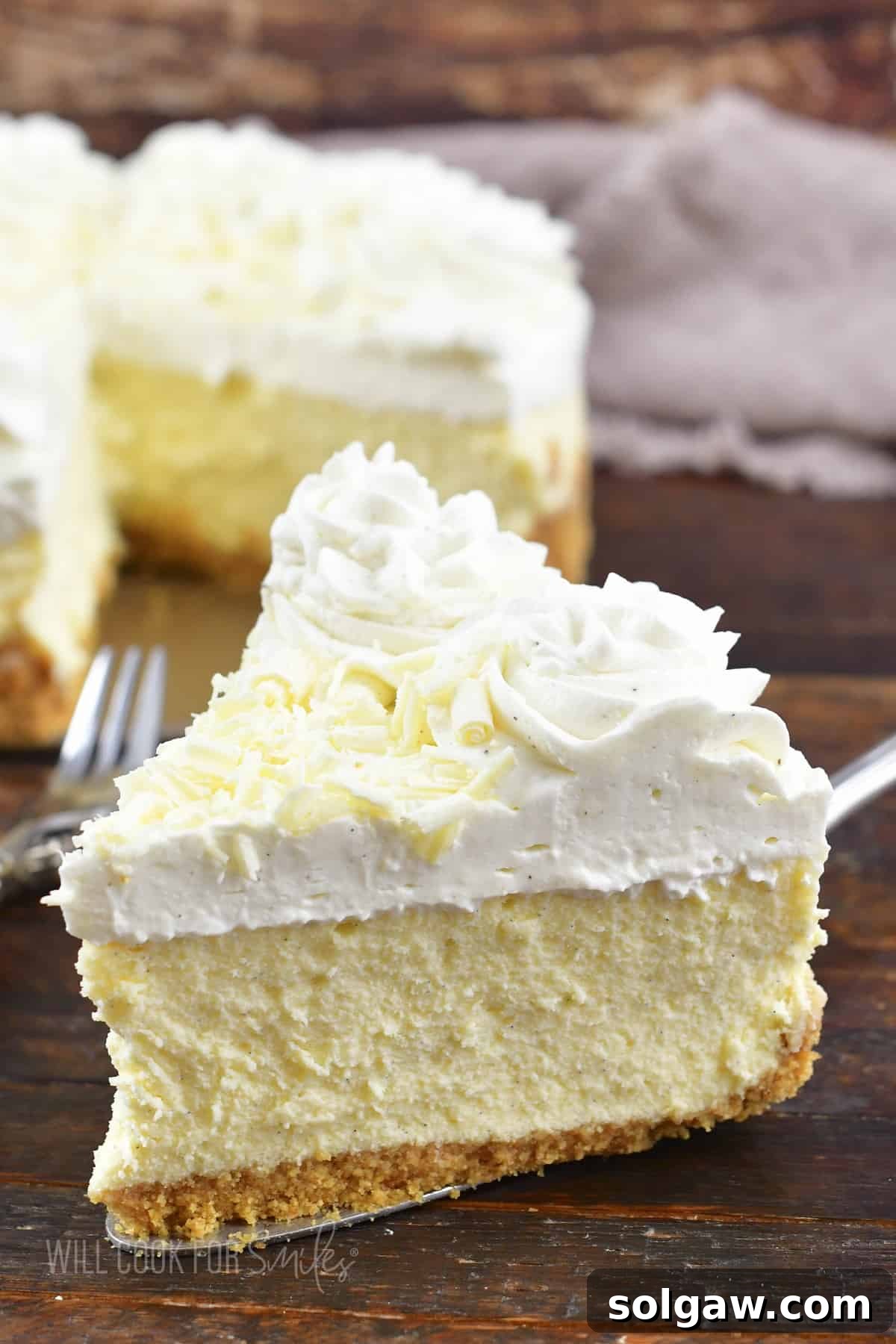
Table of Contents
Why This Vanilla Bean Cheesecake Reigns Supreme
There’s an undeniable truth in the saying that simple is often the most profound. This easy vanilla bean cheesecake recipe perfectly embodies that sentiment, proving that sometimes, you just can’t improve upon a true classic. Its charm lies in its elegant simplicity, allowing the pure, unadulterated flavor of vanilla to truly shine. Unlike cheesecakes overloaded with complex toppings or fillings, this recipe focuses on perfection in its core elements: a rich, smooth texture and an aromatic burst of vanilla that captivates with every bite.
What truly elevates this particular recipe above many others is its thoughtful incorporation of pure vanilla extract and whole vanilla beans. While vanilla extract provides a familiar, comforting depth, the tiny, dark flecks of real vanilla beans infuse the cheesecake with an unparalleled intensity of flavor and a beautiful visual appeal that signals gourmet quality. The synergy between these two forms of vanilla creates a nuanced, full-bodied taste that is both sweet and subtly complex without ever becoming overwhelming.
Vanilla, despite its reputation for simplicity, possesses an incredible transformative power in the culinary world. It can turn everyday bakes, from light muffins to elaborate layered cakes, into extraordinary experiences. In this cheesecake, vanilla doesn’t just add sweetness; it enhances it, weaving an aromatic tapestry that makes the dessert feel truly special. This balanced approach ensures the cheesecake is sweet enough to satisfy but never cloying, allowing its delicate flavors to dance on the palate.
This exquisite, classic cheesecake is wonderfully versatile, making it an ideal dessert for any time of the year and for virtually any occasion. I’ve proudly served this masterpiece at countless events – from vibrant birthday celebrations and festive Christmas parties to elegant Easter brunches and romantic anniversary dinners. Without fail, it consistently receives rave reviews and becomes the undisputed highlight of the dessert table. Its universal appeal lies in its comforting familiarity paired with its sophisticated, rich flavor profile.
The Art of Vanilla: Selecting and Using Vanilla Beans
Understanding vanilla is key to unlocking the full potential of this magnificent cheesecake. It’s crucial to recognize that not all vanilla products are created equal, and the quality of what you choose significantly impacts the final flavor of your dessert. When shopping for vanilla beans or vanilla extract, prioritize quality above all else.
Decoding Vanilla Varieties: Tahitian vs. Madagascar vs. Mexican
- Madagascar Vanilla (Bourbon Vanilla): My personal preference leans heavily towards Madagascar vanilla, and for good reason. It offers a rich, full-bodied, and deeply familiar vanilla flavor that is robust and creamy. This makes it an outstanding choice for baking, particularly in recipes where vanilla is a star, like this cheesecake. Its classic profile provides that quintessential vanilla taste we all adore.
- Tahitian Vanilla: In contrast, Tahitian vanilla boasts a more floral, fruity, and delicate aroma. While it offers a lovely fragrance, its flavor tends to be less potent and more ethereal than its Madagascar counterpart. It’s often favored in lighter desserts or creams where a subtle, perfumed note is desired rather than a strong vanilla presence.
- Mexican Vanilla: Mexican vanilla introduces a slightly spicy, smoky undertone to its vanilla profile. It can add an intriguing warmth to certain dishes.
I encourage you to try all three varieties if you get the chance. Experimentation is a delightful part of culinary exploration, and you might discover a new favorite that aligns perfectly with your taste preferences.
The Value of Pure Vanilla Extract
If you typically reach for the most economical bottle of vanilla extract on supermarket shelves, you might unknowingly be purchasing an artificial vanilla imitation. Pure vanilla extract carries a higher price tag, and for good reason: it’s made by macerating vanilla beans in alcohol and water, extracting their authentic, complex flavors. The difference in taste between pure extract and artificial vanilla essence is profoundly noticeable. Whenever your budget allows, opt for pure vanilla extract to achieve the most genuine and superior flavor in your baking.
Selecting and Storing Vanilla Beans
- Choosing Fresh Pods: When selecting fresh vanilla beans, look for those that are plump, supple, and moist to the touch. They should have a slightly oily sheen. Avoid beans that feel stiff, brittle, or shriveled, as these indicate they have dried out and will offer less flavor. The visual cue inside the packaging should be glossy, dark beans.
- Proper Storage for Longevity: While it’s ideal to purchase vanilla beans when you intend to use them, if you find yourself with a bulk quantity, proper storage is paramount to preserve their potency. Do not rely solely on the lid or zip-top of their original packaging. The best method is to store them in an airtight container, ideally one that can be vacuum-sealed, or a tightly sealed glass tube. Ensure as much air as possible is removed from the storage vessel. Keep your vanilla beans in a cool, dark place at room temperature, away from direct sunlight or extreme temperature fluctuations. This meticulous storage prevents them from drying out and losing their precious aromatic compounds.
Essential Cheesecake Ingredients: What You Need to Know
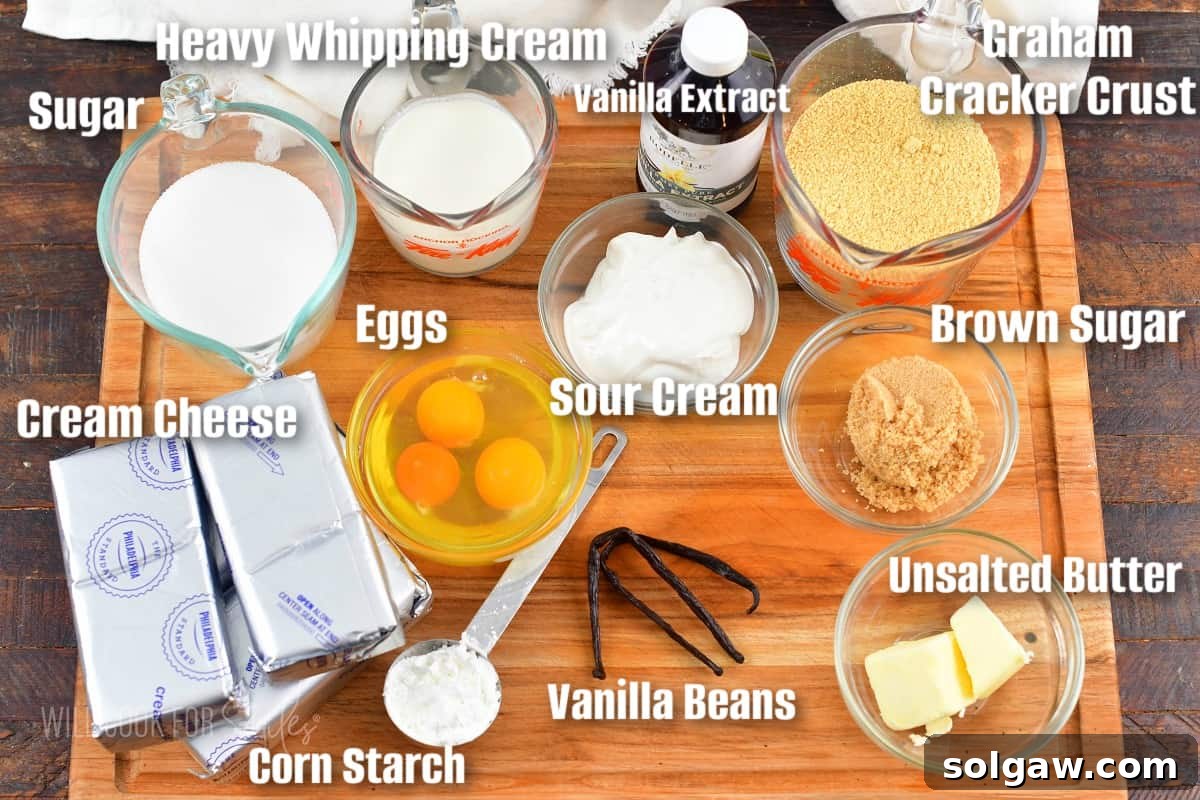
Achieving the perfect vanilla bean cheesecake relies on using the right ingredients and preparing them correctly. Here’s a closer look at the key components:
- Full-Fat Cream Cheese: This is the backbone of your cheesecake, providing its signature creamy texture and rich flavor. Resist the temptation to use low-fat or “light” cream cheese, as these alternatives contain more water and less fat, which will drastically alter the texture of your finished cheesecake, making it less luxurious and potentially runny. Always opt for full-fat, original cream cheese. For optimal blending and a lump-free batter, ensure your cream cheese is at room temperature. Take it out of the refrigerator approximately 30-45 minutes before you begin mixing.
- Fresh Vanilla Beans: As discussed, the quality of your vanilla beans makes a significant difference. Choose pods that are soft, plump, and moist. If they feel hard, dry, or brittle, they have likely lost much of their aromatic oils and won’t contribute the vibrant vanilla flavor you’re looking for.
- Heavy Whipping Cream: This ingredient contributes to the cheesecake’s velvety texture and richness. While heavy whipping cream is highly recommended for the best results, you *can* substitute it with half-and-half in a pinch. However, do not use anything with a lower fat content, as it will compromise the cheesecake’s consistency. If using half-and-half, which is thinner, use about a tablespoon less than the specified amount to maintain the right batter consistency.
- Room Temperature Eggs: Eggs play a crucial role in binding the cheesecake and contributing to its smooth, custard-like consistency. Like the cream cheese, eggs should be at room temperature. Cold eggs can cause the batter to curdle or become lumpy when mixed with softened cream cheese, leading to an uneven bake. Remove them from the refrigerator 30-45 minutes before you plan to start baking.
- Graham Cracker Crumbs: These form the delicious, buttery base of your cheesecake. If pre-made graham cracker crumbs aren’t available at your grocery store, simply purchase regular graham crackers and pulse them in a food processor until they achieve a fine, even crumb consistency. (For those with dietary restrictions, refer to the GLUTEN-FREE notes in the Recipe FAQs for suitable alternatives.)
For a complete list of ingredients and precise quantities, please consult the detailed recipe card below.
How to Extract Vanilla Beans from Pods
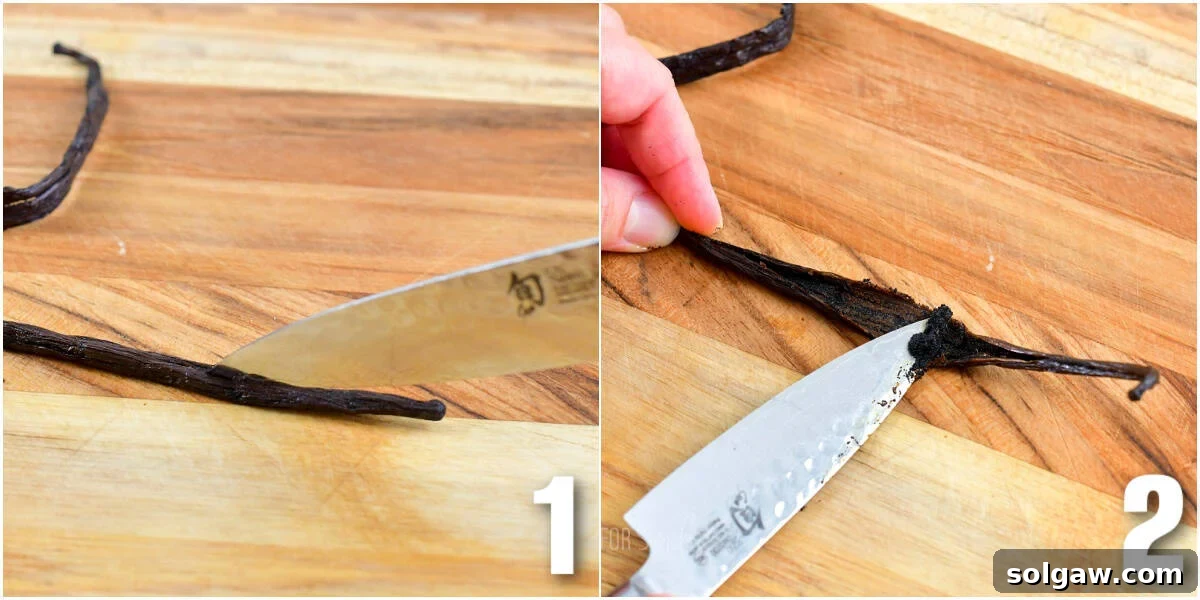
Unlocking the aromatic treasure within a vanilla pod is a simple yet satisfying process. Follow these steps to perfectly extract the precious vanilla beans:
- Begin by placing a vanilla bean pod on a clean cutting board. Hold one end of the pod firmly to stabilize it.
- Using a sharp paring knife, carefully slice through the top layer of the pod, lengthwise, running the knife all the way from one end to the other. Your goal is to split the pod open without cutting entirely through it, exposing the moist, dark interior.
- Gently open the sliced pod, spreading it apart to fully expose the tiny, glistening vanilla beans inside. If you accidentally cut all the way through, don’t worry – you can simply work with each half separately.
- Next, anchor one end of the opened bean pod against the cutting board. Take the dull side of your knife blade (or a small spoon) and carefully scrape the beans out of the pod. Start from the top and scrape downwards, gathering all the fragrant seeds. Repeat this process for both halves of the pod until all the vanilla paste is collected.
- To ensure you don’t lose any of these precious beans, immediately transfer them into your cream cheese mixture or wherever the recipe specifies for their use.
Creative Ways to Use Empty Vanilla Bean Pods
Once you’ve extracted the fragrant beans from your vanilla pods, resist the urge to discard them! These “empty” pods are still packed with residual vanilla essence and can be repurposed to infuse flavor into a variety of ingredients, reducing waste and adding a gourmet touch to your pantry.
- Vanilla Sugar: A wonderfully simple way to reuse pods is to bury them in a container of white granulated sugar. Over time, the sugar will absorb the vanilla essence, becoming fragrant vanilla sugar, perfect for baking, coffee, or sprinkling over fruit.
- Vanilla Coffee: For a delightful morning treat, add a scraped vanilla pod to your container of ground coffee. The vanilla will subtly infuse the coffee grounds, imparting a gentle aroma and flavor to your brew.
- Vanilla Creamer/Milk: Drop a few spent pods into a bottle of half-and-half or creamer. Allow it to steep in the refrigerator for a few days to create your own homemade vanilla-infused creamer for coffee or tea. Similarly, you can add them to a carton of milk.
- Flavoring Hot Liquids: When making custards, puddings, or even hot chocolate, add the scraped pods directly to the milk or cream as it heats on the stovetop. This will impart a rich vanilla flavor to the liquid. Remember to remove the pods before serving or further processing.
- Homemade Vanilla Extract: For the truly ambitious, you can combine several spent pods in a bottle with high-proof alcohol (like vodka) to start your own batch of homemade vanilla extract. It takes time, but the reward is immense.
By giving these pods a second life, you extend the enjoyment of your high-quality vanilla and add an extra layer of flavor to your culinary creations.
Step-by-Step: Crafting Your Vanilla Bean Cheesecake
Let’s dive into the detailed process of creating this luxurious Vanilla Bean Cheesecake. Precision and patience are key to achieving that perfect, smooth, and decadent result.
Part 1: The Graham Cracker Crust
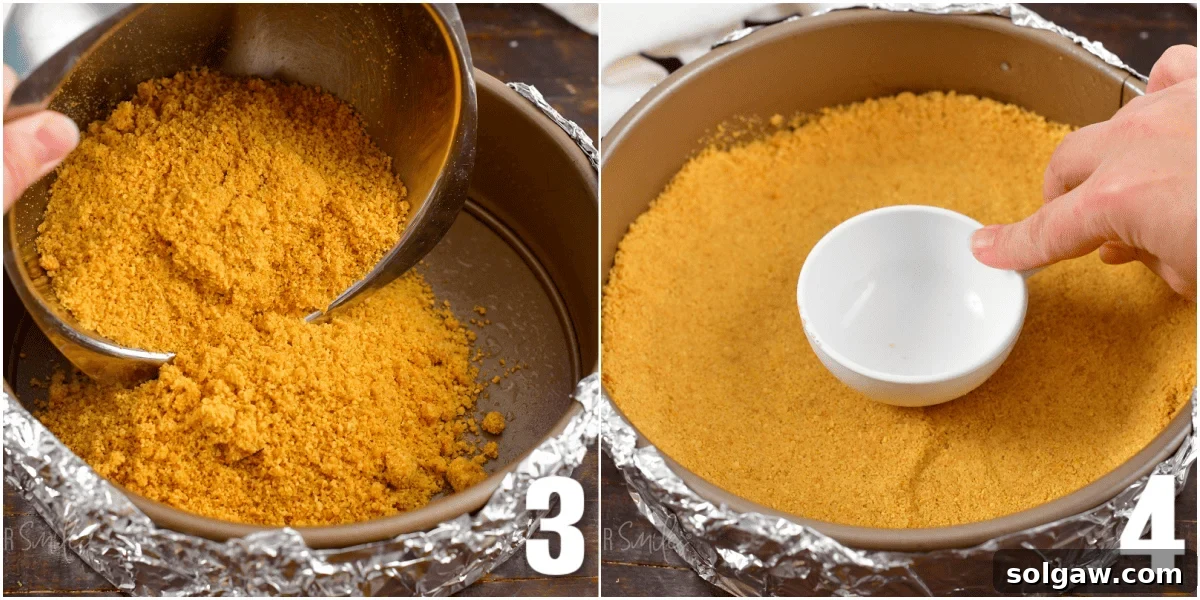
- Prepare the Springform Pan: Preheat your oven to 325°F (160°C). Lightly grease a 9-inch springform pan. For extra protection against water bath leaks, wrap the exterior of the springform pan tightly with heavy-duty aluminum foil, extending it from the bottom up to the sides. Using a wide foil sheet can help achieve a seamless, leak-proof barrier.
- Combine Crust Ingredients: In a medium mixing bowl, combine the graham cracker crumbs, melted unsalted butter, vanilla extract, and brown sugar. Mix thoroughly until all the crumbs are moistened and hold together when pressed.
- Form the Crust: Transfer the buttery crumb mixture (3) into the prepared springform pan. Using the back of a spoon or your clean fingertips, firmly and evenly press the mixture along the bottom of the pan and slightly up the sides (4). This creates a sturdy foundation for your cheesecake.
Part 2: The Decadent Cheesecake Filling
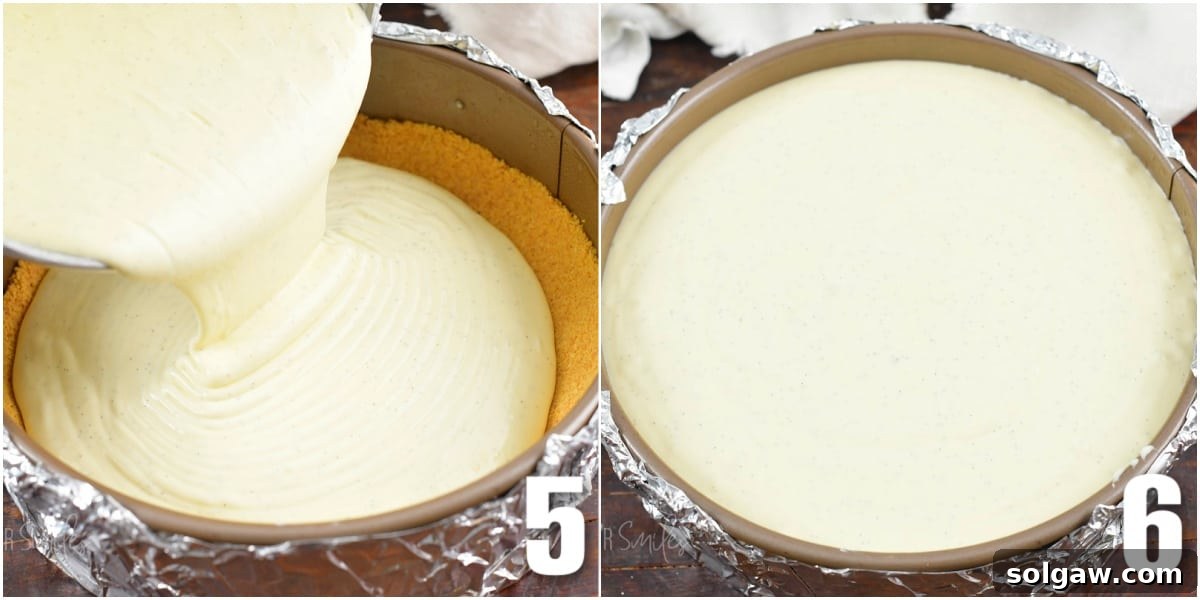
- Cream Cheese Base: In the bowl of an electric mixer fitted with the paddle attachment, combine the softened full-fat cream cheese and the scraped vanilla beans. Beat on medium-high speed for 2-3 minutes until the mixture is incredibly smooth, light, and fluffy, ensuring no lumps remain. Stop the mixer, scrape down the sides and bottom of the bowl with a silicone spatula, and beat for another minute to ensure even consistency.
- Add Sugar and Eggs: With the mixer running on medium speed, gradually pour in the granulated sugar. Once combined, add the room temperature eggs one at a time, beating just until each egg is incorporated before adding the next. Overmixing at this stage can incorporate too much air, which can lead to cracks in the cheesecake. Scrape down the bowl as needed.
- Incorporate Wet Ingredients: Add the sour cream, pure vanilla extract, and heavy whipping cream to the mixture. Continue beating on medium-high speed until all ingredients are thoroughly mixed and the batter is smooth.
- Thicken with Cornstarch: Reduce the mixer speed to low and slowly beat in the cornstarch. Mix for just a few more seconds until it’s fully combined and the batter is homogeneous. Cornstarch acts as a stabilizer, helping to prevent cracks and achieve a perfectly smooth texture.
- Fill the Pan: Carefully transfer the cheesecake filling into the prepared springform pan with the crust (5). Use your spatula to spread the filling evenly across the crust (6), ensuring a uniform surface.
Part 3: Baking and Cooling the Cheesecake

- Prepare the Water Bath (Bain-Marie): This is a crucial step for a crack-free, silky cheesecake. Place a large roasting pan (ensure it’s larger than your springform) into the preheated 325°F (160°C) oven. Carefully place your cheesecake-filled springform pan inside the roasting pan. Then, gently pour hot water into the larger roasting pan, making sure it comes about halfway up the sides of the springform pan (7).
- Bake to Perfection: Bake the cheesecake for approximately 85-90 minutes. The cheesecake is done when the edges are set, but the center still has a slight jiggle (like firm Jell-O). The internal temperature should be around 150°F (65°C).
- Gradual Cooling is Key: Once baked, turn off the oven, but leave the oven door ajar (halfway open). Let the cheesecake rest inside the cooling oven for 10 minutes. This gradual temperature change helps prevent cracking.
- Room Temperature Rest: Remove the cheesecake from the oven and carefully take it out of the water bath. If you wrapped your springform in foil, remove the foil. Let the cheesecake cool completely on a wire rack at room temperature (8). This can take an hour or two. As it cools, the center will continue to set.
- Chill Thoroughly: Once cooled to room temperature, cover the springform pan tightly with plastic wrap. Transfer the cheesecake to the refrigerator and allow it to chill for at least 6 hours, or ideally, overnight. This crucial chilling period allows the flavors to meld and the cheesecake to fully firm up, achieving its characteristic dense, creamy texture.
Whipped Perfection: Homemade Vanilla Bean Whipped Cream
PRO TIP: Always add whipped cream only to a COLD cheesecake. Applying it to a warm or even slightly cool cheesecake will cause the whipped cream to melt and lose its beautiful structure.
PRO TIP: For the fluffiest, most stable whipped cream, chill your whisk attachment and mixing bowl in the freezer for about 10-15 minutes before you begin. Also, ensure your heavy whipping cream is straight from the refrigerator and thoroughly cold. Cold temperatures are essential for cream to whip up properly and hold its shape.
- In a pre-chilled mixing bowl, combine the cold heavy whipping cream, scraped vanilla bean seeds, and granulated sugar.
- Using an electric mixer with a whisk attachment, beat the mixture on medium-high speed. Keep a close eye on it, as whipped cream forms quite rapidly.
- Continue beating until stiff peaks form. Stiff peaks mean that when you lift the whisk, the whipped cream holds its shape firmly without collapsing. Be careful not to overbeat, as this can turn your whipped cream into butter.
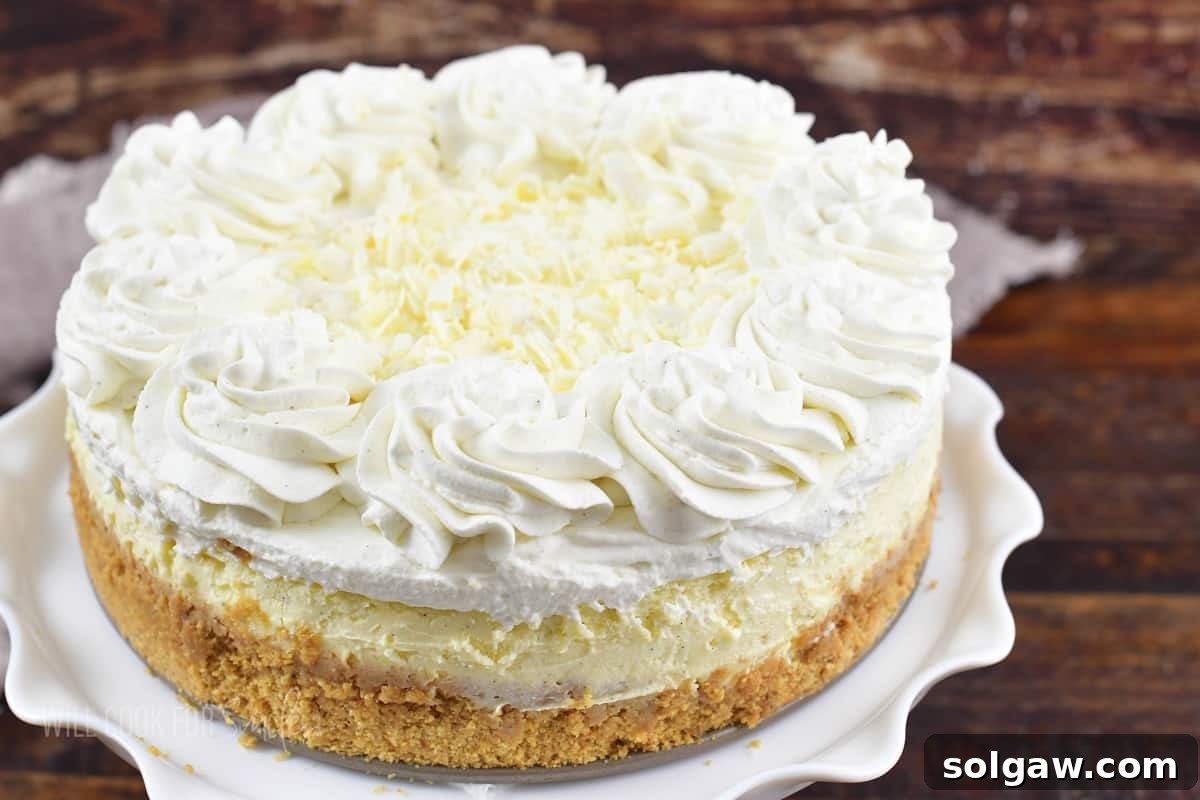
- Once ready, use about half of the vanilla bean whipped cream to spread a generous, even layer over the top of your thoroughly chilled cheesecake.
- Transfer the remaining whipped cream to a piping bag fitted with your desired decorative tip. Pipe rosettes or other elegant shapes around the edges or across the top of the cheesecake for a stunning presentation.
Vanilla Bean Cheesecake FAQs
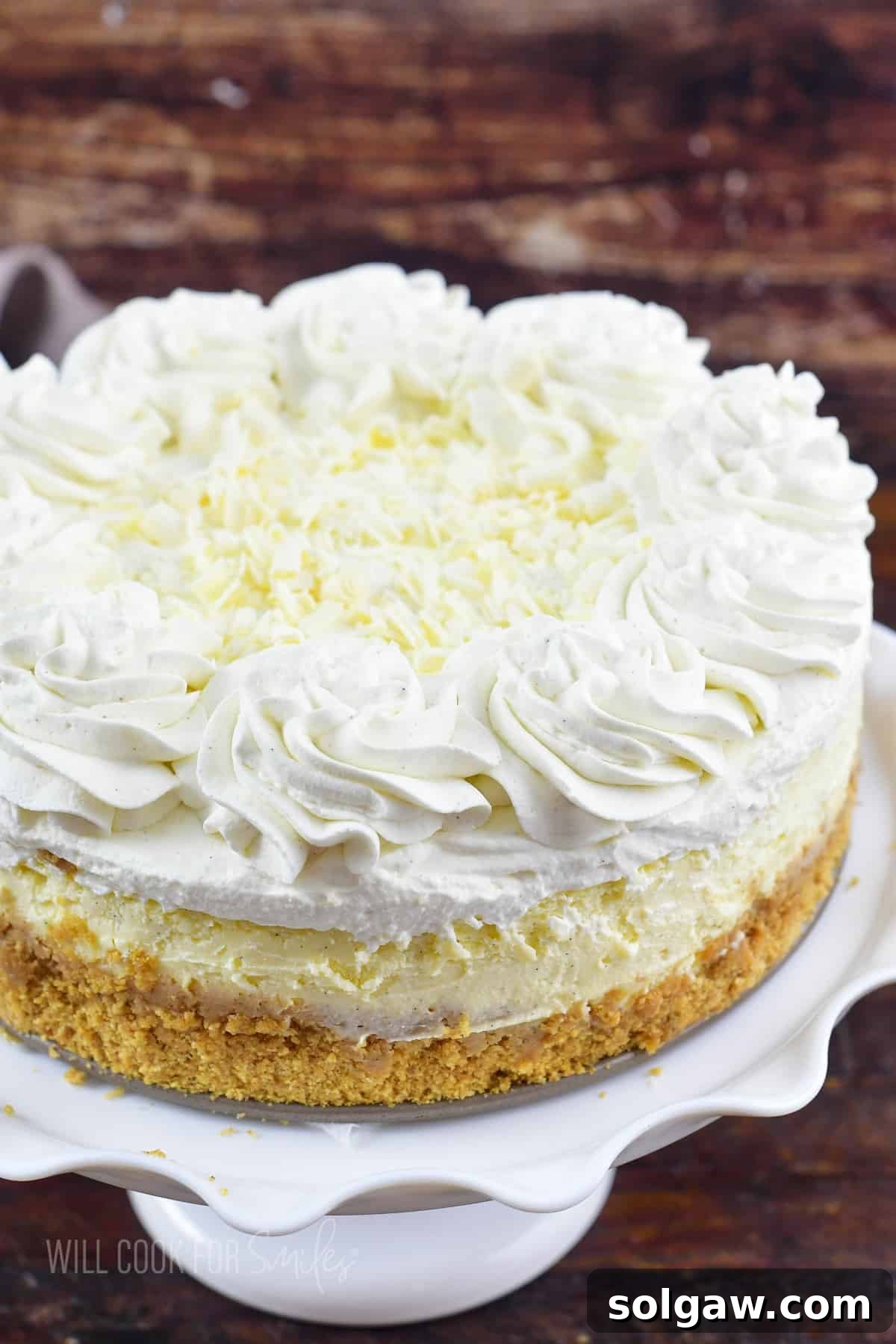
To maintain its freshness and decadent texture, your vanilla bean cheesecake must be stored in the refrigerator. Ensure it is covered air-tight to prevent it from absorbing other food odors and to keep it moist. When properly stored, cheesecake will typically last up to 5 days. I highly recommend keeping it in the very same springform pan it was baked in, covered tightly with plastic wrap or another airtight lid. Remember to re-cover it tightly every single time after you remove a slice!
Baking cheesecake in a water bath, a technique known as “bain-marie,” is a culinary secret for achieving a perfectly smooth, crack-free, and evenly baked dessert. This method is typically employed for delicate recipes rich in cream and eggs, such as crème brûlée, custards, and cheesecakes.
The primary reason for utilizing a water bath is to shield the baking dish from direct, intense oven heat. Without this protective layer, a cheesecake would be exposed to dry, direct heat, causing the outer edges to bake and set much faster than the center. This uneven baking would result in an overcooked, potentially tough exterior and an undercooked, gooey interior. Moreover, the rapid temperature change between the oven’s dry heat and the cooler cheesecake can cause the surface to expand and contract too quickly, leading to unsightly cracks.
The water bath creates a moist, gentle, and consistent heating environment around the cheesecake. The water insulates the springform pan, ensuring the cheesecake bakes slowly and evenly throughout. This controlled temperature prevents the eggs from curdling, results in a silky-smooth texture from edge to center, and significantly minimizes the risk of cracks forming on the surface. In essence, the water bath guarantees uniform baking and the signature velvety consistency that makes a cheesecake truly luxurious.
Absolutely! The only component of this vanilla bean cheesecake that typically contains gluten is the graham cracker crust. To make this recipe completely gluten-free, simply use gluten-free graham crackers. You can easily pulse them into fine crumbs using a food processor to create a delicious gluten-free crust. All other ingredients in the cheesecake filling and whipped cream are naturally gluten-free; however, it’s always a good practice to double-check the labels and nutritional information of all your ingredients to ensure they meet your specific dietary requirements.
Determining doneness is crucial for the perfect cheesecake texture. You’ll know your cheesecake is baked when the outer edges appear set and slightly puffed, while the very center (about 2-3 inches in diameter) still has a slight, gentle jiggle when the pan is carefully nudged. It should resemble a firm Jell-O. As the cheesecake cools in the turned-off oven and then on the counter, the residual heat will continue to cook the center, allowing it to set completely. It is important NOT to insert a knife or toothpick into the center to test for doneness, as this will almost certainly cause the cheesecake to crack as it cools.
Gradual cooling is perhaps just as important as the baking process itself in preventing cracks and ensuring a smooth, beautiful surface. Cheesecake is delicate, and sudden temperature changes can cause it to contract rapidly, leading to cracks. The recommended three-step cooling process — 10 minutes in the turned-off oven with the door ajar, followed by cooling on the counter, and finally chilling in the refrigerator — allows the cheesecake to slowly adjust to decreasing temperatures, minimizing stress on its delicate structure and ensuring a flawless finish.
Freezing Instructions for Vanilla Bean Cheesecake
IMPORTANT: Always freeze the cheesecake WITHOUT any frosting or toppings! Apply frosting only when you are ready to serve it.
Freezing your vanilla bean cheesecake is an excellent way to prepare ahead or enjoy leftovers at a later date. Follow these steps for perfect results:
- Cool Completely: Ensure your cheesecake has been thoroughly cooled to room temperature and ideally, has chilled in the refrigerator for at least a few hours to firm up.
- Initial Freeze (Optional but Recommended): Run a thin butter knife carefully along the inside edge of the springform pan to separate the cheesecake from the sides. Place the entire pan with the cheesecake (still in the bottom of the springform) into the freezer for about an hour. This will firm up the cheesecake enough to handle without damaging it.
- Remove from Pan: After the initial freeze, carefully release and remove the side ring of the springform pan. At this point, you can either keep the cheesecake on the bottom of the springform pan or carefully transfer it onto a sturdy piece of cardboard cake holder that has been covered with aluminum foil for easier handling.
- Wrap for Protection: Wrap the cheesecake (and its base) meticulously with plastic wrap. Use 2-3 layers of plastic wrap, ensuring it’s completely airtight to prevent freezer burn.
- Add Aluminum Foil: For an extra layer of protection, wrap the entire plastic-wrapped cheesecake with heavy-duty aluminum foil. This further seals it from air exposure and potential freezer odors.
- Optional Freezer Bag: As an added safeguard against air and moisture, you can place the wrapped cheesecake into a large, zip-top freezer bag. While not strictly necessary if wrapped well, it offers extra peace of mind.
- Label and Date: Before placing it back into the freezer, make sure to clearly date and label your wrapped cheesecake. This helps you keep track of its freshness. Properly prepared, cheesecake can be stored in the freezer for 2-3 months.
- Thawing Instructions: To thaw your frozen cheesecake, the key is to do it slowly and gradually in the refrigerator. Transfer the wrapped cheesecake (removing the zip-top bag if used) from the freezer directly to the refrigerator. Allow it to slow-thaw overnight. Do not attempt to thaw at room temperature, as this can affect the texture. Once thawed, you can frost and decorate as desired.
More Holiday Cheesecake Recipes to Explore
If this vanilla bean cheesecake has inspired your festive baking, you’re in for a treat! This recipe is a fantastic choice for any holiday spread, but for those who love to explore, here are a few other seasonal and celebratory cheesecake recipes we highly recommend:
- Christmas Cheesecake: A festive delight, perfect for the holiday season.
- Eggnog Cheesecake: Capture the essence of holiday cheer in a creamy dessert.
- Pumpkin Cheesecake: The ultimate autumn dessert, rich with warm spices.
- Lemon Cheesecake: A bright and zesty option for a refreshing finish.
Each of these recipes offers a unique flavor profile to suit different occasions and palates, ensuring your dessert table is always a highlight!
PIN THIS RECIPE FOR LATER
If you’ve lovingly crafted my vanilla bean cheesecake recipe and found this guide helpful, I would be incredibly grateful if you would leave a 🌟 star rating! Your feedback is invaluable. Please let me know how you liked it by leaving a 📝 comment below. Don’t forget to subscribe to my newsletter for more delicious recipes and baking tips!
Vanilla Bean Cheesecake
Print Recipe
Equipment
- 9-inch springform baking pan
- Large roasting pan
- Standing or hand-held mixer
- Silicone spatula
- Wide aluminum foil
- Mixing bowl
- Measuring cups
Ingredients
For the Crust:
- 1 1/2 cups graham cracker crumbs
- 1/4 cup brown sugar
- 5 tbsp unsalted butter, melted
- 1 tsp 100% pure vanilla extract
For the Cheesecake:
- 32 oz full-fat cream cheese, softened
- 1 cup white granulated sugar
- 3 eggs, room temperature
- 1/3 cup heavy whipping cream
- 1/2 cup full-fat sour cream
- 2 tsp corn starch
- 2 whole vanilla beans, scraped
- 1 tsp 100% pure vanilla extract
Vanilla Whipped Cream:
- 2 cups heavy whipping cream, cold
- 1/2 cup white granulated sugar
- 1 vanilla bean, scraped
- 1 tsp 100% pure vanilla extract
Instructions
Before Starting the Cheesecake:
- Preheat the oven to 325°F (160°C) and grease a 9-inch springform pan. You will need a large roasting pan that is bigger and longer than the springform pan (a disposable aluminum foil pan can work). If you are concerned about your springform pan leaking in the water bath, wrap the outside of the pan in heavy-duty aluminum foil from the bottom up to the sides. Use a wide foil sheet to minimize seams. (It’s recommended to wrap the pan before adding the crust and cheesecake batter.)
- While there’s a slight chance a small amount of water might seep in, this will generally NOT ruin the cheesecake.
Crust:
- Combine graham cracker crumbs, melted butter, vanilla extract, and brown sugar in a mixing bowl. Mix thoroughly until well combined.
- Lightly spray the inside of the springform pan with cooking spray, ensuring the sides are also coated.
- Press the crumb mixture evenly into the bottom and slightly up the sides of the prepared springform pan.
Taking Out Vanilla Beans:
- For the freshest flavor, try to purchase vanilla beans close to when you plan to use them. Vanilla beans tend to dry out over time, especially once opened.
- Place a vanilla bean pod on a cutting board. Hold one end firmly and use a sharp paring knife to slice lengthwise through the top of the pod, from one end to the other, to expose the beans.
- Gently open the pod to reveal the seeds inside. (If you cut all the way through, just work with each half.)
- Hold the bean pod flat against the cutting board. Use the dull side of the paring knife to scrape the beans out of the pod, moving from top to bottom.
- Immediately transfer the scraped vanilla bean seeds to your cream cheese block to avoid losing any.
Cheesecake Filling:
- In the bowl of an electric mixer, beat the softened cream cheese (with the scraped vanilla beans) on medium-high speed for 2-3 minutes until completely smooth and fluffy. Scrape down the sides and bottom of the bowl and beat for another minute.
- Gradually pour in the granulated sugar while continuing to beat. Then, add the room temperature eggs one at a time, beating just until each is incorporated. Scrape the bowl’s sides and bottom as needed.
- Add the sour cream, vanilla extract, and heavy whipping cream. Beat on medium-high speed until all ingredients are well mixed and the batter is smooth.
- Lower the speed to low and beat in the cornstarch until just combined. Scrape the bowl again and mix for a few more seconds to ensure an even consistency.
- Pour the cheesecake batter into the prepared springform pan and spread evenly.
Baking The Cheesecake:
- Preheat your oven to 325°F (160°C).
- Place a large roasting pan into the oven. Carefully place the cheesecake springform pan inside the roasting pan. Then, gently pour hot water into the roasting pan until it comes about halfway up the side of the springform.
- Bake for 85-90 minutes. Once baked, turn off the oven and open the oven door halfway. Let the cheesecake rest in the cooling oven for 10 minutes. Remove the foil wrap from the pan (if used).
- Transfer the cheesecake to a wire rack and let it rest on the counter for 10 minutes. Then, gently run a butter knife between the sides of the cheesecake and the springform to separate it. (You don’t need to remove it from the pan until ready to serve.)
- Cool the cheesecake at room temperature for an additional hour. Then, cover the pan tightly with plastic wrap and refrigerate for a minimum of 6 hours, or ideally, overnight, to allow it to fully set.
Vanilla Whipped Cream:
- TIPS: Ensure your mixing bowl and whisk attachment are perfectly clean, dry, and chilled (you can place them in the refrigerator or freezer for a few minutes). Use heavy whipping cream that is straight from the refrigerator and thoroughly cold.
- Beat the cold heavy whipping cream, scraped vanilla bean seeds, and granulated sugar with a whisk attachment on medium-high speed. While mixing, slowly pour in the vanilla extract. Continue beating until stiff peaks form. (Do not overbeat; whipped cream comes together quite quickly.)
- Use about half of the whipped cream to spread an even layer over the thoroughly chilled cheesecake. Use the remaining half to pipe rosettes or other decorative shapes for an elegant presentation.
Notes
- Storing: Cheesecake will last up to 5 days in the refrigerator. Store it in the original baking pan and make sure to re-wrap the pan with plastic wrap airtight after each time you take out a slice.
- Freezing: Detailed instructions on how to freeze the cheesecake are provided in the post above.
- Water Bath: DO use the water bath technique; it significantly affects the texture and prevents cracks in the cheesecake.
- How To Tell If Cheesecake Is Done: You can tell the cheesecake is baked when the edges are set and the center is slightly soft and jiggly. As it cools in the oven and on the counter, the center will continue to set more and become firmer. DO NOT insert a knife or toothpick into the center, as this may cause the dessert to crack.
- Cooling: DO cool the cheesecake in three essential steps: 10 minutes in the turned-off oven with the door ajar, then on the counter until room temperature, and finally, chill thoroughly in the refrigerator.
Nutrition
Calories: 574kcal
Carbohydrates: 55g
Protein: 19g
Fat: 32g
Saturated Fat: 19g
Polyunsaturated Fat: 2g
Monounsaturated Fat: 8g
Trans Fat: 0.2g
Cholesterol: 145mg
Sodium: 760mg
Potassium: 371mg
Fiber: 0.4g
Sugar: 45g
Vitamin A: 1182IU
Vitamin C: 0.4mg
Calcium: 391mg
Iron: 1mg
Tried this recipe?Mention @willcookforsmiles or tag #willcookforsmiles!