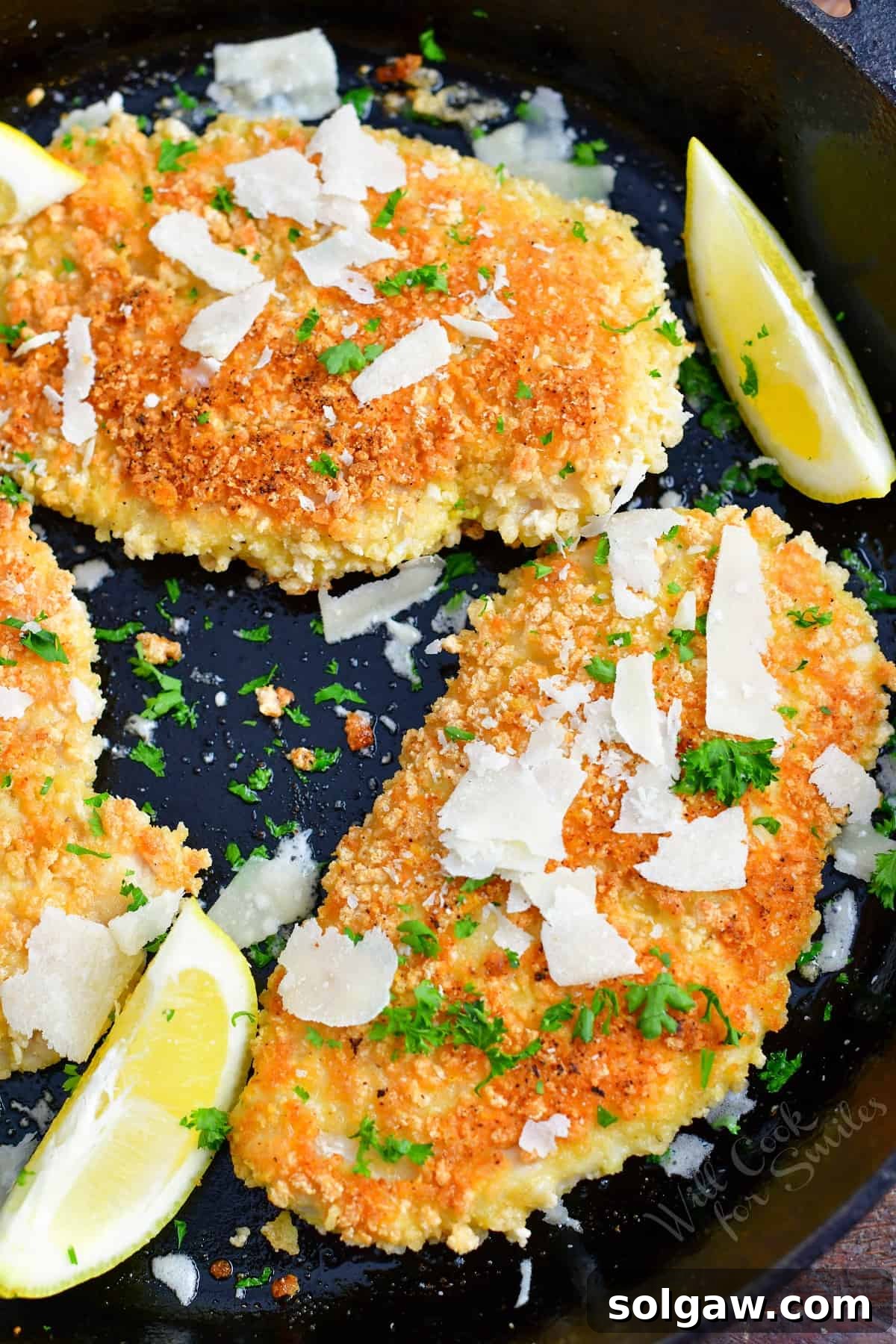
Welcome to the definitive guide for crafting the perfect Chicken Milanese – a truly delightful and easy chicken dinner that promises a symphony of textures and flavors. This classic dish features tender chicken breasts, masterfully breaded and pan-fried to achieve an irresistible crispness on the outside while remaining incredibly juicy and flavorful within. If you’re searching for a go-to recipe that embodies simplicity, speed, and sophistication, your quest ends here.
Chicken Milanese is remarkably versatile. It can be elegantly served with a light side dish, atop a fresh, vibrant salad, or paired with a luxurious creamy sauce. For those seeking a heartier meal, transform it into the beloved Chicken Parmesan, a guaranteed crowd-pleaser.
What Is Chicken Milanese?
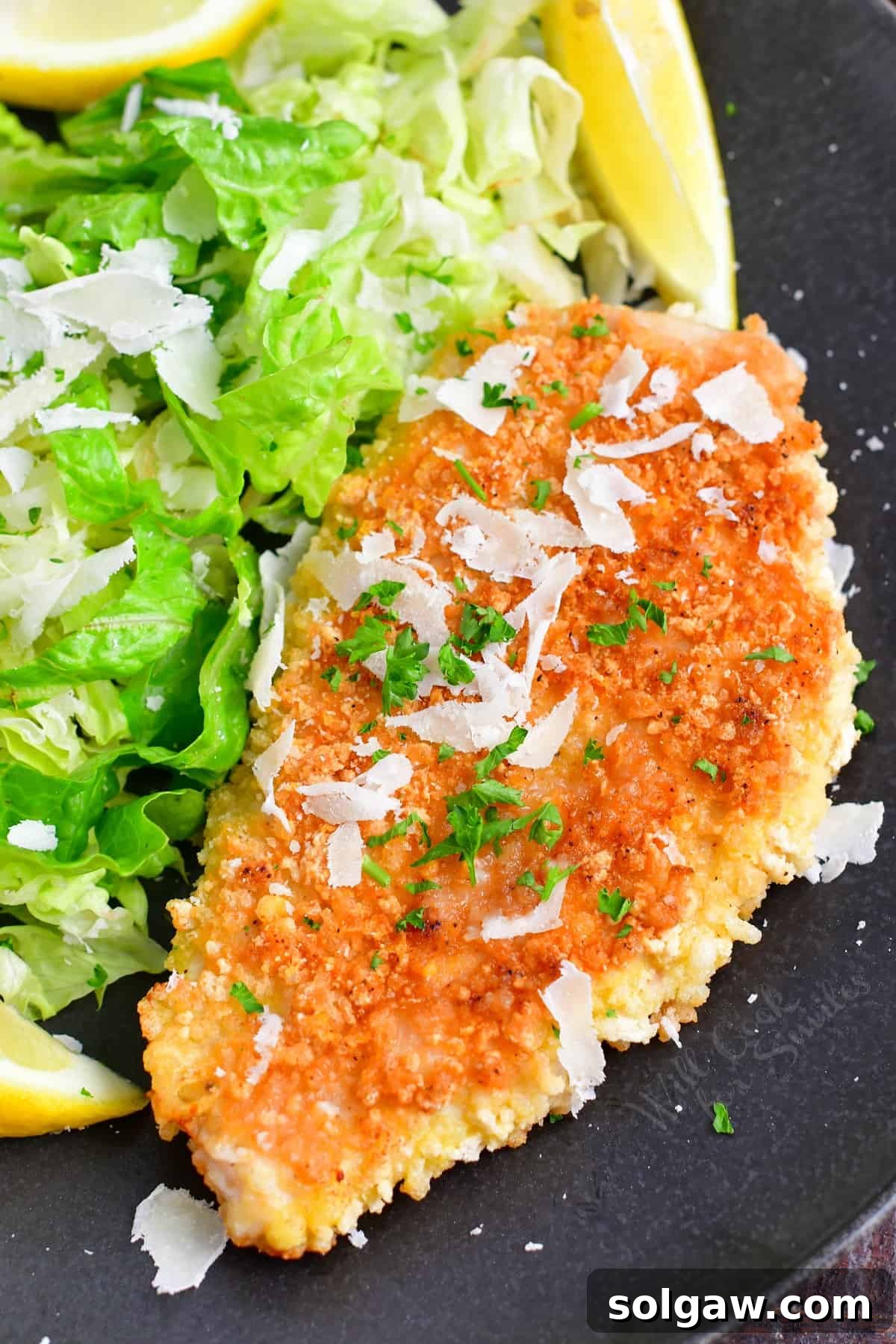
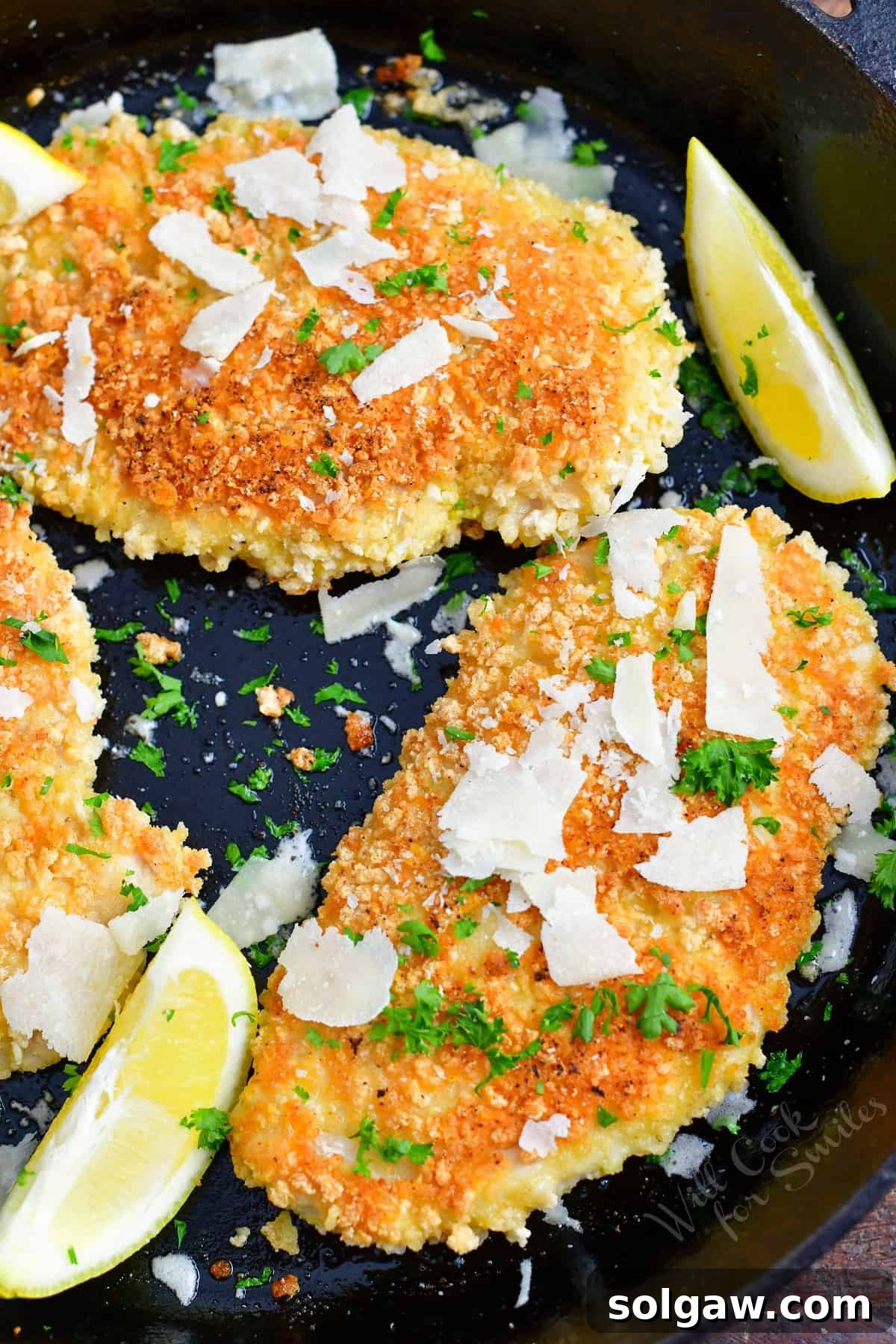
At its heart, Chicken Milanese is a celebrated dish originating from Milan, Italy, known for its elegant simplicity and satisfying taste. It features thin slices of chicken breast, often referred to as cutlets, which are meticulously breaded and then pan-fried until they achieve a gorgeous golden-brown crust. The result is a dish that delivers an incredibly crispy exterior, contrasting beautifully with a moist and succulent interior. It’s a testament to how simple ingredients, handled with care, can create an extraordinary meal.
This classic Italian preparation technique transforms humble chicken into a culinary delight. Historically, the dish was made with veal, known as Cotoletta alla Milanese, but chicken has become an equally popular and accessible substitute, especially in American households. The key to its signature flavor lies in the seasoning of the breading, typically incorporating garlic, black pepper, and fresh Parmesan cheese, which infuses every bite with a savory depth.
Beyond its inherent deliciousness, Chicken Milanese shines in its adaptability. It pairs wonderfully with a spectrum of accompaniments, from comforting Mashed Potatoes to crisp roasted vegetables or a refreshing side salad. It also serves as an excellent foundation for more elaborate dishes, such as the renowned Chicken Parmesan, or can be elevated with various creamy or wine-based sauces. Its quick cooking time – typically around 30 minutes from start to finish – makes it an ideal choice for busy weeknights without compromising on flavor or quality.
To ensure flawless execution, a bit of preparation goes a long way. Setting up your dredging station before you begin cooking is highly recommended. By following the easy steps and expert tips provided below, you’ll find that making this delicious chicken dinner is an effortless and rewarding experience. Prepare to impress with a truly simple, yet satisfying, recipe that will become a staple in your kitchen!
Chicken Milanese vs Chicken Scaloppine vs Chicken Piccata
The culinary world is rich with terminology that can sometimes lead to confusion, especially when dishes share similar preparation methods or ingredients. Chicken Milanese, Chicken Scaloppine, and Chicken Piccata are often mistakenly used interchangeably, but each possesses distinct characteristics that set them apart. Let’s clarify these delicious differences:
- Scaloppine (or Scaloppini/Scallopini): This term primarily refers to a cooking technique rather than a finished dish itself. It involves preparing very thin slices of meat, most commonly veal or chicken. Essentially, a chicken scaloppine is simply a thinly pounded chicken breast. This fundamental preparation is the crucial first step for a multitude of Italian dishes, including Chicken Milanese, Chicken Parmesan, Chicken Marsala, and Chicken Piccata. The thinness ensures quick and even cooking, contributing to the tenderness of the final product.
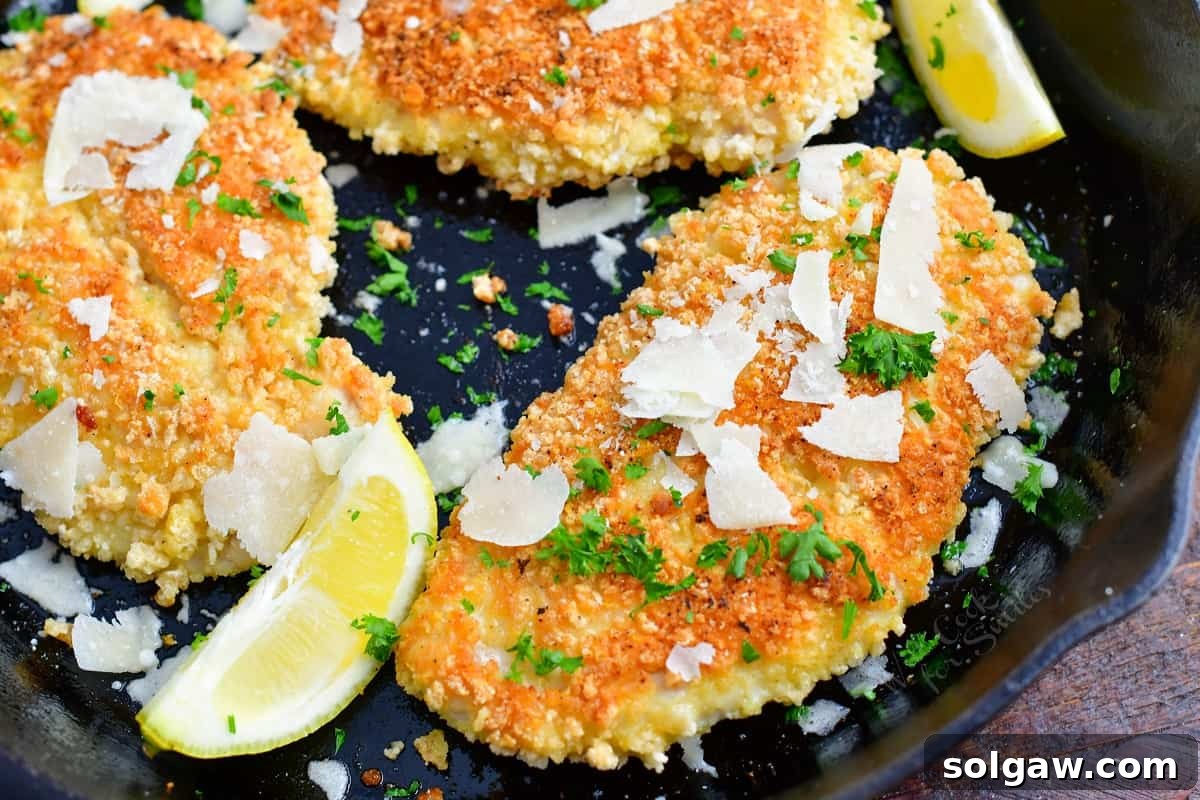
- Chicken Milanese: Building upon the scaloppine technique, Chicken Milanese specifically denotes a thinly sliced chicken breast that is fully breaded – typically in flour, egg, and seasoned breadcrumbs – and then pan-fried until beautifully golden and crisp. The breading is a defining feature, providing a protective, flavorful crust that locks in moisture and adds a delightful textural contrast. It’s often cooked in a blend of butter and olive oil for rich flavor.
- Chicken Piccata: Like Milanese, Piccata also starts with a thinly sliced chicken breast. However, the breading process differs significantly. For Chicken Piccata, the chicken is only lightly dredged in seasoned flour before being sautéed. The hallmark of Piccata lies in its vibrant, zesty sauce, traditionally made with lemon juice, capers, white wine, and butter. This delicate lemon-caper sauce distinguishes it from the crisp, breaded Milanese. Similarly, Chicken Marsala also uses a lightly floured chicken breast, but is characterized by its rich Marsala wine and mushroom sauce.
Understanding these distinctions allows you to appreciate the unique flavors and preparation styles that make each of these chicken dishes special. While they may share a common starting point, their journeys diverge to create distinctly different culinary experiences.
Essential Ingredient Notes and Expert Tips
Crafting exceptional Chicken Milanese relies on selecting quality ingredients and understanding how each contributes to the final dish. Here’s a breakdown of what you’ll need and some expert tips to ensure success:
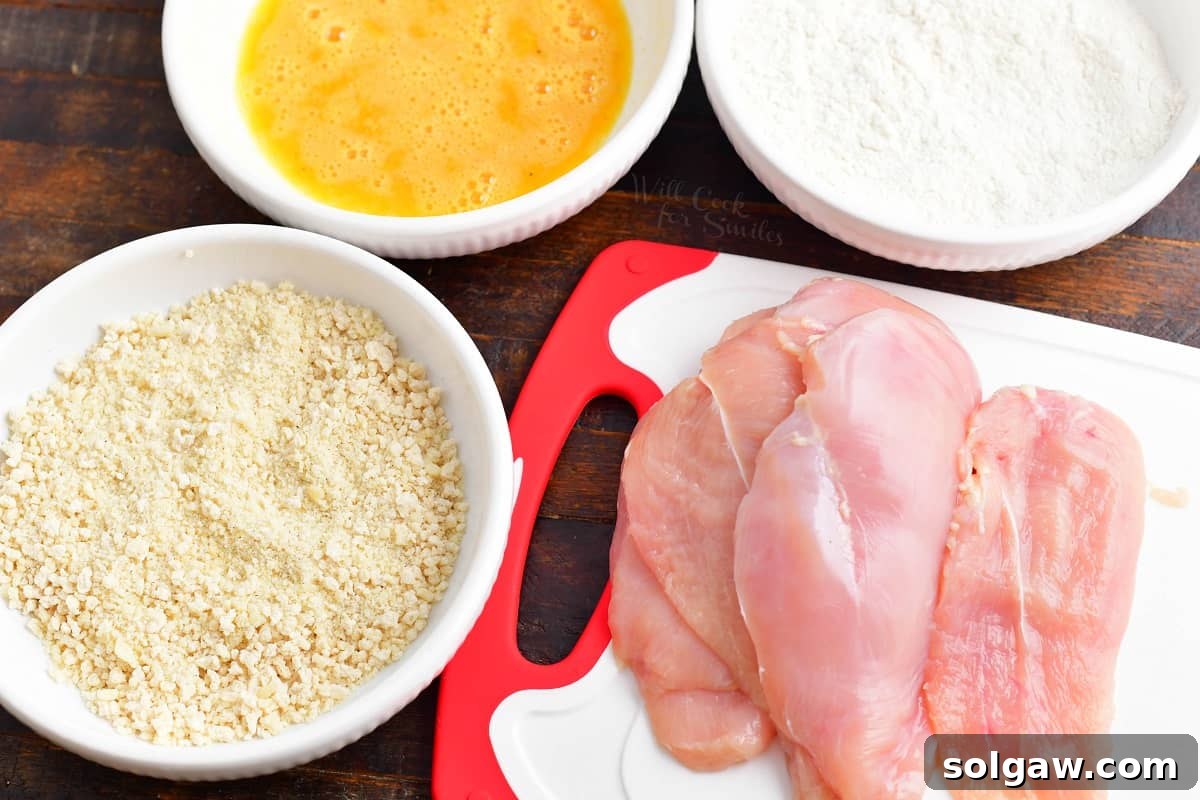
Chicken Breasts: Always opt for boneless and skinless chicken breast meat. This ensures tender, easy-to-prepare cutlets that cook quickly and evenly. For best results, choose fresh, high-quality chicken.
Olive Oil: A good quality olive oil is paramount for pan-frying, offering a delicate flavor that complements the chicken. While avocado oil can be used as a substitute in a pinch due to its high smoke point, olive oil provides a more traditional and desirable taste for Milanese. Ensure you’re using olive oil suitable for cooking, not just finishing.
Butter: Unsalted butter is an optional but highly recommended addition. Swirling a tablespoon or two of butter into the pan with the olive oil just before frying adds a rich, golden hue and a depth of flavor that is truly irresistible. Unsalted butter allows you to control the overall saltiness of the dish.
Flour: All-purpose flour is standard for the first dredge. It creates a thin, even layer that helps the egg wash adhere better. If you need a gluten-free option, simply substitute with a good quality gluten-free all-purpose flour blend. Ensure your chosen flour is fresh for optimal texture.
Eggs: The egg wash acts as the crucial binder for the breadcrumbs. You’ll typically need two large or extra-large eggs, or three smaller ones, whisked thoroughly with a touch of salt and pepper. This creates a cohesive coating that ensures your breading stays put.
Panko Bread Crumbs: For that signature crispy texture, unflavored Panko bread crumbs are essential. Panko, a Japanese-style breadcrumb, is coarser and flakier than traditional breadcrumbs, leading to a much lighter and crispier crust. Using unflavored Panko allows you to control the seasoning precisely. For a gluten-free version, seek out gluten-free Panko bread crumbs that mimic the light, airy texture of conventional Panko. My personal favorite brand is 4C bread crumbs, which I find delivers excellent results.
Parmesan Cheese: The flavor of Chicken Milanese is significantly enhanced by freshly grated Parmesan cheese. Grating it directly from a block (Parmigiano-Reggiano if possible) provides a superior, nuttier flavor and melts beautifully into the breading, creating a richer crust. Pre-grated Parmesan can work if time is short, but always prioritize fresh for the best taste and texture. You can often find freshly grated Parmesan in the deli section of well-stocked grocery stores.
(Please refer to the recipe card below for complete information on specific ingredient quantities and precise measurements.)
How to Master Chicken Milanese
Making Chicken Milanese is a straightforward process when approached with a few key techniques. The journey begins with preparing perfect chicken cutlets and culminates in a perfectly pan-fried, golden-brown masterpiece. Let’s walk through each step to ensure your Milanese is nothing short of spectacular.
Preparing the Chicken Cutlets
The foundation of great Chicken Milanese is the thin, even chicken cutlet. This ensures quick cooking and maximum crispiness. Here’s how to achieve it:
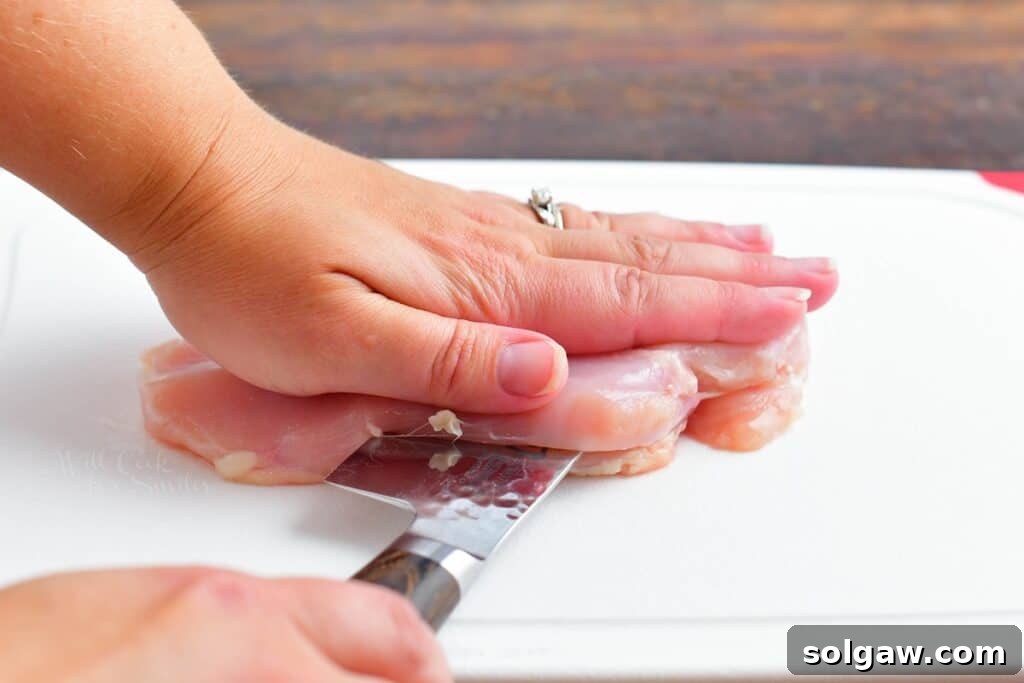
- Butterfly the Chicken: Place a boneless, skinless chicken breast on a clean cutting board. Position your non-dominant hand firmly on top of the chicken breast, keeping your fingers curled slightly upwards and away from the knife’s path for safety.
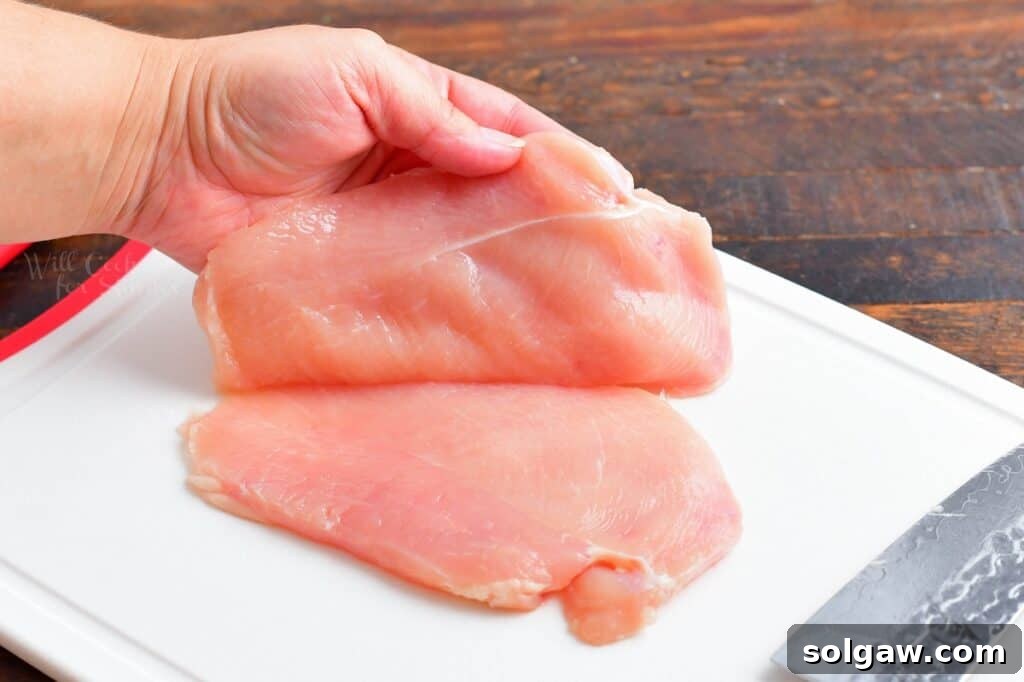
- Slice Evenly: Carefully use a sharp knife to slice the chicken breast horizontally, right through the middle, creating two thinner halves. The goal is to make these halves as even as possible in thickness. Consistency in thickness is crucial for uniform cooking.
- Pound Gently (If Needed): If your sliced chicken halves are still thicker than about 1/2 inch, it’s time to pound them. Place each chicken piece between two sheets of plastic wrap or inside a large zip-top bag. Using the flat side of a meat tenderizer or a rolling pin, gently pound the chicken until it reaches your desired uniform thickness, usually around 1/4 to 1/3 inch. Be gentle; you want to flatten, not tear, the meat. This tenderizes the chicken and ensures it cooks quickly and evenly, becoming perfectly tender and juicy. Repeat this process for all chicken breasts.
Breading The Chicken Cutlets for Ultimate Crispiness
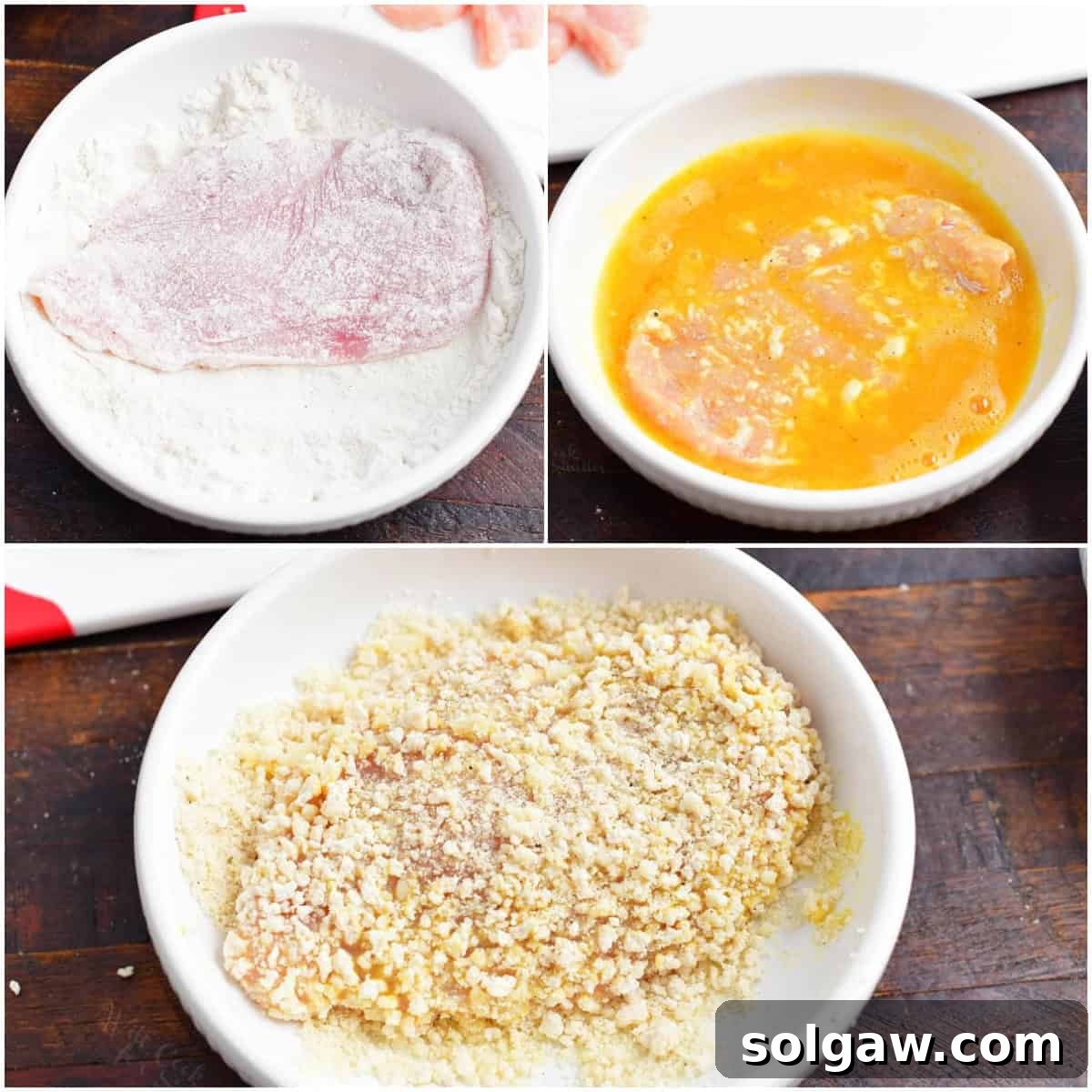
One of the most common challenges when preparing breaded chicken is keeping the coating firmly attached during cooking. The secret lies in establishing a proper “dredging station” and ensuring each step is executed correctly. There are three essential layers to the perfect Chicken Milanese coating, and following this specific order is key to adhesion and achieving that desirable crispness:
- The Flour Layer (First): Prepare your first shallow bowl with all-purpose flour seasoned generously with salt, black pepper, and garlic powder. The flour creates a dry surface that allows the subsequent egg wash to cling effectively. Dip each chicken cutlet into this seasoned flour mixture, ensuring it’s lightly and evenly coated on all sides. Gently shake off any excess flour.
- The Egg Wash (Second): In your second shallow bowl, whisk eggs with a pinch of salt and pepper. This egg mixture serves as the “glue” that binds the breadcrumbs to the chicken. Transfer the flour-coated chicken cutlets directly into the egg wash, making sure both sides are thoroughly moistened. Allow any excess egg to drip off.
- The Panko Breadcrumbs (Third): The final and crucial layer. In your third shallow bowl, combine Panko breadcrumbs with freshly grated Parmesan cheese, more garlic powder, salt, and black pepper. The Panko adds incredible texture and flavor. Place the egg-coated chicken cutlet into the breadcrumb mixture, turning it over several times to ensure complete coverage. Gently pat the breadcrumbs onto the chicken as you flip it. This gentle pressure helps the Panko adhere firmly, creating a robust and flavorful crust that won’t fall off during frying.
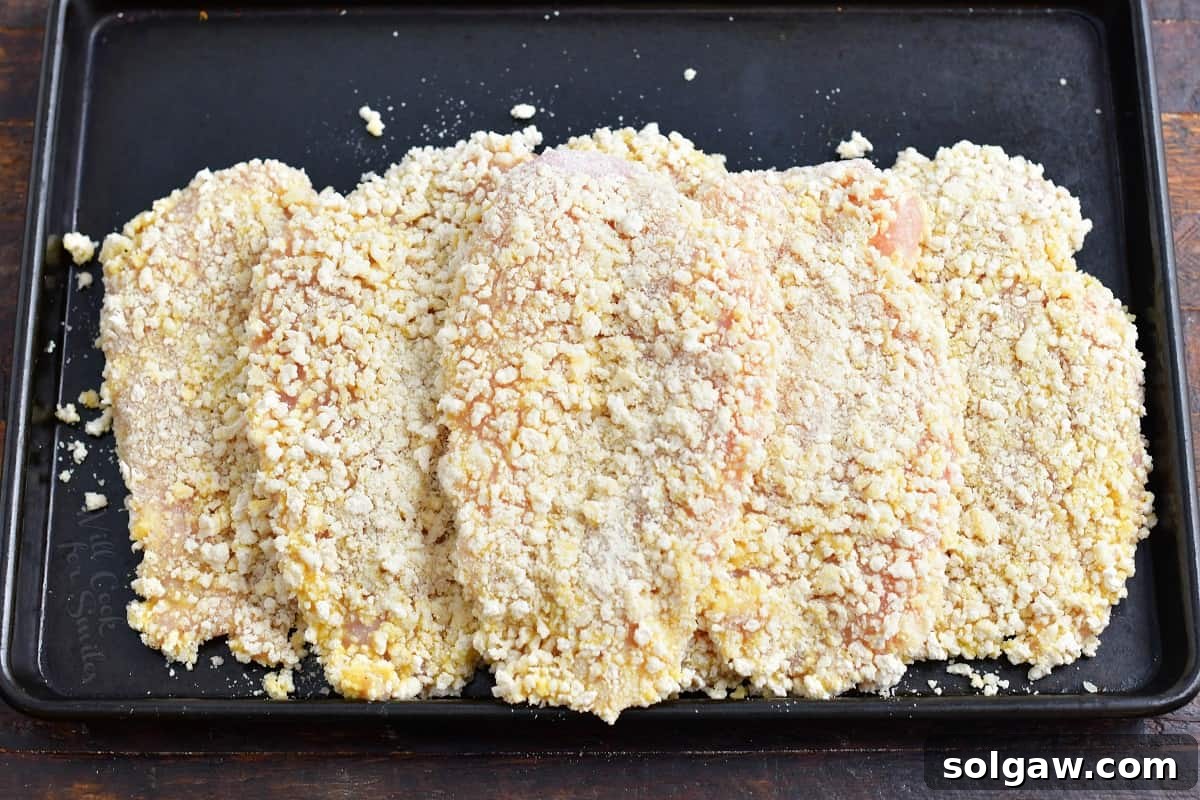
Repeat this breading process for all your chicken cutlets. Once breaded, you can set them aside on a wire rack or plate (preferably with parchment paper between layers if stacking) while you prepare to fry. This slight resting period can sometimes help the breading set even better.
Pan-Frying The Chicken to Golden Perfection
Now for the exciting part – cooking your beautiful Chicken Milanese! The goal is a golden, crispy crust and a tender, fully cooked interior.
- Preheat the Pan: Place a large, heavy-bottomed pan (cast iron or stainless steel works wonderfully) over medium to medium-high heat. The exact temperature will depend on your stove and pan, but you want it hot enough to sizzle without smoking excessively.
- Add Oil and Butter: Once the pan is adequately warmed, add a generous amount of olive oil. If you choose to incorporate butter for added richness and flavor, add it now. The butter will melt and brown slightly, adding another layer of deliciousness. Ensure there’s enough oil to coat the bottom of the pan and come up slightly on the sides of the chicken, typically about 1/4 inch deep.
- Cook in Batches: Carefully place the breaded chicken breasts into the hot pan, ensuring not to overcrowd it. Overcrowding can lower the oil temperature, leading to less crispy chicken. It’s best to cook the chicken in batches of 3 or 4, depending on the size of your pan.
- Achieve Golden Brown: Cook each side for approximately 3 to 5 minutes. Thinner cutlets may only require 3 minutes per side, while slightly thicker ones might need closer to 5 minutes. Look for a beautiful golden-brown color and a satisfying crispness.
- Check for Doneness: The chicken is fully cooked when it reaches an internal temperature of 165°F (74°C). However, with thin cutlets and a good golden crust, it’s usually cooked through when it looks perfectly browned.
- Replenish Oil: As you cook in batches, you may need to add more olive oil (and butter, if desired) to the pan between batches. Ensure the pan is adequately oiled to maintain crispiness and prevent sticking.
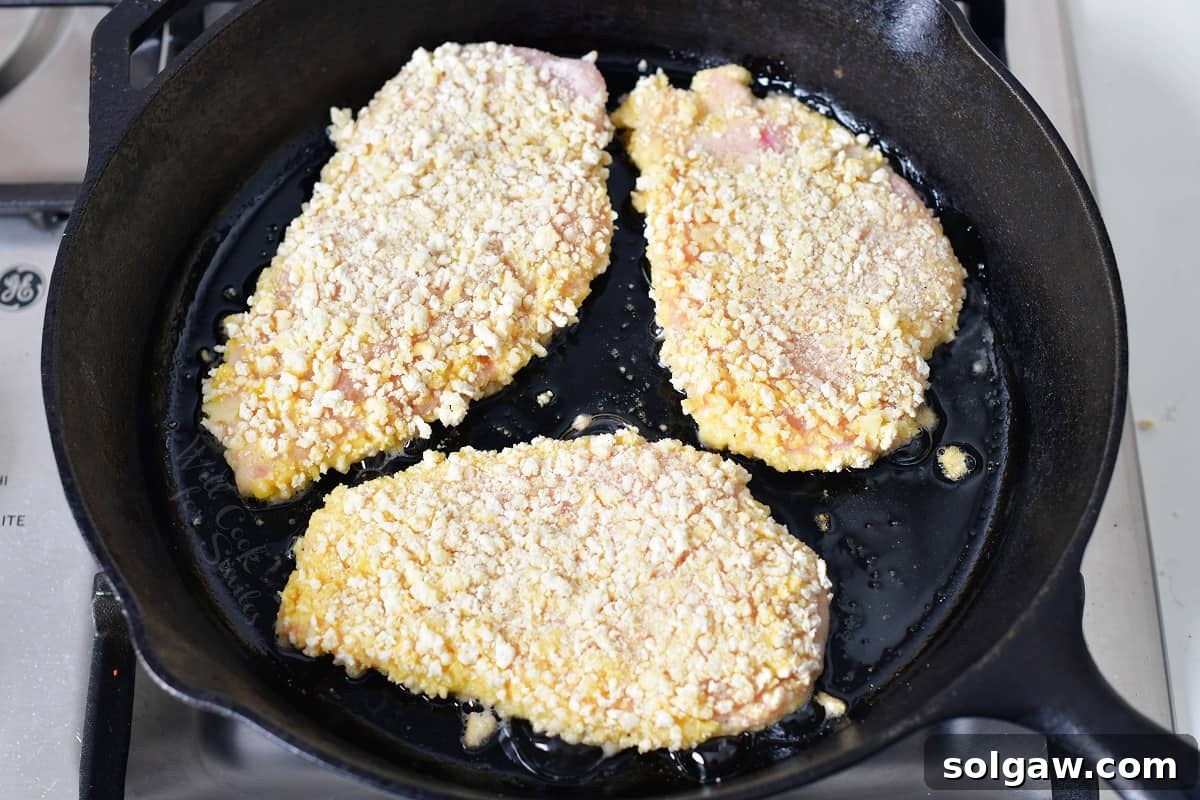
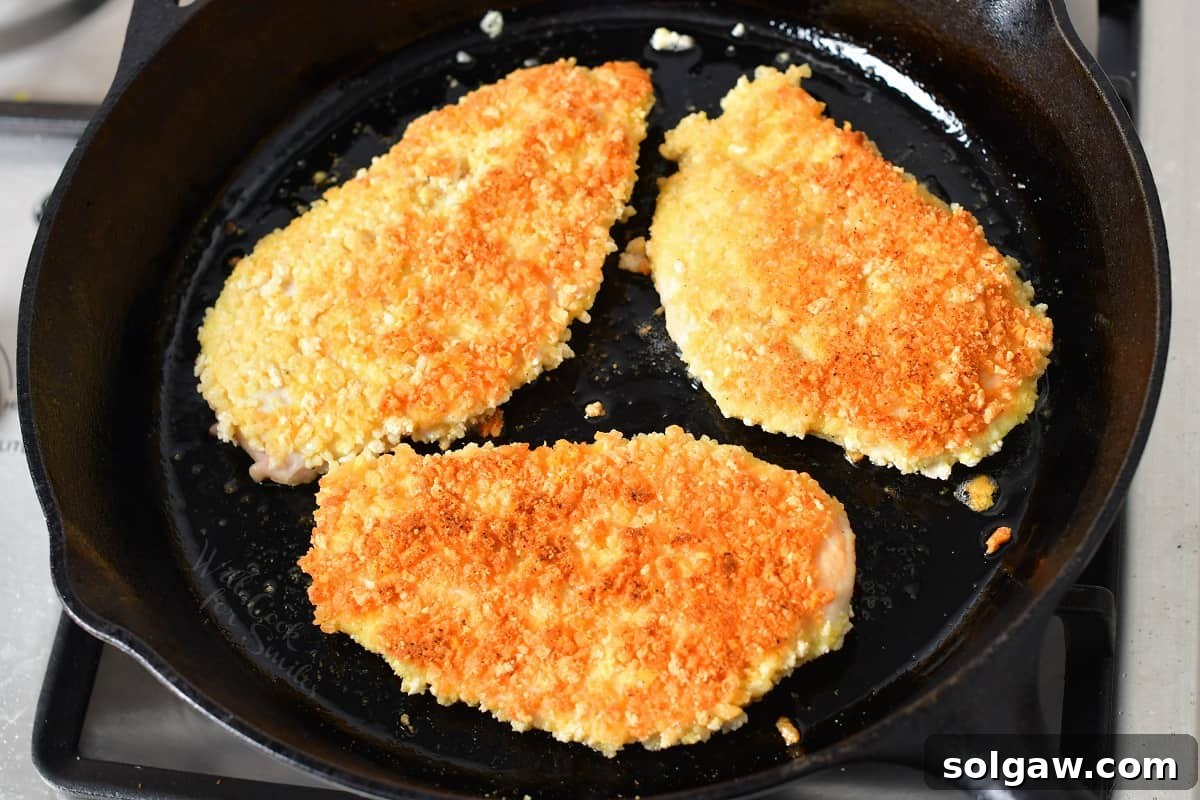
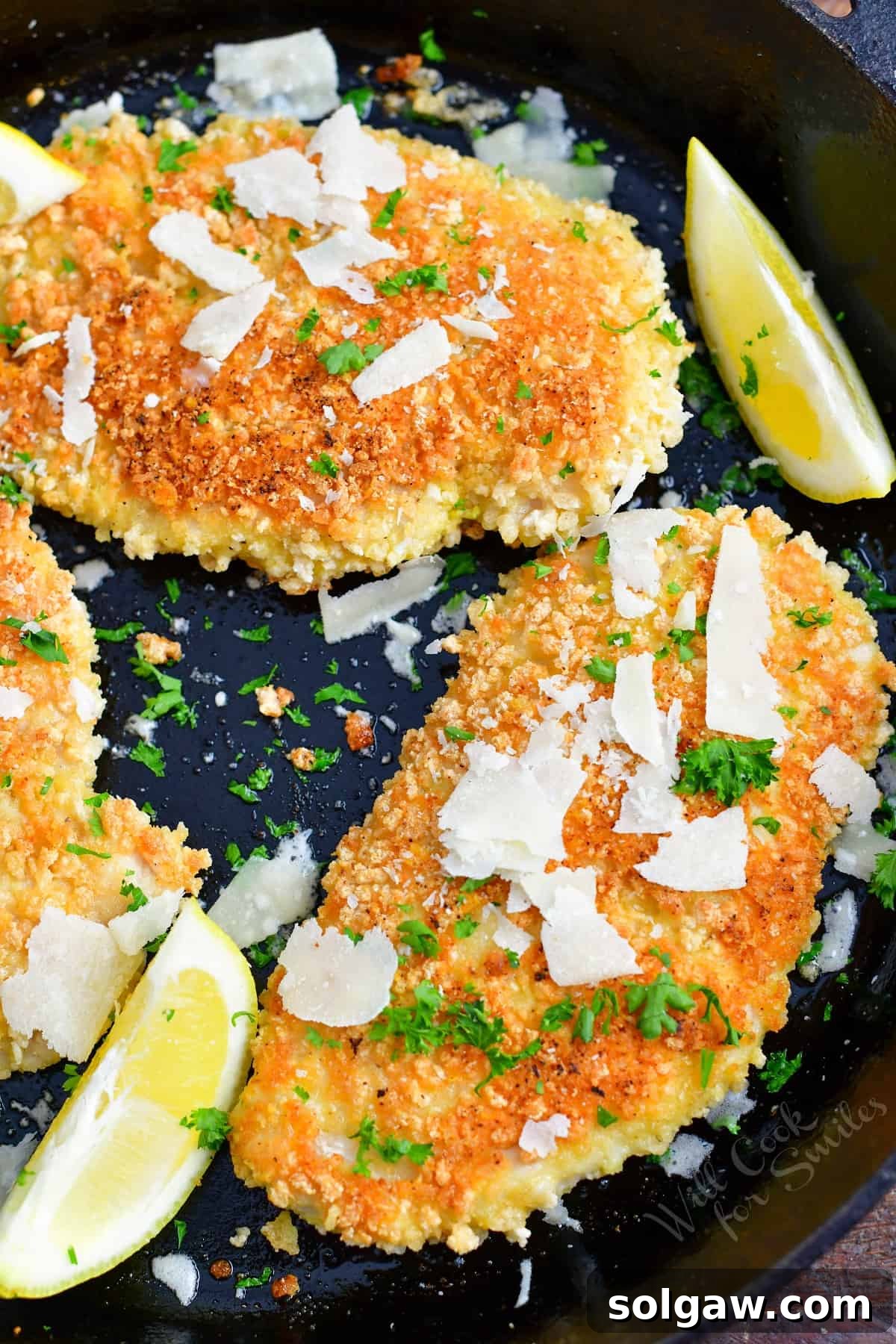
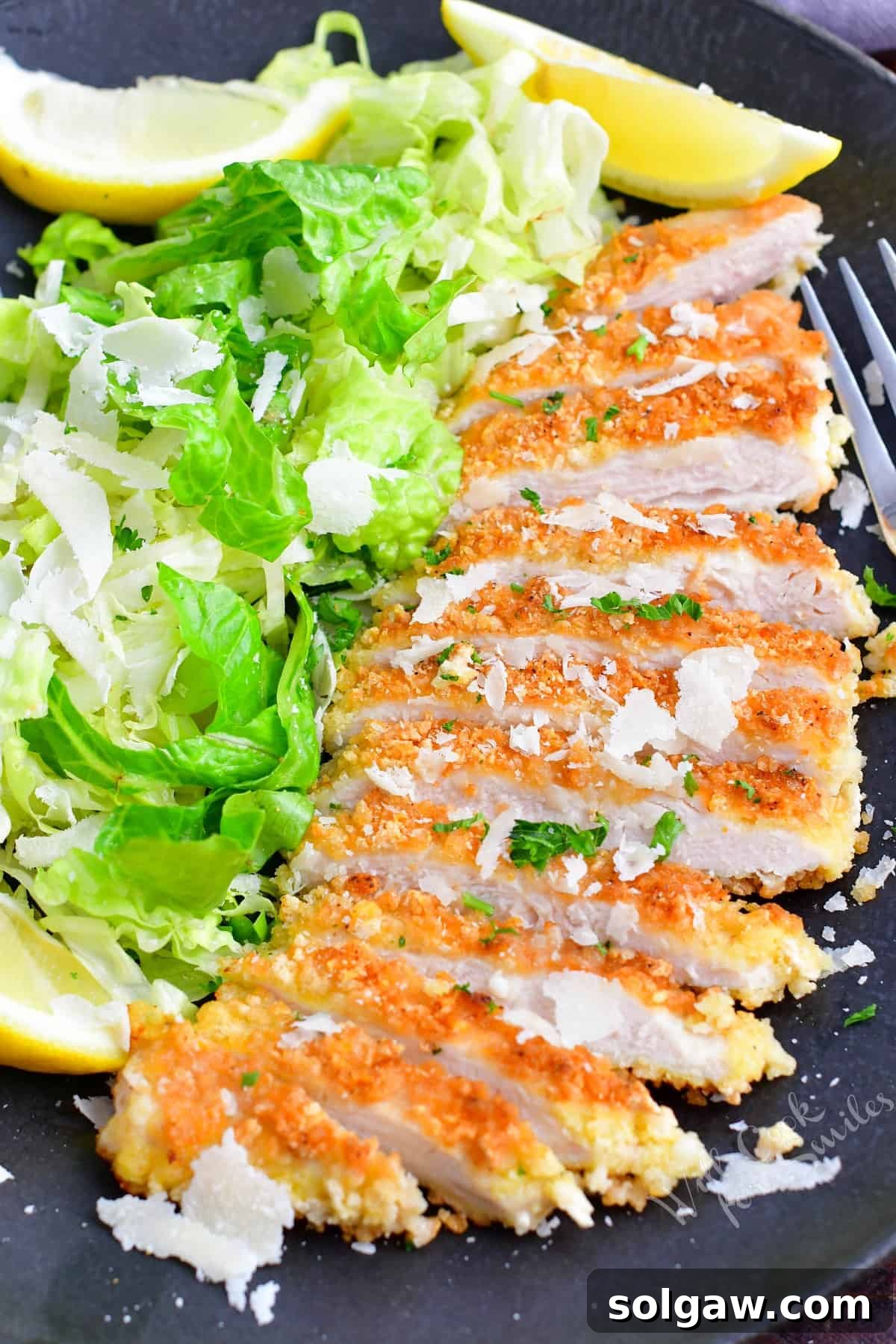
Once cooked, transfer the Chicken Milanese to a wire rack set over a baking sheet to drain any excess oil and keep it crispy while you finish the remaining batches. Serve immediately with your preferred garnishes and side dishes. Fresh parsley, vibrant lemon wedges for a squeeze of acidity, and a sprinkle of extra grated Parmesan cheese are all fantastic choices. Enjoy this wonderfully simple and satisfying meal!
Frequently Asked Questions About Chicken Milanese
Here are some common questions about making and enjoying Chicken Milanese, providing clarity and confidence in your cooking journey:
Can I make Chicken Milanese gluten-free?
Absolutely! Making Chicken Milanese gluten-free is incredibly easy and requires just two simple substitutions. Ensure you use a good quality gluten-free all-purpose flour blend for the first dredging step. For the breading, opt for gluten-free Panko bread crumbs. Some gluten-free breadcrumb varieties can be finer; for the best crispy results, choose a brand that closely resembles the coarse, flaky texture of traditional Panko. From my experience, the gluten-free bread crumbs from the brand 4C Bread Crumbs are an excellent choice, providing a texture very similar to classic Panko.
How should I store and reheat leftover Chicken Milanese?
To store leftover crispy chicken cutlets, place them in an air-tight food storage container in the refrigerator. To prevent the cutlets from sticking together and potentially damaging the breading, it’s advisable to place a piece of parchment paper in between each cutlet. When properly stored, Chicken Milanese will remain fresh for 3-4 days in the refrigerator.
For reheating, I highly recommend using a cooking pan or an air-fryer to help restore its crispiness. In a pan, simply preheat it over medium to medium-low heat with a tiny bit of oil or butter, and reheat the chicken just until it’s heated through, usually a few minutes per side. In an air-fryer, preheat to 360°F (180°C) and reheat for 3-4 minutes, flipping halfway through if necessary, until it’s warmed and crispy again. Avoid the microwave, as it will likely make the breading soggy.
Can I bake Chicken Milanese instead of pan-frying?
Yes, you can certainly bake Chicken Milanese, though the texture will be slightly different from pan-frying; it may be less intensely crispy. To bake crispy chicken cutlets, preheat your oven to 400°F (200°C). Place the breaded chicken cutlets on a wire rack that is set inside a rimmed baking sheet. This allows air to circulate around the cutlets, promoting even cooking and crisping. Bake for 18-20 minutes, with the exact time depending on the thickness of your chicken. To ensure it’s fully cooked, use a digital meat thermometer to verify the chicken reaches an internal temperature of 165°F (74°C).
More Delicious Chicken Dinners to Explore
If you’ve enjoyed the simplicity and flavor of Chicken Milanese, you’ll love these other fantastic chicken recipes:
- Chicken Kiev: A decadent dish featuring chicken breast pounded thin, rolled around cold butter, then breaded and fried or baked.
- Chicken Fricassee: A classic French stew with chicken pieces gently cooked in a creamy white sauce.
- Roast Chicken: The ultimate comfort food, a beautifully roasted whole chicken, crispy on the outside and tender within.
- Parmesan and Herb Stuffed Chicken: Chicken breasts stuffed with a savory mixture of Parmesan cheese and fresh herbs, then baked or pan-fried.
- Lemon Pepper Chicken Pasta: A bright and zesty pasta dish featuring tender chicken seasoned with lemon and pepper.
PIN THIS RECIPE FOR LATER
DID YOU MAKE THIS RECIPE? PLEASE leave a 🌟 star rating! Let me know how you liked it by leaving the 📝 comment below or share and tag me on social media @willcookforsmiles. DON’T FORGET to subscribe to my newsletter!
Chicken Milanese Recipe
Print
Pin
Video
Rate
Ingredients
- 1.5 lb boneless, skinless chicken breast meat
- 4 tbsp olive oil
- 2 tbsp unsalted butter optional
Flour Mixture:
- 1 cup all purpose flour*
- 1 tsp garlic powder
- salt
- black pepper
Egg Mixture:
- 2-3 eggs depending on size
- salt
- black pepper
Panko Mixture:
- 2 cups Panko bread crumbs*
- 1/2 cup fresh grated Parmesan cheese
- 1/2 tsp garlic powder
- salt
- black pepper
Instructions
Cutting the chicken:
-
Place chicken on the cutting board and place your hand on top of the chicken breast. Make sure to lift your fingers up and not curve them down when cutting the chicken.
-
Using a sharp knife, slice each chicken breast in half, width-wise. Try to split it right in the middle to get the halves that are as even as possible. This will ensure similar cook time. Repeat with all the chicken breasts.
-
You can use a zip-lock bag to lightly pound the chicken or place a sheet of plastic wrap over the sliced chicken halves. Use the flat part of the meat tenderizer to lightly pound the chicken. You don’t need to make it much thinner and make sure not to hit too hard.
Breading the chicken:
-
Use three wide and shallow bowls to bread the chicken.
-
Combine flour, salt, pepper, and garlic powder in the first one. Whisk egg with some salt and pepper in the second bowl. Mix Panko bread crumbs, grated Parmesan cheese, garlic powder, salt, and pepper in the last bowl.
-
First – Dip each chicken breast in flour mixture to lightly coat it all over.
-
Second – Dip flour coated chicken breast in egg mixture on both sides.
-
Third – Place chicken breast into the bowl with bread crumb mixture and flip it over a few times. Gently pat as you’re flipping the chicken to make sure the bread crumbs get onto the chicken nicely.
-
Repeat with remaining chicken cutlets.
Cooking Chicken:
-
Preheat a large cooking pan over medium to medium-high heat (depending on the stove) and add olive oil. (You can also add in some butter if you want some butter flavor.)
-
Place breaded chicken into the pan and cook for 3-5 minutes per side, depending on the thickens of chicken, until cooked through and golden brown.
-
Note: you will most likely have to cook chicken in batches of 3 or 4. Add more oil to the pan between batches as needed!
Video
For a visual guide to making perfect Chicken Milanese, watch our step-by-step video:
Notes
- *Gluten Free Notes: You can easily make it gluten free with two simple substitutions. Make sure to use gluten-free all-purpose flour and use gluten-free Panko bread crumbs. Some gluten-free bread crumbs don’t look like Panko; for best results, choose ones that do. I found that the gluten-free bread crumbs of the brand 4C Bread Crumbs are very similar to classic Panko.
- Storing: You should store leftover chicken in an air-tight food storage container, in the refrigerator. To keep the cutlets from sticking together and taking off the breading, place a piece of parchment paper in between each cutlet. Properly stored, it should last 3-4 days in the refrigerator.
Reheating: I highly recommend doing it in a cooking pan or in an air-fryer. In the pan, simply preheat the pan over medium to medium-low heat and reheat the chicken just until heated through. In an air-fryer, reheat at 360°F (180°C) for 3-4 minutes.
Nutrition
Originally published on Will Cook For Smiles in August 2021.