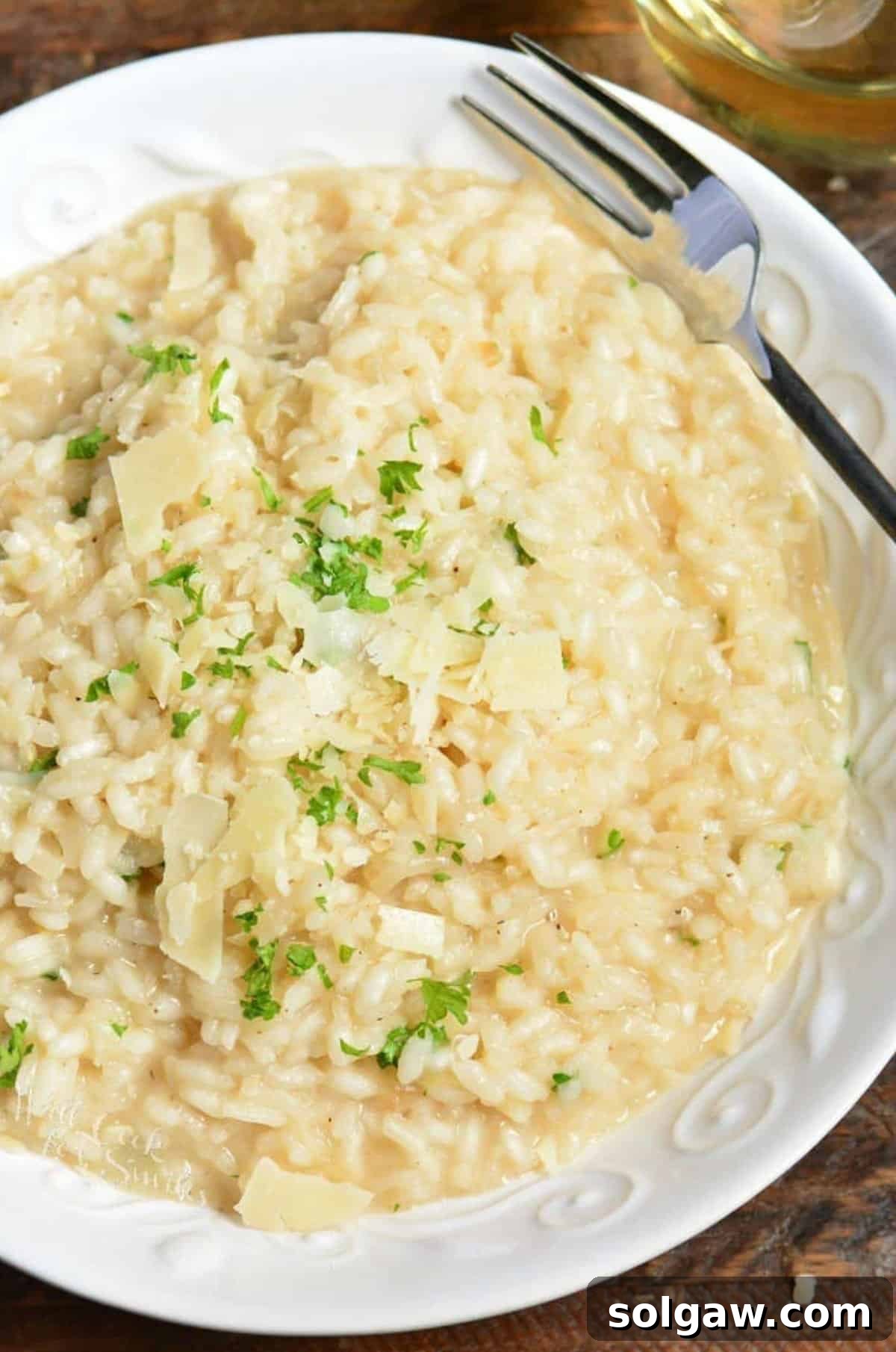
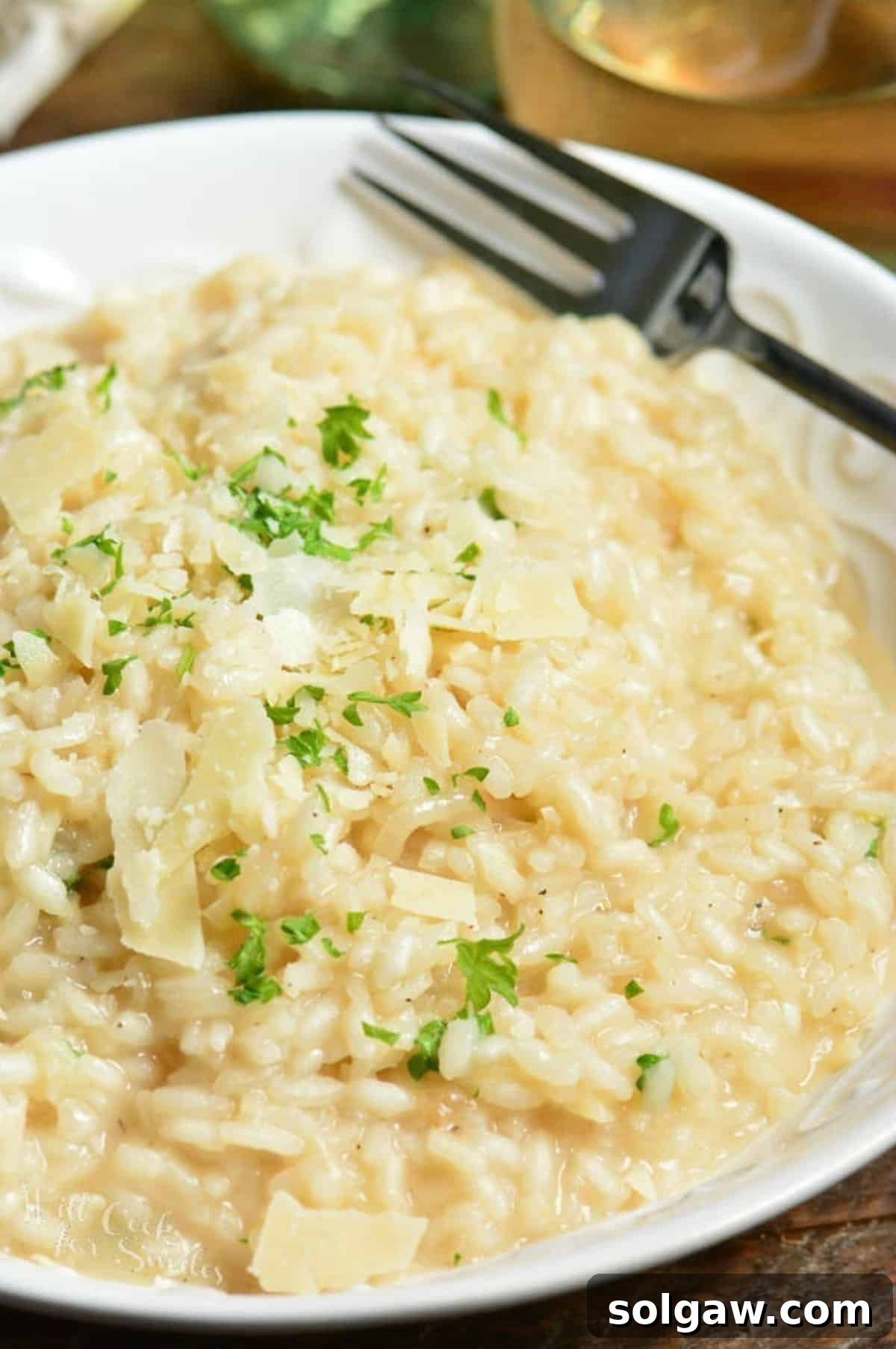
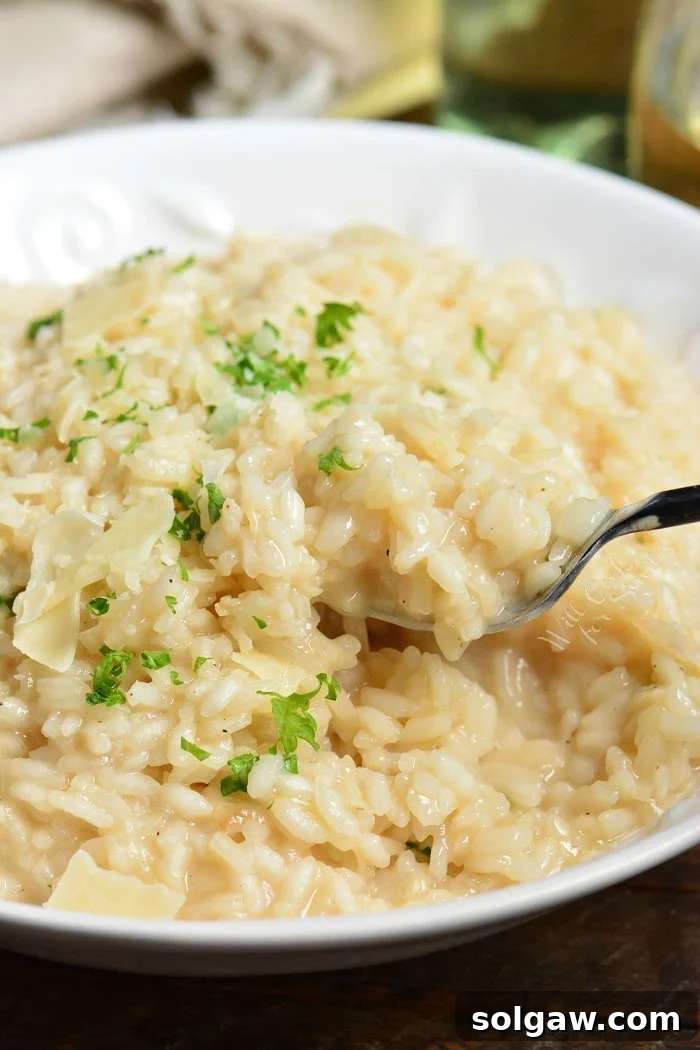
Welcome to the enchanting world of Parmesan Risotto, a culinary masterpiece that embodies the soul of Italian comfort food. Far more than just a rice dish, this exquisite creation transforms simple ingredients into an incredibly creamy, rich, and utterly satisfying meal. Featuring plump arborio rice cooked to perfection with aromatic white wine, fragrant garlic, and an abundance of rich Parmesan cheese, it’s a dish that looks incredibly impressive but is surprisingly accessible to even the most novice home cook. If you’ve ever dreamt of mastering risotto, this recipe is your perfect starting point – a harmonious blend of sophistication and simplicity that promises to delight your taste buds.
For those who adore the deep, savory notes of Parmesan, you’ll be thrilled to discover how this cherished ingredient shines in a variety of other delightful recipes. Explore the earthy goodness of Mushroom Risotto or indulge in the luxurious flavors of Lobster Risotto, each offering a unique twist on this classic Italian staple.
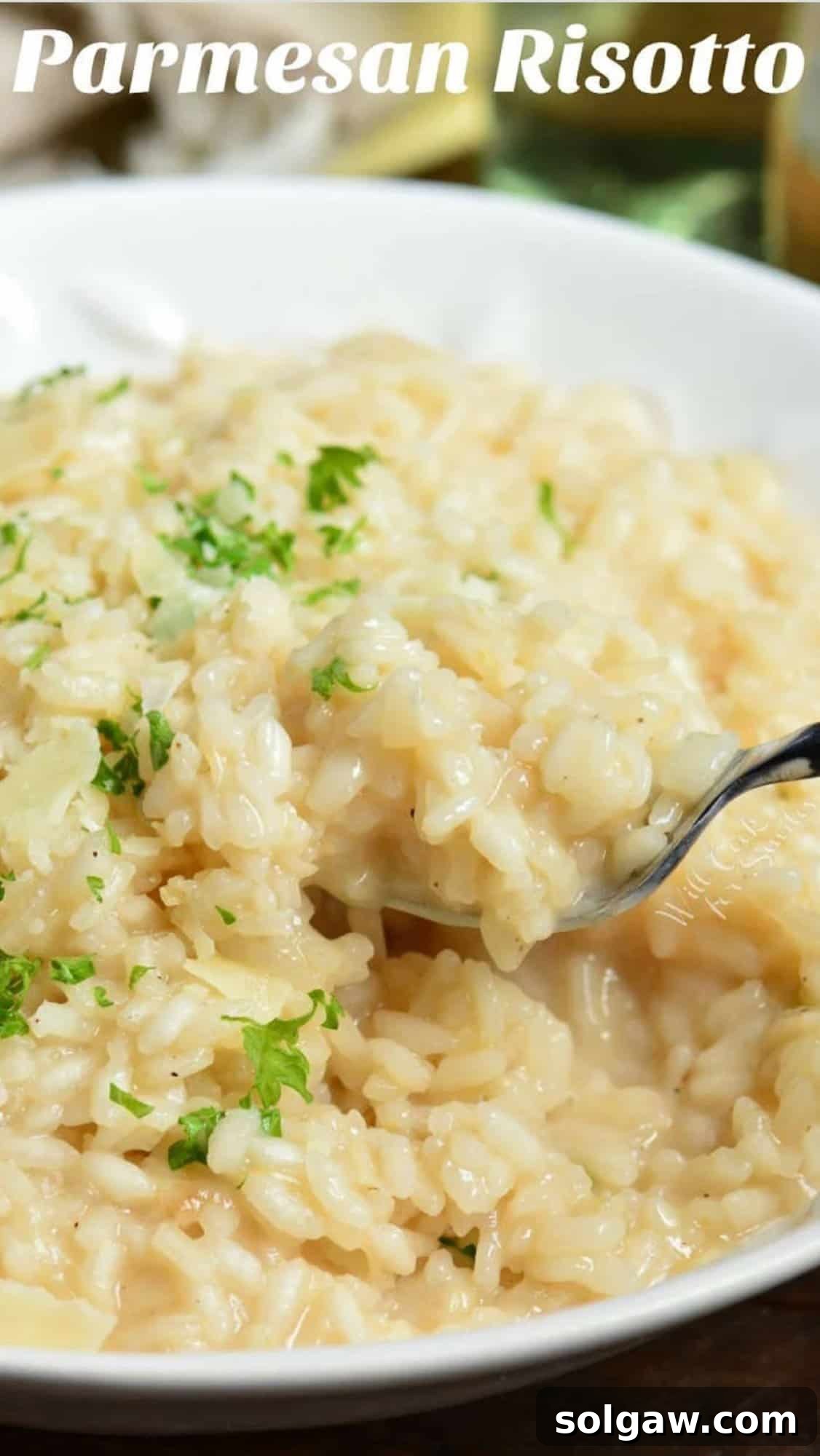
Many people hesitate to prepare risotto at home, often associating it with restaurant-level complexity. While it’s true that risotto demands a specific technique, it’s far from intimidating. I’m here to guide you through the process, sharing my essential tips for crafting a homemade risotto that rivals any you’d find in a fine dining establishment. Unlike other rice dishes where ingredients are simply combined and left to cook, risotto requires a more engaging approach.
The secret to its signature texture lies in the slow, gradual addition of warm liquids and consistent, gentle stirring. This isn’t to say it demands your undivided attention; rather, it’s a meditative process that rewards patience and a bit of mindful engagement. The core of any classic risotto rests on three pillars: the right rice, flavorful broth, and a good quality wine. The magic truly unfolds through the cooking method, which coaxing the starches from the rice grains to create that incredibly smooth, velvety, and luxurious texture. You might be tempted to rush the process or cut corners, but trust me, resisting these shortcuts is key to achieving that perfect, creamy consistency. Each measured addition of liquid, combined with diligent stirring, is what allows the arborio rice to slowly release its natural starches, resulting in the desired creamy richness. Skipping these crucial steps will compromise the texture, leading to a less satisfying dish.
Ingredient Notes
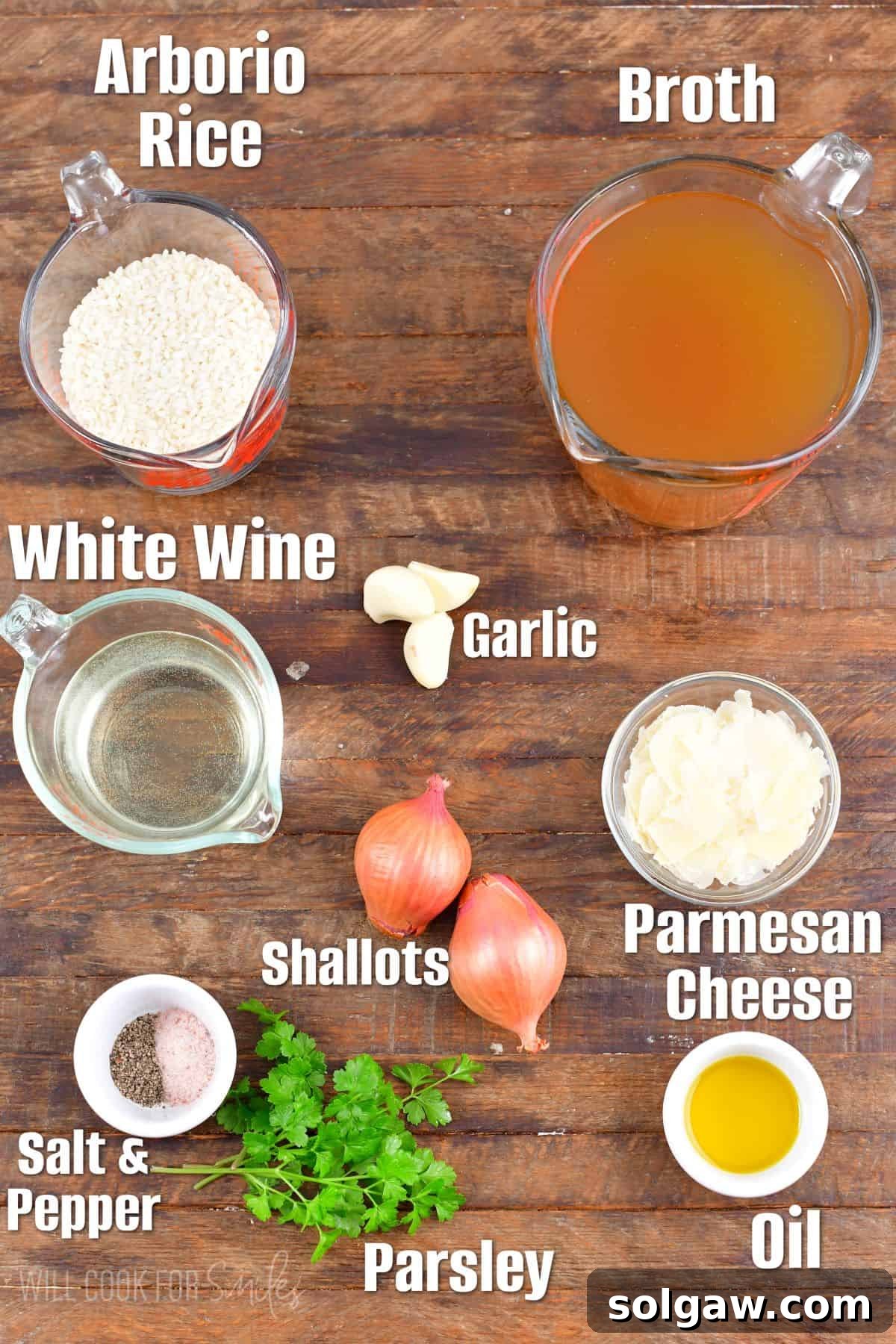
Selecting the right ingredients is the first step towards an outstanding Parmesan Risotto. Each component plays a vital role in developing the complex flavors and rich, creamy texture that makes this dish so beloved.
Arborio Rice – This is truly the gold standard for risotto, and for good reason. Arborio is a short-grain white rice renowned for its high starch content. As it cooks and is gently stirred, this starch is gradually released, creating the distinctively creamy consistency that is the hallmark of perfectly made risotto. While other short-grain rices like Carnaroli or Vialone Nano can also be used, Arborio is widely available and performs beautifully.
Broth – The broth forms the foundational flavor of your risotto, so choose wisely. You can opt for a rich Homemade Chicken Stock for a deeper, savory base, or a vibrant Vegetable Stock for a lighter, vegetarian-friendly option. Whichever you choose, ensure it’s of good quality, as its flavor will be concentrated in the final dish. Warming your broth before adding it to the rice is crucial; adding cold broth can significantly lower the temperature of your risotto, interrupting the cooking process and affecting the final texture.
White Wine – The wine adds a crucial layer of acidity and complexity, balancing the richness of the cheese and broth. A dry white wine, such as Pinot Grigio, Sauvignon Blanc, or a dry Vermouth, works best. A general rule of thumb for cooking is to always use a wine you would enjoy drinking. This ensures that the flavors imparted to your risotto will be pleasant and well-rounded. If you’re not a wine enthusiast or prefer to omit alcohol, don’t worry! Check the FAQs below for excellent substitutions.
Parmesan Cheese – For the ultimate in flavor and that irresistible melt-in-your-mouth texture, always choose high-quality Parmesan cheese, preferably Parmigiano-Reggiano. Grate it freshly from the block just before adding. Pre-grated cheeses often contain anti-caking agents that can hinder smooth melting and slightly alter the authentic taste. The sharp, nutty, and salty notes of fresh Parmesan are indispensable to this dish.
Shallots – Shallots contribute a delicate, sweet, and slightly pungent flavor that is milder and more refined than common onions. Their subtle sweetness perfectly complements the other ingredients without overpowering them. If shallots are unavailable, a Vidalia onion makes an excellent substitute due to its similarly mild and sweet profile.
Garlic – A few cloves of fresh garlic, minced or finely crushed, add an essential aromatic depth. Sautéed gently with the shallots, it creates a fragrant base that sets the stage for the rest of the flavors.
Olive Oil and Butter – High-quality extra virgin olive oil is used for sautéing, while a touch of butter often gets stirred in at the end (mantecare in Italian) for extra richness and gloss. Together, they provide a luxurious mouthfeel.
For the precise measurements and detailed instructions, please refer to the comprehensive recipe card provided below.
How to Make Parmesan Risotto
Crafting the perfect Parmesan Risotto is a rewarding process that combines careful attention with simple culinary steps. Follow these guidelines to achieve a creamy, flavorful dish:
1. Prepare the Broth: Begin by combining your chicken or vegetable broth with a pinch of salt and pepper in a separate saucepot. Bring this mixture to a gentle simmer over medium heat, then reduce the heat to low to keep it consistently warm. Maintaining hot broth is crucial for keeping the risotto’s temperature stable throughout the cooking process.
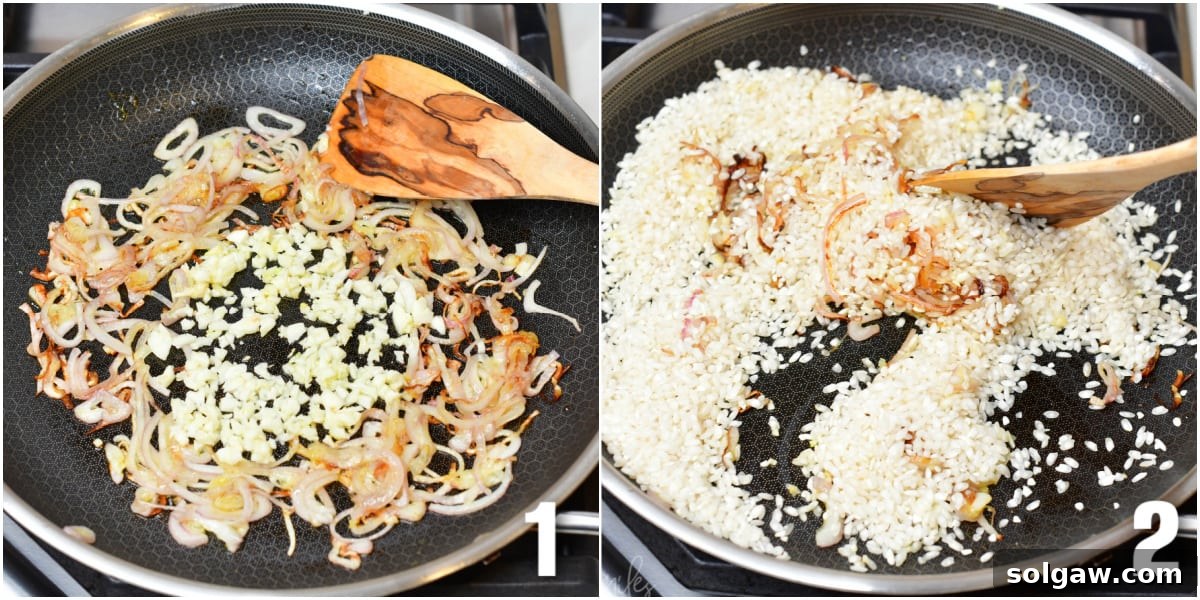
2. Build the Aromatic Base: Heat a large, heavy-bottomed cooking pan or Dutch oven over medium heat. Add the olive oil, and once shimmering, add the thinly sliced shallots. Sauté the shallots gently until they become translucent and begin to caramelize slightly, releasing their delicate sweetness. Next, add the minced garlic and cook for just about 30-60 seconds, until fragrant. Be careful not to burn the garlic, as it can turn bitter.
3. Toast the Rice (Soffritto): Add the arborio rice to the pan with the sautéed aromatics. Stir the rice well, ensuring each grain is coated in the olive oil and infused with the flavors of the shallots and garlic. Continue to stir for 1-2 minutes, toasting the rice until the edges of the grains become translucent but the centers remain opaque. This “toasting” step (known as tostatura) helps the rice maintain its integrity and prevents it from becoming mushy, while also preparing it to absorb the liquids evenly.
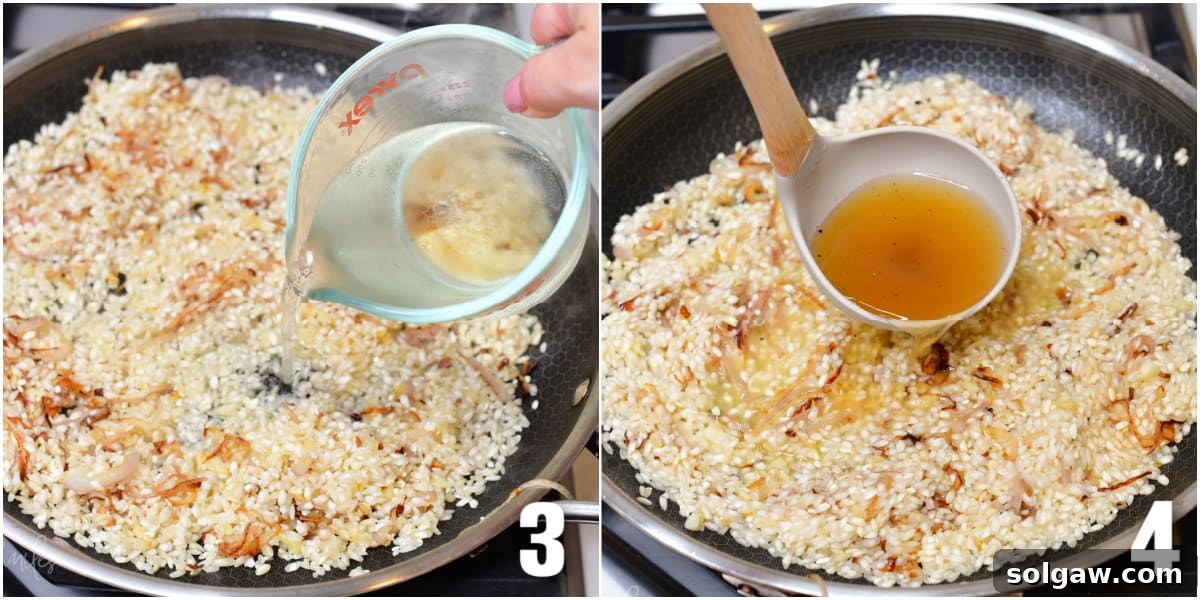
4. Deglaze with Wine: Pour in the cup of dry white wine. The wine will hit the hot pan and sizzle, releasing its aromatic steam. Stir continuously as the rice absorbs the wine, allowing the alcohol to evaporate while leaving behind its complex flavors and acidity. Continue stirring until the wine has almost completely absorbed into the rice and the pan is nearly dry. This step takes about 2-3 minutes.
5. Gradually Add Broth: This is the heart of risotto making. Once the wine is absorbed, begin adding the warm broth, one ladleful (about 1 cup) at a time. Pour in the first ladle of hot broth and stir gently but consistently, allowing the rice to slowly absorb the liquid. As the broth is absorbed and the rice swells, you’ll notice the mixture becoming thicker and creamier. Once the liquid has mostly absorbed and very little remains in the pan, add another ladleful of hot broth. Continue this process, adding broth gradually and stirring often, for about 20-25 minutes, or until the rice is nearly cooked. The continuous stirring helps to agitate the rice grains, releasing their starch and contributing to the signature creamy texture.
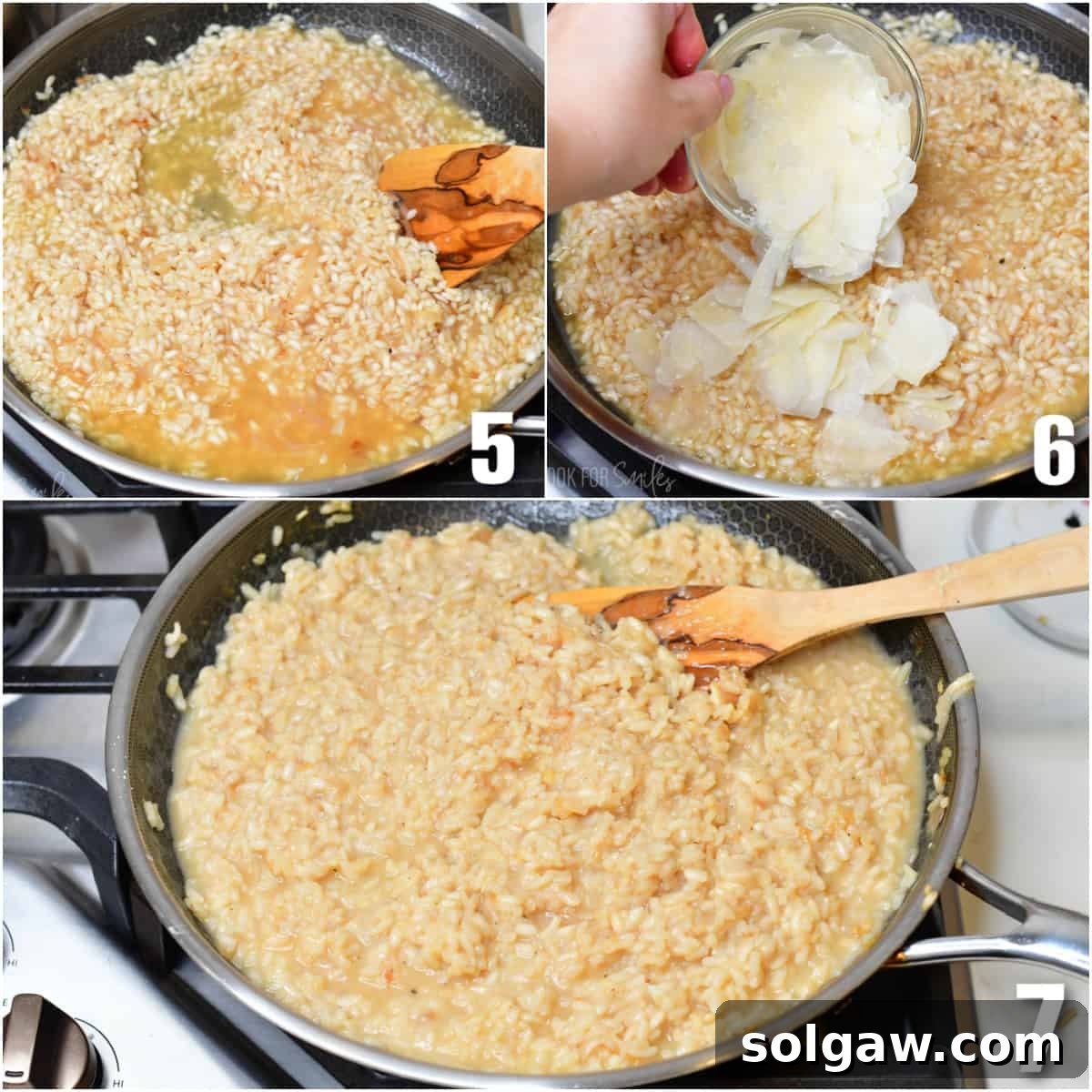
6. Achieve Cheesy Perfection: When the rice is just a couple of minutes away from being fully cooked, and the texture is nearing perfection, remove the pan from the heat. This is the moment for mantecare – the final incorporation of fat and cheese. Add the freshly shaved Parmesan cheese (and optionally, a knob of butter) to the risotto. Stir vigorously for about 1-2 minutes until the cheese is completely melted and beautifully integrated, creating a luscious, creamy emulsion. This step is crucial for achieving the perfect richness and glossy finish.
7. Cook to Al Dente: The ideal risotto rice should be cooked “al dente” – meaning it has a slight bite and firmness in the center, rather than being completely soft or mushy. You must taste the rice frequently during the last few minutes of cooking to gauge its doneness. It should be tender but still offer a tiny bit of resistance when you bite into it. If it’s too soft, it will become gummy and unappealing. Once it reaches this perfect al dente stage, remove it from the heat immediately.
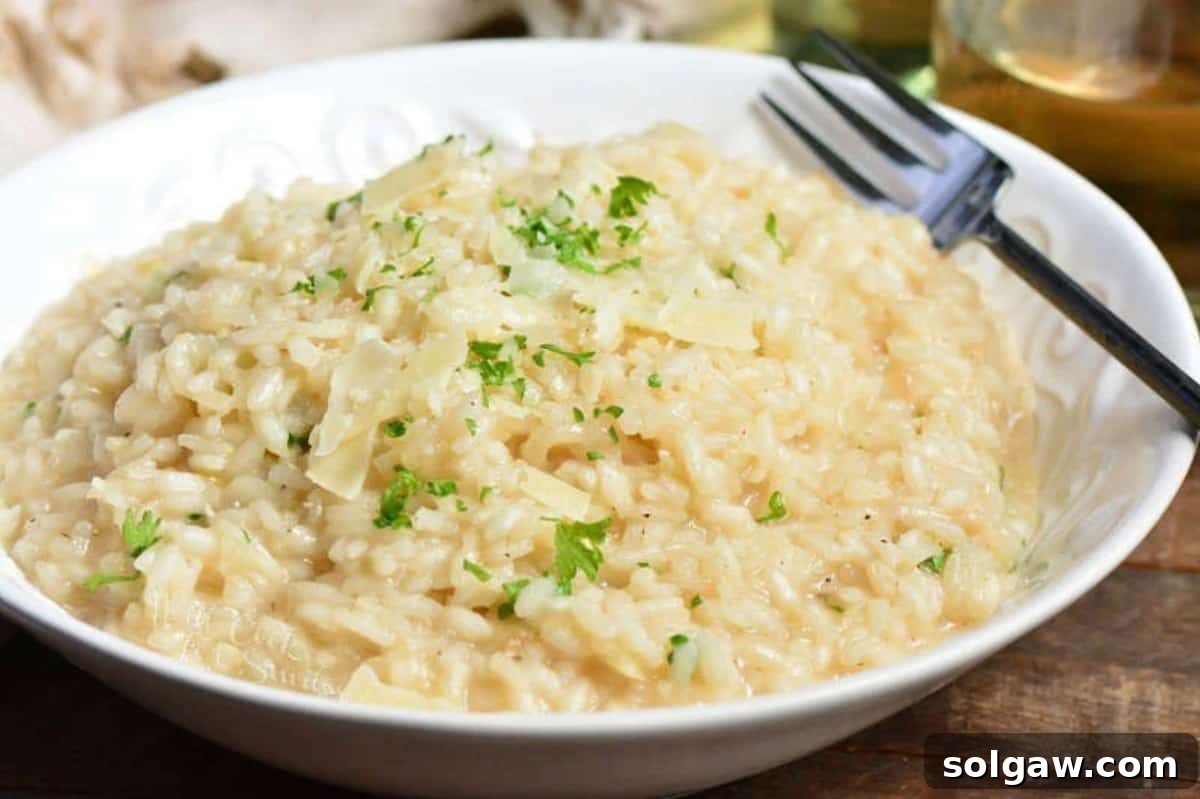
8. Serve Immediately: Risotto is a dish that waits for no one! It’s best served hot off the stove, as it will continue to absorb liquid and firm up as it cools. Garnish with a sprinkle of fresh minced parsley and an extra grating of Parmesan cheese for a beautiful presentation and added flavor. Enjoy!
Recipe FAQs
Can I substitute wine in Parmesan Risotto?
Absolutely! While wine adds a unique depth and acidity to Parmesan Risotto, you can certainly substitute it if you prefer not to use alcohol, though the flavor profile will shift slightly. The easiest substitution is to simply use an equivalent amount of extra chicken or vegetable stock. Alternatively, you can add about 3-4 tablespoons of grape juice (ensure it’s a less sweet variety) to the stock, which can mimic some of the fruitiness. For a touch of tang, mix about one tablespoon of white wine vinegar into your warm stock before adding it to the rice. These options will still result in a delicious and creamy risotto, just with a slightly different flavor nuance.
What should I serve with Parmesan Risotto?
Parmesan Risotto is incredibly versatile and can be enjoyed in many ways. It makes a fantastic, hearty vegetarian main dish on its own, especially when topped with extra herbs or a drizzle of truffle oil. As a side dish, its rich, creamy texture beautifully complements a wide array of proteins. It pairs exceptionally well with robust meats like Pan Seared Steak or Spatchcock Chicken. For seafood lovers, it’s a delightful accompaniment to delicate dishes such as Seared Scallops or Crispy Skin Salmon. It also completes a luxurious meal like Surf and Turf. Consider serving it alongside a fresh, crisp green salad to cut through its richness.
Can I make Parmesan Risotto ahead of time or freeze it?
Risotto is truly a dish that is best enjoyed fresh, immediately after it’s cooked. The rice continues to absorb liquid as it sits, which means its ideal creamy texture can become thick and clumpy over time. While you can prepare some components in advance, such as chopping your shallots and mincing garlic, making the entire risotto ahead of time is not ideal. If you absolutely must, you can cook it to about 80% done, then finish it with more hot stock and cheese just before serving. However, the textural difference will be noticeable. If reheating, you will definitely need to add extra liquid to restore its consistency. As for freezing, risotto does not freeze well. The texture of the rice changes significantly upon thawing and reheating, often becoming mushy. Therefore, I highly advise against freezing risotto.
How to Reheat Risotto
While Parmesan Risotto is undeniably best served fresh, leftovers can certainly be enjoyed with a little care. Proper storage and reheating techniques are key to bringing back its deliciousness.
First, ensure any leftover risotto is stored promptly in an airtight food storage container in the refrigerator. When properly stored, it should remain fresh and safe to eat for approximately 3-4 days.
Reheating Parmesan Risotto is relatively straightforward, whether you opt for a pan or a microwave. The most important step is to always add a little extra broth or water during reheating. As risotto cools, the rice continues to absorb any remaining liquid, causing it to thicken considerably. Adding a splash of liquid (a quarter to half a cup, depending on the amount of risotto) helps to loosen it up and restore its creamy texture.
- On the Stovetop: Transfer the risotto to a medium-sized pan. Add a small amount of broth (start with a quarter cup) and reheat over medium-low heat, stirring frequently. Keep it covered with a lid to trap steam and moisture. Continue stirring and adding small splashes of broth as needed until the risotto is heated through and has regained its desired creamy consistency.
- In the Microwave: Place your leftover risotto in a microwave-safe dish. Add a small amount of broth or water, then cover the plate with a microwave-safe lid or damp paper towel to prevent it from drying out. Reheat in short bursts (30-60 seconds at a time), stirring well between each interval, until it’s hot and creamy.
Remember that reheating will not perfectly replicate the fresh, al dente texture of newly made risotto, but with added liquid and careful attention, it can still be a very enjoyable meal.
Tips for Making the Best Risotto
Mastering risotto is all about understanding a few fundamental principles. These tips will elevate your Parmesan Risotto from good to absolutely unforgettable, ensuring that perfect creamy texture and rich flavor every time.
- Choose the Right Rice and Wine: This is non-negotiable. Always use arborio rice for its high starch content, which is crucial for creaminess. As for wine, don’t skimp! The wine’s flavor concentrates as it cooks, so choose a dry white wine that you genuinely enjoy drinking, like a Pinot Grigio or Sauvignon Blanc. Using a cheap, poor-quality wine will directly impact the taste of your risotto.
- Always Use Hot Broth: Before you even start cooking your rice, ensure your broth is heated to a gentle simmer and kept warm in a separate pot. Adding cold broth to hot rice will drastically lower the temperature of your risotto, disrupting the cooking process and preventing the starch from releasing properly. Consistent heat is essential for that continuous gentle simmer and creamy outcome.
- Add Liquid Gradually, One Ladleful at a Time: This is the golden rule of risotto. Patience is key! Adding broth slowly and allowing the rice to absorb almost all of the liquid before adding more is what allows the rice grains to gently release their starches. This controlled process is precisely what yields that smooth, luxurious texture. Rushing this step by adding too much liquid at once will result in boiled rice rather than creamy risotto.
- Stir Often, But Not Constantly: Finding the right balance with stirring is crucial. You want to stir frequently enough to prevent sticking and encourage starch release, but not so constantly that you cool down the rice and interrupt the cooking. Stir well after each addition of wine and broth, and then give it a gentle stir every minute or so in between. This ensures even cooking and optimal starch extraction.
- Maintain Medium to Medium-Low Heat for a Gentle Simmer: The rice should always be at a gentle simmer, never a rolling boil (which would cook it too fast and unevenly) nor too slow (which would prolong cooking unnecessarily). Adjust your stove’s heat as needed to maintain a consistent, gentle simmer where the liquid is bubbling softly around the rice. Each stove is different, so pay attention to how your risotto is cooking.
- Do Not Wash the Rice: Unlike many other rice dishes, you should absolutely not rinse arborio rice before making risotto. The very starches that rinsing removes are exactly what you need to create the creamy texture of risotto.
- Add Cheese (and Butter!) at the Very End: The final stage of risotto making, known as mantecare, involves stirring in the Parmesan cheese (and often a knob of cold butter) right when the rice is almost done. Remove the pan from the heat, add your freshly grated cheese, and stir vigorously until it melts into a rich, velvety emulsion. This creates the ultimate creamy, glossy finish. Cheese only needs a minute or two to melt and incorporate.
- Cook Rice to Al Dente: The perfect risotto should have rice that is cooked al dente – tender on the outside but still with a slight bite or resistance in the very center. To achieve this, taste the rice frequently during the last 5-10 minutes of cooking. If you overcook it until it’s completely soft, it will become mushy and unpleasant.
- Incorporate Cooked Vegetables at the End: If you’re adding other vegetables, such as sautéed mushrooms, asparagus, or peas, cook them separately and stir them into the risotto during the last few minutes of cooking, or right before serving. This prevents them from overcooking and ensures their flavors and textures remain distinct.
More Delicious Rice Recipes To Try
If you’ve fallen in love with the comforting versatility of rice, especially after mastering Parmesan Risotto, there’s a whole world of delightful rice-based dishes waiting to be explored. Here are some more inspiring recipes to try:
- Bacon Onion Pumpkin Risotto
- Creamy Tomato Basil Risotto
- Parmesan Mushroom Orzo
- Lemon Risotto with Lemon Pepper Shrimp
- Creamy Parmesan Rice
PIN THIS RECIPE FOR LATER
DID YOU MAKE THIS RECIPE? Please leave a 🌟 star rating! Let me know how you liked it by leaving a 📝 comment below or share and tag me on social media @willcookforsmiles. DON’T FORGET to subscribe to my newsletter!
Parmesan Risotto Recipe
Risotto is a beautiful Italian rice dish where arborio rice is cooked gradually and slowly with white wine and broth until it reaches a wonderfully creamy consistency.
Print
Pin
Video
Rate
Ingredients
- 2 tbsp olive oil
- 3 shallots sliced thinly
- 3 garlic cloves smashed and minced
- 1 1/2 cups arborio rice
- 1 cup dry white wine
- 32 oz chicken or vegetable broth
- salt
- fresh cracked black pepper
- 1/2 cup shaved Parmesan cheese
- 1 tbsp fresh minced parsley
Instructions
- Combine broth, salt, and pepper in a sauce pot and heat it until simmering. Turn the heat down to low so it stays warm.
- Heat up a large cooking pan over medium heat and add olive oil. Sauté shallots until they start to brown and add garlic. Sauté just until garlic is fragrant, then add rice and stir well to coat each grain.
- Pour in the cup of white wine and stir until everything is evenly distributed. Let the rice simmer and absorb the wine completely, stirring occasionally.
- Once the wine is absorbed, stir and pour in about a cup of hot broth. Stir and let the rice simmer, absorbing the liquid.
- Continue to add about a cup of hot broth at a time, letting the rice absorb the liquid before each subsequent addition. Remember to stir often, but not constantly, to encourage starch release.
- When the rice is almost done (al dente), add the shaved Parmesan cheese, stir, and allow it to melt into the risotto, creating a creamy texture.
- Cook risotto until the rice is al dente. Taste the rice often to determine when it’s ready; it should have a slight resistance in the middle when you bite it, not be mushy.
- Stir in fresh parsley and serve immediately.
Video
Notes
- Substituting wine: Note that the flavor will change slightly. You can simply use extra stock (chicken or vegetable) instead of wine. You can also add a little (3-4 tablespoons) grape juice, but choose a brand that is not very sweet. To get a slight tang, mix about a tablespoon of white wine vinegar into your warm stock.
- Parmesan cheese: For the best consistency and flavor, use Parmesan cheese that’s been freshly grated right off the block.
- Do take your time with Parmesan Risotto and add a little broth at a time. Adding broth gradually and letting the rice absorb some liquid at a time will help it release the starches and give you the best texture.