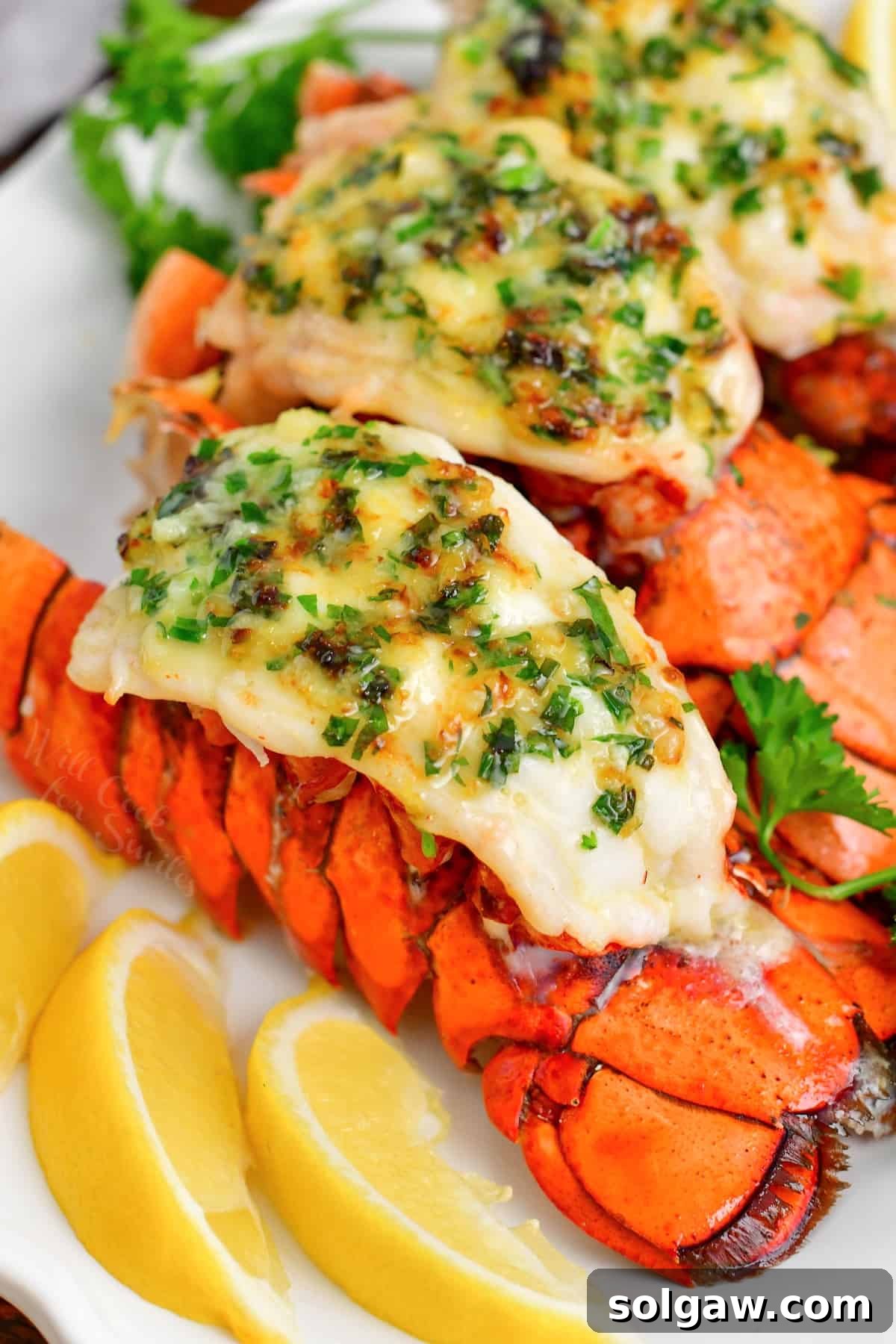
Perfect Broiled Lobster Tails with Garlic Herb Butter: A Gourmet Meal Made Easy
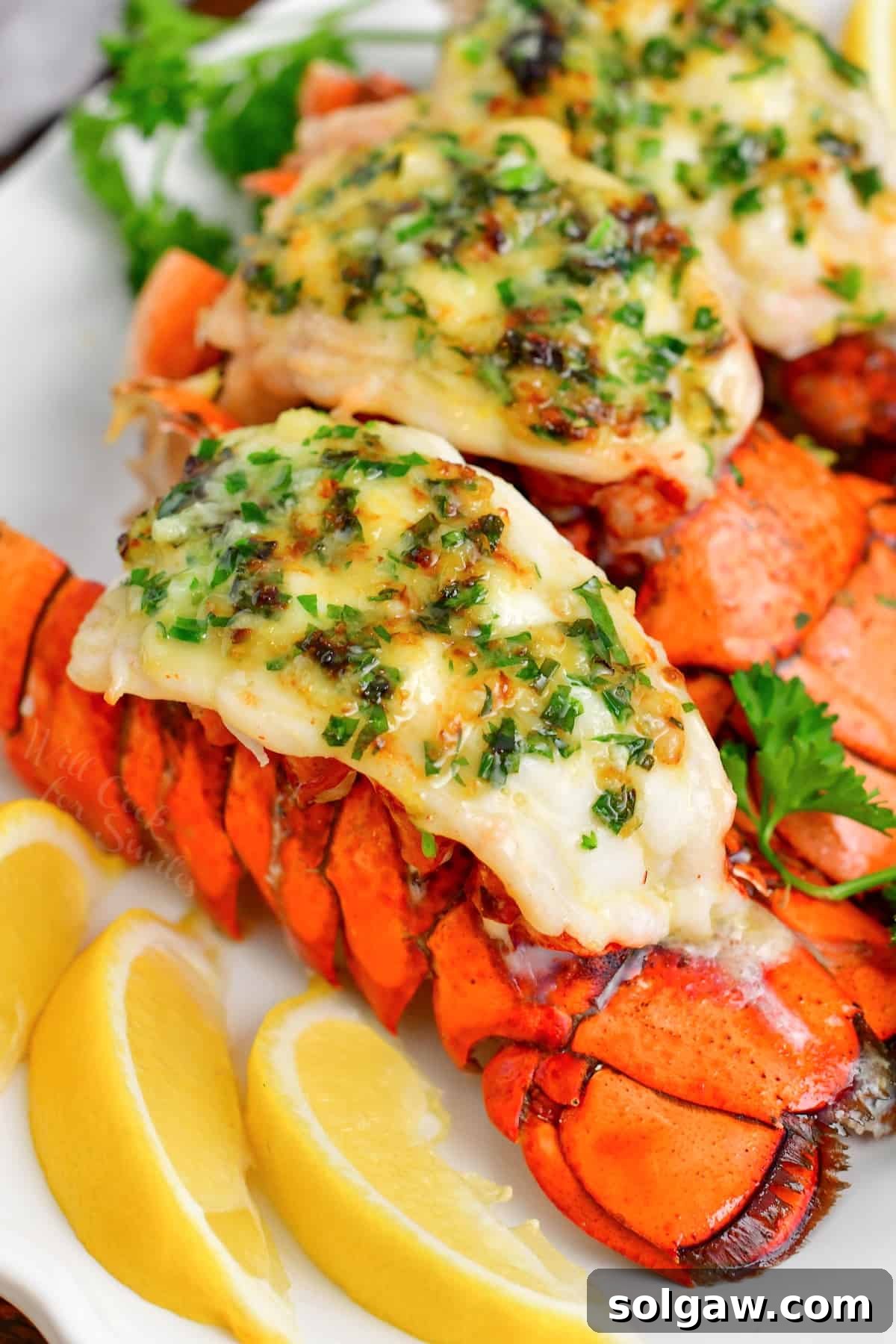
Imagine succulent, tender lobster tails infused with rich garlic herb butter, broiled to perfection in your own kitchen. This isn’t just a dream; it’s an achievable reality with our easy-to-follow guide. Whether you’re planning a romantic dinner, celebrating a special occasion, or simply craving a luxurious seafood experience, these oven-baked lobster tails are guaranteed to impress. We’ve perfected the method to ensure your lobster is always juicy, never rubbery, delivering restaurant-quality taste and texture right at home. Dive into our comprehensive tutorial, complete with expert tips, precise cooking times, and a delicious compound butter recipe that will elevate your dish.
What Our Readers Are Saying!
“I recently found Tristan Da Cunha Lobster tails, about 6 oz each, on sale here in the USA. Having visited Tristan Da Cunha in ’98, I was excited to try them. This recipe is incredibly easy to understand and execute! My wife and my happy tummy both thank you for this fantastic dish!” ~ David
Why Cook Lobster Tails at Home? The Ultimate Indulgence Made Accessible
There’s an undeniable allure to lobster, often synonymous with fine dining and celebratory occasions. While it carries a reputation for being an expensive and complicated dish, especially in high-end restaurants, preparing succulent lobster tails at home is surprisingly affordable and straightforward. Many people shy away from cooking lobster, believing it to be a culinary challenge reserved for professional chefs. However, with the right guidance, anyone can master this luxurious meal.
- Cost-Effective Luxury: Restaurants often mark up lobster significantly. By purchasing lobster tails from your local market or specialty seafood store, you can enjoy this gourmet experience at a fraction of the cost, making it accessible for more frequent enjoyment.
- Simplicity is Key: Despite its fancy facade, lobster tails are remarkably easy to cook. Our recipe focuses on simple, clear steps that guarantee a tender and flavorful result, dispelling the myth of complex preparation.
- Unmatched Flavor and Texture: When cooked properly, lobster meat is sweet, plump, and incredibly juicy. The delicate flavor pairs beautifully with a buttery, garlicky topping, creating a sensory delight that’s hard to beat.
- The Advantage of Lobster Tails: Opting for lobster tails over a whole lobster is a smart choice for both convenience and budget. Tails are generally much cheaper and easier to prepare, eliminating the need to deal with a live lobster or extensive cleaning. They are often available frozen, which is another great way to save money without compromising on quality, as long as they are thawed correctly.
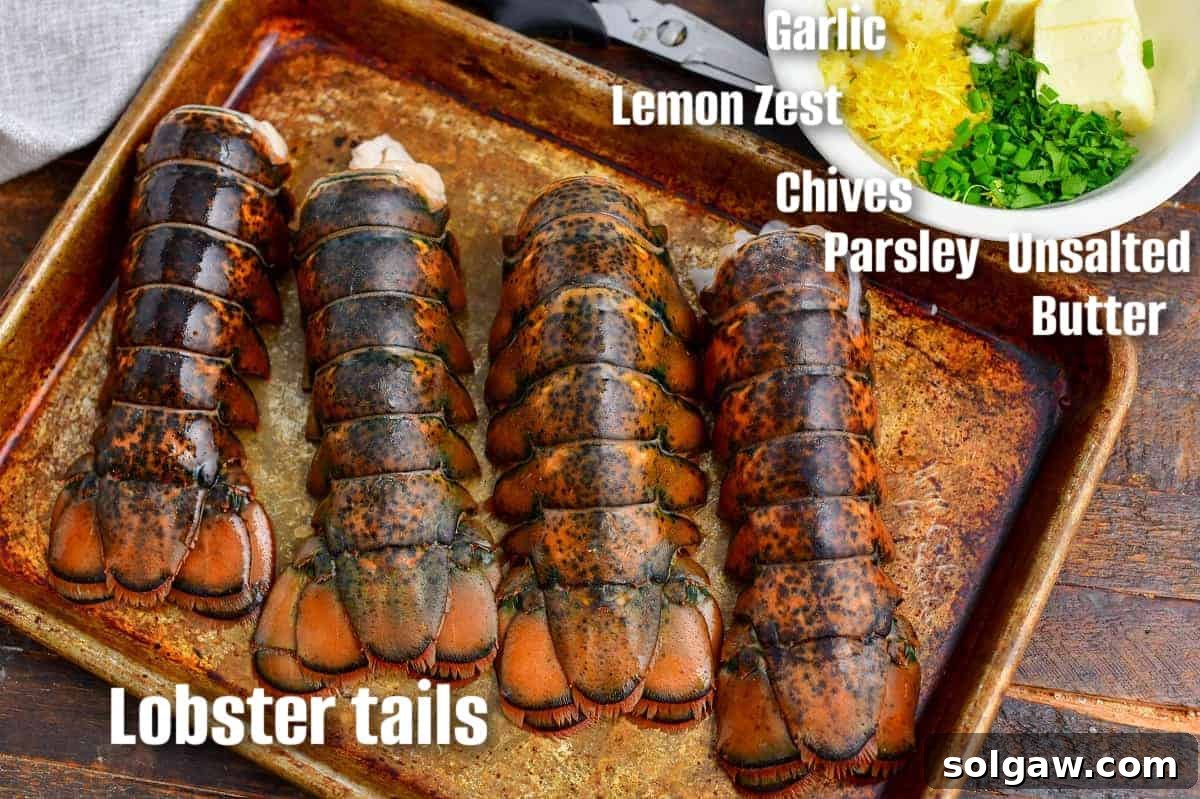
Key Ingredients for the Best Broiled Lobster Tails
Creating the perfect broiled lobster tails begins with selecting high-quality ingredients. Each component in this recipe plays a crucial role in enhancing the lobster’s delicate flavor and ensuring a memorable dining experience.
- Lobster Tails: The star of our dish! Always aim for cold-water lobster tails if possible. Varieties from Maine, Canada, New Zealand, Australia, and South Africa are known for their sweeter, firmer, and more flavorful meat due to slower growth in colder environments. Frozen lobster tails are an excellent and often more accessible option; just ensure they are completely thawed before cooking to ensure even doneness. If using very small tails (5-6 oz each), consider serving two per person for a satisfying portion.
- Unsalted Butter: Butter is the backbone of our flavorful topping. Using unsalted butter gives you complete control over the seasoning, allowing the natural sweetness of the lobster to shine. It’s essential that the butter is softened, not melted, so it can be easily incorporated with the herbs and garlic, creating a smooth, spreadable mixture. If salted butter is your only option, simply reduce or omit any additional salt added to the butter mixture and during seasoning.
- Fresh Garlic Cloves: Fresh garlic is non-negotiable for an aromatic and bold flavor that beautifully complements lobster. Avoid garlic powder or pre-minced garlic from a jar; for a dish this special, the superior taste of freshly minced garlic makes all the difference. Three to four cloves, pressed or finely minced, will provide the perfect pungent kick.
- Fresh Lemon Zest: The zest of a fresh lemon adds a bright, zesty citrus note without the acidity that lemon juice might impart, which could potentially “cook” the delicate lobster meat prematurely. Ensure you only zest the yellow part of the rind, avoiding the bitter white pith underneath. Save the zested lemon for wedges to serve alongside the cooked lobster, offering a refreshing squeeze at the table.
-
Fresh Herbs: Parsley and Chives: A blend of fresh herbs adds incredible freshness, vibrant color, and an extra layer of flavor to your compound butter. Fresh parsley offers a clean, herbaceous taste, while chives contribute a mild, oniony freshness.
- Substitution Tip: Experiment with other fresh herbs like basil for a more Italian flair, or a mix of parsley and dill for a slightly different profile. If chives are unavailable, finely sliced green onions (green parts only) make a good substitute.
Your Essential Guide to Buying the Best Lobster Tails
The quality of your lobster dish starts long before you even begin cooking. Knowing how to select the best lobster tails can make all the difference in taste and texture. Here’s what you need to know:
-
Cold Water Lobster: The Premium Choice
These highly sought-after lobster tails hail from the frigid waters of Maine, Canada, New Zealand, Australia, and South Africa. Their cold habitat results in slower growth, which translates into an incredibly delicate, sweeter, and firmer meat texture. If your budget allows and you have access, cold-water lobster tails are the undisputed best choice for an authentic, superior tasting experience.
-
Warm Water Lobster: A More Accessible Option
Found in the warmer waters off Florida, the Caribbean, and various Latin American countries, warm-water lobsters are generally more affordable and widely available. While they can still be delicious, their meat tends to be less sweet and lacks the firm, delicate texture of their cold-water counterparts. The biggest distinction often lies in the texture; warm-water lobster meat can sometimes be softer or even mushy, even when perfectly cooked, compared to the springy consistency of cold-water varieties.
-
PRO TIP: Avoid Sodium Tripolyphosphate!
Regardless of whether you choose cold or warm water lobster, always inspect the packaging for a crucial detail: avoid buying lobster meat that has been soaked in sodium tripolyphosphate solution. This chemical is an additive used to preserve seafood and extend its shelf life, often applied to older or less-fresh product. While generally recognized as safe in small amounts, it can alter the lobster’s natural texture, making it appear artificially plump and causing it to lose moisture and flavor during cooking. Always look for “all-natural” or “no additives” on the label to ensure you’re getting the freshest, unaltered product.
Using Fresh vs. Frozen Lobster Tails
Your proximity to coastal areas and your budget will largely dictate your choice between fresh and frozen lobster. For many, especially those inland, high-quality frozen lobster tails are the most practical and often superior option compared to “fresh” lobster that has traveled long distances.
If opting for frozen shellfish, proper thawing is critical to preserve the meat’s quality and ensure even cooking. Never cook lobster tails from frozen!
- Best Way to Thaw Frozen Lobster Tails (Slow Thaw): For optimal texture and flavor, transfer frozen lobster tails from the freezer to the refrigerator the night before you plan to cook them. Allow them to slow-thaw overnight. This gradual process helps maintain the integrity of the meat cells, preventing them from becoming waterlogged or mushy. It’s always a good idea to check them an hour or so before cooking to ensure they are fully thawed and pliable.
- Quick Thaw Method (Use in a Pinch): While not ideal for preserving the absolute best texture, this method works when you’re short on time. Place the frozen lobster tails in a large, sealed zip-top bag. Submerge the bag in a large bowl of cold water. Change the water every 10-15 minutes to keep it cold and facilitate thawing. Depending on the size of the tails, this can take anywhere from 30 to 60 minutes. Be aware that rapid thawing can sometimes slightly compromise the meat’s firmness.
How To Butterfly Lobster Tails: The Key to Even Cooking and Presentation
Butterflying lobster tails isn’t just for a beautiful presentation; it’s a technique that allows for more even cooking under the broiler and ensures the compound butter thoroughly coats every succulent bite. Don’t be intimidated; it’s simpler than it looks!
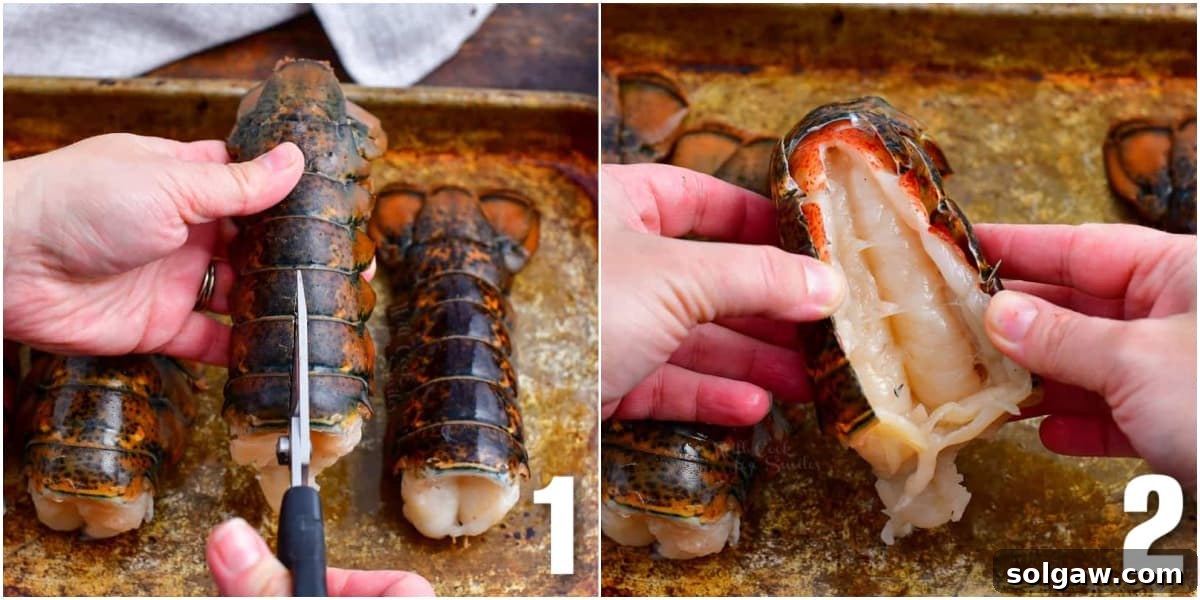
- Gather Your Tools: Your best friend for this task will be a sturdy pair of kitchen shears. They offer superior control and safety compared to a knife when cutting through the tough lobster shell.
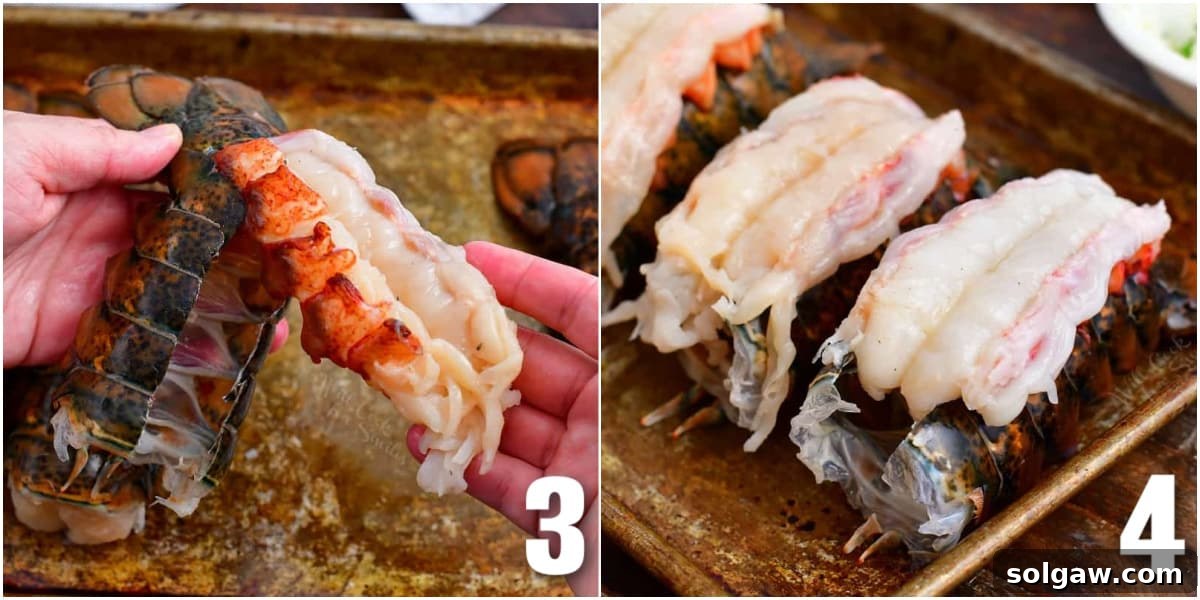
- The Initial Cut: Hold the lobster tail firmly with one hand. Using your kitchen shears, carefully cut straight down the center of the top (hard) shell, starting from the thickest end and stopping just before you reach the tail fin. Be careful not to cut through the bottom shell or the meat underneath.
- Gently Open the Shell: Once you’ve made the cut, use your hands to gently pry open the shell. You might hear a slight crack as the shell ribs on the softer underside separate. The goal is to open it wide enough to access the meat without completely detaching the two halves of the shell.
- Loosen and Lift the Meat: Carefully slide your fingers underneath the lobster meat, gently separating it from the shell walls. Take your time to avoid tearing the delicate meat. Once loosened, gently lift the meat upwards, allowing it to rest on top of the opened shell. It should remain attached at the very base of the tail near the fin. This creates that classic “piggyback” or “butterfly” presentation.
- Presentation and Even Cooking: This butterflying method exposes more of the lobster meat to the heat, allowing it to cook more evenly and quickly under the broiler. It also provides a perfect bed for our delicious garlic herb butter.
- Safety First: Lobster shells can have sharp edges or small spikes, especially on the underside. Consider wearing kitchen gloves to protect your hands from potential pokes or cuts while handling the tails.
How To Make the Best Broiled Lobster Tails Under The Broiler
Broiling is the fastest and most effective way to cook lobster tails, yielding incredibly tender and flavorful results with a beautiful, slightly caramelized crust. The intense, direct heat ensures quick cooking, preserving the lobster’s natural moisture.
- Preheat Your Broiler: Begin by preheating your oven broiler to its highest setting. Position the oven rack approximately 6 inches from the heat source. This distance is crucial: too close and the butter will burn before the lobster cooks; too far, and the lobster might dry out or cook unevenly. A mid-top position is generally ideal.
- Prepare the Lobster Meat: Once your lobster tails are butterflied, gently pat the exposed meat dry with a paper towel. This step is vital as surface moisture can lead to steaming rather than broiling, and it also helps the garlic-herb butter adhere better to the meat. Lightly season the dried lobster meat with a pinch of salt. Remember, the compound butter will also contribute salt, so season sparingly here.
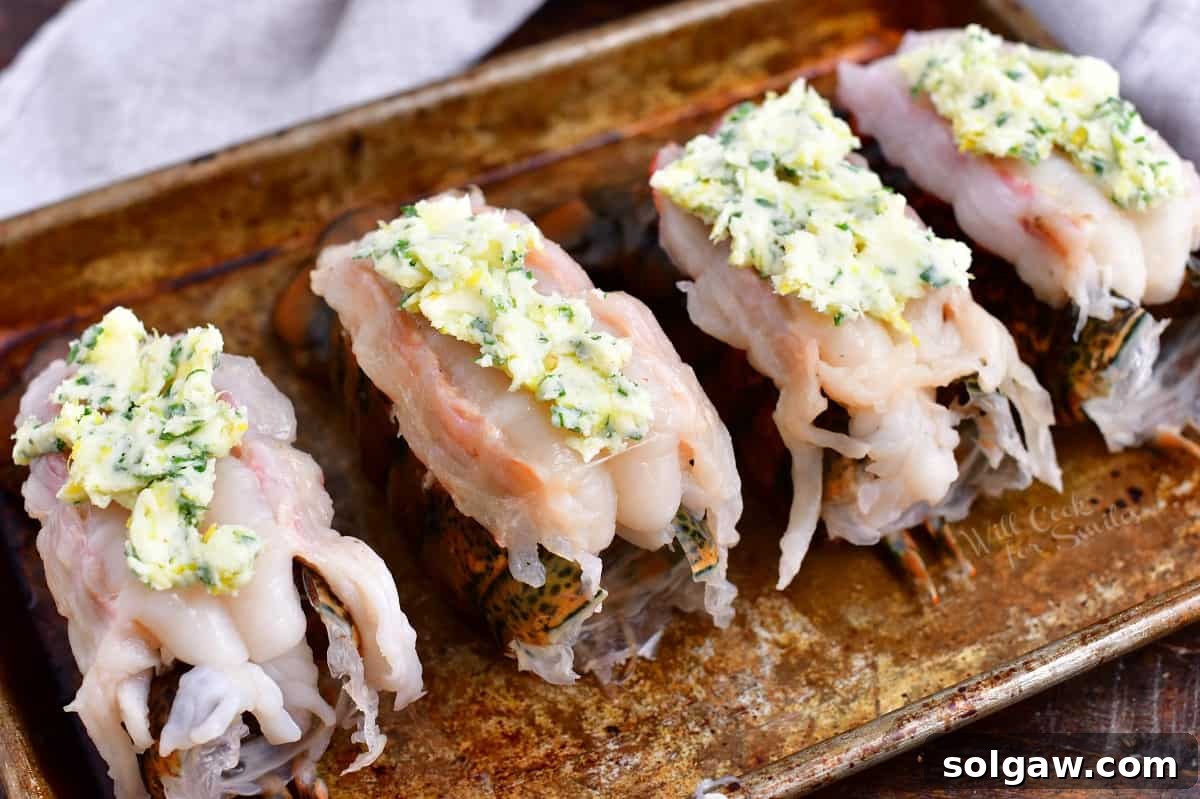
- Apply the Compound Butter: Take your prepared garlic-herb butter and spread it evenly over the top of each lobster tail. Gently press the butter into the meat to ensure it stays in place during broiling. The goal is a generous coating that melts into the lobster, infusing it with flavor, but not so much that it drips excessively onto the pan and causes smoking.
-
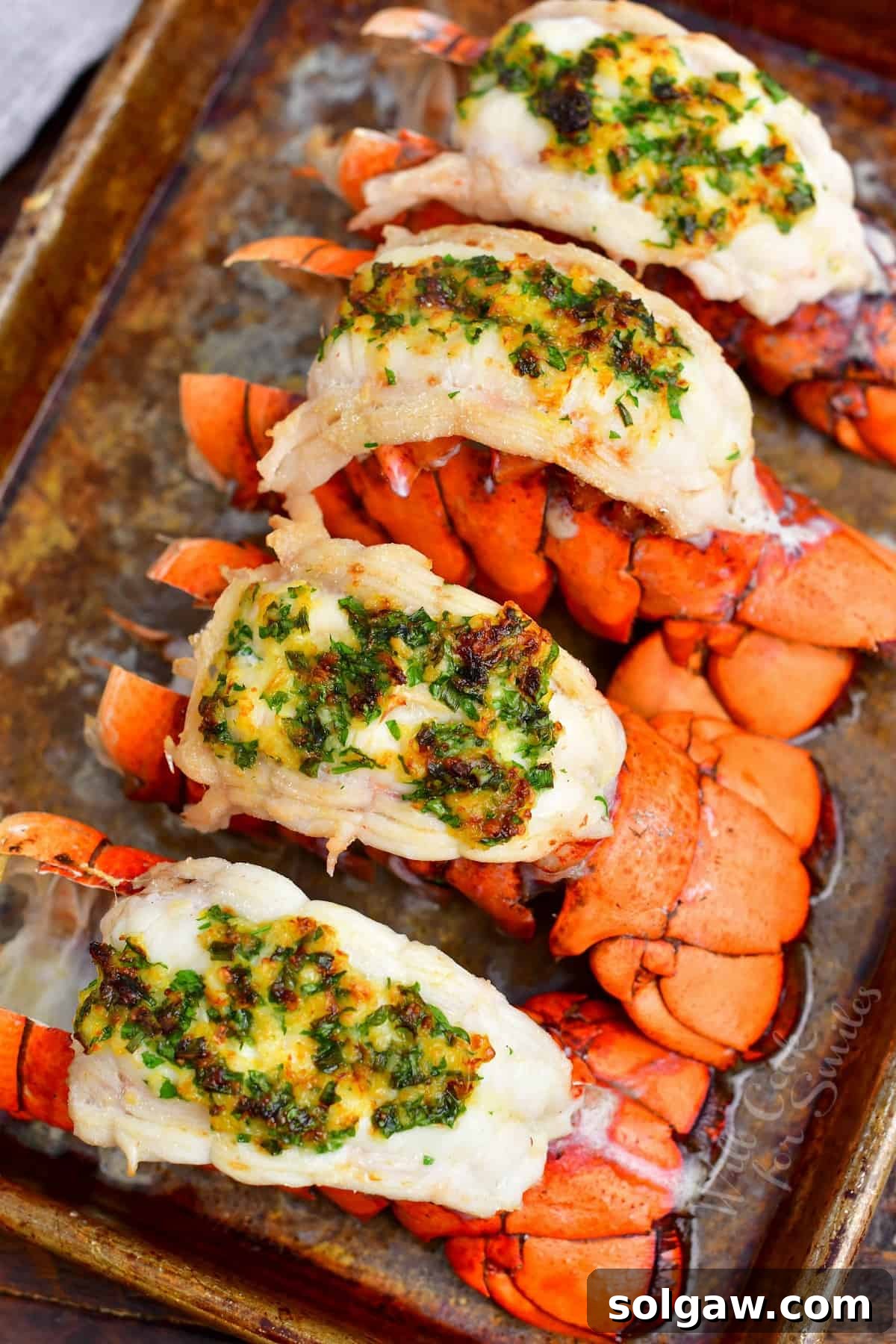
Broil to Perfection: Place the baking sheet with the prepared lobster tails onto the preheated oven rack, centering them under the broiler element. Broil until the lobster shells turn a vibrant bright red, and the meat itself becomes opaque, plump, and firm to the touch.
- Troubleshooting Tip: If you notice the butter or herbs starting to brown too quickly or even burn before the lobster is fully cooked, loosely tent the pan with aluminum foil. This will protect the butter from direct heat while allowing the lobster to continue cooking through.
- Monitor Internal Temperature (Crucial!): The key to perfectly cooked, tender lobster is to avoid overcooking. Lobster meat quickly turns tough and rubbery once it passes its ideal internal temperature. Use a reliable digital meat thermometer and aim for an internal temperature of 145°F (63°C) in the thickest part of the meat (making sure not to touch the shell). As soon as it reaches this temperature, remove the lobster from the oven. Perfectly cooked lobster should be opaque throughout, plump, and firm but still springy and juicy, not stiff or dry. When in doubt, it’s better to undercook slightly and add another minute or two, rather than overcook.
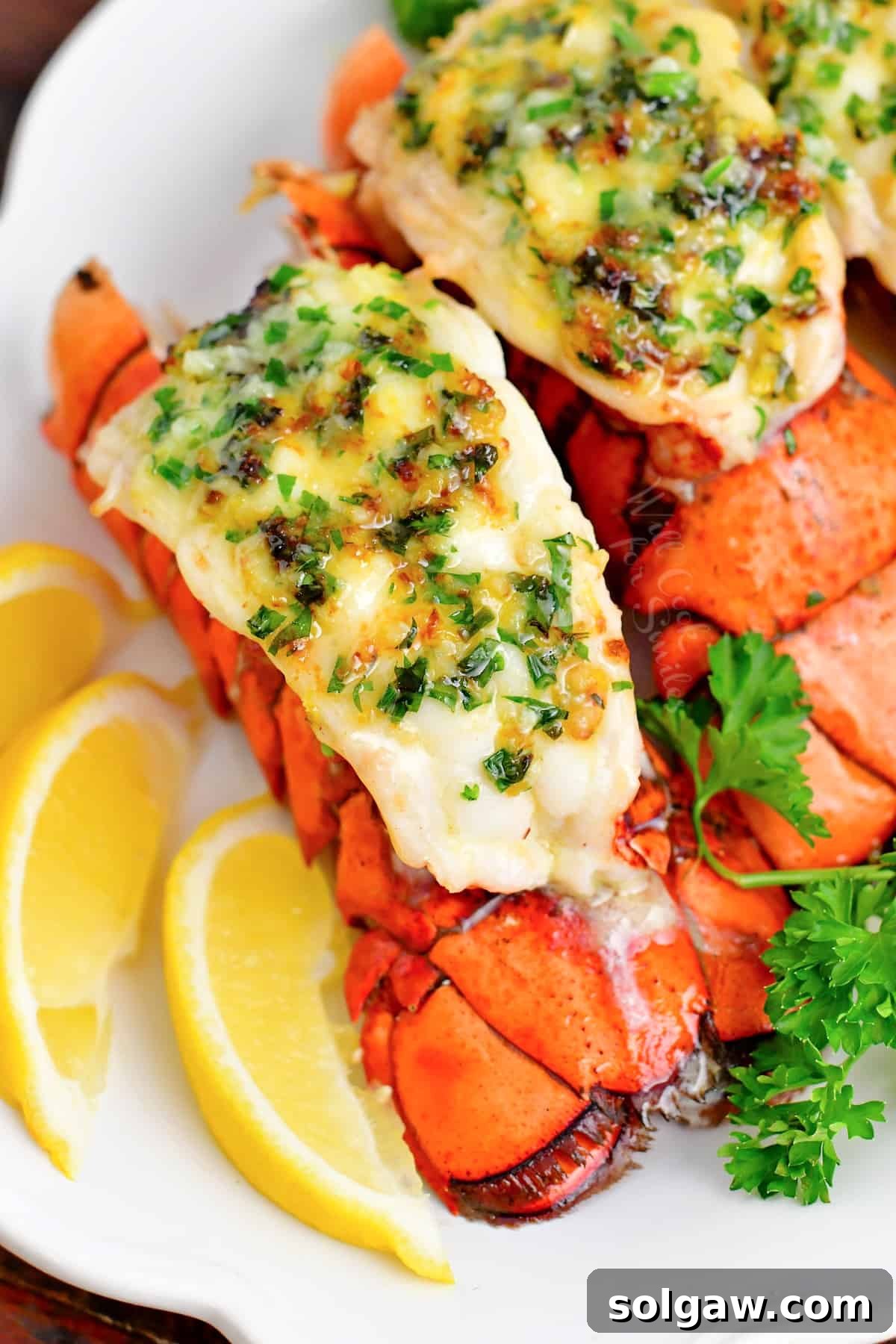
- Finishing Touch and Serve: Once removed from the oven, drizzle any remaining melted garlic-herb butter from the pan over the cooked lobster tails. Serve immediately with fresh lemon wedges for squeezing. Lobster is best enjoyed piping hot, ensuring the most tender texture and vibrant flavor.
Estimated Broil Time By Size
Cooking times can vary slightly depending on your oven and the exact distance from the broiler element. As a general guideline, calculate approximately 1 minute per ounce of lobster tail when broiling, always keeping an eye on the internal temperature of 145°F (63°C):
- 3-4 oz (Small): 5-8 minutes
- 5-6 oz (Medium): 7-10 minutes
- 7-9 oz (Large): 10-12 minutes
- 10 oz+ (Extra Large): 12-15+ minutes
Expert Tips for Perfect Lobster Tails and Troubleshooting Common Issues
Achieving perfectly cooked lobster tails is all about attention to detail. These expert tips will help you master the technique and troubleshoot any common challenges you might encounter.
- Thoroughly Dry the Lobster Meat: This is a simple yet crucial step. Before seasoning or applying the butter, ensure the butterflied lobster meat is thoroughly patted dry with paper towels. Excess surface moisture can cause the butter to slide off during cooking and can lead to steaming instead of a beautiful broil. If you still struggle with butter adherence, just do your best to firmly press the compound butter onto the meat.
- Broiler Rack Position Matters Immensely: As mentioned, keep your oven rack about 6 inches from the broiler element. This distance is a sweet spot. If the rack is too close, the intense heat will likely burn your butter and herbs before the lobster meat can cook through. If it’s too far, the lobster will take too long to cook, potentially drying out and becoming rubbery. Adjusting the rack ensures even cooking and ideal caramelization.
- Constant Vigilance During Broiling: Broilers vary significantly from oven to oven in terms of heat intensity and distribution. Never walk away from the oven while broiling lobster. Stay nearby and keep a close eye on the tails, especially during the last few minutes, to prevent scorching or overcooking. Things can change very quickly under the broiler.
- Avoid Overcooking – The #1 Mistake: This cannot be stressed enough: overcooked lobster is tough, chewy, and rubbery. It’s the most common pitfall when cooking this delicate seafood. The moment the meat turns opaque and reaches an internal temperature of 145°F (63°C) in its thickest part, it’s done. Invest in an instant-read thermometer for precision. If you’re unsure, it’s always better to pull the lobster a minute early and check; you can easily put it back in for another minute if needed.
- If the Butter Starts Browning Too Fast: If you notice the garlic-herb butter or the delicate tips of the lobster meat browning or charring too quickly, don’t panic. Loosely tent the entire baking pan with aluminum foil for a minute or two. This will shield the top from direct heat, allowing the lobster to continue cooking internally without burning the surface. Remove the foil once the browning has slowed, and continue broiling until done.
- Serve Immediately for Best Texture: Lobster is at its absolute peak of juiciness and tenderness right when it comes out of the oven. If left to sit for too long, it can rapidly lose moisture and firm up, diminishing the gourmet experience. Have your side dishes ready and serve the lobster piping hot.
- Smart Prep for Guests (Make Ahead Options): While broiling should always be done just before serving, you can prepare certain elements in advance. Butterfly your lobster tails up to a day ahead and store them tightly covered in the refrigerator. You can also mix your garlic-herb compound butter in advance and keep it chilled. This “mise en place” strategy allows for a stress-free cooking process when entertaining.
Creative Flavor Variations for Your Lobster Tails
While our classic garlic herb butter is divine, don’t hesitate to customize your broiled lobster tails with these exciting flavor variations to suit your palate or occasion:
- Garlic Parmesan Lobster: For a savory, cheesy twist, add 2-3 tablespoons of freshly grated Parmesan cheese to your compound butter mixture. Finish with an extra sprinkle of Parmesan after broiling for a golden, irresistible crust.
- Spicy Cajun Lobster: Introduce a gentle heat and smoky depth by mixing ½-1 teaspoon of Cajun seasoning or smoked paprika into the butter. A tiny pinch of cayenne pepper can amplify the spice level if desired.
- Lemon Dill Lobster: Swap out the parsley for fresh dill in your butter mixture. After broiling, add a fresh squeeze of lemon juice (in addition to the zest in the butter) for an extra bright, herbaceous, and zesty finish.
- Italian Herb Lobster: Create an Italian-inspired butter by using a generous mix of finely chopped fresh parsley, basil, and oregano. Instead of drizzling with extra melted butter, finish with a high-quality extra virgin olive oil after cooking for a fragrant, Mediterranean touch.
- Simple Butter & Lemon (Steakhouse Classic): For those who prefer a more traditional, minimalist approach, skip the herbs entirely. Simply use unsalted butter and garlic, and serve the broiled lobster with plenty of fresh lemon wedges and perhaps a small dish of warm melted butter for dipping. This classic combination allows the natural sweetness of the lobster to be the star.
Frequently Asked Questions About Broiled Lobster Tails
No, there’s generally no need to rinse lobster meat. Rinsing can actually introduce excess moisture, which can negatively affect the texture and cause steaming rather than broiling. If you feel it’s necessary, a quick rinse under cold water is fine, but always be sure to thoroughly pat the lobster dry with paper towels before seasoning and cooking.
Yes, when purchasing lobster tails, their weights are typically listed and measured with the shell on. This is the weight you should use when calculating cooking times and planning portions for your meal. The shell accounts for a significant portion of the total weight, but it’s the standard measurement in retail.
Absolutely! Frozen lobster tails work exceptionally well for this recipe and are often more accessible and economical than fresh options. The most important step is to ensure they are fully thawed before you begin cooking. For best results, thaw them slowly in the refrigerator overnight. Never cook lobster tails from a frozen state, as this will lead to uneven cooking and a rubbery texture.
The ideal number of lobster tails per person depends on their size and whether lobster is the main course or part of a larger meal (like “surf and turf”). For most common tail sizes, which typically range from 5-8 oz, we recommend planning for two tails per person to ensure a satisfying serving. If you manage to find very large, jumbo tails (e.g., 14-20 oz), one might be sufficient as a main course.
Yes, you can certainly do some prep work in advance to make your cooking experience smoother. You can butterfly the lobster tails (leaving the meat attached at the base) and prepare your garlic herb butter mixture up to a day before you plan to cook. Store the butterflied lobster tails in an airtight container in the refrigerator, and keep the compound butter separately chilled. For optimal flavor and texture, however, always broil the tails just before you are ready to serve them.
Sodium tripolyphosphate is a chemical additive used to help seafood retain moisture, making it appear plumper and heavier. While it can extend shelf life, it can also lead to a less natural taste and a mushier texture in lobster. It can also cause the lobster to release more water during cooking, diluting its flavor and making it harder to achieve a nice sear or broil. Always check labels and avoid products containing this additive for the best quality.
What to Serve with Your Perfect Broiled Lobster Tails
Pairing your exquisite lobster tails with the right side dishes can elevate your meal from delicious to truly unforgettable. The delicate, sweet flavor of lobster shines when accompanied by simple, comforting sides that don’t overpower it. Here are some fantastic suggestions:
- Buttery & Creamy Favorites: For a truly indulgent and classic pairing, consider rich and creamy options. Garlic mashed potatoes, a luscious parmesan risotto, or a decadent creamy stovetop mac and cheese are always crowd-pleasers and feel especially fitting for a special occasion. Their comforting textures and mild flavors beautifully complement the lobster.
- Light & Fresh Vegetables: If you prefer something lighter to balance the richness of the buttered lobster, vibrant vegetable sides are perfect. Try crisp roasted asparagus, savory green beans with bacon and onions, or a fresh, crisp salad like a Greek salad or classic Caesar salad. These offer a refreshing contrast and add essential nutrients.
- Bread for Dipping: Don’t forget something to soak up all that incredible garlic herb butter! Warm, crusty bread or toasted garlic bread is an absolute must-have at the table.
- “Surf and Turf” Combinations: For the ultimate celebratory meal, combine your broiled lobster tails with a perfectly cooked steak. A tender filet mignon or a flavorful oven-baked steak makes for an impressive surf and turf feast. If chicken is preferred, a parmesan herb stuffed chicken or sun-dried tomato feta stuffed chicken would also be a fantastic accompaniment.
- Wine Pairings: To complete the gourmet experience, consider pairing your lobster with a crisp, unoaked Chardonnay, a refreshing Sauvignon Blanc, or a light-bodied Pinot Grigio. The acidity and brightness of these wines beautifully cut through the richness of the butter and complement the sweetness of the lobster.
Storing Leftover Lobster and Creative Ways to Enjoy Them
While broiled lobster tails are best enjoyed immediately, it’s possible to store leftovers and even transform them into new, delicious meals. Proper storage is key to maintaining quality.
- Refrigeration: Store any leftover cooked lobster meat in an airtight container in the refrigerator for up to 2 days. For the best results and to prevent the meat from drying out, it’s highly recommended to remove the meat from the shell before storing.
- Reheating: To reheat, warm the lobster gently. You can place it, covered, in a low oven (around 300°F / 150°C) for a few minutes until just warm, or briefly sauté it in a skillet with a touch of butter over low heat. Avoid using the microwave if possible, as it tends to overcook lobster quickly, making it tough and rubbery.
-
Creative Leftover Ideas: Cold leftover lobster meat is incredibly versatile and delicious in various dishes. Here are some fantastic ways to repurpose it:
- Lobster Rolls: Chop the cold lobster meat and mix it with a light mayonnaise dressing, a squeeze of lemon, and fresh herbs for a classic lobster roll.
- Lobster Mac and Cheese: Fold the chopped lobster into a creamy cheese sauce for a luxurious lobster mac and cheese.
- Lobster Pasta: Add it to a light cream sauce or a simple garlic and olive oil sauce with pasta for a quick lobster pasta dish.
- Lobster Risotto: Stir it into a rich lobster risotto during the last few minutes of cooking.
- Salads: Simply add cold chopped lobster to a fresh green salad for an elevated lunch.
PIN THIS RECIPE FOR LATER
DID YOU MAKE THIS RECIPE? Please leave a 🌟 star rating! Let me know how you liked it by leaving a 📝 comment below or share and tag me on social media @willcookforsmiles. DON’T FORGET to subscribe to my newsletter for more delicious recipes!
Lobster Tails with Garlic Herb Butter Recipe
Easy broiled lobster tails topped with a vibrant garlic, lemon, and herb butter mixture. These tender and juicy lobster tails are cooked under the broiler for a restaurant-style finish, all ready in about 30 minutes.
Pin Recipe
Watch Video
Rate This Recipe
Course: Appetizer, Dinner, Main Course
Cuisine: American, Mediterranean, Seafood
Diet: Gluten Free
Prep Time: 20 minutes
Cook Time: 10 minutes
Total Time: 30 minutes
Servings: 2
Calories: 409 kcal
Author: Lyuba Brooke
Ingredients
- 4 lobster tails
- 6 tbsp unsalted butter, softened
- 2 tbsp minced chives
- 2 tbsp minced parsley
- 1 lemon – zest only
- 3-4 garlic cloves, pressed or finely minced
- Salt, to taste
Instructions
How to prepare the butter mixture:
- Pull unsalted butter out of the refrigerator, measure the right amount, and place it in a small bowl. Leave it on the counter for about 30 minutes to let it soften. (Alternatively, soften in the microwave on a low setting, ensuring it does not melt completely.)
- Add lemon zest, minced chives, minced parsley, pressed garlic, and a pinch of salt to the softened butter. Mix thoroughly until all ingredients are well incorporated and the butter is evenly flavored. Set aside.
How to butterfly a lobster tail:
- Hold a lobster tail firmly. Using sturdy kitchen shears, cut straight down the center of the top (hard) shell, starting from the thickest end and stopping just before you reach the tail fin. Be careful not to cut through the bottom shell or the meat.
- Gently pull the cut shell apart with your hands. You may hear small cracks as the ribs on the softer underside separate. The goal is to open the shell without breaking it into two separate pieces. (You can wear gloves to protect your hands from potential spikes on the lobster’s underbelly.)
- Use your fingers to carefully and gently pull the lobster meat away from the inside walls of the shell.
- Once loosened, gently lift the meat up to rest on top of the opened shell. Ensure the meat remains attached to the very end of the tail at the fin. This creates the classic “piggyback” presentation.
- Repeat this process for all remaining lobster tails. Place the butterflied tails on a baking sheet.
How to broil lobster tails:
- Preheat your oven broiler to its highest setting. Move the oven rack to the middle-top position, ensuring there are about 6 inches between the top of the lobster meat and the broiler element.
- Pat the butterflied lobster meat thoroughly dry with a paper towel to remove any excess moisture. Lightly season the meat with a small amount of salt all around, keeping in mind the compound butter also contains salt.
- Evenly spread about 2/3 of the prepared garlic herb butter mixture over the exposed lobster meat on each tail. Reserve the remaining butter for finishing after baking.
- Place the baking sheet with the lobster tails under the preheated broiler, centering them for even heat. Broil until the lobster meat turns opaque and white throughout, and the shells become bright red. The cooking time will vary depending on the size of your lobster tails.
- Smaller tails (3-6 oz) may take 6-8 minutes.
- Medium tails (7-9 oz) typically require 10-12 minutes.
- Larger tails (10 oz+) might take 12-14 minutes or longer.
- To guarantee your lobster meat is perfectly cooked and not overdone, use a digital instant-read meat thermometer. Insert the thermometer into the thickest part of the meat, making sure not to touch the shell. The internal temperature of cooked lobster meat should reach 145°F (63°C).
Finishing and Serving:
- Once cooked, gently melt the remaining butter mixture (if it has solidified) and brush or drizzle it generously over each lobster tail.
- Serve immediately with fresh lemon wedges for squeezing. Enjoy your tender, juicy, and flavorful broiled lobster!
Notes
- When buying lobster tails: Remember to avoid buying lobster meat that has been soaked in sodium tripolyphosphate solution. This chemical can negatively impact the meat’s texture and flavor. Always look for “all-natural” labels.
- Prep Ahead: While it’s best to cook just before serving, you can butterfly the tails (without pulling the meat fully out) and prepare the butter mixture up to a day in advance. Cover the butterflied tails airtight and refrigerate. Keep the butter mixture chilled. Transfer to the counter about 30 minutes before baking to allow the butter to soften slightly.
- How Many Per Person: Unless you find jumbo-sized tails (14-20 oz), plan on two lobster tails per person. Most common sizes range from 5-12 oz, and two per person will provide a satisfying portion.
- How Long To Cook Lobster Tails: A good rule of thumb is 1 to 1.5 minutes per ounce for approximate broiling time. Always verify doneness by ensuring the meat is completely opaque and the shell is bright red. The most accurate indicator is an internal temperature of 145°F (63°C) in the thickest part of the meat.
Nutrition
Calories: 409kcal | Carbohydrates: 2g | Protein: 22g | Fat: 35g | Saturated Fat: 22g | Trans Fat: 1g | Cholesterol: 251mg | Sodium: 543mg | Potassium: 317mg | Fiber: 1g | Sugar: 1g | Vitamin A: 1524IU | Vitamin C: 12mg | Calcium: 137mg | Iron: 1mg
Tried this recipe?
Mention @willcookforsmiles or tag #willcookforsmiles!
More Indulgent Lobster Recipes To Try
If you’ve fallen in love with cooking lobster, here are more incredible recipes to explore:
- Classic Lobster Roll
- Decadent Lobster Mac and Cheese
- Luxurious Lobster Pasta
- Creamy Lobster Risotto
This recipe was originally published on Will Cook For Smiles in February 2021.