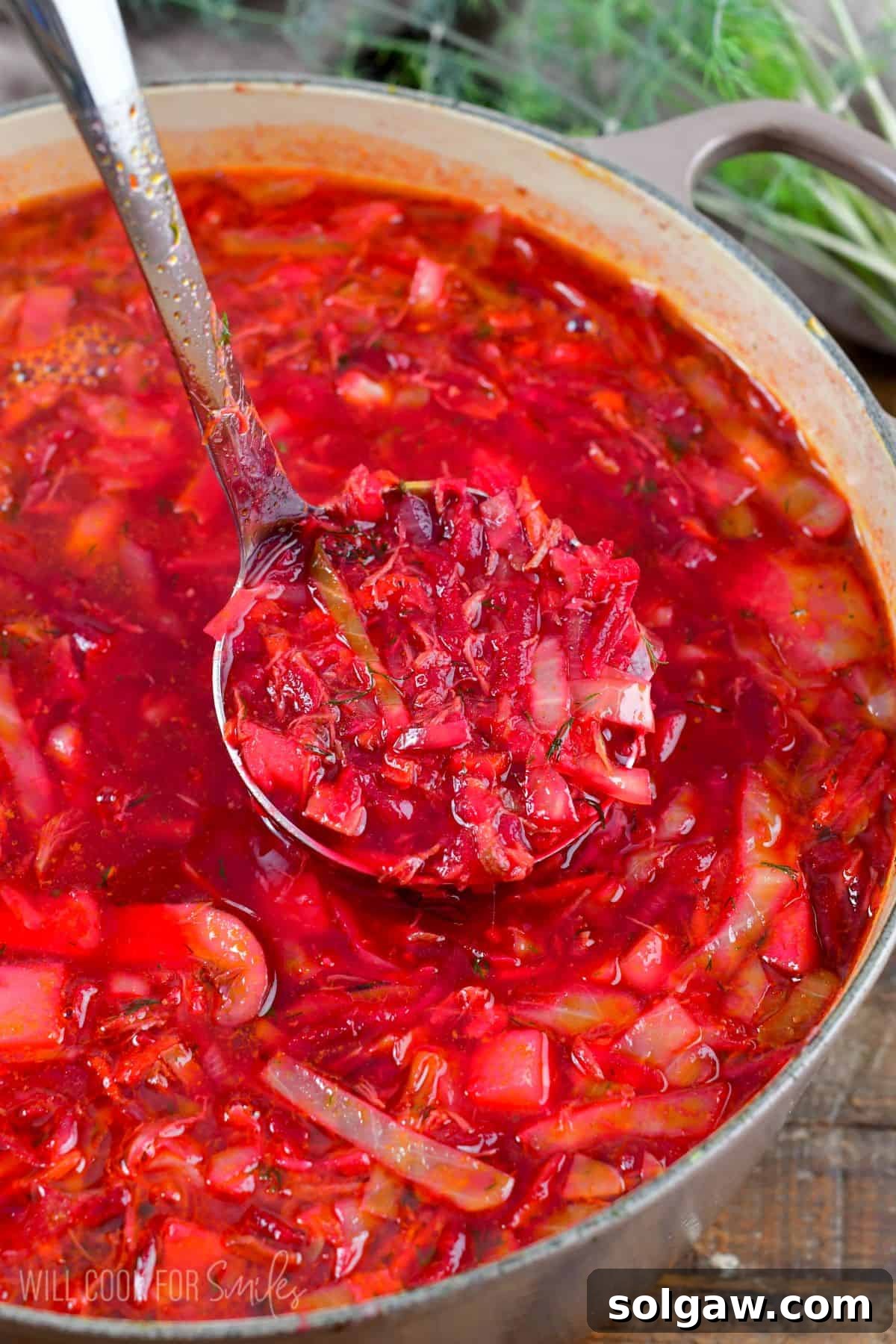
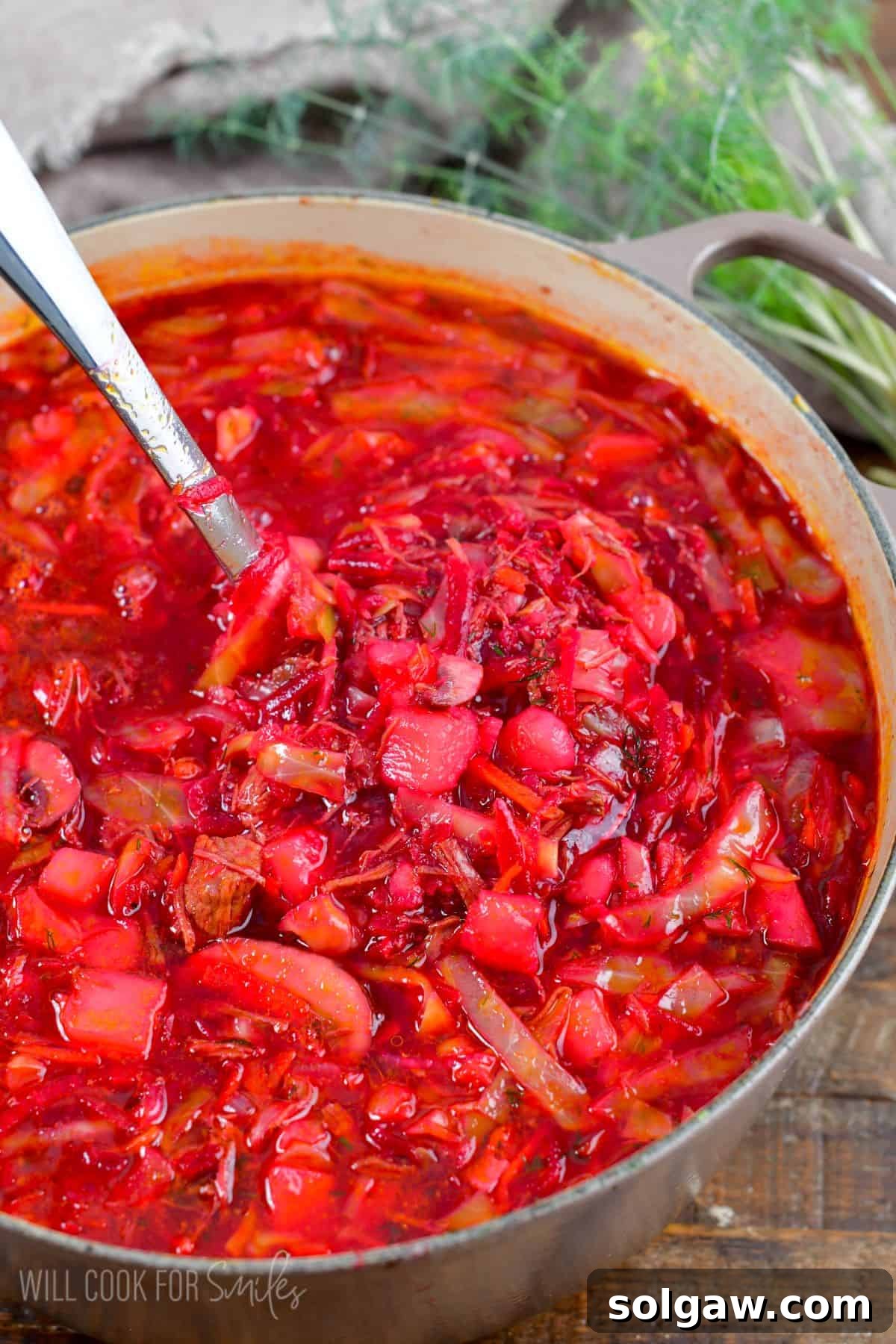
There are certain dishes that transcend mere recipes to become woven into the fabric of a culture, a family, and a personal history. For me, as a native Russian, this authentic cabbage and beet soup – lovingly known as Borscht – is precisely one such dish. It was a cherished household staple throughout my childhood, a comforting aroma filling our home, and one of the very first culinary creations I proudly mastered. My unique privilege came from learning this traditional recipe directly from my mother, a professional chef who meticulously passed down the rich traditions and nuanced flavors of Eastern European cuisine to me. With over two decades of dedicated experience perfecting this hearty, nutritious, and deeply satisfying soup, I’ve refined a unique approach and developed expertise that consistently delivers a remarkably rich and flavorful Borscht every single time. Get ready to discover the secrets to a truly unforgettable homemade Borscht, known for its vibrant ruby-red color and comforting taste, perfect for any season.
Featured Comment
“Thank you! This recipe is worth all the effort. Delicious!” ~Tamara
What is Borscht Soup? Unveiling a Culinary Gem
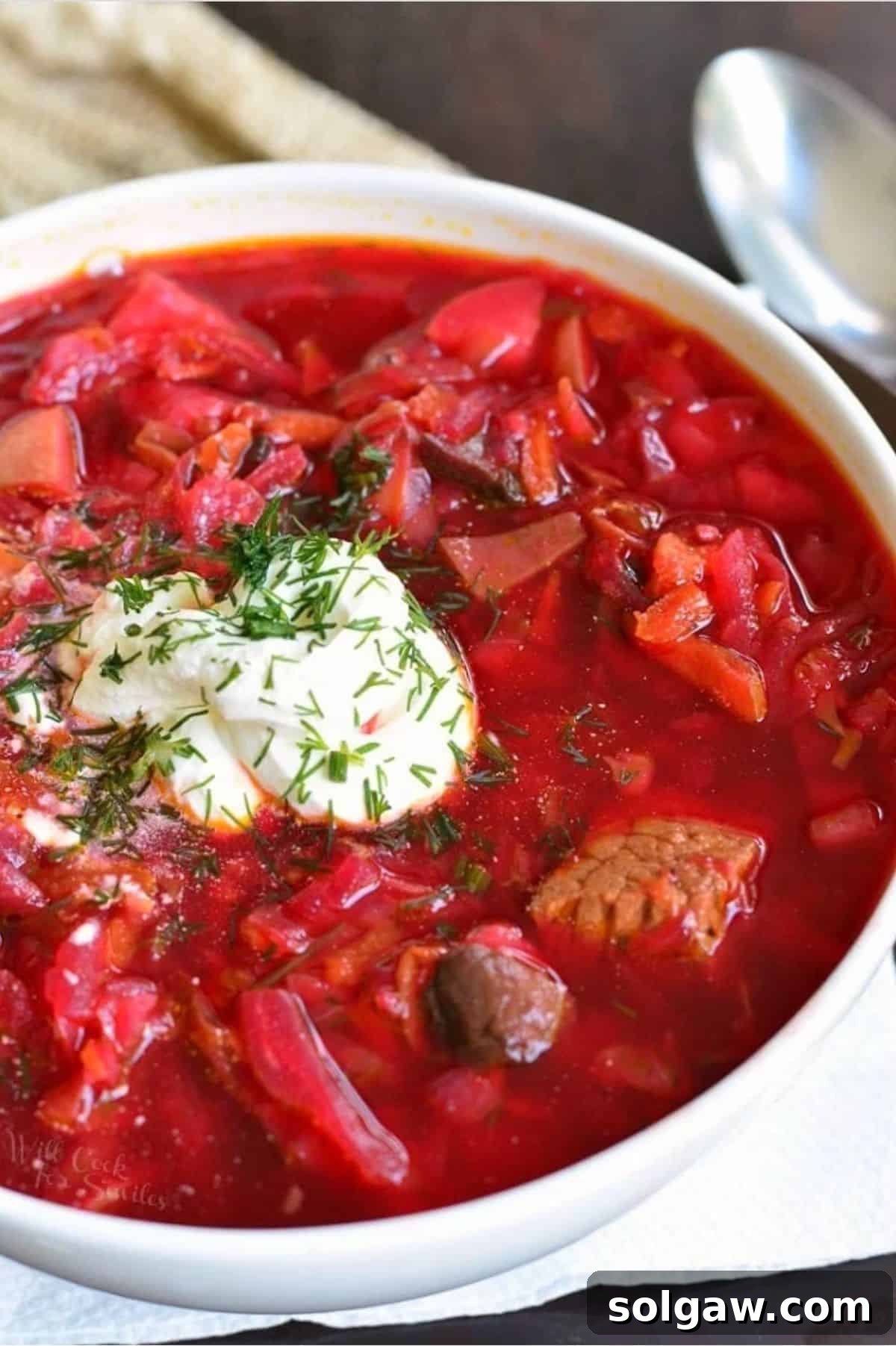
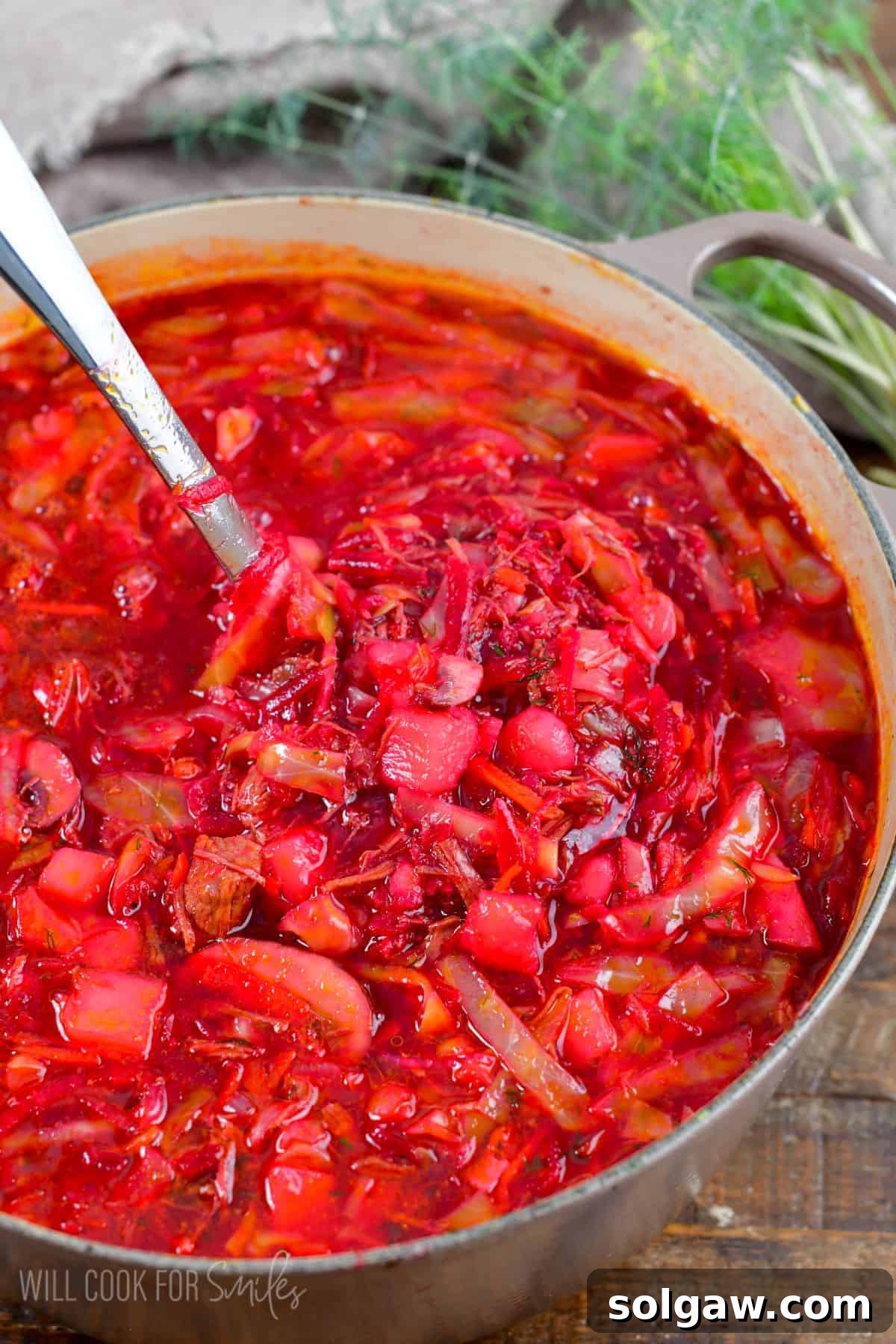
Borscht is far more than just a soup; it’s a culinary icon, a vibrant symbol of Ukrainian heritage deeply cherished across Eastern Europe and beyond. At its heart, this traditional Ukrainian soup is a harmonious blend of tender beef, crisp cabbage, earthy beets, and a medley of other garden-fresh vegetables. Its most distinguishing feature is undoubtedly its breathtaking ruby-red hue, a visual testament to the generous addition of beets that also lend it a subtly sweet and complex flavor. While the core ingredients—cabbage, beets, and beef—are non-negotiable for a classic Borscht, the beauty of this soup lies in its adaptability. You have the freedom to customize other vegetables to suit your preference or seasonal availability. For instance, while often included, mushrooms and potatoes can be omitted if you’re not a fan or simply wish to lighten the soup. Conversely, experimenting with additions like leek and parsnips can introduce exciting new layers of flavor and aroma, making each pot of Borscht uniquely yours. This hearty and healthy creation offers not just sustenance, but a comforting warmth that has nourished generations.
Unlocking Flavor: Key Ingredient Notes and Essential Tips
Crafting the perfect Borscht begins with selecting and preparing the right ingredients. Here’s a detailed guide to the key components that will elevate your soup from good to truly exceptional:
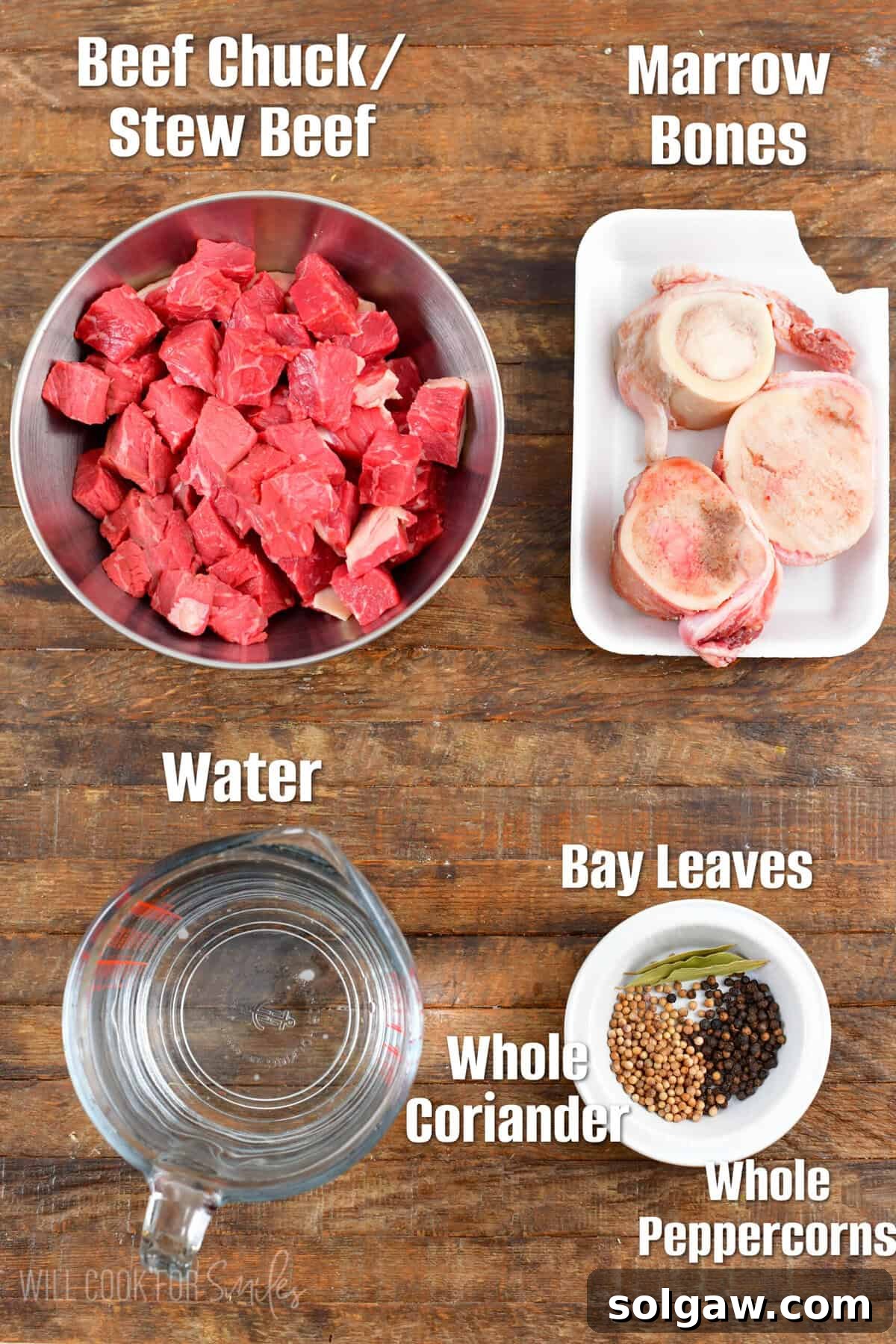
Beef Selection for a Rich Broth: For the most flavorful and tender beef in your Borscht, “stew beef,” commonly known as chuck roast, is your ideal choice. This cut, while initially tough, is budget-friendly and boasts excellent marbling and connective tissue. These elements, when subjected to slow cooking, break down beautifully, rendering the meat incredibly tender and infusing the broth with unparalleled depth and richness. Avoid quick-cooking cuts, as they won’t yield the same complex flavor. You can purchase a whole chuck roast and cut it into approximately 1-inch chunks yourself, or opt for pre-cut packages to save time.
The Power of Marrow Bones (Highly Recommended): Don’t underestimate the impact of including marrow bones in your beef stock. These culinary treasures are packed with nutrients, contribute significantly more flavor, and add a luxurious richness to the broth. The marrow slowly dissolves, enriching the liquid with gelatin and a savory depth that processed broths simply cannot replicate. Remember to remove and discard them once the stock is fully cooked and has imparted all its goodness.
Whole Spices for Purity of Flavor: When it comes to peppercorns and coriander, always opt for whole spices rather than ground varieties for your stock. Whole spices allow their flavors to gently infuse the broth over time, and crucially, they can be easily strained out at the end. Using ground spices would make your broth cloudy and introduce a gritty texture, compromising the smooth, clean finish that is characteristic of a well-made Borscht.
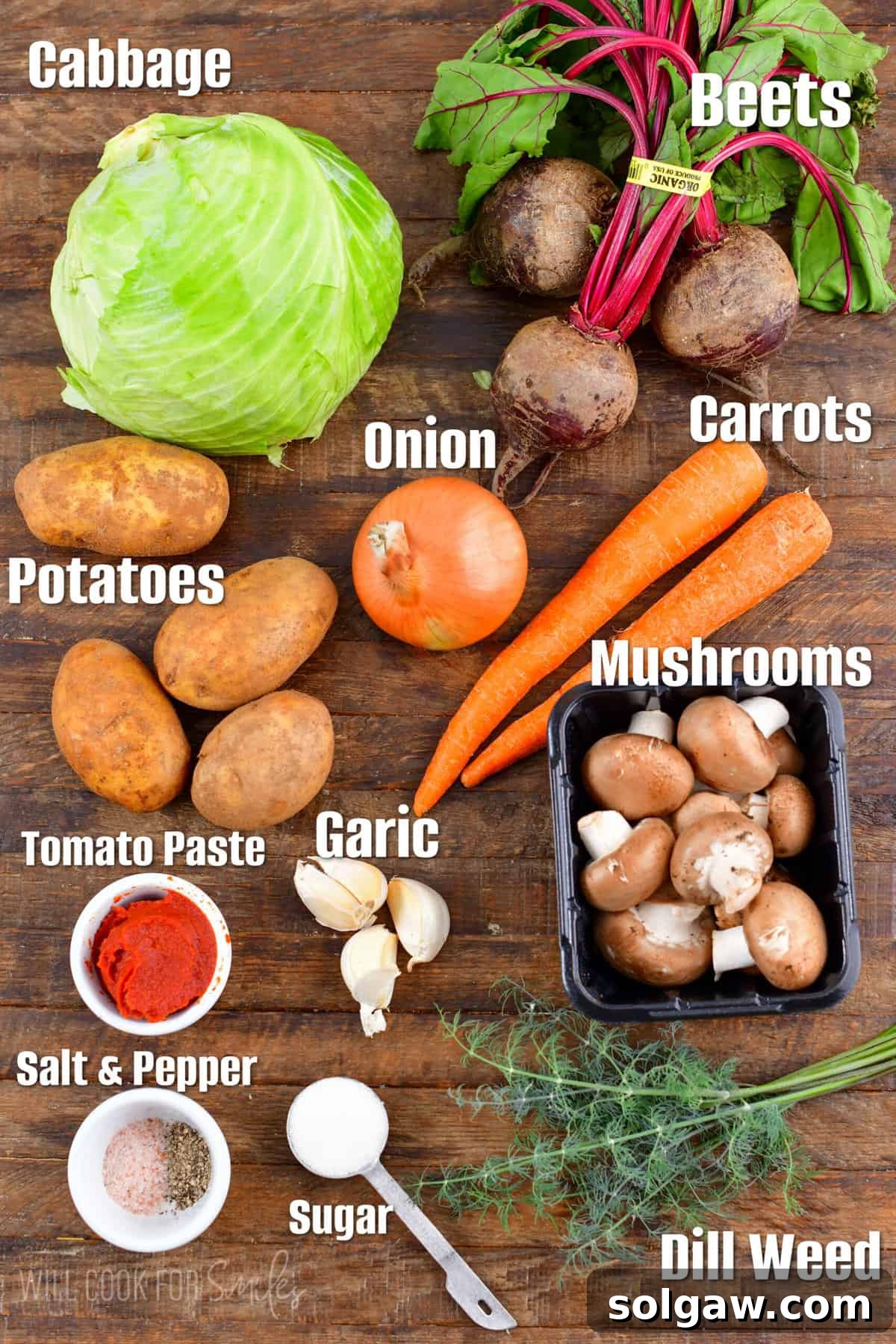
Choosing the Right Cabbage: For Borscht, green cabbage, preferably small to medium in size, offers the best texture and sweetness. Its leaves soften perfectly without becoming mushy. If a large head of cabbage is all you can find, simply use the required amount for your soup and repurpose the leftovers. It’s excellent for quick and delicious dishes like Fried Cabbage or Colcannon, ensuring nothing goes to waste.
Potatoes for Perfect Texture: Idaho potatoes, also known as russet or baking potatoes, are the superior choice for Borscht. Their high starch content ensures they cook down to a wonderfully soft and fluffy consistency, absorbing the rich flavors of the soup beautifully. This contrasts with waxy potatoes, which tend to hold their shape more but offer less of that desirable melt-in-your-mouth texture.
Tomato Paste vs. Sauce: This distinction is crucial. Always use tomato paste, not tomato sauce. Tomato paste is highly concentrated, thicker, and boasts a much richer, deeper tomato flavor. It provides a foundational umami note and contributes to the soup’s overall color without making it watery or overly acidic.
Fresh Garlic is Non-Negotiable: For the most authentic and robust flavor, always use fresh garlic. Pre-minced garlic often contains preservatives that alter its natural taste and aroma, resulting in a significantly different profile. A garlic press is an excellent tool to quickly and easily mince fresh cloves, saving you time without compromising on flavor.
Refer to the comprehensive recipe card below for a complete list of ingredients and detailed instructions.
Mastering the Hue: My Secret To Bright Red Borscht
The signature vibrant, ruby-red color is one of Borscht’s most captivating features. Achieving and maintaining this beautiful hue isn’t difficult once you know a few simple tricks that I’ve perfected over years of cooking this soup:
- Never Add Raw, Grated Beets Directly: This is arguably the most important rule. If you add raw, grated beets to the soup, they will quickly lose their color, turning the entire pot a dull, muddy brown. The secret is to cook them separately.
- Cook Beets Whole and in Their Skin: To preserve their vivid color and natural sweetness, beets must be cooked whole and unpeeled. I recommend adding them to the pot about halfway through cooking your beef stock. This allows them to cook thoroughly in the flavorful broth while retaining their pigment.
- Peel and Grate Cooked Beets at the End: Once the beets are tender and fully cooked, they become incredibly easy to peel. After they cool slightly, simply grate them and add them to the soup at the very end of the cooking process, just before serving. This minimizes their exposure to heat in the finished soup, keeping their color bright.
- The Acidity Trick: Immediately after stirring in the grated beets, add about a tablespoon of white vinegar to the soup. The acidity of the vinegar acts as a natural color stabilizer, preventing the beets from losing their brilliant red. Don’t worry, a tablespoon won’t make your soup overly sour; it simply enhances the existing flavors and fixes the color.
- Preventing Beet Stains: Beets are notorious for their staining power! After years of handling them, I’ve learned to always wear disposable gloves. This simple step will save your hands from turning a temporary shade of crimson. If you do get stains, a paste made from baking soda and water works wonders for scrubbing them off. For cutting boards, plastic and wood can stain permanently. To avoid this, grate your cooked beets directly into a ceramic plate or use a dedicated cutting board you don’t mind staining for the easiest cleanup.
Step-by-Step Guide: How to Make Authentic Borscht Soup
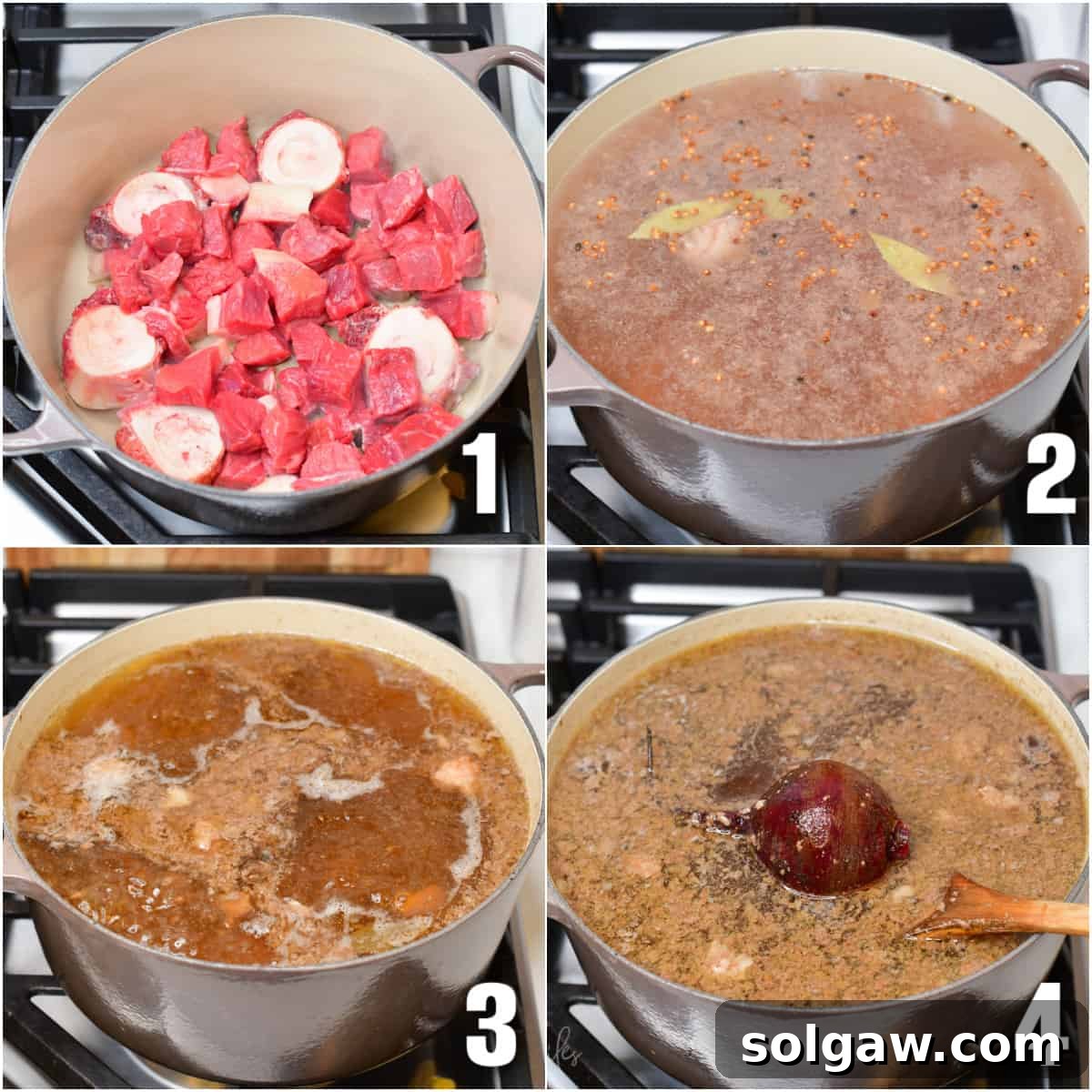
Phase 1: Crafting the Flavorful Beef Stock
PRO TIP: To simplify the straining process and avoid fishing out small spices, consider tying the whole peppercorns and coriander in a piece of cheesecloth to create a “spice sachet.” This allows for easy removal once the stock is cooked.
Begin by preparing your beef. Before cooking, examine the stew beef chunks and trim any excessively large pieces of hard fat, as these can be unpleasant in the finished soup. If any beef pieces are too large, chop them into smaller, bite-sized portions. Heat a large, sturdy pot over medium-high heat with a touch of oil. Add the prepared beef and marrow bones (if using) to the pre-heated pot and sear them for a few minutes on all sides until nicely golden brown. This crucial step, known as browning, develops a rich, complex flavor in the meat that will deeply infuse your broth.
Next, pour in the cold water, add the bay leaves, whole coriander, and whole peppercorns. Bring the mixture to a gentle boil, then immediately reduce the heat to low. Loosely cover the pot with a lid, allowing steam to escape, which helps prevent the broth from becoming cloudy. Let this simmer on low heat for a minimum of 3-4 hours, or even longer for a more profound flavor. The longer the simmer, the richer your broth will be.
When to Add the Beets: Approximately halfway through the beef broth’s cooking time (around 1.5 to 2 hours in), carefully add the whole, unpeeled beets to the pot. They will cook alongside the beef, absorbing flavor while retaining their vibrant color thanks to their skin. Continue cooking until both the beef is tender and the beets are fork-tender. Once cooked, remove the beets and set them aside to cool before peeling and grating.
Once the stock has finished simmering, carefully strain the beef broth through a fine-mesh sieve into a clean bowl or pot, ensuring a clear liquid. Reserve the tender cooked beef for the soup. Discard all the herbs, whole spices, and especially the marrow bones.

Phase 2: Assembling the Hearty Borscht Soup
Embrace the convenience of a one-pot meal by utilizing the same pot you used for the stock to cook your soup. While the stock is simmering and the beets are cooling, take this opportunity to prep all your vegetables. Slice onions and mushrooms, grate carrots, cube potatoes, and finely chop your cabbage. Ensure the cooked beets have cooled sufficiently so you can handle them comfortably later.
Heat a couple of tablespoons of canola oil in the cleaned pot over medium heat. Add the sliced onions and grated carrots, sautéing them until they become beautifully softened and achieve a golden-brown caramelization. This browning step, much like searing the beef, is crucial for developing deep, sweet flavors that will permeate the entire soup. Don’t rush this part; patience will be rewarded with a superior taste.
Add the minced fresh garlic to the sautéed onions and carrots, cooking just until fragrant, about 30-60 seconds, being careful not to burn it. Next, incorporate the cubed potatoes and sliced mushrooms. Cook these for a few minutes, stirring occasionally, allowing them to absorb some of the pan’s rich flavors. Then, add the shredded cabbage, stirring it in thoroughly. Continue to cook the vegetables until the cabbage begins to soften; it doesn’t need to be fully cooked through at this stage, as it will continue to cook in the broth.
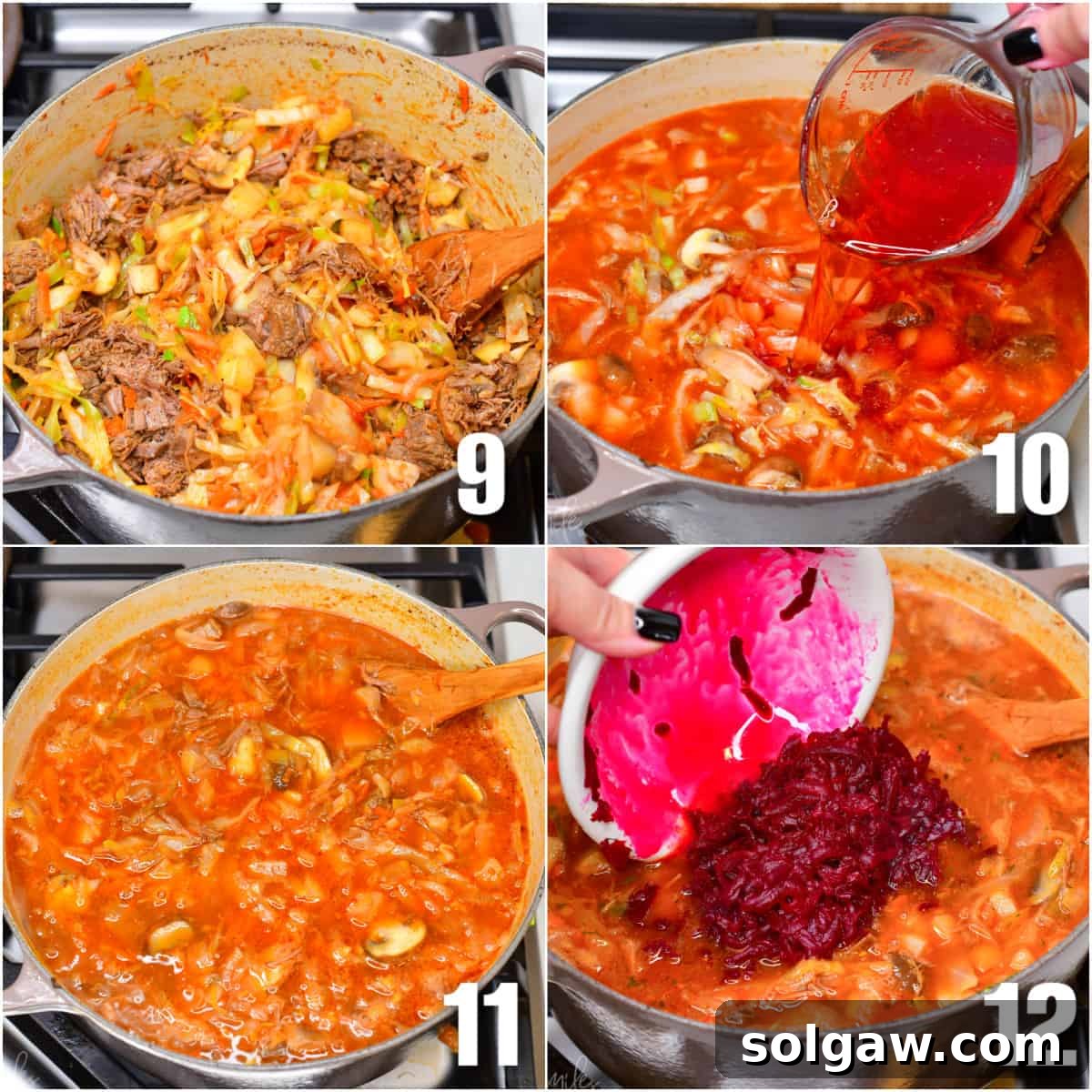
Before adding the beef stock, stir in the tomato paste, sugar, salt, and black pepper directly with the sautéed vegetables. Mixing the tomato paste with the vegetables first ensures it’s evenly incorporated and thoroughly cooked out, preventing any unmixed chunks and deepening its flavor profile. For a more pleasant eating experience, break apart the cooked beef into smaller, fork-friendly pieces before adding them back to the pot. Stir the beef into the vegetables, then gradually pour in the strained beef broth. Add enough broth to generously cover all the vegetables, but be mindful not to add too much, which could dilute the soup’s richness. You want a hearty, substantial soup, not a watery broth.
Bring the Borscht to a gentle simmer over medium heat and let it cook for approximately 25-30 minutes, or until the potatoes and cabbage are tender. Throughout this cooking time, stir occasionally and, critically, taste the broth. Adjust the seasoning with more salt and pepper as needed to suit your personal preference.
The Final Touch: Finishing with Beets for Color and Flavor: While the soup is simmering, take the cooled, cooked beets, peel them, and grate them using a large cheese grater. Just before the soup is done, stir these vibrant grated beets into the pot. Immediately follow this with a tablespoon of white vinegar. This dual action ensures the Borscht achieves its iconic bright red color and a perfectly balanced flavor profile.
PRO TIP: For the most authentic Eastern European experience, never forget the final garnishes! A generous dollop of rich sour cream and a sprinkle of fresh, fragrant dill weed are essential. They add a creamy texture, a tangy counterpoint, and an irresistible aroma that truly completes the dish.
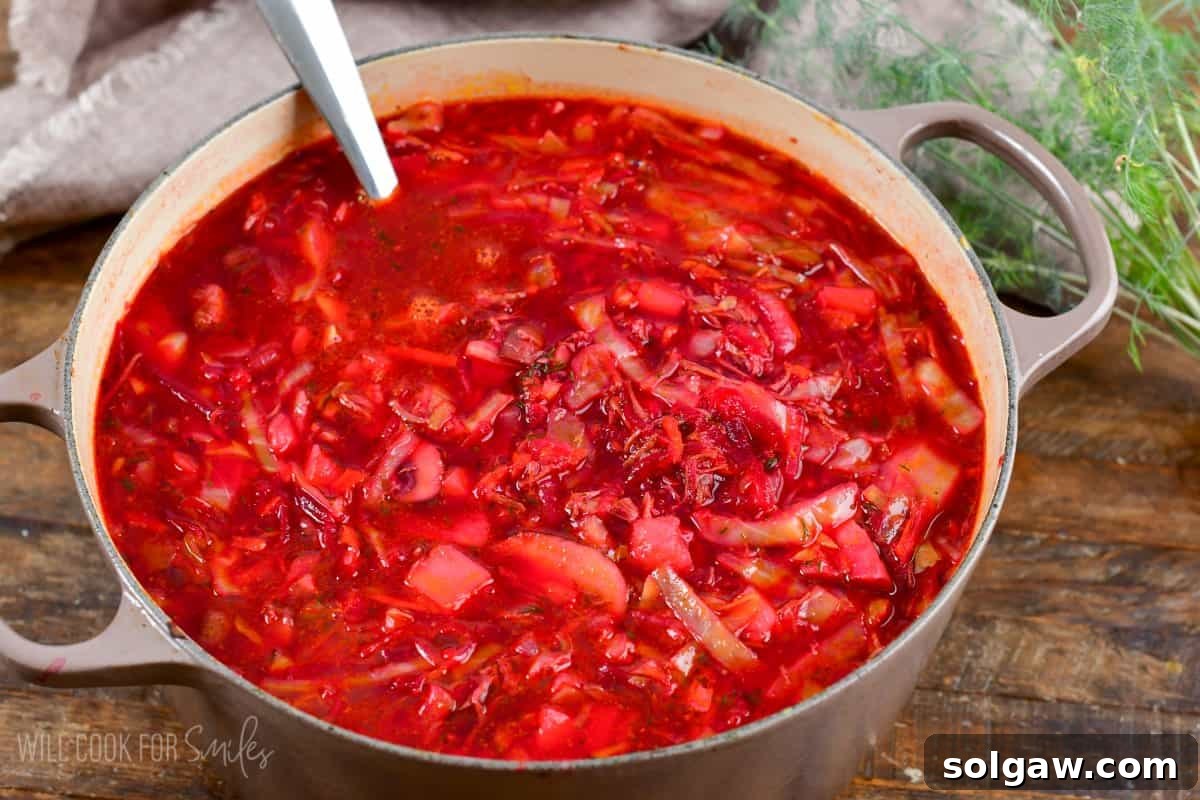
Smart Meal Prep: Make-Ahead Suggestions
Borscht, like many great soups, often tastes even better the next day as the flavors have more time to meld. To streamline your cooking process and save time, this recipe can be conveniently divided into two stages:
- On Day One: Focus on preparing the foundational elements. Cook the beef broth to perfection and boil the beets whole in their skin. Once these components are ready and cooled, refrigerate the strained broth with the cooked meat in one airtight container, and the cooled, cooked beets (still unpeeled) in a separate container.
- On Day Two: With your broth and beets prepped, assembling the rest of the soup becomes a much quicker task, typically taking less than an hour. This strategy makes a large pot of Borscht achievable even on busy weeknights.
Storing and Reheating Your Delicious Borscht
Proper storage is key to enjoying your homemade Borscht for days to come, or even months if you choose to freeze it.
Storing Leftovers: Any leftover Borscht should be transferred to an airtight container and refrigerated promptly. When stored correctly, it will maintain its deliciousness for up to 5 days. A crucial tip for preserving freshness and preventing spoilage is to always use a clean ladle each time you serve a portion from the main container.
Freezing for Future Enjoyment: Borscht freezes exceptionally well, making it an excellent candidate for meal prepping. First, ensure the soup is completely cooled to room temperature. Then, pour it into freezer-safe containers or heavy-duty zip-top freezer bags. Try to remove as much air as possible before sealing to prevent freezer burn. It can be safely frozen for up to 2 months. For optimal texture and flavor, thaw frozen Borscht slowly in the refrigerator overnight before reheating.
Reheating Instructions: To reheat individual portions, gently warm them on the stovetop over medium-low heat, stirring occasionally to ensure even heating. Continue until the soup is warmed through. If time is of the essence, a microwave can also be used, but stovetop reheating often yields better results, especially for larger quantities.
PRO TIP: It’s worth noting that potatoes can undergo a slight change in texture when frozen and thawed; they may become a little softer or more crumbly. This is a normal occurrence and doesn’t affect the soup’s overall flavor.
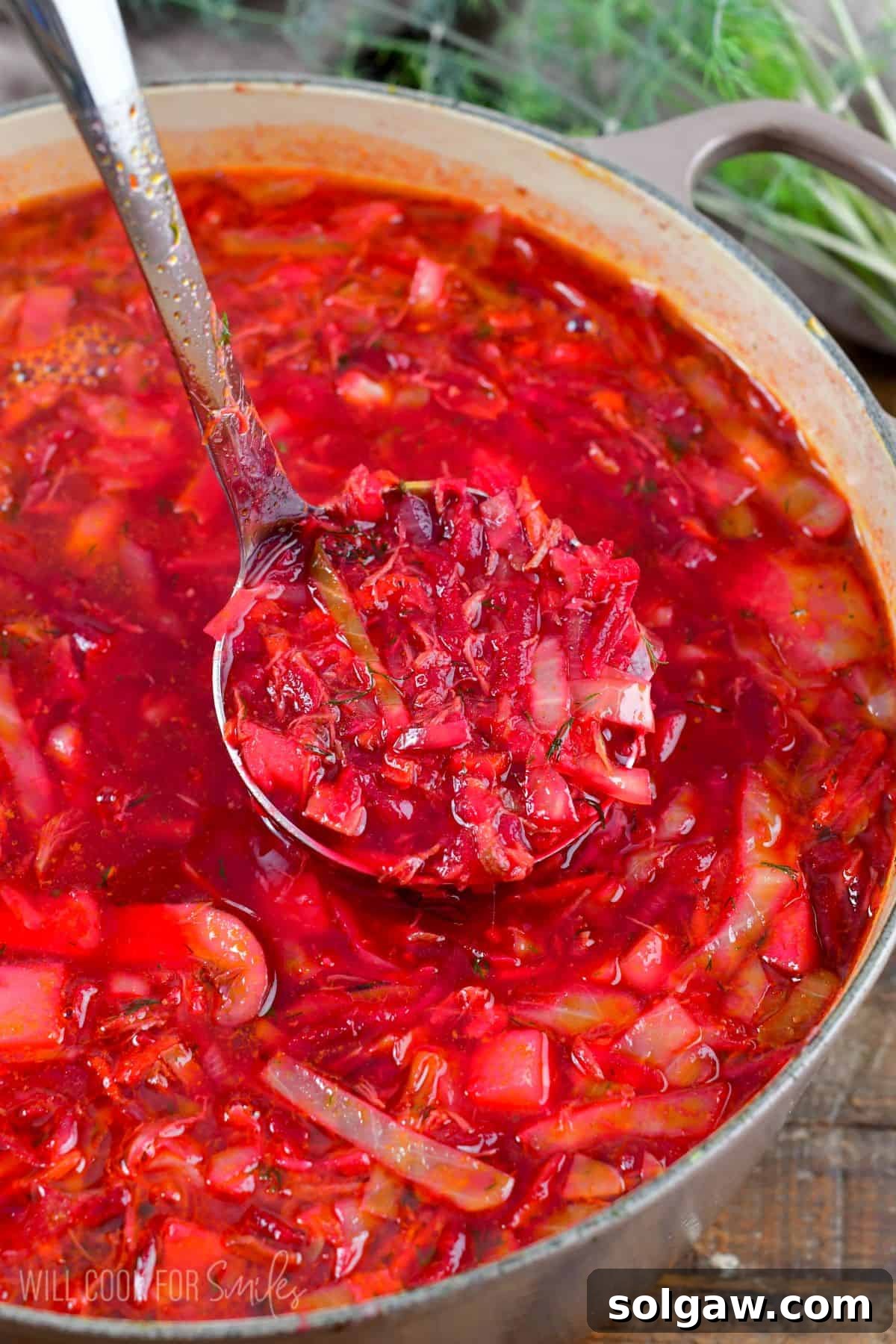
Enhance Your Experience: Serving and Pairing Suggestions
Elevating your Borscht experience is all about the right accompaniments. My personal favorite way to enjoy this traditional soup is with a generous dollop of cooling sour cream, which adds a wonderful creaminess and tangy contrast to the earthy flavors of the beets and beef. A sprinkle of fresh, fragrant dill weed is also absolutely essential, lending a bright, herbaceous note that perfectly complements the rich broth.
For an added touch of richness and protein, consider slicing hard-boiled eggs and adding them to each bowl just before serving. This not only enhances the flavor but also makes the soup even more visually appealing and satisfying.
Another classic and comforting way to serve Borscht is alongside fresh bread. While a deli-fresh baguette is a delightful choice, feel free to use your favorite crusty bread or even warm, freshly baked dinner rolls to soak up every last drop of the delicious broth.
Exploring the Diversity: What are Some Variations of Borscht Recipe?
While the vibrant red, beef-based Borscht is widely recognized, the world of Eastern European cuisine offers a fascinating array of regional variations, each with its own unique character:
- White Borscht (Biały Barszcz): Hailing from Poland, this version is distinctively made without beets, resulting in a paler, almost creamy appearance. Its flavor profile is significantly more sour and tangy, often achieved with a fermented rye flour starter, and it typically highlights the robust flavors of sausage and potatoes rather than beef and beets.
- Green (Sorrel) Borscht (Zeliony Borscht): Another beet-free soup, this refreshing variety is popular in Ukraine and Russia during the spring and summer months. It derives its signature tangy, bright, and slightly tart taste from sorrel, a leafy green herb resembling spinach. Often enriched with hard-boiled eggs and served with a spoonful of sour cream, it’s a lighter, herbaceous alternative to its beet-infused cousin.
- Cold Borscht (Kholodnik): This vegetarian, vegetable-based soup is designed to be served chilled, making it a perfect refreshing dish for warmer weather. It’s typically lighter and often made with kefir or sour cream as a base, along with grated fresh beets, cucumbers, dill, and hard-boiled eggs. It is not recommended to serve a meat-based Borscht cold, as the chilled fat can become unpleasantly solid.
Adapting the Recipe: Can I Make This a Vegetarian or Vegan Borscht?
Absolutely! This traditional Borscht recipe is quite versatile and can be easily adapted to suit vegetarian or vegan dietary preferences without sacrificing much of its rich flavor. To do so, simply omit the beef and beef bones entirely. Instead of cooking the beets in beef broth, you can cook them whole and unpeeled directly in a high-quality vegetable broth until they are fork-tender. Make sure to also add the recommended bay leaves, whole peppercorns, and coriander to your vegetable broth while the beets simmer, allowing their flavors to infuse. Once the beets are cooked and the broth is flavorful, you can then proceed with the remaining steps and instructions for making the soup, using your freshly prepared vegetable broth as the liquid base. For a fully vegan version, ensure any sour cream topping is replaced with a plant-based alternative.
PIN THIS RECIPE FOR LATER
DID YOU MAKE THIS RECIPE? Please leave a 🌟 star rating! Let me know how you liked it by leaving a 📝 comment below or share and tag me on social media @willcookforsmiles. DON’T FORGET to subscribe to my newsletter for more delicious recipes!
The BEST Borscht Recipe
This authentic borscht recipe is a hearty and nutritious Ukrainian soup made with beef, cabbage, beets, mushrooms, potatoes, and many more vegetables. Our family recipe was perfected over decades features tender beef and a vibrant ruby-red color. Beets give this borscht a beautiful color and a distinct flavor and I have tips to cook them right.
Average Rating: 4.69 from 47 votes
Print Recipe | Pin Recipe | Jump to Video | Rate This Recipe
Course: Soup | Cuisine: Russian | Diet: Gluten Free
Prep Time: 15 minutes | Cook Time: 5 hours | Total Time: 5 hours 15 minutes
Servings: 10 | Calories: 286 kcal | Author: Lyuba Brooke
Ingredients
Beef stock:
- 2 lbs stew beef
- 1 lb beef bones (marrow bones) optional
- 2.5 quarts water
- 2 large bay leaves
- 1 tbsp whole coriander
- 1/2 tbsp whole peppercorns
Soup:
- 3 medium beets about 1.5 lbs
- 1 medium yellow onion
- 2 medium carrots
- 1 head of cabbage
- 2 medium Idaho potatoes
- 8 oz baby bella mushrooms
- 4 garlic cloves
- 1/4 cup tomato paste
- 1 tbsp sugar
- Salt to taste
- Fresh cracked black pepper to taste
- 3 tbsp fresh dill weed minced
Topping:
- Sour cream
- Fresh minced dill weed
Instructions
Beef Stock:
- Preheat the pot over medium-high heat. Add a little bit of canola oil.
- Cut big, hard chunks of fat off beef, if any. Add beef and bones to the pot and sear for a couple of minutes until golden brown.
- Add water to the pot and bring it to a simmer.
- Add bay leaves, whole coriander, and whole peppercorns. Lower the heat to low.
- Loosely cover with a lid (allowing steam to escape) and cook for 3-4 hours.
- About halfway through cooking meat (around 1.5-2 hours), add whole, unpeeled beets to the pot. Cook until done, then take out and set aside to cool.
- Strain off the stock and discard bones, bay leaves, coriander, and peppercorns. Reserve the cooked meat and beef broth for the soup.
Borscht soup:
- Prepare your veggies: slice onions, mushrooms, and cabbage thinly. Grate carrots on a large grater, and cube potatoes. Peel garlic and mince it. Set whole cooked beets aside to cool.
- Using the same pot, set the heat to medium and add a couple of tablespoons of canola oil.
- Add onions and carrots and sauté until softened and lightly golden. Add the minced garlic and stir well for about 30-60 seconds until fragrant.
- Add potatoes and mushrooms. Cook for a few minutes, stirring occasionally.
- Add cabbage, stir, and cook until cabbage begins to soften.
- Add tomato paste, sugar, salt, and black pepper. Stir well until tomato paste is evenly mixed with the vegetables.
- Break apart the cooked beef into smaller pieces and add it to the pot. Stir and start adding the reserved beef stock. Add enough stock to completely cover the vegetables, adjusting for your preferred broth level.
- Cook over medium heat for 25-30 minutes, or until potatoes and cabbage are tender. Stir occasionally and taste to adjust salt and pepper.
- Stir in minced fresh dill weed.
- Peel the cooled beets and grate them into the soup using a large cheese grater. Stir in the grated beets and then add a tablespoon of white vinegar. Stir gently. Your soup is ready!
- Garnish each serving with a dollop of sour cream and a sprinkle of fresh dill weed.
Video
Notes
- Tie Spices For Broth: If you don’t want to deal with straining and picking the whole spices out of the meat and stock later, you can tie them in cheesecloth so you can easily discard it after.
- Storing: Leftover borscht can be stored in an airtight container in the refrigerator for up to 5 days. Always use a clean ladle when serving to maintain freshness.
- To reheat: Gently reheat individual portions on the stovetop over medium-low heat, stirring occasionally. Alternatively, you can use a microwave for faster reheating.
- Freezing: Ensure the soup is completely cool before freezing. Portion into freezer-safe containers or bags, removing as much air as possible. Freeze for up to 2 months. Thaw slowly in the refrigerator overnight for best results.
- Potato Texture Note: Potatoes tend to soften more when frozen and thawed, so their texture may change slightly.
Nutrition
More Comforting Soup Recipes We Love
- Loaded Baked Potato Soup
- Creamy Chicken Enchilada Soup
- Instant Pot Vegetable Beef Soup
- Broccoli Cheese Soup
- Homemade Chicken Noodle Soup
- White Bean Soup
Originally published on Will Cook For Smiles in March 2012.