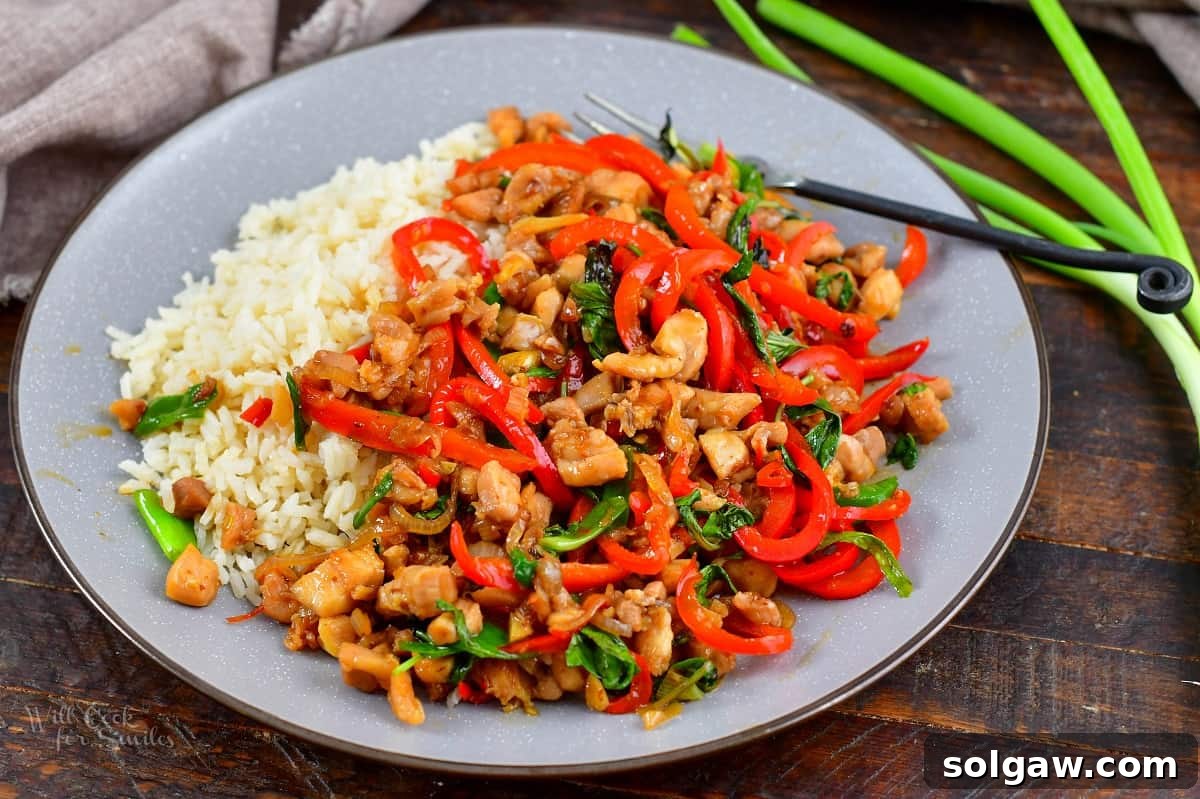
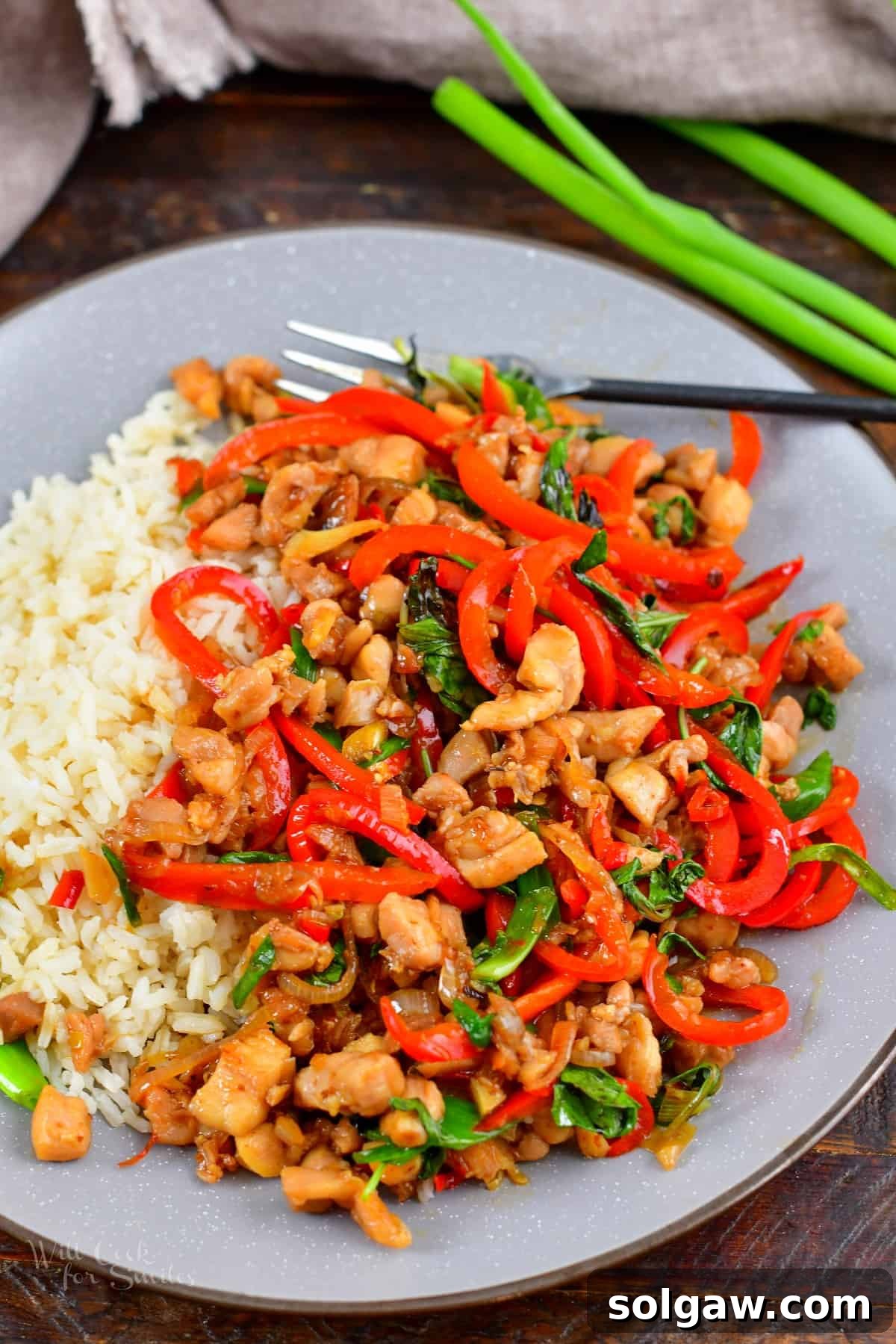
If your palate craves the vibrant, aromatic flavors of Thai cuisine, then you’re in for a treat! Beyond this incredible Thai Basil Chicken, we invite you to explore more of our cherished Thai recipes. Don’t miss out on the rich and creamy Thai Green Curry or the delightful crunch and savory notes of our Thai Cashew Chicken.
Authentic Thai Basil Chicken (Pad Krapow Gai): A Quick & Flavorful Stir-Fry
Thai Basil Chicken, famously known as Pad Krapow Gai, is more than just a dish; it’s a culinary icon that has captivated taste buds around the globe. Originating from the bustling streets of Thailand, where vendors skillfully whip it up in lightning speed, this stir-fry has become a beloved staple in Thai restaurants across the United States and beyond. Its universal appeal lies in its potent blend of savory, spicy, and aromatic elements, making it an unforgettable dining experience.
The name itself offers a glimpse into its essence: Gai means “chicken,” Pad refers to “fried” or “stir-fried,” and Krapow is the Thai name for “holy basil” – the undeniable star of this dish. When these elements come together, they create a symphony of flavors that is both comforting and exhilarating. The rapid cooking method ensures the ingredients retain their freshness and distinct textures, making it a perfect example of balanced Asian cuisine, delivering both “wok hei” and exquisite taste.
While many enjoy Pad Krapow Gai in their favorite Thai eateries, the true magic unfolds when you prepare this simple yet authentic version right in your own kitchen. Imagine the intoxicating aroma filling your home, signaling a meal that rivals any restaurant creation. What’s more, this recipe is designed for ease and speed, allowing you to whip up a gourmet-quality dinner in under 30 minutes. If you regularly cook Thai dishes, you’ll likely have most of the ingredients on hand, with fresh holy basil being the key component to source.
This versatile chicken stir-fry effortlessly transitions from a quick weeknight family dinner to an impressive meal for guests. Hosting a date night or simply looking to surprise someone with your culinary prowess? Pad Krapow Gai is an excellent choice. Its sophisticated flavors and enticing fragrance belie its simple preparation, leaving your guests utterly impressed by what appears to be a complex, expertly crafted dish. The vibrant colors and fresh ingredients speak volumes, making it a feast for both the eyes and the palate.
Understanding the Soul of Pad Krapow Gai: A Flavor Journey
At its core, Thai Basil Chicken embodies the principle of “wok hei” – the breath of the wok – where high heat and quick movements infuse ingredients with a smoky, caramelized essence. The dish is celebrated for its dynamic flavor profile: the savory depth of soy and oyster sauces, the pungent kick of garlic and fresh chilies, the subtle sweetness of brown sugar, and most importantly, the distinctive, peppery, and anise-like notes of holy basil. This unique herb is what truly defines Pad Krapow Gai, elevating it beyond a typical chicken stir-fry into a truly authentic Thai experience.
The magic of Pad Krapow Gai lies in its perfect balance of the four fundamental tastes of Thai cuisine: spicy from the chilies, savory from the fish and soy sauces, sweet from the brown sugar, and a hint of sour from other elements or lime in some variations (though not in this one). It’s a dish that stimulates all the senses, from the sizzling sound of the wok to the vibrant colors and the fresh, spicy aroma that fills the kitchen. Its straightforward preparation makes it accessible for home cooks, yet it delivers complex layers of flavor that are profoundly satisfying.
Traditionally, Pad Krapow Gai is served piping hot over fluffy jasmine rice, often topped with a crispy fried egg (khai dao). The runny yolk mixes with the rich sauce, adding an extra layer of decadence and binding the flavors beautifully. This combination creates a complete and deeply satisfying meal that’s hard to resist. Its enduring popularity stems from its ability to deliver intense flavor and comfort simultaneously, making it a beloved dish for both locals and international food enthusiasts.
Essential Ingredients & Creative Variations for Pad Krapow Gai
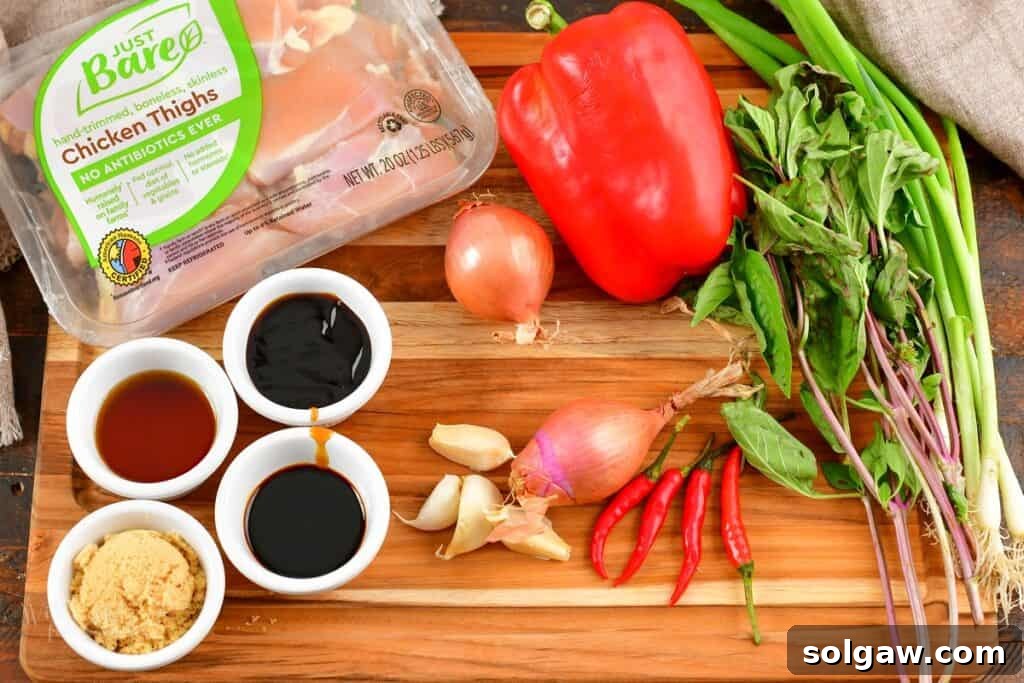
Crafting the perfect Thai Basil Chicken starts with understanding its core ingredients and knowing how to adapt them without compromising authenticity too much. Here’s a detailed look:
The Basil: Holy Grail of Flavor
- Holy Basil (Krapow) & Thai Basil: These are the preferred varieties due to their signature pungent, peppery, and slightly anise-like flavor. Holy basil (Krapow) is traditionally used in Thailand, offering a stronger, spicier, and often more robust note. Thai basil, on the other hand, tends to have a sweeter, more licorice-like aroma and purplish stems. Both are distinct from the sweet and mild classic Italian basil.
- Where to Find Them: The best place to find fresh holy or Thai basil is at your local Asian markets. Sometimes, larger specialty grocery stores or farmers’ markets that stock diverse produce might carry them. The distinct aroma is unmistakable.
- Substitution: If fresh Thai or holy basil is genuinely unavailable, you can use regular Italian basil in a pinch. However, be aware that the flavor profile will be noticeably different, lacking the characteristic depth and specific peppery-anise spice that defines authentic Pad Krapow Gai. While it will still be a delicious chicken stir-fry, it won’t capture the full essence of the traditional dish.
Choosing Your Chicken for Optimal Texture and Taste
- Finely Diced Boneless, Skinless Chicken Thighs: For superior flavor and a tender, juicy texture that holds up well during high-heat stir-frying, boneless, skinless chicken thighs are highly recommended. Dicing them finely ensures they cook quickly and absorb the rich sauce effectively, providing a satisfying bite in every spoonful.
- Ground Chicken: If speed and convenience are paramount, ground chicken is an excellent alternative. It requires less prep work and cooks even faster, making it ideal for those busy weeknights. When using ground chicken, make sure to break up any clumps early in the cooking process to achieve an even texture and ensure all pieces are thoroughly coated in the sauce.
The Spice Factor: Harnessing Thai Chili Peppers
- Fresh Thai Chili Peppers: These small, potent chilies are crucial for the authentic heat and vibrant flavor of Pad Krapow Gai. The quantity (2-4 or more) should be adjusted based on your personal spice tolerance. For a milder dish, use fewer chilies or remove the seeds and white membranes, where most of the capsaicin resides.
- Where to Find Them: Fresh Thai chilies are commonly found in Asian supermarkets and often in the international produce section of larger grocery stores.
- Substitutions: If fresh chilies are hard to come by, dried Thai chili peppers can be rehydrated in warm water for about 15 minutes and then chopped. Alternatively, a small amount of chili garlic sauce or even a dash of sriracha can impart heat, but these will alter the flavor slightly. Always be cautious of their varying heat levels and taste as you go.
- Safety Tip: When handling and cooking with fresh chilies, avoid touching your eyes or face. Consider wearing gloves to protect your hands. Additionally, be mindful not to breathe in the steam directly from the wok when chilies are added, as the airborne capsaicin can be quite potent and irritating.
Aromatic Foundation: Garlic, Shallots & Bell Peppers
- Garlic: Freshly minced garlic provides a foundational aromatic base, crucial for building the dish’s overall savory profile. Don’t skimp on fresh garlic for the best results.
- Shallots: These offer a milder, sweeter, and more nuanced onion flavor compared to regular onions, contributing to the dish’s complexity without overpowering the other aromatics.
- Bell Pepper: Adds a touch of natural sweetness, vibrant color, and a pleasant crisp-tender texture to the stir-fry. Feel free to use any color, though red or green bell peppers are common choices and provide a beautiful contrast to the green basil.
The Flavor-Packed Sauce: A Harmony of Savory and Sweet
The sauce for Pad Krapow Gai is a simple yet incredibly powerful combination that delivers depth and authenticity:
- Oyster Sauce: A thick, savory sauce that adds umami depth, a slight sweetness, and a glossy finish to the dish. It’s a cornerstone of many Thai stir-fries.
- Fish Sauce: Essential for authentic Thai flavor, fish sauce provides a distinctive salty, savory, and fermented umami punch. Don’t be deterred by its strong aroma in the bottle; it transforms during cooking and is indispensable for the true taste of Thailand.
- Low Sodium Soy Sauce: Balances the saltiness and adds further savory notes. Using low sodium allows for better control of the overall saltiness. For more complex flavor and a slightly darker hue, a mix of dark and light soy sauce can be used.
- Brown Sugar: Provides essential sweetness to balance the savory and spicy elements, contributing to that classic Thai sweet-and-savory profile that is so characteristic of the cuisine.
- Gluten-Free Notes: To make this dish gluten-free, substitute regular soy sauce with gluten-free soy sauce or tamari, and ensure you use a certified gluten-free oyster sauce. Always double-check labels on all other packaged ingredients to confirm they are also gluten-free.
Expanding Your Culinary Canvas: Other Vegetables
While the traditional Pad Krapow Gai is often kept simple, feel free to incorporate more vegetables to boost nutrition, add varied textures, and personalize the dish. Excellent choices that complement the flavors include:
- Snow peas
- Sliced mushrooms (shiitake or cremini work well)
- Baby corn
- Thinly sliced green beans
- Julienned zucchini
- Broccolini florets
Add these extra vegetables along with the shallots and bell peppers to ensure they cook to a crisp-tender perfection without becoming soggy.
Mastering the Art of Thai Basil Chicken: A Step-by-Step Guide
Achieving restaurant-quality Thai Basil Chicken at home is surprisingly straightforward, especially when you follow these clear steps. The key to a successful stir-fry is efficient preparation (mise en place) and maintaining high heat throughout the cooking process.
1. Prepare All Ingredients (Mise en Place)
Before you even turn on the stove, ensure all your ingredients are prepped, measured, and within arm’s reach. This is critical for stir-frying, as the cooking process is very fast and requires continuous attention. If you plan to serve with rice, start your rice cooker or pot now.
- Finely dice your boneless, skinless chicken thighs. If using ground chicken, ensure it’s separated and ready.
- Mince the garlic cloves finely.
- Slice the Thai chili peppers thinly. For a milder dish, remove the seeds and white pith before slicing.
- Thinly slice the shallots and bell pepper.
- Chop the green parts of the scallions.
- In a small bowl or measuring cup, whisk together all the sauce ingredients: oyster sauce, fish sauce, low sodium soy sauce, and brown sugar until the sugar is dissolved. Set this aside.
2. Stir-Fry the Chicken
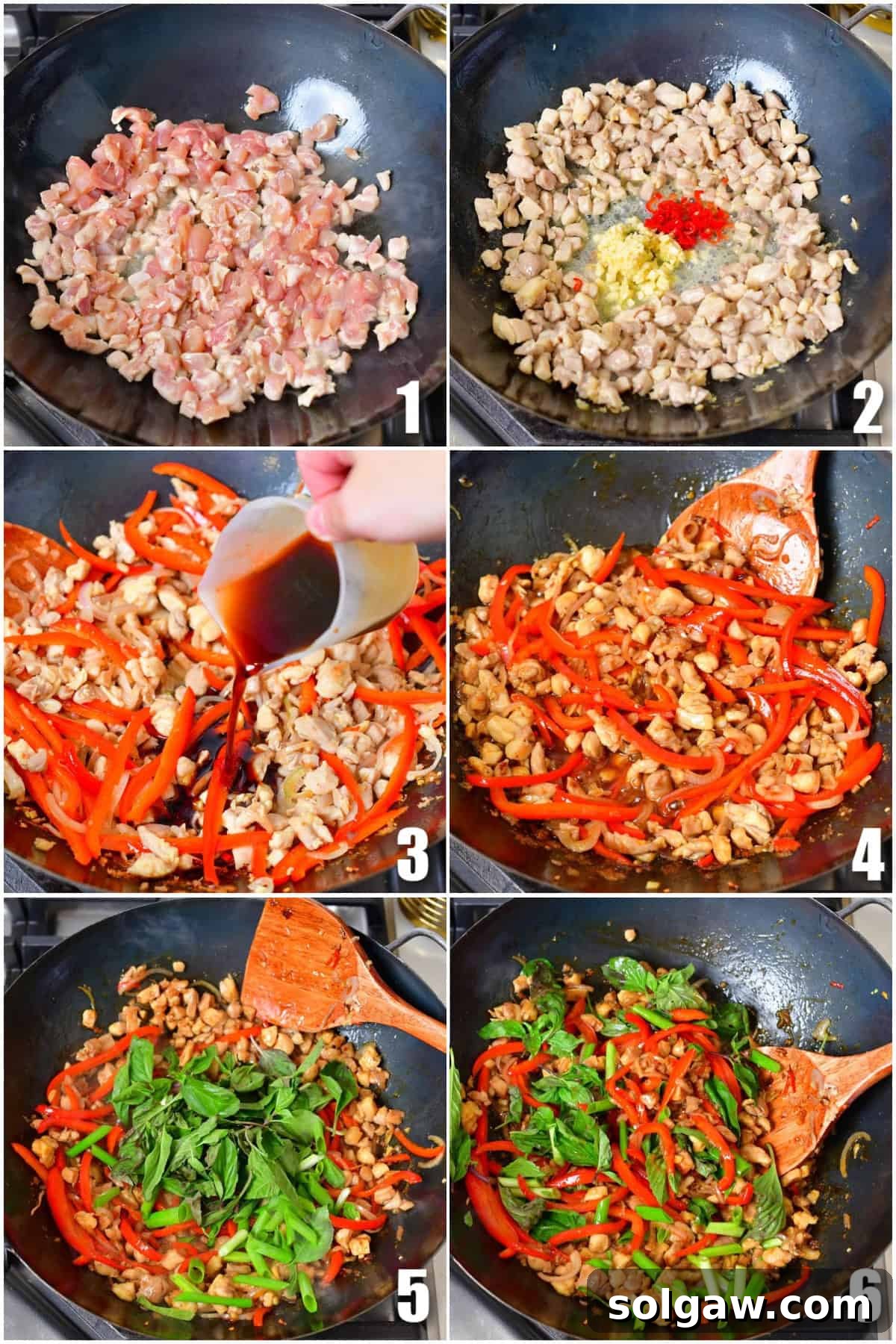
Heat your wok (or a large, heavy-bottomed skillet) over medium-high heat until it begins to smoke slightly. This ensures the “wok hei” effect. Add the peanut oil (or vegetable/canola oil) and swirl to coat the surface. Add the finely diced chicken (or ground chicken) and stir-fry, breaking up any pieces, until it is mostly cooked through and lightly browned. This usually takes about 3-5 minutes, depending on the heat and the size of your chicken pieces.
3. Sauté Aromatics for Flavor Foundation
Create a small well in the center of the wok by pushing the chicken to the sides. Add the minced garlic and sliced Thai chili peppers to the center and sauté for about 30 seconds to 1 minute, until they become incredibly fragrant. Be careful not to burn the garlic, as burnt garlic can taste bitter. Once fragrant, stir the garlic and chilies together with the chicken, distributing their flavor throughout the dish.
4. Incorporate the Vegetables
Next, add the sliced shallots and bell peppers to the wok. Continue to stir-fry for 2-3 minutes, or until the vegetables have softened slightly but still retain a pleasant crisp-tender bite. This stage is also when you would add any other chosen vegetables like snow peas or mushrooms, ensuring they are cooked just right.
5. Introduce the Flavorful Sauce
Give your prepared sauce another quick whisk, as the brown sugar can settle. Pour the sauce evenly over all the ingredients in the wok. Stir continuously to coat everything thoroughly, allowing the rich sauce to cling to the chicken and vegetables. Let the sauce simmer for 1-2 minutes, allowing it to thicken slightly and its complex flavors to meld beautifully with all the cooked components.
6. Finish with Fresh Basil and Scallions
Finally, and perhaps the most crucial step for flavor, remove the wok from the heat. Stir in the fresh Thai or holy basil leaves and chopped scallions. Toss gently for just about 30 seconds, or until the basil leaves are slightly wilted but still vibrant green and intensely aromatic. The goal is to warm the basil just enough to release its essential oils without overcooking it, which would diminish its unique flavor and aroma.
Your authentic, restaurant-quality Thai Basil Chicken (Pad Krapow Gai) is now ready to be served immediately!
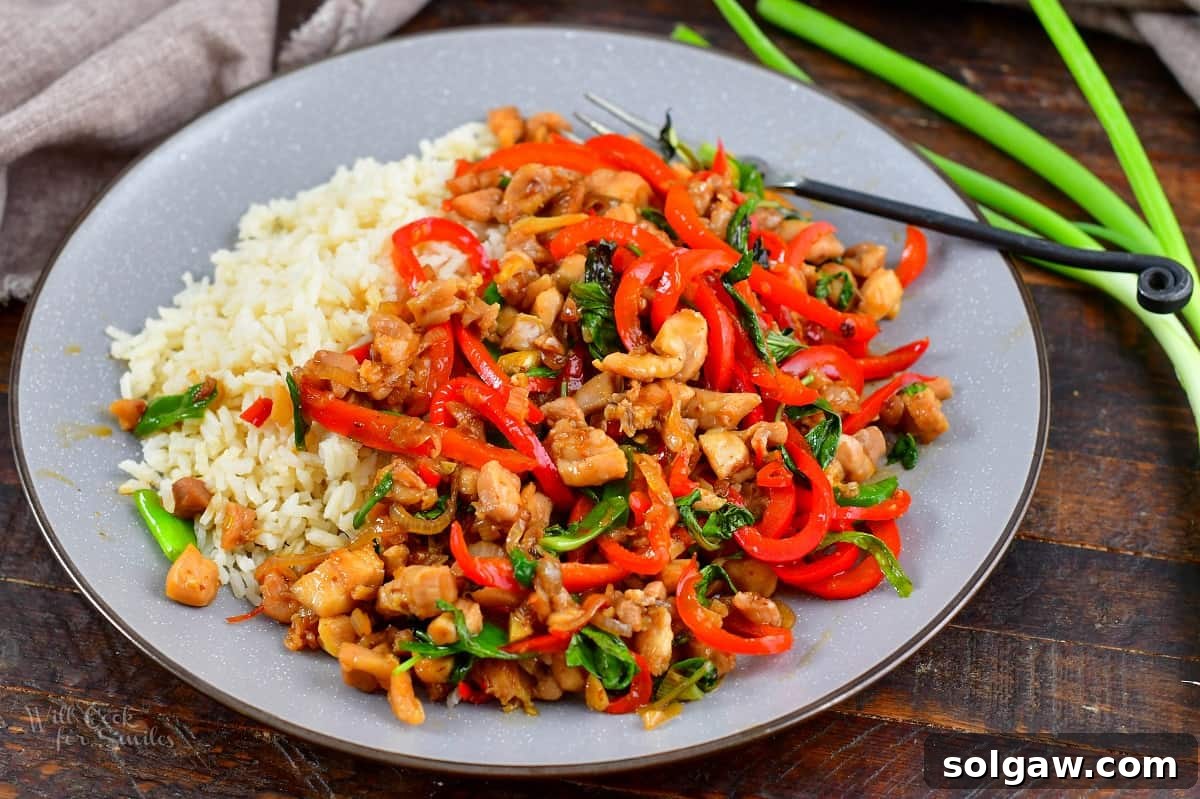
Delightful Serving Suggestions for Thai Basil Chicken
Thai Basil Chicken is a versatile dish that pairs wonderfully with a variety of accompaniments, enhancing its vibrant flavors and textures. Here are some traditional and creative ways to serve your homemade Pad Krapow Gai:
- Classic Jasmine Rice: The most traditional and popular choice, fluffy jasmine rice perfectly absorbs the rich, savory, and spicy sauce of the stir-fry. Its delicate aroma and tender texture provide the ideal canvas for the bold flavors of the chicken.
- Aromatic Coconut Rice: For an extra layer of flavor and richness, consider preparing coconut rice. Its creamy texture and mild sweetness provide a beautiful contrast to the spicy and savory chicken, creating a more decadent meal experience.
- Crispy Fried Egg (Khai Dao): This is a quintessential topping in Thailand, a true staple for Pad Krapow! A sunny-side-up fried egg, with its crispy edges and runny yolk, adds an incredible richness and a luxurious texture when its yolk mixes into the chicken and rice. It’s a simple addition that truly elevates the dish to its most authentic street food experience.
- Flavorful Fried Rice: While Pad Krapow Gai is often served with plain rice, some establishments offer it with fried rice for an extra hearty meal. If you opt for this, make a batch of Thai Fried Rice (Khao Pad), but remember to omit the chicken from the fried rice itself to avoid an overload of meat and to let the basil chicken shine as the star.
- Noodle Alternatives: For a different texture and experience, serve the stir-fry with delicate rice noodles or transparent glass noodles. Both options soak up the vibrant sauce beautifully and offer a delightful chewiness that complements the tender chicken.
- Healthier Options: If you’re looking for a lighter or more nutrient-dense meal, swap out white jasmine rice for healthier alternatives like brown rice or quinoa. Alternatively, for a low-carb option, serve your Pad Krapow Gai over a generous bed of steamed or stir-fried mixed vegetables, such as cauliflower rice, zucchini noodles, or additional leafy greens, to significantly boost your veggie intake.
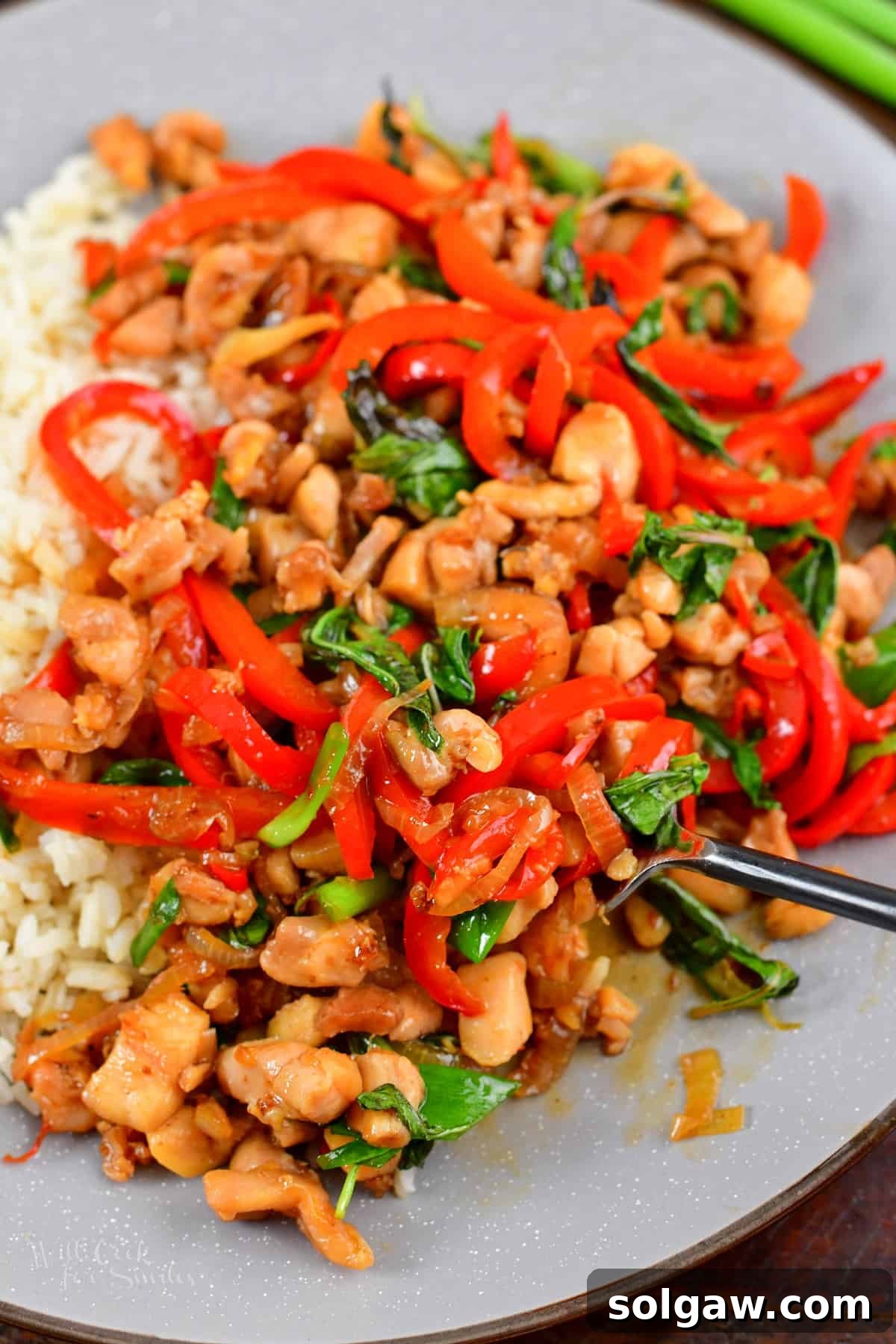
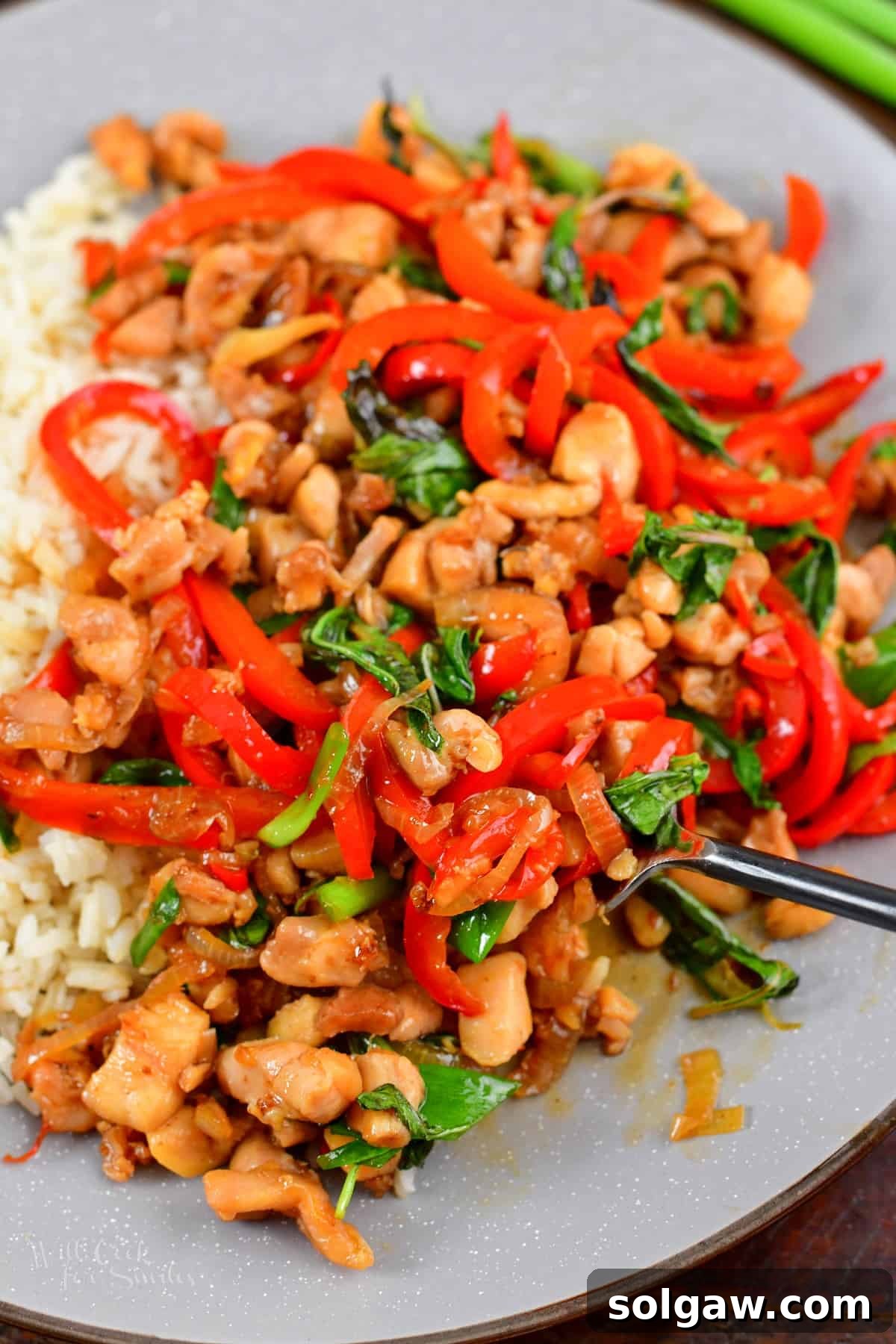
Thai Basil Chicken Recipe (Pad Krapow Gai)
Thai Basil Chicken is a quick and easy chicken stir-fry featuring tender chicken thighs, garlic, Thai chilies, shallots, and bell pepper tossed in a flavorful sauce of oyster, fish, and soy sauces sweetened with brown sugar and finished with Thai basil and scallions. This popular Thai street food is easy to make at home in just under 30 minutes!
Course: Main Course
Cuisine: Thai
Prep Time: 15 minutes
Cook Time: 10 minutes
Total Time: 25 minutes
Servings: 4
Calories: 410 kcal
Author: Lyuba Brooke
Ingredients
Main:
- 1.25-1.5 lbs boneless, skinless chicken thighs (finely diced) or ground chicken for faster prep
- 2 tbsp peanut oil (or vegetable, canola oil)
- 4-5 garlic cloves, minced
- 2-4 Thai chili peppers, thinly sliced (adjust to taste for spice level)
- 2 shallots, thinly sliced
- 1 bell pepper, thinly sliced (any color)
- 1 cup fresh Thai basil or holy basil leaves
- 3 scallions stalks, chopped
Sauce:
- 3 tbsp oyster sauce
- 3 tbsp fish sauce
- 2 tbsp low sodium soy sauce (or a mix of dark and light soy sauce)
- 3 tbsp brown sugar
To serve:
- 2-3 cups cooked Jasmine rice
- Optional: Fried egg, extra scallions for garnish
Instructions
Prep Work:
- Prepare all ingredients ahead of time. Begin cooking jasmine rice.
- Finely dice chicken thighs. Mince garlic, remove seeds from chili peppers if preferred, and slice them thin. Slice shallots and bell pepper. Chop scallions.
- In a small bowl, whisk together oyster sauce, fish sauce, low sodium soy sauce, and brown sugar for the sauce.
Cooking the Chicken:
- Ensure your wok (or large skillet) is well-seasoned and preheated over medium-high heat. Add the oil and swirl to coat the surface.
- Add the diced chicken and stir-fry until it is mostly cooked through and lightly browned, stirring occasionally.
- Push the chicken to the sides of the wok to create a well in the center. Add the minced garlic and sliced chili peppers to the center and sauté for about 30-60 seconds until fragrant. Then, stir them together with the chicken.
- Add the sliced shallots and bell peppers to the wok. Stir-fry for 2-3 minutes, until the vegetables have softened slightly but are still crisp-tender.
- Whisk the sauce again and pour it into the wok over all the ingredients, stirring continuously to combine. Simmer for 1-2 minutes, allowing the sauce to thicken slightly.
- Remove the wok from the heat. Stir in the fresh basil leaves and chopped scallions, cooking just until the basil is wilted (about 30 seconds).
- Serve immediately over cooked jasmine rice, optionally topped with a fried egg and extra scallions.
Notes
- Thai Chili Pepper: These peppers are spicy! Adjust the quantity according to your personal heat preference. When working with spicy peppers, avoid breathing in the steam directly over the wok to prevent irritation.
- Gluten-Free Option: Most ingredients are naturally gluten-free, but it’s crucial to substitute regular soy sauce with gluten-free soy sauce (or tamari) and use a certified gluten-free oyster sauce. Always check the labels of all other packaged ingredients to ensure they are gluten-free.
- Storing Leftovers: Store any leftover Thai Basil Chicken in an airtight food storage container in the refrigerator for 3-4 days. This dish reheats beautifully on the stovetop or in the microwave, making it perfect for meal prep or quick lunches. You can easily make a double batch to enjoy later!
Nutrition (per serving)
Calories: 410kcal | Carbohydrates: 39g | Protein: 32g | Fat: 13g | Saturated Fat: 3g | Polyunsaturated Fat: 4g | Monounsaturated Fat: 5g | Trans Fat: 1g | Cholesterol: 135mg | Sodium: 1851mg | Potassium: 625mg | Fiber: 2g | Sugar: 12g | Vitamin A: 1392IU | Vitamin C: 47mg | Calcium: 70mg | Iron: 2mg
We absolutely love hearing from you! DID YOU MAKE THIS RECIPE? Please share your experience by leaving a 🌟 star rating and a 📝 comment below. You can also connect with us and tag your creations on social media @willcookforsmiles. And don’t forget to subscribe to our newsletter for more delicious recipes!
Explore More Thai Culinary Delights
If you enjoyed the vibrant flavors of our Thai Basil Chicken, you’ll surely love these other authentic Thai recipes from our kitchen:
- Thai Cashew Chicken (Gai Pad Med Mamuang): A delightful stir-fry featuring tender chicken, crunchy cashews, and a savory sauce with a hint of sweetness.
- Thai Basil Fried Rice: Another basil-infused classic, offering a flavorful twist on traditional fried rice with aromatic herbs and savory notes.
- Pad Thai: The world-renowned noodle dish, perfectly balanced with sweet, sour, salty, and spicy notes, and an irresistible texture.
- Thai Fried Rice (Khao Pad): A simple yet incredibly satisfying fried rice, customizable with your favorite proteins and fresh vegetables.
- Thai Pineapple Fried Rice (With or Without Shrimp): A visually stunning and taste-bud tantalizing dish served in a pineapple shell, bursting with tropical flavors and savory ingredients.