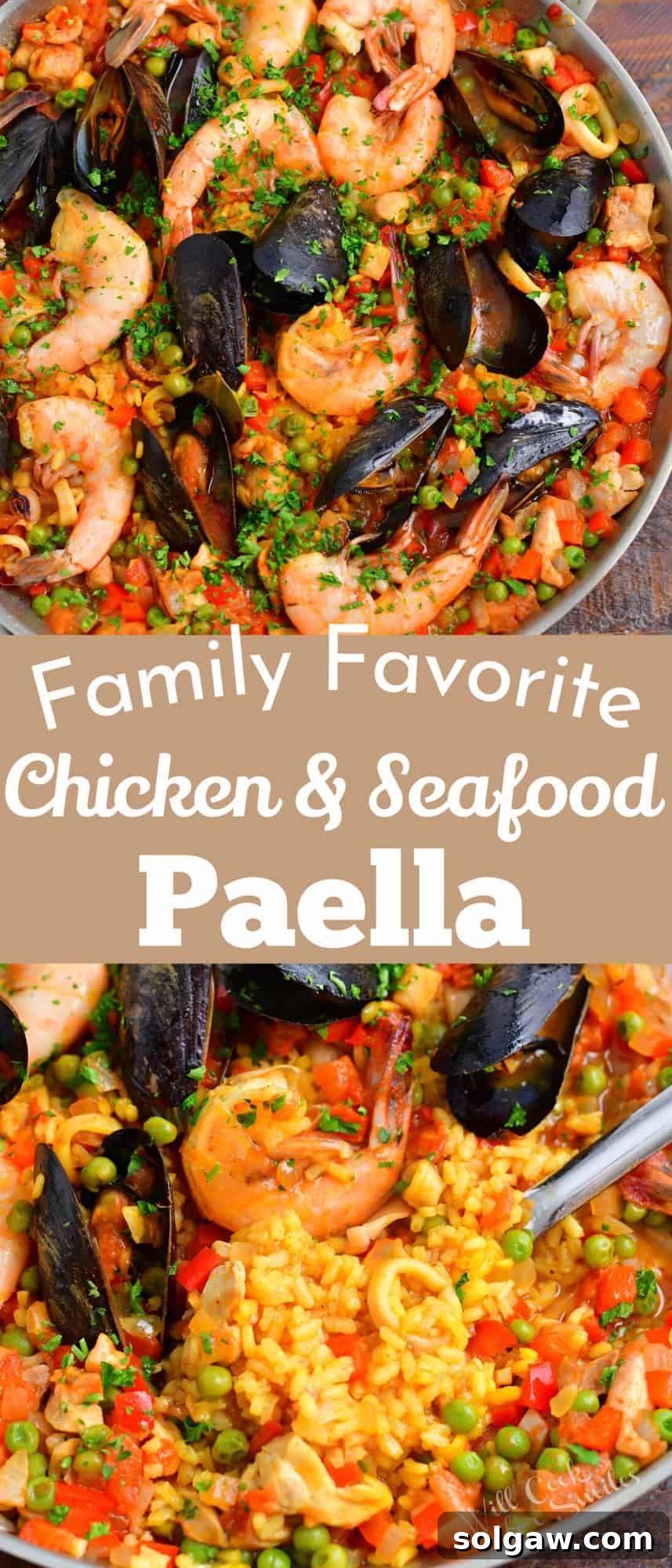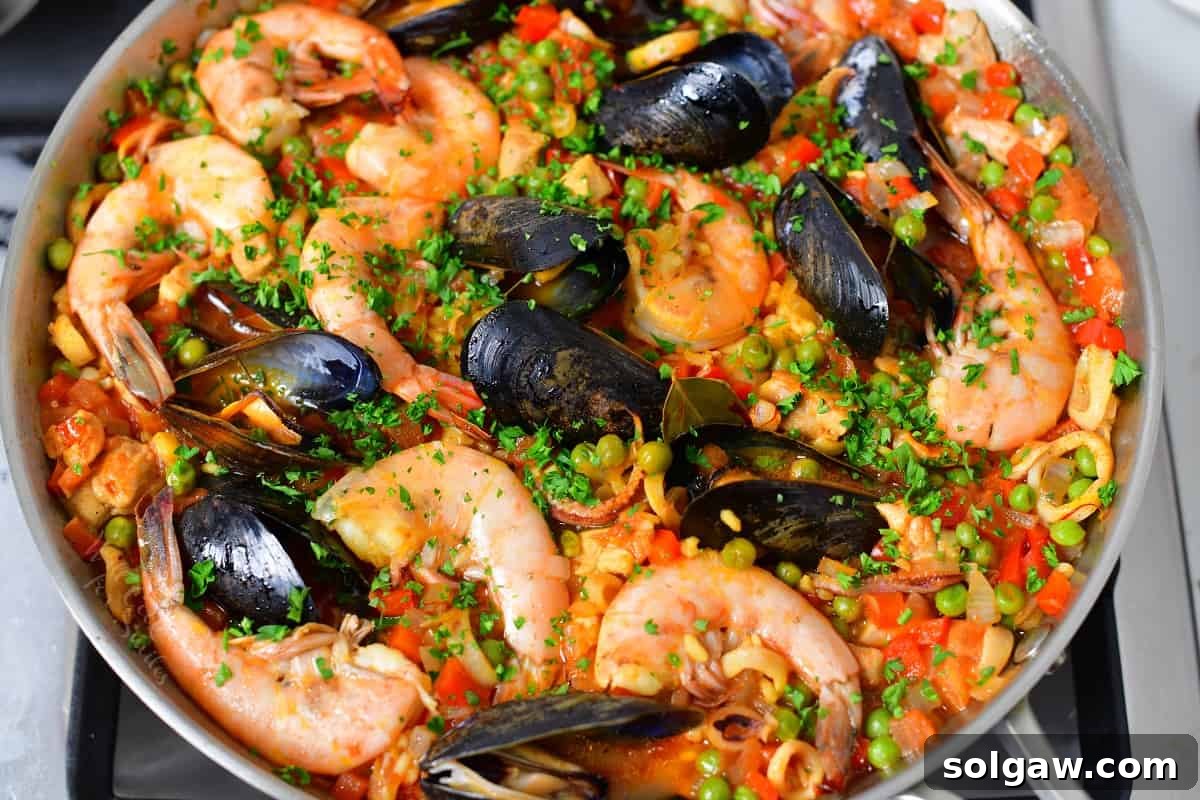
Embark on a culinary adventure with Paella, a beautiful and vibrant rice dish that captures the essence of the Valencia region in Spain. This recipe guides you through creating a saffron-infused masterpiece, richly flavored with tender chicken, fresh seafood, and aromatic vegetables like onion, peppers, tomatoes, and peas.
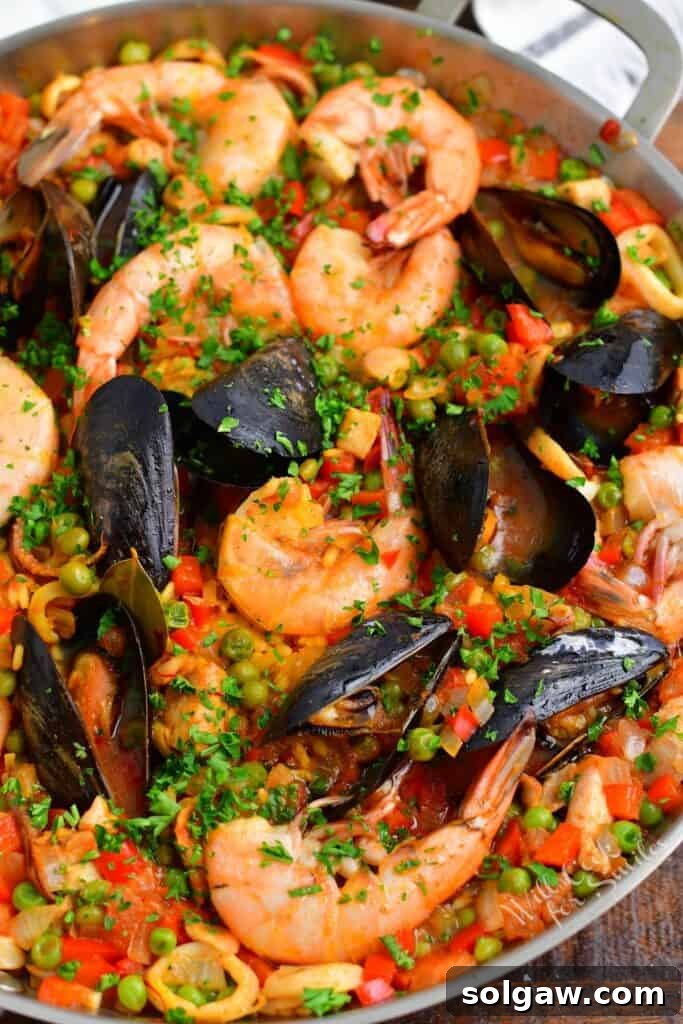
The Ultimate Guide to Authentic Paella: A Culinary Journey to Valencia
Paella is more than just a rice dish; it’s a celebration of Spanish culture, history, and flavor, originating from the sun-drenched fields of Valencia. Known for its distinct golden hue from saffron and its unique cooking method, paella has evolved from humble beginnings into a globally recognized culinary icon. At its heart, paella is a rice-forward dish, where every accompanying ingredient serves to enhance the rich, savory depth of the grain. This article will delve into the origins of paella, guide you through selecting the right ingredients, and provide a detailed, easy-to-follow recipe for a mouthwatering chicken and seafood paella.
The Rich History and Evolution of Paella
The story of paella begins in the rice-growing regions of Valencia, Spain, where farm laborers and fishermen would cook hearty meals outdoors over an open fire. The original paella, often referred to as Paella Valenciana, was a rustic dish made with ingredients readily available from the local environment. This typically included saffron-scented rice cooked with chicken, rabbit, and sometimes snails, complemented by local vegetables such as three types of beans (ferraura, tavella, and garrofó). The smoky flavor imparted by the wood fire was a characteristic trait of these early paellas.
As the popularity of paella spread beyond Valencia, different regions and communities adapted the recipe based on their preferences and available ingredients. This led to the emergence of numerous variations, including seafood paella (Paella de Marisco), mixed paella (Paella Mixta) with a combination of meat and seafood, and even vegetarian versions. Despite these variations, the essence of paella remains: perfectly cooked rice, infused with flavor, and often developing a prized crispy bottom crust known as socarrat.
Interestingly, the name “paella” doesn’t refer to the dish’s ingredients, but rather to the cooking vessel itself. In Valencian, “paella” means “frying pan,” specifically referring to the wide, shallow, round pan with two handles traditionally used to cook and serve this communal meal. This unique pan is crucial for achieving even cooking and, most importantly, the coveted socarrat.
Essential Ingredients for a Flavorful Paella
While paella boasts many variations, certain ingredients are non-negotiable for achieving an authentic and incredibly flavorful dish. Understanding the role of each component is key to mastering paella.
The Foundation: Sofrito and Premium Olive Oil
Every great paella starts with a stellar sofrito. This aromatic base, slowly sautéed in very good extra virgin olive oil, builds the fundamental flavor layers. For our paella, the sofrito typically includes finely diced onions, bell peppers (often red for sweetness and color), ripe tomatoes, and fragrant garlic. The key is to cook the sofrito gently until the vegetables are completely softened and their flavors have melded and intensified, creating a rich, sweet, and savory foundation for the rice.
The Heart of the Dish: Paella Rice
Arguably the most critical component, the choice of rice can make or break a paella. You must use a short-grain rice variety that can absorb a large amount of liquid and flavor without becoming sticky or mushy. The gold standard is bomba rice, often referred to as “the pearl of rice,” known for its ability to expand significantly while remaining separate and firm. If bomba rice is unavailable, another excellent option is Valencia rice. It’s crucial to avoid long-grain rice or Arborio rice (used in risotto), as these varieties do not behave correctly in a paella, resulting in an undesirable texture.
The Golden Touch: Saffron
Saffron threads are essential for authentic paella, contributing not only its distinctive golden-orange color but also a subtle, earthy, and floral aroma. While saffron can be expensive, a small pinch goes a long way. You can buy saffron threads and gently toast them before infusing in warm broth, or use a powdered form for convenience. Never skip the saffron if you want true paella flavor and appearance.
Fresh Vegetables & Legumes
Beyond the sofrito, fresh peas are a common addition, offering bursts of sweetness and color. Depending on regional tradition, you might also find green beans, fava beans, or artichokes. These vegetables add texture, freshness, and contribute to the overall balance of flavors in the dish. Always opt for fresh, seasonal produce where possible for the best results.
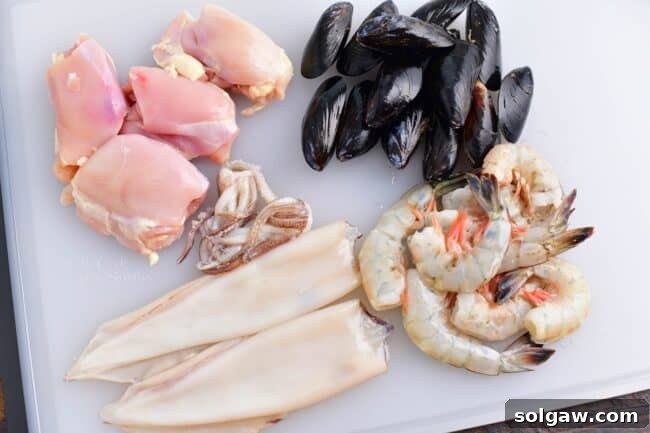
Customizing Your Paella: Meats and Seafood
One of the beautiful aspects of paella is its versatility when it comes to protein. Over time, countless versions have emerged, with almost every region and even every family having its own preferred combination. This allows for endless customization to suit personal tastes and ingredient availability.
Traditional Proteins
Historically, Valencian paella included meats like rabbit and chicken, along with unique additions such as snails. These meats were chosen for their robust flavors and local abundance, contributing to the rustic character of the dish. The aim was to create a hearty and satisfying meal for those working in the fields.
Our Favorite: Chicken and Seafood Medley
While traditional recipes are revered, many modern interpretations embrace a wider array of proteins. Our personal favorite combines the richness of dark chicken meat (chicken thighs are ideal for their juiciness) with a delightful selection of seafood. We often use tender calamari, sweet mussels, and succulent shrimp. The beauty of this approach is its flexibility; you can easily adjust the seafood mix based on what’s fresh and in season. Consider adding white fish, clams, or scallops for an even more luxurious seafood paella.
The Great Paella Sausage Debate
The inclusion of sausage in paella is a topic that often sparks passionate debate among purists. Traditionally, sausage was not a component of authentic paella, particularly Paella Valenciana. The delicate balance of flavors in a classic paella can easily be overshadowed by the strong, often spicy, profile of sausage.
However, culinary traditions evolve, and many excellent modern paellas served in restaurants and homes do feature sausage. When done right, it can add another layer of flavor. If you choose to add sausage, it’s vital to select a milder variety, such as a mild Spanish chorizo, to prevent it from dominating the other ingredients. Remember, paella is a rice-forward dish, and the supporting cast of proteins and vegetables should enhance, not overpower, the star of the show. Therefore, if you’re in the mood to experiment with sausage, opt for moderation and subtlety.
Mastering the Art of Paella: Step-by-Step Recipe
Creating paella at home is a rewarding experience that brings a taste of Spain to your kitchen. Follow these detailed steps to prepare a delicious and authentic chicken and seafood paella.
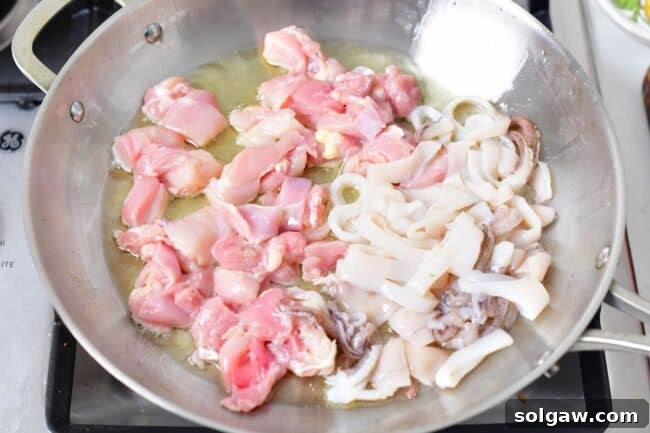
1. Preparation is Key (Mise en Place)
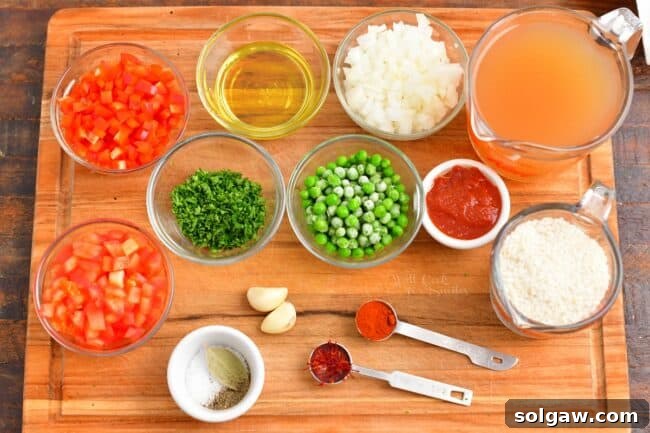
Before you even think about heating the pan, ensure all your ingredients are prepped. This means cleaning, cutting, and measuring everything. Dice the chicken thigh meat and calamari. Peel and dice your onion, tomato, and bell pepper, and mince your garlic cloves. In a separate small saucepan, combine chicken stock, tomato paste, bay leaf, a generous pinch of saffron, paprika, salt, and pepper. Bring this mixture to a gentle simmer over low heat to warm it through and allow the saffron to infuse, then keep it warm.
Helpful tip: Calamari requires specific cooking; it must be cooked either very quickly at high heat or slowly at low heat to remain tender. Since paella is a slower cooking process, adding calamari early allows it to cook slowly and tenderize beautifully within the dish.
2. Searing the Proteins
Preheat your paella pan (or a wide, shallow cooking pan) over medium-high heat. Add a splash of good quality extra virgin olive oil. Once hot, add the diced chicken thigh meat and calamari. Sear them for just a couple of minutes until they develop a light golden color and are partially cooked. Remove the seared chicken and calamari from the pan and set them aside. This step not only cooks the proteins but also leaves behind flavorful fond in the pan, which will contribute to the depth of the paella.
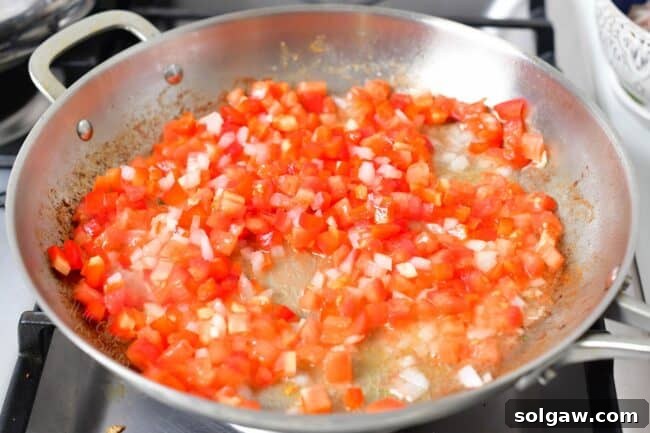
3. Building the Sofrito Base
Add a little more olive oil to the same pan. Reduce the heat slightly to medium. Add the diced onions, tomatoes, and bell peppers. Sauté these vegetables for several minutes, stirring occasionally, until they are completely softened and begin to caramelize and turn golden brown. This slow cooking allows their natural sugars to develop and creates a rich base. Finally, add the minced garlic and sauté for just about a minute until it becomes fragrant. Be careful not to burn the garlic, as this can make the sofrito bitter.
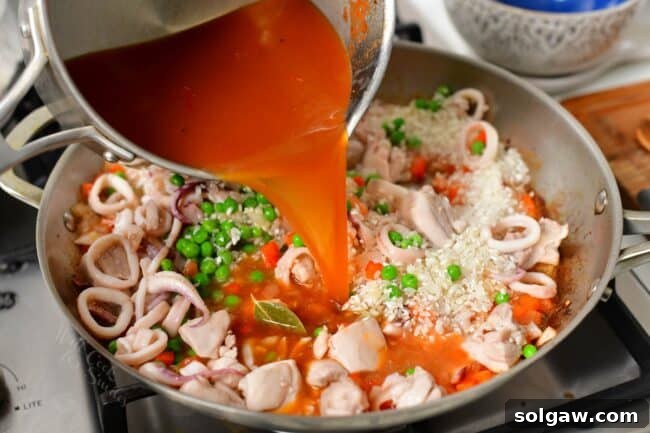
4. Bringing it All Together
Return the seared chicken and calamari to the pan, along with the frozen peas and the short-grain rice. Pour in the warm chicken stock mixture. Give all the ingredients a quick, gentle stir to distribute them evenly across the pan. This is a crucial step: after this initial stir, resist the urge to stir the rice mixture again! The rice needs to cook undisturbed to form the desired layers and, ultimately, the crunchy socarrat at the bottom.
Once the rice and liquid are combined, be sure to only stir the mixture once or twice to even it out, then leave it completely undisturbed and uncovered as it cooks. This is key for the texture!
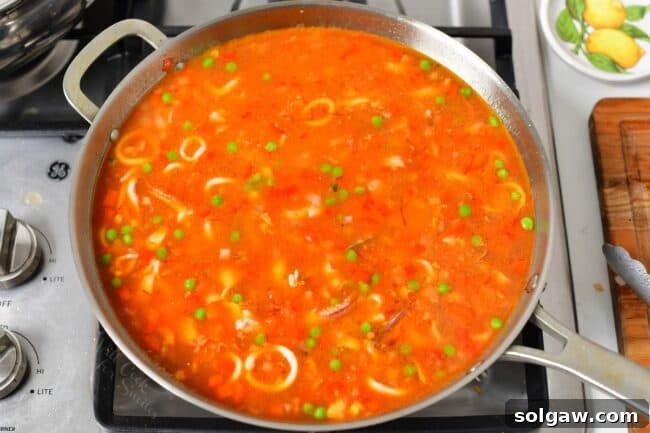
5. The Crucial Cooking Phase
Reduce the heat to low-medium and let the paella cook, uncovered and completely undisturbed, for approximately 15-18 minutes. During this time, the rice will absorb the liquid, and the flavors will deepen. The lack of stirring is vital to allow the bottom layer of rice to gently toast and caramelize, which is the precursor to the cherished socarrat.
It bears repeating – do NOT touch or stir the paella as it cooks during this initial phase! Patience is a virtue in paella making.
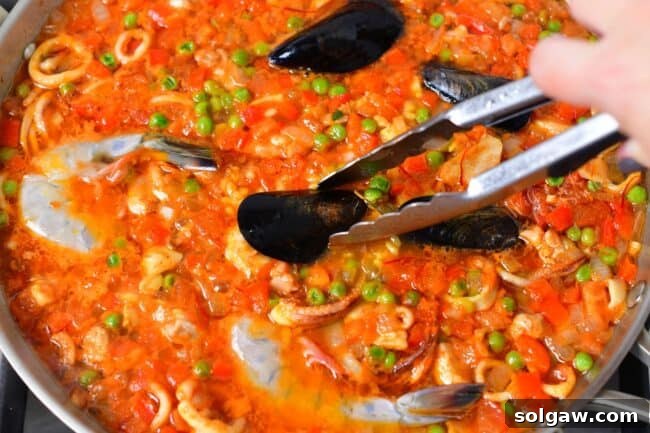
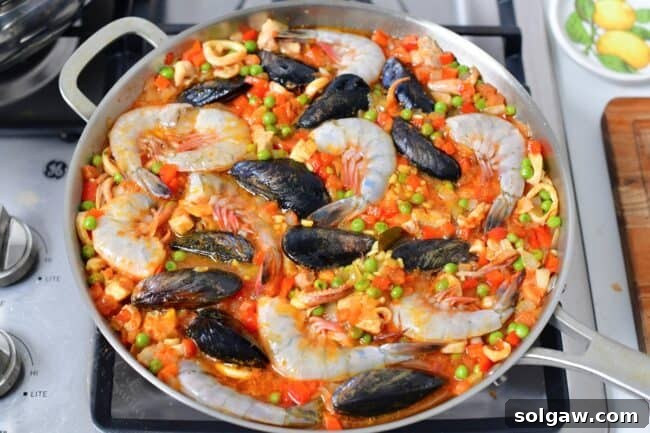
6. Integrating Seafood and Achieving Socarrat
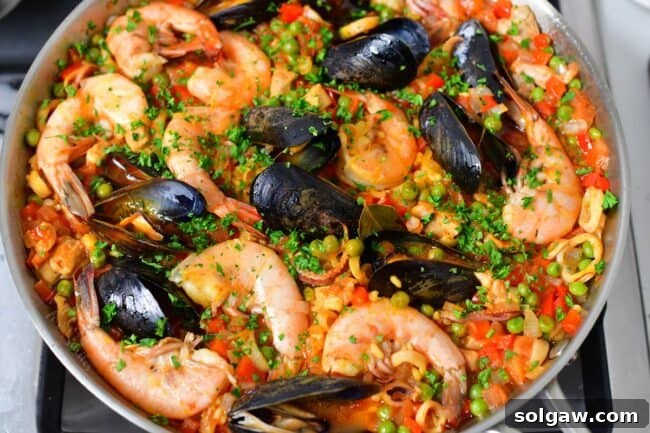
After the initial cooking time, it’s time to add the remaining seafood. Using tongs, carefully nestle the mussels and shrimp into the rice mixture. Cover the pan with a lid (or aluminum foil) and allow it to cook for about 5 more minutes. This steaming process will help the mussels open and ensure the shrimp are cooked through. As soon as the shrimp turn pink and the mussels open, remove the lid. Overcooking the seafood will make it tough, so keep a close eye on it.
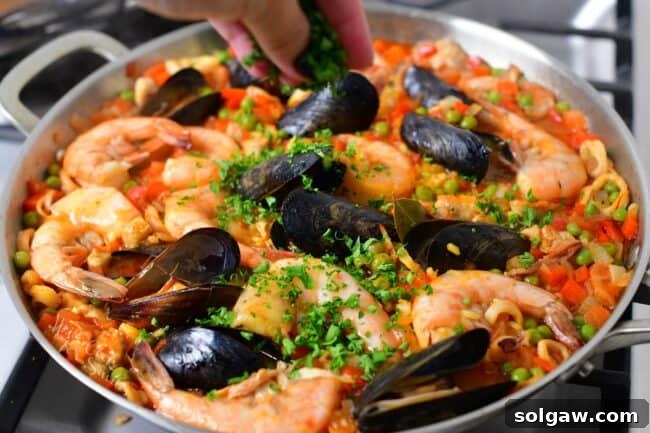
7. The Coveted Socarrat
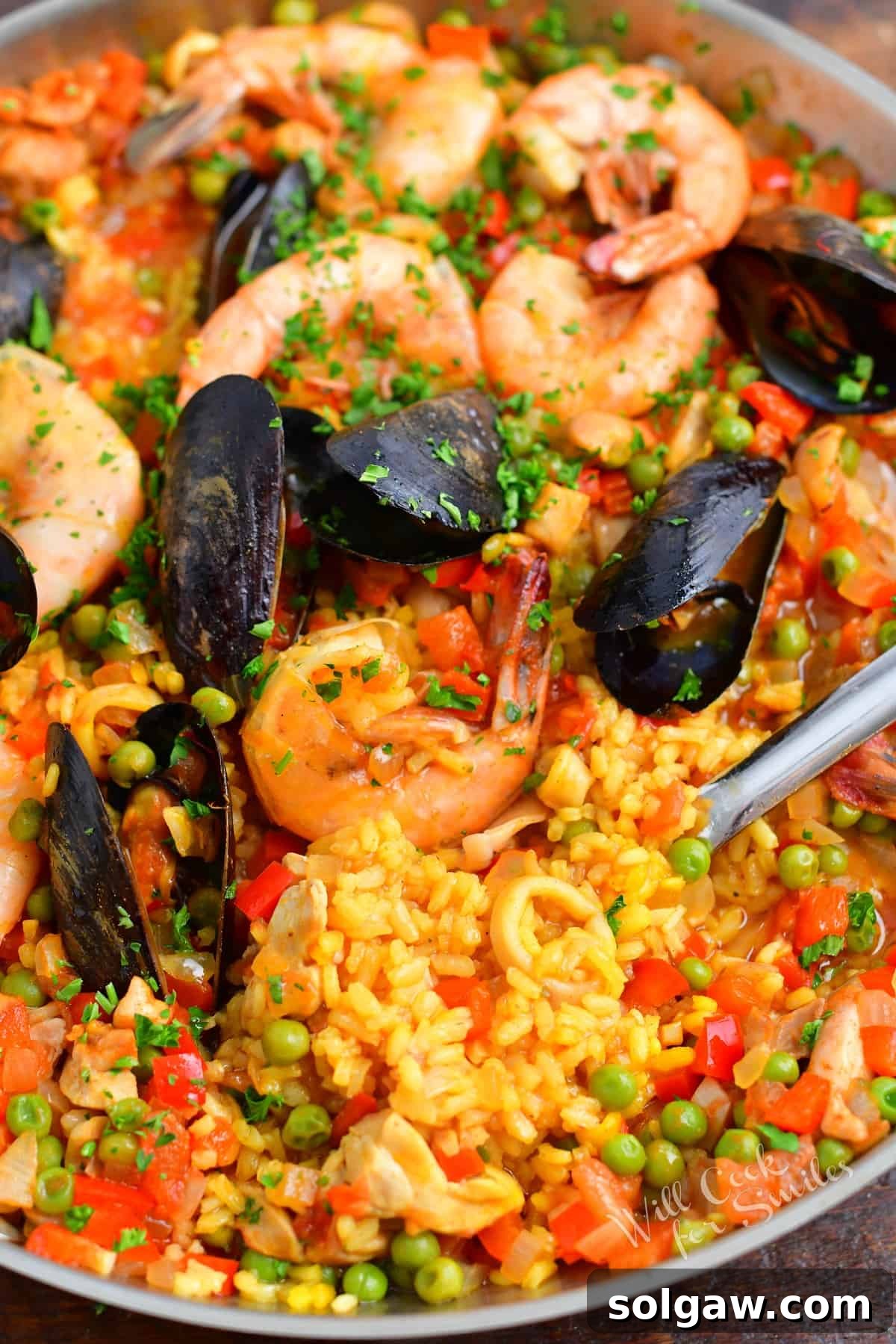
To achieve the highly prized socarrat – the crispy, caramelized layer of rice at the bottom of the pan – increase the heat to high for about 1 to 1.5 minutes after the seafood is cooked. Listen for a gentle crackling sound and smell a toasted aroma, indicating the rice is caramelizing without burning. This step is optional, but highly recommended by paella aficionados for the ultimate texture and flavor experience. Once the socarrat has formed, remove the pan from the heat, garnish with fresh minced cilantro, and let it rest for a few minutes before serving. This resting period allows the flavors to settle and the rice to firm up slightly.
Essential Equipment for Paella Success
While the essence of paella lies in its ingredients and cooking technique, the right pan can significantly enhance the outcome. The traditional pan, known as a paellera, is specifically designed for this dish.
The Paella Pan: Is it a Must-Have?
If you find yourself frequently making paella, investing in a traditional paella pan is highly recommended. These pans are wide and shallow, with sloping sides, which maximizes the surface area for the rice to cook evenly and allows for proper liquid evaporation. This design is crucial for developing the beloved socarrat. Many paella pans are versatile enough to be used on a stovetop, over an open fire, or even on a grill, offering authentic cooking flexibility.
Alternative Cookware Options
For home cooks who prefer not to acquire specialized cookware, a suitable alternative can be used. Look for a wide and shallow cooking pan or a large skillet that can accommodate all your ingredients in a single, thin layer. The key characteristics are a large surface area and shallow sides to ensure even cooking and allow the liquid to evaporate efficiently. Crucially, avoid pans that are bottom-heavy or too deep, as these will hinder the formation of the socarrat and can lead to unevenly cooked rice. A good quality stainless steel or cast iron skillet that fits these criteria can work well in a pinch.
More Delicious Rice Dishes To Explore:
- Shrimp Fried Rice – Each bite of this shrimp fried rice is loaded with a homemade savory sauce, perfectly cooked rice, fresh vegetables, and flavorful pan-seared shrimp.
- Khao Pad – Thai fried rice is an amazing and easy fried rice dish made with key ingredients like chicken, jasmine rice, vegetables, and egg, richly flavored with garlic, fresh ginger, fish sauce, and oyster sauce.
- Chicken Fried Rice – A Chinese take-out staple that can easily be made at home with just a few minutes of your time and minimal ingredients.
- Chicken and Wild Rice Soup – This hearty, flavorful soup is made from scratch with chicken thighs, wild rice, mushrooms, onions, and cream.
PIN THIS RECIPE FOR LATER
Chicken and Seafood Paella
Main Course
Spanish
15 minutes
30 minutes
45 minutes
6 (serves 4-6)
359 kcal
Lyuba Brooke
Ingredients
- 1/4 cup extra virgin olive oil
- 1/2 yellow onion, diced
- 1 ripe tomato, peeled and diced
- 1 red bell pepper, seeded and diced
- 3 garlic cloves, smashed and minced
- 1 cup short grain rice (Bomba or Valencia)
- 1/2 cup frozen peas
- 3/4 lb boneless, skinless chicken thigh meat, diced
- 1/2 lb calamari, cleaned and cut into rings
- 1/4-1/3 lb jumbo shrimp, peeled and deveined
- 1/4-1/3 lb mussels, preferably live and scrubbed
- 2 cups chicken stock
- 1/4 cup tomato paste
- 1 bay leaf
- Pinch saffron threads
- 1 tsp paprika
- Salt, to taste
- Black pepper, to taste
- 2-3 tbsp fresh minced cilantro, for garnish
Instructions
- Prepare all your ingredients before starting to cook: Dice chicken, calamari, onion, tomato, and bell peppers. Mince garlic.
- In a small saucepan, combine chicken stock, tomato paste, bay leaf, saffron, paprika, salt, and pepper. Mix well, bring to a simmer, then reduce heat to low to keep warm.
- Preheat a large, wide paella pan (or a shallow skillet) over medium-high heat and add a little olive oil.
- Add diced chicken and calamari to the pan and sear for a couple of minutes until lightly browned. Remove the meat from the pan and set aside.
- Add the remaining olive oil to the pan (if needed) and add diced onion, tomato, and bell peppers. Sauté for a few minutes until completely softened and starting to turn golden brown. Add minced garlic and sauté just until fragrant (about 1 minute).
- Add back the seared chicken and calamari, along with the frozen peas, rice, and the warm chicken stock mixture to the pan. Give it a quick, gentle stir to mix and spread ingredients evenly. Do not stir again after this.
- Lower the heat to low and cook the paella uncovered and undisturbed for about 15-18 minutes, or until most of the liquid has been absorbed and the rice is al dente.
- Carefully nestle the shrimp and mussels into the rice. Cover the pan with a lid (or foil) and cook for about 5 more minutes, or until the mussels open and the shrimp are cooked through and pink. Remove the lid as soon as the seafood is done.
- To create the socarrat, raise the heat to high for about 1 to 1.5 minutes. Listen for a crackling sound and a toasted aroma.
- Remove the pan from the heat. Top with fresh minced cilantro, let it rest for a few minutes, and serve immediately.
Nutrition Information
Calories: 359 kcal |
Carbohydrates: 35g |
Protein: 25g |
Fat: 13g |
Saturated Fat: 2g |
Polyunsaturated Fat: 2g |
Monounsaturated Fat: 8g |
Trans Fat: 1g |
Cholesterol: 167mg |
Sodium: 272mg |
Potassium: 529mg |
Fiber: 3g |
Sugar: 3g |
Vitamin A: 1172IU |
Vitamin C: 37mg |
Calcium: 46mg |
Iron: 3mg
Tried this recipe? Mention @willcookforsmiles or tag #willcookforsmiles!